Interviews are opportunities to demonstrate your expertise, and this guide is here to help you shine. Explore the essential Timber Cruising and Sampling interview questions that employers frequently ask, paired with strategies for crafting responses that set you apart from the competition.
Questions Asked in Timber Cruising and Sampling Interview
Q 1. Explain the different types of timber cruising methods.
Timber cruising methods are broadly classified into two main categories: complete enumeration and sampling. Complete enumeration, while providing the most accurate results, is often impractical for large areas due to the time and cost involved. It involves measuring every single tree in the stand. Sampling methods, on the other hand, involve measuring a representative subset of trees to estimate the characteristics of the entire stand. These sampling methods can be further divided into several techniques:
Fixed-radius plots: Circular plots of a predetermined size (e.g., 0.1 acre) are established, and all trees within the plot are measured.
Variable-radius plots (or point sampling): A point is established, and trees meeting a specific angle gauge (related to basal area factor) are measured, regardless of their distance from the point. This method allows for more efficient sampling of larger trees.
Line plot cruising: Measurements are taken along a series of transects or lines running through the stand.
Strip cruising: Measurements are made within strips of predetermined width running through the stand.
Aerial cruising: This method uses aerial photography or other remote sensing techniques to estimate forest characteristics. It is less precise than ground-based methods but is useful for large areas.
The choice of method depends on factors such as the size and accessibility of the area, the desired level of accuracy, and budget constraints.
Q 2. Describe the advantages and disadvantages of fixed-radius plots vs. variable-radius plots.
Fixed-radius plots are straightforward and easy to understand. All trees within the plot are measured, leading to relatively simple data collection and analysis. However, they can be inefficient in stands with a large number of small trees, as many plots may be required to capture the variability in the stand. They can also be difficult to establish in rough terrain.
Variable-radius plots are more efficient in stands with a high proportion of larger trees because larger trees are more likely to be included in the sample. This method reduces the number of plots needed and can save significant time and effort. However, the data analysis is more complex, requiring specialized tools and knowledge to account for the varying plot sizes. There’s also a higher chance of bias if the selection criterion isn’t applied consistently.
Imagine comparing counting all the beans in several small jars (fixed radius) versus counting beans based on their size from a larger container (variable radius). The latter method might be more efficient if larger beans dominate the container.
Q 3. How do you determine the appropriate sample size for a timber cruise?
Determining the appropriate sample size is crucial for obtaining reliable estimates while minimizing costs. Several factors influence this decision including the desired level of precision, the variability within the stand (more variability requires a larger sample), the acceptable level of error, and the available budget. Statistically, the required sample size can be estimated using formulas that incorporate these factors. In practice, this often involves:
Assessing stand variability: This might involve preliminary sampling or using existing data to gauge the heterogeneity of the stand.
Defining acceptable error: How much error are you willing to accept in your estimates? A smaller error margin requires a larger sample size.
Using statistical software or formulas: Numerous statistical methods and software packages exist that can calculate the required sample size based on the inputs defined above. This often involves considering the confidence level and the desired precision.
Practical considerations: Budget limitations, terrain accessibility, and time constraints may necessitate adjustments to the ideal sample size.
For example, a highly variable stand would require a significantly larger sample size than a homogenous stand to achieve the same level of precision.
Q 4. What are the key factors influencing tree volume estimation?
Accurate tree volume estimation is critical in timber cruising. Several key factors influence this:
Diameter at breast height (DBH): The most important factor. DBH is measured at 4.5 feet above ground level and is a strong indicator of tree size and volume.
Tree height: Crucial for determining the volume of the stem. Various hypsometers are used for measuring tree height.
Form factor: Describes the shape of the tree bole (trunk). Trees with a more cylindrical form generally have a higher form factor. Form factors are often estimated using established tables or equations.
Species: Different tree species have different growth patterns and shapes, impacting volume estimations. Species-specific volume equations are often used.
Tree age and site conditions: These factors can affect tree growth and form.
Typically, volume equations that incorporate DBH and tree height are used. These equations are often species-specific and may be derived from regional data or established databases. For instance, a simple volume equation might be: Volume = a + b*DBH^2*Height, where ‘a’ and ‘b’ are species-specific coefficients.
Q 5. Explain the concept of basal area and its importance in cruising.
Basal area refers to the cross-sectional area of a tree trunk at breast height (DBH), usually expressed in square feet. In timber cruising, it’s a crucial metric because it’s highly correlated with tree volume and stand density. It’s easily and rapidly measured using diameter tapes, making it a practical parameter for assessing stand characteristics.
The importance of basal area in cruising stems from its use in:
Estimating stand density: Total basal area per unit area provides a measure of stand density. A higher basal area indicates a denser stand.
Predicting stand volume: Basal area is a strong predictor of total stand volume and is often used in volume estimation models.
Stratifying stands: Basal area can be used to divide a stand into more homogeneous strata for more efficient sampling.
Variable-radius plot sampling: The angle gauge used in point sampling is directly related to basal area, making basal area a central aspect of this efficient cruising method.
For instance, knowing the total basal area of a stand can help predict the total volume more accurately than estimating volume based on the number of trees alone.
Q 6. How do you account for mortality and ingrowth in timber inventory?
Accounting for mortality and ingrowth is essential for obtaining accurate and reliable timber inventory data, as these factors significantly impact the overall stand volume and composition over time.
Mortality: This involves identifying and measuring trees that have died since the previous inventory. This typically includes surveying the stand for dead trees, determining the cause of death (e.g., disease, insects), and measuring the volume of the dead trees. This volume is subtracted from the total stand volume.
Ingrowth: This refers to trees that have grown to a measurable size since the last inventory. Identifying and measuring ingrowth requires carefully establishing criteria for what constitutes a ‘measurable’ tree. These newly measured trees are then added to the total stand volume.
Methods for accounting for these factors may include:
Re-measurement of permanent plots: Establishing permanent plots allows for tracking changes in tree growth, mortality, and ingrowth over time.
Using growth and mortality models: Statistical models based on tree species, site conditions, and age can predict ingrowth and mortality rates.
Aerial photography or remote sensing: These techniques can help in detecting mortality and changes in stand structure over large areas.
Accurate estimation of mortality and ingrowth are critical for sustainable forest management practices. Ignoring these factors would lead to significant errors in volume estimations and management decisions.
Q 7. Describe your experience with different tree measurement tools (e.g., diameter tapes, hypsometers).
Throughout my career, I have extensive experience using various tree measurement tools. I’m proficient in using diameter tapes to accurately measure DBH, ensuring proper technique to minimize measurement error. This includes understanding how to deal with variations in tree form and ensuring the tape is held snugly against the tree.
I also have significant experience with several hypsometer types, including the Suunto hypsometer, Haga altimeter, and various clinometers. I’m adept at using these instruments to accurately measure tree height, taking into account factors like slope and distance. I understand the importance of taking multiple measurements and averaging them to minimize error.
Beyond these basic tools, I have experience with more sophisticated equipment such as laser rangefinders, which improve accuracy and speed, especially in challenging terrain. I also have experience using GPS units for accurate location mapping of trees and plots, a crucial element for data organization and analysis. My training emphasizes proper calibration and maintenance of all instruments for reliable data collection.
In one project, accurate measurements were crucial. Using a combination of diameter tape, Suunto hypsometer, and laser rangefinder for a mixed species stand, the client saved considerable money on over-estimation, significantly impacting their budget for logging and transportation.
Q 8. How do you handle difficult terrain during a timber cruise?
Navigating challenging terrain is a critical aspect of timber cruising. Safety is paramount. Before venturing into the field, I meticulously review the area’s topography using maps and aerial imagery, identifying potential hazards like steep slopes, dense undergrowth, and water crossings. I always carry appropriate safety gear, including sturdy boots, a compass, GPS device, first-aid kit, and possibly a satellite phone depending on remoteness and cell service.
For steep slopes, I use appropriate techniques to prevent slips and falls, employing trekking poles for stability and taking frequent breaks. In areas with dense undergrowth, I carefully clear a path to avoid injury and ensure accurate measurements. For water crossings, I assess the depth and current before proceeding, perhaps using a wading staff or employing alternative routes if necessary. Teamwork is essential; if working with a crew, we always maintain visual contact and communicate potential hazards.
For example, during a recent cruise in a mountainous region, we encountered a heavily eroded slope. We decided to use a zig-zag approach to ascend, ensuring a stable footing at all times and using ropes for added security in particularly steep sections. Thorough planning and careful execution are key to safely completing a timber cruise in difficult terrain.
Q 9. What software or technology do you use for data collection and analysis in timber cruising?
Data collection and analysis in timber cruising have been revolutionized by technology. I primarily utilize field data collectors like tablets or ruggedized laptops running specialized software such as Forestry Pro, TreeMeasurer, or CruiseMaster. These applications allow for real-time data entry, including tree species, diameter at breast height (DBH), height, and any defects. The software often integrates GPS capabilities for precise location mapping of sample plots.
Once the field data is collected, I transfer it to a desktop computer for further analysis using software packages like Forestry Analyst or Excel with custom macros for complex calculations. These programs help to perform calculations, generate volume estimates, create maps, and produce detailed reports. The use of spatial analysis tools such as GIS software allows for efficient visualization and analysis of stand characteristics and assists in efficient planning of future operations. Data is regularly backed up to ensure data integrity. This technological approach enhances accuracy, efficiency, and the overall quality of the timber cruise.
Q 10. Explain your understanding of forest sampling error and how to minimize it.
Forest sampling error refers to the unavoidable difference between the estimated volume or other characteristics of a forest stand based on a sample and the true value. Minimizing this error is crucial for the reliability of the cruise. The error arises because we’re not measuring every tree, but rather taking a sample. This sampling error can be caused by factors like the sampling design (e.g., plot size, number of plots), measurement errors, and the inherent variability in tree size and distribution within the forest.
Several strategies can help minimize sampling error. Firstly, choosing an appropriate sampling design – such as a stratified random sampling approach in areas of differing tree densities – ensures better representation of the whole stand. Increasing the number of sample plots reduces error, but has diminishing returns as you approach a complete inventory. Using larger plots can help, especially in more heterogeneous stands, but must be balanced against practical considerations. Careful training of field crews, precise measurement techniques, and rigorous data quality control protocols further reduce measurement errors and contribute to a lower overall sampling error.
Q 11. How do you ensure the accuracy and precision of your timber cruise data?
Ensuring accuracy and precision in timber cruise data is paramount. Accuracy refers to how close the estimated value is to the true value, while precision refers to how consistently repeated measurements are. A multi-pronged approach is necessary.
This begins with using calibrated instruments and adhering to standardized measurement protocols. For example, using a Biltmore stick or diameter tape that’s been recently checked for accuracy is critical. Proper training of field crews on measurement techniques and data recording procedures is also vital, along with regular quality control checks. I often conduct independent checks of a subset of sample plots to verify the accuracy of the data collected by the crew. Statistical analysis is implemented to identify any potential outliers or anomalies in the data. Double-checking calculations and utilizing error propagation methods further contribute to ensuring overall data reliability and quality.
Q 12. Describe your experience with different cruising methods (e.g., 3P, Bitterlich, etc.).
I have extensive experience with various cruising methods, each suited to different situations. The 3P (Point, Plot, and Prism) method uses angle-gauge instruments like a Bitterlich relaskop (or wedge prism) to measure basal area and estimate tree density efficiently over larger areas. It’s less time-consuming than traditional plot cruising. The Bitterlich method, a specific type of variable-radius plot sampling, relies on an angle gauge to determine which trees to measure. It’s particularly effective in dense stands. I’ve also used fixed-radius plot sampling, which involves establishing plots of a predetermined size and measuring all trees within the plot. This method offers a more precise estimate but is more labor-intensive.
The choice of method depends on factors such as stand characteristics (density, uniformity), the level of accuracy required, and available resources. For instance, in a dense, even-aged stand, a Bitterlich method would be efficient. In a more heterogeneous stand with large variability, fixed-radius plots might be preferred for higher accuracy. I often adapt or combine methods depending on the specific project needs.
Q 13. How do you deal with boundary issues and irregular stand shapes during cruising?
Boundary issues and irregular stand shapes pose challenges in timber cruising. Accurate boundary delineation is crucial. I use high-resolution maps and GPS technology to precisely define stand boundaries. For irregular shapes, I might employ techniques like dividing the stand into smaller, more manageable rectangular or square sections for easier sampling.
Alternatively, I can use a combination of cruising methods. For example, I might employ a systematic sampling design across the entire stand but adjust the sampling intensity in areas with greater variability. A GIS approach allows for precise mapping of stand boundaries and the easy integration of additional data layers, such as terrain information or ownership boundaries. Careful planning and the use of appropriate software and tools are critical in mitigating the complications associated with irregular shapes and boundary complexities.
Q 14. What are the different types of forest inventory data used in timber cruising?
Several types of forest inventory data are used in timber cruising. The most fundamental data is tree-level data, which includes individual tree measurements such as species, DBH, height, and volume. Stand-level data summarizes these tree-level measurements for the entire stand, such as average DBH, basal area, volume per unit area, and species composition. Additional data might be incorporated like site information (slope, aspect, elevation), tree location (coordinates), defect information (rot, damage), and the presence of non-timber forest products.
In addition, remotely sensed data like aerial photographs or LiDAR data can provide valuable context and assist in improving sampling strategies and refining estimates. This supplemental information allows for a more complete picture of the forest, enabling more informed decision-making. The integration of these various data types enhances the accuracy and reliability of the timber cruise and ensures a comprehensive understanding of the forest resource.
Q 15. Explain how to calculate timber volume using different formulas (e.g., Smalian’s, Huber’s).
Calculating timber volume involves estimating the amount of wood in a tree or stand. We use different formulas depending on the shape of the log and the available measurements. Two common methods are Huber’s and Smalian’s formulas.
Huber’s Formula: This is best suited for relatively cylindrical logs. It uses the mid-diameter to estimate volume. The formula is:
V = 0.7854 * h * d²Where:
V= Volumeh= Height of the logd= Mid-diameter (diameter at the midpoint of the log)
Example: A log measures 10 feet long and has a mid-diameter of 1 foot. The volume would be: V = 0.7854 * 10 * 1² = 7.854 cubic feet
Smalian’s Formula: This method is more accurate for logs that taper significantly, using both the small-end and large-end diameters. The formula is:
V = 0.7854 * h * (d₁² + d₂²) / 2Where:
V= Volumeh= Height of the logd₁= Small-end diameterd₂= Large-end diameter
Example: A log is 12 feet long with a small-end diameter of 0.8 feet and a large-end diameter of 1.2 feet. The volume is: V = 0.7854 * 12 * (0.8² + 1.2²) / 2 = 9.86 cubic feet
Choosing the right formula depends on the accuracy needed and the shape of the logs being measured. For highly tapered logs, Smalian’s formula provides a more precise estimate. In practice, we often use specialized software or tools that incorporate these formulas and account for variations in log shape.
Career Expert Tips:
- Ace those interviews! Prepare effectively by reviewing the Top 50 Most Common Interview Questions on ResumeGemini.
- Navigate your job search with confidence! Explore a wide range of Career Tips on ResumeGemini. Learn about common challenges and recommendations to overcome them.
- Craft the perfect resume! Master the Art of Resume Writing with ResumeGemini’s guide. Showcase your unique qualifications and achievements effectively.
- Don’t miss out on holiday savings! Build your dream resume with ResumeGemini’s ATS optimized templates.
Q 16. How do you identify different tree species and assess their quality?
Identifying tree species involves a combination of field observations and, sometimes, laboratory analysis. Key characteristics include:
- Leaves: Shape, size, arrangement, and whether they are deciduous or evergreen.
- Bark: Texture, color, and pattern.
- Twigs: Arrangement, color, and the presence of buds or thorns.
- Cones or Flowers: Shape, size, and arrangement are critical for coniferous and flowering species.
- Wood: Grain, color, and hardness (requires a sample).
Assessing tree quality involves several factors:
- Stem Straightness: A straight stem is preferred for timber.
- Diameter at Breast Height (DBH): A larger DBH typically indicates a larger volume of wood.
- Branching: Fewer branches usually means higher quality timber, reducing defects.
- Defect Assessment: Evaluating rot, insect damage, and other defects affecting timber yield.
- Growth Rate: Rapid growth often results in lower density wood.
Experience and the use of field guides, along with reference samples, are vital for accurate species identification and quality assessment. I’ve spent years refining my ability to identify species in diverse environments, learning to recognize subtle differences and to interpret tree characteristics in context.
Q 17. Describe your experience with Geographic Information Systems (GIS) in forestry.
GIS plays a crucial role in modern timber cruising. I have extensive experience using GIS software (ArcGIS, QGIS) for various tasks, including:
- Stand Mapping: Creating accurate maps of forest stands, delineating boundaries, and classifying vegetation types.
- Cruise Plot Location: Efficiently planning and assigning the location of cruise plots using stratified random sampling techniques within the GIS environment. This ensures representative sampling of the entire stand.
- Data Management: Integrating timber cruise data with GIS layers containing information such as elevation, slope, and soil type. This enriches analysis and allows for better decision-making.
- Spatial Analysis: Performing spatial analyses to correlate timber volume and quality with environmental factors, aiding in predicting yields and making informed decisions about forest management.
- Visualization: Creating maps and reports that effectively communicate timber cruise results to stakeholders.
For example, I recently used GIS to optimize cruise plot placement in a large, uneven-aged forest, maximizing the accuracy and efficiency of the cruising process, while minimizing cost and time.
Q 18. What is your experience with remote sensing techniques applied to timber cruising?
Remote sensing techniques, such as aerial photography and LiDAR (Light Detection and Ranging), are increasingly important for timber cruising. I’m familiar with using these techniques to:
- Estimate Tree Height and Diameter: LiDAR data allows for accurate estimations of individual tree heights and diameters over large areas, reducing the need for extensive field measurements.
- Assess Forest Structure: Aerial imagery, combined with spectral analysis, helps classify forest types, detect disease or damage, and assess canopy cover, providing critical context for ground-based cruising.
- Plan Cruise Plot Locations: Remote sensing data can be used to stratify the forest into homogeneous areas, enabling more effective and efficient sample plot placement.
- Monitor Forest Change: Tracking changes over time through repeat remote sensing surveys can be used to assess growth rates, mortality, and the impact of management practices.
In one project, I integrated LiDAR data with ground-based measurements to improve the accuracy of timber volume estimation, resulting in more reliable cost-benefit analysis for harvesting plans.
Q 19. Explain your understanding of sustainable forestry practices in relation to timber cruising.
Sustainable forestry practices are paramount in timber cruising. My work integrates these principles through:
- Minimizing Environmental Impact: Careful planning of cruise plot locations and access routes helps reduce disturbance to the forest ecosystem.
- Representative Sampling: Employing appropriate sampling techniques ensures the accurate estimation of timber resources without oversampling or undersampling any areas, leading to more sustainable harvesting.
- Data-Driven Decision Making: Using the cruise data to inform management decisions that balance timber production with ecological considerations, such as protecting biodiversity and preserving water quality.
- Long-Term Planning: Integrating cruise data into long-term forest management plans that consider future timber production while safeguarding forest health and ecosystem services.
- Collaboration and Communication: Engaging with stakeholders throughout the process to ensure that decisions are informed and reflect ecological and socio-economic priorities.
For instance, I’ve worked on projects where we modified harvesting plans based on cruise data that revealed areas with high biodiversity, ensuring a more ecologically sustainable outcome.
Q 20. How do you manage and analyze large datasets from timber cruises?
Managing and analyzing large datasets from timber cruises requires efficient data management and analytical tools. My approach involves:
- Database Management: Organizing the data using relational databases (e.g., Access, SQL Server) to ensure data integrity and easy retrieval.
- Spreadsheets and Statistical Software: Utilizing spreadsheets (Excel) and statistical packages (R, SAS) for data analysis, including calculating summary statistics, conducting regression analyses, and creating visualizations.
- Data Cleaning and Validation: Implementing rigorous data quality control measures to identify and correct errors or inconsistencies in the dataset.
- Spatial Data Analysis: Integrating data with GIS software to perform spatial analyses and visualization.
- Automated Data Processing: Developing scripts (e.g., Python) to automate repetitive tasks, increasing efficiency and reducing human error.
I’ve developed customized database systems and scripts to efficiently handle large datasets from multiple cruises, streamlining the analysis and reporting process. This ensures quick turnaround times and reliable data for decision-making.
Q 21. How do you present your timber cruise results to stakeholders?
Presenting timber cruise results to stakeholders requires clear, concise communication tailored to the audience. My approach involves:
- Clear and Concise Reports: Generating written reports summarizing key findings, including maps, tables, and charts.
- Visualizations: Using graphs, maps, and other visual aids to make the data easily understandable.
- Interactive Presentations: Presenting findings in interactive formats, utilizing GIS software to demonstrate results spatially.
- Tailored Communication: Adapting the communication style and level of detail based on the knowledge and interests of the audience (e.g., technical details for foresters, summary for landowners).
- Open Communication: Facilitating open dialogue and answering questions to ensure the audience understands the results and their implications.
For example, I’ve used 3D visualizations of timber volumes to aid in discussions with investors, providing an intuitive understanding of projected returns. For forest managers, I’ve produced detailed reports that highlight areas needing specific management actions, emphasizing ecological considerations.
Q 22. Describe your experience with quality control procedures for timber cruise data.
Quality control in timber cruising is paramount to ensure the accuracy and reliability of volume estimates, which directly impact financial decisions. My approach involves a multi-stage process, beginning even before fieldwork commences.
- Pre-Cruise Planning: This includes meticulously defining the cruise boundaries, selecting appropriate sampling methods (e.g., fixed-radius plots, variable-radius plots), and specifying the data collection protocols to minimize errors. For instance, I carefully select the number and placement of plots to account for variability within the stand, using stratified sampling where necessary to address different forest types within the cruise area.
- Field Data Collection: During the cruise, rigorous checks are made to ensure accurate measurements of tree diameter, height, and species. We use calibrated instruments and cross-check measurements to minimize human error. A comprehensive field log is maintained, detailing any unusual observations or potential issues.
- Data Entry and Editing: Data are entered into a database, usually using specialized forestry software. This step involves stringent quality checks to identify and correct outliers or inconsistencies. We regularly use data validation rules and outlier detection algorithms to catch potential data entry errors early. For example, an unusually large diameter for a particular species in a given area might trigger a review of the original field data.
- Data Analysis and Reporting: Statistical analyses are conducted to assess the precision and accuracy of the volume estimates. We calculate confidence intervals to indicate the reliability of our results. Furthermore, error propagation analyses are conducted to understand how measurement errors at the individual tree level affect the overall volume estimates.
- Independent Verification: In some cases, we conduct a subsample verification to independently check the accuracy of our field measurements and data entry. This involves a second team revisiting a subset of plots and comparing their measurements to the original data.
This comprehensive approach, emphasizing precision at each stage, ensures the quality and reliability of our timber cruise data, minimizing financial risks for clients.
Q 23. Explain your understanding of the legal and regulatory aspects related to timber cruising.
Legal and regulatory compliance is a cornerstone of responsible timber cruising. This involves a deep understanding of relevant forest management legislation and regulations at both the federal and state levels.
- Forest Practices Acts: These acts vary by jurisdiction and often specify allowable cut levels, reforestation requirements, and sustainable forestry practices. Timber cruises must be conducted in a way that complies with these regulations. For instance, a cruise conducted for a logging operation must account for the requirements of the specific Forest Practices Act applicable to that area, ensuring that the harvest does not exceed allowable cut limits.
- Environmental Regulations: Cruises need to consider environmental protection laws, focusing on issues such as endangered species, water quality, and sensitive habitats. We must identify and flag areas of concern, often using GIS and remote sensing data, to ensure the cruise doesn’t conflict with these regulations. A cruise near a protected wetland, for example, would require careful planning and execution to avoid any potential disturbance.
- Land Ownership and Access: Navigating land ownership boundaries and obtaining necessary access permits are crucial aspects of legal compliance. We always perform thorough title searches and coordinate with landowners to ensure we are operating within the law. Working on private land requires obtaining explicit permission, whereas public land requires adhering to specific regulations for access and operation.
- Data Reporting and Documentation: Precise documentation of all procedures, including sampling methodologies, data collection methods, and analysis techniques, is crucial. This meticulous record-keeping allows for transparency and accountability, ensuring compliance with auditing requirements.
Ignoring legal and regulatory aspects can lead to significant penalties, environmental damage, and reputational harm. Therefore, I prioritize stringent compliance in all my work.
Q 24. How do you collaborate with other professionals involved in forestry operations?
Collaboration is essential in forestry operations. Timber cruising is rarely an isolated activity; it’s part of a larger process involving various professionals.
- Foresters: I frequently work closely with foresters who provide crucial information on stand characteristics, management plans, and objectives. Their expertise helps me tailor the cruise design to meet specific needs.
- GIS Specialists: Integrating GIS data (e.g., aerial photos, LiDAR data) into the cruising process enhances accuracy and efficiency. I frequently collaborate with GIS specialists to create maps, delineate cruise boundaries, and visualize spatial patterns within the forest.
- Surveyors: Accurate boundary delineation is crucial. I work with surveyors to ensure precise mapping of the cruise area, avoiding potential legal or logistical problems.
- Loggers and Mill Operators: Understanding their requirements and constraints is vital. Collaboration helps optimize the cruise design to meet the needs of the downstream operations, improving efficiency and reducing waste.
- Data Analysts/Statisticians: Analyzing the extensive datasets generated by timber cruising requires statistical expertise. I often work with data analysts and statisticians to ensure the appropriate application of statistical methods for accurate volume estimation and uncertainty analysis.
Effective communication and teamwork are essential to a successful project. I utilize a variety of methods, including regular meetings, shared databases, and GIS mapping software, to foster collaboration and ensure everyone is aligned with the overall goals.
Q 25. Describe your problem-solving skills related to unexpected challenges during a timber cruise.
Unexpected challenges are inevitable in timber cruising. My problem-solving approach involves a systematic process:
- Identify the Problem: The first step is clearly defining the nature of the challenge. Is it a logistical problem (e.g., inaccessible terrain), a data issue (e.g., equipment malfunction), or a regulatory complication?
- Gather Information: Collect as much information as possible to understand the scope of the problem. This may involve reviewing field notes, consulting maps and imagery, and discussing the situation with colleagues.
- Develop Solutions: Brainstorm potential solutions, considering their feasibility, cost, and impact on the overall project. For instance, if inaccessible terrain poses a challenge, alternative sampling methods might be considered.
- Evaluate Solutions: Assess the risks and benefits of each solution, selecting the most appropriate approach based on the context.
- Implement and Monitor: Put the chosen solution into action, closely monitoring its effectiveness. Documentation is crucial at this step, recording any adjustments or modifications to the initial plan.
- Adapt and Learn: Unexpected challenges often provide valuable lessons. I meticulously document the entire problem-solving process, including lessons learned and potential improvements for future projects.
For example, I once encountered unexpectedly high snow accumulation during a winter cruise. The solution involved switching to a different sampling strategy, using fewer ground plots and supplementing with aerial photography and LiDAR data to estimate tree volumes in inaccessible areas.
Q 26. How do you stay updated on the latest technologies and techniques in timber cruising?
Staying current in timber cruising requires continuous learning and adaptation. I use a multi-pronged approach:
- Professional Organizations: Active membership in organizations like the Society of American Foresters (SAF) provides access to publications, conferences, and networking opportunities, keeping me abreast of the latest advancements in the field.
- Industry Publications and Journals: I regularly read journals like the Forest Science and related publications, focusing on articles related to new sampling techniques, data analysis methods, and technological innovations.
- Conferences and Workshops: Attending conferences and workshops offers opportunities to learn from experts and interact with colleagues, gaining valuable insights into cutting-edge techniques and emerging technologies.
- Online Resources and Webinars: Online platforms provide access to a wealth of information, including webinars, tutorials, and case studies on the latest technologies and methodologies used in timber cruising.
- Hands-on Training and Workshops: Participating in practical workshops focusing on new software and equipment allows me to gain hands-on experience with the latest tools and techniques used in timber cruising.
For instance, I recently completed a training course on using LiDAR data for timber volume estimation, enhancing my skills and broadening my capabilities.
Q 27. Explain your experience with using statistical software for data analysis in forestry.
Statistical software is indispensable for analyzing the large and complex datasets generated during timber cruising. My experience encompasses a range of software packages.
- R: A powerful open-source language and environment for statistical computing. I use R for a wide range of analyses, including descriptive statistics, regression modeling (to predict tree volume based on easily measured variables), and spatial analysis (using packages like ‘sp’ and ‘sf’). For example,
summary(lm(Volume ~ Diameter + Height, data = mydata))would provide a summary of a linear model predicting tree volume from diameter and height. - SAS: A comprehensive statistical software package often used in forestry for its robust data management capabilities and advanced statistical procedures. I utilize SAS for complex analyses, including variance component estimation and model selection, essential for determining the precision of volume estimates.
- Specialized Forestry Software: I’m proficient in various commercial forestry software packages designed for timber cruising and forest inventory. These packages often include built-in functionalities for data entry, quality control, and reporting, streamlining the entire workflow.
Beyond the specific software, my expertise lies in choosing the appropriate statistical methods for the task. Understanding the assumptions underlying each method and interpreting the results correctly is crucial for generating reliable and meaningful insights from the timber cruise data. This includes understanding and appropriately addressing issues like spatial autocorrelation in the data.
Key Topics to Learn for Timber Cruising and Sampling Interview
- Sampling Techniques: Understanding various sampling methods (e.g., fixed-radius plots, variable-radius plots, line plots), their applications, advantages, and limitations in different forest types and terrain.
- Tree Measurement: Mastering techniques for accurately measuring diameter at breast height (DBH), tree height, and volume using various instruments (e.g., diameter tapes, hypsometers, Biltmore sticks). Practical application includes understanding error propagation and its impact on final volume estimates.
- Data Collection and Analysis: Proficiency in recording data accurately and efficiently in the field, using appropriate field data sheets and technology. Understanding data analysis techniques, including calculating mean, variance, and standard error to assess sampling precision and accuracy.
- Volume Estimation: Familiarity with different volume estimation methods (e.g., local volume equations, standard volume tables) and their suitability for specific species and regions. Problem-solving involves selecting the appropriate method based on available data and resources.
- Forest Mensuration Principles: A strong grasp of fundamental mensuration principles, including concepts of sampling error, bias, precision, and accuracy. Understanding how these principles influence the design and implementation of effective cruising and sampling plans.
- Software Applications: Familiarity with commonly used software packages for timber cruising and data analysis (mentioning specific software is optional, focus on the skill, not specific product). This includes data entry, calculations, and report generation.
- Safety and Field Procedures: Demonstrate understanding of safety protocols in the field, including proper equipment use, hazard identification, and emergency procedures. Knowledge of best practices for efficient and ethical timber cruising.
Next Steps
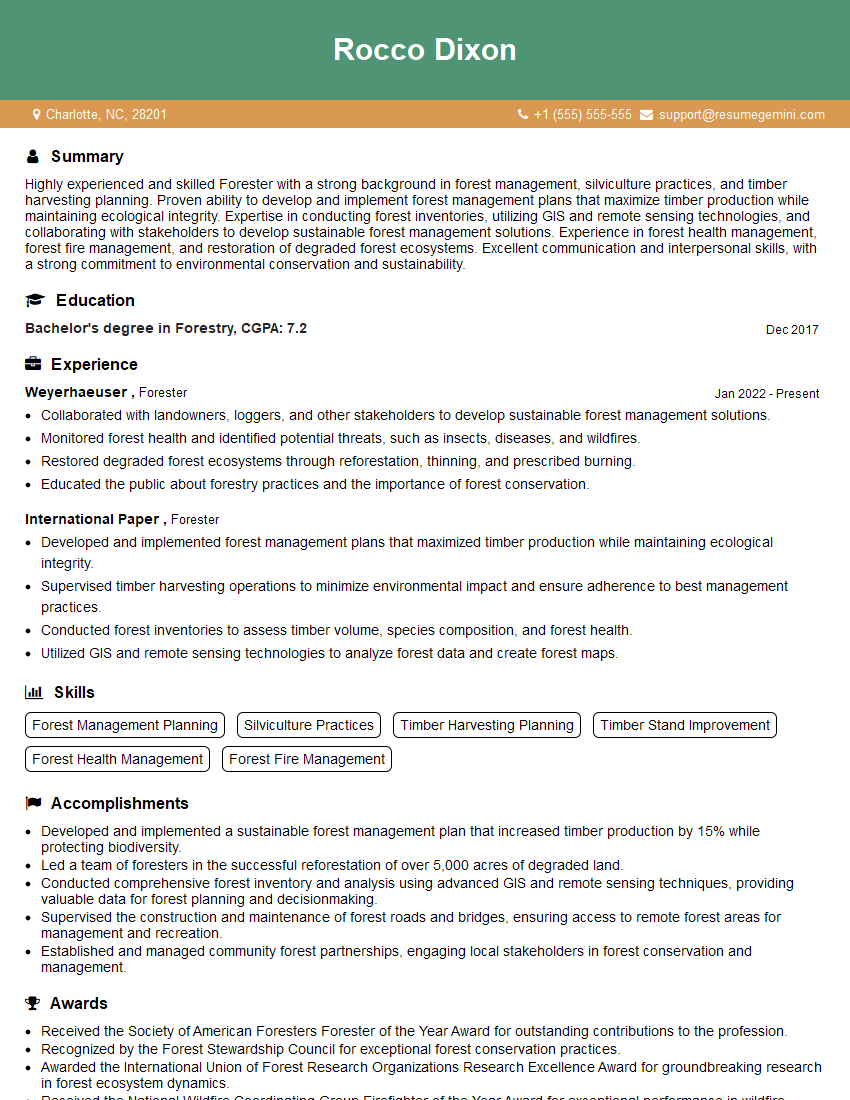
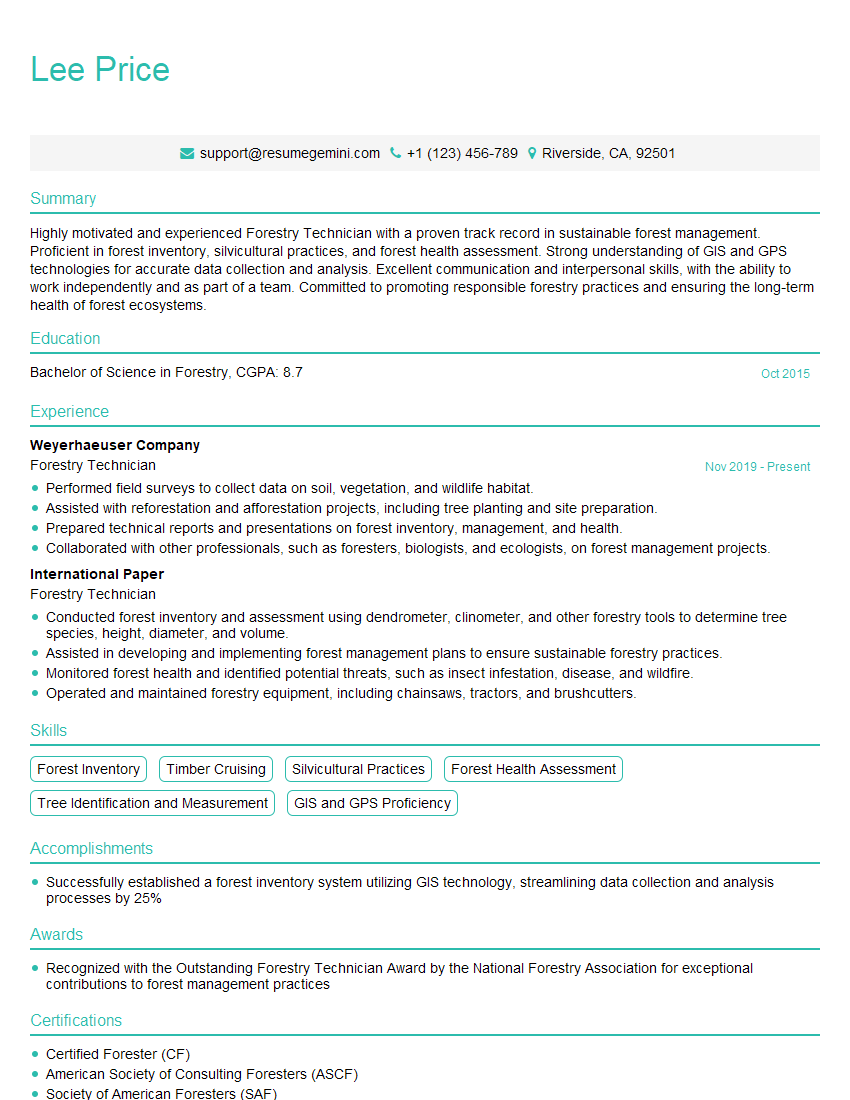
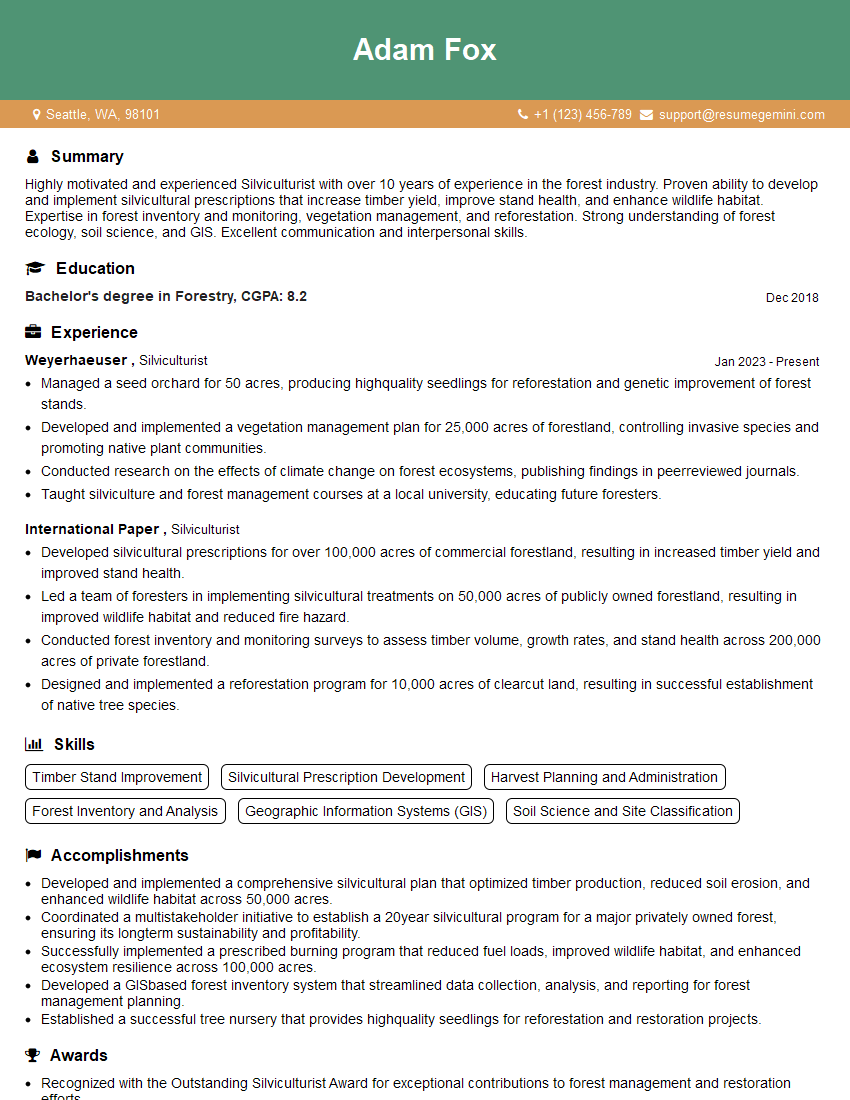
Mastering Timber Cruising and Sampling opens doors to exciting career opportunities within forestry, resource management, and consulting. A strong foundation in these skills is highly valued by employers. To maximize your job prospects, it’s crucial to create a professional and ATS-friendly resume that effectively highlights your qualifications. We strongly encourage you to use ResumeGemini, a trusted resource for building compelling resumes. ResumeGemini provides examples of resumes tailored specifically to Timber Cruising and Sampling roles, guiding you in presenting your skills and experience in the most impactful way.

Explore more articles
Users Rating of Our Blogs
Share Your Experience
We value your feedback! Please rate our content and share your thoughts (optional).
What Readers Say About Our Blog
Really detailed insights and content, thank you for writing this detailed article.
IT gave me an insight and words to use and be able to think of examples