Feeling uncertain about what to expect in your upcoming interview? We’ve got you covered! This blog highlights the most important Milk Processing and Manufacturing Technologies interview questions and provides actionable advice to help you stand out as the ideal candidate. Let’s pave the way for your success.
Questions Asked in Milk Processing and Manufacturing Technologies Interview
Q 1. Explain the process of pasteurization and its impact on milk quality.
Pasteurization is a heat treatment process that eliminates harmful microorganisms in milk, significantly extending its shelf life and enhancing its safety for consumption. It involves heating milk to a specific temperature for a predetermined time, then rapidly cooling it. The most common methods are:
- High-Temperature Short-Time (HTST) pasteurization: Milk is heated to 72°C (161°F) for 15 seconds. This is the most widely used method due to its efficiency and effectiveness in preserving milk quality.
- Ultra-High Temperature (UHT) pasteurization: Milk is heated to 135°C (275°F) for 2 to 5 seconds. This method results in a longer shelf life, often without refrigeration, but can slightly alter the flavor profile.
The impact on milk quality is primarily positive. Pasteurization effectively eliminates pathogens like Salmonella, E. coli, and Listeria, making it safe for consumption. While it can cause some minor changes in taste and nutrient content (e.g., slight reduction in some vitamins), these are generally far outweighed by the substantial gains in safety and shelf life. Imagine the difference between milk that spoils within days versus milk that can last for weeks – that’s the impact of pasteurization.
Q 2. Describe the different types of homogenization and their effects on milk.
Homogenization is a process that reduces the size of fat globules in milk, preventing cream separation and creating a more uniform texture. There are primarily two types:
- High-Pressure Homogenization: This is the most common method. Milk is forced under high pressure (typically 1500-2500 psi) through a narrow valve, breaking down the fat globules into smaller, more stable particles. This prevents creaming, ensuring a consistent texture and appearance throughout the shelf life of the milk.
- Low-Pressure Homogenization: This method uses lower pressure and is sometimes used in conjunction with other processing steps. It is generally less effective in reducing fat globule size compared to high-pressure homogenization.
The effects on milk are significant. Homogenization results in a smoother, more consistent texture and prevents the separation of cream, which would lead to a less appealing product. However, it can slightly increase the viscosity of the milk and may affect the mouthfeel, making it feel slightly thicker than non-homogenized milk. It also potentially enhances the susceptibility of milk to oxidation, so appropriate packaging and storage are crucial.
Q 3. What are the key quality control parameters for milk during processing?
Key quality control parameters for milk during processing are crucial for ensuring product safety and consistency. These parameters are monitored throughout the entire process, from raw milk reception to final packaging. Some of the most important include:
- Total Bacterial Count (TBC): Measures the overall number of bacteria present. High TBC indicates potential contamination and poor hygiene practices.
- Somatic Cell Count (SCC): Indicates the presence of white blood cells, reflecting the health status of the cow and potential udder infections. High SCC can negatively impact milk quality.
- Fat Content: Ensures the milk meets the required fat percentage standards.
- Protein Content: Checks the protein levels, which are important for nutritional value.
- pH: Measures the acidity, indicating freshness and potential spoilage. Changes in pH can alter the taste and texture of the milk.
- Titratable Acidity: Measures the amount of acid present, providing an indication of bacterial growth and spoilage.
- Temperature: Maintaining the correct temperature throughout the process is critical to prevent bacterial growth and maintain product quality.
Regular monitoring of these parameters ensures compliance with safety and quality standards, allowing for early detection of problems and prompt corrective actions.
Q 4. How do you ensure the sanitation and hygiene standards in a dairy plant?
Maintaining sanitation and hygiene standards in a dairy plant is paramount to producing safe and high-quality milk products. This requires a comprehensive approach, including:
- Good Manufacturing Practices (GMP): Strict adherence to GMP guidelines, which encompass all aspects of plant operation, from personnel hygiene to equipment cleaning and maintenance.
- Cleaning-in-Place (CIP) systems: Automated systems that clean and sanitize processing equipment without manual dismantling. CIP systems use hot water, detergents, and sanitizers to eliminate bacteria and residues.
- Sanitizers: Regular use of effective sanitizers like chlorine, iodine, or peracetic acid to eliminate microorganisms on surfaces and equipment.
- Personnel Hygiene: Strict hygiene protocols for employees, including handwashing, protective clothing, and hairnets, to prevent contamination.
- Pest Control: Implementation of effective pest control measures to prevent infestation and contamination.
- Regular Inspections and Monitoring: Regular inspections of equipment, facilities, and processes to identify and address potential hygiene issues.
Think of it as a layered defense strategy. Each step reinforces the others, ensuring a consistently safe and clean environment for milk processing. Routine audits and employee training are crucial for maintaining these standards.
Q 5. Explain the principles of ultrafiltration and its applications in dairy processing.
Ultrafiltration (UF) is a membrane filtration process that separates milk components based on their size. It uses membranes with specific pore sizes to retain larger molecules, such as proteins and calcium, while allowing smaller molecules like lactose and water to pass through. This principle allows for concentration of milk components or fractionation into different streams.
Applications in dairy processing include:
- Concentration of milk proteins: UF concentrates whey proteins, creating higher-protein products like whey protein concentrates and isolates.
- Production of milk protein concentrates (MPC): UF concentrates milk proteins, resulting in a higher protein content and improved functionality in various applications.
- Lactose removal: While not the primary purpose, UF can contribute to partial lactose removal, beneficial for lactose-intolerant consumers.
- Production of demineralized whey: UF can remove minerals from whey, creating specialized products for specific uses.
In essence, ultrafiltration is a powerful tool for tailoring milk components to meet specific product requirements. It’s a precise technique that allows for functional improvements and economic efficiency in dairy production.
Q 6. What are the common defects found in milk products and their causes?
Milk and dairy products can suffer from several defects, impacting their quality, shelf life, and consumer acceptability. Some common defects include:
- Off-flavors: These can arise from various sources, including feed contamination (e.g., garlic, onion), microbial growth, oxidation of fats (rancidity), or enzymatic reactions. A sour taste often indicates bacterial spoilage.
- Sediment: Presence of undesirable solids in milk, often indicative of poor hygiene or inadequate filtration. Sediment can also be due to milk powder dissolving poorly.
- Whey separation: Separation of whey from the curd in cheese production, often caused by insufficient rennet, incorrect temperature, or inadequate processing conditions.
- Sandiness in yogurt: Crystalline calcium phosphate deposits, often resulting from high calcium levels and low pH.
- Changes in color: Milk may turn yellow due to beta-carotene oxidation or brown due to the Maillard reaction.
Understanding the causes of these defects is crucial for implementing effective quality control measures, improving processing techniques, and ultimately preventing defects from occurring in the first place. Careful monitoring of raw materials, strict hygiene protocols, and optimized processing conditions are essential.
Q 7. Describe the different methods for milk powder production.
Milk powder production involves removing water from milk to create a concentrated, shelf-stable product. The primary methods include:
- Roller drying: Milk is spread as a thin film onto heated rollers, evaporating the water. This method is relatively inexpensive but produces a lower-quality powder, often with a slightly cooked flavor.
- Spray drying: Milk is atomized into fine droplets and sprayed into a hot-air chamber. The water evaporates rapidly, creating a fine powder. Spray drying produces higher-quality powder with better solubility and flavor retention. This is the more commonly used method for producing high-quality milk powders.
The choice of method depends on factors such as the desired product quality, production scale, and cost considerations. Spray drying is preferred for premium milk powders, while roller drying might be suitable for products with less stringent quality requirements.
Q 8. Explain the role of packaging in maintaining the quality and shelf life of milk products.
Packaging plays a crucial role in preserving the quality and extending the shelf life of milk products. It acts as a barrier against external factors that can degrade milk, such as light, oxygen, and microorganisms. The right packaging prevents spoilage and maintains the nutritional value, taste, and texture of the milk.
- Protection from Light: Exposure to light can cause oxidation, leading to off-flavors and loss of vitamins. Opaque packaging, like cartons or opaque plastic bottles, is essential.
- Oxygen Barrier: Oxygen can cause rancidity and oxidation, affecting the taste and smell of the milk. Packaging materials with low oxygen permeability, such as multilayer films or Tetra Pak cartons, are crucial.
- Microbial Barrier: Packaging must prevent the entry of microorganisms that can cause spoilage. Aseptic packaging, which sterilizes both the product and the packaging before filling, is a common approach to achieving this.
- Maintaining Temperature: For certain milk products, like refrigerated milk, the packaging needs to maintain a cold chain to prevent bacterial growth. Insulated containers or refrigerated transport are critical here.
For example, UHT (Ultra-High Temperature) processed milk, with its extended shelf life, often comes in shelf-stable packaging, while fresh pasteurized milk requires refrigerated packaging that indicates the need for cold storage.
Q 9. What are the common microorganisms that can contaminate milk and how are they controlled?
Milk is a rich medium for microbial growth due to its high nutrient content. Common contaminants include:
- Escherichia coli (E. coli): Indicates fecal contamination, suggesting poor hygiene practices during milking or processing.
- Salmonella spp.: Can cause foodborne illness, highlighting the importance of sanitary practices throughout the milk production chain.
- Listeria monocytogenes: A particularly dangerous pathogen that can survive refrigeration, emphasizing the need for strict temperature controls.
- Staphylococcus aureus: Produces toxins that cause food poisoning, requiring careful handling and rapid cooling of milk.
- Bacillus cereus: Another bacterium capable of producing toxins, demanding meticulous cleaning and sanitation in processing equipment.
- Psychrotrophic bacteria: These bacteria can grow at low temperatures, potentially spoiling refrigerated milk even with proper refrigeration. This highlights the need for pasteurization to effectively eliminate them.
Control measures include:
- Good hygiene practices: Maintaining cleanliness during milking, handling, and processing.
- Pasteurization: Heat treatment that kills most microorganisms.
- Ultra-high temperature (UHT) processing: Sterilizes milk, greatly extending its shelf life.
- Refrigeration: Slows down microbial growth.
- Proper sanitation of equipment: Regular cleaning and disinfection of all surfaces that come into contact with milk.
Q 10. Describe the principles of good manufacturing practices (GMP) in a dairy environment.
Good Manufacturing Practices (GMP) in a dairy environment encompass a comprehensive system of procedures designed to ensure the safety, quality, and consistency of milk products. These practices cover all aspects of production, from raw material sourcing to finished product distribution.
- Sanitation and Hygiene: Maintaining a clean and sanitary environment is paramount. This includes regular cleaning and disinfection of equipment, surfaces, and facilities.
- Personnel Hygiene: Employees must maintain high standards of personal hygiene, including handwashing, protective clothing, and hairnets.
- Raw Material Control: Incoming raw milk must be tested for quality and safety parameters, including bacterial counts and somatic cell counts. Only milk meeting the required standards should be accepted.
- Process Control: Careful monitoring of processing parameters, such as temperature, time, and pressure, is essential to ensure consistent product quality. Regular calibration and maintenance of equipment are crucial.
- Equipment Maintenance: Proper maintenance of equipment is vital to prevent breakdowns and maintain product quality. This includes routine inspections, cleaning, lubrication, and repair.
- Traceability: A robust traceability system should be in place to track milk from farm to consumer. This enables rapid identification and removal of contaminated products in case of a recall.
- Pest Control: Effective pest control measures are necessary to prevent contamination from insects and rodents.
- Documentation: Thorough documentation of all processing steps is essential to track quality and compliance with regulations.
Imagine a dairy plant without GMP. The risk of contamination and product spoilage would be significantly high, potentially leading to serious health consequences and financial losses. GMP is not just a set of rules, it’s a culture of quality and safety.
Q 11. How do you troubleshoot common equipment malfunctions in a dairy plant?
Troubleshooting equipment malfunctions in a dairy plant requires a systematic approach. The first step is to identify the problem, then gather information, diagnose the cause, and implement a solution.
- Identify the Problem: Observe the malfunction and note any unusual noises, smells, or visual signs.
- Gather Information: Check the equipment’s operating manual, review maintenance logs, and talk to operators to gather information about the problem’s history and any prior attempts to fix it.
- Diagnose the Cause: Based on the information gathered, attempt to determine the root cause. This might involve checking electrical connections, inspecting pumps and valves, testing sensors, or analyzing process parameters.
- Implement a Solution: Once the cause is identified, implement a solution. This might involve simple repairs, part replacements, or more complex adjustments to the process. Thoroughly document the problem, the steps taken to diagnose it, and the final solution.
- Preventative Maintenance: Regular preventative maintenance significantly reduces the likelihood of equipment failure. This includes routine inspections, cleaning, lubrication, and calibration.
For example, if a pasteurizer malfunctions, a first step would be to check if the temperature sensors are accurate and if the heating elements are working properly. If these checks reveal no issues, more in-depth checks into the control system or potential blockages in the pipeline might be needed.
Q 12. Explain the different types of milk and their processing requirements.
Various types of milk exist, each requiring specific processing needs:
- Whole Milk: Requires pasteurization to kill harmful bacteria. Homogenization may be applied to prevent cream separation.
- Skim Milk: The fat is removed during processing. Processing is similar to whole milk, requiring pasteurization and possibly homogenization.
- Low-Fat Milk: Part of the fat is removed, requiring similar processing as whole milk.
- Flavored Milk: Additives, like flavorings and sweeteners, are added after pasteurization. Maintaining stability and shelf life is important.
- UHT Milk: Undergoes ultra-high temperature processing, killing virtually all microorganisms, extending shelf life considerably.
- Organic Milk: Produced from cows raised under specific organic farming practices. Processing is similar to conventional milk, but with strict adherence to organic regulations.
- Powdered Milk: Milk is evaporated and dried, requiring careful control of temperature and moisture to avoid denaturation of proteins.
For instance, UHT milk requires a higher temperature during processing to ensure sterilization, while powdered milk necessitates precise control of the drying process to maintain its quality and solubility.
Q 13. What are the regulatory requirements for milk processing and labeling?
Regulatory requirements for milk processing and labeling vary by country and region but generally aim to ensure the safety, quality, and accuracy of information provided to consumers.
- Safety and Quality Standards: Regulations define standards for microbial limits, fat content, protein levels, and other parameters. These standards are enforced through regular inspections and testing.
- Labeling Requirements: Regulations dictate what information must be displayed on milk labels, including ingredients, nutritional information, best-before dates, and country of origin. Accurate labeling is crucial for consumer protection.
- Food Safety Regulations: These encompass regulations regarding hygiene practices, processing procedures, and traceability throughout the production chain. Compliance with these regulations is paramount.
- Traceability and Recall Systems: Regulations often require milk processors to have robust traceability systems in place to quickly identify and recall contaminated products if necessary.
- Organic Certification: Regulations define standards for organic milk production, processing, and labeling. Compliance with these standards is essential for certifying milk as organic.
These regulations are crucial for consumer protection and fair trade practices. Non-compliance can result in penalties, product recalls, and damage to brand reputation. For example, incorrect labeling or exceeding microbial limits can lead to serious consequences.
Q 14. Describe the role of a quality control laboratory in a dairy plant.
The quality control laboratory in a dairy plant plays a vital role in ensuring the safety and quality of milk products. It conducts various tests at different stages of production.
- Raw Milk Testing: Incoming raw milk is tested for various parameters, including bacterial count, somatic cell count, fat content, protein content, and presence of inhibitors.
- In-Process Testing: Tests are conducted during processing to monitor parameters like temperature, pH, and viscosity to ensure compliance with standards.
- Finished Product Testing: Finished milk products are tested for microbial quality, fat content, protein levels, and other relevant parameters.
- Shelf Life Studies: The laboratory conducts shelf-life studies to assess the product’s stability and quality over time under various storage conditions.
- Sensory Evaluation: Sensory panels evaluate the taste, aroma, texture, and appearance of the products.
- Microbiological Testing: This is a critical area, testing for the presence and levels of various microorganisms, pathogens, and spoilage organisms.
Essentially, the QC lab acts as the ‘guardian’ of product quality and safety. Their findings help to make critical decisions regarding product release and necessary adjustments to the manufacturing process. A robust QC lab is essential for maintaining a high level of consumer confidence.
Q 15. How do you manage inventory and ensure efficient supply chain management in a dairy plant?
Efficient inventory and supply chain management in a dairy plant is crucial for minimizing waste, maximizing profitability, and ensuring consistent product quality. It’s like running a well-oiled machine where every part works in harmony. We use a combination of strategies.
Real-time Inventory Tracking: We employ sophisticated software systems that monitor milk intake, processing stages, and finished product storage levels in real-time. This allows us to anticipate shortages and prevent overstocking, crucial for managing perishable goods.
Predictive Modeling: Based on historical data, seasonal trends, and market demand forecasts, we develop predictive models to estimate future milk needs and optimize procurement from farmers. This proactive approach ensures a steady supply of raw milk.
Supplier Relationship Management (SRM): We cultivate strong relationships with our milk suppliers, ensuring consistent quality and timely delivery. Regular communication and transparent agreements are key to a reliable supply chain.
First-In, First-Out (FIFO) System: We strictly adhere to the FIFO system for storing raw milk and finished products. This prevents spoilage and ensures that the oldest products are used or sold first.
Quality Control at Every Stage: Regular quality checks at each stage, from raw milk reception to finished product packaging, are paramount. This ensures that only high-quality products reach the market.
For example, during peak seasons, our predictive model might suggest increasing milk procurement from suppliers, and during lean seasons, it helps us manage inventory more efficiently to avoid spoilage.
Career Expert Tips:
- Ace those interviews! Prepare effectively by reviewing the Top 50 Most Common Interview Questions on ResumeGemini.
- Navigate your job search with confidence! Explore a wide range of Career Tips on ResumeGemini. Learn about common challenges and recommendations to overcome them.
- Craft the perfect resume! Master the Art of Resume Writing with ResumeGemini’s guide. Showcase your unique qualifications and achievements effectively.
- Don’t miss out on holiday savings! Build your dream resume with ResumeGemini’s ATS optimized templates.
Q 16. Explain the principles of HACCP (Hazard Analysis and Critical Control Points) in dairy processing.
HACCP (Hazard Analysis and Critical Control Points) is a systematic preventive approach to food safety. In dairy processing, it’s our blueprint for ensuring safe and wholesome products. We identify potential hazards at each stage, determine critical control points, and establish monitoring procedures to prevent or eliminate those hazards.
Hazard Analysis: We systematically identify biological, chemical, and physical hazards that could contaminate milk. This includes bacteria like E. coli and Salmonella, chemical residues, and foreign objects.
Critical Control Points (CCPs): We determine CCPs, specific points in the process where control is essential to prevent or eliminate a hazard. Examples in dairy processing include pasteurization, cleaning and sanitization, and refrigeration.
Critical Limits: For each CCP, we establish critical limits—maximum or minimum values—that must be met to ensure safety. For example, the pasteurization temperature must reach and maintain a specific level for a defined time.
Monitoring: We continuously monitor CCPs using calibrated instruments and record the data. This allows us to detect deviations from critical limits immediately.
Corrective Actions: If a deviation is detected, we have pre-defined corrective actions to bring the process back within critical limits. This might involve repeating the pasteurization process or discarding contaminated batches.
Verification Procedures: Regular audits and verification procedures ensure the HACCP plan is effective and consistently followed. This might involve microbiological testing of finished products.
Record Keeping: Meticulous record-keeping is essential, documenting every step of the process, including monitoring data, corrective actions, and verification activities.
Imagine a faulty valve in a pasteurizer. A well-designed HACCP plan would identify this as a CCP and set critical limits for temperature and pressure. If the valve malfunctions, the monitoring system alerts us, triggering corrective actions and preventing unsafe product from reaching consumers.
Q 17. How do you maintain efficient energy consumption in a dairy plant?
Efficient energy consumption is paramount for a dairy plant’s sustainability and profitability. We implement various strategies, focusing on both operational efficiency and technological upgrades.
Energy-Efficient Equipment: Investing in energy-efficient processing equipment, such as high-efficiency motors and variable-speed drives, significantly reduces energy consumption. For example, using heat recovery systems to utilize waste heat from pasteurization in other parts of the process.
Process Optimization: We continuously optimize our processing procedures to minimize energy usage. This might include optimizing cleaning-in-place (CIP) cycles to reduce water and energy consumption.
Insulation and Building Management: Proper insulation of pipes, tanks, and buildings reduces heat loss and lowers energy demand for heating and cooling. A smart building management system can control lighting, heating, and cooling more efficiently.
Renewable Energy Sources: Exploring renewable energy sources like solar panels or biogas from dairy waste can significantly reduce our reliance on traditional energy sources and decrease our carbon footprint.
Regular Maintenance: Proper maintenance of equipment ensures it operates at peak efficiency, reducing energy waste. This includes regular cleaning and lubrication of machinery.
For instance, we might switch from traditional incandescent lighting to energy-efficient LEDs, resulting in substantial savings in electricity costs.
Q 18. Describe the different methods for milk preservation.
Milk preservation aims to extend its shelf life while maintaining its nutritional and sensory qualities. Several methods are employed, each with its advantages and disadvantages.
Pasteurization: This heat treatment eliminates harmful microorganisms while preserving most of the milk’s nutritional value. High-temperature short-time (HTST) pasteurization is commonly used, heating milk to 72°C for 15 seconds.
Ultra-High Temperature (UHT) Processing: This involves heating milk to much higher temperatures (135-150°C) for a short duration, resulting in a significantly longer shelf life (months) without refrigeration.
Refrigeration: Rapid cooling and storage at low temperatures (4°C or below) slows down microbial growth, maintaining the milk’s quality for a limited time (a few days to a week).
Freezing: Freezing milk at very low temperatures (-18°C or below) can preserve it for extended periods. However, ice crystal formation can alter the texture and some nutritional components upon thawing.
Addition of Preservatives: Although not common in many countries due to consumer preference, certain preservatives might be added to extend shelf life. However, this is usually subject to stringent regulations.
Each method is chosen based on the intended shelf life and the desired final product. For example, UHT milk is ideal for long shelf life without refrigeration, while pasteurized milk suits consumers who prefer a fresh taste and shorter shelf life.
Q 19. What is the importance of water quality in dairy processing?
Water quality is absolutely critical in dairy processing. It directly impacts product safety, quality, and the efficiency of cleaning and sanitization processes. Contaminated water can introduce pathogens into the milk, leading to spoilage or foodborne illnesses.
Microbial Contamination: Water containing bacteria, viruses, or other microorganisms can contaminate the milk and processing equipment, jeopardizing food safety.
Chemical Contamination: The presence of chemicals like chlorine, pesticides, or heavy metals can affect the milk’s taste, odor, and overall quality. It can also be detrimental to the health of consumers.
Cleaning and Sanitization: High-quality water is essential for effective cleaning and sanitization of processing equipment, preventing microbial growth and cross-contamination. Hard water can reduce the effectiveness of cleaning agents.
Boiler Feedwater: Water used in boilers must be of high purity to prevent scaling and corrosion, ensuring efficient operation and longevity of boiler systems.
Product Quality: Water quality can directly affect the taste, odor, and color of the final product. For example, chlorine in water can impart off-flavors to milk.
Imagine using contaminated water for cleaning; this could lead to a major outbreak of foodborne illness, potentially causing significant damage to the plant’s reputation and facing severe legal consequences.
Q 20. Explain the principles of evaporation and its role in milk processing.
Evaporation is a crucial step in many dairy processing applications, primarily for concentrating milk or whey. It removes water from the product, increasing the concentration of solids like proteins, lactose, and fats.
Principle: Evaporation involves heating the milk under reduced pressure, which lowers the boiling point of water. This allows water to evaporate at a lower temperature, preventing damage to heat-sensitive components in the milk.
Types of Evaporators: Various evaporators exist, including falling-film evaporators, rising-film evaporators, and plate evaporators. Each design offers specific advantages concerning efficiency and product handling.
Role in Milk Processing: Evaporation is used to produce concentrated milk products like sweetened condensed milk and evaporated milk. It’s also used in the production of whey protein concentrates and other dairy ingredients.
Benefits: Evaporation reduces transportation and storage costs by reducing the volume of the product. It also increases the shelf life of concentrated products.
Considerations: The design and operation of evaporators must carefully control temperature and pressure to prevent fouling and preserve the quality of the product.
Think of making jam—evaporation concentrates the fruit juice, increasing its sweetness and thickness. Similarly, in dairy processing, evaporation concentrates milk, increasing the solids content and altering its texture and shelf life.
Q 21. How do you manage waste and wastewater in a dairy plant?
Waste management in a dairy plant is crucial for environmental protection and regulatory compliance. It involves handling various waste streams, including whey, wastewater, and solid waste.
Whey Processing: Whey, a byproduct of cheesemaking, is a significant waste stream. We utilize several strategies, including:
- Processing whey into valuable products like whey protein concentrate or lactose.
- Using whey as animal feed.
- Anaerobic digestion of whey to produce biogas, which can be used as a renewable energy source.
Wastewater Treatment: Dairy wastewater contains high levels of organic matter, fats, and other pollutants. We employ a multi-stage treatment process, including:
- Screening to remove large solids.
- Primary clarification to remove suspended solids.
- Biological treatment to break down organic matter.
- Disinfection to eliminate pathogens.
The treated water is usually reused within the plant or safely discharged into the environment, complying with all regulatory standards.
Solid Waste Management: Solid waste includes packaging materials, spent cleaning agents, and other solid byproducts. We follow a waste segregation and recycling program, minimizing landfill disposal and promoting sustainable practices.
Regulatory Compliance: We strictly adhere to all local and national regulations concerning waste discharge and environmental protection. Regular monitoring and reporting are vital to maintaining compliance.
For example, instead of discarding whey, we sell it to a company that produces animal feed, creating an added revenue stream while minimizing environmental impact. This is an example of a circular economy model.
Q 22. Describe the different types of dairy products and their manufacturing processes.
The dairy industry offers a vast array of products, each with its unique manufacturing process. Let’s explore some key examples:
- Fluid Milk: This includes whole milk, skim milk, 2%, etc. The process involves receiving raw milk, standardization (adjusting fat content), pasteurization (heat treatment to kill harmful bacteria), homogenization (reducing fat globule size for a creamy texture), and packaging. Think of it like preparing a delicious smoothie – you need to blend the ingredients (standardize), heat it up (pasteurize) to ensure safety, and then serve it (package).
- Yogurt: Fermented milk product created by adding bacterial cultures (like Lactobacillus bulgaricus and Streptococcus thermophilus) to milk. These cultures produce lactic acid, causing the milk to thicken and develop its characteristic tangy flavor. The process involves pasteurization, inoculation with cultures, incubation (controlled temperature for fermentation), and cooling before packaging. It’s like making sourdough bread – you need specific ingredients (cultures) and a controlled environment (incubation) to achieve the desired result.
- Cheese: Cheesemaking involves coagulation of milk proteins (casein) using enzymes (rennet) or acids. The resulting curd is separated from the whey, then processed based on the desired cheese type (e.g., pressed, aged). Imagine it as creating a sculpture from milk – you need to carefully shape (curd formation) and refine (aging) the material to get the final product.
- Butter: Butter is made by churning cream, separating the fat globules from the buttermilk. This process involves separating the cream from the milk, ripening it (allowing the cream to become more acidic), and churning it to form butter granules, which are then washed and worked to develop its smooth texture. It’s like separating the fat from a homemade salad dressing – except the “dressing” is cream and the fat creates the butter.
- Ice Cream: Ice cream production requires careful control of temperature, incorporating air (overrun), and incorporating flavorings and stabilizers. The process includes blending the ingredients, pasteurization, homogenization, aging, freezing, and hardening. The key is balancing the sweetness, creaminess, and temperature to achieve the perfect texture. It’s like making a layered cake – you carefully assemble each ingredient (flavorings, air) and ensure it freezes properly to create a desirable outcome.
Each of these products has specific quality control checkpoints and variations in the process depending on desired characteristics.
Q 23. How do you ensure traceability of milk products throughout the supply chain?
Traceability in the dairy supply chain is crucial for ensuring food safety and consumer confidence. We achieve this through a combination of methods:
- Farm-level Tracking: Each farm supplying milk is assigned a unique identifier. Milk is tested regularly at the farm to meet quality standards. This data is recorded and linked to the milk’s journey. Think of it like a product barcode, but for the raw milk itself. Every step is documented.
- Batch Tracking: Milk is processed in batches, and each batch receives a unique identification number that tracks its entire journey through processing and packaging. This helps to isolate any issues that may occur.
- RFID (Radio-Frequency Identification): RFID tags can be attached to milk containers throughout the process, allowing for real-time tracking of location and temperature. It’s a kind of electronic tracking system to ensure nothing gets lost in transit.
- Blockchain Technology: Emerging technologies like blockchain provide a secure, transparent, and tamper-proof record of the milk’s journey. Each transaction or step in the supply chain is recorded on a shared, distributed ledger. This provides a verifiable audit trail of the milk’s history.
- Data Management Systems: Sophisticated software systems integrate data from different stages of the supply chain, providing a comprehensive overview of the milk’s journey from farm to consumer. It helps build a complete picture of the product’s life cycle.
By combining these methods, we can quickly trace a product back to its origin in case of a problem, which is vital for recalls and overall consumer safety.
Q 24. What are the advantages and disadvantages of different milk packaging materials?
The choice of packaging material significantly impacts the shelf life, cost, and environmental impact of dairy products. Let’s compare some common options:
- Polyethylene (PE): A cost-effective, flexible material commonly used for milk jugs and pouches. It’s lightweight but can be less durable and may not offer the same barrier properties as other materials.
- High-Density Polyethylene (HDPE): A more rigid and durable plastic often used for milk bottles. It offers better barrier properties than standard PE and is recyclable. However, it’s heavier than PE.
- Cartons (Paperboard/Laminate): These are made from a combination of paperboard, polyethylene, and aluminum foil, offering excellent barrier properties against light, oxygen, and moisture. They are recyclable but require more complex recycling processes.
- Glass: Provides excellent barrier properties and is reusable, but it’s heavy, breakable, and requires more energy to produce and transport.
Advantages and Disadvantages Summary:
| Material | Advantages | Disadvantages |
|---|---|---|
| PE | Cost-effective, flexible | Less durable, lower barrier properties |
| HDPE | Durable, recyclable, good barrier properties | Heavier than PE |
| Cartons | Excellent barrier properties, recyclable | Complex recycling, higher cost |
| Glass | Excellent barrier properties, reusable | Heavy, breakable, high energy consumption |
The optimal choice depends on factors such as product type, shelf-life requirements, cost considerations, and environmental concerns. For example, UHT (Ultra-High Temperature) milk may be packaged in cartons for extended shelf life, while fresh milk might be packaged in HDPE bottles for its durability.
Q 25. Explain the principles of membrane filtration and its applications in dairy.
Membrane filtration is a separation process that uses semi-permeable membranes to separate components based on their size and charge. It’s widely applied in the dairy industry for various purposes:
Principles: A membrane with defined pore sizes is used. Larger molecules are retained on one side (retentate), while smaller molecules pass through (permeate). Different types of membranes exist, including microfiltration, ultrafiltration, and nanofiltration, each with different pore sizes and applications. It’s like using a sieve – you use a sieve with different sized holes (membrane pores) to separate the components of a mixture (milk).
- Microfiltration (MF): Removes bacteria and spores, used for clarification and pasteurization.
- Ultrafiltration (UF): Separates proteins (whey proteins), used in cheese production and whey protein concentrate.
- Nanofiltration (NF): Removes salts and small molecules, used in demineralization and concentration of milk.
Dairy Applications:
- Whey Protein Concentration: UF is used to concentrate whey proteins from whey, creating valuable ingredients for sports nutrition and other food applications. Imagine using a fine-mesh sieve to isolate the protein from the remaining liquid.
- Cheese Production: UF can be used to concentrate the milk prior to cheese making, increasing the yield of cheese while improving its quality and texture.
- Milk Clarification: MF removes bacteria and other solid particles, improving the quality and extending the shelf life of the milk.
- Lactose Reduction: NF can be used to reduce lactose content in milk, making it suitable for lactose-intolerant consumers.
Membrane filtration offers high efficiency, low energy consumption, and the ability to process large volumes of milk, making it an essential technology in modern dairy processing.
Q 26. How do you assess the shelf life of dairy products?
Assessing the shelf life of dairy products involves a combination of laboratory testing and modeling. The goal is to determine how long a product remains safe and maintains its quality attributes.
- Microbial Analysis: Testing for the presence and growth of spoilage and pathogenic microorganisms. This involves culturing samples and counting the number of bacteria present.
- Chemical Analysis: Evaluating changes in pH, acidity, and the presence of undesirable compounds such as volatile organic compounds (VOCs) indicating spoilage.
- Sensory Evaluation: Assessing changes in flavor, aroma, texture, and appearance. Trained panelists evaluate samples throughout their storage period.
- Accelerated Shelf-Life Testing: Samples are stored at elevated temperatures to speed up spoilage and predict shelf life under normal storage conditions. It’s like putting food in a hot car to see how quickly it spoils – you can extrapolate the findings to the shelf life at room temperature.
- Predictive Modeling: Using mathematical models to predict shelf life based on the rate of deterioration observed in various tests.
The shelf life is typically determined as the time it takes for a product to exceed a predefined limit for microbial load, chemical changes, or sensory attributes. This information is then used for labeling and storage recommendations.
Q 27. Describe your experience with dairy plant automation and control systems.
I have extensive experience with dairy plant automation and control systems, from design and implementation to troubleshooting and optimization. My experience includes working with:
- PLC (Programmable Logic Controllers): These are the brains of the automation system, controlling various aspects of the process such as temperature, flow rates, and cleaning cycles. I’ve worked with different PLC brands (e.g., Siemens, Rockwell Automation) and have experience in programming and troubleshooting PLC systems. Think of the PLC as the “computer” that controls the equipment.
- SCADA (Supervisory Control and Data Acquisition) Systems: These systems monitor and control the entire plant, providing a centralized view of all process parameters. I’ve worked with SCADA systems to visualize data, generate reports, and manage alarms. The SCADA is the “dashboard” showing the complete picture of all automated processes.
- Process Instrumentation: I have experience with various sensors and instruments used to monitor and control process parameters, including temperature sensors, flow meters, and pressure transducers. It’s the “sensors” which provide real time information to the control system.
- Cleaning-in-Place (CIP) Systems: I’ve worked with automated CIP systems for cleaning and sanitizing equipment, which are essential for maintaining hygiene and food safety. The automated cleaning systems ensure hygiene and food safety.
In a recent project, we implemented a new SCADA system in a dairy plant that improved efficiency by 15% and reduced downtime by 10%. This involved optimizing the PLC programs, improving the user interface, and integrating data from various sources. It also involved training plant operators to use the new system and implementing ongoing maintenance and upgrades.
Q 28. What are the emerging trends and technologies in dairy processing?
The dairy industry is constantly evolving, with several emerging trends and technologies shaping the future of dairy processing:
- Precision Fermentation: Producing dairy ingredients, like casein and whey protein, without the need for cows. This offers a more sustainable and scalable way to meet growing demand. This offers a way to have the same ingredients but with potentially less impact on the environment.
- Automation and Robotics: Increased automation through robotics and AI for tasks such as sorting, cleaning, and packaging, improving efficiency and reducing labor costs. Think of robots handling and packaging products.
- Big Data and Analytics: Using data analytics to optimize processes, predict equipment failures, and enhance quality control. Using data to improve efficiency and anticipate potential problems.
- Sustainable Packaging: Growing focus on eco-friendly packaging materials, such as biodegradable plastics and compostable cartons, reducing environmental impact. Focus on lowering the environmental footprint of packaging.
- Traceability and Blockchain Technology: Expanding the use of blockchain for enhanced transparency and traceability throughout the supply chain. This improves security and gives consumers more trust in the product.
- Personalized Nutrition: Tailoring dairy products to meet specific dietary needs and preferences, such as lactose-free and high-protein options. Providing tailored products for customers with specific needs.
These trends are driving innovation and improving efficiency, sustainability, and food safety in the dairy industry.
Key Topics to Learn for Milk Processing and Manufacturing Technologies Interview
- Milk Reception and Quality Control: Understanding milk composition, testing methods (e.g., somatic cell count, bacteria count), and quality assurance procedures.
- Standardization and Pasteurization: Principles of milk standardization (fat and solids adjustment), different pasteurization methods (HTST, UHT), and their impact on product quality and shelf life. Practical application: troubleshooting pasteurization equipment malfunctions.
- Homogenization and Separation: Understanding the principles of homogenization (reducing fat globule size), centrifugation (separation of cream and skim milk), and their effects on product texture and stability.
- Dairy Product Manufacturing: Processes involved in producing various dairy products (yogurt, cheese, butter, ice cream) including fermentation, coagulation, and maturation. Practical application: optimizing fermentation parameters for specific yogurt cultures.
- Packaging and Preservation: Different packaging materials and their properties, aseptic packaging techniques, and methods to extend the shelf life of dairy products. Problem-solving approach: identifying and resolving packaging defects that lead to spoilage.
- Cleaning and Sanitation (CIP): Principles of Cleaning-in-Place (CIP) systems, sanitation procedures, and their importance in maintaining hygiene and preventing contamination. Practical application: designing and implementing a CIP cycle for a specific piece of equipment.
- Process Control and Automation: Understanding process control systems, automation technologies used in dairy plants, and data analysis for process optimization. Problem-solving approach: diagnosing and resolving issues with automated systems.
- Food Safety and Regulations: Compliance with relevant food safety regulations (e.g., HACCP, GMP), understanding foodborne pathogens, and implementing preventive measures.
- Plant Operations and Maintenance: Basic understanding of plant layout, equipment maintenance schedules, and troubleshooting common equipment problems.
Next Steps
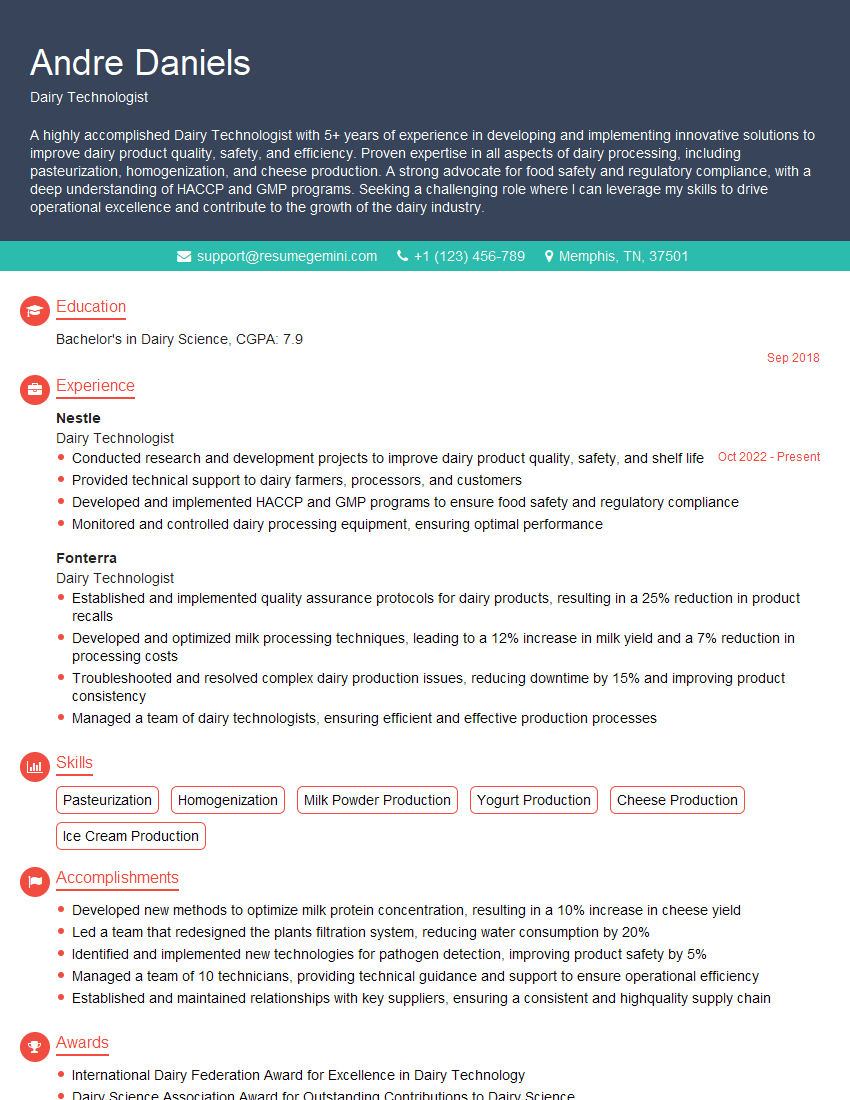
Mastering Milk Processing and Manufacturing Technologies opens doors to exciting career opportunities in a growing industry. A strong understanding of these processes is crucial for advancement and securing a competitive edge in the job market. To maximize your chances, focus on creating an ATS-friendly resume that highlights your skills and experience effectively. ResumeGemini is a trusted resource for building professional resumes, offering valuable tools and guidance to make your application stand out. Examples of resumes tailored to Milk Processing and Manufacturing Technologies are available to help you craft a compelling narrative showcasing your expertise.
Explore more articles
Users Rating of Our Blogs
Share Your Experience
We value your feedback! Please rate our content and share your thoughts (optional).
What Readers Say About Our Blog
Really detailed insights and content, thank you for writing this detailed article.
IT gave me an insight and words to use and be able to think of examples