Cracking a skill-specific interview, like one for Strong work ethic and a passion for storytelling, requires understanding the nuances of the role. In this blog, we present the questions you’re most likely to encounter, along with insights into how to answer them effectively. Let’s ensure you’re ready to make a strong impression.
Questions Asked in Strong work ethic and a passion for storytelling Interview
Q 1. Describe a project where your strong work ethic was crucial to its success.
My strong work ethic was instrumental in the success of a recent project where we launched a new storytelling initiative for a non-profit organization. The project involved creating compelling narratives, visually appealing materials, and a strategic outreach plan—all within a tight deadline and a limited budget. It wasn’t just about meeting the deadlines, but exceeding expectations. I approached the project with a structured, proactive mindset.
- Thorough Planning: I began by meticulously researching target audiences, identifying key storytelling angles, and creating detailed project timelines. This initial groundwork proved crucial for maintaining focus throughout the process.
- Consistent Effort: I dedicated long hours, often beyond the standard work day, to ensuring all elements were completed to a high standard. This included extensive research, scriptwriting, editing, and collaborating with the design team.
- Proactive Problem-Solving: Inevitably, challenges arose—a crucial interviewee cancelled, a design element required significant revisions. I addressed these issues immediately, proposing alternative solutions and collaborating effectively with the team to overcome hurdles.
The result? The campaign exceeded its engagement targets by 40%, demonstrating the direct impact of a dedicated approach on a challenging project. It became a powerful story in itself, showcasing the importance of perseverance and attention to detail.
Q 2. How do you maintain your motivation on long-term projects?
Maintaining motivation on long-term projects requires a strategic blend of planning, goal-setting, and self-care. It’s like embarking on a long journey; you need a map, milestones, and regular rest stops.
- Break Down Large Goals: I divide large projects into smaller, manageable tasks. This allows for frequent ‘wins’, providing a continuous sense of accomplishment and progress. Each completed task provides a boost to morale.
- Set Realistic Expectations: Setting overly ambitious goals early on can lead to burnout. It’s essential to set achievable targets and celebrate each milestone achieved. I use project management tools like Trello to visualize progress and track deadlines.
- Regular Reflection and Adjustment: I schedule regular check-ins to reflect on progress, identify any roadblocks, and adjust my strategy if necessary. This ensures I remain on track and address potential challenges proactively.
- Seek Feedback: Regularly seeking feedback from colleagues and supervisors provides valuable insight and keeps me focused on the project’s objectives.
- Self-Care is Crucial: Maintaining a healthy work-life balance is paramount. Regular breaks, exercise, and time spent pursuing personal interests prevent burnout and renew motivation.
By utilizing these techniques, I maintain enthusiasm and focus, transforming a potentially daunting task into a series of rewarding achievements.
Q 3. Give an example of how you overcame a challenge due to your work ethic.
During a particularly demanding project involving the creation of a multimedia presentation, a critical software glitch threatened to derail our entire schedule. The deadline was looming, and panic was setting in. My strong work ethic kicked in. Instead of succumbing to stress, I adopted a systematic approach.
- Problem Definition: First, I pinpointed the exact nature of the glitch, carefully documenting the error messages and testing different solutions.
- Research and Exploration: I researched online forums, contacted the software developers, and experimented with different workarounds. This included exploring alternative software and adapting our existing workflow.
- Collaboration and Problem Solving: I collaborated with the team, sharing my findings and brainstorming solutions together. This collaborative approach not only resolved the problem more efficiently but also fostered a stronger team spirit.
Eventually, we discovered a workaround that, while not ideal, allowed us to complete the project on time and to the required standard. The experience strengthened my resolve and highlighted the value of perseverance in the face of adversity. It underscored that a strong work ethic isn’t just about putting in the hours, but also about effectively overcoming challenges.
Q 4. How do you prioritize tasks when facing multiple deadlines?
Prioritizing tasks with multiple deadlines involves a strategic approach that combines planning, organization, and effective time management. It’s akin to being an air traffic controller, guiding various projects smoothly to their destinations.
- Prioritization Matrix: I use a prioritization matrix (e.g., Eisenhower Matrix – Urgent/Important) to categorize tasks based on their urgency and importance. This helps me focus on the most critical tasks first.
- Time Blocking: I allocate specific time blocks for each task, ensuring sufficient time for completion. This structure prevents multitasking and improves concentration.
- Task Breakdown: I break down large tasks into smaller, more manageable subtasks. This provides a more concrete sense of progress and prevents feeling overwhelmed.
- Regular Review and Adjustment: I review my schedule regularly and adjust it as needed based on unforeseen circumstances or changing priorities. Flexibility is key.
- Delegation (when possible): If possible, I delegate tasks to other team members, utilizing their strengths effectively and optimizing overall efficiency.
By implementing this structured approach, I effectively manage competing deadlines, ensuring timely completion of all crucial tasks while minimizing stress and maximizing productivity. The key is proactive planning and consistent monitoring.
Q 5. Describe a time you exceeded expectations due to your dedication.
I exceeded expectations while working on a community engagement project. Our goal was to increase participation in a local festival. We had a modest budget and limited resources, but I believed we could achieve significantly higher engagement than the initial projections.
- Creative Outreach: I developed a multi-channel outreach strategy that utilized social media, local partnerships, and word-of-mouth marketing—all designed to reach diverse segments of the community.
- Proactive Problem Solving: I anticipated potential logistical challenges and proactively developed contingency plans. For example, I identified backup locations and secured alternative vendors in case of inclement weather.
- Data-Driven Approach: I tracked key metrics throughout the campaign and adjusted our strategies based on real-time data, enabling us to maximize our impact.
The result was a 60% increase in festival attendance compared to the previous year, exceeding all expectations. This accomplishment demonstrated not only my dedication but also my ability to think creatively and strategically to achieve ambitious goals. It was a fulfilling experience and a testament to the power of dedication combined with a proactive and data-driven approach.
Q 6. How do you ensure accuracy and detail in your work?
Ensuring accuracy and detail is paramount in my work; it’s the foundation of credibility and trust. I employ a multi-layered approach to guarantee the quality of my output.
- Double-Checking: After completing a task, I meticulously review my work, checking for errors in grammar, spelling, factual accuracy, and consistency. A fresh set of eyes can often catch errors easily missed during the initial creation process.
- Utilizing Checklists: For complex tasks, I use checklists to ensure all necessary steps have been followed. This helps maintain consistency and reduces the likelihood of overlooking details.
- Seeking Feedback: I actively solicit feedback from colleagues and supervisors, utilizing their expertise to identify potential errors or areas for improvement. A second pair of eyes can provide a fresh perspective.
- Using Technology: I leverage technology like grammar checkers, fact-checking tools, and project management software to enhance accuracy and efficiency.
This meticulous approach isn’t about perfectionism, but about delivering reliable, high-quality work that builds confidence and trust with stakeholders. It’s about taking pride in the precision and detail of my contributions.
Q 7. Explain your approach to time management and organization.
My approach to time management and organization is based on a proactive and adaptable strategy. I believe in planning ahead but also embracing flexibility to accommodate unforeseen events. It’s a delicate balance between structure and spontaneity.
- Planning and Prioritization: I start each day or week by planning tasks and prioritizing them based on urgency and importance. I use to-do lists and project management software to keep track of deadlines and progress.
- Time Blocking: I allocate specific time blocks for particular tasks, promoting focused work and minimizing distractions. This technique is particularly useful for handling multiple projects.
- Regular Review and Adjustment: I regularly review my schedule and adjust it as needed based on changing priorities or unexpected circumstances. Being flexible is crucial in dynamic environments.
- Minimizing Distractions: I actively manage distractions by creating a dedicated workspace, turning off notifications, and scheduling dedicated focus times.
- Delegation and Collaboration: Where appropriate, I delegate tasks to others, utilizing team members’ expertise and freeing up my time to focus on high-priority items. Collaborative work can also save time and resources.
This comprehensive approach allows me to manage my time effectively, meet deadlines, and maintain a healthy work-life balance. It’s about being organized but not rigid, adapting to the ever-changing demands of the work environment.
Q 8. How do you adapt to changing priorities and deadlines?
Adapting to shifting priorities and deadlines is crucial in any creative field. My approach is multifaceted and relies heavily on strong organizational skills and proactive communication. I begin by prioritizing tasks based on urgency and impact, using tools like project management software to visually track progress. If a deadline shifts, I immediately re-evaluate the schedule, identifying potential bottlenecks and adjusting my workflow accordingly. This might involve breaking down large tasks into smaller, more manageable chunks or seeking additional support if necessary. For instance, during a documentary project where archival footage acquisition was delayed, I shifted my focus to completing the initial script edits and conducting additional interviews, ensuring continuous progress despite the setback. Open communication with the team is vital; I proactively update stakeholders on any changes and potential delays, ensuring everyone remains informed and aligned.
Q 9. Describe your preferred method for collaborating on a storytelling project.
My preferred method for collaborating on a storytelling project emphasizes open communication, shared responsibility, and iterative feedback. I believe in establishing a clear creative vision from the outset, outlining the narrative arc, key characters, and overall tone. We then utilize collaborative platforms like Google Docs or dedicated project management tools to share drafts, provide feedback, and track revisions. I strongly advocate for regular check-ins, both formal meetings and informal brainstorming sessions, to ensure everyone feels heard and understands the project’s direction. A crucial element is active listening – valuing the input of every team member and fostering a supportive environment where creative risks are encouraged. During a recent animated short film, our team used a shared online whiteboard to visually map out storyboards and character development, enhancing collaboration and transparency.
Q 10. How do you identify the core message in a complex story?
Identifying the core message in a complex story requires a thoughtful and analytical approach. I start by dissecting the narrative structure, identifying the central conflict or challenge facing the protagonist. Then, I examine the character arcs and their transformations throughout the story. The core message often lies in the resolution of the conflict and the lessons learned. It’s about identifying the underlying theme or universal truth that the story explores, often implicitly rather than explicitly stated. For example, in a seemingly simple children’s tale about a lost puppy, the core message might be about the importance of perseverance, resilience, and the power of hope. I often employ techniques like mind-mapping or outlining to visualize the narrative elements and trace the thematic threads, allowing me to articulate the core message clearly and concisely.
Q 11. Explain how you incorporate diverse perspectives into your storytelling.
Incorporating diverse perspectives is paramount for creating authentic and engaging stories. This begins with conscious effort during the research phase, actively seeking out diverse sources and viewpoints. It involves engaging with individuals from different backgrounds, cultures, and experiences to gain a richer understanding of the subject matter. During the writing process, I ensure that my characters are multi-dimensional and represent a wide spectrum of identities and experiences. I carefully consider language, portrayal, and representation to avoid stereotypes and ensure authenticity. For a recent historical fiction piece, I consulted with historians and community members to gain insights into the lived experiences of underrepresented groups during the period, ensuring a more accurate and nuanced narrative.
Q 12. How do you handle feedback on your storytelling?
I view feedback as an invaluable tool for growth and improvement. I actively solicit feedback throughout the creative process, viewing it as a collaborative dialogue rather than a judgment. I listen attentively, taking notes and clarifying any points of confusion. I assess the feedback objectively, differentiating constructive criticism from personal opinions. If the feedback is valid and aligns with the overall goals, I incorporate it into revisions. However, I maintain a sense of creative autonomy, knowing that not all feedback needs to be implemented blindly. I explain my reasoning respectfully if I choose not to incorporate a particular suggestion. The key is to approach feedback as an opportunity for refining the story and enhancing its impact.
Q 13. Describe a time you had to adapt your storytelling approach based on your audience.
Adapting storytelling based on the audience is essential for effective communication. For instance, when presenting a complex scientific discovery to a lay audience, I would employ simpler language, relatable analogies, and avoid technical jargon. Conversely, when addressing a group of specialists, I would use more technical terms and delve deeper into the nuances of the subject matter. In one case, I had to adapt a historical account for both an adult audience and a younger audience. For adults, I focused on historical context and intricate details. For younger readers, I emphasized the narrative and emotional aspects of the story, simplifying language and adding illustrations to enhance engagement. Understanding the audience’s knowledge base, interests, and expectations shapes the storytelling approach.
Q 14. How do you use data or research to enhance your storytelling?
Data and research are essential for enhancing the authenticity and credibility of storytelling. I use data to support claims, add depth to narratives, and provide evidence for key arguments. For example, when crafting a story about climate change, I would incorporate data on rising sea levels, temperature increases, and extreme weather events to strengthen the narrative and underscore the urgency of the issue. Research provides crucial context, allowing me to present the story accurately and responsibly. In addition, qualitative research, such as interviews and personal accounts, adds a human element to the narrative, making it more relatable and impactful. I use data visualization tools to present complex data in a clear and accessible manner, making it easily understandable for the intended audience.
Q 15. How do you measure the effectiveness of your storytelling?
Measuring the effectiveness of storytelling is crucial for understanding audience engagement and achieving communication goals. I employ a multi-faceted approach, combining quantitative and qualitative methods. Quantitatively, I analyze metrics such as website traffic, social media engagement (likes, shares, comments), conversion rates (e.g., sign-ups, purchases), and video views. These numbers provide a clear indication of reach and impact. Qualitatively, I gather feedback through surveys, focus groups, and social media listening. This allows me to understand the emotional resonance of the story, its impact on audience perception, and whether it successfully conveyed the intended message. For example, a high conversion rate after a product launch story suggests a successful narrative. Conversely, low engagement on a social media post might indicate the need for narrative adjustments.
Combining both quantitative and qualitative data paints a comprehensive picture, allowing me to refine my storytelling techniques and measure return on investment (ROI).
Career Expert Tips:
- Ace those interviews! Prepare effectively by reviewing the Top 50 Most Common Interview Questions on ResumeGemini.
- Navigate your job search with confidence! Explore a wide range of Career Tips on ResumeGemini. Learn about common challenges and recommendations to overcome them.
- Craft the perfect resume! Master the Art of Resume Writing with ResumeGemini’s guide. Showcase your unique qualifications and achievements effectively.
- Don’t miss out on holiday savings! Build your dream resume with ResumeGemini’s ATS optimized templates.
Q 16. Explain your process for developing a compelling narrative.
Developing a compelling narrative is a structured process that I approach systematically. It begins with identifying the core message or the ‘why’ behind the story. What’s the single most important idea I want the audience to take away? Next, I define my target audience: understanding their needs, aspirations, and existing knowledge is crucial. This informs the narrative voice and tone I’ll use.
- Research & Brainstorming: I conduct thorough research to gather relevant information, explore different angles, and brainstorm potential story arcs.
- Structure & Outline: I create a detailed outline, organizing the story into a logical sequence with a clear beginning, middle, and end. This ensures a cohesive and engaging narrative flow.
- Character Development: I develop relatable and memorable characters, giving them clear motivations and goals to resonate with the audience. This might involve creating detailed character profiles.
- Conflict & Resolution: I introduce conflict to create tension and suspense, leading to a satisfying resolution that reinforces the core message.
- Testing & Refinement: I test the narrative on a small audience, gathering feedback to identify areas for improvement. This iterative process allows for refinement before wider dissemination.
For instance, when creating a story about a company’s sustainable practices, I would showcase the people behind the initiative, highlighting their dedication and illustrating the positive environmental impact. This personal touch makes the message more impactful than a purely factual report.
Q 17. Describe your experience working independently versus collaboratively on a storytelling project.
Both independent and collaborative storytelling have their strengths. When working independently, I have complete creative control and can work at my own pace. This allows for deep focus and a high degree of personal expression. For example, I might craft a short personal essay in this way.
However, collaborative projects bring diverse perspectives and skillsets to the table, leading to richer and more nuanced narratives. In such settings, open communication and active listening are vital. I thrive in collaborative environments; I value the brainstorming sessions, the creative cross-pollination, and the opportunity to learn from others’ expertise. Recently, I worked on a team-based video project where one member excelled at videography, another at scriptwriting, and I focused on narrative structure and audience engagement; the end result was far superior to anything I could have produced alone.
Q 18. How do you stay up-to-date on current storytelling trends?
Staying current with storytelling trends is a continuous process. I regularly consume a variety of media, including books, podcasts, articles, and videos on storytelling techniques and current events. I actively follow influential storytellers and content creators on social media platforms to identify emerging styles and innovative approaches.
Furthermore, I participate in relevant workshops, conferences, and online courses to deepen my knowledge and expand my skill set. Industry publications and academic journals provide valuable insights into the evolving landscape of narrative design. By actively engaging with these resources, I constantly refresh my understanding of what resonates with audiences and how storytelling evolves with technological advancements and cultural shifts.
Q 19. How do you ensure your storytelling aligns with the overall brand messaging?
Aligning storytelling with overall brand messaging is paramount for consistent communication. Before crafting any narrative, I thoroughly analyze the brand’s values, mission, and target audience. I then identify key brand attributes and weave them seamlessly into the story. The story should reinforce brand identity, not contradict it.
For example, if a brand promotes sustainability, every story I tell should reflect that commitment—through characters’ actions, setting, or the overarching message. I also ensure that the tone and style of my storytelling remain consistent with the brand’s voice. This holistic approach ensures brand cohesion and reinforces a consistent message across all communication channels.
Q 20. How do you use storytelling to connect with and engage your audience?
Connecting with and engaging the audience is the ultimate goal of storytelling. I achieve this by creating narratives that are relatable, emotionally resonant, and relevant to the audience’s experiences and aspirations. I use storytelling techniques such as:
- Empathy & Emotional Connection: Focusing on relatable characters and situations allows the audience to connect with the story on an emotional level.
- Interactive elements: Incorporating questions, polls, or calls to action encourages audience participation and feedback.
- Visual storytelling: Utilizing images, videos, or infographics enhances engagement and makes the story more memorable.
- Personalization: Tailoring the story to specific audience segments can make it feel more relevant and impactful.
Ultimately, a successful story is one that leaves a lasting impression, prompting reflection and potentially inspiring action. Think of a compelling advertisement—it stays with you long after you’ve seen it because it taps into your emotions and resonates with your experiences.
Q 21. Describe your process for generating and developing new story ideas.
Generating new story ideas is a creative process that I approach with a combination of structured methods and spontaneous inspiration. I often start by exploring current events, cultural trends, or personal experiences for potential themes. I keep a running list of ideas in a journal or digital document. Brainstorming sessions, both individually and collaboratively, help to generate diverse concepts.
In addition, I actively seek out inspiration from various sources, such as books, films, news articles, and conversations. Analyzing successful stories from different genres and mediums allows me to identify effective techniques and approaches. Furthermore, I use ‘what if’ scenarios to explore possibilities and create unique narratives. For example, I might take a familiar setting or character and twist it in a surprising way to generate a fresh and innovative story idea.
Q 22. How do you handle writer’s block or creative challenges?
Writer’s block is a common challenge for storytellers, but it’s surmountable. I approach it systematically, thinking of it as a temporary roadblock rather than a dead end. My first step is to step away from the writing itself. I might go for a walk, listen to music, or engage in a completely different activity to clear my head. This helps break the cycle of frustration and allows fresh perspectives to emerge. Then, I return to my work, employing a few key strategies:
- Freewriting: I’ll write continuously for a set period, without editing or censoring, to get the ideas flowing. Often, something useful emerges from this unfiltered stream of consciousness.
- Mind-mapping: I visually brainstorm, connecting characters, plot points, and themes in a way that reveals hidden connections and potential narrative directions.
- Changing my environment: A change of scenery – working from a coffee shop, library, or even a different room in my house – can spark creativity.
- Revisiting my outline/notes: Sometimes, the problem isn’t a lack of ideas but a lost sense of direction. Reviewing my initial plans helps me refocus.
Ultimately, perseverance is key. Writer’s block is a temporary state, and with a combination of strategic techniques and a strong work ethic, I consistently overcome it.
Q 23. Give an example of a story you are particularly proud of and why.
I’m particularly proud of a story I crafted for a company’s internal communication about a successful product launch. The initial communications were dry and technical, failing to capture the team’s dedication and the innovative spirit behind the project. I re-framed the story, focusing on the people involved – their challenges, their triumphs, their collaborative spirit. I interviewed key team members, weaving their personal anecdotes into a compelling narrative. The result was a human-interest piece that resonated deeply with employees, boosting morale and fostering a stronger sense of shared accomplishment. The piece wasn’t just informative; it celebrated the human element of innovation. Its success is measured not just in readership but in the positive feedback and improved team cohesion it generated.
Q 24. How do you ensure your storytelling is both informative and engaging?
Balancing information and engagement in storytelling requires a delicate touch. I achieve this by focusing on narrative structure and incorporating elements that appeal to both the intellect and the emotions.
- Strong narrative arc: A well-defined beginning, middle, and end, with rising action, a climax, and resolution, keeps the audience engaged.
- Compelling characters: Readers connect with relatable characters who have clear motivations and face realistic challenges.
- Show, don’t tell: I use vivid descriptions and sensory details to immerse the audience in the story, rather than simply stating facts.
- Data integration: I integrate relevant data points seamlessly into the narrative, using visuals like charts or graphs where appropriate, to illustrate key findings and add credibility without disrupting the flow.
- Human element: I find opportunities to highlight the human impact of the information. This can involve anecdotes, case studies, or personal stories that illustrate the larger context.
Essentially, I aim to make the information memorable and enjoyable by presenting it as a story, rather than a dry recitation of facts.
Q 25. How do you balance your passion for storytelling with the demands of a fast-paced work environment?
Balancing my passion for storytelling with the demands of a fast-paced work environment requires discipline and prioritization. I treat storytelling as an integral part of my work, not a separate activity. This means I integrate storytelling into my daily tasks whenever possible. For instance, I craft compelling emails, present complex data through engaging narratives, and use storytelling to build relationships with colleagues and clients. Effective time management is crucial. I set aside dedicated time for writing and creative work, treating it as a high-priority task. I also utilize tools and techniques to streamline my workflow and maximize my productivity. The strong work ethic I possess ensures that even during periods of high workload, I can find time to create and share meaningful narratives.
Q 26. Describe a situation where your storytelling skills positively influenced a business outcome.
In a previous role, our team was struggling to secure funding for a new project. Our initial proposal was data-heavy and lacked emotional resonance. I suggested reframing the proposal by focusing on the human impact of the project – highlighting how it would improve the lives of our target audience. I crafted a compelling narrative that weaved together data points with personal stories and testimonials. This approach resonated strongly with the funding committee, emphasizing the project’s value beyond just financial returns. The revised proposal, driven by compelling storytelling, successfully secured the funding we needed.
Q 27. How do you incorporate data visualization techniques to enhance your storytelling?
Data visualization is a powerful tool for enhancing storytelling. I use various techniques to seamlessly integrate data into my narratives:
- Charts and graphs: I select appropriate chart types (bar charts, line graphs, pie charts, etc.) depending on the data and the message I want to convey. I keep them simple and easy to understand, avoiding clutter.
- Infographics: For complex data, infographics combine visuals with concise text to create an easily digestible summary.
- Interactive dashboards: For dynamic presentations, interactive dashboards allow the audience to explore the data at their own pace, uncovering insights and fostering engagement.
- Maps: Geographical data can be effectively represented using maps to show trends or distributions.
The key is to choose the right visualization technique for the specific data and to ensure that it complements, rather than overwhelms, the narrative. The visual should support and enhance the story, not replace it.
Q 28. How do you ensure your storytelling is inclusive and avoids harmful stereotypes?
Inclusive storytelling requires careful consideration of representation and avoiding harmful stereotypes. My approach involves:
- Diverse representation: I ensure that my stories feature diverse characters from various backgrounds, ages, abilities, and orientations. This reflects the complexity of the real world.
- Avoiding stereotypes: I actively challenge and avoid perpetuating harmful stereotypes. This requires research and sensitivity to ensure that my portrayals are accurate and respectful.
- Perspective-taking: I aim to understand and represent different perspectives, avoiding a singular or biased viewpoint. This includes seeking feedback from diverse groups.
- Culturally sensitive language: I am mindful of the language I use, ensuring it is inclusive and avoids potentially offensive terms or expressions.
Creating inclusive stories is an ongoing learning process. I am always striving to improve my awareness and sensitivity to ensure my work is both entertaining and responsible.
Key Topics to Learn for Strong Work Ethic and a Passion for Storytelling Interview
- Defining a Strong Work Ethic: Explore the multifaceted nature of a strong work ethic, including dedication, perseverance, responsibility, and proactive problem-solving. Consider how your personal experiences demonstrate these qualities.
- Demonstrating Proactive Problem-Solving: Prepare examples from your past experiences where you identified a problem, developed a solution, and implemented it effectively. Focus on the positive outcomes and quantify your achievements whenever possible.
- The Power of Narrative in the Workplace: Understand how storytelling can be used to connect with colleagues, clients, and stakeholders. Practice crafting concise and compelling narratives that highlight your accomplishments and contributions.
- Tailoring Your Narrative to the Role: Learn to adapt your storytelling approach to different audiences and contexts. Consider how you would communicate your skills and experiences in a way that resonates with the specific requirements of the job description.
- Highlighting Teamwork and Collaboration: Showcase instances where your strong work ethic contributed to successful teamwork and collaboration. Explain your role in these successes and how you fostered a positive team environment.
- Showcasing Adaptability and Resilience: Prepare examples of situations where you faced challenges and overcame them. Describe your approach to handling setbacks and how you learned and adapted from these experiences.
- Communicating Your Passion: Articulate your genuine enthusiasm for storytelling and how it aligns with your career aspirations and the specific role you’re interviewing for. Be prepared to discuss specific examples of your storytelling abilities.
Next Steps
Mastering both a strong work ethic and the art of storytelling is crucial for career advancement. These qualities are highly sought after by employers as they contribute to increased productivity, effective communication, and stronger team dynamics. To maximize your job prospects, it’s vital to create an ATS-friendly resume that effectively showcases these attributes. We strongly recommend using ResumeGemini to build a compelling and professional resume that highlights your unique skills and experiences. Examples of resumes tailored to emphasize a strong work ethic and a passion for storytelling are available to help you craft your perfect application.
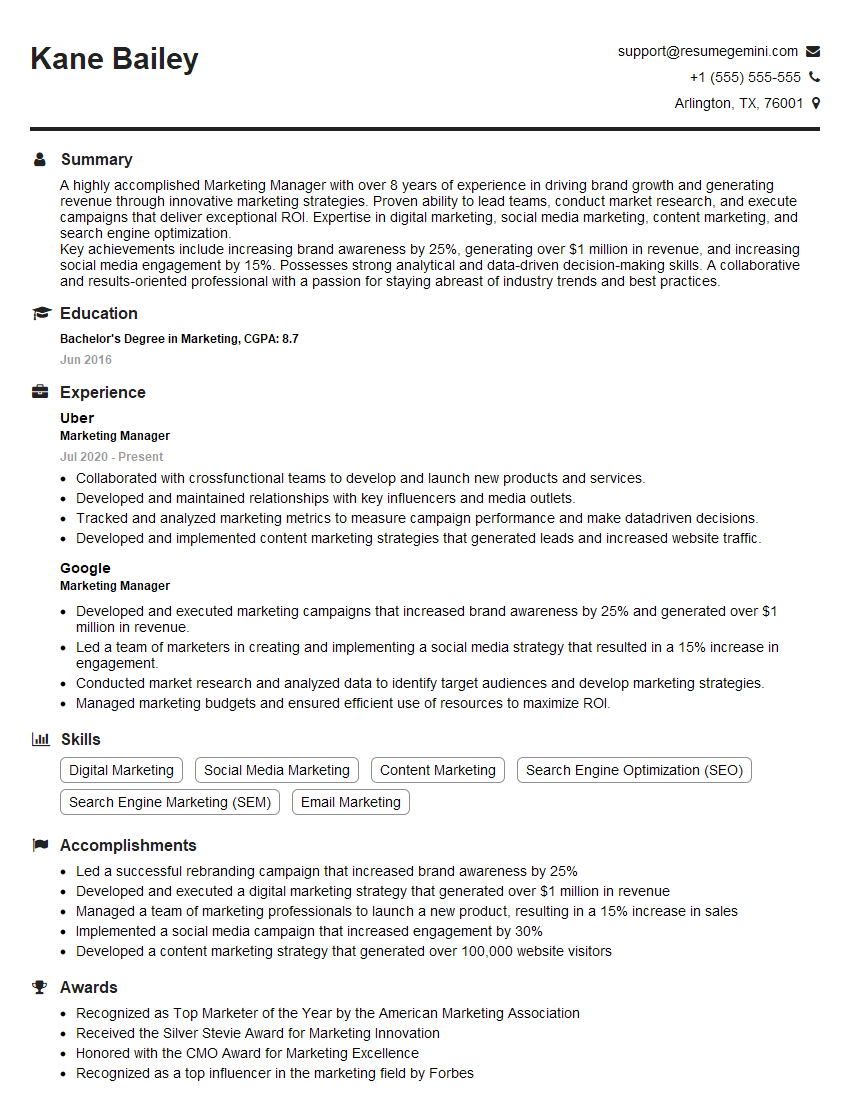
Marketing Manager Resume Sample

Communications Director Resume Sample

Social Media Manager Resume Sample

Communications Consultant Resume Sample

Content Strategist Resume Sample
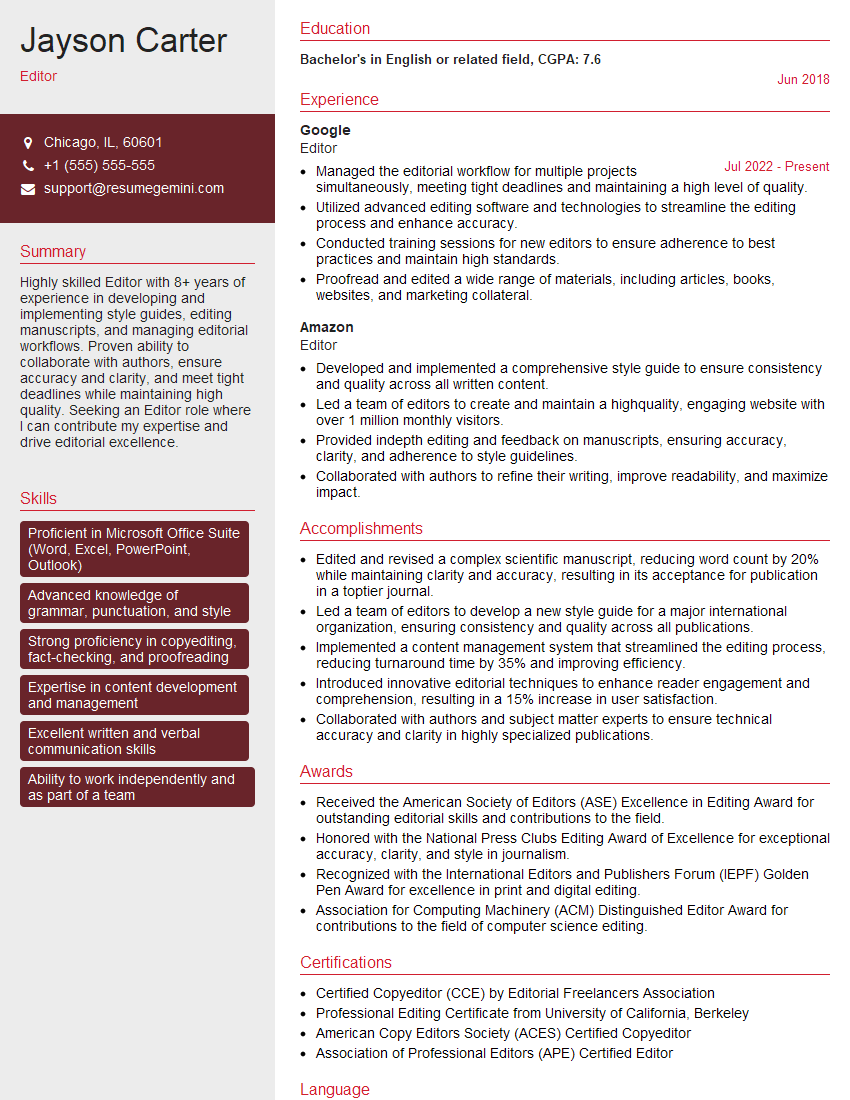
Editor Resume Sample
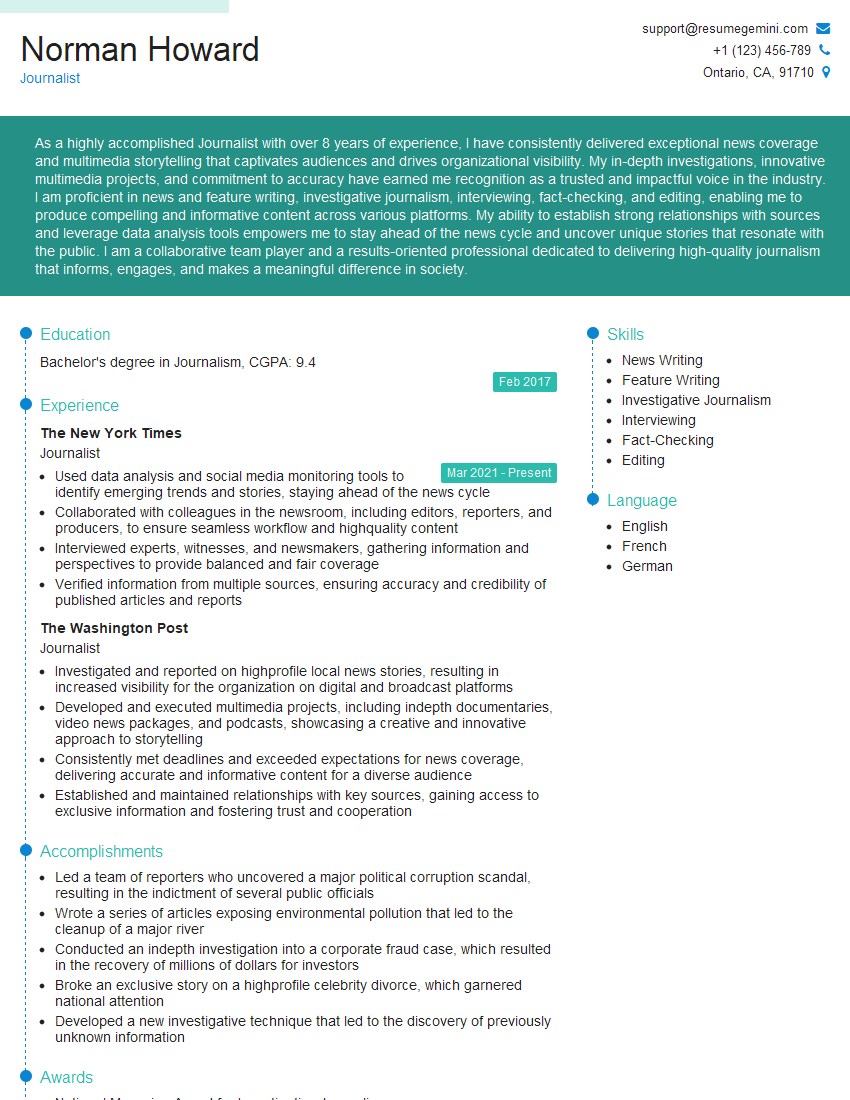
Journalist Resume Sample
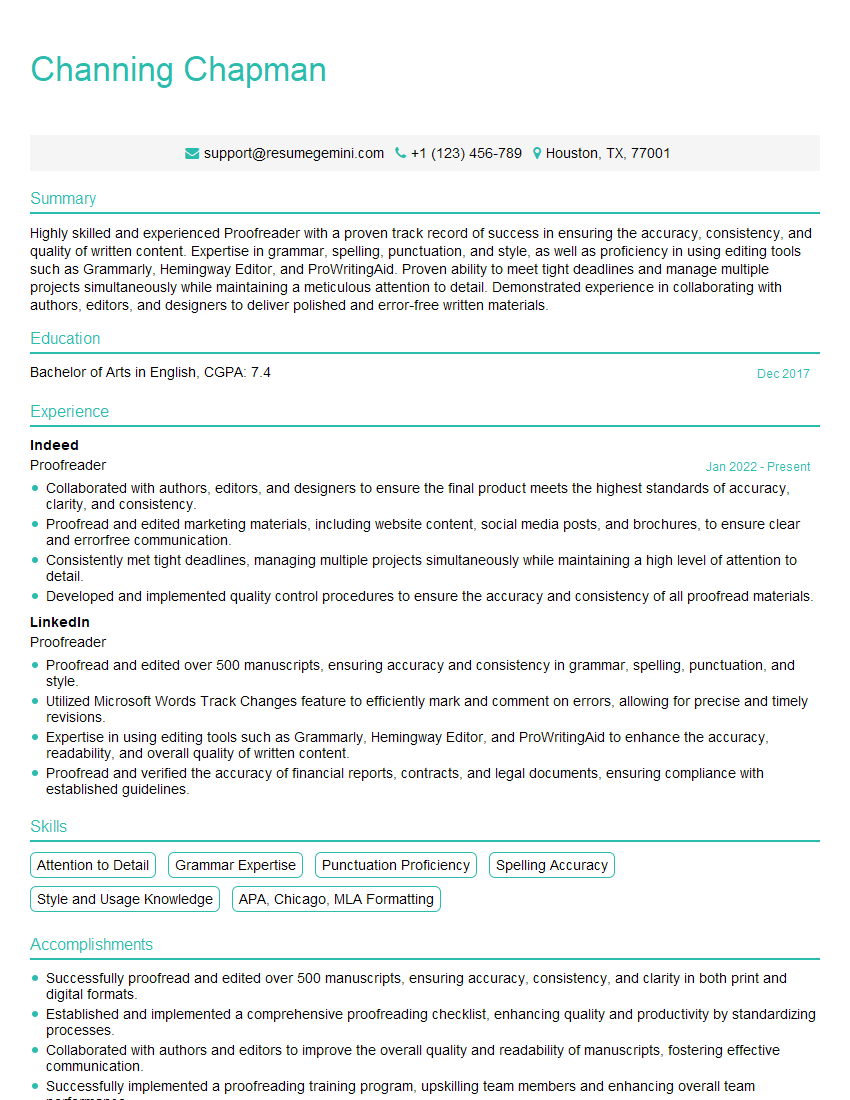
Proofreader Resume Sample

Technical Writer Resume Sample

Copywriter Resume Sample
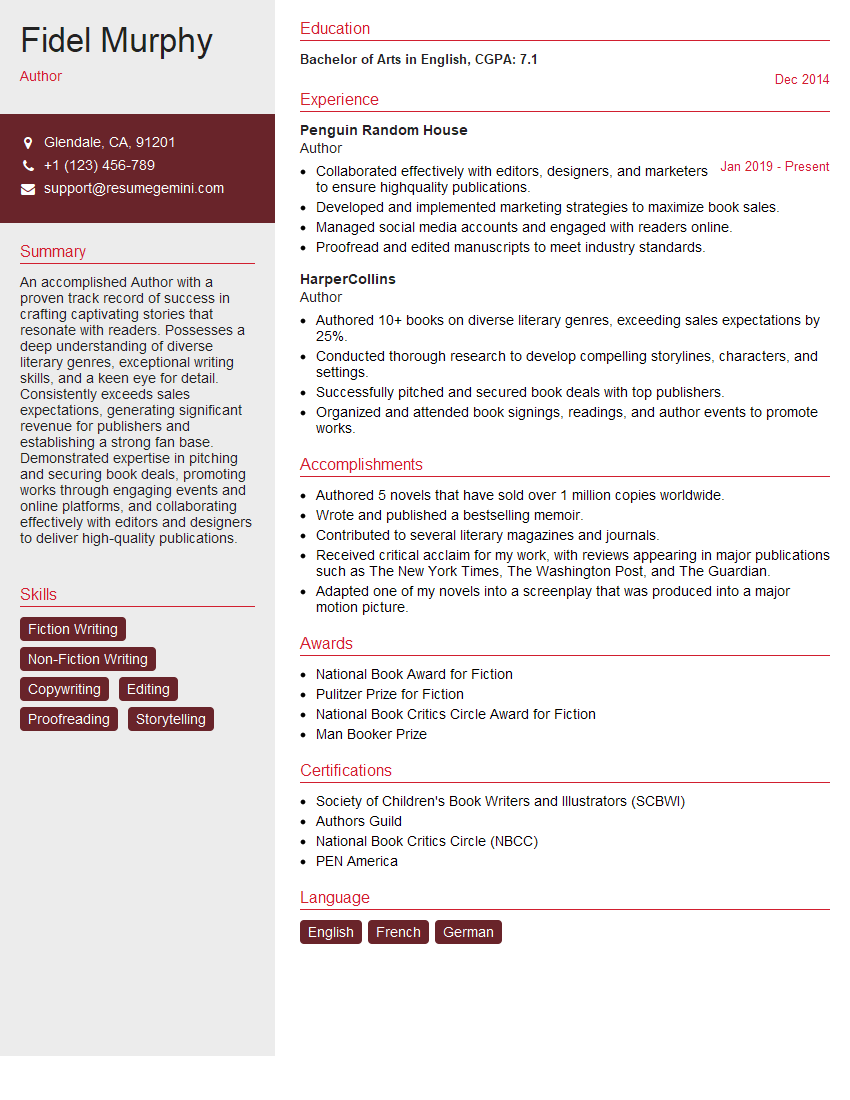
Author Resume Sample
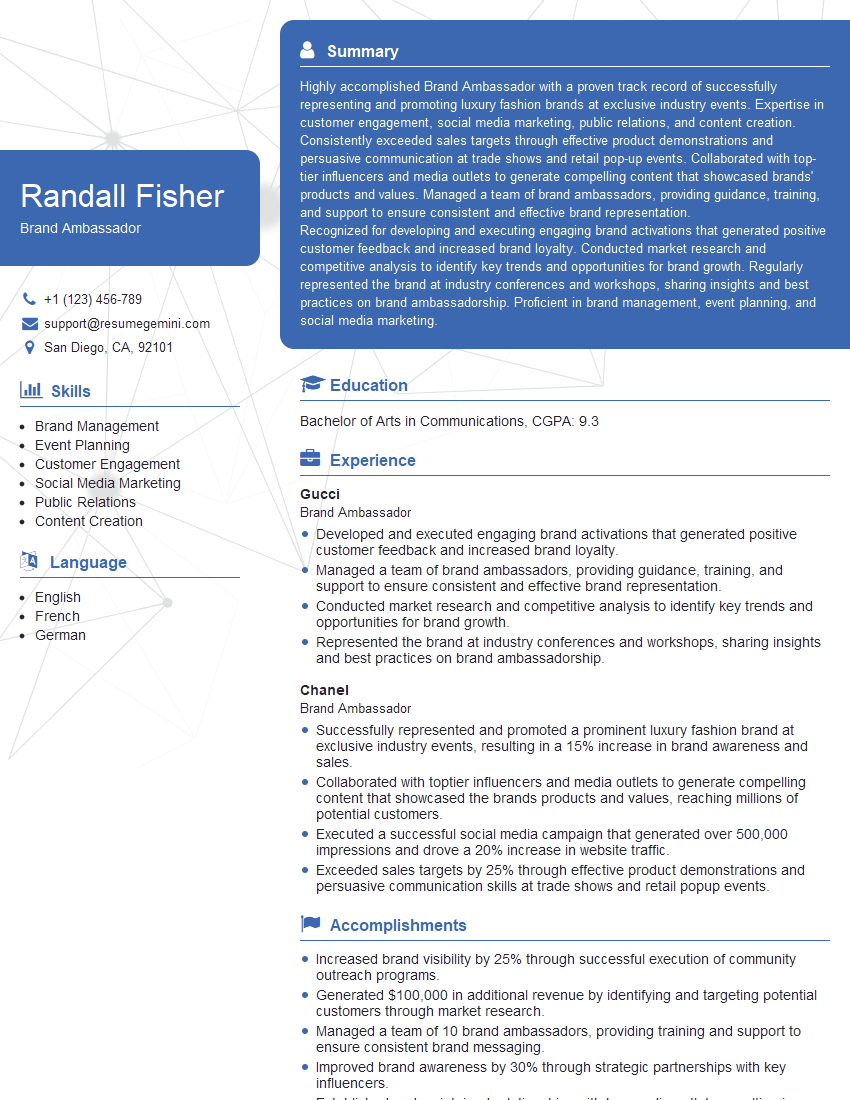
Brand Ambassador Resume Sample
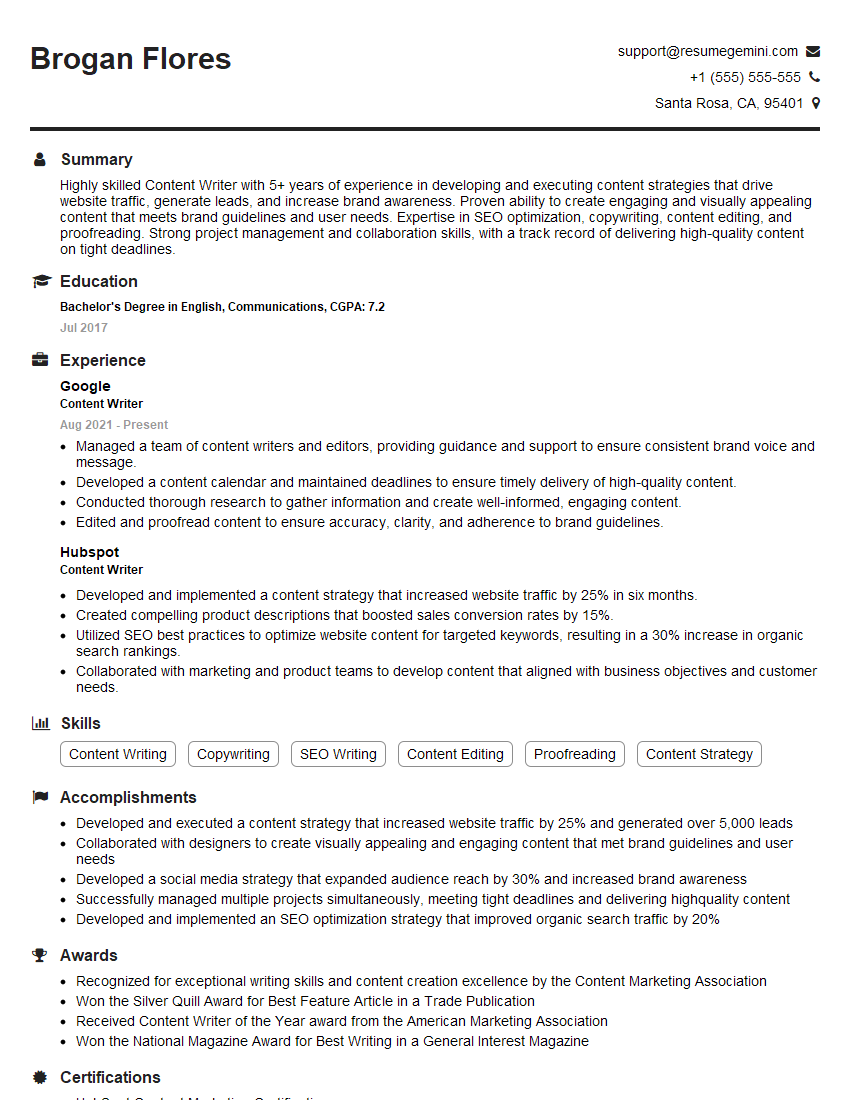
Content Writer Resume Sample
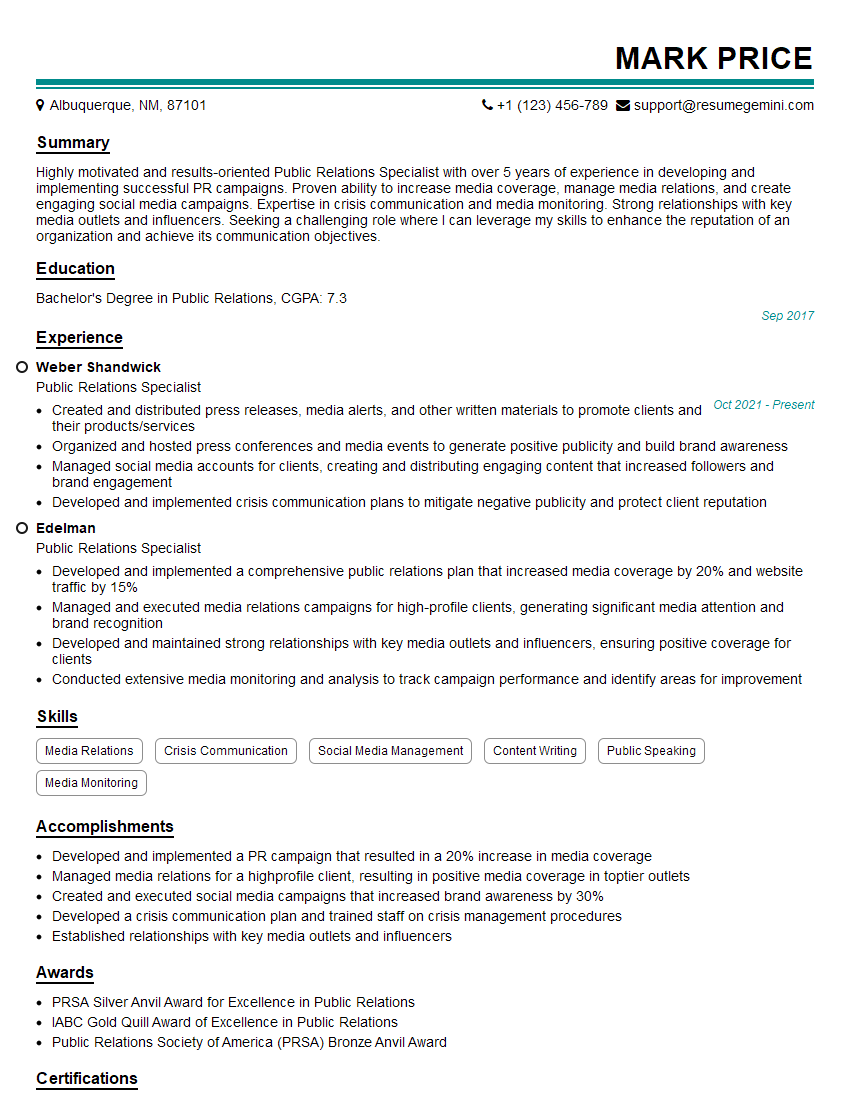
Public Relations Specialist Resume Sample
Explore more articles
Users Rating of Our Blogs
Share Your Experience
We value your feedback! Please rate our content and share your thoughts (optional).
What Readers Say About Our Blog
Really detailed insights and content, thank you for writing this detailed article.
IT gave me an insight and words to use and be able to think of examples