Every successful interview starts with knowing what to expect. In this blog, we’ll take you through the top Expertise in creating both sequential and single-panel comics interview questions, breaking them down with expert tips to help you deliver impactful answers. Step into your next interview fully prepared and ready to succeed.
Questions Asked in Expertise in creating both sequential and single-panel comics Interview
Q 1. Explain the difference between sequential and single-panel comics in terms of storytelling.
The core difference between sequential and single-panel comics lies in their narrative structure. Sequential comics, also known as comic strips or graphic novels, tell a story through a series of panels, each contributing to the unfolding narrative. They rely on the juxtaposition of images and text across multiple panels to build momentum and reveal the story’s progression. Single-panel comics, on the other hand, tell a complete joke or short story within a single image. They rely heavily on visual humor, wordplay, and concise storytelling, condensing a narrative into a single, impactful moment. Think of a classic Far Side cartoon as a prime example of a single-panel comic, whereas a graphic novel like Maus is a testament to the power of sequential storytelling.
Q 2. Describe your process for developing a compelling narrative in a sequential comic.
Developing a compelling narrative in a sequential comic starts with a strong foundation: a clear concept, engaging characters, and a well-defined plot. I typically begin with a detailed outline, breaking down the story into key scenes and plot points. This ensures a logical flow. Next, I create character sketches, fleshing out their personalities, motivations, and visual designs. Then I meticulously storyboard the sequence, experimenting with different panel layouts to visualize the pacing and the reader’s journey through the narrative. This process allows me to refine the narrative structure and identify any potential pacing issues before committing to the final artwork. For instance, a crucial emotional moment might warrant a larger panel or a moment of quiet reflection a smaller, more intimate one.
Q 3. How do you effectively use panel layout to control pacing and reader experience in a sequential comic?
Panel layout is crucial for controlling pacing and reader experience. Larger panels emphasize significant moments, slowing down the pace and allowing readers to dwell on crucial details or emotional reactions. Smaller panels accelerate the pace, creating a sense of urgency or rapid succession of events. The arrangement of panels itself also influences pacing. Panels placed side-by-side suggest simultaneity, while panels arranged vertically suggest a linear progression of time. For example, a series of small, closely spaced panels can depict a fast-paced chase scene, whereas a single, large panel might showcase a character’s contemplative moment. Experimentation with panel shapes and sizes also adds visual dynamism.
Q 4. What techniques do you employ to create visual interest and engagement in single-panel comics?
Creating visual interest in single-panel comics hinges on strong composition, clever use of visual metaphors, and impactful character expressions. The use of strong leading lines, a carefully chosen color palette, and effective use of negative space all contribute significantly to a visually engaging piece. Humor is often achieved through visual irony or unexpected juxtaposition. A character’s exaggerated expression can significantly enhance the comedic effect. Moreover, a well-crafted caption or brief dialogue can add another layer of complexity to a single panel. Consider how a simple change in character expression can drastically alter the meaning of a cartoon.
Q 5. Discuss your experience with different illustration styles and their suitability for different comic genres.
My experience encompasses various illustration styles, each suitable for different comic genres. For example, a bold, graphic style might be ideal for a superhero comic, conveying power and dynamism. Conversely, a more delicate, water-color style might better suit a romance or slice-of-life comic, evoking a sense of intimacy and emotion. A realistic style could be impactful for a drama or historical comic, adding to the realism and credibility of the story. I select the style that best complements the tone and atmosphere I aim to create within the comic, always prioritizing the genre’s conventions while injecting my own creative twist. The choice of style is as much a storytelling decision as any other aspect of the creative process.
Q 6. Explain your approach to character design and how it contributes to storytelling.
Character design is fundamental to storytelling. I start by defining the character’s personality, background, and role in the narrative. Their physical appearance should directly reflect these aspects. For example, a villain might be designed with sharp features and dark clothing, whereas a hero might have a more approachable and optimistic design. Clothing choices, posture, and even the character’s facial features all contribute to creating a compelling and believable persona. Moreover, consistent character design across the comic is crucial for reader engagement and for maintaining the visual coherence of the story.
Q 7. How do you manage the balance between visual storytelling and written dialogue in sequential art?
Balancing visual storytelling and written dialogue in sequential art requires a delicate touch. The ideal approach depends on the specific narrative but generally, I aim for a harmonious integration. Visual storytelling should convey the core elements of the plot and the character’s emotional states, while dialogue provides context, clarification, and personality. I try to avoid redundant information; if a scene can be told effectively through visuals alone, I avoid cluttering it with unnecessary dialogue. Conversely, if dialogue is essential for revealing character or advancing the plot, I ensure it’s visually integrated within the panel, enhancing rather than distracting from the visual narrative. A well-balanced combination ensures a richer and more engaging storytelling experience.
Q 8. Describe your process for inking and coloring your work, considering both traditional and digital methods.
My inking and coloring process varies depending on whether I’m working traditionally or digitally, but the core principles remain the same: meticulous detail and a strong sense of visual storytelling. Traditionally, I begin with pencil sketches, refining them with a fine-liner pen for inking. For coloring, I use high-quality watercolor paints or copic markers, layering colors for depth and richness. I often employ masking techniques to keep colors clean and sharp. Digitally, I use software like Clip Studio Paint, starting with clean line art scanned from my traditional sketches or created directly digitally. I utilize vector layers for lines to ensure scalability and then color with digital painting tools, employing similar layering techniques as with traditional methods. My digital workflow allows for easier corrections and experimentation with color palettes. A crucial aspect in both methods is understanding light sources and how they affect the overall mood and tone of the piece. For example, a dark, shadowy scene might require deeper, more saturated colors while a bright, sunny scene might be more pastel-toned. I pay close attention to how light interacts with different textures and surfaces to create realism or stylized effects.
Q 9. How do you incorporate symbolism and visual metaphors into your comics?
Symbolism and visual metaphors are integral to enriching the narrative and emotional impact of my comics. I use them to convey complex ideas or emotions subtly, allowing readers to engage with the story on a deeper level. For instance, a recurring image of a wilting flower could symbolize the protagonist’s deteriorating mental state, adding a layer of meaning beyond the literal events unfolding in the panels. Similarly, I might use contrasting colors to represent opposing forces or characters’ inner conflicts. For example, a character struggling with internal turmoil could be depicted in shades of grey and blue, while their antagonist might be rendered in bold, contrasting reds and blacks. It’s all about creating a visual language that resonates with the reader, enriching the narrative beyond the words themselves. I always strive for visual coherence, ensuring that the symbolism reinforces and amplifies the story’s themes.
Q 10. What software or tools are you proficient in for creating comics?
My toolbox includes both traditional and digital tools. Traditionally, I use various pens and pencils from fine-liners to brush pens, and watercolors or copic markers. Digitally, my primary software is Clip Studio Paint, which provides a comprehensive set of tools for sketching, inking, coloring, and lettering. I’m also proficient in Photoshop for more advanced image manipulation and post-processing. Additionally, I utilize a graphics tablet for precise digital drawing and inking, mirroring the feel of traditional pen and paper. Choosing the right tools depends on the project’s style and requirements. For a quick sketch, I might prefer a simpler approach, while a detailed piece necessitates using all the tools at my disposal.
Q 11. How do you handle revisions and feedback on your comic work?
Handling revisions and feedback is a crucial part of the creative process. I actively solicit feedback from trusted colleagues, editors, and beta readers at various stages of development. I find it helpful to categorize feedback: constructive criticism focusing on plot, character development, or pacing, and technical feedback on art style or clarity. I maintain open communication, clarifying any ambiguities and responding constructively to each suggestion. For major revisions, I might create several alternate versions before finalizing the changes. I always aim to maintain a professional and collaborative relationship, viewing feedback as an opportunity for growth and improvement rather than personal criticism. My goal is to incorporate valuable feedback that enhances the comic without compromising my artistic vision.
Q 12. Describe a challenging project you encountered and how you overcame it.
One challenging project involved creating a comic with a complex, multi-layered narrative. The story required intricate plot twists and weaving together multiple timelines. To tackle this, I developed a detailed timeline and character chart to keep track of every detail. I also broke down the narrative into smaller, manageable segments, focusing on one aspect at a time. The challenge lay in maintaining visual consistency and clarity across different timelines. I solved this by employing distinct visual cues, such as color palettes or stylistic choices, to differentiate between the various periods. The final result was rewarding, showcasing the effectiveness of organized planning and meticulous execution. The experience reinforced the importance of thorough pre-production planning for complex projects.
Q 13. What are your strategies for generating creative ideas for comics?
Generating creative ideas involves a multi-faceted approach. I often draw inspiration from personal experiences, news articles, dreams, and fictional works. I maintain a sketchbook to jot down ideas, character sketches, and panel layouts. Brainstorming sessions with fellow creators are incredibly fruitful. Sometimes I’ll start with a character or a single image, building a story around them. Other times, I’ll begin with a theme or an idea and develop characters and plot around it. Experimentation plays a large role; I don’t shy away from trying unconventional approaches or exploring different genres. Freewriting and mind-mapping are valuable tools. It’s important to remember that not every idea will be a winner; I focus on quantity over quality at the brainstorming stage, refining the concepts later.
Q 14. Discuss your understanding of narrative structure and its importance in comics.
Narrative structure is paramount in comics. It dictates the pacing, rhythm, and overall impact of the story. Understanding panel sequencing, gutters (the spaces between panels), and the use of visual cues is essential for guiding the reader’s eye and controlling the flow of information. A strong narrative structure employs techniques like foreshadowing, flashbacks, and cliffhangers to maintain reader engagement. For example, a single panel can convey a significant amount of information through a carefully composed image and text, and the order of the panels dictates how the story unfolds. For sequential art, I often utilize a combination of classic storytelling techniques and more experimental approaches, playing with panel sizes and layouts to emphasize dramatic moments or create a particular mood. In single-panel comics, the challenge lies in conveying a complete narrative within a single frame, making every visual element crucial to the story’s success. A thorough grasp of narrative structure is what separates a good comic from a great one.
Q 15. How do you ensure your comics are accessible to a wide audience?
Accessibility in comics is crucial for reaching a wider audience. It’s about ensuring that everyone, regardless of their background or abilities, can understand and enjoy the story. This involves several strategies:
- Clear Visuals: Avoid overly complex panel layouts or overly detailed artwork that might be difficult to interpret quickly. Use strong contrast between line art and background, and ensure text is legible even at smaller sizes.
- Simple Language: Keep the dialogue and narration concise and easy to understand. Avoid jargon or overly complex sentence structures. Consider using alternative text descriptions for visual gags or important imagery that might not translate well for everyone.
- Considerate Storytelling: Think about how different people might interpret the story. Avoid stereotypes or depictions that could be offensive or exclusionary. Focus on universal themes and emotions that resonate with a wide range of readers.
- Format Considerations: Offer the comic in multiple formats – print, web, accessible digital formats (e.g., screen reader-compatible PDFs). Use alt text for images online.
For example, in one of my webcomics, I used simpler panel layouts for the first few chapters, gradually increasing the complexity as readers got familiar with the characters and setting. This made the initial experience more accessible to newcomers.
Career Expert Tips:
- Ace those interviews! Prepare effectively by reviewing the Top 50 Most Common Interview Questions on ResumeGemini.
- Navigate your job search with confidence! Explore a wide range of Career Tips on ResumeGemini. Learn about common challenges and recommendations to overcome them.
- Craft the perfect resume! Master the Art of Resume Writing with ResumeGemini’s guide. Showcase your unique qualifications and achievements effectively.
- Don’t miss out on holiday savings! Build your dream resume with ResumeGemini’s ATS optimized templates.
Q 16. Explain your understanding of visual hierarchy and its role in comic design.
Visual hierarchy is the way we guide the reader’s eye through a comic panel and across the page. It’s about controlling what the reader sees first, second, and so on, to emphasize important elements and guide the narrative flow. This is achieved through several design elements:
- Size and Scale: Larger elements naturally draw more attention. A bigger character or object immediately commands focus.
- Contrast: Using contrasting colors or values (light vs. dark) to make certain elements stand out. A brightly colored character against a muted background will immediately catch the eye.
- Placement: Elements placed centrally or in prominent positions are more likely to be noticed first. We can use this to direct the reader’s attention to crucial plot points.
- Color: Strategic use of color can guide the eye and create a sense of hierarchy. Bright, warm colors tend to attract more attention than muted, cooler tones.
- Lines and Shapes: Using strong lines to create a visual path for the eye, pointing to important areas.
For instance, in a dramatic scene, I might make the character’s face larger and positioned centrally, with a darker background to draw attention to their expression.
Q 17. How do you maintain consistency in your art style throughout a long-form comic?
Maintaining consistent art style across a long-form comic requires meticulous planning and discipline. Here’s my approach:
- Reference Sheets: Create comprehensive reference sheets for characters, props, environments, etc. This includes details on anatomy, clothing styles, coloring techniques, and even specific textures. I update these as my style evolves slightly over time.
- Digital Color Palettes: Utilize digital color palettes to ensure color consistency. Using preset palettes for background, characters, and other elements ensures that the color scheme remains coherent even over hundreds of pages.
- Regular Self-Checks: Periodically revisit earlier pages to compare them with my current work. This helps me spot any significant stylistic shifts and allows for correction or adjustment. I might print out earlier pages and compare them side by side.
- Digital Asset Management: Utilize digital asset management software to organize and track your digital art assets. This prevents inconsistencies in how you use your own established assets.
- Style Evolution, Not Revolution: It’s okay for your style to evolve subtly over time. The goal is to maintain recognizability and coherence, not to freeze your art style in time. A gradual evolution can keep the work feeling fresh.
For my sequential comic ‘Chronicles of Aetherium,’ I created a comprehensive character design document with multiple views and even small animations of how the character should move. This helped maintain visual consistency throughout the long series.
Q 18. What are some of your favorite comic books and why?
My favorite comic books often blend compelling storytelling with innovative art styles.
- Watchmen by Alan Moore and Dave Gibbons: The deconstruction of superhero tropes, coupled with Gibbons’ masterful storytelling through visuals, remains unparalleled. The innovative panel layouts and visual metaphors greatly enhance the narrative.
- Maus by Art Spiegelman: A groundbreaking work that uses unique visual language to address complex historical trauma. Its experimental style proves the power of comics to tackle difficult subjects.
- Blankets by Craig Thompson: Thompson’s autobiographical graphic novel showcases a beautiful and poignant illustration style. The intimate storytelling and emotional depth are truly captivating.
These comics showcase the versatility of the medium, pushing creative boundaries while crafting compelling stories that stay with you long after you finish reading.
Q 19. Describe your approach to world-building in your comics.
World-building in comics is a crucial aspect of creating immersive and believable stories. It begins with the development of a solid foundation:
- Setting: Define the physical location, geography, climate, and architecture of the world. Consider creating maps, sketches, and detailed descriptions to visualize the setting.
- History and Culture: Establish a rich historical context and unique cultural traditions, influencing the characters and conflicts within the story. Think about political structures, religions, and societal norms.
- Characters and Relationships: Design compelling characters that reflect and interact with the established world. Their relationships should be logical and consistent with the cultural and societal dynamics of your setting.
- Rules and Systems: Define the rules governing the world – magic systems, technology levels, societal structures, etc. Consistency in these rules is vital for maintaining credibility.
- Visual Representation: Use your art style to convey the feel and atmosphere of your world. Specific color palettes, architectural styles, and clothing designs all contribute to visual world-building.
For my fantasy comic, I created a detailed timeline of the world’s history, which included major conflicts, technological advancements, and the evolution of different cultures. This allowed me to craft a consistent and engaging narrative that felt rich and believable.
Q 20. How do you balance artistic expression with commercial considerations?
Balancing artistic expression with commercial considerations is a constant challenge for any comic artist. It requires a careful understanding of the market and audience while staying true to your creative vision:
- Market Research: Understanding current trends and audience preferences is vital. Analyzing successful comics in a similar genre can give valuable insights.
- Targeted Storytelling: While maintaining creative integrity, consider tailoring aspects of the narrative to resonate with a wider audience. This does not mean compromising your artistic vision but rather making it more accessible.
- Compromise and Collaboration: Be prepared to negotiate and compromise with publishers or editors. Open communication is key to finding creative solutions that satisfy both artistic and commercial needs.
- Branding and Self-Promotion: Developing a strong personal brand and actively promoting your work through social media and other channels can help increase visibility and potential market reach.
- Diverse Income Streams: Explore various income streams such as merchandise, prints, workshops, and collaborations to supplement income from comic sales.
For example, I once had to modify the ending of a comic slightly to better fit a publisher’s expectations for a wider appeal, but I still ensured that the overall theme and artistic style remained intact.
Q 21. What is your experience with creating comics for different platforms (print, web, etc.)?
I have experience creating comics for various platforms, each with its own unique demands:
- Print: Print comics require higher resolution artwork and careful consideration of page layout and binding. Color management is crucial for consistent reproduction.
- Webcomics: Webcomics need to be optimized for screen viewing. Smaller file sizes and efficient loading times are essential for a good user experience. Resolution and file formats must be considered carefully.
- Digital Platforms (e.g., Comixology, Tapas): These platforms have specific requirements for file formats, metadata, and artwork resolution. Understanding these guidelines is essential for successful publication.
I’ve adapted my workflow to meet the unique requirements of each platform. For example, my webcomics use a slightly simpler color palette to reduce file sizes and improve loading speed, while my print work benefits from more intricate details and a wider color range.
Q 22. How do you handle deadlines and project management in comic creation?
Deadlines are the lifeblood of comic creation, and effective project management is crucial for success. My approach is multifaceted, starting with a detailed breakdown of the project into manageable phases. For a sequential comic, this might involve scripting, rough sketching, inking, coloring, and lettering, each with its own mini-deadlines. For single-panel comics, the process is shorter but requires focused bursts of creativity. I utilize project management tools like Trello or Asana to track progress, assign tasks, and set realistic deadlines for each phase. This allows me to visualize the entire process and identify potential bottlenecks early on. I also build in buffer time to account for unexpected delays – a crucial aspect for maintaining sanity and quality.
For example, on a recent sequential comic project, I allocated two weeks for scripting, one week for rough sketches, two weeks for inking, one week for coloring, and a final week for lettering. Using Trello, I created separate cards for each stage, assigning deadlines and checking off tasks as they were completed. This methodical approach ensured I delivered the project on time and to a high standard. Regular self-checks and honest self-assessment help keep me on track. This includes regularly evaluating progress and adjusting my schedule as needed, which is crucial when dealing with the ever-changing nature of creative projects.
Q 23. Explain your approach to marketing and promoting your comic work.
Marketing and promotion are as vital as the creative process itself. My strategy involves a multi-pronged approach that leverages both online and offline platforms. Online, I maintain an active presence on social media platforms like Instagram, Twitter, and even TikTok, showcasing my work through visually appealing posts and engaging with potential readers. I also utilize online portfolio sites like ArtStation and DeviantArt to showcase my best pieces and highlight my unique style. Crucially, I actively engage with the online comic community, participating in discussions, sharing my work, and collaborating with other artists.
Offline, I attend comic conventions and art fairs, offering prints and interacting directly with readers. This personal touch is invaluable in building a loyal fanbase and receiving direct feedback. I also actively seek collaborations with other creators, cross-promoting each other’s work to reach a wider audience. Building relationships with reviewers and bloggers who focus on comics helps to generate word-of-mouth publicity. My focus is always on consistent, quality output combined with authentic engagement within the community. I never underestimate the power of direct connection and genuine enthusiasm.
Q 24. How do you incorporate feedback from readers into your work?
Reader feedback is an invaluable resource for improvement and growth. I actively solicit feedback through various channels: social media comments, online forums, and even direct emails. I encourage constructive criticism and take the time to carefully consider each piece of feedback. Not all feedback is equally valid, but even negative comments can often highlight areas for improvement. I always approach feedback with an open mind and a focus on what I can learn.
For example, readers once pointed out a recurring inconsistency in a character’s facial expression. By analyzing this feedback, I identified a flaw in my drawing process and was able to refine my technique to prevent similar issues in future projects. I might adjust plot elements based on the response to a particular scene. Sometimes, readers may suggest new ideas that I can incorporate into future works. It’s about finding a balance: recognizing constructive critique while keeping true to the core vision of the comic. This collaborative aspect of the creative process enhances the quality and resonance of the work.
Q 25. Describe your understanding of copyright and intellectual property related to comics.
Understanding copyright and intellectual property (IP) is paramount in the comics industry. My work is protected by copyright from the moment it’s created. This means no one can reproduce, distribute, or adapt my work without my permission. For collaborations, clear contracts are essential, outlining ownership of the IP, payment terms, and usage rights. This protects both parties involved. Understanding fair use is also key – for example, using small portions of copyrighted material for critique or parody is usually permissible, but using substantial portions without permission is not.
I meticulously document the creation process, retaining original sketches, scripts, and digital files as proof of authorship. This documentation is vital in case of any IP disputes. When collaborating, I ensure all agreements are in writing, clearly outlining each party’s contributions and rights. Protecting my IP is an ongoing process, requiring diligence and awareness of legal regulations. I regularly research any updates in copyright law and proactively consult legal professionals when needed, particularly on licensing deals. It’s better to invest in this protective layer than to risk losing your creative work to infringements.
Q 26. What are your goals for your future career in comics?
My future goals in comics encompass both creative and business aspects. On the creative side, I aspire to create longer, more complex sequential narratives, exploring diverse genres and pushing my artistic boundaries. I’m particularly drawn to developing original characters and worlds that resonate with readers on a profound level. I envision myself creating compelling stories that tackle meaningful themes and leave a lasting impact. Building a stronger portfolio within a specific niche allows me to cater to a specific audience and cultivate a devoted fanbase.
Business-wise, I aim to build a sustainable career in comics. This involves expanding my audience reach, securing publishing deals, and potentially branching out into related areas such as animation or merchandise. I hope to foster strong relationships with editors, publishers, and other collaborators, constantly striving to improve my craft and provide unique value to the industry. Ultimately, I want to contribute to the rich tapestry of the comics world, creating work that is both commercially successful and artistically fulfilling. The process involves continuous learning, networking, and refining one’s skillset, both creative and business-related.
Q 27. How do you stay current with trends and innovations in the comics industry?
Staying current in the ever-evolving comics industry requires a proactive approach. I regularly attend industry events, both online and offline, to keep abreast of new trends and technologies. I follow leading comic artists and writers on social media, observing their work and strategies. I actively participate in online comic communities, engaging in discussions and sharing knowledge. This constant learning process ensures I am always adapting and improving my skills and knowledge.
Reading industry publications, both print and digital, provides valuable insights into market trends and creative innovations. Subscribing to newsletters and podcasts dedicated to the comics industry allows me to receive the latest information directly and efficiently. Experimenting with new technologies and software relevant to comic creation is another approach. Staying updated on new techniques and digital tools allows me to create more efficient and refined comics. The constant effort to stay informed is crucial to remain competitive in this creative sphere. The pace of innovation demands constant learning and adaptation.
Q 28. Describe your experience collaborating with other artists and writers on comic projects.
Collaboration has been a cornerstone of my comic creation journey. Working with other artists and writers has enriched my skills and broadened my creative horizons. In one project, I collaborated with a writer to develop a graphic novel. We held regular meetings to discuss plot points, character development, and overall narrative structure. This collaborative effort helped shape the story’s structure and allowed for valuable feedback and revisions. The writer contributed to the story and dialogue, whereas I focused on the visual elements, and this collaboration enriched the final product.
Collaborating with other artists also adds a unique dimension. In another instance, I worked with a colorist who brought a new level of vibrancy to my inked artwork. The colorist’s expertise enhanced the storytelling and overall impact of the visual narrative. Each individual brought their unique talents, resulting in a final product superior to what could have been achieved individually. Effective collaboration hinges on open communication, clear expectations, mutual respect, and a shared creative vision. It’s about creating synergy, where the sum is greater than its parts, leading to an enriched and improved creative output.
Key Topics to Learn for Expertise in creating both sequential and single-panel comics Interview
- Storytelling Fundamentals: Understanding narrative structure, pacing, character development, and conflict resolution in both short and longer comic formats.
- Panel Design & Layout: Mastering the use of gutters, panel size and shape to control the reader’s experience and convey emotion effectively in sequential and single-panel comics. Practical application: analyzing successful comics to understand layout choices.
- Character Design & Visual Communication: Developing compelling characters through visual storytelling, including expression, body language, and costume design. Understanding how to convey emotion and information concisely.
- Sequential Art Principles: Understanding the use of motion lines, speech bubbles, and captions to create a clear and engaging narrative flow in sequential comics. Analyzing how these elements differ in single-panel works.
- Single-Panel Humor & Impact: Exploring techniques to create impactful single-panel comics, understanding the importance of visual punchlines and concise storytelling.
- Software & Tools Proficiency: Demonstrating practical skills in industry-standard software (e.g., Photoshop, Clip Studio Paint) for creating and editing comics. Be prepared to discuss your workflow and preferred tools.
- Style & Genre Exploration: Discussing your familiarity with different comic styles (e.g., manga, Western comics, webcomics) and genres, and how you adapt your approach accordingly.
- Collaboration & Workflow: Explaining your experience collaborating with writers, editors, and other artists, including your understanding of project management and deadlines.
- Problem-solving & Creative Challenges: Be ready to discuss how you overcome creative blocks, handle revisions, and adapt to changing project requirements.
Next Steps
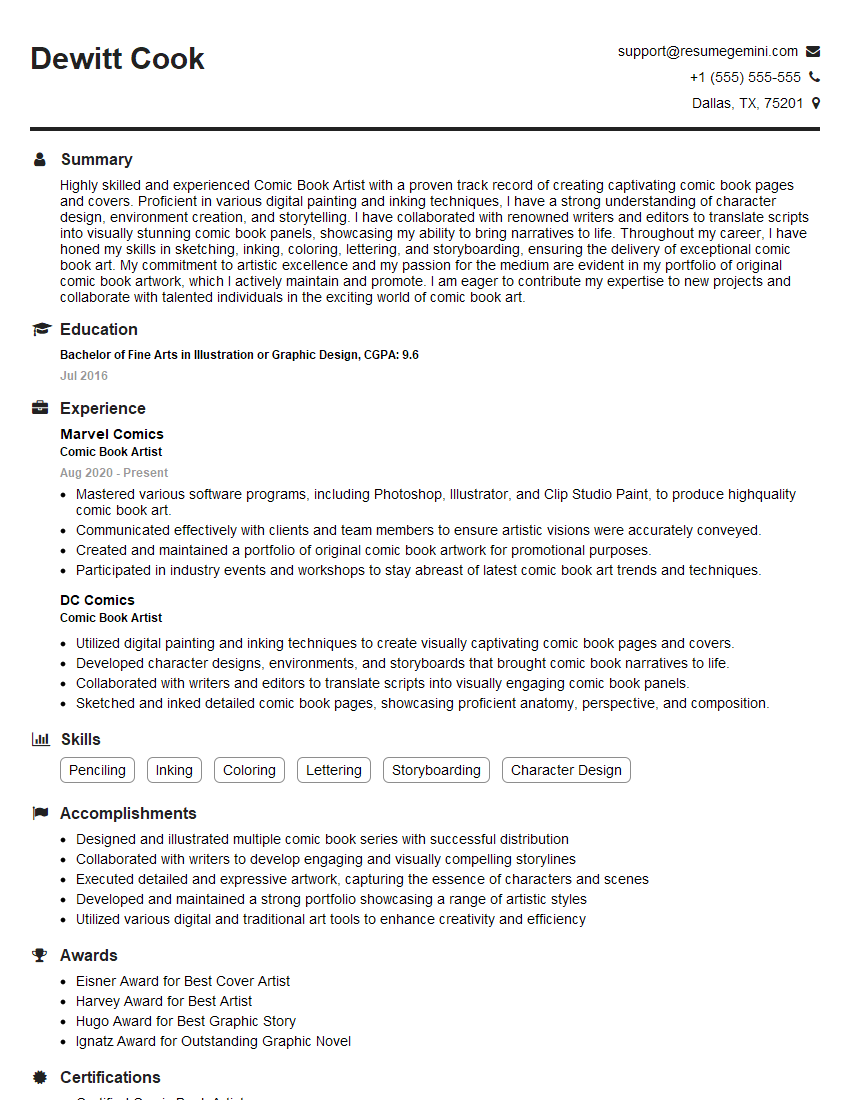
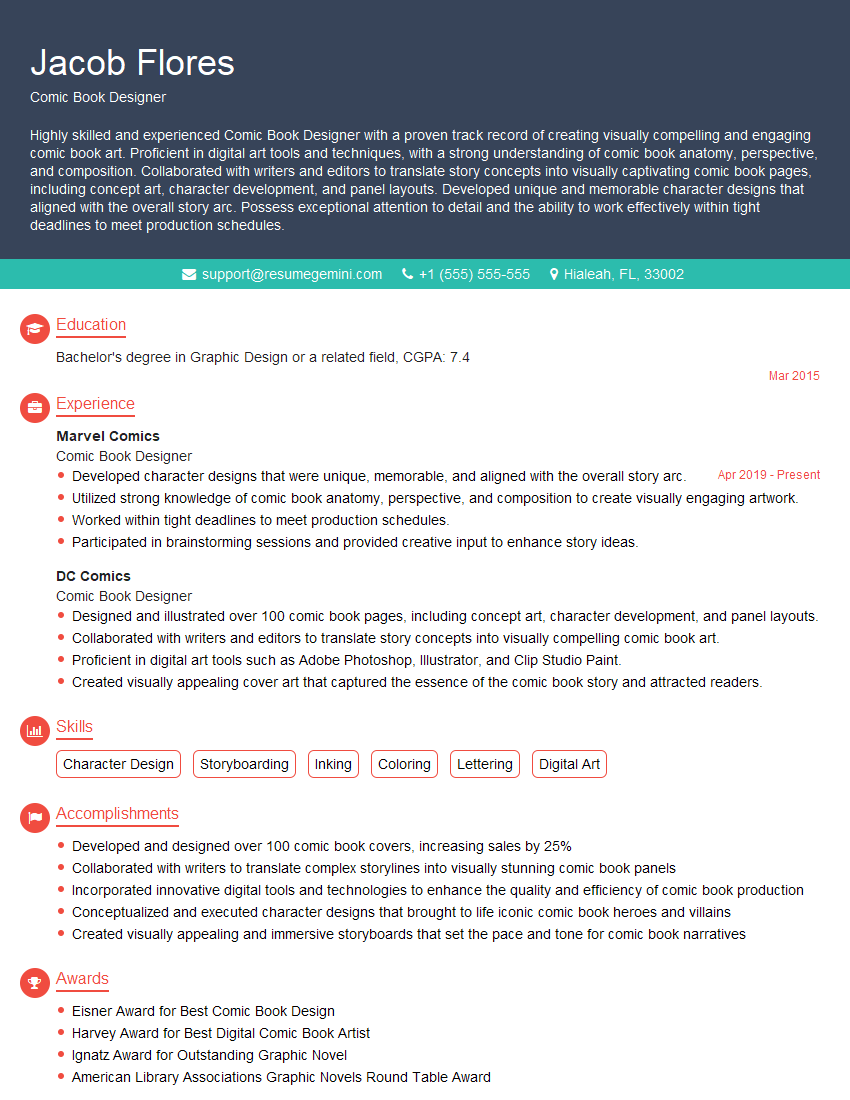
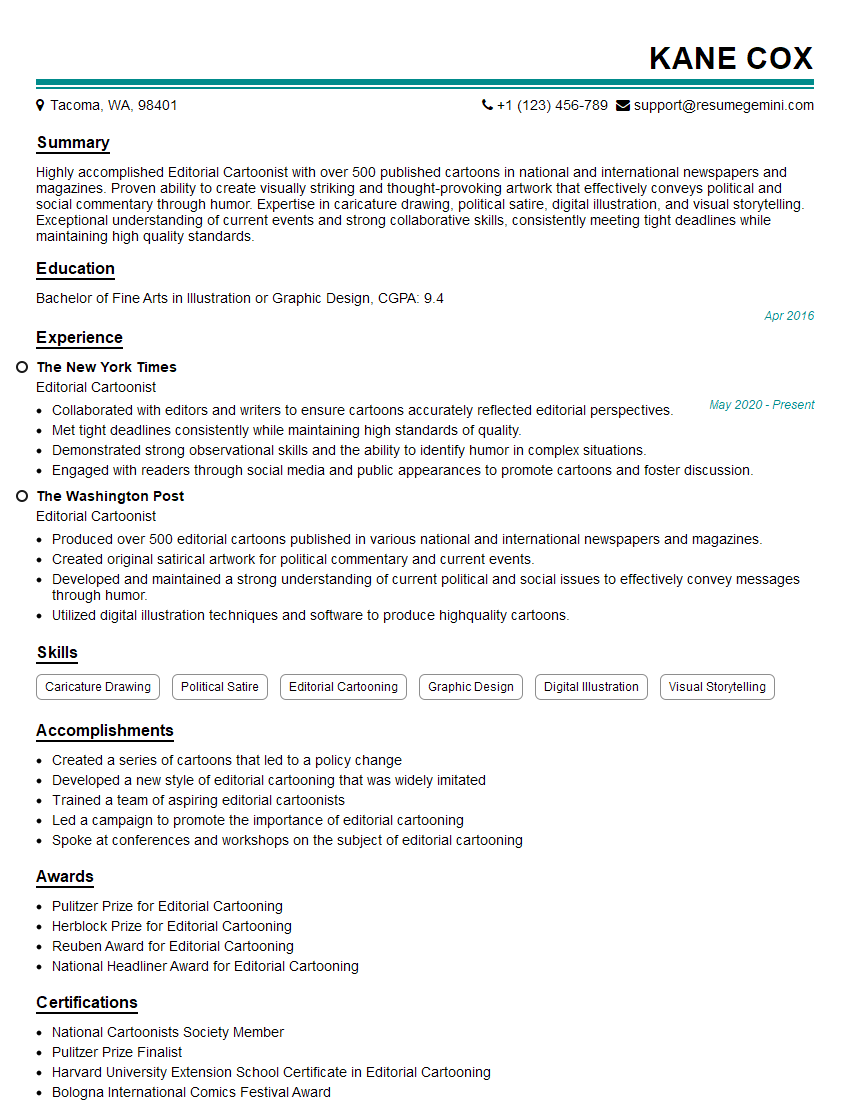
Mastering the art of creating both sequential and single-panel comics opens doors to exciting career opportunities in publishing, animation, webcomics, and more. A strong portfolio is crucial, but a well-crafted resume is your first impression. An ATS-friendly resume significantly increases your chances of getting noticed by recruiters. ResumeGemini is a trusted resource to help you build a professional and effective resume that highlights your unique skills and experience. Examples of resumes tailored to showcasing expertise in creating both sequential and single-panel comics are available to guide you.
Explore more articles
Users Rating of Our Blogs
Share Your Experience
We value your feedback! Please rate our content and share your thoughts (optional).
What Readers Say About Our Blog
Really detailed insights and content, thank you for writing this detailed article.
IT gave me an insight and words to use and be able to think of examples