The thought of an interview can be nerve-wracking, but the right preparation can make all the difference. Explore this comprehensive guide to Math Proficiency interview questions and gain the confidence you need to showcase your abilities and secure the role.
Questions Asked in Math Proficiency Interview
Q 1. Explain the concept of statistical significance.
Statistical significance helps us determine if an observed effect in data is likely due to a real phenomenon or just random chance. Imagine flipping a coin 10 times and getting 7 heads. Is the coin biased? Statistical significance provides a framework to answer this. We use hypothesis testing. We start with a null hypothesis (e.g., the coin is fair). Then, we calculate the probability of observing the results (7 heads) if the null hypothesis were true. If this probability (p-value) is below a pre-determined threshold (usually 0.05), we reject the null hypothesis and conclude the result is statistically significant – meaning it’s unlikely to have occurred by chance alone.
For example, in a drug trial, if a new drug shows a significantly lower rate of heart attacks compared to a placebo (with a small p-value), we conclude the drug is effective. The significance level (alpha) represents the acceptable risk of incorrectly rejecting the null hypothesis (Type I error). A lower alpha means a stricter criterion for significance.
Q 2. What is the difference between correlation and causation?
Correlation measures the relationship between two variables – how strongly they change together. Causation implies that one variable directly influences or causes a change in another. Correlation does not equal causation! Just because two variables are correlated doesn’t mean one causes the other. There could be a third, confounding variable influencing both.
Example: Ice cream sales and crime rates are often positively correlated. This doesn’t mean eating ice cream causes crime. Both are likely influenced by a third variable – hot weather. When it’s hot, people buy more ice cream and crime rates tend to be higher.
Establishing causation requires strong evidence, often from controlled experiments or longitudinal studies that account for confounding factors. Correlation is a starting point for investigation but doesn’t prove cause and effect.
Q 3. Describe different types of probability distributions.
Probability distributions describe the likelihood of different outcomes for a random variable. There are many types, but some common ones include:
- Normal Distribution (Gaussian): The bell curve, symmetrical around the mean. Many natural phenomena follow this distribution (e.g., height, weight).
- Binomial Distribution: Describes the probability of a certain number of successes in a fixed number of independent trials (e.g., flipping a coin 10 times and getting exactly 5 heads).
- Poisson Distribution: Models the probability of a given number of events occurring in a fixed interval of time or space (e.g., number of cars passing a point on a highway in an hour).
- Uniform Distribution: All outcomes have equal probability (e.g., rolling a fair six-sided die).
- Exponential Distribution: Often used to model the time until an event occurs (e.g., time until a machine breaks down).
The choice of distribution depends on the nature of the data and the question being asked.
Q 4. How would you approach solving a system of linear equations?
Solving a system of linear equations involves finding the values of variables that satisfy all equations simultaneously. Common methods include:
- Substitution: Solve one equation for one variable and substitute it into the other equation(s).
- Elimination (or addition): Multiply equations by constants to eliminate a variable when adding the equations.
- Matrix methods (e.g., Gaussian elimination, LU decomposition): Efficient for larger systems, often implemented using software.
Example: Solve the system: x + y = 5 and x - y = 1. Using elimination, adding the two equations gives 2x = 6, so x = 3. Substituting this into the first equation gives 3 + y = 5, so y = 2. The solution is x = 3, y = 2.
Q 5. Explain the concept of regression analysis and its applications.
Regression analysis is a statistical method used to model the relationship between a dependent variable and one or more independent variables. It aims to find the best-fitting line (or curve) that describes this relationship. This line is used to predict the dependent variable’s value given the independent variable(s).
Applications:
- Predictive modeling: Predicting house prices based on size, location, etc.
- Trend analysis: Studying the relationship between advertising spend and sales.
- Causal inference: While not directly proving causation, it can provide evidence suggesting a causal link by controlling for confounding factors (though careful interpretation is needed).
Different regression techniques exist (linear, logistic, polynomial) depending on the nature of the variables and the type of relationship.
Q 6. What is the central limit theorem, and why is it important?
The Central Limit Theorem (CLT) states that the distribution of the sample means of a large number of independent, identically distributed random variables will be approximately normal, regardless of the original distribution’s shape. This is incredibly important because it allows us to make inferences about a population even if we don’t know its true distribution.
Imagine you’re measuring the height of trees in a forest. The actual distribution of tree heights might be skewed. However, if you take many large samples and calculate the mean height for each sample, the distribution of these sample means will be approximately normal. This normality allows us to use standard statistical tests that rely on the normal distribution, even with non-normal data.
The CLT is crucial for hypothesis testing, confidence intervals, and many other statistical procedures.
Q 7. How do you calculate standard deviation and variance?
Variance measures the spread or dispersion of a dataset around its mean. It’s the average of the squared differences between each data point and the mean.
Standard deviation is the square root of the variance. It’s expressed in the same units as the original data, making it easier to interpret than variance. A larger standard deviation indicates greater variability in the data.
Calculation:
- Calculate the mean (average) of the data set.
- For each data point, subtract the mean and square the result.
- Sum up all the squared differences.
- Divide the sum by (n-1) for sample variance, or n for population variance (where n is the number of data points). This gives the variance.
- Take the square root of the variance to obtain the standard deviation.
Example: Data set: 2, 4, 6, 8. Mean = 5. Variance = [(2-5)² + (4-5)² + (6-5)² + (8-5)²] / 3 = 5.33. Standard deviation = √5.33 ≈ 2.31.
Q 8. Explain Bayes’ theorem and provide an example.
Bayes’ Theorem is a fundamental concept in probability theory that describes how to update the probability of a hypothesis based on new evidence. It’s essentially a way to revise our beliefs in light of new data. Mathematically, it’s expressed as:
P(A|B) = [P(B|A) * P(A)] / P(B)
Where:
P(A|B)is the posterior probability of event A occurring given that event B has occurred (what we want to find).P(B|A)is the likelihood of event B occurring given that event A has occurred.P(A)is the prior probability of event A occurring (our initial belief).P(B)is the prior probability of event B occurring (often calculated using the law of total probability).
Example: Imagine a medical test for a disease. Let’s say the test is 90% accurate when someone has the disease (true positive rate) and 95% accurate when someone doesn’t have the disease (true negative rate). The disease is relatively rare, affecting only 1% of the population. If someone tests positive, what’s the probability they actually have the disease?
Let A = ‘having the disease’ and B = ‘testing positive’. We know:
P(A) = 0.01(prior probability of having the disease)P(B|A) = 0.90(likelihood of testing positive given the disease)P(B|¬A) = 0.05(likelihood of testing positive given no disease)
We can calculate P(B) using the law of total probability: P(B) = P(B|A)P(A) + P(B|¬A)P(¬A) = (0.90 * 0.01) + (0.05 * 0.99) = 0.0585
Now, we can apply Bayes’ Theorem:
P(A|B) = (0.90 * 0.01) / 0.0585 ≈ 0.1538
So, even with a positive test result, there’s only about a 15% chance the person actually has the disease. This highlights the importance of considering prior probabilities when interpreting test results.
Q 9. What are different methods for hypothesis testing?
Hypothesis testing involves determining whether there’s enough evidence to reject a null hypothesis (a statement of no effect or difference). Several methods exist, categorized broadly by the type of data and hypothesis:
- t-tests: Compare the means of two groups. There are variations for independent samples (unpaired), paired samples (e.g., before-and-after measurements), and one-sample tests (comparing a sample mean to a known population mean).
- ANOVA (Analysis of Variance): Compares the means of three or more groups. It determines if there’s a significant difference between group means.
- Chi-square test: Analyzes the association between categorical variables. It examines whether the observed frequencies differ significantly from expected frequencies.
- Z-tests: Similar to t-tests, but used when the population standard deviation is known (or the sample size is large enough to approximate it).
- Non-parametric tests: Used when data doesn’t meet the assumptions of parametric tests (e.g., normality). Examples include the Mann-Whitney U test (for comparing two groups) and the Kruskal-Wallis test (for comparing three or more groups).
The choice of method depends on the specific research question, the type of data, and the assumptions that can be reasonably made about the data.
Q 10. What are the assumptions of linear regression?
Linear regression models the relationship between a dependent variable and one or more independent variables using a linear equation. Several assumptions underpin its validity:
- Linearity: The relationship between the independent and dependent variables should be linear. Scatter plots can help visually assess this.
- Independence: Observations should be independent of each other. This is often violated in time series data, requiring specialized techniques.
- Homoscedasticity: The variance of the errors (residuals) should be constant across all levels of the independent variable. Non-constant variance (heteroscedasticity) can be addressed through transformations.
- Normality: The errors should be normally distributed. Histograms and Q-Q plots can help check this assumption.
- No or little multicollinearity: Independent variables shouldn’t be highly correlated with each other. High multicollinearity can inflate standard errors and make it difficult to interpret coefficients.
- No autocorrelation: Errors shouldn’t be correlated with each other (common in time-series data). Durbin-Watson test helps detect it.
Violation of these assumptions can lead to biased or inefficient estimates, affecting the reliability of the model.
Q 11. How do you handle missing data in a dataset?
Missing data is a common problem in datasets. The best approach depends on the nature of the missing data (missing completely at random, missing at random, missing not at random) and the amount of missingness. Here are some common strategies:
- Deletion: Simple but can lead to bias if data is not MCAR (Missing Completely at Random). Includes listwise deletion (removing entire rows with missing values) and pairwise deletion (using available data for each analysis).
- Imputation: Replacing missing values with estimated values. Methods include mean/median/mode imputation (simple but can distort variance), regression imputation (predicting missing values based on other variables), k-nearest neighbors imputation, and multiple imputation (creating multiple plausible imputed datasets).
- Model-based techniques: Incorporating missing data mechanisms into the model itself, such as maximum likelihood estimation (MLE) or Expectation-Maximization (EM) algorithms.
Choosing the right method requires careful consideration of the data and the potential impact on the analysis. It’s crucial to document the handling of missing data to ensure transparency and reproducibility.
Q 12. Describe different data visualization techniques.
Data visualization techniques aim to communicate insights effectively through visual representations. The choice depends on the type of data and the message to be conveyed.
- Histograms: Show the distribution of a single continuous variable.
- Scatter plots: Illustrate the relationship between two continuous variables.
- Bar charts: Compare the values of different categories.
- Line charts: Show trends over time.
- Box plots: Display the distribution of a variable, including quartiles and outliers.
- Heatmaps: Visualize correlations or other relationships between variables.
- Pie charts: Show proportions of different categories (use cautiously, can be less effective than bar charts for comparisons).
- Geographic maps: Display data across geographical regions.
- Network graphs: Visualize relationships between entities.
Effective visualizations should be clear, concise, and avoid misleading interpretations. Tools like Matplotlib, Seaborn (Python), and ggplot2 (R) provide extensive capabilities.
Q 13. What is the difference between a Type I and Type II error?
In hypothesis testing, Type I and Type II errors represent different kinds of mistakes:
- Type I error (false positive): Rejecting the null hypothesis when it’s actually true. Think of this as a false alarm. The probability of a Type I error is denoted by alpha (α), often set at 0.05 (5%).
- Type II error (false negative): Failing to reject the null hypothesis when it’s actually false. This is a missed opportunity to detect a real effect. The probability of a Type II error is denoted by beta (β). Power (1-β) represents the probability of correctly rejecting a false null hypothesis.
Example: In a clinical trial testing a new drug, a Type I error would be concluding the drug is effective when it’s not. A Type II error would be concluding the drug is ineffective when it actually is effective.
The balance between Type I and Type II errors is a crucial consideration in hypothesis testing. Reducing the probability of one type of error often increases the probability of the other.
Q 14. Explain the concept of confidence intervals.
A confidence interval provides a range of plausible values for a population parameter (e.g., mean, proportion) based on a sample of data. It expresses the uncertainty associated with the estimate. For example, a 95% confidence interval for the average height of women means that if we were to repeat the sampling process many times, 95% of the calculated intervals would contain the true population average height.
The interval is typically expressed as:
Point Estimate ± Margin of Error
The margin of error depends on the standard error of the estimate and the desired confidence level. A higher confidence level (e.g., 99%) leads to a wider interval, reflecting greater uncertainty.
Example: A survey finds the average income of a sample of 100 people is $50,000, with a 95% confidence interval of ($48,000, $52,000). This means we are 95% confident that the true average income of the population lies between $48,000 and $52,000.
It’s crucial to understand that the confidence interval refers to the procedure’s reliability, not the probability that the true value lies within a specific interval. The true value is either within the interval or it isn’t; we simply have a certain level of confidence in our estimation procedure.
Q 15. How do you calculate the area under a curve?
Calculating the area under a curve, also known as definite integration, is a fundamental concept in calculus. It represents the accumulated value of a function over a specific interval. Imagine you have a graph of speed against time; the area under the curve represents the total distance traveled. We can approximate this area using various methods, but the most precise method involves using calculus. If we have a function f(x), the area under the curve from x=a to x=b is given by the definite integral:
∫ab f(x) dxThis integral represents the limit of a Riemann sum, where we divide the area into many small rectangles and sum their areas. If we can find the antiderivative (the reverse of the derivative) of f(x), denoted as F(x), then the definite integral is simply F(b) – F(a).
Example: Let’s find the area under the curve y = x² from x = 0 to x = 2. The antiderivative of x² is (1/3)x³. Therefore, the area is (1/3)(2)³ – (1/3)(0)³ = 8/3 square units.
Career Expert Tips:
- Ace those interviews! Prepare effectively by reviewing the Top 50 Most Common Interview Questions on ResumeGemini.
- Navigate your job search with confidence! Explore a wide range of Career Tips on ResumeGemini. Learn about common challenges and recommendations to overcome them.
- Craft the perfect resume! Master the Art of Resume Writing with ResumeGemini’s guide. Showcase your unique qualifications and achievements effectively.
- Don’t miss out on holiday savings! Build your dream resume with ResumeGemini’s ATS optimized templates.
Q 16. Explain different methods of numerical integration.
When finding the area under a curve is difficult or impossible using analytical methods (finding the antiderivative), we resort to numerical integration techniques. These approximate the definite integral using numerical methods. Here are a few common methods:
- Trapezoidal Rule: Approximates the area under the curve using a series of trapezoids. It’s relatively simple to implement but can be less accurate for highly curved functions.
- Simpson’s Rule: Uses parabolas to approximate the curve, resulting in greater accuracy than the trapezoidal rule for smoother functions. It requires an even number of intervals.
- Gaussian Quadrature: A more sophisticated method that strategically selects points within the integration interval to achieve higher accuracy with fewer function evaluations. It’s particularly useful for functions that are difficult to integrate.
- Monte Carlo Integration: A probabilistic method that randomly samples points within the area under the curve. The accuracy improves with the number of samples. It’s useful for high-dimensional integrals where other methods become computationally expensive.
The choice of method depends on the function’s complexity, desired accuracy, and computational resources available.
Q 17. Describe different methods for solving differential equations.
Differential equations describe the relationship between a function and its derivatives. Solving them involves finding the function that satisfies the equation. Several methods exist, categorized broadly as:
- Analytical Methods: These yield exact solutions, if they exist. Techniques include separation of variables, integrating factors, and using Laplace transforms.
- Numerical Methods: Used when analytical solutions are difficult or impossible to find. Examples include Euler’s method, Runge-Kutta methods (various orders), and finite difference methods. These approximate the solution iteratively.
Example (Analytical): Consider the simple differential equation dy/dx = 2x. Separating variables and integrating, we get y = x² + C, where C is the constant of integration.
Example (Numerical – Euler’s Method): Euler’s method is a first-order numerical method. It approximates the solution by taking small steps along the tangent line to the curve. The formula is: yi+1 = yi + h * f(xi, yi), where h is the step size and f(x,y) is the right-hand side of the differential equation.
Q 18. What are eigenvalues and eigenvectors, and what are their applications?
Eigenvalues and eigenvectors are fundamental concepts in linear algebra. They are associated with square matrices. For a square matrix A, an eigenvector v is a non-zero vector such that when multiplied by A, it only scales (changes magnitude) by a scalar factor λ (lambda), known as the eigenvalue. Mathematically: Av = λv.
Applications: Eigenvalues and eigenvectors have wide-ranging applications in various fields:
- Stability analysis of systems (e.g., in engineering): The eigenvalues determine the stability of a system. If eigenvalues have positive real parts, the system is unstable.
- Principal Component Analysis (PCA) in data science: PCA uses eigenvectors of the covariance matrix to reduce data dimensionality while retaining most of the variance.
- Vibrational analysis (e.g., in physics and engineering): Eigenvalues represent the natural frequencies of a vibrating system, and eigenvectors represent the corresponding mode shapes.
- PageRank algorithm in Google search: The algorithm uses eigenvectors to determine the importance of web pages.
Q 19. Explain the concept of matrix operations (addition, multiplication, inverse).
Matrix operations are fundamental to linear algebra and have many applications in various fields, such as computer graphics, data analysis, and physics. The basic operations include:
- Addition: Two matrices can be added if they have the same dimensions. The result is a matrix where each element is the sum of the corresponding elements in the original matrices.
[[1, 2], [3, 4]] + [[5, 6], [7, 8]] = [[6, 8], [10, 12]] - Multiplication: Matrix multiplication is more complex than addition. The number of columns in the first matrix must equal the number of rows in the second matrix. The resulting matrix’s dimensions are determined by the number of rows in the first matrix and the number of columns in the second. Each element (i,j) of the resultant matrix is calculated by taking the dot product of the i-th row of the first matrix and the j-th column of the second matrix.
- Inverse: The inverse of a square matrix A, denoted as A-1, satisfies the property A * A-1 = I, where I is the identity matrix. Not all square matrices have inverses; those that don’t are called singular matrices. Finding the inverse involves techniques like Gaussian elimination or adjoint matrix methods.
Q 20. What is the difference between discrete and continuous data?
The difference between discrete and continuous data lies in the nature of the values they can take:
- Discrete Data: Takes on only specific, separate values. Think of counting something – the number of cars, the number of students, etc. These are often integers, but not necessarily.
- Continuous Data: Can take on any value within a given range. Think of measurements – height, weight, temperature. These can often be expressed with decimal places.
Example: The number of apples in a basket is discrete data (you can have 3 apples, 5 apples, but not 3.5 apples). The weight of each apple is continuous data (it could be 0.25 kg, 0.253 kg, or any value within a range).
Q 21. How do you perform a t-test or ANOVA?
The t-test and ANOVA (Analysis of Variance) are statistical tests used to compare means across different groups. They are used when dealing with numerical data.
- t-test: Compares the means of two groups. There are different types of t-tests (one-sample, two-sample independent, two-sample paired), depending on the experimental design. The test statistic is calculated and compared to a critical value from the t-distribution to determine if the difference between the means is statistically significant.
- ANOVA: Compares the means of three or more groups. It tests the null hypothesis that all group means are equal. ANOVA uses the F-statistic, which is the ratio of the variance between groups to the variance within groups. A significant F-statistic suggests that at least one group’s mean differs significantly from the others. Post-hoc tests (like Tukey’s HSD) are often used after ANOVA to determine which specific groups differ.
Both tests involve calculating a test statistic, determining the degrees of freedom, and comparing the test statistic to a critical value or p-value to determine statistical significance. The choice between a t-test and ANOVA depends on the number of groups being compared.
Q 22. Explain the concept of time series analysis.
Time series analysis is a statistical technique used to analyze data points collected over time. It’s essentially about understanding patterns, trends, and seasonality within data that changes over a period, whether that’s minutes, days, years, or even decades. We look for correlations between values and aim to predict future values based on past observations.
For example, imagine tracking the daily sales of an ice cream shop. A time series analysis would reveal seasonal peaks during summer months, perhaps identifying weekly fluctuations or even daily trends related to weather or specific events. We can then use this analysis to forecast future sales, optimize inventory, or make informed business decisions.
- Trend analysis: Identifying long-term increases or decreases in the data.
- Seasonality analysis: Detecting recurring patterns within specific time periods (e.g., monthly, quarterly, yearly).
- Cyclical analysis: Identifying longer-term fluctuations that are not strictly seasonal.
- Irregularity analysis: Identifying random fluctuations or noise in the data.
Techniques like ARIMA (Autoregressive Integrated Moving Average) models and exponential smoothing are frequently used to model and forecast time series data. The choice of method depends on the characteristics of the data and the forecasting goal.
Q 23. Describe your experience working with statistical software (e.g., R, Python, SAS).
I have extensive experience working with various statistical software packages. My primary tools are R and Python. I’m proficient in using R for its powerful statistical libraries like tseries, forecast, and ggplot2 for time series analysis, visualization, and model building. I also leverage Python’s flexibility with libraries like pandas for data manipulation, statsmodels for statistical modeling, and scikit-learn for machine learning applications, often integrating these with visualization libraries such as matplotlib and seaborn.
In a previous project, I used R to build an ARIMA model to forecast energy consumption for a utility company. The project involved data cleaning, exploratory analysis, model selection, and validation. In another project, I used Python to build a machine learning model to predict customer churn using time series data. This involved feature engineering from time series data and comparing various classification algorithms. While I haven’t used SAS extensively, my understanding of statistical concepts allows me to quickly adapt to new software as needed.
Q 24. How would you approach a problem with insufficient data?
Insufficient data is a common challenge in data analysis. My approach depends on the specific context and the type of analysis. Here’s a breakdown of my strategy:
- Data Augmentation: If appropriate, I might explore techniques to artificially increase the dataset size. This could involve creating synthetic data points based on existing patterns, but requires caution to avoid introducing bias.
- Feature Engineering: I’d carefully examine existing features and try to extract more information. This might involve creating new features from existing ones, or combining variables to capture more relevant information.
- Dimensionality Reduction: If dealing with many variables (high-dimensionality), methods like Principal Component Analysis (PCA) can help reduce the number of variables while preserving important information, allowing for more robust analysis with limited data.
- Model Selection: I’d opt for simpler models less prone to overfitting. A complex model with insufficient data is likely to overfit the training data and perform poorly on new, unseen data.
- Bayesian Methods: Bayesian approaches excel in situations with limited data because they allow incorporating prior knowledge or beliefs into the analysis. This helps compensate for the lack of extensive data.
- External Data Sources: If possible and ethical, I’d look for additional relevant data from external sources to supplement the existing dataset.
The key is to thoroughly document any assumptions and limitations imposed by the data scarcity to ensure transparency and avoid misinterpretations.
Q 25. How would you explain a complex mathematical concept to a non-technical audience?
Explaining complex mathematical concepts to a non-technical audience requires a different approach than when speaking to experts. My strategy focuses on simplification, analogy, and visualization. For instance, if explaining calculus, I wouldn’t start with epsilon-delta proofs. Instead, I would use real-world analogies. I might explain derivatives as the instantaneous rate of change, relating it to the speed of a car at a specific moment, or integrals as accumulating quantities over time, like calculating the total distance traveled.
Visual aids are invaluable. Graphs, charts, and simple diagrams can make abstract ideas more concrete and easier to grasp. I also strive for clear and concise language, avoiding jargon and technical terminology whenever possible. Interactive elements, like simulations or demonstrations, can further enhance understanding and engagement. The goal is to build intuition and understanding, even if the full mathematical rigor isn’t conveyed.
Q 26. Describe a time you had to solve a challenging mathematical problem. What was your approach?
During my master’s thesis, I faced a challenging problem involving optimizing a complex logistical network. The objective was to minimize transportation costs while meeting stringent delivery deadlines. The problem involved a large number of variables and constraints, making traditional optimization techniques computationally expensive and impractical.
My approach involved a multi-step strategy. First, I thoroughly analyzed the problem structure, identifying key variables and constraints. Then I simplified the problem by using approximation techniques and focusing on the most critical aspects, breaking it down into smaller, more manageable subproblems. I then explored different optimization techniques, starting with simpler methods like linear programming before moving towards more sophisticated metaheuristics like genetic algorithms and simulated annealing. I evaluated the performance of each algorithm, comparing their efficiency and accuracy using relevant metrics. Finally, I refined my chosen approach by fine-tuning its parameters to optimize performance further.
This iterative process of simplification, experimentation, and refinement allowed me to find an effective solution that satisfied the project’s requirements within a reasonable timeframe. The key takeaway was the importance of understanding the problem’s structure, breaking it down, and choosing appropriate methodologies.
Q 27. Walk me through your understanding of optimization techniques.
Optimization techniques are methods used to find the best solution among a set of possible solutions. These are crucial in many fields, from engineering and finance to machine learning. The goal is usually to either maximize or minimize an objective function subject to constraints.
- Linear Programming: Used for problems where both the objective function and constraints are linear. Simplex and interior-point methods are common algorithms.
- Nonlinear Programming: Deals with nonlinear objective functions or constraints. Methods include gradient descent, Newton’s method, and sequential quadratic programming.
- Integer Programming: A special case where some or all variables must be integers. Branch and bound, and cutting plane methods are commonly used.
- Dynamic Programming: Breaks down a complex problem into smaller overlapping subproblems, solving each subproblem only once and storing their solutions to avoid redundant computations.
- Stochastic Optimization: Deals with problems involving uncertainty or randomness. Techniques include stochastic gradient descent and Monte Carlo simulation.
- Metaheuristics: These are high-level strategies that guide the search for optimal solutions, often used when the problem is too complex for traditional methods. Examples include genetic algorithms, simulated annealing, and tabu search.
The choice of technique depends on the nature of the problem, the size of the problem, and the computational resources available. The selection also depends on whether the problem involves linear or nonlinear functions, and whether the solution space is continuous or discrete.
Q 28. How do you validate your mathematical models?
Validating mathematical models is crucial to ensure they accurately represent the real-world phenomenon they aim to model. My validation process typically involves several steps:
- Goodness-of-fit tests: Assess how well the model fits the observed data. Statistical measures like R-squared, AIC, and BIC are commonly used to evaluate the model’s fit.
- Residual analysis: Examine the residuals (differences between observed and predicted values) to check for patterns or biases. A good model will have residuals that are randomly distributed with a mean of zero.
- Cross-validation: Divide the data into training and testing sets. The model is trained on the training set and tested on the unseen testing set to evaluate its generalization ability. Techniques like k-fold cross-validation are frequently employed.
- Out-of-sample testing: Test the model’s performance on data not used in model building to assess its predictive power in real-world scenarios.
- Sensitivity analysis: Assess how sensitive the model’s predictions are to changes in input parameters. This helps identify the most influential factors and assess the robustness of the model.
- Expert validation: Consult with domain experts to evaluate the model’s plausibility and interpretability. This helps ensure the model aligns with real-world understanding.
The specific validation techniques employed depend on the model’s purpose, complexity, and the availability of data. It’s important to choose appropriate metrics and methods that reflect the goals of the model.
Key Topics to Learn for Math Proficiency Interview
- Algebra & Calculus: Understanding fundamental concepts like derivatives, integrals, and differential equations is crucial. This forms the basis for many quantitative roles.
- Linear Algebra: Mastering matrices, vectors, and linear transformations is essential for data science, machine learning, and many engineering fields. Practical applications include data manipulation and algorithm optimization.
- Probability & Statistics: A strong grasp of probability distributions, hypothesis testing, and regression analysis is vital for interpreting data and making informed decisions. This is highly applicable in finance, research, and analytics.
- Discrete Mathematics: Understanding concepts like graph theory, combinatorics, and logic is beneficial for roles involving algorithm design, cryptography, and computer science in general.
- Numerical Methods: Familiarity with numerical techniques for solving mathematical problems, especially those without analytical solutions, is increasingly important in computational fields.
- Problem-Solving Strategies: Practice approaching problems systematically, breaking them down into smaller, manageable parts, and clearly articulating your thought process. This is key to demonstrating your analytical skills.
Next Steps
Mastering math proficiency significantly enhances your career prospects across diverse fields, opening doors to high-demand, high-impact roles. To maximize your chances, it’s crucial to present your skills effectively. Crafting an ATS-friendly resume is key to getting your application noticed by recruiters and hiring managers. ResumeGemini can help you build a professional and impactful resume tailored to your specific skills and experience. We provide examples of resumes tailored to Math Proficiency to guide you through the process, ensuring your qualifications shine.
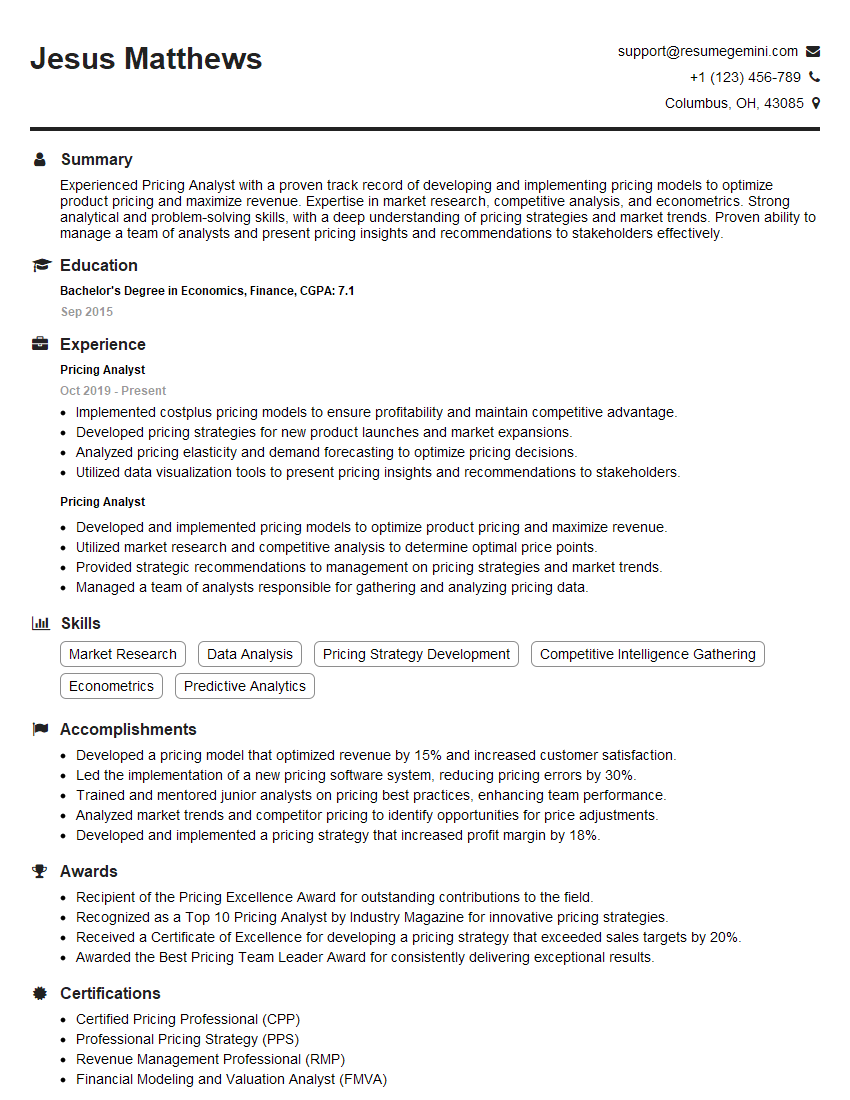
Pricing Analyst Resume Sample
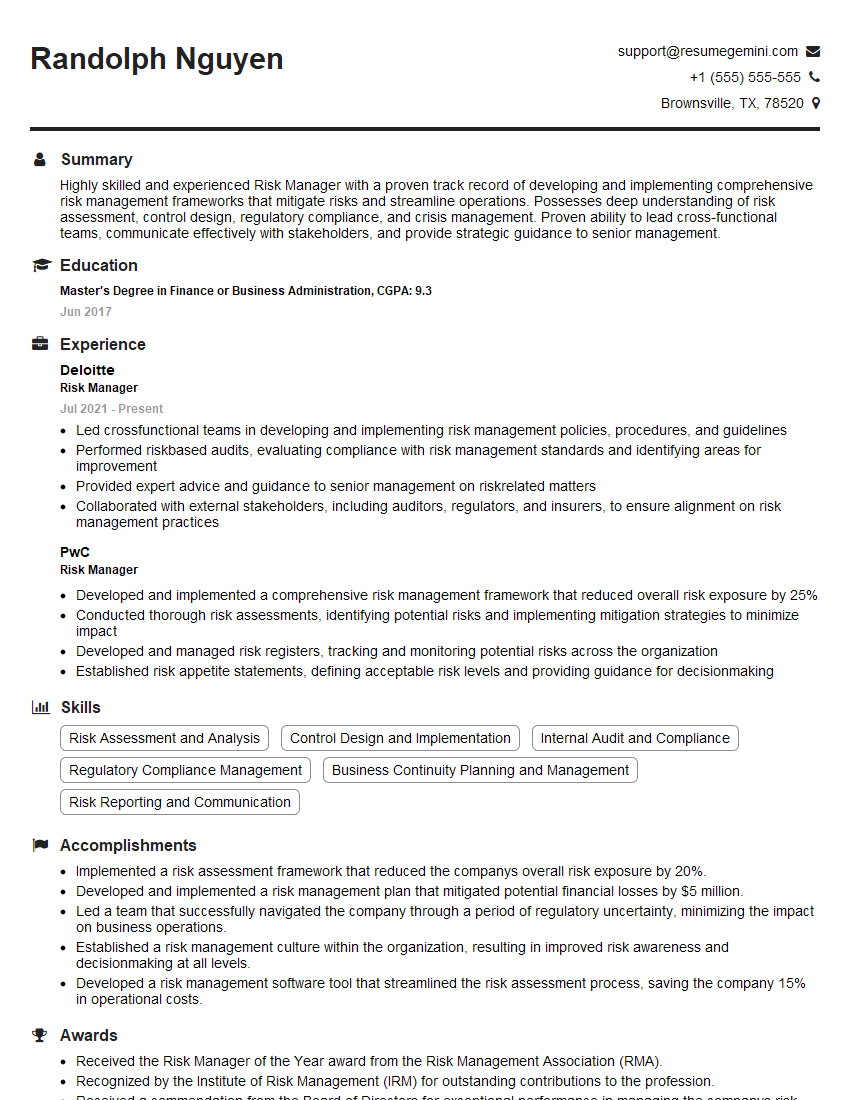
Risk Manager Resume Sample
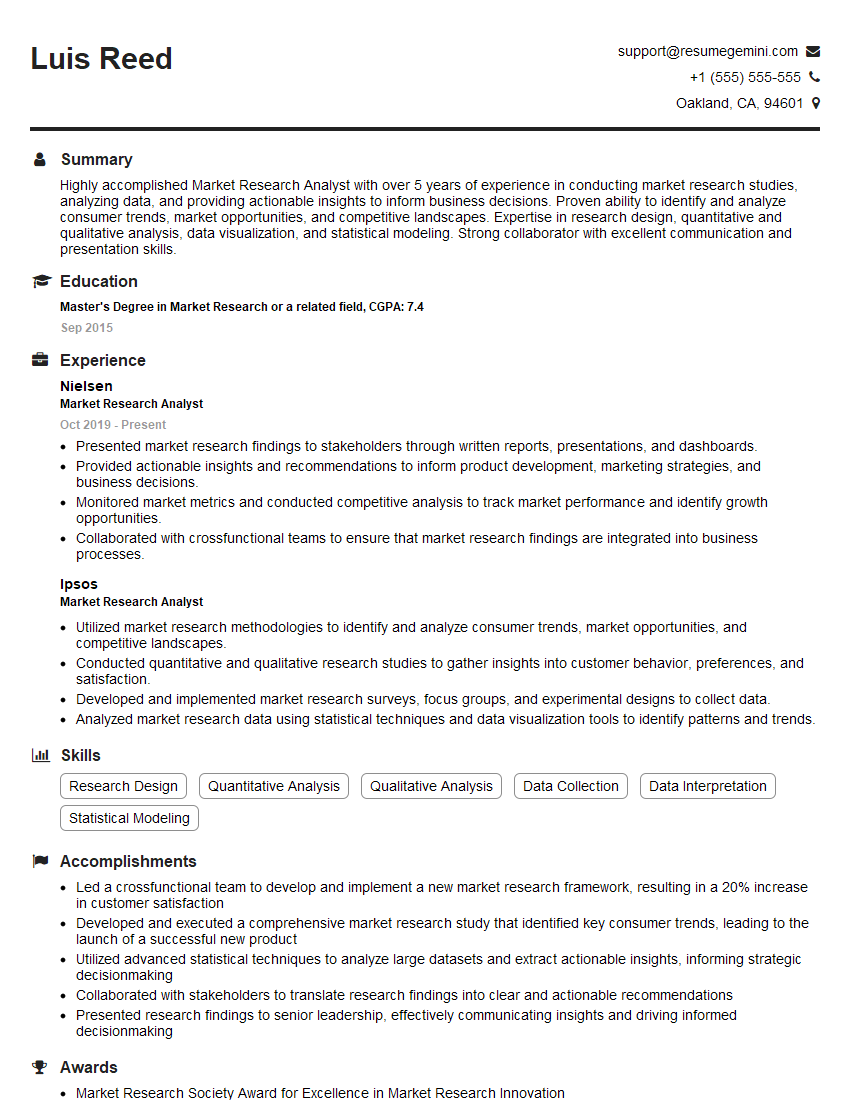
Market Research Analyst Resume Sample

Financial Analyst Resume Sample
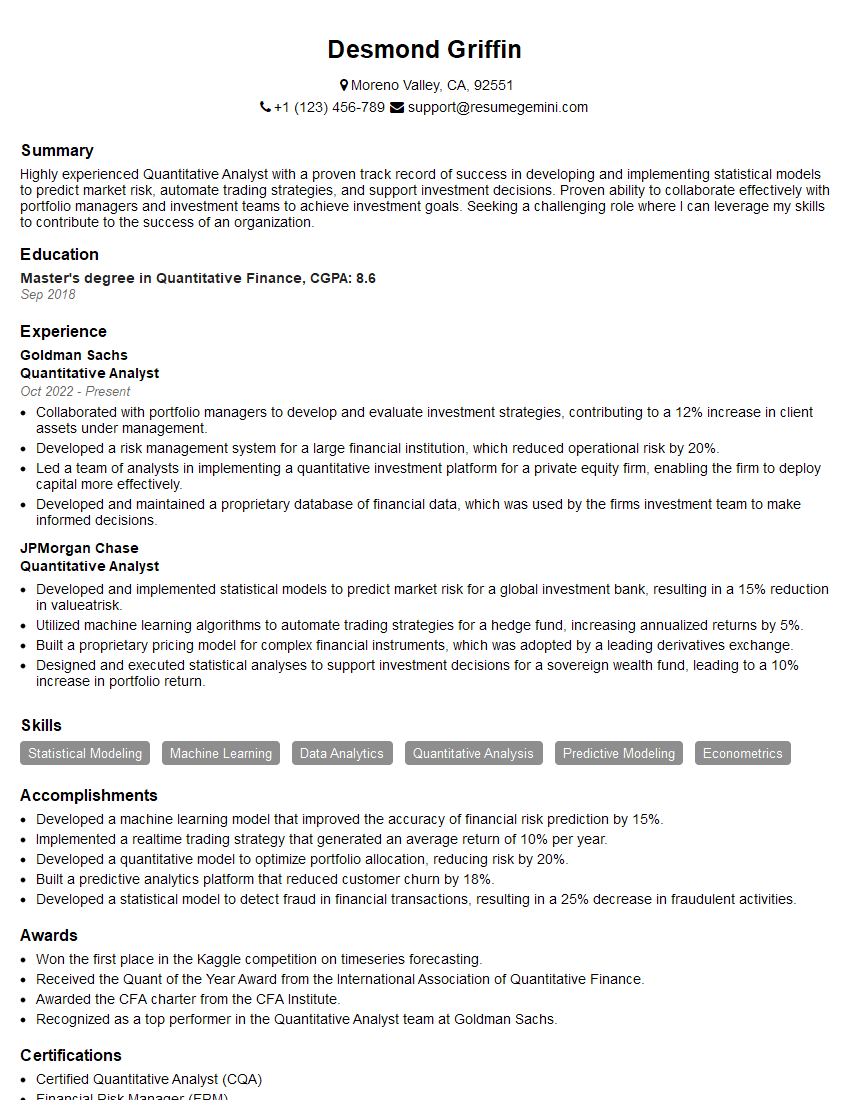
Quantitative Analyst Resume Sample

Data Scientist Resume Sample

Research Scientist Resume Sample

Game Developer Resume Sample
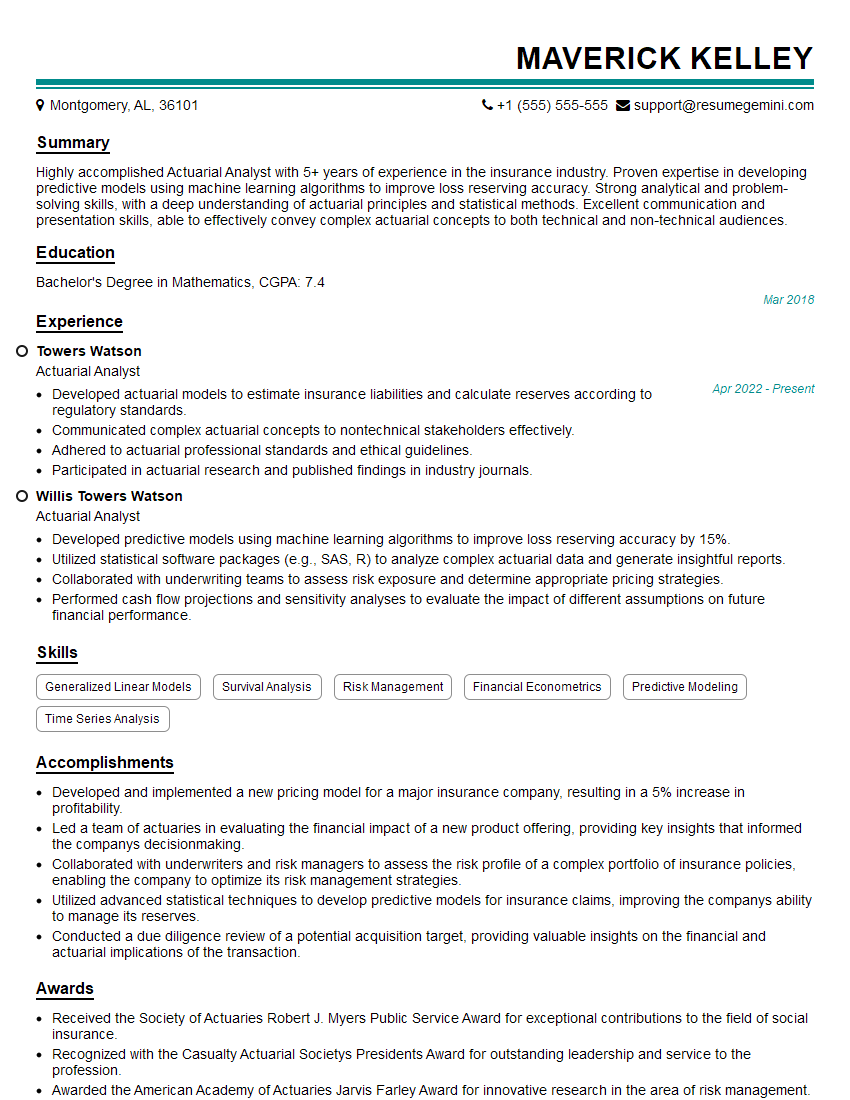
Actuarial Analyst Resume Sample

Actuary Resume Sample
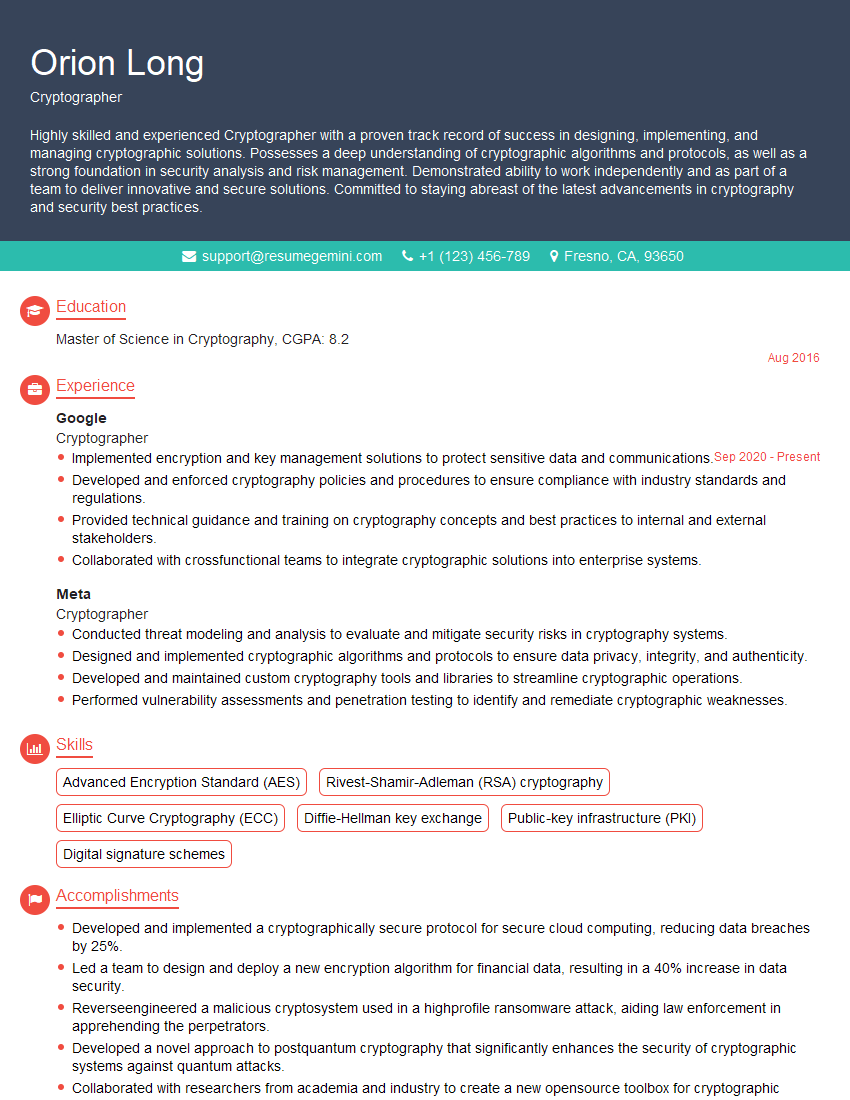
Cryptographer Resume Sample
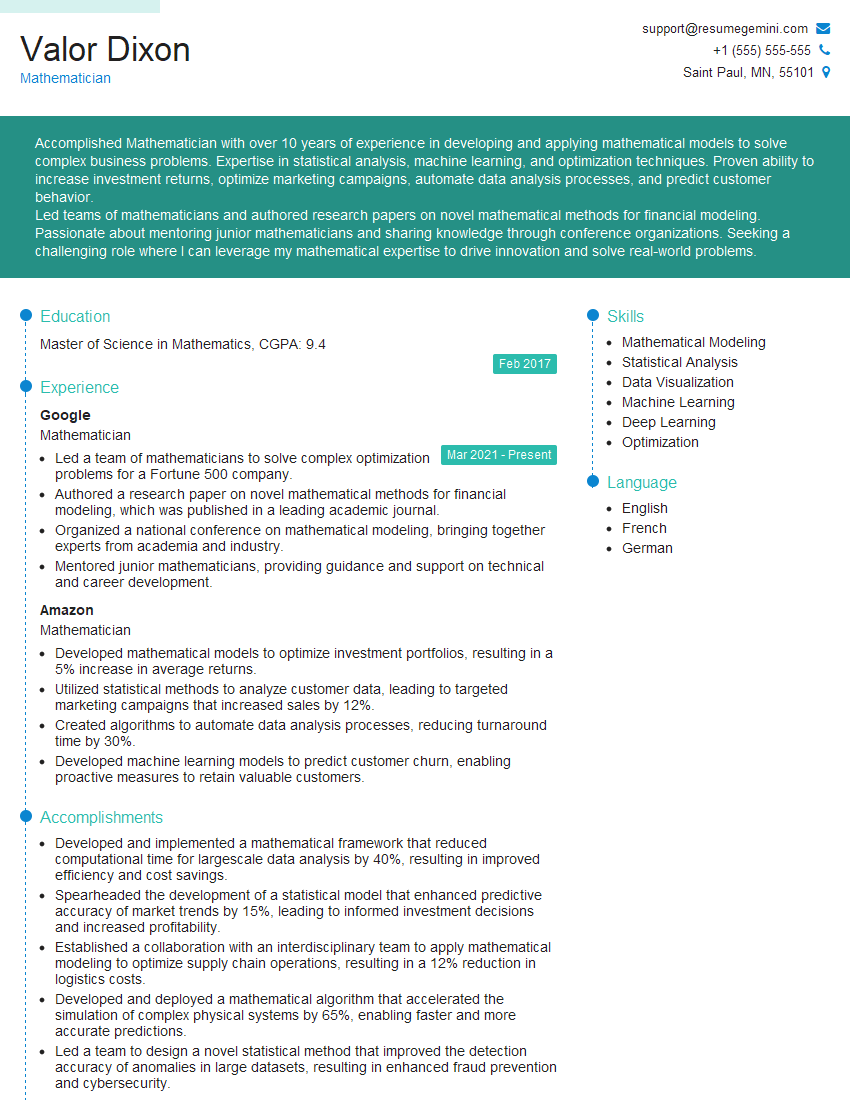
Mathematician Resume Sample

Operations Research Analyst Resume Sample
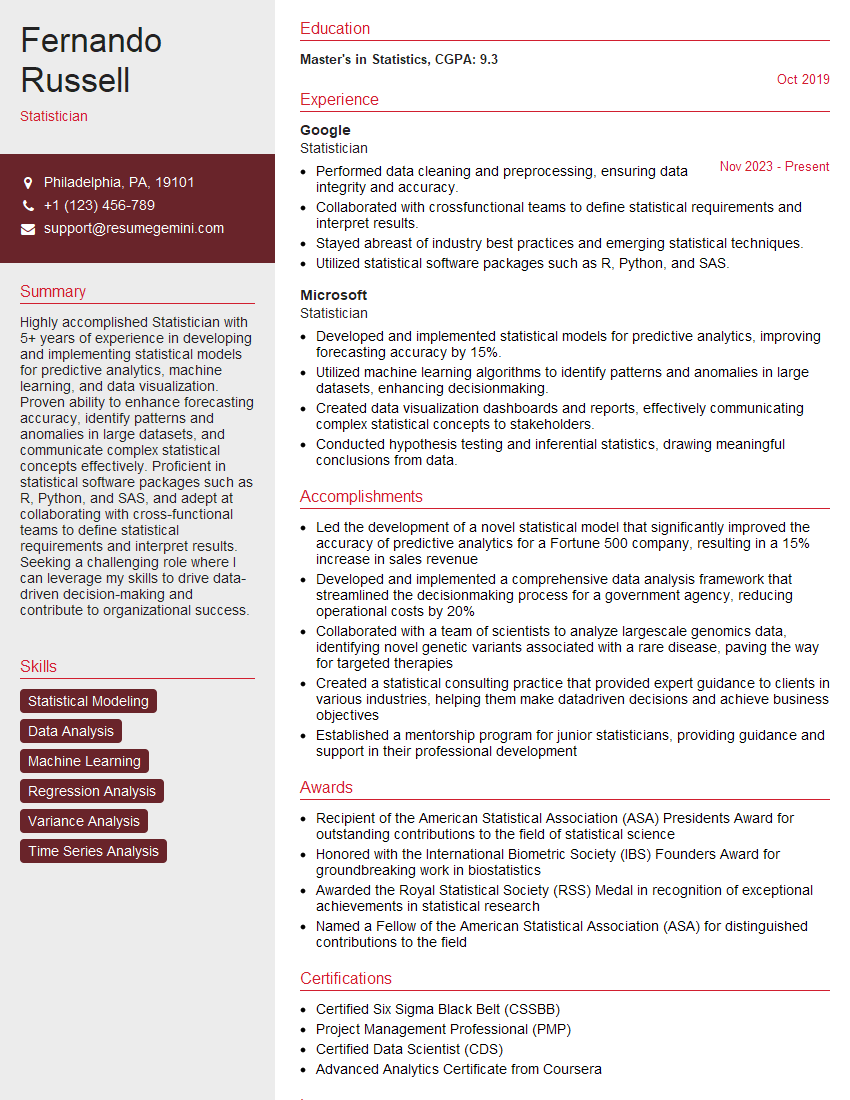
Statistician Resume Sample
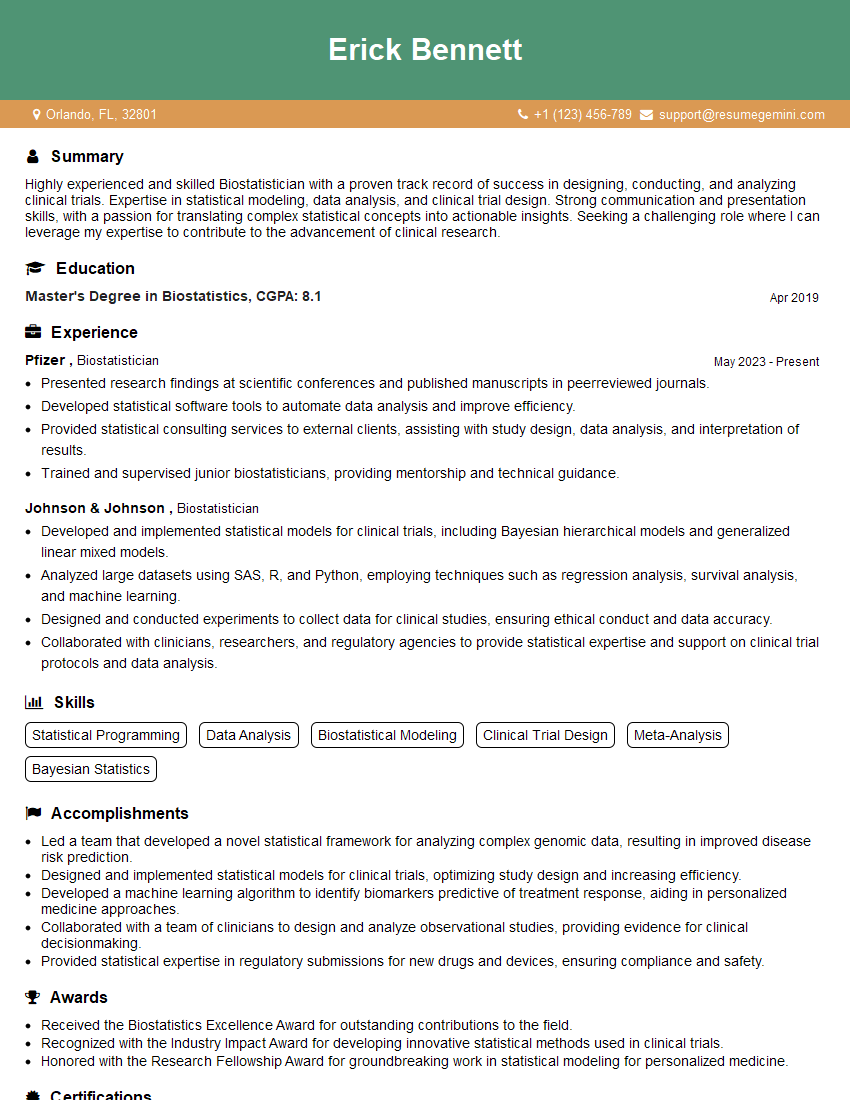
Biostatistician Resume Sample

Control Systems Engineer Resume Sample

Computational Biologist Resume Sample
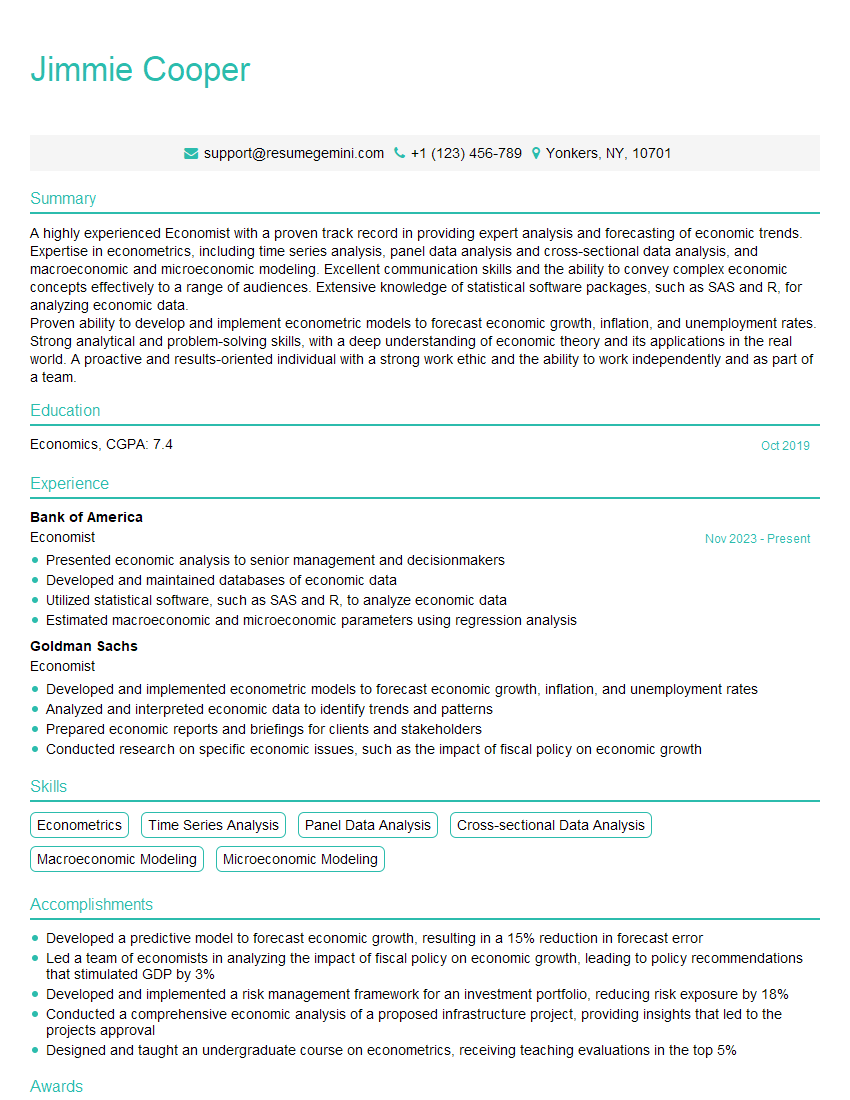
Economist Resume Sample

Survey Researcher Resume Sample
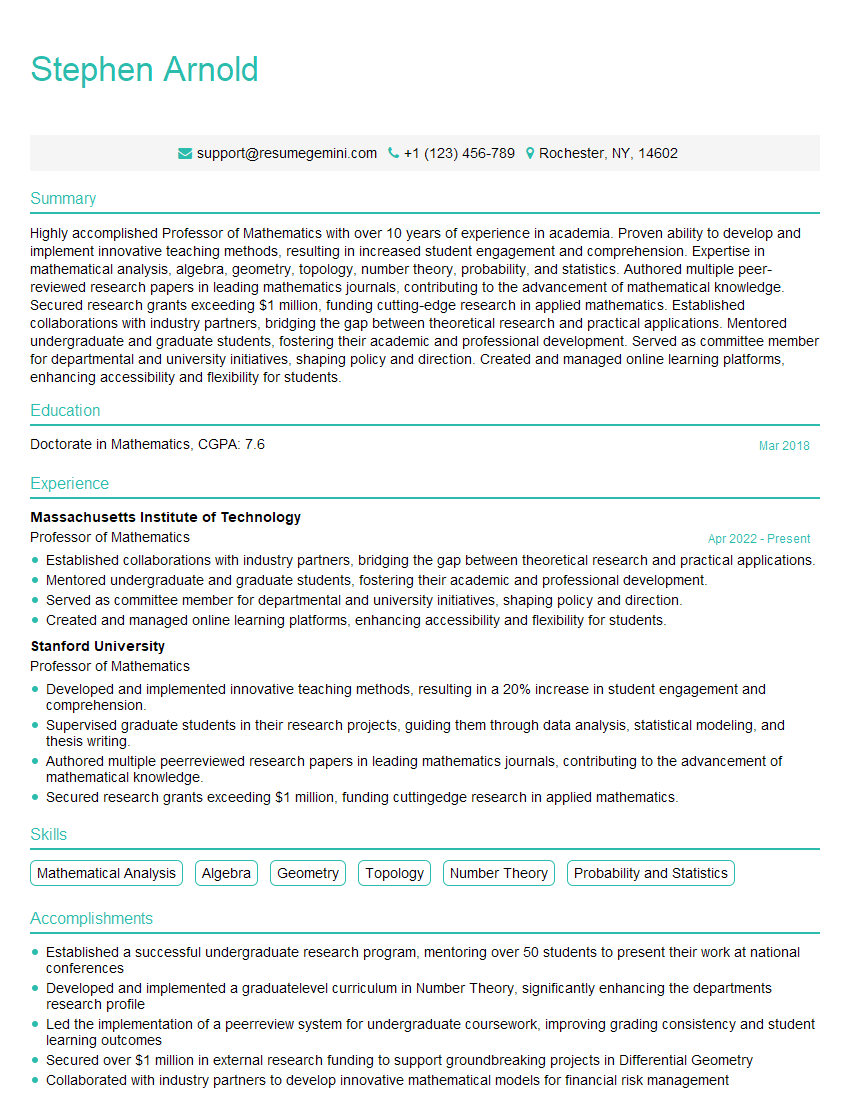
Professor of Mathematics Resume Sample

Machine Learning Engineer Resume Sample
- Pricing Analyst
- Risk Manager
- Market Research Analyst
- Financial Analyst
- Quantitative Analyst
- Data Scientist
- Research Scientist
- Game Developer
- Actuarial Analyst
- Actuary
- Cryptographer
- Mathematician
- Operations Research Analyst
- Statistician
- Biostatistician
- Control Systems Engineer
- Computational Biologist
- Economist
- Survey Researcher
- Professor of Mathematics
- Machine Learning Engineer
Explore more articles
Users Rating of Our Blogs
Share Your Experience
We value your feedback! Please rate our content and share your thoughts (optional).
What Readers Say About Our Blog
Really detailed insights and content, thank you for writing this detailed article.
IT gave me an insight and words to use and be able to think of examples