Every successful interview starts with knowing what to expect. In this blog, we’ll take you through the top Avionics Systems Troubleshooting interview questions, breaking them down with expert tips to help you deliver impactful answers. Step into your next interview fully prepared and ready to succeed.
Questions Asked in Avionics Systems Troubleshooting Interview
Q 1. Explain the troubleshooting process you typically follow when an avionics system malfunctions.
Troubleshooting an avionics system malfunction requires a systematic approach. Think of it like a detective investigating a crime scene – you need to gather evidence, formulate hypotheses, and test them systematically until you find the culprit. My typical process follows these steps:
- Safety First: Prioritize safety. If the malfunction compromises flight safety, take immediate corrective action, such as switching to backup systems or initiating an emergency landing.
- Gather Information: Collect all relevant information about the malfunction. This includes the type of malfunction, when it occurred, any preceding events, and any error messages displayed on the system.
- Initial Assessment: Perform a visual inspection of the system, checking for any obvious signs of damage, loose connections, or burned components.
- Consult Documentation: Refer to the aircraft’s technical manuals, system diagrams, and troubleshooting guides. These documents often provide valuable insights into the system’s operation and potential failure points.
- Diagnostic Testing: Utilize built-in test equipment (BITE) and external diagnostic tools to pinpoint the source of the problem. This might involve running built-in self-tests, checking voltage levels, and performing signal analysis.
- Isolate the Fault: Based on the diagnostic tests and information gathered, isolate the faulty component or subsystem. This may involve systematically checking individual components or modules until the problem is identified.
- Repair or Replacement: Once the faulty component is identified, repair it if possible or replace it with a known good part. Always follow the manufacturer’s instructions and procedures.
- Verification and Documentation: After the repair or replacement, verify that the system is functioning correctly. Document all troubleshooting steps, findings, and repairs in the aircraft’s maintenance log.
For instance, if a GPS receiver is malfunctioning, I’d start by checking its power supply, antenna connection, and then use a GPS signal simulator to verify its ability to receive and process signals.
Q 2. Describe your experience with diagnostic tools and software used in avionics troubleshooting.
My experience with avionics diagnostic tools and software is extensive. I’m proficient with a wide range of equipment, including:
- Built-In Test Equipment (BITE): I regularly use BITE systems integrated into many modern avionics systems. These systems provide self-diagnostic capabilities, identifying potential faults and reporting them to the maintenance crew. For example, the ARINC 629 data bus allows for comprehensive system health monitoring.
- Multi-meters and Oscilloscopes: I’m adept at using these to measure voltage, current, and signal waveforms to diagnose electrical faults.
- Specialized Test Sets: I’ve used specialized test sets for specific avionics components, like those used to test communication radios or navigation receivers. These test sets simulate real-world conditions to ensure the component is functioning correctly.
- Avionics Software: I’m familiar with various avionics software packages used for data logging, fault analysis, and system configuration. These tools are invaluable for analyzing trends and identifying intermittent faults.
For example, I once used a specialized test set to troubleshoot a malfunctioning VHF radio. The test set allowed me to isolate the problem to a faulty receiver module, which was then replaced. This was documented in the maintenance log for traceability and regulatory compliance.
Q 3. How do you identify and isolate faulty components in an avionics system?
Identifying and isolating faulty components involves a combination of techniques. Think of it as using a process of elimination. It’s crucial to follow a structured approach and utilize the right tools. Here’s my methodology:
- Visual Inspection: Begin with a careful visual inspection of the system, checking for any obvious signs of damage, loose connections, or burnt components. This is a simple yet effective first step that often reveals the problem.
- BITE and Self-Tests: Run built-in test equipment (BITE) and any available self-tests to identify potential faults. This will provide crucial data about the location of the issue.
- Signal Tracing and Analysis: If the problem isn’t immediately apparent, use oscilloscopes and other signal analysis tools to trace signals through the system. This will allow you to pinpoint the point of failure.
- Component Level Testing: If necessary, conduct component-level testing to isolate the faulty component. This may involve removing components and testing them individually using appropriate test equipment.
- Substitution: In some cases, replacing a suspected faulty component with a known good component is a quick way to determine if that component is indeed the cause of the malfunction.
For instance, if a flight control computer shows an error, I’d first run BITE and then trace the signals to identify the malfunctioning circuit board. If it’s still difficult to isolate, a substitution of the suspect board with a spare is a quick way to confirm the fault.
Q 4. What are some common causes of avionics system failures?
Avionics system failures can stem from various sources. These can be broadly categorized into:
- Hardware Failures: This includes component failures like capacitors, integrated circuits, connectors, and wiring harnesses. Age, wear and tear, vibration, and extreme temperatures can all contribute to hardware problems.
- Software Glitches: Software bugs, corrupted data, or incorrect configuration can lead to system malfunctions. Regular software updates and rigorous testing are essential to minimize software-related failures.
- Environmental Factors: Extreme temperatures, humidity, and lightning strikes can damage avionics systems. Proper shielding and environmental controls are necessary to mitigate these issues.
- Human Error: Incorrect installation, configuration, or maintenance procedures can result in system failures. Proper training and adherence to maintenance manuals are crucial.
- Interference: Electromagnetic interference (EMI) from other systems or external sources can disrupt the operation of avionics systems. Shielding and proper grounding are essential to mitigate EMI.
A classic example is a faulty power supply causing multiple failures; seemingly unrelated issues could all stem from one source.
Q 5. How familiar are you with different types of avionics systems (e.g., navigation, communication, flight control)?
I possess a comprehensive understanding of various avionics systems, including:
- Navigation Systems: GPS, VOR, ILS, INS, and other navigation aids. I understand their principles of operation, data processing, and potential failure modes.
- Communication Systems: VHF, HF, SATCOM, transponders, and intercom systems. I’m familiar with their communication protocols, frequency bands, and troubleshooting techniques.
- Flight Control Systems: Flight management computers, autopilots, flight control actuators, and other flight control components. I’m aware of their critical nature and the need for meticulous troubleshooting.
- Weather Radar: Understanding how weather radar systems function, process signals and display weather patterns is a key element of my experience.
- Traffic Collision Avoidance Systems (TCAS): I’m familiar with the operation and troubleshooting of TCAS, a crucial system for preventing mid-air collisions.
My knowledge extends to both legacy and modern systems, encompassing both analog and digital technologies. I can effectively troubleshoot complex interactions between different systems.
Q 6. Describe your experience with troubleshooting communication systems (e.g., VHF, HF, SATCOM).
Troubleshooting communication systems like VHF, HF, and SATCOM involves a systematic approach, focusing on signal path integrity. Here’s a breakdown:
- Signal Strength and Quality: Start by checking the signal strength and quality using signal meters and spectrum analyzers. Low signal strength often points to antenna problems or propagation issues.
- Antenna Integrity: Inspect the antenna for damage, loose connections, or misalignment. Proper grounding and impedance matching are vital for optimal performance.
- Transmitter and Receiver Function: Test the transmitter and receiver functionality using signal generators and load banks. Check for proper power levels, modulation, and frequency accuracy.
- Interference Checks: Check for potential sources of electromagnetic interference that might disrupt communication. This could involve examining nearby equipment or identifying environmental factors.
- Software Configuration: Verify that the communication system’s software is correctly configured and that no conflicting settings are present.
For example, a weak VHF signal might indicate a problem with the antenna’s connection or a faulty transmitter amplifier. A thorough check of the entire signal path is crucial for pinpointing the source of the problem.
Q 7. How do you troubleshoot navigation systems (e.g., GPS, VOR, ILS)?
Troubleshooting navigation systems like GPS, VOR, and ILS requires a precise understanding of their operational principles. My approach includes:
- GPS Troubleshooting: This involves checking satellite acquisition, signal strength, antenna integrity, and the GPS receiver’s internal processing. I would use GPS signal simulators to test the receiver’s capability under various conditions.
- VOR Troubleshooting: For VOR troubleshooting, I would check the VOR receiver’s functionality, antenna alignment, and the signal strength from the VOR ground station. I may also check for interference from other sources.
- ILS Troubleshooting: ILS troubleshooting involves checking the ILS receiver, antenna alignment, and the integrity of the ILS ground signals. This often requires specialized test equipment to ensure the accuracy of the signal.
- Data Integrity: I would check for any data errors or inconsistencies in the system’s output. This is crucial for ensuring accurate navigation information.
For example, a GPS navigation system displaying erroneous information could point to a faulty antenna, a problem with the receiver’s internal processing, or even interference from other sources. In that case, I would isolate the problem by systematically checking each component of the system.
Q 8. How do you troubleshoot flight control systems?
Troubleshooting flight control systems requires a systematic approach, combining theoretical knowledge with practical skills. It’s like solving a complex puzzle where each component plays a crucial role. My process begins with a thorough understanding of the reported malfunction. This usually involves reviewing pilot reports, reviewing any recorded flight data recorder (FDR) information, and understanding the specific symptoms. Then I would:
- Isolate the Problem: I’d start by checking the most likely culprits first, often using built-in test equipment (BITE) and system diagnostics. This might involve checking sensors (like accelerometers and rate gyros), actuators (like hydraulic servos), and the flight control computer (FCC) itself. I might look for discrepancies in sensor readings or unusual actuator commands.
- Consult Schematics and Diagrams: Aircraft schematics are essential. I would trace the signal path from the sensor, through the computer, and to the actuator, checking for continuity and signal integrity at each point. This helps me identify potential wiring issues, connector faults, or component failures.
- Utilize Diagnostic Tools: Modern flight control systems have sophisticated diagnostics. I would use these tools to extract fault codes and error messages, which often point directly to the source of the problem. For older systems, I’d leverage built-in test equipment (BITE) which provides self-diagnostic capabilities.
- Component-Level Testing: Once a suspect component is identified, I perform bench tests or use specialized equipment to verify its functionality. This might involve checking voltage levels, signal outputs, and response times.
- Verification and Documentation: After a repair or component replacement, thorough testing is crucial to ensure the system is functioning correctly. I use flight simulators to simulate various flight conditions and validate the system’s performance before returning the aircraft to service.
For example, I once worked on a case where the aircraft experienced erratic roll during flight. By meticulously following this process and using the aircraft’s onboard diagnostic system, we identified a faulty rate gyro. Replacing the gyro immediately resolved the issue.
Q 9. What safety procedures do you follow when troubleshooting avionics systems?
Safety is paramount in avionics troubleshooting. My approach prioritizes risk mitigation at every stage. I adhere strictly to the following procedures:
- Lockout/Tagout (LOTO): Before commencing any work, I always implement LOTO procedures to prevent accidental power activation. This is crucial to prevent electrical shock or unexpected system activation.
- Grounding and Bonding: Proper grounding and bonding techniques are used to prevent static discharge, which can damage sensitive electronic components.
- Use of Appropriate PPE: I always wear appropriate personal protective equipment (PPE), including safety glasses, gloves, and anti-static wrist straps.
- Compliance with Maintenance Manuals: I strictly follow the aircraft’s maintenance manuals, which outline detailed procedures and safety precautions for each system.
- Step-by-Step Verification: Each step in the troubleshooting process is carefully verified before proceeding to the next. This prevents cascading errors and ensures a safe and controlled workflow.
- Consult with Senior Personnel: If unsure about any aspect of the troubleshooting process or if encountering an unfamiliar problem, I consult with senior technicians or engineers.
Safety isn’t just a checklist; it’s a mindset that informs every decision I make during the troubleshooting process. I always err on the side of caution, prioritizing safety over speed.
Q 10. Explain your experience with aircraft schematics and wiring diagrams.
I possess extensive experience interpreting and utilizing aircraft schematics and wiring diagrams. These documents are my roadmap for understanding the intricate connections within the avionics systems. I’m proficient in reading both simplified block diagrams, which show the overall system architecture, and detailed wiring diagrams which show each wire, connector, and component placement.
My experience includes working with various formats, from hard-copy manuals to digital versions using specialized software. I can quickly trace signal paths, identify component locations, and understand the interconnections between different systems. For example, I can use a wiring diagram to quickly determine which circuit breaker to turn off before working on a specific component, ensuring my safety and preventing damage to the system. I’ve worked with a wide variety of aircraft, including Boeing 737, Airbus A320, and Cessna Citation models each requiring specialized understanding of their schematics.
I often use these diagrams in conjunction with fault-finding diagnostic tools. This combination aids in isolating the problem area, accelerating the repair process significantly, minimizing the downtime.
Q 11. How do you interpret fault codes and diagnostic messages from avionics systems?
Interpreting fault codes and diagnostic messages is crucial for efficient troubleshooting. These codes, often hexadecimal or alphanumeric, provide valuable clues about the nature and location of a problem. My approach involves:
- Consulting the Fault Code Manual: The aircraft’s maintenance manual contains a comprehensive list of fault codes and their corresponding meanings. I use this document as my primary reference.
- Analyzing the Context: The code itself isn’t always sufficient. I consider the system’s operational state, the sequence of events leading to the fault, and other related symptoms to get a comprehensive understanding.
- Cross-referencing with Other Data: I might correlate the fault code with other diagnostic messages, sensor readings, or parameters logged by the aircraft’s data acquisition system.
- Utilizing Diagnostic Software: Many modern systems have specialized software for analyzing fault codes and retrieving more detailed diagnostic information. This software often provides graphical representations of system parameters and assists in identifying potential problems.
For example, a code like 0x1A2B might, according to the manual, indicate a failure in the air data computer’s pressure sensor. However, the context—such as the altitude at which the fault occurred—might suggest other possible causes requiring further investigation.
Q 12. How familiar are you with aviation regulations and maintenance manuals?
I am thoroughly familiar with aviation regulations and maintenance manuals. My knowledge includes regulations such as those defined by the FAA (Federal Aviation Administration) and EASA (European Union Aviation Safety Agency), relevant to avionics maintenance and repair. I understand the importance of maintaining detailed records, complying with airworthiness directives, and following strict procedures to ensure the safety and airworthiness of the aircraft. The maintenance manuals provide specific instructions for troubleshooting, repairing and testing avionics systems. My understanding goes beyond simply reading them – I use them as practical guides, understanding the reasoning behind each procedure.
My experience encompasses working with various aircraft types and their respective maintenance manuals, adapting to the unique requirements and procedures associated with each. I understand the consequences of non-compliance, and prioritize adherence to all regulations and procedures.
Q 13. Describe your experience with conducting functional tests on avionics systems after repairs.
After repairs, conducting comprehensive functional tests is essential to ensure the avionics systems operate correctly. These tests verify the effectiveness of the repair and the overall system integrity. I utilize a combination of techniques depending on the complexity and type of system:
- Built-in Test Equipment (BITE): I rely on the aircraft’s self-diagnostic capabilities to verify that the repaired system functions as intended. I review the results to confirm the absence of errors and proper system operation.
- Specialized Test Equipment: I often employ specialized test equipment, such as signal generators, oscilloscopes, and multimeters, to check signals, voltages, and other critical parameters. These tests provide a detailed analysis of system performance.
- Functional Tests in a Simulated Environment: For certain systems, I conduct tests in a controlled environment to simulate real-world flight conditions. This approach verifies performance under various scenarios before returning the aircraft to service. This might involve the use of specialized flight simulators.
- Flight Testing: If appropriate and possible, flight tests are conducted to assess the system’s functionality during real-world operation. This would involve working closely with the flight test engineers and pilots.
Each test is thoroughly documented, including the test procedures followed, the results obtained, and any discrepancies identified. This documentation ensures traceability and provides an audit trail for regulatory compliance. I always prioritize a methodical and thorough approach to testing, making sure every parameter is within specifications before certifying the aircraft is airworthy.
Q 14. How do you document your troubleshooting process and findings?
Documentation is vital in avionics troubleshooting. It ensures traceability, facilitates future maintenance, and aids in regulatory compliance. My documentation practices include:
- Detailed Troubleshooting Log: I maintain a detailed log that chronicles every step of the troubleshooting process, including the initial problem description, test results, component replacements, and any relevant observations. This log acts as a step-by-step history of my work.
- Schematic Markups: I often make annotations on schematics to highlight the areas inspected, tests performed, and any identified faults. This visual record makes it easy to review the work and understand the resolution process.
- Fault Code Records: All fault codes and diagnostic messages are recorded, along with their interpretations and resolution. This information is valuable for trend analysis and identifying recurring problems.
- Photographs and Videos: Where appropriate, I use photographs and videos to document the physical state of components, wiring, and the overall system. This provides visual evidence for future reference.
- Formal Repair Reports: After the repair is complete, I generate a formal repair report that summarizes the troubleshooting process, the actions taken, and the verification tests performed. This report is essential for compliance and airworthiness certification.
My goal is to create comprehensive documentation that would allow another technician to understand the entire repair process, facilitating easier troubleshooting in case of similar issues in the future.
Q 15. Explain your experience working with different types of avionics test equipment.
My experience with avionics test equipment spans a wide range of tools, from basic multimeters and oscilloscopes to sophisticated integrated test systems. I’m proficient in using:
- Multimeters: For basic voltage, current, and resistance checks, essential for isolating faulty components.
- Oscilloscopes: To analyze waveforms and identify signal integrity issues, crucial for troubleshooting data bus problems or intermittent faults.
- Signal Generators: To simulate various signals and test the response of different avionics systems. This is especially useful in verifying the correct operation of sensors and actuators.
- Integrated Test Systems (ITS): These powerful systems allow for comprehensive testing of various avionics components and subsystems, often incorporating automated test sequences and diagnostic capabilities. I’ve worked extensively with both manufacturer-specific and general-purpose ITS.
- Data Acquisition Systems: For capturing and analyzing large amounts of data from aircraft systems, essential for complex troubleshooting and identifying subtle issues.
I understand the importance of selecting the appropriate equipment for the task at hand and am adept at interpreting the results obtained from these various tools to effectively diagnose and resolve avionics faults.
Career Expert Tips:
- Ace those interviews! Prepare effectively by reviewing the Top 50 Most Common Interview Questions on ResumeGemini.
- Navigate your job search with confidence! Explore a wide range of Career Tips on ResumeGemini. Learn about common challenges and recommendations to overcome them.
- Craft the perfect resume! Master the Art of Resume Writing with ResumeGemini’s guide. Showcase your unique qualifications and achievements effectively.
- Don’t miss out on holiday savings! Build your dream resume with ResumeGemini’s ATS optimized templates.
Q 16. How do you handle complex avionics problems with multiple possible causes?
Troubleshooting complex avionics problems with multiple potential causes requires a systematic and methodical approach. I typically follow these steps:
- Gather Information: Start by collecting all available data: fault codes, maintenance logs, pilot reports, and any other relevant information. This helps to narrow down the possible causes.
- Isolate the Problem: Use diagnostic tools and techniques to pinpoint the affected system or component. This might involve tracing signals, checking wiring harnesses, or examining system logs.
- Develop a Hypothesis: Based on the gathered information, formulate a hypothesis about the root cause of the problem. This is where experience and understanding of aircraft systems are crucial.
- Test the Hypothesis: Conduct tests to verify or refute the hypothesis. This might involve replacing components, running diagnostic software, or simulating different scenarios.
- Document Findings: Meticulously document all findings, tests performed, and results obtained. Clear documentation is critical for future reference and for ensuring efficient troubleshooting by others.
- Iterate: If the initial hypothesis proves incorrect, repeat steps 3-5 until the root cause is identified and resolved.
Think of it like solving a puzzle; each piece of information leads you closer to the solution. Using a structured approach ensures efficiency and prevents overlooking potential causes.
Q 17. Describe a time you had to troubleshoot a particularly challenging avionics problem. What was your approach?
During my time at [Previous Company Name], we experienced an intermittent failure in the aircraft’s air data computer (ADC). The problem was particularly challenging because the fault was not consistent and the error messages were vague. Initially, we suspected a faulty ADC, but after replacing it, the problem persisted.
My approach was to systematically eliminate possibilities. I started by checking the ADC’s power supply and signal inputs using an oscilloscope. I then moved on to inspect the wiring harness connecting the ADC to other systems. I discovered a loose connection within a connector, causing intermittent signal degradation.
The challenging aspect was the inconsistency of the fault. To replicate and diagnose the issue, I had to carefully maneuver the wiring harness while monitoring the ADC’s outputs on the oscilloscope. Once the loose connection was identified and secured, the intermittent failure was resolved. This experience reinforced the importance of thoroughness and meticulous attention to detail in avionics troubleshooting.
Q 18. How do you stay up-to-date with the latest advancements in avionics technology?
Staying current in the rapidly evolving field of avionics requires a multi-pronged approach:
- Industry Publications: I regularly read industry journals, such as Aviation Week & Space Technology and other specialized publications, to stay informed about new technologies and trends.
- Conferences and Workshops: Attending conferences and workshops provides opportunities to learn from leading experts and network with colleagues in the field.
- Manufacturer Training: I actively participate in manufacturer-sponsored training programs to stay up-to-date on the latest avionics systems and troubleshooting techniques. This often includes hands-on experience with new equipment and software.
- Online Resources: I utilize online platforms and forums to access technical information, white papers, and discussions on emerging technologies.
- Continuing Education: I actively pursue continuing education opportunities to maintain and enhance my knowledge and certifications.
Continuous learning is essential in this dynamic field, ensuring I can effectively troubleshoot the most advanced systems and technologies.
Q 19. What is your experience with data bus systems in aircraft?
My experience with aircraft data bus systems is extensive. I’m familiar with various data bus architectures, including ARINC 429, ARINC 629, and AFDX (Avionics Full Duplex Switched Ethernet). I understand the principles of data bus communication, including message framing, error detection, and data prioritization.
I’ve worked on troubleshooting data bus problems using specialized test equipment, such as bus analyzers, which allow me to capture and analyze the data traffic on the bus, identifying message errors, timing violations, or other anomalies. This capability is essential for diagnosing communication problems between different avionics systems.
Furthermore, I have practical experience with different data bus monitoring and diagnostic tools which provide valuable information about the health and performance of aircraft data busses. This experience enables efficient fault isolation and expedites the resolution of malfunctions.
Q 20. How familiar are you with ARINC standards?
I am very familiar with ARINC standards, which are essential for the interoperability and safety of avionics systems. My knowledge includes:
- ARINC 429: A widely used data bus standard for transmitting discrete and analog data between avionics systems. I understand the message formats, error detection mechanisms, and timing requirements.
- ARINC 629: A high-speed, high-capacity data bus standard, commonly used in modern aircraft. My experience encompasses its intricacies like multiplexing and addressing schemes.
- AFDX (ARINC 664): A switched Ethernet-based network for avionics, offering improved performance and flexibility compared to older bus standards. I understand the concepts of Quality of Service (QoS) and the role of network switches in ensuring reliable communication.
- Other ARINC Standards: I’m also knowledgeable about other relevant ARINC standards concerning aircraft communication and data handling protocols.
My understanding of these standards enables me to effectively troubleshoot and maintain avionics systems that rely on these crucial communication architectures. I can interpret technical documentation, fault codes, and data bus messages conforming to these standards.
Q 21. How do you prioritize troubleshooting tasks in a busy maintenance environment?
In a busy maintenance environment, prioritizing troubleshooting tasks is critical to ensuring efficient and timely aircraft turnaround. I utilize a risk-based prioritization approach:
- Safety Criticality: Tasks affecting the safety of flight are always given the highest priority. This includes resolving problems that impact critical systems, such as flight controls, engines, or navigation.
- Aircraft Availability: Problems that prevent the aircraft from operating are prioritized to minimize downtime and operational disruptions. This includes resolving issues that prevent scheduled flights or maintenance checks.
- Severity of the Fault: The severity of the fault determines its priority. For instance, a complete system failure warrants higher priority than a minor malfunction with limited impact.
- Urgency of Repair: Some faults might not be immediately critical but might escalate if left unattended. These are prioritized to prevent further damage or complications.
- Resource Availability: The availability of necessary tools, parts, and skilled personnel influences the prioritization of tasks.
This system helps ensure that the most critical problems are addressed first, while maintaining a balance between safety, efficiency, and resource allocation. I’m also proficient in using maintenance management software that assists in task prioritization.
Q 22. Describe your experience with troubleshooting problems related to aircraft electrical systems.
Troubleshooting aircraft electrical systems requires a systematic approach, combining theoretical knowledge with practical skills. It involves understanding the aircraft’s electrical architecture, including DC and AC power generation, distribution, and utilization. Problems can range from simple issues like blown fuses to complex faults in generators or power control units.
In my experience, I’ve tackled numerous challenges, including identifying intermittent power failures by meticulously tracing wiring harnesses and using specialized test equipment like multimeters and oscilloscopes to pinpoint voltage drops or shorts. One memorable instance involved a recurring problem with a low-voltage warning light on a regional jet. By systematically checking the battery bus, generator output, and voltage regulators, I traced the fault to a faulty voltage sensor, not a problem with the power generation itself. This highlights the importance of looking beyond the obvious symptoms.
I’m also experienced in diagnosing issues related to the aircraft’s electrical load management system, ensuring that the power distribution efficiently supports all onboard systems, and ensuring compliance with safety regulations.
Q 23. Explain your experience with troubleshooting problems related to aircraft hydraulic systems as they relate to avionics.
Aircraft hydraulic systems are critical for flight control surfaces, landing gear, and some avionics components. Troubleshooting issues impacting avionics often involves understanding how hydraulic pressure is used to power things like flight control actuators, which directly affect the data sent to the avionics systems. Low hydraulic pressure, leaks, or contamination can lead to inaccurate readings and malfunctioning avionics.
My experience includes identifying leaks using dye penetrant inspection, pressure testing various components of the system, and using diagnostic software to monitor pressure and flow rates. For example, I once worked on an incident where a faulty pressure transducer in the flight control hydraulic system was causing erratic signals to be sent to the autopilot. This resulted in unexpected autopilot corrections. By replacing the faulty transducer, we restored normal functionality.
Troubleshooting in this area often necessitates a collaborative approach, working closely with the mechanics responsible for the hydraulic systems to understand the overall system health. A good understanding of both hydraulics and avionics is essential.
Q 24. How familiar are you with the use of Built-In Test Equipment (BITE)?
Built-In Test Equipment (BITE) is crucial for rapid fault isolation in modern aircraft. BITE systems provide onboard diagnostics, often displayed on a central maintenance panel or through a computer interface. They indicate the location of the fault, speeding up maintenance. I’m very familiar with a variety of BITE systems used across different aircraft platforms. I know how to interpret the error codes and messages generated by BITE, and utilize this information in a logical troubleshooting process.
For instance, I routinely use BITE information to pinpoint faulty Line Replaceable Units (LRUs). The BITE may indicate a failure in the Air Data Computer (ADC). Instead of blindly testing every component of the system, I can focus on replacing or repairing the identified LRU, minimizing downtime.
My experience includes understanding the limitations of BITE; it’s a tool, not a definitive answer. Sometimes, further investigation with external test equipment is needed to accurately diagnose the root cause. My expertise lies in understanding when to rely on the BITE and when to delve deeper.
Q 25. What is your experience with troubleshooting problems related to aircraft environmental control systems (ECS)?
Aircraft Environmental Control Systems (ECS) are responsible for maintaining comfortable and safe cabin conditions, which indirectly impacts avionics reliability. Extreme temperatures or humidity can affect the performance of sensitive electronic components. Troubleshooting ECS problems related to avionics often involves identifying how temperature or humidity fluctuations might be causing malfunctions.
My experience includes working on issues related to air conditioning packs, heating systems, and cabin pressurization. For example, I once encountered an avionics issue linked to high humidity levels in a specific avionics bay. By working with the ECS technicians to address the underlying humidity problem, we resolved the avionics malfunction.
Troubleshooting involves understanding the interconnectedness of different systems. A seemingly simple ECS issue might cascade into more complex avionics problems if not addressed properly. A systematic approach combining electrical and environmental system knowledge is vital for effective troubleshooting.
Q 26. Explain your understanding of electromagnetic interference (EMI) and its impact on avionics systems.
Electromagnetic Interference (EMI) is the disruption of an electrical circuit’s operation by electromagnetic radiation emanating from another device. In avionics, EMI can cause malfunctions, data corruption, and even complete system failures. Understanding its impact and mitigation is crucial.
EMI can originate from various sources within the aircraft, including other avionics systems, electrical motors, or external sources like weather radar or communication systems. The effects can be subtle, such as intermittent glitches, or catastrophic, leading to complete system outages.
My experience includes identifying and mitigating EMI issues by using techniques like proper shielding, grounding, and filtering. I’ve also used specialized test equipment to measure electromagnetic fields and identify the source of interference. Shielding and filtering are key components of minimizing the risk of EMI. Often, the proper placement of components is crucial to minimizing interactions.
Q 27. Describe your experience with using specialized software for avionics diagnostics and repair.
I’m proficient in using a range of specialized software for avionics diagnostics and repair. This includes both manufacturer-specific diagnostic tools and general-purpose software for data analysis and troubleshooting. My experience encompasses software used to interface with BITE systems, access and analyze flight data recorders (FDR), and perform simulations to understand system behavior.
For instance, I routinely utilize software to interpret fault codes from various avionics systems, access historical flight data to identify trends or patterns related to intermittent faults, and run simulations to assess the impact of potential modifications. Some of the software I’ve worked with includes [Mention Specific Software Examples if allowed, otherwise remove this sentence] .
Understanding the software and its limitations is as crucial as understanding the avionics systems themselves. Effective use of this software streamlines the troubleshooting process and allows for a more data-driven approach to problem solving.
Q 28. How would you approach troubleshooting a problem with an integrated modular avionics (IMA) system?
Troubleshooting an Integrated Modular Avionics (IMA) system requires a structured approach due to its complexity. IMA systems integrate multiple avionics functions onto a few powerful processing modules. A fault in one area can affect others, making isolation challenging.
My approach would involve the following steps:
- Gather Information: Start by understanding the symptoms of the malfunction. What functions are affected? Are there any error messages from the BITE system?
- Consult Documentation: Review the system’s technical manuals, schematics, and fault diagnostic tree to understand the overall architecture and potential fault paths.
- Use Diagnostic Software: Utilize the manufacturer’s diagnostic software to access detailed system parameters and fault logs. This can help pinpoint the affected module or component.
- Isolate the Problem: Systematically test different components, starting with the most likely suspects identified through the diagnostic software. This might involve swapping LRUs or performing more detailed tests on specific components.
- Verify Repair: After any repair or replacement, thoroughly test the system to ensure the problem is resolved and no new issues have been introduced.
Working with an IMA system necessitates a high level of understanding of both hardware and software. The integration of various functions means troubleshooting involves a higher level of analytical and diagnostic thinking compared to more traditional, distributed avionics systems.
Key Topics to Learn for Avionics Systems Troubleshooting Interview
- Fundamentals of Avionics Systems: Understanding the basic principles of operation for various avionics components (e.g., GPS, transponders, flight instruments).
- Electrical Systems in Aircraft: Knowledge of aircraft electrical power systems, including AC and DC power distribution, and troubleshooting related issues.
- Troubleshooting Methodologies: Mastering systematic approaches to fault isolation, including using schematics, wiring diagrams, and fault trees.
- Avionics Communication Systems: Understanding data buses (e.g., ARINC 429, Ethernet), communication protocols, and troubleshooting communication failures.
- Flight Control Systems: Familiarity with flight control systems architectures, sensors, actuators, and troubleshooting flight control anomalies.
- Navigation Systems: In-depth knowledge of various navigation systems (e.g., INS, GPS, VOR/ILS) and their integration, including troubleshooting techniques.
- Diagnostic Tools and Equipment: Proficiency in using common avionics test equipment (e.g., multimeters, oscilloscopes, specialized avionics testers).
- Safety Regulations and Procedures: Understanding relevant aviation safety regulations and best practices for troubleshooting avionics systems.
- Practical Application: Relate theoretical knowledge to real-world scenarios, focusing on how to effectively diagnose and resolve faults in different aircraft systems.
- Problem-Solving Strategies: Develop your ability to approach complex problems systematically, breaking them down into smaller, manageable steps.
Next Steps
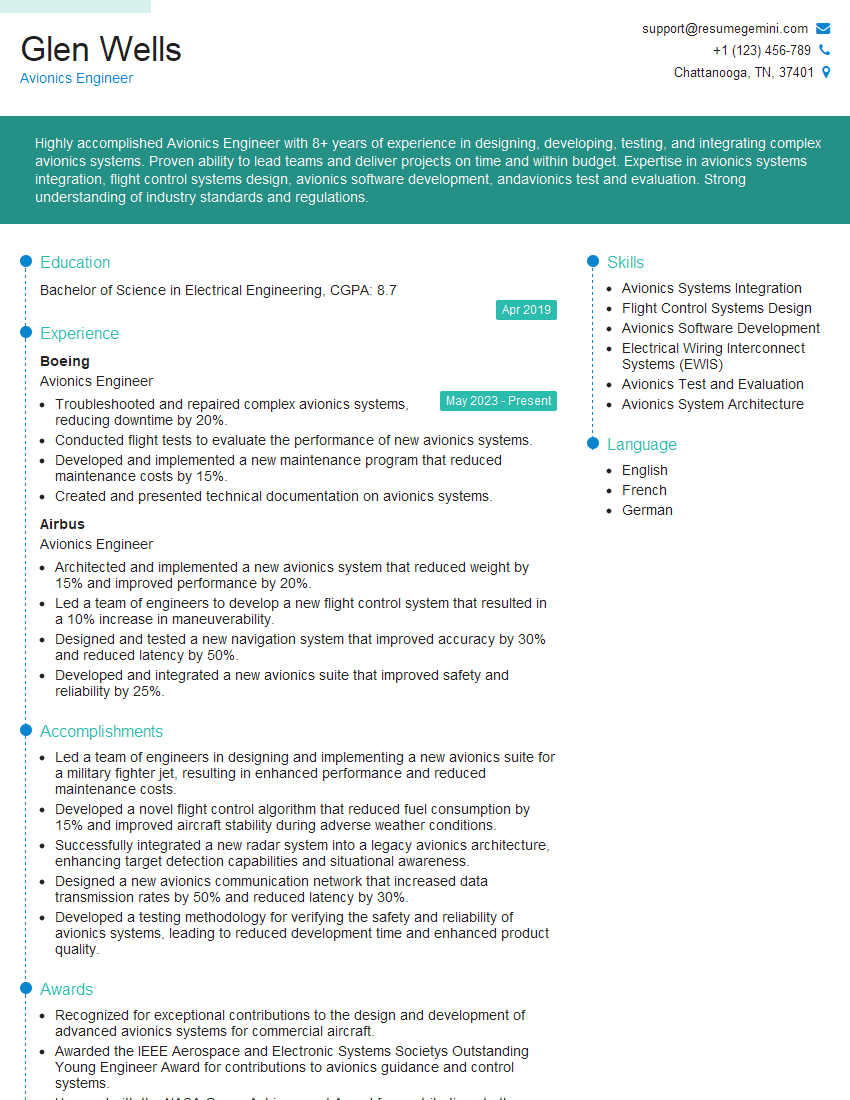
Mastering Avionics Systems Troubleshooting is crucial for a successful and rewarding career in aviation. It demonstrates a high level of technical expertise and problem-solving skills highly valued by employers. To significantly enhance your job prospects, creating a strong, ATS-friendly resume is essential. ResumeGemini is a trusted resource that can help you build a professional and impactful resume tailored to the specific requirements of the Avionics Systems Troubleshooting field. Examples of resumes specifically designed for this role are available to help guide you.
Explore more articles
Users Rating of Our Blogs
Share Your Experience
We value your feedback! Please rate our content and share your thoughts (optional).
What Readers Say About Our Blog
Really detailed insights and content, thank you for writing this detailed article.
IT gave me an insight and words to use and be able to think of examples