Interviews are opportunities to demonstrate your expertise, and this guide is here to help you shine. Explore the essential Understanding of marketing and branding principles interview questions that employers frequently ask, paired with strategies for crafting responses that set you apart from the competition.
Questions Asked in Understanding of marketing and branding principles Interview
Q 1. Define your understanding of marketing and branding and how they differ.
Marketing and branding are closely related but distinct concepts. Marketing encompasses all activities designed to promote and sell a product or service. It’s the overall strategy of reaching your target audience, creating demand, and driving sales. This involves market research, product development, pricing, distribution, advertising, and sales. Branding, on the other hand, focuses on building and managing the perception of a company, product, or service in the minds of consumers. It’s about creating a unique identity, personality, and emotional connection with your audience. Think of it as the overall feeling and promise associated with a product or company. While marketing drives sales, branding builds long-term loyalty and value.
For example, a marketing campaign might involve a social media ad campaign promoting a sale on shoes. The branding, however, would be the overall image and values associated with the shoe brand—perhaps emphasizing sustainability, comfort, or athletic performance. A strong brand enhances the effectiveness of marketing efforts.
Q 2. Explain the difference between a marketing strategy and a marketing plan.
A marketing strategy is a high-level roadmap outlining the overall goals, target audience, and competitive positioning for a product or service. It’s the ‘what’ and ‘why’—the big picture. A marketing plan, in contrast, is a detailed, actionable document that outlines the specific tactics and timelines for achieving the objectives defined in the marketing strategy. It’s the ‘how’—the concrete steps and resources required. Think of the strategy as the architect’s blueprint for a house, and the plan as the detailed construction schedule.
For example, a marketing strategy might aim to increase market share among young adults by 15% within the next year. The marketing plan would then detail specific campaigns (e.g., social media influencer marketing, targeted online ads, event sponsorships), budgets, timelines, and key performance indicators (KPIs) for each campaign to achieve that 15% growth.
Q 3. Describe the marketing mix (4Ps) and provide an example of its application.
The marketing mix, or 4Ps, is a fundamental framework for developing and executing marketing strategies. It comprises:
- Product: This refers to the goods or services offered, their features, benefits, packaging, and branding. It’s about understanding customer needs and creating a product that meets those needs effectively.
- Price: This involves setting the right price point considering factors like costs, competition, market demand, and perceived value. Pricing strategies can range from premium pricing to penetration pricing.
- Place: This focuses on the distribution channels used to make the product available to customers. It includes both physical locations (stores, retailers) and online channels (e-commerce, digital marketplaces).
- Promotion: This encompasses all activities used to communicate the product’s value proposition and persuade customers to buy. It includes advertising, public relations, sales promotions, and content marketing.
Example: Consider a new coffee shop. The product is high-quality specialty coffee and pastries. The price might be slightly higher than competitors to reflect the premium quality. The place could be a prime location in a busy area, alongside online ordering and delivery options. Promotion might involve local advertising, social media marketing, loyalty programs, and partnerships with local businesses.
Q 4. How do you conduct a competitive analysis for a new product launch?
Conducting a competitive analysis for a new product launch is crucial for success. It involves a systematic process of identifying, analyzing, and comparing competitors to understand their strengths, weaknesses, and market positioning. Here’s a step-by-step approach:
- Identify Competitors: List all direct and indirect competitors—those offering similar products or services and those offering alternatives that might satisfy the same customer need.
- Analyze Competitors: Evaluate each competitor’s market share, pricing strategy, product features, target audience, marketing channels, and brand image. Look at their marketing materials, websites, and online presence for clues.
- Compare Competitors: Create a competitive matrix to visually compare competitors on key factors. This allows you to identify gaps in the market and your unique selling proposition (USP).
- Identify Opportunities and Threats: Based on your analysis, identify opportunities to differentiate your product and threats posed by competitors.
- Develop a Competitive Strategy: Use your findings to inform your product development, pricing, marketing, and overall business strategy. How will you overcome competitive threats and capitalize on opportunities?
Tools like SWOT analysis (Strengths, Weaknesses, Opportunities, Threats) and Porter’s Five Forces can be incredibly useful in this process. For example, if you’re launching a new type of fitness tracker, you’ll need to analyze existing players like Fitbit and Apple Watch, understanding their pricing, features, and marketing strategies to determine how to differentiate your product and reach your target audience.
Q 5. What are the key performance indicators (KPIs) you would use to measure the success of a marketing campaign?
The KPIs used to measure marketing campaign success depend on the campaign’s goals, but some common ones include:
- Website traffic: Measures the number of visits to your website, reflecting the campaign’s reach and engagement.
- Conversion rates: Tracks the percentage of website visitors who complete a desired action (e.g., making a purchase, signing up for a newsletter). This shows campaign effectiveness in driving sales or leads.
- Return on investment (ROI): Calculates the profit generated for every dollar spent on the campaign. This is a critical measure of overall campaign efficiency.
- Customer acquisition cost (CAC): Determines the cost of acquiring a new customer. Helps in optimizing campaign spend and identifying cost-effective channels.
- Brand awareness: Measures how familiar people are with your brand. This can be assessed through surveys, social media mentions, and website analytics.
- Social media engagement: Tracks likes, shares, comments, and other interactions on your social media posts. Indicates audience interest and resonance with your messaging.
- Customer lifetime value (CLTV): Predicts the total revenue a customer will generate throughout their relationship with your business. Helps in understanding the long-term value of marketing efforts.
The choice of KPIs will be influenced by factors like your business objectives, campaign budget and the type of campaign. A social media campaign will focus on engagement metrics, while an e-commerce campaign will prioritize conversion rates and ROI.
Q 6. Explain your understanding of customer segmentation and targeting.
Customer segmentation is the process of dividing your target market into smaller, more homogeneous groups based on shared characteristics. These characteristics could include demographics (age, gender, location), psychographics (lifestyle, values, interests), behavioral factors (purchase history, usage patterns), or firmographics (size, industry, revenue) for B2B. Targeting is the process of selecting specific segments to focus your marketing efforts on. You’ll choose segments that are most likely to respond positively to your product and message and that align with your business objectives.
For example, a clothing company might segment its market into age groups (teens, young adults, middle-aged adults), lifestyle groups (athletes, fashion-conscious individuals, budget-conscious shoppers), and geographic locations. After analyzing which segment offers the greatest potential for profitability, they might choose to target young adults who are fashion-conscious and located in urban areas. This allows them to tailor their marketing messages and channels to resonate with that specific group more effectively.
Q 7. Describe your experience with different marketing channels (e.g., digital, social media, email).
I have extensive experience across various marketing channels, including:
- Digital Marketing: This encompasses SEO (search engine optimization), SEM (search engine marketing, including paid search), display advertising, affiliate marketing, and programmatic advertising. I’ve worked on campaigns optimizing website content for search engines, running targeted Google Ads campaigns, and managing display ad placements to reach specific demographics.
- Social Media Marketing: I’m proficient in using platforms like Facebook, Instagram, Twitter, LinkedIn, and TikTok to engage audiences, build brand awareness, drive traffic, and generate leads. This includes creating engaging content, running social media ads, and monitoring social listening to understand audience sentiment.
- Email Marketing: I’ve developed and implemented email marketing campaigns to nurture leads, promote products, and build customer relationships. This includes designing email templates, segmenting email lists, and analyzing email metrics (open rates, click-through rates) to optimize campaign performance.
My experience across these channels allows me to develop integrated marketing strategies that leverage the strengths of each channel to reach target audiences effectively. I understand the nuances of each platform and can adapt my approach based on the specific needs of the campaign and the target audience. For example, I would utilize a different approach and content strategy for a B2B LinkedIn campaign compared to a B2C Instagram campaign.
Q 8. How do you measure the ROI of a marketing campaign?
Measuring the Return on Investment (ROI) of a marketing campaign is crucial for demonstrating its effectiveness and justifying future investments. It’s not simply about calculating revenue generated; it’s about understanding the net profit attributed to the campaign after considering all associated costs.
A common approach involves calculating the difference between the revenue generated and the cost of the campaign, then dividing this by the cost. The formula is often expressed as:
ROI = (Revenue Generated - Campaign Cost) / Campaign Cost * 100%For example, if a campaign cost $10,000 and generated $25,000 in revenue, the ROI would be 150%. This means for every dollar invested, $1.50 was returned.
However, this simplified formula may not capture the full picture. A more comprehensive approach involves tracking various key performance indicators (KPIs) relevant to specific campaign goals. These KPIs can include:
- Website traffic: Increase in website visits from campaign-specific sources.
- Lead generation: Number of qualified leads generated.
- Conversion rate: Percentage of leads converted into customers.
- Customer acquisition cost (CAC): Cost of acquiring a new customer through the campaign.
- Customer lifetime value (CLTV): Predicted revenue generated by a customer throughout their relationship with the company.
- Brand awareness metrics: Changes in social media mentions, search engine rankings, or survey results.
By analyzing these KPIs, a more nuanced understanding of the campaign’s success can be achieved, enabling more accurate ROI calculations and informed decision-making for future campaigns.
Q 9. Explain the concept of brand positioning and its importance.
Brand positioning is the strategic process of defining how a brand is perceived in the minds of consumers relative to its competitors. It’s about crafting a unique and compelling brand identity that resonates with the target audience and sets the brand apart.
The importance of brand positioning stems from its direct impact on consumer choice. A well-defined position ensures that consumers understand what the brand stands for, what problems it solves, and why they should choose it over alternatives. Think of it as the brand’s ‘seat at the table’ within a market segment.
Effective brand positioning requires careful consideration of several factors:
- Target audience: Understanding their needs, values, and preferences.
- Competitive analysis: Identifying competitors’ strengths and weaknesses and identifying unoccupied spaces in the market.
- Unique selling proposition (USP): Clearly articulating what differentiates the brand from its competitors.
- Brand personality: Defining the brand’s character and values, creating emotional connection with the target audience.
- Brand messaging: Communicating the brand’s value proposition consistently across all touchpoints.
For example, Volvo positions itself as a brand focused on safety and reliability, while Tesla positions itself as innovative and forward-thinking in the electric vehicle market. Both have clearly defined their brand positioning to attract their respective customer base.
Q 10. What is a brand persona and how is it developed?
A brand persona is a semi-fictional representation of the ideal customer for a particular brand. It’s not a real person, but a detailed profile that combines demographic data, psychographic information (values, attitudes, lifestyle), and behavioral patterns to create a comprehensive understanding of the target audience.
Developing a brand persona involves a multi-step process:
- Market research: Gathering data through surveys, interviews, focus groups, and analyzing existing customer data.
- Data analysis: Identifying key characteristics and trends within the target audience.
- Persona creation: Developing a detailed profile, including name, age, occupation, lifestyle, goals, challenges, and motivations.
- Validation: Testing the persona’s accuracy and relevance through further research and feedback.
A well-defined brand persona helps marketers create more effective marketing messages and campaigns by focusing on the specific needs and aspirations of the target audience. Imagine a clothing brand targeting young professionals. Their persona might be a 28-year-old marketing manager, Sarah, who values practicality, style, and sustainability. This information allows for tailored messaging, product development, and channel selection to reach Sarah and others like her effectively.
Q 11. How do you build brand awareness and loyalty?
Building brand awareness and loyalty are long-term objectives requiring a consistent and strategic approach. Awareness refers to the extent to which consumers recognize and recall a brand, while loyalty signifies a customer’s repeated preference for a brand over its competitors.
Strategies for building brand awareness include:
- Consistent branding: Maintaining a consistent brand identity across all platforms and touchpoints.
- Public relations: Securing media coverage and building relationships with influencers.
- Content marketing: Creating valuable and engaging content that attracts and educates the target audience.
- Social media marketing: Engaging with customers on social media platforms.
- Search engine optimization (SEO): Improving website ranking in search engine results pages (SERPs).
- Paid advertising: Running targeted advertising campaigns across various channels.
To build brand loyalty, focus on:
- Exceptional customer service: Providing prompt, helpful, and personalized service.
- High-quality products/services: Delivering on brand promises and exceeding customer expectations.
- Customer loyalty programs: Rewarding repeat customers with exclusive benefits.
- Community building: Fostering a sense of community among customers.
- Personalized communication: Engaging customers with tailored messages and offers.
By consistently delivering on brand promises and providing exceptional customer experiences, brands can foster strong customer relationships leading to increased loyalty and advocacy.
Q 12. How would you handle a negative brand crisis?
Handling a negative brand crisis requires a swift, transparent, and empathetic response. The goal is to minimize damage to the brand’s reputation and restore trust with consumers. A well-defined crisis communication plan is crucial.
Here’s a step-by-step approach:
- Assess the situation: Quickly determine the scope and severity of the crisis, identifying the source, the impact on the brand, and the stakeholders involved.
- Assemble a crisis team: Establish a team of key individuals from various departments (PR, marketing, legal) to coordinate the response.
- Develop a communication strategy: Craft a clear and consistent message that addresses the situation honestly and transparently. Acknowledge mistakes, show empathy, and outline steps taken to resolve the issue.
- Communicate promptly and consistently: Disseminate the message through all relevant channels (press releases, social media, website updates) to control the narrative and prevent misinformation.
- Monitor the situation: Continuously track media coverage, social media mentions, and customer feedback to assess the effectiveness of the response and adjust strategies accordingly.
- Take corrective action: Implement necessary changes to prevent future occurrences and demonstrate a commitment to improvement.
- Rebuild trust: Engage in restorative actions, such as offering apologies, providing compensation to affected customers, and strengthening customer relationships.
Proactive measures, such as establishing a strong brand reputation and developing a crisis communication plan in advance, can significantly mitigate the impact of a negative brand crisis.
Q 13. Explain your understanding of market research methodologies.
Market research methodologies provide the foundation for understanding consumer behavior, market trends, and competitive landscapes. A variety of methods are available, each with its strengths and weaknesses.
Key methodologies include:
- Qualitative research: Focuses on in-depth understanding of consumer attitudes, beliefs, and motivations. Methods include:
- Focus groups: Moderated discussions with small groups of consumers.
- In-depth interviews: One-on-one conversations with consumers.
- Ethnographic studies: Observing consumers in their natural environment.
- Quantitative research: Uses statistical methods to quantify consumer behavior and preferences. Methods include:
- Surveys: Structured questionnaires administered to a large sample of consumers.
- Experiments: Controlled tests designed to measure the impact of different variables.
- Data analysis: Analyzing existing data from various sources (e.g., sales data, website analytics).
The choice of methodology depends on the research objectives, budget, and timeframe. For example, a new product launch might benefit from a combination of qualitative research (to understand consumer needs and preferences) and quantitative research (to test different marketing messages and measure sales).
Q 14. Describe your experience with A/B testing and its application in marketing.
A/B testing, also known as split testing, is a controlled experiment used to compare two versions of a marketing element (e.g., website headline, email subject line, ad creative) to determine which performs better. This iterative approach allows marketers to optimize campaigns and maximize their effectiveness.
In practice, A/B testing involves:
- Defining a hypothesis: Formulating a testable statement about what element will perform better (e.g., ‘A headline focusing on benefits will generate higher click-through rates than a headline focusing on features’).
- Creating variations: Developing two or more versions of the marketing element to be tested.
- Implementing the test: Randomly assigning users to different versions of the element.
- Collecting data: Tracking relevant metrics (e.g., click-through rate, conversion rate, time on site) for each version.
- Analyzing results: Determining which version performs significantly better using statistical analysis.
- Iterating: Continuously testing and refining based on findings to further optimize performance.
For example, an e-commerce site might A/B test different images for a product page to determine which image leads to higher conversion rates. A/B testing helps marketers make data-driven decisions, improving campaign ROI and ultimately boosting business performance.
Q 15. What is your experience with marketing analytics tools (e.g., Google Analytics)?
My experience with marketing analytics tools, particularly Google Analytics, is extensive. I’m proficient in using Google Analytics to track website traffic, user behavior, conversion rates, and other key metrics. I understand how to set up and configure tracking codes, create custom reports, and analyze data to identify trends and areas for improvement. Beyond Google Analytics, I’ve also worked with other tools like Adobe Analytics, SEMrush, and HubSpot, allowing me to tailor my approach depending on the specific needs of a campaign or business. For example, I once used Google Analytics to identify a significant drop-off in the checkout process of an e-commerce website. By analyzing user behavior data, I was able to pinpoint the specific page causing the issue – a confusing shipping information form. We redesigned the form, simplifying the process and resulting in a 15% increase in conversions within a month. This highlights how effectively leveraging analytics tools leads to data-driven decision-making and tangible results.
Career Expert Tips:
- Ace those interviews! Prepare effectively by reviewing the Top 50 Most Common Interview Questions on ResumeGemini.
- Navigate your job search with confidence! Explore a wide range of Career Tips on ResumeGemini. Learn about common challenges and recommendations to overcome them.
- Craft the perfect resume! Master the Art of Resume Writing with ResumeGemini’s guide. Showcase your unique qualifications and achievements effectively.
- Don’t miss out on holiday savings! Build your dream resume with ResumeGemini’s ATS optimized templates.
Q 16. How do you stay up-to-date with the latest marketing trends?
Staying current in the ever-evolving world of marketing requires a multifaceted approach. I regularly read industry publications like MarketingProfs and the Harvard Business Review, attend webinars and conferences hosted by organizations like the American Marketing Association, and actively participate in online marketing communities on platforms like LinkedIn. I also follow key influencers and thought leaders on social media, subscribing to their newsletters and podcasts. This constant learning allows me to remain informed about emerging technologies like AI-powered marketing tools, changes in social media algorithms, and the shifting preferences of consumers. For instance, I recently learned about the growing importance of short-form video content and successfully integrated TikTok into a client’s marketing strategy, boosting engagement considerably.
Q 17. Describe a time you successfully launched a marketing campaign. What were the key elements of its success?
One successful campaign I launched involved a rebranding effort for a local bakery. The bakery, while beloved, had an outdated brand image and struggled with attracting a younger demographic. Our strategy focused on three key elements:
- Visual Rebranding: We created a fresh logo, updated packaging, and developed a new brand voice that was modern and appealing to a wider audience.
- Social Media Engagement: We developed a compelling content calendar featuring high-quality photos of the bakery’s products, behind-the-scenes glimpses of the baking process, and engaging contests.
- Local Partnerships: We collaborated with nearby businesses and community organizations to increase brand visibility and build relationships with potential customers.
Q 18. Describe a time you failed in a marketing initiative. What did you learn?
One marketing initiative that didn’t meet expectations was a targeted email campaign for a tech company. We segmented our audience based on past purchases and assumed that individuals in the ‘high-value customer’ segment would be most receptive to our new product offerings. However, this resulted in low open and click-through rates. We learned that while purchase history is valuable, it wasn’t the sole indicator of customer interest in our new products. The key takeaway was the importance of more sophisticated segmentation strategies considering factors like website behavior, engagement with past email campaigns, and demographic information. We improved our future campaigns by enriching our customer data, testing different subject lines and messaging, and utilizing A/B testing to optimize email content and improve results. This experience reinforced the importance of continual learning and adaptation within the marketing landscape.
Q 19. Explain your understanding of content marketing and its role in branding.
Content marketing is a strategic marketing approach focused on creating and distributing valuable, relevant, and consistent content to attract and retain a clearly defined audience — and, ultimately, to drive profitable customer action. Its role in branding is paramount. By consistently producing high-quality content aligned with brand values and messaging, businesses can build brand awareness, strengthen brand reputation, and foster customer loyalty. Think of it as a conversation, not just a broadcast. For instance, a blog post providing helpful tips related to a company’s products establishes expertise and builds trust, subtly reinforcing the brand’s identity. Case studies showcasing successful client projects not only highlight the product’s value but also demonstrate the brand’s capabilities and commitment to excellence. A well-executed content marketing strategy builds brand authority and creates a positive brand experience.
Q 20. How do you leverage social media for marketing and branding purposes?
Social media is a crucial channel for marketing and branding. I leverage it to build community, engage with target audiences, drive website traffic, and increase brand awareness. My approach involves developing a robust social media strategy encompassing content planning, community management, and social listening. It is critical to understand the nuances of each platform—Instagram is visually driven, LinkedIn is professional, and Twitter prioritizes concise updates. For instance, I might use Instagram to showcase visually appealing product photography and run contests to increase engagement, while LinkedIn would be leveraged for thought leadership articles and industry discussions. Social listening tools are used to monitor brand mentions, gather customer feedback, and identify emerging trends, allowing us to adapt our strategy dynamically and respond effectively to potential issues or opportunities.
Q 21. What is your experience with influencer marketing?
My experience with influencer marketing is substantial. I understand the importance of selecting influencers who align with the brand’s values, target audience, and overall marketing goals. It’s not merely about follower count; authenticity and engagement are key. Before partnering with an influencer, I thoroughly analyze their audience demographics, engagement rates, and content style to ensure a good fit. I’ve managed influencer campaigns across various platforms, from Instagram and YouTube to TikTok and even Twitch. We often collaborate with influencers on sponsored posts, product reviews, and giveaways. The success of an influencer campaign depends on careful planning, clear communication, and measurable results. Post-campaign, comprehensive analysis of metrics such as reach, engagement, and website traffic are essential to understand campaign ROI and inform future strategies.
Q 22. How do you adapt marketing strategies for different target audiences?
Adapting marketing strategies for different target audiences is crucial for effective campaigns. It’s not a ‘one-size-fits-all’ approach. Understanding your audience’s demographics, psychographics (values, attitudes, lifestyles), behaviors, and needs is paramount. This involves creating buyer personas – detailed representations of your ideal customer. Once you have these personas, you can tailor your messaging, channel selection, and creative assets to resonate with each specific group.
- Messaging: For example, a marketing campaign for a luxury car would use sophisticated language and imagery targeting high-income professionals, while a campaign for a budget-friendly car would emphasize value and practicality, appealing to a broader, price-conscious audience.
- Channels: Consider where your target audience spends their time online and offline. Millennials might be heavily engaged on Instagram and TikTok, while an older demographic might prefer television commercials or print advertising.
- Creative Assets: Visuals, colors, and even the tone of voice should be adjusted to appeal to different segments. A campaign targeting young adults might use vibrant colors and playful imagery, while a campaign targeting senior citizens might favor a more muted palette and a respectful tone.
For instance, if I was marketing a new line of athletic shoes, my strategy for professional athletes would differ significantly from my strategy for casual runners. Athletes would require in-depth technical specifications, endorsements, and a focus on performance benefits, whereas casual runners would be more interested in comfort, style, and affordability. This tailored approach ensures maximum impact and return on investment.
Q 23. What is the difference between inbound and outbound marketing?
Inbound and outbound marketing represent two distinct approaches to reaching potential customers. Inbound marketing focuses on attracting customers through valuable and relevant content. It’s like setting up a welcoming sign and inviting people in. Outbound marketing, on the other hand, actively pushes your message out to potential customers, much like handing out flyers on the street.
- Inbound Marketing: This strategy relies on creating high-quality content (blog posts, videos, infographics, ebooks) that addresses the needs and pain points of your target audience. It leverages SEO, social media marketing, and content marketing to draw prospects to your website or business. The goal is to nurture leads organically and build relationships, converting them into customers over time. Think blog posts offering solutions, SEO-optimized website content, and engaging social media posts.
- Outbound Marketing: This approach involves directly reaching out to prospects through various channels such as cold calling, email marketing (often unsolicited), print advertising, direct mail, and television commercials. The focus is on interrupting the customer’s experience and presenting a sales message. While effective, it can often be perceived as intrusive and less effective than inbound strategies in today’s digital landscape.
Imagine a bookstore: Inbound marketing would be hosting author readings, creating online book clubs, or writing blog posts about new releases. Outbound marketing would be sending flyers to local homes or running radio advertisements.
Q 24. Explain your understanding of search engine optimization (SEO).
Search Engine Optimization (SEO) is the practice of optimizing your website and its content to improve its visibility on search engine results pages (SERPs). The higher your website ranks on SERPs, the more likely it is to receive organic (non-paid) traffic from search engines like Google, Bing, and Yahoo.
SEO involves a multifaceted approach, encompassing:
- Keyword Research: Identifying the terms and phrases people use when searching for products or services like yours.
- On-Page Optimization: Optimizing elements within your website, such as title tags, meta descriptions, header tags, and image alt text, to include relevant keywords.
- Off-Page Optimization: Building your website’s authority and reputation through activities such as link building (earning backlinks from other reputable websites), social media marketing, and online reputation management.
- Technical SEO: Ensuring your website is technically sound, with fast loading speeds, mobile-friendliness, and proper site architecture.
For example, if I’m optimizing a website for a local bakery, I’d focus on keywords like “best bakery near me,” “chocolate croissants,” and the bakery’s location. I’d ensure these keywords are naturally incorporated into the website’s content and metadata, while also building backlinks from local directories and food blogs.
Q 25. Describe your experience with pay-per-click (PPC) advertising.
Pay-Per-Click (PPC) advertising is a model where advertisers pay a fee each time one of their ads is clicked. It’s a powerful tool for driving targeted traffic to your website quickly. I have extensive experience managing PPC campaigns across various platforms, primarily Google Ads and Bing Ads.
My experience includes:
- Keyword Targeting: Identifying and selecting relevant keywords to ensure ads are shown to the right audience.
- Ad Copywriting: Crafting compelling ad copy that encourages clicks and conversions.
- Landing Page Optimization: Ensuring landing pages are relevant to the ad copy and designed to convert visitors into leads or customers.
- Campaign Monitoring and Optimization: Regularly monitoring campaign performance (click-through rates, conversion rates, cost per acquisition), making adjustments to improve ROI.
- A/B Testing: Experimenting with different ad variations to determine which performs best.
In a recent campaign for a client selling handmade jewelry, I utilized Google Ads to target users searching for specific jewelry types and styles. By meticulously tracking campaign performance and adjusting bids and keywords, we achieved a significant increase in sales and a positive return on ad spend.
Q 26. How do you measure the effectiveness of your social media marketing efforts?
Measuring the effectiveness of social media marketing requires a comprehensive approach, focusing on both qualitative and quantitative data. I utilize a variety of metrics to assess the success of campaigns.
- Engagement Metrics: Likes, comments, shares, and mentions provide insights into audience interaction and brand resonance. High engagement suggests content is relevant and engaging.
- Reach and Impressions: These metrics indicate the number of unique users who saw your content and the total number of times your content was displayed. A wider reach demonstrates effective content distribution.
- Website Traffic and Conversions: Tracking clicks from social media posts to your website helps assess the effectiveness of driving traffic and generating leads or sales. This directly links social media efforts to business outcomes.
- Brand Mentions and Sentiment Analysis: Monitoring brand mentions across social media allows for assessing brand perception and identifying potential issues. Sentiment analysis tools can help categorize mentions as positive, negative, or neutral.
- Return on Investment (ROI): Calculating the return on investment helps determine the financial effectiveness of social media campaigns. This requires tracking both social media costs and the resulting revenue or lead generation.
For example, I would track not just the number of likes on a Facebook post advertising a new product, but also the number of clicks through to the product page, and ultimately, the number of sales generated. This holistic approach provides a clear picture of the campaign’s effectiveness.
Q 27. Explain your understanding of the customer journey and its implications for marketing.
The customer journey is the complete process a customer goes through from initial awareness of a product or service to becoming a loyal advocate. Understanding this journey is crucial for effective marketing because it allows you to tailor your messaging and strategies to resonate with customers at each stage.
The typical customer journey stages include:
- Awareness: The customer becomes aware of a need or problem.
- Consideration: The customer researches solutions and considers various options.
- Decision: The customer chooses a specific product or service.
- Action: The customer makes a purchase or takes another desired action.
- Loyalty: The customer becomes a repeat customer and brand advocate.
Implications for Marketing:
- Targeted Messaging: Use different messaging at each stage. For example, awareness-stage messaging focuses on educating the customer about the problem, while decision-stage messaging highlights the benefits of your solution.
- Channel Selection: Employ various marketing channels depending on the stage. Social media might be effective in the awareness stage, while email marketing can be valuable during the consideration and decision stages.
- Content Creation: Create content that aligns with each stage of the journey. Blog posts, case studies, testimonials, and FAQs can support customers throughout their journey.
A good example is a potential customer researching a new phone. In the awareness stage, they might see an ad on social media. In the consideration stage, they would read reviews and compare options. In the decision stage, they would visit a store and make a purchase. Finally, in the loyalty stage, they would recommend the phone to friends and remain a loyal customer of the brand.
Key Topics to Learn for Understanding of Marketing and Branding Principles Interview
- Marketing Fundamentals: Defining target audiences, market segmentation, and the marketing mix (product, price, place, promotion). Consider practical application through case studies – how did a successful brand define its target audience and tailor its marketing efforts?
- Branding Strategy: Developing a strong brand identity, including brand positioning, brand voice, and brand values. Explore how to translate brand values into tangible marketing campaigns and consumer experiences.
- Digital Marketing: Understanding SEO, SEM, social media marketing, email marketing, and content marketing. Think about how these channels work together to achieve overall marketing goals. How would you measure the success of a digital marketing campaign?
- Marketing Analytics & Measurement: Key performance indicators (KPIs), data analysis, and return on investment (ROI) for marketing activities. Consider how you would use data to inform marketing decisions and demonstrate the effectiveness of your strategies.
- Competitive Analysis: Identifying competitors, analyzing their strengths and weaknesses, and developing strategies to gain a competitive advantage. How would you approach a competitive analysis for a new product launch?
- Marketing Ethics and Regulations: Understanding ethical considerations and legal compliance in marketing practices. Consider the implications of misleading advertising or data privacy violations.
- Strategic Planning: Developing and implementing marketing plans, setting objectives, and allocating resources effectively. How would you create a marketing plan with measurable goals and timelines?
Next Steps
Mastering marketing and branding principles is crucial for career advancement in today’s competitive landscape. A strong understanding of these concepts will allow you to contribute meaningfully to any marketing team and showcase your strategic thinking skills. To maximize your job prospects, creating an ATS-friendly resume is essential. ResumeGemini is a trusted resource to help you build a professional and impactful resume that highlights your skills and experience effectively. We provide examples of resumes tailored to highlight expertise in Understanding of marketing and branding principles, giving you a head start in your job search.
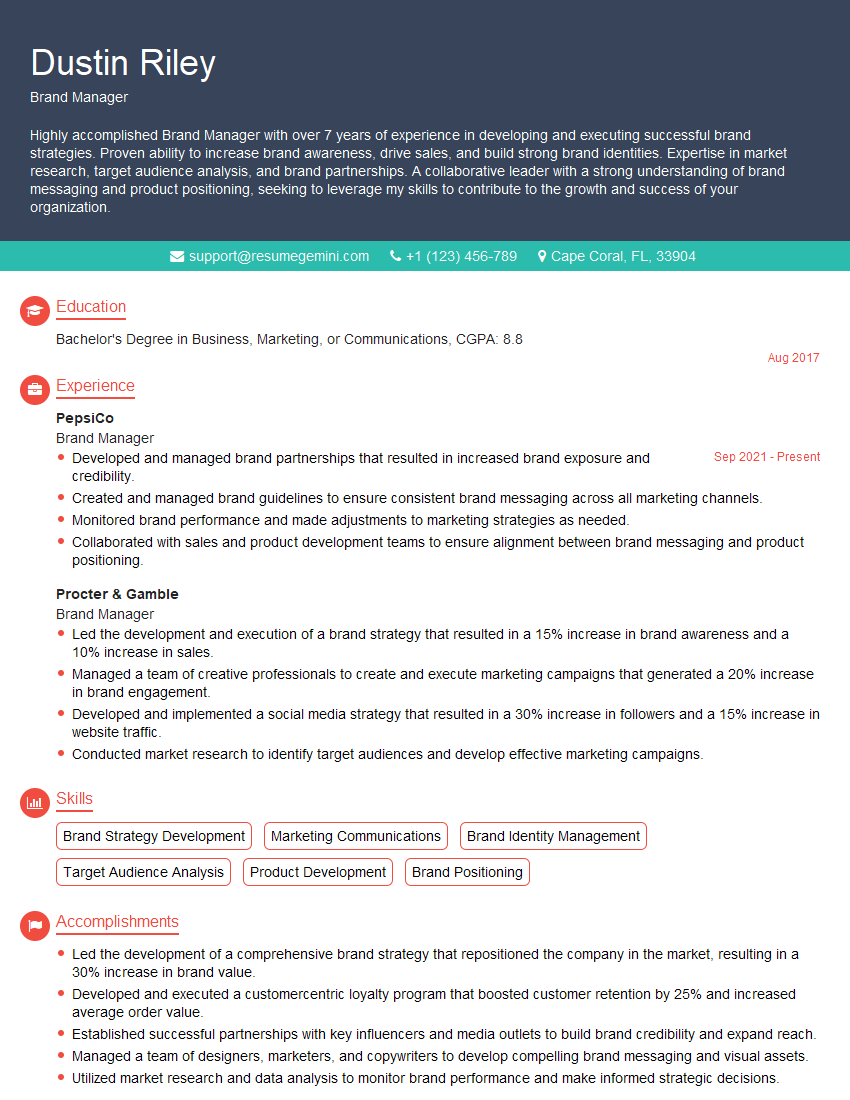
Brand Manager Resume Sample
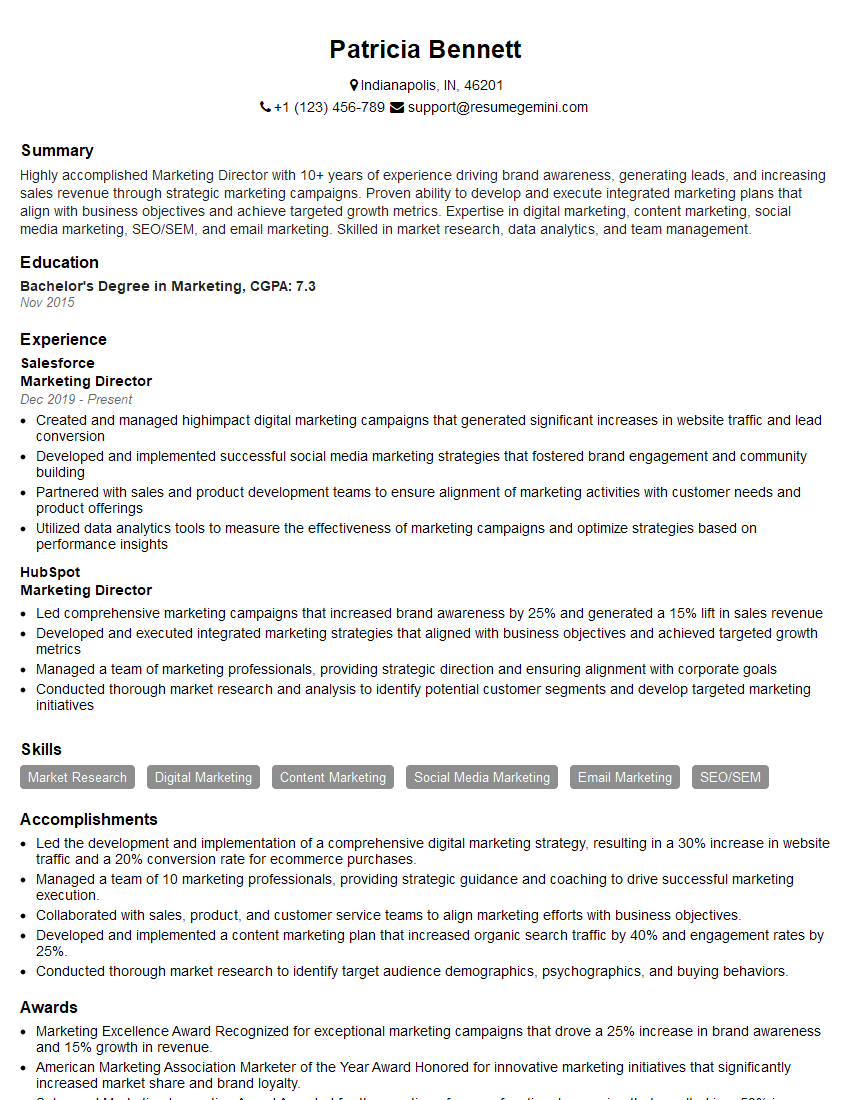
Marketing Director Resume Sample
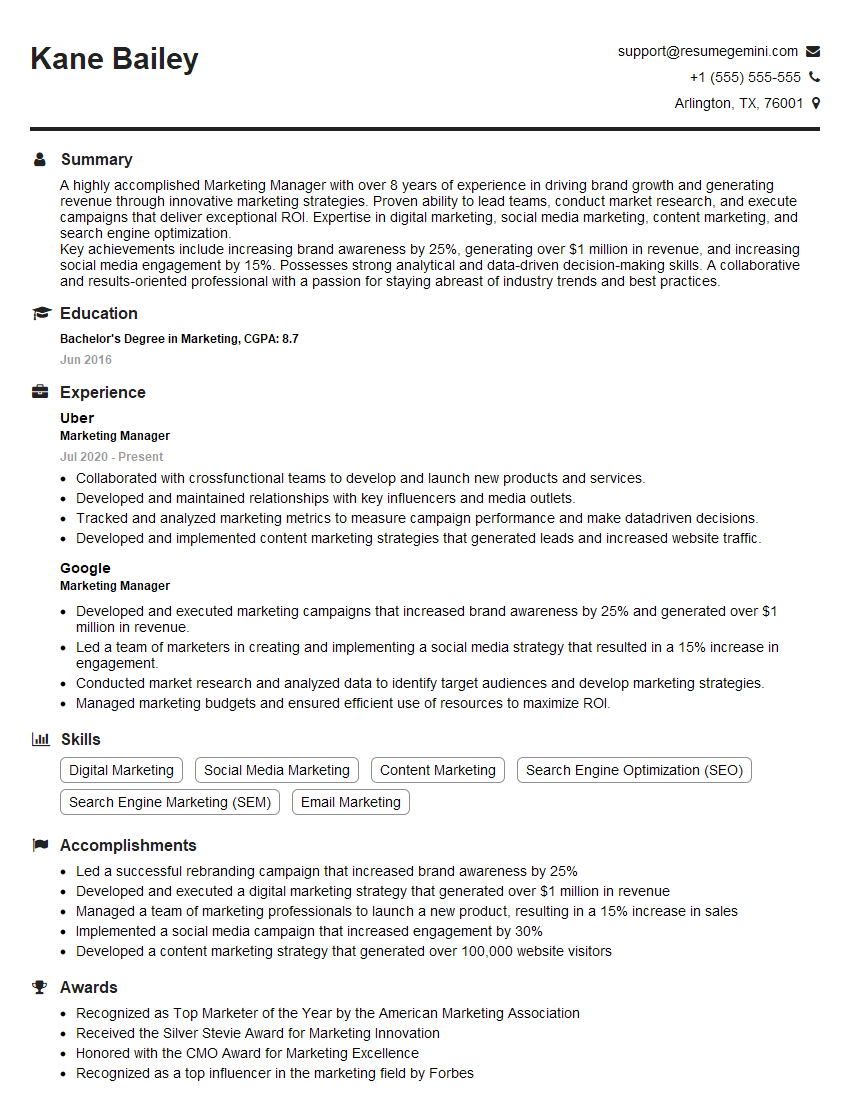
Marketing Manager Resume Sample
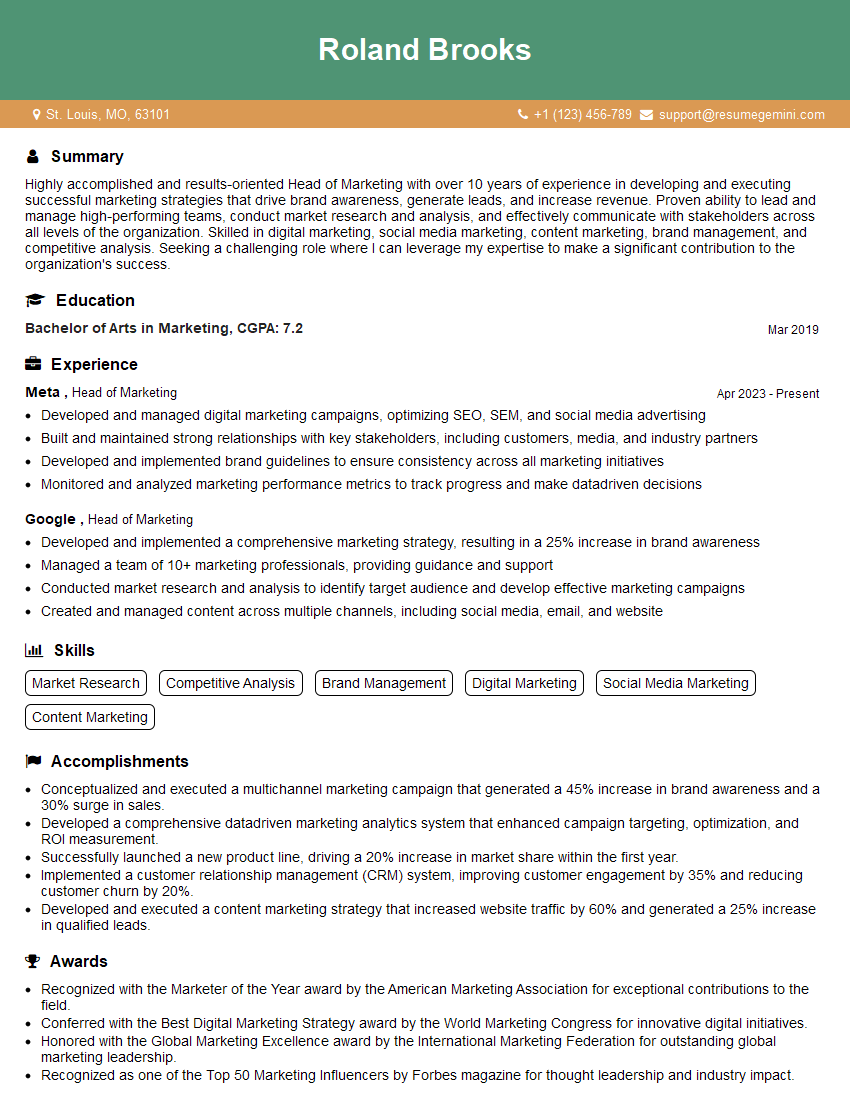
Head of Marketing Resume Sample
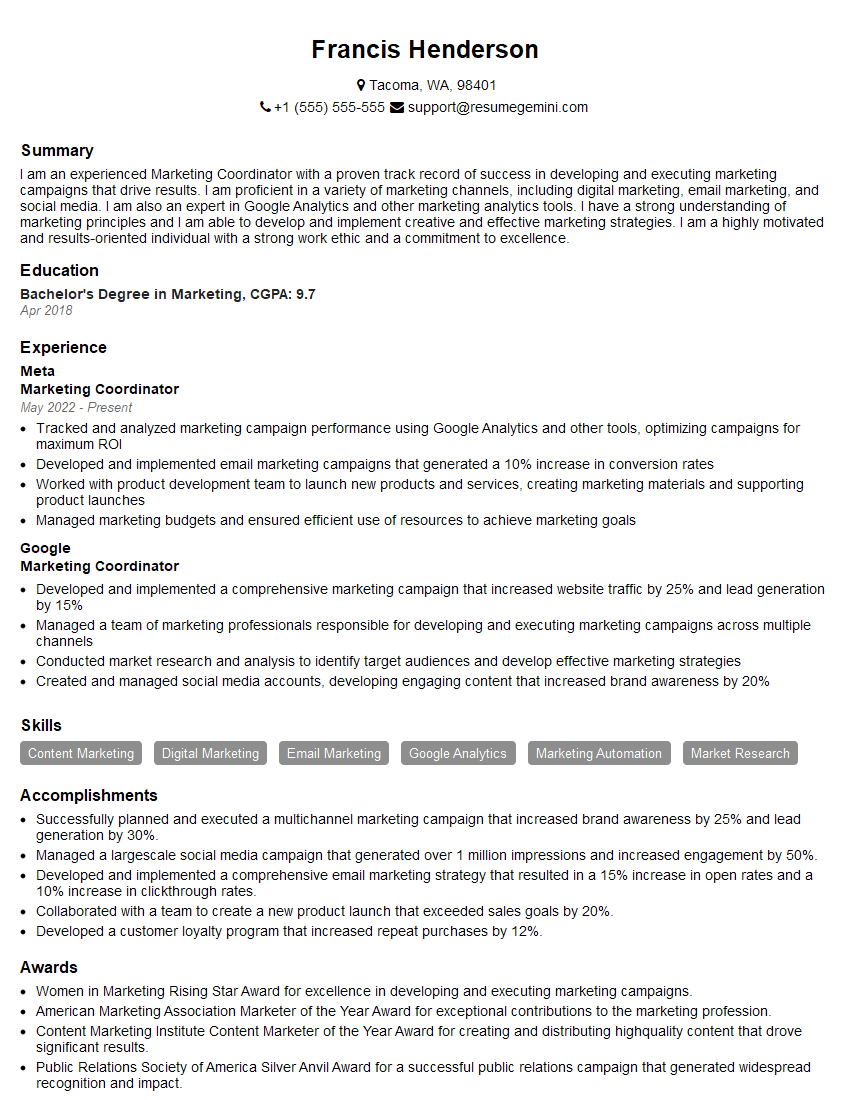
Marketing Coordinator Resume Sample

Marketing Communications Manager Resume Sample
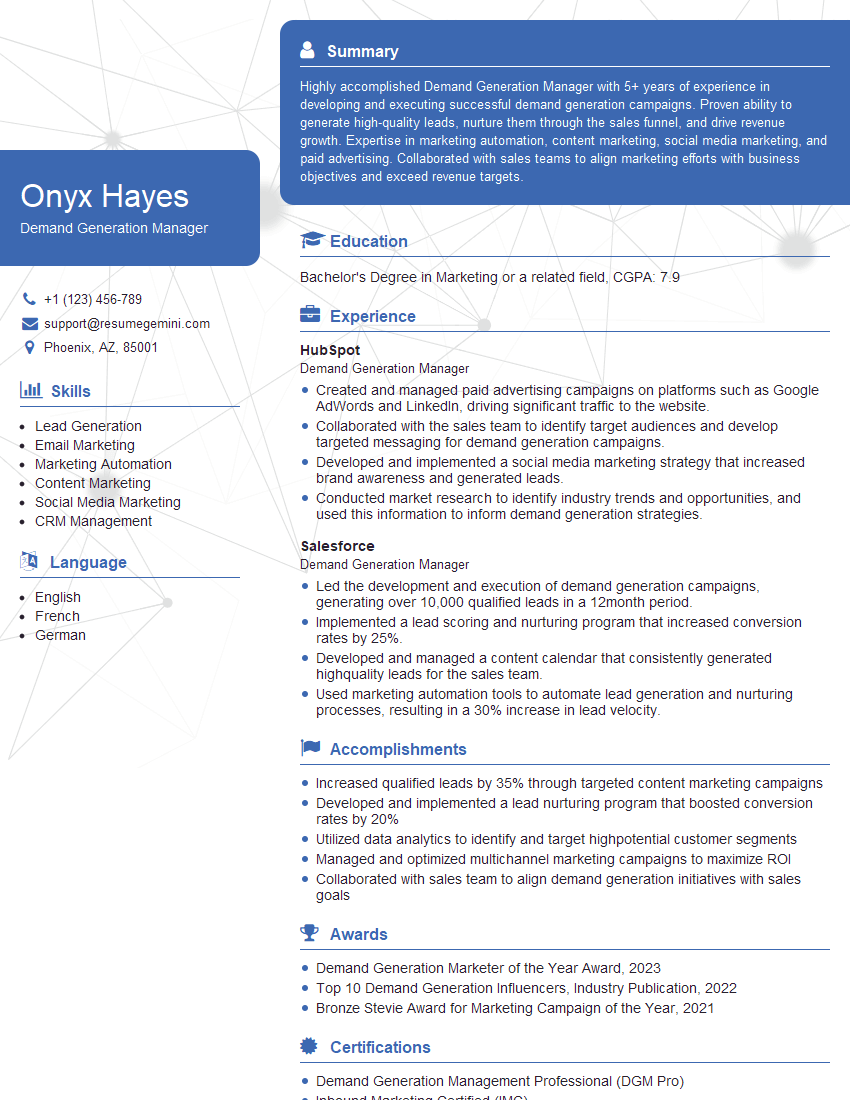
Demand Generation Manager Resume Sample
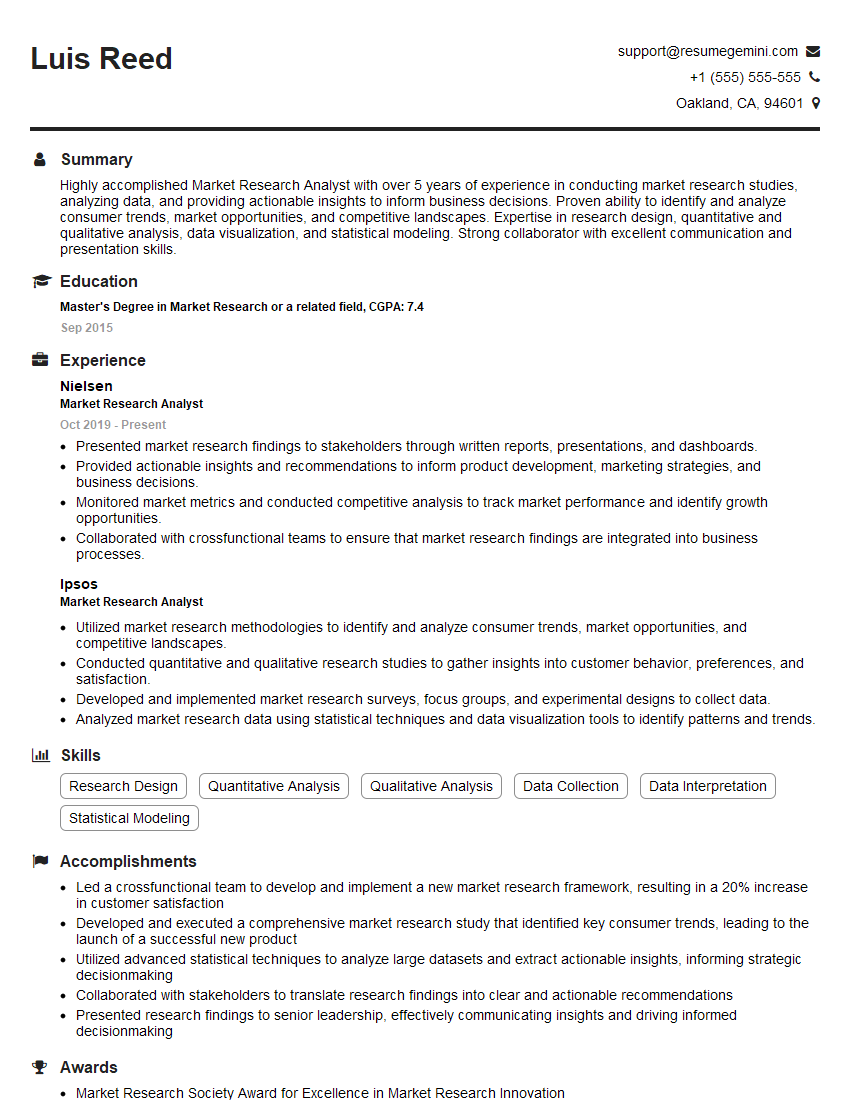
Market Research Analyst Resume Sample
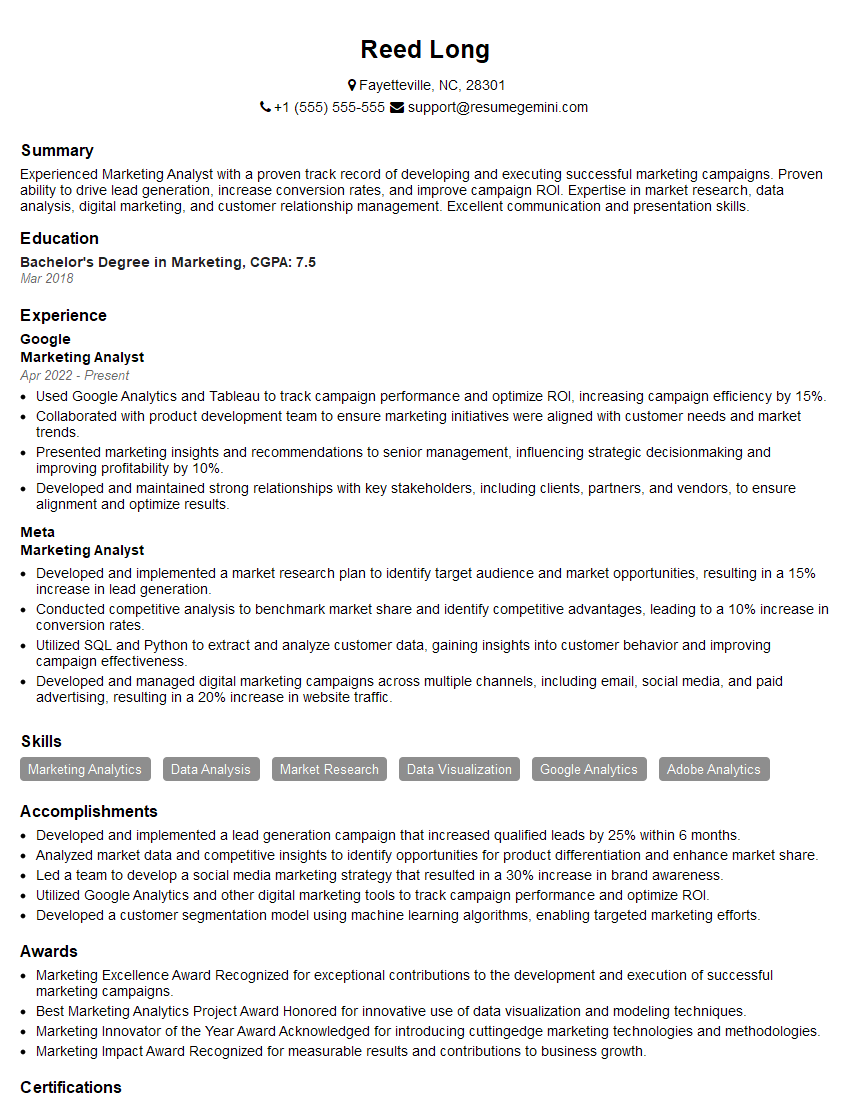
Marketing Analyst Resume Sample
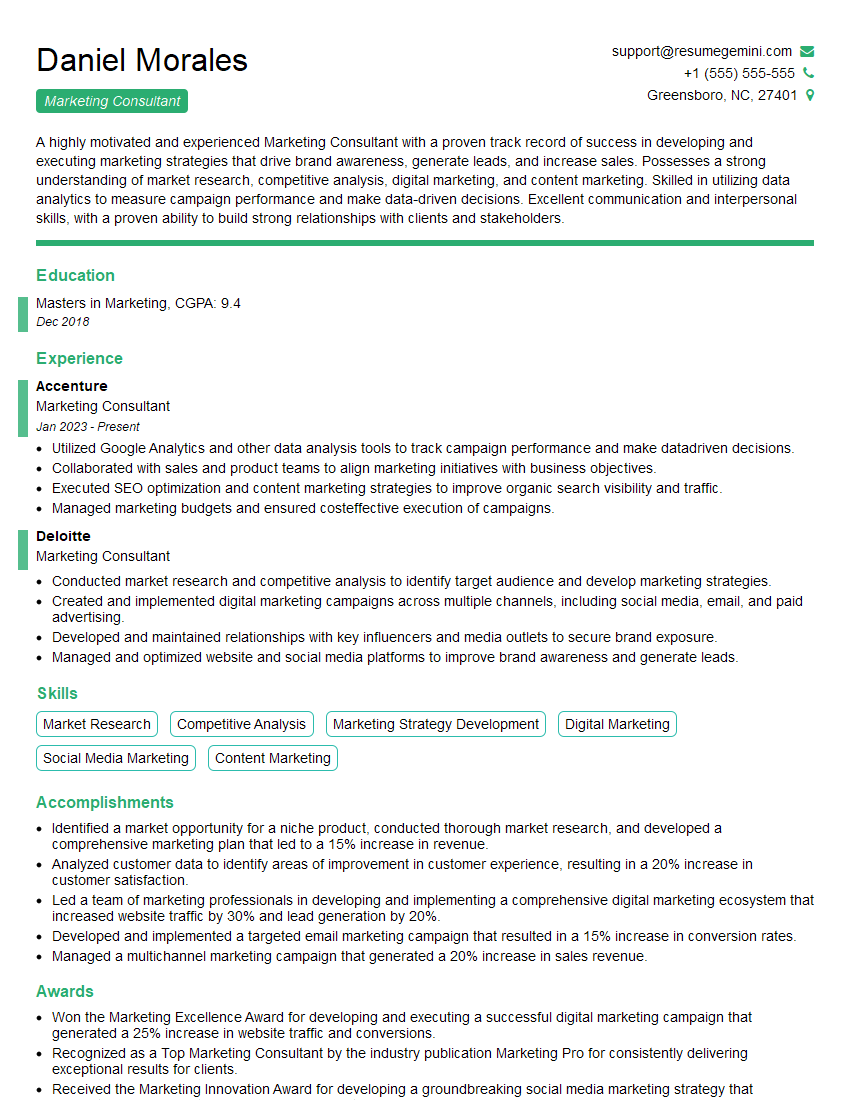
Marketing Consultant Resume Sample
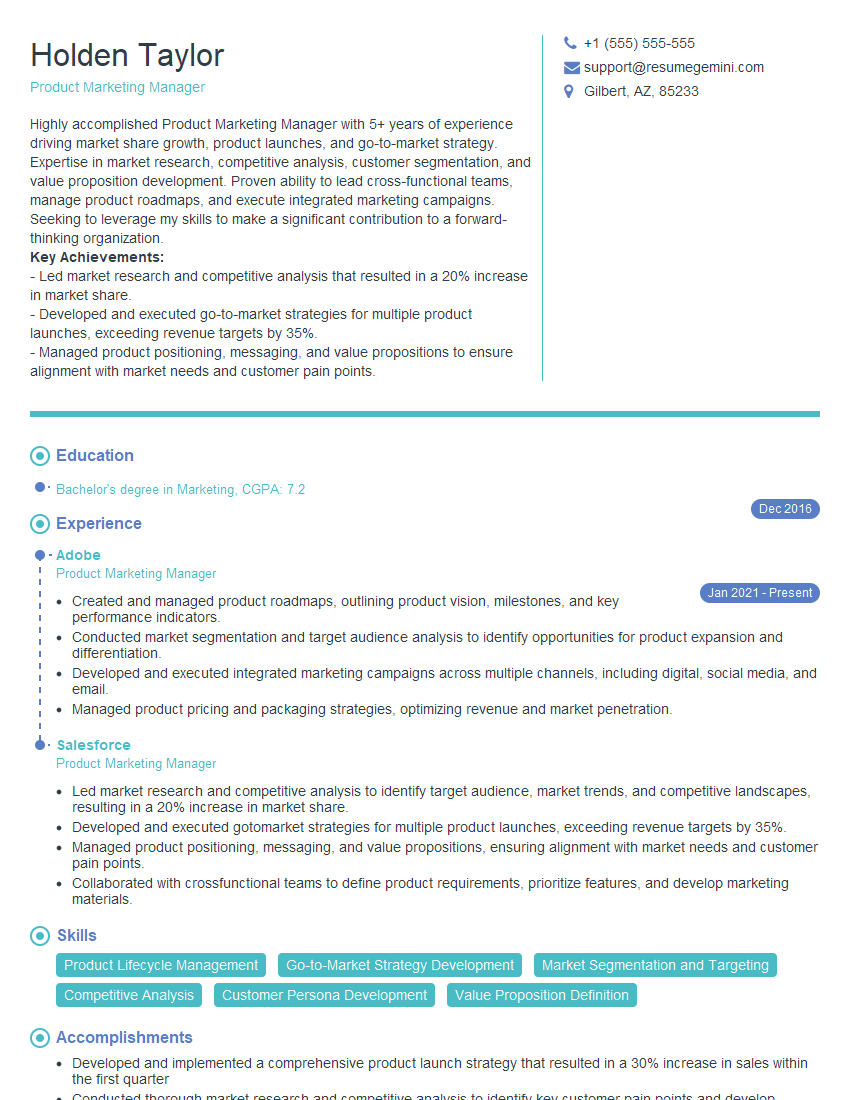
Product Marketing Manager Resume Sample

Social Media Manager Resume Sample
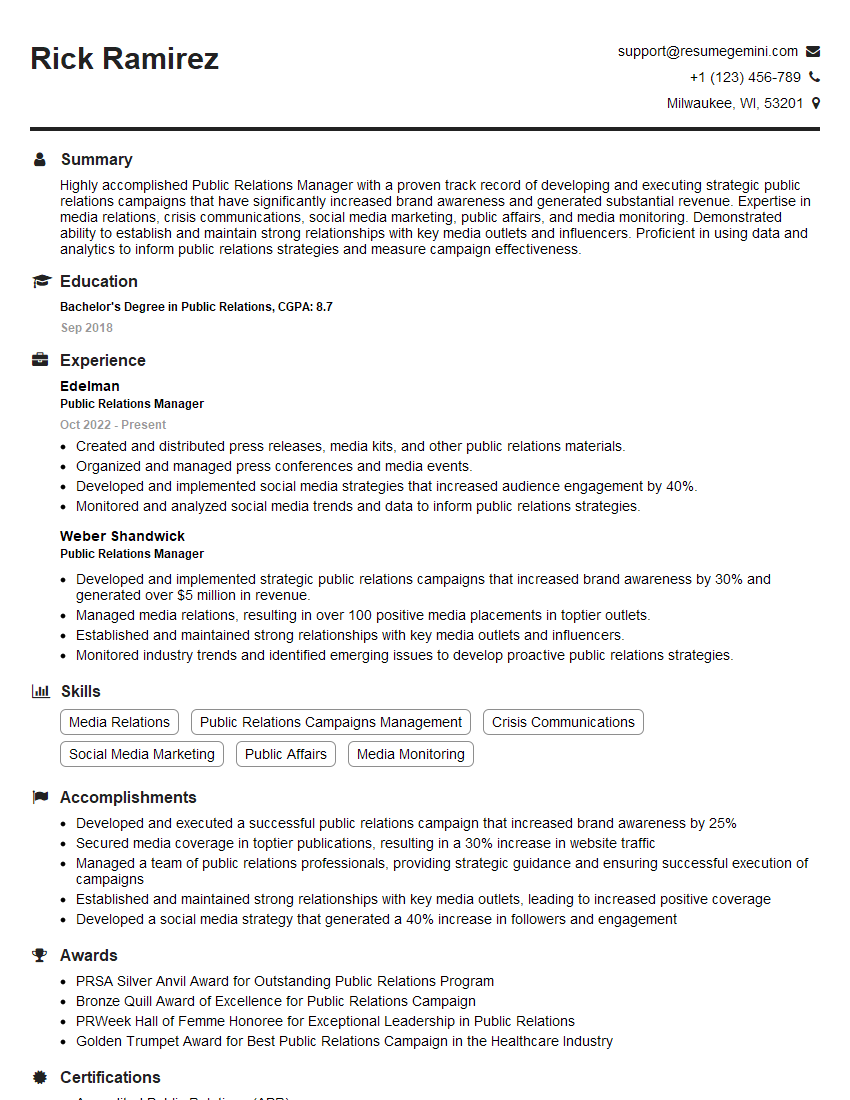
Public Relations Manager Resume Sample
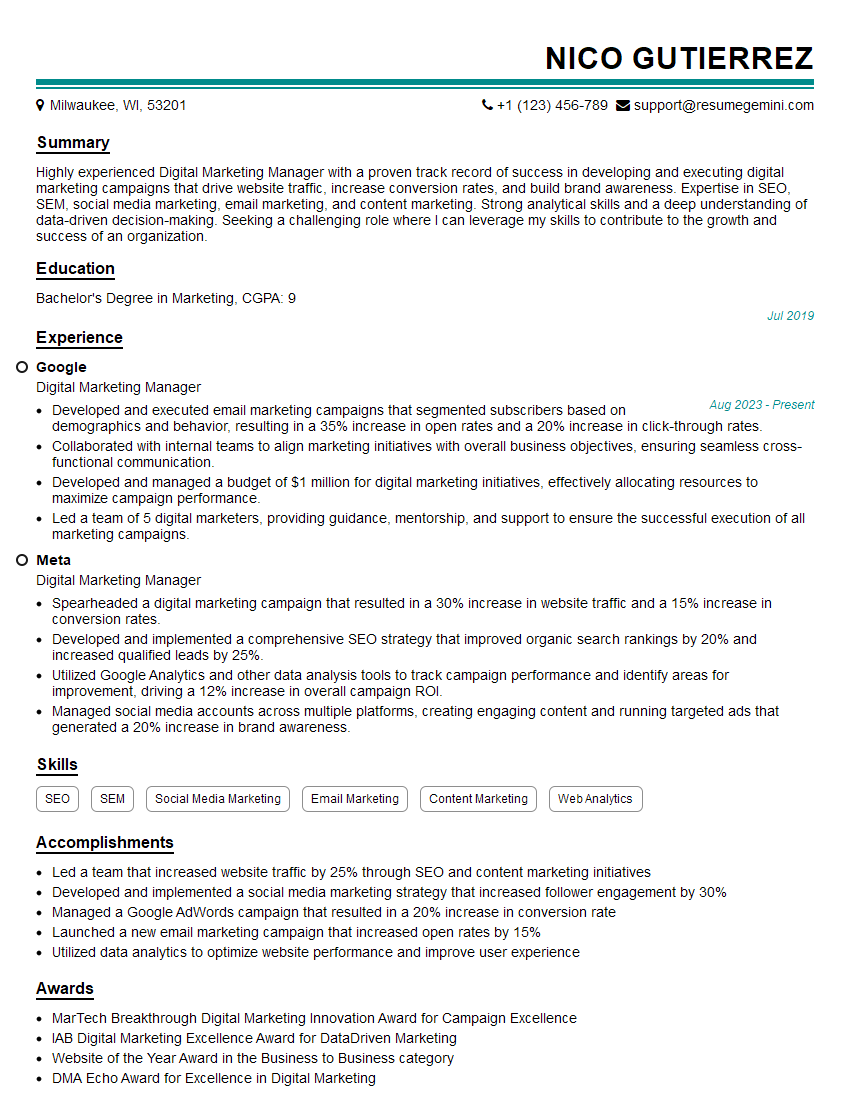
Digital Marketing Manager Resume Sample
- Brand Manager
- Marketing Director
- Marketing Manager
- Head of Marketing
- Marketing Coordinator
- Marketing Communications Manager
- Demand Generation Manager
- Market Research Analyst
- Marketing Analyst
- Marketing Consultant
- Product Marketing Manager
- Social Media Manager
- Public Relations Manager
- Digital Marketing Manager
Explore more articles
Users Rating of Our Blogs
Share Your Experience
We value your feedback! Please rate our content and share your thoughts (optional).
What Readers Say About Our Blog
Really detailed insights and content, thank you for writing this detailed article.
IT gave me an insight and words to use and be able to think of examples