Are you ready to stand out in your next interview? Understanding and preparing for Risk and Reliability Assessment interview questions is a game-changer. In this blog, we’ve compiled key questions and expert advice to help you showcase your skills with confidence and precision. Let’s get started on your journey to acing the interview.
Questions Asked in Risk and Reliability Assessment Interview
Q 1. Explain the difference between risk and reliability.
While related, risk and reliability focus on different aspects of system performance. Reliability is the probability that a system will perform its intended function for a specified period under stated conditions. It’s about the system’s inherent capability to function without failure. Think of it like the sturdiness of a bridge – how likely is it to remain intact under normal load? Risk, on the other hand, considers both the likelihood of failure (reliability) and the consequences of that failure. It’s about the potential impact of things going wrong. Using the bridge analogy again, the risk is the combination of the bridge’s potential for collapse and the potential damage (loss of life, economic impact) if it actually did collapse.
For example, a system might have high reliability (99.9% uptime), but if the consequence of a failure is catastrophic (e.g., a nuclear meltdown), the associated risk is still very high. Conversely, a system with lower reliability (90% uptime) might have low risk if the consequences of failure are minimal (e.g., a minor inconvenience).
Q 2. Describe your experience with Failure Mode and Effects Analysis (FMEA).
I have extensive experience conducting Failure Mode and Effects Analysis (FMEA) across various industries, including aerospace and manufacturing. FMEA is a systematic, proactive method used to identify potential failure modes in a system and assess their severity, occurrence, and detectability. My process typically involves:
- Defining the System/Process: Clearly outlining the system or process under analysis, including its boundaries and interactions with other systems.
- Identifying Potential Failure Modes: Brainstorming possible failures for each component or function of the system, drawing upon historical data, engineering knowledge, and expert judgment.
- Assessing Severity, Occurrence, and Detection (SOD): Assigning numerical ratings to each failure mode based on its potential impact (Severity), the likelihood of it occurring (Occurrence), and the likelihood that it will be detected before it causes a problem (Detection).
- Calculating Risk Priority Number (RPN): Multiplying the Severity, Occurrence, and Detection ratings to obtain the RPN, which prioritizes failure modes based on their overall risk. A higher RPN indicates a higher-risk failure mode.
- Developing Recommended Actions: Proposing corrective actions to mitigate the risks associated with high-RPN failure modes, such as design changes, improved testing procedures, or additional safety mechanisms.
- Implementation and Follow-up: Tracking the implementation of recommended actions and monitoring their effectiveness.
For instance, in a recent FMEA of a robotic arm used in a manufacturing process, we identified a potential failure mode where a motor could overheat. Through our analysis, we determined that the severity was high (potential for injury), the occurrence was moderate (dependent on environmental factors), and the detection was low (no built-in overheat detection). This led to a high RPN, prompting the implementation of a new thermal sensor and automated shutdown mechanism.
Q 3. What are the key metrics used to measure reliability?
Key metrics for measuring reliability include:
- Mean Time Between Failures (MTBF): The average time between consecutive failures of a system. A higher MTBF indicates higher reliability.
- Mean Time To Failure (MTTF): The average time until the first failure of a system (typically used for non-repairable systems).
- Mean Time To Repair (MTTR): The average time it takes to repair a system after a failure. A lower MTTR indicates better maintainability.
- Availability: The percentage of time a system is operational and available for use. It takes into account both MTBF and MTTR (Availability = MTBF / (MTBF + MTTR)).
- Failure Rate (λ): The number of failures per unit time (e.g., failures per million hours). It’s the reciprocal of MTBF (λ = 1/MTBF).
- Reliability Function R(t): The probability that a system will survive up to time t without failure.
The choice of metric depends on the specific system and the goals of the reliability assessment. For example, MTBF is a commonly used metric for evaluating the reliability of computer servers, while MTTF might be more appropriate for evaluating the reliability of a light bulb.
Q 4. How do you perform a root cause analysis?
Performing a thorough root cause analysis (RCA) is crucial for preventing future failures. I typically employ a structured approach, such as the 5 Whys technique or fishbone diagrams, to identify the underlying causes of an incident. The 5 Whys involves repeatedly asking “why” to drill down to the root cause. Fishbone diagrams (also known as Ishikawa diagrams) visually represent potential causes categorized by different factors (e.g., people, methods, machines, materials, environment).
The process generally involves:
- Gather Data: Collect all relevant information regarding the incident, including witness accounts, technical data, and system logs.
- Define the Problem: Clearly state the problem that needs to be investigated.
- Identify Potential Causes: Brainstorm potential causes of the problem using techniques like the 5 Whys or fishbone diagrams.
- Verify the Root Cause: Analyze the identified potential causes to determine which one is the most likely root cause. This often involves data analysis and expert judgment.
- Develop Corrective Actions: Develop and implement actions to prevent the root cause from recurring.
- Verify Effectiveness: Monitor the effectiveness of the implemented corrective actions.
For example, if a production line repeatedly jams, a 5 Whys analysis might reveal the root cause is worn gears, ultimately leading to a maintenance schedule upgrade rather than addressing only the immediate jam.
Q 5. What is the bathtub curve, and what does it represent?
The bathtub curve is a graphical representation of the failure rate of a system over its lifetime. It’s called a “bathtub” because of its shape, which resembles a bathtub. The curve typically consists of three phases:
- Early Failures (Infant Mortality): The initial phase where the failure rate is high due to manufacturing defects or design flaws. This is analogous to the steep decline in the “left side” of the bathtub.
- Useful Life: The middle phase where the failure rate is relatively constant and low. The system operates reliably within its design parameters. This corresponds to the relatively flat “bottom” of the bathtub.
- Wear-out Failures: The final phase where the failure rate increases rapidly due to wear and tear, aging, and component degradation. This is represented by the upward slope on the “right side” of the bathtub.
Understanding the bathtub curve helps in predicting system lifetime, planning maintenance activities, and managing risk. For example, a high failure rate during early life might necessitate stricter quality control measures, while the wear-out phase might indicate the need for a preventative maintenance program.
Q 6. Explain your experience with Fault Tree Analysis (FTA).
Fault Tree Analysis (FTA) is a top-down, deductive technique used to analyze the causes of a specific undesired event (the top event). It uses Boolean logic to model the relationships between different events that can lead to the top event. My experience with FTA includes developing and analyzing fault trees for complex systems to identify potential failure modes and their probabilities.
The process involves:
- Defining the Top Event: Clearly defining the undesired event that needs to be analyzed.
- Developing the Fault Tree: Building a hierarchical diagram that shows the combination of events that can lead to the top event, using logic gates (AND, OR) to represent the relationships between events.
- Assigning Probabilities: Assigning probabilities to the basic events (lowest-level events in the tree).
- Calculating the Probability of the Top Event: Using Boolean logic and the probabilities of the basic events to calculate the probability of the top event.
- Identifying Critical Failure Paths: Identifying the most likely sequences of events that lead to the top event.
- Developing Mitigation Strategies: Developing strategies to mitigate the risks associated with the top event.
For example, in analyzing the failure of a power grid, the top event could be a system-wide blackout. The FTA would map out potential causes, such as equipment failure, natural disasters, and human error, illustrating their interconnectedness and helping prioritize risk mitigation efforts.
Q 7. How do you quantify risk?
Risk quantification involves assigning numerical values to the likelihood and consequences of potential events. This allows for a more objective comparison of different risks and prioritization of risk mitigation efforts. Common methods include:
- Qualitative Risk Assessment: Using descriptive scales (e.g., high, medium, low) to assess the likelihood and consequence of events. This is simpler but less precise.
- Quantitative Risk Assessment: Using numerical data and statistical methods (e.g., Monte Carlo simulation) to estimate the likelihood and consequence of events. This provides a more precise assessment.
- Risk Matrix: A visual tool combining likelihood and consequence ratings to categorize risks into different levels of severity.
- Expected Monetary Value (EMV): A quantitative method that calculates the expected financial loss associated with a risk (EMV = Probability of Event x Monetary Loss).
For example, in a construction project, a quantitative risk assessment might estimate the probability of a delay due to inclement weather (e.g., 20%) and the associated cost overrun (e.g., $100,000). The EMV would then be $20,000, helping to decide if preventative measures (e.g., weather insurance) are cost-effective.
The best method depends on the available data, project complexity, and the required level of precision. Often, a combined approach using qualitative and quantitative methods provides a balanced and effective risk assessment.
Q 8. Describe your experience with probabilistic risk assessment.
Probabilistic Risk Assessment (PRA) is a powerful methodology for quantifying and managing risk. Unlike deterministic methods that focus on single failure scenarios, PRA employs probability to assess the likelihood of various failure modes and their consequences. It uses techniques like Fault Tree Analysis (FTA) and Event Tree Analysis (ETA) to model complex systems and identify potential hazards. My experience spans various industries, including nuclear power, aerospace, and manufacturing. For example, in a nuclear power plant project, I led a team that used PRA to evaluate the probability of core melt accidents, considering various initiating events, equipment failures, and operator actions. This involved developing detailed fault trees, calculating probabilities using historical data and expert judgment, and finally performing sensitivity analyses to identify critical components and vulnerabilities. The results informed the plant’s safety design and operational procedures, significantly reducing the overall risk.
Another example involved a large-scale manufacturing process. We used PRA to assess the risk associated with equipment failures that could lead to production downtime and financial losses. By identifying the most probable failure modes and their impacts, we could prioritize maintenance efforts and allocate resources more effectively, resulting in significant cost savings and improved operational reliability.
Q 9. What are some common reliability testing methods?
Reliability testing methods are crucial for determining the performance and longevity of systems or components. They span a range of approaches, tailored to the specific context. Some common methods include:
- Accelerated Life Testing: This involves stressing components beyond their normal operating conditions to induce failures more quickly. For example, subjecting a component to high temperatures or vibrations can accelerate degradation, allowing for faster reliability estimation. This is often used when time is a constraint.
- Failure Mode and Effects Analysis (FMEA): A systematic approach to identify potential failure modes, their causes, and effects. It helps in proactively mitigating risks. A simple example is analysing the potential failure modes of a car’s braking system: brake pad wear, hydraulic failure, etc. and their impacts on overall safety.
- Reliability Growth Testing: This approach focuses on observing and improving the reliability of a system throughout its development and testing phases. Data is collected on failures, the root causes are identified and design improvements are implemented in iterative cycles until the desired reliability level is achieved.
- Non-destructive Testing (NDT): Techniques like ultrasonic inspection, radiography, and magnetic particle inspection are used to detect flaws or defects in components without causing damage. This is crucial for assessing the integrity of critical components such as pressure vessels or pipelines.
The choice of method depends on factors like the complexity of the system, the required level of accuracy, and the available resources. Often, a combination of methods is employed for a comprehensive reliability assessment.
Q 10. How do you handle conflicting priorities between risk reduction and cost?
Balancing risk reduction and cost is a constant challenge in engineering and management. It often necessitates a cost-benefit analysis, where the cost of implementing risk reduction measures is weighed against the potential cost of the associated consequences (e.g., financial losses, environmental damage, or safety hazards). This is often done using quantitative methods. A common approach is to calculate the expected value of the risk reduction, which involves multiplying the probability of an adverse event by the cost of that event. If this exceeds the cost of implementing a mitigating measure, the investment is justified.
For example, imagine a scenario where a safety system upgrade costs $1 million, but it reduces the probability of a major accident resulting in a $10 million loss from 1% to 0.1%. The expected loss without the upgrade is $100,000 (1% * $10 million), while the expected loss with the upgrade is $10,000 (0.1% * $10 million). The net benefit of the upgrade is $90,000 ($100,000 – $10,000) which greatly exceeds the cost of the upgrade, making it a worthwhile investment. In cases with competing risks, we would apply multi-criteria decision analysis (MCDA), such as the Analytic Hierarchy Process (AHP), to rank them and to ensure an optimal allocation of resources.
Q 11. Explain your experience with maintainability analysis.
Maintainability analysis is crucial for ensuring that a system can be effectively maintained and repaired throughout its lifecycle. It focuses on minimizing downtime, reducing maintenance costs, and improving operational efficiency. My experience involves using various techniques, including:
- Maintainability Prediction: Using historical data and reliability models to predict the future maintainability performance of a system. This helps in proactive planning for maintenance activities and spares procurement.
- Maintainability Allocation: Distributing maintainability requirements across different system components to achieve an overall maintainability goal. This involves defining maintainability targets for individual components and subsystems.
- Maintainability Testing: Conducting tests to evaluate the ease and speed of maintenance tasks, such as repairing or replacing components. Metrics like Mean Time To Repair (MTTR) are commonly used.
For instance, during a project involving a complex telecommunications network, I conducted maintainability analysis to optimize the system’s design for easier maintenance and repair. This involved analyzing the modularity of the system and identifying critical components for potential improvement and redundancy. Ultimately, this resulted in significantly reduced downtime and lower maintenance costs.
Q 12. What is the importance of redundancy in system design?
Redundancy in system design is the incorporation of backup components or systems to enhance reliability and availability. If one component fails, the redundant system takes over, ensuring continued operation. The importance of redundancy stems from the need to mitigate the impact of single-point failures, which can cause catastrophic consequences in many systems.
Think of a commercial aircraft’s flight control system; it has multiple redundant systems – if one fails, another automatically takes over. This is critical for ensuring safety. Similarly, in data centers, redundant power supplies and network connections are vital for ensuring continuous operation and preventing data loss. The level of redundancy depends on the criticality of the system and the acceptable level of risk. While redundancy improves reliability, it also increases cost and complexity, so a balance needs to be achieved.
Q 13. How do you incorporate reliability into the design process?
Incorporating reliability into the design process is paramount for creating robust and dependable systems. It’s not an afterthought, but rather an integral part of every design stage. This starts with establishing clear reliability targets early in the design phase, based on the intended use, operating conditions, and safety requirements.
Methods include:
- Design for Reliability (DFR): This involves using techniques like robust design, fault tolerance, and redundancy to improve the reliability of the system from the start.
- Component Selection: Choosing components with proven reliability records is crucial. This often requires thorough analysis of component failure rates and environmental stress factors.
- Modular Design: Designing the system in modules allows for easier maintenance and replacement of faulty components without affecting the entire system.
- Simulation and Modeling: Using simulation tools to analyze the reliability of the system under various operating conditions, helping to identify weaknesses and improve the design.
For example, in the design of a spacecraft, reliability is paramount because repairs are impossible in space. DFR principles are strictly followed, utilizing redundant systems, comprehensive testing, and rigorous quality control throughout the design and manufacturing phases.
Q 14. How do you handle uncertainty in risk assessment?
Uncertainty is inherent in risk assessment. It stems from incomplete data, imprecise models, and the inherent randomness of many events. To manage this uncertainty, several strategies are used:
- Sensitivity Analysis: Examining how changes in input variables affect the overall risk assessment. This helps to identify the most significant sources of uncertainty and prioritize data collection or model refinement efforts.
- Probabilistic Modeling: Using probabilistic distributions (e.g., normal, lognormal) to represent uncertain parameters rather than single point estimates. This allows for capturing the range of possible outcomes.
- Monte Carlo Simulation: A computational technique that uses random sampling to estimate the probability of various outcomes. It is particularly useful for complex systems with many uncertain variables.
- Expert Elicitation: Gathering expert opinions to estimate probabilities and other uncertain parameters. This is often used when historical data is scarce or unavailable. A well-structured elicitation process minimizes bias and ensures quality data.
In a real-world example involving a bridge safety assessment, we used Bayesian methods to update our prior beliefs about the bridge’s structural integrity as we collected more inspection data. This allowed us to refine our risk assessment over time and make more informed decisions about maintenance and repair.
Q 15. Describe your experience with reliability prediction techniques.
Reliability prediction involves forecasting the future performance of a system or component. It’s crucial for proactive maintenance, resource allocation, and ensuring safety. I’ve extensive experience using various techniques, categorized broadly as:
Part Count Methods: These methods estimate reliability based on the number of components and their individual failure rates. A simple example is the MIL-HDBK-217 standard. This is useful for early design stages when detailed data is limited, but it relies on broad assumptions.
Physics-of-Failure (PoF) methods: These methods analyze the underlying physical processes that lead to failure, allowing for more accurate predictions. They might involve stress-strength analysis or fatigue life prediction. For instance, I’ve used PoF to predict the lifespan of turbine blades based on material properties and operating conditions. This approach is more complex but offers significant accuracy.
Statistical methods: These use historical failure data to model reliability. Techniques such as Weibull analysis are commonly used to estimate parameters like failure rate and shape. I have extensive experience fitting Weibull distributions to failure data to predict the probability of failure within a given timeframe.
Software Reliability Modeling: This focuses on predicting software defects and failures. Techniques like Musa-Okumoto model and Jelinski-Moranda model are used. I’ve worked on projects predicting the reliability of complex software systems, incorporating testing data and fault discovery rates.
My experience spans various industries, including aerospace, manufacturing, and software development, allowing me to tailor the most appropriate technique to the specific context of the system being analyzed.
Career Expert Tips:
- Ace those interviews! Prepare effectively by reviewing the Top 50 Most Common Interview Questions on ResumeGemini.
- Navigate your job search with confidence! Explore a wide range of Career Tips on ResumeGemini. Learn about common challenges and recommendations to overcome them.
- Craft the perfect resume! Master the Art of Resume Writing with ResumeGemini’s guide. Showcase your unique qualifications and achievements effectively.
- Don’t miss out on holiday savings! Build your dream resume with ResumeGemini’s ATS optimized templates.
Q 16. How do you communicate complex risk information to non-technical audiences?
Communicating complex risk information to non-technical audiences requires translating technical jargon into plain language and using visual aids. I employ several strategies:
Analogies and metaphors: Explaining risk in terms of everyday experiences makes it relatable. For example, comparing the probability of a system failure to the likelihood of a specific event (like winning the lottery) creates a clear understanding.
Visualizations: Charts, graphs, and other visual aids are much more effective than numbers alone. I use simple bar charts to show the relative risks, or risk heat maps to display various threat levels simultaneously. For software, I might use a failure rate curve.
Storytelling: Narratives provide context and engage the audience. I often describe potential scenarios and their consequences to illustrate the importance of risk mitigation.
Focus on consequences: Rather than dwelling on technical details, I highlight the impact of risks on the audience’s goals and objectives. This resonates better and fosters a stronger sense of urgency.
Interactive sessions: Facilitating discussions and Q&A sessions clarifies doubts and addresses individual concerns, making the complex information more accessible.
The key is to focus on what the audience needs to know, not everything that could be known. Prioritizing clarity and simplicity above all else is paramount.
Q 17. What is your experience with reliability growth modeling?
Reliability growth modeling helps track and analyze how reliability improves over time, typically during the development or testing phase of a system. I have experience with several models:
Duane Model: A popular model assuming a constant failure rate improvement over time. This is a simple model often used for initial assessments.
Gompertz Model: This captures a more complex reliability growth curve, which may be useful when reliability improvement slows over time.
Crow-AMSAA Model: This is used to model reliability growth in the context of testing and fault-fixing. It considers the impact of fixes on future failures.
In my work, I’ve used these models to:
Estimate the reliability at a given point in time. This is crucial for determining if a product is ready for deployment.
Predict the number of future failures. This allows for better resource allocation during the testing phase.
Assess the effectiveness of corrective actions. Tracking reliability improvements over time shows how well implemented fixes have solved the root causes of failures.
For example, I used the Crow-AMSAA model to predict the reliability of a new aircraft navigation system during its testing program. This allowed the team to understand the remaining issues and the level of testing needed before certification.
Q 18. How do you evaluate the effectiveness of risk mitigation strategies?
Evaluating the effectiveness of risk mitigation strategies involves a multi-step process:
Defining Key Performance Indicators (KPIs): Before implementing a mitigation strategy, I define clear, measurable KPIs to assess its success. These KPIs are directly tied to the specific risk being addressed.
Baseline Measurement: Before the implementation of the mitigation strategy, a baseline measurement is taken to establish the initial risk level.
Post-Mitigation Measurement: After implementation, the KPIs are re-measured to determine the impact of the strategy. This typically involves data collection and analysis.
Comparison and Analysis: The pre- and post-mitigation measurements are compared to determine the change in the risk level. Statistical methods may be used to establish whether the change is statistically significant.
Documentation and Reporting: All findings are documented, including the methodology, data, analysis, and conclusions. This allows for future reference and enables transparency and accountability.
For example, if the mitigation strategy was implementing a new safety procedure, the KPI could be the reduction in the number of near-miss incidents. By comparing the number of incidents before and after implementation, we can objectively assess the effectiveness of the procedure. A cost-benefit analysis might also be conducted to compare the cost of the mitigation strategy to the potential losses averted.
Q 19. Describe a time you had to make a difficult decision involving risk.
During a project involving the development of a new medical device, we faced a critical decision regarding the release date. Testing revealed a low probability but high-impact failure mode related to a critical sensor. Delaying the launch would incur significant financial losses, but releasing it risked patient safety.
The decision involved weighing the risks and benefits of each option. We formed a team including engineers, clinicians, and risk management specialists. We rigorously reviewed the failure data, performed fault tree analysis, and modeled the probability of failure under various operating conditions. We developed multiple mitigation strategies, including software and hardware improvements. Ultimately, we opted to delay the launch by a month, prioritizing patient safety over immediate financial gains. This involved clearly communicating the decision rationale to stakeholders. The extra time allowed for implementation of the mitigation strategies and further testing.
This decision highlights the importance of prioritizing safety and transparency in high-stakes projects, even when facing pressure to meet deadlines.
Q 20. What software tools are you proficient in for risk and reliability analysis?
I’m proficient in several software tools used for risk and reliability analysis, including:
Reliasoft Weibull++: This is a powerful tool for reliability data analysis and modeling, especially for fitting Weibull distributions and conducting life data analysis.
Minitab: I use Minitab for statistical analysis, including hypothesis testing and regression analysis, which is crucial for validating reliability predictions.
MATLAB: I use MATLAB’s Simulink environment for system-level modeling and simulation, which allows me to assess the impact of various factors on system reliability.
R: I utilize R for advanced statistical modeling and custom scripting to tailor analytical approaches to specific needs.
Specialized industry software: Depending on the industry, I’ve experience with specific software tailored to the needs of the aerospace, automotive, or other sectors (e.g., for fault tree analysis, failure mode and effects analysis).
My proficiency extends beyond mere tool usage; I understand the underlying statistical principles and modeling techniques that drive these software packages. This ensures I can interpret the results correctly and apply them effectively to make informed decisions.
Q 21. How do you ensure data integrity in your risk assessment work?
Ensuring data integrity in risk assessment is paramount. My approach involves several key steps:
Data Source Validation: I carefully evaluate the reliability and credibility of all data sources. This involves considering the methodology used to collect the data, potential biases, and the overall quality of the data.
Data Cleaning and Preprocessing: Raw data is often messy. I meticulously clean and preprocess the data to handle missing values, outliers, and inconsistencies, ensuring that data is ready for analysis. This may involve techniques like data imputation or outlier removal.
Data Validation Checks: Several checks are performed to ensure accuracy. This might include range checks (ensuring values fall within reasonable limits), consistency checks (comparing data from multiple sources), and plausibility checks (evaluating if the data makes sense in context).
Version Control: All data and analysis are stored using version control systems to track changes and maintain a clear audit trail.
Documentation: Meticulous documentation is kept about data sources, cleaning processes, and any assumptions made during analysis. This supports transparency and reproducibility of results.
Data Security: I follow best practices for data security, ensuring that confidential data is protected.
Using these steps builds trust and confidence in the accuracy and reliability of the final risk assessment. Neglecting data integrity can lead to flawed conclusions, potentially jeopardizing safety and leading to poor decision-making.
Q 22. Explain your understanding of different risk tolerance levels.
Risk tolerance represents the amount of risk an organization or individual is willing to accept. It’s a crucial concept in risk management, influencing decision-making and resource allocation. Different levels exist, ranging from risk-averse to risk-seeking.
- Risk-Averse: Organizations with a low risk tolerance prioritize safety and minimizing potential losses, even if it means missing out on potential gains. They often implement stringent safety protocols and may choose less risky, albeit less profitable, projects.
- Risk-Neutral: These entities evaluate risks and rewards equally, focusing on the expected value of each option. They may adopt a balanced approach, considering both potential benefits and downsides.
- Risk-Seeking: High risk tolerance implies a willingness to accept substantial risks for the potential of significant returns. These organizations might invest in high-risk ventures with potentially large payoffs, but also higher chances of failure.
For example, a pharmaceutical company developing a new drug might have a different risk tolerance than a food production company. The pharmaceutical company might accept higher risks during the research and development phase due to the potential for enormous returns if the drug is successful. The food production company, however, might prioritize safety and regulatory compliance, opting for lower-risk, established methods.
Q 23. How do you stay current with best practices in risk and reliability assessment?
Staying updated on best practices in risk and reliability assessment requires a multi-faceted approach.
- Professional Organizations: I actively participate in organizations like the Society for Risk Analysis (SRA) and the Institute of Risk Management (IRM), attending conferences and webinars, and reading their publications. This exposes me to the latest research, methodologies, and regulatory changes.
- Industry Publications: I regularly read industry journals and publications, keeping abreast of new tools, techniques, and case studies. Examples include Reliability Engineering & System Safety and the Journal of Risk Research.
- Online Resources and Courses: Online platforms offer valuable resources, including online courses on platforms like Coursera and edX, providing access to leading experts and their latest insights.
- Networking: Attending industry events and conferences allows for networking with other professionals, exchanging knowledge and learning about current best practices.
For instance, recently, I participated in a webinar on the application of machine learning in risk assessment, which significantly enhanced my understanding of how AI can help identify and mitigate risks more effectively. Continuous learning is key in this field due to its dynamic nature.
Q 24. What is your experience with system safety analysis?
I possess extensive experience in system safety analysis, having worked on numerous projects across diverse sectors, including aerospace, automotive, and process industries. My experience encompasses a range of techniques including:
- Fault Tree Analysis (FTA): I’ve used FTA to identify potential failure causes and their probabilities, contributing to proactive risk mitigation strategies. For example, in an aerospace project, I used FTA to analyze the potential causes of engine failure, leading to the implementation of redundancy measures.
- Event Tree Analysis (ETA): I’ve employed ETA to model the sequences of events following an initiating event, leading to an assessment of the likelihood and consequences of various accident scenarios. This aided in prioritizing risk reduction efforts.
- Failure Modes and Effects Analysis (FMEA): I’ve extensively utilized FMEA to identify potential failure modes in systems, evaluate their severity, and determine appropriate mitigation strategies. This has helped in preventing system failures and improving overall safety.
I am proficient in using both qualitative and quantitative approaches to system safety analysis, adapting my methods based on the specific requirements of each project. My experience includes working with various safety standards and regulations, ensuring compliance and minimizing risks.
Q 25. Describe your experience with HAZOP studies.
I have extensive experience leading and participating in HAZOP (Hazard and Operability) studies. HAZOP is a systematic and structured technique for identifying potential hazards and operability problems in process plants and other complex systems.
My experience includes:
- Facilitating HAZOP studies: I’ve led multi-disciplinary teams through the HAZOP process, guiding discussions, documenting findings, and developing risk mitigation recommendations.
- Developing HAZOP guide words: I’m skilled in selecting appropriate guide words (e.g., ‘no,’ ‘more,’ ‘less,’ ‘part of,’ ‘reverse’) to systematically explore potential deviations from the intended design and operation.
- Assessing risks: I’ve used HAZOP to identify hazards and assess their associated risks, using techniques such as risk matrices to prioritize mitigation efforts.
- Preparing HAZOP reports: I’ve prepared detailed reports summarizing the HAZOP findings, recommended actions, and their associated risk reduction.
For example, in a chemical processing plant, a HAZOP study I led identified a potential for overpressure in a reactor vessel. This led to the implementation of safety relief valves and improved pressure control systems, significantly reducing the risk of a catastrophic event.
Q 26. How do you validate your risk assessment models?
Validating risk assessment models is crucial to ensure their accuracy and reliability. This involves comparing model predictions with real-world data or expert judgment.
- Data Validation: I ensure the data used in the models is accurate, complete, and consistent. This involves rigorous data quality checks and potentially using multiple data sources for verification.
- Model Calibration: I calibrate the models by comparing their output with historical data, adjusting parameters to improve the model’s predictive capabilities.
- Sensitivity Analysis: I perform sensitivity analysis to identify which model parameters have the greatest impact on the results, helping to understand uncertainties and focus validation efforts.
- Expert Review: I involve subject matter experts to review the models and their results, providing valuable insights and identifying potential biases or errors.
- Benchmarking: I compare the results of my models with the results of similar models used in comparable projects or industries, ensuring the results are reasonable and consistent.
For example, if building a risk model for equipment failures, I would validate it by comparing the predicted failure rates against historical maintenance records. Discrepancies would lead to a review of the underlying data and model assumptions.
Q 27. How do you manage risks associated with aging infrastructure?
Managing risks associated with aging infrastructure requires a proactive and comprehensive approach. This involves a combination of risk assessment, maintenance planning, and investment strategies.
- Asset Condition Assessment: I would begin by conducting thorough assessments of the condition of the infrastructure, using various techniques like non-destructive testing and visual inspections. This helps identify potential weaknesses and vulnerabilities.
- Risk-Based Inspection and Maintenance: I would develop a risk-based inspection and maintenance plan, prioritizing assets that pose the highest risks. This optimizes resource allocation and ensures that critical assets receive the necessary attention.
- Life-Cycle Cost Analysis: I would perform life-cycle cost analyses to evaluate the long-term costs of different maintenance and replacement strategies, ensuring cost-effectiveness.
- Technology Integration: Leveraging technology like sensor networks and predictive maintenance tools can significantly improve the monitoring and management of aging infrastructure. This provides early warning signs of potential problems.
- Strategic Investment: A robust investment plan is crucial for replacing or upgrading critical infrastructure components before they reach a point of failure, minimizing disruptions and avoiding potentially catastrophic consequences.
For example, in managing an aging water distribution system, we might use sensors to monitor pressure and flow rates, allowing for early detection of leaks and reducing water loss and the risk of pipe failures.
Q 28. What are your salary expectations for this role?
My salary expectations for this role are in the range of [Insert Salary Range] annually. This is based on my experience, qualifications, and the responsibilities associated with this position, as well as current market rates for similar roles with comparable experience in [Location]. I am open to discussing this further, considering the specific details of the position and the overall compensation package offered.
Key Topics to Learn for Risk and Reliability Assessment Interview
- Risk Identification & Analysis: Understanding various methods like FMEA (Failure Mode and Effects Analysis), FTA (Fault Tree Analysis), and HAZOP (Hazard and Operability Study). Consider practical applications in diverse industries like manufacturing, healthcare, and finance.
- Reliability Engineering Fundamentals: Grasping key concepts like reliability metrics (MTBF, MTTF, availability), reliability modeling (e.g., exponential, Weibull distributions), and reliability improvement techniques.
- Quantitative Risk Assessment: Mastering the application of statistical methods and probabilistic models to quantify risk, including risk matrices and decision trees. Explore real-world case studies to understand practical implementation.
- Qualitative Risk Assessment: Familiarize yourself with techniques for assessing risk based on expert judgment and subjective assessments. Understand the limitations and benefits compared to quantitative approaches.
- Risk Mitigation & Control Strategies: Learn to develop and implement effective strategies for mitigating identified risks, including preventive, detective, and corrective measures. Discuss examples of practical risk mitigation in different contexts.
- Reliability-Centered Maintenance (RCM): Understand the principles and applications of RCM for optimizing maintenance strategies and improving system reliability. Consider the cost-benefit analysis aspect.
- Data Analysis & Interpretation: Develop your skills in analyzing reliability data, interpreting results, and drawing meaningful conclusions. This includes statistical software proficiency (e.g., knowledge of relevant software packages).
- Communication & Reporting: Practice effectively communicating complex technical information to both technical and non-technical audiences. Focus on clear, concise reporting of risk assessments and recommendations.
Next Steps
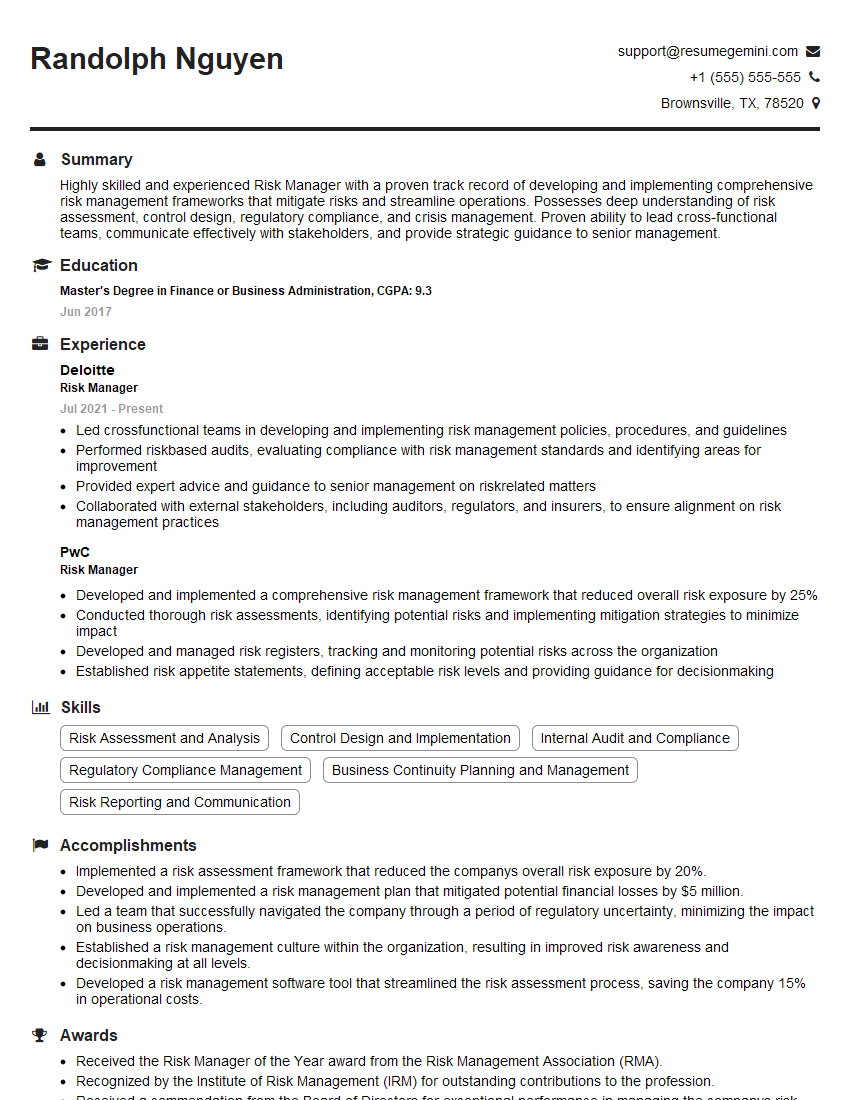
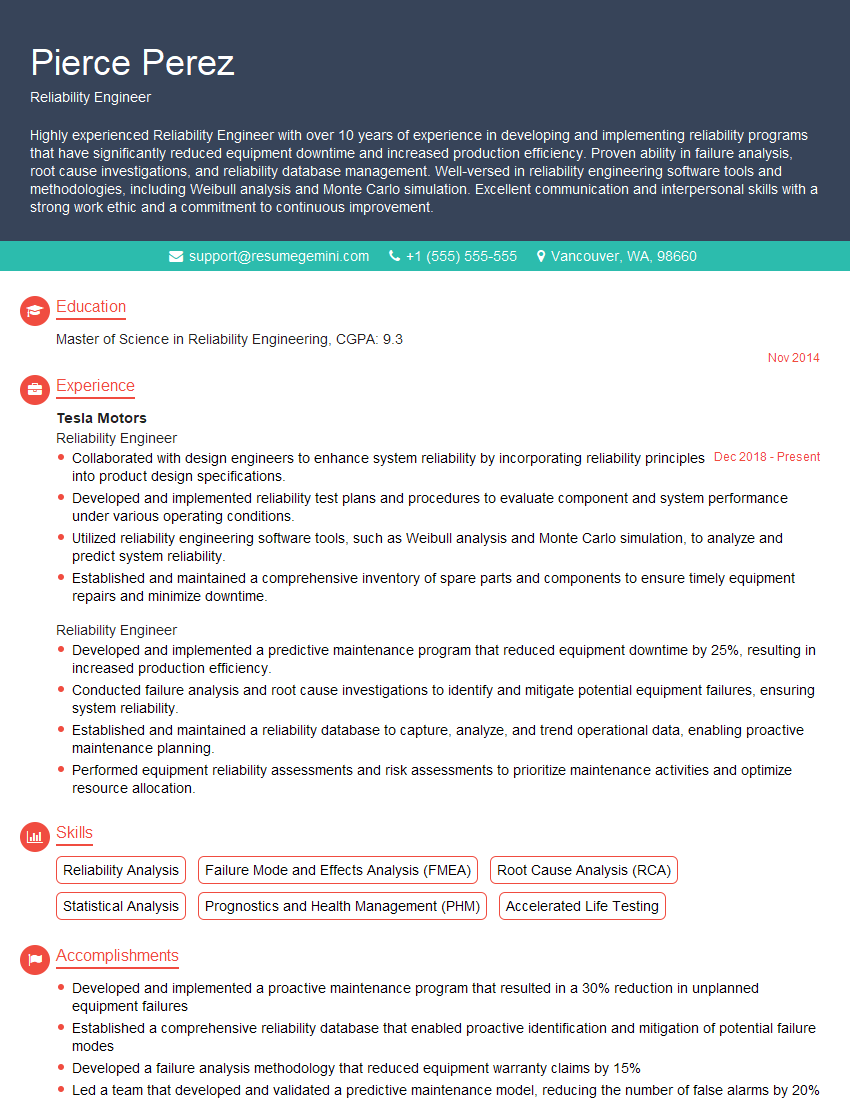
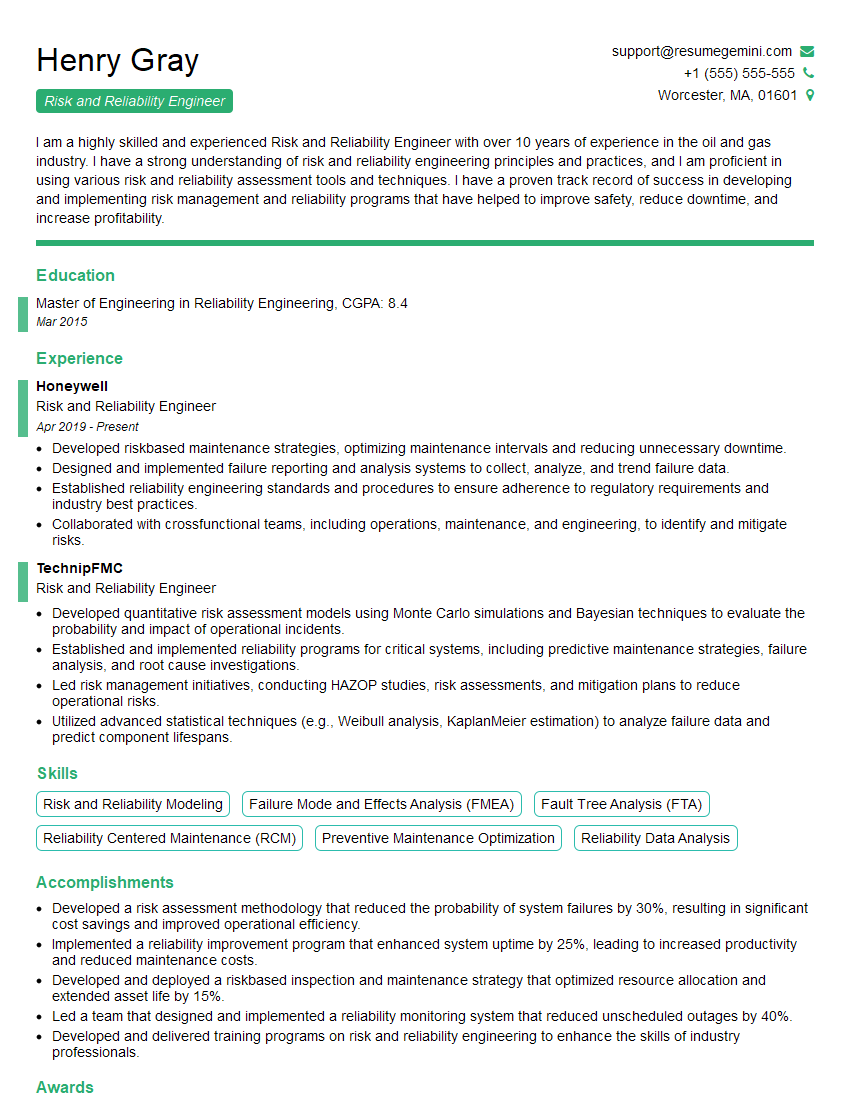
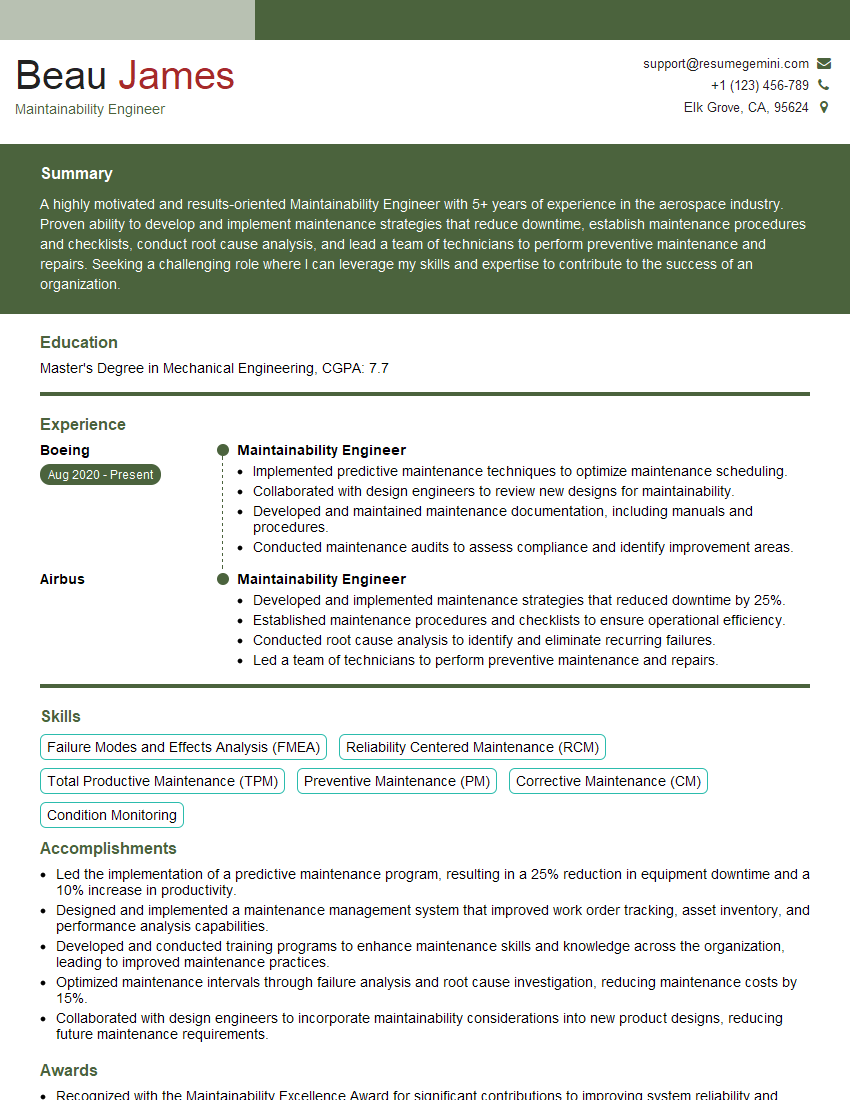
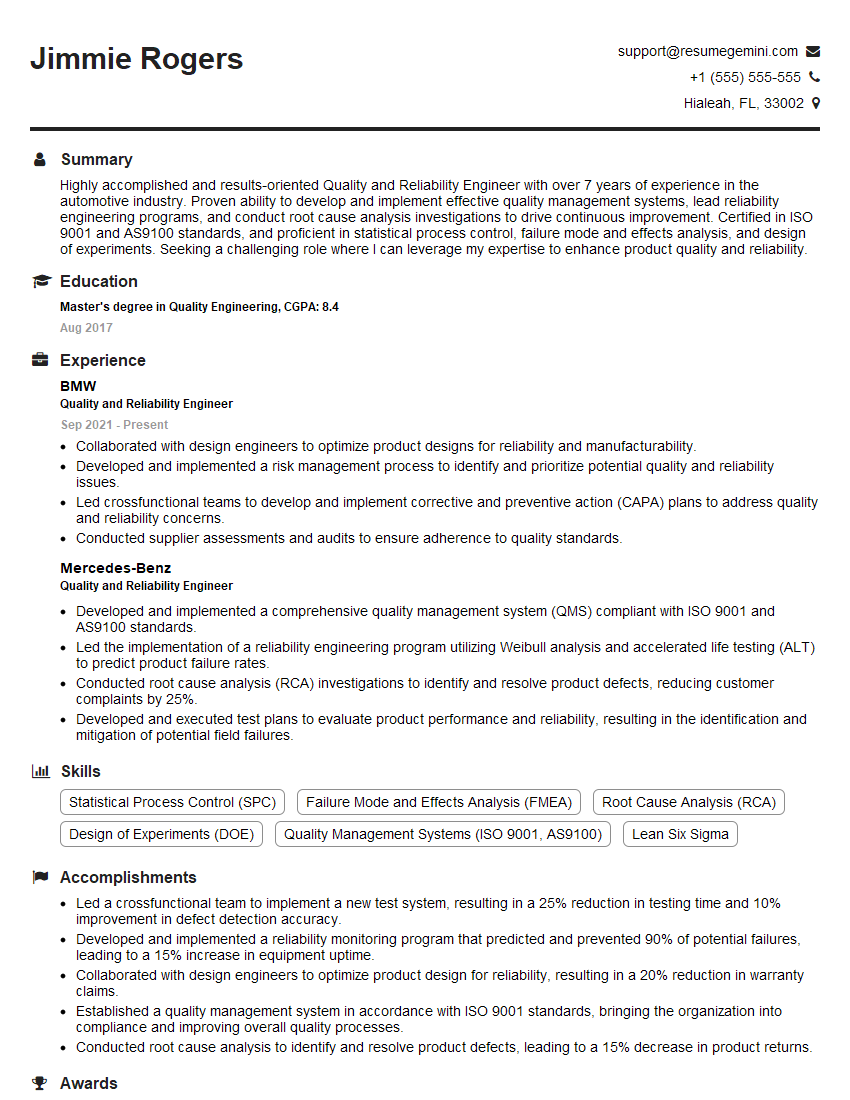
Mastering Risk and Reliability Assessment is crucial for career advancement in many high-demand fields. A strong understanding of these principles demonstrates valuable problem-solving skills and a proactive approach to risk management, opening doors to exciting opportunities and leadership roles. To maximize your job prospects, crafting an ATS-friendly resume is essential. ResumeGemini is a trusted resource to help you build a compelling and effective resume that highlights your skills and experience in Risk and Reliability Assessment. Examples of resumes tailored to this field are available to guide you. Take this opportunity to elevate your resume and showcase your capabilities to potential employers.

Explore more articles
Users Rating of Our Blogs
Share Your Experience
We value your feedback! Please rate our content and share your thoughts (optional).
What Readers Say About Our Blog
Really detailed insights and content, thank you for writing this detailed article.
IT gave me an insight and words to use and be able to think of examples