Every successful interview starts with knowing what to expect. In this blog, we’ll take you through the top Advanced Warehouse Management Techniques interview questions, breaking them down with expert tips to help you deliver impactful answers. Step into your next interview fully prepared and ready to succeed.
Questions Asked in Advanced Warehouse Management Techniques Interview
Q 1. Explain your experience with various Warehouse Management Systems (WMS).
My experience encompasses a wide range of Warehouse Management Systems (WMS), from legacy systems like Manhattan Associates WMS and Blue Yonder to more modern cloud-based solutions such as NetSuite WMS and Oracle Cloud WMS. I’ve worked with both on-premise and SaaS deployments, gaining expertise in their unique functionalities and implementation challenges. For instance, in a previous role, I managed the migration from a legacy system to a cloud-based WMS for a large retail client. This involved a comprehensive data migration, user training, and process re-engineering to leverage the new system’s advanced features, such as improved real-time visibility and automated reporting. In another project, I focused on customizing a WMS for a food processing company to manage its specific needs for temperature-controlled storage and lot traceability, ensuring compliance with stringent regulatory requirements. This involved close collaboration with the client to fine-tune the system’s configuration and optimize workflows.
Q 2. Describe your experience implementing a new WMS.
Implementing a new WMS is a multifaceted project requiring meticulous planning and execution. My approach typically involves these key phases: 1. Needs Assessment and Selection: This involves thoroughly understanding the client’s business requirements, evaluating different WMS solutions, and selecting the best fit based on scalability, functionality, and budget. 2. System Design and Configuration: This phase involves customizing the WMS to meet the specific needs of the warehouse, including defining warehouse layouts, configuring inventory tracking methods, and setting up reporting parameters. 3. Data Migration: Accurate and efficient data migration is crucial. This requires careful planning and execution, often involving data cleansing and validation to ensure data integrity. 4. Testing and Training: Rigorous testing, including unit, integration, and user acceptance testing (UAT), is essential to identify and resolve any issues before go-live. Comprehensive training for warehouse staff is vital for successful adoption. 5. Go-Live and Post-Implementation Support: This involves a phased rollout of the new system, ongoing monitoring, and providing support to address any post-implementation challenges. For example, during a recent implementation, we used a phased approach, starting with a pilot project in one warehouse before rolling it out to other locations. This allowed us to identify and resolve any potential issues before a full-scale deployment, minimizing disruption.
Q 3. How do you optimize warehouse layout for efficiency?
Optimizing warehouse layout is critical for efficiency. The goal is to minimize travel time and maximize space utilization. I use several techniques: 1. ABC Analysis: This involves classifying inventory items based on their value and usage frequency. High-value, frequently used items are placed closer to shipping and receiving areas. 2. Slotting Optimization: This involves assigning specific locations for each item based on its size, weight, and demand. 3. Cross-Docking: This technique minimizes storage time by directly transferring goods from receiving to shipping. 4. Zone Picking: Dividing the warehouse into zones and assigning pickers to specific zones improves picking efficiency. 5. Simulation Software: Utilizing software to simulate various layouts and workflows before implementation allows for informed decision-making and optimization. For example, in one project, we used ABC analysis to strategically place fast-moving items near shipping docks, resulting in a 15% reduction in order fulfillment time. Visualizing workflows with simulation software helped us identify bottlenecks and optimize the layout for improved throughput.
Q 4. What metrics do you use to measure warehouse performance?
Key metrics I use to measure warehouse performance include: 1. Order Fulfillment Rate: The percentage of orders fulfilled accurately and on time. 2. Inventory Accuracy: The level of accuracy between the physical inventory and the system’s recorded inventory. 3. Order Cycle Time: The time it takes to process an order, from receiving to shipping. 4. Storage Capacity Utilization: The percentage of available storage space being used effectively. 5. Labor Productivity: Units picked or shipped per labor hour. 6. Picking Accuracy: The percentage of orders picked correctly. 7. Receiving Efficiency: Time taken to receive and process inbound shipments. Regularly monitoring these metrics allows for identification of areas for improvement and adjustments to warehouse operations.
Q 5. How do you handle peak season demands in a warehouse?
Handling peak season demands requires proactive planning and flexible strategies. My approach involves: 1. Forecasting and Planning: Accurately forecasting demand helps in proactively scaling resources. 2. Flexible Staffing: Hiring temporary staff or utilizing overtime to meet increased workload. 3. Inventory Management: Ensuring sufficient inventory levels to meet anticipated demand, without excessive overstocking. 4. Process Optimization: Streamlining warehouse processes to enhance efficiency. 5. Technology Optimization: Leveraging WMS capabilities to manage increased order volume and streamline operations. 6. Contingency Planning: Developing plans to mitigate potential disruptions and delays. For example, during a recent peak season, we implemented a flexible scheduling system for staff, allowing us to allocate resources effectively based on real-time demand fluctuations. This, combined with optimized picking routes and improved communication, enabled us to handle a 40% increase in order volume without significant delays.
Q 6. Describe your experience with warehouse automation technologies.
My experience includes working with various warehouse automation technologies, such as: 1. Automated Guided Vehicles (AGVs): These robots transport materials throughout the warehouse autonomously, reducing labor costs and improving efficiency. 2. Automated Storage and Retrieval Systems (AS/RS): These systems automate the storage and retrieval of goods, maximizing space utilization and improving throughput. 3. Conveyors and Sortation Systems: These systems automate the movement and sorting of goods, speeding up order fulfillment. 4. Robotic Picking Systems: Robots are employed for picking individual items from shelves, improving speed and accuracy. 5. Warehouse Control Systems (WCS): These systems orchestrate the various automated systems within a warehouse, ensuring seamless integration and optimal performance. For instance, I worked on a project that involved integrating an AS/RS with a new WMS. This required careful planning and coordination to ensure compatibility and optimize material flow. This resulted in a significant reduction in storage space and improved order fulfillment speed.
Q 7. Explain your knowledge of inventory management techniques (FIFO, LIFO, etc.).
Inventory management techniques such as FIFO (First-In, First-Out) and LIFO (Last-In, First-Out) are crucial for efficient inventory control. FIFO prioritizes the oldest inventory for use or sale, minimizing the risk of spoilage or obsolescence. This is ideal for perishable goods. LIFO prioritizes the newest inventory, which can be advantageous for accounting purposes during periods of inflation. However, LIFO can increase the risk of obsolescence. Other methods include FEFO (First Expired, First Out) which is specifically designed for perishable goods and Lot Tracking which tracks the history of each batch of goods, critical for managing recalls or traceability requirements. In my experience, selecting the correct method depends on the nature of the goods, industry regulations, and business objectives. For instance, a grocery warehouse would utilize FIFO for dairy products to minimize spoilage, whereas a lumber yard might find LIFO more suitable. Proper inventory management techniques are essential for optimizing warehouse space, minimizing waste, and ensuring regulatory compliance.
Q 8. How do you manage warehouse safety and compliance?
Warehouse safety and compliance are paramount. My approach is multifaceted, starting with a robust safety program encompassing regular training, clearly defined safety protocols, and ongoing risk assessments. Think of it like building a house – you need a strong foundation (policies) and ongoing maintenance (inspections and training).
- Regular Safety Training: All employees receive comprehensive training on safe operating procedures, including forklift operation, proper lifting techniques, and hazard identification. We use a combination of online modules and hands-on sessions, followed by regular refresher courses.
- Clearly Defined Protocols: We have standardized procedures for everything from handling hazardous materials to emergency response. These are documented, readily available, and regularly reviewed.
- Risk Assessments and Audits: We conduct regular safety audits and risk assessments to proactively identify and mitigate potential hazards. This includes walkthroughs, equipment inspections, and reviewing incident reports. For instance, a recent audit identified a blind spot in a particular aisle, leading to the implementation of additional safety mirrors.
- Compliance with Regulations: We meticulously track all relevant OSHA (or equivalent local) regulations and ensure strict adherence, including documentation of all safety measures and incident reports.
This proactive approach not only minimizes workplace accidents but also fosters a culture of safety, improving employee morale and productivity.
Q 9. What is your experience with warehouse slotting optimization?
Warehouse slotting optimization is all about maximizing space utilization and minimizing travel time for order fulfillment. It’s like organizing a well-stocked kitchen – frequently used items are easily accessible, while less frequently used items are stored in less convenient locations.
My experience involves using a combination of data analysis and warehouse management system (WMS) capabilities to optimize slot assignments. This includes:
- Data Analysis: Analyzing historical data on item velocity (how often items are picked), item size and weight, and order profiles to determine optimal slot locations.
- WMS Integration: Leveraging the WMS to model different slotting strategies and simulate their impact on order fulfillment times and travel distances. We used this approach at a previous company to reduce picking times by 15%.
- ABC Analysis: Classifying inventory into A, B, and C categories based on their value and frequency of use. A-items (high-value, high-frequency) are placed in the most accessible locations.
- Simulation and Modeling: Using simulation software to test different slotting scenarios before implementation, minimizing disruption to operations.
The result is a more efficient warehouse operation, reduced labor costs, and faster order fulfillment times.
Q 10. How do you improve warehouse picking and packing processes?
Improving picking and packing processes involves streamlining workflows and leveraging technology. Think of it as assembling a production line – each step needs to be efficient and seamlessly integrated with the next.
- Process Mapping and Optimization: We meticulously map out current processes, identify bottlenecks, and implement improvements such as implementing batch picking, zone picking, or wave picking depending on the order profile.
- Technology Implementation: Utilizing technologies like pick-to-light systems, voice-picking, and mobile scanners to guide pickers and reduce errors. Voice-picking, for example, frees up pickers’ hands and significantly speeds up the process.
- Ergonomics: Designing workstations to minimize physical strain on employees, improving both efficiency and safety. This can involve adjustments to shelving heights, conveyor systems, and the use of ergonomic lifting equipment.
- Quality Control Measures: Implementing rigorous quality checks at each stage of the picking and packing process to minimize errors and ensure order accuracy. This could involve visual inspections, weight checks, and barcode scanning.
- Training and Standardization: Providing comprehensive training to employees on standardized picking and packing procedures. This ensures consistency and minimizes errors.
These strategies contribute to increased accuracy, faster turnaround times, and reduced labor costs.
Q 11. Explain your experience with cycle counting and inventory accuracy.
Cycle counting is a crucial aspect of maintaining inventory accuracy. Instead of a full inventory count, it involves counting a small subset of inventory regularly. Think of it as regularly checking your bank account instead of waiting until the end of the year to reconcile everything.
My experience includes implementing and managing cycle counting programs using both manual and automated methods. This includes:
- Developing a Cycle Counting Schedule: Creating a schedule that ensures all inventory is counted at predetermined intervals, prioritizing high-value or high-velocity items.
- Using a WMS or Inventory Management System: Utilizing the system to generate cycle counting tasks and track discrepancies. The system automatically flags items for recounting.
- Training Staff: Ensuring that staff are properly trained on the cycle counting procedures and the use of scanning equipment.
- Analyzing Discrepancies: Investigating and resolving any discrepancies identified during the cycle counting process. This may involve investigating potential causes of discrepancies (theft, data entry errors, etc.).
- Continuous Improvement: Regularly reviewing the cycle counting process and making adjustments as needed to improve accuracy and efficiency.
By implementing a robust cycle counting program, we consistently maintain high inventory accuracy (typically above 99.5%), minimizing stockouts and preventing potential financial losses.
Q 12. How do you handle warehouse discrepancies and errors?
Handling warehouse discrepancies and errors requires a structured approach focusing on root cause analysis and preventative measures. It’s like troubleshooting a computer – you need to diagnose the problem and then prevent it from happening again.
My approach involves:
- Immediate Investigation: Promptly investigating all discrepancies to identify the root cause. This often involves reviewing picking lists, packing slips, and inventory records.
- Root Cause Analysis: Using techniques like the 5 Whys to delve deeper into the underlying cause of the error. For example, repeated picking errors might point to inadequate training or poorly designed processes.
- Corrective Actions: Implementing corrective actions to address the root cause of the error and prevent recurrence. This could range from additional training to process improvements.
- Documentation and Tracking: Maintaining detailed records of all discrepancies, root causes, and corrective actions. This data is invaluable for identifying trends and patterns, helping to implement preventative measures.
- Performance Metrics: Tracking key performance indicators (KPIs) like error rates and accuracy to monitor the effectiveness of corrective actions.
By addressing discrepancies proactively, we minimize their impact on operations, improve customer satisfaction, and continuously improve overall warehouse efficiency.
Q 13. What is your experience with RFID or barcode technology in warehouse operations?
RFID and barcode technologies are integral to modern warehouse management, significantly improving accuracy and efficiency. Think of them as advanced tracking systems, providing real-time visibility into inventory movement.
My experience includes implementing and managing both barcode and RFID systems in various warehouse settings. This includes:
- Barcode Systems: Implementing barcode scanning for receiving, putaway, picking, and shipping, significantly reducing manual data entry and improving accuracy. For example, we used barcode scanners to improve picking accuracy by 10% at a previous company.
- RFID Systems: Utilizing RFID tags for real-time tracking of inventory, providing better visibility into stock levels and locations. This is especially useful for managing high-value or high-volume items.
- Integration with WMS: Integrating both barcode and RFID systems with the WMS to streamline data flow and automate processes. This provides a comprehensive view of inventory and operations.
- Data Analysis and Reporting: Leveraging data from both systems to generate reports on inventory levels, order fulfillment times, and other key metrics.
These technologies significantly enhance warehouse efficiency, accuracy, and overall operational visibility.
Q 14. Describe your experience with warehouse reporting and data analysis.
Warehouse reporting and data analysis are critical for informed decision-making and continuous improvement. It’s like a dashboard for your warehouse, providing key metrics and insights into performance.
My experience includes:
- Key Performance Indicator (KPI) Tracking: Identifying and tracking key KPIs such as order accuracy, picking efficiency, inventory turnover, and storage utilization. We use dashboards to visually represent these metrics, making it easy to identify areas for improvement.
- Data Visualization: Utilizing data visualization tools to create charts, graphs, and dashboards that provide clear and concise representations of warehouse performance.
- Reporting and Analysis: Generating regular reports on warehouse performance and conducting in-depth analyses to identify trends, bottlenecks, and areas for improvement. For example, by analyzing picking data, we discovered that a particular picking route was inefficient, leading to the redesign of the warehouse layout.
- Predictive Analytics: Leveraging historical data to forecast future demand and optimize inventory levels. This can help to avoid stockouts and reduce storage costs.
Through data-driven insights, we can identify opportunities for cost reduction, efficiency gains, and overall improved warehouse performance. Data isn’t just numbers; it’s a powerful tool for continuous improvement.
Q 15. How do you manage warehouse labor effectively?
Effective warehouse labor management is crucial for optimizing productivity and minimizing costs. My approach focuses on a multi-pronged strategy encompassing workforce planning, training, and performance monitoring.
- Workforce Planning: This involves accurately forecasting labor needs based on historical data, seasonal fluctuations, and anticipated order volumes. I use sophisticated forecasting models and regularly review them to ensure accuracy. For example, during peak seasons like the holiday rush, I would increase staffing levels proactively, utilizing temporary workers if necessary, and deploying them strategically across different warehouse zones based on anticipated workload.
- Training and Development: Well-trained employees are more efficient and make fewer errors. I implement comprehensive training programs covering safety procedures, warehouse management system (WMS) usage, order picking techniques, and equipment operation. This could include on-the-job training, simulations, and online modules.
- Performance Monitoring and Incentive Programs: I track key performance indicators (KPIs) like units picked per hour, order accuracy, and error rates to identify areas for improvement. Implementing incentive programs, such as bonuses or recognition awards, can significantly boost motivation and performance. For instance, recognizing the team that consistently achieves the highest order accuracy rate fosters a culture of excellence.
- Technology Integration: Utilizing WMS and other technological tools like voice-picking systems and automated guided vehicles (AGVs) can dramatically enhance worker efficiency by optimizing workflows and reducing manual effort. A real-world example is implementing a voice-picking system, where workers receive instructions via headsets, reducing the need to constantly look at pick lists and minimizing errors.
Career Expert Tips:
- Ace those interviews! Prepare effectively by reviewing the Top 50 Most Common Interview Questions on ResumeGemini.
- Navigate your job search with confidence! Explore a wide range of Career Tips on ResumeGemini. Learn about common challenges and recommendations to overcome them.
- Craft the perfect resume! Master the Art of Resume Writing with ResumeGemini’s guide. Showcase your unique qualifications and achievements effectively.
- Don’t miss out on holiday savings! Build your dream resume with ResumeGemini’s ATS optimized templates.
Q 16. Explain your approach to continuous improvement in warehouse operations.
Continuous improvement in warehouse operations is an ongoing process, not a one-time event. My approach revolves around data-driven decision-making, process optimization, and a culture of innovation.
- Data Analysis: Regularly analyzing key performance indicators (KPIs) like order fulfillment rate, inventory accuracy, and operational costs is vital. Identifying trends and bottlenecks using data visualization tools allows for targeted interventions. For example, consistently high error rates in a specific picking zone might indicate the need for retraining or improved workflow design.
- Lean Methodology: Implementing Lean principles, focusing on eliminating waste (muda), is essential. This involves identifying and removing non-value-added activities throughout the warehouse process. For example, streamlining the receiving process by implementing automated check-in systems can reduce the time spent on paperwork and manual verification.
- Kaizen Events: Organizing regular Kaizen events, focused improvement workshops, where employees brainstorm solutions to identified problems, fosters a culture of continuous improvement. By actively involving the warehouse staff, we can leverage their practical experience and generate more effective solutions.
- Technology Upgrades: Staying current with the latest warehouse management technologies is crucial. This may involve upgrading the WMS, implementing automation solutions (e.g., robotic process automation), or adopting innovative technologies such as AI-powered forecasting and inventory optimization systems.
Q 17. Describe your experience with warehouse space optimization techniques.
Warehouse space optimization is paramount for maximizing efficiency and minimizing operational costs. My experience involves a holistic approach that combines strategic planning, technology, and efficient storage methods.
- Space Mapping and Analysis: I begin by conducting a thorough analysis of the existing warehouse layout, identifying underutilized areas, bottlenecks, and inefficient workflows. This might involve using 3D modeling software to visualize the space and optimize layout.
- Storage Optimization: This includes selecting the appropriate storage methods (e.g., racking, shelving, bulk storage) based on product characteristics, storage needs, and throughput requirements. For instance, utilizing high-bay racking for palletized goods maximizes vertical space utilization.
- Slotting Optimization: Strategically assigning locations for items based on frequency of access, product popularity, and handling characteristics can significantly reduce travel time and picking efforts. Fast-moving items are placed in easily accessible areas, while slow-moving items are located in less convenient but still efficient locations.
- Technology Integration: Utilizing WMS software with advanced features like slotting optimization algorithms and dynamic storage allocation can further enhance space utilization.
Q 18. How do you manage relationships with warehouse vendors and suppliers?
Managing relationships with warehouse vendors and suppliers requires a collaborative and transparent approach. My strategy focuses on building strong partnerships based on trust, mutual benefit, and clear communication.
- Vendor Selection: I meticulously evaluate potential vendors based on their reliability, reputation, pricing, and ability to meet our specific needs. This includes thorough due diligence, referencing, and comparing quotes from multiple vendors.
- Contract Negotiation: Negotiating fair and mutually beneficial contracts is crucial. This includes clearly defining service level agreements (SLAs), payment terms, and dispute resolution mechanisms.
- Performance Monitoring: I regularly monitor vendor performance against agreed-upon SLAs to ensure they meet our expectations. This may involve tracking on-time delivery rates, quality of goods, and responsiveness to service requests.
- Open Communication: Maintaining open and honest communication with vendors is essential for addressing any challenges or issues promptly. Regular meetings and feedback sessions help strengthen the relationship and ensure collaborative problem-solving.
Q 19. How do you handle warehouse receiving and shipping processes?
Efficient receiving and shipping processes are essential for timely order fulfillment and maintaining high customer satisfaction. My approach focuses on streamlining workflows and minimizing errors.
- Receiving Process: This involves verifying incoming shipments against purchase orders, inspecting goods for damage, and accurately recording inventory receipts. Implementing barcode scanning or RFID technology significantly improves accuracy and efficiency.
- Put-away Process: Once received, goods are put away in designated locations according to pre-defined slotting rules. Optimizing the put-away process minimizes travel time and improves overall efficiency.
- Shipping Process: This includes picking, packing, and labeling orders, followed by dispatch. Utilizing a WMS system with automated order picking features, like pick-to-light or voice-picking systems, can enhance speed and accuracy. Careful order verification and quality control checks before shipment are critical.
- Carrier Management: Selecting reliable carriers and managing shipping costs effectively is crucial. Negotiating favorable rates and utilizing various shipping options to optimize cost and delivery time is essential.
Q 20. What is your experience with different warehouse storage methods (e.g., racking, shelving)?
My experience encompasses a wide range of warehouse storage methods, each suited for different product types and operational requirements.
- Racking Systems: These include various types like selective pallet racking, drive-in/drive-through racking, push-back racking, and cantilever racking. The choice depends on factors such as product size, weight, and access frequency. Selective racking offers easy access to individual pallets, while drive-in/drive-through racking is suitable for high-volume storage of similar items.
- Shelving Systems: These are ideal for smaller items and offer flexibility in organizing inventory. Various types exist, such as static shelving, mobile shelving, and shelving with dividers.
- Bulk Storage: Suitable for large quantities of homogenous goods, bulk storage methods can include floor stacking, using bins or containers. However, this method often requires more space and may lead to less efficient order picking.
- Other Methods: Other methods may include specialized storage solutions like vertical carousels or automated storage and retrieval systems (AS/RS) for high-density storage and automated retrieval.
The selection of an appropriate storage method is crucial for maximizing space utilization, minimizing handling time, and ensuring easy access to inventory. The decision requires a thorough understanding of the product characteristics, order fulfillment requirements, and overall warehouse layout.
Q 21. How do you utilize data analytics to improve warehouse efficiency?
Data analytics plays a vital role in improving warehouse efficiency. My approach involves leveraging data to identify areas for improvement, optimize processes, and make data-driven decisions.
- KPI Tracking and Analysis: I track and analyze various KPIs, including order fulfillment rate, inventory accuracy, picking efficiency, and storage utilization, using dashboards and reporting tools. This provides insights into operational performance and identifies areas for improvement.
- Predictive Analytics: Utilizing predictive modeling techniques, I forecast future demand, optimize inventory levels, and anticipate potential bottlenecks. This ensures adequate staffing levels and prevents stockouts or overstocking.
- Root Cause Analysis: Data analysis helps pinpoint the root causes of operational issues, such as high error rates or delays in order fulfillment. This enables targeted interventions to address specific problems and improve overall performance. For instance, analyzing picking time data might reveal slowdowns at specific locations, necessitating layout adjustments or additional training.
- WMS Integration: The WMS system provides a wealth of data. Integrating it with other systems and utilizing business intelligence tools to analyze the data helps identify trends, optimize processes, and make informed decisions.
Q 22. How familiar are you with Lean methodologies in warehouse management?
Lean methodologies in warehouse management focus on eliminating waste and maximizing efficiency. Think of it like streamlining a kitchen – you wouldn’t keep ingredients you never use, nor would you make someone walk across the room unnecessarily for a single spice. In a warehouse, this translates to optimizing space, minimizing unnecessary movement of goods and people, and reducing inventory holding costs.
- Waste Reduction: Lean principles identify seven types of waste (muda): overproduction, waiting, transportation, over-processing, inventory, motion, and defects. We aim to eliminate or minimize each of these. For example, implementing a Kanban system minimizes overproduction by only producing what’s needed, when it’s needed.
- Value Stream Mapping: This visual tool helps analyze the entire process flow of goods, from receiving to shipping, identifying bottlenecks and areas for improvement. We can then streamline processes, reducing lead times and increasing efficiency. For instance, we might discover a redundant step in our picking process and eliminate it.
- 5S Methodology: This focuses on workplace organization: Seiri (Sort), Seiton (Set in Order), Seisō (Shine), Seiketsu (Standardize), and Shitsuke (Sustain). A well-organized warehouse is safer, more efficient, and easier to manage. I’ve personally used 5S to dramatically improve picking times in a previous warehouse by reorganizing storage locations based on frequency of access.
Q 23. Explain your experience with warehouse security measures.
Warehouse security is paramount. My experience encompasses a multi-layered approach, combining physical security measures with technological safeguards.
- Physical Security: This includes controlled access points (e.g., secured doors, gates, and surveillance cameras), regular security patrols, and robust perimeter fencing. I’ve been involved in designing and implementing security systems that utilize access control cards and biometric scanners, ensuring only authorized personnel enter specific areas.
- Technological Security: This involves utilizing warehouse management systems (WMS) with strong password protection, data encryption, and regular software updates. Inventory tracking systems with real-time visibility prevent theft and unauthorized access. I have experience implementing RFID tagging to monitor the movement of high-value goods and integrating security cameras with analytics to detect suspicious activity.
- Personnel Security: This is equally crucial. Background checks, employee training on security protocols, and clear responsibility assignments are essential. I’ve worked on creating detailed security protocols and training programs, and implementing a system of regular audits to assess security measures.
In one project, we reduced theft incidents by 60% through a combination of enhanced CCTV monitoring, improved lighting, and a strengthened access control system.
Q 24. Describe your experience with cross-docking and its benefits.
Cross-docking is a warehouse strategy where inbound goods are unloaded from incoming shipments and immediately loaded onto outbound shipments, bypassing traditional storage. Think of it like a super-efficient relay race – goods are passed directly from one team to the next without stopping.
- Benefits: Reduced storage costs (no need to store goods), lower labor costs (less handling), faster order fulfillment, reduced inventory holding costs, and improved inventory turnover.
- Process: Requires precise coordination between inbound and outbound shipments. Accurate forecasting and real-time tracking are crucial. The inbound shipment needs to match the outbound order perfectly to avoid delays. Proper labelling and organization are also critical.
- Example: A retailer receiving a truckload of shirts from a manufacturer and immediately transferring them to outbound trucks bound for various stores. The shirts never touch the warehouse floor.
I’ve personally implemented cross-docking in a large distribution center, resulting in a 25% reduction in handling time and a 15% decrease in warehousing costs.
Q 25. How do you manage warehouse transportation and logistics?
Managing warehouse transportation and logistics involves optimizing the movement of goods, both inbound and outbound, efficiently and cost-effectively.
- Carrier Selection: Choosing reliable carriers with appropriate capacity and cost structures. I consider factors such as transit times, cost, reliability, and insurance options when selecting carriers.
- Route Optimization: Utilizing software and techniques to determine the most efficient routes for shipments. This minimizes transportation costs and delivery times. I’ve used route optimization software to reduce delivery times by 10% in a previous role.
- Inventory Management: Ensuring sufficient inventory to meet customer demand without excessive stockpiles that increase storage and handling costs. Precise forecasting and demand planning are vital here.
- Load Planning: Optimizing the loading of trucks to maximize space and prevent damage. This involves careful consideration of weight distribution, size, and fragility of goods.
- Tracking and Monitoring: Real-time tracking of shipments to ensure timely delivery and proactive issue resolution. I’ve used GPS tracking systems to monitor shipments and alert us to potential delays.
Q 26. Explain your experience with different warehouse order fulfillment strategies.
Order fulfillment strategies dictate how orders are processed and delivered to customers. The optimal strategy depends on factors such as order volume, product type, delivery time requirements, and customer expectations.
- Make-to-Stock (MTS): Products are manufactured or procured in anticipation of demand. Suitable for high-volume, standardized products with predictable demand. Think of a supermarket stocking shelves with commonly purchased items.
- Make-to-Order (MTO): Products are manufactured or assembled only after receiving a customer order. Best for customized products or low-volume, high-value items. A bespoke furniture maker operating on MTO is a good example.
- Assemble-to-Order (ATO): Products are pre-assembled from components, with final assembly triggered by a customer order. This balances the benefits of MTS and MTO. A computer manufacturer offering various configurations is an example.
- Drop Shipping: The retailer transfers the order and shipment details to a third-party supplier, who then ships the product directly to the customer. This minimizes inventory costs for the retailer.
My experience includes implementing and managing all of these strategies depending on the specific client’s needs and product characteristics. I’ve optimized order fulfillment processes by implementing automation and utilizing WMS software to streamline workflows.
Q 27. How do you handle returns and reverse logistics in a warehouse?
Handling returns and reverse logistics is as crucial as forward logistics. Efficient reverse logistics reduces costs, improves customer satisfaction, and allows for product recovery and refurbishment.
- Returns Processing: Establishing clear procedures for receiving, inspecting, and processing returned goods. This includes using barcodes or RFID tags for easy identification and tracking.
- Inventory Management: Managing returned inventory effectively. This includes proper storage, quality inspection, and dispositioning of returned goods (resale, repair, recycling, disposal).
- Transportation: Efficiently managing the transportation of returned goods. This might involve using reverse logistics providers who specialize in this area.
- Customer Service: Providing excellent customer service throughout the returns process. This includes clear communication, easy-to-follow instructions, and prompt refunds or replacements.
In a previous role, I implemented a system for tracking and analyzing return reasons, which allowed us to proactively address quality issues and improve product design, ultimately reducing return rates by 15%.
Q 28. Describe your experience with implementing a new warehouse technology
Implementing new warehouse technology requires careful planning and execution. It’s not just about purchasing software; it’s about integrating it seamlessly into existing operations and ensuring staff are adequately trained.
- Needs Assessment: Defining specific business requirements and choosing technology that aligns with those needs. This includes understanding existing workflows and identifying areas for improvement.
- Vendor Selection: Evaluating potential vendors and selecting the best fit based on functionality, cost, and support. Thorough due diligence is essential here.
- Integration: Seamlessly integrating the new technology with existing systems, such as ERP and CRM. This minimizes disruptions and ensures data accuracy.
- Training: Providing comprehensive training to warehouse staff on how to use the new technology. Proper training is essential for successful adoption and minimizes user errors.
- Testing and Deployment: Thoroughly testing the new system before full deployment. This helps identify and resolve issues before they impact operations.
- Post-Implementation Review: Regularly reviewing the performance of the new technology and making necessary adjustments. This includes analyzing key performance indicators (KPIs) to ensure the technology is meeting expectations.
I successfully implemented a new WMS in a large distribution center, resulting in a 20% improvement in order fulfillment accuracy and a 10% reduction in order processing time. This involved careful planning, phased rollout, and extensive training for the warehouse staff.
Key Topics to Learn for Advanced Warehouse Management Techniques Interview
- Warehouse Management Systems (WMS): Understanding different WMS functionalities, including inventory management, order fulfillment, and labor management. Explore the strengths and weaknesses of various WMS platforms and their practical applications in optimizing warehouse operations.
- Supply Chain Optimization: Learn about strategies for improving efficiency and reducing costs throughout the entire supply chain, from procurement to delivery. Consider case studies showcasing successful supply chain optimization projects and their impact on key performance indicators (KPIs).
- Inventory Control and Management: Master advanced inventory techniques like ABC analysis, cycle counting, and demand forecasting. Explore how these techniques contribute to accurate inventory tracking, reduced stockouts, and minimized waste.
- Warehouse Layout and Design: Analyze the impact of warehouse design on efficiency. Understand principles of slotting optimization, material handling equipment selection, and the effective use of space to maximize throughput.
- Automation and Robotics in Warehousing: Explore the role of automated guided vehicles (AGVs), automated storage and retrieval systems (AS/RS), and robotic process automation (RPA) in improving warehouse efficiency and productivity. Discuss the implementation challenges and benefits of warehouse automation.
- Data Analytics and Reporting: Understand how data analytics can be used to identify trends, predict future demand, and optimize warehouse operations. Discuss the importance of key performance indicators (KPIs) and the use of data visualization tools for decision-making.
- Warehouse Safety and Security: Learn about best practices for ensuring a safe and secure warehouse environment. Explore topics such as ergonomics, fire safety, and inventory security.
Next Steps
Mastering advanced warehouse management techniques is crucial for career advancement in today’s competitive logistics industry. Demonstrating a strong understanding of these concepts will significantly enhance your job prospects and open doors to leadership roles. To maximize your chances of landing your dream job, creating an ATS-friendly resume is essential. This ensures your qualifications are effectively highlighted to recruiters and applicant tracking systems. We highly recommend using ResumeGemini to build a professional and impactful resume. ResumeGemini provides a streamlined process and offers examples of resumes tailored to Advanced Warehouse Management Techniques to help you showcase your skills effectively.

Operations Manager Resume Sample
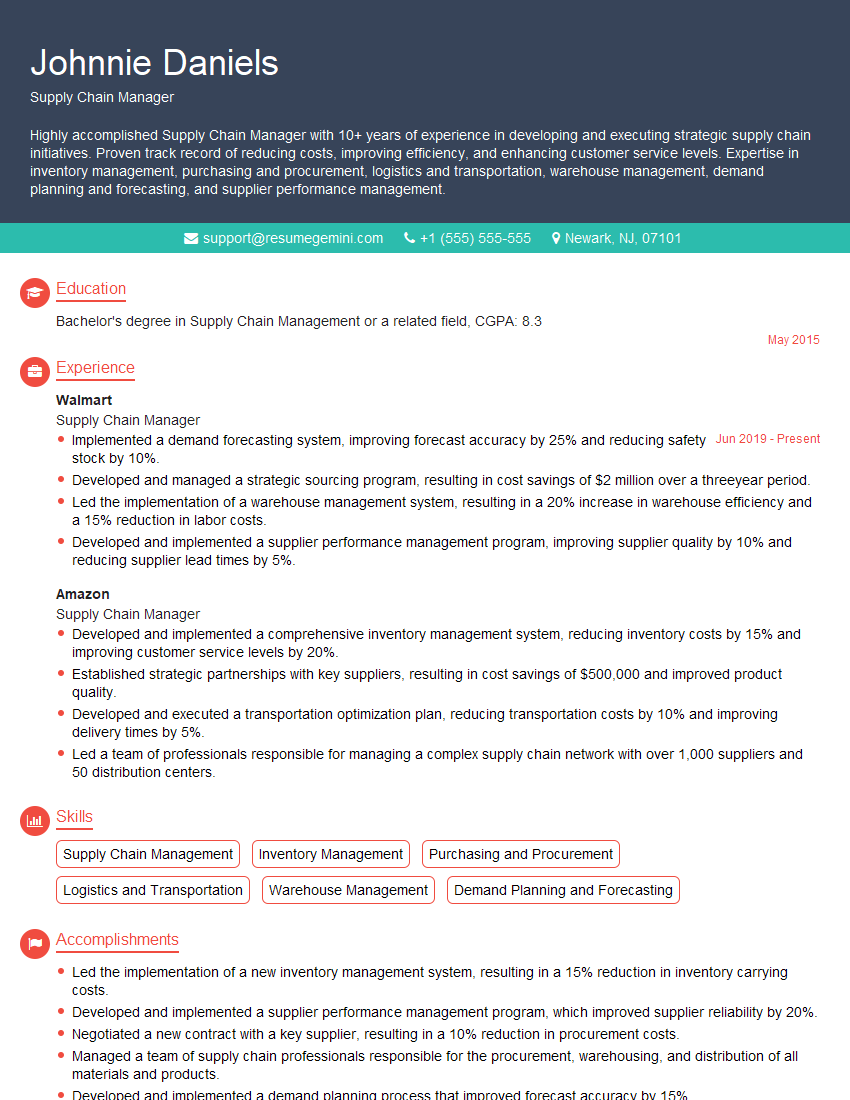
Supply Chain Manager Resume Sample
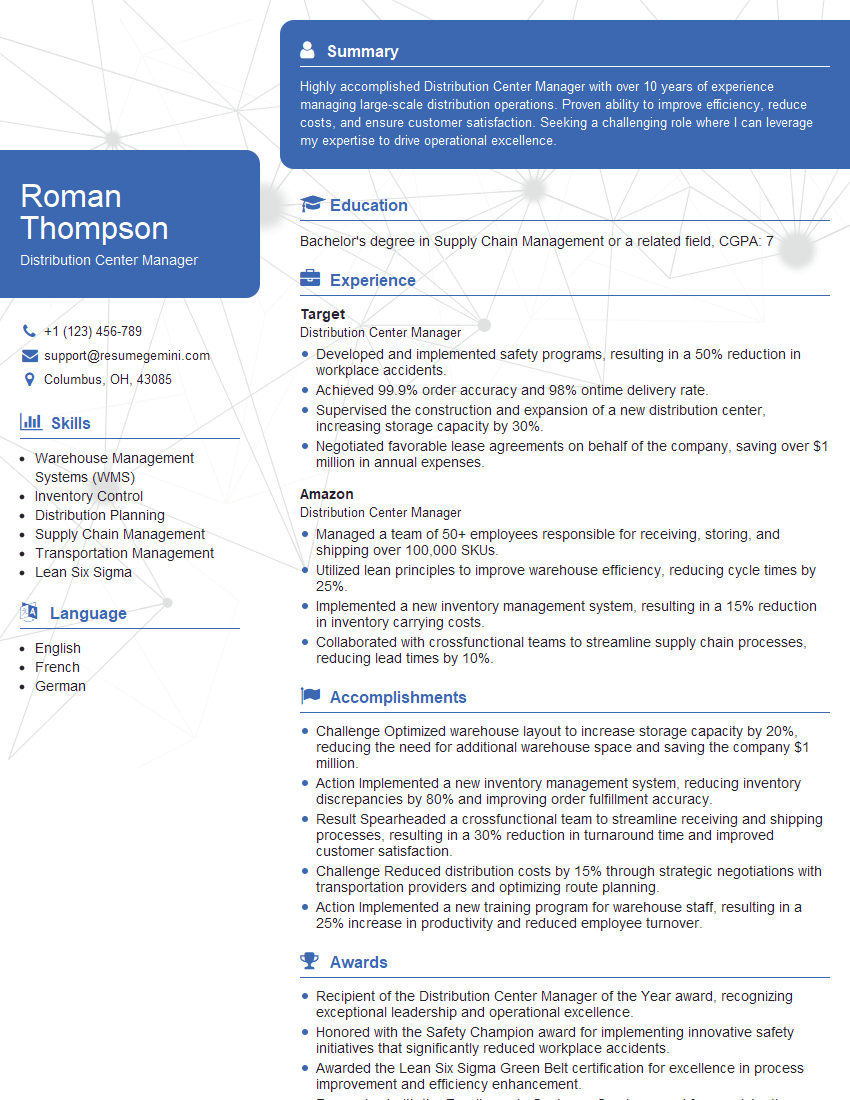
Distribution Center Manager Resume Sample
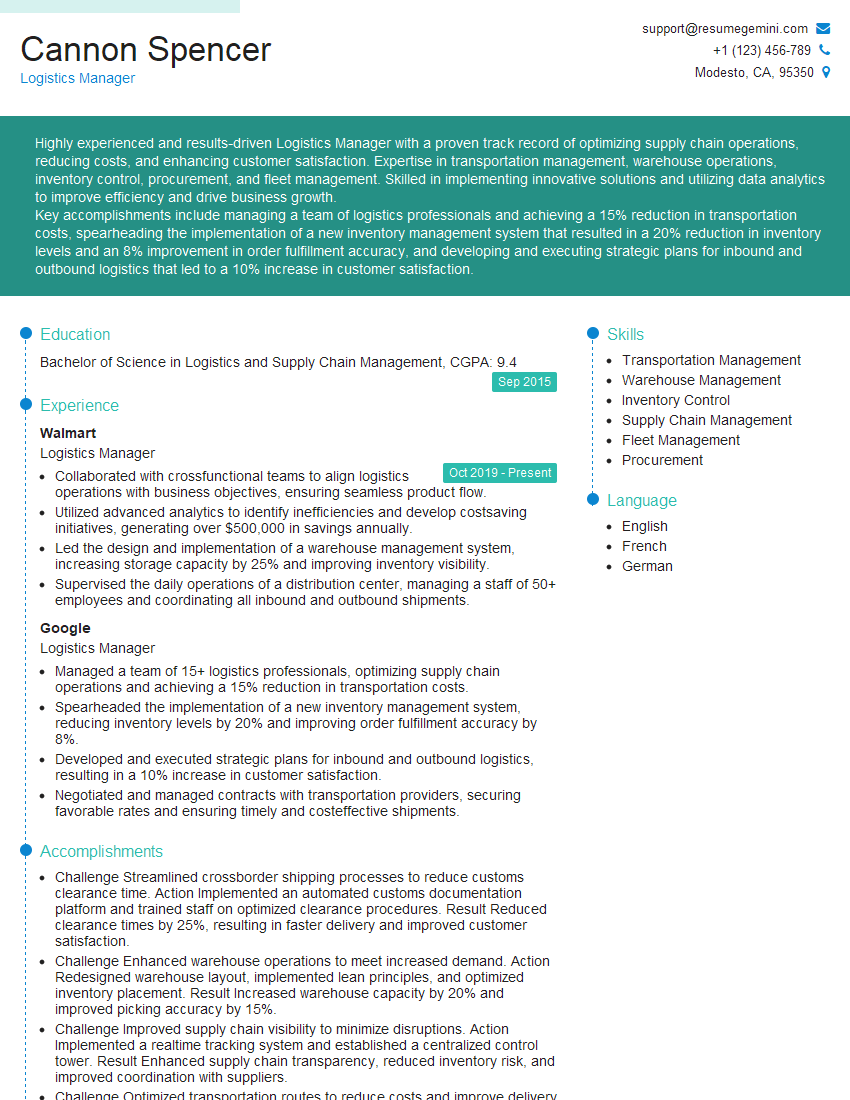
Logistics Manager Resume Sample
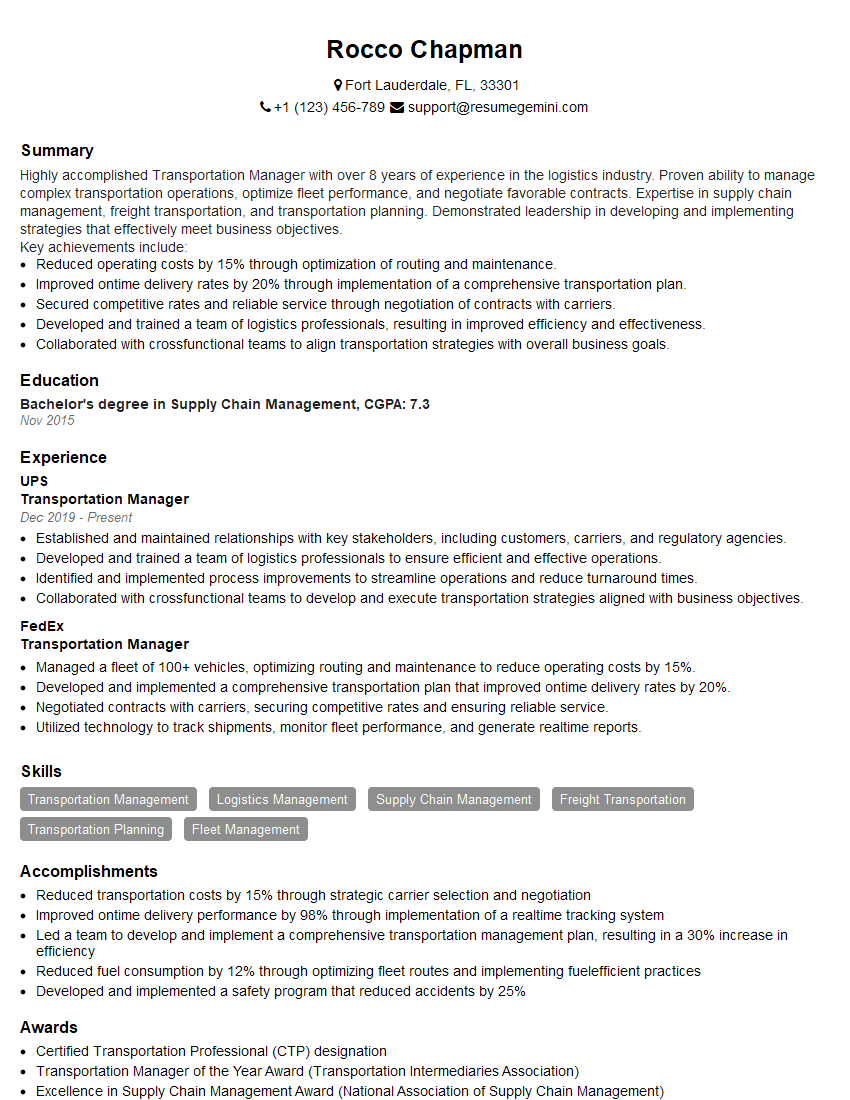
Transportation Manager Resume Sample
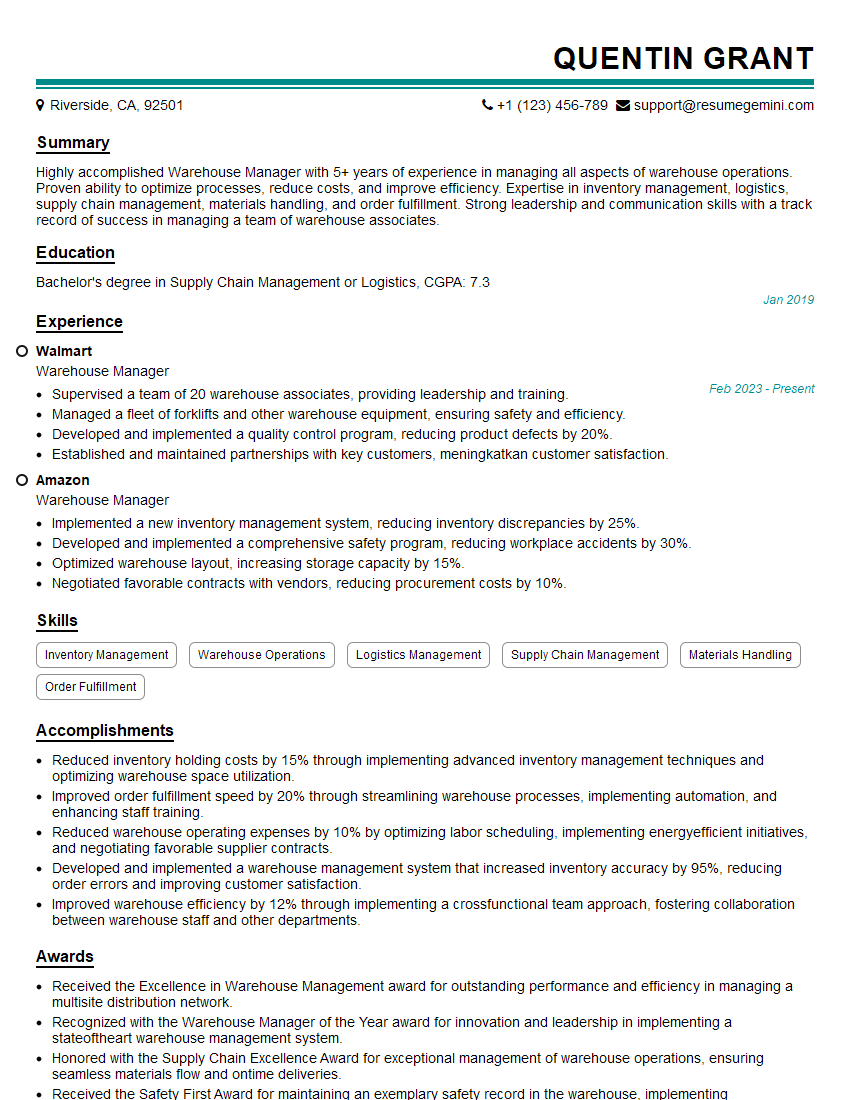
Warehouse Manager Resume Sample
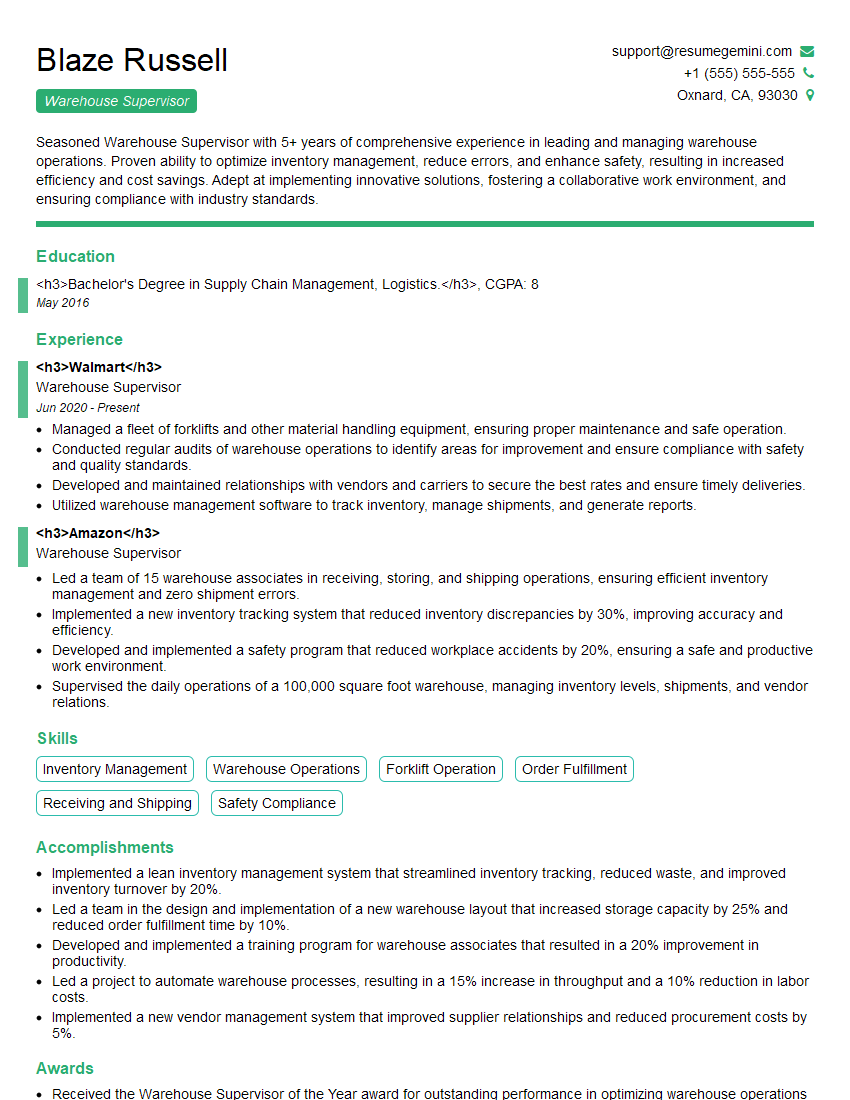
Warehouse Supervisor Resume Sample
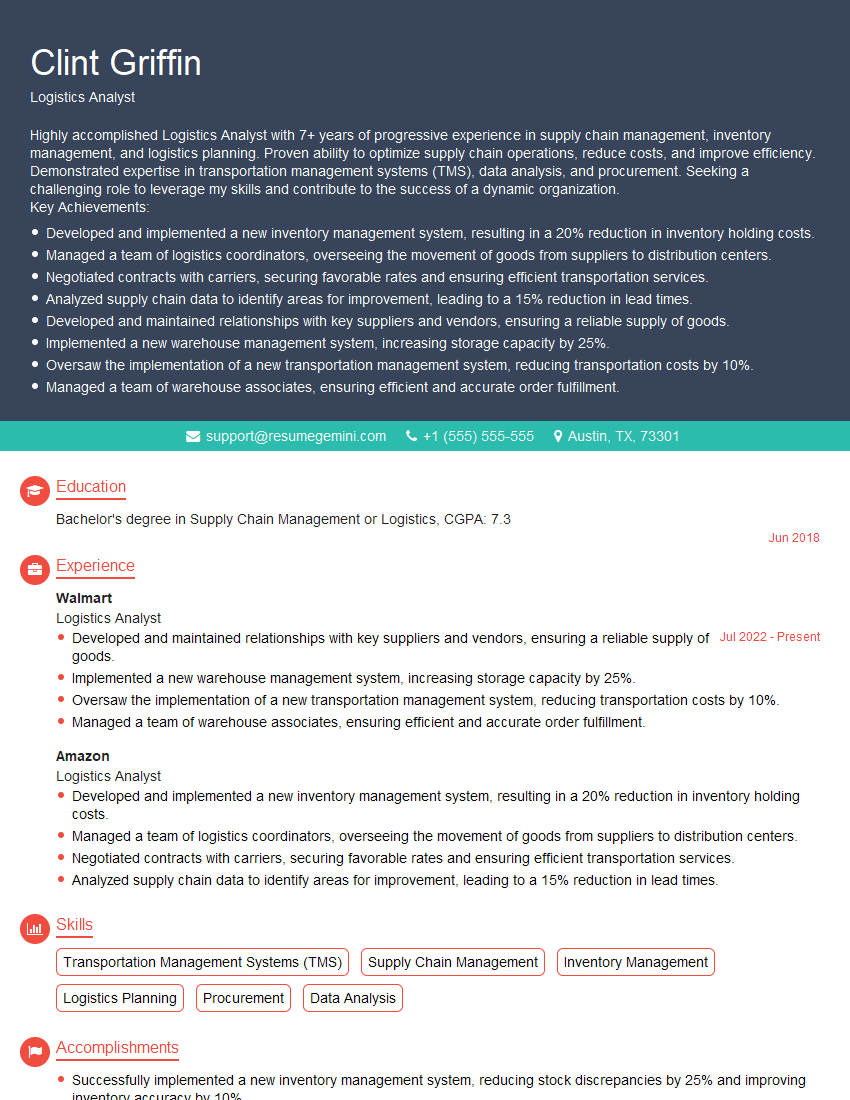
Logistics Analyst Resume Sample
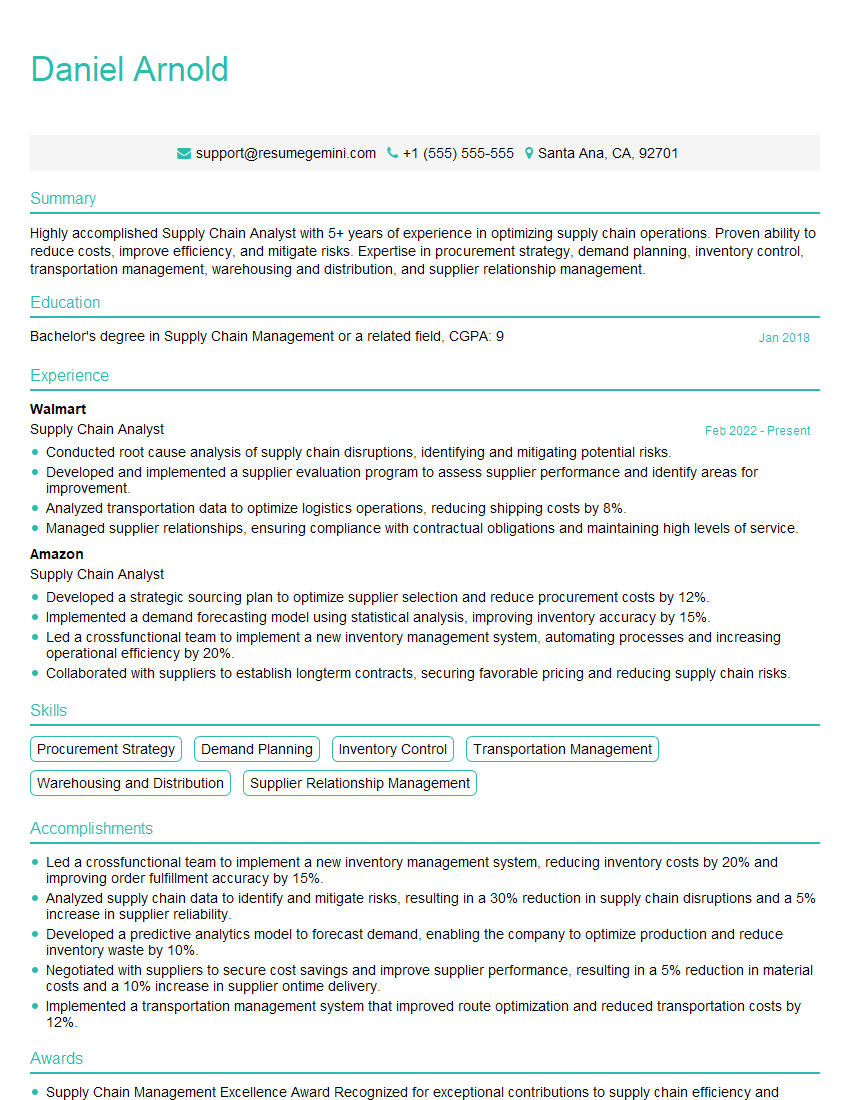
Supply Chain Analyst Resume Sample
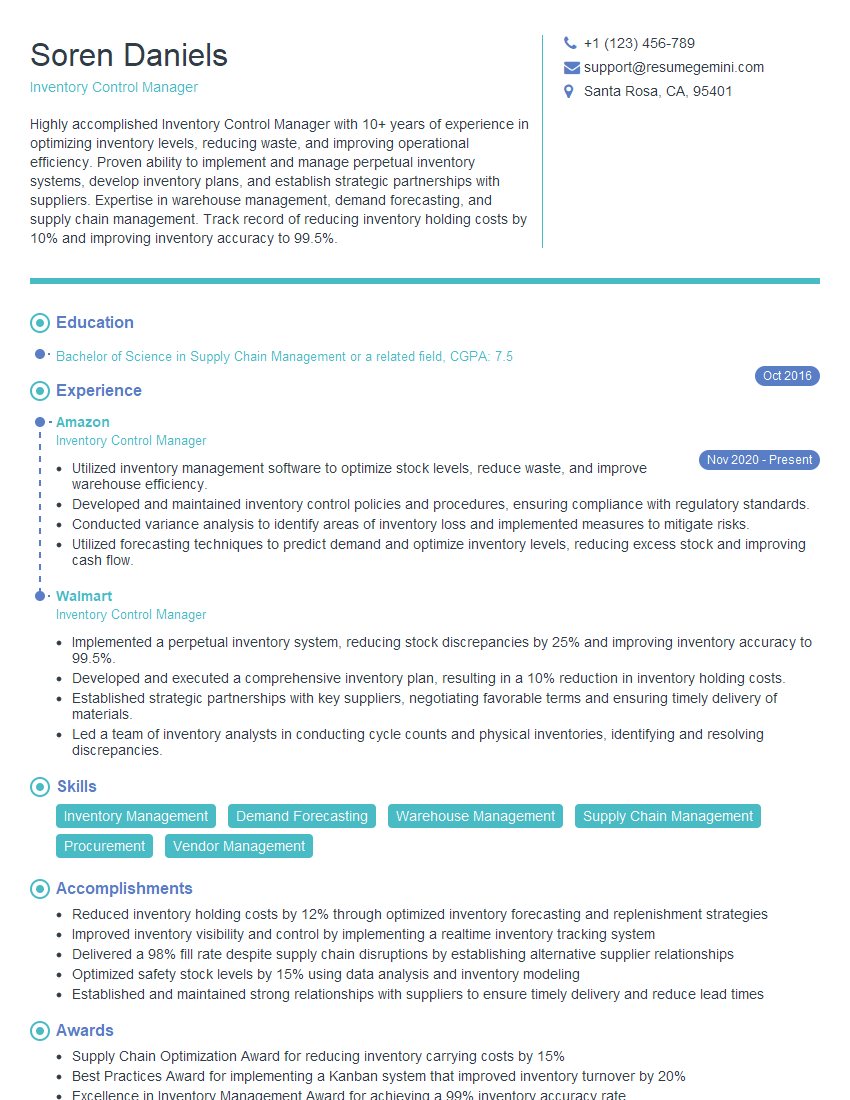
Inventory Control Manager Resume Sample
Explore more articles
Users Rating of Our Blogs
Share Your Experience
We value your feedback! Please rate our content and share your thoughts (optional).
What Readers Say About Our Blog
I Redesigned Spongebob Squarepants and his main characters of my artwork.
https://www.deviantart.com/reimaginesponge/art/Redesigned-Spongebob-characters-1223583608
IT gave me an insight and words to use and be able to think of examples
Hi, I’m Jay, we have a few potential clients that are interested in your services, thought you might be a good fit. I’d love to talk about the details, when do you have time to talk?
Best,
Jay
Founder | CEO