Interviews are opportunities to demonstrate your expertise, and this guide is here to help you shine. Explore the essential Aerial Work Platform (AWP) Inspection and Maintenance interview questions that employers frequently ask, paired with strategies for crafting responses that set you apart from the competition.
Questions Asked in Aerial Work Platform (AWP) Inspection and Maintenance Interview
Q 1. What are the main components of a scissor lift?
Scissor lifts, also known as scissor platforms, are relatively simple machines, but their effectiveness relies on several key components working in harmony. Think of them as a giant pair of scissors lifting a platform.
- Scissor Mechanism: This is the heart of the lift, a series of interconnected, crisscrossing arms that extend and retract to raise and lower the platform. These arms are usually made of high-strength steel.
- Platform: This is the working surface where personnel and equipment are placed. It’s designed to be stable and level, even at height.
- Hydraulic System: This system uses a pump to pressurize hydraulic fluid, extending the scissor mechanism. A control valve regulates the flow and pressure, allowing for smooth and controlled movement.
- Power Unit: This typically includes an electric motor or an internal combustion engine, providing the power to drive the hydraulic pump.
- Control System: This allows the operator to raise, lower, and maneuver the platform safely. This can be a simple hand-held control or a more sophisticated system with emergency stops and safety features.
- Wheels and Chassis: The chassis provides the base and stability, while wheels allow for easy maneuverability. Outriggers are often included for added stability when the platform is raised.
- Safety Features: These include things like emergency stop buttons, load capacity indicators, and guardrails to ensure safe operation.
Q 2. Describe the different types of boom lifts and their applications.
Boom lifts, also called aerial work platforms (AWPs), offer greater reach and versatility than scissor lifts. They are categorized into several types based on their boom configuration and operation:
- Articulating Boom Lifts: These have a main boom and a secondary boom that can be articulated (bent) at a knuckle joint. This allows for greater reach and maneuverability in tight spaces, like working around corners of buildings. Imagine an elephant’s trunk – that’s a good analogy.
- Telescopic Boom Lifts: These have sections that extend straight out, increasing the reach linearly. Think of a telescope, smoothly extending to reach further. These are great for straight-line access.
- Combination Boom Lifts (Articulating/Telescoping): These combine the features of both articulating and telescopic booms, offering maximum versatility. They offer the reach of a telescopic boom and the maneuverability of an articulating boom.
Applications:
- Articulating Boom Lifts: Ideal for intricate work in tight spaces, such as window washing on multi-story buildings, or maintenance within complex structures.
- Telescopic Boom Lifts: Suited for tasks requiring straight-line access and high lift capacity, such as reaching high points on billboards or construction tasks on large structures.
- Combination Boom Lifts: Versatile machines employed in a range of jobs where both reach and maneuverability are required, like working on complex power lines or building facades.
Q 3. What are the daily, weekly, and monthly inspection requirements for AWPs?
Regular inspections are crucial for maintaining the safety and operational efficiency of AWPs. The frequency and depth of inspections vary depending on usage:
- Daily Inspections: Before each use, a thorough visual check is necessary. This includes inspecting tires, hydraulic fluid levels, control functions, safety devices (alarms, horns, etc.), and checking for any obvious damage or leaks. Think of it as a pre-flight check for an airplane.
- Weekly Inspections: More in-depth checks are required weekly. This might include checking the condition of the outriggers, reviewing the operation of all safety mechanisms under a more rigorous test, and a more detailed examination of hydraulic lines for wear and tear. This would involve a more thorough inspection of all components.
- Monthly Inspections: This involves a comprehensive inspection, often performed by a qualified technician. This might involve operational testing, more in-depth component assessments and potentially functional tests.
Detailed checklists are typically used to document these inspections, ensuring no critical component is overlooked. These checklists often comply with relevant safety standards and regulations.
Q 4. Explain the proper procedures for pre-operational checks on an AWP.
Pre-operational checks are paramount to safe AWP operation. They should be performed meticulously before each use. Here’s a step-by-step procedure:
- Visual Inspection: Check for any visible damage to the machine, including tires, booms, hydraulic lines, and the platform.
- Fluid Levels: Verify the hydraulic fluid level is within the acceptable range. Note any leaks or discoloration.
- Safety Devices: Test all safety features, such as emergency stop buttons, horn, and any load indicators.
- Control Function Testing: Raise and lower the platform slowly, checking for smooth operation and responsiveness. Observe for any unusual sounds or vibrations.
- Outrigger Deployment (if applicable): Extend and retract the outriggers, ensuring they are fully functioning and locked securely in the deployed position.
- Load Capacity: Ensure the total load, including personnel and equipment, does not exceed the AWP’s rated capacity.
- Ground Conditions: Assess the ground conditions to ensure the AWP is on a stable and level surface.
- Surrounding Environment: Check for overhead obstructions, power lines, and any potential hazards in the vicinity.
Once all checks are completed and any issues addressed, the operator should be confident in the safe operation of the AWP.
Q 5. How do you identify and address hydraulic fluid leaks in an AWP?
Hydraulic fluid leaks can be serious, compromising safety and machine performance. The first step is identifying the source. Use a combination of visual inspection, and careful examination of the surrounding environment.
- Visual Inspection: Carefully examine all hydraulic hoses, fittings, cylinders, and the reservoir for any signs of leakage – wet spots, dripping fluid, or staining.
- Check Fluid Type & Colour: Note the colour and consistency of the fluid. Discoloration might indicate contamination, which could be a contributing factor to the leak.
- Locate the Leak: Once you’ve found the leak, try to pinpoint the exact source – a damaged hose, a loose fitting, or a leak from a cylinder seal.
- Assess the Severity: Determine the extent of the leak – a minor seep versus a major leak.
- Repair or Replacement: Depending on the severity and location of the leak, repairs may involve tightening loose fittings, replacing damaged hoses, or requiring more extensive repairs by a qualified technician. Never attempt repairs beyond your expertise; a significant leak could cause damage or injury.
Important: Always use the correct type of hydraulic fluid specified by the manufacturer. Incorrect fluid can damage the system.
Q 6. What are the common causes of electrical malfunctions in aerial lifts?
Electrical malfunctions in AWPs can stem from several sources, impacting safety and operational capability.
- Damaged Wiring: Chafing, abrasion, or rodent damage to wiring harnesses can cause shorts, open circuits, and intermittent failures.
- Loose Connections: Poorly connected terminals or corroded connections can lead to voltage drops and unreliable operation.
- Faulty Switches and Controls: Wear and tear on switches, buttons, and potentiometers can result in inconsistent or complete failure of the control system.
- Motor Problems: Motor windings can fail, leading to loss of power or complete motor failure.
- Battery Issues (for electric AWPs): Low battery charge, damaged cells, or corroded terminals can affect the power supply to the system.
- Environmental Factors: Exposure to moisture, dust, and extreme temperatures can damage electrical components.
Regular inspection and maintenance are key to preventing electrical malfunctions, including checking the condition of wiring and connections.
Q 7. How do you troubleshoot a malfunctioning AWP control system?
Troubleshooting a malfunctioning AWP control system is best performed by a qualified technician, due to the complexity of electrical and hydraulic interconnections. However, initial diagnosis involves systematic checks.
- Safety First: Ensure the AWP is de-energized before starting any troubleshooting.
- Check the Obvious: Start by examining obvious things like blown fuses, tripped circuit breakers or any obvious damage to the control panel.
- Visual Inspection of Wiring and Connections: Check for signs of damage or loose connections in the wiring harnesses leading to the control system.
- Test Control Switches and Buttons: Inspect and test all switches and buttons in the control system to determine if signals are being transmitted correctly. A multimeter can help here.
- Hydraulic System Check: If the issue seems related to movement, investigate the hydraulic system. Look for leaks, low hydraulic fluid levels or other hydraulic issues.
- Consult Service Manuals: Use the manufacturer’s service manuals to understand the wiring diagrams, component locations, and diagnostic procedures.
- Call for Expert Help: If the problem persists, contact a qualified technician to diagnose and repair the malfunction.
Improper troubleshooting can exacerbate the problem, possibly creating safety hazards. Unless you have a deep understanding of electrical and hydraulic systems, it’s best to leave it to the professionals.
Q 8. Describe the safety procedures for working at heights with AWPs.
Working at heights with Aerial Work Platforms (AWPs) demands rigorous safety protocols. Think of it like climbing a mountain – proper preparation and adherence to guidelines are crucial for a safe ascent and descent. Before even starting, a thorough pre-operational inspection is mandatory. This includes checking all safety devices like harnesses, lanyards, and fall arrest systems, ensuring they are in perfect working order and correctly attached. The AWP itself needs a detailed inspection, covering hydraulics, controls, and emergency systems. Only after this is the machine deemed safe for operation.
During operation, always ensure the AWP is on a stable, level surface. Avoid overloading the platform – exceeding the weight limit drastically increases the risk of tipping. Maintain three points of contact when moving around the platform, and never reach beyond the platform’s perimeter. Secure all tools and materials to prevent them from falling. Furthermore, constant awareness of surrounding obstacles and environmental factors like wind speeds is critical. Communication with ground personnel is essential to coordinate movements and avoid collisions. Finally, a detailed post-operational inspection is just as important as the pre-operational one, identifying any issues that might have arisen during work.
- Pre-operational checks: Hydraulic fluid levels, control functionality, safety device integrity.
- Operational procedures: Three points of contact, load limits, environmental awareness.
- Post-operational checks: Any damage, leaks, unusual noises.
Q 9. What are the limitations and safe working loads for different AWP types?
AWP safe working loads (SWLs) and limitations vary drastically depending on the type of machine. Think of it like choosing the right tool for the job – a small screwdriver won’t work for removing a large bolt. Scissor lifts, for example, have lower lifting capacities and narrower working envelopes than boom lifts. Boom lifts, which extend outwards, have diverse SWLs based on the boom’s configuration and extension. Articulated boom lifts can reach intricate areas, but their SWLs decrease as the boom extends and angles.
Manufacturer specifications provide detailed SWLs for each AWP model. These specifications clearly define weight limits, both for the platform and the overall machine. Operating manuals provide tables showing how the SWL changes depending on boom angle and extension. Exceeding these limits significantly increases the risk of structural failure or tipping, leading to potential injury or death. It’s crucial to consult the operator’s manual and always remain within the defined SWL to ensure safe operation.
- Scissor Lifts: Typically have lower SWLs compared to boom lifts and limited horizontal reach.
- Boom Lifts (Articulated & Telescopic): SWLs vary depending on the boom extension and angle. Always consult the manufacturer’s charts.
- Manufacturer Data: Essential for determining correct SWLs for different configurations.
Q 10. Explain the importance of regular lubrication and maintenance of AWP components.
Regular lubrication and maintenance are paramount to ensuring AWP longevity and safety. Imagine a car engine – without regular oil changes, vital components wear out quickly and cause failure. Similarly, AWPs rely on smooth-running moving parts and hydraulic systems that need regular lubrication to minimize friction and wear. This reduces the risk of mechanical failure during operation and extends the lifespan of expensive components.
Lack of lubrication can cause parts to seize, leading to unpredictable breakdowns and potential safety hazards. For example, neglecting to lubricate the boom’s articulation points can lead to stiff movement, causing difficulties in operation or potentially damage to the machine. Scheduled lubrication, following manufacturer recommendations, prevents this. Routine maintenance also includes inspecting hydraulic lines for leaks, checking hydraulic fluid levels, and ensuring the correct fluid type is used. This proactive approach significantly reduces the chances of costly repairs or catastrophic failures.
- Hydraulic Systems: Regular fluid checks and changes are crucial for preventing leaks and maintaining pressure.
- Moving Parts: Lubrication prevents wear and tear, ensuring smooth operation.
- Manufacturer Recommendations: Always adhere to the specific lubrication schedules outlined in the operator’s manual.
Q 11. How do you inspect and maintain the emergency lowering system on a boom lift?
The emergency lowering system on a boom lift is a critical safety feature. Think of it as a backup parachute – hopefully you never need it, but it’s there if things go wrong. Regular inspection and maintenance of this system are crucial for ensuring it functions properly in an emergency.
Inspection involves visually checking the system’s components for damage or wear. This includes examining the lowering valve, control lines, and the ropes or chains that control the descent. A functional test, simulating an emergency lowering, should be performed periodically, adhering to the manufacturer’s instructions. This test verifies the system’s ability to lower the platform safely even with power failure. Any signs of damage or malfunction necessitate immediate repair by qualified personnel. The emergency lowering system log should meticulously record all inspections and tests.
- Visual Inspection: Check for damage, corrosion, or wear on all components.
- Functional Test: Simulate an emergency lowering to verify proper functionality. (This should be done under controlled conditions, with appropriate safety precautions).
- Record Keeping: Maintain a detailed log of all inspections and tests.
Q 12. What are the signs of a worn or damaged AWP component that needs immediate replacement?
Recognizing signs of worn or damaged AWP components is crucial for preventing accidents. Think of it like noticing a crack in a car’s windshield – a small crack might not seem urgent, but ignoring it can lead to a catastrophic failure. Signs of damage can range from subtle to obvious. Obvious signs include significant cracks or fractures in structural members, significant hydraulic leaks, or severely worn tires. These demand immediate replacement.
Subtler signs require careful attention. These can include unusual noises (creaking, grinding), sluggish or jerky movements of the boom, hydraulic fluid discoloration, and excessive play in moving parts. Any signs of damage or unusual behavior should never be ignored. A thorough inspection by a qualified technician is necessary to assess the severity of the damage and determine whether replacement or repair is needed. Remember, neglecting even seemingly minor issues can lead to serious consequences.
- Obvious Signs: Cracks, fractures, significant leaks, worn tires.
- Subtle Signs: Unusual noises, sluggish movements, fluid discoloration, excessive play in components.
- Immediate Action: If any of these are found, the AWP should be removed from service until properly inspected and repaired.
Q 13. How do you conduct a thorough inspection of the AWP’s tires and wheels?
A thorough inspection of an AWP’s tires and wheels is crucial for safety. Imagine driving a car with worn-out tires – you’re asking for trouble. Similarly, damaged or worn tires and wheels on an AWP can lead to instability, tire failure, and accidents. The inspection begins with a visual check for any obvious damage: cuts, punctures, bulges, or excessive wear on the tread. The tire pressure should be checked and adjusted to the manufacturer’s specifications. This should be done using a properly calibrated pressure gauge. The wheels themselves need to be inspected for any cracks, bends, or loose lug nuts. Any signs of damage should be addressed immediately; worn tires must be replaced.
Beyond the visual inspection, a practical check should be performed. Carefully rotate the wheels and check for any abnormal play, unusual noises, or signs of uneven wear. If there is any wobble or play in the wheel assembly, this indicates a problem requiring attention from a qualified technician. Remember, regularly scheduled inspections, with accurate record-keeping, are essential for maintaining the AWP’s roadworthiness and operator safety.
- Visual Inspection: Check for cuts, punctures, bulges, uneven wear, and cracks in the wheels.
- Tire Pressure: Check and adjust to manufacturer’s specifications.
- Wheel Play: Check for any play or wobble in the wheel assembly.
Q 14. What are the legal and regulatory requirements for AWP operation and maintenance in your region?
Legal and regulatory requirements for AWP operation and maintenance vary depending on location. However, several common principles apply across most jurisdictions. These often involve licensing and certification requirements for operators, stringent safety regulations during operation and maintenance and mandatory regular inspections. In many areas, operators require specific training and certification to demonstrate their competence in operating AWPs safely. These certifications often involve both theoretical and practical assessments, ensuring operators understand the machine’s capabilities and limitations.
Regular inspections, often mandated by law, are essential. These inspections cover various aspects of the AWP, including its structural integrity, safety systems, and operational functionality. Comprehensive maintenance records must be kept, documenting all inspections, repairs, and maintenance activities. Failure to comply with these regulations can result in significant penalties, including fines, suspension of operations, and even criminal charges in cases of accidents caused by negligence. Always consult the relevant authorities in your region to understand the specific legal and regulatory requirements for AWP operation and maintenance.
- Operator Certification: Most regions require certified operators.
- Regular Inspections: Mandatory inspections to ensure safety and compliance.
- Maintenance Records: Detailed records of all maintenance and repair work.
- Compliance: Strict adherence to all regulations to avoid penalties.
Q 15. How do you interpret and apply the information found on an AWP’s data plate?
The data plate on an Aerial Work Platform (AWP) is crucial; it’s like the AWP’s identity card. It provides vital information needed for safe operation and maintenance. Interpreting it involves carefully reading each detail. Key information includes the manufacturer, model number, serial number, working load limit (WLL), maximum platform capacity, and stability criteria (outrigger deployment requirements). For example, the WLL tells you the maximum weight the platform can safely hold, including the workers, tools, and materials. Understanding the stability criteria is essential for setting up the AWP safely, preventing tipping. Failure to correctly interpret this information can lead to accidents. I always check this plate first before any operation or maintenance task, confirming it matches my maintenance records.
Career Expert Tips:
- Ace those interviews! Prepare effectively by reviewing the Top 50 Most Common Interview Questions on ResumeGemini.
- Navigate your job search with confidence! Explore a wide range of Career Tips on ResumeGemini. Learn about common challenges and recommendations to overcome them.
- Craft the perfect resume! Master the Art of Resume Writing with ResumeGemini’s guide. Showcase your unique qualifications and achievements effectively.
- Don’t miss out on holiday savings! Build your dream resume with ResumeGemini’s ATS optimized templates.
Q 16. What are the different types of AWP stabilizers and how do they function?
AWP stabilizers are crucial for ensuring stability and preventing tipping. Different types exist, each with its own mechanism:
- Outriggers: These are the most common type, extending hydraulically or manually from the chassis. They provide a wide, stable base, increasing the AWP’s stability significantly. Think of them as extra legs, broadening the support area. Proper extension and leveling are essential.
- Jacks: Some AWPs use jacks for additional stabilization, often used in conjunction with outriggers. They provide a more precise way to level the platform on uneven ground. They’re critical for situations where ground conditions are less than ideal.
- Self-leveling systems: These sophisticated systems automatically adjust the platform’s level, even on uneven terrain. They use sensors and hydraulics to maintain a stable position. While convenient, regular inspection of these systems is essential.
The choice of stabilizer depends on the AWP’s design and intended use. Before using any AWP, I thoroughly inspect the stabilizers for damage and ensure they are properly deployed according to the manufacturer’s instructions. It’s a non-negotiable safety step.
Q 17. Explain the procedures for safely disconnecting and connecting an AWP to a power source.
Connecting and disconnecting an AWP from a power source must always follow strict safety procedures. Improper handling can lead to electric shock or equipment damage.
- Disconnecting: Always turn off the AWP’s power switch before disconnecting the power cord. Then, grasp the plug, not the cord, and firmly pull it from the outlet. Ensure the power cord is stored properly to prevent damage.
- Connecting: Before plugging in, inspect the power cord and outlet for any damage. Ensure the voltage rating of the power source matches the AWP’s requirements (clearly stated on the data plate). Plug the cord firmly into the outlet. Only then should you turn on the AWP’s power switch, checking for any abnormal operation.
In the field, I always double-check both connections and visually examine the cord for wear and tear before and after every use. I’ve seen equipment damaged from loose connections; diligent practice prevents that.
Q 18. What are the potential hazards associated with operating an AWP in adverse weather conditions?
Adverse weather significantly impacts AWP operation, creating numerous hazards. Strong winds can easily topple the AWP, especially at height. Rain and snow can reduce traction and make the platform slippery, increasing the risk of falls. Ice can make the ground incredibly unstable, compromising the AWP’s base. High winds can also affect the stability of the AWP and make it difficult to control. Lightning strikes pose a significant risk of electrocution. Fog and low visibility impair the operator’s sight, making it difficult to maneuver safely. I always ensure to check weather conditions before commencement and cease operation as needed, even suspending it if there’s any doubt about safety.
Q 19. How do you handle a situation where an AWP malfunction occurs during operation?
If an AWP malfunction occurs, immediate and calm action is critical. The first step is to immediately shut down the machine using the emergency stop button if available. Then, carefully lower the platform to the ground, ensuring everyone is safely evacuated. Next, I would assess the situation, checking for any injuries and ensuring the area is secure. After that, depending on the nature of the malfunction, I would either attempt minor repairs (if I’m qualified and it’s safe to do so) or report the malfunction to a qualified technician, ensuring the AWP is properly tagged out of service. Document everything meticulously. I once had a hydraulic leak, we immediately shut down the machine, evacuated personnel and contacted the relevant parties.
Q 20. Describe your experience with different types of AWP diagnostics tools.
My experience encompasses various AWP diagnostic tools, from simple visual inspections to sophisticated electronic diagnostic systems. Basic tools include multimeters for electrical checks, pressure gauges for hydraulic systems, and leak detectors. More advanced systems allow for detailed analysis of hydraulic and electrical components, providing codes and data that assist with troubleshooting and repair. For example, I’ve used diagnostic software that connects to the AWP’s onboard computer, providing real-time data on hydraulic pressure, motor currents and operational parameters, allowing for proactive identification of potential problems. I firmly believe in a multi-faceted approach, always starting with basic visual checks, before employing more advanced diagnostic systems.
Q 21. What is your understanding of lockout/tagout procedures for AWP maintenance?
Lockout/Tagout (LOTO) procedures are paramount for AWP maintenance. LOTO is a safety procedure used to prevent accidental energy release during maintenance or repair work. The procedure ensures that the power and any other potential energy sources to the AWP are isolated and cannot be accidentally reactivated. This involves identifying all energy sources, installing lockout devices (locks), and tagging the AWP to clearly indicate that it is out of service. Each step is documented. It’s a collaborative process; each technician involved in the work must participate in the LOTO procedure. Failure to properly follow LOTO can result in serious injury or death. I’ve witnessed many LOTO procedures which ensures compliance and safety in our workshop.
Q 22. What are the different types of AWP failure modes and their root causes?
AWP failure modes stem from various causes, broadly categorized into mechanical, hydraulic, electrical, and structural issues. Mechanical failures might involve worn-out components like cylinders, sheaves, or pivot points, often due to lack of lubrication or excessive wear and tear. Hydraulic failures, frequently caused by leaks, contamination, or pump malfunctions, can lead to loss of lifting power or control. Electrical faults, arising from damaged wiring, faulty switches, or short circuits, can result in power loss or malfunction of safety systems. Structural failures, often linked to corrosion, overloading, or impact damage, can compromise the entire platform’s integrity.
- Example: A sheared pin in a boom lift’s articulation point (mechanical) could be traced back to insufficient preventive maintenance or overloading.
- Example: A slow leak in a hydraulic hose (hydraulic) could stem from age, abrasion, or improper installation.
- Example: A malfunctioning emergency stop button (electrical) could be due to worn-out contacts or water ingress.
Root cause analysis is crucial; simply replacing a failed component won’t solve the problem if the underlying cause remains. We must investigate why the component failed in the first place.
Q 23. How do you ensure compliance with OSHA (or relevant local) safety regulations for AWPs?
Ensuring OSHA compliance for AWPs involves a multi-faceted approach. It begins with a thorough understanding of all relevant standards, including regular inspections and training programs for all operators. This necessitates creating and implementing a comprehensive safety program. This includes pre-operational inspections, which cover everything from structural integrity to hydraulic fluid levels, and operational checklists to ensure safe operation. Regular operator training is essential, covering safe operating procedures, emergency protocols, and recognizing hazards. Detailed maintenance logs are critical to track repairs and preventative measures, demonstrating compliance to auditors.
Regular audits are essential to ensure our safety programs remain effective and compliant. I personally oversee this process, working to identify areas for improvement and address any deficiencies promptly.
Q 24. Describe your experience with preventative maintenance scheduling for AWPs.
Preventative maintenance scheduling is planned around manufacturer recommendations and usage frequency. We use a computerized maintenance management system (CMMS) to track all maintenance activities, generating automated alerts for upcoming inspections or scheduled maintenance. The CMMS allows for efficient scheduling of preventative maintenance tasks, such as lubrication of moving parts, fluid level checks, and visual inspections, ensuring optimal operational lifespan and minimizing downtime.
Our scheduling prioritizes critical safety systems and components. For instance, emergency stop systems receive more frequent attention than less critical parts. The schedule is dynamic, adapting to usage patterns and identified issues during inspections.
Q 25. What are the key performance indicators (KPIs) you would use to track AWP maintenance effectiveness?
Effective AWP maintenance is tracked using several KPIs:
- Mean Time Between Failures (MTBF): This metric measures the average time between equipment failures, indicating the reliability of our maintenance program.
- Mean Time To Repair (MTTR): This reflects our efficiency in repairing or resolving equipment issues, crucial for minimizing downtime.
- Maintenance Cost per Operating Hour: Tracks the cost-effectiveness of our maintenance strategy, guiding us toward optimal maintenance frequency and resource allocation.
- Number of Safety Incidents Related to AWPs: Directly shows the impact of maintenance on workplace safety. A low number indicates effective safety procedures.
By monitoring these KPIs, we can make data-driven adjustments to our maintenance schedules and resource allocation to optimize performance and reduce costs while ensuring safety.
Q 26. How do you stay up-to-date with the latest advancements and technologies in AWP maintenance?
Staying current requires a proactive approach. I regularly attend industry conferences and workshops, participate in online training courses, and subscribe to industry-specific journals and publications. Manufacturer updates and safety bulletins are critically reviewed. Furthermore, I actively engage with professional organizations to share best practices and learn from other experts in the field.
Membership in professional organizations ensures access to the latest industry standards and research findings. This constant learning is vital to ensure we are employing the most effective and safest maintenance practices.
Q 27. Explain your experience with documenting AWP inspections and maintenance activities.
Documentation is meticulously maintained using a combination of digital and paper-based records. Every inspection and maintenance activity is thoroughly documented, including date, time, technician name, specifics of the work performed, and any parts replaced. Digital records are stored securely in a CMMS, providing easy access and audit trails. Paper-based records are used to supplement digital records, particularly for documenting visual inspections where photographs are included.
This comprehensive documentation ensures traceability and accountability, supporting compliance audits and facilitating effective troubleshooting in the future.
Q 28. Describe a time you had to troubleshoot a complex AWP problem. What was the solution?
I once encountered a boom lift that experienced intermittent power loss. The initial diagnosis pointed towards a faulty battery, but replacing it didn’t solve the problem. The power loss was inconsistent; sometimes it occurred during operation, other times not. After systematically checking the entire electrical system – including wiring, switches, and control boxes – I discovered a loose connection in the main power cable hidden within a conduit. This connection was subject to vibration during operation, causing intermittent breaks in the circuit.
The solution was straightforward: secure the connection properly, using appropriate sealant and reinforcement to prevent future movement. This highlights the importance of thorough, systematic troubleshooting, paying attention to even seemingly insignificant details, and not jumping to conclusions based on initial observations.
Key Topics to Learn for Aerial Work Platform (AWP) Inspection and Maintenance Interview
- AWP Types and Classifications: Understanding different AWP types (boom lifts, scissor lifts, etc.) and their respective applications, limitations, and safety regulations.
- Pre-Operational Inspections: Mastering the comprehensive checklist for pre-use inspections, including hydraulic systems, electrical components, emergency stops, and structural integrity. Practical application: Knowing how to identify and report potential hazards before operation.
- Daily, Weekly, and Monthly Maintenance Procedures: Understanding the frequency and scope of different maintenance tasks, including lubrication, cleaning, and component checks. Practical application: Developing a routine maintenance schedule and adhering to manufacturer’s recommendations.
- Hydraulic Systems: Knowledge of hydraulic fluid levels, pressure testing, leak detection, and troubleshooting hydraulic system failures. Practical application: Diagnosing and repairing common hydraulic problems.
- Electrical Systems: Understanding wiring diagrams, troubleshooting electrical faults, and ensuring compliance with electrical safety regulations. Practical application: Identifying and resolving issues with power, controls, and lighting.
- Safety Regulations and Compliance: Thorough knowledge of OSHA (or relevant regional) regulations pertaining to AWP operation, maintenance, and safety. Practical application: Ensuring all work is conducted in accordance with safety protocols.
- Troubleshooting and Repair Techniques: Ability to diagnose and repair common AWP malfunctions, including mechanical, hydraulic, and electrical issues. Practical application: Effectively using diagnostic tools and procedures to identify and resolve problems quickly and safely.
- Documentation and Record Keeping: Understanding the importance of accurate and thorough documentation of inspections, maintenance, and repairs. Practical application: Maintaining detailed logs and reports for compliance and traceability.
Next Steps
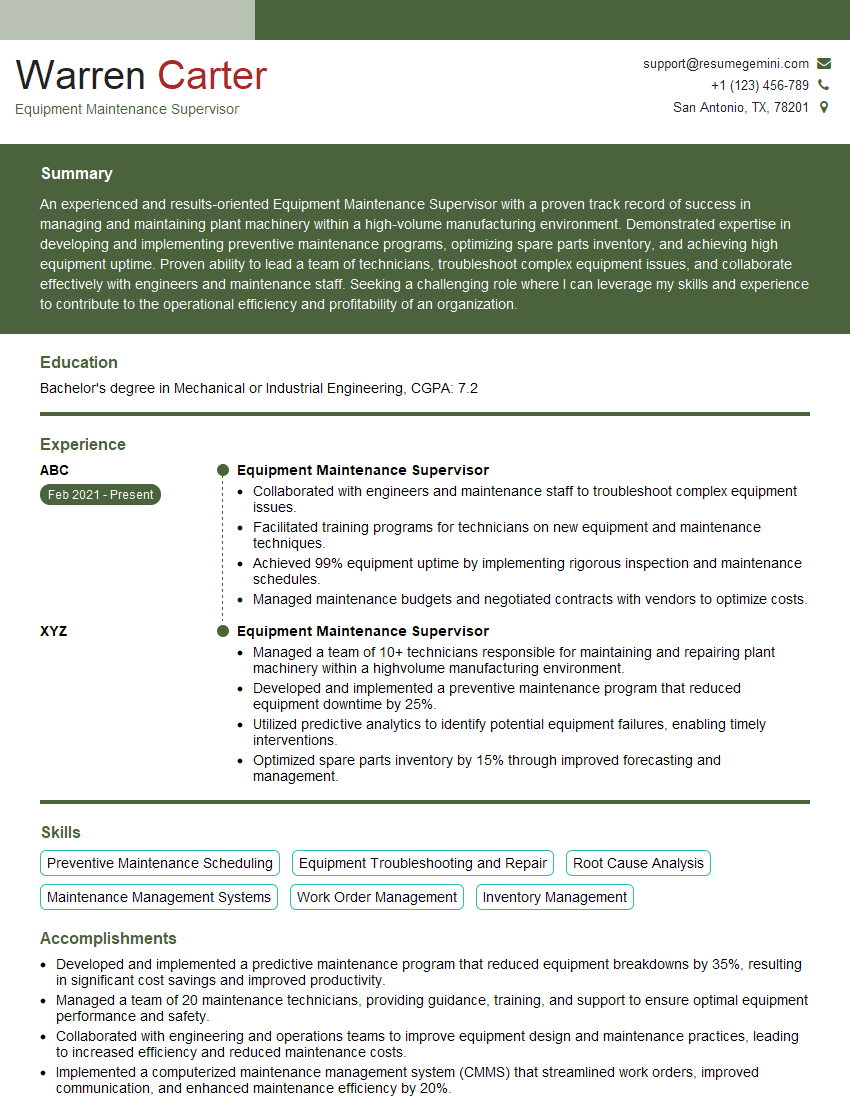
Mastering Aerial Work Platform Inspection and Maintenance is crucial for career advancement in this essential and growing industry. Demonstrating your expertise through a strong resume is key to landing your dream job. Creating an ATS-friendly resume will significantly improve your chances of getting your application noticed by potential employers. We highly recommend using ResumeGemini to build a professional and effective resume. ResumeGemini offers valuable tools and resources, including examples of resumes tailored to Aerial Work Platform (AWP) Inspection and Maintenance roles, to help you present your skills and experience in the best possible light.
Explore more articles
Users Rating of Our Blogs
Share Your Experience
We value your feedback! Please rate our content and share your thoughts (optional).
What Readers Say About Our Blog
I Redesigned Spongebob Squarepants and his main characters of my artwork.
https://www.deviantart.com/reimaginesponge/art/Redesigned-Spongebob-characters-1223583608
IT gave me an insight and words to use and be able to think of examples
Hi, I’m Jay, we have a few potential clients that are interested in your services, thought you might be a good fit. I’d love to talk about the details, when do you have time to talk?
Best,
Jay
Founder | CEO