The right preparation can turn an interview into an opportunity to showcase your expertise. This guide to Airfreight Forwarding interview questions is your ultimate resource, providing key insights and tips to help you ace your responses and stand out as a top candidate.
Questions Asked in Airfreight Forwarding Interview
Q 1. Explain the difference between an Air Waybill (AWB) and a House Air Waybill (HAWB).
The Air Waybill (AWB) and House Air Waybill (HAWB) are both crucial documents in air freight, but they serve different purposes and represent different levels of responsibility. Think of it like this: the AWB is the master document, while the HAWB is a sub-document.
An AWB, or Master Air Waybill, is issued by the airline directly to the freight forwarder. It’s a legally binding contract outlining the terms and conditions of carriage between the airline and the freight forwarder acting as the shipper. It contains all the shipment details, including the cargo description, weight, dimensions, origin, destination, and the carrier’s responsibilities. Essentially, it’s the airline’s receipt and proof of carriage.
A HAWB, or House Air Waybill, is issued by the freight forwarder to their client (the shipper). The freight forwarder acts as a consolidator, combining smaller shipments from multiple clients into one larger shipment for more cost-effective transport. The HAWB serves as a receipt for the client and details their portion of the consolidated cargo. It’s not a direct contract with the airline; instead, it’s a contract between the freight forwarder and their client.
In short: The AWB is between the airline and the freight forwarder; the HAWB is between the freight forwarder and the client. The freight forwarder uses the HAWB to manage multiple shipments under a single AWB.
Q 2. Describe the Incoterms rules relevant to air freight.
Incoterms rules define responsibilities for the seller and buyer in international trade, including who handles costs and risks. Several Incoterms are relevant to air freight, and the most commonly used are:
- FCA (Free Carrier): The seller delivers the goods, cleared for export, to the carrier designated by the buyer at a named place. The buyer handles costs and risks from this point onwards.
- CPT (Carriage Paid To): The seller delivers the goods, cleared for export, to the carrier and pays for carriage to the named place of destination. The buyer bears the risks from the point of delivery.
- CIP (Carriage and Insurance Paid to): Similar to CPT, but the seller also procures insurance for the goods during carriage. Risk transfer is the same as CPT.
- DAP (Delivered at Place): The seller delivers the goods, uncleared for import, to the named place of destination. The buyer handles import customs clearance and bears costs and risks from this point.
- DPU (Delivered at Place Unloaded): Similar to DAP, but the seller also unloads the goods from the arriving means of transport.
Choosing the right Incoterm is critical as it impacts costs, insurance needs, and responsibility for handling the shipment.
Q 3. What are the main challenges in air freight consolidation?
Air freight consolidation, while offering cost savings, presents several challenges:
- Balancing Capacity and Cost: Finding the optimal balance between maximizing shipment space and minimizing empty space to reduce costs. Over-consolidation can lead to delays.
- Managing Documentation: Tracking numerous HAWBs for various clients within a single AWB can be complex and error-prone. Accurate documentation is crucial for smooth customs clearance.
- Time Sensitivity: Consolidating shipments from different sources requires precise coordination and timing to meet deadlines. Delays in one shipment can affect the entire consolidated load.
- Cargo Security and Liability: Ensuring the security and safety of all cargo in a consolidated shipment necessitates careful handling and responsibility allocation. Liability in case of damage or loss can be complex to determine.
- Dimensional Weight: Calculating the correct dimensional weight for consolidated shipments is critical as airlines base charges on the larger of the actual or dimensional weight.
Effective communication, advanced planning, and robust tracking systems are vital to mitigate these challenges.
Q 4. How do you handle customs documentation for air freight shipments?
Handling customs documentation for air freight shipments involves meticulous attention to detail and adherence to regulations. It’s a critical aspect of ensuring timely and compliant delivery.
The process typically involves:
- Preparing necessary documentation: This includes commercial invoices, packing lists, certificates of origin, bills of lading (if applicable), and any other required documentation specific to the cargo and destination country.
- Classifying the goods: Accurately determining the Harmonized System (HS) code for the shipped goods is essential for accurate customs valuation and duty assessment.
- Submitting documentation to customs authorities: This may involve electronic filing through various customs portals or submitting physical copies, depending on the country’s regulations.
- Obtaining necessary permits or licenses: Some goods require specific permits or licenses for import or export, and these should be secured in advance.
- Paying import duties and taxes: Once the goods are cleared by customs, any applicable duties and taxes must be paid before release.
Errors in documentation can cause delays and penalties. Experienced freight forwarders often have dedicated customs brokerage teams to manage this process effectively.
Q 5. What are the key factors affecting air freight rates?
Air freight rates are dynamic and affected by numerous interconnected factors:
- Fuel prices: A significant component of air freight costs, fluctuations in fuel prices directly impact rates.
- Seasonality: Peak seasons (e.g., holiday shopping) typically lead to higher rates due to increased demand.
- Supply and demand: Available cargo space on aircraft and the level of demand for air freight directly influence pricing.
- Weight and dimensions: Heavier and larger shipments usually cost more to transport.
- Origin and destination: Routes with higher demand or operational complexities often result in higher rates.
- Type of aircraft: Different aircraft have varying capacities and operating costs, impacting rates.
- Currency exchange rates: Fluctuations in currency can affect the final cost for international shipments.
- Insurance: The cost of insurance coverage is factored into the overall rate.
Freight forwarders analyze these factors and negotiate with airlines to secure competitive rates for their clients. Real-time market data is vital in this process.
Q 6. Explain the process of booking air freight cargo space.
Booking air freight cargo space is a multi-step process involving careful coordination and communication:
- Request for Quotation (RFQ): The shipper or freight forwarder submits an RFQ to the airline or freight forwarder providing detailed information about the shipment (origin, destination, cargo details, dimensions, and weight).
- Quote and confirmation: The airline or freight forwarder provides a quote based on the available space, the relevant factors mentioned previously, and the requested service level. Upon acceptance, the booking is confirmed.
- Space allocation: Once the booking is confirmed, the airline or freight forwarder allocates space on the aircraft.
- Pre-carriage arrangements: Arrangements for the transport of goods from the origin to the airport are made if necessary.
- Documentation completion: All required documents (AWB, commercial invoice, packing list, etc.) are prepared and submitted.
- Delivery to airport: The cargo is delivered to the designated airport for handling and loading onto the aircraft.
Effective communication throughout this process is crucial to avoid delays. Online booking platforms and systems are increasingly used to streamline this process.
Q 7. How do you manage urgent or time-sensitive air freight shipments?
Managing urgent or time-sensitive air freight shipments requires a proactive and flexible approach:
- Prioritize the shipment: Immediately flag the shipment’s urgency to all involved parties (airlines, handlers, customs brokers).
- Utilize premium services: Consider expedited services like priority handling, special routing, or chartered aircraft when necessary. These options are more costly but ensure faster transit times.
- Real-time tracking and communication: Implement robust tracking systems and establish frequent communication channels to monitor the shipment’s progress and address any potential delays proactively.
- Proactive problem-solving: Be prepared to swiftly address any unforeseen challenges, such as customs delays or operational disruptions, with contingency plans.
- Flexibility and adaptability: Be prepared to adjust plans as necessary based on real-time information and changing circumstances.
- Dedicated personnel: Assign experienced staff to manage the shipment to ensure swift decision-making and problem-solving.
In managing urgent shipments, the ability to anticipate problems and deploy solutions swiftly is paramount. A strong network of reliable partners is essential.
Q 8. Describe your experience with different types of air freight cargo.
My experience encompasses a wide range of air freight cargo, from general cargo like electronics and clothing to specialized goods such as pharmaceuticals, perishables, and oversized/heavy lift items. I’ve handled time-sensitive shipments requiring expedited delivery, as well as less urgent consignments. For instance, I managed the airfreight of a large batch of delicate medical equipment to a remote hospital in Africa, ensuring proper temperature control and timely arrival. Another project involved coordinating the transport of several oversized wind turbine components, requiring careful planning and specialized handling techniques to meet stringent safety standards. This diverse experience has given me a solid understanding of the unique requirements of different cargo types and the ability to tailor solutions accordingly.
- General Cargo: Electronics, clothing, manufactured goods.
- Specialized Cargo: Pharmaceuticals (requiring temperature-controlled environments), perishable goods (fruits, vegetables, flowers), oversized/heavy lift cargo (machinery, industrial components).
- Dangerous Goods (Hazmat): I have specific experience with handling dangerous goods, adhering to strict regulations and safety protocols (detailed in answer 5).
Q 9. What are the common risks and liabilities associated with air freight?
Air freight, while efficient, presents several risks and liabilities. These can be broadly categorized into:
- Damage or Loss: This includes physical damage to goods during handling, transit, or storage, as well as complete loss of the shipment. Causes can range from mishandling to accidents or theft.
- Delays: Flight cancellations, customs delays, or logistical bottlenecks can significantly delay shipments, leading to financial losses for the client.
- Liability Issues: Determining liability in case of damage or loss often involves complex legal processes and negotiations between multiple parties (shipper, carrier, freight forwarder).
- Security Risks: Theft, hijacking, or tampering with shipments pose a major security risk, especially for high-value goods. This is mitigated through various security measures (detailed in answer 3).
- Regulatory Compliance: Failure to comply with international regulations, such as those set by IATA, can result in fines, delays, and legal issues.
For example, a delay in the delivery of perishable goods due to unforeseen weather conditions could result in significant financial loss for the consignee. Similarly, damage to sensitive electronic equipment during handling could lead to costly repairs or replacements.
Q 10. How do you ensure the security and safety of air freight shipments?
Ensuring security and safety is paramount in air freight. We implement a multi-layered approach:
- Proper Packaging and Handling: Using appropriate packaging materials to protect goods from damage during transit, and employing trained personnel for careful handling.
- Security Screening: Cooperation with security agencies and utilizing X-ray and other screening technologies to detect contraband or dangerous items.
- Cargo Tracking and Monitoring: Real-time tracking of shipments allows us to monitor their location and identify any potential security breaches.
- Insurance: Securing adequate cargo insurance to cover potential losses or damage.
- Compliance with Regulations: Adhering strictly to all relevant security regulations and standards, including those set by the TSA (in the US) and other international bodies.
- Secure Storage Facilities: Using secure warehouses and facilities for storage before and after air transport.
For example, high-value electronics are often shipped in custom-made crates with shock absorbers and tamper-evident seals. Regular audits and training programs are also critical for maintaining a high level of security throughout the supply chain.
Q 11. How do you track and trace air freight shipments?
We utilize sophisticated tracking and tracing systems to monitor shipments throughout their journey. This typically involves:
- Air Waybills (AWBs): Each shipment is assigned a unique AWB number, which serves as its identifier throughout the entire process.
- Carrier Tracking Systems: We access the tracking systems of various airlines and logistics providers to obtain real-time updates on the shipment’s location and status.
- Freight Management Systems (FMS): Our internal FMS provides a centralized platform for monitoring all shipments, generating reports, and providing clients with access to shipment information.
- GPS Tracking (where applicable): For high-value or sensitive shipments, we may employ GPS trackers to provide highly detailed location data.
Clients are typically provided with regular updates on the shipment’s progress via email or online portals. We use a combination of automated notifications and proactive communication to keep clients informed.
Q 12. What is your experience with handling hazardous materials in air freight?
Handling hazardous materials (Hazmat) in air freight requires stringent adherence to regulations and safety protocols. My experience includes the proper classification of dangerous goods according to IATA regulations, preparation of the necessary documentation (including the Dangerous Goods Declaration), and ensuring the goods are packaged and handled according to the specific requirements for each class of dangerous goods. I am thoroughly familiar with the different classes of dangerous goods and the associated restrictions and limitations. We work closely with specialized handling agents and carriers experienced in transporting hazardous materials to ensure safety and compliance. A detailed understanding of the regulations is critical; a simple error in documentation could lead to serious consequences, including fines or the shipment being rejected.
For example, lithium batteries require special packaging and labeling to prevent short circuits or fires, while flammable liquids need to be transported in specialized containers designed to withstand pressure changes during flight. All documentation needs to be meticulously accurate and compliant with the applicable regulations of every country involved.
Q 13. Explain the process of handling claims and disputes in air freight.
Handling claims and disputes in air freight involves a systematic approach:
- Documentation Review: Thoroughly reviewing all relevant documentation, including the air waybill, commercial invoice, packing list, and any other supporting documents.
- Investigation: Investigating the circumstances surrounding the claim or dispute, gathering evidence from all relevant parties.
- Communication: Maintaining clear and consistent communication with all involved parties, including the shipper, carrier, and insurer.
- Negotiation: Attempting to resolve the claim or dispute through negotiation and compromise.
- Legal Action (if necessary): If a resolution cannot be reached through negotiation, pursuing legal action to protect the interests of our clients.
It’s crucial to follow the established procedures and timelines outlined in the relevant contracts and regulations. Effective communication and documentation are key to a successful claim process. I have successfully managed numerous claims, ranging from minor damages to significant losses, using these steps. Each case is unique and requires a tailored approach, but consistent attention to detail and adherence to established procedures are critical elements.
Q 14. How familiar are you with IATA regulations?
I am very familiar with IATA (International Air Transport Association) regulations. My understanding extends to the Dangerous Goods Regulations (DGR), the Air Waybill (AWB) standards, and the general conditions of carriage. I regularly consult and utilize the latest versions of the IATA publications to ensure compliance with the ever-evolving regulations affecting air freight. This includes staying up-to-date on changes related to security, hazardous materials, and environmental regulations. The IATA regulations are the cornerstone of safe and efficient air freight operations and form a crucial part of my daily work. Ignoring or misinterpreting these regulations can have significant repercussions, so continued education and vigilance are essential.
Q 15. What software or systems have you used for air freight management?
Throughout my career, I’ve utilized a variety of software and systems for air freight management. This includes comprehensive Transportation Management Systems (TMS) like Blue Yonder and Oracle Transportation Management, which allow for end-to-end visibility and control over shipments. I’m also proficient in specialized air freight platforms such as CargoWise One and WebCargo, offering functionalities like rate negotiation, documentation management, and tracking. Furthermore, I’ve worked extensively with Customer Relationship Management (CRM) systems (Salesforce, for example) to manage client interactions and streamline communication throughout the shipping process. My experience also encompasses utilizing various airline-specific portals for booking and tracking shipments directly with carriers. The selection of the appropriate system always depends on the specific needs of the client and the complexity of the shipment.
Career Expert Tips:
- Ace those interviews! Prepare effectively by reviewing the Top 50 Most Common Interview Questions on ResumeGemini.
- Navigate your job search with confidence! Explore a wide range of Career Tips on ResumeGemini. Learn about common challenges and recommendations to overcome them.
- Craft the perfect resume! Master the Art of Resume Writing with ResumeGemini’s guide. Showcase your unique qualifications and achievements effectively.
- Don’t miss out on holiday savings! Build your dream resume with ResumeGemini’s ATS optimized templates.
Q 16. How do you prioritize shipments based on urgency and delivery deadlines?
Prioritizing shipments is crucial in air freight, where time sensitivity is paramount. My approach involves a multi-faceted strategy. First, I assess the shipment’s urgency using a clear set of criteria: delivery deadlines, declared value, customer importance, and any special handling requirements. Shipments with critical deadlines, high value, or crucial for a customer’s production line are automatically prioritized. I then use a combination of methods including:
- Visual Management Tools: Kanban boards or similar tools offer a quick overview of all shipments, allowing for immediate identification of high-priority items.
- Prioritization Matrix: A matrix that plots urgency against importance helps objectively categorize shipments. High-urgency, high-importance shipments get immediate attention.
- Communication Protocol: Maintaining transparent communication with carriers is key to influencing their prioritization of our urgent shipments.
Think of it like air traffic control – managing numerous flights simultaneously, prioritizing emergency landings and critical connections. The same principles of urgency and importance dictate the sequencing of tasks and resource allocation.
Q 17. Describe your experience in negotiating air freight rates with carriers.
Negotiating air freight rates requires a strategic approach. It’s not simply about getting the lowest price; it’s about finding the best value for money, considering factors like transit times, reliability, and carrier service quality. My approach involves:
- Market Research: I thoroughly research current market rates and compare offers from multiple carriers. Tools like online freight marketplaces are helpful for this.
- Volume & Consolidation: Offering larger volumes or consolidating shipments often secures better rates due to economies of scale.
- Long-term Contracts: Establishing long-term contracts with reliable carriers provides stability and generally leads to more favorable pricing.
- Relationship Building: Strong relationships with carrier representatives pave the way for more flexible negotiations and potentially better deals.
- Leveraging Competition: I use competing carrier quotes to strengthen my negotiating position.
For example, I once secured a 15% discount on a large, time-sensitive shipment by highlighting our consistent volume and demonstrating the value of our business to the carrier.
Q 18. What is your experience with managing air freight documentation?
Air freight documentation is complex and crucial. Any error can lead to delays or even the seizure of goods. My experience encompasses managing a wide range of documents including:
- Air Waybills (AWB): I’m proficient in creating, verifying, and managing AWBs, ensuring all information is accurate and compliant with international regulations.
- Commercial Invoices: I handle the preparation and verification of commercial invoices, ensuring consistency with the AWB and other relevant documents.
- Packing Lists: I ensure accurate and detailed packing lists are available for each shipment.
- Certificates of Origin (COO): I manage the process of obtaining and verifying COOs, essential for customs clearance in many countries.
- Other Regulatory Documents: Depending on the goods and destination, I also handle other specialized documents, such as phytosanitary certificates or import permits.
I leverage specialized software to automate and streamline the process, minimizing errors and ensuring compliance. I meticulously check all documents before submitting them to ensure accuracy and prevent delays.
Q 19. How do you resolve conflicts with carriers or customers?
Conflict resolution is an integral part of air freight forwarding. My approach is always professional and focused on finding mutually beneficial solutions. I employ a structured approach:
- Active Listening: I begin by carefully listening to all sides of the conflict to fully understand the issue.
- Clear Communication: I clearly communicate our position and concerns, striving for objective and factual presentations.
- Collaboration: I collaborate with all parties to identify potential solutions and find common ground.
- Mediation: If necessary, I involve neutral third parties to mediate the dispute.
- Documentation: I meticulously document the entire process and the agreements reached.
For instance, I once resolved a conflict between a client and a carrier regarding a damaged shipment by working closely with both parties to determine liability and agree upon a fair compensation plan.
Q 20. Explain your experience with different air freight carriers and their strengths/weaknesses.
My experience encompasses a broad range of air freight carriers, including major international players like FedEx, DHL, UPS, and Emirates SkyCargo, as well as regional carriers. Each carrier has its strengths and weaknesses:
- FedEx & DHL: Known for their extensive global networks and reliable express services, but often more expensive.
- UPS: Strong in logistics and tracking technology, but sometimes less flexible for specialized cargo.
- Emirates SkyCargo: Excellent for large volume shipments and capacity to specific regions, but might have less extensive global reach in certain areas.
- Regional Carriers: Can offer cost-effective solutions for regional shipments, but network and reliability can be less consistent.
The choice of carrier always depends on the specific needs of the shipment; factors such as cost, transit time, reliability, special handling requirements, and destination all play a crucial role.
Q 21. How do you handle delays or disruptions in air freight transportation?
Delays and disruptions are unavoidable in air freight. My approach is proactive and focuses on mitigation and effective communication:
- Proactive Monitoring: I closely monitor shipments throughout their journey, using tracking systems and maintaining regular contact with carriers.
- Contingency Planning: I develop contingency plans to address potential disruptions, such as alternative routing or transportation modes.
- Transparent Communication: I promptly inform clients about any delays or disruptions, keeping them updated on progress and anticipated impact.
- Problem-Solving: I work closely with carriers to identify the root cause of delays and implement corrective measures.
- Documentation: I meticulously document all communications and actions taken to manage delays, protecting the interests of both the client and the company.
For example, I once successfully navigated a significant airport closure by swiftly rerouting a time-sensitive shipment through an alternative airport, minimizing the impact on the client’s production schedule. This involved quick thinking, strong communication skills, and a deep understanding of alternative routing possibilities.
Q 22. Describe your experience with different types of packaging for air freight.
Packaging is crucial in air freight, ensuring the safe arrival of goods. Different goods require different packaging solutions, and choosing the wrong one can lead to damage or delays. My experience encompasses a wide range, from simple cardboard boxes for non-fragile items to specialized crates for heavy machinery or hazardous materials.
- Cardboard Boxes: These are cost-effective for lighter, non-fragile goods. I ensure appropriate box size and strength for the product’s weight and fragility.
- Wooden Crates: These are essential for heavier and more fragile goods requiring robust protection against impacts and vibrations during transit. I specify the type of wood, construction, and bracing needed based on the cargo’s characteristics.
- Pallet Packaging: Pallets provide stability and ease of handling, particularly for multiple boxes or heavier items. I always consider the weight capacity of the pallet and use appropriate stretch wrap and banding for secure loading.
- Specialized Packaging: This includes containers for hazardous materials (IATA-compliant), temperature-sensitive products (requiring insulated containers and possibly dry ice), and oversized or oddly shaped goods requiring custom-designed packaging. I work closely with packaging specialists for these situations.
For example, I once handled a shipment of delicate glass sculptures which required custom-fit foam inserts within a sturdy wooden crate to prevent breakage during transit. The success of that shipment highlighted the importance of detailed packaging planning.
Q 23. How do you ensure compliance with all relevant regulations and documentation requirements?
Compliance is paramount in air freight. I meticulously ensure adherence to all relevant regulations and documentation, starting from the moment the shipment is booked until its delivery. This includes:
- IATA Regulations: I’m thoroughly familiar with the International Air Transport Association’s Dangerous Goods Regulations (DGR), ensuring proper classification, packaging, labeling, and documentation for hazardous materials. Any deviation can lead to significant penalties and delays.
- Customs Regulations: I meticulously prepare all necessary customs documentation, including commercial invoices, packing lists, certificates of origin, and any other required permits or licenses. Accuracy here prevents delays and potential fines at the destination.
- Security Regulations: I’m aware of and strictly adhere to aviation security regulations, implementing measures to prevent the carriage of dangerous or prohibited goods. This includes security screening procedures and ensuring proper handling throughout the supply chain.
- Import/Export Regulations: I carefully review the regulations of both the origin and destination countries and ensure all documentation and procedures comply with them. This often involves working with customs brokers to navigate complex regulations.
Think of it like a multi-step recipe; each step must be correctly followed for a successful outcome. A single mistake can spoil the entire process.
Q 24. What is your understanding of dimensional weight and its impact on air freight costs?
Dimensional weight, or DIM weight, is a crucial factor affecting air freight costs. It’s a calculation that considers the shipment’s volume rather than just its actual weight. Air freight carriers use dimensional weight to account for the space a package occupies in the aircraft’s cargo hold. A large, lightweight package might occupy more space than a smaller, heavier one. The carrier charges the higher of the actual weight and the dimensional weight.
Calculation: DIM weight is usually calculated using a formula like this:
(Length x Width x Height in cm) / Dimensional Weight Factor (e.g., 6000) = DIM Weight in kgImpact: If the DIM weight exceeds the actual weight, the shipping cost will be based on the DIM weight, potentially leading to significantly higher charges. This is particularly relevant for shipments with low density like bulky furniture or large inflatable items.
For example, a large, lightweight box might have an actual weight of 10kg but a dimensional weight of 30kg due to its volume. The carrier will charge based on the 30kg DIM weight, even though it only weighs 10kg physically.
Q 25. How do you calculate the total landed cost of an air freight shipment?
The total landed cost is the complete cost of getting a shipment to its destination. It encompasses more than just the air freight charges.
- Air Freight Charges: This includes the base freight rate, fuel surcharges, and other carrier-specific charges.
- Customs Duties and Taxes: Import duties, VAT, and other taxes levied by the destination country.
- Insurance: Protecting the shipment against loss or damage during transit.
- Handling Fees: Charges incurred at origin and destination airports for handling, warehousing, and other services.
- Customs Brokerage Fees: Costs associated with preparing and filing customs documentation.
- Packaging Costs: The cost of materials and labor involved in packaging the shipment.
Calculation Example: Let’s say air freight is $1000, insurance $100, customs duties $200, handling fees $50, and brokerage fees $150. The total landed cost would be $1500.
Accurate calculation is vital for accurate quoting and budgeting. Underestimating the landed cost can lead to unpleasant financial surprises.
Q 26. Describe your experience with managing international air freight shipments.
I have extensive experience managing international air freight shipments. This involves coordinating the entire process from origin to destination, encompassing:
- Shipment Consolidation: Combining multiple shipments into one to optimize costs and efficiency.
- Route Optimization: Selecting the most efficient and cost-effective flight paths.
- Carrier Selection: Choosing the right airline based on factors like reliability, speed, and cost.
- Documentation Management: Preparing and tracking all required documents, ensuring accuracy and timely submission.
- Tracking and Monitoring: Utilizing tracking systems to monitor shipment status and proactively address any delays or issues.
- Communication and Coordination: Maintaining clear and regular communication with clients, carriers, and other stakeholders.
I’ve successfully managed numerous complex international shipments, including time-sensitive deliveries requiring special handling, ensuring on-time delivery with minimal disruption. For example, I once coordinated the swift transport of urgently needed medical supplies across continents, relying on meticulous planning and real-time tracking to meet the critical deadline.
Q 27. What are your strategies for cost optimization in air freight?
Cost optimization in air freight is critical for maintaining profitability. My strategies include:
- Negotiating Rates: Establishing strong relationships with carriers to secure favorable rates and discounts.
- Consolidating Shipments: Combining multiple shipments to achieve higher volume discounts.
- Optimizing Packaging: Using efficient and cost-effective packaging materials while ensuring adequate protection.
- Selecting Efficient Routes: Choosing routes that minimize transit time and associated costs.
- Utilizing Technology: Leveraging air freight management software to optimize routing and streamline processes.
- Incoterms Expertise: Understanding Incoterms rules to allocate costs and responsibilities clearly between buyer and seller.
For instance, by carefully negotiating with carriers and consolidating several smaller shipments into one larger shipment, I was able to reduce the overall air freight cost by 15% for a regular client.
Q 28. How do you stay updated on changes in air freight regulations and industry best practices?
Staying updated in this dynamic industry is crucial. I employ several strategies:
- Industry Publications and Websites: Regularly reading trade publications and industry websites to stay informed about regulatory changes, market trends, and best practices.
- Professional Associations: Actively participating in professional associations like FIATA (International Federation of Freight Forwarders Associations) to network and access updates.
- Conferences and Webinars: Attending industry conferences and webinars to learn from experts and expand knowledge.
- Regulatory Body Websites: Monitoring websites of relevant regulatory bodies like the IATA and national aviation authorities for updates on regulations and compliance requirements.
- Carrier Updates: Regularly reviewing updates and notices from partner carriers about their services, regulations and potential changes.
Continuous learning is a must; the industry is constantly evolving, and staying ahead of the curve is essential for success.
Key Topics to Learn for Airfreight Forwarding Interview
- Incoterms: Understand the implications of different Incoterms (e.g., EXW, FOB, CIF, DDP) on responsibilities and costs throughout the airfreight process. Consider practical scenarios where choosing the right Incoterm is crucial.
- Air Waybills (AWB): Master the structure and significance of an AWB. Be prepared to discuss its role in tracking shipments, managing liability, and resolving discrepancies. Practice interpreting AWB data and identifying potential issues.
- Freight Rates and Calculations: Familiarize yourself with various pricing models (e.g., weight, volume, dimensional weight) and be able to calculate total freight costs, including surcharges and other fees. Practice cost optimization strategies.
- Customs Regulations and Documentation: Gain a solid understanding of import and export regulations, including required documentation (e.g., commercial invoices, packing lists). Be prepared to discuss how to ensure compliance and avoid delays.
- Cargo Security and Risk Management: Learn about security protocols, potential risks (e.g., damage, theft, delays), and mitigation strategies. Be ready to discuss your approach to minimizing risk and ensuring safe and efficient delivery.
- Airfreight Operations and Logistics: Understand the entire airfreight process, from booking and consolidation to handling and delivery. Be able to discuss the role of various stakeholders (e.g., airlines, ground handlers, customs brokers).
- Technology and Tracking Systems: Familiarize yourself with common airfreight tracking systems and software used for managing shipments. Discuss your experience with technology in logistics.
- Problem-Solving and Decision-Making: Prepare examples demonstrating your ability to troubleshoot logistical challenges, such as missed deadlines, damaged goods, or regulatory issues. Highlight your proactive and solution-oriented approach.
Next Steps
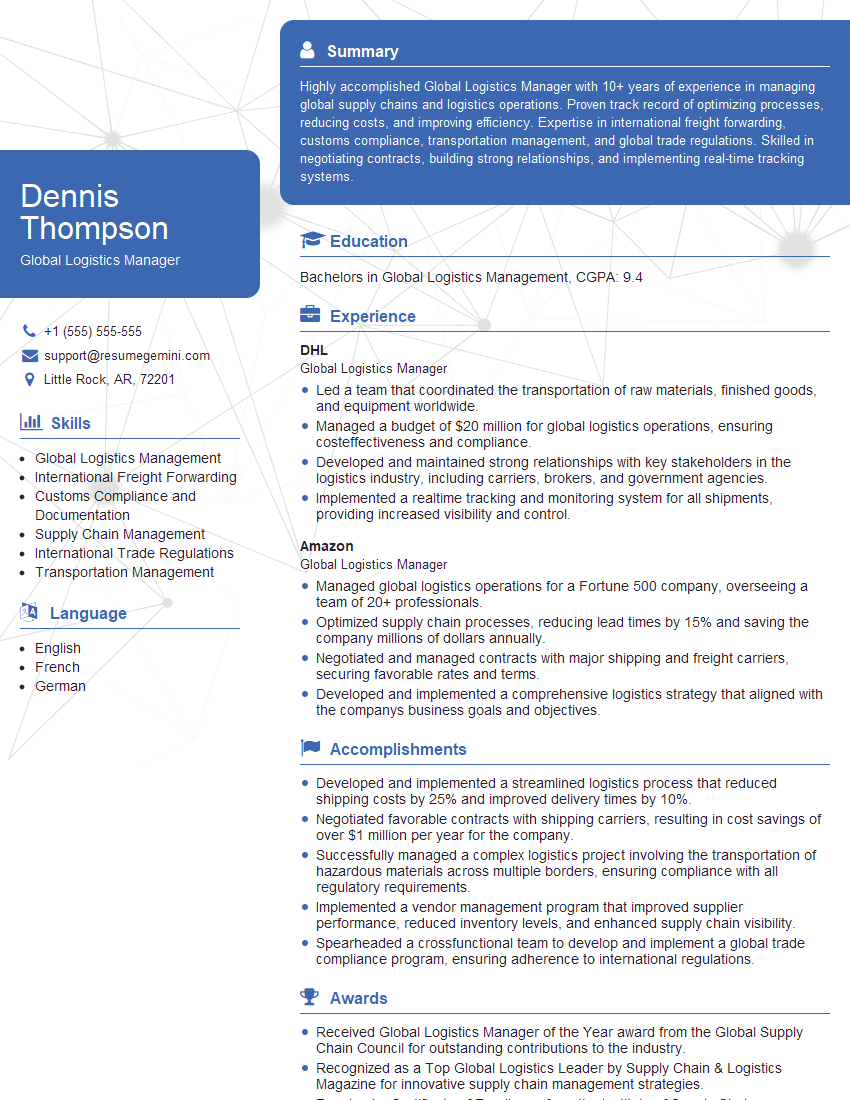
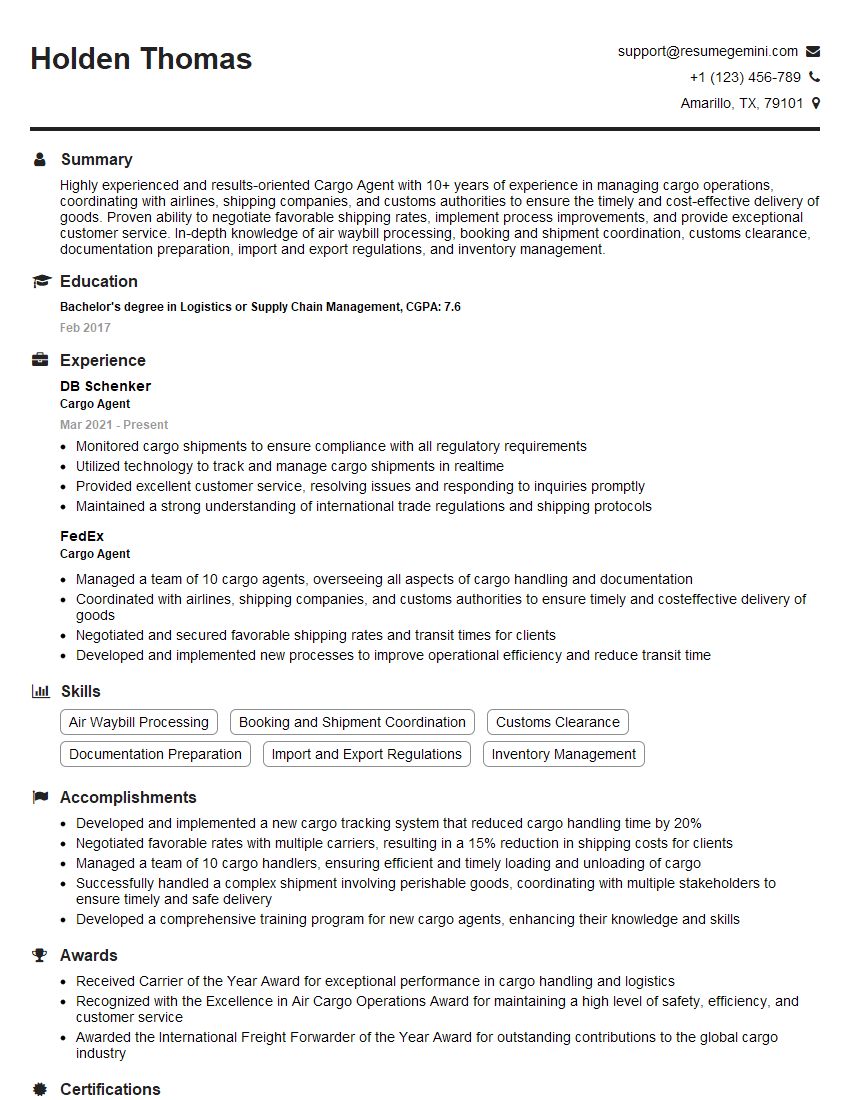
Mastering airfreight forwarding opens doors to exciting career opportunities with significant growth potential in a dynamic global industry. To maximize your chances of landing your dream job, a well-crafted, ATS-friendly resume is essential. ResumeGemini is a trusted resource to help you build a professional and impactful resume that highlights your skills and experience effectively. Examples of resumes tailored to the Airfreight Forwarding industry are available to guide you.
Explore more articles
Users Rating of Our Blogs
Share Your Experience
We value your feedback! Please rate our content and share your thoughts (optional).
What Readers Say About Our Blog
I Redesigned Spongebob Squarepants and his main characters of my artwork.
https://www.deviantart.com/reimaginesponge/art/Redesigned-Spongebob-characters-1223583608
IT gave me an insight and words to use and be able to think of examples
Hi, I’m Jay, we have a few potential clients that are interested in your services, thought you might be a good fit. I’d love to talk about the details, when do you have time to talk?
Best,
Jay
Founder | CEO