The right preparation can turn an interview into an opportunity to showcase your expertise. This guide to Angle Measurement interview questions is your ultimate resource, providing key insights and tips to help you ace your responses and stand out as a top candidate.
Questions Asked in Angle Measurement Interview
Q 1. What are the different units used to measure angles?
Angles are measured using several units, the most common being degrees and radians. Less frequently encountered, but still important in specific fields, are grads and mils.
- Degrees (°): This is the most familiar unit, dividing a full circle into 360 degrees. Each degree can be further subdivided into minutes (60 minutes per degree) and seconds (60 seconds per minute).
- Radians (rad): Radians are a unit based on the radius of a circle. One radian is the angle subtended at the center of a circle by an arc equal in length to the radius. This is a more fundamental unit in mathematics and physics, especially in calculus and trigonometry.
- Grads (grad): Also known as ‘gons’, grads divide a circle into 400 grads. This system was designed to simplify calculations in surveying and other fields but is less prevalent today.
- Mils (mil): A mil is a unit used in military applications and artillery. It represents 1/6400 of a full circle, making calculations for targeting simpler. Different definitions exist, so context is crucial.
Q 2. Explain the concept of radians and degrees.
Degrees and radians are both units for measuring angles, but they represent the angle differently.
Degrees: Degrees are an arbitrary unit, dividing a circle into 360 parts. This system has its origins in ancient Babylonian mathematics and its use of a sexagesimal (base-60) numeral system. The division into 360 degrees is likely related to the approximate number of days in a year.
Radians: Radians are based on the relationship between the circumference of a circle and its radius. One radian is defined as the angle subtended at the center of a circle by an arc equal in length to the radius. This means that there are 2π radians in a full circle because the circumference is 2π times the radius. Radians are especially useful in calculus and other advanced mathematical applications, as they simplify many formulas and calculations.
Think of it like this: degrees are like measuring a cake in slices (360 slices), while radians are measuring it by its radius (2π times the radius will cover the whole cake).
Q 3. How do you convert degrees to radians and vice versa?
Converting between degrees and radians is straightforward. Remember that 360 degrees equals 2π radians.
Degrees to Radians:
radians = degrees * (π / 180)
Example: Convert 90 degrees to radians:
radians = 90 * (π / 180) = π / 2 radians
Radians to Degrees:
degrees = radians * (180 / π)
Example: Convert π/4 radians to degrees:
degrees = (π/4) * (180/π) = 45 degrees
Q 4. Describe different methods for measuring angles (e.g., protractor, theodolite, goniometer).
Several methods exist for measuring angles, each with its own level of precision and application.
- Protractor: A simple, inexpensive tool used for measuring angles on paper or other flat surfaces. Accuracy is limited.
- Theodolite: A high-precision instrument for measuring horizontal and vertical angles, commonly used in surveying, construction, and other applications requiring accurate angular measurements over distances.
- Goniometer: Used for measuring angles, particularly in crystallography or other scientific applications where extremely precise measurements are needed. Different types exist, including contact goniometers and optical goniometers.
- Digital Angle Measuring Tools: These use sensors and digital displays to provide precise readings of angles, often with features like data logging and Bluetooth connectivity.
Q 5. What is the principle behind a protractor?
A protractor operates on the principle of a semicircular scale marked in degrees. The center point of the protractor is aligned with the vertex (the point where two lines meet) of the angle to be measured. One ray of the angle is aligned with the zero-degree mark on the protractor’s scale. The other ray intersects the scale at a specific degree marking indicating the angle’s size.
It essentially uses a calibrated arc to determine the relative position of the rays forming the angle.
Q 6. What are the limitations of using a protractor for angle measurement?
Protractors have limitations:
- Limited Accuracy: They generally only provide measurements to the nearest degree, or perhaps half a degree at best. For precise measurements, they are inadequate.
- Suitable for Flat Surfaces: Protractors struggle with measuring angles on curved or three-dimensional objects.
- Parallax Error: Incorrect reading of the angle due to the position of the observer’s eye relative to the protractor and the angle being measured.
- Physical Limitations: Size and design restrict their use in measuring large or small angles effectively.
Q 7. Explain the working principle of a theodolite.
A theodolite uses a combination of precisely calibrated rotating telescopes and graduated circles to measure angles. One telescope is used for sighting a target, while another helps with precise leveling. The angles of rotation are read using high-resolution optical or digital encoders. This system allows accurate measurement of both horizontal and vertical angles with very high precision. It relies on the principles of geometry and optics to measure angular displacement accurately.
In essence, the theodolite uses a very sophisticated and precise version of the protractor’s basic principle but with much higher accuracy and capability for measurements over distances.
Q 8. How do you ensure accurate angle measurement using a theodolite?
Ensuring accurate angle measurement with a theodolite involves meticulous procedure and understanding its limitations. A theodolite is a precision instrument used for measuring horizontal and vertical angles. Accuracy hinges on proper setup, careful observation, and accounting for potential errors.
- Leveling: Precise leveling is paramount. The theodolite must be perfectly level using the built-in spirit levels. Any tilt introduces significant error in angle readings. Imagine trying to measure an angle on a tilted table – your measurement would be skewed.
- Centering: The theodolite must be centered over the point of interest. Slight miscentering leads to errors, particularly in longer distances. Think of it like trying to aim a laser pointer – a slightly off-center pointer will be significantly off target at a distance.
- Repetition Measurements: Taking multiple readings of the same angle and averaging them significantly reduces random errors. This process is akin to taking several weight measurements on a scale and using the average to achieve a more precise result.
- Calibration: Regular calibration of the theodolite is essential to ensure its accuracy. This involves comparing its readings to known standards.
- Atmospheric Conditions: Temperature and atmospheric refraction can affect measurements. These effects need to be considered, particularly in long-distance measurements. Think of how heat rising from asphalt can distort the image of an object seen from a distance – similar distortion affects angle measurements.
By following these steps rigorously, you can minimize errors and achieve high-precision angle measurements with a theodolite.
Q 9. Describe the use of a goniometer in angle measurement.
A goniometer is an instrument used for measuring angles, particularly angles of crystals and other objects with sharp angles. Unlike a theodolite, which is used for surveying and measuring large angles in the field, a goniometer is typically used in a laboratory setting for more precise measurements of smaller angles.
There are different types of goniometers, including optical goniometers and contact goniometers. Optical goniometers measure angles using light reflection, while contact goniometers directly measure the angle between two surfaces using mechanical arms. These are often used in crystallography, mineralogy, and material science to determine the angles between crystal faces or other physical features.
For example, a crystallographer might use a goniometer to measure the angles between the faces of a crystal to help identify the crystal structure. Similarly, material scientists might use a goniometer to characterize the surface texture of a material.
Q 10. What are the sources of error in angle measurement?
Several sources of error can affect angle measurements, leading to inaccuracies. These errors can be broadly classified into instrumental errors, personal errors, and natural errors.
- Instrumental Errors: These stem from imperfections or miscalibration of the measuring instrument (e.g., theodolite, goniometer). This could involve issues with the instrument’s alignment, worn parts, or faulty internal mechanisms. For instance, a slightly misaligned level bubble on a theodolite would directly impact accuracy.
- Personal Errors: These are mistakes made by the operator, such as incorrect reading of the instrument, parallax error (misalignment of the eye), or poor observational techniques. A classic example is misreading the scale on a protractor.
- Natural Errors: These arise from environmental factors like temperature changes, wind, atmospheric refraction (bending of light due to variations in air density), or settlement of the instrument’s tripod. Atmospheric refraction is particularly relevant over long distances; the air itself bends the light path, leading to angle measurement discrepancies.
Understanding these sources is critical for effective error reduction strategies.
Q 11. How do you minimize errors in angle measurement?
Minimizing errors in angle measurement involves a multifaceted approach combining careful technique, proper equipment maintenance, and environmental considerations.
- Instrument Calibration and Maintenance: Regularly calibrate your instruments against known standards to ensure accuracy. Proper care and maintenance of the instrument are crucial to prevent wear and tear.
- Precise Setup: Meticulous setup of the instrument is key. This includes ensuring proper leveling and centering, especially in theodolite usage. A perfectly level instrument provides a reliable baseline for measurements.
- Multiple Readings and Averaging: Repeating measurements and averaging the results significantly reduces the influence of random errors. This simple strategy is effective in mitigating both personal and instrumental inconsistencies.
- Environmental Considerations: Account for environmental factors such as temperature, wind, and atmospheric refraction when making long-distance measurements. Consider conducting measurements at times when atmospheric conditions are stable.
- Use of Appropriate Techniques: Employ appropriate measuring techniques for the situation. For instance, using a double-centering method (setting up two theodolites for reciprocal measurements) can help reduce errors in surveying.
By adopting these strategies, you can significantly improve the accuracy and reliability of your angle measurements.
Q 12. Explain the concept of angular resolution.
Angular resolution refers to the smallest angle that can be reliably distinguished or resolved by an instrument. Think of it as the level of detail the instrument can see. A higher angular resolution means that the instrument can distinguish between two points separated by a very small angle, providing more accurate measurements.
For example, a telescope with high angular resolution can distinguish two closely spaced stars, while a telescope with low angular resolution would see them as a single point of light. Similarly, a high-resolution theodolite would be able to measure angles with far greater accuracy than a low-resolution one. This capacity is determined by factors such as the instrument’s design, lens quality, and wavelength of light used.
Angular resolution is a critical specification when selecting an angle-measuring instrument for a particular task. Applications demanding high precision, such as astronomy or high-precision surveying, require instruments with high angular resolution.
Q 13. How does temperature affect angle measurement?
Temperature significantly affects angle measurement primarily through its influence on the instrument itself and the surrounding environment. Materials expand and contract with temperature changes, altering the physical dimensions of the measuring instrument. This dimensional change directly impacts the accuracy of the angle readings.
For example, the metal parts of a theodolite might expand in high temperatures, leading to slight misalignments and inaccurate measurements. Similarly, variations in air temperature create refractive index changes in the atmosphere, bending light rays and causing errors, especially over long distances. This effect is called atmospheric refraction. The higher the temperature difference between the air near the ground and the air higher up, the more significant the effect.
To mitigate temperature effects, precise temperature compensation mechanisms are incorporated in high-end instruments. Measurements should also be conducted during periods of stable temperature whenever possible, and temperature readings should be recorded to aid in potential corrections. The use of temperature-compensated materials in instrument construction is also crucial for minimizing this error source.
Q 14. How do you measure angles in inaccessible locations?
Measuring angles in inaccessible locations requires innovative approaches and often involves indirect techniques. Direct measurement is impossible when the location is physically unreachable, for instance, across a wide river or a deep ravine.
- Traversing: This surveying technique involves establishing a series of connected points, where angles and distances are measured between consecutive points. By connecting the points strategically around the inaccessible area, it’s possible to indirectly determine the required angles. This is analogous to building a road around a mountain to eventually reach the other side.
- Trigonometric Methods: Trigonometric calculations, often using readily-accessible points and measured distances, can be used to determine angles in inaccessible locations. Knowing two distances and the included angle, for example, allows calculation of the third distance and the remaining angles using trigonometric identities.
- Remote Sensing Techniques: Technologies such as aerial photography, laser scanning (LiDAR), and GPS can be employed to obtain angular data indirectly. These methods offer advantages in situations where physical access is extremely limited or dangerous.
The choice of method depends on the specific circumstances, the required accuracy, and available resources. Careful planning and consideration of potential error sources are crucial for achieving reliable results when working in challenging environments.
Q 15. Explain the concept of triangulation in angle measurement.
Triangulation is a fundamental technique in angle measurement used to determine the distance to an inaccessible point or to accurately map a location. It leverages the geometric properties of triangles. Essentially, by measuring the angles and the length of one side of a triangle, we can calculate the lengths of the other two sides using trigonometry.
Imagine you’re trying to find the width of a river. You can’t cross it to measure directly. Instead, you measure a baseline along one bank (side ‘a’). Then, you measure the angles from both ends of this baseline to a point directly across the river (angles A and B). Using the Law of Sines or Law of Cosines, you can calculate the width of the river (side ‘b’ opposite angle B).
This method is incredibly powerful and has been used for centuries, from basic surveying to advanced satellite navigation systems. The accuracy depends heavily on the precision of the angle and baseline measurements. More precise instruments lead to more accurate results.
Career Expert Tips:
- Ace those interviews! Prepare effectively by reviewing the Top 50 Most Common Interview Questions on ResumeGemini.
- Navigate your job search with confidence! Explore a wide range of Career Tips on ResumeGemini. Learn about common challenges and recommendations to overcome them.
- Craft the perfect resume! Master the Art of Resume Writing with ResumeGemini’s guide. Showcase your unique qualifications and achievements effectively.
- Don’t miss out on holiday savings! Build your dream resume with ResumeGemini’s ATS optimized templates.
Q 16. How is angle measurement used in surveying?
Angle measurement is the cornerstone of surveying. Surveyors use theodolites and total stations – sophisticated instruments that measure angles with incredible accuracy – to establish baselines, determine the relative positions of points, and create detailed maps. They measure horizontal and vertical angles to plot the elevation and location of features such as buildings, roads, and terrain contours.
Consider a large construction project. Surveyors use angle measurement to accurately lay out the foundations, ensuring that all structures are correctly aligned and positioned. Without precise angle measurements, even small errors can accumulate, leading to significant problems later in the project.
In cadastral surveying (boundary mapping), angle measurement is crucial for defining property lines, and the accurate determination of angles ensures that land ownership is clearly defined and legally sound. Errors in angle measurement can lead to costly and time-consuming disputes.
Q 17. How is angle measurement used in construction?
Angle measurement plays a vital role in construction, ensuring the accuracy and integrity of structures. From the initial site layout to the final building inspection, angles are meticulously measured to ensure everything is precisely positioned. Incorrect angles can lead to structural instability, making angle measurement a critical aspect of safety and structural integrity.
For example, when constructing a building frame, the angles between beams and columns must be precisely 90 degrees (right angles) for optimal load-bearing capacity. Any deviation, even slight, could compromise the strength and stability of the structure. Similarly, the angles of roof trusses are crucial for distributing weight effectively. The use of laser levels and digital inclinometers help ensure these angles are perfectly maintained.
In road construction, accurate angle measurements are essential for ensuring smooth transitions and proper drainage, affecting driving safety and the longevity of the road infrastructure.
Q 18. How is angle measurement used in manufacturing?
In manufacturing, precise angle measurement is paramount for creating parts that fit together correctly and function as intended. CNC (Computer Numerical Control) machines rely on precise angle data to cut, shape, and assemble components. A slight deviation in an angle can render a part unusable, leading to production delays, wasted materials, and financial losses.
Consider the manufacturing of gears. The precise angles of the gear teeth are critical for smooth operation. Even minor deviations can lead to noise, vibration, and premature wear. Similarly, the angles in the manufacturing of precisely fitting parts are measured with instruments like optical comparators and angle gauges to ensure a proper fit and prevent misalignment.
Quality control in manufacturing uses angle measurement extensively to verify that products meet specified tolerances. Automatic optical inspection systems with advanced sensors help maintain high accuracy in this aspect.
Q 19. How is angle measurement used in robotics?
Angle measurement is fundamental to robotics, enabling robots to accurately perceive their environment, plan movements, and interact with objects. Robots use sensors, such as encoders on their joints and cameras, to measure angles and determine their orientation. This is crucial for tasks like precise manipulation, navigating complex environments, and performing complex operations.
Imagine a robotic arm assembling a circuit board. The arm must accurately position components at precise angles. Incorrect angles could result in faulty connections and a non-functional product. The robots use internal angle sensors and external vision systems for proper feedback and guidance.
In autonomous vehicles, angle measurement is critical for navigation. Sensors such as LiDAR (Light Detection and Ranging) and cameras provide data on the angles and distances of surrounding objects, allowing the vehicle to avoid collisions and maintain its course. Accurate angle measurement is vital for safe and reliable autonomous driving.
Q 20. Explain the applications of angle measurement in astronomy.
Astronomy relies heavily on precise angle measurement to chart the positions of celestial bodies, track their movements, and understand their properties. Telescopes, equipped with sophisticated angle-measuring devices, allow astronomers to determine the angles between stars, planets, and other objects. These angles are then used to calculate distances, velocities, and other crucial astronomical parameters.
For example, by measuring the angle of parallax (the apparent shift in a star’s position as viewed from different points in Earth’s orbit), astronomers can determine the distance to nearby stars. The more precise the angle measurement, the more accurate the distance calculation. Similarly, the measurement of the angular size of celestial objects allows astronomers to estimate their physical size.
The development of extremely accurate angle-measuring instruments has greatly enhanced astronomical understanding, enabling discoveries of celestial bodies, movements, and distances which were previously impossible to measure.
Q 21. Describe different types of angles (e.g., acute, obtuse, right, reflex).
Angles are classified based on their measure:
- Acute Angle: An angle less than 90 degrees. Think of a sharp corner, like a slice of pizza.
- Right Angle: An angle exactly 90 degrees. It forms a perfect ‘L’ shape, like the corner of a square.
- Obtuse Angle: An angle greater than 90 degrees but less than 180 degrees. Imagine the angle between the hands of a clock at 2:00.
- Reflex Angle: An angle greater than 180 degrees but less than 360 degrees. This is a ‘greater than half circle’ angle.
- Straight Angle: An angle exactly 180 degrees, forming a straight line.
- Full Angle: An angle of 360 degrees, a full circle.
Understanding these angle types is crucial in many fields, as they define the shapes and relationships between objects.
Q 22. What is the relationship between angles and trigonometric functions?
Trigonometric functions are fundamentally defined by the relationships between angles and the sides of a right-angled triangle. Imagine a right-angled triangle; the sine, cosine, and tangent of an angle are ratios of the lengths of its sides. Specifically:
- Sine (sin): The ratio of the length of the side opposite the angle to the length of the hypotenuse (the longest side).
- Cosine (cos): The ratio of the length of the side adjacent to the angle to the length of the hypotenuse.
- Tangent (tan): The ratio of the length of the side opposite the angle to the length of the side adjacent to the angle.
These ratios are constant for a given angle, regardless of the size of the triangle. This relationship allows us to use angles to determine side lengths and vice-versa, which is crucial in many fields.
Q 23. How do you solve problems involving angles using trigonometry?
Solving problems involving angles using trigonometry often involves applying the appropriate trigonometric function based on the given information. Let’s say you know the length of two sides of a right-angled triangle and want to find the angle between them. If you know the opposite and hypotenuse, you’d use the inverse sine function (arcsin or sin-1). If you know the adjacent and hypotenuse, you’d use the inverse cosine (arccos or cos-1). If you know the opposite and adjacent, you’d use the inverse tangent (arctan or tan-1).
Example: A ladder leaning against a wall forms a right-angled triangle. The ladder is 5 meters long (hypotenuse), and the base of the ladder is 2 meters from the wall (adjacent). To find the angle the ladder makes with the ground, we use:
cos θ = adjacent / hypotenuse = 2 / 5θ = arccos(2/5) ≈ 66.4 degreesQ 24. Explain the use of sine, cosine, and tangent in angle calculations.
Sine, cosine, and tangent are the core trigonometric functions used to relate angles to the ratios of sides in a right-angled triangle. As mentioned earlier, they are defined as follows:
- Sine (sin θ): Opposite / Hypotenuse
- Cosine (cos θ): Adjacent / Hypotenuse
- Tangent (tan θ): Opposite / Adjacent
Their application extends beyond right-angled triangles through the use of techniques like the Law of Sines and the Law of Cosines, which allow us to solve for angles and sides in any triangle.
Example: In surveying, we might use trigonometry to determine the height of a building by measuring the angle of elevation from a known distance and applying the tangent function.
Q 25. Describe the concept of angular velocity and angular acceleration.
Angular velocity describes how fast an object is rotating. Imagine a spinning wheel; angular velocity measures the rate at which its angle changes over time. It’s typically expressed in radians per second (rad/s) or degrees per second (°/s).
Angular acceleration, on the other hand, describes the rate at which the angular velocity is changing. It’s how quickly the rotation speed is increasing or decreasing, expressed in radians per second squared (rad/s²) or degrees per second squared (°/s²). A positive angular acceleration indicates an increasing rotational speed, while a negative value indicates a decreasing speed.
Q 26. How do you calculate angular velocity and angular acceleration?
Angular velocity (ω) is calculated by dividing the change in angle (Δθ) by the change in time (Δt):
ω = Δθ / ΔtFor example, if a wheel rotates 2π radians (a full revolution) in 1 second, its angular velocity is 2π rad/s.
Angular acceleration (α) is calculated by dividing the change in angular velocity (Δω) by the change in time (Δt):
α = Δω / ΔtIf a rotating object’s angular velocity increases from 10 rad/s to 20 rad/s in 2 seconds, its angular acceleration is (20 – 10) rad/s / 2 s = 5 rad/s².
Q 27. Explain the applications of angular velocity and angular acceleration in engineering.
Angular velocity and acceleration are critical in many engineering applications:
- Robotics: Precise control of robotic arms and manipulators requires accurate calculations of angular velocity and acceleration to ensure smooth and controlled movements.
- Automotive Engineering: Engine design, transmission systems, and vehicle dynamics all involve angular motion. Analyzing angular velocity and acceleration helps optimize performance and efficiency.
- Aerospace Engineering: The rotation of propellers, turbines, and spacecraft components necessitates understanding and controlling angular motion for stability and maneuverability.
- Mechanical Design: Designing gears, rotating shafts, and other mechanical systems requires careful consideration of angular velocities and accelerations to prevent failure due to stress and wear.
For instance, in designing a robotic arm, engineers use these concepts to program the arm to move with specific speeds and accelerations, avoiding jerky movements and ensuring precise positioning.
Q 28. Describe how you would troubleshoot an issue with an angle measuring device.
Troubleshooting an angle measuring device depends on the type of device and the nature of the problem. A systematic approach is essential:
- Calibrate the device: Many angle measuring instruments require calibration to ensure accuracy. Refer to the manufacturer’s instructions for the proper calibration procedure.
- Check for physical damage: Inspect the device for any visible damage, such as cracks, loose parts, or misalignment. Repair or replace damaged components as needed.
- Verify power supply: If the device is powered electronically, ensure that the power supply is functioning correctly. Check batteries or connections.
- Test with known angles: Use angles with known values (e.g., 90°, 45°, 0°) to compare the device’s readings to the expected values. This helps isolate whether the issue is with the device’s sensor or internal calculations.
- Analyze error patterns: If the errors are consistent or follow a particular pattern, this can indicate a specific problem with the device’s internal mechanisms or software.
- Consult documentation: Review the device’s technical documentation for troubleshooting guides and common issues.
- Contact manufacturer support: If the problem persists after performing the above steps, contact the manufacturer for technical assistance or repair services.
Key Topics to Learn for Angle Measurement Interview
- Degrees and Radians: Understanding the conversion between these fundamental angle units and their applications in various contexts.
- Types of Angles: Mastering the definitions and properties of acute, obtuse, right, reflex, and straight angles. Be prepared to identify them in diagrams and solve problems involving their relationships.
- Angle Measurement Tools: Familiarity with protractors, goniometers, and digital angle finders, including their usage and limitations.
- Trigonometric Functions: A strong understanding of sine, cosine, and tangent, and their applications in solving problems involving angles and lengths in triangles.
- Geometric Theorems and Properties: Knowledge of theorems related to angles, such as angle sum in triangles, vertically opposite angles, and angles in polygons. Be ready to apply these in problem-solving scenarios.
- Applications in Various Fields: Demonstrate awareness of how angle measurement is utilized in fields like surveying, engineering, architecture, computer graphics, and robotics.
- Problem-Solving Strategies: Practice solving a variety of problems involving angles, including those requiring application of geometrical principles and trigonometric functions.
- Advanced Concepts (if applicable): Depending on the seniority of the role, you may need to review topics such as angular velocity, angular acceleration, or solid geometry concepts involving angles.
Next Steps
Mastering angle measurement is crucial for success in numerous technical fields, opening doors to exciting career opportunities and professional growth. A strong foundation in this area demonstrates a critical skill set valued by employers. To significantly increase your chances of landing your dream job, create a resume that highlights your abilities effectively. An ATS-friendly resume is essential for getting past applicant tracking systems and into the hands of hiring managers. ResumeGemini is a trusted resource to help you build a professional and impactful resume. Examples of resumes tailored to Angle Measurement roles are available to help guide you. Take advantage of these resources to showcase your skills and secure your next interview.
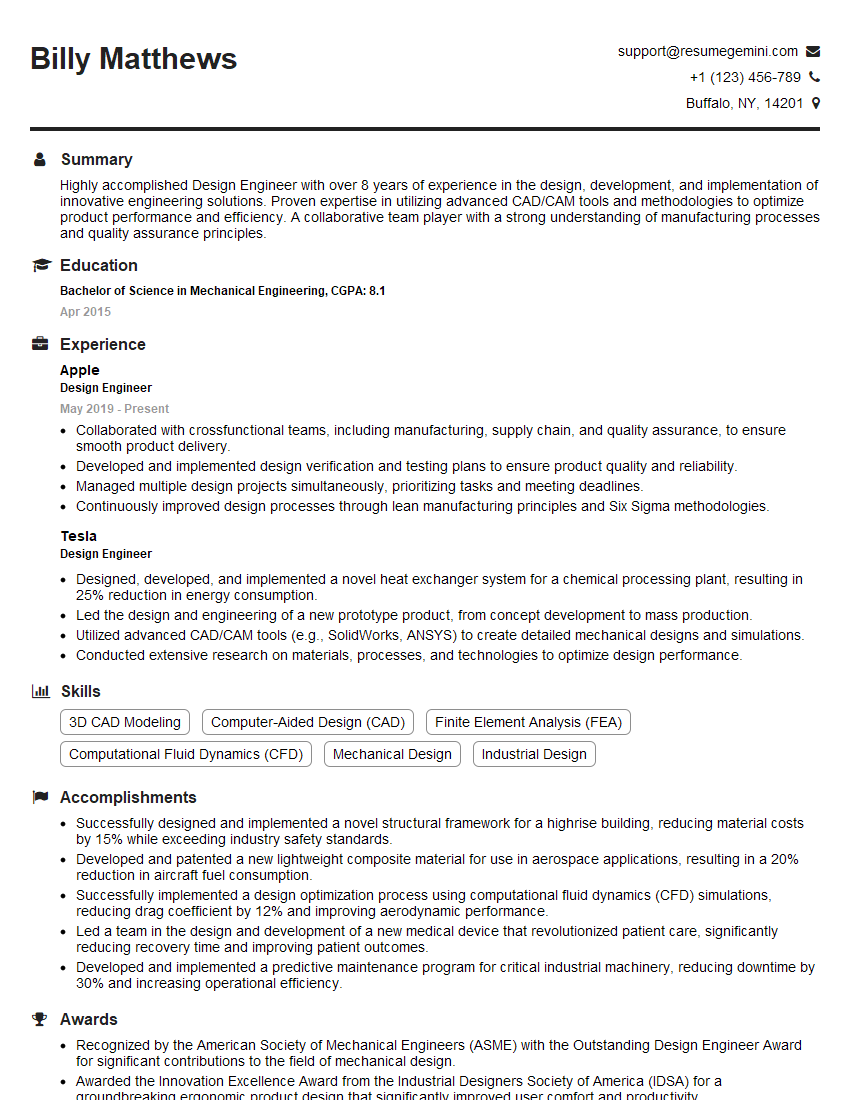
Design Engineer Resume Sample
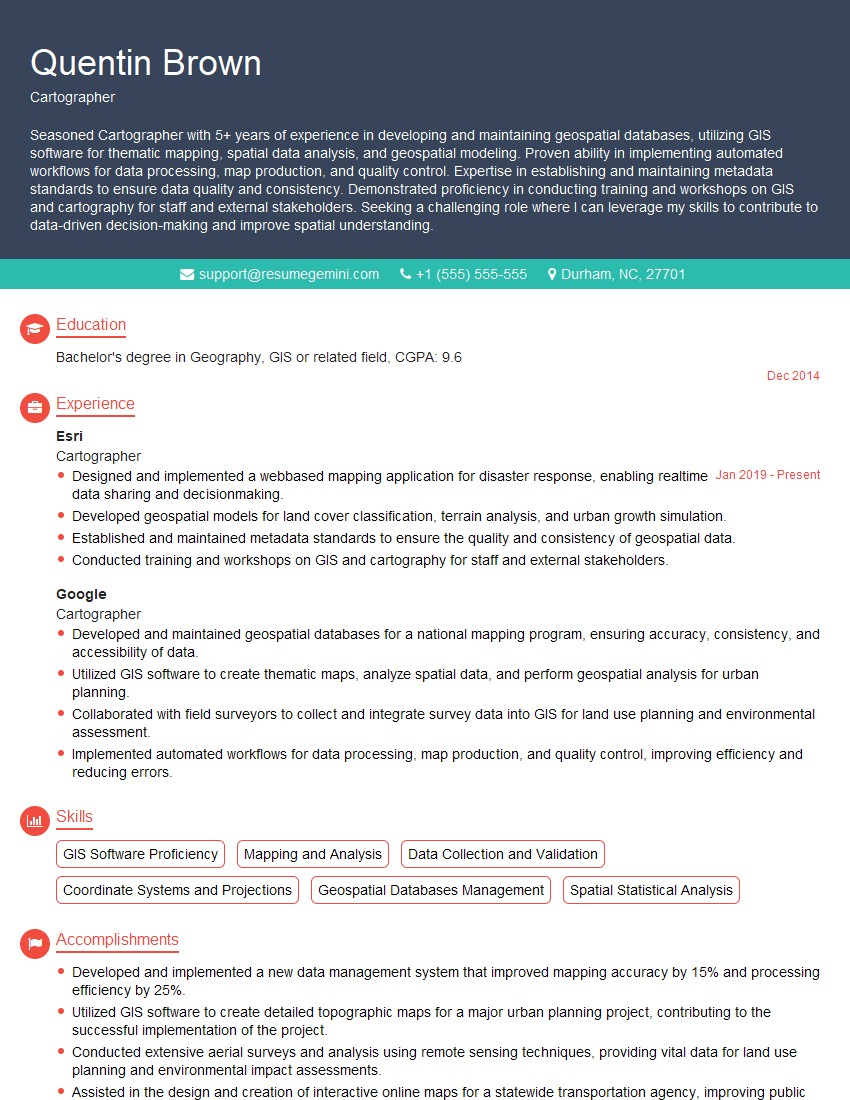
Cartographer Resume Sample
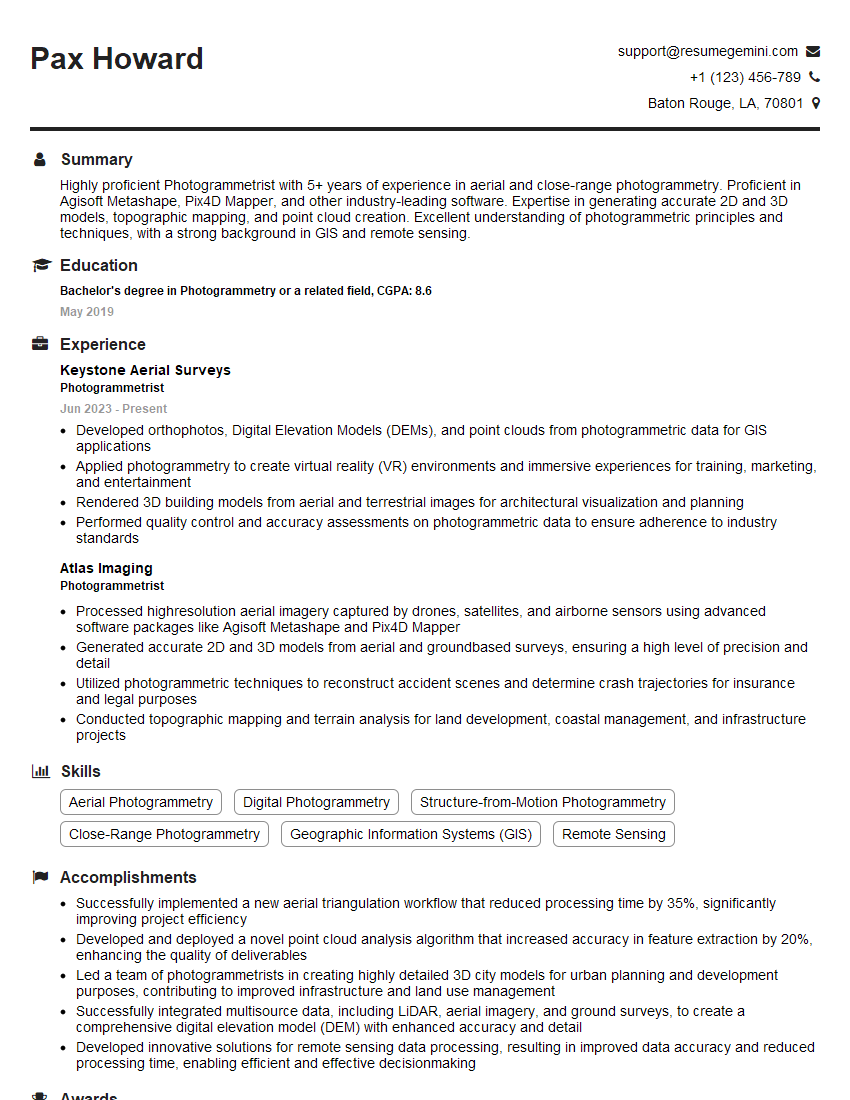
Photogrammetrist Resume Sample
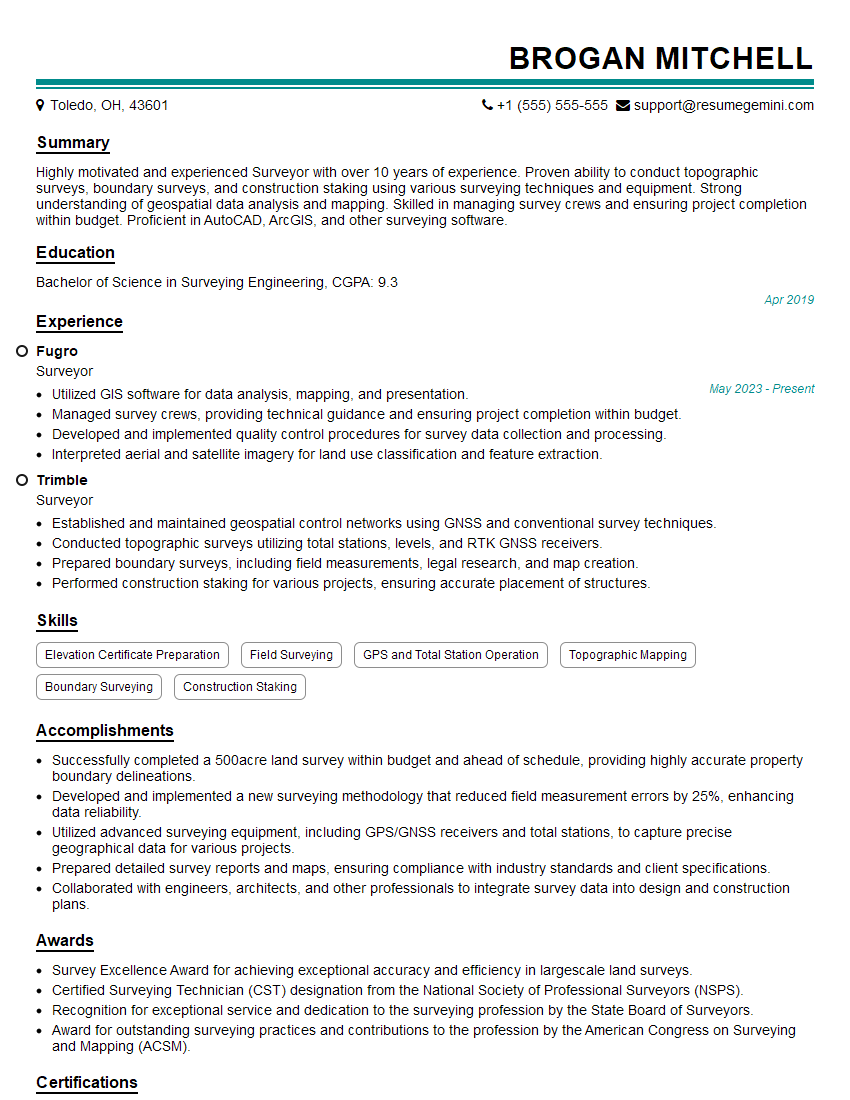
Surveyor Resume Sample
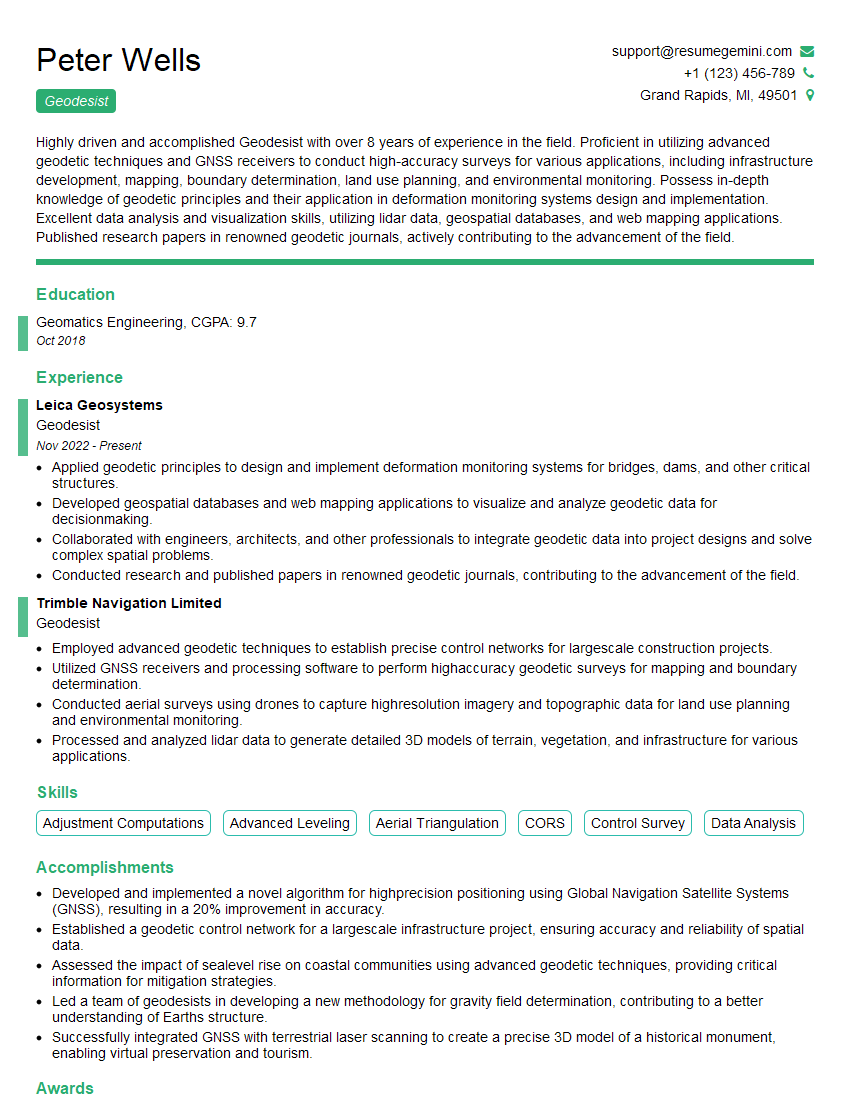
Geodesist Resume Sample
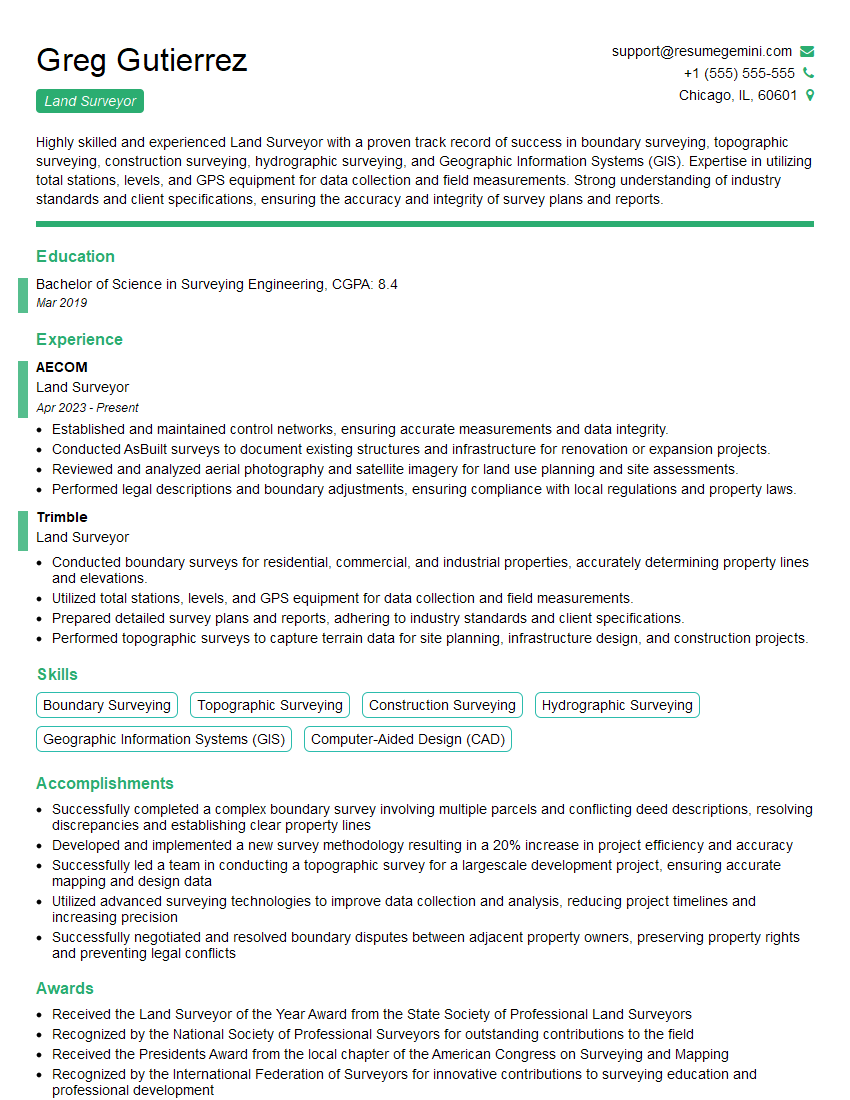
Land Surveyor Resume Sample

Civil Engineer Resume Sample
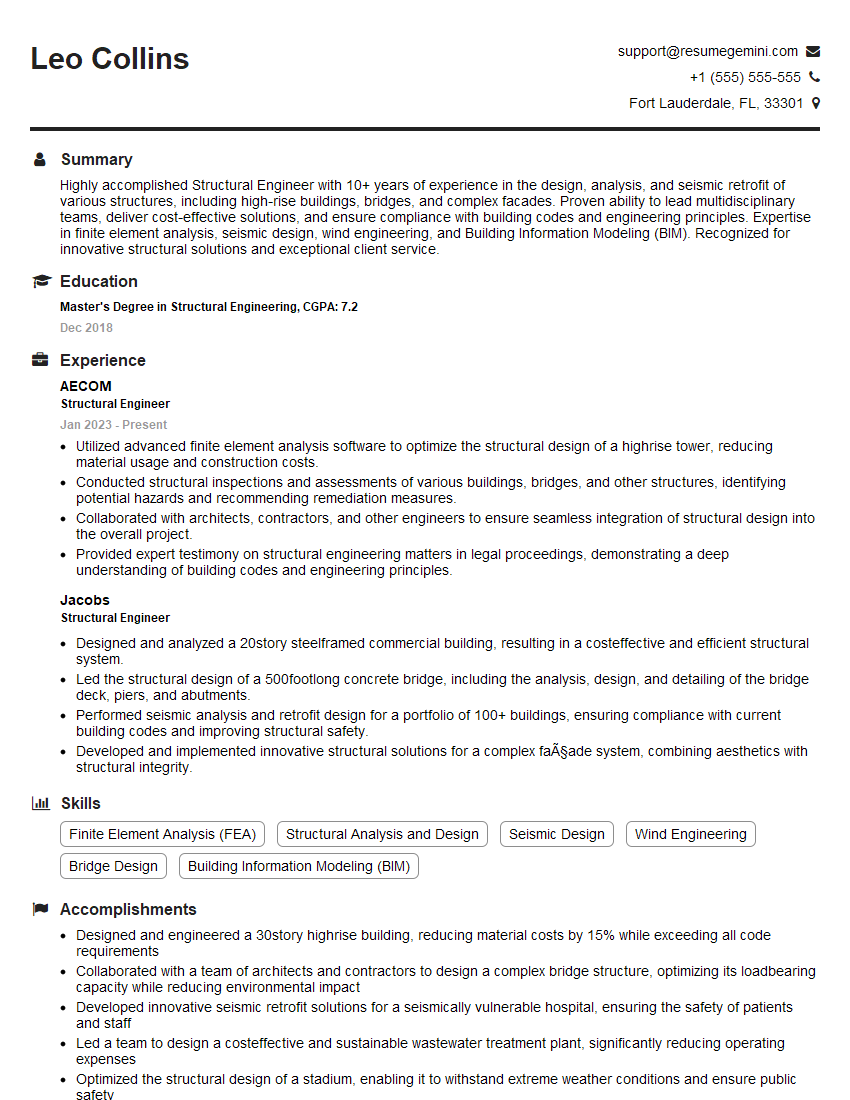
Structural Engineer Resume Sample
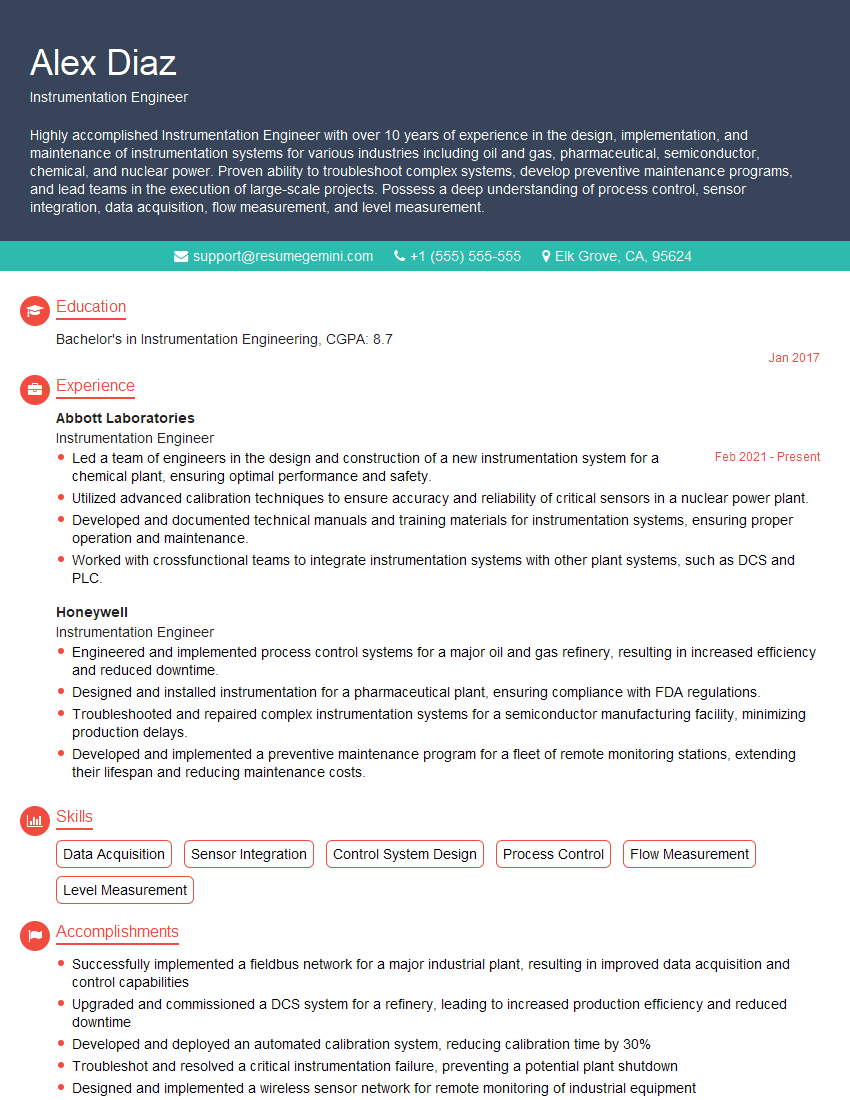
Instrumentation Engineer Resume Sample
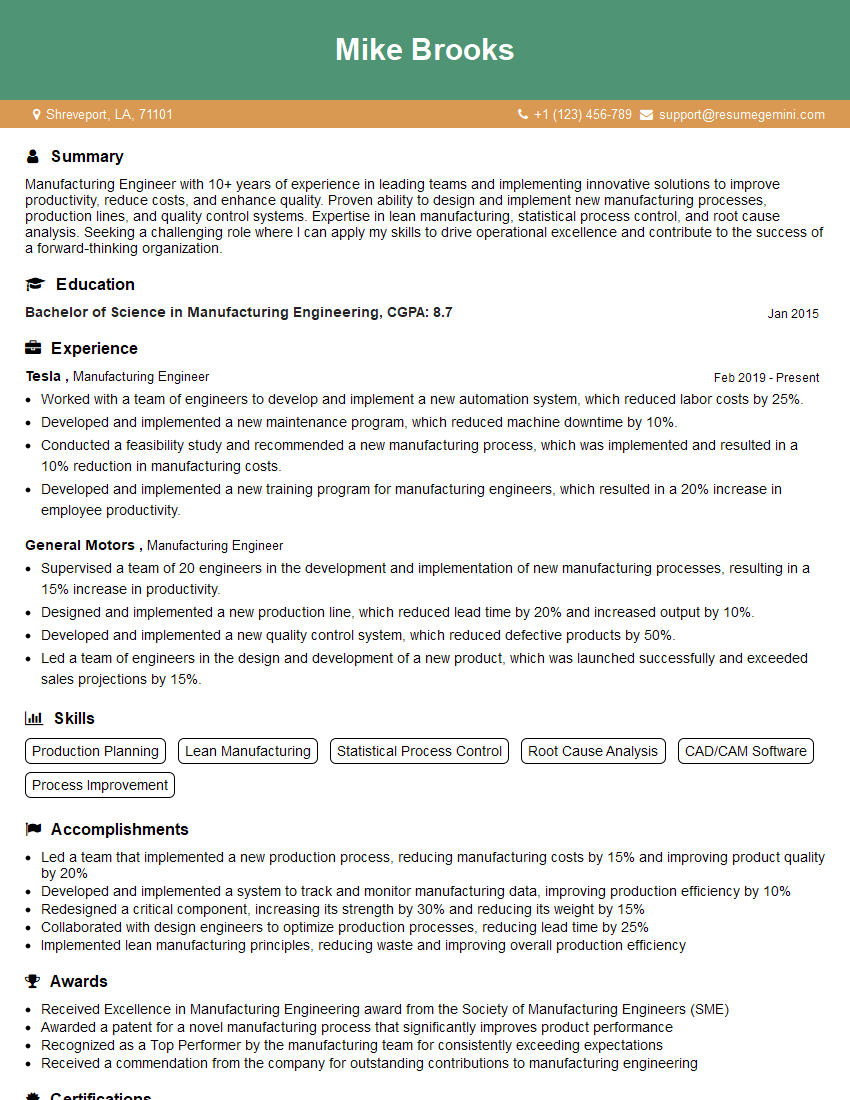
Manufacturing Engineer Resume Sample
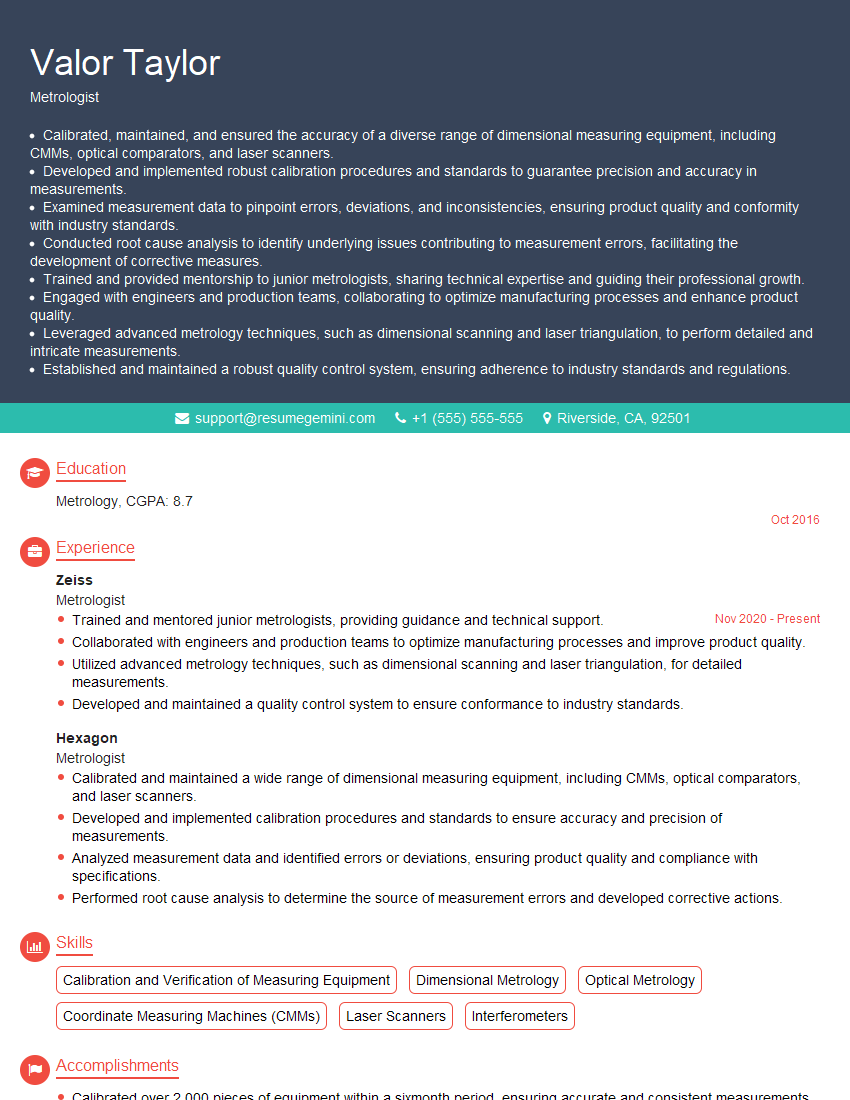
Metrologist Resume Sample
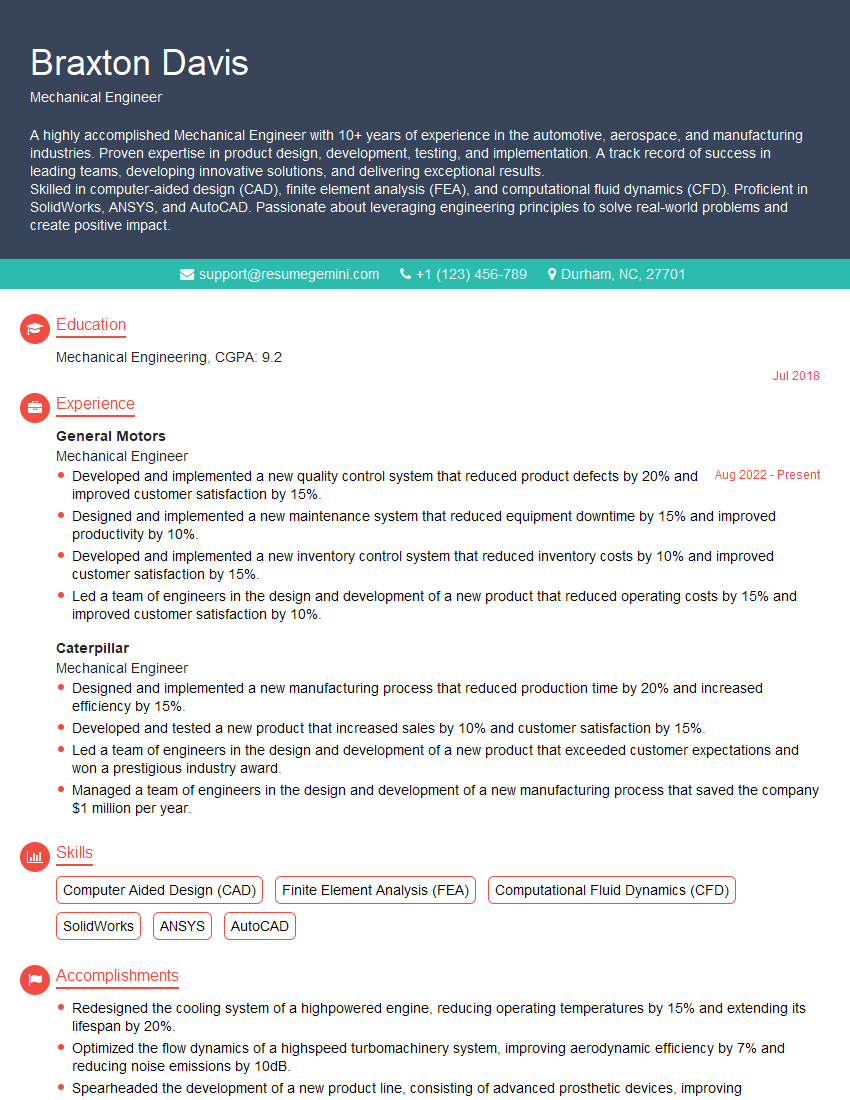
Mechanical Engineer Resume Sample
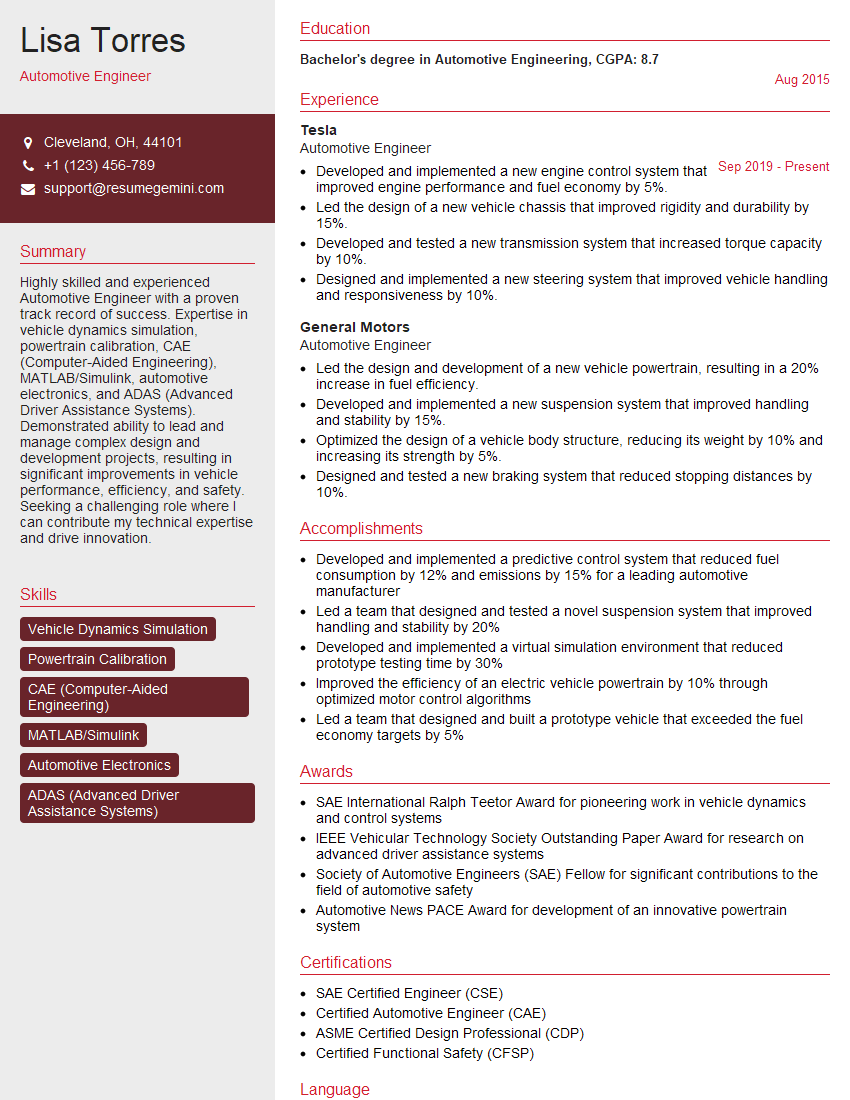
Automotive Engineer Resume Sample
Optical Engineer Resume Sample
Robotics Engineer Resume Sample
Construction Inspector Resume Sample
Robotics Technician Resume Sample
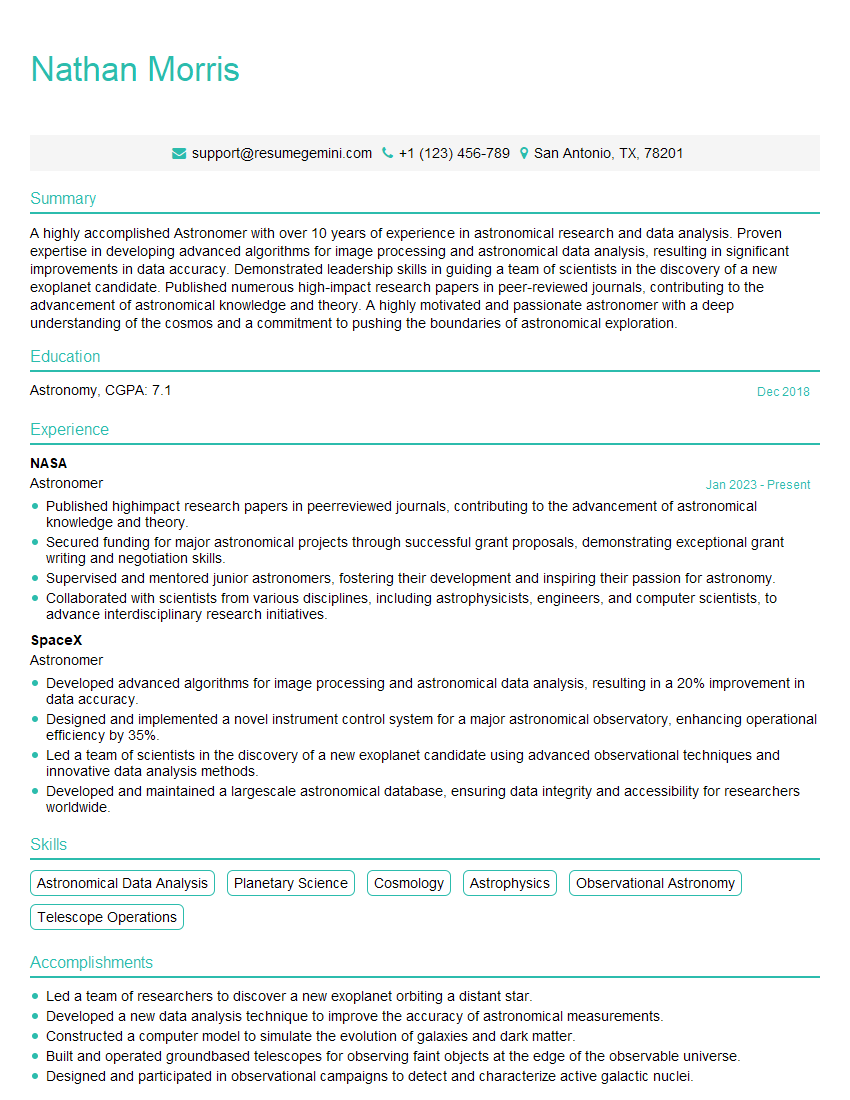
Astronomer Resume Sample
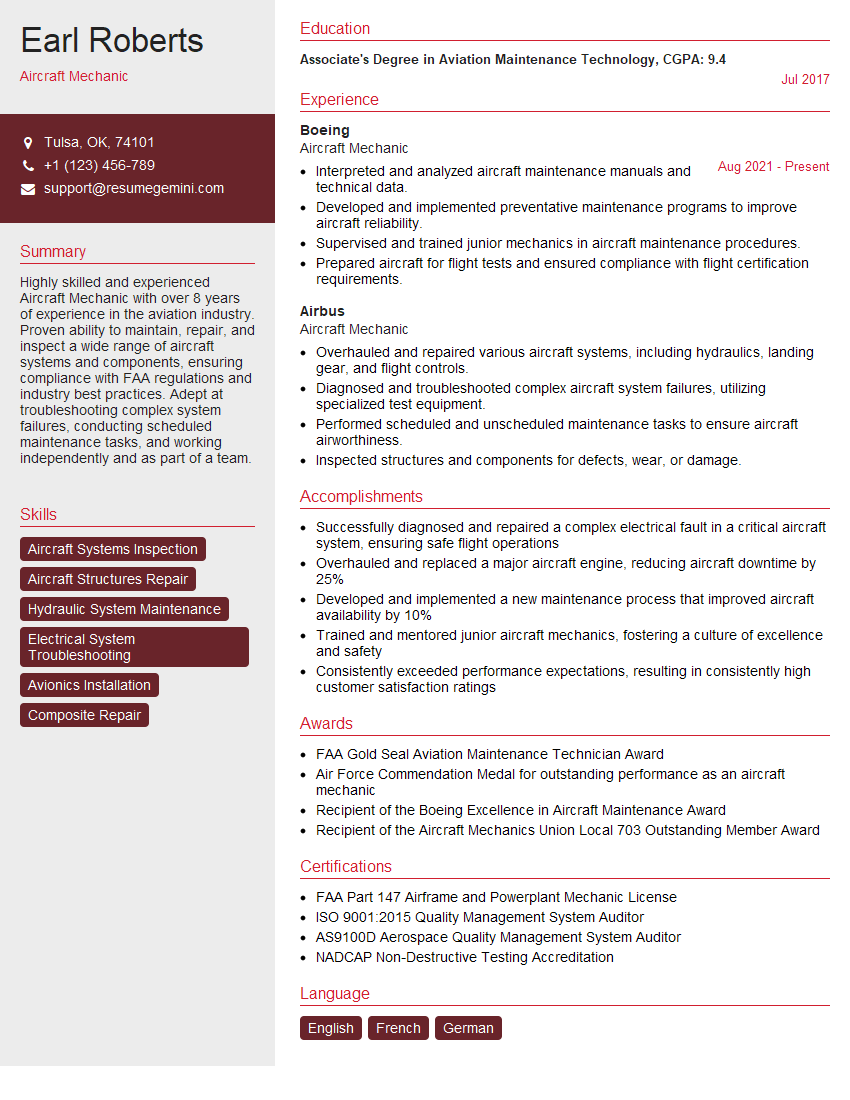
Aircraft Mechanic Resume Sample

Quality Control Inspector Resume Sample
- Design Engineer
- Cartographer
- Photogrammetrist
- Surveyor
- Geodesist
- Land Surveyor
- Civil Engineer
- Structural Engineer
- Instrumentation Engineer
- Manufacturing Engineer
- Metrologist
- Mechanical Engineer
- Automotive Engineer
- Optical Engineer
- Robotics Engineer
- Construction Inspector
- Robotics Technician
- Astronomer
- Aircraft Mechanic
- Quality Control Inspector
Explore more articles
Users Rating of Our Blogs
Share Your Experience
We value your feedback! Please rate our content and share your thoughts (optional).
What Readers Say About Our Blog
I Redesigned Spongebob Squarepants and his main characters of my artwork.
https://www.deviantart.com/reimaginesponge/art/Redesigned-Spongebob-characters-1223583608
IT gave me an insight and words to use and be able to think of examples
Hi, I’m Jay, we have a few potential clients that are interested in your services, thought you might be a good fit. I’d love to talk about the details, when do you have time to talk?
Best,
Jay
Founder | CEO