Feeling uncertain about what to expect in your upcoming interview? We’ve got you covered! This blog highlights the most important ASID Certification interview questions and provides actionable advice to help you stand out as the ideal candidate. Let’s pave the way for your success.
Questions Asked in ASID Certification Interview
Q 1. Describe your experience with the ASID’s professional practice standards.
The ASID’s Professional Practice Standards are the cornerstone of ethical and responsible interior design. They guide our conduct, ensuring client well-being, project success, and upholding the profession’s integrity. These standards cover various aspects, including:
- Client Relations: This emphasizes clear communication, transparency about fees and processes, and protecting client confidentiality. For instance, I always provide detailed contracts outlining the scope of work and payment schedules, and I maintain a secure system for storing client data.
- Professional Conduct: This stresses honesty, fairness, and avoiding conflicts of interest. I’ve had situations where a potential client’s project overlapped with another, requiring me to carefully manage expectations and disclose the potential conflict.
- Scope of Services: This dictates clearly defined services and deliverables, ensuring both client and designer understand the project boundaries. I’ve found creating detailed project proposals, including timelines and deliverables, is key to successful projects.
- Fees and Contracts: This focuses on transparent, agreed-upon compensation structures and legal protection for both parties. I meticulously draft contracts that are easily understood by clients and protect my rights as a designer.
Adherence to these standards not only protects clients but also builds trust and enhances the reputation of the profession. It’s a framework that consistently informs my decision-making in every project.
Q 2. Explain the importance of sustainable design practices in interior design.
Sustainable design practices are no longer a trend but a necessity in interior design. They are crucial for minimizing environmental impact and creating healthier, more efficient spaces. This involves considering the entire lifecycle of materials, energy consumption, and waste management.
For example, I prioritize selecting materials with recycled content, low VOCs (Volatile Organic Compounds), and sustainable forestry certification. This means choosing bamboo flooring over traditional hardwoods, or specifying paints with low or zero VOC emissions. Incorporating natural light, optimizing building orientation for passive heating and cooling, and designing for efficient energy systems like LED lighting are also key components of my sustainable approach.
Beyond material choices, I also focus on designing for durability and longevity. A well-designed space will last longer and require fewer replacements, reducing waste in the long run. A sustainable design promotes the health of the occupants and the planet; it’s not just a good practice; it’s an ethical responsibility.
Q 3. How would you approach a project with conflicting client and budgetary constraints?
Conflicting client desires and budgetary limitations are common challenges in interior design. My approach involves a collaborative and iterative process. First, I engage the client in a thorough needs assessment, understanding their priorities and must-haves versus their nice-to-haves. Then, we prioritize elements based on their importance and cost-effectiveness.
Next, I develop several design options, each reflecting different budget levels. This transparency allows the client to see the trade-offs involved in different choices. We might adjust material selections, scale back on features, or explore more cost-effective alternatives without sacrificing the overall design aesthetic. For example, I might suggest using less expensive fabrics or modifying built-in features to keep the budget in check.
Finally, I work closely with the client to arrive at a solution that meets their needs, reflects their vision, and respects the budget constraints. This requires open communication, creative problem-solving, and a willingness to adapt and compromise to find the best possible outcome. This process builds trust and ensures the client feels heard and valued throughout the project.
Q 4. Discuss your proficiency in CAD software relevant to interior design.
I am proficient in several CAD (Computer-Aided Design) software packages relevant to interior design, including AutoCAD, Revit, and SketchUp. Each software has its strengths; for example, AutoCAD excels in precise 2D drafting and detailing, while Revit is excellent for building information modeling (BIM) and 3D modeling, especially in larger projects. SketchUp is a powerful tool for quick visualization and concept development.
My expertise extends beyond the basic functions; I’m adept at creating detailed drawings, renderings, and presentations, integrating these tools to communicate design concepts effectively to clients. I understand how to leverage the features of each software to optimize workflows and create high-quality design documentation. For example, I use Revit’s capabilities to create detailed construction documents for contractors, ensuring accuracy and minimizing errors.
Q 5. Detail your experience with space planning and programming.
Space planning and programming are foundational elements of my design process. Space planning involves efficiently arranging spaces to meet functional needs, while programming defines the purpose and requirements of each area. These processes inform the entire design.
My approach starts with a thorough understanding of the client’s needs and how the space will be used. This involves client interviews, site visits, and analyzing existing conditions. I use various techniques, including bubble diagrams and adjacency matrices, to visually represent spatial relationships and functional requirements. For example, I might use a bubble diagram to show how different rooms relate to each other, prioritizing proximity for frequently used spaces.
Using this information, I develop a space plan that optimizes the flow, functionality, and usability of the space. This process requires careful consideration of building codes, accessibility requirements, and the client’s aesthetic preferences. I always iterate and refine the plan based on client feedback and project constraints, ensuring the final design meets the client’s goals and functionality.
Q 6. How do you incorporate universal design principles into your projects?
Universal design principles focus on creating spaces that are accessible and usable by people of all ages and abilities. It’s not just about complying with ADA standards; it’s about proactively designing for inclusivity.
I incorporate universal design principles throughout my projects, considering factors like:
- Accessibility: Ensuring adequate clearances for wheelchairs and other mobility devices, including ramps and appropriate door widths.
- Flexibility in use: Designing adaptable spaces that can accommodate changing needs, such as adjustable countertops and easily reconfigurable furniture.
- Intuitive use: Creating clear wayfinding and easily understandable controls.
- Perceptible information: Using clear signage, tactile indicators, and contrasting colors to aid visual perception.
- Tolerance for error: Designing spaces that minimize the risk of accidents, like avoiding sharp corners and using non-slip surfaces.
For example, I might use lever-style door handles instead of knobs for easier access, provide ample space for maneuvering wheelchairs, and choose lighting that minimizes glare and enhances visual clarity. It’s about designing spaces that work for everyone, making them inclusive and enjoyable for all users.
Q 7. Explain your knowledge of building codes and regulations pertinent to interior design.
Understanding building codes and regulations is paramount for responsible interior design. These codes ensure safety, accessibility, and structural integrity. My knowledge encompasses various codes, including those related to fire safety, accessibility (ADA), electrical, plumbing, and structural requirements.
I routinely consult the International Building Code (IBC) and local jurisdictions’ specific codes when undertaking a project. This includes reviewing code requirements for egress paths, fire-rated materials, and accessibility features. I collaborate closely with architects, engineers, and building officials to ensure the design meets all applicable regulations. I utilize various resources such as online code databases and industry publications to stay updated on any revisions or changes to the codes.
Ignoring building codes can result in significant delays, costly revisions, and even legal ramifications. Therefore, thorough knowledge and adherence to these regulations are crucial for a successful and compliant project.
Q 8. Describe your process for selecting materials and finishes for a project.
Selecting materials and finishes is a crucial step, demanding a balance between aesthetics, functionality, durability, and budget. My process begins with a deep understanding of the client’s lifestyle, preferences, and the project’s purpose. I start by creating a mood board, incorporating images, fabric swatches, and paint samples that reflect the desired design style and ambiance.
Next, I thoroughly research various materials, considering their properties. For example, for flooring, I’d compare hardwood’s elegance with the durability of porcelain tile, factoring in maintenance needs and the client’s budget. I also consider sustainability and ethical sourcing, opting for eco-friendly materials whenever possible. I present the client with a curated selection of options, explaining the pros and cons of each choice, guiding them towards informed decisions. Finally, I create detailed specifications for each material and finish, ensuring seamless implementation by contractors.
For instance, in a recent project, the client desired a modern yet warm feel. We initially considered sleek concrete floors, but after discussing maintenance and potential cold temperatures, we opted for wide-plank engineered wood flooring which provided the desired aesthetic with improved comfort and easier maintenance.
Q 9. How do you manage client expectations throughout the design process?
Managing client expectations is paramount to a successful project. I establish clear communication channels from the outset, using regular meetings, email updates, and detailed project timelines. I provide realistic project estimations, acknowledging potential unforeseen circumstances. Transparency is key; I openly discuss costs, timelines, and any challenges encountered.
Before starting any significant design element, I present detailed proposals and renderings, allowing the client to visualize the outcome and offer feedback. I actively solicit their input at each phase, encouraging questions and ensuring they are fully informed. I use collaborative tools like shared online platforms where clients can easily access project documents and provide feedback. By proactively addressing concerns and adapting to client needs, I build trust and ensure everyone is on the same page, fostering a positive collaborative experience.
For example, in one project, the client initially had an unrealistic budget for high-end fixtures. By presenting comparable, more affordable alternatives that still achieved the desired aesthetic, we found a solution that satisfied both the design vision and budget constraints.
Q 10. Describe your experience with preparing design presentations and proposals.
Preparing design presentations and proposals is an art form in itself. I strive to create visually compelling presentations that tell a story, showcasing the project’s concept and design solutions. My presentations incorporate high-quality images, detailed floor plans, 3D renderings, material samples, and cost breakdowns. Each proposal is tailored to the specific project and client, ensuring it’s both informative and engaging.
I typically start with an executive summary outlining the project goals and scope, followed by a design concept section showcasing mood boards, inspiration images, and design rationale. The material specifications section provides detailed information about chosen materials and finishes, including supplier details and estimated costs. Finally, a detailed timeline and project budget are included. All this ensures clarity and professionalism.
In a recent commercial project, our proposal included a virtual walkthrough of the space, using 3D modeling software. This allowed potential clients to experience the design virtually before committing, substantially enhancing the impact of our presentation.
Q 11. How do you handle project delays or unexpected challenges?
Project delays and unexpected challenges are inevitable. My approach centers on proactive risk management. I establish contingency plans, allowing for flexibility in the project timeline and budget. Open and honest communication with the client is crucial; I promptly inform them of any potential delays or issues, presenting various solutions.
I employ a robust project management system, tracking progress, milestones, and potential risks. When a challenge arises, I systematically analyze the problem, identify solutions, and assess their impact on the project timeline and budget. I then present the client with these options, allowing them to make an informed decision. My goal is to minimize disruptions and ensure the project stays on track while maintaining the quality of the design and client satisfaction.
For instance, during a renovation project, an unforeseen plumbing issue caused a delay. We promptly informed the client, presenting several alternative solutions, including accelerated repair and temporary adjustments. We successfully mitigated the delay with minimal disruption to the overall timeline.
Q 12. Explain your understanding of different interior design styles and their applications.
Understanding diverse interior design styles and their applications is fundamental to my practice. My expertise encompasses a broad range of styles, including Traditional, Transitional, Modern, Contemporary, Mid-Century Modern, and various eclectic styles. Each style has distinct characteristics in terms of furniture, color palettes, materials, and overall aesthetic.
- Traditional: Characterized by ornate details, rich colors, and classic furniture pieces.
- Transitional: Blends traditional elements with modern lines and materials for a balanced look.
- Modern: Emphasizes clean lines, functionality, and minimalist aesthetics.
- Contemporary: Reflects current design trends, encompassing a wide range of styles.
- Mid-Century Modern: Characterized by organic forms, clean lines, and a focus on functionality.
The selection of a style depends on the client’s preferences, the architectural style of the space, and the intended functionality. I ensure the chosen style complements the client’s lifestyle and enhances their daily living experience.
Q 13. Describe your familiarity with various construction methods and techniques.
My familiarity with construction methods and techniques is extensive, informed by years of experience collaborating with contractors and builders. I understand various aspects of construction, including framing, drywall installation, electrical and plumbing systems, flooring installations, and finish carpentry. I’m proficient in reading construction drawings and specifications, ensuring my designs are feasible and meet building codes.
I regularly consult with structural engineers and contractors to ensure the structural integrity and feasibility of my designs. This collaborative approach minimizes design conflicts and ensures smooth execution. Knowledge of construction sequencing, material selection, and common construction practices is crucial for creating realistic and practical designs.
For example, I understand the implications of installing large windows in a load-bearing wall, requiring collaboration with a structural engineer to ensure adequate support and building code compliance. This detailed understanding prevents costly revisions later in the project.
Q 14. How do you incorporate client feedback into the design process?
Incorporating client feedback is essential. I actively seek feedback at every stage, from the initial concept development to the final installation. I use a variety of methods including regular meetings, online collaboration tools, and detailed questionnaires. I listen attentively to client concerns and suggestions, considering their input thoughtfully.
I strive to create a collaborative environment where clients feel empowered to express their preferences. I explain the rationale behind design choices, educating the client about design principles and potential limitations. I often present alternative options, allowing the client to choose the best solution based on their preferences and budgetary constraints. By valuing client input, I ensure the final design reflects their vision while maintaining the integrity of the design principles.
For example, in one project, the client initially disliked a proposed color scheme. By engaging in a discussion about their preferences, we explored alternative color palettes that retained the overall design aesthetic while aligning with their taste, creating a successful and satisfying outcome.
Q 15. Explain your understanding of the importance of accessibility in design.
Accessibility in design isn’t just about complying with regulations; it’s about creating inclusive spaces that are usable and enjoyable for everyone, regardless of age, ability, or disability. It’s about ensuring that people with disabilities can navigate and fully participate in a designed environment.
This involves considering a wide range of factors, including:
- Universal Design Principles: Designing spaces that are inherently accessible to all, without the need for specialized adaptations. This includes things like providing ramps instead of only stairs, ensuring adequate clear floor space for wheelchair maneuvering, and using lever-style door handles.
- ADA Compliance (Americans with Disabilities Act): Understanding and adhering to ADA guidelines, which specify minimum requirements for accessibility in public spaces. This covers everything from accessible restroom design to appropriate signage and communication methods.
- Sensory Considerations: Addressing the needs of individuals with visual, auditory, or cognitive impairments. This might involve providing tactile paving, clear visual cues, and reduced noise levels.
- Ergonomics: Designing furniture and layouts that are comfortable and functional for diverse body types and capabilities.
For example, in a recent residential project, I incorporated a zero-threshold shower and adjustable height countertops to accommodate the client’s mobility challenges, creating a space that was both beautiful and fully accessible.
Career Expert Tips:
- Ace those interviews! Prepare effectively by reviewing the Top 50 Most Common Interview Questions on ResumeGemini.
- Navigate your job search with confidence! Explore a wide range of Career Tips on ResumeGemini. Learn about common challenges and recommendations to overcome them.
- Craft the perfect resume! Master the Art of Resume Writing with ResumeGemini’s guide. Showcase your unique qualifications and achievements effectively.
- Don’t miss out on holiday savings! Build your dream resume with ResumeGemini’s ATS optimized templates.
Q 16. How do you manage project budgets and timelines effectively?
Effective project management is crucial for success. My approach involves a multi-faceted strategy focusing on:
- Detailed Budgeting: I meticulously breakdown project costs into different categories (labor, materials, FF&E, permits, etc.) using software like Excel or specialized design management tools. This allows for accurate cost estimations and tracking of expenses throughout the project lifecycle. Contingency planning is always factored in.
- Realistic Scheduling: I create detailed project schedules, outlining key milestones and tasks with assigned deadlines. This utilizes project management methodologies like Gantt charts to visualize timelines and dependencies between tasks, ensuring a smooth workflow. Regular progress meetings are essential.
- Client Communication: Open and frequent communication with clients is vital. Regular updates on budget and schedule are provided, addressing any concerns promptly. This proactive approach helps to prevent costly delays and misunderstandings.
- Change Management: A formal process is in place for managing changes to the scope of work. Any alterations are documented, reviewed, and their impact on budget and timeline is assessed before approval.
In a past commercial project, meticulous budgeting and proactive communication allowed me to complete the project under budget and ahead of schedule despite unforeseen material delays by securing alternative solutions quickly.
Q 17. Describe your experience with collaborating with architects and other design professionals.
Collaboration is essential in the design world. I have extensive experience working alongside architects, engineers, contractors, and other design professionals. My approach prioritizes clear communication, mutual respect, and a shared vision for the project.
This involves:
- Regular Meetings: Holding regular meetings to discuss design concepts, address challenges, and review progress.
- Open Communication: Maintaining open lines of communication through email, phone calls, and in-person meetings. Utilizing project management software aids in streamlining communication.
- Shared Platforms: Employing collaborative platforms like BIM (Building Information Modeling) software for seamless sharing of design files and information, fostering transparency and avoiding conflicts.
- Respectful Negotiation: Approaching design conflicts and compromises respectfully and constructively. Finding solutions that meet all parties’ needs while respecting project goals is key.
In a recent hospitality project, collaborating closely with the architects allowed us to seamlessly integrate the interior design with the building’s structure, resulting in a cohesive and aesthetically pleasing space.
Q 18. Explain your understanding of lighting design principles.
Lighting design is integral to creating ambiance, functionality, and visual appeal. I understand the importance of:
- Layering: Combining different types of lighting – ambient, task, and accent – to create depth and visual interest. Ambient lighting provides overall illumination, task lighting focuses on specific areas, and accent lighting highlights features.
- Color Temperature: Understanding how color temperature (measured in Kelvin) affects mood and functionality. Cooler temperatures (5000K+) are energizing, while warmer temperatures (2700K-) are relaxing.
- Light Levels: Knowing how to calculate appropriate light levels (measured in lux or foot-candles) for different spaces and activities, ensuring both visual comfort and safety.
- Energy Efficiency: Specifying energy-efficient lighting fixtures, such as LEDs, to minimize environmental impact and operational costs.
- Lighting Control Systems: Utilizing lighting control systems to manage lighting levels, color temperature, and scenes, maximizing flexibility and customization.
For example, in a retail space, I used a combination of track lighting for task illumination, recessed downlights for ambient lighting, and accent lighting to highlight merchandise, creating an inviting and visually appealing shopping experience.
Q 19. How do you ensure the safety and well-being of occupants in your designs?
Ensuring occupant safety and well-being is paramount. My designs incorporate:
- Fire Safety: Adhering to fire codes and incorporating fire-resistant materials and systems, such as sprinklers and smoke detectors.
- Accessibility: Designing spaces that are accessible to people with disabilities, as discussed previously.
- Ergonomics: Selecting furniture and fixtures that are comfortable and promote good posture.
- Material Selection: Specifying materials that are durable, low-maintenance, and environmentally friendly. Considering the potential for off-gassing of harmful chemicals from materials is also crucial.
- Lighting and Ventilation: Providing appropriate levels of natural and artificial light, and adequate ventilation to ensure air quality and thermal comfort.
For example, in a childcare facility, I carefully selected non-toxic paints, flooring, and furniture to create a healthy and safe environment for the children.
Q 20. Describe your experience with sourcing and specifying furniture, fixtures, and equipment (FF&E).
Sourcing and specifying FF&E is a critical aspect of interior design. My process involves:
- Research and Selection: Thorough research of manufacturers, distributors, and showrooms to identify products that meet the project’s design requirements, budget, and timeline. Online resources and trade shows are invaluable tools.
- Specification Writing: Creating detailed specifications that clearly describe the required products, including materials, dimensions, finishes, and performance criteria. This is essential for accurate bidding and procurement.
- Vendor Management: Managing communications with vendors, obtaining quotes, and negotiating pricing and delivery schedules.
- Quality Control: Inspecting and approving samples before final production and conducting site visits during installation to ensure quality and compliance with specifications.
In a recent residential project, I sourced unique vintage furniture pieces to complement the client’s existing collection, creating a personalized and stylish interior.
Q 21. Explain your knowledge of different types of contracts used in interior design projects.
Different contract types are used in interior design projects, each with its own advantages and disadvantages. Understanding these variations is essential for project success.
- Fixed-Price Contracts (Lump Sum): The designer provides a fixed price for the entire scope of work. This offers certainty to the client but requires a detailed scope of work and careful budgeting by the designer.
- Hourly Rate Contracts: The designer charges an hourly rate for their services. This offers flexibility for projects with evolving scopes but can be less predictable in terms of final cost.
- Cost-Plus Contracts: The client reimburses the designer for their expenses plus a markup for their fee. This provides flexibility but requires meticulous record-keeping and can lead to unexpected costs if not managed carefully.
- Time and Materials Contracts: A combination of hourly rates and cost reimbursements, useful for projects with undefined scopes. Requires careful tracking of time and materials.
The choice of contract type depends on the specific project’s complexity, scope, and client’s risk tolerance. I discuss contract terms and implications thoroughly with each client to ensure transparency and mutual understanding before commencement.
Q 22. How do you stay current with industry trends and new technologies?
Staying current in the dynamic field of interior design requires a multi-pronged approach. It’s not just about knowing the latest trends in furniture styles, but also understanding evolving technologies and sustainable practices. I actively engage in several strategies to maintain my expertise.
- Continuing Education: I regularly attend workshops, seminars, and conferences hosted by organizations like ASID (American Society of Interior Designers) and IIDA (International Interior Design Association). These events offer valuable insights into the latest design trends, sustainable materials, and technological advancements.
- Industry Publications and Websites: I subscribe to leading design magazines and regularly visit reputable websites featuring articles on design innovations and new products. This keeps me informed about emerging technologies and design approaches.
- Networking: I actively participate in professional organizations and networking events to connect with other designers, architects, and industry professionals. These interactions provide invaluable insights and often expose me to innovative ideas and solutions.
- Online Courses and Webinars: I utilize online platforms to enhance my skills in areas like 3D modeling software, virtual reality design, and sustainable design principles. These resources allow for flexible, on-demand learning.
- Case Studies and Project Reviews: I meticulously review case studies of successful projects and learn from the design choices and challenges faced by other professionals. This analytical approach helps me identify best practices and avoid potential pitfalls.
For instance, recently I completed a course on biophilic design principles which has significantly impacted my approach to incorporating natural elements into projects for improved well-being.
Q 23. Describe your experience with project documentation and record-keeping.
Thorough project documentation and record-keeping are fundamental to successful interior design projects, ensuring efficient collaboration, accurate budgeting, and a smooth process from concept to completion. My approach emphasizes meticulousness and utilizes both digital and physical systems.
- Digital Documentation: I use project management software (e.g., Asana, Trello) to track project timelines, tasks, and budgets. All design drawings, specifications, and client communications are stored in a centralized cloud-based system, ensuring easy access and version control. I also utilize 3D modeling software (like SketchUp or Revit) for detailed visual representations that are integrated with the project management system.
- Physical Documentation: I maintain physical files containing original samples, fabric swatches, and material specifications. These provide tangible references during the construction phase and are crucial for ensuring accurate execution of the design. A comprehensive project binder is always maintained, including signed contracts, meeting minutes, change orders, and receipts.
- Client Communication Log: I maintain a detailed record of all communications with the client, including emails, meeting notes, and design revisions. This is essential for transparency and resolving any potential disagreements.
For example, in a recent hospitality project, meticulous record-keeping helped us resolve a dispute regarding a custom-designed light fixture by providing clear documentation of the design approval and the agreed-upon specifications.
Q 24. Explain your understanding of LEED or other green building certification systems.
LEED (Leadership in Energy and Environmental Design) is a globally recognized green building certification system that promotes sustainable building practices. My understanding encompasses the various LEED rating systems and their application to interior design projects. I’m also familiar with other green building certifications such as WELL Building Standard and Fitwel.
- LEED Principles: I am proficient in applying LEED principles to design projects, incorporating sustainable materials, optimizing energy efficiency, improving indoor air quality, and reducing water consumption. This includes selecting materials with recycled content, specifying energy-efficient lighting and appliances, and ensuring proper ventilation systems.
- Material Selection: I prioritize the selection of environmentally friendly and sustainable materials with low VOCs (Volatile Organic Compounds) to minimize the environmental impact of the project. This involves researching and specifying materials with certifications like FSC (Forest Stewardship Council) for wood products.
- Energy Efficiency Strategies: I incorporate design strategies to enhance energy efficiency, such as maximizing natural light, using energy-efficient lighting fixtures, and specifying high-performance windows.
- Water Conservation: I implement water-saving fixtures and appliances to reduce water consumption and promote responsible water management.
For instance, in a recent office renovation project, by strategically incorporating natural light and selecting low-VOC paints, we were able to significantly improve the indoor air quality and contribute towards LEED certification.
Q 25. How do you approach resolving design conflicts or disagreements?
Design conflicts and disagreements are inevitable in collaborative projects. My approach to resolving these involves proactive communication, open dialogue, and a commitment to finding mutually beneficial solutions.
- Open Communication: I encourage open and honest communication among all stakeholders—clients, contractors, and other designers. Regular meetings and clear communication channels help prevent misunderstandings and address potential issues early on.
- Collaborative Problem-Solving: I facilitate collaborative brainstorming sessions to explore different solutions and find common ground. This participatory approach ensures that everyone feels heard and involved in the decision-making process.
- Presentation and Visualization: I use visual aids, such as mood boards, 3D renderings, and detailed drawings, to clearly communicate design concepts and address any concerns. Visual representations can help bridge communication gaps and facilitate better understanding.
- Compromise and Negotiation: I am adept at negotiating and compromising to reach mutually agreeable solutions. This often involves finding creative alternatives that address the concerns of all parties involved.
- Documentation: I document all decisions and agreements in writing to avoid future misunderstandings and ensure a clear record of the project’s progress.
In a recent residential project, a conflict arose regarding the selection of flooring. Through open communication and collaborative discussions, we identified a compromise that satisfied both the client’s aesthetic preferences and budgetary constraints.
Q 26. Discuss your experience with conducting site surveys and measurements.
Conducting accurate site surveys and measurements is paramount for the success of any interior design project. Inaccurate measurements can lead to costly errors during the construction phase. My approach ensures detailed and precise data collection.
- Preparation: Before the site visit, I carefully review the project plans and specifications to understand the scope of the survey. I also prepare a checklist to ensure I collect all the necessary data.
- On-Site Measurement: During the site visit, I use laser measuring tools and other precision instruments to take accurate measurements of walls, ceilings, floors, and openings. I meticulously record all dimensions and details, including unusual angles, existing features, and potential obstacles.
- Photography and Sketching: I take detailed photographs and sketches of the site, documenting existing conditions, and highlighting any special features or challenges. These visuals are critical for creating accurate design plans.
- Detailed Documentation: All measurements and observations are meticulously documented in a site survey report, including sketches, photographs, and a detailed description of the site conditions. This report serves as the foundation for developing design plans.
- Verification: I verify all measurements and details with the client and contractors to ensure accuracy and prevent errors.
For instance, during a recent restaurant renovation, a detailed site survey revealed unforeseen structural limitations that were incorporated into the design plans, preventing costly construction delays and modifications.
Q 27. Explain your understanding of the role of an interior designer in a construction project.
The interior designer plays a crucial role in a construction project, bridging the gap between design vision and physical reality. Their responsibilities extend far beyond aesthetics, encompassing functionality, safety, and budget considerations.
- Design Development: The interior designer develops the design concept, incorporating client needs, functionality, and aesthetic preferences. This involves creating detailed drawings, specifications, and material selections.
- Collaboration and Communication: The designer acts as the main point of contact between the client and the construction team, ensuring seamless communication and coordination among all stakeholders.
- Budget Management: The interior designer assists in creating and managing the project budget, selecting cost-effective materials and solutions without compromising design quality.
- Construction Documentation: The designer prepares detailed construction drawings, specifications, and material samples for the construction team. This ensures accurate and consistent implementation of the design.
- On-Site Supervision: The designer monitors the construction process, ensuring that the work is completed according to the design specifications and the project timeline.
- Problem-Solving: The designer addresses any design or construction challenges that arise during the project. This includes finding creative solutions to unforeseen issues and resolving any discrepancies.
Imagine building a house; an architect provides the structural blueprint, but the interior designer breathes life into it, determining the placement of rooms, fixtures, and the overall look and feel of the space, ensuring that the final product aligns with the client’s vision and the structural requirements.
Q 28. How do you use technology to improve efficiency and effectiveness in your design work?
Technology plays an increasingly vital role in enhancing efficiency and effectiveness in my design work. From concept development to project completion, I leverage various technological tools to optimize workflows and improve client communication.
- 3D Modeling Software (SketchUp, Revit): I use 3D modeling software to create detailed and realistic visualizations of my designs. This allows me to explore different design options, communicate ideas effectively with clients, and identify potential design conflicts before construction begins.
- Project Management Software (Asana, Trello): I utilize project management software to organize tasks, track progress, and ensure efficient collaboration among team members and clients. This enhances project efficiency and reduces delays.
- Virtual Reality (VR) and Augmented Reality (AR): VR and AR technologies allow clients to experience their future spaces before construction begins. This helps clients visualize the design and make informed decisions, leading to greater client satisfaction.
- Digital Communication Tools: I utilize digital communication tools (email, video conferencing) for efficient communication with clients, contractors, and suppliers. This improves project coordination and minimizes misunderstandings.
- Design Software (Photoshop, Illustrator): I use design software to create mood boards, presentations, and marketing materials. These tools help me showcase design concepts to clients and attract new opportunities.
For instance, using 3D modeling and VR in a recent residential project allowed the clients to “walk through” their redesigned kitchen before any construction began, enabling them to make informed decisions about layout and finishes, resulting in a smoother and more satisfying project experience.
Key Topics to Learn for ASID Certification Interview
Ace your ASID Certification interview by mastering these key areas. Remember, practical application and problem-solving skills are just as important as theoretical knowledge.
- Design Principles and Theories: Understand the fundamental principles of design (e.g., balance, proportion, rhythm, emphasis) and how they are applied in various design contexts. Be prepared to discuss influential design movements and their impact on contemporary practice.
- Space Planning and Programming: Demonstrate your ability to analyze space requirements, develop functional layouts, and incorporate client needs into the design process. Be ready to discuss case studies where you’ve optimized space for functionality and aesthetics.
- Sustainable Design Practices: Showcase your understanding of environmentally conscious design strategies, including material selection, energy efficiency, and waste reduction. Be prepared to discuss LEED principles or other relevant green building standards.
- Professional Practice and Ethics: Articulate your understanding of professional conduct, ethical considerations, and legal aspects relevant to interior design. This includes client communication, contract management, and adhering to professional codes of conduct.
- Project Management and Communication: Demonstrate your proficiency in managing design projects, including budgeting, scheduling, and communication with clients and contractors. Be prepared to share examples of successful project completion.
- Specific Design Software Proficiency: Showcase your expertise in relevant design software (e.g., AutoCAD, Revit, SketchUp) and be ready to discuss your workflow and application of these tools in practical scenarios.
- Presentation and Visualization Skills: Highlight your ability to effectively communicate design ideas through various methods, such as drawings, renderings, presentations, and models. Be prepared to discuss your design process and how you translate concepts into tangible results.
Next Steps
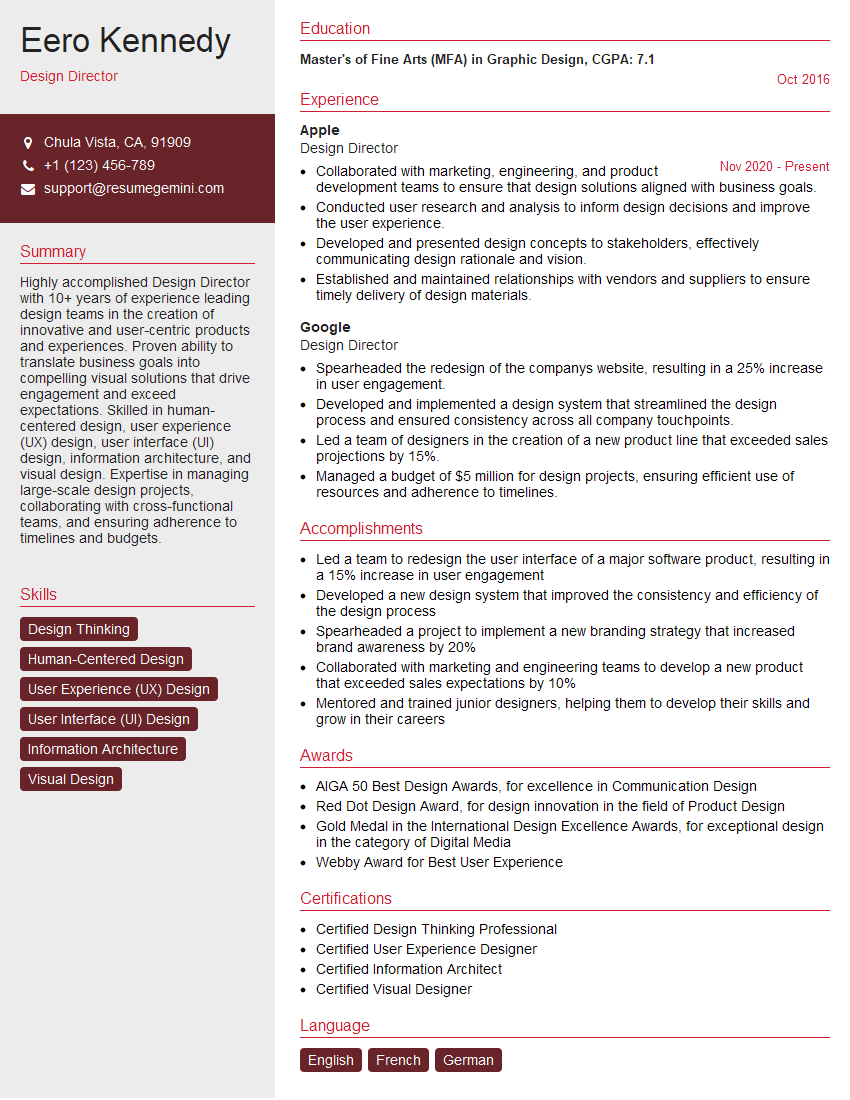
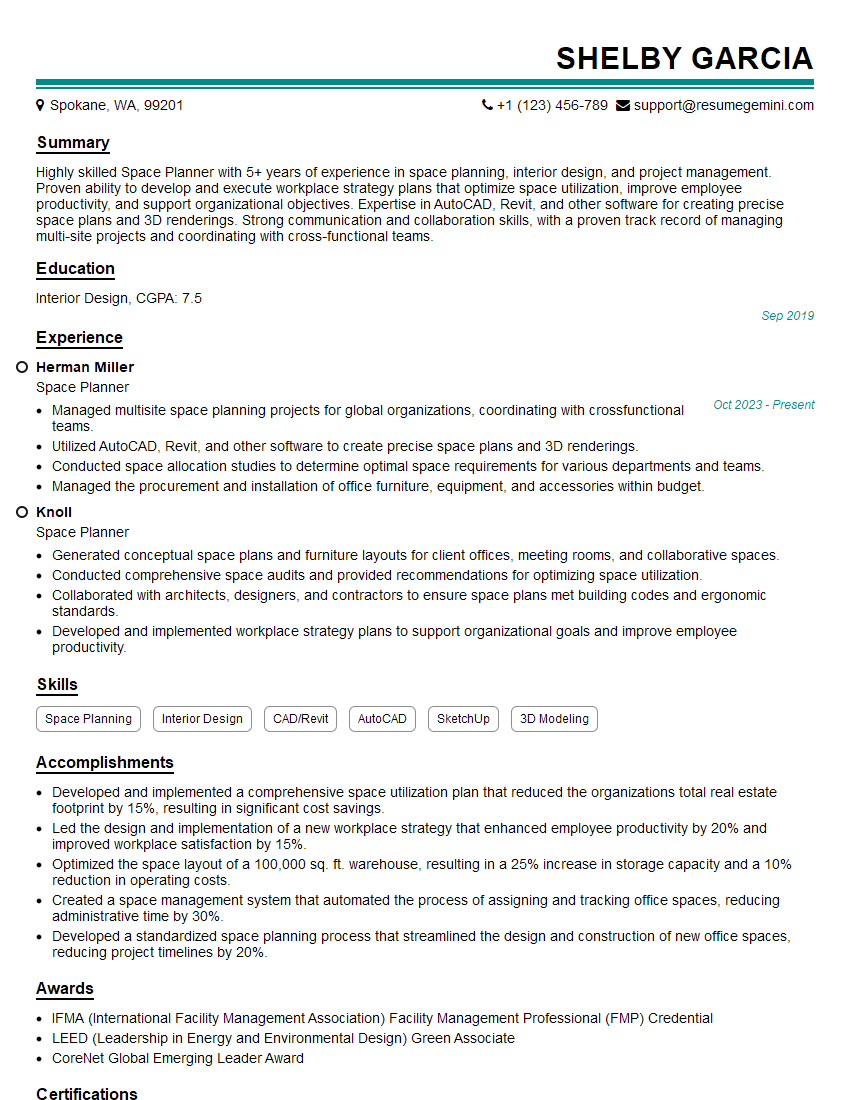
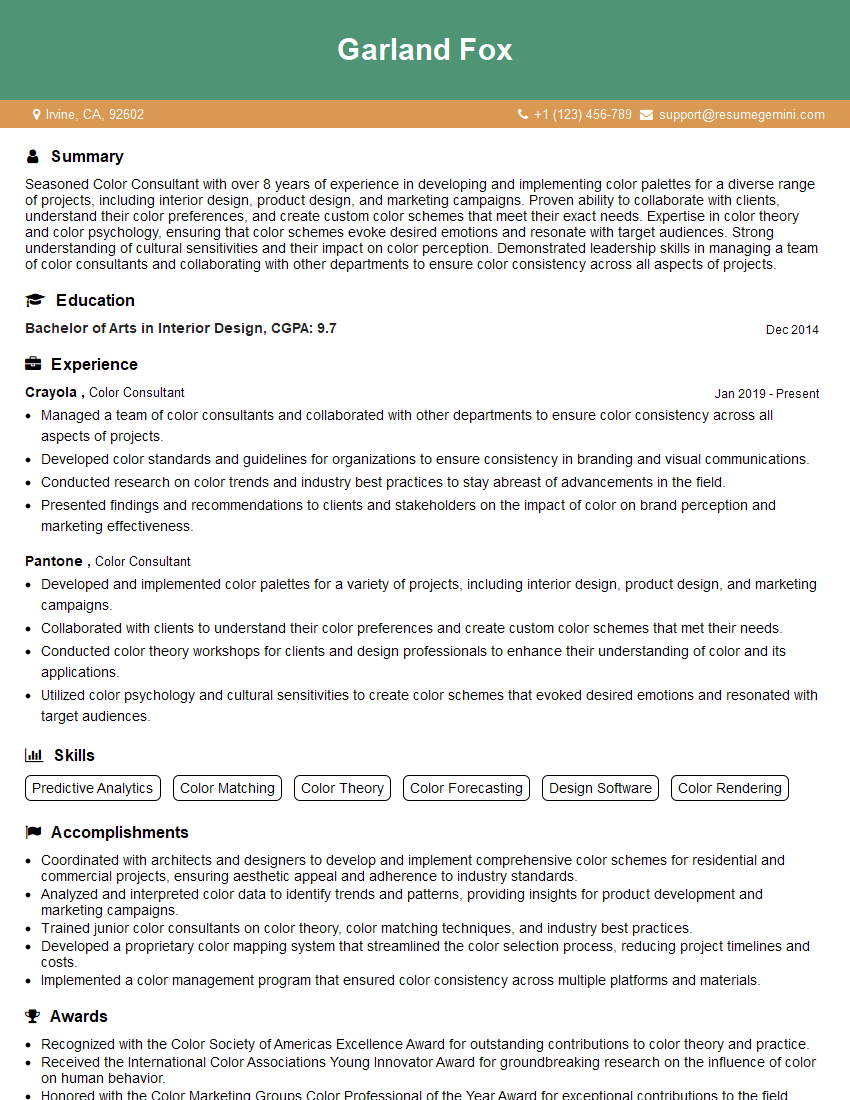
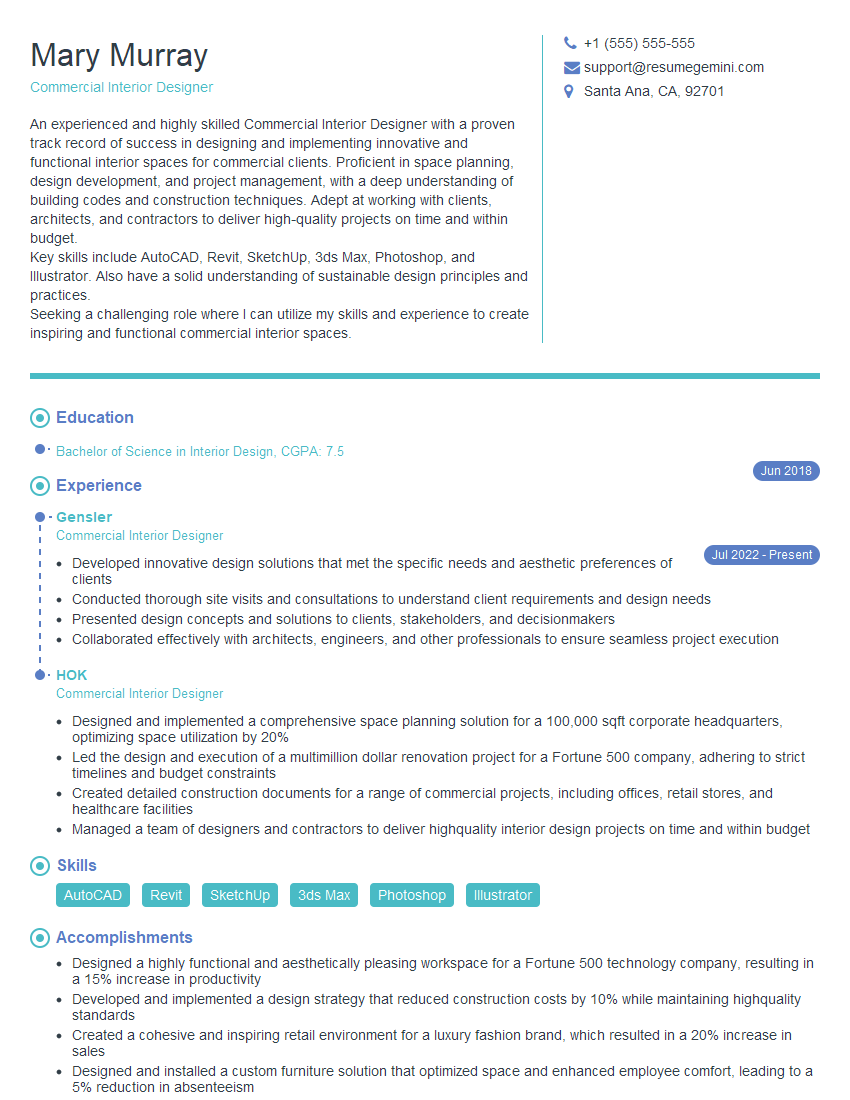
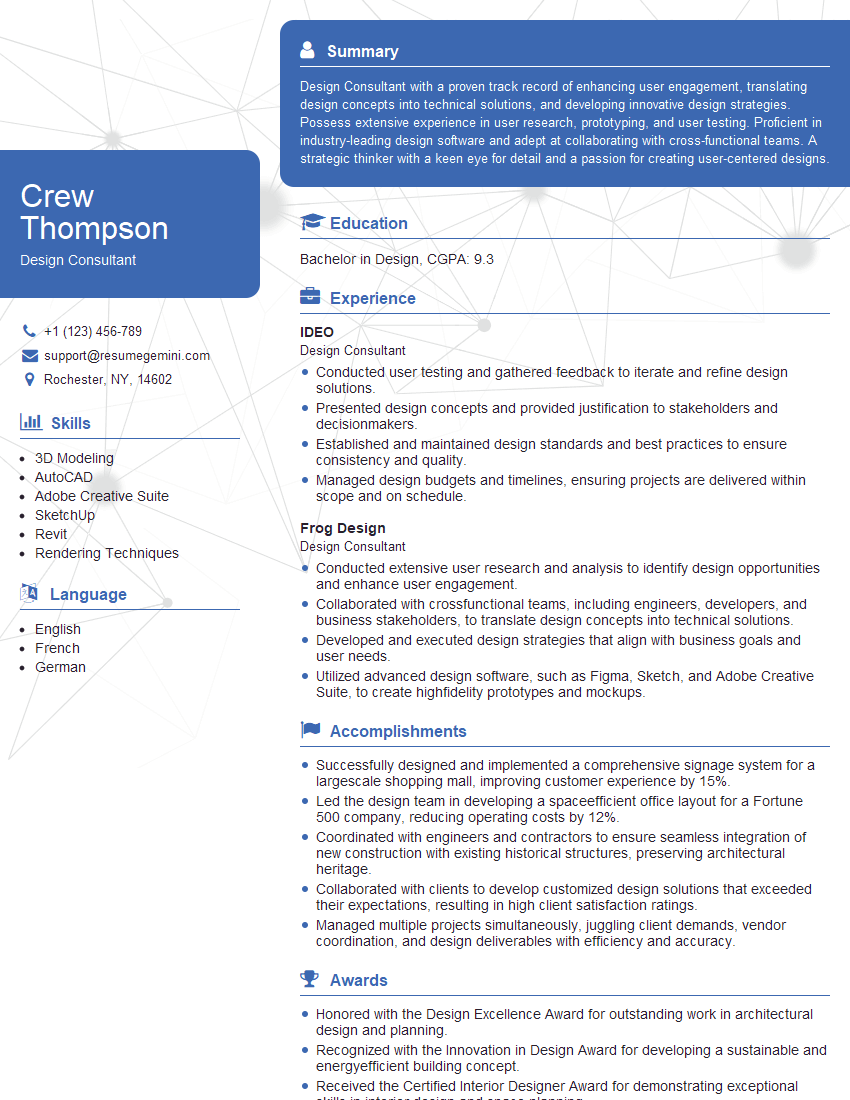
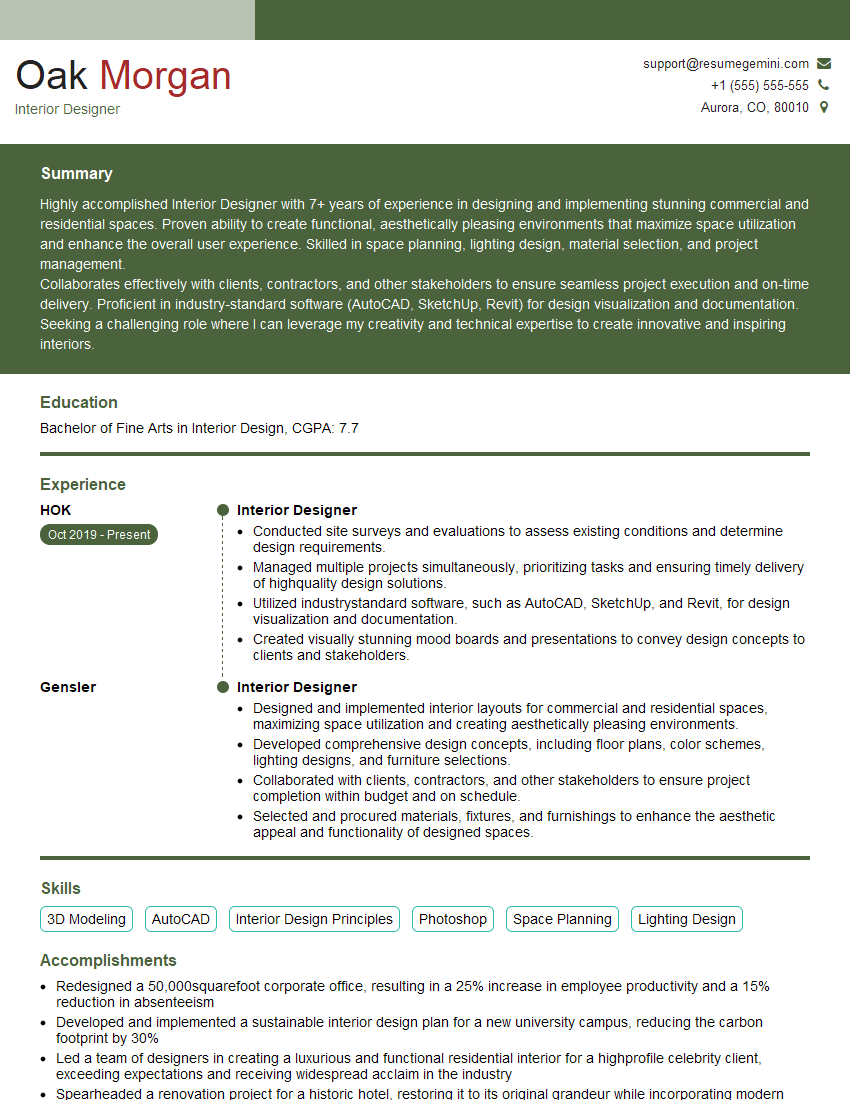
Earning your ASID Certification significantly enhances your career prospects, opening doors to advanced roles and increased earning potential. To maximize your job search success, it’s crucial to create a compelling, ATS-friendly resume that highlights your skills and experience effectively. ResumeGemini is a trusted resource to help you build a professional resume that showcases your qualifications to potential employers. We offer examples of resumes tailored to ASID Certification to help you get started. Take the next step towards your dream career today!
Explore more articles
Users Rating of Our Blogs
Share Your Experience
We value your feedback! Please rate our content and share your thoughts (optional).
What Readers Say About Our Blog
I Redesigned Spongebob Squarepants and his main characters of my artwork.
https://www.deviantart.com/reimaginesponge/art/Redesigned-Spongebob-characters-1223583608
IT gave me an insight and words to use and be able to think of examples
Hi, I’m Jay, we have a few potential clients that are interested in your services, thought you might be a good fit. I’d love to talk about the details, when do you have time to talk?
Best,
Jay
Founder | CEO