Cracking a skill-specific interview, like one for Bandwidth Analysis, requires understanding the nuances of the role. In this blog, we present the questions you’re most likely to encounter, along with insights into how to answer them effectively. Let’s ensure you’re ready to make a strong impression.
Questions Asked in Bandwidth Analysis Interview
Q 1. Explain the difference between bandwidth and throughput.
Bandwidth and throughput are often confused, but they represent different aspects of network performance. Think of a highway: bandwidth is the maximum capacity of the highway – the number of lanes and its speed limit. It represents the theoretical maximum amount of data that can be transmitted over a network connection in a given amount of time. Throughput, on the other hand, is the actual amount of data successfully transferred over that highway during a specific period. It’s the number of cars actually traveling on the highway at a given time. While bandwidth sets the upper limit, throughput is the real-world performance, often influenced by factors like congestion, errors, and protocol overhead.
For example, a network connection might have a bandwidth of 1 Gigabit per second (Gbps), but its throughput might be only 500 Megabits per second (Mbps) due to network congestion or limitations of the devices involved.
Q 2. What are the common units used to measure bandwidth?
Bandwidth is typically measured in bits per second (bps), but you’ll often encounter multiples like:
Kbps(kilobits per second): 1000 bpsMbps(megabits per second): 1,000,000 bpsGbps(gigabits per second): 1,000,000,000 bpsTbps(terabits per second): 1,000,000,000,000 bps
It’s crucial to distinguish between bits (b) and bytes (B), where 1 byte = 8 bits. So, a 1 Gbps connection is equivalent to 125 MBps (Megabytes per second).
Q 3. Describe different methods for measuring network bandwidth.
Several methods exist for measuring network bandwidth. The simplest involve dedicated tools or built-in operating system utilities:
- Ping tests: While primarily for latency measurement, ping tests can indirectly indicate bandwidth issues if responses are slow or dropped.
ping - Traceroute/Tracert: These trace the path of a packet to a destination, revealing potential bottlenecks along the way.
tracert - Bandwidth testing tools: Numerous online services and applications (e.g., Ookla’s Speedtest) use server-client exchanges to measure download and upload speeds. These tools generate significant traffic; hence, it’s recommended to perform these tests during off-peak hours.
- Network monitoring tools: Sophisticated tools like SolarWinds, PRTG, or Wireshark provide real-time monitoring and detailed analysis of network traffic, providing insights into bandwidth usage patterns and potential bottlenecks.
Professional network engineers may use more advanced methods like packet capture and analysis using tools like Wireshark to identify specific applications or protocols consuming significant bandwidth.
Q 4. How does bandwidth affect network latency?
Bandwidth and latency are inversely related, but not directly proportional. Lower bandwidth generally leads to higher latency (increased delay). Imagine a single-lane road versus a multi-lane highway. The single-lane road (low bandwidth) will experience significant delays (high latency) as cars (data packets) compete for space, while the multi-lane highway (high bandwidth) allows for smoother, faster travel (lower latency).
However, latency can also be affected by factors independent of bandwidth, such as the physical distance of the network nodes or processing delays at network devices (routers, switches).
Q 5. Explain the concept of bandwidth utilization.
Bandwidth utilization refers to the percentage of available bandwidth that is actively being used. A utilization of 100% means that the network is operating at its maximum capacity. High utilization can indicate an efficient use of resources or a potential bottleneck, depending on the context. Ideally, you want high utilization without exceeding the capacity, as exceeding this leads to performance degradation and packet loss.
Monitoring bandwidth utilization is crucial for capacity planning and troubleshooting. A consistently high utilization rate might indicate the need for network upgrades or optimization to prevent performance issues.
Q 6. What are the common causes of bandwidth bottlenecks?
Bandwidth bottlenecks can arise from various sources:
- Insufficient bandwidth: The most straightforward cause is simply not having enough bandwidth to handle the current traffic load.
- Network congestion: Too many devices competing for the same bandwidth can lead to congestion and slowdowns.
- Faulty network equipment: Problems with routers, switches, or network interfaces can significantly reduce throughput.
- Application-level issues: Inefficient applications or protocols can consume excessive bandwidth.
- Malware or viruses: Malicious software can consume bandwidth by sending out unsolicited data or performing other resource-intensive activities.
- Network configuration errors: Incorrect network settings like incorrect subnet masks or routing tables can also create bottlenecks.
Q 7. How do you identify bandwidth bottlenecks in a network?
Identifying bandwidth bottlenecks requires a systematic approach:
- Monitor network traffic: Use network monitoring tools to track bandwidth usage patterns, identifying devices or applications consuming the most bandwidth.
- Analyze network latency: High latency can pinpoint locations of congestion along the network path.
- Check network devices: Examine routers, switches, and network interfaces for errors or performance limitations.
- Run bandwidth tests: Conduct tests from different points in the network to identify specific segments with low throughput.
- Review network configuration: Verify network settings to rule out configuration errors.
- Investigate applications: Identify applications consuming excessive bandwidth and investigate their resource utilization.
- Consider hardware upgrades: If bottlenecks persist, upgrading network equipment, such as routers or switches, may be necessary.
By using a combination of these methods, you can systematically pinpoint the source of bandwidth bottlenecks and implement effective solutions.
Q 8. Explain different techniques for bandwidth optimization.
Bandwidth optimization involves techniques to maximize the effective use of available network bandwidth. Think of it like optimizing space in your house – you want to make the most of every square foot. Here are some key strategies:
Compression: Reducing the size of data packets before transmission. This is like packing your suitcase efficiently; you fit more in the same space. Common techniques include gzip and deflate.
Caching: Storing frequently accessed data closer to users. Imagine having a local copy of often-used files instead of constantly downloading them from a distant server – it’s much faster.
Content Delivery Networks (CDNs): Distributing content across multiple servers globally. This ensures users access content from the closest server, reducing latency and improving download speeds. Think of it as having copies of a popular book in libraries across the country instead of only one central location.
Traffic Shaping/Prioritization (QoS): Giving priority to certain types of traffic (like video conferencing) over others (like file downloads). This is similar to emergency vehicles having right-of-way on a busy road.
Network Upgrades: Investing in higher bandwidth infrastructure, such as faster internet connections and more powerful routers and switches. This is like upgrading to a bigger house to accommodate your growing family.
Protocol Optimization: Using more efficient protocols that reduce overhead and improve transmission speeds. This is akin to streamlining your workflow to complete tasks more efficiently.
Q 9. Describe Quality of Service (QoS) and its role in bandwidth management.
Quality of Service (QoS) is a set of mechanisms that ensures certain types of network traffic receive preferential treatment over others. It’s crucial for bandwidth management as it allows for guaranteed bandwidth allocation and prioritization, preventing congestion and ensuring the performance of critical applications. Imagine a hospital needing to prioritize emergency calls over regular phone calls – QoS does that for network traffic.
QoS mechanisms typically involve techniques like:
Traffic Classification: Identifying different types of network traffic based on protocols, ports, or other characteristics.
Traffic Prioritization: Assigning priority levels to different types of traffic, ensuring higher-priority traffic gets preferential treatment.
Traffic Policing: Limiting the bandwidth used by individual applications or users to prevent them from consuming excessive resources.
Traffic Shaping: Smoothing out bursts of traffic to prevent network congestion.
In a video conferencing scenario, QoS ensures that video and audio streams have priority over less time-sensitive background tasks, preventing dropped calls and ensuring smooth communication.
Q 10. What is traffic shaping and how does it manage bandwidth?
Traffic shaping is a bandwidth management technique that controls the rate at which data is transmitted over a network. It’s like a traffic light system for network traffic – it regulates the flow to prevent congestion and ensure fairness among different users or applications.
Traffic shaping can be implemented using various methods, including:
Queuing: Data packets are placed in queues based on priority, and the rate at which they are processed is controlled.
Rate Limiting: The maximum rate at which a particular application or user can transmit data is limited.
Packet Scheduling: The order in which data packets are sent is carefully managed to ensure fair distribution of bandwidth.
For example, a traffic shaper might prioritize voice and video calls over file transfers, preventing delays in communication even during periods of high network activity. It ensures a smoother user experience by preventing bursts of traffic from overwhelming the network.
Q 11. Explain the concept of network congestion.
Network congestion occurs when the demand for network bandwidth exceeds the available capacity. Think of it as a traffic jam on a highway – too many cars trying to use the same limited space lead to slowdowns and delays.
Congestion leads to:
Increased latency: Data takes longer to reach its destination.
Packet loss: Data packets are dropped due to insufficient buffer space.
Reduced throughput: The overall data transfer rate decreases.
Congestion can be caused by various factors, such as excessive traffic, faulty network equipment, or inefficient network design. Managing congestion requires implementing bandwidth optimization techniques and employing tools for monitoring and analyzing network performance.
Q 12. How does network topology affect bandwidth?
Network topology, the physical or logical layout of a network, significantly impacts bandwidth. Different topologies offer varying levels of efficiency and resilience. A well-designed topology can significantly improve bandwidth utilization, while a poorly designed one can create bottlenecks and reduce performance.
For instance:
Star topology: Generally efficient with a central hub connecting all devices. However, a failure of the central hub can bring down the entire network.
Bus topology: Simple but susceptible to bottlenecks as all traffic flows through a single path. A single point of failure can disrupt the entire network.
Ring topology: Data flows in a loop, offering redundancy. However, a failure in any point of the ring can affect the overall network.
Mesh topology: Highly redundant with multiple paths between devices, offering high bandwidth and resilience. It’s more complex and expensive to implement.
Choosing the right topology depends on factors like network size, performance requirements, and budget. A mesh topology is generally preferred for high-bandwidth applications requiring high reliability, while a star topology might be sufficient for smaller networks.
Q 13. Describe the impact of protocols (TCP/IP) on bandwidth.
The Transmission Control Protocol/Internet Protocol (TCP/IP) suite significantly impacts bandwidth. TCP, a connection-oriented protocol, provides reliable data delivery but introduces overhead in terms of acknowledgments and retransmissions. This can impact bandwidth, especially in high-latency networks. UDP, a connectionless protocol, offers faster transmission but lacks reliability.
Consider these impacts:
TCP Congestion Control: TCP’s congestion control mechanisms, such as slow start and congestion avoidance, dynamically adjust the transmission rate based on network conditions. This helps prevent congestion but can also limit bandwidth during periods of low congestion.
TCP Overhead: TCP’s acknowledgments and error correction mechanisms add overhead, reducing the effective bandwidth available for data transfer. This is why UDP is preferred for real-time applications where low latency is more crucial than reliable delivery.
Segment Size: The size of TCP segments can influence bandwidth. Larger segments can improve efficiency but can also lead to increased packet loss if network conditions are poor.
Selecting the appropriate protocol (TCP or UDP) depends on the application’s requirements. Real-time streaming might benefit from UDP’s speed, while file transfer needs the reliability of TCP. Optimizing TCP settings, such as segment size and window size, can also help improve bandwidth utilization.
Q 14. What are the challenges of managing bandwidth in cloud environments?
Managing bandwidth in cloud environments presents unique challenges due to the shared nature of resources and the dynamic scalability of cloud infrastructure. Think of it as managing a shared apartment building – you need to ensure everyone has access to the resources they need without exceeding the building’s capacity.
Key challenges include:
Burstiness of Traffic: Cloud applications often experience unpredictable spikes in traffic, making it difficult to predict and provision bandwidth accurately. This is like unexpected guests arriving at your apartment building.
Multi-Tenancy: Multiple users and applications share the same infrastructure, requiring effective resource allocation and isolation to prevent one user from impacting others. This is similar to managing shared utilities in an apartment building.
Dynamic Scaling: Cloud resources are often scaled up or down automatically based on demand. This can lead to bandwidth fluctuations if not managed properly. This is like having the building’s capacity change based on the number of residents.
Monitoring and Visibility: It’s crucial to have robust monitoring tools to track bandwidth usage and identify potential bottlenecks. This is akin to having meters to monitor the usage of shared resources in the building.
Effective bandwidth management in the cloud requires a combination of techniques such as QoS, traffic shaping, CDN usage, and proactive capacity planning. Automated scaling and cloud-native monitoring tools are also essential for efficient resource utilization and performance optimization.
Q 15. How do you monitor network bandwidth usage?
Monitoring network bandwidth usage involves tracking the amount of data transmitted and received over a network within a specific timeframe. This is crucial for identifying bottlenecks, optimizing performance, and ensuring efficient resource allocation. We achieve this using a combination of methods:
Network Monitoring Tools: These tools (discussed further in the next question) provide real-time and historical data on bandwidth consumption. They often offer visual representations like graphs and charts, making it easy to spot trends and anomalies.
SNMP (Simple Network Management Protocol): SNMP is a standard protocol for collecting network information from devices. Monitoring tools use SNMP to query routers, switches, and servers for bandwidth statistics.
NetFlow/sFlow: These are network monitoring protocols that provide detailed information about network traffic flows, including source and destination IP addresses, port numbers, and bytes transferred. This granular data allows for in-depth bandwidth analysis.
Device-Specific Interfaces: Many network devices (routers, firewalls) have web interfaces or command-line interfaces that display bandwidth utilization statistics. Checking these interfaces directly provides valuable, localized insights.
Imagine a hospital network. By monitoring bandwidth, we can identify if a specific department is experiencing unusually high traffic, potentially indicating a problem or the need for increased capacity. We might find that during peak hours, the radiology department’s image transfer is overloading the network, requiring immediate attention.
Career Expert Tips:
- Ace those interviews! Prepare effectively by reviewing the Top 50 Most Common Interview Questions on ResumeGemini.
- Navigate your job search with confidence! Explore a wide range of Career Tips on ResumeGemini. Learn about common challenges and recommendations to overcome them.
- Craft the perfect resume! Master the Art of Resume Writing with ResumeGemini’s guide. Showcase your unique qualifications and achievements effectively.
- Don’t miss out on holiday savings! Build your dream resume with ResumeGemini’s ATS optimized templates.
Q 16. Explain the use of network monitoring tools for bandwidth analysis.
Network monitoring tools are indispensable for bandwidth analysis. They collect, aggregate, and present network data in a user-friendly format, allowing for efficient identification of performance issues and capacity planning. These tools offer a range of functionalities:
Real-time Bandwidth Monitoring: They display current bandwidth usage, allowing you to immediately identify potential bottlenecks.
Historical Data Analysis: They store historical data, enabling the identification of trends and patterns in bandwidth consumption over time. This is crucial for forecasting future needs.
Alerting and Notifications: They can be configured to generate alerts when bandwidth usage exceeds predefined thresholds, enabling proactive response to potential issues.
Traffic Flow Analysis: Tools like SolarWinds, PRTG, and ManageEngine provide detailed information about individual network flows, identifying top bandwidth consumers.
Reporting and Visualization: They generate comprehensive reports and visualizations (graphs, charts) to effectively communicate bandwidth usage patterns to stakeholders.
For instance, imagine a large enterprise network. Using a network monitoring tool, we might discover that a specific application is consistently consuming a disproportionate amount of bandwidth during peak hours. This would help us prioritize network optimization efforts towards that application, perhaps by implementing QoS policies or upgrading the application itself.
Q 17. Discuss the importance of network capacity planning.
Network capacity planning is the process of determining the required network infrastructure to meet current and future bandwidth demands. It’s paramount for ensuring optimal network performance, avoiding bottlenecks, and minimizing downtime. Inadequate planning can lead to performance degradation, application failures, and increased operational costs. Effective capacity planning involves:
Forecasting future bandwidth needs: Accurately predicting the growth in data traffic based on historical trends and business projections.
Analyzing current network usage patterns: Identifying peak usage times, top bandwidth consumers, and potential bottlenecks.
Determining appropriate hardware and software resources: Selecting the right network devices (routers, switches) and configurations to handle predicted bandwidth demands.
Implementing network monitoring and management tools: Tracking bandwidth usage, identifying performance issues, and optimizing network performance.
Consider a rapidly growing e-commerce company. Without proper capacity planning, an unexpected surge in online orders during a promotional campaign could overwhelm the network, resulting in website downtime and significant financial losses. Strategic planning prevents such scenarios.
Q 18. How do you forecast future bandwidth needs?
Forecasting future bandwidth needs involves analyzing historical data, considering projected growth, and incorporating qualitative factors. It’s not merely extrapolation; it requires a blend of quantitative and qualitative analysis. Here’s a structured approach:
Historical Data Analysis: Gather historical bandwidth usage data from network monitoring tools. Analyze trends, growth rates, and seasonal variations.
Business Projections: Collaborate with business stakeholders to understand projected growth in users, applications, and data volume. Consider factors like new product launches, marketing campaigns, and anticipated user growth.
Technology Trends: Factor in the impact of emerging technologies like cloud computing, IoT, and video streaming on bandwidth demands. These technologies often lead to significant increases in data traffic.
Application Performance: Analyze the bandwidth requirements of individual applications. Consider optimizing applications to reduce their bandwidth footprint.
Statistical Modeling: Employ statistical methods (e.g., linear regression, exponential smoothing) to project future bandwidth needs based on historical data.
A common technique is to use historical data to create a growth curve, which predicts bandwidth demand over time. Then, we adjust the projections based on anticipated changes in business activities and technological advancements. For example, if a company plans to launch a new video streaming service, a significant increase in bandwidth requirements must be factored in.
Q 19. Describe different bandwidth allocation strategies.
Bandwidth allocation strategies determine how available bandwidth is distributed among different users and applications. The optimal strategy depends on the specific network environment and its requirements. Common strategies include:
Static Allocation: A fixed amount of bandwidth is assigned to each user or application. This is simple to implement but inflexible and may lead to inefficient resource utilization.
Dynamic Allocation: Bandwidth is allocated on demand, adapting to changing network conditions. This improves efficiency but requires more complex management.
Priority-Based Allocation (QoS): Bandwidth is prioritized based on application requirements. Critical applications (e.g., VoIP, video conferencing) receive higher priority, ensuring better performance even during periods of high network congestion. This often uses techniques like Weighted Fair Queuing (WFQ).
Fair Queuing: Bandwidth is distributed fairly among users, preventing one user from monopolizing the network. Round Robin and Weighted Fair Queuing (WFQ) are common examples.
Guaranteed Rate Allocation: A minimum bandwidth is guaranteed to each user or application, providing predictable performance. This is commonly used in service level agreements (SLAs).
For example, in a hospital network, priority-based allocation would give higher bandwidth priority to medical imaging systems and emergency communication systems, ensuring timely and reliable operation.
Q 20. Explain the role of bandwidth in VoIP and video conferencing.
Bandwidth plays a critical role in the performance of VoIP (Voice over IP) and video conferencing applications. Insufficient bandwidth leads to noticeable degradation in quality and usability:
VoIP: VoIP requires a dedicated bandwidth for real-time voice transmission. Insufficient bandwidth leads to dropped calls, choppy audio, and increased latency (delay). Typical recommendations range from 64 kbps to 128 kbps per call, depending on codec and quality requirements. Higher bandwidth provides better quality and handles multiple concurrent calls effectively.
Video Conferencing: Video conferencing demands significantly more bandwidth than VoIP, as it transmits both audio and video data. The required bandwidth depends on the video resolution, frame rate, and compression techniques used. HD video conferencing can require several Mbps per participant. Insufficient bandwidth leads to pixelation, freezing, and poor video quality.
Imagine a large virtual meeting with multiple participants sharing screens. If the network bandwidth is insufficient, the meeting will experience noticeable delays, buffering, and poor video quality, making it disruptive and unproductive. Adequate bandwidth is vital for a seamless and high-quality experience.
Q 21. How does bandwidth affect application performance?
Bandwidth directly affects application performance. Limited bandwidth leads to various problems:
Increased Latency: Higher latency (delay) means slower response times for applications. This is particularly noticeable in interactive applications like online gaming or video conferencing.
Reduced Throughput: Lower throughput (data transfer rate) means applications take longer to load and transfer data. This can be experienced when downloading large files or streaming high-definition video.
Application Errors: Insufficient bandwidth can lead to application errors or crashes, as the application may not be able to receive or send data at the required rate.
Poor User Experience: The cumulative effect of increased latency, reduced throughput, and application errors results in a negative user experience, impacting productivity and user satisfaction.
For example, a web application with images and videos will load slower with inadequate bandwidth. In a business setting, this can lead to decreased productivity, as employees spend more time waiting for applications to load or respond. This emphasizes the necessity of sufficient bandwidth for smooth and efficient operations.
Q 22. What are the security implications of bandwidth management?
Bandwidth management, while crucial for network performance, introduces several security implications. Poorly configured bandwidth management can create vulnerabilities. For example, prioritizing certain traffic types might unintentionally favor malicious traffic over legitimate traffic. This could allow an attacker to bypass security measures designed to filter or block harmful content. Additionally, inadequate monitoring of bandwidth usage can mask suspicious activity. A sudden spike in data transfer to an unusual location might indicate a data breach, but this could be missed if bandwidth monitoring isn’t comprehensive enough.
Another risk is the potential for denial-of-service (DoS) attacks. If an attacker can flood a network with excessive traffic, even a well-managed bandwidth system might be overwhelmed, leading to a disruption of service. Finally, improperly secured bandwidth management tools themselves can become targets for attacks, compromising the entire network’s security.
Q 23. How can you improve bandwidth security?
Improving bandwidth security requires a multi-layered approach. Firstly, robust network security policies are essential. This includes firewalls, intrusion detection/prevention systems (IDS/IPS), and regular security audits to identify and address vulnerabilities. Secondly, implementing granular bandwidth control allows you to prioritize critical traffic and throttle or block suspicious activity. Think of it as a bouncer at a club – only allowing legitimate traffic in. This can be achieved through Quality of Service (QoS) mechanisms that prioritize time-sensitive applications such as VoIP over less important traffic.
Thirdly, strong authentication and authorization are critical for accessing bandwidth management tools. This prevents unauthorized users from modifying configurations that could compromise security. Regular security updates for all network devices and bandwidth management software are crucial to patch known vulnerabilities. Finally, comprehensive monitoring and logging provide visibility into network activity, enabling you to detect and respond to security threats swiftly. Imagine this as having security cameras watching your network, alerting you to any unusual activity.
Q 24. Describe your experience with bandwidth testing tools.
Throughout my career, I’ve extensively used various bandwidth testing tools, including commercial solutions like SolarWinds Network Performance Monitor and PRTG Network Monitor, and open-source options such as iPerf and Ookla’s Speedtest. My experience encompasses both wired and wireless environments, using tools tailored to the specific context. For instance, when assessing the performance of a WAN link connecting multiple offices, I’d utilize iPerf to measure throughput and latency between locations. For evaluating the internet bandwidth available to end-users, Speedtest provides a readily available and user-friendly option.
I’m proficient in interpreting the results obtained from these tools, identifying bottlenecks, and using the data to inform network optimization strategies. I understand the nuances of different testing methodologies and the importance of conducting tests under various load conditions to get a realistic picture of network performance. My experience extends to using specialized tools for specific technologies such as analyzing Wi-Fi performance using tools like Wireshark and inSSIDer.
Q 25. Explain how you would troubleshoot a bandwidth issue.
Troubleshooting bandwidth issues involves a systematic approach. I begin by gathering information – what symptoms are users experiencing? Is it slow downloads, high latency, or dropped connections? This initial information helps to narrow down the possible causes. Next, I examine network monitoring data to pinpoint the location and severity of the problem. Tools like network management systems (NMS) and bandwidth monitoring software offer real-time insights into traffic patterns and resource utilization. This helps to identify bottlenecks in the network.
Then, I would move onto more focused diagnostics. This could involve checking the physical layer for cable issues, inspecting router configurations for errors or misconfigurations, or using packet sniffers like Wireshark to analyze network traffic. Based on the results of this analysis, I would implement the necessary fix. This might include replacing faulty cables, adjusting QoS settings, upgrading network hardware or even addressing a software issue. Throughout the process, I document each step meticulously, ensuring the problem is resolved effectively and efficiently, and preventing recurrence.
Q 26. How do you handle conflicting bandwidth requirements?
Conflicting bandwidth requirements are a common challenge. Prioritization is key. This is where QoS comes into play. QoS allows you to assign different priorities to various network traffic types based on their importance. For instance, you might prioritize VoIP calls over file transfers. This ensures that critical applications maintain acceptable performance even during periods of high network utilization. It’s like having different lanes on a highway; each lane has different speed limits and usage requirements. Critical traffic goes on the fast lane while others are assigned to the others.
Another strategy is to optimize bandwidth usage. This includes identifying and addressing inefficiencies in applications or processes that consume excessive bandwidth. This might involve implementing network optimization techniques, such as compression or caching. Finally, if the existing bandwidth is insufficient to meet all requirements, upgrading the network infrastructure – adding more bandwidth or upgrading existing equipment – might be necessary. This is essentially expanding the highway to add more lanes for increased capacity.
Q 27. Discuss your experience with different network technologies and their bandwidth capabilities.
My experience spans various network technologies, each with distinct bandwidth capabilities. I’ve worked extensively with Ethernet networks, from 10 Mbps to 10 Gbps and beyond, understanding the impact of different cabling and switching technologies on bandwidth. I’m familiar with the limitations of older standards and the performance benefits of newer technologies. I also have experience with wireless technologies, including Wi-Fi (802.11 a/b/g/n/ac/ax), understanding the challenges of wireless propagation, interference, and the impact of different frequency bands on bandwidth. The bandwidth differences between these standards are considerable.
Furthermore, I’ve worked with WAN technologies such as MPLS, SD-WAN, and various internet access technologies like DSL, Cable, and Fiber optics, each possessing distinct bandwidth characteristics and limitations. This includes understanding the intricacies of network protocols and their bandwidth implications. This broad experience allows me to make informed decisions when designing, implementing, and managing networks capable of supporting diverse bandwidth needs.
Q 28. Describe a time you had to optimize bandwidth in a challenging situation.
During a large-scale event, we experienced a significant surge in network traffic that overwhelmed our existing bandwidth. Our initial bandwidth allocation proved insufficient to support the unexpectedly high number of concurrent users. This led to significant slowdowns, impacting user experience and potentially jeopardizing the event’s success. The challenge was to quickly optimize bandwidth without interrupting the event or causing further disruptions.
My approach was threefold. Firstly, I immediately implemented QoS, prioritizing critical applications like the live-streaming platform. This ensured that the most important aspects of the event continued to function smoothly. Secondly, we leveraged caching mechanisms to reduce the strain on the network by storing frequently accessed content closer to users. Finally, we temporarily upgraded our internet bandwidth by procuring additional capacity from our provider. By using this multi-pronged approach, we successfully mitigated the impact of the surge and ensured the event ran smoothly.
Key Topics to Learn for Bandwidth Analysis Interview
- Network Topologies and Protocols: Understanding different network architectures (e.g., star, mesh, ring) and protocols (e.g., TCP/IP, UDP) is fundamental. Consider their impact on bandwidth utilization and performance.
- Bandwidth Calculation and Measurement: Mastering techniques for calculating bandwidth requirements based on application needs and network characteristics. Familiarize yourself with tools and methods used for bandwidth measurement and monitoring.
- Queuing Theory and Network Congestion: Learn how queuing theory helps analyze network performance under heavy load. Understand the causes and consequences of network congestion and strategies for mitigation.
- Traffic Shaping and QoS: Explore techniques for managing network traffic, prioritizing critical applications, and ensuring quality of service (QoS) for different types of data.
- Bandwidth Optimization Techniques: Become familiar with strategies for improving network efficiency and maximizing bandwidth utilization, including techniques like caching, compression, and content delivery networks (CDNs).
- Troubleshooting Network Bottlenecks: Develop your ability to identify and resolve network performance issues related to bandwidth limitations. Practice analyzing network traffic patterns and diagnosing bottlenecks.
- Capacity Planning and Forecasting: Learn how to estimate future bandwidth needs based on projected growth and application requirements. Understand different capacity planning methodologies.
Next Steps
Mastering bandwidth analysis is crucial for career advancement in networking and related fields. A strong understanding of these concepts opens doors to exciting opportunities and higher earning potential. To maximize your job prospects, create an ATS-friendly resume that effectively highlights your skills and experience. ResumeGemini is a trusted resource that can help you build a professional and impactful resume. We provide examples of resumes tailored to Bandwidth Analysis to guide you in crafting a compelling application. Invest the time to create a strong resume – it’s your first impression on potential employers.
Data Center Manager Resume Sample
Network Engineer Resume Sample
Network Security Engineer Resume Sample
System Administrator Resume Sample
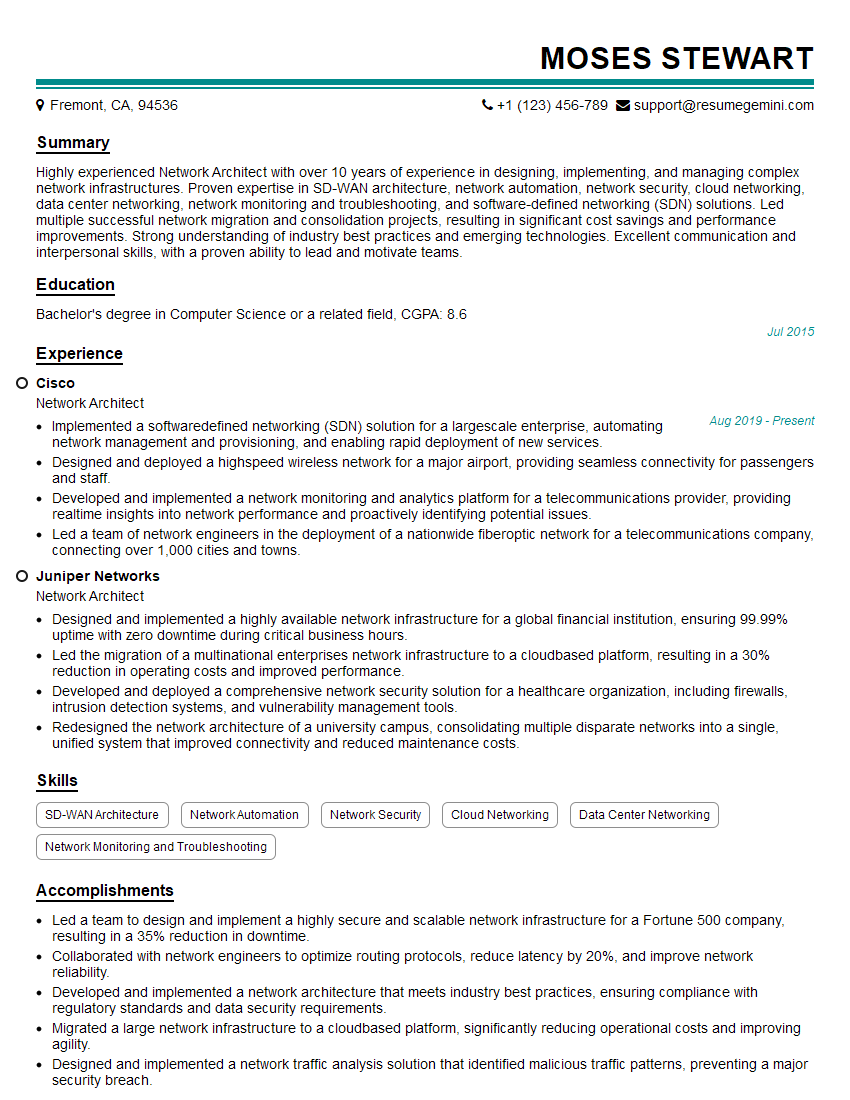
Network Architect Resume Sample
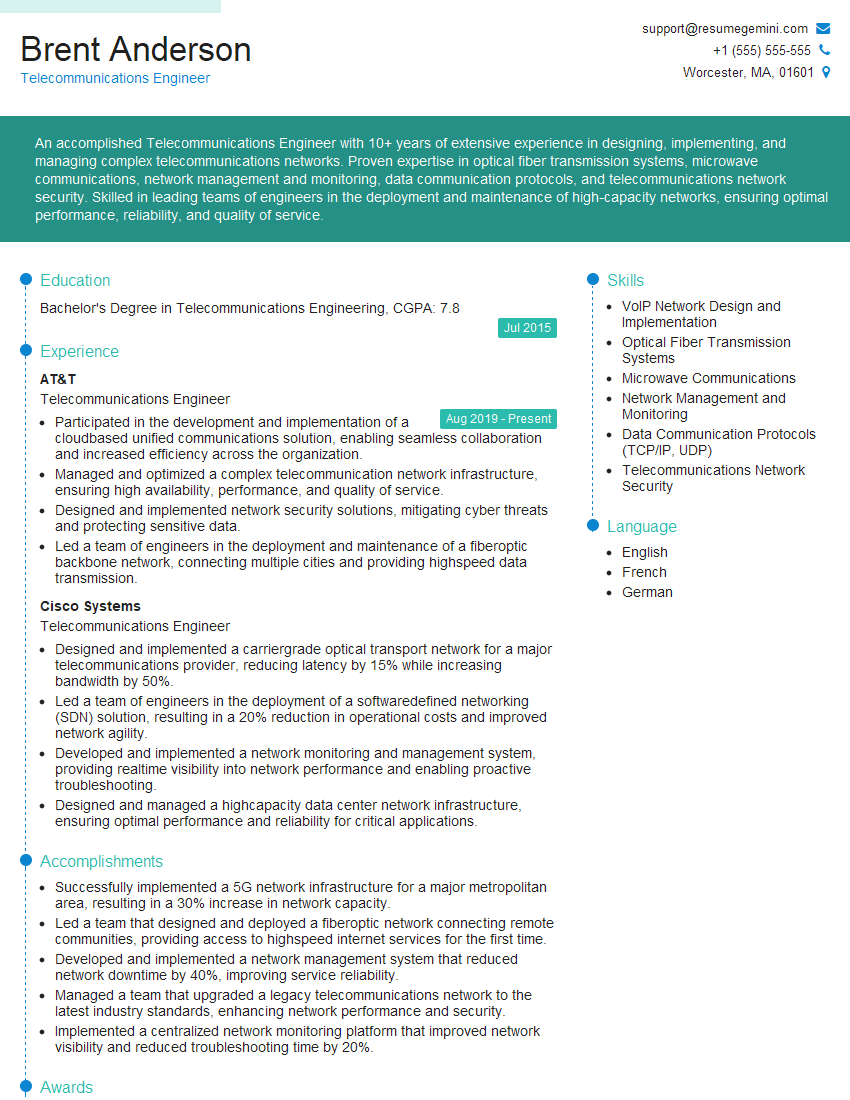
Telecommunications Engineer Resume Sample

Infrastructure Architect Resume Sample
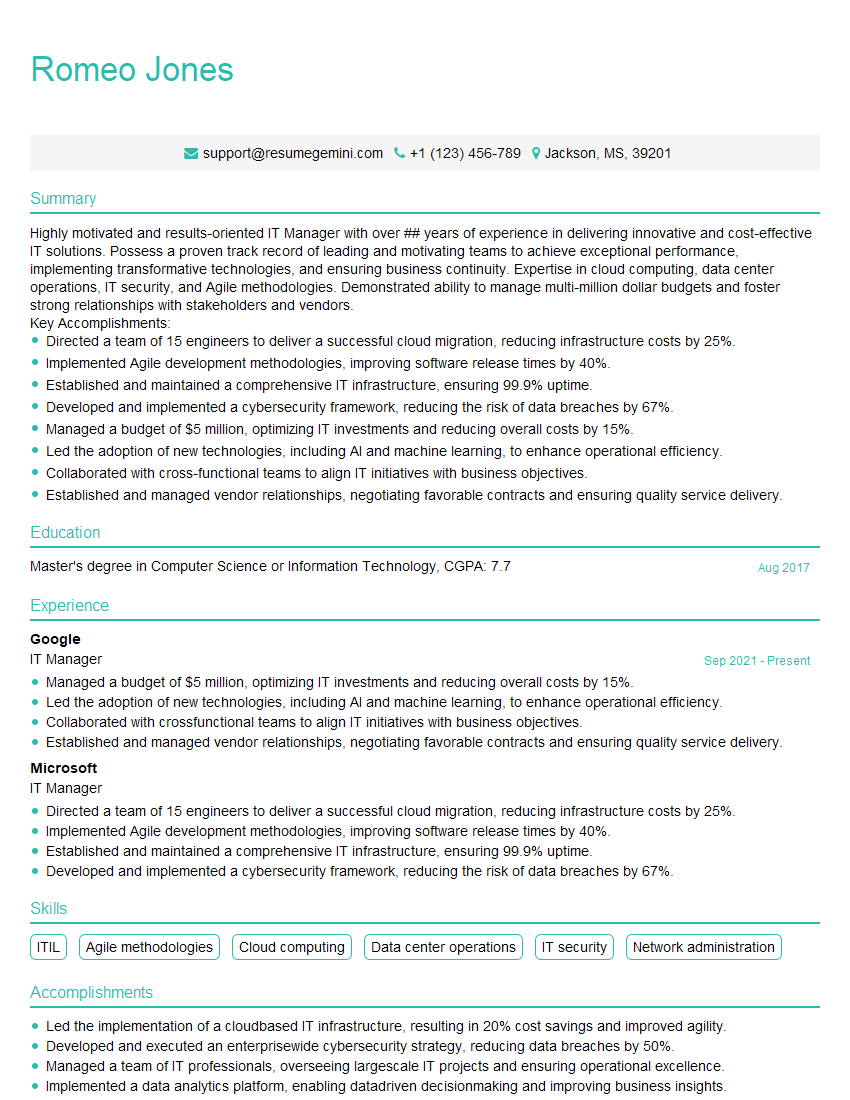
IT Manager Resume Sample
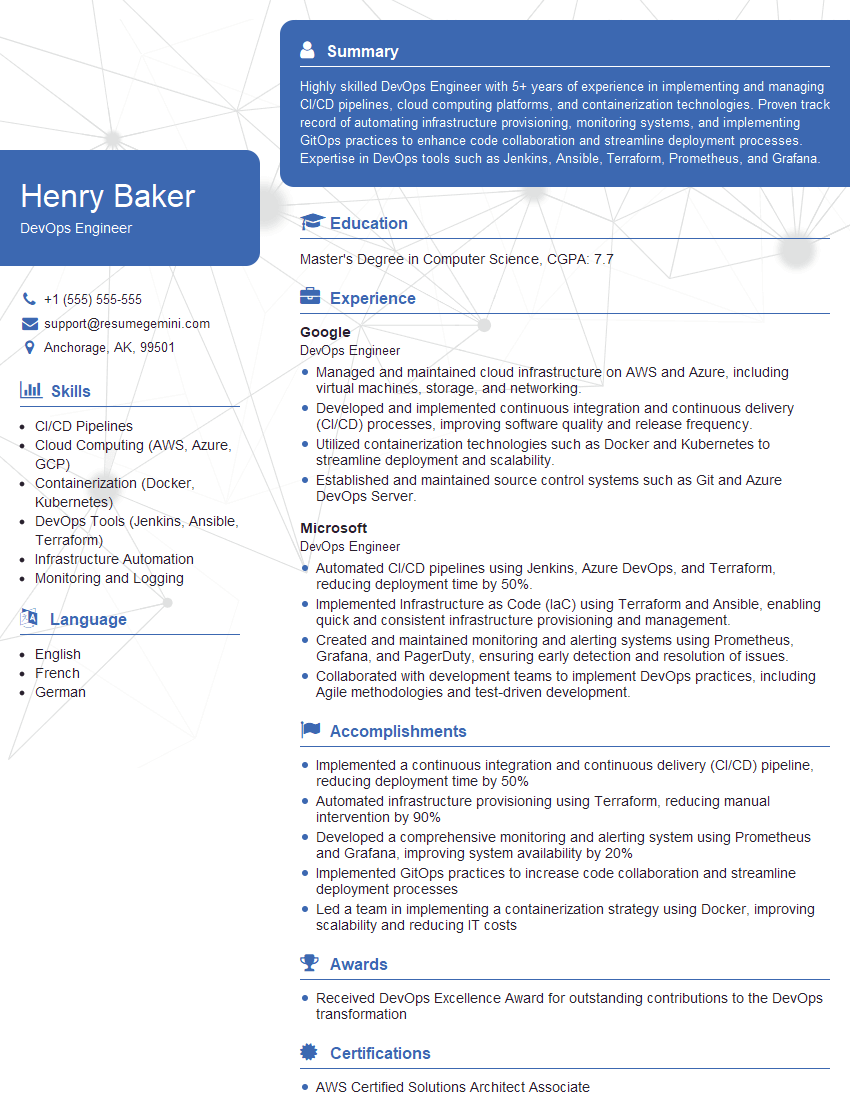
DevOps Engineer Resume Sample
Cloud Architect Resume Sample
Explore more articles
Users Rating of Our Blogs
Share Your Experience
We value your feedback! Please rate our content and share your thoughts (optional).
What Readers Say About Our Blog
I Redesigned Spongebob Squarepants and his main characters of my artwork.
https://www.deviantart.com/reimaginesponge/art/Redesigned-Spongebob-characters-1223583608
IT gave me an insight and words to use and be able to think of examples
Hi, I’m Jay, we have a few potential clients that are interested in your services, thought you might be a good fit. I’d love to talk about the details, when do you have time to talk?
Best,
Jay
Founder | CEO