Are you ready to stand out in your next interview? Understanding and preparing for Boat Handling in Various Conditions interview questions is a game-changer. In this blog, we’ve compiled key questions and expert advice to help you showcase your skills with confidence and precision. Let’s get started on your journey to acing the interview.
Questions Asked in Boat Handling in Various Conditions Interview
Q 1. Describe your experience handling boats in various weather conditions (e.g., heavy seas, fog, strong winds).
Handling boats in challenging weather requires a blend of experience, skill, and sound judgment. My experience spans a wide range of conditions, from calm seas to heavy seas, dense fog, and strong winds. In heavy seas, reducing speed, adjusting course to minimize wave impact, and ensuring proper seamanship are paramount. This includes understanding wave patterns and using them to your advantage, rather than fighting against them. I’ve navigated through many a storm, prioritizing safety over speed, constantly monitoring weather reports and adjusting my plan accordingly. In fog, I rely heavily on navigational aids (which I’ll discuss later), reduce speed significantly, and use frequent sound signals to avoid collisions. Strong winds require careful attention to sail trim (if sailing) or throttle control (if powering). Knowing the limitations of your vessel and the strength of the wind are critical; I always prioritize safety and may choose to seek shelter if the conditions exceed my vessel’s capabilities. One memorable instance involved navigating a sudden squall in the open ocean; swift reaction and decisive action were key in safely maneuvering the boat through extreme gusts.
Q 2. Explain your understanding of navigational aids and their use in different scenarios.
Navigational aids are crucial for safe and efficient boat handling. These aids include buoys (lateral marks indicating channels, cardinal marks indicating hazards), lighthouses, daymarks, and electronic charts with GPS. Each aid serves a specific purpose, helping to determine location, chart a course, and avoid dangers. For instance, a red buoy with a conical top signifies a hazard to be kept to port (left) when entering a channel. In fog, reliance shifts towards electronic aids and sound signals. GPS provides precise positioning, while radar helps detect obstacles even in low visibility. I’m proficient in interpreting various navigational charts and publications, crucial for planning routes, avoiding shallow waters, and identifying safe anchorages. Understanding the limitations of these aids is equally important; GPS can be affected by interference, and electronic charts require regular updates. A thorough understanding of traditional navigational techniques complements the electronic ones. I once had to rely entirely on dead reckoning and compass bearings when my GPS failed in a remote area – demonstrating that a combination of skills is necessary for a competent boat handler.
Q 3. How do you perform a pre-departure check on a vessel before setting sail?
A pre-departure check is non-negotiable for safe boating. It’s a systematic process I meticulously follow every time. It begins with a visual inspection of the hull for any damage or leaks, followed by checking all through-hull fittings for proper sealing. Next, I check the engine, ensuring sufficient fuel and oil levels, and performing a brief engine run to check for smooth operation. I then inspect all safety equipment – life jackets, flares, first-aid kit, fire extinguishers – ensuring they are in good condition and readily accessible. Navigation systems are verified (GPS, charts, compass), and all communication equipment is tested. I check the anchor, lines, and fenders (if docking is involved), ensuring they are secured and ready to use. Finally, I review the weather forecast and adjust my plans as needed. I use a checklist to ensure nothing is missed and always brief my crew on safety procedures and the day’s plan.
Q 4. What are the different types of knots used in boat handling and when would you use each?
Various knots are essential for securing lines and equipment on a boat. The most commonly used include:
- Bowline: Forms a fixed loop that won’t slip, perfect for attaching a mooring line to a cleat.
- Clove Hitch: A quick and easy temporary knot used for securing lines to bollards or other fixed points.
- Figure Eight Knot: Creates a secure loop at the end of a rope; often used as a stopper knot to prevent a rope from running through a block.
- Sheet Bend: Used to join two ropes of different diameters together.
- Cleat Hitch: Secures a line to a cleat.
Q 5. Explain the process of docking a boat in a confined space.
Docking in a confined space requires precision, planning, and a good understanding of wind and current. First, I assess the wind, current, and space available. I then approach the dock slowly, at a slight angle. As I get closer, I use the reverse gear and throttle control to fine-tune my positioning. Fenders and lines are prepared beforehand to protect the boat during the docking procedure. I instruct a crew member if any, to help with handling the lines. The aim is to create a controlled approach, preventing any sudden stops or movements that could damage the boat or dock. One uses the engine to carefully control speed and direction. Once alongside, I secure the boat with lines tied to cleats. Practice is key; each vessel has its own handling characteristics and the skill increases with experience.
Q 6. How do you handle emergencies, such as engine failure or a collision?
Emergency situations require quick thinking and decisive action. Engine failure, for instance, requires assessing the situation, deploying the anchor if necessary, and using radio to contact for assistance. If it’s safe to do so, I’d attempt to restart the engine following the manufacturer’s instructions. In a collision, my first priority is to assess injuries and secure the safety of everyone onboard. I’d then immediately contact the authorities, exchange details with the other party involved, and document the incident thoroughly. Following established procedures for marine accidents is crucial. In each situation, the most important aspects are maintaining calm, evaluating the danger, and acting decisively to mitigate the risks, always prioritizing the safety of those aboard and others in the vicinity.
Q 7. What safety procedures do you follow when operating a boat?
Safety is paramount. I always follow a strict set of procedures, including:
- Checking weather conditions before and during the trip.
- Wearing appropriate Personal Flotation Devices (PFDs) at all times.
- Maintaining a proper lookout for other vessels, obstructions, and hazards.
- Carrying and regularly checking safety equipment (flares, first-aid kit, fire extinguishers).
- Following the rules of navigation and local regulations.
- Never operating a vessel under the influence of alcohol or drugs.
- Being aware of the limitations of my vessel and the crew’s capabilities.
Q 8. What is your experience with chart reading and GPS navigation?
Chart reading and GPS navigation are fundamental skills for safe and efficient boat handling. My experience encompasses both traditional paper charts and modern electronic systems. I’m proficient in interpreting nautical charts, including understanding symbols, depths, navigational hazards (e.g., rocks, shoals, wrecks), and tidal information. This allows me to plan routes, avoid dangers, and estimate travel times accurately. With GPS, I can pinpoint my location, track my progress, and utilize various navigational aids like electronic charts (ECDIS), which often provide layered information such as weather overlays and AIS data (Automatic Identification System, showing the positions of other vessels).
For example, during a recent coastal cruise, I used a paper chart to plan a route through a series of narrow channels, taking into account tidal streams and known underwater obstructions. Simultaneously, my GPS provided real-time position updates and aided in avoiding unexpected obstacles. The combination of traditional chart knowledge and modern technology ensures a comprehensive and reliable navigational approach.
Q 9. Describe your knowledge of maritime regulations and safety laws.
My understanding of maritime regulations and safety laws is comprehensive. I’m familiar with the rules of navigation as defined by the International Regulations for Preventing Collisions at Sea (COLREGs), including right-of-way rules, use of lights and shapes, sound signals, and safe speed considerations. I also adhere strictly to all local and national regulations, such as licensing requirements, safety equipment mandates (life jackets, flares, first aid kit, etc.), and environmental protection laws. I regularly update my knowledge to stay abreast of any changes or new regulations.
For instance, I know that in restricted waters, a vessel must proceed at a safe speed, considering factors like visibility, traffic density, and the vessel’s maneuverability. A thorough understanding of these regulations is crucial for preventing accidents and ensuring the safety of my crew and other vessels.
Q 10. How do you assess weather conditions and make appropriate decisions based on forecasts?
Assessing weather conditions is paramount to safe boating. I begin by checking detailed weather forecasts from reputable sources, such as meteorological services or specialized marine weather apps, several days prior to departure and frequently update as I approach the area of operation. I consider factors like wind speed and direction, wave height and period, visibility, and precipitation. I also observe current conditions, paying attention to sky conditions, wind strength, and sea state. If conditions are deteriorating or are forecast to worsen significantly, I’ll either postpone the trip or alter plans to ensure safety.
Imagine a situation where a sudden squall is predicted. I would postpone the voyage until the weather clears, or if already underway, seek immediate shelter in a protected cove or harbor. Safety is always the priority, and my decisions are driven by a cautious and informed approach to weather interpretation.
Q 11. Explain your understanding of tides and currents and their impact on boat handling.
Tides and currents significantly affect boat handling. Understanding their influence is essential for safe navigation and efficient passage planning. Tides are the rise and fall of sea levels caused by the gravitational pull of the moon and sun. Currents are the horizontal movement of water, driven by various factors, including wind, tides, and oceanographic features. I utilize tidal charts and current predictions, often available online or in nautical almanacs, to predict these effects on my route. These predictions help determine optimal times for departure and transit through narrow channels or areas with strong currents.
For instance, navigating a narrow channel against a strong tidal current might require additional power and careful maneuvering. Conversely, using the current’s flow can save fuel and time. Failing to account for tides and currents can lead to grounding, collisions, or significant delays.
Q 12. What are the procedures for responding to a man overboard situation?
Responding to a man overboard (MOB) situation requires immediate and coordinated action. The first step is to immediately yell “Man overboard!” to alert everyone onboard. The next crucial action is to note the location of the person as quickly as possible (e.g., using a GPS marker or visual reference points). Someone should immediately throw a life ring or buoyant device to the person in the water. The boat should be maneuvered to recover the person; a practiced turn and recovery procedure, such as a Williamson turn or a modified search pattern, will improve the chances of a safe recovery.
Furthermore, communication is critical. The emergency should be reported to the Coast Guard or other relevant authorities. Once the person is recovered, immediate first aid and attention should be provided. Regular drills are essential to ensure everyone onboard is prepared to execute the MOB procedure efficiently and safely.
Q 13. How do you maintain a safe distance from other vessels while operating your boat?
Maintaining a safe distance from other vessels is governed by COLREGs and good seamanship. I always keep a proper lookout, scanning the horizon regularly and using radar and AIS when available. I maintain a safe distance, adjusting speed and course as necessary to avoid close encounters. The exact safe distance depends on several factors, including speed, sea state, visibility, and the maneuverability of the vessels involved. I apply the principle of “giving way” as per COLREGs and always prioritize collision avoidance.
For example, when approaching another vessel head-on, I would alter my course to starboard (right) to pass on the port side (left), unless there’s a special circumstance requiring an exception. Constant vigilance and proactive adjustments are key to safe navigation.
Q 14. Describe your experience with various types of boat engines and their maintenance.
My experience includes working with various types of boat engines, from inboard gasoline engines to outboard motors and diesel inboards. I am familiar with their operation, maintenance procedures, and troubleshooting techniques. This involves regular checks of oil levels, coolant, and fuel; performing routine maintenance, such as changing filters and lubricants; and diagnosing and rectifying minor problems. I understand the importance of preventative maintenance to ensure reliability and prevent costly repairs. I’m also capable of performing basic repairs, but for major issues, I will always seek the help of qualified professionals.
For example, I’m adept at troubleshooting a common issue such as a malfunctioning carburetor in an outboard engine, often involving cleaning or replacing parts. However, for significant engine problems, I know the importance of contacting qualified marine mechanics to prevent any potential damage.
Q 15. How do you handle a boat in a strong current or tide?
Handling a boat in strong currents or tides requires careful planning and execution. The key is to understand the current’s direction and strength, and to adjust your boat’s heading and speed accordingly. Think of it like swimming in a river – you wouldn’t try to swim directly against a strong current, would you? You’d angle yourself to minimize the impact.
- Understanding the Current: Before setting off, check nautical charts and tide tables to understand the predicted current speed and direction. Local knowledge from experienced boaters is invaluable.
- Angling your Approach: When approaching a dock or destination in a strong current, approach at an angle that allows you to use the current to your advantage, rather than fighting against it directly. This reduces strain on the engine and improves maneuverability. Imagine the current as a helping hand, guiding you rather than pushing you away.
- Speed Control: Maintain a safe speed that allows you to maintain control while navigating the current. You might need to increase speed to maintain position against a strong current, but be mindful of potential hazards like shallow water.
- Use of Fenders and Lines: When docking, always use fenders and carefully manage your docking lines to prevent damage to your boat or the dock. The current can exacerbate impacts, so extra care is crucial.
- Emergency Planning: Always have a backup plan in case something goes wrong. This could include having extra lines readily available or knowing the location of safe harbors or anchorages.
For example, I once had to navigate a strong outgoing tide while returning to a marina. By approaching the dock at a slight angle upstream, I was able to use the current to slow my approach and make a smooth docking maneuver. Without this technique, the strong current could have easily caused a collision.
Career Expert Tips:
- Ace those interviews! Prepare effectively by reviewing the Top 50 Most Common Interview Questions on ResumeGemini.
- Navigate your job search with confidence! Explore a wide range of Career Tips on ResumeGemini. Learn about common challenges and recommendations to overcome them.
- Craft the perfect resume! Master the Art of Resume Writing with ResumeGemini’s guide. Showcase your unique qualifications and achievements effectively.
- Don’t miss out on holiday savings! Build your dream resume with ResumeGemini’s ATS optimized templates.
Q 16. What is your understanding of different types of anchors and their proper use?
Anchors are critical for safety and security on the water. Different anchors suit various bottom types and holding power requirements. Choosing the right anchor is as important as choosing the right tool for a job – you wouldn’t use a screwdriver to hammer a nail!
- Fluke Anchors (e.g., Danforth, Bruce): These are popular for their relatively lightweight design and good holding power in sand, mud, and clay. The fluke’s shape digs into the seabed.
- Plow Anchors (e.g., CQR, Delta): These provide excellent holding power in a wide range of bottom types, including rock and weed, due to their design that digs deeply into the bottom.
- Mushroom Anchors: These are often used for temporary anchoring in sand or mud, particularly in calm waters. They’re less effective in holding in strong currents or on rocky bottoms.
- Grappling Anchors: Designed for emergency use or recovery operations, these anchors have multiple hooks or claws that grip onto any available structure.
Proper use involves choosing the right anchor for the bottom type, setting it correctly (allowing ample scope – the ratio of anchor rode to depth – is crucial), and regularly checking its position and holding power, particularly in changing weather or tidal conditions. Insufficient scope can lead to dragging, and potentially disaster.
For instance, I once used a CQR anchor in a rocky cove during a storm. Its strong holding power prevented any movement despite significant wind and waves.
Q 17. How do you perform a proper buoy deployment and retrieval?
Buoy deployment and retrieval are important for marking locations, delineating waterways, and assisting in navigation. Safety and efficiency are paramount. Improper deployment can create hazards for other boaters.
- Deployment: Begin by checking weather conditions and selecting an appropriate buoy for the conditions and intended use. Carefully attach the buoy to its mooring line and weight (usually an anchor or heavy object). Ensure the line is long enough to account for tidal changes and waves. Deploy the buoy gently to avoid damaging it or the mooring.
- Retrieval: Once finished, approach the buoy slowly and carefully, using appropriate fenders to prevent damage. Secure the buoy and its line to your boat. Retrieving the anchor or weight should be done with care and with consideration for any possible entanglement or damage to the surrounding environment.
For example, when marking a dive site, I ensured the buoy was highly visible and had a diver down flag to warn other vessels. After diving, we carefully retrieved the buoy and its anchor, ensuring we left the area undisturbed.
Q 18. Explain your experience with different types of boat trailers and towing procedures.
Experience with boat trailers and towing procedures is essential for safe transport of boats. Different trailers are designed for different boat types and weights. Safety is paramount throughout this process, and negligence can lead to serious accidents.
- Types of Trailers: Bunker trailers cradle the hull; roller trailers support the boat on rollers; and keel trailers support the boat’s keel. The choice depends on the boat’s design and weight.
- Weight Capacity: Always ensure the trailer’s weight capacity exceeds the boat’s weight, including any equipment. Overloading is a recipe for disaster.
- Towing Procedures: Properly secure the boat to the trailer using appropriate tie-downs, ensuring the boat is balanced and stable. Connect the trailer lights and safety chains. Drive slowly and carefully, avoiding sudden braking or turning. Always check the trailer’s components and straps frequently for any possible faults.
- Launching and Retrieving: This requires careful maneuvering to avoid damage to the boat or trailer. Use appropriate ramps and ensure proper positioning before launching or retrieving.
I have experience towing various boats, from small kayaks to larger fishing boats, utilizing different trailer types and employing safe towing practices. One memorable instance involved launching a 20-foot center console during a slightly choppy day. Carefully positioning the boat, securing the straps and checking the trailer, made for a smooth launch.
Q 19. How do you determine the load capacity and stability of a boat?
Determining a boat’s load capacity and stability involves considering several factors. Exceeding capacity or compromising stability can lead to capsizing or sinking. It’s vital to know and adhere to these limits.
- Manufacturer’s Specifications: The boat’s manufacturer provides load capacity information in its documentation, detailing maximum weight and passenger limits. This should always be followed.
- Weight Distribution: Evenly distributing weight is crucial for stability. Concentrating weight in one area can make the boat unstable.
- Freeboard: This is the distance between the waterline and the boat’s deck. Sufficient freeboard is crucial to prevent water from entering the boat, especially in rough conditions. Low freeboard greatly decreases stability.
- Center of Gravity: A high center of gravity reduces stability. Adding heavy items to high points on the boat will negatively impact its stability.
For example, before embarking on a fishing trip, I meticulously checked the boat’s maximum weight capacity and distributed the equipment and passengers evenly to ensure stability and safety.
Q 20. Describe your understanding of different types of marine communications systems.
Marine communication systems are vital for safety and efficient navigation. They range from basic VHF radios to sophisticated integrated systems.
- VHF Radio: Essential for communication with other vessels, coast guard, and marinas. It’s crucial to know how to use distress calls (Mayday, Pan Pan, Securité).
- AIS (Automatic Identification System): Transmits position and vessel information, improving situational awareness for other vessels.
- GPS (Global Positioning System): Provides precise location information for navigation.
- Satellite Communication: Provides communication beyond the range of VHF, useful for long-distance voyages or emergencies.
- EPIRB (Emergency Position-Indicating Radio Beacon): Automatically sends a distress signal when activated, essential in emergency situations.
I’m proficient with VHF radios and utilize AIS for enhanced awareness during navigation. For example, while cruising in a busy waterway, AIS helped me to avoid potential collisions by showing the position and course of other vessels.
Q 21. What is your experience with night navigation?
Night navigation requires extra vigilance and preparation. Visibility is drastically reduced, and hazards are harder to detect.
- Navigation Lights: Properly displaying navigation lights is crucial to be seen by other vessels. Understanding the meaning of different lights is essential.
- Chart Plotting: Careful chart planning before departure is vital for selecting a safe route and identifying potential hazards.
- Electronic Charts and GPS: These are invaluable for navigating at night, providing precise position and route information.
- Radar: Radar enhances situational awareness by detecting obstacles and other vessels in low visibility.
- Night Vision Equipment: Night vision devices can improve situational awareness, especially in very dark conditions.
During a night passage, I meticulously checked navigation lights, carefully plotted my course, and used my electronic charts and GPS to ensure accurate navigation. Regular checks of radar helped me to stay aware of any approaching vessels.
Q 22. How do you prepare a boat for various types of weather and sea conditions?
Preparing a boat for various weather and sea conditions is crucial for safety and the longevity of the vessel. It’s a layered approach involving pre-trip checks, adaptive navigation, and onboard preparedness.
Pre-Trip Checks: Before any voyage, I meticulously check the weather forecast, paying close attention to wind speed and direction, wave height, and visibility. I then inspect the boat’s hull for any damage, ensure the bilge pumps are functional, and verify the seaworthiness of all onboard equipment, including navigation systems, radios, life rafts, and safety gear.
Adaptive Navigation: Depending on the predicted conditions, I’ll adjust the planned route. In rough seas, I might choose a sheltered route, reducing exposure to high waves and strong winds. For example, if facing a strong headwind, I would consider altering the course to reduce its impact on the boat’s speed and stability.
Onboard Preparedness: This includes having sufficient fuel, water, and provisions for the anticipated duration of the trip. If foul weather is expected, I’ll ensure storm sails are prepared, and the boat is properly secured against potential damage. This might include securing loose items, closing hatches securely, and having extra lines ready for use.
Example: On a recent trip, the forecast predicted strong winds and high waves. I adjusted the route to avoid open water and opted for a more sheltered coastal route, reducing the boat’s exposure to the elements. I also added extra ballast to improve the boat’s stability.
Q 23. Explain your experience with different types of boat repairs and maintenance.
My experience in boat repairs and maintenance encompasses a wide range of tasks, from routine upkeep to more complex repairs. I’m proficient in both mechanical and electrical systems.
Routine Maintenance: This includes regular cleaning, lubrication of moving parts (e.g., engine, steering mechanism), checking and topping off fluids, inspecting hoses and belts, and conducting engine maintenance according to manufacturer’s recommendations.
Mechanical Repairs: I have experience repairing engines (both inboard and outboard), addressing issues with the propeller, shaft, and rudder, and fixing leaks in the hull or deck. I understand the importance of proper alignment and balancing for optimal engine performance and longevity.
Electrical Repairs: My expertise extends to troubleshooting and repairing electrical systems, including navigation lights, bilge pumps, and onboard electronics. Knowledge of marine electrical systems is essential for both safety and functionality. For example, I can diagnose and rectify issues with wiring, circuit breakers, and batteries.
Hull Repairs: I can assess and repair minor hull damage, such as scratches and dents, using fiberglass repair techniques. For major hull damage, I know when to seek professional assistance.
I maintain detailed records of all maintenance and repairs performed, essential for insurance purposes and for tracking the overall health of the vessel. Proactive maintenance is key to preventing major issues.
Q 24. How do you manage the risks associated with boat handling in rough seas?
Managing risks in rough seas demands a combination of seamanship, preparedness, and decisive action. My approach is based on mitigation, avoidance, and emergency preparedness.
Risk Mitigation: Before departure, I thoroughly assess the weather forecast and sea conditions. If conditions are deemed unsafe, I postpone the voyage. I always prioritize safety over schedule.
Risk Avoidance: When navigating in rough seas, I avoid areas known for strong currents or shallow waters that could pose a hazard. I monitor wave patterns and adjust the boat’s speed and course to minimize the impact of waves. Heaving-to (turning the boat into the waves) is a valuable technique to ride out severe storms.
Emergency Preparedness: I make sure emergency equipment, including life jackets, flares, and EPIRB (Emergency Position-Indicating Radio Beacon), is readily accessible and in good working order. I also have a well-defined emergency plan, ensuring the crew knows their roles and responsibilities.
Example: During a storm at sea, I reduced speed to minimize the boat’s motion, used the autopilot to maintain course, and ensured that all crew members were wearing life jackets. By monitoring the situation closely and reacting promptly to changes in the sea conditions, we successfully rode out the storm.
Q 25. Describe your experience with using radar and sonar equipment.
I’m highly proficient in using radar and sonar equipment for navigation and safety. These tools are critical for safe and efficient operation, especially in low visibility or challenging waters.
Radar: I utilize radar to detect other vessels, landmasses, and weather formations, enhancing situational awareness, especially in fog or heavy rain. I’m experienced in interpreting radar returns, distinguishing between targets and weather clutter. This allows me to make informed decisions about course adjustments and speed.
Sonar: Sonar is used to map the seabed, identify underwater obstacles (such as rocks or wrecks), and locate fish. This is particularly important when navigating shallow waters or in areas where charts may not be completely accurate. I understand the limitations of sonar and interpret its readings carefully.
Integration: I’m adept at integrating radar and sonar data with other navigation systems, such as GPS, to build a comprehensive picture of the surrounding environment. This helps in making optimal routing decisions and ensuring safe navigation.
Q 26. What is your understanding of different types of hull designs and their impact on boat handling?
Understanding hull designs is fundamental to effective boat handling. Different hull types exhibit varying characteristics in terms of stability, speed, and seaworthiness.
Displacement Hulls: These hulls, common in larger, slower vessels, create a wave to move through the water. They offer stability and fuel efficiency but are less responsive and slower than planing hulls.
Planing Hulls: These hulls are designed to lift up and skim across the surface at higher speeds. They are more responsive and faster but can be less stable in rough seas. Powerboats and smaller recreational boats often use planing hulls.
Semi-displacement Hulls: A blend of the above, these hulls offer a compromise between speed and stability, exhibiting aspects of both displacement and planing characteristics.
Catamarans: With two hulls, catamarans offer exceptional stability, especially in rough conditions. They are less prone to rolling than monohulls.
The choice of hull design significantly influences a boat’s handling characteristics, affecting its behavior in various sea states. My experience encompasses boats with various hull types, allowing me to adapt my handling techniques accordingly.
Q 27. Explain your experience with dealing with different types of cargo and their securement.
Secure cargo handling is paramount for safety and to prevent damage to both the cargo and the vessel. My experience includes securing diverse cargo types, from bulk goods to containers and specialized equipment.
Understanding Cargo Properties: Before loading any cargo, I assess its weight, dimensions, and stability characteristics. This is crucial for proper weight distribution and securement.
Securement Techniques: I’m proficient in using various methods for securing cargo, including lashing, bracing, and blocking. The choice of method depends on the type of cargo and the expected sea conditions. I always ensure that the chosen securement method meets or exceeds safety standards.
Weight Distribution: Proper weight distribution is crucial for maintaining the boat’s stability. I ensure that the cargo is evenly distributed to avoid overloading any particular area of the vessel.
Example: When transporting heavy machinery, I used a combination of heavy-duty straps, chains, and wooden blocks to ensure it was securely fastened and wouldn’t shift during transit. I also calculated the center of gravity to maintain the boat’s stability.
Q 28. How do you perform a risk assessment before embarking on a voyage?
A thorough risk assessment before embarking on any voyage is a non-negotiable part of my process. This assessment is a systematic evaluation of potential hazards and their associated risks.
Weather Conditions: A detailed review of the weather forecast, including wind speed, wave height, visibility, and predicted changes, is crucial.
Sea Conditions: I consider factors such as currents, tides, and potential hazards like shallow waters, reefs, or ice.
Vessel Condition: A comprehensive check of the boat’s systems, including engines, navigation equipment, and safety gear, is essential.
Crew Competency: Evaluating the experience and qualifications of the crew to handle the anticipated conditions is important.
Route Planning: Careful planning of the route, considering potential hazards and alternative routes, is key.
Contingency Planning: Developing a comprehensive plan for handling emergencies, including communication procedures and safety protocols, is critical.
This assessment process leads to a mitigation strategy that outlines measures to reduce or eliminate risks. The results of this assessment are documented and regularly reviewed.
Key Topics to Learn for Boat Handling in Various Conditions Interview
- Understanding Weather Patterns and their Impact: Learn to predict and react to changing wind, wave, and current conditions, including recognizing signs of deteriorating weather.
- Navigation and Chart Interpretation: Mastering chart reading, GPS usage, and utilizing navigational aids for safe and efficient boat handling in diverse environments.
- Maneuvering in Confined Spaces: Develop proficiency in docking, mooring, and maneuvering in tight quarters, including harbors, marinas, and canals.
- Emergency Procedures and Safety Protocols: Understand and be prepared to demonstrate knowledge of man overboard procedures, engine failure responses, and other emergency situations.
- Boat Handling in Low Visibility Conditions: Discuss strategies for safe navigation and maneuvering in fog, heavy rain, or darkness, emphasizing the use of appropriate safety equipment and communication.
- Dealing with Challenging Water Conditions: Explain your approach to handling strong currents, heavy seas, and other adverse water conditions, emphasizing safety and risk mitigation.
- Practical Application of Boat Handling Techniques: Be prepared to discuss real-world scenarios and how you’d apply your theoretical knowledge to solve problems, such as navigating a tricky channel or assisting another vessel in distress.
- Understanding Vessel Dynamics: Demonstrate a solid grasp of how different boat types react to various conditions and how to adjust your handling techniques accordingly.
- Communication and Teamwork: Explain your experience in communicating effectively with crew members and other vessels to ensure safe and efficient operations.
Next Steps
Mastering boat handling in various conditions is crucial for career advancement in the maritime industry. It showcases your skills, experience, and commitment to safety, making you a highly desirable candidate. To significantly increase your job prospects, crafting an ATS-friendly resume is essential. ResumeGemini is a trusted resource to help you build a professional and impactful resume that highlights your abilities and experience. Examples of resumes tailored to Boat Handling in Various Conditions are available to guide you. Invest time in creating a strong resume; it’s your first impression on potential employers.
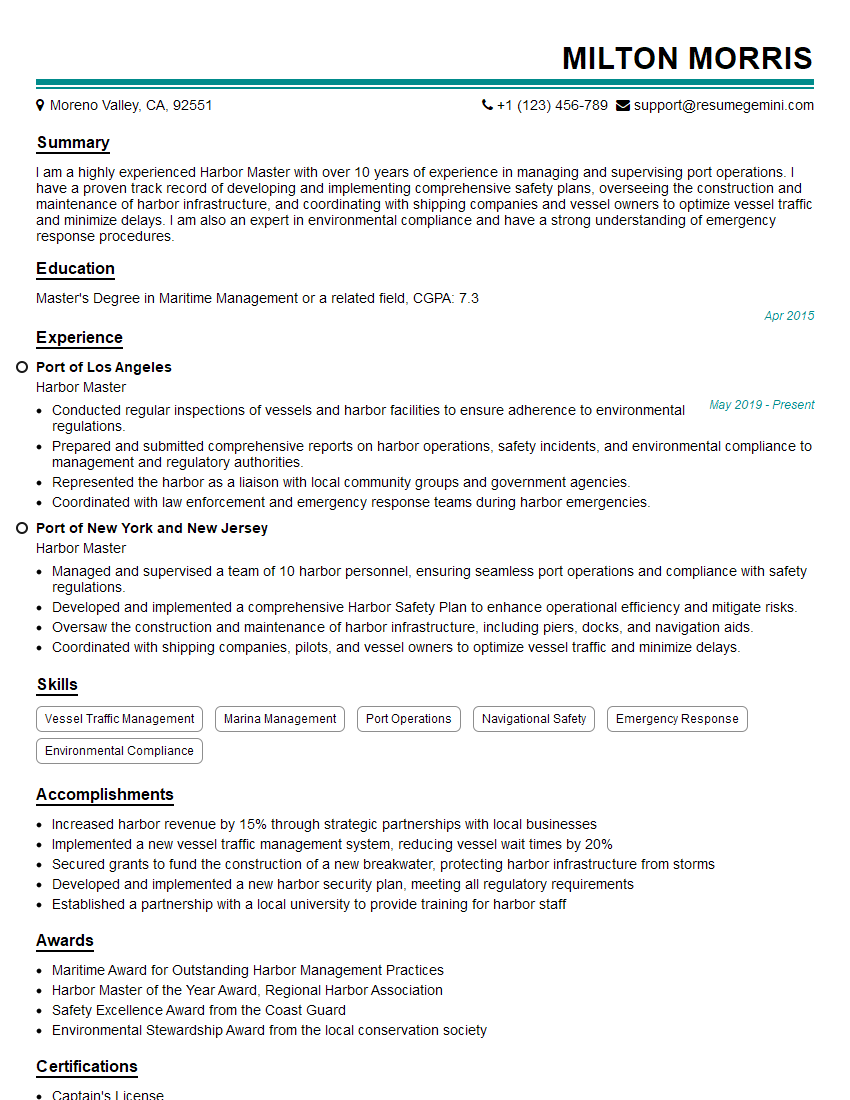
Harbor Master Resume Sample
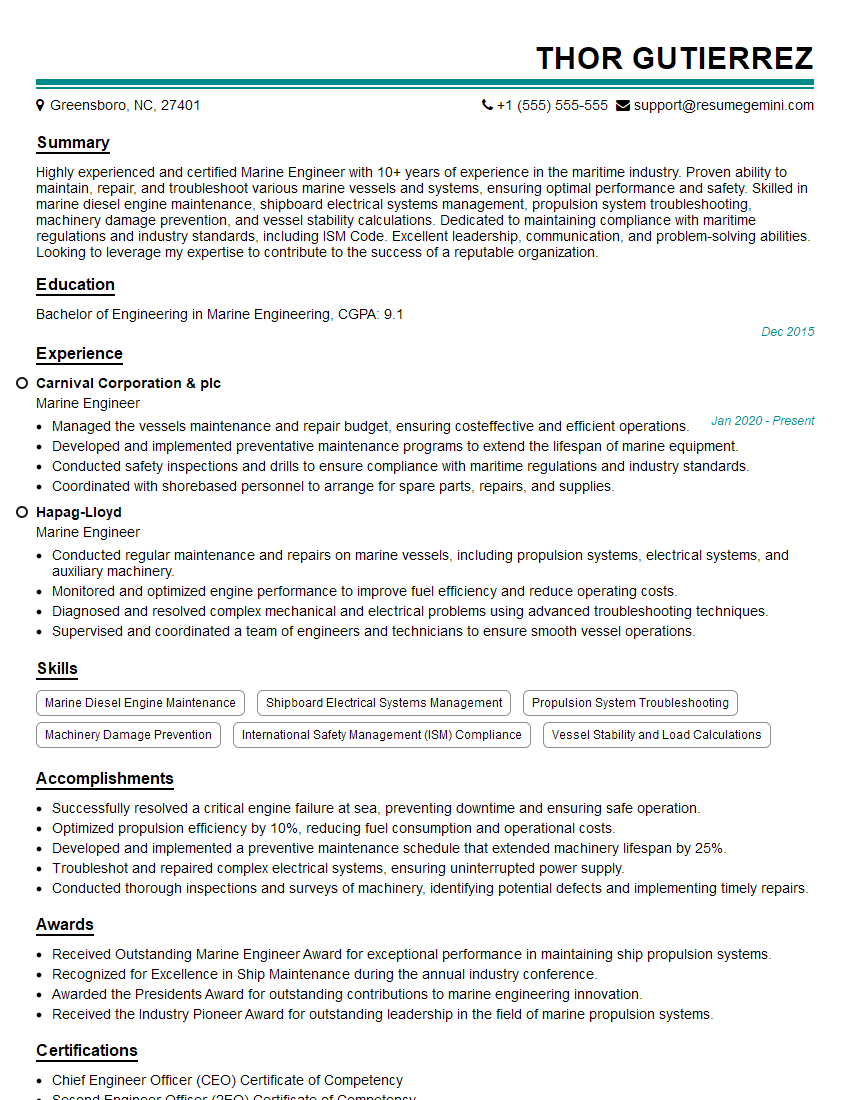
Marine Engineer Resume Sample
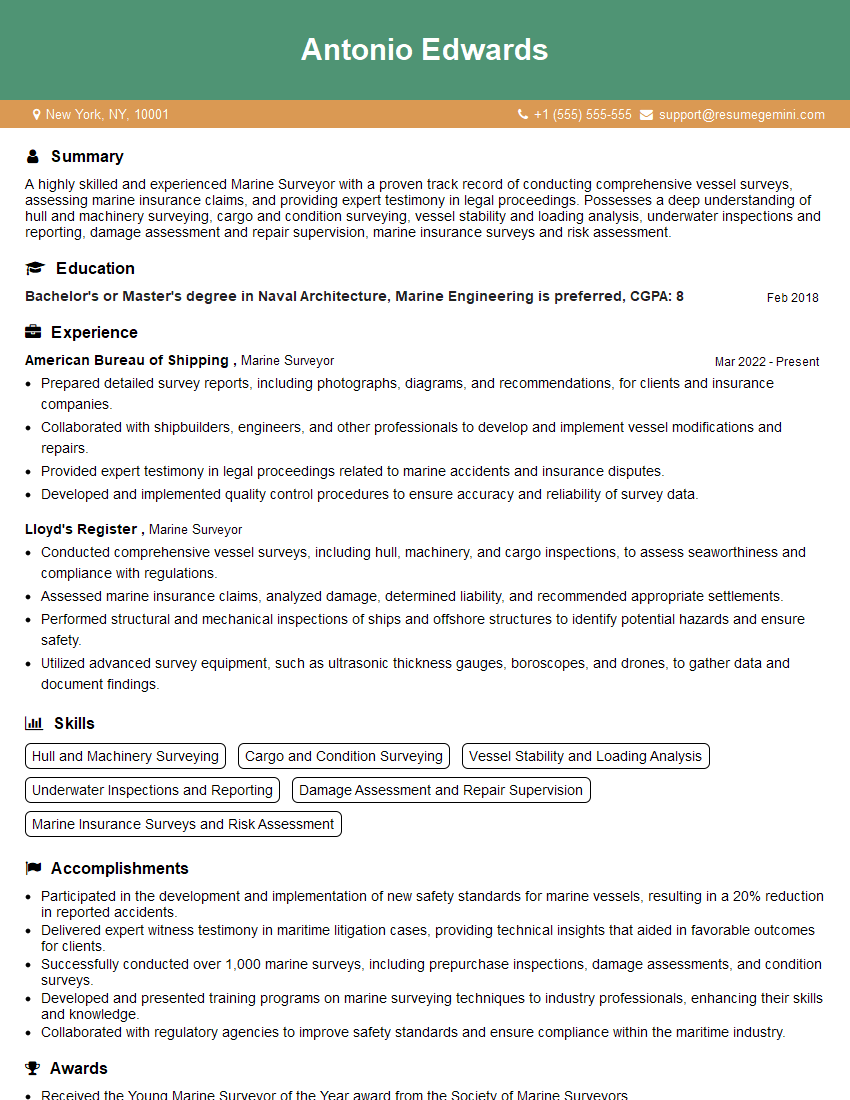
Marine Surveyor Resume Sample
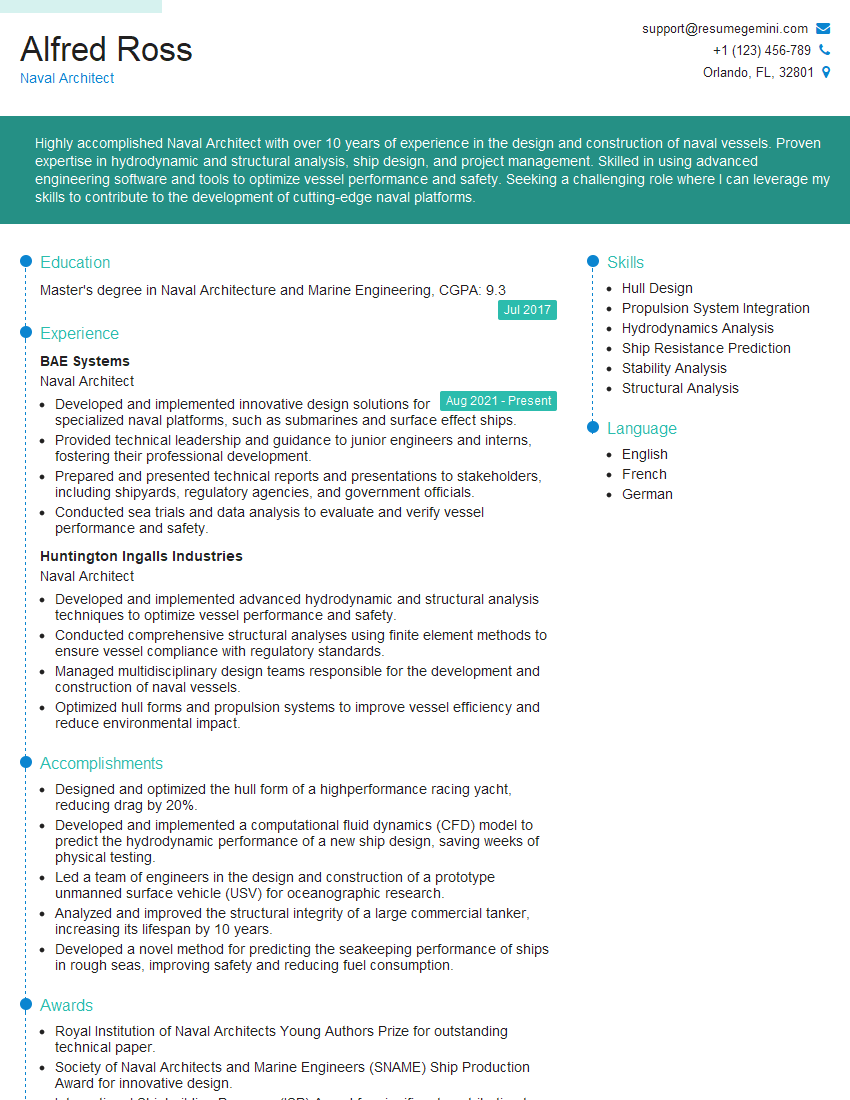
Naval Architect Resume Sample
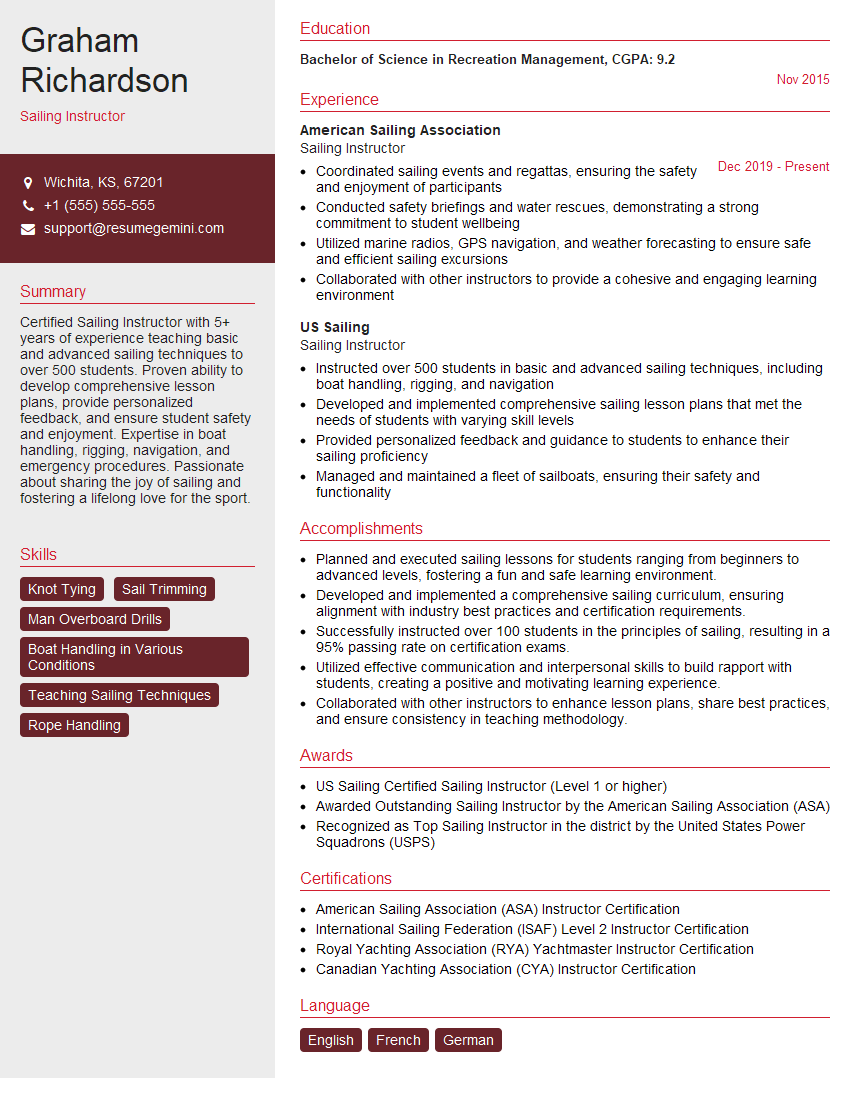
Sailing Instructor Resume Sample
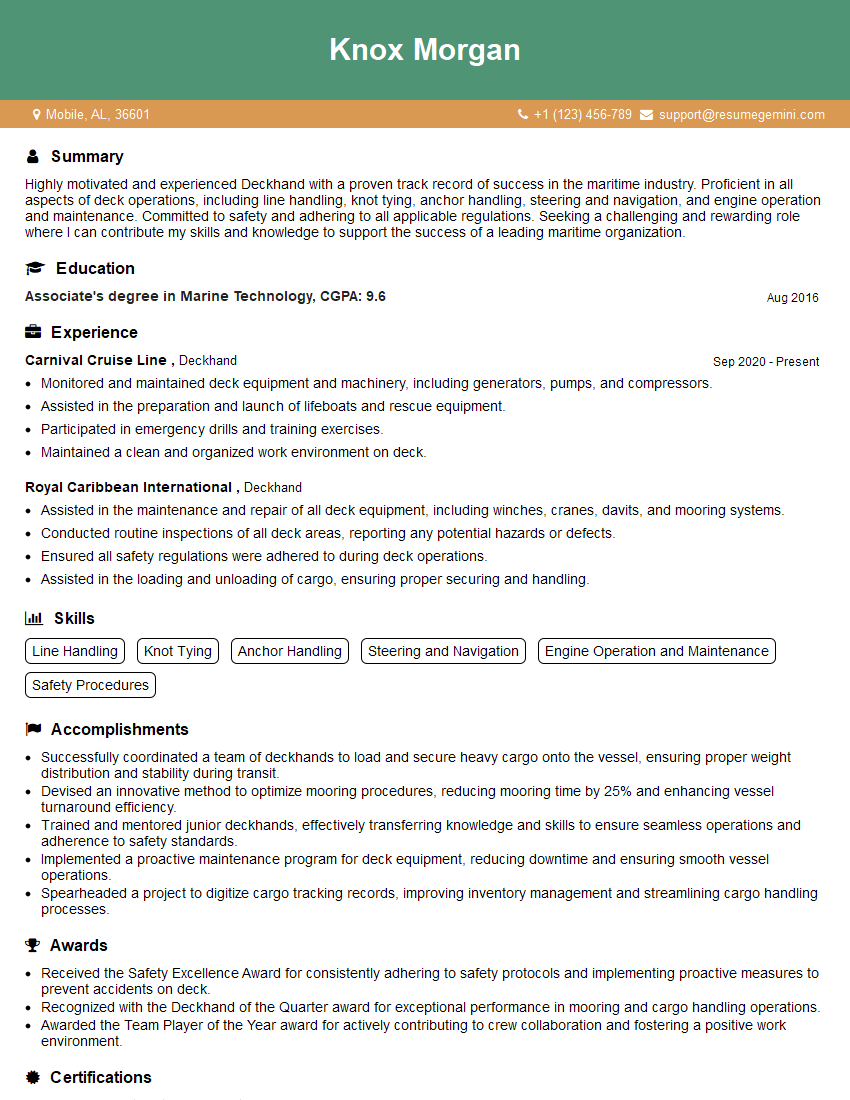
Deckhand Resume Sample
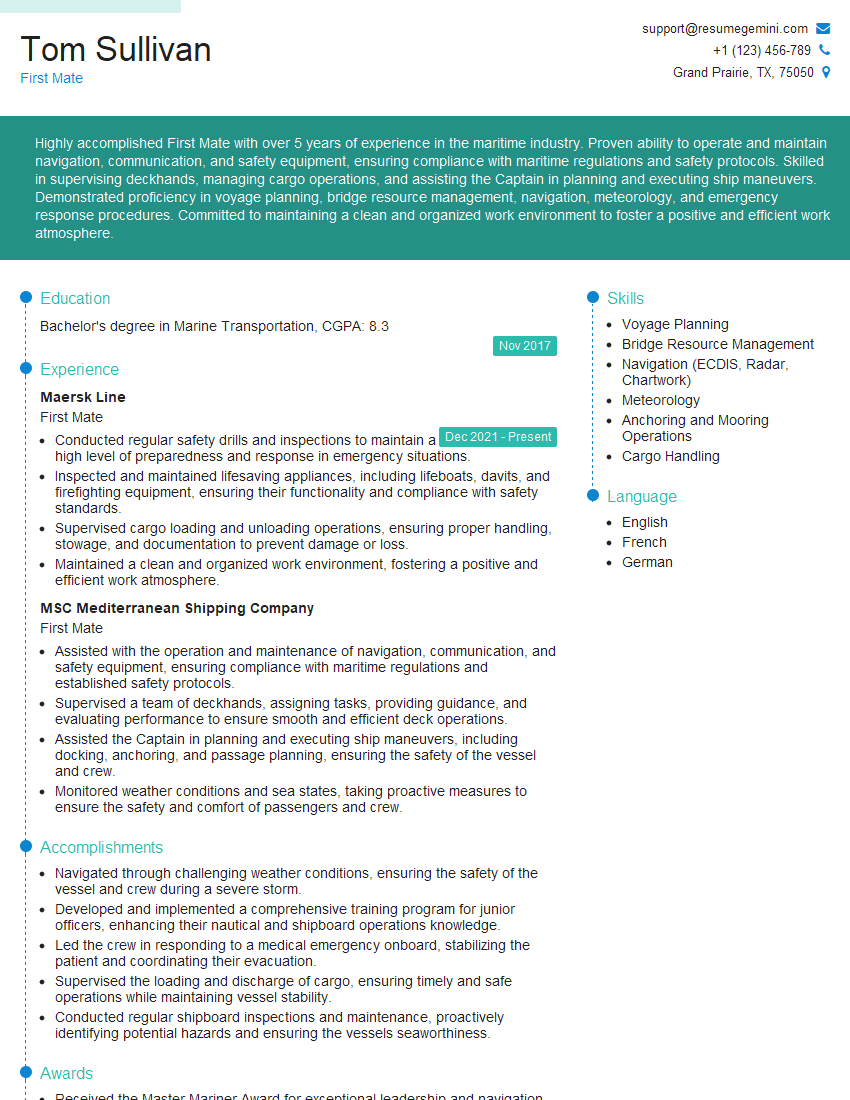
First Mate Resume Sample
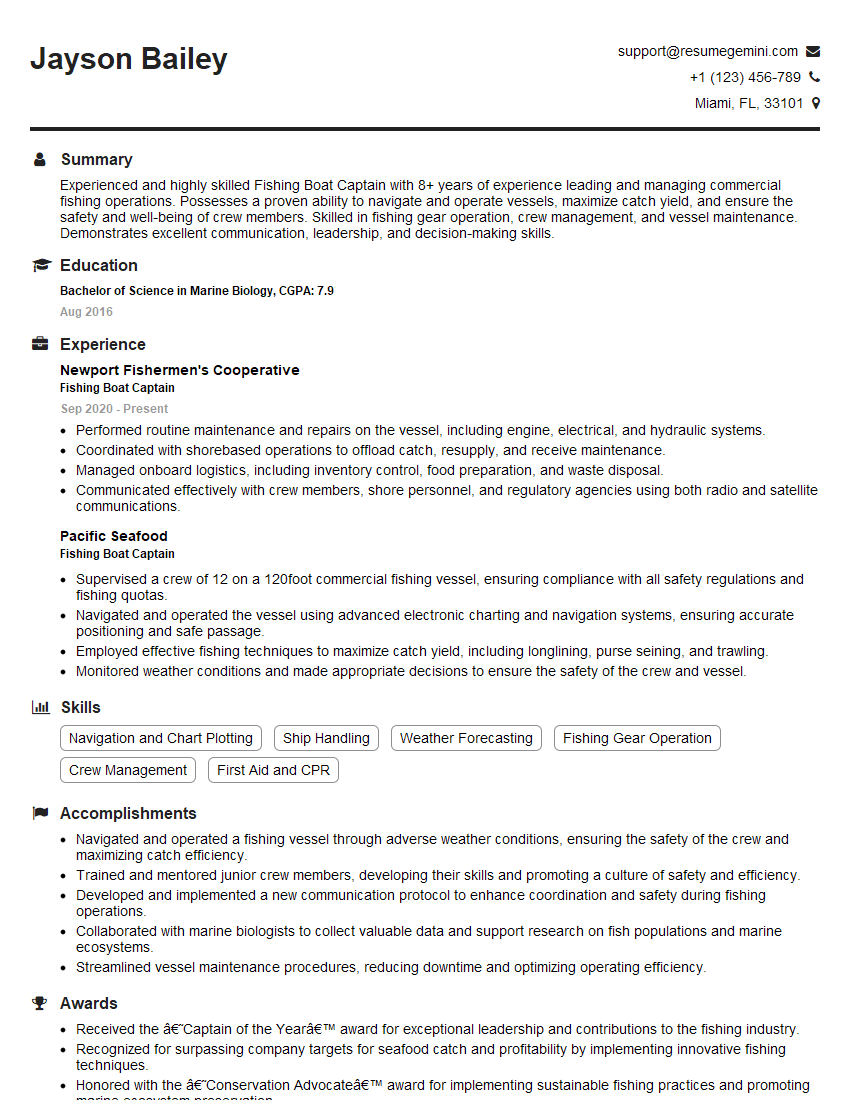
Fishing Boat Captain Resume Sample
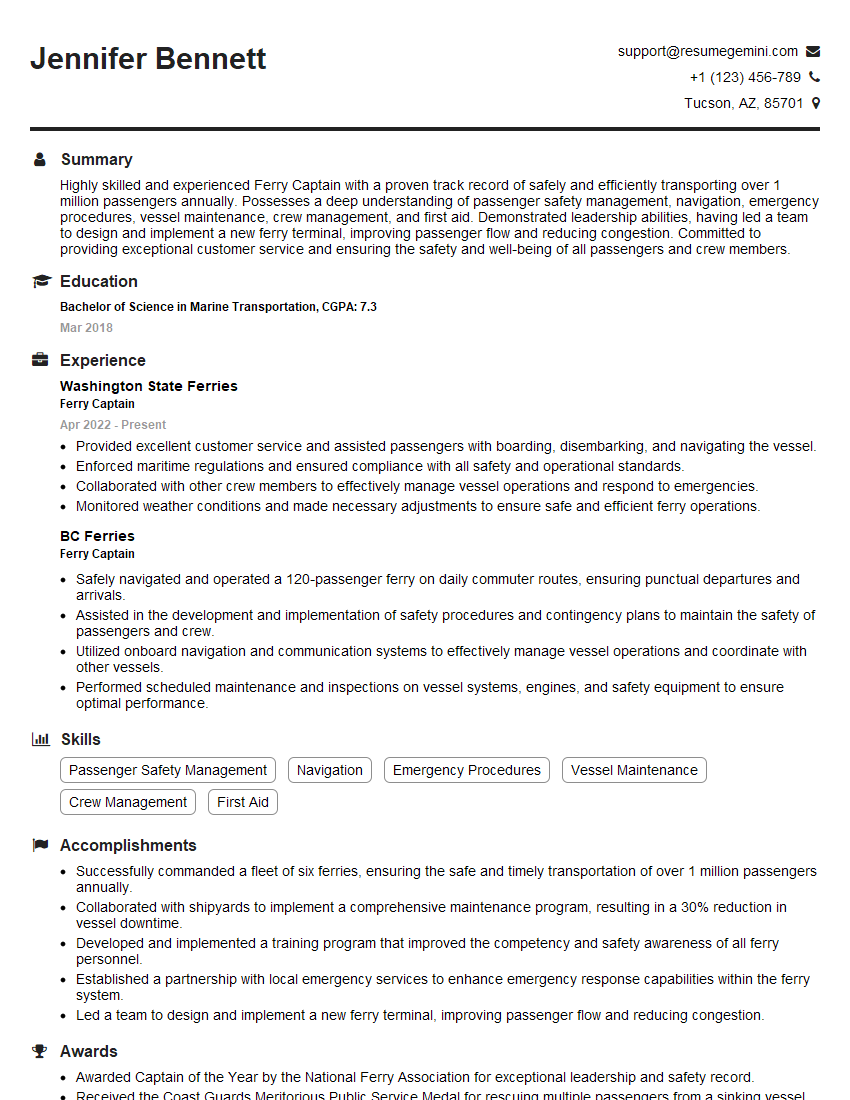
Ferry Captain Resume Sample
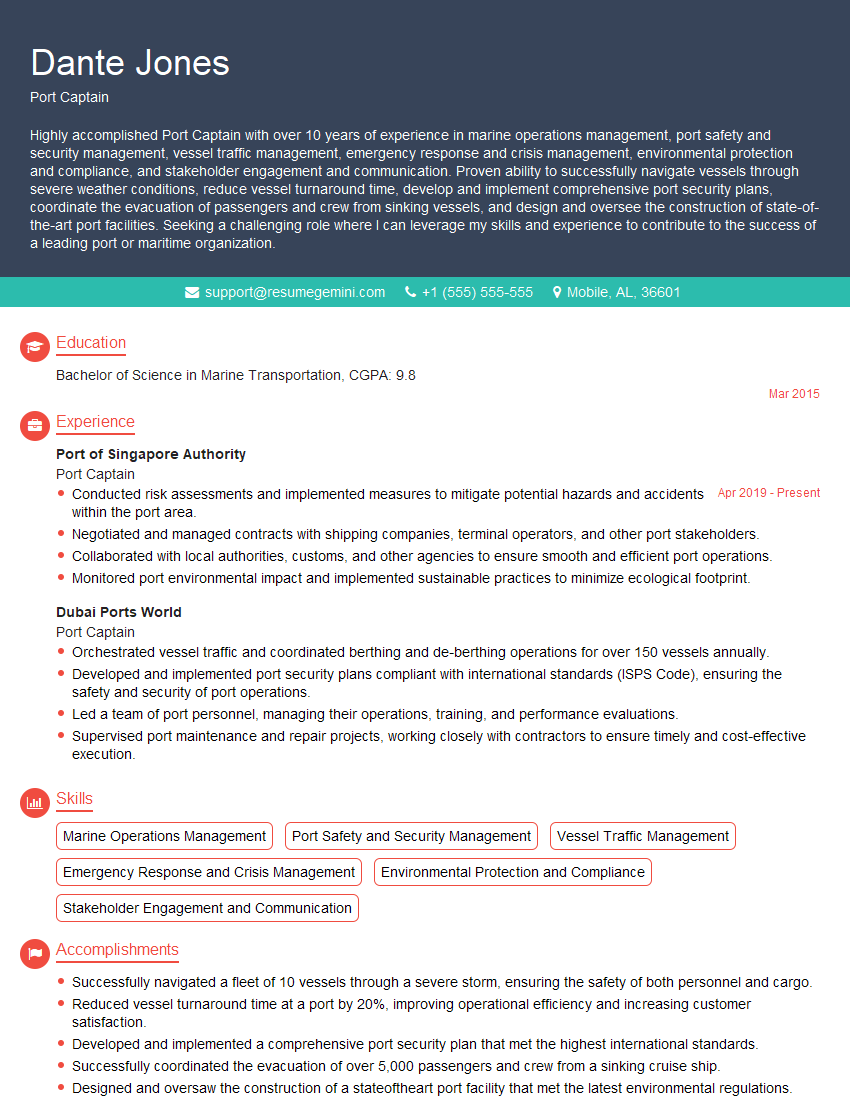
Port Captain Resume Sample

Tugboat Operator Resume Sample
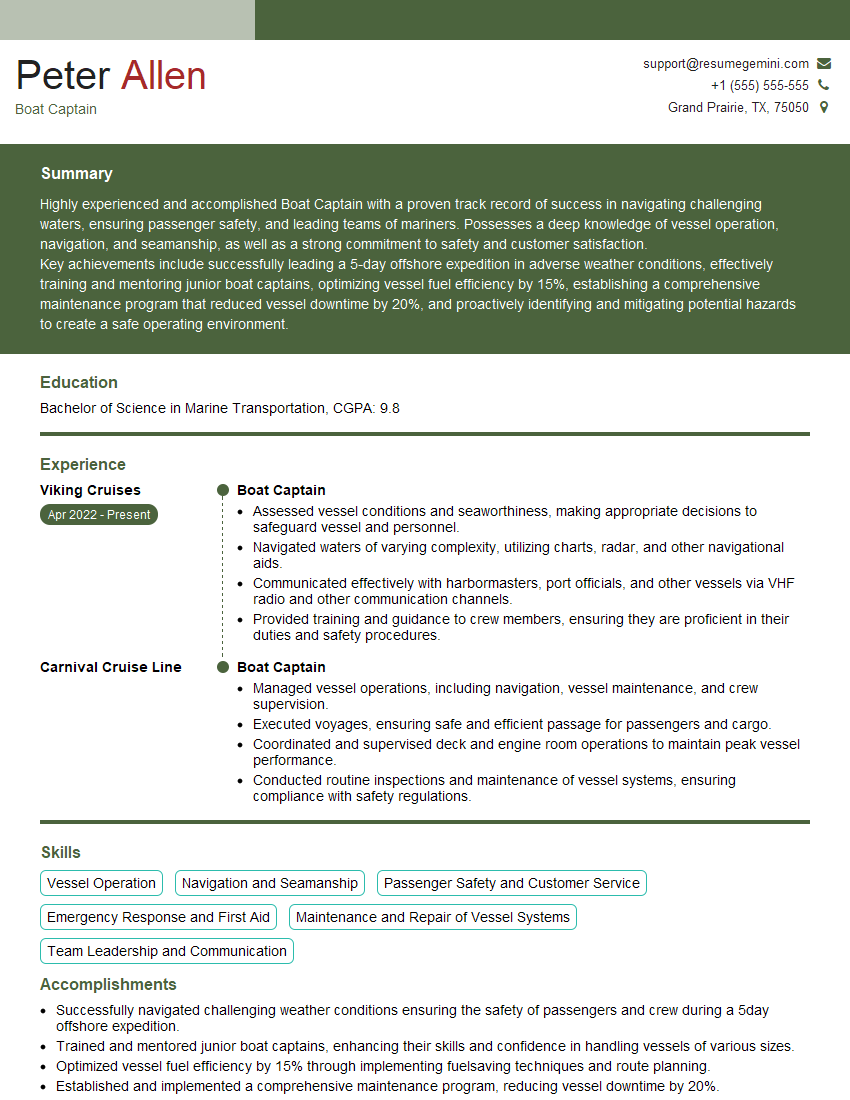
Boat Captain Resume Sample
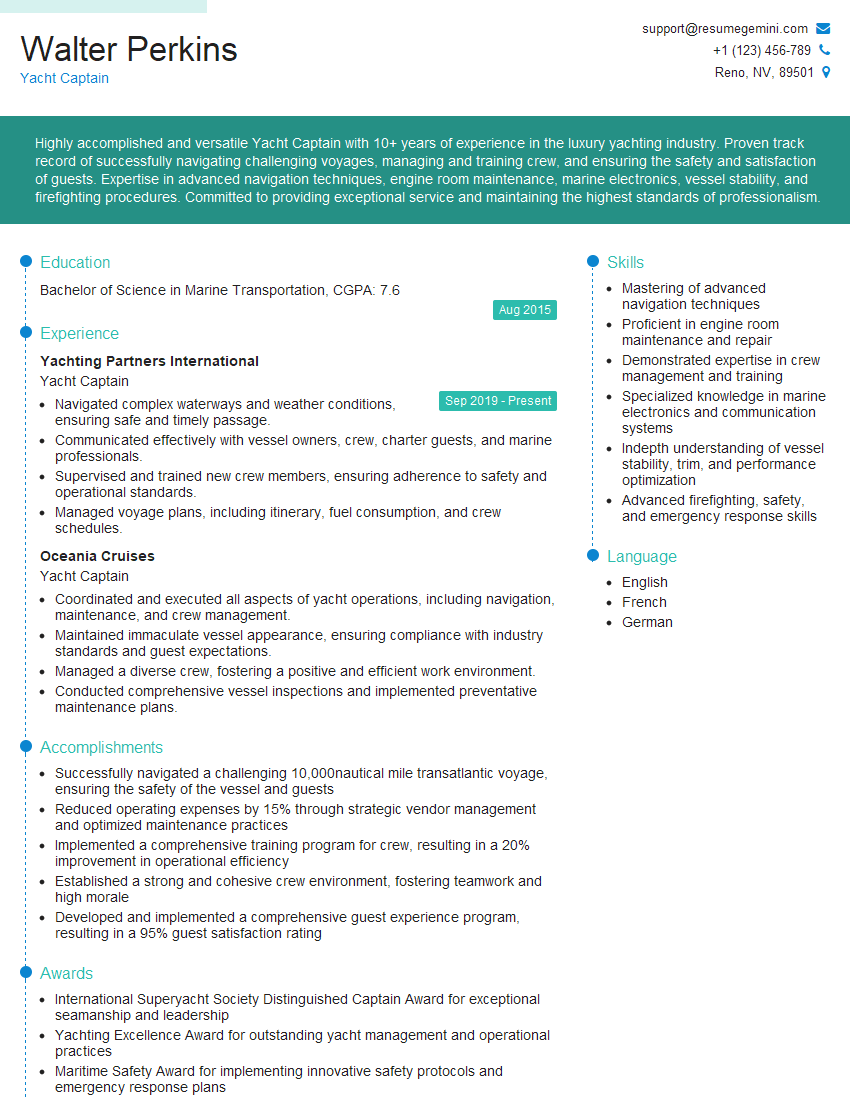
Yacht Captain Resume Sample
Explore more articles
Users Rating of Our Blogs
Share Your Experience
We value your feedback! Please rate our content and share your thoughts (optional).
What Readers Say About Our Blog
I Redesigned Spongebob Squarepants and his main characters of my artwork.
https://www.deviantart.com/reimaginesponge/art/Redesigned-Spongebob-characters-1223583608
IT gave me an insight and words to use and be able to think of examples
Hi, I’m Jay, we have a few potential clients that are interested in your services, thought you might be a good fit. I’d love to talk about the details, when do you have time to talk?
Best,
Jay
Founder | CEO