Feeling uncertain about what to expect in your upcoming interview? We’ve got you covered! This blog highlights the most important Boundary Demarcation interview questions and provides actionable advice to help you stand out as the ideal candidate. Let’s pave the way for your success.
Questions Asked in Boundary Demarcation Interview
Q 1. Explain the different methods used in boundary demarcation.
Boundary demarcation employs various methods, each suited to different contexts and available resources. The core goal is to accurately define and mark the limits of a property.
- Survey Methods: These involve precise measurements using instruments like total stations, GPS receivers, and levels to establish coordinates and distances. This is the most accurate and commonly used method, especially for legal boundaries.
- Historical Records: Deeds, maps, and other historical documents often provide clues about boundary locations. These are valuable but must be interpreted carefully, as errors and ambiguities can occur. On-the-ground evidence must usually corroborate these records.
- Witness Evidence: This involves gathering information from local residents or long-term landowners who may have knowledge of traditional boundary markers or practices. While helpful in some cases, this method is less reliable than physical surveys and should be used cautiously as supplementary evidence.
- Adjoining Owner Agreements: In cases where boundaries are uncertain, agreement between neighboring landowners can be an effective way to establish a boundary, often finalized with a formal survey and legal documentation.
For example, in a rural setting with limited access, historical records and witness evidence might play a larger role, whereas in an urban development, a precise GPS survey would be paramount.
Q 2. Describe your experience with GPS technology in boundary surveying.
GPS technology has revolutionized boundary surveying. My experience involves extensive use of both Real-Time Kinematic (RTK) and Post-Processed Kinematic (PPK) GPS systems. RTK provides centimeter-level accuracy in real-time, ideal for establishing control points and tracing boundaries quickly and efficiently. PPK offers even higher accuracy after post-processing the data. This is particularly useful in challenging environments or when working with very high-precision requirements.
For instance, I’ve used RTK GPS to survey complex property boundaries in heavily wooded areas where traditional methods would be time-consuming and less precise. The instantaneous positional information drastically improved efficiency, enabling faster completion of the survey.
Furthermore, I’m proficient in using GPS data processing software to ensure the accuracy and integrity of the captured data. This involves applying corrections for atmospheric effects and other potential errors that can impact GPS accuracy.
Q 3. How do you handle discrepancies between historical records and on-the-ground measurements during boundary demarcation?
Discrepancies between historical records and on-the-ground measurements are common. Resolving them requires a methodical approach that prioritizes evidence and legal precedent. It’s a process of investigation and reconciliation.
- Thorough Investigation: I carefully analyze historical documents for inconsistencies, assessing their age, reliability, and any potential errors. I also compare the available evidence against what I find on the ground using modern survey techniques.
- On-Site Verification: I meticulously survey the property using appropriate methods and technologies. I look for existing boundary markers, fences, and other physical evidence. This ground truthing is crucial to validate or refute the information provided in historical records.
- Prioritization of Evidence: The weight given to different forms of evidence depends on their reliability. A recent, properly conducted survey usually outweighs older or less reliable records.
- Legal Counsel Consultation: In cases of significant discrepancies or potential disputes, it’s critical to consult with legal professionals to ensure compliance with relevant legislation and to navigate the legal ramifications.
- Documentation: Meticulous documentation is essential. This involves detailed reports, maps, and photographic evidence that meticulously record the process and findings. This is extremely important if the boundary demarcation is later challenged.
For example, if historical records show a fence line that differs from a more recent survey, I’d investigate to determine the age of the fence and its alignment with other evidence, potentially consulting historical aerial photos to further contextualize the evidence.
Q 4. What are the legal implications of inaccurate boundary demarcation?
Inaccurate boundary demarcation can have serious legal and financial implications, leading to disputes, property encroachment, and potential legal action.
- Property Disputes: Inaccurate demarcation may lead to protracted and costly disputes between neighbors over land ownership. This could lead to legal battles with significant financial consequences for all involved parties.
- Encroachment: An incorrectly demarcated boundary could result in unintentional encroachment onto neighboring properties, causing disputes over usage and rights.
- Development Restrictions: Errors in boundary definition can limit development opportunities, causing delays and financial losses for property owners.
- Legal Liability: Surveyors can face legal action if their work is found to be negligent and results in property disputes or financial losses for clients.
Imagine a situation where a house is built slightly over the property line due to a surveying error. This can lead to a costly court battle to rectify the situation or force demolition of parts of the structure.
Q 5. Explain the process of resolving boundary disputes.
Resolving boundary disputes requires a collaborative and often legal approach.
- Negotiation: The initial step is to attempt amicable negotiation between the disputing parties. This might involve mediation with a neutral third party.
- Survey Evidence: An independent boundary survey conducted by a qualified surveyor can provide crucial objective evidence to support claims.
- Legal Proceedings: If negotiation fails, the matter may need to be resolved through legal channels. This could involve arbitration, mediation, or litigation, depending on the jurisdiction and complexity of the case.
- Court Adjudication: In some cases, a court will need to make a final determination on the boundary location based on the presented evidence.
- Legal Agreements: Once a resolution is reached, it is essential to formalize the agreement with legally binding documentation to prevent future disputes.
The process involves careful consideration of all evidence, including historical records, physical markers, and expert testimony. It emphasizes fairness, objectivity, and compliance with relevant legal frameworks. Often, compromise and mutual understanding are essential for effective dispute resolution.
Q 6. How do you ensure accuracy and precision in your boundary demarcation work?
Accuracy and precision are paramount in boundary demarcation. I ensure this through a multi-faceted approach.
- High-Precision Equipment: Using state-of-the-art GPS receivers, total stations, and other surveying instruments capable of delivering high accuracy.
- Rigorous Field Procedures: Employing standardized surveying techniques and careful attention to detail in all measurements and observations, including meticulous recording of data and employing quality control checks during and after the survey process.
- Data Validation: Cross-checking measurements, identifying and correcting any errors or anomalies, and utilizing appropriate software for data processing and analysis.
- Quality Assurance: Implementing rigorous quality assurance measures throughout the process, including peer review of survey data and reports.
- Adherence to Standards: Consistently adhering to established surveying standards and best practices, ensuring consistency and reliability in my work.
For example, before beginning a survey, I carefully plan the survey design, considering factors such as the terrain, vegetation, and the availability of control points to optimize accuracy and efficiency.
Q 7. What software and tools are you proficient in using for boundary demarcation?
My proficiency extends to various software and tools commonly used in boundary demarcation.
- GPS Data Processing Software: I’m experienced in using software packages like Leica Infinity, Trimble Business Center, and other similar programs for processing and adjusting GPS data.
- CAD Software: AutoCAD and MicroStation are integral parts of my workflow for creating accurate boundary maps and plans.
- GIS Software: I utilize ArcGIS and QGIS for spatial data management, analysis, and integration with other data sources like aerial photography and satellite imagery. This helps contextualize the survey data and identify potential discrepancies.
- Total Station Software: Proficient in operating total stations from various manufacturers and their corresponding data collection and processing software.
- Other Tools: I’m also proficient in using other relevant tools including data loggers, level instruments, and various surveying accessories.
The choice of specific software depends on the project’s requirements and the available data. My ability to adapt and utilize various tools ensures that I can deliver high-quality results regardless of the specific project context.
Q 8. Describe your experience working with different coordinate systems.
Coordinate systems are fundamental to boundary demarcation. My experience encompasses working with various systems, including geographic coordinate systems (GCS) like latitude and longitude (WGS 84 being the most common), and projected coordinate systems (PCS) such as UTM (Universal Transverse Mercator) and State Plane Coordinate Systems. The choice of system depends heavily on the project’s scale and location. For instance, large-scale national projects might use a GCS for overall positioning, while local surveys often benefit from the reduced distortion of a PCS. I’m proficient in converting between these systems using software like ArcGIS and AutoCAD Map 3D, ensuring seamless data integration and accurate boundary representation.
In one project involving a large agricultural estate, we initially used a GCS for overall boundary delineation. However, when dealing with smaller parcels within the estate, we switched to a UTM zone-specific PCS to improve accuracy in distance and area calculations for land subdivision. This prevented accumulating errors and ensured legal compliance with property line definitions.
Q 9. How do you incorporate topographic features into boundary demarcation?
Topographic features are crucial in boundary demarcation as they often define natural boundaries. Rivers, ridgelines, and rock formations are frequently used as boundary markers. Incorporating these features involves meticulous field surveys using instruments like Total Stations and GPS receivers to precisely locate these features relative to the boundary lines. The data is then integrated into GIS software to create a precise digital representation of the boundary, showing its relationship to the surrounding topography. This ensures that the boundary is accurately defined and avoids ambiguities.
For example, a boundary defined as the ‘midpoint of a river’ requires careful surveying to establish the thalweg (the deepest part of the channel), which is typically used to define the midpoint. Similarly, a boundary running along a ridgeline necessitates identifying the highest point of the ridge along its length to determine the precise boundary location.
Q 10. Explain the concept of riparian boundaries.
Riparian boundaries are boundaries that follow a watercourse, such as a river or stream. The exact definition of a riparian boundary varies by jurisdiction and depends on legal precedents and local customs. Common methods include the ordinary high-water mark (OHWM), the mean high-water mark (MHW), or the thalweg, as mentioned earlier. Determining the precise location of the riparian boundary often involves hydrological studies and historical analysis to identify the consistent high-water mark or other legally defined markers. It’s crucial to understand the local legal definition to ensure compliance.
Think of it like this: Imagine a river flowing through a property. The riparian boundary might be defined as the average high-water mark over several years. This requires careful consideration of historical data and potentially employing expert hydrologists to interpret the data and establish the precise boundary.
Q 11. How do you address challenges posed by difficult terrain during boundary demarcation?
Difficult terrain poses significant challenges in boundary demarcation. Steep slopes, dense vegetation, and inaccessible areas necessitate specialized techniques and equipment. This often includes the use of drones for aerial photography and LiDAR (Light Detection and Ranging) for creating high-resolution topographic models. Ground surveys may involve the use of climbing equipment and specialized GPS receivers to ensure accurate positioning in challenging environments. Safety is paramount, and risk assessments are crucial before undertaking surveys in such areas.
In a recent project involving a mountainous region, we used drones equipped with high-resolution cameras to map the terrain and identify the boundary markers. This significantly reduced the time and effort required for ground surveys, while also increasing the safety of our field crew. The drone data was then integrated with ground survey data to create a complete and accurate boundary representation.
Q 12. What are the ethical considerations involved in boundary demarcation?
Ethical considerations are paramount in boundary demarcation. Accuracy and impartiality are crucial; any bias can lead to disputes and legal issues. Maintaining client confidentiality is also essential, especially regarding sensitive property information. Transparency in the methodology and data used is key to building trust and ensuring fairness. It is unethical to manipulate data or present incomplete information to favor a specific party. Professional competency and adherence to professional codes of conduct are mandatory.
For instance, it’s unethical to intentionally misinterpret data or to omit crucial information that might affect the boundary delineation to benefit a specific client. Maintaining strict objectivity and transparency is vital for upholding ethical standards in this field.
Q 13. Describe your experience with data analysis and interpretation in boundary demarcation.
Data analysis and interpretation are core to my work. I routinely analyze survey data, historical records, and legal documents to establish boundary locations. This includes using GIS software to process and analyze spatial data, identify discrepancies, and reconcile conflicting information. Statistical analysis may be employed to assess the accuracy of measurements and identify outliers. The ability to interpret historical maps and legal descriptions, alongside modern survey data, is crucial to understanding and defining boundary locations accurately.
For example, I recently worked on a project where conflicting historical records existed regarding a property boundary. Through careful analysis of old deeds, maps, and field survey data, I was able to identify inconsistencies and propose a revised boundary line based on the most credible evidence, resolving a long-standing dispute between neighboring landowners.
Q 14. How do you manage and maintain boundary demarcation records?
Managing and maintaining boundary demarcation records requires a robust system. This typically involves storing digital and physical records securely and accessibly. Digital records are stored in a GIS database, ensuring easy retrieval and update. Physical records, such as survey plans and legal documents, are stored in a secure archive. Regular backups are conducted to prevent data loss. Metadata detailing the survey methods, data sources, and any limitations are meticulously documented, ensuring transparency and traceability. A clear indexing system allows easy access to relevant records, simplifying future reference and potential legal proceedings.
We use a combination of cloud-based GIS platforms and secure physical archiving to maintain our boundary demarcation records. This ensures data accessibility for authorized personnel while maintaining the integrity and security of the information. The metadata associated with each project is extremely detailed, allowing for complete traceability and facilitating easy auditing of the work completed.
Q 15. Explain your understanding of land tenure systems.
Land tenure systems define how land is owned, used, and controlled within a society. They’re the rules and regulations governing property rights. These systems vary significantly across the globe, ranging from communal ownership, where land is held collectively by a group, to freehold ownership, granting individuals complete control. Other systems include leasehold, where land is rented for a specific period, and customary tenure, often based on traditional practices and community norms.
- Freehold: Imagine owning your house outright; you have complete control and can sell or bequeath it as you wish. This is freehold.
- Leasehold: Think of renting an apartment; you have the right to use the property for a specified time, but you don’t own it. This is leasehold.
- Communal: Picture a village collectively managing a forest for sustainable use; this demonstrates communal ownership.
Understanding these different systems is crucial in boundary demarcation because they directly impact the legal rights of individuals or groups and the process of establishing boundaries.
Career Expert Tips:
- Ace those interviews! Prepare effectively by reviewing the Top 50 Most Common Interview Questions on ResumeGemini.
- Navigate your job search with confidence! Explore a wide range of Career Tips on ResumeGemini. Learn about common challenges and recommendations to overcome them.
- Craft the perfect resume! Master the Art of Resume Writing with ResumeGemini’s guide. Showcase your unique qualifications and achievements effectively.
- Don’t miss out on holiday savings! Build your dream resume with ResumeGemini’s ATS optimized templates.
Q 16. How do you communicate technical information effectively to non-technical audiences?
Communicating technical information to non-technical audiences requires simplifying complex concepts and using clear, non-jargon language. I achieve this by:
- Using analogies and metaphors: For example, explaining angles of survey using a simple clock face analogy makes it easier to understand.
- Visual aids: Diagrams, maps, and photographs significantly enhance understanding and avoid confusion.
- Avoiding technical jargon: Replacing terms like ‘azimuth’ with ‘direction’ ensures everyone is on the same page.
- Active listening and feedback: I always encourage questions and ensure everyone understands before proceeding. I tailor my language to the audience’s level of understanding.
For instance, when explaining the concept of coordinate geometry to landowners, I use simple terms and relate it to their property’s location on a map, demonstrating it practically.
Q 17. Describe your experience with boundary demarcation projects involving multiple stakeholders.
I have extensive experience managing boundary demarcation projects with multiple stakeholders, including landowners, government agencies, and legal representatives. These projects often involve conflicting claims or historical uncertainties, demanding meticulous attention to detail and strong communication skills. My approach involves:
- Stakeholder meetings: Holding initial meetings to understand each party’s perspective and identify potential conflicts is key.
- Collaborative problem-solving: Facilitating open discussions and finding mutually agreeable solutions is essential to avoid disputes.
- Transparent documentation: Maintaining clear and comprehensive records of all survey data, meetings, and agreements prevents misunderstandings.
- Legal compliance: Ensuring all work adheres to relevant laws and regulations is paramount.
One project involved resolving a long-standing boundary dispute between three neighboring farms. By thoroughly examining historical records, conducting a precise survey, and engaging in open dialogue, we reached a consensus that satisfied all parties. It highlighted the importance of patience, diplomacy, and technical expertise in resolving complex situations.
Q 18. How do you ensure the legal compliance of your boundary demarcation work?
Ensuring legal compliance is paramount in boundary demarcation. This involves adhering to:
- National and regional laws: Understanding and applying the relevant legal framework of the specific location is crucial.
- Property registration procedures: All survey data and boundary markers must be accurately recorded and registered with the appropriate authorities.
- Best practices: Following established surveying standards and best practices ensures the accuracy and reliability of the demarcation.
- Chain of custody: Maintaining a complete record of all evidence, including survey data, permits, and agreements, ensures traceability.
Failure to comply can lead to legal challenges, disputes, and financial losses. Therefore, thorough due diligence and adherence to legal requirements are essential throughout the project lifecycle.
Q 19. What are some common errors to avoid in boundary demarcation?
Common errors to avoid in boundary demarcation include:
- Inadequate site investigation: Failing to thoroughly research historical records and conduct a comprehensive site survey can lead to inaccurate results.
- Incorrect data processing: Errors in data processing, such as miscalculations or wrong interpretations of survey measurements, can have serious consequences.
- Poor communication: Lack of clear and effective communication among stakeholders can lead to misunderstandings and disputes.
- Neglecting legal requirements: Failing to comply with relevant laws and regulations can render the demarcation process invalid.
- Insufficient quality control: Without proper quality control measures, errors might not be detected until after the boundary has been marked and the project is completed.
These errors can result in costly corrections, legal battles, and damage to professional reputation. Meticulous attention to detail and a structured approach are essential to avoid such mistakes.
Q 20. Explain your experience using Total Stations in boundary demarcation.
Total Stations are indispensable tools in modern boundary demarcation. They combine the capabilities of an electronic theodolite, an electronic distance meter (EDM), and a data recorder in a single, sophisticated instrument. My experience involves using Total Stations for:
- Precise distance and angle measurement: Total Stations provide highly accurate measurements crucial for establishing boundaries.
- Coordinate determination: They allow the determination of precise coordinates for boundary points, facilitating the creation of detailed maps.
- Data logging and processing: The built-in data logging capabilities streamline data management and reduce the risk of errors.
- 3D modeling: Total station data can be used to create 3D models of the surveyed area, allowing for a better visualization of the boundary.
I am proficient in using various Total Station models and software packages for data processing and analysis. This expertise enables me to deliver accurate and reliable boundary demarcation services.
Q 21. Describe your knowledge of different types of land ownership.
Different types of land ownership are defined by legal and customary rights. Key types include:
- Freehold: Absolute ownership of land, granting the owner complete control and rights.
- Leasehold: Ownership of the right to use and occupy land for a specified period, with the land title remaining with the owner.
- Commonhold: Ownership of a specific unit within a larger development, shared with other owners, with the land often held communally.
- Trust ownership: Land owned by a trustee on behalf of a beneficiary or group of beneficiaries.
- Customary tenure: Land ownership based on traditional practices, community norms, and ancestral claims.
Understanding the specific type of land ownership is crucial for boundary demarcation as it directly influences the rights and responsibilities of the involved parties. This information informs the legal framework within which the demarcation process is conducted.
Q 22. How do you handle unexpected findings during a boundary survey?
Unexpected findings during a boundary survey are common. They could range from discrepancies between deed descriptions and on-the-ground evidence (like fences or structures) to the discovery of unrecorded easements or encroachments. My approach is methodical and prioritizes thorough documentation.
- Thorough Investigation: I meticulously investigate the discrepancy, taking detailed notes, photographs, and measurements. This includes checking for physical evidence, examining historical records (like older deeds or maps), and potentially consulting with local authorities or historical societies.
- Analysis of Evidence: I weigh the evidence carefully, considering the reliability and age of different sources. For instance, a recently constructed fence might not reflect the true boundary, whereas an older stone wall might.
- Professional Judgement: Based on the analysis, I use professional judgement to determine the most likely location of the true boundary. I will clearly document my reasoning in the survey report.
- Client Communication: Open communication with the client is crucial. I explain the findings clearly, present the evidence, and discuss possible solutions, such as a boundary dispute resolution process if necessary.
For example, I once discovered a significant discrepancy between a deed description and an existing fence. After extensive investigation, including reviewing old aerial photos, we determined that the fence had been incorrectly placed decades ago. The report clearly documented this and helped the client make informed decisions going forward.
Q 23. What are the limitations of different boundary demarcation methods?
Different boundary demarcation methods each have their limitations. Let’s consider a few common techniques:
- Traditional Surveying: This relies on on-the-ground measurements using instruments like total stations. Limitations include the cost, time involved, and potential for human error. Accuracy is affected by terrain and weather conditions.
- GPS Surveying: Using GPS receivers offers speed and coverage, but accuracy is affected by atmospheric conditions (ionospheric and tropospheric delays) and multipath errors (signals bouncing off objects). The precision is also affected by the type of GPS equipment used (e.g., RTK vs. single-point positioning).
- Remote Sensing (Aerial Imagery/LiDAR): Remote sensing provides a broad overview but relies on image interpretation, which can be subjective and influenced by image resolution, cloud cover, and vegetation density. It’s less accurate for precise boundary determination than ground surveys.
It’s crucial to choose the appropriate method based on the specific project requirements, budget, and desired level of accuracy. Often, a combination of methods yields the best results, for example, using aerial imagery for initial mapping and then ground surveying for precise boundary location.
Q 24. How do you utilize GIS technology to improve the efficiency of boundary demarcation?
GIS technology significantly enhances boundary demarcation efficiency. I utilize it in several ways:
- Data Integration: GIS allows integration of various data sources, like cadastral maps, deed descriptions, aerial imagery, and survey data, into a single, spatially referenced database.
- Data Analysis & Visualization: GIS tools help analyze spatial relationships between different features, detect discrepancies, and visually represent the boundary in various formats (e.g., maps, 3D models).
- Automated Processes: GIS automates repetitive tasks such as boundary calculations, area calculations, and report generation, saving time and reducing the risk of human error.
- Improved Collaboration: GIS facilitates collaboration among surveyors, clients, and other stakeholders by providing a common platform for data sharing and visualization.
For instance, using GIS, I can quickly identify potential conflicts between proposed developments and existing boundaries. The ability to overlay different layers (e.g., property boundaries, utilities, environmental features) significantly reduces the likelihood of errors and improves decision-making.
Q 25. Describe your experience with cadastral mapping.
I have extensive experience with cadastral mapping, which involves the creation and maintenance of land ownership records. My work includes:
- Data Collection and Processing: Collecting data from various sources, including deeds, surveys, and government records, and then processing it to create a consistent and accurate database.
- Boundary Delineation: Precisely defining and representing property boundaries on maps using appropriate symbols and conventions.
- Map Creation and Maintenance: Generating high-quality cadastral maps and regularly updating them to reflect changes in land ownership and boundary definitions.
- Data Analysis: Analyzing cadastral data to identify discrepancies, errors, and potential conflicts.
A notable project involved updating the cadastral maps for a rapidly developing area. This required incorporating new surveys, resolving boundary disputes, and implementing quality control procedures to ensure data accuracy and consistency. The updated cadastral map served as a crucial resource for planning and development in the region.
Q 26. How do you ensure data quality and integrity in boundary demarcation?
Ensuring data quality and integrity is paramount in boundary demarcation. My approach involves several key steps:
- Data Validation: Implementing rigorous data validation procedures at each stage, from data collection to final report generation. This includes using automated checks and manual reviews.
- Data Redundancy: Employing multiple data sources and methods to ensure consistency and accuracy. For instance, using both ground surveys and aerial imagery to verify boundary locations.
- Quality Control: Establishing a robust quality control process, including peer reviews and independent checks to identify and correct errors.
- Metadata Management: Maintaining comprehensive metadata about the data, including its source, accuracy, and limitations. This ensures traceability and allows for future updates and revisions.
- Version Control: Using a version control system to manage changes to the data and track modifications.
The ultimate goal is to produce a dataset that is reliable, consistent, and fit for its intended purpose.
Q 27. Explain your approach to problem-solving in challenging boundary demarcation situations.
Challenging boundary demarcation situations require a systematic problem-solving approach. My strategy involves:
- Problem Definition: Clearly defining the problem, identifying the specific issues and uncertainties.
- Data Gathering: Gathering all relevant data, including deeds, surveys, maps, and other supporting documents.
- Analysis and Interpretation: Analyzing the data, considering various interpretations, and evaluating the strengths and weaknesses of each.
- Solution Development: Developing potential solutions, considering the legal and practical implications of each.
- Solution Evaluation: Evaluating the feasibility and effectiveness of each solution, considering cost, time, and risk.
- Solution Implementation: Implementing the chosen solution and documenting the process.
- Communication: Maintaining open communication with clients and stakeholders throughout the process.
For example, resolving a boundary dispute often involves careful consideration of legal precedents, historical evidence, and the perspectives of all involved parties. A collaborative approach, emphasizing clear communication and a thorough understanding of the legal framework, is key to finding a mutually acceptable solution.
Q 28. Describe your experience with using remote sensing data in boundary demarcation.
Remote sensing data, such as aerial imagery and LiDAR, plays an increasingly important role in boundary demarcation. My experience includes:
- Image Interpretation: Analyzing aerial imagery to identify boundary features like fences, walls, and other physical markers.
- Data Processing: Processing LiDAR data to generate digital elevation models (DEMs) and orthorectified imagery, which improve the accuracy of boundary delineation.
- Integration with GIS: Integrating remote sensing data into GIS to create accurate and comprehensive boundary maps.
- Change Detection: Utilizing time series imagery to detect changes in land use and boundary features over time.
In one project, we used high-resolution aerial imagery to identify and map undocumented property lines in a remote area with limited ground access. The imagery significantly reduced the time and cost compared to traditional ground surveying, while maintaining a high level of accuracy.
Key Topics to Learn for Boundary Demarcation Interview
- Fundamental Principles: Understanding the legal and technical frameworks governing boundary demarcation, including relevant legislation and regulations.
- Survey Techniques: Mastering various surveying methods used in boundary determination, such as GPS, total stations, and traditional surveying techniques. Be prepared to discuss their applications and limitations.
- Data Analysis and Interpretation: Demonstrate proficiency in analyzing survey data, interpreting maps and plans, and resolving discrepancies in boundary information.
- Dispute Resolution: Understanding common boundary disputes and the processes involved in their resolution, including negotiation, mediation, and arbitration.
- Boundary Markers and Monuments: Knowledge of different types of boundary markers, their significance, and the procedures for establishing and maintaining them.
- Technology and Software: Familiarity with relevant software and technologies used in boundary demarcation, such as GIS and CAD applications. Be ready to discuss your experience with specific tools.
- Practical Case Studies: Prepare to discuss real-world examples of boundary demarcation projects, highlighting the challenges encountered and the solutions implemented.
- Ethical Considerations: Understanding the ethical responsibilities and professional standards involved in boundary demarcation practice.
Next Steps
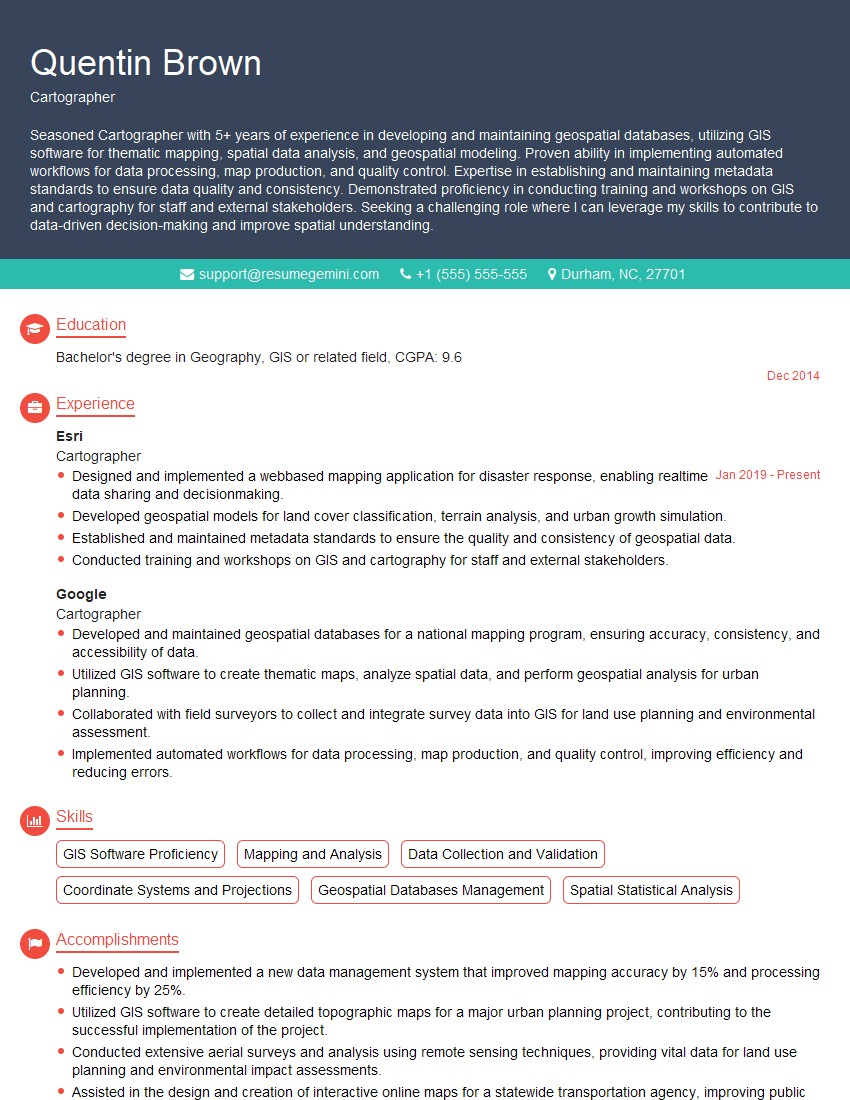
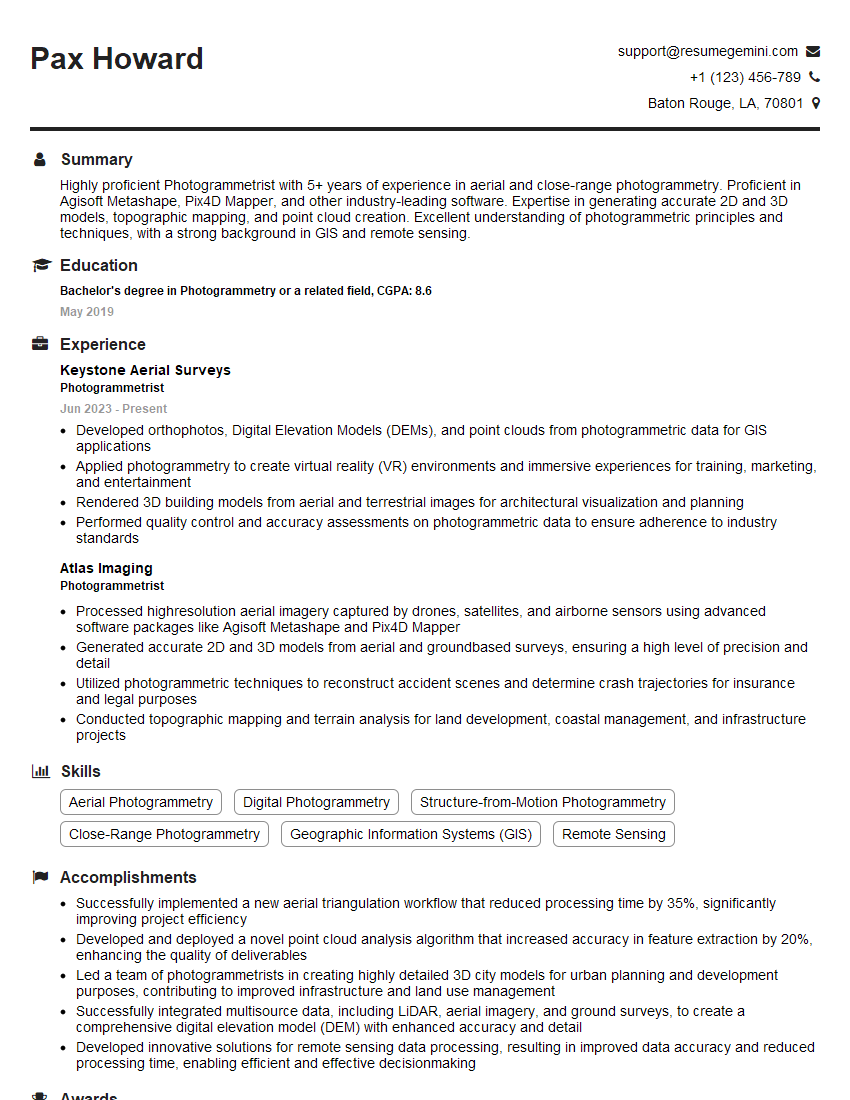
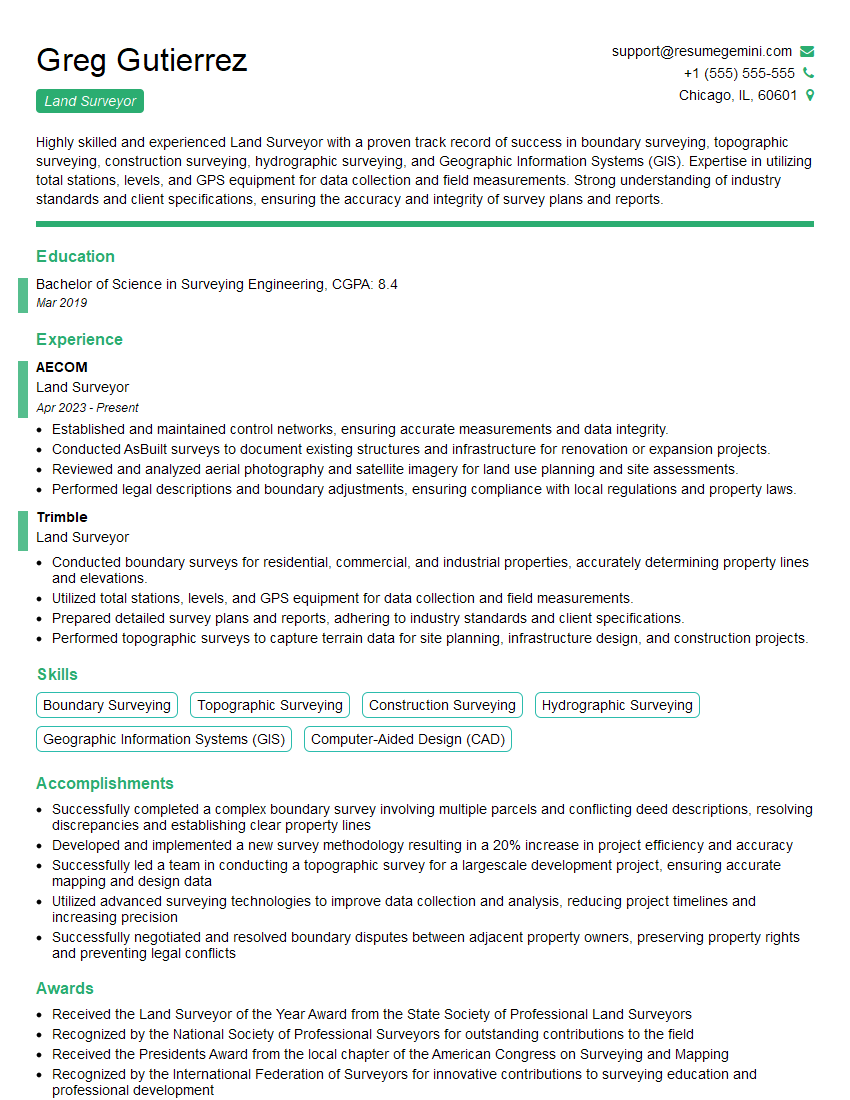
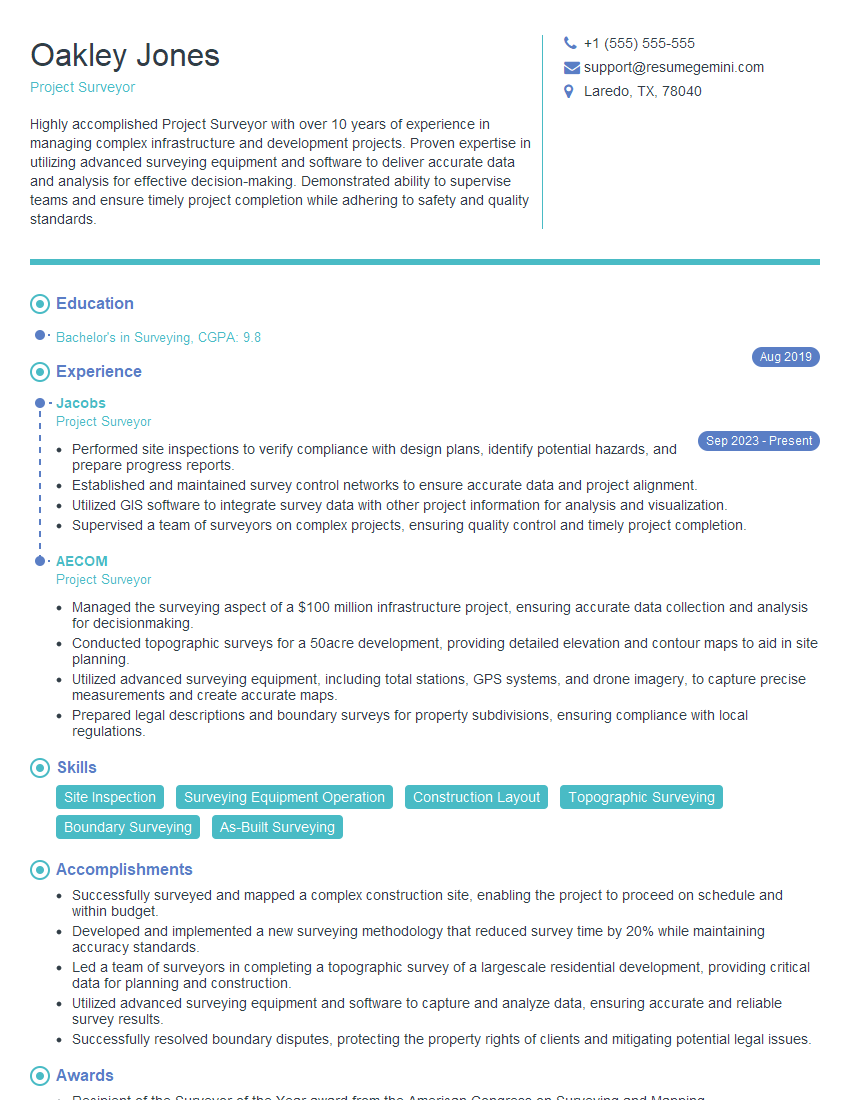
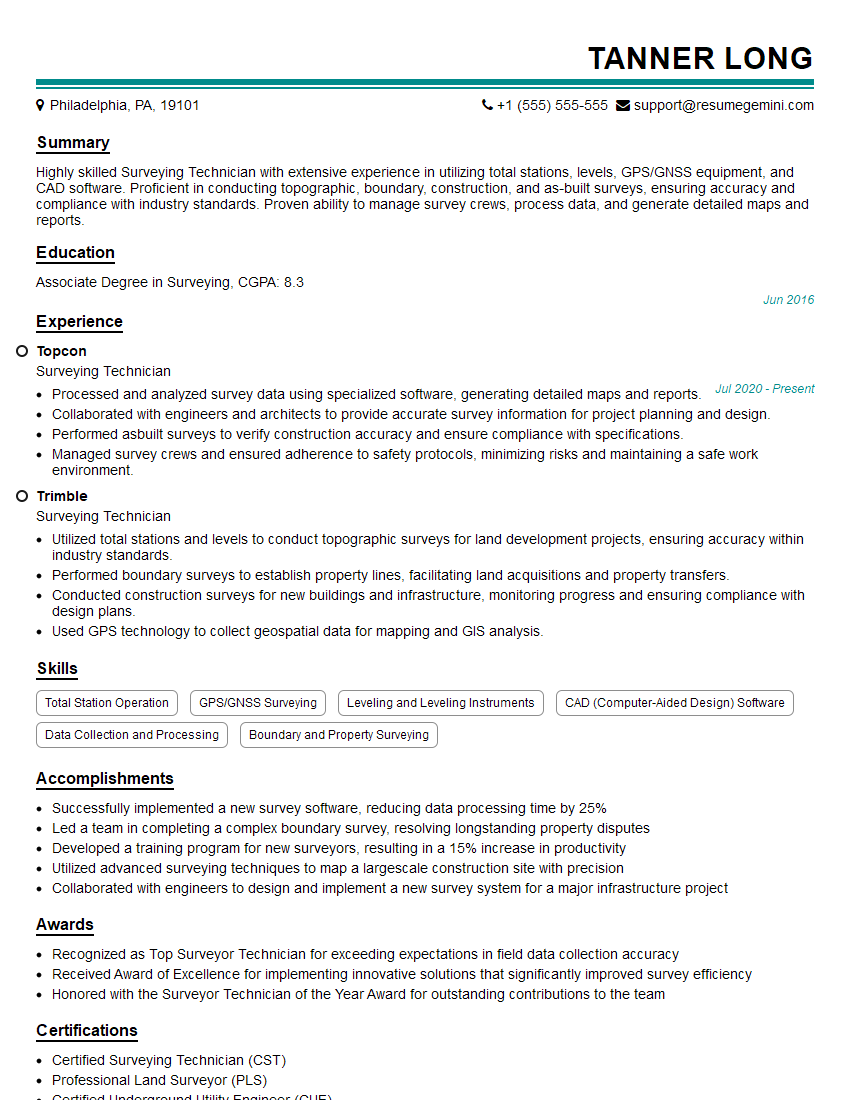
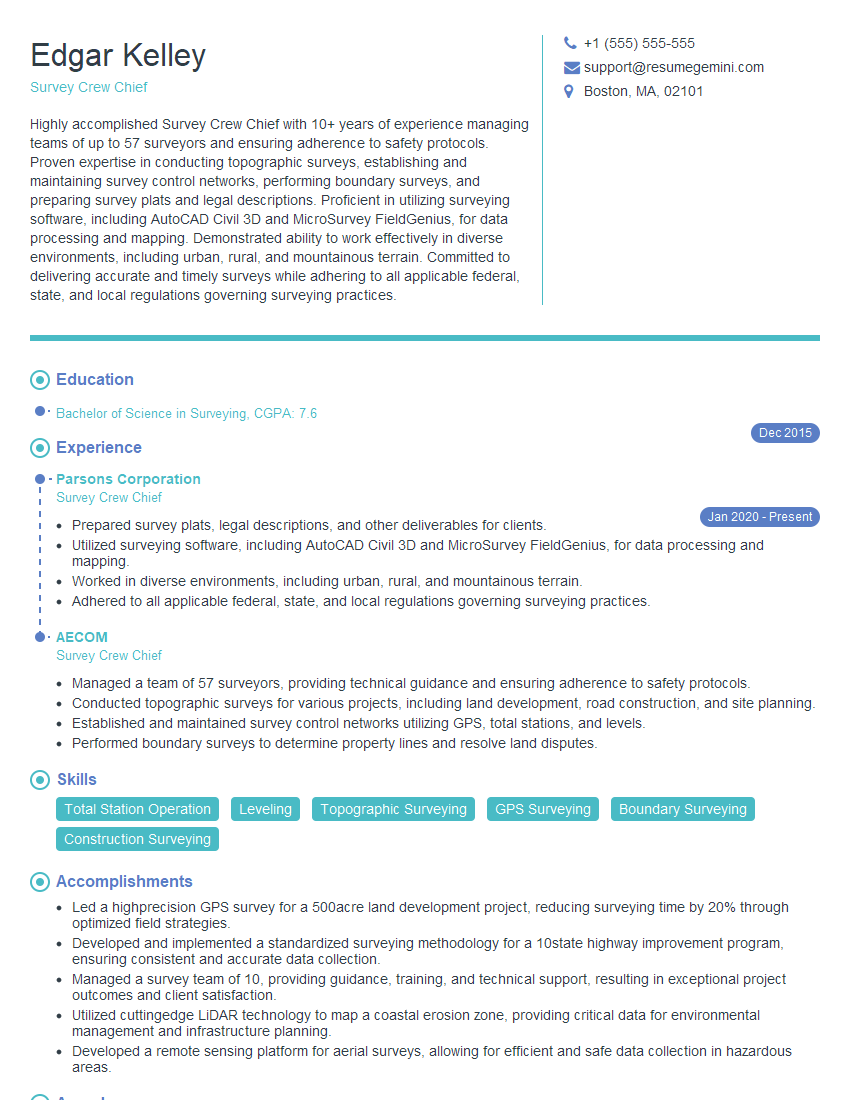
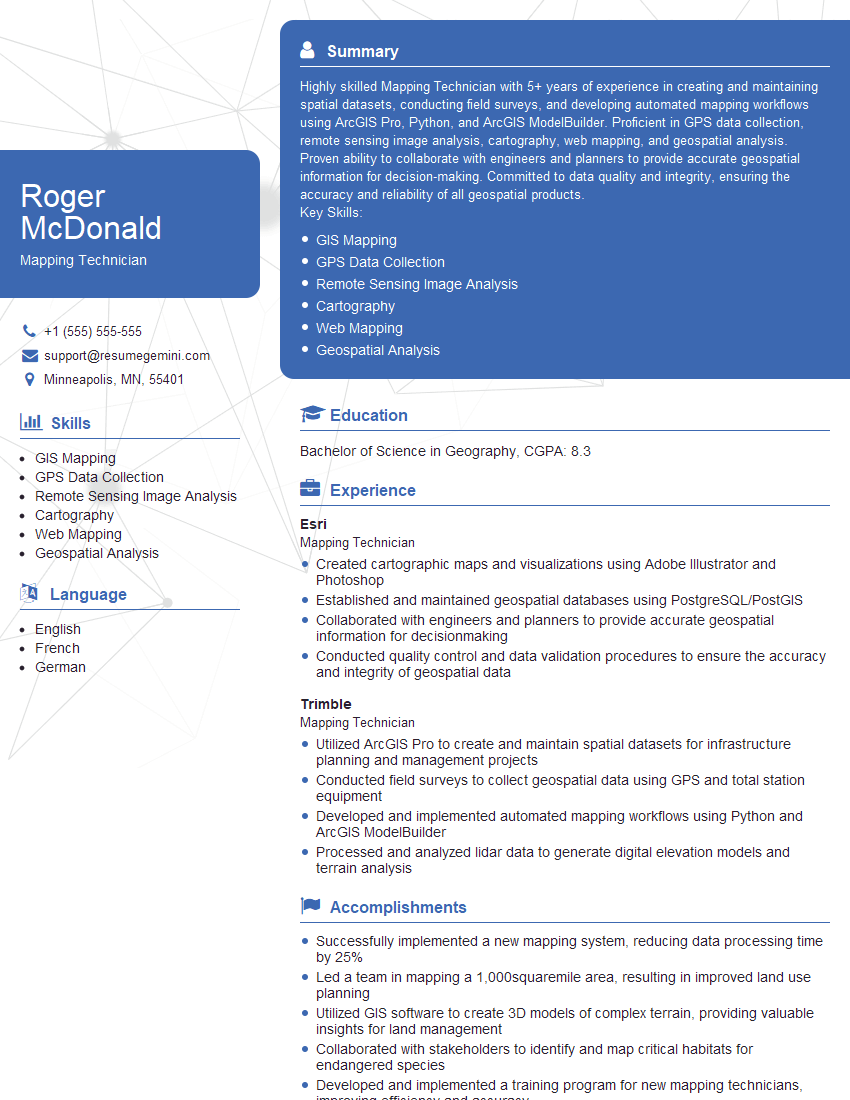
Mastering Boundary Demarcation opens doors to exciting career opportunities in land surveying, engineering, and legal fields. A strong understanding of these principles is highly valued by employers. To significantly boost your job prospects, creating an ATS-friendly resume is crucial. ResumeGemini is a trusted resource to help you build a professional and impactful resume that highlights your skills and experience effectively. We provide examples of resumes tailored to Boundary Demarcation to guide you in crafting your own compelling application.
Explore more articles
Users Rating of Our Blogs
Share Your Experience
We value your feedback! Please rate our content and share your thoughts (optional).
What Readers Say About Our Blog
Really detailed insights and content, thank you for writing this detailed article.
IT gave me an insight and words to use and be able to think of examples