Interviews are opportunities to demonstrate your expertise, and this guide is here to help you shine. Explore the essential Brass Melting interview questions that employers frequently ask, paired with strategies for crafting responses that set you apart from the competition.
Questions Asked in Brass Melting Interview
Q 1. Describe the process of melting brass using an induction furnace.
Melting brass in an induction furnace is a highly efficient and controlled process. The furnace uses electromagnetic induction to generate heat directly within the brass charge, eliminating the need for a combustion flame. This results in cleaner melting, better alloy control, and improved energy efficiency.
The process typically involves:
- Charging: The brass scrap or ingots are carefully loaded into the crucible within the induction coil.
- Melting: The induction coil generates a high-frequency alternating current, creating eddy currents within the brass. These currents generate heat, causing the brass to melt.
- Alloying (if necessary): Additional alloying elements can be added to achieve the desired composition during the melting process. This requires careful control of the temperature and melting time to ensure proper mixing and avoid oxidation.
- Temperature Control: The induction furnace allows for precise control of the melt temperature, which is crucial for maintaining the desired properties of the brass.
- Pouring: Once melted and the desired temperature is reached, the molten brass is carefully poured into molds or casting systems.
Think of it like this: The induction furnace uses invisible ‘magnetic stirrers’ to heat the brass from within, making it a very precise and clean method compared to traditional methods using a fuel-fired furnace.
Q 2. Explain the different types of brass alloys and their properties.
Brass alloys are primarily composed of copper and zinc, but other elements like lead, tin, manganese, and aluminum can be added to modify their properties. The specific ratios of these elements define the different types of brass, each with unique characteristics.
- Cartridge Brass (70/30): A common type with 70% copper and 30% zinc, known for its ductility and machinability. Ideal for making cartridges and similar components.
- Red Brass (85/15): Higher in copper, exhibiting excellent corrosion resistance. Often used for plumbing fixtures and decorative applications.
- Yellow Brass (65/35): Higher zinc content, making it stronger but less ductile than cartridge brass. It’s used in applications requiring higher strength.
- Free-Cutting Brass: Contains small amounts of lead, making it easier to machine. Used in applications like screws and nuts where ease of manufacturing is key.
- Naval Brass: Contains tin and sometimes lead, providing enhanced corrosion resistance, making it suitable for marine environments.
The properties of brass alloys vary depending on the specific composition. For instance, increasing zinc content generally increases strength but reduces ductility. The addition of lead improves machinability, but reduces corrosion resistance. Understanding these relationships is critical in selecting the correct alloy for a specific application.
Q 3. What safety precautions are crucial during brass melting?
Safety is paramount during brass melting. Molten brass is extremely hot and can cause severe burns. Fumes produced during melting can also be toxic. Here are some crucial safety precautions:
- Personal Protective Equipment (PPE): Always wear appropriate PPE, including safety glasses, heat-resistant gloves, long sleeves, and closed-toe shoes. A full face shield is recommended.
- Ventilation: Ensure adequate ventilation to remove harmful fumes. Local exhaust ventilation at the furnace is critical.
- Emergency Procedures: Have a clear emergency plan and be familiar with the location of fire extinguishers, eyewash stations, and first-aid kits.
- Proper Training: All personnel involved in the melting process should receive thorough training in safe operating procedures.
- Hot Metal Handling: Use proper tools and techniques for handling molten brass to prevent spills and burns.
- Fire Safety: Be mindful of flammable materials near the furnace and have fire suppression systems in place.
Ignoring safety precautions can lead to serious accidents. A responsible and safety-conscious approach is essential for every brass melting operation.
Q 4. How do you ensure the quality and consistency of the melted brass?
Maintaining the quality and consistency of melted brass requires careful control throughout the process. Key aspects include:
- Accurate Weighing: Precisely weigh the starting materials to ensure the correct alloy composition.
- Temperature Control: Maintain the melt temperature within the specified range to prevent oxidation and ensure proper alloying.
- Fluxing: Use appropriate flux to protect the melt from oxidation and remove impurities.
- Degassing: Employ degassing techniques to remove dissolved gases that can cause porosity in castings.
- Regular Maintenance: Regularly inspect and maintain the furnace and associated equipment to ensure optimal performance.
- Sampling and Analysis: Periodically sample the melt and analyze its composition to verify that it meets the required specifications. This could involve chemical analysis or mechanical testing.
Consistent quality control procedures are essential for producing brass that meets the required standards for strength, ductility, and corrosion resistance. Think of it as baking a cake: precise measurements and careful temperature control are vital for a consistent and delicious result.
Q 5. What are the common impurities found in brass and how are they removed?
Common impurities in brass include oxides, zinc oxide, iron, lead, and other elements depending on the source of the scrap metal. These impurities can negatively affect the mechanical and physical properties of the final product.
Removal techniques include:
- Fluxing: Fluxing agents react with impurities, forming a slag layer that can be skimmed off the surface of the molten brass.
- Degassing: Removes dissolved gases that can cause porosity. This can be achieved by vacuum degassing or by adding degassing agents.
- Refining: More advanced techniques like refining furnaces can be used to further purify the molten brass.
For example, iron oxide, a common impurity, can be reduced by using a carbon-containing reducing agent in the flux. Proper flux selection is crucial for effective impurity removal.
Q 6. Describe the role of flux in brass melting.
Flux plays a crucial role in brass melting by protecting the molten metal from oxidation and removing impurities. It acts as a cleansing agent, forming a layer on top of the melt that absorbs oxides and other contaminants. This prevents the loss of valuable alloying elements and improves the quality of the final product.
Fluxes are typically composed of a mixture of chemicals, chosen based on the specific alloy being melted and the type of impurities present. The flux prevents oxygen from reacting with the molten brass, forming a protective layer. It facilitates the removal of oxides and other impurities. The proper choice and application of flux are critical for efficient and clean melting operations.
Q 7. Explain the principles of degassing in brass melting.
Degassing in brass melting is the process of removing dissolved gases, primarily hydrogen, from the molten metal. These dissolved gases can cause porosity (tiny holes) in the final casting, significantly weakening the material and affecting its mechanical properties. This is particularly important for applications requiring high integrity like pressure vessels or critical engineering components.
Degassing methods include:
- Vacuum Degassing: This involves applying a vacuum to the molten brass, lowering the pressure and allowing dissolved gases to escape.
- Gas Purge Degassing: An inert gas like Argon is bubbled through the melt to displace dissolved gases.
- Chemical Degassing: Specific degassing agents can be added to the melt to react with and remove dissolved gases.
The choice of degassing method depends on factors like the scale of production, the alloy composition, and the required quality level. Effective degassing is essential for producing high-quality, dense brass castings.
Q 8. How do you control the temperature during brass melting?
Precise temperature control is paramount in brass melting to achieve the desired properties in the final product. We primarily use a combination of methods. First, the furnace itself is equipped with a sophisticated temperature controller, often using thermocouples for accurate readings. These thermocouples are embedded in the crucible or close to the molten brass, continuously monitoring the temperature and feeding this data to the controller. The controller then adjusts the power supplied to the heating elements, maintaining the temperature within a very narrow range. Secondly, we visually monitor the molten brass. The appearance of the metal – its brightness, fluidity, and any signs of oxidation – provides additional qualitative data. Finally, experienced operators rely on their years of experience to make fine adjustments, based on factors such as the size of the melt and the type of brass being processed. Think of it like baking a cake: a recipe (the desired temperature) and a timer (the controller) are important, but a skilled baker (the operator) also knows how to adjust based on visual cues.
Q 9. What are the signs of overheating or underheating during brass melting?
Overheating and underheating brass have distinct consequences and observable signs. Overheating leads to excessive zinc vaporization, resulting in zinc loss, and creating a porous and brittle final product. Visually, you’ll notice excessive fumes and a dulling of the molten metal’s surface due to oxidation. The metal might also become excessively fluid and prone to splashing. Underheating, conversely, means the brass isn’t fully molten, leading to inhomogeneity and potentially incomplete alloying. This manifests as uneven melting, with some areas still solid while others are molten. You might see significant differences in color and fluidity within the melt. The resulting casting will likely contain unmelted particles and will be structurally weaker. In short, a healthy melt should be bright, uniformly fluid, and free of excessive fumes.
Q 10. Describe the different types of crucibles used in brass melting.
The choice of crucible depends on factors like the size of the melt, the frequency of use, and the type of furnace. We commonly use several types: Graphite crucibles are very popular due to their high thermal conductivity and resistance to thermal shock, making them ideal for high-temperature applications. However, they are susceptible to oxidation and react with certain elements, so careful consideration is needed. Clay-graphite crucibles offer a good balance of thermal properties and cost-effectiveness. They tend to have a slightly longer lifespan than pure graphite crucibles. Silica crucibles are used less frequently for brass melting due to their lower melting point and reactivity with certain brass components. The selection process is a careful evaluation based on the operational requirements and cost-benefit analysis.
Q 11. How do you maintain and clean the melting furnace?
Furnace maintenance is critical for safety and efficiency. After each melt, we allow the furnace to cool down completely before cleaning. This prevents thermal shock which can damage the furnace lining. We remove any spilled or solidified brass using appropriate tools. Crucial is the removal of any slag or dross that has accumulated on the surface of the melt. This material is not only waste, but it can also contaminate future melts. Regular inspections of the furnace lining are essential to detect any cracks or damage. If a crack is found, it needs to be repaired immediately to prevent further damage and ensure safe operation. Regular checks on the heating elements and temperature controllers are also vital for maintaining the furnace’s efficiency and longevity.
Q 12. What are the common problems encountered during brass melting and how do you troubleshoot them?
Common problems include oxidation, poor alloying, and crucible failure. Oxidation is countered by using a protective fluxing agent on the molten brass to minimize contact with the atmosphere. Poor alloying is typically due to improper mixing or inconsistent component addition – solved by careful pre-weighing and thorough stirring. Crucible failure might stem from overheating, chemical attack, or thermal shock. Preventing this involves maintaining correct melting temperatures, using appropriate crucible materials, and allowing the crucible to heat up and cool down gradually. In each case, the solution is often preventive – maintaining cleanliness, following established procedures, and regular inspection are key.
Q 13. Explain the process of pouring molten brass into molds.
Pouring molten brass requires precision and safety. First, we ensure the mold is preheated to the appropriate temperature to prevent thermal shock and improve casting quality. We also pre-treat molds with a release agent to facilitate removal of the casting once solidified. The crucible, containing the molten brass, is carefully removed from the furnace using appropriate tongs, ensuring we avoid any spills. Then, we tilt the crucible and smoothly pour the molten metal into the mold. Speed and consistency are key to avoiding defects in the final casting, minimizing turbulence and ensuring complete filling. After pouring, the mold is allowed to cool slowly to prevent internal stresses and cracking.
Q 14. How do you ensure the proper flow of molten brass into the mold?
Ensuring proper flow relies on several factors: the design of the pouring system (spout, gate, runner systems), the fluidity of the molten brass (dependent on temperature and alloy composition), and the mold design itself. A well-designed pouring system minimizes turbulence and ensures complete filling of the mold cavity. The fluidity is controlled by maintaining the correct melting temperature and using appropriate fluxing agents. The mold should be designed to facilitate smooth flow, and it should have sufficient vents to release trapped air or gases. Think of it like directing water flow through a channel: the smoother the channel and the greater the water pressure (fluid brass), the better and more even the flow.
Q 15. What are the different types of molds used in brass casting?
Brass casting utilizes a variety of molds, each chosen based on the complexity of the part, production volume, and desired surface finish. Common types include:
- Sand Casting: This is a traditional and versatile method using sand molds. It’s cost-effective for large or intricate parts but results in a less precise surface finish. Think of creating a sandcastle – the mold is temporary and disposable.
- Permanent Mold Casting: Uses reusable metal molds (steel, graphite) offering better dimensional accuracy and surface finish than sand casting. It’s ideal for high-volume production runs of simpler parts. Imagine baking cookies – the cookie cutter is reusable.
- Investment Casting (Lost-Wax): A highly accurate process where a wax pattern is created, coated in ceramic, and then melted out, leaving a cavity for molten brass to fill. This yields extremely intricate and detailed castings, but is more expensive. It’s like making a chocolate mold – the wax model is sacrificed to create the final product.
- Die Casting: This high-speed process uses metal dies under high pressure to produce parts with exceptional dimensional accuracy and surface finish. It’s suitable for mass production of smaller, simpler parts. Think of stamping out coins – the dies create many identical shapes quickly.
The choice of mold type is a crucial decision in the brass casting process, affecting cost, quality, and production efficiency.
Career Expert Tips:
- Ace those interviews! Prepare effectively by reviewing the Top 50 Most Common Interview Questions on ResumeGemini.
- Navigate your job search with confidence! Explore a wide range of Career Tips on ResumeGemini. Learn about common challenges and recommendations to overcome them.
- Craft the perfect resume! Master the Art of Resume Writing with ResumeGemini’s guide. Showcase your unique qualifications and achievements effectively.
- Don’t miss out on holiday savings! Build your dream resume with ResumeGemini’s ATS optimized templates.
Q 16. How do you prevent defects such as porosity or shrinkage in brass castings?
Porosity (small holes) and shrinkage (cavities) are common defects in brass castings, stemming from trapped gases during solidification and the metal’s contraction as it cools. Prevention strategies involve:
- Proper Degassing: Using fluxing agents during melting helps remove dissolved gases from the molten brass. Imagine stirring a pot of soup to release bubbles.
- Controlled Cooling Rate: Slow, controlled cooling minimizes shrinkage cavities by allowing the metal to solidify gradually. Think of baking a cake slowly for even cooking.
- Mold Design: Strategic placement of risers (reservoirs of molten metal) and chills (heat sinks) in the mold can help feed the casting as it solidifies, reducing shrinkage. Risers act like extra ingredients to replenish the solidifying area.
- Preheating Molds: Warming the mold reduces the temperature gradient between the mold and the molten metal, minimizing thermal stress and resulting defects.
- Proper Melting Practices: Avoiding overheating the brass and ensuring proper alloy composition are vital to achieve sound castings. Too much heat can cause the formation of defects.
Implementing these strategies helps produce high-quality brass castings with minimal defects.
Q 17. Explain the importance of maintaining proper ventilation in a brass foundry.
Maintaining proper ventilation in a brass foundry is crucial for worker safety and environmental protection. Brass melting generates fumes containing zinc oxide, which is toxic at high concentrations. Inadequate ventilation leads to:
- Metal fume fever: A flu-like illness caused by inhaling zinc oxide fumes.
- Respiratory problems: Long-term exposure can cause chronic respiratory issues.
Proper ventilation systems, including local exhaust ventilation at the melting points and general building ventilation, are essential to dilute and remove these harmful fumes, creating a safe working environment. Regular monitoring of air quality is equally vital to ensure the system’s effectiveness. Think of it like having a well-ventilated kitchen to remove cooking fumes – a necessity for healthy cooking and a safe environment.
Q 18. What are the environmental concerns related to brass melting?
Brass melting presents several environmental concerns, primarily related to:
- Air pollution: The release of zinc oxide and other particulate matter into the atmosphere. This contributes to air quality degradation and potential respiratory health issues.
- Water pollution: Improper disposal of wastewater containing brass-related contaminants can pollute water sources. This includes heavy metals that are detrimental to aquatic life.
- Waste generation: The foundry process generates various solid wastes, such as slag (waste material from melting) and spent molding sand. These need careful management to avoid environmental damage.
Responsible brass foundries implement environmental control measures such as air pollution control systems, proper wastewater treatment, and responsible waste management practices to minimize environmental impact.
Q 19. How do you handle spills or leaks of molten brass?
Handling spills of molten brass requires immediate and careful action to prevent injury and damage. The steps involve:
- Evacuate the area: Clear the surrounding area immediately to ensure worker safety.
- Contain the spill: Use appropriate materials (e.g., sand, vermiculite) to absorb and contain the molten metal. Avoid using water, which can cause a violent reaction.
- Cool the spill slowly: Allow the brass to cool naturally; rapid cooling can cause cracking and spattering.
- Clean up the spill: Once cooled, carefully remove the solidified brass and contaminated materials.
- Notify relevant authorities: Report the incident as per company protocol and local regulations.
Proper training and emergency response procedures are vital for handling such incidents effectively and safely.
Q 20. What are the different types of personal protective equipment (PPE) used in brass melting?
Personal Protective Equipment (PPE) is paramount in brass melting operations to protect workers from heat, molten metal splashes, fumes, and other hazards. Essential PPE includes:
- Heat-resistant gloves and clothing: To protect against burns from molten metal and high temperatures.
- Safety goggles or face shields: To protect eyes from splashes and flying particles.
- Respiratory protection: Air-purifying respirators or supplied-air respirators to filter out harmful fumes.
- Safety footwear: Steel-toe boots to protect feet from falling objects.
- Hearing protection: To mitigate noise levels from machinery.
Regular inspections and maintenance of PPE are essential to ensure its effectiveness in safeguarding workers.
Q 21. Describe the process of analyzing the chemical composition of brass.
Analyzing the chemical composition of brass is crucial for quality control and ensuring the alloy meets specifications. Common methods include:
- Spectrometric analysis: This rapid and accurate technique uses light emission or absorption to determine the elemental composition. It’s like a fingerprint scan for the brass, identifying its unique elements.
- Wet chemical analysis: Traditional methods involving dissolving a sample in acids and then using chemical reactions to determine the concentration of different elements. It’s a more time-consuming process but is highly precise.
- X-ray fluorescence (XRF): This non-destructive method uses X-rays to analyze the elemental composition. It’s particularly suitable for rapid analysis and quality control checks.
The choice of analysis method depends on the required level of accuracy, speed, and available resources. The results are essential to ensure the brass meets the specified copper and zinc proportions and is free from undesirable impurities.
Q 22. What are the common methods for testing the mechanical properties of brass?
Testing the mechanical properties of brass is crucial to ensure it meets the required specifications for its intended application. Common methods involve subjecting samples to various stresses and measuring their response. This helps determine the brass’s strength, ductility, and other key characteristics.
Tensile Testing: A standard tensile test measures the material’s strength by pulling a sample until it breaks. The yield strength, ultimate tensile strength, and elongation are key parameters obtained. Think of it like stretching a rubber band – how much force it can withstand before breaking and how much it stretches before that point.
Hardness Testing: This assesses the resistance to indentation. Methods like Brinell, Rockwell, and Vickers hardness tests are commonly used. Imagine pressing a small, hard object into the brass; the depth of the indentation indicates hardness.
Impact Testing: This evaluates the material’s ability to absorb energy from an impact. The Charpy and Izod tests are common examples. Think of hitting the brass with a hammer; a tougher material will absorb more energy before fracturing.
Fatigue Testing: This determines the material’s endurance limit – the stress it can withstand for a very large number of cycles without failure. This is important for components under repeated stress like those in vibrating machinery.
The specific test chosen depends on the application of the brass. For instance, a component subject to repeated stress requires fatigue testing, while a decorative item might only need hardness testing.
Q 23. Explain the importance of maintaining accurate records during brass melting operations.
Maintaining accurate records during brass melting is paramount for quality control, traceability, and regulatory compliance. These records provide a detailed history of the entire process, allowing for analysis of successes and troubleshooting of any issues. They’re also vital for identifying potential sources of defects or variations in the final product.
Imagine a recipe for baking a cake. Without precise measurements and a detailed record of each step, reproducing the same cake consistently is difficult. Similarly, in brass melting, meticulous record-keeping ensures consistent product quality. Key information to document includes:
Raw Materials: Type and quantity of copper, zinc, and other alloying elements used. Any impurities or variations should also be noted.
Melting Parameters: Furnace temperature, melting time, and any protective atmosphere used (e.g., nitrogen). Deviations from standard procedures should be documented.
Alloy Composition: The precise chemical composition of the molten brass after melting and refining. This often involves spectroscopic analysis.
Casting Parameters: Mold type, casting temperature, and cooling rates. These significantly influence the final properties of the brass.
Quality Control Tests: Results of mechanical tests, chemical analysis, and visual inspection, along with any corrective actions taken.
By maintaining comprehensive records, we can quickly identify the root cause of any problems and implement corrective measures to prevent recurrence. Moreover, such records are essential for meeting industry standards and regulatory requirements.
Q 24. How do you ensure compliance with safety regulations in a brass foundry?
Safety is paramount in any brass foundry. Compliance with regulations involves a multi-faceted approach encompassing employee training, equipment maintenance, and environmental control. This begins with a thorough understanding of relevant Occupational Safety and Health Administration (OSHA) standards and other local regulations.
Personal Protective Equipment (PPE): Mandatory PPE includes safety glasses, heat-resistant gloves, long sleeves, and closed-toe shoes. Depending on the specific operation, respiratory protection might also be necessary to mitigate exposure to metal fumes.
Emergency Procedures: Clearly defined emergency procedures, including fire safety, spill response, and first aid, are crucial. Regular fire drills and emergency training are essential.
Equipment Maintenance: Regular inspections and maintenance of all furnaces, machinery, and safety equipment are vital. Malfunctioning equipment can lead to serious accidents. This also includes ensuring proper ventilation to remove harmful fumes.
Environmental Control: Control of metal fumes, dust, and noise is crucial. This requires proper ventilation systems, dust collection equipment, and noise-reducing measures. Proper disposal of waste materials is also essential to minimize environmental impact.
Employee Training: Comprehensive training on safe operating procedures, hazard recognition, and emergency response is provided to all foundry personnel.
Regular safety audits and inspections help identify potential hazards and ensure continuous compliance with safety standards. A proactive approach to safety is more effective than reactive measures after an accident has occurred.
Q 25. Describe your experience with different types of furnaces used in brass melting.
My experience encompasses various furnace types used in brass melting, each with its own advantages and disadvantages. The choice often depends on the scale of production and the desired level of control over the melting process.
Crucible Furnaces: These are relatively simple and cost-effective for smaller-scale operations. They use a refractory crucible to hold the brass, heated by gas or electricity. They offer good control over melting temperature but have limitations regarding larger production volumes.
Induction Furnaces: These utilize electromagnetic induction to heat the brass directly, providing excellent control over temperature and faster melting times compared to crucible furnaces. They’re more energy-efficient and suitable for higher-volume production.
Reverberatory Furnaces: These are often used for larger-scale operations and allow for melting and holding large quantities of brass. Heat is transferred indirectly to the brass, reducing contamination but requiring more energy compared to induction furnaces.
Electric Arc Furnaces: These utilize an electric arc to melt the brass. Although capable of melting high volumes, they can be prone to issues with controlling the temperature and are typically used in the production of large, complex castings.
In my experience, the selection of a furnace type always involves a careful evaluation of factors like production capacity, energy costs, and the required level of quality and control over the melting process.
Q 26. Explain your experience with different types of brass alloys.
Brass alloys are broadly classified by their composition, primarily the ratio of copper and zinc, with the addition of other alloying elements to modify specific properties. My experience includes working with various brass alloys, each suited for different applications.
Cartridge Brass (70/30): This is a common brass alloy with 70% copper and 30% zinc. It’s known for its good ductility and machinability, making it suitable for cartridges, pipes, and decorative items.
Naval Brass: This alloy incorporates tin and sometimes lead, increasing its corrosion resistance, making it ideal for marine applications.
Free-Cutting Brass: The addition of lead enhances its machinability, making it suitable for high-speed machining operations. However, it has slightly reduced strength compared to other brass alloys.
Manganese Brass: Manganese is added for increased strength and corrosion resistance, suitable for applications requiring high durability. This is often used in situations where slightly lower ductility is acceptable compared to the improved strength.
Silicon Brass: Added silicon improves its fluidity during casting, enabling the production of complex shapes. However, it affects its ductility.
Understanding the properties of each alloy is crucial for selecting the right material for a specific application. The selection process often involves considering factors such as strength, ductility, corrosion resistance, and cost.
Q 27. Describe your experience with troubleshooting problems in brass melting.
Troubleshooting problems in brass melting requires a systematic approach. It often involves analyzing the process parameters and the properties of the final product to identify the root cause of the issue. I’ve encountered various challenges, and my strategies have typically involved:
Analyzing Chemical Composition: Deviation from the target composition can lead to undesirable properties. Spectroscopic analysis is crucial for identifying discrepancies.
Reviewing Melting Parameters: Incorrect temperature, melting time, or protective atmosphere can affect the alloy’s properties and lead to defects like porosity or oxidation.
Inspecting Raw Materials: Impurities in the raw materials can significantly impact the final product. Thorough inspection of the copper and zinc is vital to prevent issues.
Assessing Furnace Condition: Issues with the furnace, such as malfunctioning heating elements or inadequate insulation, can affect the melting process.
Examining Casting Procedures: Problems with the mold, pouring temperature, or cooling rate can lead to casting defects.
For instance, if the brass exhibits excessive porosity, I would investigate the melting parameters (temperature, time, atmosphere) and look for potential issues with the raw materials or the casting process. A systematic approach, combined with a detailed understanding of the process parameters and the characteristics of different brass alloys, usually helps in effective troubleshooting.
Q 28. Explain your experience with quality control procedures in brass melting.
Quality control in brass melting is a continuous process aiming to ensure consistent product quality and meet customer specifications. It involves several steps, starting from raw material inspection to the final product testing. My experience emphasizes a multi-faceted approach:
Raw Material Inspection: Thorough inspection of the incoming copper and zinc for impurities or deviations from specifications. This often involves chemical analysis and visual inspection.
Process Monitoring: Continuous monitoring of the melting parameters – temperature, time, and atmosphere – throughout the melting process. Deviation from pre-defined parameters is flagged for investigation.
Chemical Analysis: Regular chemical analysis of the molten brass to verify its composition and identify any impurities or deviations from the target specifications.
Mechanical Testing: Testing of samples from each melt to verify mechanical properties, such as tensile strength, hardness, and elongation, ensuring they meet the required standards.
Visual Inspection: Careful visual inspection of the final castings for surface defects, such as porosity, cracks, or inclusions.
Statistical Process Control (SPC): Implementing SPC charts to track process variables and identify trends or variations, enabling proactive adjustments to maintain consistency.
Effective quality control practices minimize defects, enhance product consistency, and ensure customer satisfaction. It involves establishing clear specifications, implementing robust testing procedures, and continuously monitoring the process for improvements.
Key Topics to Learn for Brass Melting Interview
- Alloy Composition and Properties: Understanding the different alloys used in brass melting, their chemical composition, and how these impact the final product’s properties (strength, ductility, machinability).
- Melting Processes and Equipment: Familiarize yourself with various brass melting techniques (e.g., crucible melting, induction melting), the equipment involved, and their operating principles. Understanding the advantages and disadvantages of each method is crucial.
- Temperature Control and Monitoring: Mastering the precise control of melting temperatures is essential for achieving the desired alloy properties and avoiding defects. Learn about different temperature measurement and control systems.
- Fluxing and Degassing: Understand the role of fluxes in removing impurities and preventing oxidation during the melting process. Learn about different degassing techniques to improve the quality of the molten brass.
- Casting Techniques: Explore different casting methods used for brass, such as sand casting, die casting, investment casting, and their applications in different industries.
- Quality Control and Testing: Learn about various quality control measures employed in brass melting, including chemical analysis, mechanical testing, and non-destructive testing methods to ensure the final product meets specifications.
- Safety Procedures and Regulations: Understand and adhere to all relevant safety regulations and procedures related to handling molten metal, operating melting equipment, and working in a foundry environment.
- Troubleshooting and Problem-Solving: Develop your ability to identify and troubleshoot common problems encountered during brass melting, such as porosity, inclusions, and cracking.
- Energy Efficiency and Environmental Considerations: Understand the environmental impact of brass melting and explore ways to improve energy efficiency and minimize waste.
Next Steps
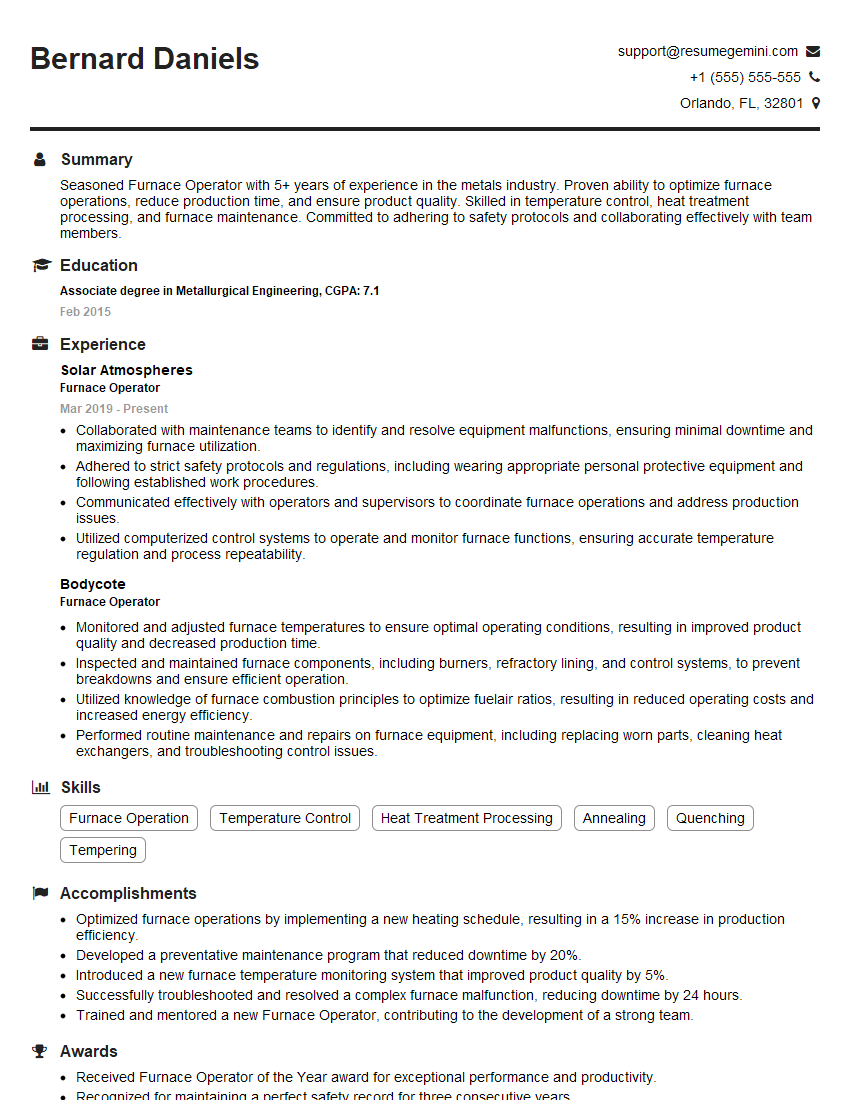
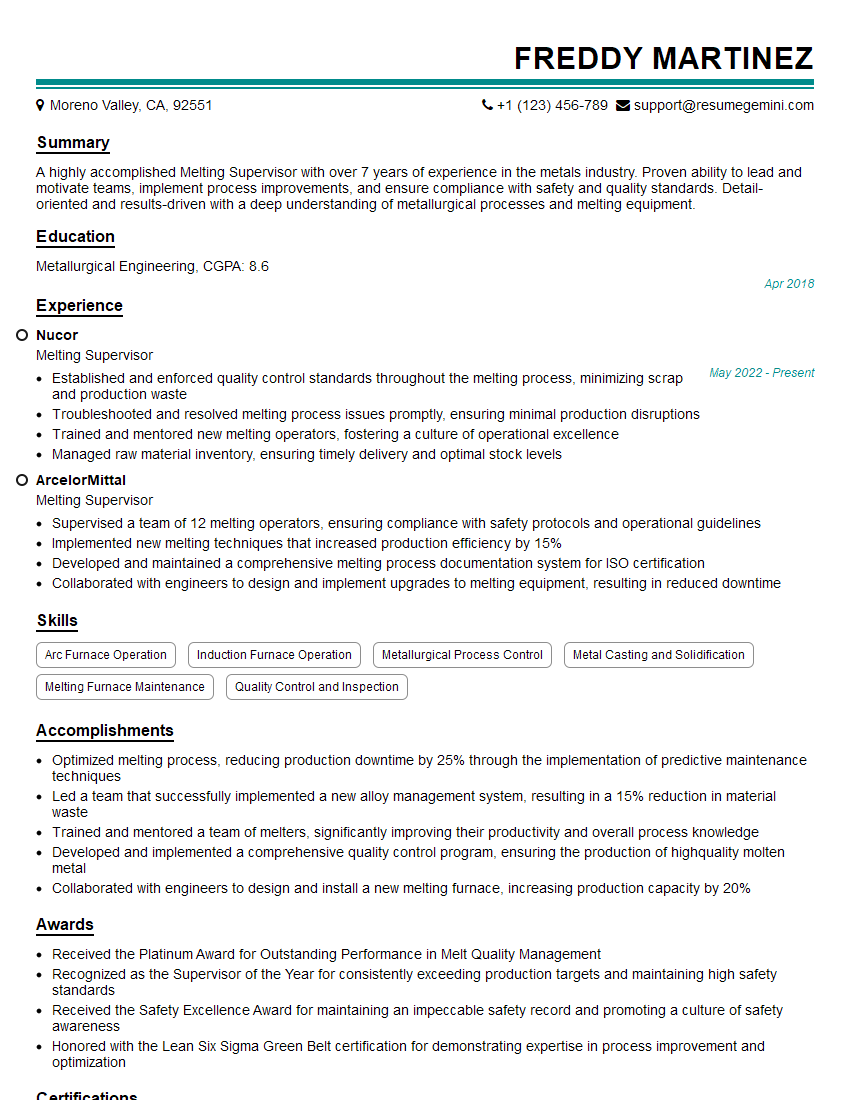
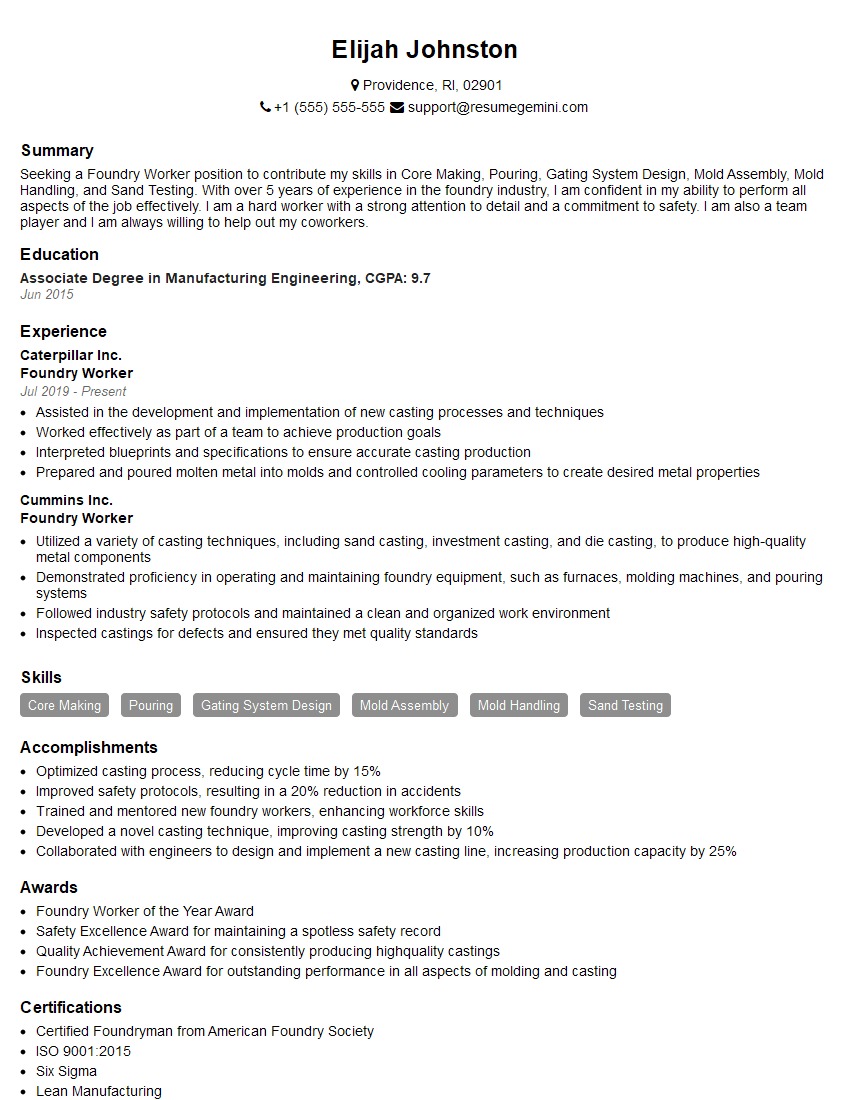
Mastering brass melting opens doors to exciting career opportunities in manufacturing, engineering, and materials science. To maximize your chances of landing your dream job, focus on creating an ATS-friendly resume that highlights your skills and experience effectively. ResumeGemini is a trusted resource that can help you build a professional and impactful resume. They provide examples of resumes tailored to the brass melting industry, ensuring your application stands out from the competition. Invest time in crafting a strong resume—it’s your first impression and a critical step in your job search.


Explore more articles
Users Rating of Our Blogs
Share Your Experience
We value your feedback! Please rate our content and share your thoughts (optional).
What Readers Say About Our Blog
I Redesigned Spongebob Squarepants and his main characters of my artwork.
https://www.deviantart.com/reimaginesponge/art/Redesigned-Spongebob-characters-1223583608
IT gave me an insight and words to use and be able to think of examples
Hi, I’m Jay, we have a few potential clients that are interested in your services, thought you might be a good fit. I’d love to talk about the details, when do you have time to talk?
Best,
Jay
Founder | CEO