Unlock your full potential by mastering the most common Career Exploration and Discovery interview questions. This blog offers a deep dive into the critical topics, ensuring you’re not only prepared to answer but to excel. With these insights, you’ll approach your interview with clarity and confidence.
Questions Asked in Career Exploration and Discovery Interview
Q 1. Explain the process of conducting a career interest inventory.
Conducting a career interest inventory involves a systematic process of exploring an individual’s aptitudes, interests, values, and skills to identify potential career paths aligned with their personality and preferences. It’s like assembling a puzzle – each piece (interest, skill, value) contributes to a complete picture of their ideal career.
The process typically includes:
- Initial Consultation: Understanding the client’s background, goals, and current situation.
- Assessment Administration: Utilizing various tools like interest inventories (e.g., Strong Interest Inventory, Holland Codes), aptitude tests (e.g., ASVAB, Differential Aptitude Tests), and personality assessments (e.g., Myers-Briggs Type Indicator).
- Data Interpretation and Feedback: Analyzing the results and providing personalized feedback, highlighting strengths, interests, and potential career matches. This isn’t about giving definitive answers, but about generating possibilities and avenues for exploration.
- Exploration and Research: Together, we delve into occupations suggested by the assessments, researching job duties, required skills, education/training needed, and salary expectations. This is often done through online resources like O*NET.
- Action Planning: Developing a plan for the client to pursue further exploration, such as informational interviews, job shadowing, or further education.
For example, a client scoring high in ‘Realistic’ and ‘Investigative’ interests on a Holland Codes assessment might be encouraged to explore careers in science, engineering, or the skilled trades.
Q 2. Describe different career assessment tools and their applications.
Many career assessment tools exist, each serving a different purpose. They are valuable but should be considered as part of a broader exploration process, not the sole determinant of career choice.
- Interest Inventories (e.g., Strong Interest Inventory): Measure interests and preferences, suggesting occupations compatible with those interests. Think of it as identifying what activities genuinely excite you.
- Aptitude Tests (e.g., ASVAB): Assess cognitive abilities and potential for success in various fields. This helps understand your natural talents and strengths.
- Personality Assessments (e.g., Myers-Briggs Type Indicator): Identify personality traits and work styles, helping determine ideal work environments and team dynamics. It’s about understanding how you best operate within a team or individually.
- Values Assessments: Explore what’s most important to the client in a career (e.g., helping others, creativity, independence). It’s finding out what truly matters in a career for you.
- Skills Assessments: Identify both hard skills (technical abilities) and soft skills (interpersonal skills) through self-assessment, work samples, or formal testing.
The application of these tools varies depending on the client’s needs and career stage. For instance, a recent graduate might benefit from aptitude and interest inventories to explore different options, while someone considering a career change might find values and skills assessments more valuable.
Q 3. How do you identify transferable skills in a client’s work history?
Identifying transferable skills involves analyzing a client’s work history to pinpoint skills applicable across different roles and industries. It’s about recognizing the underlying competencies demonstrated, not just the specific tasks performed. Think of it as extracting the essence of what made them successful in past roles.
My approach involves:
- Reviewing work history: Carefully examining resumes, cover letters, and conducting detailed interviews to understand the scope and responsibilities of past jobs.
- Identifying accomplishments: Focusing on what the client achieved rather than just their duties. This often reveals transferable skills.
- Categorizing skills: Classifying skills into categories like communication, problem-solving, leadership, teamwork, technical skills, and organizational skills.
- Matching skills to target roles: Linking the identified skills to the requirements of potential career paths. This creates a clear bridge between past experience and future goals.
For example, a client who managed a team of volunteers in a non-profit might have transferable skills in leadership, communication, conflict resolution, and project management—all valuable in many industries.
Q 4. What strategies do you employ to help clients overcome career indecision?
Career indecision is common. I employ various strategies to help clients navigate this:
- Exploration and information gathering: Using career assessments, informational interviews, and job shadowing to broaden their understanding of various options.
- Values clarification: Helping clients identify their core values and how those align with different career paths.
- Strengths-based approach: Focusing on their existing skills and interests, rather than perceived weaknesses, to build confidence and identify suitable options.
- Decision-making frameworks: Introducing structured decision-making tools to help them weigh pros and cons of different options in a systematic way.
- Setting realistic goals: Breaking down the career exploration process into manageable steps, avoiding feeling overwhelmed by the magnitude of the decision.
- Addressing limiting beliefs: Identifying and challenging self-limiting beliefs or fears that might be contributing to indecision. This could involve cognitive behavioral techniques.
For instance, I might use a decision matrix with a client to compare different career options based on factors like salary, work-life balance, and job satisfaction.
Q 5. Outline your approach to developing a comprehensive career plan with a client.
Developing a comprehensive career plan is a collaborative process involving several steps:
- Assessment and self-discovery: Using assessments and interviews to understand the client’s skills, interests, values, and career goals.
- Labor market research: Investigating current job market trends, salary expectations, and future job prospects for potential career paths. This ensures the plan is realistic and informed.
- Goal setting: Establishing short-term and long-term career goals, creating a clear roadmap for the client.
- Action planning: Developing concrete steps to achieve these goals, such as education, training, networking, or job searching strategies.
- Skill development: Identifying areas needing improvement and developing a plan for skill enhancement through courses, workshops, or on-the-job training.
- Networking and job search strategies: Creating a plan to network effectively and build relationships within their target industry, and developing effective job search tactics.
- Monitoring and evaluation: Regularly reviewing progress and making adjustments as needed to ensure the plan remains relevant and effective.
The plan acts as a living document, regularly updated and refined as the client progresses in their career journey.
Q 6. How would you address a client’s fear of change regarding a career shift?
Fear of change is a significant barrier to career shifts. Addressing it requires empathy and a structured approach:
- Validate their feelings: Acknowledge and normalize the fear of the unknown and the anxieties associated with career change. It’s crucial to make them feel heard and understood.
- Identify the source of fear: Explore the specific anxieties contributing to their fear (e.g., financial insecurity, lack of confidence, fear of failure).
- Develop coping strategies: Provide practical strategies for managing anxiety, such as stress-reduction techniques, positive self-talk, and goal setting.
- Focus on benefits: Help them focus on the positive aspects of the career shift, such as increased job satisfaction, better work-life balance, or higher earning potential.
- Gradual transition: Encourage a gradual transition if possible, perhaps through part-time work or consulting, reducing the abruptness of change.
- Build confidence and self-efficacy: Help them identify their strengths and accomplishments to boost their confidence and belief in their ability to succeed in the new career.
Creating a supportive and understanding environment where the client feels empowered to take risks is crucial for overcoming this fear.
Q 7. Describe your experience with utilizing labor market information in career guidance.
Utilizing labor market information is essential for providing relevant and effective career guidance. It’s about ensuring the client’s career aspirations are grounded in reality and informed by current market demands.
My experience involves:
- Accessing resources: Utilizing resources like O*NET, BLS Occupational Outlook Handbook, and state-level labor market data to obtain information on job outlook, salary ranges, and educational requirements for various occupations.
- Analyzing data: Interpreting this data to identify emerging trends, growth areas, and potential skill gaps within specific industries.
- Integrating information into career planning: Incorporating this information into career plans, ensuring that clients are pursuing realistic and marketable careers.
- Client education: Educating clients about the importance of considering labor market data when making career decisions, emphasizing its value in informed decision-making.
- Tailoring advice: Adapting career guidance based on the specific needs and location of the client. Regional variations in the labor market need to be considered.
For example, I might advise a client interested in a specific field, but the data shows declining job growth in that area. This information might lead us to explore alternative, related fields with better job prospects.
Q 8. How do you help clients navigate job search platforms and resources?
Navigating job search platforms effectively is crucial for successful job hunting. I help clients by first understanding their specific needs and goals. This involves discussing their desired career path, skills, and experience. Then, we collaboratively explore various platforms like LinkedIn, Indeed, Glassdoor, and industry-specific job boards. I guide them on optimizing their resumes and cover letters for Applicant Tracking Systems (ATS), demonstrating how to use keywords effectively. We practice crafting compelling profiles and learning how to use advanced search filters to find relevant opportunities. Furthermore, I teach them how to leverage networking features on these platforms, connect with recruiters, and participate in relevant groups. For instance, I’d show a client how to use Boolean search operators like "data scientist" AND "python" AND "machine learning" on LinkedIn to target specific job postings.
Beyond individual platforms, I also teach them how to use job search aggregators to broaden their reach and understand the nuances of each platform’s search algorithms. Finally, we discuss strategies for managing applications and following up effectively, ensuring they are not just passively submitting applications but actively managing their job search.
Q 9. Explain your understanding of various career development theories.
My understanding of career development theories informs my approach to counseling. Several key theories guide my practice. Holland’s Theory of Vocational Personalities and Work Environments, for example, helps clients identify career paths that align with their personality types (Realistic, Investigative, Artistic, Social, Enterprising, Conventional). We use assessments to clarify these types and explore compatible careers.
Super’s Life-Span, Life-Space Theory emphasizes the developmental nature of careers, recognizing that career choices evolve across different life stages. Understanding a client’s current life stage (exploration, establishment, maintenance, disengagement) allows me to tailor advice accordingly. For instance, a recent graduate is in the exploration phase, while a seasoned professional may be focused on career maintenance or even a transition to a new field.
Social Cognitive Career Theory (SCCT) incorporates self-efficacy, outcome expectations, and personal goals. This theory highlights the importance of belief in one’s abilities and the perceived consequences of actions when making career decisions. I work with clients to strengthen their self-efficacy by identifying their skills and successes, addressing any limiting beliefs, and setting achievable goals. Finally, understanding the importance of environmental factors (social and economic conditions) helps contextualize clients’ career journeys and navigate potential challenges.
Q 10. How do you tailor career advice to clients with diverse backgrounds and experiences?
Tailoring career advice requires recognizing and respecting individual differences. Clients come from diverse backgrounds – different educational levels, professional experiences, cultural contexts, and personal circumstances. I begin by creating a safe and inclusive space where clients feel comfortable sharing their experiences without judgment. Active listening and asking open-ended questions helps me understand their unique perspectives.
For instance, I might adjust my approach when working with an immigrant professional navigating licensing requirements or a returning parent facing childcare challenges. I actively research resources and support systems specific to their backgrounds, like organizations providing mentorship or job training for specific communities. This might include contacting community groups or professional networks catering to their cultural or ethnic backgrounds. I always avoid making assumptions and ensure my advice is relevant and culturally sensitive, adapting my language and communication style as needed to ensure clear understanding and build trust.
Q 11. What are the ethical considerations in career counseling?
Ethical considerations are paramount in career counseling. Confidentiality is key; I only share client information with their explicit permission, except in mandated reporting situations (e.g., threats of harm). Informed consent is another crucial element; clients must understand the counseling process, my qualifications, and the limits of confidentiality before we begin. Objectivity and impartiality are essential; I strive to avoid personal biases when providing advice, ensuring my recommendations are grounded in the client’s best interests, not my own preferences.
Avoiding conflicts of interest is vital. If a situation arises where my personal interests could influence my advice, I will disclose it and refer the client to another counselor. Furthermore, adhering to professional standards of practice and continuing my professional development ensures I provide ethical and up-to-date advice. Finally, maintaining appropriate boundaries within the client-counselor relationship is critical, avoiding dual relationships (e.g., becoming friends with a client).
Q 12. How do you handle situations where a client is resistant to your suggestions?
Resistance to suggestions can stem from various factors – fear of change, uncertainty about the future, or lack of trust in the process. I approach these situations with empathy and understanding. Instead of directly confronting the resistance, I begin by exploring the reasons behind it through open-ended questions, such as “What are your concerns about this suggestion?” or “What makes you hesitant to try this approach?”
I validate their feelings, acknowledging the difficulty of making career changes. Then, I collaborate to find alternative strategies that align with their comfort level and goals. This might involve breaking down larger goals into smaller, manageable steps. For example, if a client resists applying for higher-level positions, we might start by focusing on improving their resume and networking within their current field to gain more experience and confidence before targeting more senior roles. Building trust and a strong collaborative relationship is key to overcoming resistance.
Q 13. Describe a situation where you had to adapt your approach to meet a client’s specific needs.
I recently worked with a client, Sarah, who was a highly skilled software engineer feeling burnt out in a fast-paced startup environment. She initially wanted to completely leave the tech industry, feeling overwhelmed and disillusioned. However, given her skills and experience, I knew a complete career change might not be the best option. Instead of directly suggesting alternative tech roles, I first helped her identify the specific aspects of her current job that caused burnout – long hours, lack of work-life balance, and limited autonomy.
We explored different work models, such as remote work, part-time roles, or positions in larger, more established companies with better employee support programs. By focusing on her priorities and values, we found a role at a non-profit organization that offered greater work-life balance, a more collaborative environment, and the opportunity to use her skills for a cause she cared about. This tailored approach, addressing the root cause of her dissatisfaction rather than pushing her towards a predefined career path, resulted in a successful transition and increased client satisfaction.
Q 14. How do you measure the effectiveness of your career counseling interventions?
Measuring the effectiveness of my interventions involves a multifaceted approach. Client self-report measures, like questionnaires assessing career satisfaction, job search progress, and overall well-being, provide valuable feedback. These questionnaires are often administered at the beginning and end of the counseling process to track changes. Goal attainment scaling involves collaboratively setting specific, measurable, achievable, relevant, and time-bound (SMART) goals at the outset of our work together and tracking progress toward those goals.
Follow-up sessions, even after the formal counseling process has concluded, allow me to monitor clients’ progress and make necessary adjustments. Furthermore, I may collect data on clients’ job placement rates, salary increases, and career advancements to assess the tangible outcomes of our work. It’s important to note that ethical considerations regarding data privacy are always carefully followed. Using qualitative methods, such as case studies, can provide rich insights into the client experience and the impact of the intervention.
Q 15. How do you maintain client confidentiality?
Maintaining client confidentiality is paramount in career counseling. It’s the cornerstone of building trust and ensuring clients feel safe sharing sensitive personal and professional information. This involves adhering to strict ethical guidelines and legal regulations, such as HIPAA in some contexts. In practice, this means:
- Secure Record Keeping: All client information, whether digital or physical, is stored securely, using password-protected files, encrypted storage, and locked filing cabinets. I never leave client files unattended.
- Limited Access: Access to client files is restricted to me and authorized personnel, with strict controls on who can view what information. I only discuss client cases with other professionals involved in their care, and only with their explicit consent.
- Confidentiality Agreements: For some sensitive situations, written confidentiality agreements may be required. This formally outlines expectations around data protection.
- Data Anonymization: When discussing case studies or research findings, I always anonymize client information to protect their identity. This means removing any identifying details like names, dates, and locations.
- Ongoing Training: I participate in regular continuing education to stay updated on best practices for data security and client confidentiality.
For example, if a client shares concerns about a past workplace conflict, that information remains strictly confidential unless they explicitly give me permission to share it with a third party, such as a potential employer (with their specific consent and only relevant information).
Career Expert Tips:
- Ace those interviews! Prepare effectively by reviewing the Top 50 Most Common Interview Questions on ResumeGemini.
- Navigate your job search with confidence! Explore a wide range of Career Tips on ResumeGemini. Learn about common challenges and recommendations to overcome them.
- Craft the perfect resume! Master the Art of Resume Writing with ResumeGemini’s guide. Showcase your unique qualifications and achievements effectively.
- Don’t miss out on holiday savings! Build your dream resume with ResumeGemini’s ATS optimized templates.
Q 16. What are some common barriers to career advancement, and how do you address them?
Common barriers to career advancement are multifaceted and often interconnected. They can include:
- Lack of Skills or Experience: Individuals may lack the specific skills or experience required for promotion or a desired career path. This can stem from a lack of training or opportunities for development.
- Networking Gaps: Building a strong professional network is crucial for career growth. Without sufficient networking, individuals may miss out on opportunities and mentorship.
- Limited Visibility: If an employee’s achievements and contributions are not visible to decision-makers, promotion may be overlooked.
- Lack of Confidence or Self-Advocacy: Some individuals may lack the confidence to pursue promotions or effectively advocate for their needs and ambitions.
- Workplace Bias or Discrimination: This unfortunately remains a significant barrier for many. Unconscious bias, systemic inequities, and discrimination based on various factors can prevent individuals from advancing.
Addressing these barriers involves a multi-pronged approach. I work with clients to:
- Identify Skill Gaps: We assess their existing skills and identify any gaps through skills assessments and self-reflection. This informs a personalized development plan.
- Develop Networking Strategies: We develop a plan to expand their professional network through attending industry events, joining professional organizations, and leveraging online platforms like LinkedIn.
- Enhance Visibility: We brainstorm ways to highlight achievements, such as through performance reviews, project presentations, and seeking out opportunities for leadership roles.
- Build Confidence and Self-Advocacy Skills: Through coaching and role-playing, we develop their ability to effectively communicate their value and negotiate for their career goals.
- Address Bias and Discrimination: For clients facing workplace discrimination, I provide guidance and resources to navigate these challenges, including potential legal avenues.
For example, a client might feel stuck in their current role due to a lack of advanced technical skills. We’d identify specific skills needed for advancement, create a learning plan (courses, certifications, on-the-job training), and develop strategies to showcase their progress to their supervisor.
Q 17. Describe your experience with working with clients facing unemployment.
Working with clients facing unemployment requires a sensitive and empathetic approach. The initial focus is on emotional support and acknowledging the challenges they’re facing. It’s about validating their feelings and helping them avoid getting trapped in negative self-talk.
My approach involves:
- Active Listening and Validation: I create a safe space for clients to express their emotions and concerns without judgment.
- Skills Assessment: We identify their transferable skills and experience, focusing on their strengths and areas for improvement.
- Job Search Strategy Development: We work together to create a tailored job search strategy, including resume and cover letter writing, interview preparation, and networking techniques.
- Resource Identification: I connect them with relevant resources such as job boards, government assistance programs, and training opportunities.
- Goal Setting: We establish short-term and long-term career goals to provide direction and motivation throughout the process.
- Financial Planning (where relevant): Understanding their financial situation is helpful to provide guidance and strategies for managing unemployment.
I remember one client who had been laid off from a long-term position. She was devastated and felt lost. By focusing on her transferable skills and building her confidence, we successfully navigated her job search, ultimately leading her to a new role that better utilized her abilities and provided more satisfaction.
Q 18. How do you facilitate effective goal-setting with clients?
Effective goal-setting is a collaborative process, not a directive one. I employ a SMART goal framework, ensuring that goals are:
- Specific: Clearly defined and unambiguous.
- Measurable: Progress can be tracked and quantified.
- Attainable: Realistic and achievable given the client’s circumstances.
- Relevant: Aligned with the client’s values, interests, and long-term aspirations.
- Time-bound: With specific deadlines to maintain focus and momentum.
I use various techniques such as:
- Values Clarification: We explore their core values to ensure career goals are aligned with what truly matters to them.
- Interest Inventories: Using standardized assessments or informal discussions, we identify their interests and strengths.
- Skill Assessments: We evaluate their current skills and identify areas for development.
- Brainstorming and Visioning: We collaboratively brainstorm potential career paths and create a vision for their future.
- Action Planning: We create a step-by-step action plan outlining the necessary steps to achieve their goals.
For example, instead of a vague goal like ‘get a better job,’ a SMART goal might be: ‘Obtain a marketing manager position at a technology company within six months, evidenced by securing three interviews and two job offers, by actively networking, upskilling in digital marketing, and refining my resume and cover letter.’
Q 19. Explain your understanding of different learning styles and how they impact career choices.
Understanding different learning styles is crucial for tailoring career guidance. People learn in various ways, and recognizing these styles impacts how we approach career exploration and development. Common learning styles include:
- Visual Learners: Prefer learning through seeing, using diagrams, charts, videos, and visual aids.
- Auditory Learners: Learn best through hearing, such as through lectures, discussions, and audio recordings.
- Kinesthetic Learners: Prefer hands-on learning, through activities, experiments, and simulations.
- Reading/Writing Learners: Learn effectively through reading and writing materials.
These learning preferences influence career choices in several ways:
- Job Suitability: Visual learners might thrive in design or architecture, while kinesthetic learners might be drawn to hands-on roles like mechanics or nursing.
- Training and Development: Tailoring training methods to individual learning styles maximizes effectiveness. A visual learner will benefit from visual presentations during training, while an auditory learner may learn better through workshops and discussions.
- Information Processing: Understanding a client’s learning style helps me present information in the most effective manner, ensuring they grasp concepts easily. For example, I might use visual aids when discussing salary data with a visual learner.
Ignoring learning styles can hinder progress. If a kinesthetic learner is solely relying on lectures to learn a new skill, their progress will likely be slower compared to if they were able to participate in practical exercises.
Q 20. How do you incorporate technology into your career counseling practice?
Technology plays a vital role in modern career counseling. I utilize various technological tools to enhance the effectiveness and accessibility of my services.
- Career Assessment Platforms: I use online platforms offering career assessments, skills tests, and interest inventories to provide clients with data-driven insights into their strengths and potential career paths. Examples include specific platforms and tests like Strong Interest Inventory.
- Video Conferencing: For clients who are geographically dispersed or prefer virtual sessions, video conferencing provides a convenient and flexible way to deliver services.
- Job Search Resources: I guide clients on leveraging online job boards, networking platforms (LinkedIn), and job search engines effectively.
- Learning Management Systems (LMS): For clients requiring additional training or development, I utilize LMS platforms to deliver coursework, track progress, and provide feedback.
- Client Portals: Secure online portals allow for easy and safe document sharing and communication between sessions, ensuring confidentiality.
Technology makes career exploration more accessible and engaging. For instance, using a virtual reality simulation can allow a client to experience a day in the life of a specific career before making a commitment.
Q 21. What are your strategies for building rapport and trust with clients?
Building rapport and trust is foundational to successful career counseling. It fosters a safe and collaborative environment where clients feel comfortable sharing their aspirations and vulnerabilities.
My strategies include:
- Active Listening: Paying close attention to both verbal and nonverbal cues, demonstrating genuine interest in their experiences and perspectives.
- Empathy and Validation: Acknowledging and validating their feelings and experiences, creating a non-judgmental space.
- Positive Reinforcement: Celebrating their strengths and progress, focusing on their capabilities and potential.
- Clear Communication: Using clear, concise language, avoiding jargon, and ensuring they understand the process and expectations.
- Setting Boundaries: Establishing clear professional boundaries while maintaining warmth and understanding.
- Cultural Sensitivity: Being aware of and respecting cultural differences, adapting my approach to meet the unique needs of each client.
- Self-Disclosure (appropriately): Sharing relevant personal experiences to build connection and demonstrate authenticity, but maintaining professional boundaries.
For instance, starting each session with a brief check-in about their well-being helps establish a human connection beyond just career topics. Showing genuine interest in their lives helps them feel understood and valued.
Q 22. How do you stay current with trends in the career development field?
Staying current in career development requires a multifaceted approach. I regularly engage with professional organizations like the National Career Development Association (NCDA) to access their resources, attend webinars, and participate in conferences. These events offer insights into the latest research, best practices, and emerging trends. I also subscribe to relevant journals and newsletters, such as the Journal of Career Development and publications from the Bureau of Labor Statistics, to stay informed about evolving job markets and industry changes. Further, I actively participate in online professional communities and forums, engaging in discussions and sharing knowledge with other career development professionals. Finally, I continuously assess and update my own skills and knowledge base through professional development courses and workshops, focusing on areas such as emerging technologies and their impact on the workforce.
Q 23. Describe your experience in presenting career workshops or seminars.
I have extensive experience in designing and delivering career workshops and seminars for diverse audiences, from recent college graduates to mid-career professionals seeking a change. For example, I recently facilitated a workshop on ‘Effective Job Search Strategies’ for a group of engineers transitioning from the automotive industry to renewable energy. My approach is highly interactive, incorporating exercises, group discussions, and real-world case studies. I emphasize a practical, skills-based approach, moving beyond theoretical concepts to equip participants with immediately applicable tools and techniques. For instance, in a seminar on ‘Building Your Personal Brand,’ I guide participants through crafting compelling resumes and LinkedIn profiles, practicing elevator pitches, and identifying their unique value proposition. I receive regular positive feedback on my ability to create a supportive and engaging learning environment, fostering active participation and encouraging peer learning.
Q 24. How do you assess a client’s readiness for a career change?
Assessing a client’s readiness for a career change is a crucial first step. I employ a holistic approach, going beyond simply evaluating their skills and experience. I use a combination of assessments, including personality tests like the Myers-Briggs Type Indicator (MBTI) or Strong Interest Inventory, to understand their values, interests, and work styles. These provide insights into their ideal work environment and potential career paths aligned with their personality. I also conduct in-depth interviews to explore their career history, current job satisfaction (or dissatisfaction), financial considerations, and support systems. Crucially, I assess their self-efficacy and resilience – their belief in their ability to overcome challenges and successfully transition. For example, a client might possess strong technical skills but lack confidence in their ability to network or sell themselves. In such cases, we work on building those essential soft skills before exploring new opportunities. The process is collaborative; I guide them through self-reflection and provide personalized feedback, ensuring they are both prepared and motivated for a career shift.
Q 25. Explain your understanding of the relationship between personality and career success.
The relationship between personality and career success is significant. Understanding one’s personality traits – such as introversion/extroversion, conscientiousness, and openness to experience – can significantly impact career choice and job satisfaction. For instance, an extroverted individual might thrive in sales or public relations, while an introverted individual might find fulfillment in research or writing. Personality assessments help identify career paths that align with individual preferences and strengths, leading to greater job satisfaction and productivity. However, it’s crucial to note that personality is not deterministic; successful career paths involve adapting and developing skills. Even introverted individuals can successfully navigate roles requiring some public speaking, while extroverts can learn to focus on detail-oriented tasks. My approach involves leveraging personality insights to guide career exploration, focusing on strategies to navigate potential challenges and leverage inherent strengths, rather than solely relying on personality type to dictate career choices.
Q 26. How do you help clients develop a strong personal brand?
Developing a strong personal brand is essential for career success in today’s competitive job market. I guide clients through a structured process involving several key steps. First, we identify their unique value proposition – what makes them stand out from other candidates. This involves examining their skills, experiences, and achievements to articulate a compelling narrative. Then, we work on crafting a consistent brand message across all platforms, including their resume, LinkedIn profile, and online presence. This includes developing a professional headshot, writing impactful summaries and descriptions, and using keywords strategically. I also coach clients on how to effectively communicate their brand through networking, interviews, and online interactions. For example, we might practice their elevator pitch and develop tailored responses to common interview questions. The goal is to create a cohesive and memorable brand that effectively showcases their skills and personality to prospective employers.
Q 27. How would you handle a situation where a client is experiencing burnout?
Burnout is a serious concern, and I approach it with empathy and a multi-pronged strategy. The first step involves recognizing the signs and symptoms, through open and honest conversations with the client. I then help them identify the root causes of their burnout, considering factors such as workload, work-life balance, and job satisfaction. Next, we develop a tailored action plan that addresses these underlying issues. This might involve exploring options like adjusting their workload, improving time management skills, setting boundaries, or seeking additional support from colleagues or supervisors. In some cases, a career change might be necessary, but this should be a carefully considered decision, not a knee-jerk reaction. If the burnout is severe, I encourage them to seek professional help from a therapist or counselor. The ultimate goal is to equip the client with the tools and resources to regain control, restore their well-being, and make informed decisions about their career path.
Q 28. How do you use networking strategies to help clients find job opportunities?
I utilize a strategic approach to networking, integrating it seamlessly into the overall career development plan. I help clients identify their target networks – professional organizations, industry events, alumni groups, etc. – relevant to their career goals. We then develop a personalized networking strategy, including identifying key contacts, crafting compelling networking messages, and practicing effective communication skills. I encourage the use of online platforms like LinkedIn to connect with potential employers and expand their professional network. Furthermore, I coach them on how to participate in networking events effectively, including attending conferences, workshops, and informational interviews. Finally, we track their networking activities and measure the effectiveness of their efforts, making adjustments as needed. It’s a continuous process, requiring proactive engagement and consistent effort. The focus isn’t just on acquiring contacts but on building meaningful relationships that can lead to job opportunities and career advancement.
Key Topics to Learn for Career Exploration and Discovery Interview
- Self-Assessment & Goal Setting: Understanding your interests, skills, values, and personality to define realistic and fulfilling career goals. Practical application: Conducting thorough self-assessments using various tools and frameworks.
- Labor Market Research: Analyzing industry trends, job market demands, and salary expectations for target careers. Practical application: Utilizing online resources like the Bureau of Labor Statistics and LinkedIn to research career paths.
- Career Pathways & Exploration: Identifying various career paths aligned with your goals and exploring potential educational or experiential routes. Practical application: Networking with professionals in your field of interest and informational interviewing.
- Networking & Relationship Building: Developing professional connections and building a strong network to gain insights and explore opportunities. Practical application: Attending industry events, joining professional organizations, and leveraging LinkedIn effectively.
- Resume & Cover Letter Development: Crafting compelling resumes and cover letters that effectively communicate your skills and experiences to potential employers. Practical application: Tailoring your resume and cover letter to each specific job application.
- Interview Skills & Preparation: Mastering effective communication, behavioral questioning, and showcasing your passion and suitability for the role. Practical application: Practicing common interview questions and utilizing the STAR method to structure your responses.
- Decision-Making & Planning: Developing a strategic career plan with clear milestones, timelines, and contingency plans. Practical application: Creating a personalized career roadmap outlining short-term and long-term goals.
Next Steps
Mastering Career Exploration and Discovery is crucial for navigating your professional journey and achieving sustainable career growth. A well-defined career path, supported by strong self-awareness and market knowledge, significantly increases your chances of landing your dream job. Building an ATS-friendly resume is paramount to getting your application noticed by recruiters. To enhance your resume-building process and create a truly impactful document, we highly recommend using ResumeGemini. This tool will help you craft a professional and effective resume that showcases your skills and experience optimally. Examples of resumes tailored to Career Exploration and Discovery are provided to help you get started.
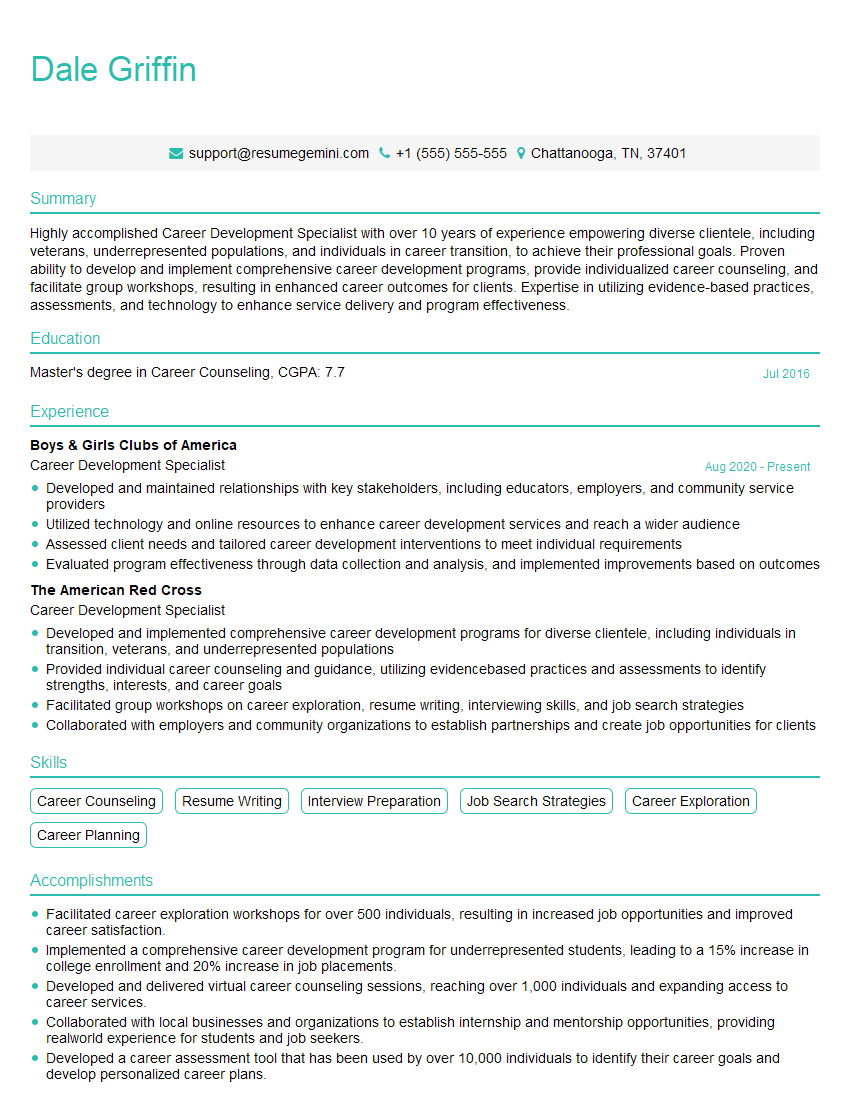
Career Development Specialist Resume Sample
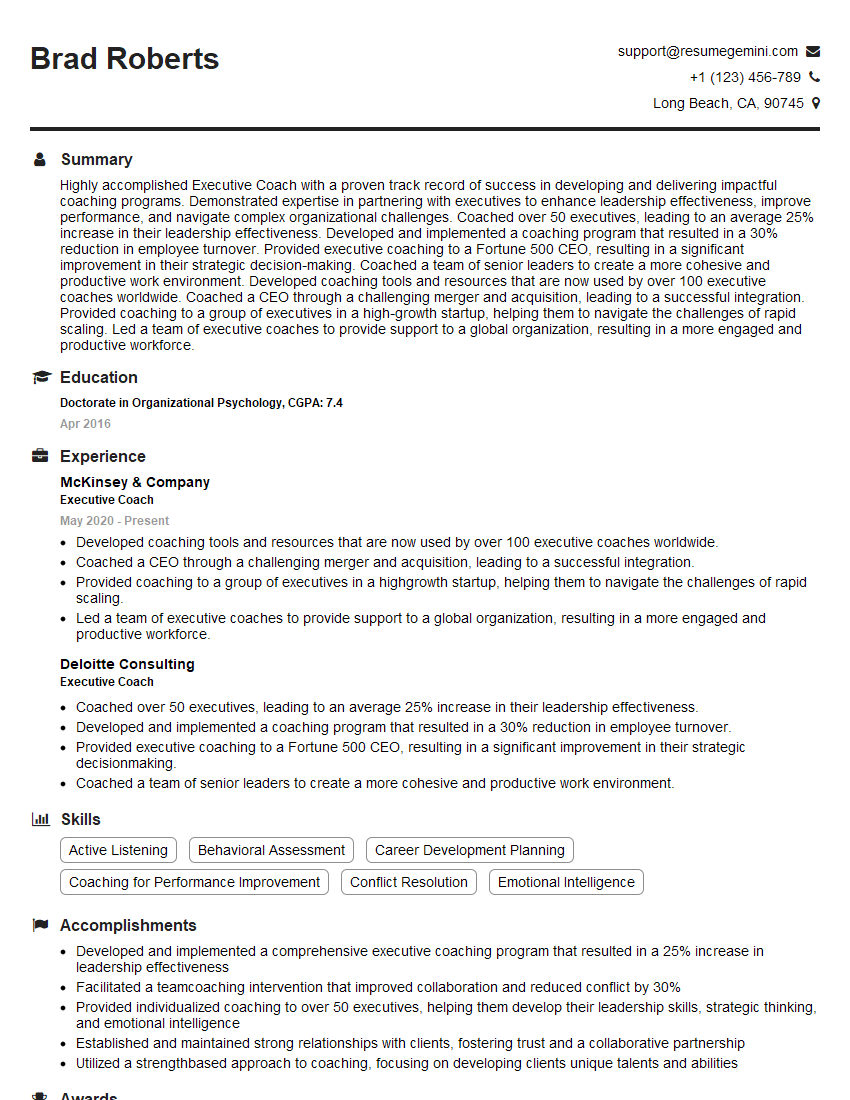
Executive Coach Resume Sample
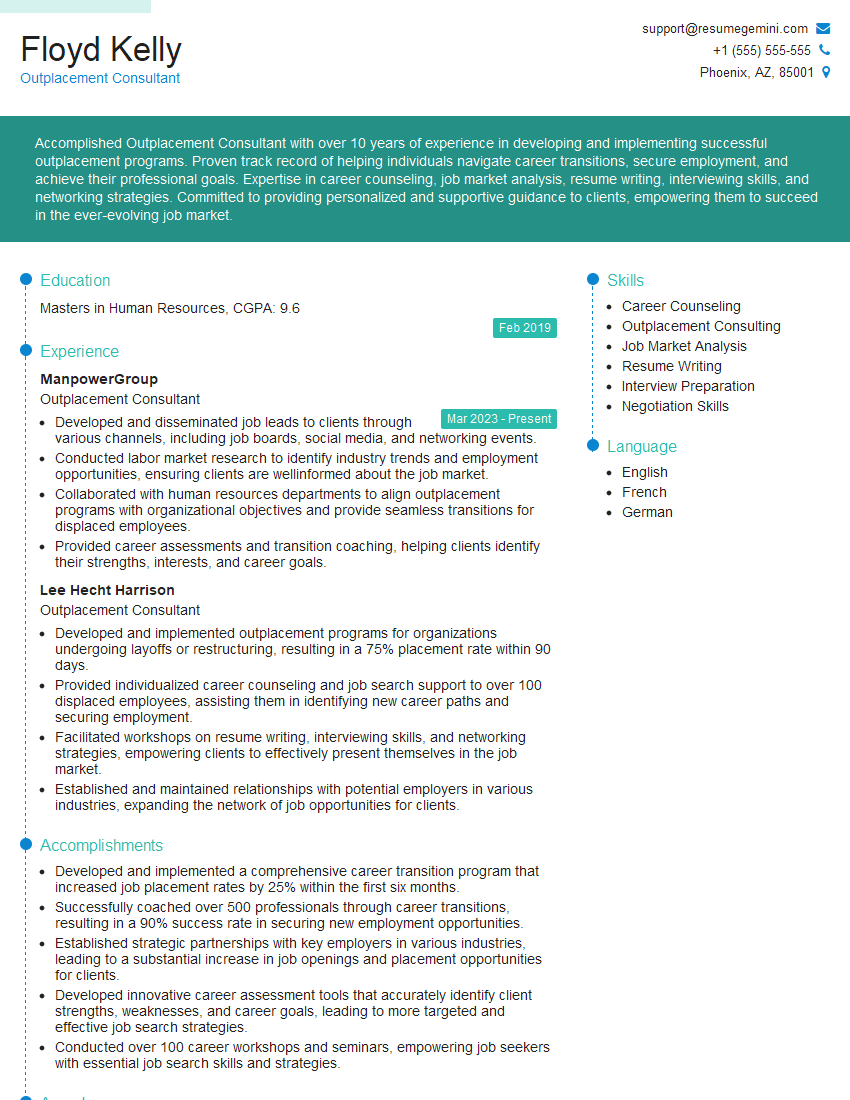
Outplacement Consultant Resume Sample
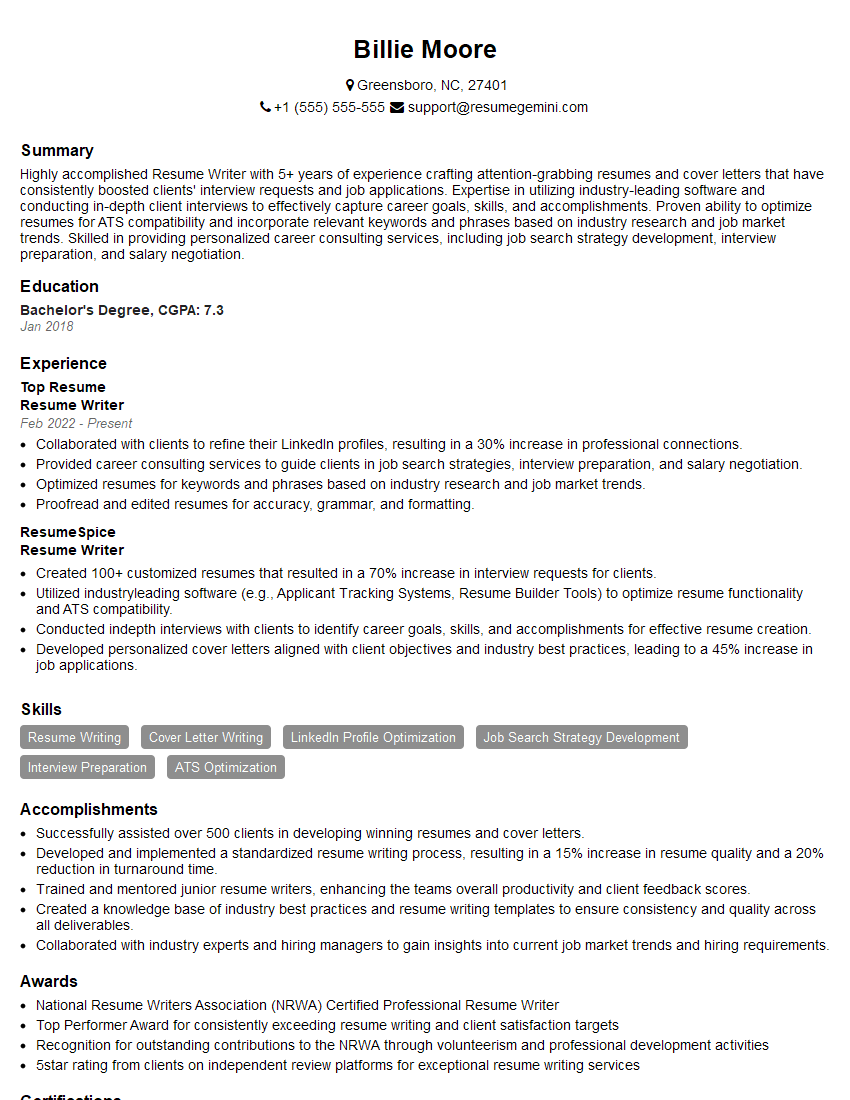
Resume Writer Resume Sample
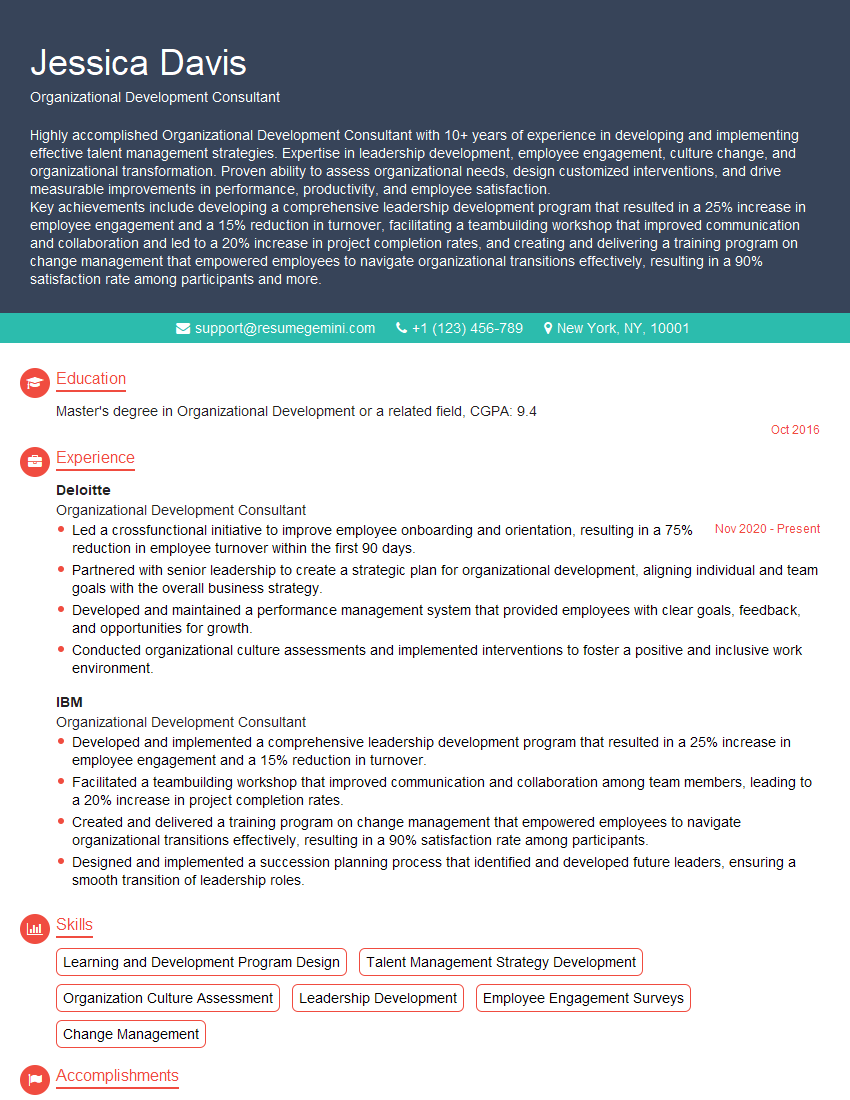
Organizational Development Consultant Resume Sample
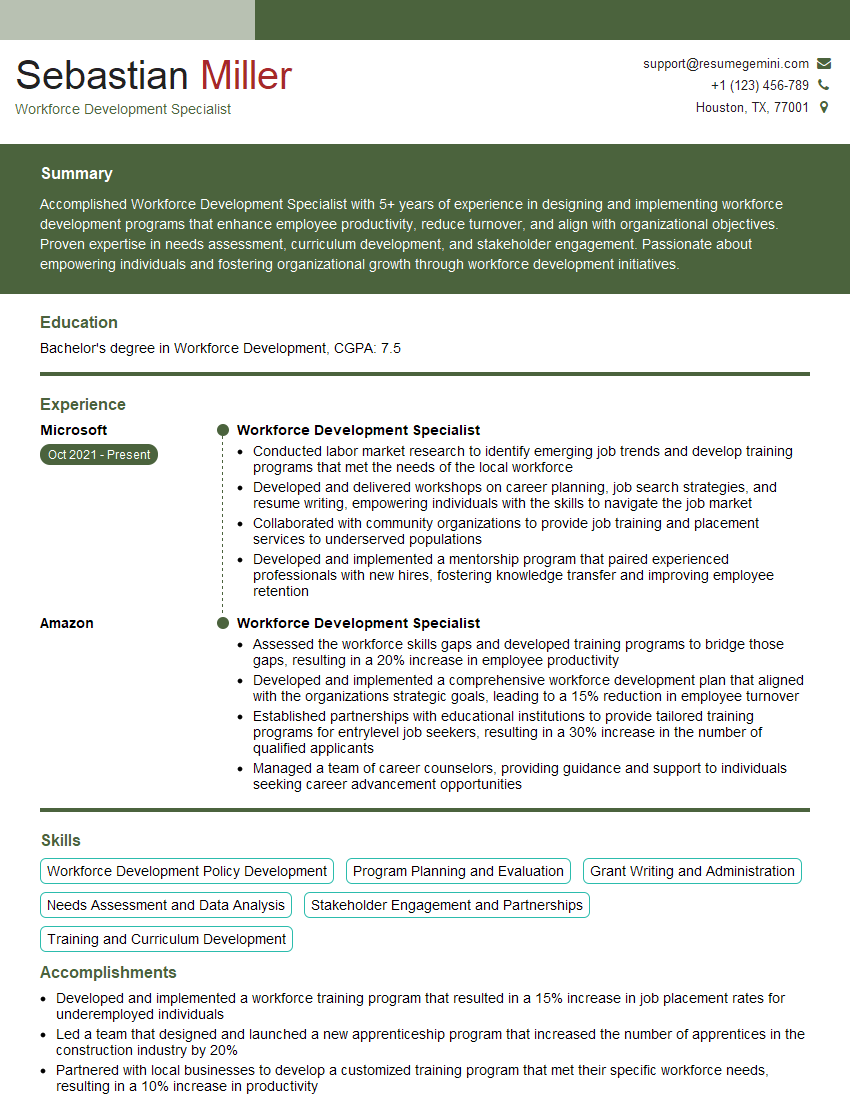
Workforce Development Specialist Resume Sample
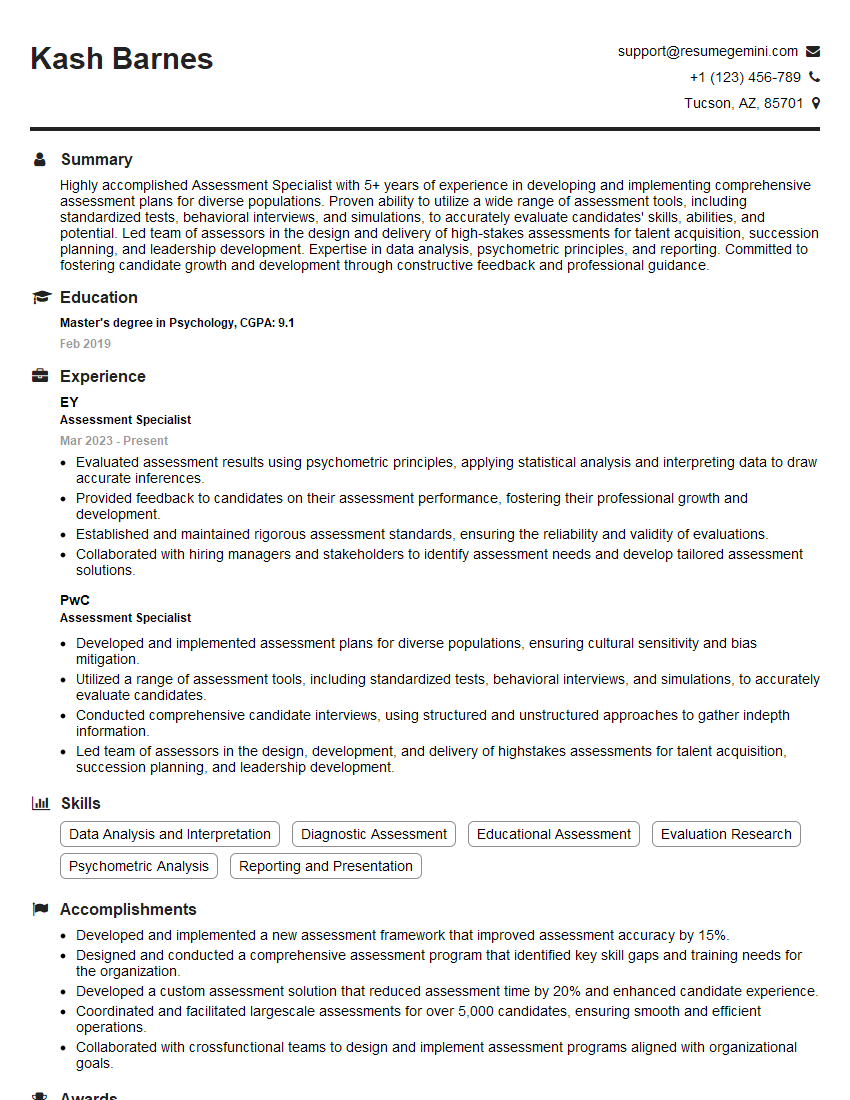
Assessment Specialist Resume Sample
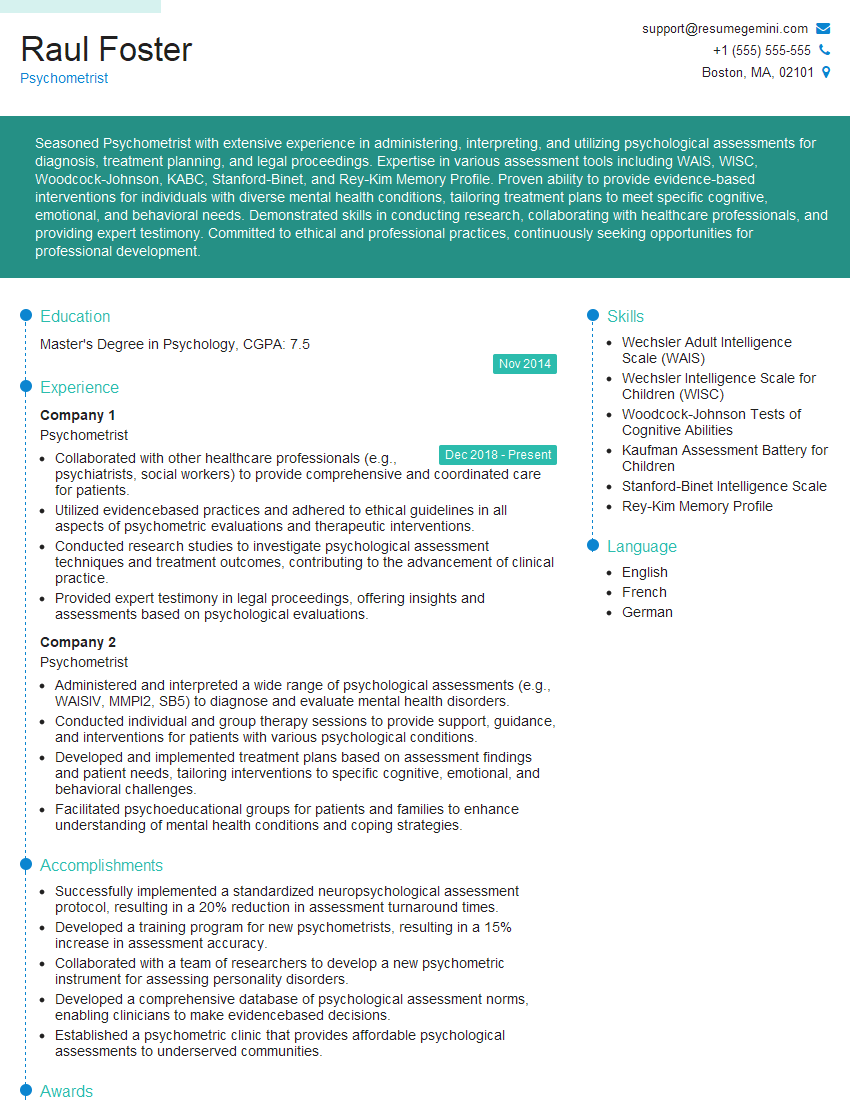
Psychometrist Resume Sample
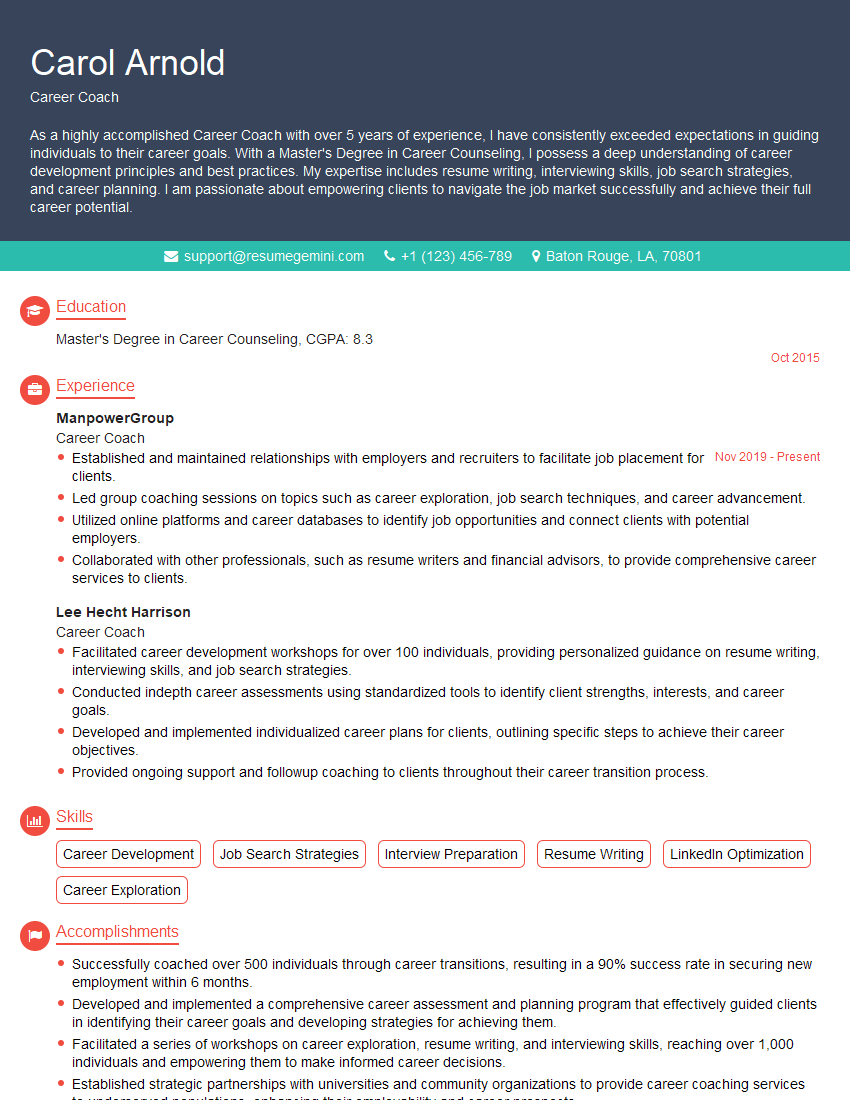
Career Coach Resume Sample
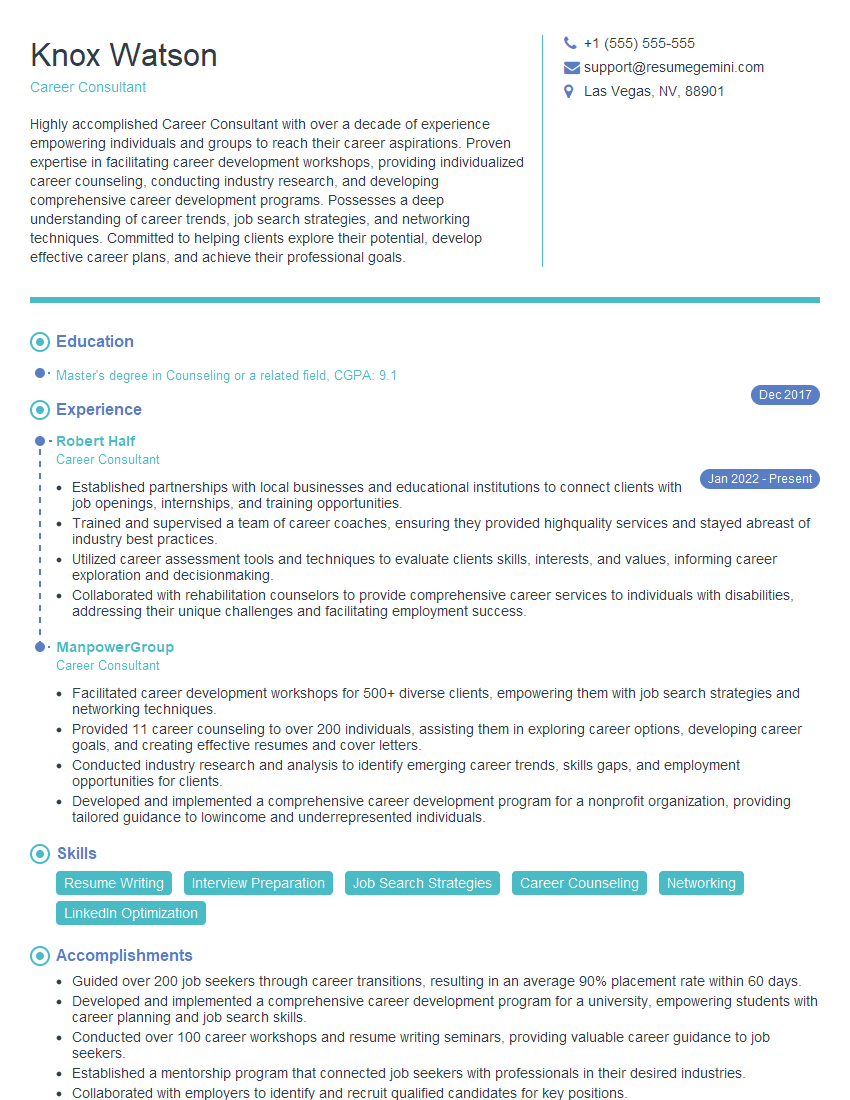
Career Consultant Resume Sample
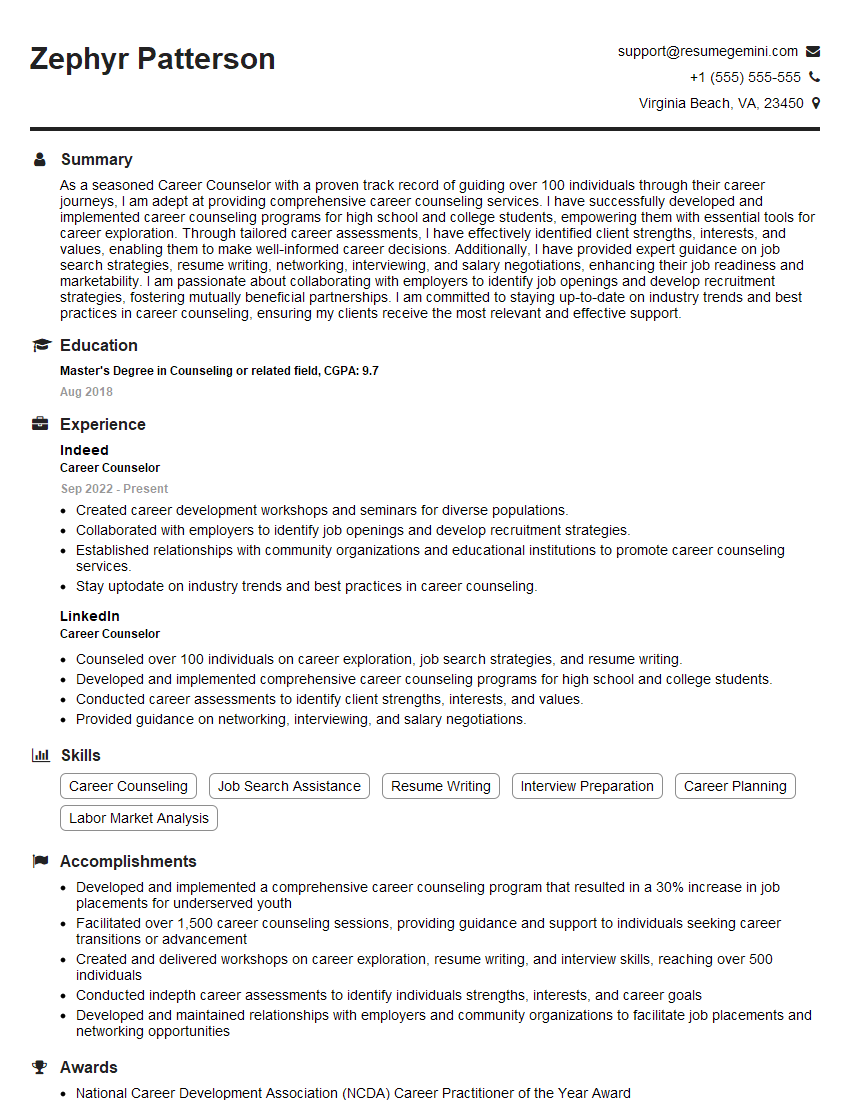
Career Counselor Resume Sample
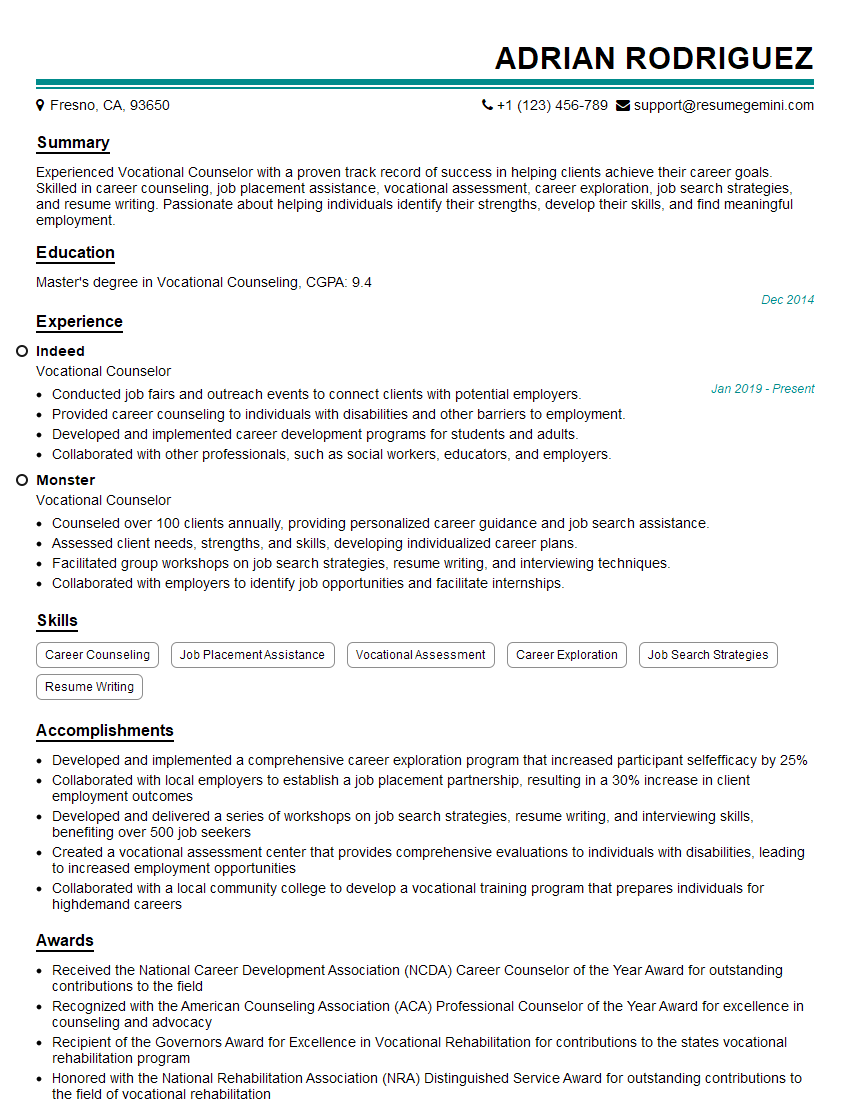
Vocational Counselor Resume Sample
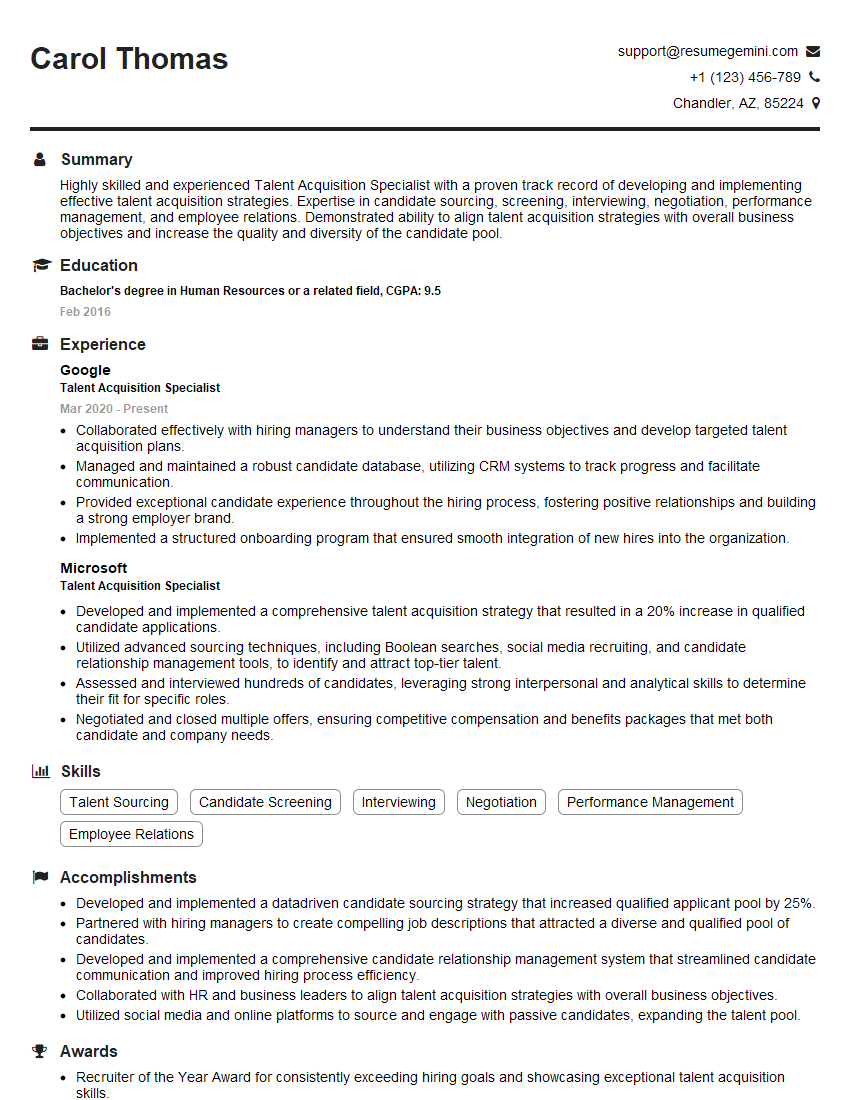
Talent Acquisition Specialist Resume Sample
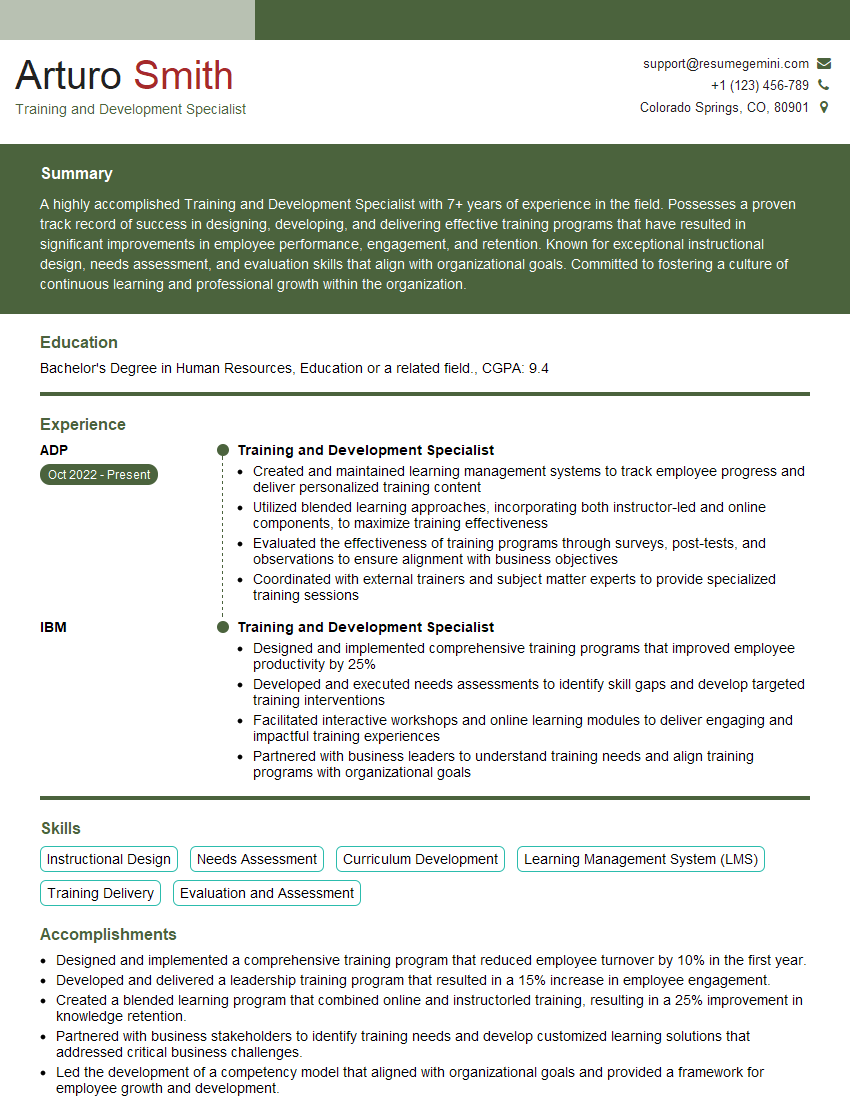
Training and Development Specialist Resume Sample
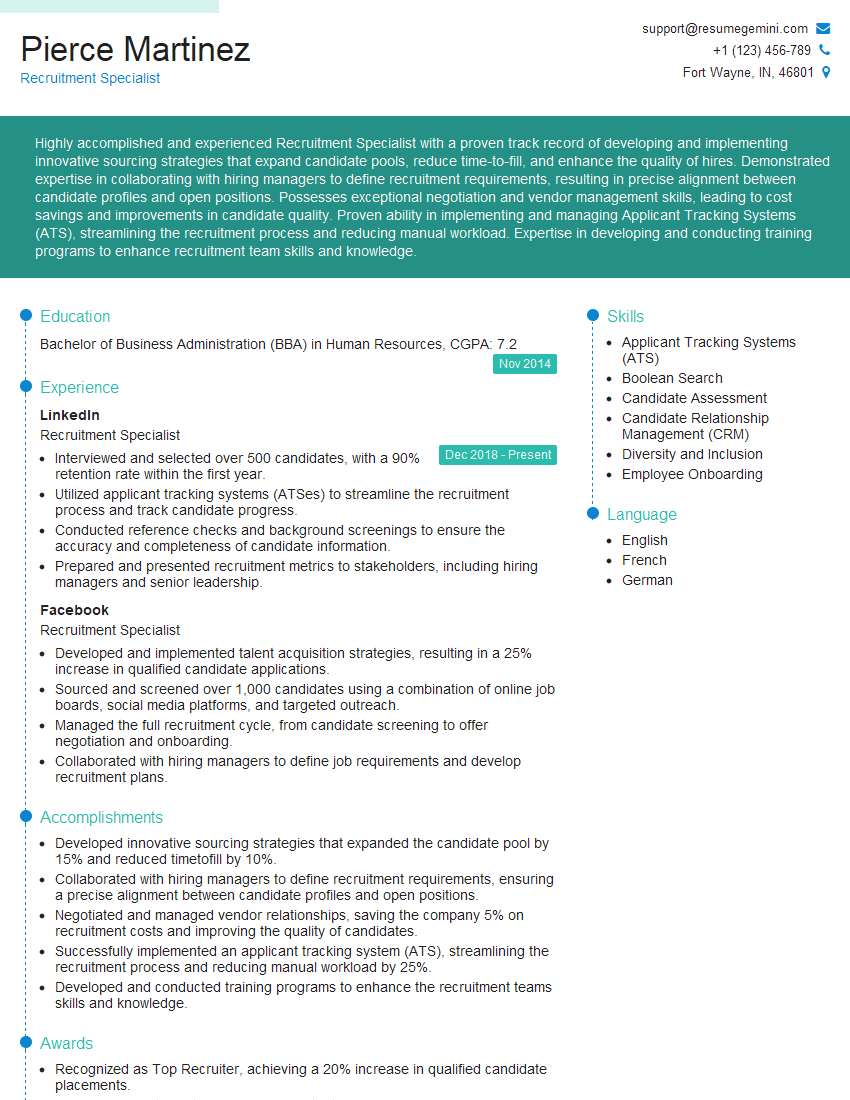
Recruitment Specialist Resume Sample
- Career Development Specialist
- Executive Coach
- Outplacement Consultant
- Resume Writer
- Organizational Development Consultant
- Workforce Development Specialist
- Assessment Specialist
- Psychometrist
- Career Coach
- Career Consultant
- Career Counselor
- Vocational Counselor
- Talent Acquisition Specialist
- Training and Development Specialist
- Recruitment Specialist
Explore more articles
Users Rating of Our Blogs
Share Your Experience
We value your feedback! Please rate our content and share your thoughts (optional).
What Readers Say About Our Blog
I Redesigned Spongebob Squarepants and his main characters of my artwork.
https://www.deviantart.com/reimaginesponge/art/Redesigned-Spongebob-characters-1223583608
IT gave me an insight and words to use and be able to think of examples
Hi, I’m Jay, we have a few potential clients that are interested in your services, thought you might be a good fit. I’d love to talk about the details, when do you have time to talk?
Best,
Jay
Founder | CEO