Are you ready to stand out in your next interview? Understanding and preparing for Code Compliance Review interview questions is a game-changer. In this blog, we’ve compiled key questions and expert advice to help you showcase your skills with confidence and precision. Let’s get started on your journey to acing the interview.
Questions Asked in Code Compliance Review Interview
Q 1. Explain the difference between building codes and zoning ordinances.
Building codes and zoning ordinances are both crucial for regulating construction and land use, but they focus on different aspects. Think of it like this: building codes are the recipe for a safe and functional building, while zoning ordinances are the neighborhood plan that dictates what kinds of buildings can be built where.
Building codes (like the International Building Code or IBC) prescribe minimum standards for the structural integrity, fire safety, accessibility, and other technical aspects of a building’s construction. They detail requirements for materials, methods, and safety features. For example, the IBC dictates minimum requirements for the size of stairwells and the fire resistance rating of walls.
Zoning ordinances, on the other hand, are regulations imposed by local governments to control the use of land within a specific area. They determine what types of buildings can be erected in a particular zone (residential, commercial, industrial), the permitted building height, density (number of units per acre), setbacks (distance from property lines), and parking requirements. A zoning ordinance might dictate that only single-family homes can be built on a particular lot or that a commercial building must have a minimum number of parking spaces.
In essence, building codes ensure a building is safe and functional, while zoning ordinances ensure it fits within the community’s plan for land use.
Q 2. Describe your experience with plan review and code interpretation.
Throughout my eight years as a Code Compliance Reviewer, I’ve gained extensive experience in plan review and code interpretation. My responsibilities included meticulously examining architectural, structural, mechanical, electrical, and plumbing plans to ensure compliance with relevant codes. I’ve reviewed hundreds of plans, ranging from small residential additions to large commercial complexes.
I’m proficient in interpreting complex code provisions, often needing to reconcile conflicting requirements or address ambiguous situations. For example, I once had to interpret a section of the IBC concerning seismic design in a high-wind zone, requiring a deep understanding of both code sections and structural engineering principles. I frequently utilize code references, commentary, and industry best practices to resolve any ambiguities.
My approach always prioritizes safety and public welfare. I use a systematic checklist and cross-reference various sections of the codes to ensure thorough review. If I identify a deficiency, I clearly articulate the issue and provide suggestions for correction.
Q 3. How do you handle discrepancies between submitted plans and actual construction?
Discrepancies between submitted plans and actual construction are a common challenge in code compliance. My approach involves a multi-step process:
- Field Verification: I conduct thorough on-site inspections to document the actual construction. This involves taking photographs, measurements, and detailed notes.
- Comparison and Documentation: I compare the field observations with the approved plans, meticulously noting any deviations. This includes discrepancies in dimensions, materials, or construction methods.
- Analysis and Assessment: I analyze the discrepancies to determine their significance. Some variations might be minor and easily correctable, while others could pose serious safety hazards.
- Communication and Resolution: I communicate my findings to the contractor and the property owner, explaining the code violations and outlining the necessary corrective actions. This often involves issuing stop-work orders if necessary and setting a timeline for remediation.
- Follow-up Inspection: After the corrections are made, I conduct a follow-up inspection to verify that all violations have been addressed.
Throughout this process, my goal is to ensure public safety and maintain code compliance while also working collaboratively with the contractor to find practical and efficient solutions.
Q 4. What is your experience with different building codes (e.g., IBC, IRC)?
My experience encompasses a broad range of building codes. I’m highly proficient with the International Building Code (IBC), the International Residential Code (IRC), and their associated standards. I’ve also worked with state-specific amendments and local modifications to these codes. I have a thorough understanding of the structure and organization of these codes, including their respective chapters and sections, which facilitates efficient and accurate plan review.
For instance, I frequently reference the IBC chapters addressing structural design, fire protection, and means of egress, and I’m adept at interpreting the IRC’s provisions for residential construction. My experience also extends to understanding the interrelationship between different codes. For example, I know how requirements from the mechanical and electrical codes interact with structural and fire-safety provisions in the IBC.
Q 5. How familiar are you with accessibility codes (ADA, etc.)?
I possess a strong understanding of accessibility codes, primarily the Americans with Disabilities Act (ADA) Standards for Accessible Design. My experience includes reviewing plans for compliance with ADA requirements regarding ramps, accessible routes, restrooms, signage, and other accessibility features. I am familiar with the technical details of the ADA Standards, including the various exceptions and waivers that may apply.
I understand the importance of ensuring that buildings are accessible to people with disabilities and I am committed to enforcing these requirements rigorously. I’ve worked on several projects where addressing accessibility issues required creative solutions and close collaboration with architects and contractors. For example, I once helped a developer find an effective solution for creating an accessible entrance to a building on a sloped site.
Q 6. Describe your experience using code compliance software or databases.
I am proficient in using various code compliance software and databases. Throughout my career, I’ve utilized several different platforms for plan review and code referencing. This includes digital plan-review systems that allow for annotation and electronic submission of documents, as well as online code databases and search tools.
These tools significantly improve efficiency by providing quick access to code sections, facilitating easier plan review and reducing the time needed for research. I’m adept at navigating these systems and using their features for effective code compliance review. My familiarity also includes using software for generating reports and tracking progress on projects.
Q 7. How do you ensure compliance with fire safety codes?
Ensuring compliance with fire safety codes is paramount in my work. My approach involves a multi-faceted strategy focused on prevention and protection. This includes a detailed review of plans and specifications to verify compliance with fire-resistant construction, means of egress, fire suppression systems, and emergency lighting.
Specifically, I review plans for adequate fire-rated separations between different occupancies, the proper installation and design of fire sprinklers and alarms, and the provision of sufficient exits that are clearly marked and free from obstruction. I pay special attention to compliance with requirements for smoke detectors, fire extinguishers, and emergency lighting.
During field inspections, I verify the proper installation of these fire safety systems and ensure that all escape routes are clear and unobstructed. I regularly collaborate with fire marshals and other safety officials to ensure that all aspects of fire safety are addressed effectively.
Q 8. What methods do you use to identify potential code violations?
Identifying potential code violations involves a multi-pronged approach combining automated tools and human expertise. Think of it like a detective investigating a crime scene – we need to gather evidence from various sources.
Automated Static Analysis: We use linters and static code analyzers (like SonarQube or ESLint) to automatically scan the codebase for potential issues. These tools flag things like syntax errors, security vulnerabilities, and style inconsistencies. For example, a linter might identify a potential SQL injection vulnerability in a database query.
Manual Code Reviews: Experienced developers meticulously examine the code, often using checklists and established coding standards. This is crucial because automated tools can miss context-dependent issues. Imagine a scenario where a perfectly valid piece of code creates a performance bottleneck due to poor algorithm design – a manual review would catch this.
Compliance Checklists: We maintain up-to-date checklists based on relevant building codes, industry best practices, and client-specific requirements. These checklists act as our roadmap, guiding our search for violations.
Testing and Simulation: Running unit tests, integration tests, and even load tests helps expose potential problems that might manifest in runtime. These tests aren’t directly about code style but can uncover violations related to functional requirements or security.
By combining these methods, we significantly increase the chances of finding all relevant code violations.
Q 9. Describe your experience with conducting code inspections.
My experience with code inspections spans over eight years, encompassing various projects and programming languages. I’ve conducted inspections for both small-scale applications and large enterprise systems. My approach is structured and systematic.
Preparation: Before the inspection, I thoroughly review the relevant documentation – requirements, design specifications, and coding standards. I also prepare a checklist of potential issues to look for.
Inspection Process: During the inspection, I meticulously examine the code, paying close attention to areas prone to errors. This includes error handling, security considerations, and adherence to coding standards. I document all identified violations clearly, providing detailed descriptions and suggestions for remediation.
Follow-up: After the inspection, I share my findings with the development team. We have a collaborative discussion to ensure everyone understands the issues and agrees on the proposed solutions. We then track the resolution of these issues. Imagine it like a team effort to make the house perfect, not just find its flaws.
I’ve successfully helped several teams identify and correct critical defects early in the software development lifecycle, avoiding costly rework and potential security breaches. For example, in one project, a code inspection uncovered a flaw that could have caused a significant data loss.
Q 10. How do you prioritize code violations based on severity?
Prioritizing code violations is crucial for efficient remediation. We use a severity-based system, often employing a scale like Critical, High, Medium, and Low. This categorization helps focus on the most impactful issues first.
Critical: These are serious violations that pose immediate risks, such as security vulnerabilities that could lead to data breaches or system crashes. Imagine a bug that could cause a website to crash during peak hours – this is critical.
High: These violations have a high potential to impact system functionality or user experience, such as significant performance bottlenecks or incorrect calculations.
Medium: These are important issues that should be addressed, but they don’t pose an immediate risk. These might be minor style inconsistencies or documentation omissions.
Low: These are minor issues that can be addressed later. They rarely impact functionality but are worth fixing to maintain a clean codebase.
We use a risk-based approach; a medium-severity issue in a critical system might be prioritized higher than a high-severity issue in a non-critical system.
Q 11. Explain your process for issuing code violation notices.
Issuing code violation notices is a formal process, ensuring clear communication and accountability. The process begins with careful documentation of each violation.
Detailed Report: We create a detailed report outlining each violation, including its location in the code, its severity, a clear description of the problem, and suggested solutions. We use a standardized format to make it easy to understand.
Formal Notification: The report is then formally communicated to the responsible party (developer, contractor, etc.) via email or a project management system. The notification includes deadlines for remediation.
Follow-up and Verification: We follow up to ensure that the violations are addressed promptly. Once the fixes are implemented, we conduct a verification to ensure the corrections are adequate and the code is compliant.
Escalation: If violations are not addressed within the given timeframe, or if the fixes are inadequate, the issue is escalated to the appropriate management level. Think of it like a structured escalation process, starting with friendly reminders and escalating to more formal interventions if needed.
This structured approach ensures transparency and accountability while allowing for collaboration and issue resolution.
Q 12. What is your experience with code enforcement procedures?
My experience with code enforcement procedures involves a deep understanding of legal requirements and best practices. I’ve been involved in numerous projects requiring adherence to strict regulatory compliance standards.
Regulatory Compliance: I’m experienced with enforcing compliance with various regulations, including industry-specific standards (e.g., HIPAA for healthcare) and general software safety and security regulations. I understand the implications of non-compliance.
Enforcement Process: I’ve worked closely with legal counsel to ensure our enforcement procedures are legally sound and fair. This includes clear documentation, proper notification, and escalation procedures. We always aim for a collaborative resolution.
Penalties and Consequences: I’m familiar with the range of penalties and consequences for non-compliance, from formal warnings to project suspension or legal action. We use these as a last resort, focusing primarily on collaboration and timely resolution.
Auditing and Reporting: I’ve participated in internal and external audits to ensure compliance, preparing reports summarizing our enforcement activities and the overall state of code compliance.
My focus is always on achieving compliance through collaboration, but I understand the importance of having robust enforcement procedures to ensure adherence to standards.
Q 13. How do you communicate complex code requirements to non-technical stakeholders?
Communicating complex code requirements to non-technical stakeholders requires clear, concise language and visual aids. We avoid jargon and technical terms wherever possible.
Analogies and Metaphors: We use real-world analogies to explain complex concepts. For example, we might compare a software architecture to a building’s structural design. This makes it easier to understand the importance of each component.
Visualizations: Diagrams, flowcharts, and other visual aids are invaluable for explaining complex relationships and processes. A picture is truly worth a thousand words when explaining a software system.
Focus on Business Impact: We emphasize the business implications of code compliance, rather than dwelling on technical details. For example, instead of discussing the intricacies of secure coding, we highlight the potential consequences of a security breach – data loss, financial penalties, etc.
Regular Updates: We provide regular updates and reports on progress, focusing on key milestones and deliverables, helping them easily follow the progress.
By focusing on the business value and using clear, non-technical language, we can ensure that non-technical stakeholders understand the importance of code compliance.
Q 14. How do you handle disagreements with contractors or developers regarding code compliance?
Handling disagreements regarding code compliance requires a collaborative and diplomatic approach. The goal is to find a mutually agreeable solution that satisfies both quality and compliance requirements.
Open Communication: We initiate open and honest dialogue with the contractors or developers, clearly explaining our concerns and presenting the evidence that supports our findings. We listen to their perspectives and try to understand their concerns.
Collaborative Problem Solving: We work collaboratively to identify the root causes of the disagreement and brainstorm solutions that meet both quality and compliance requirements. This might involve reviewing standards, clarifying requirements, or identifying alternative approaches.
Escalation Procedures: If a mutually agreeable solution cannot be reached, we follow established escalation procedures. This might involve seeking mediation from a neutral third party or referring the matter to management.
Documentation: We maintain meticulous documentation of all communications, agreements, and decisions to provide a clear record of the process. This documentation is crucial for resolving any disputes.
The key is to approach the situation professionally and collaboratively, always striving to find a solution that upholds quality and compliance while fostering positive working relationships.
Q 15. Describe your experience with resolving code violations.
Resolving code violations involves a systematic approach combining technical expertise with effective communication. It begins with a thorough understanding of the violation itself – identifying the specific code section breached and the extent of the non-compliance. Next, I assess the risk associated with the violation, considering factors such as safety hazards and potential environmental impact. My approach then focuses on finding the most practical and cost-effective solution, always ensuring compliance with the relevant codes. This might involve suggesting minor modifications, proposing alternative construction methods, or recommending the replacement of non-compliant materials. Throughout the process, I maintain open communication with all stakeholders – the contractor, the architect, the building owner, and the code enforcement agency – ensuring everyone understands the solution and its implications. For example, I once worked on a project where a fire sprinkler system wasn’t installed according to code. The solution involved not a complete system replacement, but a strategic repositioning of certain components and minor modifications to meet the specifications. This saved the project significant time and cost while ensuring full code compliance.
Career Expert Tips:
- Ace those interviews! Prepare effectively by reviewing the Top 50 Most Common Interview Questions on ResumeGemini.
- Navigate your job search with confidence! Explore a wide range of Career Tips on ResumeGemini. Learn about common challenges and recommendations to overcome them.
- Craft the perfect resume! Master the Art of Resume Writing with ResumeGemini’s guide. Showcase your unique qualifications and achievements effectively.
- Don’t miss out on holiday savings! Build your dream resume with ResumeGemini’s ATS optimized templates.
Q 16. What is your understanding of the appeals process for code violations?
The appeals process for code violations varies depending on the jurisdiction, but it generally involves a formal written request for review of the violation notice. This request typically includes evidence supporting the appeal, such as documentation showing compliance with alternative codes or demonstrating that the violation is insignificant or unavoidable. The appeal is then reviewed by a designated authority, often a board or committee, that can uphold the original violation, modify it, or overturn it entirely. The process frequently includes opportunities for a hearing or informal meeting to present the case. It’s crucial to meticulously document the entire process, preserving all correspondence, supporting documentation, and records of meetings. For instance, in a case involving a disputed interpretation of a code section, a detailed analysis of the code, supplemented by relevant industry standards and expert opinions, can strengthen an appeal. The success of an appeal often hinges on a clear understanding of the codes, a well-prepared presentation of the case, and skillful negotiation.
Q 17. How do you stay updated on changes and revisions to building codes?
Staying current on building codes is paramount in this field. I accomplish this through a multi-pronged approach. I actively subscribe to professional organizations like the International Code Council (ICC) which provide updates and notifications on code changes. I regularly attend seminars and workshops conducted by these organizations and other relevant authorities. I also utilize online resources, including government websites and industry publications, to access the latest code revisions and interpretations. Moreover, I maintain a network of professional colleagues and mentors who share insights and experiences related to code updates. This comprehensive approach allows me to remain abreast of local, state, and national code modifications, ensuring I consistently apply the most current and relevant regulations in my work.
Q 18. Describe your experience with sustainable building codes and practices.
Sustainable building codes and practices are increasingly important aspects of my work. My experience encompasses reviewing plans and specifications for features like energy-efficient designs, water conservation systems, and the use of sustainable materials. I’m familiar with various green building rating systems like LEED (Leadership in Energy and Environmental Design) and understand how these ratings translate into code requirements. For example, I’ve reviewed projects incorporating solar panels, rainwater harvesting systems, and high-performance insulation. I ensure the design and installation of these features meet both the sustainability goals and the relevant building codes. Furthermore, I advise on the selection of sustainable materials, ensuring they are compliant with local fire codes and other safety standards while minimizing their environmental impact. The goal is to find a balance between minimizing the environmental footprint of the building and ensuring it meets all necessary safety and regulatory requirements.
Q 19. How do you balance safety regulations with project timelines and budgets?
Balancing safety regulations, project timelines, and budgets is a key challenge in construction. My approach involves early and proactive engagement with all stakeholders. This starts with a thorough review of plans during the design phase to identify potential code conflicts before construction begins. By proactively addressing potential issues early on, I minimize costly and time-consuming revisions later. Communication is crucial – I work closely with contractors and architects to find innovative yet compliant solutions. For instance, using prefabricated components or alternative construction methods can sometimes accelerate the process without compromising safety. I also advocate for the use of building information modeling (BIM) to identify and resolve potential conflicts early on. Sometimes cost-saving measures can be implemented without sacrificing safety, for instance, by optimizing material selection while adhering to code requirements.
Q 20. What are some common code violations you’ve encountered and how did you address them?
Common code violations I’ve encountered include inadequate fire protection systems (missing or improperly installed smoke detectors, sprinklers, or fire exits), incorrect electrical wiring, and improper ventilation in kitchens and bathrooms. Addressing these involved a range of solutions. For inadequate fire protection, this frequently meant requiring installation or remediation of the deficient system to meet the relevant codes, sometimes necessitating partial demolition and reconstruction. For electrical violations, corrective actions ranged from simple rewiring to complete replacement of faulty systems. Ventilation issues were often addressed by installing or upgrading exhaust fans to meet code requirements. In each case, I worked closely with the contractors to ensure that the necessary corrections were implemented correctly and efficiently, always emphasizing the importance of safety and code compliance. Documentation of each violation, the corrective actions taken, and the final inspection results is crucial for a clear record.
Q 21. How familiar are you with local, state, and national building codes?
I possess a thorough understanding of local, state, and national building codes. My knowledge extends to the International Building Code (IBC), International Residential Code (IRC), and other relevant model codes, as well as the specific regulations adopted by various local jurisdictions. I’m adept at navigating the nuances of different code versions and interpretations, understanding how they may differ regionally. For example, I’m proficient in referencing specific sections within the IBC and IRC, and I regularly consult the relevant code books and supplements for the specific jurisdictions where projects are located. This involves a thorough understanding of local amendments and modifications to the model codes. My work consistently demonstrates this awareness and the ability to apply the correct regulations in every project, ensuring compliance and promoting safe and sustainable construction.
Q 22. How do you document and track code compliance throughout a project?
Documenting and tracking code compliance is crucial for ensuring a project’s quality and adherence to regulations. We use a multi-pronged approach, combining automated tools with manual processes.
Automated Checks: We integrate static analysis tools (like SonarQube or ESLint) into our CI/CD pipelines. These tools automatically scan the codebase for potential vulnerabilities, style violations, and coding standard breaches. Results are logged and reported, creating a historical record.
Issue Tracking System: A dedicated system like Jira or GitHub Issues is used to track identified compliance issues. Each issue is assigned a unique ID, priority, severity level, and assigned to a developer for remediation. This provides centralized management and allows us to monitor progress.
Compliance Documentation: We maintain a comprehensive document detailing all relevant coding standards, security guidelines, and regulatory requirements. This serves as a central repository for everyone involved in the project. This includes references to specific sections of the standard and examples of proper and improper coding practices.
Regular Audits: Periodic audits (manual and automated) are conducted to verify compliance. These audits ensure the effectiveness of our processes and identify any gaps in compliance.
For example, if a security vulnerability is detected by SonarQube, it’s logged in Jira, assigned a priority (e.g., high), and a developer is tasked with fixing it. Once fixed, the issue is resolved, and the updated code is re-scanned for compliance. This entire process is documented and auditable.
Q 23. What software or tools do you use for code review and inspection?
The tools we use depend on the programming language and the specific compliance requirements. However, some of the common tools we employ include:
Static Analysis Tools: SonarQube (for multiple languages), ESLint (JavaScript), FindBugs (Java), and Coverity are crucial for automated code analysis, identifying potential bugs and security vulnerabilities.
Code Review Platforms: GitHub, GitLab, and Bitbucket provide integrated code review functionality, allowing for collaborative review and comment tracking. We leverage their pull request features extensively.
Linting Tools: These tools ensure code style consistency and readability (e.g., Pylint for Python). They catch minor inconsistencies before they become bigger problems.
Security Scanners: Tools like Snyk or OWASP ZAP help detect security flaws within our applications.
The selection of tools depends on factors like project size, language used, and compliance standards (e.g., PCI DSS, HIPAA). We always prioritize tools with robust reporting capabilities to facilitate effective tracking and auditing.
Q 24. Describe your experience working with a team in a code compliance role.
My experience working with a team in a code compliance role has been heavily collaborative. I thrive in this environment and believe that a shared responsibility for compliance fosters the best outcomes.
Collaboration and Training: I work closely with developers, providing training on coding standards and best practices. I’m not there to just find problems; I also want to equip the team with the knowledge to prevent them in the future.
Mentorship and Guidance: I often mentor junior developers, helping them understand the ‘why’ behind compliance rules and guiding them on best practices.
Communication is Key: Regular communication with the team about identified issues, upcoming audits, and compliance updates is essential. Open communication builds trust and facilitates proactive compliance.
Feedback Loops: Implementing feedback mechanisms, including regular reviews of compliance procedures, helps us continuously improve our approach.
For instance, during one project, I noticed a recurring pattern of security vulnerabilities related to improper input validation. Instead of just reporting the issues, I conducted a training session with the team, providing practical examples and solutions. This proactive approach significantly reduced similar issues in subsequent development phases.
Q 25. How do you prioritize your tasks and manage your workload effectively?
Prioritizing tasks and managing workload in code compliance requires a structured approach. I use a combination of techniques:
Risk-Based Prioritization: I prioritize tasks based on their potential impact and risk. High-risk issues, such as critical security vulnerabilities, get immediate attention.
Severity and Urgency Matrix: I use a matrix that categorizes tasks based on severity and urgency. This ensures that critical, time-sensitive issues are addressed first.
Project Management Tools: Tools like Jira or Asana are essential for managing tasks, tracking progress, and setting deadlines. This allows for effective workload visualization and delegation.
Time Blocking: I allocate specific time slots for different types of compliance tasks to avoid context switching and maintain focus.
Regular Review and Adjustment: I regularly review my workload and adjust my priorities as needed, considering any unexpected issues or changes in project requirements.
An example would be prioritizing a critical security vulnerability found in a production system over minor style violations in a development branch. The risk and impact are significantly different, dictating the order of action.
Q 26. How do you ensure accuracy and completeness in your code reviews and inspections?
Ensuring accuracy and completeness in code reviews requires a systematic approach:
Checklists and Templates: We use checklists and templates to guide the review process, ensuring consistency and reducing the likelihood of overlooking important aspects. These checklists include specific items to check for compliance, depending on the regulations involved.
Multiple Reviewers: Whenever possible, we employ multiple reviewers for critical code sections. A second set of eyes can catch errors or issues that might be missed during the initial review.
Automated Tools: Using automated tools (as discussed earlier) is a critical step in increasing accuracy. They can identify potential problems that manual review might miss.
Peer Review: Encouraging a culture of peer review, where developers review each other’s code, helps identify issues early in the development lifecycle.
Verification and Validation: After remediation, we verify the fixes and validate that the compliance issues have been resolved successfully.
Imagine reviewing code for compliance with PCI DSS. A checklist would ensure we explicitly verify secure coding practices related to input validation, encryption, and authentication. A simple oversight could have significant security consequences.
Q 27. Explain your understanding of the legal implications of code violations.
Understanding the legal implications of code violations is paramount. Non-compliance can lead to:
Financial Penalties: Depending on the regulations violated, companies can face substantial fines and penalties.
Legal Action: In some cases, legal action can be taken against the company and individuals involved.
Reputational Damage: Public disclosure of code violations can severely damage a company’s reputation and erode customer trust.
Data Breaches: Failure to comply with data protection laws can result in data breaches, leading to significant financial losses and legal liabilities.
Contractual Issues: Non-compliance may lead to contract breaches with clients or partners.
For instance, violating HIPAA regulations regarding patient health information can result in hefty fines and potential criminal charges. Similarly, neglecting PCI DSS standards for payment card data can expose a company to significant financial losses from data breaches.
Q 28. Describe a time you had to make a difficult decision related to code compliance.
In a previous project, we discovered a critical security vulnerability just before the release date. The fix required significant code changes, potentially delaying the launch. It was a difficult decision because delaying the launch had financial repercussions, but releasing with the vulnerability posed a much greater risk—potential data breaches and reputational damage.
After careful consideration, we decided to delay the launch. We prioritized the security fix, clearly communicating the situation and revised timeline to stakeholders. This transparent approach, while challenging, built trust and demonstrated our commitment to security and compliance. Although there was a short-term financial impact, ultimately, this prevented far greater long-term damage.
Key Topics to Learn for Code Compliance Review Interview
- Building Codes and Regulations: Understanding the foundational building codes (e.g., IBC, IRC) and relevant local ordinances. This includes knowing how to interpret and apply these regulations to different construction types and projects.
- Plan Review Process: Familiarize yourself with the complete plan review process, from initial submission to final approval. Understand the role of code compliance officers in ensuring projects adhere to regulations.
- Code Interpretation and Application: Develop strong skills in interpreting ambiguous code sections and applying them to real-world scenarios. Practice analyzing blueprints and specifications to identify potential code violations.
- Common Code Violations: Identify frequently encountered code violations and their associated remediation strategies. This demonstrates practical experience and problem-solving abilities.
- Construction Materials and Methods: Possess a comprehensive understanding of various construction materials and methods, and how they relate to code compliance. This includes knowing appropriate applications and limitations.
- Life Safety Systems: Gain a solid grasp of life safety systems such as fire protection, egress, and accessibility requirements. Understand how these systems are designed, installed, and inspected.
- Sustainability and Green Building Codes: Familiarize yourself with emerging trends in sustainable building practices and relevant green building codes. Demonstrating awareness of these advancements is valuable.
- Problem-Solving and Communication: Practice your ability to clearly communicate code requirements and violations to contractors, developers, and other stakeholders. Highlight your problem-solving skills in resolving code compliance issues.
Next Steps
Mastering Code Compliance Review is crucial for career advancement in the construction and building industry, opening doors to specialized roles and increased earning potential. To significantly boost your job prospects, creating a compelling and ATS-friendly resume is paramount. ResumeGemini is a trusted resource to help you build a professional resume that effectively showcases your skills and experience. We provide examples of resumes tailored specifically to Code Compliance Review positions to help you create a winning application.
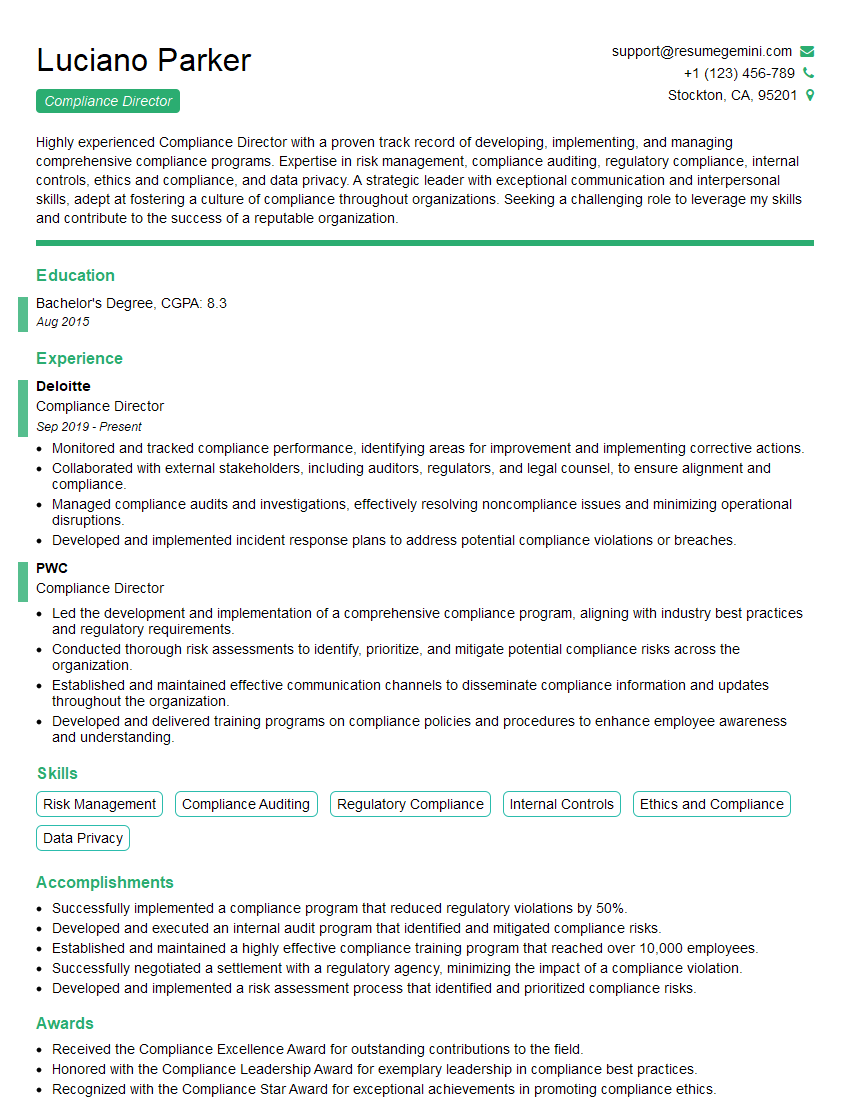
Compliance Director Resume Sample
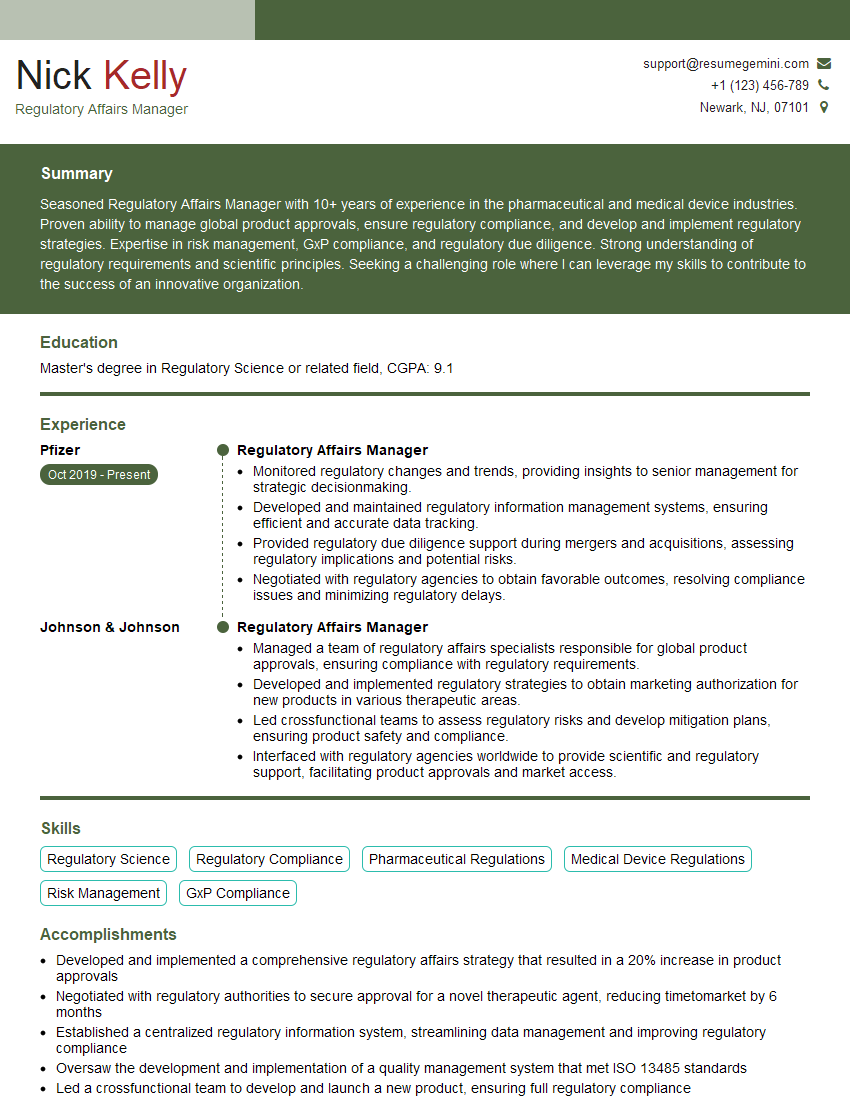
Regulatory Affairs Manager Resume Sample
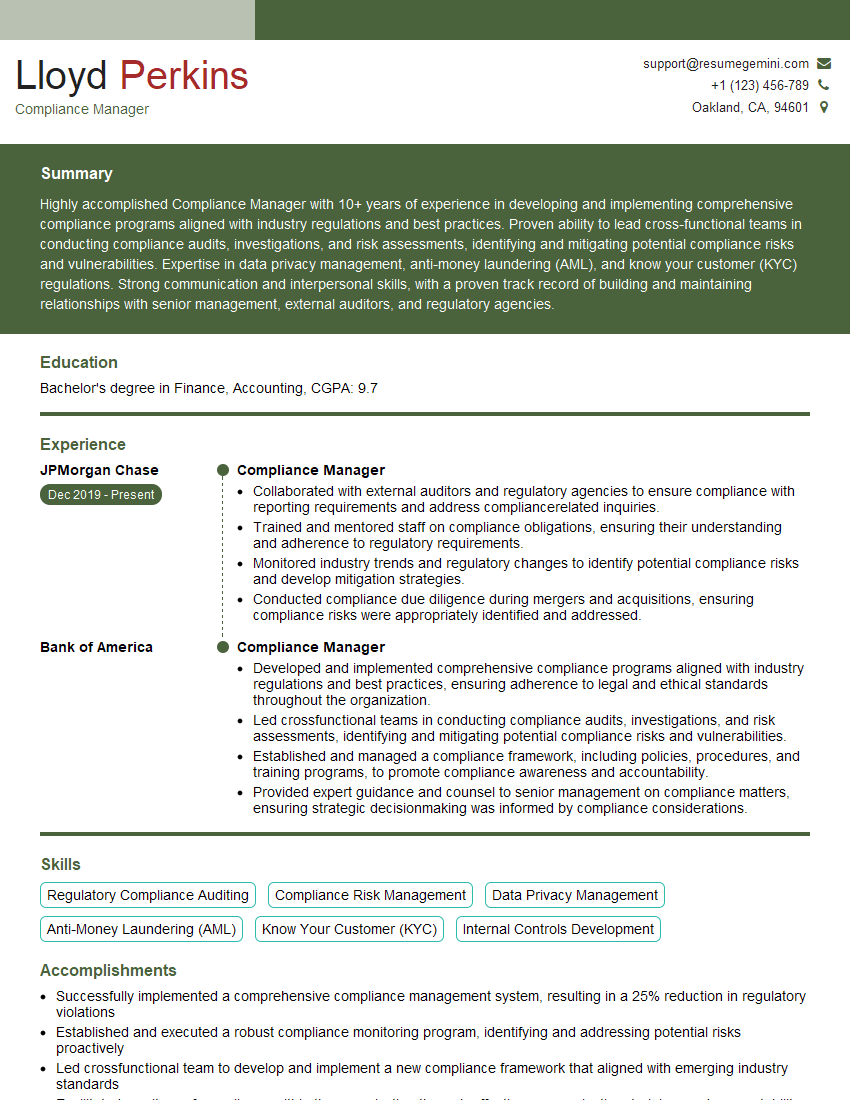
Compliance Manager Resume Sample
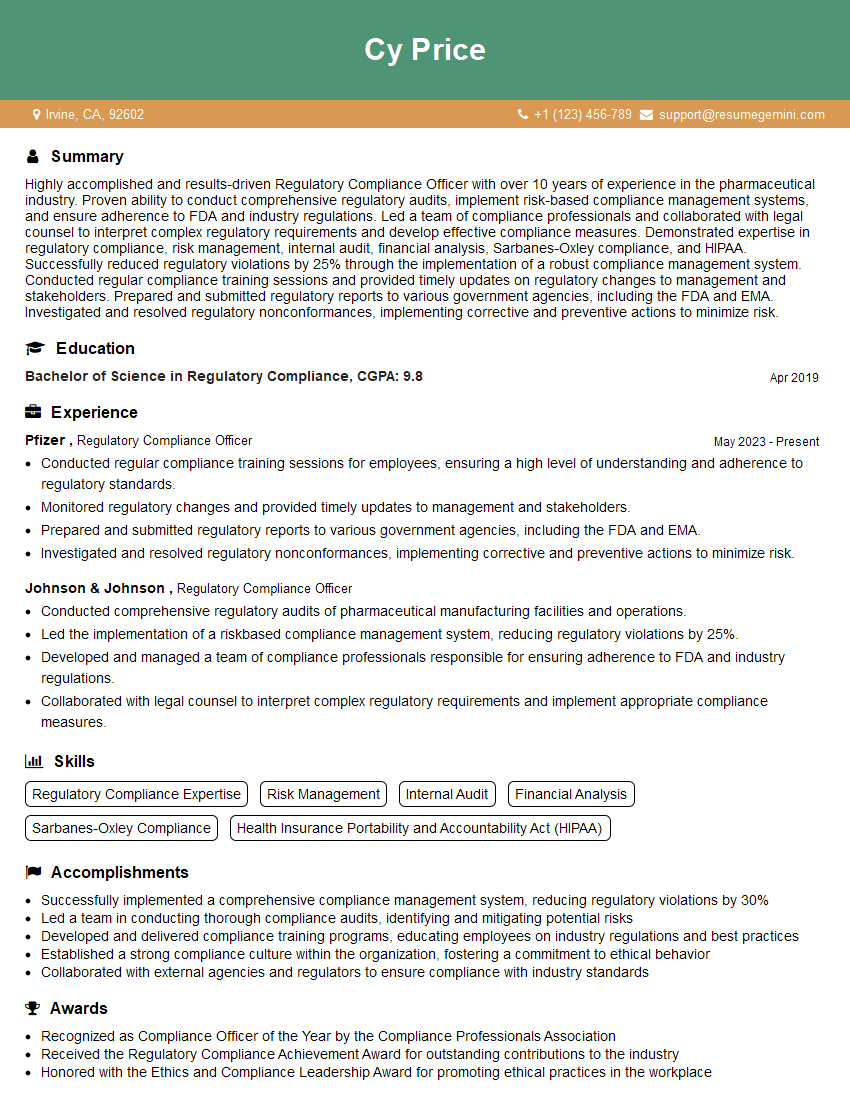
Regulatory Compliance Officer Resume Sample
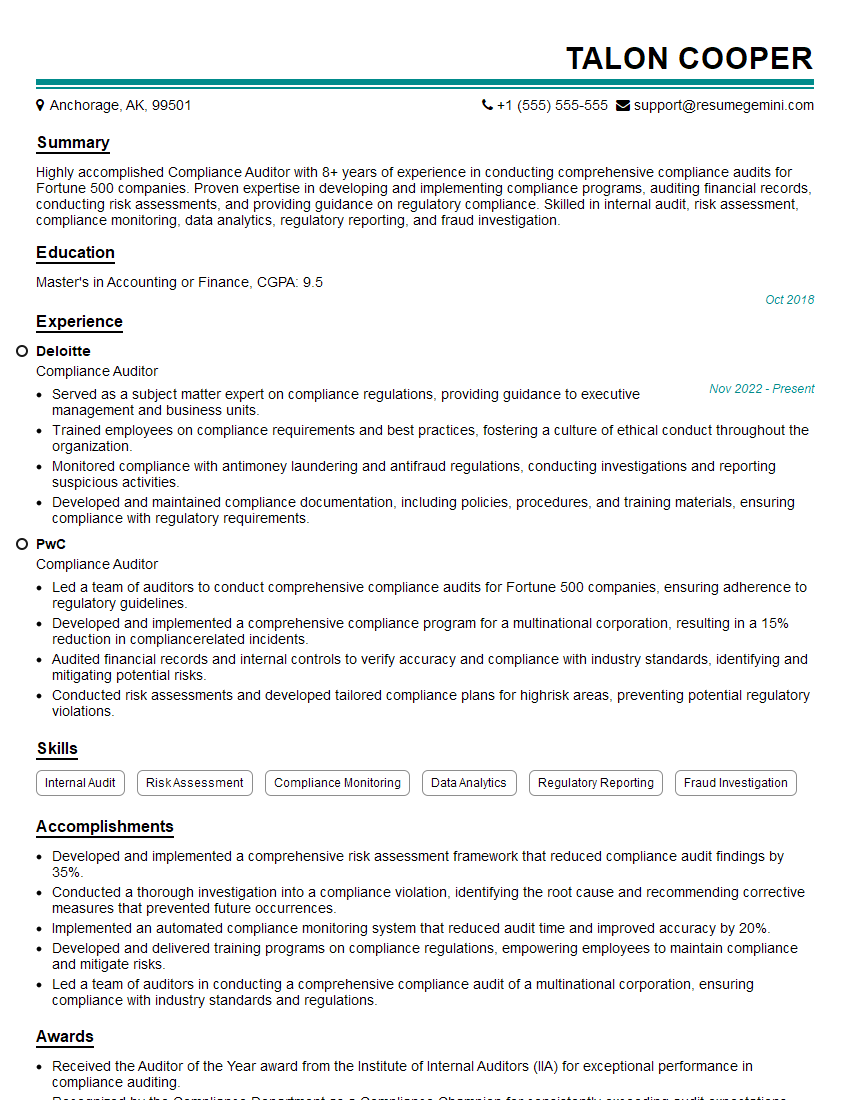
Compliance Auditor Resume Sample
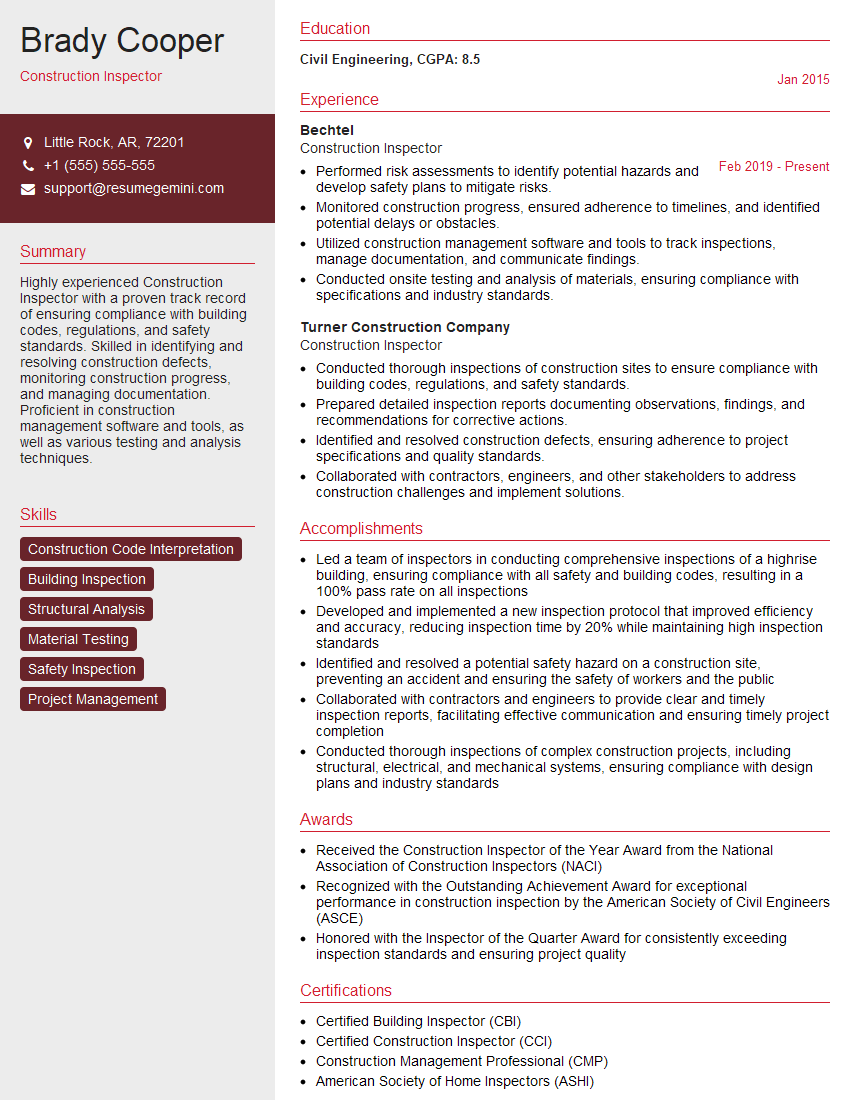
Construction Inspector Resume Sample
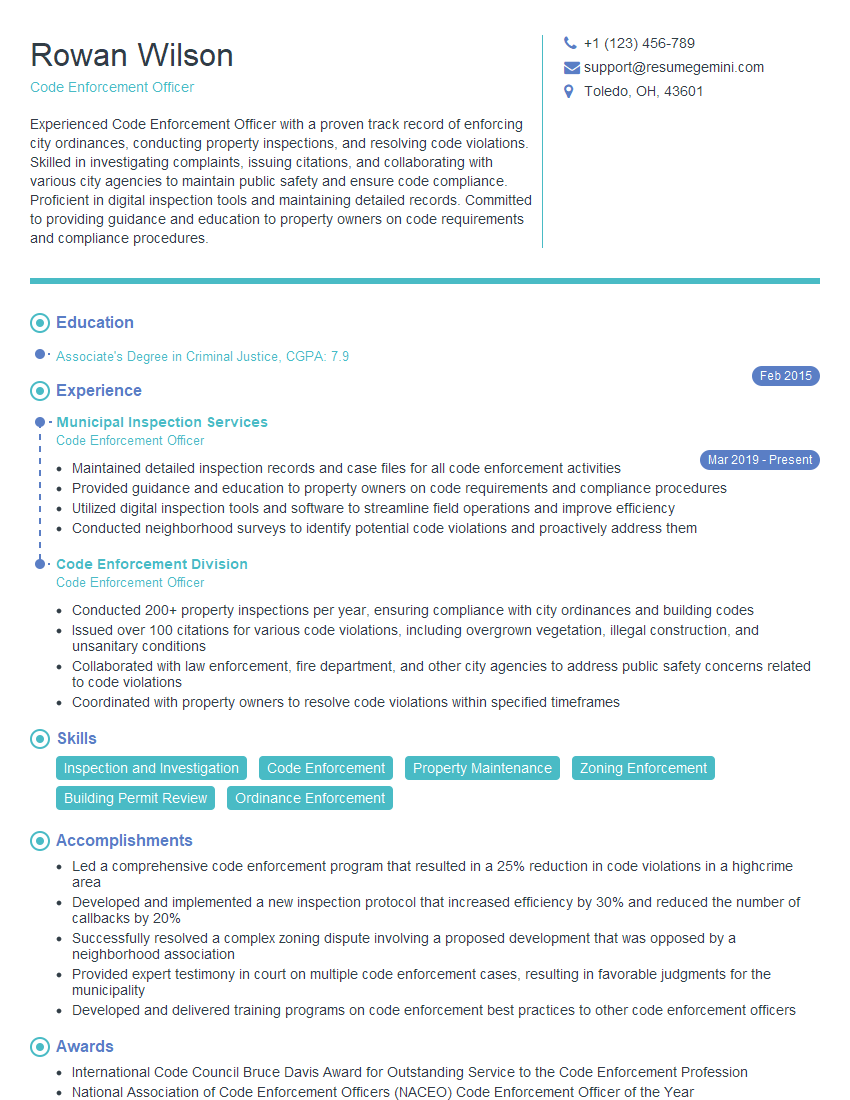
Code Enforcement Officer Resume Sample
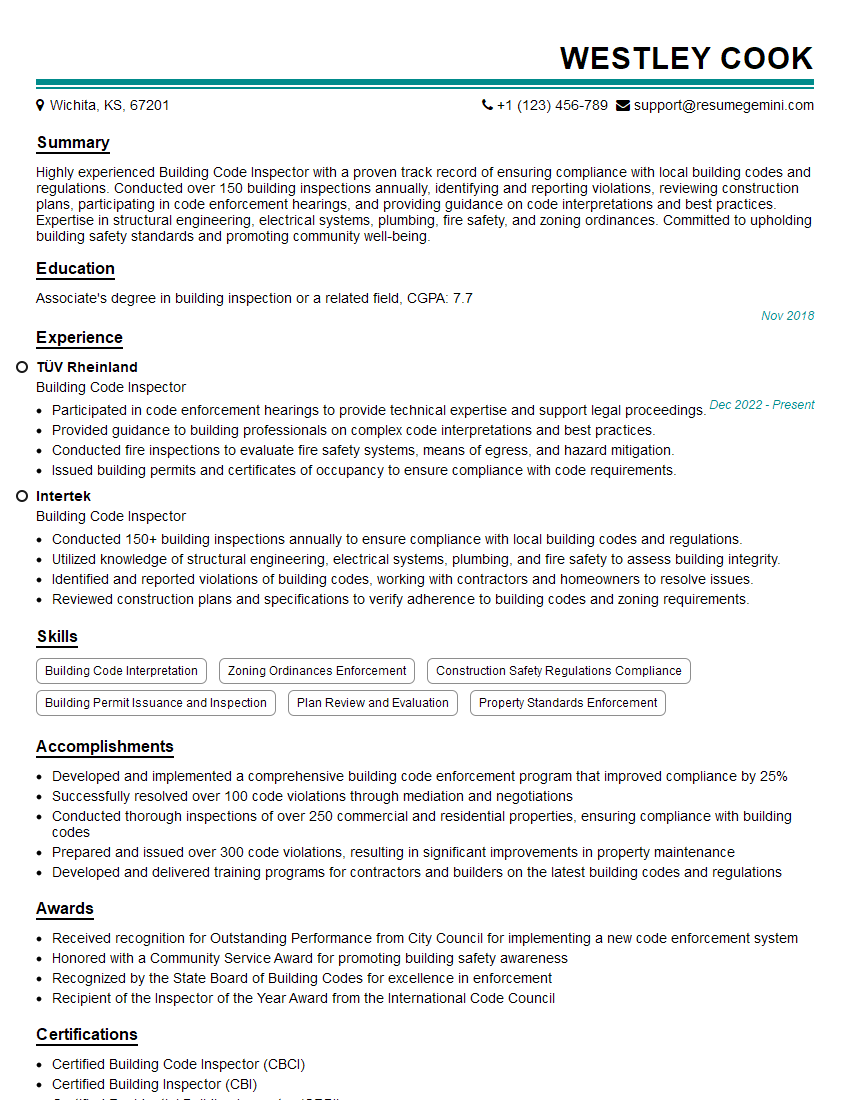
Building Code Inspector Resume Sample
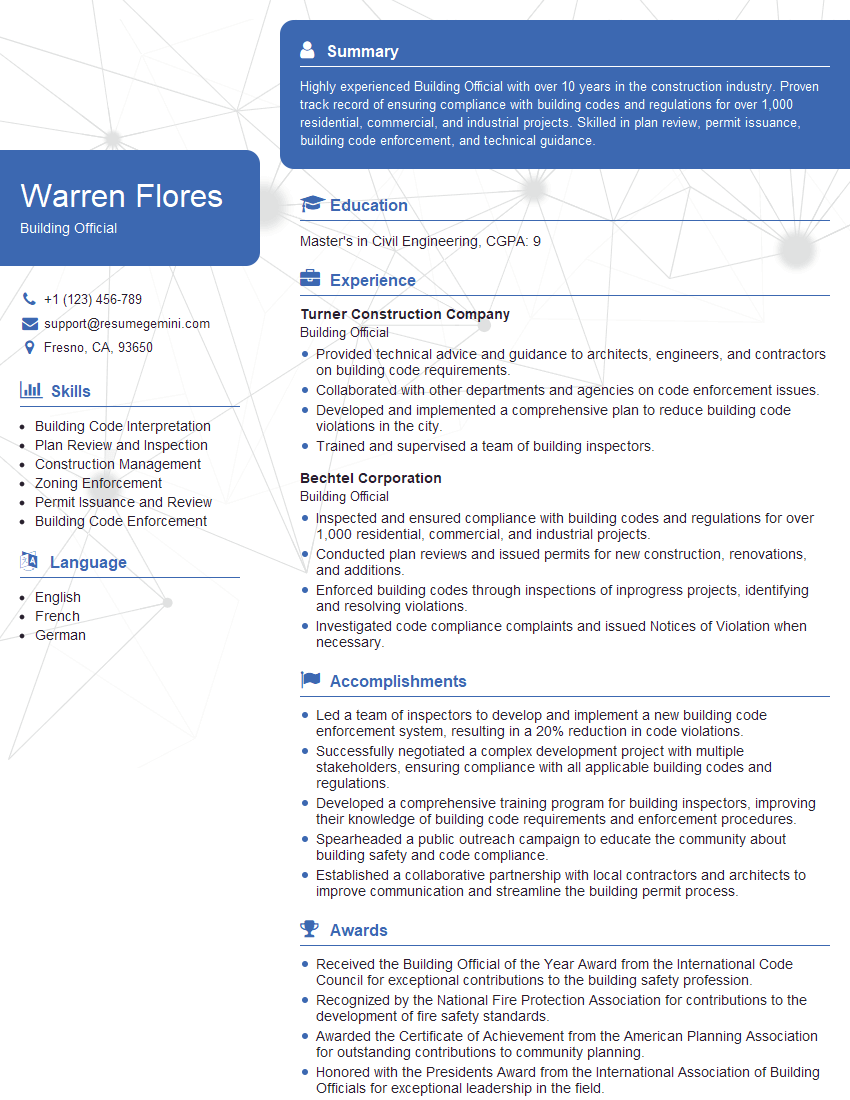
Building Official Resume Sample
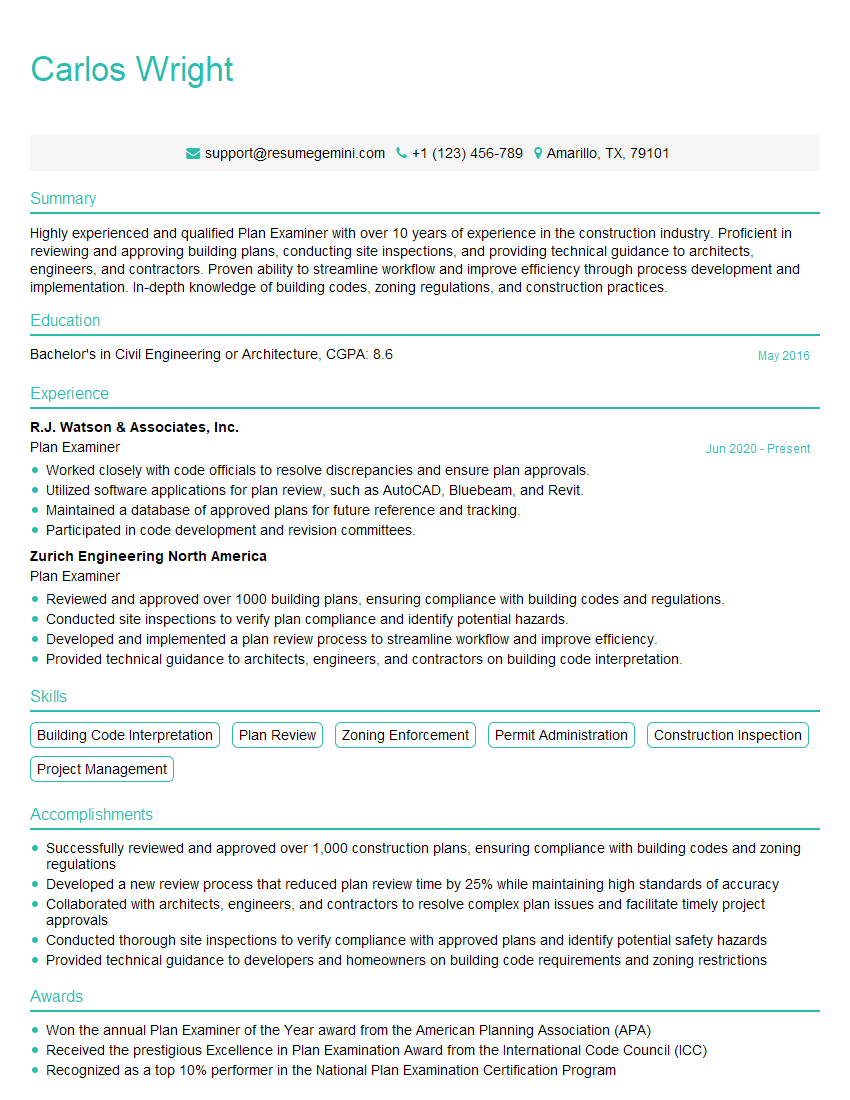
Plan Examiner Resume Sample

Quality Control Inspector Resume Sample
Explore more articles
Users Rating of Our Blogs
Share Your Experience
We value your feedback! Please rate our content and share your thoughts (optional).
What Readers Say About Our Blog
I Redesigned Spongebob Squarepants and his main characters of my artwork.
https://www.deviantart.com/reimaginesponge/art/Redesigned-Spongebob-characters-1223583608
IT gave me an insight and words to use and be able to think of examples
Hi, I’m Jay, we have a few potential clients that are interested in your services, thought you might be a good fit. I’d love to talk about the details, when do you have time to talk?
Best,
Jay
Founder | CEO