The right preparation can turn an interview into an opportunity to showcase your expertise. This guide to Conflict Mediation interview questions is your ultimate resource, providing key insights and tips to help you ace your responses and stand out as a top candidate.
Questions Asked in Conflict Mediation Interview
Q 1. Describe your experience using different mediation models (e.g., transformative, facilitative, evaluative).
My experience spans various mediation models, each tailored to the specific conflict dynamics. Transformative mediation focuses on empowering parties to understand each other’s perspectives and build their own capacity for future conflict resolution. I’ve used this approach successfully in community disputes where fostering long-term relationships was crucial. For example, in a neighborhood parking conflict, I facilitated conversations that helped neighbors understand each other’s needs and develop mutually agreeable solutions, ultimately strengthening their community ties. Facilitative mediation, on the other hand, guides parties towards a mutually acceptable agreement, primarily by managing the process and communication. This model is ideal for disputes with clear, defined issues, such as contract disagreements. Finally, evaluative mediation involves the mediator offering opinions and assessments to help parties evaluate their options and reach a settlement. I’ve employed this approach in commercial disputes where a neutral expert opinion could expedite resolution. A recent example involved a disagreement between two small businesses over a breach of contract; offering a realistic assessment of potential legal outcomes led to a swift and mutually satisfactory compromise. Choosing the right model is key; it depends heavily on the parties’ needs, the nature of the conflict, and their willingness to engage in different types of processes.
Q 2. Explain the key stages of a typical mediation process.
A typical mediation process unfolds in several key stages:
- Intake and Opening: This involves meeting individually with each party to understand their perspectives and assess the feasibility of mediation. I carefully explain the process, confidentiality, and my role as a neutral facilitator.
- Joint Session: All parties meet together. I guide them through expressing their concerns, perspectives, and needs. The focus is on active listening and understanding.
- Information Gathering and Exploration: This is where I help parties clarify the issues, identify common ground, and explore potential solutions. It often involves clarifying timelines, facts, and expectations.
- Negotiation and Problem-Solving: With my guidance, parties brainstorm and propose solutions, negotiating towards a mutually agreeable outcome. This stage may involve caucuses (separate meetings with individual parties) to address sensitive issues.
- Agreement and Formalization: Once an agreement is reached, it’s formally documented. The document outlines the specific terms, ensuring clarity and enforceability.
- Closure: We review the agreement and ensure everyone understands their commitments. This stage helps consolidate the outcome and prepare for the future.
Q 3. How do you identify and manage power imbalances in a mediation?
Power imbalances are a significant challenge in mediation. I address this by actively seeking to level the playing field. This involves several strategies:
- Identifying the imbalance: I carefully observe the dynamics of interaction; this includes assessing communication styles, confidence levels, and the relative resources each party possesses.
- Empowering the less powerful party: I use active listening, ensuring the less powerful voice is heard and valued. I provide them with additional support to feel comfortable and confident in expressing themselves. This could involve explaining procedures or offering alternative communication styles.
- Adjusting communication styles: I might adapt my communication style to address each party’s needs. This could involve simplifying language for a party with limited knowledge of legal terminology or offering more time for a party with communication difficulties.
- Procedural fairness: I ensure equal opportunities for each party to participate. This includes giving equal speaking time, providing access to information, and managing the pace of the process so no one feels rushed or overwhelmed.
- Creating a safe space: I cultivate an atmosphere of mutual respect and trust. This helps all parties feel safe expressing their concerns and needs. This can involve proactively calling out disrespectful comments and actively facilitating the exchange of ideas.
Q 4. What strategies do you employ to de-escalate conflict during a mediation session?
De-escalating conflict during mediation requires a combination of techniques:
- Active Listening: Demonstrating attentive listening, both verbally and nonverbally, helps parties feel heard and understood. This reduces defensiveness and helps calm emotions.
- Reframing: Rephrasing statements to highlight common ground and shared goals, minimizes the emphasis on differences and facilitates compromise.
- Emotional Regulation: Helping parties identify and express their emotions in a constructive manner. This includes validating their feelings, acknowledging their frustration, and guiding them to communicate effectively.
- Creating a safe space: Maintaining a calm, respectful environment where parties feel safe expressing themselves without fear of judgment or attack. This includes addressing any aggressive behaviour or hostile interruptions immediately.
- Taking breaks: When tensions run high, suggesting a short break can allow parties to compose themselves and return with renewed focus. Breaks help prevent escalation.
- Grounding techniques: If emotions are particularly intense, suggesting simple grounding exercises may help people reconnect to the present moment and reduce their stress response. This is especially important in dealing with highly emotional parties.
Q 5. How do you handle parties who refuse to participate actively in mediation?
When parties refuse to participate actively, I adopt a flexible approach. First, I try to understand the reasons for their reluctance. This often involves individual caucuses to explore their concerns privately. Sometimes, the issue may be related to mistrust, fear, or lack of understanding of the process. I then tailor my approach accordingly:
- Addressing concerns: If mistrust is the issue, I reinforce my neutrality and commitment to confidentiality, highlighting the benefits of mediation to each party.
- Reframing the process: I may adjust the mediation model to better meet their needs, offering more structured guidance or emphasizing specific aspects of the process that resonate with their values.
- Limited participation: In some cases, I may accept limited participation while still facilitating communication between parties. This might involve sending messages or facilitating communication through written correspondence.
- Termination of mediation: Ultimately, if engagement remains impossible, I may need to terminate the process. This is explained to all parties, making it clear why mediation is no longer feasible. I ensure they’re aware of their other legal options.
Q 6. Describe a situation where you had to adapt your mediation approach based on the specific circumstances.
In a recent mediation involving a family dispute over inheritance, the initial approach (facilitative) proved ineffective. The parties were deeply entrenched in emotional grievances, making it hard to focus on practical solutions. I recognized the need to shift to a more transformative approach. I redirected the process towards helping family members understand their emotions, communicate needs effectively, and rebuild relationships, rather than solely focusing on the financial aspects of the dispute. This involved spending more time fostering emotional understanding, using reflective listening to help family members validate their feelings and facilitating empathetic dialogue, even when the subjects were highly sensitive and charged with strong emotional reactions. This shift in approach resulted in a more lasting and positive outcome, addressing both the immediate inheritance issues and long-term family relationships. It’s a prime example of how adapting my approach significantly improves the effectiveness of mediation and avoids a strictly process-driven approach.
Q 7. How do you maintain neutrality and impartiality while mediating a dispute?
Maintaining neutrality and impartiality is paramount. It’s the foundation of trust and fairness. I achieve this through several key practices:
- Equal treatment: I treat all parties equally, providing each with an equal opportunity to speak and be heard. This includes avoiding favoritism in terms of speaking time, body language, and verbal responses.
- Avoidance of bias: I actively manage my own biases, ensuring they don’t influence my assessment of the situation or the process. This involves reflecting on my own prejudices and making a conscious effort to provide balanced support to all participants.
- Confidentiality: I maintain strict confidentiality regarding information shared during the mediation process. This fosters trust and encourages open communication.
- Impartial facilitation: My role is to facilitate communication, not to judge or impose solutions. I guide the process, ensuring all voices are heard, but I refrain from offering my own opinions or solutions unless specifically requested by all parties involved.
- Self-reflection: Regular self-reflection is vital. I continuously evaluate my actions to ensure my neutrality remains intact. This involves considering the feedback from all parties involved in the process.
Q 8. How do you assess the parties’ interests and needs in a conflict?
Assessing the parties’ interests and needs is fundamental to successful mediation. It’s about moving beyond stated positions (what they say they want) to understand the underlying motivations, concerns, and desires driving their actions. I use a multi-pronged approach:
- Active Listening: I carefully listen to each party, paying attention not only to their words but also their tone, body language, and emotional state. This helps me identify unspoken needs and anxieties.
- Open-Ended Questions: Instead of asking yes/no questions, I use open-ended questions like, “Tell me more about what’s important to you in this situation.” This encourages them to elaborate and reveal their underlying interests.
- Role-Playing & Perspective-Taking: I might gently encourage parties to step into each other’s shoes, asking, “If you were in their position, how would you feel?” This fosters empathy and understanding.
- Summarizing and Reflecting: Regularly summarizing what I hear ensures accuracy and allows parties to correct any misinterpretations. This demonstrates my understanding and helps them clarify their own thoughts.
For example, in a landlord-tenant dispute, a tenant might state their position as ‘I want a rent reduction.’ However, by exploring deeper, I might uncover their underlying interest is to have a safe and habitable living space, and the rent reduction is just a means to that end. Understanding this underlying interest allows me to explore solutions beyond simply reducing rent, such as addressing specific repair issues.
Q 9. What are your preferred techniques for generating options and solutions during mediation?
Generating creative options is crucial. My preferred techniques include:
- Brainstorming: A structured session where parties freely generate ideas without judgment. This can be especially effective when combined with techniques like ‘reverse brainstorming’ (identifying what *shouldn’t* happen) to spark creative problem-solving.
- Interest-Based Negotiation: Focusing on the underlying interests rather than positions, allowing for more flexible and mutually beneficial solutions. This often involves identifying common ground and exploring trade-offs.
- Caucus: Private meetings with each party to explore their concerns, gain trust, and encourage compromise. This is valuable when sensitive information needs to be discussed or when parties are resistant to direct communication.
- Problem-Solving Workshops: Using a structured process to analyze the problem, identify potential solutions, evaluate their feasibility, and choose the best option.
- Analogies and Metaphors: Sometimes, using relatable analogies or metaphors can help parties connect with the problem in a new way and facilitate creative solutions.
For instance, in a divorce case, instead of focusing on who gets the house, I might facilitate a discussion on how to ensure both parties’ needs for housing stability are met, exploring options like a temporary arrangement, sale of the property, or alternative housing solutions.
Q 10. How do you evaluate the fairness and practicality of proposed solutions?
Evaluating fairness and practicality involves a holistic assessment. I consider several factors:
- Objective Criteria: Where possible, I rely on objective criteria, like market value in property disputes or legal precedents in contractual disagreements, to ensure fairness.
- Mutual Gains: Does the solution provide a net positive outcome for both parties, even if the gains aren’t perfectly equal? Some degree of asymmetry is often acceptable if it addresses underlying needs and maintains a sense of fairness.
- Feasibility: Is the solution realistic and achievable? Are the parties capable of fulfilling their obligations under the agreement? I need to consider practical aspects, such as financial capacity, logistical constraints, and timeframes.
- Durability: Will the solution be sustainable in the long term? I consider potential future challenges and aim for solutions that are resistant to future disputes.
- Party Satisfaction: While I’m not a judge, I strive to ensure both parties feel they’ve been heard and that the agreement represents a reasonable compromise, even if it doesn’t perfectly reflect their initial demands.
For example, in a business partnership conflict, a fair solution might involve a buyout of one partner, with the valuation determined by an independent appraiser. The practicality would be assessed by verifying the financial feasibility of the buyout for both parties.
Q 11. Describe your experience in drafting and negotiating mediated settlement agreements.
Drafting and negotiating mediated settlement agreements is a critical part of my role. I have extensive experience in producing legally sound and enforceable agreements that reflect the parties’ consensus. My approach involves:
- Collaborative Drafting: I often work with the parties to draft the agreement collaboratively, ensuring they understand and agree to every provision.
- Clear and Concise Language: The agreement should be unambiguous and easy to understand, avoiding legal jargon whenever possible. I ensure the language accurately reflects the parties’ intentions.
- Comprehensive Scope: The agreement should address all aspects of the dispute, including payment terms, timelines, and dispute resolution mechanisms for any future disagreements.
- Review and Revisions: I review the agreement carefully with the parties to ensure it is comprehensive, accurate, and addresses their concerns. I allow for revisions and clarifications until both parties are fully satisfied.
- Legal Counsel: I encourage parties to seek independent legal advice before signing the agreement. However, I’m not responsible for the parties’ legal decisions.
In several cases involving complex property divisions, I have drafted agreements that detailed asset valuation, payment schedules, and post-settlement arrangements, ensuring the agreement was legally sound and accurately reflected the parties’ understanding.
Q 12. How do you handle confidential information disclosed during a mediation?
Confidentiality is paramount in mediation. I adhere strictly to ethical guidelines and maintain the confidentiality of all information disclosed during the mediation process. This includes:
- Confidentiality Agreements: Parties typically sign confidentiality agreements before the mediation begins, emphasizing the importance of keeping information confidential.
- Separate Caucuses: I often use separate caucuses to discuss sensitive information in private, to protect the confidentiality of sensitive disclosures.
- Limited Disclosure: I disclose information only when necessary, such as when required by law or to prevent harm to another person.
- Secure Record Keeping: All mediation records are kept secure and confidential, with appropriate access controls.
- Professional Ethics: I uphold the ethical obligations of mediators, ensuring that confidentiality is maintained in accordance with professional standards.
I make it explicitly clear to the parties at the outset that confidentiality is crucial and explain the limits of that confidentiality (e.g., I may need to report information if there’s a threat of imminent harm). This sets the stage for open communication while respecting the need for privacy.
Q 13. How do you address ethical dilemmas that might arise during mediation?
Ethical dilemmas can arise, such as conflicts of interest or power imbalances. My approach involves:
- Transparency and Disclosure: I disclose any potential conflicts of interest upfront. If a conflict arises during the process, I would address it immediately, potentially withdrawing from the mediation if necessary.
- Impartiality: I strive to remain impartial and avoid favoring one party over another. I make a conscious effort to treat all parties equally and fairly.
- Informed Consent: I ensure that all parties understand the process, their rights, and the limitations of mediation before proceeding. This is critical for avoiding misunderstandings or ethical breaches.
- Professional Supervision: When faced with complex ethical dilemmas, I consult with experienced colleagues or seek guidance from professional mediation organizations to find an ethical path.
- Ethical Guidelines: I consistently refer to and uphold the ethical guidelines and codes of conduct established by relevant professional mediation organizations.
For instance, if I sense a significant power imbalance between parties, I might adjust my communication style to ensure the less powerful party’s voice is heard equally. If a conflict of interest arises, I would withdraw from the mediation and refer the parties to another mediator.
Q 14. What are the limitations of mediation, and when might it not be appropriate?
Mediation, while highly effective, isn’t always appropriate. Limitations include:
- Power Imbalances: If a significant power imbalance exists, mediation might not be effective, as the less powerful party may feel coerced into an unfair settlement.
- Lack of Willingness to Participate: Mediation requires a willingness from all parties to engage in the process and seek a mutually agreeable solution. If one party is unwilling to participate or negotiate in good faith, mediation is unlikely to be successful.
- Serious Criminal Offences: Mediation is generally not suitable for cases involving serious criminal offenses, where legal processes are more appropriate.
- Safety Concerns: If there are safety concerns or a high risk of violence, mediation might not be a safe or appropriate option.
- Time Constraints: Mediation can be time-consuming, and it may not be feasible if there are urgent time constraints.
For example, a case involving domestic violence would likely be unsuitable for mediation due to safety concerns and the need for legal intervention. Similarly, if a party consistently refuses to engage constructively, mediation will likely fail.
Q 15. Explain the role of confidentiality in mediation and its importance.
Confidentiality is the cornerstone of successful mediation. It means that anything shared during the mediation process by the disputing parties remains private and is not disclosed to anyone outside the mediation session, including the mediator to other parties involved. This is unless all parties explicitly agree otherwise. It’s crucial because it fosters a safe space for open and honest communication. People are far more likely to share their true feelings, vulnerabilities, and perspectives when they know their words won’t be used against them later. Without confidentiality, the entire process becomes risky and unproductive, as parties may hold back information or refuse to participate.
For example, imagine a workplace dispute about unfair dismissal. If an employee feels their confidential information shared during mediation might be used against them in court or to affect their future employment prospects, they are unlikely to fully participate. Similarly, an employer might withhold critical information for fear of reputational damage. Maintaining confidentiality is therefore essential to building trust and fostering a collaborative environment conducive to conflict resolution.
Career Expert Tips:
- Ace those interviews! Prepare effectively by reviewing the Top 50 Most Common Interview Questions on ResumeGemini.
- Navigate your job search with confidence! Explore a wide range of Career Tips on ResumeGemini. Learn about common challenges and recommendations to overcome them.
- Craft the perfect resume! Master the Art of Resume Writing with ResumeGemini’s guide. Showcase your unique qualifications and achievements effectively.
- Don’t miss out on holiday savings! Build your dream resume with ResumeGemini’s ATS optimized templates.
Q 16. How do you manage difficult emotions and behaviors from the disputing parties?
Managing difficult emotions and behaviors is a core skill for mediators. It requires a combination of empathy, active listening, and assertive communication. When parties exhibit anger, frustration, or even aggression, I focus on validating their feelings while establishing clear boundaries. This doesn’t mean condoning inappropriate behavior; it involves acknowledging their emotional experience without allowing the situation to escalate. For instance, I might say something like, “I understand you’re feeling very angry right now. Let’s take a moment to breathe and then discuss how we can move forward productively.”
Techniques such as rephrasing, summarizing, and using calming language help diffuse tense situations. If necessary, I might suggest a brief break or even separate caucuses (private meetings with each party) to allow for emotional regulation. The key is to remain calm and neutral, acting as a facilitator to help the parties regain control and re-engage in constructive dialogue. In cases of severe disruption, external support, such as security personnel, may be required, but this is a last resort.
Q 17. Describe your experience working with diverse populations and cultural backgrounds.
My experience spans a wide range of cultural and socioeconomic backgrounds. I’ve worked with individuals from diverse ethnicities, religious beliefs, and levels of education in both personal and business disputes. I recognize the importance of cultural sensitivity and adapt my mediation approach to reflect the unique needs and communication styles of each party. This includes understanding different nonverbal cues, communication patterns, and power dynamics within various cultures.
For example, in some cultures, direct confrontation is avoided, while in others it’s the norm. My approach prioritizes building rapport and understanding each party’s perspective within their cultural context. This requires ongoing learning, self-reflection, and a willingness to adapt my methods. I often use interpreters or translators when necessary, and I also consult cultural experts to enhance my understanding and ensure appropriate approaches.
Q 18. What are some common communication barriers in mediation and how do you overcome them?
Communication barriers in mediation can significantly hinder progress. These barriers can include language differences (as already mentioned), differing communication styles (direct vs. indirect), emotional outbursts, preconceived notions, and power imbalances. To overcome these barriers, I use a multi-faceted approach. First, I establish clear communication protocols at the beginning of the mediation, ensuring all parties understand how the process will work and how communication will flow.
I actively listen to identify and address underlying misunderstandings. I employ clarifying questions, paraphrasing, and summarizing to confirm understanding. For instance, if I detect a misinterpretation of a party’s statement, I’ll clarify by saying, “So, if I understand correctly, you’re saying…Is that accurate?” I also encourage the use of visual aids or written summaries to clarify complex or nuanced information. Finally, I work to create a safe and respectful environment where parties feel comfortable voicing their concerns without fear of judgment or interruption.
Q 19. How do you handle situations where parties are unwilling to compromise?
When parties are unwilling to compromise, it’s crucial to explore the underlying reasons for their inflexibility. This might involve uncovering unmet needs, deeply held beliefs, or fear of loss. I use various techniques to help them identify and address these concerns. This might involve exploring their interests (the underlying needs and motivations driving their positions) rather than focusing solely on their stated positions. I might use role-playing to help them understand the other side’s perspective. Or, I might help them brainstorm creative solutions that meet everyone’s interests as much as possible.
Sometimes, despite my best efforts, a mutually acceptable agreement can’t be reached. In such cases, I will make sure that the parties understand their options moving forward, including the possibilities of litigation, arbitration, or further negotiation. It’s important to emphasize that even if a formal agreement isn’t reached, the mediation process may have yielded valuable insights that can help them manage their future interactions.
Q 20. What are the key elements of a successful mediation outcome?
A successful mediation outcome isn’t necessarily about reaching a perfect agreement; it’s about achieving a resolution that is acceptable to all parties involved and which addresses their interests and concerns. Key elements include: a voluntary agreement, a fair and equitable outcome, a clearly defined agreement, ongoing respect for the parties, and a sense of closure. The agreement should be put in writing to solidify the understanding. The process should leave the parties with improved communication skills and a sense of having been heard and understood, which will help future interactions.
Furthermore, successful outcomes often involve a shift in perspective, leading to enhanced understanding and improved relationships between the parties. While a formal agreement is the common expectation, a successful mediation could also involve the parties identifying common ground, resolving smaller elements of the conflict, or agreeing on a future pathway for communication and issue resolution. The focus is always on what is realistic and achievable given the circumstances.
Q 21. How do you measure the effectiveness of your mediation interventions?
Measuring the effectiveness of mediation interventions can be challenging, as it’s not always easily quantifiable. However, I use several methods to assess the success of my work. Firstly, I gather feedback from the parties involved through post-mediation surveys or interviews. These provide qualitative insights into their satisfaction with the process and the outcome, including how the agreement is working for them and whether or not the problems persist.
Secondly, I track the number of cases resulting in successful agreements, the timeframe to reach a resolution, and the level of ongoing conflict between parties. I maintain case files, including pre-mediation assessments, agreements reached and post-mediation follow-up. Finally, I regularly reflect on my own practice, reviewing successful and challenging cases to identify areas for improvement and refinement of my mediation techniques.
Q 22. How do you ensure that the mediated agreement is legally sound and enforceable?
Ensuring a mediated agreement is legally sound and enforceable requires careful attention to several key aspects. While I, as a mediator, don’t provide legal advice, I guide the parties towards crafting an agreement that is clear, unambiguous, and addresses all relevant legal considerations. This involves:
Clarity and Specificity: The agreement must be written in plain language, avoiding jargon and ambiguity. Each term and condition needs to be precisely defined. For example, instead of saying ‘a reasonable amount of time,’ we specify a concrete timeframe.
Consideration: Both parties must receive something of value in the agreement. This might be monetary compensation, the relinquishing of a right, or a change in behavior. We explore options to ensure mutual benefit and avoid imbalances.
Capacity: Each party must have the legal capacity to enter into a contract. This means they understand the agreement’s terms and are legally competent to sign it. If there are questions about capacity, I would advise seeking legal counsel.
Enforceability: The agreement should specify a method for enforcing its terms. This might involve arbitration, specific performance (a court order compelling compliance), or other legal mechanisms. I might suggest incorporating clauses related to dispute resolution if the agreement is breached.
Legal Review (Recommended): I strongly encourage parties to seek independent legal counsel to review the finalized agreement before signing it. This ensures each party fully understands their rights and obligations.
For instance, in a mediation involving a business partnership dispute, I worked with the partners to create a detailed buyout agreement, specifying the valuation method, payment schedule, and non-compete clauses. Each clause was carefully considered to ensure legal soundness and enforceability, and I encouraged them to involve their lawyers for review.
Q 23. What are some common challenges faced by mediators and how have you addressed them?
Mediation presents several challenges. Power imbalances between parties, emotional outbursts, and communication breakdowns are common. I’ve addressed these through:
Addressing Power Imbalances: I create a safe and level playing field by actively listening to all parties, ensuring each has equal opportunity to express their perspective. I might use techniques like reframing statements to reduce the impact of aggressive language and empower the less dominant party.
Managing Emotions: When emotions run high, I employ active listening and empathetic responses to validate their feelings while gently guiding them toward productive conversation. Taking breaks, if necessary, can help regulate emotions. Sometimes, simply acknowledging the intensity of their feelings can de-escalate the situation.
Improving Communication: I use various communication techniques, such as summarizing and paraphrasing, to clarify misunderstandings and ensure everyone is on the same page. I might also help parties identify underlying needs and interests to facilitate a more constructive dialogue. I’ve found that using visual aids can be incredibly helpful in complex disputes.
Dealing with Resistance: Some parties might resist mediation or be unwilling to compromise. I address this by building rapport, emphasizing the benefits of reaching a mutually acceptable solution, and exploring creative options that address their concerns.
For example, in a family mediation involving inheritance, one sibling was far more assertive than the others. I made a conscious effort to create space for the quieter siblings to speak, paraphrasing their points to ensure they were heard and understood by the more dominant sibling. Through patience and careful facilitation, we were able to reach a mutually agreeable solution.
Q 24. How do you build rapport and trust with disputing parties?
Building rapport and trust is paramount. It’s about creating a safe and respectful environment where parties feel comfortable sharing their perspectives. I achieve this through:
Active Listening: Demonstrating genuine interest in what each party has to say, not only hearing their words, but also observing their nonverbal cues.
Empathy and Validation: Acknowledging and validating each party’s emotions and experiences, even if I don’t necessarily agree with their positions. This shows I understand their perspective and creates a sense of being heard.
Neutrality and Impartiality: Maintaining a neutral stance, avoiding judgment, and ensuring fairness in the process. This builds trust because parties feel they can be honest without fear of bias.
Confidentiality: Emphasizing the confidentiality of the mediation process to ensure open and honest communication.
Clear Communication: Explaining the process clearly, setting expectations, and answering questions honestly.
Think of it like building a bridge. You need to create a solid foundation of trust before you can effectively connect the two sides of the dispute. I often start by asking open-ended questions, allowing parties to tell their story without interruption. This demonstrates respect and builds the foundation for trust.
Q 25. Describe your experience in facilitating communication between parties.
Facilitating communication is central to my role. I employ various techniques to help parties communicate effectively:
Active Listening and Summarizing: I actively listen to each party and then summarize their key points to ensure everyone understands each other’s perspectives. This reduces miscommunication and clarifies misunderstandings.
Reframing: I rephrase statements to help parties see different viewpoints and identify common ground. This involves restating their points in a less confrontational manner.
Questioning: I ask clarifying questions to help parties articulate their needs and interests more clearly. This allows us to identify the root causes of the conflict.
Managing Interruptions: I manage interruptions respectfully but firmly to ensure everyone gets a fair chance to speak. I might use phrases like, “Let’s allow [party name] to finish their thought before we proceed.”
Role-Playing (when appropriate): In some cases, I might use role-playing to help parties understand each other’s perspectives and empathize with their feelings.
In a recent community dispute over noise levels, communication was extremely strained. I used active listening and summarizing to help them understand each other’s concerns, then reframed their complaints to focus on finding solutions rather than placing blame. This improved communication substantially and eventually led to a mutually acceptable agreement.
Q 26. How do you manage your time effectively during a mediation session?
Effective time management in mediation is crucial. I use a structured approach:
Pre-mediation Planning: Thorough preparation before the session, including reviewing all relevant documents and outlining a potential agenda, significantly improves efficiency.
Setting an Agenda: Establishing a clear agenda at the beginning helps keep the session focused. I allow flexibility, but maintain control to ensure time is used productively.
Time Allocation: Allocating specific time slots for different stages of mediation (opening statements, joint sessions, caucuses) helps to pace the process.
Managing Breaks: Strategic breaks help to manage emotions and allow for reflection. I generally suggest breaks at natural transition points.
Summarizing Regularly: Frequent summaries ensure all parties are aligned and progressing. This also helps to identify areas where more time is needed.
Contingency Planning: Having a plan for potential delays or unexpected events ensures the session doesn’t get derailed.
For instance, in a complex commercial dispute, I allocated specific time slots for each party’s opening statement, a joint session for exploring options, and individual caucuses for private discussions. This structure ensured productive use of the time available.
Q 27. How do you deal with interruptions or unexpected events during a mediation?
Interruptions and unexpected events are inevitable. My approach focuses on maintaining control and minimizing disruption:
Maintaining Calmness: Responding calmly and professionally to unexpected events helps de-escalate any tension.
Addressing Interruptions Respectfully: Acknowledging interruptions but firmly redirecting the conversation back to the agenda.
Adapting the Agenda: Being flexible enough to adjust the agenda to address unexpected issues that arise.
Seeking Clarification: If an interruption brings up a relevant issue, I might briefly address it to clarify matters, but I make sure we return to the main agenda.
Postponing if Necessary: If the unexpected event is significant and requires further investigation, I would consider postponing the session to a later date.
For example, in one mediation, a party received an urgent phone call. I addressed it professionally, allowing a short break for the call, then seamlessly guided the conversation back to the previous point. This prevented any major disruption to the process.
Key Topics to Learn for Conflict Mediation Interview
- Understanding Conflict Styles: Explore different conflict styles (e.g., avoiding, accommodating, competing, compromising, collaborating) and their implications for mediation strategies.
- Active Listening and Communication: Master techniques for effective active listening, including paraphrasing, reflecting feelings, and summarizing. Practice using open-ended questions to encourage dialogue.
- Mediation Process & Stages: Familiarize yourself with the various stages of a typical mediation process, from initial intake to agreement drafting and follow-up.
- Ethical Considerations in Mediation: Understand the ethical principles guiding mediators, including impartiality, confidentiality, and self-determination of parties.
- Power Dynamics and Inequality in Conflict: Learn to identify and address power imbalances that may exist between conflicting parties and how to adapt your approach accordingly.
- Negotiation and Problem-Solving Techniques: Practice different negotiation strategies and problem-solving approaches to help parties reach mutually acceptable solutions. Consider integrative bargaining and interest-based negotiation.
- Conflict Resolution Models: Research and understand different theoretical frameworks for conflict resolution, such as transformative mediation and restorative justice.
- Cultural Sensitivity and Inclusivity: Develop awareness of how cultural differences can influence conflict and communication styles, and how to adapt your approach for diverse populations.
- Case Study Analysis: Practice analyzing hypothetical conflict scenarios to develop your problem-solving and mediation skills.
Next Steps
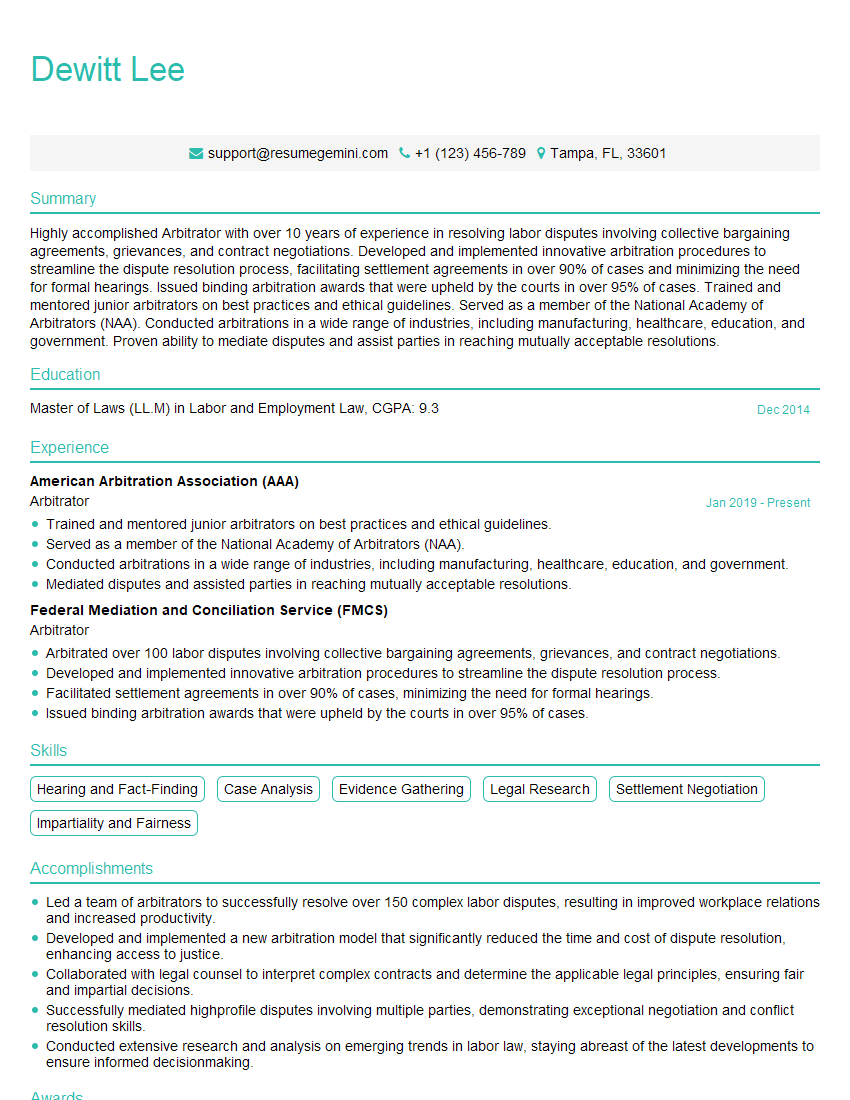
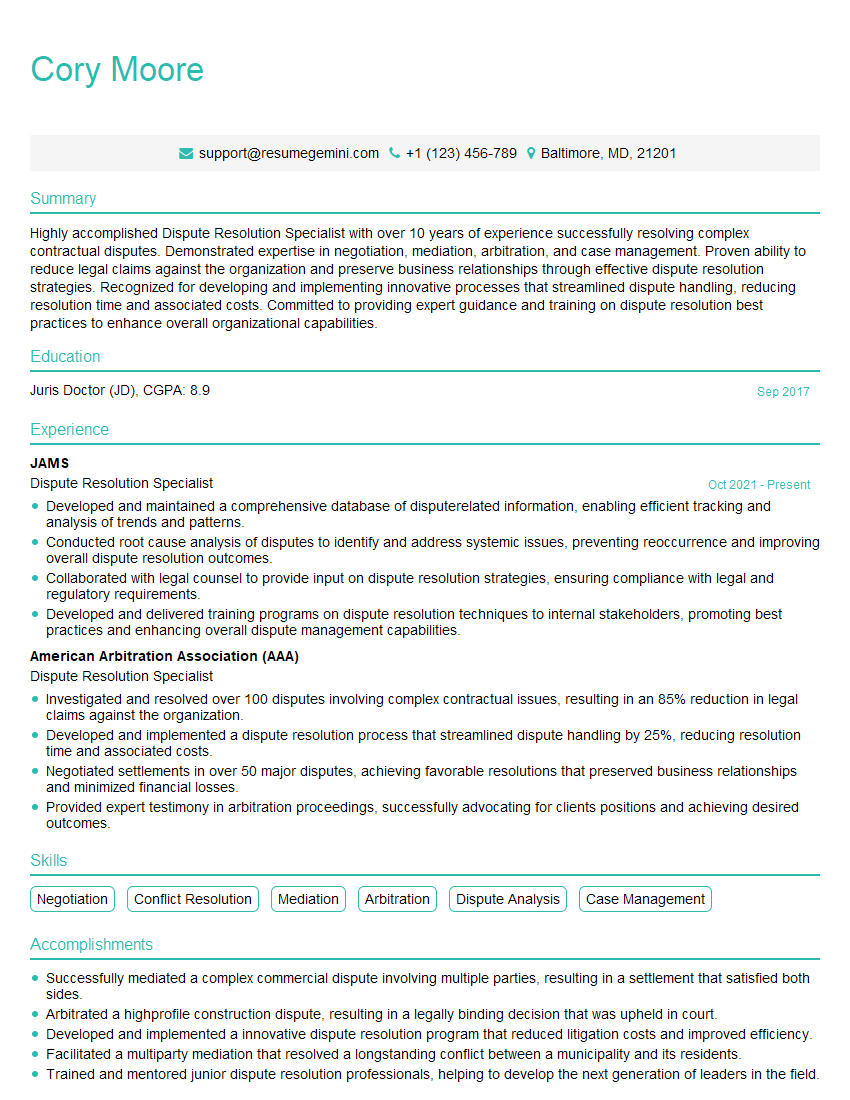
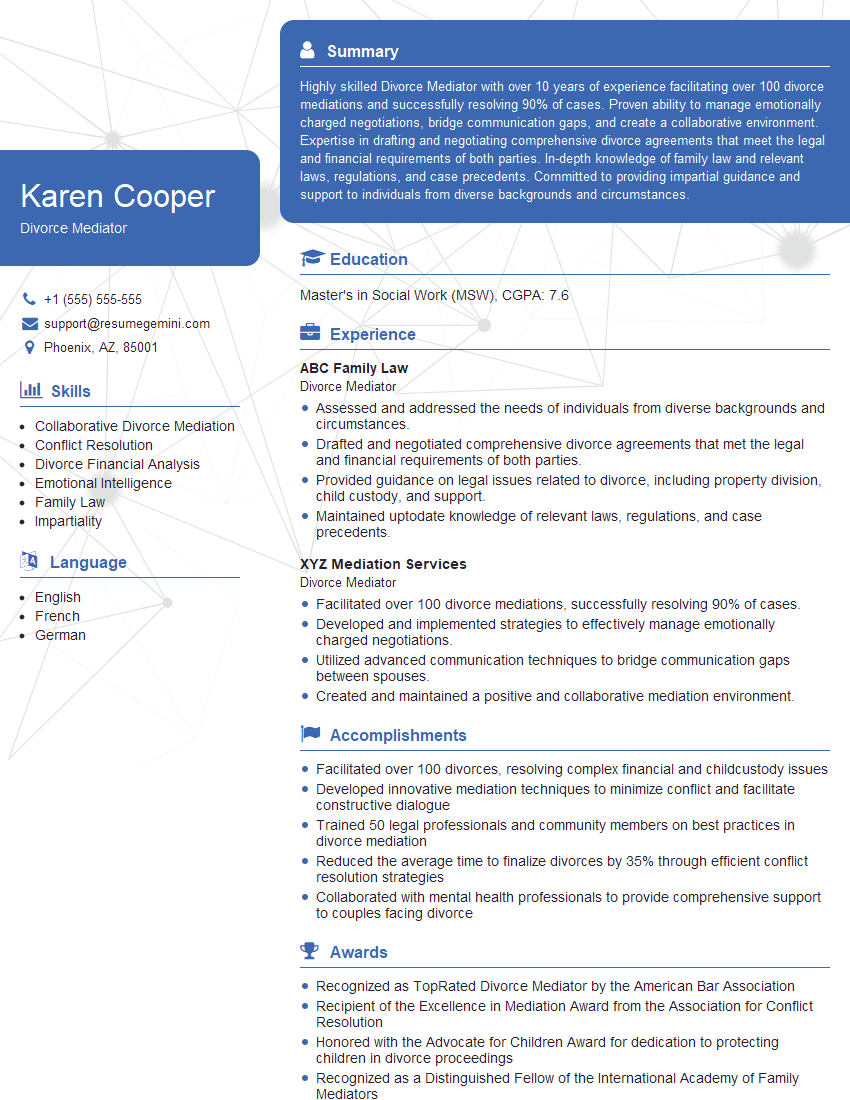
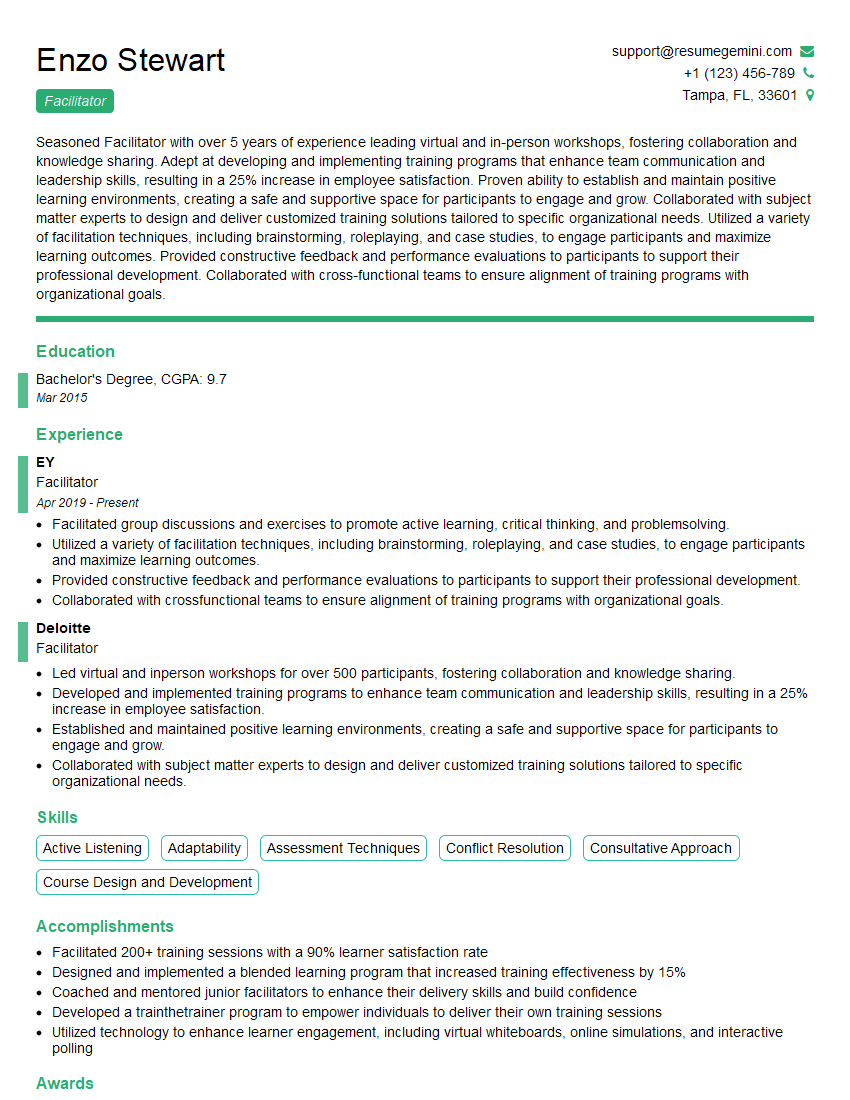
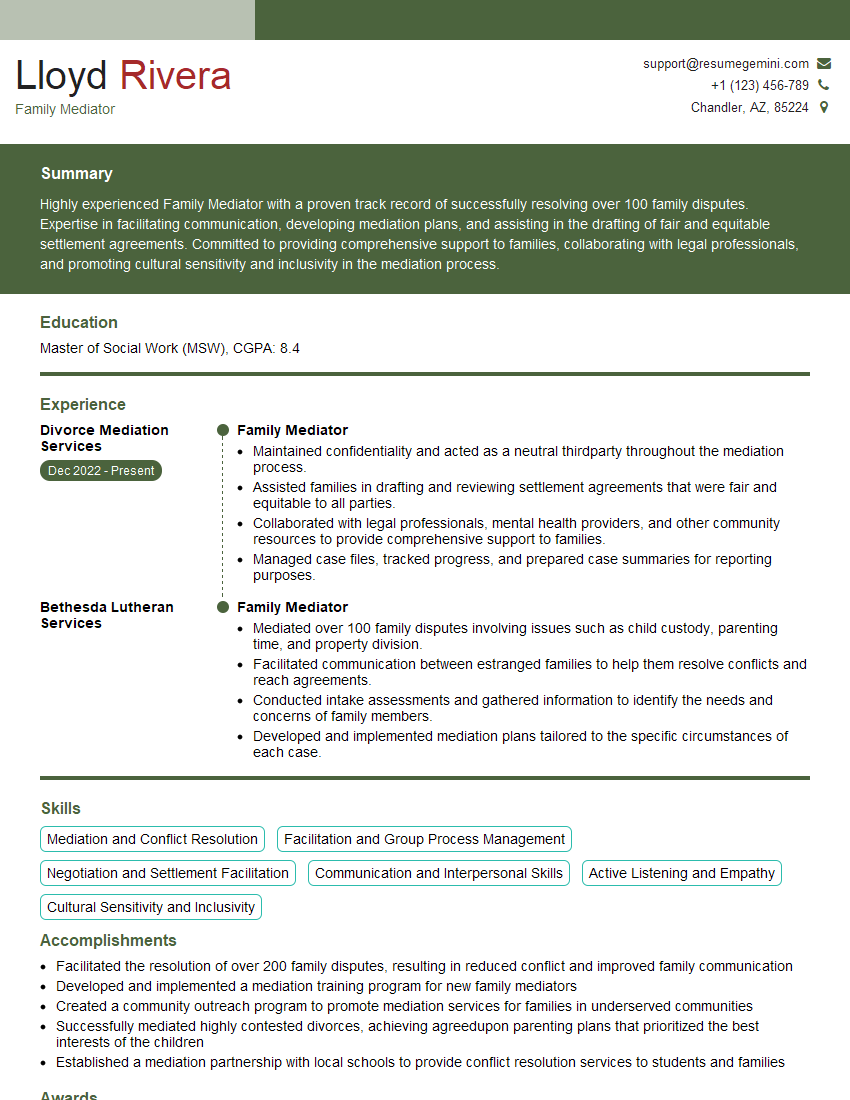
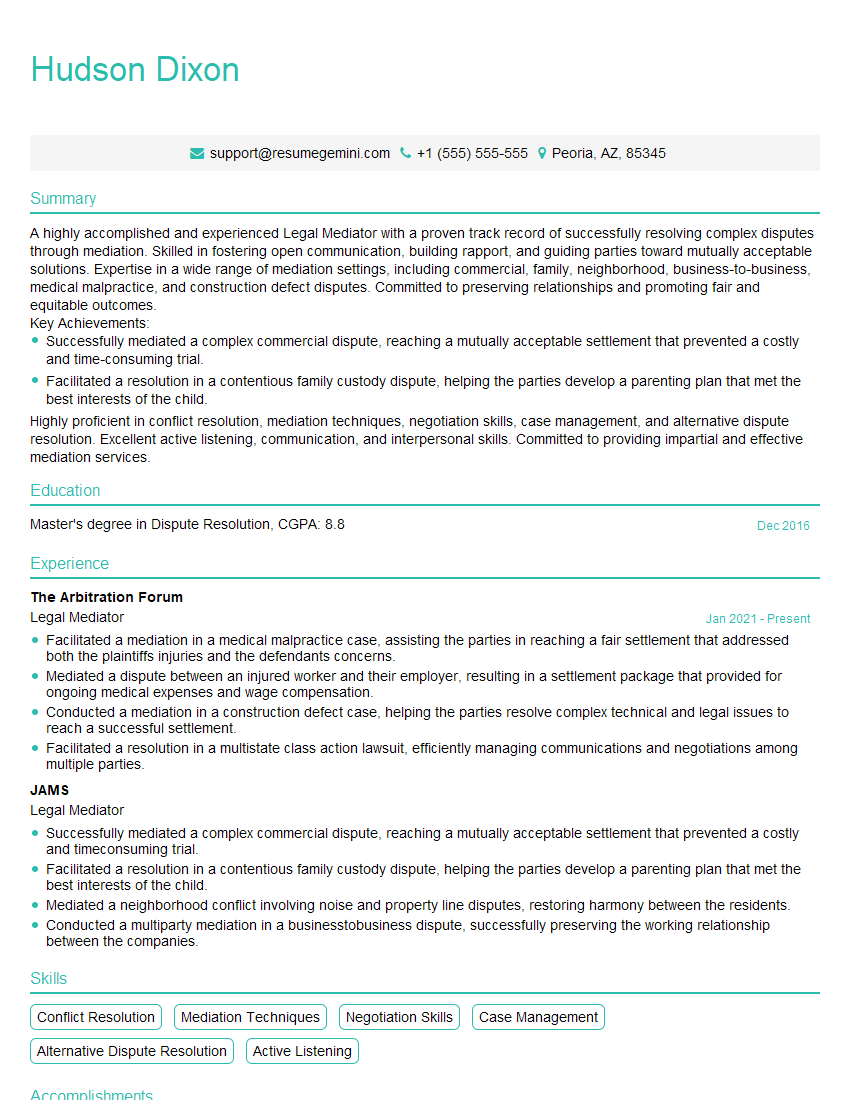
Mastering conflict mediation opens doors to diverse and rewarding career paths, offering opportunities for growth in various sectors. To enhance your job prospects, crafting an ATS-friendly resume is crucial. A well-structured resume highlights your skills and experience effectively, increasing your chances of landing an interview. ResumeGemini is a trusted resource that can significantly elevate your resume-building experience. They offer tools and guidance to create a professional and impactful document. Examples of resumes tailored specifically to Conflict Mediation professionals are available to help you get started.
Explore more articles
Users Rating of Our Blogs
Share Your Experience
We value your feedback! Please rate our content and share your thoughts (optional).
What Readers Say About Our Blog
I Redesigned Spongebob Squarepants and his main characters of my artwork.
https://www.deviantart.com/reimaginesponge/art/Redesigned-Spongebob-characters-1223583608
IT gave me an insight and words to use and be able to think of examples
Hi, I’m Jay, we have a few potential clients that are interested in your services, thought you might be a good fit. I’d love to talk about the details, when do you have time to talk?
Best,
Jay
Founder | CEO