Every successful interview starts with knowing what to expect. In this blog, we’ll take you through the top Costume Maintenance and Preservation interview questions, breaking them down with expert tips to help you deliver impactful answers. Step into your next interview fully prepared and ready to succeed.
Questions Asked in Costume Maintenance and Preservation Interview
Q 1. What are the different types of fabrics commonly used in costumes, and how do their properties influence maintenance strategies?
Costumes are made from a wide variety of fabrics, each with unique properties affecting their maintenance. Understanding these properties is crucial for effective preservation.
- Natural Fibers: These include silk, wool, linen, and cotton. Silk is delicate and requires gentle handling; wool is prone to moth damage; linen is strong but can wrinkle easily; and cotton is relatively durable but can fade.
- Synthetic Fibers: These include nylon, polyester, and rayon. Synthetics are generally more durable and less prone to insect damage than natural fibers but can be sensitive to high heat and certain chemicals.
- Blended Fabrics: Many costumes use blended fabrics combining natural and synthetic fibers. The care instructions will depend on the dominant fiber and the blend ratio.
Maintenance Strategies: The cleaning method, storage environment, and repair techniques all depend on the fabric composition. For instance, delicate silk requires dry cleaning or hand washing, while cotton can often withstand machine washing. Understanding the fiber content allows you to tailor your approach for optimal preservation.
For example, a delicate silk gown would demand far gentler handling than a sturdy cotton stage costume. Knowing the fabric allows you to choose appropriate cleaning solutions and methods, preventing damage.
Q 2. Describe your experience with various cleaning methods for delicate fabrics like silk and velvet.
Cleaning delicate fabrics like silk and velvet requires specialized knowledge and techniques. Harsh chemicals and aggressive methods can permanently damage these materials.
- Silk: I often use a gentle, pH-neutral detergent dissolved in cool water for hand washing silk. The garment is gently swished, never rubbed, and rinsed thoroughly in cool, clean water. It’s then rolled in a clean towel to absorb excess water, never wrung out, and laid flat to dry away from direct sunlight.
- Velvet: Velvet is particularly challenging because its pile can be easily crushed. Spot cleaning with a soft brush and a very mild detergent solution is often the safest option. Professional dry cleaning, using a solvent appropriate for velvet, is often preferred for larger items. Steam cleaning should be avoided unless performed by a highly experienced conservator.
In my experience, preventative care is key. Regular inspection and prompt attention to minor stains prevent the need for more aggressive cleaning. I always test any cleaning solution on an inconspicuous area first to ensure there is no discoloration or damage.
Q 3. Explain your approach to assessing the condition of a historical costume before initiating any treatment.
Assessing the condition of a historical costume is a meticulous process requiring a trained eye and specialized tools. It begins with a thorough visual examination followed by a detailed documentation.
- Visual Inspection: I carefully examine the garment for tears, holes, stains, weak areas, and insect damage. I note the color, texture, and overall condition of the fabric. I also examine the construction details, noting stitching, seams, and any embellishments.
- Documentation: Photographs and detailed written descriptions are essential. I record the garment’s measurements, any existing damage, and its overall condition. This forms a baseline for future assessment and tracking any changes.
- Fiber Identification: In many cases, fiber analysis is required to determine the fabric composition. This helps determine the best cleaning and conservation methods.
- Testing: I conduct various tests to determine fabric strength, colorfastness, and any chemical sensitivities. This information is crucial for selecting appropriate cleaning and repair techniques.
For example, before cleaning a 19th-century gown, I would carefully examine it for loose threads, weak areas in the fabric, and any potential color bleeding issues. This comprehensive assessment guides the selection of appropriate conservation strategies and minimizes the risk of causing further damage during treatment.
Q 4. How do you identify and address common types of damage to costumes, such as tears, stains, and insect infestations?
Identifying and addressing damage is crucial to preserving costumes. Different damages require different approaches.
- Tears: Small tears can often be mended using invisible mending techniques, carefully matching the thread to the original fabric. Larger tears might require patching, using a similar fabric from the garment itself or a carefully selected replacement.
- Stains: Stain removal depends on the type of stain and the fabric. Gentle cleaning with appropriate solvents is sometimes possible; however, overly aggressive cleaning can damage the garment, so caution is paramount.
- Insect Infestations: Infestation requires immediate action. The garment needs to be frozen to kill any insects and larvae. Then it undergoes thorough cleaning, and the storage environment is carefully examined and treated to prevent reinfestation.
I once worked on a Victorian dress heavily infested with moth larvae. Freezing eliminated the insects, but the larvae had created many small holes. I carefully repaired these using a technique called ‘basting’ where extremely fine stitches were used to secure the damaged areas without altering the fabric’s appearance. The entire process was meticulously documented to maintain the garment’s integrity and historical value.
Q 5. What are the best practices for storing costumes to prevent deterioration?
Proper storage is vital for preventing deterioration. It involves controlling environmental factors and providing physical support to the costume.
- Environment: Costumes should be stored in a cool, dry, dark, and well-ventilated area. Fluctuations in temperature and humidity can cause significant damage. Climate control is ideal. Avoid direct sunlight, as it can fade colors.
- Storage Materials: Acid-free boxes or archival-quality storage containers are essential. Acidic materials can damage fabrics over time. For hanging garments, use acid-free tissue paper to prevent creasing and support the garment’s weight.
- Pests: Regular inspection for pest infestation is crucial. Mothballs or cedar chips can help deter insects. Alternatively, a vacuum with a HEPA filter can remove dust and debris and help prevent infestation.
Think of storage like creating a microclimate that mirrors the garment’s ideal conditions. Protecting it from light, moisture, and pests ensures its longevity. Imagine storing a delicate silk dress in a brightly lit, humid room. The colors would fade, the fabric could mildew, and pests could infest it.
Q 6. Describe your experience with different types of repairs, including mending, patching, and reweaving.
Repairing costumes requires a delicate touch and specialized skills. The goal is always to preserve the original fabric and construction as much as possible.
- Mending: This involves repairing small tears or holes using fine stitches that match the original fabric and construction. Invisible mending is often employed to maintain the garment’s aesthetic integrity.
- Patching: Larger tears or damaged areas often require patching. The patch is carefully chosen to match the original fabric as closely as possible in color and texture. Techniques like ‘darning’ or ‘patching’ are used based on the severity and location of damage.
- Reweaving: This complex technique is used to repair more extensive fabric damage. A skilled conservator uses fine threads to recreate the original weave structure, almost seamlessly integrating the repair into the existing fabric.
I once repaired a historical military uniform with a large tear in the sleeve. Using a fragment from an inconspicuous area of the uniform itself as a patch, I employed a near-invisible mending technique called ‘holing’ to seamlessly integrate the patch, returning the garment to its original aesthetic state while ensuring its structural integrity for years to come.
Q 7. What are the ethical considerations involved in the conservation of historical costumes?
Ethical considerations are paramount in costume conservation. The primary goal is to preserve the object for future generations while minimizing intervention.
- Reversibility: Any treatment should be reversible. This means that future conservators can undo the work if needed. The use of permanent adhesives or other irreversible treatments is generally avoided.
- Minimally Invasive Techniques: Conservators should use the least invasive techniques possible to achieve the desired results. This prioritizes preserving the original fabric and construction over aggressive restoration.
- Documentation: Meticulous documentation of all treatments is crucial. This ensures transparency and accountability and allows future conservators to understand the history of the garment and the interventions it has undergone.
- Honesty and Transparency: It’s essential to be transparent about the garment’s condition, the interventions undertaken, and any limitations of the treatment. This ethical approach maintains the integrity of the object and its historical record.
For example, I would never use a synthetic fabric patch on a historical garment if a suitable piece of original fabric can be used. Similarly, I would fully document any alterations made, regardless of how minor they may seem, ensuring that the object’s history is preserved alongside the item itself.
Q 8. How do you determine the appropriate cleaning solvents and methods for different fabric types?
Selecting the right cleaning method for a costume depends entirely on the fabric. Think of it like choosing the right detergent for your laundry – you wouldn’t wash a delicate silk blouse the same way you’d wash jeans! I always begin by identifying the fabric through visual inspection and sometimes fiber testing if necessary. For example, delicate fabrics like silk or velvet often require dry cleaning or spot cleaning with specialized solvents.
- Silk and Velvet: These require gentle dry cleaning or spot cleaning with a solvent like dry cleaning fluid (perchloroethylene) applied sparingly and tested in an inconspicuous area first.
- Wool: Wool can often be dry cleaned or hand-washed in cool water with a mild detergent designed for wool.
- Cotton and Linen: These robust fabrics usually tolerate hand washing or machine washing on a gentle cycle, but always check for colorfastness before proceeding.
- Synthetic Fabrics: Synthetics like polyester or nylon often withstand machine washing, but always refer to the manufacturer’s care instructions.
The cleaning method chosen – whether it’s dry cleaning, hand washing, or machine washing – will directly follow the fabric’s sensitivity. I always prioritize the least invasive method to prevent damage. I meticulously document each step of the cleaning process for future reference.
Q 9. Explain the importance of proper documentation throughout the costume maintenance process.
Proper documentation is paramount in costume maintenance. Think of it as the costume’s medical history. It provides a comprehensive record that ensures the longevity and authenticity of the garment. This documentation includes everything from the initial assessment of the costume’s condition to the materials used in any repairs or cleaning.
- Initial Assessment: Detailed photographs, fabric identification, and a description of any existing damage are crucial.
- Treatment Plan: The chosen cleaning and repair methods, along with justifications for each decision.
- Materials Used: A precise list of cleaning solvents, adhesives, threads, and other materials employed.
- Progress Notes: Regular updates on the treatment’s progress, noting any unexpected issues or changes in the costume’s condition.
- Post-Treatment Assessment: Final photographs and a summary of the treatment’s overall effectiveness and any recommendations for future care.
This meticulous record-keeping allows us to trace the history of each costume, understand its vulnerabilities, and make informed decisions about future treatments, ensuring its preservation for generations to come.
Q 10. How do you manage a large volume of costumes in a limited storage space?
Managing a large costume collection in limited space requires a strategic approach. Think of it like a high-density storage system. Proper organization is key to maximizing space and protecting the costumes from damage.
- Acid-Free Storage: Using acid-free tissue paper, boxes, and garment bags to prevent damage from light, dust, and acid migration.
- Climate Control: Maintaining a stable temperature and humidity level to protect against mold, mildew, and insect infestation.
- Vertical Storage: Utilizing vertical space with shelving or hanging systems to optimize storage capacity.
- Categorization and Labeling: A robust cataloging system with clear labels and inventory management software to easily locate costumes. A barcode system can be invaluable here.
- Regular Rotation: Periodically rotating costumes to prevent prolonged exposure to light and pressure.
I’ve personally implemented a color-coded system to quickly locate costumes by play or character, and utilized custom-built storage units to accommodate oddly shaped items like large hats or elaborate headdresses.
Q 11. Describe your experience with using specialized equipment for costume care, such as steam irons, vacuum cleaners, or sewing machines.
Specialized equipment is essential for effective costume care. It’s like having the right tools for any skilled trade. Each tool serves a unique and important function.
- Steam Irons: I use steam irons carefully, always testing on an inconspicuous area first, to gently press delicate fabrics and remove wrinkles. Different fabrics require different steam settings and pressing techniques – heavy steam for heavy fabrics, less for delicate fabrics. A pressing cloth is always used to prevent damage.
- Vacuum Cleaners: A specialized vacuum cleaner with soft brushes is indispensable for removing dust and loose debris. I use a low suction setting to avoid damaging delicate fibers.
- Sewing Machines: A well-maintained sewing machine is essential for making repairs, altering costumes, and creating supporting structures. Specialized needles and threads are used based on fabric type.
For example, recently, I repaired a historically significant dress using a vintage sewing machine and silk thread matched to the original stitching. The gentle pressure and appropriate needle size ensured the repair blended seamlessly with the original fabric.
Q 12. How do you handle unexpected damage or deterioration discovered during routine inspection?
Unexpected damage or deterioration during routine inspection requires immediate action. It’s like a medical emergency. My approach is methodical and always prioritizes preservation.
- Assessment: Thoroughly document the type and extent of the damage with detailed photographs and notes.
- Consultation: For significant damage, consult with other specialists, such as textile conservators or historical costume experts.
- Treatment Planning: Develop a customized treatment plan based on the nature of the damage, considering the costume’s age, material, and historical significance.
- Implementation: Carefully implement the treatment plan, always prioritizing the least invasive methods.
- Documentation: Meticulously document every step of the process, including materials used and the outcome.
Recently, I discovered a small tear in a 19th-century gown during a routine inspection. After documenting the damage, I repaired it using a conservation-grade adhesive and invisible mending techniques that preserved the garment’s structural integrity and its historic integrity.
Q 13. What are the safety precautions you take when handling and working with historically significant costumes?
Handling historically significant costumes demands extreme caution. It’s like working with priceless artifacts. Safety protocols prioritize the costume’s preservation and the handler’s well-being.
- Clean Workspace: A clean, well-ventilated area free from dust, pests, and direct sunlight.
- Protective Gear: Wearing clean cotton gloves to prevent the transfer of oils and dirt from the hands.
- Controlled Environment: Maintaining a stable temperature and humidity to prevent deterioration.
- Careful Handling: Supporting the garment’s weight and using appropriate lifting techniques to avoid stress on delicate fabrics.
- Minimizing Contact: Only handling the costume when absolutely necessary, using proper support and minimizing contact with bare hands.
For example, when handling a fragile embroidered gown, I used acid-free tissue paper to support the fabric and lifted it by its interior lining rather than by the embroidery itself. The safety and well-being of the costume are paramount.
Q 14. Explain the process of creating a treatment plan for a damaged costume.
Creating a treatment plan for a damaged costume is a methodical process, like developing a detailed medical treatment plan. Thorough assessment is the foundation.
- Assessment: A detailed examination of the damage, including its location, extent, and cause. Photographs and detailed descriptions are crucial.
- Fabric Identification: Identifying the fabric composition to determine the appropriate cleaning and repair methods.
- Treatment Options: Researching and evaluating various treatment options, weighing their potential benefits and risks. This often involves consulting literature and experts.
- Methodology Selection: Choosing the least invasive and most effective treatment method based on the fabric type, the damage, and the historical significance of the costume.
- Documentation: Creating a detailed treatment plan that outlines the selected methods, the materials to be used, and the expected outcomes. This plan acts as a roadmap, documenting all choices made and why.
For example, when a costume has moth holes, the treatment plan might involve careful stabilization of the damaged areas, followed by inpainting (filling in holes) with color-matched materials. The plan also includes the type of thread used in the stitching.
Q 15. How do you prioritize tasks when faced with multiple urgent costume maintenance requests?
Prioritizing urgent costume maintenance requests involves a methodical approach combining urgency, impact, and preservation value. I use a triage system, first assessing the immediacy of the need. A costume with a significant tear about to go onstage tonight takes precedence over a minor stain on a costume not used for another month.
- Immediacy: Costumes needed for an immediate performance or event are always prioritized.
- Impact: The extent of the damage and its potential to affect the performance or display are crucial. A major tear or significant discoloration takes precedence over minor fraying.
- Preservation Value: Historically significant or irreplaceable costumes demand immediate attention even if the damage might seem relatively minor.
I create a prioritized list using a system like a Kanban board, visually showing tasks and their status. This allows me to re-evaluate priorities as new requests come in or situations change, ensuring a flexible yet controlled workflow. For example, I might prioritize a quick repair for a rip on a lead actor’s costume over a deep cleaning of several less crucial costumes.
Career Expert Tips:
- Ace those interviews! Prepare effectively by reviewing the Top 50 Most Common Interview Questions on ResumeGemini.
- Navigate your job search with confidence! Explore a wide range of Career Tips on ResumeGemini. Learn about common challenges and recommendations to overcome them.
- Craft the perfect resume! Master the Art of Resume Writing with ResumeGemini’s guide. Showcase your unique qualifications and achievements effectively.
- Don’t miss out on holiday savings! Build your dream resume with ResumeGemini’s ATS optimized templates.
Q 16. Describe your experience with working collaboratively with designers, actors, and other theater staff.
Collaboration is essential in costume maintenance. I’ve worked closely with designers to understand their creative vision, ensuring that cleaning and repair methods don’t compromise the aesthetic integrity of the costumes. With actors, communication focuses on the practicality of the garments – comfort, movement, and durability are key considerations. I’ve addressed concerns ranging from itchy fabrics to restrictive seams, finding solutions that satisfy both artistic needs and actor well-being.
With theater staff, particularly wardrobe assistants, my collaboration involves efficient workflow management and training. I’ve developed clear protocols for handling costumes, documenting repairs, and managing inventory. This includes training staff to identify potential problems early, preventing minor issues from becoming major ones. Think of it as a team effort—each member contributes to the overall success of the production or exhibit.
Q 17. How do you ensure the safety and security of costumes in a theatrical or museum setting?
Costume security and safety are paramount, especially given their value and fragility. In a theatrical setting, this involves secure storage – locked rooms, climate-controlled environments, and individual garment bags protect costumes from damage, theft, and pests. I implement a robust check-in/check-out system to track each costume’s location and condition, minimizing the risk of loss or damage. Regular inspections help identify potential issues early.
In museum settings, the protocols are even stricter, often including environmental controls to mitigate light damage and humidity fluctuations. Specialized display cases, acid-free materials for storage, and sophisticated pest control measures are employed to ensure the long-term preservation of valuable collections. Alarms and security cameras further enhance safety.
Q 18. What are your strategies for preventing future damage or deterioration to costumes?
Preventing future damage involves proactive measures. Regular inspections, proper storage, and careful handling are foundational. For example, I ensure costumes are always stored in acid-free tissue paper or garment bags, in a climate-controlled environment to avoid moisture damage or fading from light exposure. I also educate those handling costumes on appropriate techniques, emphasizing gentle handling and avoidance of harsh chemicals.
Another key strategy is preventative conservation. This involves techniques like pre-treating fabrics to improve their resistance to stains and damage. Seam reinforcement strengthens weakened areas before they become significant issues. Regular cleaning helps remove pollutants that accelerate deterioration.
Finally, I maintain detailed records—a kind of ‘costume history’—documenting each garment’s condition, treatments, and any existing damage. This history aids in future care and enables informed decision-making about conservation strategies.
Q 19. Describe your experience with managing budgets and resources related to costume maintenance.
Managing budgets and resources effectively involves careful planning and prioritization. I start by creating a detailed inventory of all costumes, assessing their condition and the anticipated costs associated with their maintenance and repair. I then develop a budget that accounts for materials, supplies, potential specialized cleaning or restoration, and any necessary staff training. This budget is presented with a clear justification for each expense.
Resource management extends beyond finances. I seek out cost-effective suppliers for materials, explore partnerships for specialized services, and evaluate the cost-benefit of various cleaning and repair methods. For instance, I might opt for a less expensive cleaning method for a costume with less historical significance, reserving more costly techniques for particularly valuable pieces. Strategic resource allocation ensures optimal care within budgetary constraints.
Q 20. What are your skills in identifying and dealing with pests affecting textiles?
Identifying and dealing with textile pests requires a keen eye and knowledge of common infestations. I regularly inspect costumes for signs of damage – small holes, webbing, or frass (insect droppings). Common culprits include moths, carpet beetles, and silverfish. Early detection is crucial. I meticulously examine costumes upon arrival and at regular intervals thereafter.
My approach to pest control is integrated, beginning with preventative measures like airtight storage and regular cleaning. If an infestation is detected, I would use environmentally friendly methods that are safe for the textiles, such as freezing or vacuuming. In severe cases, I might consult with a professional conservator specializing in pest control for historical textiles, to ensure the most appropriate and effective treatment without harming the costumes.
Q 21. Explain your understanding of different types of mounting and display techniques for costumes.
Mounting and display techniques vary significantly depending on the costume’s material, age, and fragility. For delicate garments, I would favor methods that minimize stress on the fabric. This could involve supportive mannequins with padded shoulders and carefully positioned support structures. Acid-free materials are a must for any mounting or display case, avoiding chemical reactions that could damage the costume over time.
Display cases often incorporate climate control (temperature and humidity) to protect costumes from environmental damage. Lighting plays a critical role; low-intensity UV-filtered lights reduce light fading and deterioration. Techniques like using supports that don’t put pressure on seams or delicate areas are essential. For example, a fragile lace dress might be displayed on a custom-made form rather than a standard mannequin, using supports placed strategically to maintain its shape without causing strain.
Each technique is chosen to balance aesthetic appeal with the safety and preservation of the costume, ensuring it remains a valuable part of its theatrical or historical context.
Q 22. How do you communicate with stakeholders about the condition of costumes and recommended treatments?
Communicating the condition of costumes and recommended treatments to stakeholders requires clear, concise, and visually engaging methods. I typically start with a thorough visual inspection, documenting damage using high-resolution photography and detailed written descriptions. This forms the basis of a condition report, which I tailor to the audience. For example, a report for a museum curator would be highly detailed, including scientific analysis and specific conservation terminology, while a report for a theatre company might prioritize the practicality of repairs and their cost implications. I use visual aids like charts or graphs to summarize findings on overall costume condition and the urgency of treatments. I also present various treatment options, outlining the pros and cons of each, along with associated costs and timelines. Open communication and collaborative discussion with stakeholders is crucial to ensure everyone understands the recommendations and their rationale.
For example, when assessing a 19th-century gown with significant fabric degradation, I’d use a macro lens photograph to show microscopic fiber damage. The report for the museum curator would include details about the fiber type, the degradation mechanism (e.g., light exposure, previous repairs), and the proposed treatment plan (e.g., controlled environment storage, surface cleaning, textile consolidation). For a theatre company, I would prioritize the quick repairs necessary to restore functionality and minimize visual damage on stage.
Q 23. Describe your experience with the preservation of specific types of costume embellishments (e.g., beading, embroidery).
My experience with preserving costume embellishments is extensive. Beading, for example, often suffers from detachment due to age and deterioration of the adhesive. My approach involves careful assessment of the beading’s security and the condition of the underlying fabric. Loose beads are carefully re-attached using reversible adhesives, such as Paraloid B-72 in appropriate solvents, ensuring the adhesive won’t damage the beads or fabric. For delicate fabrics or highly valuable beads, I may use micro-suturing to secure them. With embroidery, I focus on stabilizing loose threads, cleaning surface grime, and supporting fragile areas with appropriate textile support fabrics. I consider the type of thread (silk, cotton, metallic) when choosing cleaning methods to avoid damage. For example, I use a gentle vacuuming for surface cleaning, and avoid using water-based methods for embroidered metallic threads which can tarnish or corrode.
In one project involving a heavily beaded flapper dress, many beads had become loose. Using a combination of Paraloid B-72 and micro-suturing allowed me to re-attach the majority of the beads, stabilizing the embellishments while still maintaining the original integrity of the garment.
Q 24. What software or systems have you used for inventory management of costumes?
I’ve utilized several inventory management systems throughout my career. For smaller collections, I’ve successfully employed spreadsheets (e.g., Microsoft Excel) with detailed fields for costume identification (date, material, designer, etc.), condition notes, and storage location. For larger collections, a dedicated database system is essential. I have experience working with museum collection management software such as PastPerfect and TMS (The Museum System), both of which offer robust features for cataloging, tracking, and reporting on costumes. These systems allow for detailed descriptions, image integration, and customized reporting, greatly improving efficiency and accuracy of inventory management. The software facilitates searching, reporting, and tracking of condition issues across the entire collection, making preventative conservation strategies more effective.
Q 25. How do you stay up to date with the latest advancements and best practices in costume conservation?
Staying current in costume conservation requires a multi-faceted approach. I actively participate in professional organizations like the American Institute for Conservation (AIC) and attend their conferences and workshops. These events provide opportunities to learn about new research, techniques, and best practices from leading experts in the field. I subscribe to relevant journals like the AIC’s publications and other scholarly articles in textile conservation. I regularly review the latest guidelines and standards issued by organizations such as the Canadian Conservation Institute (CCI) to ensure my practices remain aligned with the most up-to-date recommendations. Furthermore, I maintain a professional network of conservators and collaborate with them to discuss challenges and share knowledge, keeping me informed of the latest innovations and developments in the field.
Q 26. Describe a time you had to troubleshoot a complex costume repair issue. What was your approach?
A particularly challenging repair involved a late 18th-century silk gown with extensive moth damage to the sleeves. The silk was extremely fragile and the holes were quite large. My initial approach involved careful assessment of the damage using magnification. I then decided against directly patching the holes (which would have been obvious and potentially damaging to the remaining fabric). Instead, I opted for a combination of inpainting and the use of a sheer silk support fabric. I used a finely textured, water-soluble support fabric which could be laid over the damaged areas and carefully stitched in place. The inpainting involved using watercolors and pigments to recreate the original pattern and texture as closely as possible. The entire process was slow and meticulous, requiring painstaking attention to detail. The result was a restoration that minimized visual impact, preserved the gown’s integrity, and strengthened the damaged areas while maintaining the fabric’s flexibility and drape.
Q 27. What is your understanding of different textile conservation materials and their applications?
My understanding of textile conservation materials is comprehensive. I select materials based on their compatibility with the costume’s fibers, the type of damage, and the desired reversibility of the treatment. Common materials include:
- Paraloid B-72: An acrylic resin used for consolidation of fragile textiles.
- Japanese tissue: A very thin and lightweight paper used for supporting weakened areas.
- Silk or linen support fabrics: Used for larger areas of damage, offering strength and flexibility.
- Adhesives: Including wheat starch paste (for reversible mending) or more permanent acrylic adhesives, always considering the material and its potential future treatments.
- Textile dyes and pigments: Used for inpainting damaged areas, choosing colors that are lightfast and compatible with the existing textile.
Q 28. How do you manage the delicate balance between preservation and accessibility when dealing with historically significant costumes?
Balancing preservation and accessibility with historically significant costumes is a crucial aspect of my work. The goal is to ensure the long-term survival of the garment while still allowing for appropriate study, exhibition, and even limited handling. I employ a risk assessment approach, carefully evaluating potential risks to the costume from handling, light exposure, and environmental factors. This informs decisions about display methods and handling protocols. For example, I might recommend using high-quality archival storage materials, limiting display durations, or employing environmental controls such as climate control and UV filtering. For handling, I recommend the use of cotton gloves and proper support to ensure the garment isn’t subjected to unnecessary stress. Digital documentation, such as 3D scans and high-resolution photography, is becoming increasingly important, providing detailed records for study purposes, and minimizing the need to handle the original items. This allows for broader public access without compromising the long-term health of the costume itself.
Key Topics to Learn for Costume Maintenance and Preservation Interview
- Fabric Identification and Properties: Understanding different fiber types (natural and synthetic), their strengths, weaknesses, and appropriate cleaning methods. Practical application: Identifying a damaged silk garment and recommending a safe cleaning approach.
- Cleaning and Stain Removal Techniques: Mastering dry cleaning, wet cleaning, and specialized cleaning methods for various fabrics and stains. Practical application: Developing a cleaning protocol for a delicate lace gown with wine stains.
- Repair and Restoration Techniques: Proficiency in hand-sewing, machine sewing, patching, darning, and other repair methods for various fabrics and constructions. Practical application: Repairing a tear in a historical velvet jacket while preserving its integrity.
- Preservation Strategies: Understanding proper storage techniques, environmental controls (temperature, humidity, light), and pest control to prevent damage and deterioration. Practical application: Designing a storage plan for a collection of theatrical costumes.
- Conservation Ethics and Best Practices: Adhering to ethical guidelines for handling and treating historical or delicate costumes. Practical application: Documenting repair work meticulously and using archival-quality materials.
- Health and Safety Procedures: Understanding and applying safe handling practices with chemicals, equipment, and materials, including proper personal protective equipment (PPE) usage. Practical application: Following safety protocols when using solvents for stain removal.
- Costume History and Construction: Familiarity with different historical periods and their corresponding costume construction techniques. This broadens understanding of material choice, construction and therefore informs your approach to maintenance and preservation. Practical application: Understanding the unique challenges presented by maintaining a 19th-century gown versus a contemporary piece.
Next Steps
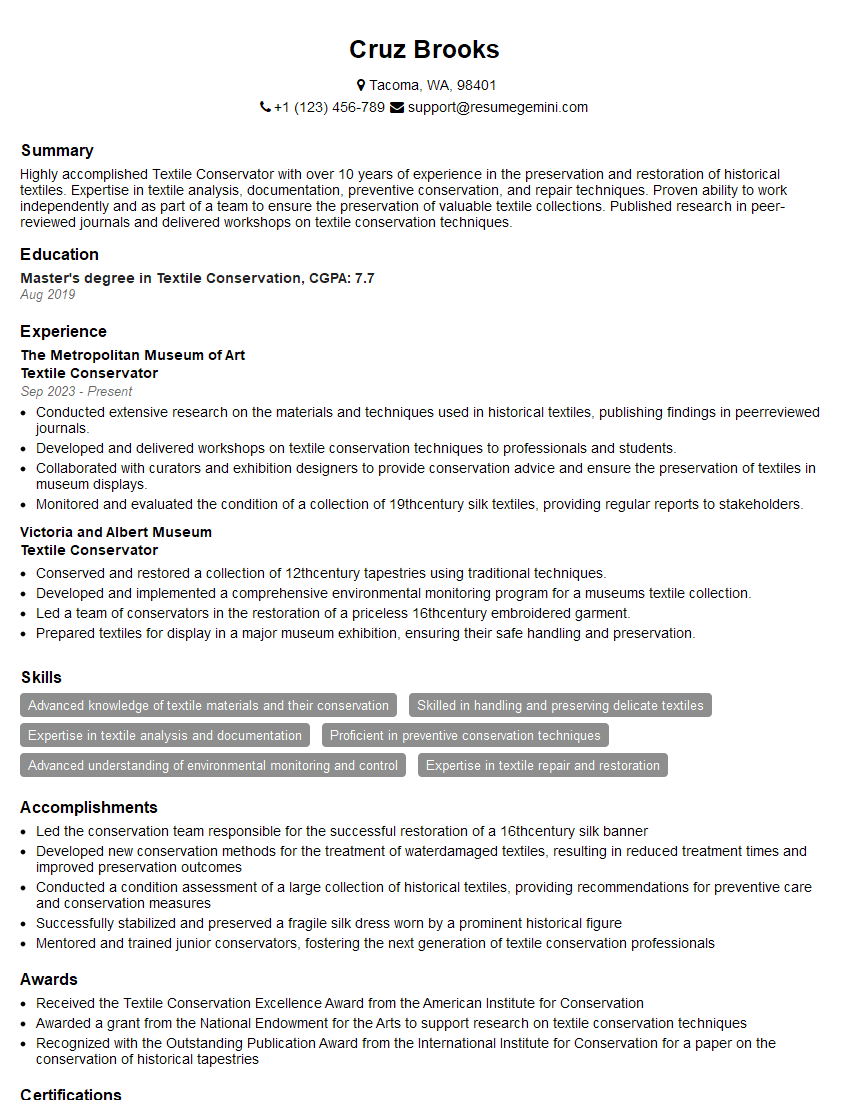
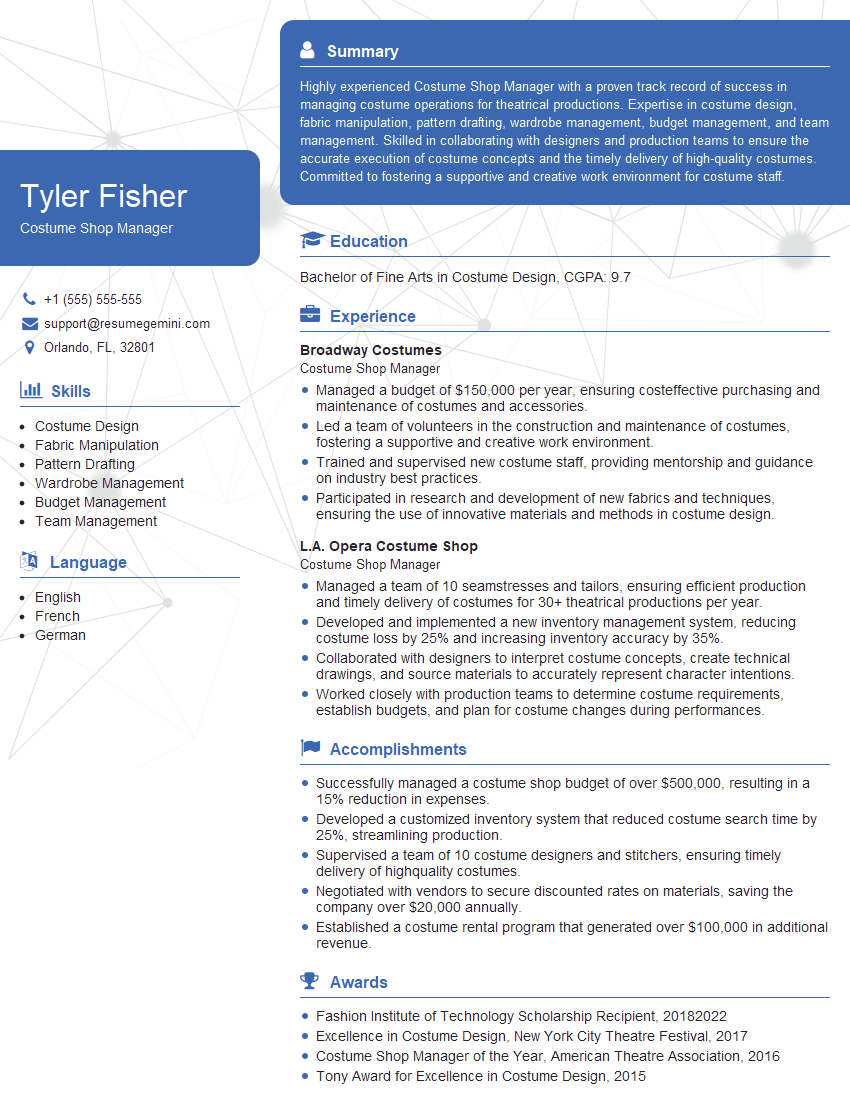
Mastering Costume Maintenance and Preservation opens doors to exciting career opportunities in museums, theaters, film studios, and private collections. A strong resume is crucial for showcasing your skills and experience to potential employers. Creating an ATS-friendly resume increases your chances of getting noticed by applicant tracking systems. We highly recommend using ResumeGemini to build a professional and effective resume that highlights your expertise. ResumeGemini provides examples of resumes tailored specifically to Costume Maintenance and Preservation professionals, ensuring your application stands out.

Explore more articles
Users Rating of Our Blogs
Share Your Experience
We value your feedback! Please rate our content and share your thoughts (optional).
What Readers Say About Our Blog
I Redesigned Spongebob Squarepants and his main characters of my artwork.
https://www.deviantart.com/reimaginesponge/art/Redesigned-Spongebob-characters-1223583608
IT gave me an insight and words to use and be able to think of examples
Hi, I’m Jay, we have a few potential clients that are interested in your services, thought you might be a good fit. I’d love to talk about the details, when do you have time to talk?
Best,
Jay
Founder | CEO