Every successful interview starts with knowing what to expect. In this blog, we’ll take you through the top Curriculum Planning and Implementation interview questions, breaking them down with expert tips to help you deliver impactful answers. Step into your next interview fully prepared and ready to succeed.
Questions Asked in Curriculum Planning and Implementation Interview
Q 1. Explain your experience with curriculum mapping.
Curriculum mapping is a visual representation of the curriculum, showing the connections between different learning objectives, topics, and assessments. Think of it as a roadmap for teaching and learning. It ensures coherence and avoids redundancy. In my experience, I’ve used various mapping techniques, including backward mapping (starting with assessments and working backward to learning objectives) and scope and sequence charts (showing the order of topics over time). For example, in a high school English curriculum, I mapped the thematic units (e.g., identity, power, justice) across different grade levels, ensuring a progression of skills and knowledge. I also used color-coding to show which assessment tools (e.g., essays, presentations, quizzes) aligned with specific learning objectives within each unit. This visual representation facilitated both planning and monitoring progress, making it easier to identify gaps or overlaps.
Q 2. Describe your process for aligning curriculum with learning objectives.
Aligning curriculum with learning objectives is crucial for effective teaching and student success. My process begins with clearly defining measurable learning objectives using verbs that describe observable student actions (e.g., analyze, evaluate, synthesize). I then break down these objectives into smaller, manageable learning outcomes. These outcomes directly inform the selection of content, teaching strategies, and assessment methods. For example, if the learning objective is ‘Students will be able to analyze the impact of social media on adolescent mental health,’ I would design learning activities that involve critical thinking and analysis of research articles, case studies, and discussions. Assessments would then directly measure students’ ability to analyze, not just recall information. This alignment is regularly reviewed and refined throughout the implementation process to ensure student mastery.
Q 3. How do you ensure curriculum is relevant and engaging for diverse learners?
Creating a relevant and engaging curriculum for diverse learners requires a multifaceted approach. First, I incorporate multiple learning styles and modalities. This involves offering a variety of activities, such as hands-on projects, group work, individual assignments, technology-based learning, and visual aids. Second, I differentiate instruction by providing varied levels of support and challenge based on individual student needs. This can involve tiered assignments, flexible grouping, and individualized learning plans. Third, I actively incorporate culturally relevant pedagogy, ensuring that the curriculum reflects the diverse backgrounds and experiences of my students. For instance, in a history class, I would incorporate diverse perspectives and voices, challenging traditional narratives. I would also offer opportunities for students to share their own cultural experiences and perspectives. Regular feedback from students and ongoing curriculum adjustments are essential components of this process.
Q 4. What are your preferred methods for assessing student learning outcomes?
My preferred methods for assessing student learning outcomes are multifaceted and aligned with the learning objectives. I use a combination of formative and summative assessments. Formative assessments, like quizzes, class discussions, and exit tickets, provide ongoing feedback during the learning process. These allow me to adjust instruction based on student understanding. Summative assessments, like tests, projects, and presentations, measure student mastery at the end of a unit or course. For example, instead of solely relying on multiple-choice tests, I might use performance-based assessments (e.g., debates, presentations) to evaluate higher-order thinking skills. I also employ rubric-based grading to provide clear expectations and consistent evaluation. Using a variety of assessment methods provides a holistic picture of student learning and avoids relying on a single, potentially limited, measure.
Q 5. How do you incorporate technology effectively into curriculum design?
Effective technology integration is not about simply adding technology for technology’s sake, but rather using it to enhance learning. I strategically incorporate technology to support specific learning goals. This might involve using interactive simulations to make abstract concepts more concrete, employing online collaboration tools for group projects, or leveraging educational apps to provide individualized practice. For instance, in a science class, I might use virtual labs to allow students to conduct experiments that would be impractical or unsafe in a traditional setting. Or in a language arts class, I would use online platforms for collaborative writing and peer feedback. However, I prioritize thoughtful selection and integration, ensuring technology is used purposefully and not just as a replacement for traditional methods. Access and digital literacy are also key considerations in the implementation of these tools.
Q 6. Describe your experience with curriculum revision and updating.
Curriculum revision and updating are ongoing processes to ensure relevance and effectiveness. I approach this by regularly reviewing student performance data, gathering feedback from students and teachers, and staying current with research and best practices in the field. This involves analyzing assessment data to identify areas where students struggle and areas of strength. Teacher feedback provides valuable insights into the practicality and effectiveness of specific lessons and activities. I also consult professional journals, attend conferences, and participate in professional development activities to remain informed about new pedagogical approaches and evolving content standards. These insights inform revisions and updates, ensuring the curriculum remains aligned with current standards and meets the needs of both students and educators. Data-driven decisions are fundamental to this process.
Q 7. Explain your approach to managing curriculum development projects.
Managing curriculum development projects requires a structured and collaborative approach. I begin by establishing clear goals and timelines, outlining specific tasks and responsibilities for each team member. Regular meetings are held to monitor progress, address challenges, and ensure everyone is aligned on the project’s direction. Effective communication is crucial, using various methods like email updates, shared documents, and regular feedback sessions. I use project management tools to track progress, manage resources, and ensure accountability. For example, I might utilize a shared online document to collaboratively create and revise lesson plans or use project management software to create timelines and task assignments. The collaborative aspect of curriculum development is key, and open communication ensures all voices are heard and considered in the process. A strong focus on quality assurance and iterative review is also essential.
Q 8. How do you collaborate with teachers during curriculum implementation?
Collaboration with teachers during curriculum implementation is crucial for success. It’s not a top-down process; it’s a partnership. I believe in fostering a collaborative environment where teachers feel valued and empowered. This involves several key strategies:
- Regular Meetings and Feedback Sessions: I schedule regular meetings to discuss the curriculum’s progress, address challenges, and gather feedback. These sessions are designed to be open forums where teachers can share their experiences, concerns, and suggestions. For example, we might use a structured feedback form to gather quantitative and qualitative data on lesson effectiveness.
- Co-Planning and Lesson Study: I actively participate in co-planning sessions with teachers, where we collaboratively design lessons and activities aligned with the curriculum goals. Lesson study, where teachers observe each other’s teaching, analyze the results, and refine their approaches, is another powerful tool for collaborative improvement.
- Professional Development Opportunities: I provide ongoing professional development focused on the new curriculum, addressing specific pedagogical approaches and subject matter expertise. This might involve workshops, mentoring programs, or access to online resources tailored to the curriculum’s needs.
- Open Communication Channels: I establish clear and accessible communication channels, ensuring teachers can easily reach me with questions or concerns. This could be through email, instant messaging, or regular informal check-ins.
Ultimately, the goal is to build a shared understanding and commitment to the curriculum, ensuring teachers feel supported and equipped to effectively implement it in their classrooms.
Q 9. How do you handle resistance to curriculum changes?
Resistance to curriculum change is common, often stemming from concerns about workload, unfamiliar approaches, or perceived threats to established teaching practices. Addressing this requires empathy, understanding, and a proactive approach. My strategy involves:
- Addressing Concerns Directly: I start by actively listening to teachers’ concerns and acknowledging their validity. Openly addressing anxieties about increased workload or perceived difficulties in implementing the changes helps build trust.
- Providing Extensive Training and Support: Offering thorough training on the new curriculum, along with ongoing support and mentoring, significantly reduces resistance. This might involve modeling effective teaching strategies, providing practical examples, and offering individualized assistance.
- Demonstrating the Benefits: I highlight the benefits of the new curriculum, focusing on improved student outcomes, enhanced teaching practices, and alignment with educational research. Showing concrete examples of successful implementations can be persuasive.
- Involving Teachers in the Process: When possible, I involve teachers in the curriculum development process, giving them a voice and ownership in the changes. This can significantly reduce resistance and foster a sense of shared responsibility.
- Phased Implementation: Introducing the new curriculum in phases, rather than all at once, allows teachers time to adjust and provides opportunities for feedback and refinement. This reduces the feeling of being overwhelmed.
By addressing concerns head-on, providing adequate support, and demonstrating the value of the changes, I strive to foster a positive and collaborative environment that overcomes resistance and ensures successful curriculum implementation.
Q 10. Describe your experience with formative and summative assessment.
Formative and summative assessments are crucial components of effective curriculum implementation. Formative assessment informs teaching and learning during the instructional process, while summative assessment evaluates learning at the end of a unit or course.
- Formative Assessment: My experience includes using a variety of formative assessment techniques such as exit tickets, quick writes, informal questioning, observations during group work, and student self-assessments. For example, I might use exit tickets to gauge student understanding of a key concept before moving on to the next topic. This allows me to adjust instruction based on real-time feedback.
- Summative Assessment: Summative assessments provide a comprehensive evaluation of student learning at the end of a unit, term, or course. This could involve traditional methods like exams and projects, but also performance-based tasks or portfolios that demonstrate a deeper understanding. For example, a summative assessment for a history unit might be a research paper or a presentation on a historical event.
The data from both types of assessments are vital for informing instructional decisions and evaluating the overall effectiveness of the curriculum. They allow for continuous improvement and ensure the curriculum meets its intended goals.
Q 11. How do you ensure alignment between curriculum, instruction, and assessment?
Alignment between curriculum, instruction, and assessment is essential for effective teaching and learning. It ensures that what is taught, how it is taught, and how it is assessed are all interconnected and mutually reinforcing.
I achieve this alignment by:
- Clearly Defined Learning Objectives: Starting with clearly defined, measurable learning objectives that are directly linked to the curriculum standards. These objectives form the foundation for all subsequent planning.
- Instructional Strategies Aligned with Objectives: Selecting instructional strategies and activities that directly address the learning objectives. For example, if the objective is to analyze primary source documents, the instruction might involve activities that guide students through close reading and analysis.
- Assessment Tasks Reflecting Objectives: Developing assessment tasks that directly measure student achievement of the learning objectives. The assessment should accurately reflect what students were expected to learn.
- Regular Review and Revision: Continuously reviewing and revising the curriculum, instruction, and assessment to ensure ongoing alignment and effectiveness. This is an iterative process based on student performance data and teacher feedback.
By ensuring this alignment, I create a cohesive and efficient learning environment where students are actively engaged and achieving the intended learning outcomes.
Q 12. What are your strategies for supporting teachers in implementing new curricula?
Supporting teachers in implementing new curricula requires a multi-faceted approach that combines training, resources, and ongoing support. My strategies include:
- Comprehensive Professional Development: Providing extensive, high-quality professional development on the new curriculum, focusing on pedagogical approaches, content knowledge, and assessment strategies. This might involve workshops, online modules, or coaching sessions.
- Mentoring and Coaching: Pairing experienced teachers with those new to the curriculum to provide individualized support and guidance. Mentors can offer practical advice, model effective teaching strategies, and provide feedback.
- Collaborative Planning: Facilitating collaborative planning sessions where teachers can share ideas, brainstorm strategies, and develop lesson plans together. This promotes a sense of shared responsibility and ownership.
- Access to Resources: Providing teachers with access to a variety of resources, including lesson plans, assessments, technology tools, and relevant research. A well-organized online platform is invaluable here.
- Ongoing Feedback and Support: Offering ongoing feedback and support through classroom observations, informal check-ins, and regular meetings. This ensures teachers feel supported throughout the implementation process.
The key is to create a supportive environment where teachers feel empowered to implement the new curriculum effectively and confidently.
Q 13. How do you stay current with best practices in curriculum design and implementation?
Staying current with best practices in curriculum design and implementation is an ongoing process. I utilize several strategies:
- Professional Organizations: Actively participating in professional organizations like the Association for Supervision and Curriculum Development (ASCD) to access resources, attend conferences, and network with other educators.
- Educational Research: Regularly reviewing educational research journals and publications to stay informed about the latest findings and best practices in curriculum development and pedagogy.
- Online Resources and Webinars: Utilizing online resources, webinars, and professional development courses to access information and training on emerging trends in curriculum design and technology integration.
- Collaboration with Colleagues: Engaging in discussions and collaborations with colleagues to share ideas, best practices, and lessons learned.
- Reflection and Self-Assessment: Regularly reflecting on my own practice and seeking feedback to identify areas for improvement and stay abreast of new trends.
This ongoing professional development ensures my practices remain current, relevant, and effective.
Q 14. Explain your experience with developing online or blended learning curricula.
My experience with developing online and blended learning curricula involves a deep understanding of the unique challenges and opportunities presented by these formats. I focus on creating engaging, interactive, and effective learning experiences that leverage the strengths of technology.
- Learning Management System (LMS) Selection: Careful selection of a suitable LMS (e.g., Canvas, Moodle, Blackboard) is crucial to facilitate communication, assessment, and resource sharing.
- Curriculum Design for Online Environments: Adapting the curriculum to suit the online environment, using interactive elements such as videos, simulations, and online discussions to maintain student engagement. Chunking content into manageable modules is also key.
- Assessment Strategies for Online Learning: Developing assessment strategies that are suitable for the online environment, such as online quizzes, projects, and peer assessments, ensuring academic integrity.
- Technology Integration: Selecting appropriate technology tools to enhance learning and collaboration, such as collaboration tools and educational apps.
- Blended Learning Models: Designing blended learning models that effectively combine online and face-to-face instruction to cater to different learning styles and maximize learning outcomes. This might involve using online learning modules to supplement in-class activities.
For example, in a recent project, we developed a blended learning course on environmental science, combining online modules with field trips and hands-on laboratory activities. The success of this course demonstrated the potential for blended learning to create rich and engaging learning experiences.
Q 15. Describe your experience with using data to inform curriculum decisions.
Data-driven curriculum decisions are crucial for ensuring effectiveness and continuous improvement. My experience involves using various data sources, including student assessment results (formative and summative), attendance records, teacher feedback, and even student surveys to pinpoint areas of strength and weakness in the curriculum. For example, consistently low performance on a particular unit’s exam might indicate a need for revising the teaching methods, adding supplemental resources, or adjusting the pacing of instruction. I use data analysis tools and techniques, such as descriptive statistics and trend analysis, to interpret the data, looking for patterns and insights. This allows for targeted interventions and adjustments, improving the curriculum’s overall impact and aligning it more closely with student learning needs. I then use this data to inform changes, tracking the impact of those changes using subsequent data collection to ensure the effectiveness of adjustments made.
Career Expert Tips:
- Ace those interviews! Prepare effectively by reviewing the Top 50 Most Common Interview Questions on ResumeGemini.
- Navigate your job search with confidence! Explore a wide range of Career Tips on ResumeGemini. Learn about common challenges and recommendations to overcome them.
- Craft the perfect resume! Master the Art of Resume Writing with ResumeGemini’s guide. Showcase your unique qualifications and achievements effectively.
- Don’t miss out on holiday savings! Build your dream resume with ResumeGemini’s ATS optimized templates.
Q 16. How do you address gaps in student learning identified through assessment?
Addressing learning gaps requires a multi-faceted approach. First, I carefully analyze assessment data to identify the specific skills or concepts where students are struggling. This involves going beyond simply looking at overall scores to understand the root causes of the gaps. Once identified, I employ various strategies. These might include providing targeted remediation through small group instruction, one-on-one tutoring, or differentiated assignments tailored to address the specific areas of weakness. I also utilize formative assessment tools, such as exit tickets or quick quizzes, to frequently monitor student progress and adjust my instruction accordingly. Additionally, I incorporate technology such as adaptive learning platforms or personalized learning software to offer tailored support and practice opportunities to students needing extra help. For example, if students consistently struggle with a particular mathematical concept, I might introduce a gamified online platform that reinforces that concept in a fun and engaging way.
Q 17. What is your experience with differentiating instruction to meet diverse learning needs?
Differentiation is essential for creating a truly inclusive and effective learning environment. My approach involves considering various aspects of learner diversity, including learning styles, readiness levels, and interests. I use a variety of techniques to differentiate instruction. This includes varying the complexity of tasks, providing choices in assignments, offering different modes of instruction (visual, auditory, kinesthetic), and using flexible grouping strategies. For instance, in a science class, I might offer students a choice between designing a presentation, conducting an experiment, or creating a written report to showcase their understanding of a particular concept. For students needing extra support, I might provide graphic organizers or scaffolded instruction. For advanced learners, I might offer extension activities that challenge them to delve deeper into the topic. Regular monitoring of student progress and adjustments are key to successful differentiation.
Q 18. How do you use technology to enhance curriculum delivery and engagement?
Technology plays a vital role in enhancing curriculum delivery and student engagement. I use various technologies to create interactive lessons, including educational apps, simulations, and online resources. For example, interactive whiteboards facilitate collaborative learning and visual presentations. I also leverage learning management systems (LMS) to organize course materials, provide assignments, track student progress, and facilitate communication with students and parents. Virtual reality and augmented reality tools can create immersive learning experiences, making abstract concepts more tangible and relatable. Online collaboration tools encourage peer interaction and support. Choosing the right technology is crucial; it must be aligned with learning objectives and pedagogical approaches, and accessibility for all students needs to be considered.
Q 19. What is your experience with designing assessments that align with learning standards?
Assessment design is critical for accurately measuring student learning and informing instruction. My approach ensures alignment with learning standards by first carefully reviewing the standards themselves. I then create assessments that directly address the knowledge, skills, and understanding specified in those standards. This involves using a variety of assessment methods, such as multiple-choice questions, essays, projects, presentations, and performance tasks, to provide a comprehensive evaluation. The assessments should be fair, reliable, and valid. I use rubrics and scoring guides to ensure consistent and objective evaluation, and incorporate formative assessments throughout the learning process to provide feedback and adjust instruction as needed. This iterative process ensures assessments accurately reflect student understanding of the learning objectives and allow for effective adjustments to improve learning outcomes.
Q 20. Explain your process for developing curriculum resources and materials.
Developing curriculum resources and materials is a systematic process that begins with a thorough analysis of learning objectives and standards. I then identify relevant learning resources, either creating them from scratch or curating existing materials from reliable sources. This process might involve using open educational resources (OER), adapting existing textbooks, or collaborating with colleagues to create new materials. When developing new resources, I prioritize clarity, engagement, and accessibility. I regularly revise and update materials based on student feedback and assessment data. I also consider using a variety of formats, such as videos, interactive simulations, and hands-on activities to cater to diverse learning styles and needs. This process ensures materials are up-to-date, relevant, and effective in supporting student learning.
Q 21. How do you ensure that your curriculum is accessible to all students?
Curriculum accessibility is paramount. My approach encompasses several strategies. First, I ensure all materials are available in multiple formats, catering to different learning styles and abilities. This includes providing text-to-speech software, visual aids, and alternative assessment options. I also utilize universal design for learning (UDL) principles, which aim to create flexible learning environments that meet the needs of all students. This involves providing multiple means of representation, action and expression, and engagement. Furthermore, I collaborate closely with special education staff and other support personnel to identify and address the specific needs of students with disabilities. Finally, regular review of materials and teaching practices to ensure they remain inclusive and accessible to all students is an ongoing process.
Q 22. Describe your experience with working with diverse stakeholders in curriculum development.
Collaborating with diverse stakeholders is crucial for successful curriculum development. It’s not just about teachers; it encompasses administrators, parents, community members, and even students themselves. In my experience, I’ve facilitated numerous curriculum development projects involving these groups. I begin by establishing a clear communication strategy. This involves regular meetings, surveys, focus groups, and the use of online platforms for feedback and collaboration. For example, during the development of a new STEM curriculum, we held community forums to gather input on relevant local industries and career pathways. This allowed us to ensure the curriculum was not only academically rigorous but also practically relevant to the students’ future opportunities. I also actively seek out diverse perspectives to ensure the curriculum is equitable and inclusive, catering to the needs of all learners.
Another key element is active listening and conflict resolution. Different stakeholders often have conflicting priorities. For example, teachers might prioritize pedagogical approaches, while administrators may focus on budget constraints and assessment methods. My role involves mediating these differences and finding common ground, emphasizing the overarching goal of student success. This often involves compromise and creative problem-solving. The result is a richer, more comprehensive, and ultimately more effective curriculum.
Q 23. How do you ensure that curriculum is aligned with state or national standards?
Aligning curriculum with state or national standards is paramount for ensuring accountability and consistency. This involves a thorough analysis of the standards documents. I typically begin by mapping the specific learning objectives, skills, and knowledge domains outlined in the standards. Then, I carefully design each learning activity, assessment, and instructional resource to directly address these elements.
For example, if the state standards emphasize critical thinking skills in history, the curriculum will incorporate primary source analysis, debates, and research projects to develop those specific skills. This isn’t just a checklist exercise; it requires a deep understanding of how the standards are intended to be implemented, going beyond simply covering the content to focusing on developing the competencies. I regularly utilize tools like curriculum mapping software to visually represent this alignment, and this helps ensure transparency and track progress effectively. This provides a clear, documented trail demonstrating the alignment to stakeholders and facilitating regular review and updates as standards evolve.
Q 24. What are your strategies for evaluating the effectiveness of a curriculum?
Evaluating curriculum effectiveness isn’t a one-size-fits-all approach. It requires a multi-faceted strategy employing both quantitative and qualitative data. This involves pre- and post-assessments to measure student learning gains, analyzing student performance on standardized tests, and reviewing teacher feedback on the effectiveness of the materials and instructional strategies.
Qualitative data gathering is equally important. This can include student surveys to assess their engagement and understanding, teacher interviews to gather insights on classroom implementation, and observations of classroom activities. For example, in a recent project, we used student focus groups to understand their perceptions of the learning experience. This revealed that while the curriculum effectively covered the content, the pacing was too fast for some students. This feedback was crucial in refining the curriculum’s implementation. The combination of quantitative and qualitative data provides a comprehensive picture of the curriculum’s strengths and weaknesses, guiding future revisions and improvements.
Q 25. Describe your experience with developing professional development for teachers.
Developing effective professional development for teachers is vital for successful curriculum implementation. My approach focuses on creating engaging and relevant programs tailored to the specific needs of the teachers. I always begin with a needs assessment, involving surveys and interviews to understand their existing knowledge, skills, and challenges. This informs the design of the professional development program, ensuring it addresses their specific needs rather than offering generic training.
I incorporate various strategies, including modeling effective instructional practices, collaborative planning sessions, and opportunities for teachers to share best practices with one another. For instance, I recently designed a professional development workshop on integrating technology into the classroom. The workshop included hands-on activities, allowing teachers to experiment with different tools and strategies within a supportive environment. Ongoing support and mentoring after the initial training is critical, fostering a sense of community and providing ongoing guidance. This collaborative approach ensures the professional development is not a one-time event but an ongoing process of support and improvement.
Q 26. How do you balance the needs of different stakeholders (e.g., teachers, students, administrators) in curriculum design?
Balancing the needs of diverse stakeholders requires a collaborative and iterative approach. It’s not about finding a single solution that satisfies everyone perfectly; it’s about finding a balance that serves the best interests of students while considering the practical constraints and perspectives of all involved parties. I use a participatory approach, ensuring all stakeholders have a voice in the process.
For example, when developing a new literacy curriculum, I held separate meetings with teachers, students, administrators, and parents to gather their input. I then synthesized this feedback, identifying areas of common ground and addressing concerns proactively. Transparent communication is crucial. Regular updates on the curriculum’s progress, coupled with opportunities for feedback and revisions, build trust and collaboration. The process should be viewed as a dynamic conversation, not a linear progression, allowing for adaptation and adjustment throughout the development process.
Q 27. What is your experience with using various instructional design models (ADDIE, SAM, etc.)?
I’m proficient in various instructional design models, including ADDIE (Analysis, Design, Development, Implementation, Evaluation) and SAM (Successive Approximation Model). The choice of model depends on the specific project and its complexity. ADDIE is a very structured approach, well-suited for large-scale curriculum projects requiring a systematic and detailed process. It lends itself to larger, more complex projects with clearly defined scopes. SAM, on the other hand, is a more iterative and flexible approach that allows for adjustments based on feedback throughout the development process. This is particularly useful for smaller projects or when dealing with evolving needs or emerging technologies.
In practice, I often combine elements from different models, adapting them to the specific context. For example, I might use the analysis phase of ADDIE to thoroughly assess the needs and context, then use the iterative cycles of SAM to refine and improve the curriculum based on ongoing feedback. This flexible approach allows for creating high-quality curriculum that effectively meets its intended goals.
Q 28. How do you manage time effectively while planning and implementing a curriculum?
Effective time management is critical in curriculum planning and implementation. I use a variety of strategies to stay organized and on track. I begin by establishing a clear timeline with realistic milestones. This involves breaking down the project into smaller, manageable tasks and assigning deadlines to each. I use project management tools (like Gantt charts or project management software) to visualize the timeline and track progress.
Prioritization is essential. I focus on the most critical tasks first and delegate tasks when possible. Regular review and adjustment of the timeline are also necessary, accommodating unforeseen challenges or changes in priorities. Effective communication is vital for keeping everyone informed of progress and addressing any potential delays proactively. For example, weekly team meetings are crucial for progress updates, addressing roadblocks, and maintaining team cohesion, ensuring everyone is working efficiently towards shared goals.
Key Topics to Learn for Curriculum Planning and Implementation Interview
- Curriculum Design Principles: Understanding various curriculum models (e.g., backward design, thematic units), learning theories (e.g., constructivism, behaviorism), and aligning curriculum with standards and assessments.
- Needs Assessment and Analysis: Conducting thorough needs assessments to identify learner needs and gaps, analyzing data to inform curriculum decisions, and using assessment results to drive instructional improvement.
- Instructional Strategies and Methods: Selecting and implementing appropriate teaching strategies based on learning objectives and learner characteristics; incorporating diverse learning styles and technologies into lesson plans.
- Assessment and Evaluation: Designing valid and reliable assessments (formative and summative), analyzing assessment data to inform instruction, and using data to track student progress and make adjustments to curriculum and teaching practices.
- Technology Integration: Effectively integrating technology to enhance teaching and learning; utilizing educational technology to support diverse learners and improve student engagement.
- Collaboration and Communication: Working effectively with colleagues, administrators, and stakeholders; communicating curriculum plans and progress clearly and professionally.
- Curriculum Mapping and Sequencing: Creating a coherent and logical sequence of learning experiences across grade levels or units; ensuring alignment between curriculum, instruction, and assessment.
- Differentiated Instruction: Adapting instruction to meet the diverse needs of all learners; providing appropriate support and challenges for students at varying levels of ability.
- Problem-Solving in Curriculum Implementation: Identifying and addressing challenges related to curriculum implementation, such as resource constraints, resistance to change, or unexpected learning outcomes.
Next Steps
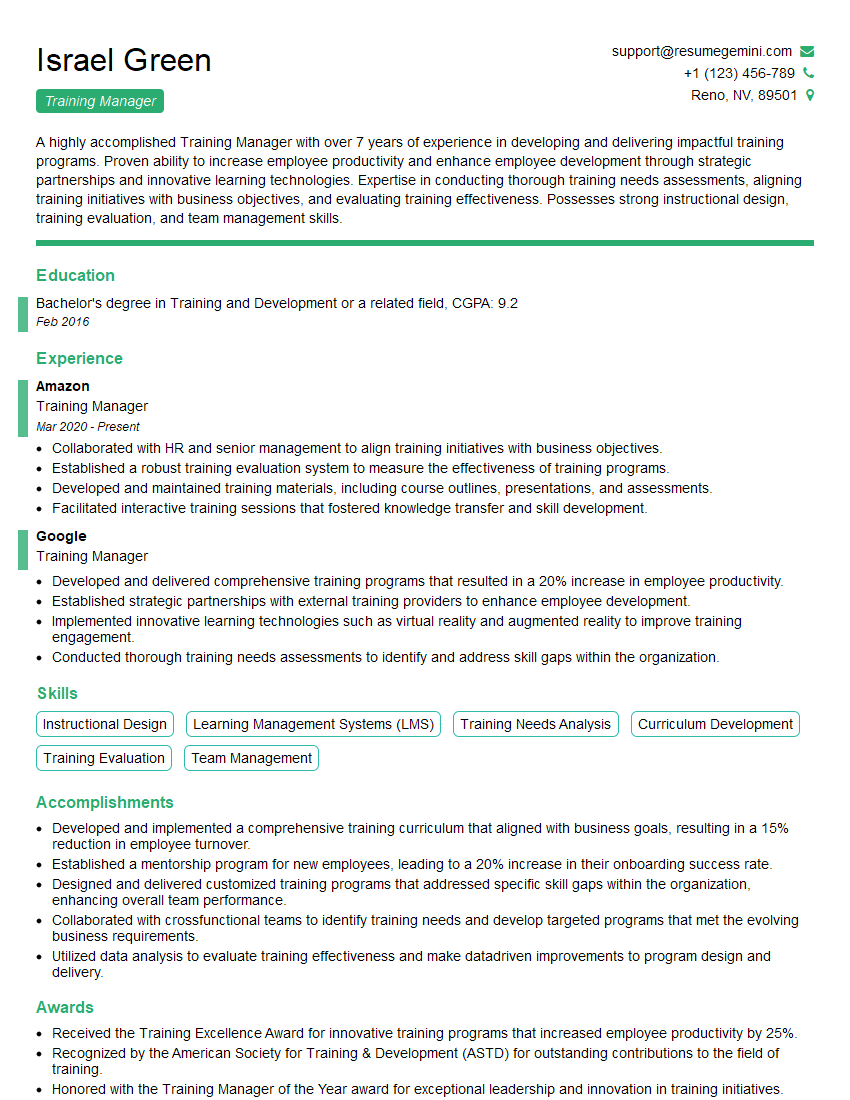
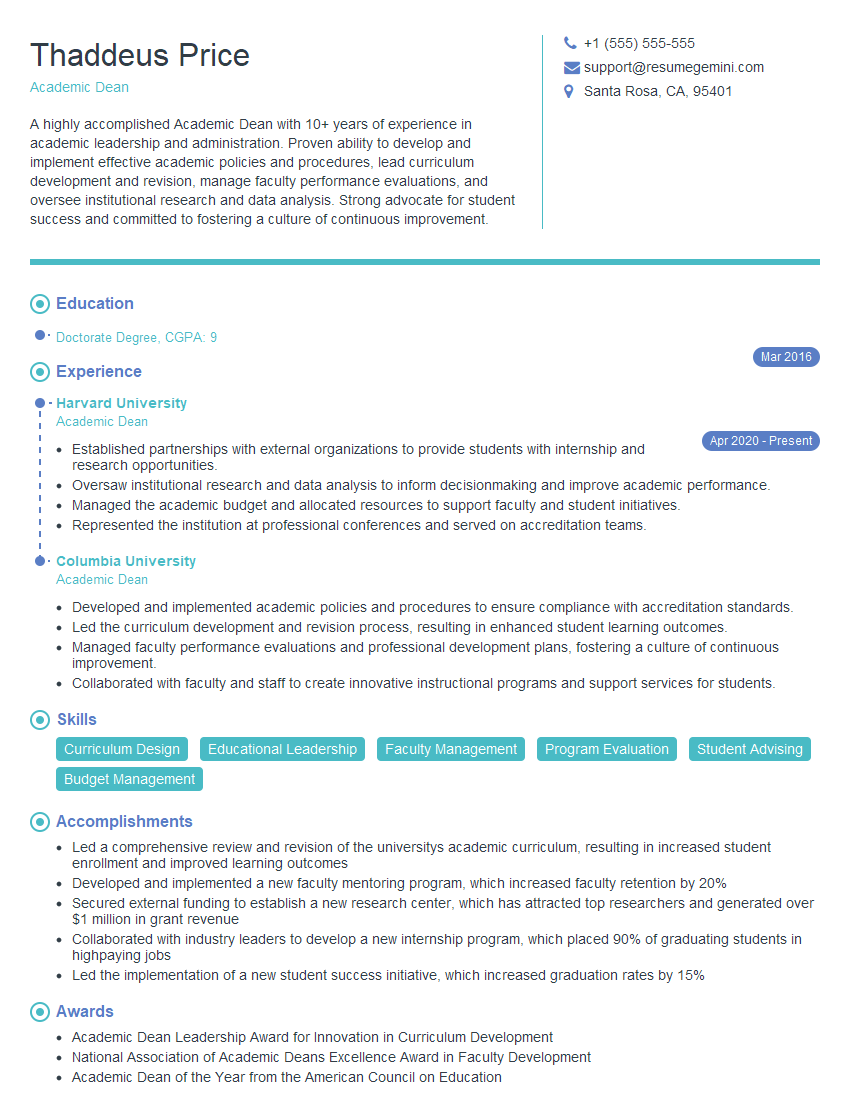
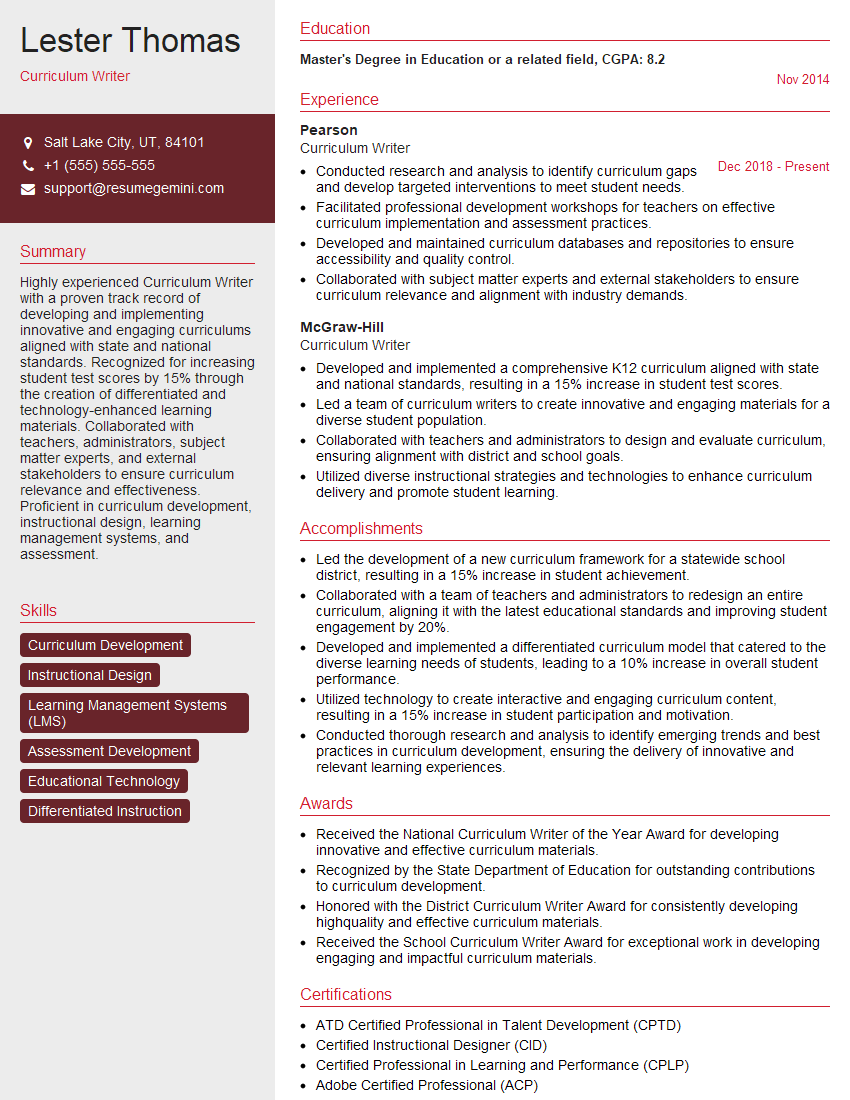
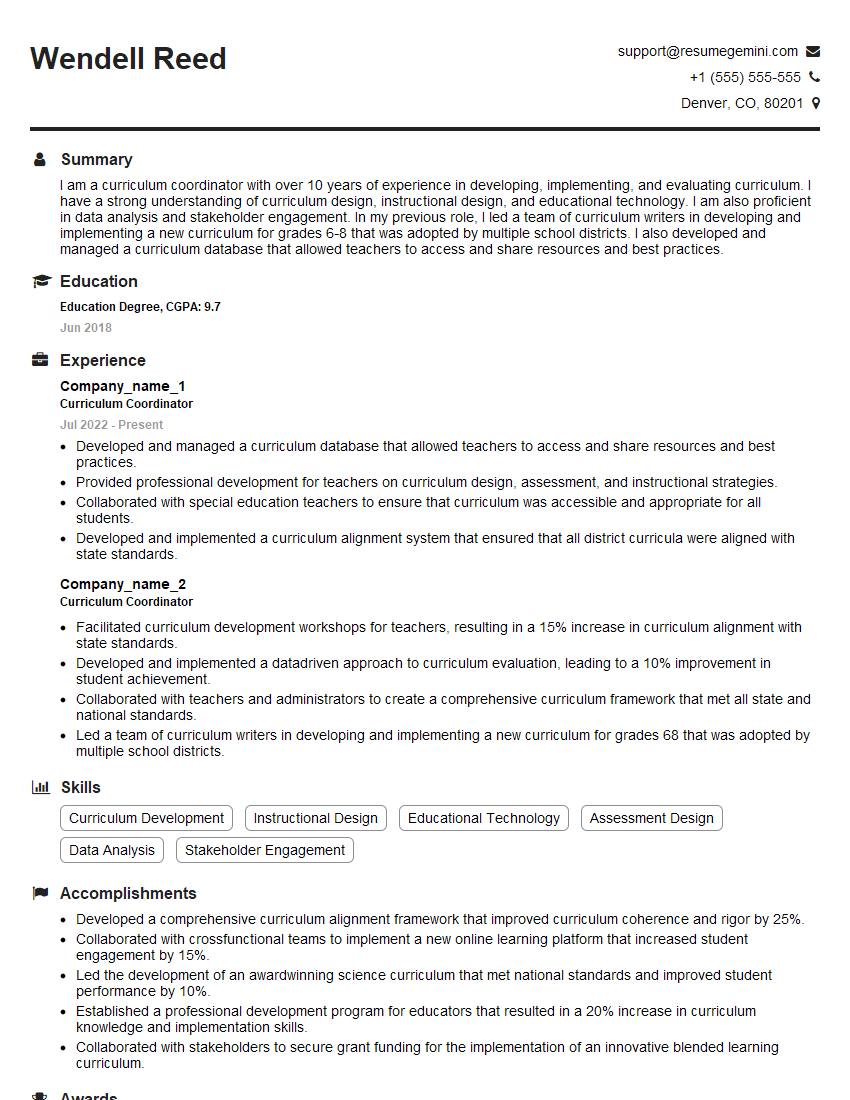
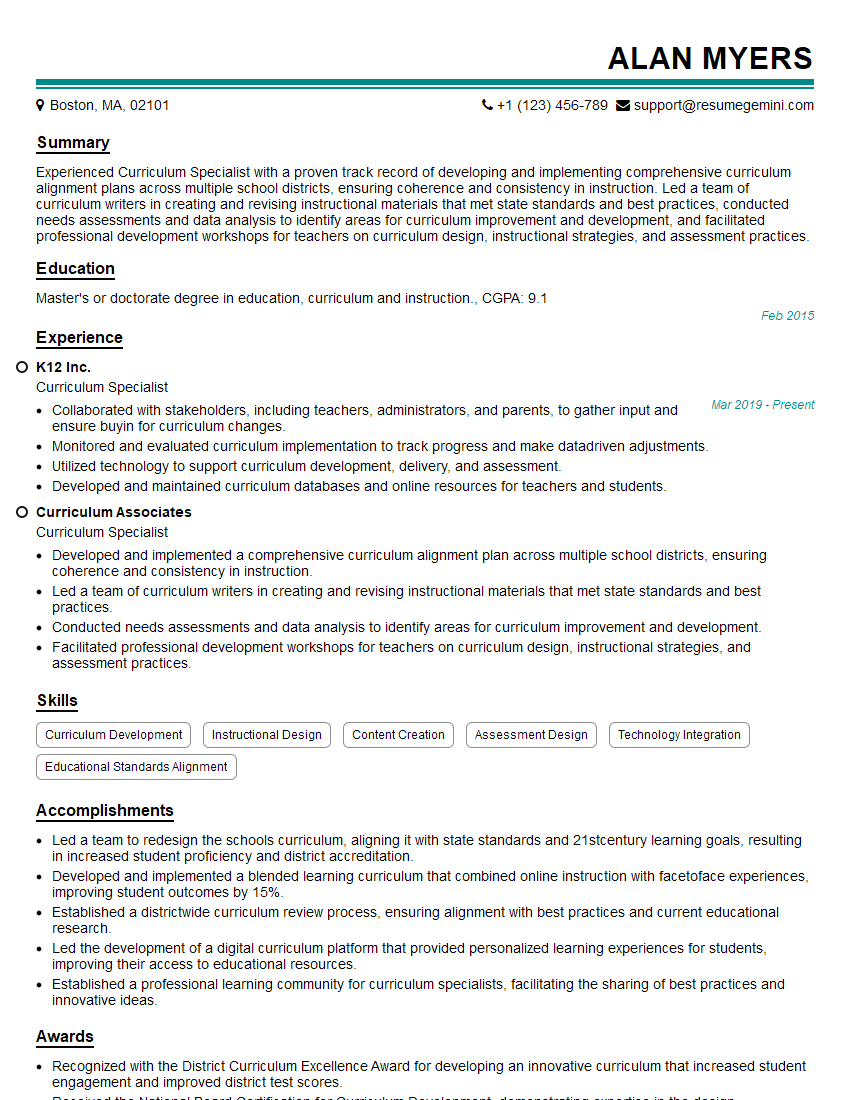
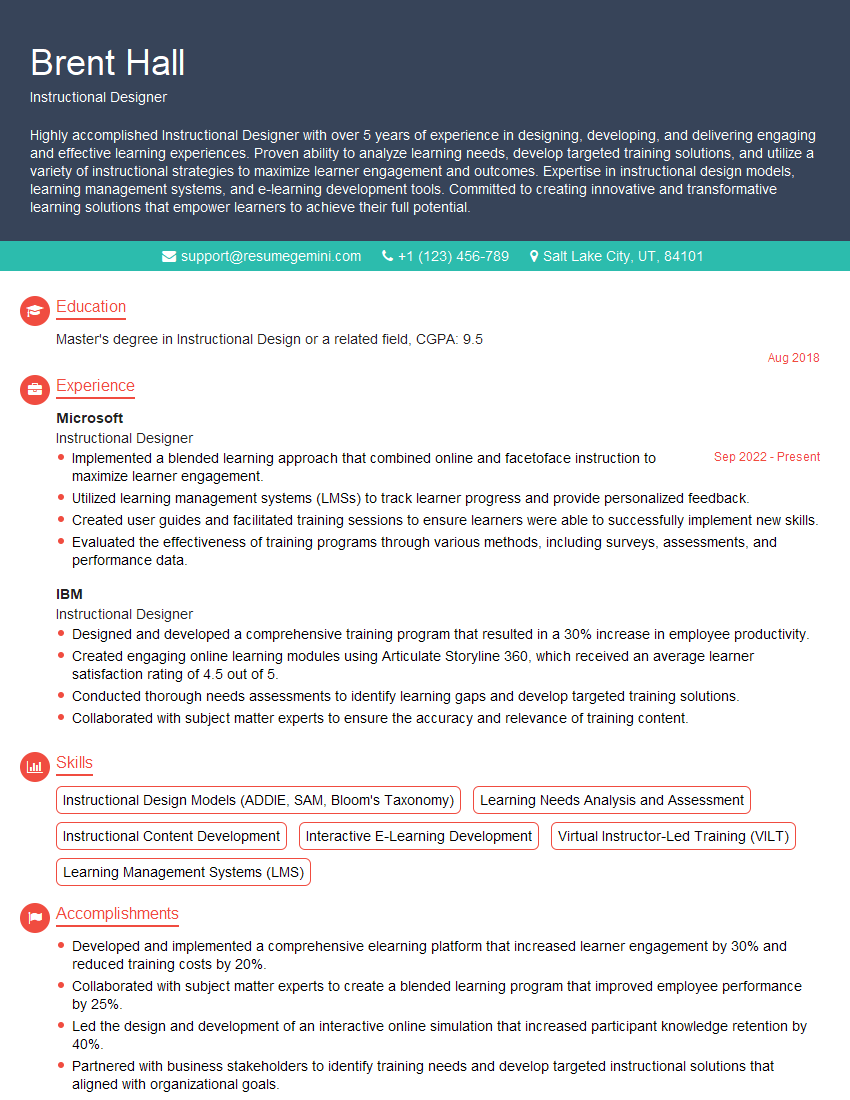
Mastering Curriculum Planning and Implementation is crucial for career advancement in education. A strong understanding of these principles demonstrates your commitment to effective teaching and student success, opening doors to leadership roles and greater impact. To maximize your job prospects, it’s essential to create a resume that highlights your skills and experience effectively – an ATS-friendly resume is key. ResumeGemini is a trusted resource for building professional resumes that catch the eye of recruiters. They offer examples of resumes tailored to Curriculum Planning and Implementation to help you showcase your unique qualifications. Invest in crafting a compelling resume to present yourself confidently to potential employers.

Explore more articles
Users Rating of Our Blogs
Share Your Experience
We value your feedback! Please rate our content and share your thoughts (optional).
What Readers Say About Our Blog
I Redesigned Spongebob Squarepants and his main characters of my artwork.
https://www.deviantart.com/reimaginesponge/art/Redesigned-Spongebob-characters-1223583608
IT gave me an insight and words to use and be able to think of examples
Hi, I’m Jay, we have a few potential clients that are interested in your services, thought you might be a good fit. I’d love to talk about the details, when do you have time to talk?
Best,
Jay
Founder | CEO