Feeling uncertain about what to expect in your upcoming interview? We’ve got you covered! This blog highlights the most important Cutting and Machining interview questions and provides actionable advice to help you stand out as the ideal candidate. Let’s pave the way for your success.
Questions Asked in Cutting and Machining Interview
Q 1. Explain the difference between subtractive and additive manufacturing.
Subtractive and additive manufacturing represent fundamentally different approaches to creating parts. Think of sculpting versus 3D printing. Subtractive manufacturing, which encompasses machining, starts with a larger block of material and removes material to achieve the desired shape. This is like carving a statue from a block of marble. Examples include milling, turning, and drilling. Additive manufacturing, on the other hand, builds the part layer by layer from a digital design. It’s like constructing a building brick by brick. Examples include 3D printing (FDM, SLA, SLS), and selective laser melting. The key difference lies in the material removal vs. material addition process.
Q 2. Describe your experience with various cutting tools (e.g., end mills, drills, reamers).
My experience spans a wide range of cutting tools. I’ve extensively used end mills for various milling operations, from roughing to finishing, selecting different geometries (ball nose, square, etc.) based on the required surface finish and application. For creating holes, drills are my go-to, with expertise in selecting drill bit sizes and types (twist drills, step drills) appropriate for the material and required precision. I’m also proficient with reamers for achieving highly accurate hole diameters and surface finishes, particularly in applications demanding tight tolerances. My experience also includes using specialized tools like counterbores, countersinks, and taps for specific tasks. I always consider tool material selection (high-speed steel, carbide, ceramic) based on the material being machined and the required tool life.
Q 3. What are the different types of cutting fluids and their applications?
Cutting fluids play a crucial role in machining, improving efficiency and extending tool life. They are broadly categorized into:
- Water-based fluids (emulsions): These are cost-effective and environmentally friendly, suitable for many materials but may not offer the same performance as oil-based fluids at high speeds or with difficult-to-machine materials.
- Oil-based fluids: Provide excellent lubrication and cooling, particularly beneficial when machining tough materials or at high speeds. However, they can be more expensive and pose environmental concerns.
- Synthetic fluids: Offer a balance between performance and environmental friendliness. They often exhibit good stability, lubricity, and cooling properties.
- Air: Used in dry machining, mainly for certain materials and operations, where it minimizes environmental issues, but may lead to increased tool wear.
The choice of cutting fluid depends heavily on factors like material being machined, cutting speed, desired surface finish, and environmental considerations. For example, I’d use a high-performance oil-based fluid for machining hardened steel, while a water-based emulsion might suffice for aluminum.
Q 4. How do you select the appropriate cutting speed and feed rate for a given material and tool?
Selecting appropriate cutting speed (V) and feed rate (f) is crucial for efficient and effective machining, maximizing productivity and minimizing tool wear. This involves considering the material being machined, the tool material, and the desired surface finish. Machinability data sheets provide guidelines, but experience is key. Generally, harder materials require lower cutting speeds and feed rates. A commonly used rule of thumb (though it’s material-specific) is to adjust speed and feed inversely; increasing one often requires decreasing the other to maintain the desired cutting conditions. For instance, increasing feed rate (more material removed per revolution) might necessitate decreasing cutting speed to prevent excessive tool wear and heat generation. Sophisticated CAM software calculates optimal cutting parameters based on tool geometry, material properties, and desired surface finish.
I often start with recommended values from the manufacturer, then fine-tune them based on real-time observations of chip formation, tool wear, and surface finish. This iterative process ensures optimal performance and minimizes process-related issues.
Q 5. Explain the concept of cutting forces and their impact on machining.
Cutting forces are the forces generated during the machining process. They include tangential force (cutting force), radial force, and axial force (thrust force). These forces impact machining in several ways:
- Tool wear: High cutting forces accelerate tool wear, reducing tool life and potentially damaging the tool.
- Surface finish: Excessive forces can cause surface irregularities, vibrations, and chatter marks.
- Machine rigidity: High forces may cause the machine to deflect, leading to inaccuracies and poor surface finish.
- Power consumption: Higher forces require more power, increasing energy consumption.
- Workpiece deformation: Excessive forces can deform or damage the workpiece.
Understanding and controlling cutting forces is critical. This is often done through proper tool selection, optimized cutting parameters, effective clamping, and rigid machine setup. For example, using a larger diameter end mill reduces the cutting force per unit width, thus mitigating some of the detrimental effects.
Q 6. What are the common causes of tool wear and how can they be mitigated?
Tool wear is inevitable in machining, but understanding its causes allows for mitigation. Common causes include:
- Abrasive wear: Hard particles in the workpiece material gradually erode the cutting edges.
- Adhesive wear: Material from the workpiece adheres to the tool, leading to its gradual removal.
- Diffusion wear: Atoms from the tool and workpiece intermix at high temperatures.
- Plastic deformation: The cutting edges deform due to high forces.
- Chemical wear: Reactions between tool and workpiece material cause degradation.
Mitigation strategies include using appropriate cutting fluids (for lubrication and cooling), optimizing cutting parameters, employing robust tool materials, using inserts with wear-resistant coatings (like TiN or TiAlN), and regularly monitoring tool condition and performing timely tool changes.
Q 7. How do you measure and control surface roughness?
Surface roughness is a crucial characteristic of a machined part, impacting its functionality and aesthetic appeal. It’s measured using profilometers or surface roughness measuring instruments that generate a surface profile. The most common parameter is Ra (average roughness), representing the average deviation of the surface profile from the mean line. Other parameters like Rz (ten-point height) and Rmax (maximum height) also provide information on surface roughness.
Controlling surface roughness involves optimizing cutting parameters (feed rate, cutting speed, depth of cut), selecting appropriate cutting tools and geometries, using appropriate cutting fluids, and maintaining a clean and well-maintained machine. For example, finer feed rates generally lead to smoother surfaces, but at the cost of reduced material removal rate. Post-machining processes like honing or polishing can be employed to achieve even finer surface finishes. Regular machine calibration and maintenance are essential for consistency in surface roughness.
Q 8. Describe your experience with different types of CNC machines (e.g., lathes, mills, routers).
My experience with CNC machines spans several years and encompasses a wide range of equipment, including lathes, mills, and routers. I’ve worked extensively with both 3-axis and 5-axis machines, mastering their unique capabilities and limitations. For instance, I’ve used CNC lathes to produce highly precise cylindrical parts, such as shafts and bushings, by rotating the workpiece while a cutting tool removes material. My experience with CNC mills involves creating complex 3D shapes and features through controlled movements of cutting tools along X, Y, and Z axes. I’m proficient in using various tooling, from end mills and drills to specialized cutters, to achieve the desired surface finish and dimensional accuracy. My work with CNC routers, on the other hand, focuses primarily on high-speed machining of larger components and softer materials, like wood and plastics, where speed and efficiency are prioritized.
I’m familiar with various control systems and programming languages used in CNC machining. I can comfortably operate machines from different manufacturers, adapting my approach to the specific features and capabilities of each machine. One project that stands out involved using a 5-axis mill to create a highly intricate mold for a custom automotive part; this project required precise programming and careful tool selection to achieve the required tolerances.
Q 9. Explain the G-code programming process.
G-code programming is the language used to communicate instructions to CNC machines. It’s a set of alphanumeric commands that define the toolpath, speed, feed rate, and other parameters needed for machining. The process begins with a CAD model of the part to be machined. This model is then imported into CAM software, which translates the 3D geometry into a series of G-code instructions. The CAM software allows for the selection of appropriate cutting tools, speeds, and feeds based on material properties and desired surface finish.
The G-code itself is composed of various blocks, each containing instructions like:
G00: Rapid positioning (non-cutting move)G01: Linear interpolation (cutting move)G02: Circular interpolation (clockwise)G03: Circular interpolation (counter-clockwise)X, Y, Z: Coordinates defining the tool positionF: Feed rateS: Spindle speed
After the G-code is generated, it’s transferred to the CNC machine’s controller, which interprets the commands and drives the machine’s axes to execute the desired toolpath. Careful consideration of toolpaths and cutting parameters is crucial to achieve both efficiency and surface finish. For example, using smaller stepovers can lead to improved surface quality, but it increases machining time. Thorough simulation within the CAM software helps to identify and correct potential collisions or other issues before the actual machining process begins.
Example: G00 X1.0 Y2.0 Z3.0 ; Rapid move to position
G01 X4.0 Y5.0 Z6.0 F100 ; Linear interpolation at 100 mm/min
Q 10. How do you troubleshoot common machining problems (e.g., chatter, tool breakage)?
Troubleshooting machining problems requires a systematic approach. Chatter, a common issue caused by unwanted vibrations, can be addressed by adjusting cutting parameters such as feed rate, spindle speed, and depth of cut. Experimentation within safe limits to find the optimal cutting parameters is key. Other solutions include improving work-holding techniques, increasing tool rigidity, and utilizing cutting fluids to reduce friction and dissipate heat. Tool breakage can result from excessive force, dull tools, improper clamping, or inadequate coolant flow. Preventative maintenance and regular tool inspection are crucial. If a tool breaks, analyze the cause. Was the material too hard? Was the tool worn out? Was the feed rate or depth of cut too aggressive?
Other problems and their solutions include:
- Poor surface finish: Check cutting parameters (feed rate, spindle speed), tool condition, and the presence of cutting fluid.
- Inaccurate dimensions: Verify tool calibration, workpiece setup, and the G-code program.
- Tool deflection: Use more rigid tools or reduce the depth of cut.
A systematic approach is always the best. I typically start by reviewing the G-code, machine settings, and the condition of both the tools and workpiece to identify potential causes and test solutions, starting with minor adjustments and progressing to larger changes as needed.
Q 11. Describe your experience with CAD/CAM software.
I have extensive experience with various CAD/CAM software packages, including Mastercam, Fusion 360, and SolidWorks CAM. My expertise extends beyond simply creating models and toolpaths. I understand the importance of selecting appropriate strategies for different machining operations, such as roughing and finishing, optimizing toolpaths for efficiency and surface quality, and incorporating features such as stock modeling to ensure accurate simulation of material removal. I frequently use these tools to generate G-code and to verify the accuracy of the toolpaths before machining. My experience with parametric modeling in CAD significantly improves the ability to create families of parts or change the geometry of a part efficiently without redoing the entire design or toolpath.
In a recent project involving the manufacture of a complex impeller, I leveraged Fusion 360 to create a highly efficient toolpath that reduced machining time by 20% while simultaneously enhancing surface finish. This involved careful consideration of tool selection, cutting strategies, and feed and speed adjustments based on the material and desired outcomes.
Q 12. How do you ensure the accuracy and precision of machined parts?
Ensuring accuracy and precision in machined parts requires attention to detail throughout the entire process. It starts with the design phase, where tolerances are carefully defined and consideration is given to the manufacturing process. This is where expertise in design for manufacturing (DFM) principles is critical. Accurate CAD modeling, followed by careful CAM programming, is essential. Proper selection of cutting tools, precise machine calibration, and regular maintenance all contribute to the accuracy and repeatability of the process. Consistent use of appropriate fixtures and workholding methods prevent any movement of the workpiece during machining. Regular inspection and quality checks, using tools like CMM (Coordinate Measuring Machine) or other inspection equipment, verify the final part meets the specified tolerances.
For example, during a project involving the manufacturing of precision medical components, the use of a CMM was essential to verify the dimensions and geometry of the finished parts. Any discrepancies were tracked back to the source—tool wear, incorrect programming, or machine calibration—and corrective action was implemented to prevent recurrence. Employing statistical process control (SPC) techniques helps identify and mitigate variations in the manufacturing process over time.
Q 13. Explain the importance of safety procedures in a machining environment.
Safety is paramount in a machining environment. Every step of the process, from planning to cleanup, requires adherence to strict safety protocols. This begins with appropriate personal protective equipment (PPE), including safety glasses, hearing protection, and appropriate clothing. Proper machine guarding prevents accidental contact with moving parts, and regular machine maintenance reduces the risk of malfunctions. Lockout/tagout procedures ensure machines are safely shut down before maintenance or repair. Safe handling and storage of cutting fluids, coolants, and other hazardous materials is essential. Regular training and awareness programs keep everyone informed about potential hazards and safe working practices. Furthermore, a clean and organized workspace prevents accidents caused by tripping or clutter. A thorough understanding of emergency procedures, including knowing the location of safety equipment, is crucial for every employee.
I’ve always emphasized safety in my work. In one instance, I noticed a colleague using a machine without the proper guards in place. I immediately stopped the work and explained the risks, reiterating the importance of adhering to safety protocols.
Q 14. What are your experience with different materials (e.g., steel, aluminum, plastics)?
My experience encompasses a wide variety of materials, including various steels (stainless steel, tool steel, mild steel), aluminum alloys, plastics (ABS, acrylic, nylon), and some experience with titanium and exotic alloys. Each material presents unique challenges requiring different machining strategies. Steel often requires stronger, more durable cutting tools and specialized coolants to manage heat generation. Aluminum, while easier to machine, can be prone to tearing if cutting parameters aren’t optimized. Plastics require different tools and speeds to avoid melting or excessive heat build-up. Working with titanium or exotic alloys demands a high level of precision and attention to detail. The selection of cutting tools, speeds, and feeds depends entirely on the specific material’s properties, including hardness, ductility, and thermal conductivity. For instance, using a wrong feed rate on hardened steel can lead to tool breakage, whereas improper speed on aluminum might lead to surface tearing.
I’ve found that knowledge of material properties and their effects on tool wear and chip formation is fundamental to optimizing the machining process. Understanding these relationships allows me to adapt the machine parameters appropriately and select the right tooling strategy, which saves time, improves efficiency and reduces waste.
Q 15. How do you interpret engineering drawings and specifications?
Interpreting engineering drawings and specifications is fundamental to successful machining. It’s like reading a recipe for a complex dish – you need to understand every instruction precisely to get the desired outcome. I begin by thoroughly reviewing the drawing, noting dimensions, tolerances, surface finishes, and material specifications. I look for details like datum features (reference points), which are crucial for accurate machining. Then, I cross-reference these details with the accompanying specifications, which often contain additional information about manufacturing processes, quality standards, and acceptance criteria. For example, a drawing might specify a particular type of surface finish, while the specifications might detail the acceptable range for surface roughness (Ra). I use my knowledge of geometric dimensioning and tolerancing (GD&T) to fully understand the allowable variations in the dimensions. I always clarify any ambiguities or uncertainties with the design engineer before commencing the work to prevent costly mistakes down the line.
For instance, I once encountered a drawing that specified a ‘chamfer’ without specifying the angle. By consulting the specifications and contacting the design engineer, I clarified the exact angle required, ensuring the finished part met the design intent.
Career Expert Tips:
- Ace those interviews! Prepare effectively by reviewing the Top 50 Most Common Interview Questions on ResumeGemini.
- Navigate your job search with confidence! Explore a wide range of Career Tips on ResumeGemini. Learn about common challenges and recommendations to overcome them.
- Craft the perfect resume! Master the Art of Resume Writing with ResumeGemini’s guide. Showcase your unique qualifications and achievements effectively.
- Don’t miss out on holiday savings! Build your dream resume with ResumeGemini’s ATS optimized templates.
Q 16. What is your experience with different types of machining processes (e.g., turning, milling, drilling)?
My experience encompasses a broad range of machining processes, including turning, milling, drilling, and grinding. Turning, for example, is like shaping clay on a pottery wheel; you use a rotating workpiece to remove material, creating cylindrical shapes. I’m proficient in various turning operations, such as facing, grooving, and threading. Milling is more like sculpting, where multiple cutting tools remove material from a stationary workpiece, creating complex shapes and features. I have extensive experience with different milling techniques, including face milling, end milling, and contour milling. Drilling is straightforward; it creates holes in the workpiece. I’m skilled in drilling various hole types and sizes, including blind holes and through holes. In addition, I have experience with grinding, which is a more precise finishing process used to achieve very fine surface finishes and tight tolerances.
Each process presents its own challenges and requires a different set of skills and tools. For instance, achieving a fine surface finish in milling requires selecting the right cutting tool, feed rate, and speed. I’ve honed my skills through experience, and I always adapt my technique to the specific material and desired outcome. For example, while working on a high-precision medical device component, I had to master using a specialized tooling and intricate milling strategies to achieve extremely tight tolerances and a high-quality surface finish.
Q 17. Describe your experience with setting up and operating CNC machines.
Setting up and operating CNC machines requires a blend of technical knowledge, precision, and attention to detail. It’s like conducting an orchestra – each element needs to be carefully coordinated for the machine to perform optimally. My process typically involves the following steps: first, I carefully review the CNC program (G-code) to ensure it aligns with the engineering drawings and specifications. Then, I mount the workpiece securely in the machine’s workholding device, ensuring it’s properly aligned. Next, I load the correct tooling according to the program, checking tool dimensions and sharpness. I then check the machine’s coolant system and lubrication before initiating a test run. This helps catch errors before a full run which protects the part and tools.
Throughout the operation, I carefully monitor the machine’s performance, observing for any unusual sounds, vibrations, or tool wear. I’m adept at troubleshooting minor issues and making adjustments to optimize the machining process. I have experience with both Fanuc and Siemens CNC controls, including both the programming and operation. Working on a recent project requiring intricate 3D milling, I optimized the tool paths and cutting parameters to minimize machining time while ensuring the desired precision and surface finish.
Q 18. Explain the concept of tolerance and its importance in machining.
Tolerance, in machining, refers to the permissible variation in a dimension or other characteristic of a part. Think of it as the acceptable range of error. It’s crucial because perfectly precise machining is almost impossible. Tolerances specify the acceptable upper and lower limits of a dimension. For example, a dimension specified as ’10 mm ± 0.1 mm’ means that the actual dimension can be anywhere between 9.9 mm and 10.1 mm. The importance of tolerances is that they ensure that the machined part will function correctly and meet the required specifications in its application.
Tight tolerances usually mean higher precision and higher cost, because they require more skilled labor and more advanced machining equipment. The selection of appropriate tolerances is a balance between the required functionality of the part, cost constraints and manufacturing capabilities. In my experience, I’ve had to work with both very tight tolerances (e.g., in aerospace applications) and more relaxed tolerances (e.g., in general manufacturing). Understanding the implications of various tolerances is vital for successful manufacturing.
Q 19. How do you perform quality control checks on machined parts?
Quality control checks are essential to ensure that machined parts meet the required specifications. My process involves multiple steps, starting with visual inspection to identify any obvious defects such as scratches, burrs, or cracks. Then, I perform dimensional measurements using precise instruments like calipers, micrometers, and height gauges to verify that dimensions are within the specified tolerances. I also use surface roughness testers to check the surface finish, ensuring it conforms to the specifications. For complex parts, coordinate measuring machines (CMMs) might be employed for complete 3D inspection. Furthermore, documentation is key: I meticulously record all measurements and inspection results.
In one instance, during a production run of a critical part, a CMM inspection revealed a slight deviation in a critical dimension. By identifying and analyzing the root cause (a slight misalignment in the machine setup), we were able to correct the issue and prevent further defects. Thorough quality control not only prevents costly rework but also enhances the overall reliability and safety of the manufactured products.
Q 20. What is your experience with measuring instruments (e.g., calipers, micrometers)?
I’m highly proficient in using various measuring instruments, including calipers, micrometers, dial indicators, and height gauges. Calipers are like rulers on steroids; they’re used for measuring external and internal dimensions with good precision. Micrometers offer even greater precision, allowing for measurements to the thousandth of an inch or millimeter. Dial indicators measure small changes in dimensions or surface flatness. Height gauges are used for accurate height measurements. The proper use of each tool is crucial for making accurate measurements. For example, using a micrometer correctly requires understanding how to apply proper force to avoid inducing measurement error.
My experience includes using these instruments to inspect machined parts, ensuring they meet the specified tolerances. I’m also familiar with using electronic measuring instruments, and I understand the principles of measurement uncertainty and how to minimize it. This includes proper calibration of the instruments and understanding the inherent limitations of each device.
Q 21. How do you maintain and care for machining tools and equipment?
Maintaining machining tools and equipment is crucial for safety, efficiency, and product quality. It’s like regularly servicing a car; preventive maintenance prevents costly breakdowns and ensures optimal performance. My routine involves regular cleaning of the machines, removing chips and debris to avoid damage to the machine and the tools. I also regularly inspect cutting tools for wear and tear and replace them when necessary. Sharp tools are essential for achieving the desired surface finish and maintaining dimensional accuracy. I pay close attention to the lubrication systems of the machines, ensuring proper lubrication to reduce friction and wear.
Beyond routine maintenance, I conduct periodic calibrations and inspections to ensure the accuracy of the machines. I’m also adept at troubleshooting minor mechanical issues and performing basic repairs. For major repairs, I work with specialized technicians to ensure timely resolution. By adhering to a strict maintenance schedule, I help ensure the longevity and optimal performance of our machining equipment, contributing significantly to reducing downtime and improving overall efficiency.
Q 22. Describe your experience with different types of clamping and workholding techniques.
Workholding is paramount in machining, ensuring the workpiece remains securely in place throughout the process. My experience spans various techniques, each chosen based on part geometry, material properties, and machining operation. I’m proficient with:
- Jaws: From simple soft jaws for quick setups to custom-machined hard jaws for precise repeatability and high-volume production. For instance, I once used custom hard jaws on a lathe to machine intricate threads on a large batch of titanium components, ensuring consistent accuracy and minimizing setup time.
- Clamps: I routinely utilize various types, including toggle clamps, quick-release clamps, and hydraulic clamps for securing workpieces of different sizes and shapes. The choice depends on the required clamping force and accessibility.
- Vacuum Chucks: These are essential for thin or delicate parts, offering even clamping pressure across the surface and preventing distortion. I’ve effectively used vacuum chucks for machining large, thin sheet metal parts, ensuring flatness and preventing vibrations.
- Fixtures: For complex parts requiring multiple setups or specific orientations, I design and utilize custom fixtures. This often involves multiple clamping points and locating pins to ensure repeatable accuracy and prevent workpiece movement. A recent project involved creating a complex fixture for milling an intricate aerospace component with numerous features, needing precise alignment in multiple steps.
- Magnetic Chucks: Ideal for ferrous materials, offering a quick and efficient workholding solution. Their use is highly beneficial for surface grinding and other operations on flat workpieces. I’ve frequently employed these for efficient grinding of steel plates.
Selecting the appropriate workholding method is crucial for preventing part damage, ensuring accuracy, and optimizing machining time. Understanding the limitations of each technique and choosing the right one is a critical skill I’ve honed over years of experience.
Q 23. What are the advantages and disadvantages of different machining processes?
Different machining processes each possess unique strengths and weaknesses. The optimal choice depends on factors like material, part geometry, desired surface finish, and production volume.
- Milling: Advantages: High material removal rate, versatile for various shapes, good surface finish achievable. Disadvantages: Can generate significant vibration, requires skilled operator for complex parts, potentially higher tooling costs.
- Turning: Advantages: High material removal rate for cylindrical parts, accurate dimensional control, efficient for high-volume production. Disadvantages: Limited to rotational parts, can be challenging for complex profiles.
- Drilling: Advantages: Simple and efficient for creating holes, relatively low cost. Disadvantages: Can cause burrs, limited in creating complex shapes.
- Grinding: Advantages: Extremely high precision, excellent surface finish, can machine hard materials. Disadvantages: Slower material removal rate, requires specialized equipment and expertise.
- EDM (Electrical Discharge Machining): Advantages: Can machine almost any material, regardless of hardness, high accuracy. Disadvantages: Slow machining process, requires specialized equipment and expertise, can create surface damage if not carefully controlled.
For example, while milling is excellent for complex shapes, turning is more efficient for producing shafts. The choice often involves balancing the trade-offs between speed, accuracy, and cost.
Q 24. Explain the process of creating a CNC program from a CAD model.
Generating a CNC program from a CAD model involves several key steps. The process leverages CAM (Computer-Aided Manufacturing) software.
- Import CAD Model: The CAD model (typically in STEP, IGES, or native CAD formats) is imported into the CAM software.
- Define Workpiece and Stock Material: The software needs information about the raw material dimensions and properties to accurately simulate machining.
- Select Machining Operations: The user defines the machining strategy – milling, turning, drilling, etc. – and selects appropriate cutting tools.
- Define Toolpaths: This is the core of CAM programming. The user defines the path the cutting tools will follow to create the desired part geometry. This involves parameters like feed rate, spindle speed, depth of cut, and stepover.
- Simulate Machining: Before generating the CNC code, a simulation verifies the toolpaths to identify potential collisions or issues.
- Generate CNC Code (G-Code): Once the simulation is satisfactory, the CAM software generates the CNC code (G-code), a set of instructions for the CNC machine.
- Post-processing: The generated G-code may require post-processing to ensure it’s compatible with the specific CNC machine’s controller.
Example G-Code snippet (Illustrative): G01 X10.0 Y20.0 F100 ; Linear interpolation
This process requires a good understanding of both CAD and CAM software, as well as machining principles to ensure efficient and error-free code generation. Mistakes in this stage can lead to tool breakage, part damage, and production delays.
Q 25. How do you handle unexpected issues during the machining process?
Unexpected issues are inevitable in machining. My approach involves a systematic process:
- Identify the Problem: Carefully observe the issue, noting any unusual sounds, vibrations, or tool behavior.
- Analyze the Cause: Determine the root cause. This could range from dull tools, improper setup, workholding issues, or programming errors. I often use diagnostic tools and machine logs to help with this.
- Implement Corrective Action: Depending on the cause, the solution could be as simple as changing a tool or as complex as reprogramming the CNC machine. Sometimes a quick adjustment to the workholding is sufficient.
- Document and Prevent Recurrence: Once resolved, I thoroughly document the issue and the corrective actions taken. This helps to prevent similar problems from occurring in the future. This includes updates to procedures or preventative maintenance schedules.
For example, once I encountered unexpected chatter during a milling operation. Through analysis, I determined the cause was excessive feed rate and insufficient coolant. Adjusting both parameters quickly resolved the issue. I documented this incident to prevent a recurrence in the future by adding specific check-points to the operation’s setup procedures.
Q 26. Describe your experience with different types of machine setups.
My experience encompasses diverse machine setups, catering to various part geometries and production requirements.
- Lathe Setup: This involves mounting the workpiece securely in a chuck or between centers, setting up the tooling, and programming or manually controlling the machine for turning, facing, drilling, or threading operations. I’m skilled in setting up both engine lathes and CNC lathes.
- Milling Machine Setup: This involves accurately positioning the workpiece on the machine table using fixtures or other workholding methods, selecting the appropriate tooling, and programming or manually controlling the machine for milling, drilling, boring, or other operations. I’ve experience with both vertical and horizontal milling machines, including 3-axis, 4-axis, and 5-axis machines.
- Grinding Machine Setup: This requires precise alignment of the workpiece and wheel, careful selection of grinding parameters, and maintaining consistent coolant flow. I’m experienced with surface grinders, cylindrical grinders, and other precision grinding equipment.
Each setup requires careful consideration of factors such as workholding, tooling selection, cutting parameters, and machine capabilities. Proper setup is critical for accuracy, efficiency, and preventing damage to the machine or workpiece. For example, setting up a 5-axis machine for a complex part required meticulous planning and precise alignment of the workpiece and multiple tooling configurations.
Q 27. What is your experience working with different types of cutting fluids and coolants?
Cutting fluids and coolants are crucial for effective and efficient machining. My experience includes working with a range of options, each tailored to specific materials and applications.
- Water-Soluble Fluids: These are widely used for their cooling and lubricating properties, offering good performance for many materials. The concentration is often adjusted to suit the specific machining operation and material.
- Oil-Based Fluids: These offer superior lubrication, particularly for difficult-to-machine materials, minimizing friction and wear on tools. However, they require careful handling and disposal.
- Synthetic Fluids: These are engineered for specific applications, offering improved performance and reduced environmental impact compared to traditional options. I’ve worked with various synthetic fluids optimized for high-speed machining or difficult-to-machine materials.
Choosing the appropriate cutting fluid depends heavily on the material being machined, the machining operation, and the desired surface finish. For instance, when machining titanium, a specialized coolant is crucial to manage the heat generated during cutting and prevent tool wear. In other instances, a simple water-soluble fluid may be sufficient. Improper coolant selection can lead to poor surface finish, tool wear, and even fire hazards.
Q 28. Explain the concept of process optimization in machining.
Process optimization in machining focuses on maximizing efficiency and minimizing costs while maintaining or improving quality. It’s a continuous improvement process involving various aspects.
- Tool Selection: Choosing the right tool geometry and material for the specific application is paramount. This can significantly impact material removal rate, tool life, and surface finish.
- Cutting Parameter Optimization: Careful selection of cutting parameters like speed, feed rate, and depth of cut is critical. This involves balancing productivity with tool life and surface finish. Software simulations and experimentation are often used to optimize these parameters.
- Workholding Improvements: Efficient and secure workholding minimizes vibration and ensures accurate machining, leading to better part quality and reduced machining time.
- Process Monitoring and Control: Using sensors to monitor cutting forces, temperature, and tool wear allows for real-time adjustments to maintain consistent quality and prevent failures.
- Waste Reduction: Optimizing material utilization, minimizing scrap, and implementing efficient coolant management are crucial for environmental sustainability and cost savings.
A successful optimization strategy often involves a combination of these elements. For instance, in a recent project, we optimized cutting parameters using a response surface methodology (RSM) to reduce machining time by 15% and increase tool life by 20% without compromising part quality. Process optimization is an iterative process that continuously seeks to improve efficiency, accuracy and reduce waste.
Key Topics to Learn for Cutting and Machining Interview
- Fundamentals of Machining Processes: Understanding various machining operations like turning, milling, drilling, grinding, and their applications. Consider the theoretical principles behind each process, including material removal rates and tool geometry.
- Cutting Tool Selection and Geometry: Learn about different cutting tool materials (e.g., carbide, high-speed steel), their properties, and how to select the appropriate tool for a given material and operation. Explore the impact of tool geometry on surface finish and tool life.
- Machine Tool Operation and Setup: Familiarize yourself with the operation and setup procedures for common machine tools like lathes, milling machines, and CNC machines. Practice explaining safe operating procedures and preventative maintenance.
- Workholding and Fixturing: Understand the importance of secure workholding and appropriate fixturing techniques to ensure accuracy and safety during machining operations. Discuss different workholding methods and their applications.
- CNC Programming and G-Code: For CNC machining roles, demonstrate a working knowledge of CNC programming, including G-code, and the ability to interpret and troubleshoot CNC programs. Practice reading and understanding simple programs.
- Material Properties and Selection: Understand the properties of various engineering materials (metals, plastics, composites) and how these properties influence machining parameters and tool selection. Be prepared to discuss material machinability.
- Quality Control and Inspection: Understand common quality control methods used in machining, including dimensional inspection techniques and the use of measuring instruments. Discuss how to identify and resolve machining defects.
- Safety Procedures and Regulations: Demonstrate a strong understanding of safety procedures and regulations relevant to cutting and machining environments. This includes the proper use of PPE and safe machine operation practices.
- Troubleshooting and Problem-Solving: Be prepared to discuss your approach to troubleshooting common machining problems, such as tool breakage, poor surface finish, or dimensional inaccuracies. Highlight your analytical and problem-solving skills.
Next Steps
Mastering Cutting and Machining opens doors to diverse and rewarding career paths within manufacturing and engineering. A strong understanding of these processes is highly valued by employers, leading to increased job opportunities and career advancement. To maximize your job prospects, it’s crucial to create an ATS-friendly resume that effectively showcases your skills and experience. ResumeGemini is a trusted resource that can help you build a professional, impactful resume. We provide examples of resumes tailored to Cutting and Machining to guide you through the process. Take the next step in your career journey – craft a compelling resume that gets you noticed!

Production Supervisor Resume Sample

Automation Engineer Resume Sample
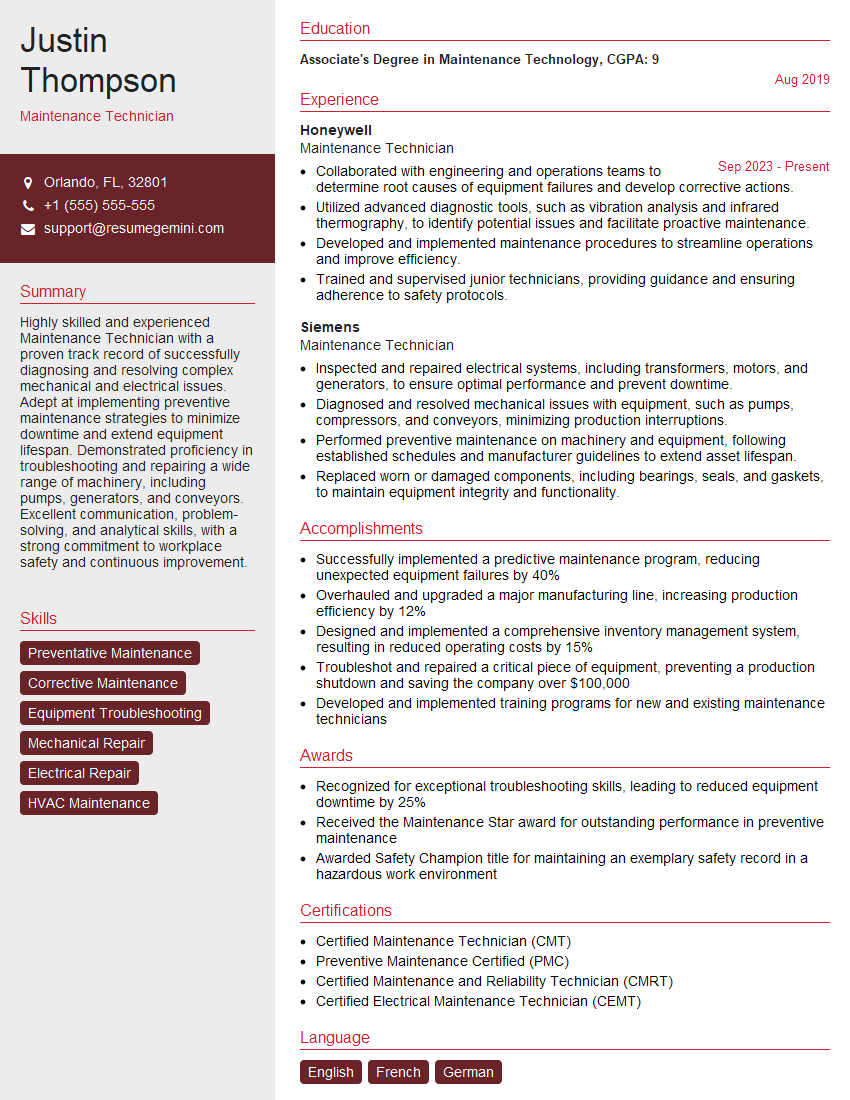
Maintenance Technician Resume Sample
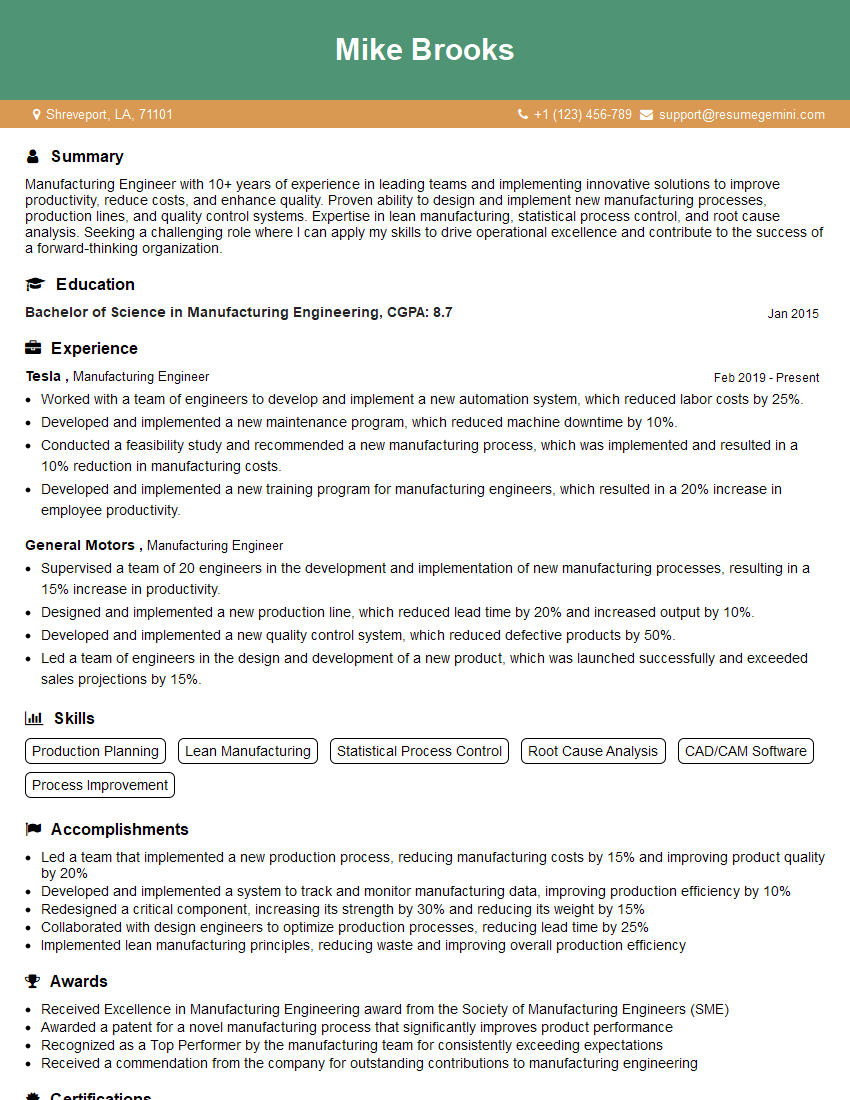
Manufacturing Engineer Resume Sample
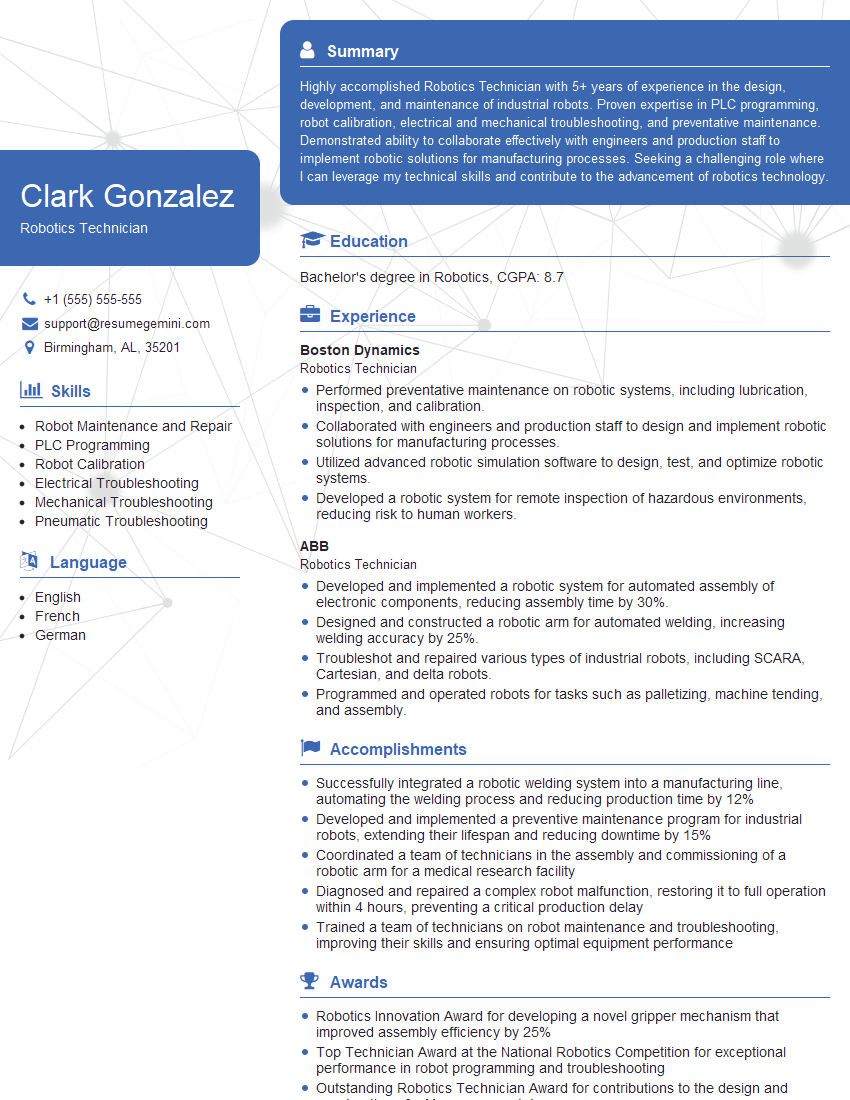
Robotics Technician Resume Sample

Manufacturing Technician Resume Sample

Machinist Resume Sample

Grinder Operator Resume Sample

Tool Grinder Resume Sample

Lathe Operator Resume Sample

Milling Machine Operator Resume Sample
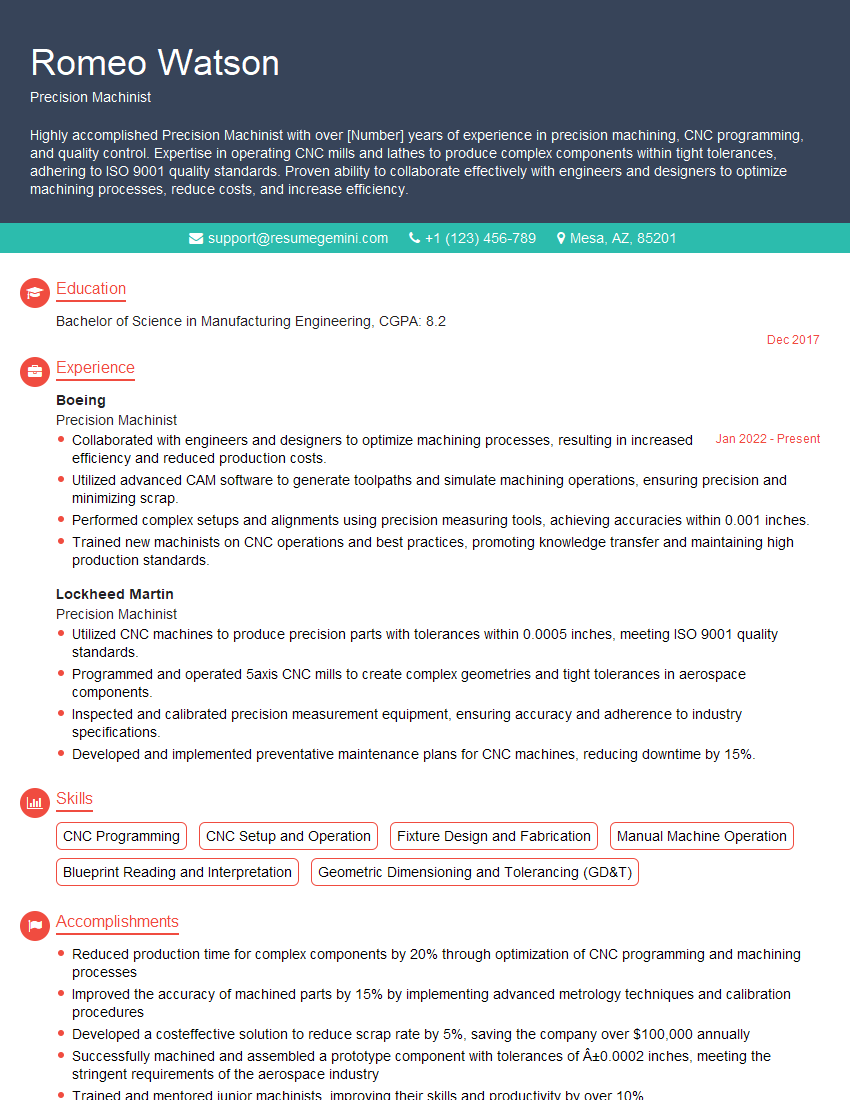
Precision Machinist Resume Sample

Tool and Die Maker Resume Sample

Quality Control Inspector Resume Sample
Explore more articles
Users Rating of Our Blogs
Share Your Experience
We value your feedback! Please rate our content and share your thoughts (optional).
What Readers Say About Our Blog
I Redesigned Spongebob Squarepants and his main characters of my artwork.
https://www.deviantart.com/reimaginesponge/art/Redesigned-Spongebob-characters-1223583608
IT gave me an insight and words to use and be able to think of examples
Hi, I’m Jay, we have a few potential clients that are interested in your services, thought you might be a good fit. I’d love to talk about the details, when do you have time to talk?
Best,
Jay
Founder | CEO