The thought of an interview can be nerve-wracking, but the right preparation can make all the difference. Explore this comprehensive guide to Developing and implementing individualized education plans (IEPs) for students with visual impairments interview questions and gain the confidence you need to showcase your abilities and secure the role.
Questions Asked in Developing and implementing individualized education plans (IEPs) for students with visual impairments Interview
Q 1. Describe your experience developing and implementing IEPs for students with various types of visual impairments.
Over the past ten years, I’ve developed and implemented IEPs for a diverse range of students with visual impairments, from low vision to total blindness. This includes students with various diagnoses such as cortical visual impairment (CVI), retinopathy of prematurity (ROP), optic nerve hypoplasia, and Leber’s congenital amaurosis. My experience spans different age groups and academic levels, from preschool to high school. For instance, I worked with a student with CVI who benefited greatly from a highly individualized program focused on multi-sensory learning and environmental adaptations. Another student with low vision required specialized magnification tools and assistive technology to access the general education curriculum successfully. Each IEP was tailored to the student’s unique strengths, needs, and learning style.
I’ve found that a key to success is understanding the specific challenges posed by each visual impairment. For example, a student with CVI might struggle with visual attention and visual processing, while a student with low vision might need assistance with visual acuity and contrast sensitivity. This understanding informs the selection of appropriate goals, accommodations, and assistive technologies.
Q 2. Explain the role of assistive technology in IEP development for visually impaired students.
Assistive technology (AT) is crucial in IEP development for visually impaired students. It acts as a bridge, enabling them to access information and participate fully in the educational environment. The selection of AT is highly individualized and depends on the student’s specific needs and the learning context. Examples include:
- Screen readers (e.g., JAWS, NVDA): These programs convert on-screen text into audible speech, allowing students to access digital content independently.
- Refreshable Braille displays: These devices provide tactile feedback of text displayed on a computer screen.
- Optical devices (e.g., magnifiers, CCTV): These tools enhance visual acuity and enlarge print or objects.
- Adaptive writing tools (e.g., large-print paper, adapted pencil grips): These tools cater to students’ fine motor skills.
- Alternative input devices (e.g., voice recognition software): Allow students to bypass the need for precise mouse or keyboard control.
During IEP development, we carefully assess the student’s needs and explore available AT options. We then integrate the chosen technologies into the IEP, detailing how they will support the student’s participation in different academic activities and ensuring proper training and support for both the student and their educators.
Q 3. How do you assess a student’s current level of academic performance and functional vision?
Assessing a student’s academic performance and functional vision is a multi-faceted process that requires a collaborative approach. We utilize various assessment tools, including:
- Formal academic assessments: Standardized tests and curriculum-based assessments measure the student’s knowledge and skills in core subjects.
- Functional vision evaluations: Conducted by a certified low vision specialist or ophthalmologist, these evaluations assess visual acuity, field of vision, light sensitivity, and visual efficiency. This data informs the selection of appropriate AT and instructional modifications.
- Observations in various settings: Observing the student in classroom, home, and recreational settings helps in understanding their functional skills and visual limitations in different environments.
- Teacher and parent input: Their insights provide valuable context and information on the student’s strengths, challenges, and learning preferences.
By combining these data points, we build a comprehensive understanding of the student’s abilities and needs, ensuring the IEP accurately reflects their current level of functioning and sets realistic, achievable goals.
Q 4. What are the key components of an effective IEP for a student with a visual impairment?
An effective IEP for a visually impaired student includes several key components:
- Present levels of performance (PLP): A detailed description of the student’s current academic, functional, and visual skills.
- Goals and objectives: Measurable and attainable goals that address both academic and functional needs, focusing on both short-term and long-term progress.
- Services and supports: Specific services, such as specialized instruction, orientation and mobility training, and assistive technology, tailored to the student’s needs.
- Accommodations and modifications: Adjustments to the learning environment and instructional methods designed to ensure the student’s access to the general education curriculum.
- Evaluation procedures: A plan for regularly monitoring the student’s progress and making adjustments to the IEP as needed.
- Assistive technology needs and provisions: Detailed specifications of necessary AT, along with plans for training, maintenance, and support.
Crucially, the IEP must be collaboratively developed, reflecting the input and expertise of all members of the IEP team.
Q 5. Describe your experience collaborating with parents, general education teachers, and other specialists on IEP teams.
Collaboration is at the heart of successful IEP development and implementation. I consistently work closely with parents, general education teachers, specialists (such as orientation and mobility instructors, vision specialists, and occupational therapists), and administrators. I believe in a truly collaborative approach. For example, I’ve worked with a parent who was initially hesitant about a specific AT recommendation. Through careful explanation, demonstration, and open communication, we found a solution that met both the student’s needs and the parent’s concerns. This approach strengthens the team dynamic, fosters trust, and ensures that the IEP is truly family-centered.
Regular meetings and communication are essential. I use various methods to maintain open communication, such as email updates, phone calls, and face-to-face meetings. Effective communication prevents misunderstandings and ensures everyone is on the same page, understanding and contributing toward the student’s success.
Q 6. How do you adapt instructional strategies and materials to meet the unique needs of visually impaired students?
Adapting instructional strategies and materials is central to my work. This involves considering several factors:
- Sensory adaptations: Utilizing multi-sensory methods, incorporating tactile and auditory components, and minimizing reliance on visual cues alone.
- Material modifications: Providing large-print or Braille materials, using auditory books, and adapting textbooks into accessible formats.
- Technological accommodations: Utilizing AT such as screen readers, text-to-speech software, and refreshable Braille displays.
- Environmental modifications: Optimizing lighting, reducing visual clutter, and providing a comfortable and accessible learning space.
- Instructional strategies: Using clear and concise language, providing ample repetition and review, and involving kinesthetic learning activities.
For example, when teaching a history lesson, I would use tactile maps, audio recordings of historical events, and group discussions to ensure the student’s full engagement and understanding. The key is to consider how different learning styles and modalities can be best leveraged for visually impaired students.
Q 7. Explain your understanding of the different types of visual impairments and their impact on learning.
Understanding the diverse types of visual impairments and their impact on learning is critical for developing effective IEPs. Visual impairments aren’t monolithic; they have varying degrees of severity and impact.
- Low vision: Individuals with low vision have some usable vision, but it is significantly impaired. Challenges can include difficulty with visual acuity, contrast sensitivity, and field of vision. Instructional adaptations might focus on using magnification aids and adjusting lighting.
- Blindness: Individuals with blindness have little to no usable vision. Learning relies heavily on tactile, auditory, and other sensory inputs. IEPs emphasize Braille literacy, orientation and mobility training, and the use of assistive technology such as screen readers.
- Cortical visual impairment (CVI): This neurological condition affects the brain’s ability to process visual information. Students with CVI often exhibit inconsistent visual skills and may have difficulty with visual attention, visual memory, and visual sequencing. IEPs must incorporate multi-sensory learning strategies and emphasize individualized approaches.
- Other visual impairments: Conditions such as nystagmus (involuntary eye movements), strabismus (misalignment of the eyes), and albinism (lack of melanin in the eyes) each present unique challenges to learning and require tailored adaptations within the IEP.
My experience working with these varied conditions has sharpened my ability to develop targeted IEPs that leverage the student’s residual vision and maximize their learning potential using appropriate strategies and accommodations.
Q 8. How do you ensure that IEPs are aligned with the student’s individual needs and goals?
Ensuring an IEP aligns perfectly with a student’s needs and goals is paramount. It’s not a one-size-fits-all approach; it’s a deeply individualized process. We start by conducting thorough assessments – vision evaluations, educational testing, and observations in various settings – to understand the student’s strengths, weaknesses, learning styles, and specific challenges related to their visual impairment. This assessment informs the development of measurable, achievable, relevant, and time-bound (SMART) goals. For example, a student struggling with reading might have a goal of increasing their reading fluency by 20 words per minute within a semester, using specific assistive technology like a screen reader. We then collaborate with parents, educators, and other relevant professionals (like orientation and mobility specialists) to create an IEP that outlines specific strategies and supports to help the student achieve those goals. Regular review and modification based on progress are crucial to ensure continued alignment.
Q 9. How do you monitor a student’s progress toward their IEP goals and make necessary adjustments?
Progress monitoring is an ongoing process, not a one-time event. We use a variety of methods, including regular data collection, observation, and informal assessments. This data might include reading fluency scores, independent living skills checklists, or participation in classroom activities. For example, if a student’s goal is to improve their Braille reading speed, we might track their words-per-minute rate weekly. If the student is not progressing as expected, we analyze the data to identify potential barriers. This might involve adjusting the IEP goals, modifying teaching strategies, or introducing new assistive technologies. Regular meetings with the IEP team ensure everyone is on the same page and that modifications are made in a timely manner. For instance, if a student is struggling with a particular assistive technology, we might provide additional training or explore alternative options. This iterative process ensures the IEP remains effective and supportive of the student’s needs throughout their education.
Q 10. Describe your experience with various assistive technologies, such as screen readers, Braille displays, and magnification devices.
My experience with assistive technologies is extensive. I’m proficient in recommending and training students on a range of tools, including screen readers (JAWS, NVDA), Braille displays (Focus 40, Orbit Reader), optical character recognition (OCR) software, magnification devices (closed-circuit television, electronic magnifiers), and other adaptive technologies for note-taking and writing. For example, I’ve worked with students to customize their screen reader settings to optimize their reading experience and integrate it with other assistive technologies. I understand the importance of considering the student’s specific needs and preferences when choosing assistive technologies. Sometimes, a combination of technologies is needed to meet a student’s unique learning requirements. I ensure proper training for both students and teachers to maximize effective utilization of these tools. This also includes troubleshooting technical difficulties and adapting assistive technologies to changes in the student’s visual capabilities.
Q 11. How do you teach students with visual impairments effective orientation and mobility skills?
Teaching orientation and mobility (O&M) skills is vital for independence and safety. My approach is highly individualized, starting with an assessment of the student’s current skills and environmental challenges. We then develop a personalized plan that progressively builds upon their existing abilities. This might involve using techniques like the cane travel technique, learning to use landmarks, and developing strategies for navigating different types of environments. The instruction usually incorporates hands-on practice in various settings, starting with familiar environments and gradually expanding to unfamiliar ones. We also work closely with the student’s family to ensure consistency and support in their daily routines. It is crucial to build confidence and promote self-reliance. For example, I might start by teaching a student to navigate their classroom and school hallways independently before moving on to more complex environments like navigating public transportation or navigating unfamiliar neighborhoods. Each lesson is carefully planned to build both the student’s skills and confidence.
Q 12. How do you incorporate Universal Design for Learning (UDL) principles into IEP development and implementation?
Universal Design for Learning (UDL) is a core principle in my approach to IEP development. UDL focuses on providing multiple means of representation (how information is presented), action and expression (how students respond), and engagement (how students are motivated). For students with visual impairments, this translates to providing information in multiple formats – audio, tactile, large print, Braille – and allowing them to express their learning through various methods – verbally, through Braille, or using assistive technology. For example, instead of only using a textbook, we might offer audio books, tactile diagrams, and interactive simulations. We also focus on creating flexible learning environments that accommodate different learning styles and preferences, allowing students to choose how they engage with the material most effectively. UDL ensures that the IEP is not just about accommodating the disability but about maximizing the student’s learning potential, regardless of their visual impairment.
Q 13. How do you address the social and emotional needs of students with visual impairments?
Addressing the social and emotional needs of students with visual impairments is critical. These students may face unique challenges related to self-esteem, social interactions, and independence. I work closely with the student, their family, and school counselors to identify and address these needs. This may involve providing social skills training, counseling, or peer support groups. It’s important to create a supportive and inclusive classroom environment where the student feels accepted and valued. I also work to build the student’s self-advocacy skills, empowering them to communicate their needs effectively and participate fully in school activities. For example, I might help a student develop strategies for initiating conversations or participating in group projects. Promoting a sense of belonging and fostering positive relationships with peers and teachers are also crucial components of this aspect of the IEP.
Q 14. What is your experience with the legal requirements related to IEP development and implementation?
I have extensive experience with the legal requirements surrounding IEP development and implementation, including the Individuals with Disabilities Education Act (IDEA). I understand the importance of procedural safeguards, parental rights, and the need for individualized assessment and planning. I am knowledgeable about the legal definitions of visual impairments and the requirements for providing appropriate specialized instruction and related services. This includes understanding the process of conducting IEP meetings, developing appropriate goals and objectives, and documenting progress. I’m also familiar with the processes for resolving disputes and ensuring compliance with all federal and state regulations. This includes understanding due process procedures and knowing how to effectively advocate for the student’s rights within the legal framework.
Q 15. Describe your experience with transition planning for visually impaired students.
Transition planning for visually impaired students is crucial for their successful move from school to post-secondary life. It’s a collaborative process involving the student, family, educators, vocational rehabilitation specialists, and other relevant professionals. We begin by assessing the student’s strengths, interests, and post-school goals, considering their unique visual needs and learning styles. This might involve exploring different career paths, identifying assistive technology needs for independent living, and developing self-advocacy skills.
For example, a student aspiring to be a programmer might require training on screen readers and other assistive technologies. We’d work with vocational rehabilitation to secure internships and connect them with mentors in the tech industry. Another student aiming for independent living would need training in daily living skills like using adaptive cooking tools and navigating public transportation. We document the transition plan within the IEP, setting measurable goals and timelines, and regularly monitor progress, adapting strategies as needed to ensure the student’s successful transition.
The process emphasizes the student’s agency, ensuring they are actively involved in every step of the planning and decision-making process. We aim to build their confidence and empower them to advocate for their needs, promoting lifelong success.
Career Expert Tips:
- Ace those interviews! Prepare effectively by reviewing the Top 50 Most Common Interview Questions on ResumeGemini.
- Navigate your job search with confidence! Explore a wide range of Career Tips on ResumeGemini. Learn about common challenges and recommendations to overcome them.
- Craft the perfect resume! Master the Art of Resume Writing with ResumeGemini’s guide. Showcase your unique qualifications and achievements effectively.
- Don’t miss out on holiday savings! Build your dream resume with ResumeGemini’s ATS optimized templates.
Q 16. How do you ensure that IEPs are culturally responsive and relevant to the student’s background and experiences?
Culturally responsive IEPs acknowledge and value the student’s unique cultural background, family values, and lived experiences. We start by actively seeking input from the family and the student about their cultural beliefs, communication preferences, and learning styles. For instance, some cultures may prioritize family involvement in education differently. Understanding these nuances is key to tailoring the plan appropriately.
We consider the family’s preferred communication methods and language. If English is not the primary language, we involve interpreters or provide materials in the family’s native language. We might also incorporate culturally relevant examples and materials into the curriculum to make learning more engaging and relevant. If a student’s culture celebrates a particular skill or art form, we might integrate it into their IEP goals, fostering a sense of pride and cultural affirmation. This might mean incorporating traditional music or storytelling into their learning activities.
We ensure that assessment methods are culturally unbiased, using alternative methods when necessary to avoid cultural biases. The goal is to create an inclusive and respectful learning environment that supports the student’s academic, social, and emotional growth, deeply rooted within their cultural identity.
Q 17. How do you adapt assessments to accommodate the needs of students with visual impairments?
Adapting assessments is crucial for accurately measuring the student’s learning without the limitations of their visual impairment. We modify the format, presentation, and administration of assessments according to the student’s individual needs. This might involve using large print, Braille, audio recordings, or assistive technology such as screen readers.
For example, if a student uses Braille, we provide test questions in Braille. If a student has low vision, we enlarge the print or provide access to magnification devices. For students with limited vision or those who use Braille, we might verbally administer tests, breaking down complex instructions into smaller, more manageable steps. We might also shorten the length of assessment to accommodate fatigue or other visual limitations. The key is to ensure that the assessment measures the student’s knowledge and skills, not their visual ability.
When working with standardized tests, we collaborate with test administrators to arrange accommodations that comply with established guidelines, such as extended time or alternative formats. Careful documentation is key, ensuring transparency and consistency across assessments.
Q 18. What strategies do you use to promote independence and self-advocacy among students with visual impairments?
Promoting independence and self-advocacy is paramount in our approach to educating visually impaired students. We start early by teaching students about their strengths and needs, empowering them to identify their learning preferences and express them clearly. We use a variety of strategies to encourage self-advocacy, including role-playing, modeling, and real-life practice.
We teach organizational skills, self-monitoring techniques and time management strategies. For example, we might teach a student to use a planner with large print or Braille to schedule their day. We also explicitly teach them how to request accommodations in different settings. We might practice with the student how to ask a teacher for an extension or clarify instructions. We encourage student-led IEP meetings, allowing them to present their goals and progress to the team, strengthening their voice in their educational journey.
We foster peer support by creating opportunities for interaction with sighted peers, helping them learn from each other and reducing any feelings of isolation. Building their confidence and self-reliance helps them navigate academic and social situations successfully.
Q 19. Explain your familiarity with different types of Braille and its use in education.
Braille is a tactile writing system used by people who are blind or visually impaired. There are different types of Braille, each designed for specific purposes. Grade 1 Braille, also known as uncontracted Braille, represents each letter with a unique pattern of raised dots. Grade 2 Braille, or contracted Braille, uses abbreviations and contractions to write more efficiently. This often reduces the length of text and improves reading speed.
Grade 1 Braille is often used for beginners, making it easier to learn and understand the basic principles. Grade 2 Braille is commonly used for more advanced reading and writing tasks, leading to increased efficiency and improved fluency. In addition to literary Braille, there’s also mathematical Braille, scientific Braille, and computer Braille, each employing specific symbol sets for those domains.
In education, we typically start with Grade 1 Braille for younger students and gradually transition to Grade 2 Braille as their skills develop. The choice of Braille type depends on the student’s age, literacy level, and individual needs. The use of Braille ensures accessibility to the same educational content as their sighted peers.
Q 20. Describe your experience working with students with multiple disabilities, including visual impairments.
Working with students with multiple disabilities, including visual impairments, requires a highly individualized and collaborative approach. We start by conducting a comprehensive assessment to understand the student’s strengths and challenges across all domains – cognitive, physical, sensory, and social-emotional. The IEP team, including specialists such as physical therapists, occupational therapists, and speech-language pathologists, collaborates closely to develop a plan that addresses each of their individual needs.
For example, a student with both cerebral palsy and visual impairment would require assistive technologies for both mobility and communication. We would work with the occupational therapist to identify adaptive equipment that could support their fine motor skills, while ensuring they have access to Braille or other accessible formats of educational materials. Close collaboration ensures that all interventions are integrated and coordinated, avoiding conflicting approaches and maximizing the student’s potential.
Effective communication and frequent monitoring are essential. We regularly reassess the student’s progress and make adaptations to the IEP as needed, allowing for flexibility and responsiveness to changing needs.
Q 21. How do you differentiate instruction to meet the learning styles and needs of diverse learners with visual impairments?
Differentiating instruction for diverse learners with visual impairments is crucial for ensuring that all students have access to the curriculum. We utilize a variety of methods, recognizing that students learn in different ways and have diverse needs. We incorporate multiple modalities of learning – visual, auditory, kinesthetic, and tactile – to cater to these diverse learning styles.
We might use hands-on activities, models, or real objects to support tactile learners. For auditory learners, we might use audio books, podcasts, and verbal instructions. We utilize various assistive technologies like screen readers, screen magnifiers, and Braille displays to support visual access. We also tailor the pace and complexity of instruction to each student’s individual needs, providing support and scaffolding when necessary.
Regular formative assessments allow us to monitor students’ progress and adjust the instruction accordingly. Creating a supportive and inclusive classroom environment, where students feel comfortable asking questions and participating actively, is crucial to promoting effective learning for every student.
Q 22. How do you involve parents and families in the IEP process?
Parent and family involvement is crucial for successful IEP implementation. I believe in fostering a collaborative partnership from the outset. This begins with initial meetings where I explain the IEP process clearly and answer any questions they may have. I ensure they understand their rights and responsibilities, emphasizing their expertise in their child’s strengths, needs, and preferences.
Throughout the process, I maintain open communication using various methods – regular phone calls, email updates, and in-person meetings. I actively solicit their input on the child’s goals, accommodations, and services, ensuring their voice is heard and valued. I also provide them with resources and training to support their child’s learning at home, and we collaboratively set realistic and achievable goals. For example, with one family, we utilized video conferencing to share progress on a child’s braille literacy skills, enabling the parents to actively practice reading with their child in the evenings. This active participation significantly enhanced the child’s learning journey.
Q 23. What professional development have you sought to enhance your skills in working with students with visual impairments?
I am committed to ongoing professional development to enhance my expertise in visual impairment. I regularly attend workshops and conferences focusing on low vision assessment, assistive technology, orientation and mobility, and the latest research in the field. I’ve completed certifications in assistive technology and braille instruction. Furthermore, I actively participate in professional learning communities, allowing me to network with other professionals and share best practices. Recently, I completed a specialized training program on using emerging technologies like AI-powered screen readers to support students with low vision. This allows me to stay current on innovative approaches to individualized instruction.
Q 24. How do you ensure that the IEP is implemented consistently across different settings?
Consistency in IEP implementation across different settings (school, home, community) is vital for student success. I achieve this through detailed and clear IEP documentation, outlining specific strategies and accommodations for each setting. Collaboration with teachers, therapists, and support staff is paramount. Regular meetings and communication ensure everyone is on the same page. For example, I create visual schedules and communication boards that are used consistently in the classroom and at home. We also utilize a shared online platform for documenting progress and sharing information between the school and home. Effective communication ensures that all team members are actively involved in supporting the child and have access to the necessary information to implement the IEP successfully.
Q 25. Describe a situation where you had to modify an IEP due to a student’s changing needs.
One student, initially diagnosed with mild visual impairment, experienced a rapid deterioration in his vision. His IEP, initially focused on adaptive learning strategies and assistive technology for near-work tasks, needed a significant overhaul. We noticed a decline in his performance and his frustration levels increased. Through reassessment using updated vision testing and observation of his daily functioning, we found his vision impairment had progressed significantly. We convened an IEP meeting where we adjusted his goals to focus on orientation and mobility training, braille instruction, and magnification systems for distance viewing. We added assistive technology like a screen reader and voice-to-text software to support his academic work, drastically altering the support he received to meet his evolving needs. His progress following these adjustments demonstrated the importance of proactive monitoring and timely IEP revisions.
Q 26. What are some common challenges in implementing IEPs for students with visual impairments, and how do you address them?
Common challenges include ensuring access to appropriate assistive technology, ensuring sufficient teacher training on strategies for students with visual impairments, and coordinating services across different settings. I address these by actively advocating for needed resources, providing professional development to teachers and staff, and building strong collaborative relationships with families and other professionals. For example, if a student needs specialized assistive technology, I work closely with the school district’s technology department to secure it, arranging for training and ongoing support. Likewise, I proactively organize professional development workshops for teachers on inclusive teaching strategies and the effective use of assistive technology to bridge the skill gap.
Q 27. How do you use data to inform IEP goals and monitor student progress?
Data-driven decision-making is central to effective IEP development and monitoring. I collect data from various sources, including standardized tests, classroom assessments, observations of student performance in different settings, and progress reports from teachers and therapists. This data informs goal setting, as I determine areas needing improvement and set measurable and attainable targets. Regular data analysis reveals progress, allowing for timely adjustments to the IEP if the student isn’t meeting goals. For instance, if a student’s progress in braille reading plateaus, I might analyze data to identify potential causes like the need for additional one-on-one support or a change in teaching methods. The data informs modifications to ensure continued progress towards the student’s IEP goals.
Q 28. Describe your experience using various assessment tools to evaluate the needs of students with visual impairments.
My experience encompasses a wide range of assessment tools, tailored to the individual needs of each student. This includes formal vision assessments, such as visual acuity tests and field of vision assessments performed by ophthalmologists or optometrists. I also use informal assessments such as observations of the student’s performance in different learning environments and functional vision assessments. I use tools to assess their reading skills, including both print and braille. Furthermore, I utilize adaptive assessments which allow for adjustments in format and administration to accommodate the student’s visual needs. The selection of assessments depends heavily on the specific needs of the child and their developmental stage, ensuring a comprehensive understanding of their strengths and challenges.
Key Topics to Learn for Developing and Implementing Individualized Education Plans (IEPs) for Students with Visual Impairments Interview
- Understanding Visual Impairments: Types of visual impairments (e.g., blindness, low vision), their impact on learning, and appropriate terminology.
- Assistive Technology: Knowledge of various assistive technologies (e.g., screen readers, Braille displays, magnification software) and their effective integration into IEP goals.
- Curriculum Adaptation: Strategies for adapting curriculum and instructional materials to meet the unique needs of students with visual impairments, including alternative formats and presentation methods.
- Accessible Learning Environments: Creating inclusive and accessible learning environments that support the successful participation of students with visual impairments.
- Collaboration and Communication: Effective communication and collaboration with parents, teachers, specialists (e.g., orientation and mobility specialists, vision therapists), and other related service providers.
- IEP Development and Implementation: Understanding the IEP process, writing measurable goals and objectives, selecting appropriate accommodations and modifications, and monitoring student progress.
- Assessment and Evaluation: Utilizing appropriate assessment methods to determine student strengths and needs, and evaluating the effectiveness of IEP goals and interventions.
- Legal and Ethical Considerations: Familiarity with relevant laws and regulations (e.g., IDEA) related to the education of students with disabilities, and ethical considerations in providing services.
- Transition Planning: Developing transition plans to support students with visual impairments as they move from one educational level to the next (e.g., from high school to post-secondary education or employment).
- Problem-Solving and Critical Thinking: Applying critical thinking skills to identify and address challenges faced by students with visual impairments in various learning environments.
Next Steps
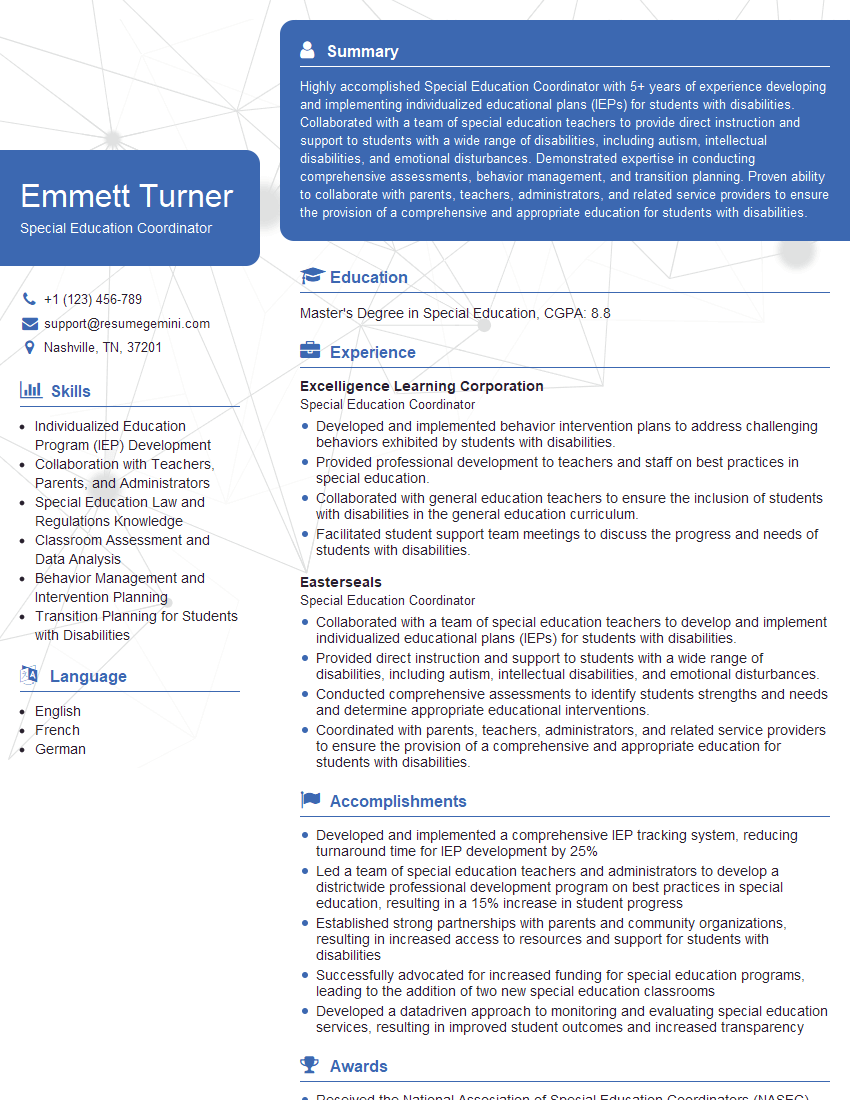
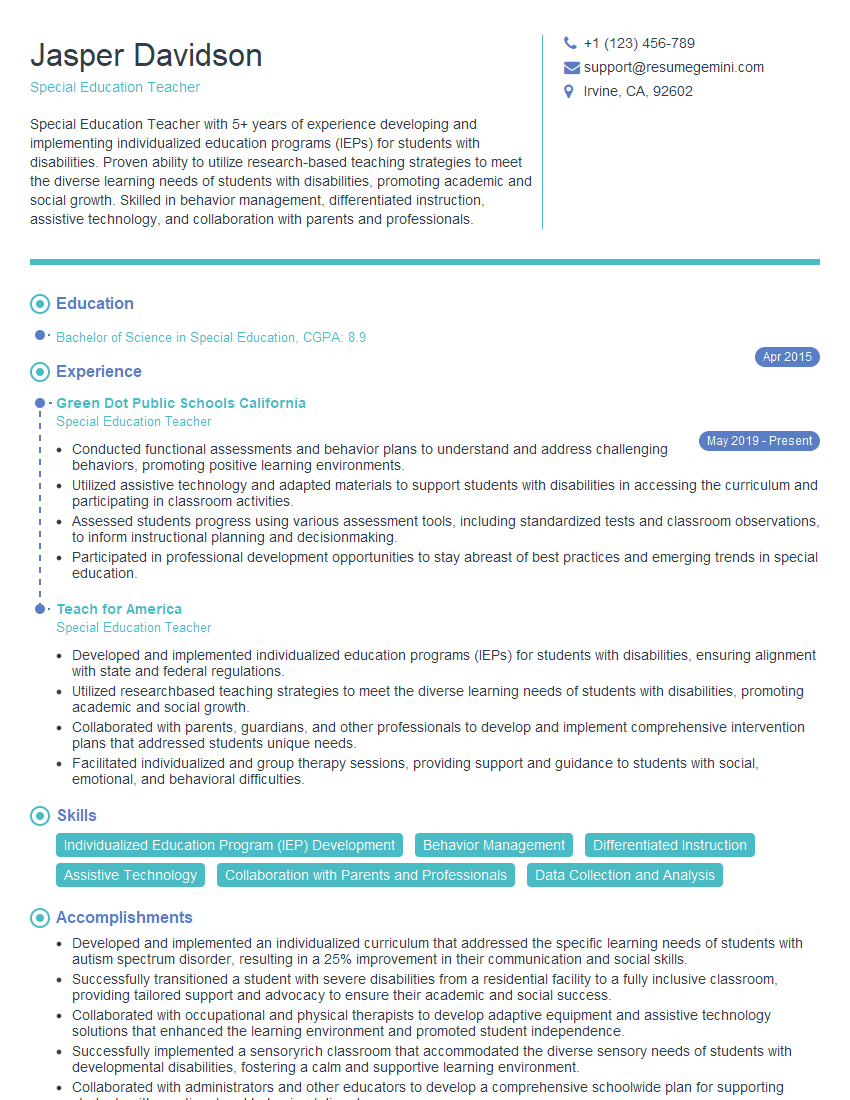
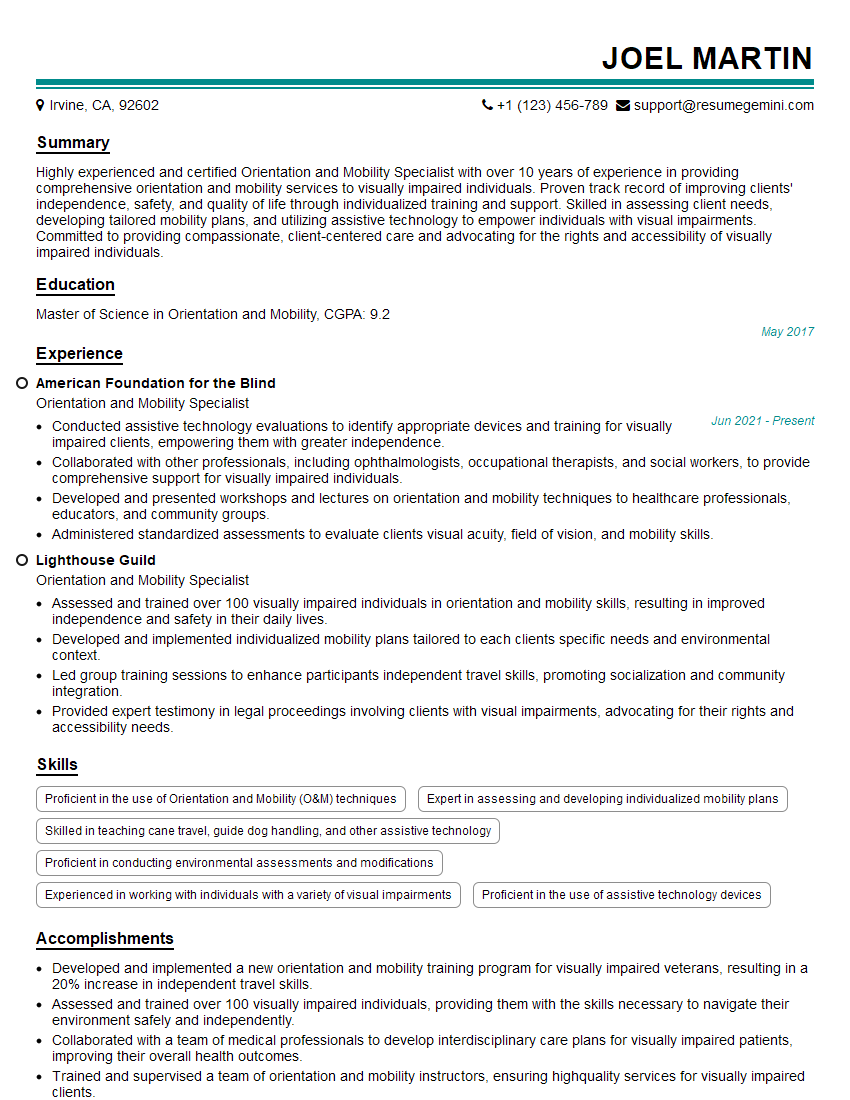
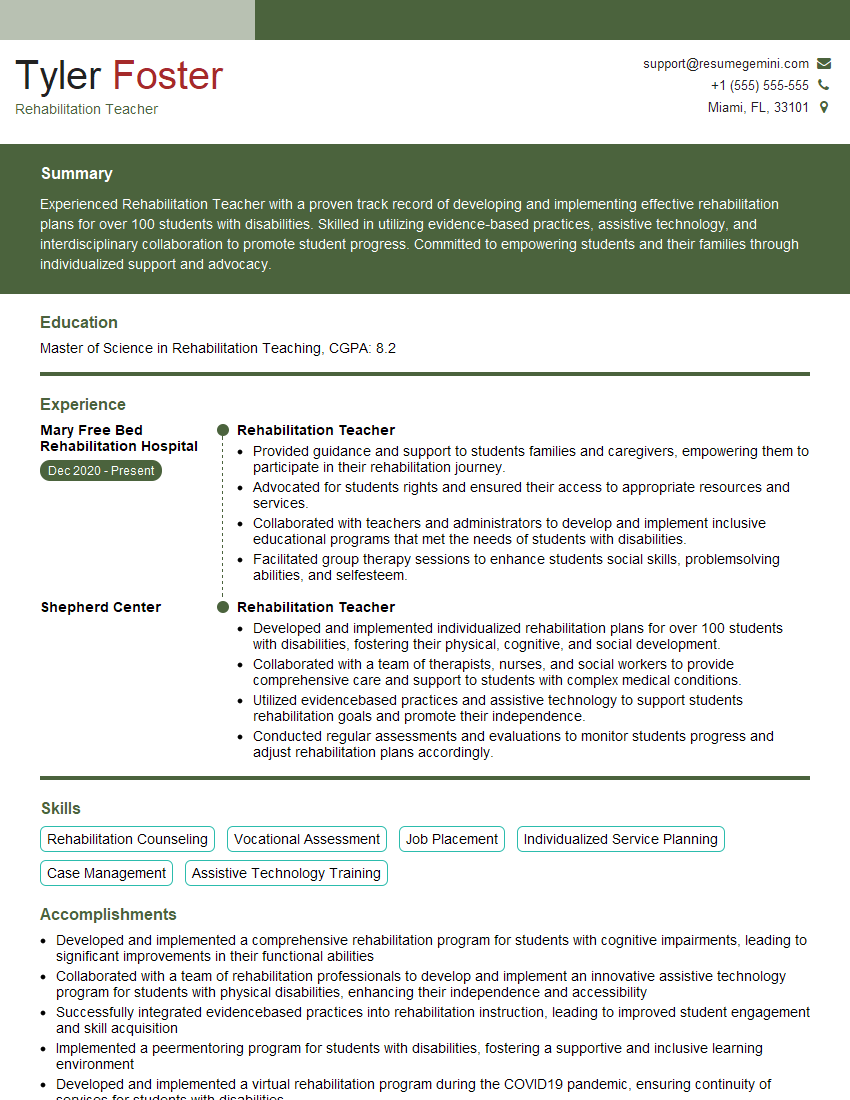
Mastering the development and implementation of IEPs for students with visual impairments is crucial for career advancement in special education. Demonstrating expertise in this area will significantly enhance your job prospects. Creating an ATS-friendly resume is essential for getting your application noticed. To help you build a strong, impactful resume, we recommend using ResumeGemini. ResumeGemini provides a user-friendly platform and offers examples of resumes tailored to this specific area of expertise, ensuring your application stands out.
Explore more articles
Users Rating of Our Blogs
Share Your Experience
We value your feedback! Please rate our content and share your thoughts (optional).
What Readers Say About Our Blog
I Redesigned Spongebob Squarepants and his main characters of my artwork.
https://www.deviantart.com/reimaginesponge/art/Redesigned-Spongebob-characters-1223583608
IT gave me an insight and words to use and be able to think of examples
Hi, I’m Jay, we have a few potential clients that are interested in your services, thought you might be a good fit. I’d love to talk about the details, when do you have time to talk?
Best,
Jay
Founder | CEO