Are you ready to stand out in your next interview? Understanding and preparing for Empowering interview questions is a game-changer. In this blog, we’ve compiled key questions and expert advice to help you showcase your skills with confidence and precision. Let’s get started on your journey to acing the interview.
Questions Asked in Empowering Interview
Q 1. Define empowerment in the workplace.
Workplace empowerment is about giving employees the authority, responsibility, and resources to make decisions and take ownership of their work. It’s not just about delegation; it’s about fostering a culture of trust, autonomy, and accountability. Empowered employees feel valued, motivated, and invested in the success of the organization. They are encouraged to contribute their ideas, solve problems independently, and take initiative.
Think of it like this: instead of being a cog in a machine, empowered employees are given the tools to become skilled mechanics, capable of diagnosing and fixing problems without constant supervision.
Q 2. Explain the difference between delegation and empowerment.
While both delegation and empowerment involve assigning tasks, they differ significantly in their approach and impact. Delegation is primarily about assigning a specific task to someone else; it’s transactional. The manager retains ultimate responsibility and often provides detailed instructions. Empowerment, on the other hand, is about entrusting individuals with the authority to make decisions, solve problems, and take ownership of broader responsibilities within their area of expertise. It’s transformational, focusing on skill development and trust.
Example: Delegating involves saying, “Complete this report by Friday.” Empowerment involves saying, “We need to improve this report’s effectiveness. I’m giving you the authority to redesign its structure and format, and the resources you need to do so. Let’s discuss your plan on Wednesday.”
Q 3. Describe a time you successfully empowered a team member.
In my previous role, a team member, Sarah, was struggling with a particularly complex project involving data analysis. While technically skilled, she lacked confidence in her decision-making abilities. I empowered Sarah by providing her with advanced training in data visualization techniques, giving her access to mentorship from a senior analyst, and entrusting her with the ownership of the project’s data analysis phase. I regularly checked in, offering guidance and support, but avoided micromanaging. The result? Sarah not only completed the project successfully but also developed significantly increased confidence and leadership skills. She even presented her findings at a company-wide meeting, receiving significant praise. This experience reinforced the power of investing in team members and fostering their growth.
Q 4. How do you measure the effectiveness of an empowerment initiative?
Measuring the effectiveness of an empowerment initiative requires a multi-faceted approach. We can’t rely solely on anecdotal evidence. Key metrics include:
- Increased employee engagement and satisfaction: Measured through surveys, feedback sessions, and observation.
- Improved productivity and efficiency: Measured through output, project completion rates, and reduced turnaround times.
- Higher quality of work: Measured through error rates, customer satisfaction, and improved process adherence.
- Increased innovation and creativity: Measured through the number of new ideas generated, implemented, and their impact.
- Reduced employee turnover: A significant indicator of a positive and empowering work environment.
Combining these qualitative and quantitative measures provides a holistic understanding of the success of the initiative.
Q 5. What strategies do you use to overcome resistance to empowerment?
Resistance to empowerment often stems from fear of loss of control, lack of trust, inadequate training, or unclear expectations. To overcome this, I employ a phased approach:
- Education and training: Provide employees with the necessary skills and knowledge to handle increased responsibility.
- Open communication and transparency: Clearly communicate the goals, expectations, and benefits of empowerment. Address concerns and actively solicit feedback.
- Pilot programs and gradual implementation: Start with small-scale projects to build confidence and demonstrate success before wider implementation.
- Recognition and rewards: Acknowledge and reward successful outcomes, emphasizing the value of employee contributions.
- Building trust and fostering a supportive culture: Create a safe environment where employees feel comfortable taking risks and learning from mistakes.
Remember, change takes time. Patience and consistent communication are crucial.
Q 6. How do you identify and cultivate emerging leaders within a team?
Identifying and cultivating emerging leaders involves active observation, mentorship, and providing opportunities for growth. I look for individuals who demonstrate:
- Proactive problem-solving: They identify issues and propose solutions independently.
- Strong communication and interpersonal skills: They can effectively communicate with others and build relationships.
- Initiative and leadership potential: They are willing to take on challenges and inspire others.
- A commitment to continuous learning and development: They actively seek opportunities to enhance their skills.
Once identified, I provide these individuals with mentoring, challenging assignments, opportunities for cross-functional collaboration, and access to leadership development programs. This combination of recognition and opportunity helps nurture their potential and prepares them for future leadership roles.
Q 7. Describe your experience with mentoring or coaching.
Throughout my career, I’ve had extensive experience with both mentoring and coaching. Mentoring is about guiding and supporting the overall development of an individual, often sharing personal experiences and wisdom. Coaching focuses more specifically on improving performance in a particular area by setting goals, providing feedback, and facilitating self-discovery. I’ve mentored junior colleagues on career paths and work-life balance, offering guidance and advice based on my own experiences. I’ve also coached team members on improving specific skills, using a goal-oriented approach and providing regular feedback and support. In both roles, active listening, empathy, and a genuine desire to help others succeed are essential.
Q 8. How do you foster a culture of psychological safety to encourage empowerment?
Fostering a culture of psychological safety is paramount to empowering employees. It means creating an environment where individuals feel comfortable taking risks, expressing opinions, and admitting mistakes without fear of negative consequences. This isn’t simply about avoiding criticism; it’s about actively promoting trust and respect.
- Open Communication Channels: Implement regular feedback sessions, both formal and informal, encouraging open dialogue and two-way communication. This might include team huddles, anonymous suggestion boxes, or regular 1:1 meetings with managers.
- Lead by Example: Managers must model vulnerability and openly share their own mistakes and learning processes. This shows employees that it’s okay to be imperfect and encourages risk-taking.
- Celebrate Failures as Learning Opportunities: Frame mistakes as valuable learning experiences rather than failures to be punished. Conduct post-mortems to analyze what went wrong and identify areas for improvement collaboratively.
- Promote Inclusive Decision-Making: Involve employees in decision-making processes relevant to their work. This demonstrates trust and shows that their contributions are valued.
- Provide Training and Development: Invest in training that equips employees with the skills and knowledge they need to feel confident in their roles. This reduces uncertainty and builds self-efficacy.
For example, in a previous role, we implemented a ‘blameless post-mortem’ process after project setbacks. Instead of assigning blame, we focused on understanding the root causes and implementing preventative measures. This fostered a sense of shared responsibility and reduced fear of failure.
Q 9. What are the key challenges of implementing an empowerment program?
Implementing an empowerment program presents several key challenges:
- Resistance to Change: Some employees may be resistant to increased responsibility or the changes in organizational structure required for empowerment. They might prefer the comfort of traditional hierarchical structures.
- Lack of Training and Resources: Empowering employees requires providing them with the necessary training, tools, and resources to succeed in their expanded roles. Without this, empowerment initiatives can fail.
- Managerial Relinquishment of Control: Managers may struggle to relinquish control and trust their empowered employees to make independent decisions, leading to micromanagement which undermines the entire process.
- Inconsistency in Application: Empowerment needs to be applied consistently across the organization. Uneven implementation can create confusion and inequity.
- Measuring Success: Demonstrating the return on investment (ROI) of an empowerment program can be difficult. Establishing clear metrics to track progress and success is crucial.
For instance, I once encountered resistance from middle management during an empowerment initiative. We addressed this by holding workshops focusing on the benefits of empowerment for both the employees and the organization. We also implemented a phased approach to the rollout, starting with a pilot program to build confidence and address concerns gradually.
Q 10. How do you ensure accountability when empowering employees?
Ensuring accountability when empowering employees requires a delicate balance between trust and oversight. It’s not about micromanaging but establishing clear expectations and mechanisms for tracking progress and addressing underperformance.
- Clearly Defined Roles and Responsibilities: Ensure that roles, responsibilities, and performance expectations are clearly documented and understood by all employees. Use tools like RACI matrices (Responsible, Accountable, Consulted, Informed) to clarify who is accountable for specific tasks.
- Regular Performance Monitoring: Implement regular check-ins and performance reviews to track progress towards goals and identify any potential issues early on. These shouldn’t be punitive but supportive.
- Open Feedback Mechanisms: Encourage open and honest feedback between managers and employees. This helps identify challenges and provides opportunities for course correction.
- Transparent Performance Metrics: Utilize key performance indicators (KPIs) and other metrics to track progress objectively. This provides data-driven feedback on performance.
- Consequences for Underperformance: While focusing on support and development, it’s crucial to have clear consequences for consistent underperformance. These should be fair, consistent, and aligned with company policy.
In one instance, we used a project management software to track progress on individual and team goals. This provided transparency and allowed us to identify and address potential roadblocks early on, fostering accountability without stifling empowerment.
Q 11. Describe your experience with designing and delivering empowerment training.
I’ve extensive experience designing and delivering empowerment training. My approach is highly interactive and focuses on practical application. It combines theoretical frameworks with real-world case studies and role-playing exercises.
- Needs Assessment: I start by conducting a thorough needs assessment to understand the specific training needs of the target audience.
- Curriculum Development: I then develop a customized curriculum that addresses these needs. This typically includes modules on decision-making, problem-solving, communication, leadership, and conflict resolution.
- Interactive Training Methods: My training sessions incorporate a variety of interactive methods, including group discussions, case studies, role-playing, simulations, and gamification to make the learning engaging and memorable.
- Action Planning and Follow-up: I encourage participants to develop action plans to apply their learning in their work. I also provide ongoing support and coaching to help them implement these plans successfully.
- Evaluation and Improvement: I evaluate the effectiveness of the training through feedback surveys and assessments to make necessary improvements in subsequent sessions.
For instance, I designed a workshop on delegation and empowerment for managers, incorporating scenarios where participants had to practice delegating tasks and providing constructive feedback. Post-training surveys showed a significant improvement in participants’ confidence and skills in delegating and empowering their team members.
Q 12. How do you adapt your empowerment approach to different personality types?
Adapting my empowerment approach to different personality types is crucial for effective implementation. I tailor my communication style and provide individualized support to meet the unique needs of each employee.
- Understanding Personality Styles: I utilize personality assessments (e.g., Myers-Briggs, DISC) to gain a better understanding of individual preferences and communication styles. This helps in tailoring the approach.
- Individualized Support: I provide individualized support and coaching based on their specific needs and learning styles. Some employees may require more structured guidance, while others might thrive with more autonomy.
- Differentiated Feedback: I adjust my feedback approach according to individual personalities. Some employees respond better to direct feedback, while others prefer a more indirect and supportive approach.
- Flexible Empowerment Approaches: I recognize that different personality types will respond to different empowerment strategies. Some may need more gradual introduction to greater responsibility, while others are ready to jump in immediately.
- Celebrating Diverse Contributions: I acknowledge and appreciate the contributions of employees with different personality styles, promoting an inclusive and supportive environment.
For example, for a highly analytical employee, I might focus on providing data-driven feedback and clear metrics to track progress. For a more collaborative employee, I might encourage them to participate in team decision-making processes.
Q 13. Explain the link between empowerment and employee engagement.
Empowerment and employee engagement are inextricably linked. Empowerment is a key driver of engagement. When employees feel empowered, they are more likely to be engaged, motivated, and productive.
- Increased Ownership and Responsibility: Empowerment fosters a sense of ownership and responsibility, leading to greater commitment and engagement.
- Improved Motivation and Morale: When employees feel trusted and valued, their motivation and morale improve significantly.
- Enhanced Creativity and Innovation: Empowered employees feel comfortable taking risks and experimenting with new ideas, leading to enhanced creativity and innovation.
- Reduced Turnover: Engaged employees are less likely to leave their jobs, leading to reduced turnover costs.
- Improved Productivity and Performance: Engaged and empowered employees are more productive and perform at a higher level.
Think of it this way: If you give someone the tools, resources, and authority to do their job well (empowerment), they’ll be more likely to be invested and enthusiastic about their work (engagement).
Q 14. How do you handle situations where an empowered employee makes a mistake?
When an empowered employee makes a mistake, the focus should be on learning and improvement, not punishment. The goal is to foster a culture where mistakes are seen as opportunities for growth.
- Supportive Approach: Begin with a supportive and understanding approach. Acknowledge the mistake without assigning blame.
- Understanding the Root Cause: Work collaboratively with the employee to understand the root cause of the mistake. This involves open communication and active listening.
- Developing Corrective Actions: Develop a plan of action to address the issue and prevent similar mistakes in the future. This plan should involve the employee actively.
- Learning and Development Opportunities: Provide additional training or support to help the employee develop the necessary skills or knowledge to avoid future errors.
- Follow-up and Support: Follow up with the employee regularly to provide support and monitor progress.
I once had an empowered team member make a significant error in a marketing campaign. Instead of reprimanding them, we held a team meeting to analyze the situation objectively. We identified the root causes, implemented corrective measures, and used the experience as a learning opportunity for the entire team. The employee learned from the mistake, and the team improved its processes as a result.
Q 15. How do you address power imbalances within a team?
Addressing power imbalances within a team requires a multifaceted approach focused on fostering inclusivity, transparency, and equitable distribution of decision-making power. It’s not just about hierarchy; it’s about ensuring every team member feels valued and their contributions are recognized.
- Open Communication: Establish clear channels for feedback and ensure everyone feels comfortable expressing their opinions, regardless of their position. Regular team meetings with structured agendas that allow for open discussion are crucial.
- Shared Decision-Making: Implement processes that involve the entire team in important decisions. This could involve voting systems, consensus-building exercises, or utilizing collaborative tools to ensure everyone’s voice is heard.
- Mentorship and Sponsorship: Pair junior team members with senior members for mentorship, providing opportunities for skill development and knowledge transfer. Sponsorship goes a step further, actively advocating for the growth and advancement of those with less power.
- Recognizing and Rewarding Contributions: Publicly acknowledging the contributions of all team members, regardless of their seniority, reinforces a culture of value and respect. This helps dismantle the notion that power equates to greater worth.
- Regular Feedback and Check-ins: Conduct regular check-ins with team members to gauge their level of engagement and identify any potential power imbalances. Address any concerns proactively.
For example, in a previous project, we noticed that a junior developer, despite having excellent technical skills, was hesitant to voice their opinions in meetings. By creating a more structured meeting format with designated time slots for open discussion and actively soliciting their input, we helped them feel more confident and empowered, ultimately leading to significant improvements in the project’s outcome.
Career Expert Tips:
- Ace those interviews! Prepare effectively by reviewing the Top 50 Most Common Interview Questions on ResumeGemini.
- Navigate your job search with confidence! Explore a wide range of Career Tips on ResumeGemini. Learn about common challenges and recommendations to overcome them.
- Craft the perfect resume! Master the Art of Resume Writing with ResumeGemini’s guide. Showcase your unique qualifications and achievements effectively.
- Don’t miss out on holiday savings! Build your dream resume with ResumeGemini’s ATS optimized templates.
Q 16. Describe a time you had to empower someone who lacked confidence.
I once worked with a team member, Sarah, who possessed exceptional analytical skills but lacked confidence in presenting her findings. She often minimized her contributions, fearing criticism. To empower her, I adopted a multi-pronged approach:
- Building Trust: I began by having regular one-on-one meetings, focusing on her strengths and providing constructive feedback. I showed genuine interest in her work and ideas, fostering a safe space for vulnerability.
- Skill Development: We enrolled her in a public speaking workshop to help her build presentation skills. I also provided feedback on her presentations, focusing on strengthening her confidence rather than purely on correcting technical aspects.
- Gradual Exposure: Instead of throwing her into high-pressure situations, I started by encouraging her to present her findings to smaller groups, gradually increasing the audience size as her confidence grew. Each successful presentation boosted her self-assurance.
- Mentorship and Recognition: I acted as a mentor, offering support and guidance throughout the process. I also publicly acknowledged her contributions during team meetings, highlighting the value of her insights.
By the end of the project, Sarah was confident enough to present our team’s findings to senior management. This transformation demonstrated the significant impact of targeted support and encouragement in fostering confidence and empowerment.
Q 17. What metrics do you use to track the success of empowerment strategies?
Tracking the success of empowerment strategies requires a holistic approach, focusing on both quantitative and qualitative metrics. Simply measuring output isn’t enough; we need to understand how the empowerment initiatives are impacting team dynamics and individual well-being.
- Employee Engagement Surveys: Regular surveys assess employee satisfaction, morale, and perceptions of empowerment. These offer valuable qualitative insights.
- Team Performance Metrics: Increased productivity, improved quality of work, faster project completion, and reduced error rates can all be indicators of successful empowerment.
- Innovation and Creativity Metrics: Track the number of new ideas generated, the implementation of innovative solutions, and the willingness to take calculated risks – all hallmarks of an empowered team.
- Employee Turnover Rate: A lower turnover rate suggests higher employee satisfaction and retention, suggesting a positive impact of empowerment initiatives.
- Employee Feedback and 360-Degree Reviews: Collect feedback from peers, supervisors, and subordinates to gain a comprehensive view of an employee’s performance and how empowerment initiatives have affected their contributions.
It’s important to use a combination of these metrics to gain a well-rounded understanding of the effectiveness of empowerment strategies and to identify areas for improvement.
Q 18. How do you ensure that empowerment initiatives align with organizational goals?
Aligning empowerment initiatives with organizational goals requires a deliberate and strategic approach. It’s crucial to avoid empowerment efforts that operate in silos; they must directly support the organization’s overarching objectives.
- Define Clear Organizational Goals: Begin by clearly defining the company’s strategic goals and objectives. This provides a framework for all initiatives, including empowerment.
- Link Empowerment to Strategic Objectives: Identify how empowerment strategies can contribute to achieving those goals. For example, empowering employees to make faster decisions can improve efficiency, directly impacting productivity and profitability.
- Develop Empowerment Strategies that Support Goals: Design empowerment initiatives that directly address the challenges and opportunities related to achieving the organizational goals. This could involve delegating authority, providing training on specific skills, or implementing new tools and technologies.
- Measure and Evaluate Progress Regularly: Use the metrics discussed previously to track progress and ensure that empowerment efforts are actually contributing to the organizational goals. This allows for course correction if needed.
- Communicate the Connection: Clearly communicate the link between empowerment initiatives and organizational goals to employees. This helps them understand how their empowered roles contribute to the broader organizational success.
For example, if the organizational goal is to increase market share, empowerment initiatives could focus on providing sales teams with more autonomy to negotiate deals and tailor solutions to customer needs.
Q 19. How do you promote collaboration and teamwork in an empowered environment?
Promoting collaboration and teamwork in an empowered environment necessitates fostering a culture of trust, open communication, and shared responsibility. It’s about empowering individuals *within* a team context, not in isolation.
- Establish Shared Goals and Objectives: Ensure the team has a clear understanding of its shared goals and how individual contributions contribute to the overall success. This creates a sense of collective ownership.
- Collaborative Tools and Technologies: Utilize project management software, communication platforms, and collaborative workspaces to facilitate seamless information sharing and teamwork.
- Cross-Functional Teams: Create teams comprised of individuals with diverse skills and perspectives. This encourages cross-pollination of ideas and fosters a more holistic approach to problem-solving.
- Team-Building Activities: Regularly organize team-building activities to strengthen relationships and improve team cohesion. This creates a more supportive and collaborative environment.
- Open Communication and Feedback Mechanisms: Foster a culture of open and honest communication, where team members feel comfortable providing and receiving constructive feedback.
For instance, implementing a Kanban board for project management visually demonstrates progress and individual contributions, fostering a sense of shared responsibility and progress. Regular team retrospectives provide opportunities for reflection and improvement, strengthening collaboration.
Q 20. What are the ethical considerations of employee empowerment?
Ethical considerations in employee empowerment are paramount. It’s not simply about giving employees more freedom; it’s about doing so responsibly and fairly.
- Accountability and Transparency: Ensure that empowered employees understand their responsibilities and that their actions are transparent and subject to appropriate oversight. This prevents abuse of power.
- Fairness and Equity: Empowerment initiatives must be applied consistently and fairly across all employees, regardless of their background or position. Avoiding biases is critical.
- Protection from Harm: Employees should not be empowered to make decisions that could cause harm to themselves, colleagues, or the organization. Appropriate safeguards must be in place.
- Data Privacy and Security: If empowerment involves access to sensitive information, ensure adequate data privacy and security measures are implemented to protect confidential information.
- Work-Life Balance: Empowering employees shouldn’t lead to increased workload or burnout. Carefully consider how empowerment initiatives affect employees’ well-being.
For example, when empowering employees to manage their own schedules, it’s crucial to establish clear expectations and accountability mechanisms to prevent potential conflicts or inconsistencies. Regular check-ins help ensure that employees aren’t overburdened while still enjoying the benefits of autonomy.
Q 21. Describe your experience with conflict resolution in an empowered team.
Conflict resolution in an empowered team requires a different approach than in a traditionally hierarchical structure. It relies heavily on open communication, collaborative problem-solving, and a focus on shared goals.
- Facilitative Approach: Instead of dictating solutions, I adopt a facilitative role, guiding the team members to find mutually acceptable solutions through open dialogue and constructive discussion.
- Focus on Understanding: Encourage team members to fully understand each other’s perspectives before attempting to resolve the conflict. Active listening and empathetic communication are critical.
- Collaborative Problem-Solving: Frame conflicts as opportunities for learning and improvement. Work with the team to identify root causes and develop solutions collaboratively.
- Clear Expectations and Boundaries: Ensure team members understand the organization’s policies regarding conflict resolution, including acceptable behaviors and escalation procedures.
- Mediation if Necessary: If the team struggles to resolve the conflict independently, I may offer mediation services to facilitate a productive discussion and help them find common ground.
In a recent instance, a disagreement arose between two team members regarding project priorities. Instead of imposing a solution, I facilitated a meeting where they could openly discuss their concerns. By understanding each other’s perspectives and working together, they were able to reach a compromise that satisfied both parties and allowed the project to move forward successfully.
Q 22. How do you build trust and rapport to effectively empower others?
Building trust and rapport is foundational to effective empowerment. It’s about creating a safe space where individuals feel valued, respected, and confident in their abilities. This isn’t a one-time action but a continuous process.
Active Listening: Truly hearing employees’ perspectives, concerns, and ideas is crucial. This demonstrates respect and shows you value their input.
Transparency and Open Communication: Sharing information openly and honestly, even about challenges, fosters trust. Employees need to understand the ‘why’ behind decisions.
Demonstrating Competence: Employees are more likely to trust a leader who demonstrates expertise and competence in their field. This builds confidence in their guidance.
Showing Empathy and Vulnerability: Acknowledging limitations and showing vulnerability builds connection. It creates a more human and relatable leadership style.
Following Through: Keeping promises and commitments builds credibility. If you say you’ll support an employee’s initiative, follow through on your commitment.
For example, in a previous role, I implemented regular one-on-one meetings with my team members. These meetings weren’t just about performance reviews; they were spaces for open dialogue, where team members felt comfortable sharing their challenges and ideas. This fostered a sense of trust and mutual respect, leading to greater engagement in empowerment initiatives.
Q 23. What are some common barriers to successful employee empowerment?
Several barriers can hinder successful employee empowerment. These often stem from organizational culture, management style, or a lack of resources.
Micromanagement: Constantly overseeing every detail stifles autonomy and initiative, directly contradicting the principles of empowerment.
Lack of Trust: If managers don’t trust their employees to make decisions or handle responsibility, empowerment initiatives will fail. This often stems from a lack of effective training and development.
Inadequate Training and Resources: Empowered employees need the necessary skills, tools, and information to succeed. Without these, they may feel overwhelmed and unprepared.
Fear of Failure: A culture that punishes mistakes rather than viewing them as learning opportunities can prevent employees from taking risks and exercising initiative.
Resistance to Change: Some employees or managers may resist empowerment initiatives due to comfort with existing hierarchies or processes. A strong communication strategy is crucial to address these concerns.
Unclear Roles and Responsibilities: If roles and responsibilities are not clearly defined, employees may be unsure of their authority or accountability, leading to confusion and inaction.
For instance, I once worked with a team that struggled with empowerment due to a history of micromanagement. We addressed this by implementing a phased approach, starting with small, manageable empowerment opportunities and gradually increasing responsibility as trust and confidence grew.
Q 24. How do you use feedback to improve empowerment initiatives?
Feedback is critical for refining and improving empowerment initiatives. It should be regular, constructive, and focused on both the process and the outcomes.
Regular Check-ins: Schedule regular meetings to discuss progress, challenges, and areas for improvement. Use open-ended questions to encourage honest feedback.
360-Degree Feedback: Gather feedback from multiple sources, including peers, supervisors, and even customers, to get a comprehensive perspective.
Surveys and Questionnaires: Use surveys to gather quantitative data on employee satisfaction, engagement, and perceived autonomy.
Focus Groups: Conduct focus groups to explore in-depth perspectives and uncover underlying issues.
Actionable Insights: Don’t just collect feedback; analyze it to identify specific areas needing adjustment. Develop concrete action plans based on the insights gathered.
For example, after implementing an empowerment program, I used employee surveys to assess its effectiveness. The feedback revealed a need for more training on decision-making skills. We then developed and implemented targeted training sessions to address this need.
Q 25. How do you measure the impact of empowerment on organizational performance?
Measuring the impact of empowerment on organizational performance requires a multifaceted approach, combining quantitative and qualitative data.
Increased Productivity and Efficiency: Track key performance indicators (KPIs) such as output, turnaround time, and error rates to see if empowerment leads to improvements.
Improved Employee Engagement and Satisfaction: Use surveys and employee feedback to measure changes in morale, job satisfaction, and commitment.
Reduced Employee Turnover: Monitor employee turnover rates to see if empowerment helps retain talent.
Innovation and Creativity: Track the number of new ideas generated, implemented, and their impact on the business.
Improved Customer Satisfaction: Assess customer satisfaction scores to see if empowerment leads to better service and product quality.
In a previous project, we measured the impact of empowerment by tracking employee satisfaction scores, project completion times, and customer feedback. We found a significant improvement in all three areas after implementing the empowerment program.
Q 26. How do you create a sustainable empowerment culture?
Creating a sustainable empowerment culture requires a long-term commitment and a holistic approach. It’s not a quick fix, but a fundamental shift in organizational values and practices.
Lead by Example: Managers must model empowered behavior, demonstrating trust, autonomy, and accountability.
Integrate Empowerment into Organizational Values: Clearly communicate the importance of employee empowerment and integrate it into the organization’s mission and vision.
Provide Ongoing Training and Development: Continuously invest in training programs that equip employees with the skills and knowledge necessary to thrive in an empowered environment.
Recognize and Reward Empowered Behavior: Acknowledge and celebrate successes, reinforcing the importance of taking initiative and assuming responsibility.
Regularly Review and Adapt: Continuously assess the effectiveness of empowerment initiatives and adjust strategies as needed. The approach should be dynamic and responsive to changing needs.
Promote Open Communication and Feedback: Create a culture where open communication is encouraged and feedback is actively solicited and acted upon.
For instance, a company might establish a mentoring program pairing experienced employees with newer ones, fostering a culture of knowledge sharing and supporting the development of empowered individuals.
Q 27. Describe your experience using different empowerment models.
I have experience with several empowerment models, each with its own strengths and weaknesses. The most effective approach often involves a tailored combination.
Participative Management: This model emphasizes involving employees in decision-making processes, fostering a sense of ownership and commitment. I’ve successfully implemented this in project teams by establishing regular brainstorming sessions and incorporating team feedback into project plans.
Self-Managed Teams: This model grants teams significant autonomy in managing their work, including planning, scheduling, and problem-solving. In a previous role, I facilitated the transition of a team to a self-managed structure, resulting in increased efficiency and higher team morale. Careful planning and establishing clear accountabilities were essential.
Delegation and Empowerment Model: This involves clearly assigning tasks with appropriate authority and accountability to individual employees. It’s vital to provide adequate training and support, ensuring employees feel equipped to handle the assigned responsibilities.
Job Enrichment: This involves redesigning jobs to increase their challenge, complexity, and autonomy, providing employees with more stimulating and rewarding work. I have helped restructure roles within organizations, enhancing their intrinsic motivation and fostering a sense of accomplishment.
The key is to choose and adapt the model that best suits the organizational context, team dynamics, and individual employee capabilities. A flexible and adaptable approach is crucial for sustainable success.
Q 28. What are your strategies for maintaining motivation in an empowered team?
Maintaining motivation in an empowered team requires a focus on recognition, development, and continued support.
Recognition and Rewards: Acknowledge and celebrate both individual and team accomplishments, reinforcing positive behaviors and motivating continued effort. This can involve formal awards, public recognition, or simple expressions of gratitude.
Opportunities for Growth and Development: Provide opportunities for professional development, skill enhancement, and career advancement. Empowered employees want to continually learn and grow.
Meaningful Work: Ensure that team members understand the impact of their work and how it contributes to the organization’s broader goals. Connecting tasks to a larger purpose enhances motivation.
Autonomy and Ownership: Allow team members to make decisions, manage their time, and take ownership of their work. This fosters a sense of responsibility and pride.
Open Communication and Feedback: Maintain open communication channels, encourage feedback, and provide constructive criticism. Regular check-ins and team meetings can keep everyone aligned and motivated.
Support and Mentorship: Provide support, guidance, and mentorship when needed. Even in an empowered environment, employees may need assistance or direction from time to time.
I once worked with a team that initially struggled with motivation after being empowered. We addressed this by implementing a peer recognition program, and by setting clear goals and regularly celebrating achievements. The shift improved team dynamics and boosted individual morale.
Key Topics to Learn for Empowering Interview
- Understanding Empowering Principles: Explore the core philosophies and methodologies behind empowering individuals and teams. Consider the ethical implications and potential challenges.
- Practical Application in Diverse Settings: Examine how empowering strategies are applied in different organizational structures, from startups to large corporations. Analyze successful case studies and identify common success factors.
- Building a Culture of Empowerment: Learn how to foster an environment that encourages initiative, collaboration, and personal growth. Discuss strategies for overcoming resistance to change and promoting a sense of ownership.
- Measuring the Impact of Empowerment Initiatives: Understand how to assess the effectiveness of empowerment programs using key performance indicators (KPIs) and qualitative feedback. Develop strategies for continuous improvement.
- Conflict Resolution and Empowerment: Explore how to navigate disagreements and conflicts constructively within an empowered environment. Develop strategies for mediation and conflict resolution that strengthen team dynamics.
- Delegation and Accountability in Empowered Teams: Master the art of delegating effectively, setting clear expectations, and fostering accountability without micromanagement. Explore techniques for providing constructive feedback and support.
- Empowerment and Leadership Styles: Analyze different leadership approaches and their impact on employee empowerment. Identify your own leadership style and how it aligns with empowering principles.
Next Steps
Mastering the art of empowering others is a highly valuable skill that significantly accelerates your career growth, opening doors to leadership roles and high-impact contributions. To maximize your job prospects, it’s crucial to present your skills and experience effectively through an ATS-friendly resume. We strongly encourage you to utilize ResumeGemini, a trusted resource for building professional resumes that capture the attention of recruiters. Examples of resumes tailored to highlight your Empowering capabilities are available below to help guide you.
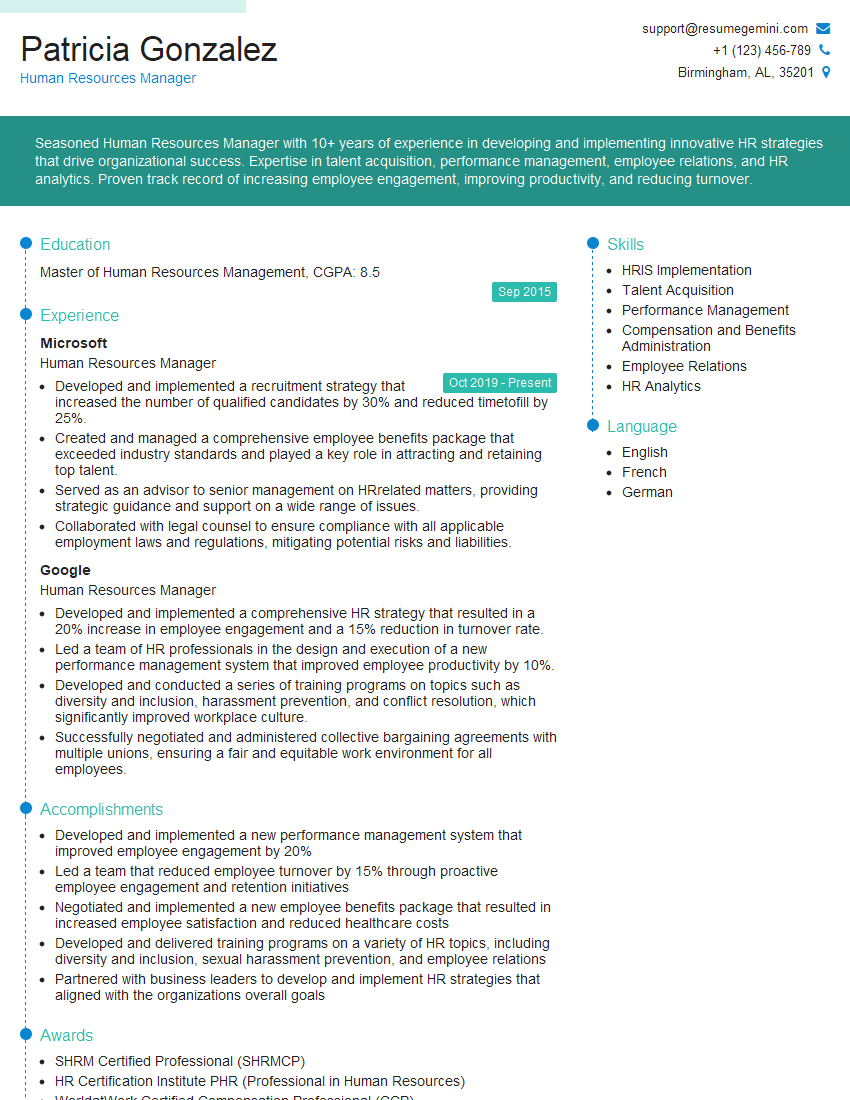
Human Resources Manager Resume Sample
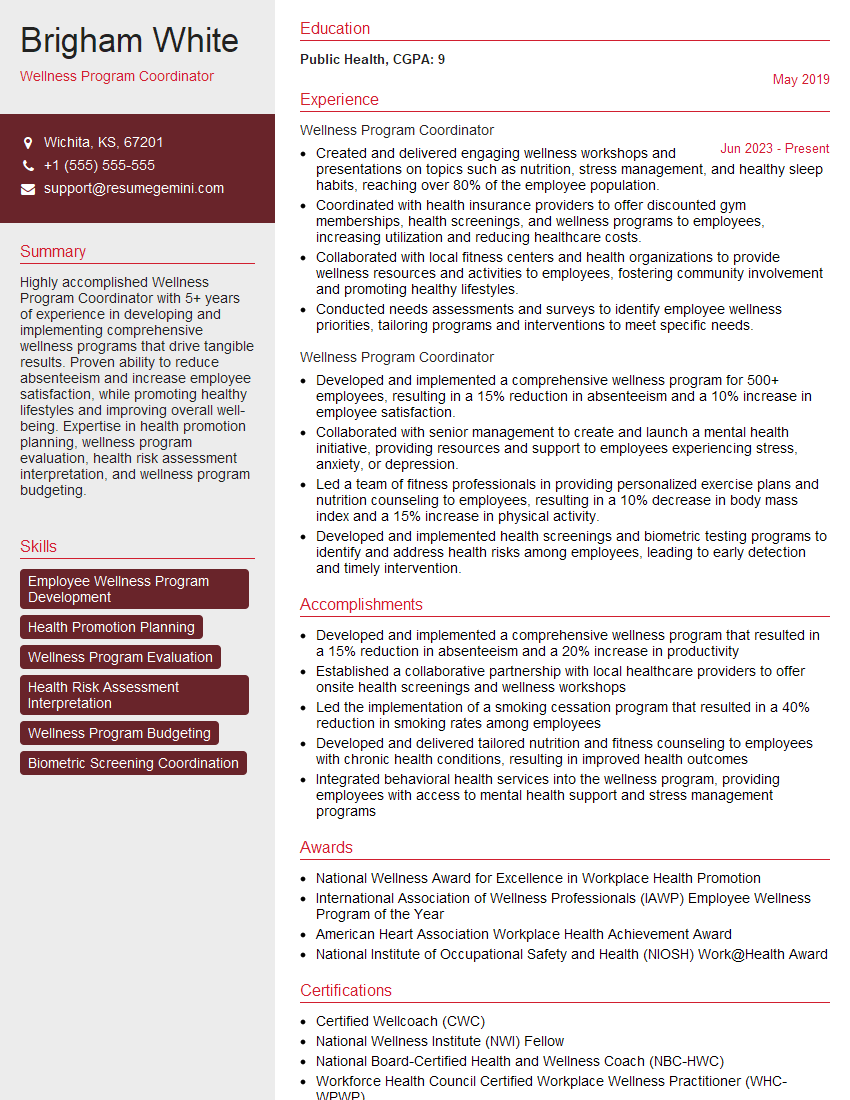
Wellness Program Coordinator Resume Sample
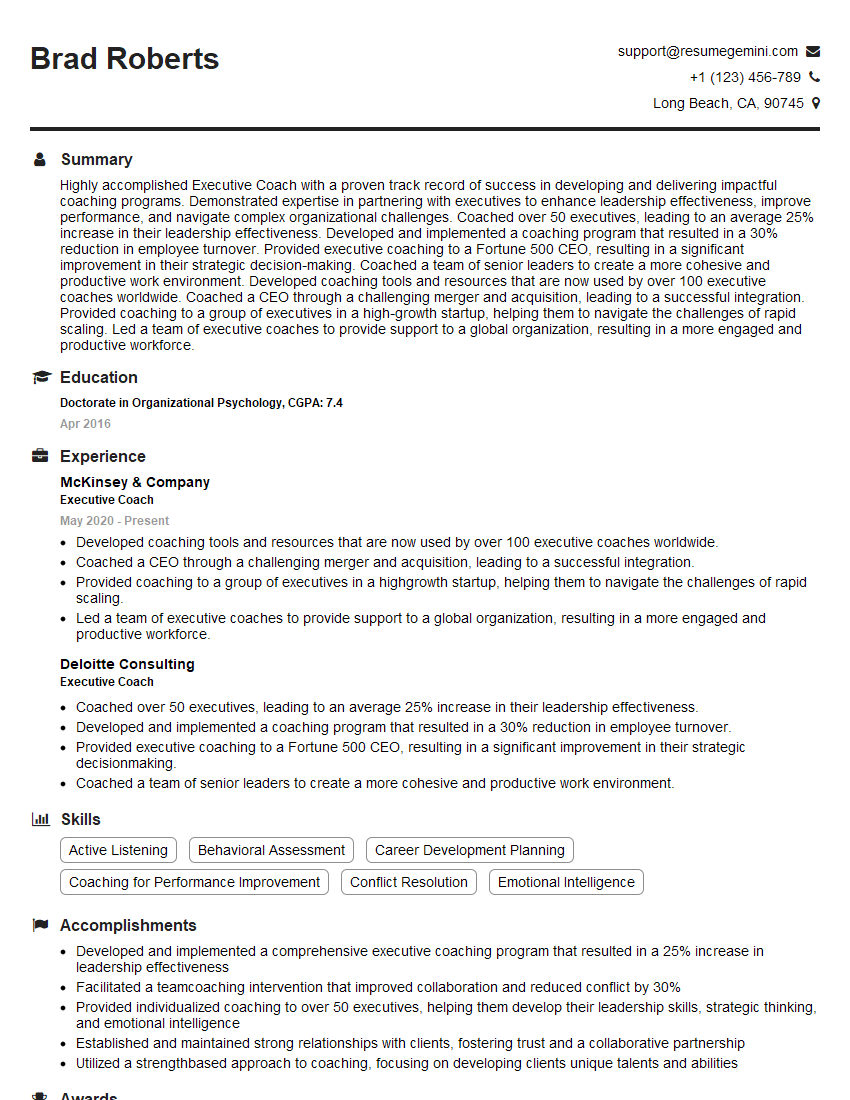
Executive Coach Resume Sample
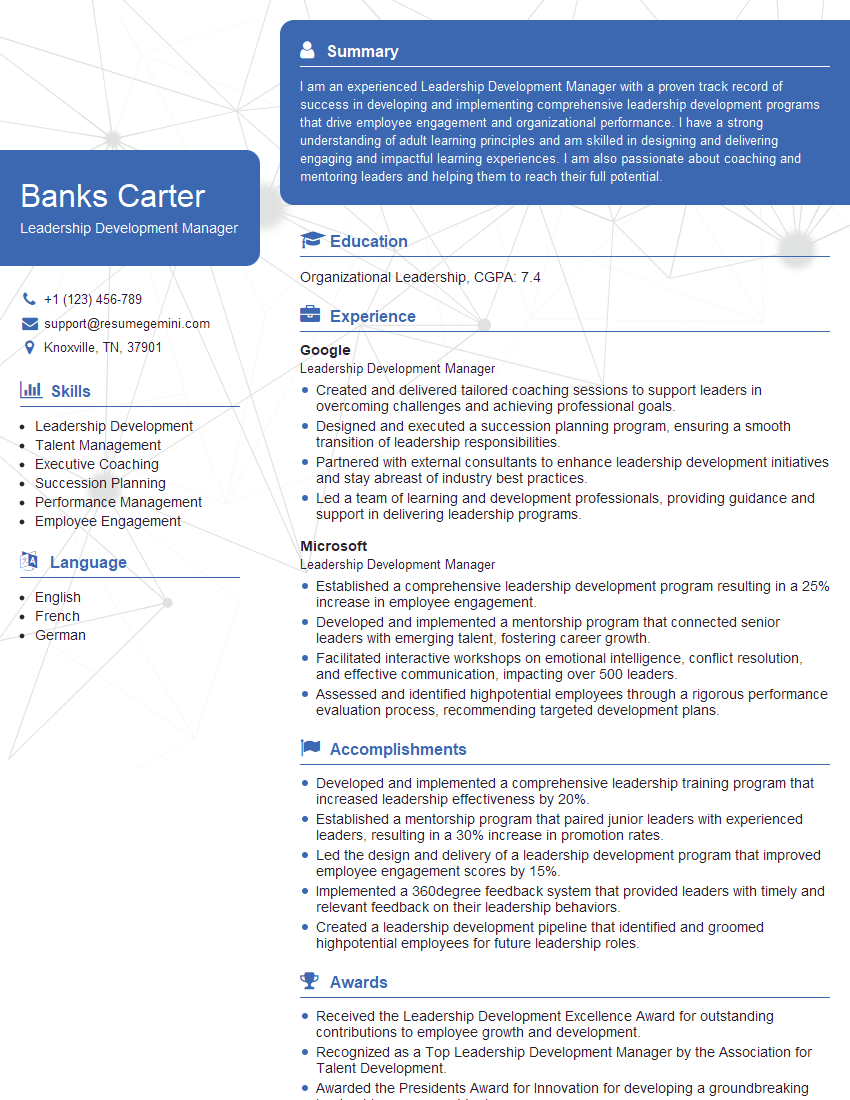
Leadership Development Manager Resume Sample
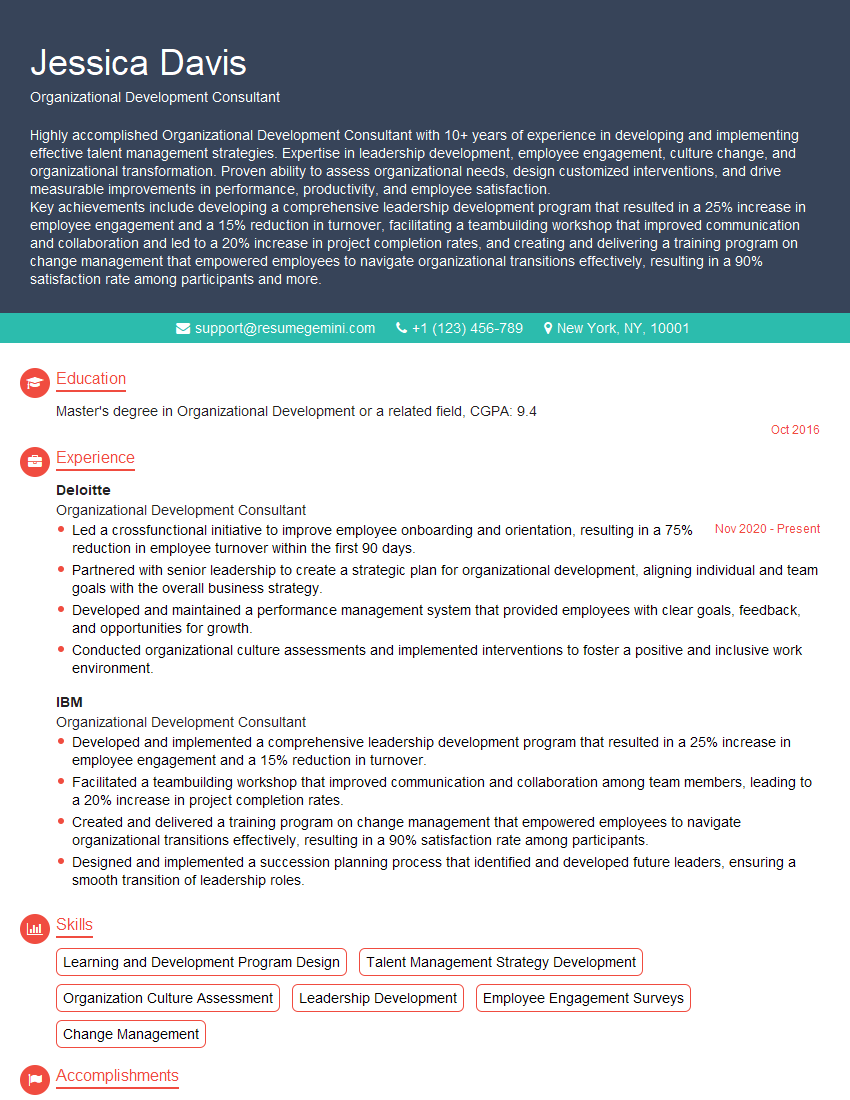
Organizational Development Consultant Resume Sample
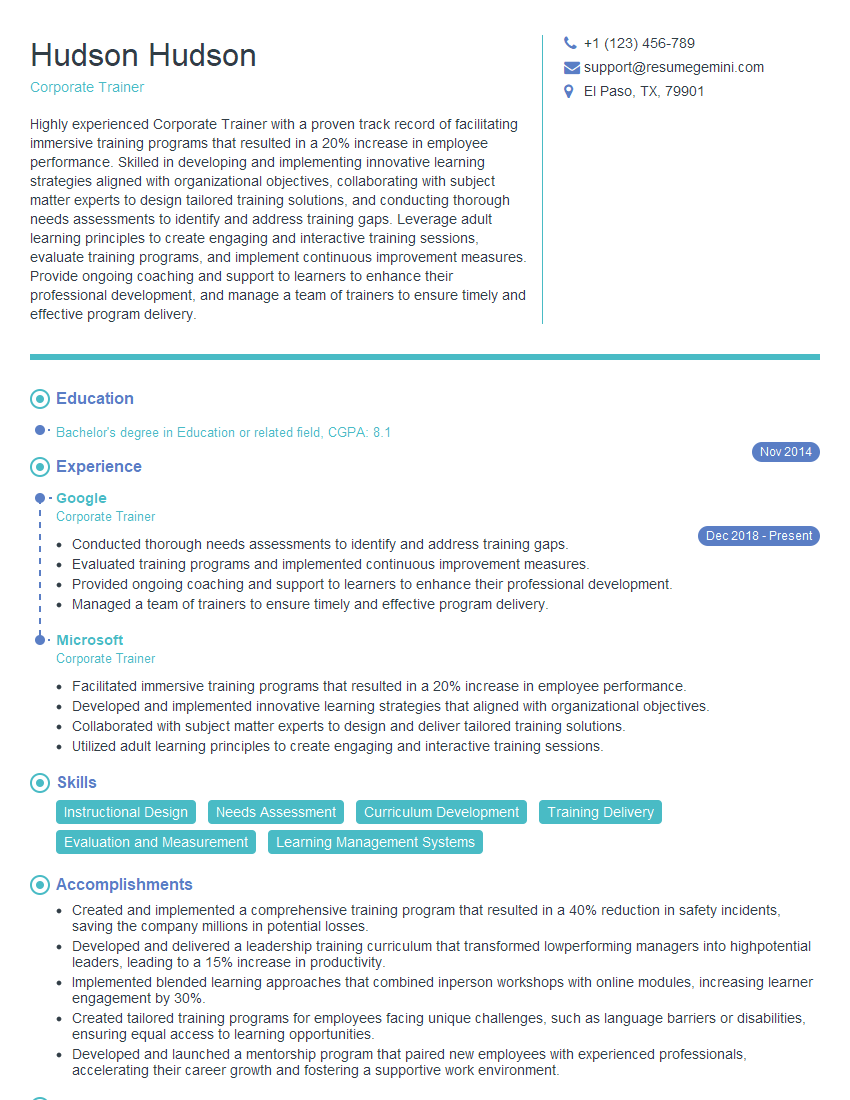
Corporate Trainer Resume Sample
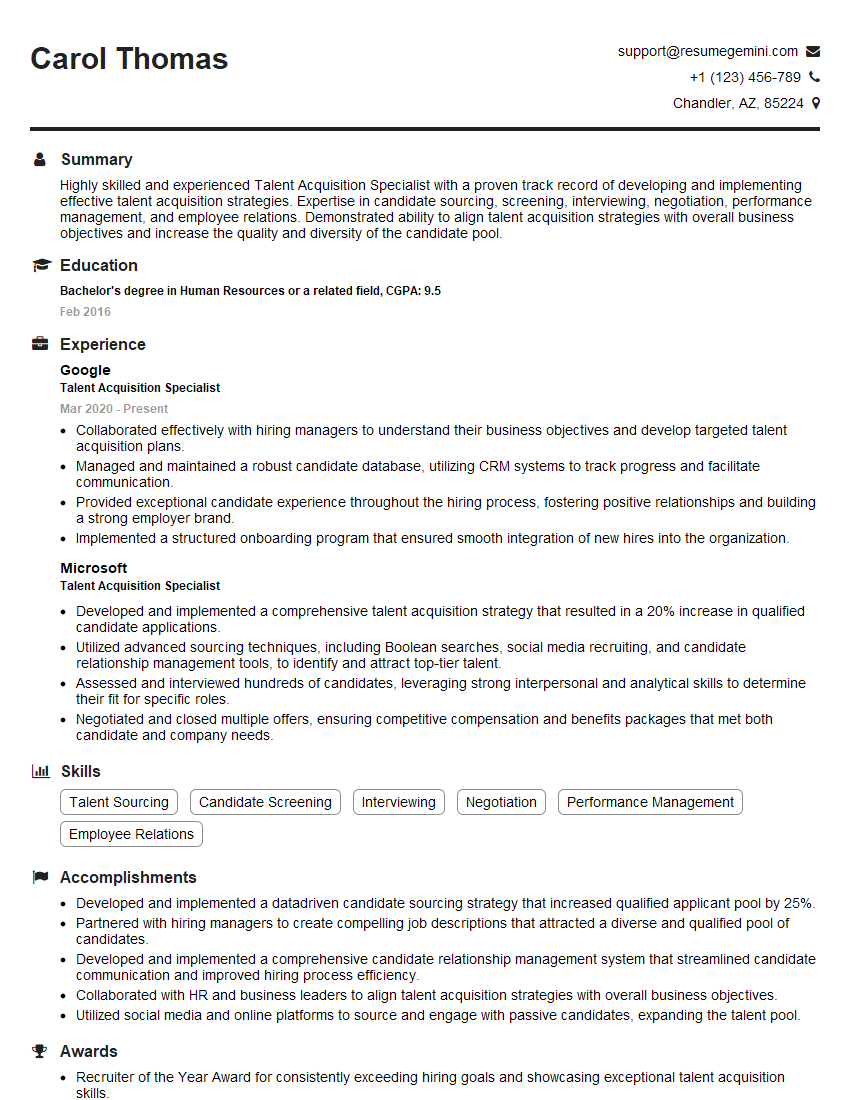
Talent Acquisition Specialist Resume Sample
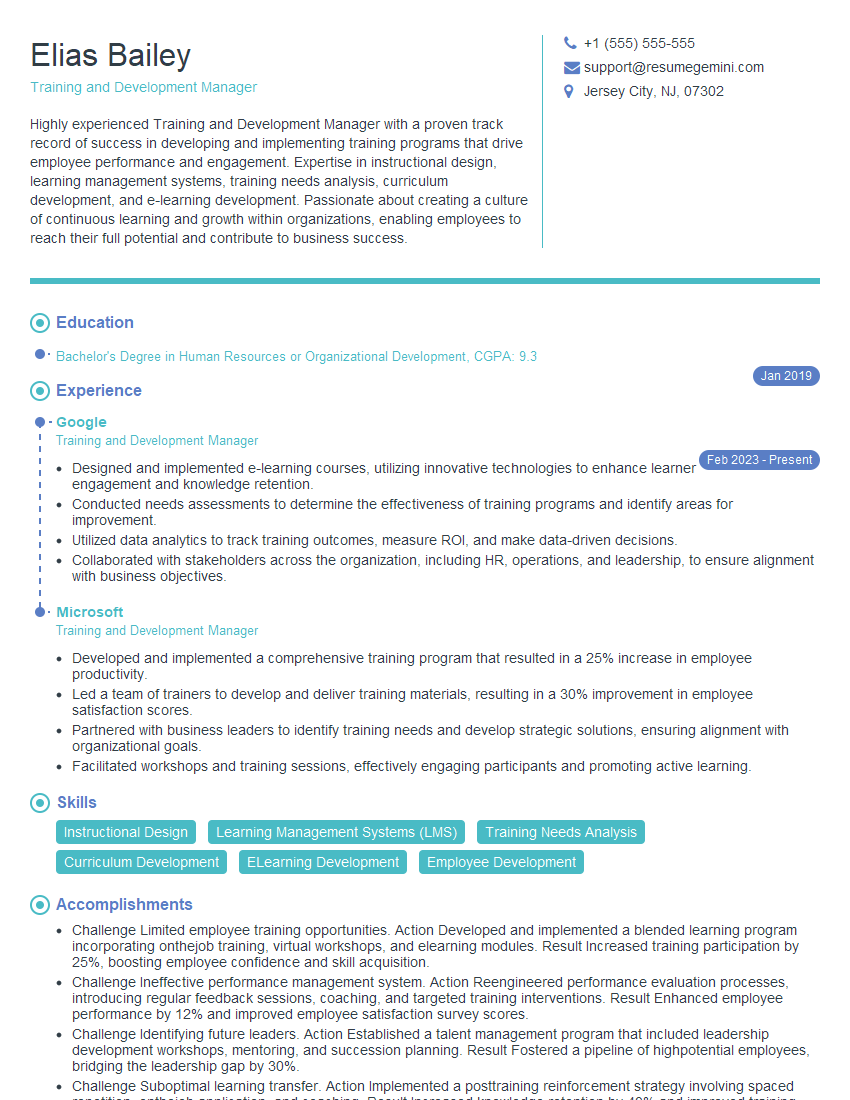
Training and Development Manager Resume Sample
Explore more articles
Users Rating of Our Blogs
Share Your Experience
We value your feedback! Please rate our content and share your thoughts (optional).
What Readers Say About Our Blog
I Redesigned Spongebob Squarepants and his main characters of my artwork.
https://www.deviantart.com/reimaginesponge/art/Redesigned-Spongebob-characters-1223583608
IT gave me an insight and words to use and be able to think of examples
Hi, I’m Jay, we have a few potential clients that are interested in your services, thought you might be a good fit. I’d love to talk about the details, when do you have time to talk?
Best,
Jay
Founder | CEO