Preparation is the key to success in any interview. In this post, we’ll explore crucial Escrow Software Proficiency interview questions and equip you with strategies to craft impactful answers. Whether you’re a beginner or a pro, these tips will elevate your preparation.
Questions Asked in Escrow Software Proficiency Interview
Q 1. Describe your experience with different escrow software platforms.
My experience spans several leading escrow software platforms, including (but not limited to) Software A, Software B, and Software C. Software A is particularly strong in its reporting capabilities, while Software B excels in its user-friendly interface for managing complex multi-party transactions. Software C, on the other hand, offers robust security features ideal for handling high-value transactions. My proficiency extends beyond basic data entry; I’m adept at configuring custom workflows, integrating with third-party systems (such as title companies’ databases), and leveraging advanced features like automated reconciliation and e-signature integrations. I’ve used these platforms in various contexts – from handling small residential closings to large-scale commercial real estate deals, consistently demonstrating my ability to adapt to different software environments and meet specific client needs.
Q 2. Explain the process of opening and closing an escrow account.
Opening an escrow account involves several key steps. First, the escrow agent (me, in this case) receives instructions from the parties involved (buyer and seller, typically). This includes details about the property, the purchase price, and any contingencies. Next, the parties fund the escrow account; this might involve wire transfers, checks, or electronic funds transfers. Once funds are confirmed, the agent begins managing the transaction, carefully tracking all funds and documents. Closing the account requires fulfilling all conditions outlined in the escrow instructions, which usually involves the transfer of funds to the seller, the recording of the deed, and disbursement of any remaining funds to the appropriate parties. Finally, the account is formally closed, with a detailed accounting of all transactions provided to all parties involved. Think of it like managing a carefully choreographed dance – every step must be precise and timed perfectly to avoid any delays or issues.
Q 3. How do you ensure compliance with regulatory requirements in escrow transactions?
Compliance is paramount. I stay updated on all relevant federal, state, and local regulations regarding escrow transactions. This includes maintaining strict adherence to record-keeping requirements (both digital and physical), following all anti-money laundering (AML) and know-your-customer (KYC) protocols, and ensuring that all transactions are properly documented and auditable. For instance, I always verify the identities of all parties involved, diligently monitor transactions for suspicious activity, and maintain comprehensive audit trails for all actions taken within the escrow account. Regular internal audits and compliance training are also essential components of my approach. Non-compliance can lead to severe penalties, and I’m committed to preventing any such issues.
Q 4. What are the key differences between residential and commercial escrow processes?
While both residential and commercial escrow share core principles, there are significant differences. Residential escrow tends to be less complex, often involving simpler transactions with fewer parties and conditions. Commercial escrow, on the other hand, frequently involves intricate deals with multiple parties, complex financing arrangements, and substantial due diligence. For example, commercial transactions might involve environmental reviews, lease agreements, and sophisticated financing structures, while residential deals are usually more straightforward. The timelines are also different; commercial closings often take significantly longer than residential closings due to the increased complexity. My experience allows me to smoothly navigate the unique challenges presented by both types of transactions.
Q 5. Describe your experience with reconciliation of escrow accounts.
Reconciliation is a crucial step to ensure the accuracy of the escrow account. It involves comparing the escrow account records against the supporting documentation, including bank statements, invoices, and disbursement records. I meticulously review every entry, making sure that all debits and credits are accounted for, and that the balance reflects the actual amount of funds in the account. This process is critical for identifying any discrepancies or errors before the closing, preventing potential delays or disputes. I employ a systematic approach using spreadsheet software and escrow software’s built-in reporting features to ensure a comprehensive and accurate reconciliation. A thorough reconciliation is like a financial health check for the escrow account, making sure everything is in perfect order.
Q 6. How do you handle discrepancies or errors in escrow transactions?
Handling discrepancies requires a methodical approach. First, I isolate the specific discrepancy and gather all related documentation. Then, I carefully examine the source of the error, whether it’s a data entry mistake, a miscalculation, or a missing document. Once the root cause is identified, I immediately work with all parties involved to rectify the issue. This might involve contacting the buyer or seller, their agents, the lender, or other relevant stakeholders. Transparent communication is essential during this process, keeping all parties informed every step of the way. For serious discrepancies, legal counsel might be necessary. The goal is always to resolve the error swiftly and accurately, ensuring all parties are satisfied and the transaction can proceed smoothly.
Q 7. Explain your experience using reporting features in escrow software.
I’m proficient in utilizing the reporting features available in different escrow software platforms. This includes generating various reports such as account summaries, transaction histories, reconciliation statements, and customized reports for different stakeholders. For example, I can easily create a report showing all disbursements made from an escrow account, detailing the date, amount, payee, and purpose of each disbursement. These reports are invaluable for internal auditing, providing information to clients, and ensuring transparency throughout the escrow process. My ability to extract and analyze this data enables me to identify trends, improve efficiency, and proactively address potential issues. I’m also comfortable exporting data in various formats (CSV, PDF, etc.) to meet specific client needs.
Q 8. How do you manage and prioritize multiple escrow accounts simultaneously?
Managing multiple escrow accounts effectively requires a robust system and a meticulous approach. I leverage a combination of project management techniques and the features of my escrow software. Think of it like an orchestra conductor – each account is an instrument, and I need to ensure each plays its part harmoniously and on time.
- Prioritization Matrix: I use a prioritization matrix to categorize accounts based on urgency and complexity. Accounts nearing closing deadlines or with complex issues receive higher priority.
- Software Features: My escrow software allows me to create custom workflows, set reminders, and assign tasks to streamline processes and allocate time effectively. For example, automated email notifications keep me abreast of crucial deadlines and trigger specific tasks.
- Regular Review: I conduct daily reviews of my active accounts to ensure each is progressing as planned. This helps proactively identify potential delays and address them quickly.
- Time Blocking: I allocate specific time blocks to focus on individual accounts, minimizing distractions and promoting efficient workflow.
For instance, I recently handled 15 simultaneous escrow accounts, prioritizing a particularly complex commercial transaction needing immediate attention while ensuring other closings met their deadlines. Effective prioritization, coupled with smart technology use, avoids missed deadlines and maintains quality throughout.
Q 9. How do you maintain accurate records and documentation throughout the escrow process?
Maintaining accurate records is paramount in escrow. Think of it as building a meticulously detailed blueprint for a house – any error can lead to significant problems. My approach hinges on utilizing the software’s features, adhering to strict company procedures, and employing best practices.
- Digital Documentation: All documents, from escrow instructions to closing statements, are securely stored and organized electronically within the escrow software’s system. This ensures easy access and auditability.
- Version Control: My software maintains version control, allowing me to track changes and revisions to documents. This helps me manage different stages of a transaction and maintain an accurate history.
- Regular Reconciliation: I regularly reconcile the escrow account’s balance with the records in the software to identify and correct any discrepancies immediately. This minimizes the risk of errors and ensures accountability.
- Detailed Audit Trails: The software provides detailed audit trails documenting all actions taken on each account. This level of transparency helps in resolving any disputes and ensures compliance.
In one instance, a minor discrepancy was detected during reconciliation, which was traced back to a typo in the initial deposit. The audit trail facilitated swift identification and correction of the issue, preventing potential complications.
Q 10. What is your experience with electronic signatures and digital closing processes?
Electronic signatures and digital closing processes have revolutionized the escrow industry, significantly improving efficiency and reducing paperwork. I’m highly proficient in using various e-signature platforms and digital closing software.
- e-Signature Platforms: I’m experienced with popular platforms such as DocuSign and Adobe Sign, ensuring secure and legally compliant electronic signatures on all essential documents.
- Digital Closing Software: I’m comfortable with various platforms designed for remote closings, allowing for streamlined document sharing, real-time collaboration, and efficient processing of funds.
- Compliance: I’m well-versed in legal and regulatory requirements concerning electronic signatures and digital closing in my jurisdiction, ensuring all transactions meet compliance standards.
Recently, a client who was located overseas was able to seamlessly complete a closing using a digital closing platform and e-signatures, highlighting the efficiency and accessibility these technologies offer.
Q 11. How familiar are you with different types of escrow instructions?
I’m familiar with a wide range of escrow instructions, each tailored to specific transaction types. Understanding these nuances is key to a smooth closing. It’s like understanding different blueprints for various types of houses – each has its unique specifications.
- Residential Escrow Instructions: I handle standard instructions for single-family homes, condos, and townhouses, including purchase agreements, financing documents, and closing disclosures.
- Commercial Escrow Instructions: I’m experienced in handling more complex instructions for commercial properties, involving leases, mortgages, and significant due diligence processes.
- Short Sale Escrow Instructions: I’m adept at handling the unique requirements and processes involved in short sale transactions, including lender negotiations and approvals.
- Refinancing Escrow Instructions: I’m proficient in handling instructions for refinancing transactions, encompassing payoffs of existing loans and disbursements of new funds.
My experience allows me to quickly identify potential issues or ambiguities within any set of instructions, proactively addressing them to prevent delays.
Q 12. Describe your experience with handling complex escrow transactions.
Handling complex escrow transactions requires a systematic approach and strong problem-solving skills. I’ve managed several challenging situations successfully, employing critical thinking and a meticulous attention to detail.
- Title Disputes: I have successfully navigated title disputes, collaborating with title companies and legal counsel to ensure a smooth resolution.
- Contingency Management: I effectively manage transactions with complex contingencies, such as those involving appraisals, inspections, or financing approvals.
- Multi-Party Transactions: I proficiently handle transactions involving multiple parties, including partnerships, LLCs, and trusts.
- International Transactions: I have experience managing the intricacies of international transactions, including currency conversion and compliance with relevant regulations.
One notable example was a complex commercial transaction involving multiple buyers and sellers, each with unique financial and legal requirements. Through careful planning and proactive communication, I successfully facilitated the transaction, achieving a timely and satisfactory closing for all involved parties.
Q 13. How do you address client inquiries and concerns efficiently?
Addressing client inquiries and concerns efficiently is crucial for building trust and ensuring a smooth escrow process. I believe in prompt, clear, and proactive communication.
- Prompt Response: I aim to respond to all client inquiries within 24 hours, ensuring they feel valued and informed.
- Clear Communication: I use plain language to explain complex concepts, ensuring clients understand the process and their role in it.
- Proactive Updates: I proactively provide updates on the progress of the transaction, rather than waiting for clients to ask.
- Multiple Communication Channels: I’m comfortable using email, phone, and secure messaging platforms to communicate with clients based on their preference.
Recently, I managed to alleviate a client’s anxieties regarding a potential delay by explaining the circumstances clearly and proactively suggesting alternative solutions. This proactive communication fostered trust and built a strong client relationship.
Q 14. What is your proficiency in using escrow software for title searches?
My escrow software proficiency extends to effectively utilizing its features for title searches. While I don’t personally conduct the searches (that’s typically handled by a title company), I leverage the software to integrate and manage the results.
- Data Integration: My software integrates with title companies’ databases, allowing for seamless import of title reports and other relevant documentation.
- Document Management: I use the software to organize and manage all title-related documents, ensuring they are readily accessible throughout the escrow process.
- Exception Reporting: I leverage the software’s reporting features to identify any potential title exceptions that could impact the closing.
- Collaboration: The software enables efficient communication and collaboration with title companies regarding title issues or questions.
This integration ensures I can efficiently review title reports, identify potential problems and coordinate with the title company to rectify any issues quickly and effectively, preventing delays in the closing process.
Q 15. How do you ensure the timely disbursement of funds in escrow accounts?
Ensuring timely disbursement of funds in escrow accounts requires a meticulous and systematic approach. It begins with clearly defined release conditions specified in the escrow agreement. These conditions, which might include successful property transfer, completion of construction, or fulfillment of contractual obligations, must be meticulously tracked.
My process involves using escrow software to create automated workflows. For example, I’ll set up alerts that notify me when a condition is met (e.g., a signed transfer document is uploaded). Once all conditions are satisfied and verified, the software facilitates the release of funds, securely and electronically transferring them to the designated recipient(s). This automated process minimizes delays caused by manual intervention, ensuring timely and accurate disbursement.
Regular reconciliation of the escrow account against the agreement’s terms is critical. This ensures that all funds are accounted for and that disbursements align precisely with the agreed-upon criteria. Should any discrepancy arise, a thorough investigation is immediately launched to identify and rectify the issue, preventing delays and potential disputes.
Career Expert Tips:
- Ace those interviews! Prepare effectively by reviewing the Top 50 Most Common Interview Questions on ResumeGemini.
- Navigate your job search with confidence! Explore a wide range of Career Tips on ResumeGemini. Learn about common challenges and recommendations to overcome them.
- Craft the perfect resume! Master the Art of Resume Writing with ResumeGemini’s guide. Showcase your unique qualifications and achievements effectively.
- Don’t miss out on holiday savings! Build your dream resume with ResumeGemini’s ATS optimized templates.
Q 16. Explain your experience with audit trails and escrow account tracking.
Audit trails are paramount in maintaining transparency and accountability within escrow. My experience involves using escrow software that generates comprehensive audit trails for every transaction, including detailed timestamps, user actions, and any modifications made to the account. This level of detail provides a complete history of all activities related to the escrow account, allowing for thorough reviews and dispute resolution if needed.
Account tracking is simplified through features like real-time dashboards providing an overview of all key metrics, including fund balances, pending releases, and transaction history. These dashboards enable swift identification of potential issues and allow me to proactively manage the escrow process, ensuring timely completion and minimizing risks.
For instance, in one case involving a large commercial property transaction, the detailed audit trail generated by the software helped us swiftly resolve a discrepancy concerning a late payment. The trail clearly showed the timing of the payment and resolved a potential misunderstanding between the parties involved.
Q 17. How do you deal with title defects or other potential issues during escrow?
Title defects or other issues during escrow are handled with a proactive and systematic approach. Upon identification of a potential problem (e.g., a lien on the property, a missing document), I immediately inform all parties involved and initiate a thorough investigation. This often includes consulting with title companies, legal counsel, or other relevant experts.
Depending on the nature of the issue, several strategies might be employed. This could involve negotiating with lien holders to resolve the issue, obtaining additional documentation to clarify the title, or working with the buyer and seller to adjust the contract terms to account for the defect. The goal is always to find a mutually agreeable solution that protects the interests of all parties and ensures a smooth completion of the transaction.
For example, a recent case involved a missing easement. We promptly contacted the relevant authorities, obtained the necessary documentation, and updated the escrow documents accordingly, preventing a potential delay or even termination of the transaction.
Q 18. What is your experience with escrow software integrations with other systems?
I have extensive experience integrating escrow software with various other systems, including CRM (Customer Relationship Management), accounting systems, and real estate platforms. These integrations streamline the escrow process, reducing manual data entry and minimizing the risk of human error. They often facilitate the automation of tasks, such as generating reports, sending notifications, and updating account balances.
For example, integration with a CRM system allows me to automatically update client information and track the progress of escrow transactions within a centralized system. Integration with accounting systems ensures accurate and timely reconciliation of escrow accounts with the overall financial records of the company.
Understanding API structures (Application Programming Interfaces) is key to successful integration. My experience spans working with various APIs, customizing integrations to meet specific needs, and troubleshooting integration issues.
Q 19. Describe your experience in troubleshooting and resolving technical issues with escrow software.
Troubleshooting and resolving technical issues with escrow software require a combination of technical expertise and problem-solving skills. My approach involves a systematic process of identifying the problem, isolating the cause, and implementing the appropriate solution.
This often begins with checking system logs for error messages and reviewing user activity. I’m proficient in using debugging tools to pinpoint the source of the problem. Solutions can range from simple configuration changes to more complex coding adjustments or system updates. Excellent communication is crucial, keeping all stakeholders informed throughout the process.
For instance, I once resolved a software glitch causing delays in transaction processing by identifying a conflict between the software and a recently installed security update. After coordinating with the software vendor to develop a patch, the issue was resolved within a few hours, minimizing disruption to our operations.
Q 20. How do you ensure data security and confidentiality within the escrow process?
Data security and confidentiality are paramount in escrow. We employ multiple layers of security to protect sensitive information, including encryption of data both in transit and at rest, access control measures using role-based permissions, regular security audits, and rigorous employee training on data security best practices. Compliance with relevant regulations such as GDPR and CCPA is strictly adhered to.
The escrow software itself plays a significant role. It’s critical to use software that incorporates robust security features, is regularly updated with security patches, and is hosted on secure infrastructure. We also implement measures like multi-factor authentication to enhance user security.
Regular backups of data are essential to ensure business continuity in case of unexpected events. A comprehensive disaster recovery plan is in place to handle any potential data loss scenario.
Q 21. What is your understanding of the legal aspects related to escrow transactions?
My understanding of the legal aspects related to escrow transactions is extensive. I’m familiar with various state and federal laws governing escrow practices, including regulations regarding licensing, record-keeping, and fiduciary responsibilities. I understand the importance of compliance with these regulations to avoid legal liabilities.
I’m well-versed in contract law, particularly as it relates to escrow agreements. I understand how these agreements define the rights and obligations of each party involved and the conditions for the release of funds. I’m aware of the implications of breaches of contract and the potential legal ramifications.
In addition, I understand the importance of adhering to ethical principles and maintaining a high level of professional conduct throughout the escrow process. I understand that a thorough understanding of relevant legal frameworks is crucial for mitigating risks and ensuring legal compliance.
Q 22. Explain your experience with different escrow funding methods.
My experience encompasses a wide range of escrow funding methods, from traditional wire transfers and cashier’s checks to increasingly popular electronic fund transfers (EFTs) and blockchain-based solutions. Understanding the nuances of each method is crucial for ensuring secure and timely transactions.
- Wire Transfers: A common and reliable method, offering speed and traceability. However, it’s susceptible to fraud if not properly vetted.
- Cashier’s Checks: Provide a level of security as they are guaranteed by the issuing bank, but they can be slower to process than EFTs.
- Electronic Fund Transfers (EFTs): These are becoming increasingly prevalent due to their speed, efficiency, and reduced risk of physical handling. Security protocols are critical for preventing unauthorized access.
- Blockchain-based Solutions: Emerging technologies offer enhanced security and transparency through immutable records. However, widespread adoption and regulatory clarity are still evolving.
Choosing the appropriate funding method involves considering factors such as the client’s preference, transaction size, risk tolerance, and regulatory compliance requirements. I always prioritize secure and compliant options while maintaining a streamlined process for the client.
Q 23. How do you calculate and process escrow closing costs?
Calculating and processing escrow closing costs involves meticulous attention to detail and a thorough understanding of all applicable fees and charges. This typically involves gathering all relevant documentation, including the purchase agreement, loan documents, and closing disclosures.
The process usually involves:
- Identifying all costs: This includes lender fees, appraisal fees, title insurance premiums, recording fees, transfer taxes, homeowner’s insurance, property taxes, and any other applicable charges. Each cost is carefully documented and verified.
- Allocating costs: Determining which party (buyer or seller) is responsible for each cost, as specified in the purchase agreement.
- Calculating the total: Accurately summing up all costs to determine the final closing costs for both buyer and seller.
- Processing payments: Managing the disbursement of funds according to the calculated closing costs, ensuring all parties receive their correct amounts.
Any discrepancies or questions are addressed immediately with all involved parties to maintain transparency and prevent delays. I use sophisticated escrow software to automate calculations, track payments, and generate accurate reports, minimizing errors and improving efficiency.
Q 24. What are your preferred methods for communicating with clients and stakeholders?
Effective communication is paramount in escrow. My preferred methods involve a multi-faceted approach to ensure clear, timely, and comprehensive communication with all stakeholders.
- Secure email: Used for formal documentation and updates, prioritizing data security and compliance.
- Project management software: Tools like Asana or Trello allow for centralized communication, task tracking, and document sharing, enhancing transparency and collaboration.
- Regular phone calls/video conferencing: Offer a personal touch, enabling immediate clarification and building rapport with clients and stakeholders.
- Secure portal access: Clients have secure access to view transaction progress, documents, and communicate directly within the system.
I tailor my communication style to each individual and maintain detailed records of all interactions. Proactive and transparent communication helps mitigate misunderstandings and ensures a smooth closing process.
Q 25. Describe your experience with managing escrow disputes.
Managing escrow disputes requires a calm, methodical approach, focusing on fair resolution while adhering to legal and ethical guidelines. My experience includes:
- Thorough documentation review: Carefully examining all relevant documents to identify the root cause of the dispute.
- Facilitation of communication: Serving as a neutral mediator to facilitate open communication between disputing parties.
- Legal counsel consultation: Seeking legal advice when necessary to ensure compliance and protect all parties involved.
- Arbitration or mediation: Utilizing alternative dispute resolution (ADR) methods when appropriate to reach a mutually agreeable solution.
- Escalation to litigation: As a last resort, referring the matter to legal proceedings if amicable resolution cannot be achieved.
I prioritize preserving positive relationships throughout the process, even during difficult circumstances. My goal is always to find a fair and efficient resolution that protects the interests of all parties involved.
Q 26. How do you stay updated with changes in escrow regulations and best practices?
Staying updated on escrow regulations and best practices is an ongoing commitment. I achieve this through multiple avenues:
- Professional memberships: Active participation in relevant professional organizations provides access to continuing education, networking opportunities, and industry insights.
- Industry publications and newsletters: Regularly reviewing industry publications and newsletters keeps me abreast of the latest changes in laws, regulations, and best practices.
- Continuing education courses: Attending workshops and webinars allows me to delve deeper into specific topics and earn continuing education credits.
- Regulatory agency websites: Regularly checking the websites of relevant regulatory agencies ensures I remain up-to-date on any changes impacting the industry.
- Networking with peers: Engaging with colleagues and peers in the industry fosters knowledge sharing and collaboration.
Continuous learning ensures I can provide the most accurate, efficient, and compliant services to my clients.
Q 27. What are your strengths and weaknesses in relation to escrow software proficiency?
My strengths lie in my proficiency with various escrow software platforms, including [mention specific software names, e.g., RamQuest, SoftPro, RESPA], and my ability to quickly adapt to new systems. I excel at automating processes, generating accurate reports, and managing complex transactions efficiently.
A potential area for improvement is my ongoing exploration of emerging technologies, such as AI-powered solutions for fraud detection and risk management. I am actively seeking opportunities to expand my knowledge and expertise in this area to enhance my efficiency and effectiveness.
Q 28. Describe a time you had to solve a challenging problem within an escrow transaction.
During a complex commercial real estate transaction, a significant funding discrepancy emerged just days before closing. The buyer’s wire transfer was significantly lower than the agreed-upon amount, creating a substantial shortfall.
My immediate response involved a calm, thorough investigation. I carefully reviewed all documentation, contacted the buyer’s lender, and confirmed the discrepancy wasn’t due to fraud, but rather an oversight in the wire instructions. We discovered a miscommunication between the buyer’s financial institution and their escrow agent.
I immediately worked with both parties to correct the error and ensure the remaining funds were wired promptly. I kept all parties informed through clear and concise updates, maintaining transparency throughout the stressful situation. Thanks to proactive communication and swift action, we managed to successfully complete the closing on schedule, avoiding any significant delays or complications.
Key Topics to Learn for Escrow Software Proficiency Interview
- Understanding Escrow Processes: Master the fundamental principles of escrow, including the roles of parties involved (buyer, seller, escrow agent), and the different stages of a typical escrow transaction.
- Software Functionality: Develop a comprehensive understanding of the specific escrow software you’re interviewing for. Familiarize yourself with its core features, including document management, transaction tracking, communication tools, and reporting capabilities.
- Data Entry and Management: Practice accurate and efficient data entry, ensuring data integrity and compliance with regulations. Understand how to manage and reconcile discrepancies in data.
- Compliance and Regulations: Gain a strong grasp of relevant legal and regulatory requirements pertaining to escrow transactions and data security. This includes understanding best practices for data privacy and security protocols.
- Reporting and Analysis: Learn how to generate reports and analyze data to identify trends and potential issues. Practice interpreting key performance indicators (KPIs) relevant to escrow operations.
- Problem-Solving and Troubleshooting: Develop your skills in identifying and resolving common issues encountered during escrow transactions. Practice using the software’s troubleshooting tools and resources.
- Communication and Collaboration: Practice effective communication techniques for interacting with clients, colleagues, and other stakeholders involved in escrow transactions. Understand the importance of clear and concise communication in resolving conflicts.
- Security Best Practices: Understand and adhere to robust security protocols to ensure the confidentiality and integrity of sensitive escrow data. This includes password management, data encryption, and access control measures.
Next Steps
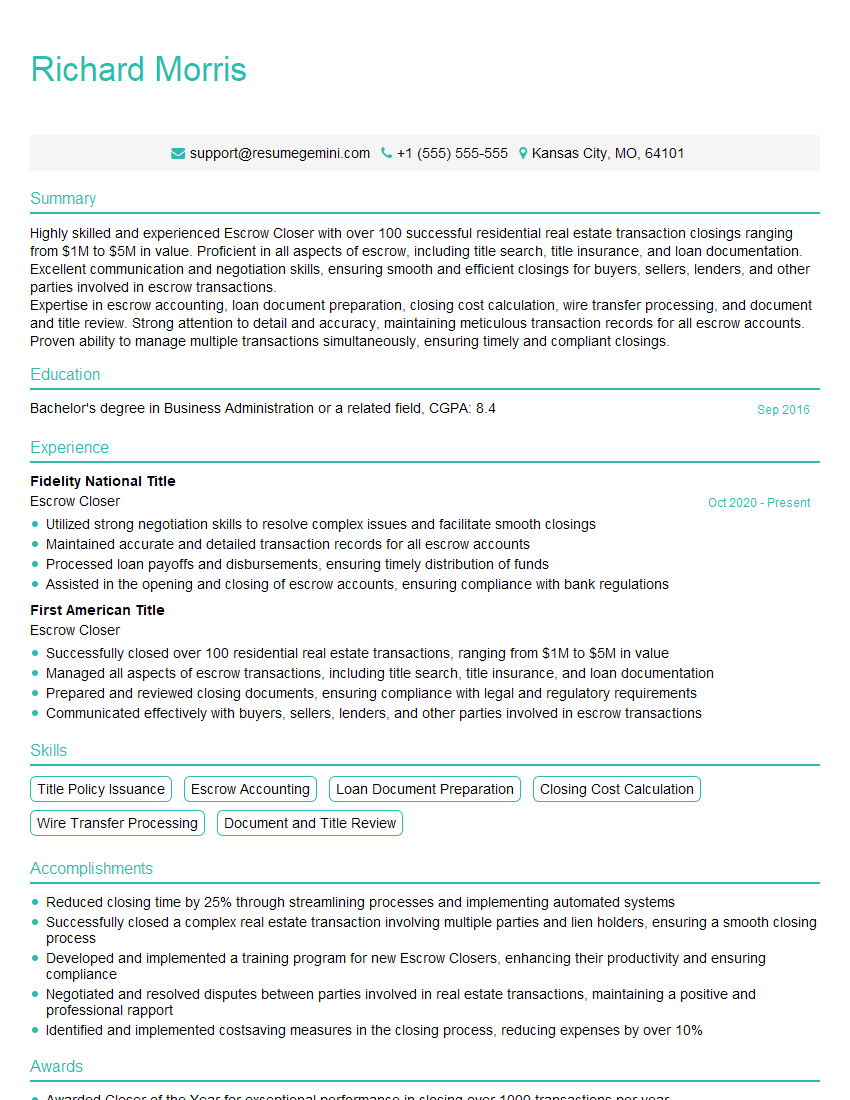
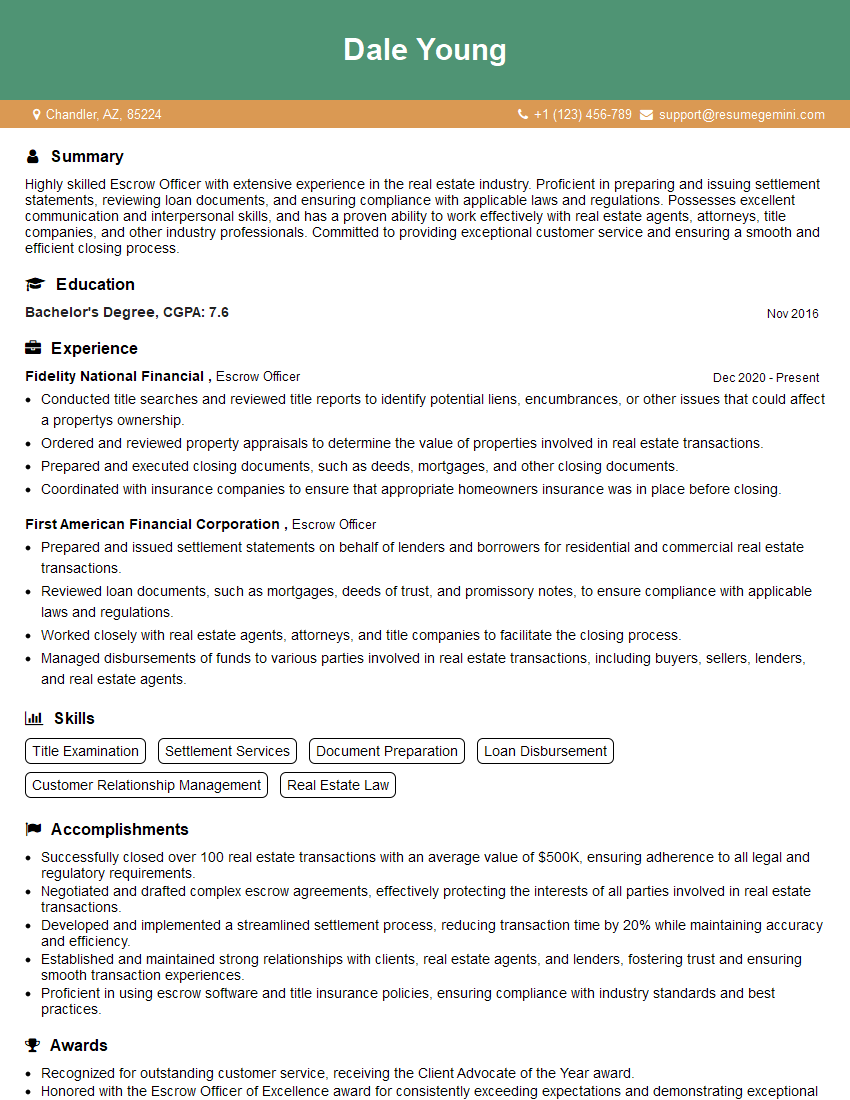
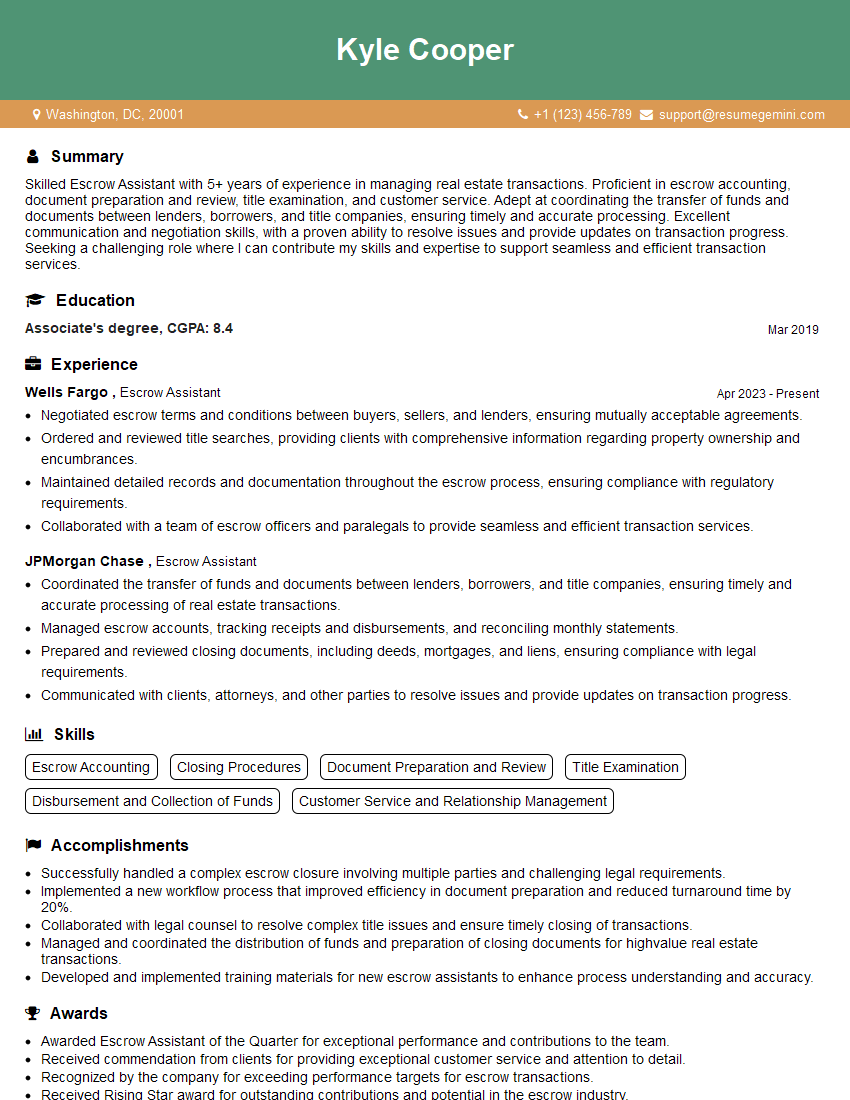
Mastering Escrow Software Proficiency is crucial for career advancement in the real estate and financial industries. It demonstrates a commitment to accuracy, efficiency, and compliance, opening doors to more senior roles and higher earning potential. To maximize your job prospects, crafting a strong, ATS-friendly resume is essential. ResumeGemini is a trusted resource to help you build a professional and impactful resume that highlights your skills and experience effectively. Examples of resumes tailored to Escrow Software Proficiency are available, showcasing how to present your expertise in the best light.
Explore more articles
Users Rating of Our Blogs
Share Your Experience
We value your feedback! Please rate our content and share your thoughts (optional).
What Readers Say About Our Blog
I Redesigned Spongebob Squarepants and his main characters of my artwork.
https://www.deviantart.com/reimaginesponge/art/Redesigned-Spongebob-characters-1223583608
IT gave me an insight and words to use and be able to think of examples
Hi, I’m Jay, we have a few potential clients that are interested in your services, thought you might be a good fit. I’d love to talk about the details, when do you have time to talk?
Best,
Jay
Founder | CEO