Feeling uncertain about what to expect in your upcoming interview? We’ve got you covered! This blog highlights the most important Exhibition Design and Development interview questions and provides actionable advice to help you stand out as the ideal candidate. Let’s pave the way for your success.
Questions Asked in Exhibition Design and Development Interview
Q 1. Describe your experience with different exhibition design software.
My experience with exhibition design software is extensive, spanning both 2D and 3D applications. I’m proficient in industry-standard software like Vectorworks, AutoCAD, and SketchUp for architectural planning and detailed design. For 3D visualization and rendering, I utilize programs such as Cinema 4D and Lumion, creating photorealistic renderings to effectively communicate design concepts to clients. Furthermore, I’m adept at using Adobe Creative Suite (Photoshop, Illustrator, InDesign) for graphic design elements, branding, and final presentation materials. My skill set allows me to seamlessly transition between different software packages depending on the project’s specific requirements and budget. For example, on a recent project with a tight deadline, I leveraged SketchUp’s speed for initial modeling and then moved to Cinema 4D for higher-quality renderings focusing on key exhibit areas, optimizing efficiency without compromising quality.
Q 2. Explain your process for developing a design concept from initial brief to final presentation.
My design process is iterative and client-centric, beginning with a thorough understanding of the client’s brief. This involves detailed discussions to clarify their objectives, target audience, brand identity, message, and budget. Next, I conduct thorough research, analyzing competitors and industry trends to inform innovative design solutions. Then, I develop multiple design concepts, presenting them visually through mood boards, sketches, and preliminary 3D models. Client feedback is crucial at this stage, shaping the final design direction. Once approved, I move to detailed design development, including technical drawings, material specifications, and lighting plans. The final presentation includes photorealistic renderings, detailed cost breakdowns, and a comprehensive project timeline. For example, for a museum exhibit on ancient civilizations, the initial brief focused on engaging a young audience. My research led to the incorporation of interactive touchscreens and playful elements, resulting in a design that successfully connected with the target demographic.
Q 3. How do you handle budget constraints in exhibition design?
Budget constraints are a common reality in exhibition design, and I address them proactively. My approach begins with a clear understanding of the client’s budget from the outset. I then develop design options that prioritize value engineering, exploring cost-effective materials, fabrication methods, and construction techniques without compromising the overall design integrity or visual impact. For instance, I might propose using modular designs for reusability, reducing long-term costs. I also actively engage in collaborative discussions with fabricators and suppliers to source competitive pricing and explore alternative materials that achieve the desired aesthetic while staying within budget. Transparency is key; I provide clients with detailed cost breakdowns, highlighting areas where savings can be made, ensuring informed decision-making. In one project, by strategically using readily available materials and opting for efficient fabrication techniques, I managed to deliver a stunning exhibit within a significantly reduced budget compared to the initial estimates.
Q 4. What are your preferred methods for client communication and collaboration?
Client communication and collaboration are paramount. I leverage a multi-faceted approach, utilizing regular meetings – both in-person and virtual – to maintain open communication. Project management software, such as Asana or Trello, is employed to track progress, share files, and manage revisions efficiently. Detailed presentations, including 3D renderings and comprehensive documentation, are used to keep clients informed at every stage. Feedback is actively solicited and incorporated throughout the process, ensuring the final design reflects the client’s vision. I also employ email and phone calls for quick updates and clarifications. Building a strong rapport based on trust and transparency is critical for effective collaboration. This approach ensures that the client feels actively involved and informed, leading to a collaborative and successful project outcome.
Q 5. Describe your experience with 3D modeling and visualization software for exhibitions.
I possess extensive experience in 3D modeling and visualization software, specifically Cinema 4D and SketchUp. These tools allow me to create detailed 3D models of exhibition spaces, incorporating all design elements such as exhibits, lighting, and visitor flow. I use these models to produce photorealistic renderings that provide clients with a realistic preview of the finished exhibition, enabling them to identify and address potential issues early in the design process. Furthermore, virtual walkthroughs generated from these models offer a highly immersive experience, aiding in client comprehension and approval. For example, in designing a large-scale technology exhibition, the use of 3D modeling and virtual walkthroughs allowed the client to experience the spatial layout, lighting, and overall ambiance before construction commenced, resulting in a significant reduction in unforeseen issues during the implementation phase.
Q 6. How do you ensure accessibility in your exhibition designs?
Accessibility is a critical consideration in all my exhibition designs. I adhere to ADA (Americans with Disabilities Act) guidelines and other relevant accessibility standards, ensuring that exhibits are usable and enjoyable for visitors with disabilities. This includes features such as ramp access, appropriate signage with clear font sizes and tactile elements for visually impaired visitors, audio descriptions for exhibits, and adequate space for wheelchair maneuverability. Careful consideration is given to lighting levels, minimizing glare and providing sufficient illumination for low-vision visitors. Interactive elements are designed with diverse user needs in mind, incorporating alternative input methods like voice control and large, easily operable buttons. Thoughtful planning and early integration of accessibility features are crucial to delivering inclusive exhibitions that welcome all visitors.
Q 7. Explain your approach to integrating interactive elements into an exhibition.
Integrating interactive elements is a key aspect of creating engaging and memorable exhibitions. My approach starts with defining the educational or entertainment goals of the interaction. The type of interaction is carefully selected based on the exhibit’s context and target audience. This can range from simple touchscreens to complex augmented reality experiences, depending on the project’s scope and budget. I collaborate closely with technology specialists to ensure seamless integration of hardware and software, focusing on intuitive user interfaces and user-friendly interactions. User testing plays a critical role in evaluating the effectiveness and accessibility of the interactive elements, allowing for necessary adjustments before final implementation. For instance, in a science museum exhibit, we incorporated interactive simulations that allowed visitors to manipulate variables and observe the results, making abstract concepts more tangible and engaging.
Q 8. How do you manage the logistics of exhibition installation and dismantling?
Managing the logistics of exhibition installation and dismantling is crucial for a successful event. It requires meticulous planning and coordination from the initial design phase to the final takedown. Think of it like orchestrating a complex symphony – every instrument (material, contractor, crew) needs to be in the right place at the right time.
- Pre-installation Planning: This involves securing permits, coordinating with venue management on access, scheduling delivery of materials and equipment, and briefing the installation crew on the design specifications. We create detailed floor plans and schedules, specifying the exact location of each element and the order of installation. For example, for a large trade show booth, electrical work might need to be completed before the walls are built.
- Installation Management: On-site supervision is essential. I oversee the process, ensuring adherence to the schedule and the quality of work. This includes managing contractors, addressing any unexpected issues (e.g., damaged materials, equipment malfunctions), and maintaining regular communication with the client.
- Dismantling and Post-Show Logistics: This involves careful disassembly of the exhibit, packaging materials securely, and coordinating transportation back to storage. We use checklists and photographic records to track materials and ensure nothing is left behind. Efficient dismantling minimizes downtime and reduces the risk of damage.
For a recent museum exhibit, we used a sophisticated project management software to track every material and crew member’s activity, preventing delays and ensuring a smooth installation and dismantling process. This digital approach allows for clear communication and real-time adjustments as needed.
Q 9. Describe your experience with different exhibition materials and their properties.
Experience with a wide range of exhibition materials is essential. Each material offers unique properties impacting aesthetics, durability, and cost-effectiveness. Choosing the right material is a balancing act.
- Wood: Offers warmth and a natural feel, suitable for creating custom structures. However, it can be expensive and requires careful finishing to protect against damage.
- Metal (Aluminum, Steel): Durable and easily customizable, perfect for larger, more robust structures. Steel can be heavy, while aluminum offers a lighter-weight alternative. Considerations include potential for rust and weight limits.
- Fabric: Lightweight and versatile, ideal for tension fabric displays and backdrops, but prone to tearing or staining.
- Acrylic/Plexiglass: Clear and modern, perfect for showcasing products or creating sleek displays, but can scratch easily and is relatively fragile.
- Sustainable Materials: Increasingly, clients opt for recycled or reclaimed materials, such as repurposed wood or eco-friendly fabrics. This reflects a growing emphasis on environmental responsibility within the industry.
In a past project, we used reclaimed wood for the flooring and walls of a sustainable energy exhibit, creating a rustic yet sophisticated atmosphere while aligning with the exhibit’s theme. The choice of materials directly impacted the overall aesthetic and message.
Q 10. How do you ensure the structural integrity and safety of an exhibition design?
Structural integrity and safety are paramount. A poorly designed exhibit can pose significant risks. My approach involves a multi-layered strategy:
- Engineering Expertise: We often collaborate with structural engineers, particularly for large-scale installations or exhibits that involve complex designs. They perform load calculations and ensure the structure can withstand anticipated loads, such as crowds or environmental factors.
- Building Codes and Regulations: We meticulously follow all relevant building codes and safety regulations, ensuring compliance with fire safety standards, accessibility guidelines, and weight restrictions.
- Material Selection: Material choice plays a crucial role. We opt for high-quality materials rated for the intended use and always consider weight limitations of the venue.
- Rigorous Testing: Where appropriate, mock-ups or prototypes are tested to ensure structural stability before final construction. This is especially important for innovative or unconventional designs.
- On-site Inspections: Regular on-site inspections during installation and throughout the exhibition ensure everything remains structurally sound and safe.
Imagine a large, suspended structure; the calculations and material selection become crucial to prevent collapse. We ensure multiple layers of safety checks are in place, from design to construction, to maintain the safety of visitors and staff.
Q 11. How do you balance aesthetics with functionality in exhibition design?
Balancing aesthetics and functionality is the core of effective exhibition design. It’s about creating an engaging experience without sacrificing practical considerations. This is achieved through iterative design and careful planning.
- User-Centric Design: We prioritize the visitor experience. How will people navigate the space? Is the information clearly presented? Is there enough room for comfortable viewing and interaction?
- Form Follows Function: The design should enhance the functionality. For example, a well-designed lighting scheme can highlight key exhibits while also creating a specific mood. Interactive elements should be intuitive and easy to use.
- Material and Color Palette: Material choices significantly impact both aesthetics and functionality. Durable materials enhance the functionality, while color choices influence the overall mood and branding.
- Space Planning: Effective space planning maximizes the available area while ensuring a logical flow and ample space for visitors. This enhances both the aesthetic appeal and the overall functionality.
In one project, we designed a curved wall to showcase product prototypes. This created a visually striking display while also optimizing the available space, demonstrating the seamless blend of form and function.
Q 12. Describe your experience with project management methodologies in exhibition design.
Project management methodologies are vital in exhibition design, given the complex nature of these projects. I primarily utilize Agile methodologies, adapting them to the specific project needs.
- Agile Principles: The iterative nature of Agile allows for flexibility and adaptation as the project evolves. We break down the project into smaller, manageable tasks (sprints), allowing for regular client feedback and adjustments.
- Gantt Charts and Kanban Boards: These visual tools assist in task management, tracking progress, and identifying potential roadblocks. They provide a clear overview of the project timeline and resource allocation.
- Risk Management: We identify and mitigate potential risks proactively. This includes contingency planning for unexpected delays or material shortages. Regular team meetings keep everyone updated.
- Communication: Clear and consistent communication with the client and the team is crucial. We use regular progress reports, meetings, and project management software to ensure everyone is on the same page.
For instance, in a recent large-scale exhibit, we used a Kanban board to visualize the progress of various tasks, ensuring each step (design, fabrication, installation) proceeded smoothly. This transparent approach fostered effective collaboration and timely completion.
Q 13. How do you incorporate sustainability considerations into your exhibition designs?
Sustainability is increasingly important in exhibition design. It’s not just an option; it’s a responsibility. My approach integrates sustainability at every stage.
- Material Selection: We prioritize eco-friendly materials, such as recycled wood, bamboo, and sustainable fabrics. We explore using locally sourced materials to reduce transportation emissions.
- Energy Efficiency: We incorporate energy-efficient lighting solutions (LEDs) and design the exhibit to minimize energy consumption. This includes considering natural light sources where possible.
- Waste Reduction: We strive to minimize waste throughout the design and construction process. This includes using modular designs to allow for reuse of components in future exhibits.
- Transportation and Logistics: We optimize transportation routes and packaging to reduce the environmental impact of shipping materials.
- Post-Show Recycling: We develop a plan for the responsible disposal or recycling of materials after the exhibition concludes. This could involve donating usable elements or partnering with recycling facilities.
A recent project focused on renewable energy used reclaimed wood and LED lighting, creating a visually stunning exhibit with a minimal environmental footprint. This approach resonated with both the client and the audience.
Q 14. Explain your process for selecting appropriate lighting and audio-visual elements.
Lighting and audio-visual (AV) elements significantly impact the visitor experience. The selection process requires a careful consideration of the exhibit’s goals and the overall design.
- Lighting Design: We consider the mood, highlight key elements, and provide ample illumination for comfortable viewing. We use a mix of ambient, task, and accent lighting to create visual interest and highlight key features. This involves specifying lighting fixtures, color temperatures, and intensity levels.
- AV Integration: AV elements can greatly enhance engagement. We carefully select technologies based on the content, audience, and budget. We consider screen size and resolution, sound quality, and the ease of use for both operators and visitors. Interactive elements can further elevate the experience.
- Content Creation: We often collaborate with media specialists to create engaging and informative content that complements the exhibit design. This includes videos, interactive displays, and audio narratives.
- Technical Specifications: Detailed technical specifications ensure compatibility and seamless integration of all AV elements. We create detailed drawings and diagrams outlining equipment placement and connections.
For an historical exhibit, we employed subtle lighting to create a sense of atmosphere, combined with strategically placed interactive touchscreens that provided additional context and details. The interplay of lighting and AV made the exhibit more immersive and informative.
Q 15. How do you handle unexpected challenges during the exhibition development process?
Unexpected challenges are inevitable in exhibition design. My approach focuses on proactive planning and robust contingency strategies. This starts with thorough risk assessment during the initial planning phase, identifying potential problems like material delays, logistical hurdles, or even unforeseen venue limitations.
For instance, on a project showcasing historical artifacts, we anticipated potential damage during transport. We mitigated this by creating custom-designed crates with shock absorption and GPS tracking, and by establishing clear communication protocols with the transportation team.
Should a problem arise – and it always does – my process involves a calm and systematic response. This includes:
- Immediate assessment: Understanding the nature and scope of the problem.
- Communication: Keeping all stakeholders (client, team, contractors) informed and aligned.
- Brainstorming solutions: Exploring creative alternatives while staying within budget and timeline constraints.
- Decision-making: Selecting the most effective solution based on feasibility and risk.
- Documentation: Maintaining a detailed record of the challenge, solution, and lessons learned.
Ultimately, handling unexpected challenges effectively demonstrates adaptability, problem-solving skills, and a commitment to delivering a successful exhibition despite setbacks.
Career Expert Tips:
- Ace those interviews! Prepare effectively by reviewing the Top 50 Most Common Interview Questions on ResumeGemini.
- Navigate your job search with confidence! Explore a wide range of Career Tips on ResumeGemini. Learn about common challenges and recommendations to overcome them.
- Craft the perfect resume! Master the Art of Resume Writing with ResumeGemini’s guide. Showcase your unique qualifications and achievements effectively.
- Don’t miss out on holiday savings! Build your dream resume with ResumeGemini’s ATS optimized templates.
Q 16. Describe your experience with working with fabrication teams and contractors.
I have extensive experience collaborating with fabrication teams and contractors, recognizing that their expertise is crucial to bringing the design vision to life. Successful collaborations rely on clear communication, detailed specifications, and mutual respect.
My process involves providing comprehensive design documents that include technical drawings, material specifications, and assembly instructions, leaving no room for ambiguity. Regular site visits and meetings are essential for ensuring the fabrication process aligns with the design intent.
For example, during a large-scale interactive exhibition, we collaborated with a specialized fabrication team for bespoke interactive elements. Regular communication ensured any design adjustments were discussed and approved promptly. Open dialogue helped resolve minor discrepancies and maintained the project timeline.
Furthermore, I build strong relationships with trusted contractors, fostering a collaborative environment. This involves transparent communication, fair pricing, and timely payments. Trust and respect are fundamental for ensuring a smooth and efficient project delivery.
Q 17. How do you evaluate the success of an exhibition after it has concluded?
Evaluating the success of an exhibition goes beyond simply counting attendees. A multifaceted approach is necessary, combining quantitative and qualitative data to gain a comprehensive understanding of the project’s impact.
Quantitative measures include:
- Attendance figures: Total number of visitors, peak attendance times.
- Visitor demographics: Age, gender, occupation, etc., to assess target audience reach.
- Feedback forms/surveys: Collecting visitor opinions on aspects like content, layout, and overall experience.
- Social media engagement: Monitoring mentions, shares, and comments related to the exhibition.
Qualitative measures involve:
- Client satisfaction: Assessing if the exhibition met the client’s objectives and expectations.
- Team feedback: Gathering insights from the design and development team on the project’s successes and challenges.
- Media coverage: Monitoring news articles, reviews, and online publications about the exhibition.
By analyzing this data, we can assess the exhibition’s effectiveness in achieving its goals and identify areas for improvement in future projects. A post-exhibition report summarizing these findings is crucial for continuous learning and improvement.
Q 18. How do you stay up-to-date with current trends in exhibition design?
Staying current in exhibition design requires a proactive and multi-pronged approach. It’s a dynamic field with rapidly evolving technologies and design trends.
My strategies include:
- Industry publications and websites: Regularly reading leading publications and blogs dedicated to exhibition design and related fields like architecture, interior design, and technology.
- Trade shows and conferences: Attending major industry events to observe cutting-edge designs, network with professionals, and discover new technologies.
- Online communities and social media: Following relevant social media accounts and engaging in online forums and discussion groups to learn about latest developments and interact with designers.
- Continuing education: Participating in workshops, seminars, and online courses to deepen knowledge and enhance skills in areas like sustainable design practices and digital technologies.
- Visiting exhibitions: Experiencing exhibitions firsthand provides invaluable insights into design strategies, technologies, and visitor engagement techniques.
This combination of active research and participation keeps my knowledge and skills aligned with current trends and best practices.
Q 19. Describe your experience with designing for different target audiences.
Designing for diverse audiences demands a deep understanding of their respective needs, interests, and expectations. My approach involves thorough audience research to tailor design elements accordingly.
For example, when designing an exhibition for children, I would incorporate interactive elements, bright colors, and simple, engaging narratives. Conversely, an exhibition for a professional audience would require a more sophisticated and information-rich approach, possibly integrating advanced technologies and data visualization.
This research-driven approach involves various methods such as:
- Surveys and questionnaires: Gathering demographic and preference data.
- Focus groups: Conducting in-depth discussions to understand user needs and expectations.
- Competitive analysis: Evaluating similar exhibitions to identify successful engagement strategies.
- Accessibility considerations: Ensuring the exhibition is accessible to all visitors, including those with disabilities.
Adapting the design language, content, and interactivity ensures that the exhibition effectively communicates its message and resonates with the target audience.
Q 20. How do you incorporate storytelling and narrative into exhibition design?
Storytelling is paramount in exhibition design. It transforms information into engaging narratives that captivate visitors and leave a lasting impression. I incorporate storytelling through a well-structured narrative arc, employing various techniques to enhance engagement.
This involves:
- Defining a clear narrative: Establishing a central theme and developing a compelling storyline.
- Creating a logical flow: Organizing exhibits in a sequential manner to guide visitors through the narrative.
- Using evocative visuals and media: Employing high-quality images, videos, and interactive displays to enhance the narrative.
- Employing interactive elements: Incorporating interactive exhibits that actively involve visitors in the story.
- Incorporating sensory elements: Using sound, lighting, and even scent to further immerse the visitor in the narrative.
For instance, designing an exhibition about the history of a city, I would start by establishing a captivating introduction, then follow a chronological order presenting key events and figures. The story would unfold through visuals, interactive maps, and perhaps even personal accounts in audio format. The concluding section would leave a powerful and lasting impact by summarizing the legacy of the city and its significance.
Q 21. Explain your understanding of exhibition layout and spatial planning.
Exhibition layout and spatial planning are critical for creating a seamless and engaging visitor experience. It’s about strategically organizing the space to optimize flow, create compelling visual experiences, and enhance visitor interaction.
My process starts with a thorough understanding of the venue’s spatial characteristics, including dimensions, access points, and any existing features. I then develop a schematic layout considering several key factors:
- Traffic flow: Designing a clear and logical pathway to guide visitors through the exhibition, avoiding bottlenecks and confusion.
- Visual hierarchy: Creating a clear visual hierarchy to draw attention to key exhibits and information.
- Spatial zoning: Dividing the space into distinct zones for different themes or sections, enhancing organization and creating a sense of progression.
- Accessibility: Ensuring compliance with accessibility standards to create an inclusive environment for all visitors.
- Flexibility: Considering potential future needs and allowing for adaptability and modifications.
Tools like CAD software are used to create detailed floor plans and 3D models, allowing for comprehensive visualization and refinement before the actual construction begins. The goal is to create a cohesive and immersive environment that seamlessly integrates content and design to maximize visitor engagement and satisfaction.
Q 22. How do you manage the timeline and deliverables for an exhibition project?
Managing the timeline and deliverables for an exhibition project requires a meticulous approach, akin to orchestrating a complex symphony. It begins with a comprehensive project plan, broken down into clearly defined phases. Each phase – from initial concept and design to fabrication, installation, and dismantling – has specific milestones and deadlines.
- Phase 1: Concept & Design: This involves client meetings, site surveys, initial design concepts, and client approvals. Deadlines are set for each stage, ensuring the project stays on track.
- Phase 2: Fabrication: This phase includes sourcing materials, manufacturing displays, and quality control checks. Detailed schedules are created for each component, factoring in lead times for manufacturing and shipping.
- Phase 3: Installation: A precise installation schedule is crucial, coordinating with the venue and other contractors. This often involves detailed diagrams and a step-by-step plan for the team.
- Phase 4: Dismantling: Even the dismantling process is planned meticulously, outlining a step-by-step procedure for safe and efficient removal of all exhibition elements.
I utilize project management software, such as Asana or Trello, to track progress, manage tasks, and ensure everyone is aligned. Regular status meetings are held to review progress, address potential roadblocks, and make necessary adjustments to the timeline. For example, in a recent project, we used a Gantt chart to visualize the timeline, which proved invaluable in identifying potential conflicts between different tasks and making necessary adjustments proactively.
Q 23. Describe your experience with creating engaging and informative exhibition content.
Creating engaging and informative exhibition content is about storytelling. I believe in crafting narratives that resonate with the audience, transforming complex information into compelling experiences. This starts with understanding the target audience and their knowledge level. Are they experts, enthusiasts, or newcomers to the topic?
For example, in an exhibition about sustainable energy, instead of simply listing facts and figures, we incorporated interactive displays, short videos, and even a virtual reality experience that allowed visitors to explore a sustainable city. Another project, showcasing historical artifacts, utilized augmented reality to bring the objects to life, providing additional context and information not readily visible. We used a combination of text panels (with concise and engaging copy), high-quality visuals (images, graphics, and videos), interactive elements (touch screens, quizzes, and polls), and even hands-on activities to cater to different learning styles and make the content memorable and relevant.
Q 24. How do you ensure brand consistency and messaging in an exhibition design?
Maintaining brand consistency and messaging is paramount. It’s about creating a unified and recognizable experience for the visitor, reflecting the client’s brand identity. This involves carefully selecting colors, fonts, graphics, and even the tone of voice used in all communication materials. Before we even start designing, a comprehensive brand guidelines document is developed, which serves as the bible throughout the project.
This document outlines the brand’s logo usage, color palettes, typography, imagery style, and key messaging. We ensure all design elements – from brochures and signage to the exhibition booth itself – adhere to these guidelines strictly. For example, if a client uses a specific shade of blue, we ensure that shade is consistently used throughout the exhibition. This consistency creates a strong and unified brand impression and avoids any confusion or dilution of the message. This approach can even extend to the way information is presented — maintaining a consistent tone of voice and style across all materials ensures a unified experience.
Q 25. What are your preferred methods for measuring the effectiveness of an exhibition?
Measuring the effectiveness of an exhibition involves a multi-faceted approach, going beyond simply counting attendees. We employ various methods to assess the impact of the exhibition on achieving its objectives.
- Attendance Tracking: Basic attendance figures provide a starting point, but we also analyze the visitor demographics (age, profession, etc.) to understand our audience.
- Engagement Metrics: We track visitor interaction with interactive elements, like touchscreens and quizzes, to assess how effectively the content engages the audience.
- Lead Generation: If the exhibition aims to generate leads, we track the number of leads collected, along with their quality.
- Post-Exhibition Surveys: We conduct surveys to gather visitor feedback on their overall experience and identify areas for improvement.
- Social Media Monitoring: Tracking mentions and engagement on social media provides valuable insights into public perception.
By combining these methods, we can gain a comprehensive understanding of the exhibition’s success and identify areas where we can improve in future projects. For instance, in a recent trade show, using a QR code system to collect feedback and track engagement with individual exhibit elements was highly effective in gauging specific areas of success and areas needing further development.
Q 26. How do you handle conflict resolution within a project team?
Conflict resolution within a project team is inevitable, but it’s crucial to manage it effectively. My approach is proactive and collaborative, focusing on open communication and mutual respect.
- Early Identification: Addressing potential conflicts before they escalate is key. Regular communication and team meetings help identify issues early on.
- Facilitation: When conflicts arise, I act as a neutral facilitator, encouraging open dialogue and active listening from all parties involved.
- Focus on Solutions: Rather than focusing on blame, we concentrate on finding solutions that meet the needs of everyone involved. This often involves compromise and creative problem-solving.
- Documentation: Maintaining clear documentation throughout the project, including meeting minutes and decisions made, helps prevent misunderstandings and provides a record for reference.
For example, if there’s a disagreement about the design direction, I would initiate a discussion involving all stakeholders, encouraging each party to explain their perspective. We would then work collaboratively to find a design solution that incorporates the best elements of each proposal.
Q 27. Describe your experience with designing for various exhibition venues and spaces.
Designing for various exhibition venues and spaces requires adaptability and a deep understanding of architectural constraints and opportunities. Each venue presents unique challenges and possibilities, requiring creative solutions.
I’ve worked in a wide range of spaces, from grand convention halls to smaller, intimate galleries, and even outdoor spaces. In large convention halls, the design must be impactful and visible from a distance, often incorporating large-scale graphics and interactive displays. Smaller spaces require a more curated approach, focusing on creating an immersive and engaging experience within a limited footprint. Outdoor exhibitions demand consideration for weather conditions, including sun exposure, wind, and rain. Each space dictates the choice of materials, lighting, and even the scale of the design elements. I have had to adapt designs to account for pre-existing structures within the space, available power and utilities, and even logistical concerns such as accessibility. Understanding the specific conditions of each venue is essential to ensure the exhibition is effective, safe, and visually stunning.
Q 28. How do you balance creative vision with practical limitations in exhibition design?
Balancing creative vision with practical limitations is a constant juggling act in exhibition design. It’s about finding innovative solutions that bring the creative concept to life within the confines of budget, time, and venue restrictions.
For instance, if the budget is limited, we might explore cost-effective materials or fabrication techniques without compromising the overall aesthetic. We might prioritize certain design elements, focusing on the most impactful aspects, while simplifying others. If there are time constraints, we might streamline the design process or explore pre-fabricated components to speed up construction. Similarly, if the venue has limited power outlets, we’d carefully plan lighting and incorporate energy-efficient technologies. This often involves creative problem-solving and finding alternatives to achieve a similar effect with fewer resources or constraints. For example, instead of using expensive custom-built units, we might use modular systems that can be reused for future exhibitions. This flexibility and resourcefulness are critical skills in exhibition design.
Key Topics to Learn for Exhibition Design and Development Interview
- Space Planning & Layout: Understanding principles of flow, visitor experience, and effective use of space. Practical application: Designing a booth layout maximizing product visibility and visitor engagement.
- Visual Communication & Branding: Applying branding guidelines to create a cohesive and impactful exhibition presence. Practical application: Developing a visual identity system for an exhibition booth, considering typography, color palettes, and imagery.
- Interactive & Experiential Design: Incorporating interactive elements to enhance visitor engagement and memorability. Practical application: Designing a touch-screen kiosk or interactive game for an exhibition booth.
- Material Selection & Fabrication: Understanding different materials and their properties for booth construction and display elements. Practical application: Choosing sustainable and cost-effective materials that meet project requirements.
- Project Management & Budgeting: Managing timelines, resources, and budgets effectively throughout the design and development process. Practical application: Developing a detailed project plan with milestones and budget allocation.
- Technical Specifications & Documentation: Creating detailed technical drawings and specifications for fabrication and installation. Practical application: Generating accurate CAD drawings and material lists for a booth build.
- Accessibility & Inclusivity: Designing exhibitions that are accessible to visitors with disabilities. Practical application: Implementing design solutions that adhere to ADA guidelines.
- Sustainability in Exhibition Design: Incorporating eco-friendly materials and practices to minimize environmental impact. Practical application: Sourcing recycled or sustainable materials for booth construction.
- Post-Exhibition Analysis & Evaluation: Assessing the success of the exhibition through data analysis and feedback. Practical application: Collecting visitor data and feedback to inform future design decisions.
Next Steps
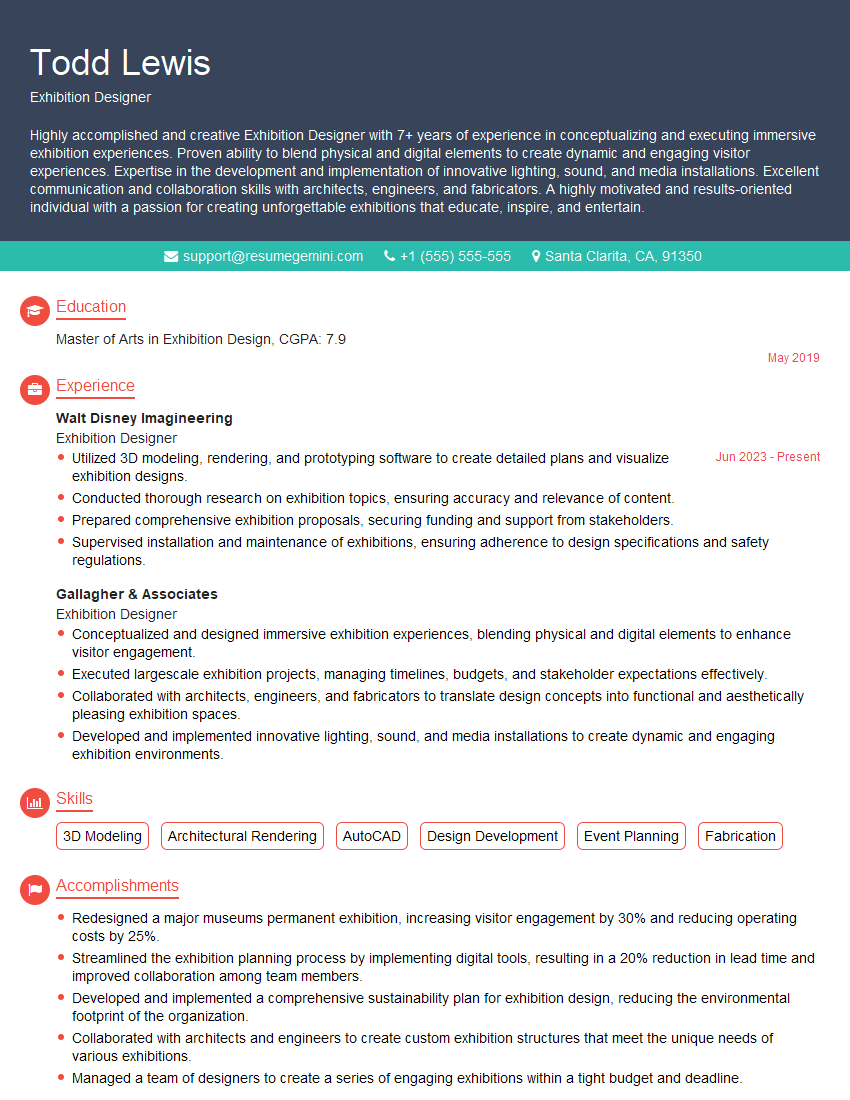
Mastering Exhibition Design and Development opens doors to exciting career opportunities in a dynamic and creative field. A strong understanding of these concepts, combined with a well-crafted resume, significantly increases your chances of securing your dream role. To make your application stand out, invest time in creating an ATS-friendly resume that showcases your skills and experience effectively. ResumeGemini is a trusted resource that can help you build a professional and impactful resume. Examples of resumes tailored to Exhibition Design and Development are available to further guide your preparation.
Explore more articles
Users Rating of Our Blogs
Share Your Experience
We value your feedback! Please rate our content and share your thoughts (optional).
What Readers Say About Our Blog
I Redesigned Spongebob Squarepants and his main characters of my artwork.
https://www.deviantart.com/reimaginesponge/art/Redesigned-Spongebob-characters-1223583608
IT gave me an insight and words to use and be able to think of examples
Hi, I’m Jay, we have a few potential clients that are interested in your services, thought you might be a good fit. I’d love to talk about the details, when do you have time to talk?
Best,
Jay
Founder | CEO