Unlock your full potential by mastering the most common Experience in a High-Volume Optical Retail Environment interview questions. This blog offers a deep dive into the critical topics, ensuring you’re not only prepared to answer but to excel. With these insights, you’ll approach your interview with clarity and confidence.
Questions Asked in Experience in a High-Volume Optical Retail Environment Interview
Q 1. Describe your experience handling high customer traffic volume in an optical retail setting.
Handling high customer traffic in optical retail requires a blend of efficiency, organization, and excellent customer service. Think of it like a well-oiled machine – each part needs to function smoothly to avoid bottlenecks. In my previous role at [Previous Company Name], we frequently experienced peak periods, especially during lunch breaks and after work. To manage this, we employed a system of team-based workflows. One team member would greet and triage customers, determining their needs (e.g., eye exam, eyewear selection, repairs). Another team member would handle check-out and processing transactions. A third would focus on dispensing and fitting. This division of labor ensured that no one customer was left waiting unduly long, and we could efficiently handle a large influx of people. We also implemented a queueing system with numbered tickets, providing transparency and fairness for customers.
We also utilized appointment scheduling to balance walk-in traffic with pre-booked appointments, which allowed us to better predict and manage daily workload. Finally, regular team meetings allowed us to identify and address potential bottlenecks proactively, like slowdowns in the fitting room or excessive wait times at checkout.
Q 2. How do you prioritize tasks in a fast-paced optical retail environment?
Prioritizing tasks in a fast-paced optical retail environment hinges on understanding urgency and impact. Imagine a hospital triage – you treat the most critical cases first. Similarly, I prioritize using a combination of factors:
- Urgency: Customers needing immediate assistance (e.g., a broken frame repair, a sudden eye irritation) take precedence.
- Impact: Tasks with the greatest potential negative impact if delayed (e.g., processing urgent prescription orders) are prioritized.
- Appointment Schedule: Pre-scheduled appointments need to be adhered to strictly, ensuring timely service for those who have planned their visits.
- Workflow Efficiency: I group tasks to maximize efficiency. For example, I might batch similar tasks like processing multiple insurance claims together.
This approach ensures that we address the most critical needs quickly and maintain a smooth workflow, preventing unnecessary delays for everyone. I often use a simple to-do list to keep track of my tasks and their priority levels.
Q 3. What strategies do you use to quickly and accurately process customer transactions?
Processing customer transactions quickly and accurately requires a combination of technical proficiency and a customer-centric approach. At [Previous Company Name], we utilized a POS (Point of Sale) system that allowed for quick entry of customer information, payment processing, and inventory updates. I became proficient in using the system’s shortcuts and features, allowing me to process transactions efficiently.
Furthermore, I always double-check all transaction details before finalizing them, verifying customer information, payment amount, and items purchased. This step minimizes errors and avoids potential issues later. We also trained extensively on handling various payment methods and insurance procedures, ensuring a streamlined and hassle-free experience for customers. Clear communication with customers throughout the process – explaining charges, insurance coverage, and available payment options – helps to avoid confusion and potential disputes.
Q 4. Explain your process for managing inventory in a high-volume optical retail store.
Managing inventory in a high-volume optical retail store is crucial for maintaining smooth operations and customer satisfaction. Think of it as a finely tuned supply chain – if one link breaks, the whole process falters. We used a combination of methods including:
- Regular Stock Counts: Frequent physical inventory checks, often integrated with a computerized inventory management system, ensured that our stock levels accurately reflected reality.
- Just-in-Time Ordering: We used sales data to predict demand and order new inventory accordingly, minimizing storage space needed while preventing stockouts of popular items.
- Barcode Scanning: Utilizing barcode scanners for both receiving and dispensing sped up the inventory process and improved accuracy.
- Loss Prevention: We had strict procedures for handling inventory, tracking each item’s movement to minimize theft and shrinkage.
This system enabled us to identify slow-moving items, allowing us to adjust our ordering strategy, and prevent stockouts of popular frames or contact lenses. Regular reports on inventory levels and sales data informed our purchasing decisions. The software also alerted us to low-stock situations, prompting us to initiate reorders in a timely manner.
Q 5. How do you handle customer complaints and resolve conflicts effectively?
Handling customer complaints and resolving conflicts requires empathy, patience, and problem-solving skills. My approach is built around active listening, understanding the customer’s perspective, and finding a mutually agreeable solution. I start by acknowledging the customer’s frustration and validating their feelings. Then, I gather all the relevant information to understand the issue.
Once I understand the situation, I work with the customer to find a solution. Sometimes, a simple apology is enough. Other times, it may require a replacement product, a refund, or a repair. If a solution isn’t immediately apparent, I clearly communicate my actions and timeline to resolve the issue. I maintain a professional and respectful demeanor throughout the process. Even in difficult situations, a calm and understanding approach can de-escalate tension and lead to a positive outcome. In many cases, a sincere effort to resolve the issue leaves the customer feeling valued and appreciated. Documenting complaints and resolutions allows for consistent follow-up and helps to identify recurring problems.
Q 6. Describe your experience with different types of optical equipment and technology.
My experience encompasses a range of optical equipment and technology, from traditional phoropters and trial frames to advanced digital lensometers and automated dispensing systems. I am proficient in using various types of autorefractors and optical coherence tomography (OCT) scanners for accurate eye examinations. I’m familiar with different frame materials, lens types (progressive, bifocal, single-vision), and coating options, along with their respective advantages and disadvantages. I understand the workings of contact lens fitting equipment and the different types of contact lenses (soft, rigid, toric, multifocal).
I’ve also worked with various optical software programs for managing prescriptions, inventory, and customer data. My understanding of this technology allows me to efficiently perform a variety of tasks, from ordering lenses and managing stock to processing insurance claims and conducting customer transactions. Staying updated on the latest advancements in optical technology is critical for providing optimal customer service and improving work efficiency.
Q 7. How do you ensure accuracy in dispensing and fitting eyeglasses or contact lenses?
Ensuring accuracy in dispensing and fitting eyeglasses or contact lenses is paramount for patient health and comfort. It’s about precision and attention to detail. For eyeglasses, I meticulously verify the prescription against the lensometer readings. I carefully check the frame fit and adjust it to ensure proper alignment and comfort.
For contact lenses, I carefully review the patient’s prescription and medical history. I measure the cornea and assess the tear film to select the appropriate lenses. I meticulously instruct patients on proper lens insertion, removal, and care. I also emphasize the importance of regular follow-up appointments to monitor lens fit and address any potential issues. Thorough documentation and adherence to established procedures are essential for guaranteeing accurate dispensing and a positive patient experience. If any discrepancies arise, I immediately rectify them and double-check all my measurements and procedures.
Q 8. How familiar are you with different types of eyeglass frames and lenses?
My familiarity with eyeglass frames and lenses is extensive, encompassing a wide range of materials, styles, and technologies. I’m proficient in identifying and explaining the differences between various frame materials, such as acetate, titanium, plastic, and metal alloys, understanding their respective strengths (durability, lightweight feel, hypoallergenic properties) and weaknesses (potential for allergic reactions, susceptibility to damage). Similarly, I’m well-versed in lens types, including single vision, bifocal, progressive, photochromic (transition lenses), and high-index lenses. I understand the refractive indices and optical properties of these lenses and can explain their suitability for different visual needs and prescriptions. For instance, I can easily differentiate between a lightweight titanium frame perfect for a daily-wear user and a durable acetate frame better suited for a more active individual. I also have a good grasp of lens coatings, such as anti-reflective, scratch-resistant, and UV protective coatings, and can advise customers on the benefits of each. My experience allows me to accurately assess a customer’s needs and recommend the optimal combination of frame and lens to meet their lifestyle and prescription requirements.
Q 9. Explain your knowledge of optical insurance and billing procedures.
Optical insurance and billing are crucial aspects of my role. I am adept at processing claims from various insurance providers, understanding different plan benefits, co-pays, and deductibles. I’m familiar with the various coding systems (like HCPCS) used for optical claims, ensuring accurate submission and avoiding potential delays or rejections. I meticulously verify patient insurance information, explain coverage details clearly, and assist patients in navigating the billing process. For example, if a patient has a high deductible plan, I would carefully explain what portion of the cost they are responsible for and explore financing options if needed. I also handle in-house billing procedures, including generating invoices, tracking payments, and managing patient accounts. My approach is focused on transparency and clear communication to minimize confusion and ensure smooth, accurate processing of claims and payments.
Q 10. How do you maintain a clean and organized work environment in a busy optical setting?
Maintaining a clean and organized workspace in a high-volume optical setting is critical for both efficiency and customer satisfaction. We implemented a system of regular cleaning and restocking throughout the day, assigning specific tasks to team members to ensure consistent upkeep. This includes wiping down display cases, cleaning lenses, organizing frames, and promptly addressing any spills or messes. We utilize a color-coded system for inventory management, making it easy to locate specific frames and lenses. Furthermore, we have designated areas for different tasks (e.g., frame adjustments, lens cleaning, billing), promoting a smooth workflow and minimizing interruptions. We also regularly conduct inventory checks to ensure accurate stock levels and promptly reorder items as needed. Regular decluttering and spot-cleaning prevents the accumulation of dust and debris, creating a visually appealing and hygienic environment for customers and staff alike. Thinking of it like a well-organized kitchen—everything has its place, and maintaining that order leads to a more efficient and pleasant experience.
Q 11. Describe your experience with training new employees in optical retail.
I have extensive experience training new employees in optical retail. My approach is structured and hands-on, starting with comprehensive introductions to the different frame styles, lens types, and optical terminology. We then move on to practical training on using the point-of-sale system, processing insurance claims, and handling customer inquiries. I provide one-on-one coaching, shadowing opportunities, and role-playing scenarios to simulate real-world situations. For example, I might guide a new employee through a customer interaction, offering feedback and suggestions to refine their communication skills and product knowledge. Regular check-ins and performance evaluations are vital to monitor progress and provide additional support. My goal is to ensure new hires gain confidence and competence quickly, becoming effective and contributing members of the team. I also leverage visual aids, such as product catalogs and training videos, to make learning engaging and accessible.
Q 12. How do you build rapport with customers to enhance their shopping experience?
Building rapport with customers is key to enhancing their shopping experience. I start by creating a welcoming atmosphere, making eye contact, and offering a genuine smile. I actively listen to their needs, asking clarifying questions to understand their preferences and vision requirements. I tailor my recommendations to their lifestyle, budget, and personal style, avoiding overwhelming them with too many options. For instance, if a customer is looking for something sporty, I’ll focus on durable, lightweight frames. I utilize open-ended questions like, “What activities do you enjoy?” to gauge their needs. By remembering details like name and preferences from previous visits, I personalize the interaction, showcasing genuine interest and making customers feel valued. This fosters trust and encourages repeat business. I always thank them for their time and invite them to return for any future needs.
Q 13. What strategies do you employ to achieve sales targets in a competitive market?
In a competitive market, achieving sales targets requires a multi-faceted approach. Firstly, I focus on providing exceptional customer service, building lasting relationships, and encouraging repeat business through loyalty programs. Secondly, I stay updated on the latest eyewear trends and technologies, advising customers on the benefits of new products and offering personalized recommendations. I actively participate in staff training to enhance product knowledge and sales techniques. I also utilize effective display strategies to highlight popular items and create visually appealing displays. Cross-selling and upselling relevant accessories (like cleaning solutions or protective cases) are additional ways to increase sales. I also track sales data to identify successful strategies and adjust my approach as needed. Regular analysis helps pinpoint areas for improvement and allows me to adapt to market changes and customer preferences.
Q 14. How do you handle situations where you must deal with difficult or demanding customers?
Handling difficult or demanding customers requires patience, empathy, and effective communication skills. I begin by actively listening to their concerns without interrupting, acknowledging their frustration, and validating their feelings. I then strive to understand the root of their dissatisfaction, whether it’s a product issue, billing concern, or perceived lack of service. Once I understand their issue, I offer a sincere apology, even if it’s not directly my fault, and actively seek a solution. For example, if a customer has a damaged frame, I would immediately offer repair or replacement options. If the issue involves a miscommunication, I work to clarify the situation and ensure the customer understands our policies and procedures. I maintain a calm and professional demeanor throughout the interaction, even under pressure, and aim for a resolution that leaves the customer feeling heard, understood, and respected. My focus is on de-escalation and finding a mutually acceptable solution to restore their trust and satisfaction.
Q 15. How proficient are you in using optical software and point-of-sale systems?
I’m highly proficient in using various optical software and point-of-sale (POS) systems. My experience spans several leading platforms, including [mention specific software names, e.g., Optical Manager, VisionWeb, and a specific POS system like Micros or similar]. I’m comfortable navigating complex functionalities such as patient record management, prescription entry and verification, frame selection and ordering, billing and insurance processing, and generating reports. For example, in my previous role at [Previous Company Name], I utilized Optical Manager to efficiently manage over 500 patient records daily, streamlining the entire workflow from initial consultation to final dispensing. My proficiency extends to troubleshooting minor software glitches and understanding data backups to ensure business continuity.
Career Expert Tips:
- Ace those interviews! Prepare effectively by reviewing the Top 50 Most Common Interview Questions on ResumeGemini.
- Navigate your job search with confidence! Explore a wide range of Career Tips on ResumeGemini. Learn about common challenges and recommendations to overcome them.
- Craft the perfect resume! Master the Art of Resume Writing with ResumeGemini’s guide. Showcase your unique qualifications and achievements effectively.
- Don’t miss out on holiday savings! Build your dream resume with ResumeGemini’s ATS optimized templates.
Q 16. Describe your experience with managing customer appointments and scheduling.
Managing appointments and scheduling in a high-volume optical setting requires a meticulous and organized approach. I’m adept at using scheduling software to efficiently manage customer appointments, optimizing appointment slots to minimize wait times and maximize appointment flow. I’m familiar with various scheduling strategies, including block booking for specific services or practitioners, buffer times to accommodate unforeseen delays, and utilizing reminder systems (email, text, phone calls) to reduce no-shows. For example, at [Previous Company Name], I implemented a new appointment scheduling system that reduced appointment wait times by 20% and significantly reduced no-shows through proactive reminder notifications. My experience also involves handling rescheduling requests, managing cancellations, and communicating effectively with patients and colleagues regarding schedule changes.
Q 17. How do you ensure the accuracy of optical prescriptions and patient records?
Ensuring the accuracy of optical prescriptions and patient records is paramount. My approach involves a multi-step verification process. Firstly, I meticulously verify the prescription details – including sphere, cylinder, axis, add, and prism – against the patient’s original prescription and confirm any discrepancies directly with the prescribing ophthalmologist or optometrist. Secondly, I double-check all entered data in the optical software against the physical prescription, paying close attention to details to prevent errors. Thirdly, I maintain detailed and accurate patient records, including medical history, purchase history, and contact information, ensuring compliance with HIPAA regulations. Finally, regular audits and data checks are performed to ensure data integrity. Any discrepancies are immediately addressed to prevent errors that could affect patient vision or legal compliance.
Q 18. What is your experience with troubleshooting technical issues with optical equipment?
I possess practical experience in troubleshooting technical issues with various optical equipment. This includes lens meters, phoropters, frame warmers, and other diagnostic instruments. My approach involves systematically identifying the problem – by checking power cords, testing individual components, consulting manuals and troubleshooting guides, and seeking assistance from the manufacturer when necessary. For example, I once resolved a recurring issue with a faulty lens meter by identifying a loose internal connection, preventing significant downtime and ensuring accurate lens measurements. I can also address minor equipment malfunctions, such as paper jams in printers or software issues related to specific instruments. My understanding of equipment maintenance schedules and preventative measures also contributes to minimizing equipment downtime.
Q 19. Describe your understanding of HIPAA regulations in relation to patient privacy.
I have a thorough understanding of HIPAA regulations concerning patient privacy. This includes the protection of Protected Health Information (PHI), adhering to strict confidentiality protocols, and ensuring compliance with all access and disclosure requirements. I understand that PHI includes any information related to a patient’s health status, including their prescriptions, medical history, and contact information. My experience entails securing patient records, limiting access to authorized personnel, and using secure data transmission methods to comply with HIPAA regulations. I’m also aware of the penalties for non-compliance and actively work to protect patient information, always applying best practices for data security and privacy. For instance, we used secure electronic messaging for patient communications, and all patient records were stored securely on a HIPAA-compliant server.
Q 20. How do you identify and address customer needs effectively to maximize sales opportunities?
Identifying and addressing customer needs effectively is key to maximizing sales opportunities. I begin by actively listening to the customer’s needs and preferences, asking open-ended questions to understand their lifestyle, visual needs, and budget. I then use this information to guide them towards suitable frames and lenses, explaining the features and benefits of different options. I highlight the advantages of specific products based on their individual requirements, answering their questions thoroughly and providing honest recommendations. For example, if a customer is concerned about glare, I might highlight the benefits of anti-reflective coatings. If they are on a budget, I’ll show them affordable options that don’t compromise on quality. By building rapport and trust, I can effectively address their concerns and guide them towards the optimal solution, leading to increased sales conversion rates.
Q 21. What is your approach to cross-selling and upselling optical products and services?
My approach to cross-selling and upselling involves offering complementary products and services that enhance the customer’s overall experience and address potential needs. I carefully assess the customer’s initial purchase and identify opportunities to suggest related items or upgrades. For example, if a customer purchases new glasses, I might suggest a protective case, cleaning solution, or lens protection plans. If they choose standard lenses, I might offer the upgrade to higher-index lenses for thinner, lighter glasses, emphasizing the aesthetic and comfort benefits. I always present these suggestions in a non-pressuring manner, focusing on the value and benefits they offer, ensuring the upsell or cross-sell feels natural and relevant to the customer’s needs and budget. This approach leads to increased customer satisfaction and boosts sales while providing solutions that truly benefit the customer.
Q 22. How familiar are you with different types of contact lenses and their fitting procedures?
My experience encompasses a wide range of contact lenses, from standard spherical lenses correcting nearsightedness and farsightedness, to toric lenses for astigmatism, and multifocal lenses for presbyopia. I’m also familiar with specialty lenses such as colored contacts and those designed for specific conditions like keratoconus.
The fitting procedure begins with a thorough eye examination by an optometrist or ophthalmologist to determine the patient’s refractive error and corneal topography. This data is crucial for selecting the appropriate lens parameters – power, base curve, diameter, and material. Then, we discuss the patient’s lifestyle and preferences, considering factors like comfort, wear schedule (daily, extended wear), and activity level (sports, etc.). We then fit the lenses, carefully monitoring for comfort, proper fit (no movement or irritation), and visual acuity. Follow-up appointments are scheduled to ensure the lenses are performing well and to address any issues.
For example, a patient with astigmatism needs a toric lens with specific parameters to correct the irregular curvature of their cornea. The process involves carefully measuring the axis and power of the astigmatism to ensure a precise fit. Incorrect fitting can lead to blurred vision, discomfort, and potential eye health problems. Conversely, a proper fit results in clear vision and comfortable wear.
Q 23. Explain your process for verifying insurance coverage and patient benefits.
Verifying insurance coverage and patient benefits is a crucial step in providing seamless service. I begin by obtaining the patient’s insurance information, including their name, ID number, and group number. I then utilize our practice management system, which is integrated with most major insurance providers, to electronically verify their coverage. This system instantly displays the patient’s plan details, including co-pays, deductibles, and coverage limits for lenses, frames, and exams.
If there’s any discrepancy or if the system can’t verify coverage, I utilize the insurance provider’s online portal or make a phone call to confirm benefits directly. I carefully explain the patient’s out-of-pocket costs, highlighting any potential cost-sharing responsibilities. I document all verification steps meticulously, including the date, time, insurance provider contacted, and the results. Transparency is key; I ensure the patient understands their financial responsibility before proceeding with any services.
For example, if a patient’s insurance doesn’t cover high-index lenses, I present alternative lens options that fit within their coverage and explain the trade-offs in terms of weight and thickness. My goal is to provide excellent patient care while also managing the financial aspects effectively and ethically.
Q 24. How do you maintain a professional appearance and demeanor in a customer-facing role?
Maintaining a professional appearance and demeanor is paramount in a customer-facing role. I adhere to the company’s dress code, ensuring my attire is clean, neat, and appropriate for the professional setting. This includes well-maintained hair, minimal jewelry, and shoes that are comfortable yet presentable. I am always mindful of my body language, maintaining eye contact, a friendly smile, and a positive posture to convey confidence and approachability.
Beyond outward appearance, professionalism also involves using appropriate language, listening actively to patient concerns, and addressing them respectfully and empathetically. I treat every patient with courtesy and patience, ensuring they feel valued and heard. I always maintain composure, even during stressful situations, handling complaints with tact and professionalism, focusing on solutions rather than conflict.
For instance, a demanding customer might challenge a policy. Instead of becoming defensive, I calmly explain the reasoning behind the policy, seeking a solution that satisfies the customer while upholding the company’s regulations. I understand that my interactions contribute directly to the overall customer experience, representing not just myself but the entire company.
Q 25. Describe your experience with handling returns and exchanges of optical products.
Handling returns and exchanges requires a thorough understanding of our store policies and a focus on customer satisfaction. We accept returns and exchanges for unused products within a specified timeframe, usually within 30 days of purchase, accompanied by the original receipt or proof of purchase. I carefully inspect the returned item to ensure it’s in its original condition and undamaged. If everything is in order, I process the return or exchange promptly and efficiently, providing excellent customer service throughout the process.
If a product is damaged or doesn’t meet the return criteria, I politely explain our return policy and offer alternative solutions if possible, such as repairs or store credit. I document all return and exchange transactions accurately and in accordance with company procedures, ensuring proper inventory management. In high-volume environments, efficient processing is crucial to minimizing wait times for other customers.
For example, if a customer returns a frame because it doesn’t fit well, I may offer to help them select a different frame that suits their facial features. This proactive approach ensures the customer leaves satisfied, even if their initial purchase wasn’t successful.
Q 26. How do you stay current with advancements in the optical industry and technologies?
Staying current in the optical industry is essential to providing the best possible patient care and maintaining professional competency. I actively participate in continuing education opportunities, attending industry conferences, webinars, and workshops that cover the latest advancements in lens technology, frame styles, and patient care techniques. I subscribe to professional journals and publications that cover trends, innovations, and best practices in the field.
I also regularly review manufacturer training materials and product updates to ensure I have the latest knowledge on different lens materials, coatings, and designs. This constant learning ensures I can provide informed recommendations to patients, guiding them towards the best options for their individual needs and vision correction goals. Additionally, I often utilize online resources and professional networks to stay abreast of the newest industry advancements.
For example, I recently learned about a new lens material offering improved scratch resistance and UV protection. This allows me to inform patients of the superior benefits and make informed recommendations to enhance their eye health and satisfaction.
Q 27. How do you adapt to changing priorities and unexpected situations in a fast-paced environment?
Adaptability is crucial in a fast-paced retail environment. I prioritize organization and time management skills to effectively handle multiple tasks simultaneously. I utilize a task management system (whether digital or a written list) to prioritize tasks and allocate time effectively. This helps me manage unexpected situations smoothly.
When priorities shift unexpectedly, for example, due to a sudden influx of customers or an urgent issue with equipment, I maintain calm and focus on the most critical tasks first. I communicate proactively with my colleagues and supervisor, sharing information and coordinating efforts to address the situation efficiently. I am comfortable delegating tasks when appropriate and collaborating with others to achieve shared goals.
For instance, during a busy holiday season, I may need to prioritize customer service and quick processing of transactions, shifting some less urgent tasks to later in the day. I seamlessly adapt my workflow to address these changing demands, ensuring efficient service and a positive customer experience, even during peak periods.
Q 28. Describe a time you exceeded customer expectations in a high-volume optical retail setting.
I once had a patient who was very frustrated because their insurance wouldn’t cover the frames they wanted. They were visibly upset and close to leaving without purchasing anything. I empathized with their situation and explored all possible options. While their insurance didn’t cover their preferred frame style, it did cover a specific brand within their allowance. I spent extra time showing them frames from that specific brand that matched their style preferences as closely as possible. I even helped them find a promotional offer that reduced their out-of-pocket expenses.
Not only did they purchase the frames, but they were incredibly grateful for my persistence and effort in helping them find a solution. They praised the level of customer service and the time I took to assist them, even exceeding the expected level of service. This interaction highlighted the importance of going the extra mile for customer satisfaction, demonstrating a commitment to both patient care and business success. It also underscored the value of thorough product knowledge and an empathetic approach to customer needs.
Key Topics to Learn for Experience in a High-Volume Optical Retail Environment Interview
- Customer Service in a Fast-Paced Setting: Handling multiple customer inquiries simultaneously, prioritizing needs, and maintaining a positive attitude under pressure. Think about how you’ve managed challenging customers or peak periods.
- Product Knowledge and Sales Techniques: Demonstrating expertise in eyewear styles, frames, lenses, and related products. Consider examples where you successfully up-sold or cross-sold products, tailoring recommendations to individual customer needs.
- Inventory Management and Stock Control: Maintaining accurate stock levels, processing orders efficiently, and identifying potential stock discrepancies. Reflect on your experience with inventory systems and how you’ve contributed to smooth stock flow.
- Point of Sale (POS) Systems and Transaction Processing: Proficiency in operating POS systems, processing payments accurately, and handling returns or exchanges smoothly. Be prepared to discuss your experience with different POS systems and your troubleshooting skills.
- Teamwork and Collaboration: Working effectively within a team to achieve shared goals, supporting colleagues, and contributing to a positive work environment. Share examples of teamwork, conflict resolution, and collaborative success stories.
- Visual Merchandising and Store Presentation: Contributing to an attractive and organized store display, showcasing products effectively, and maintaining a clean and inviting environment. Describe your involvement in store displays and how you ensured visual appeal.
- Problem-Solving and Conflict Resolution: Handling customer complaints, resolving issues effectively, and finding solutions to unexpected challenges. Prepare examples of how you successfully addressed customer complaints or difficult situations.
Next Steps
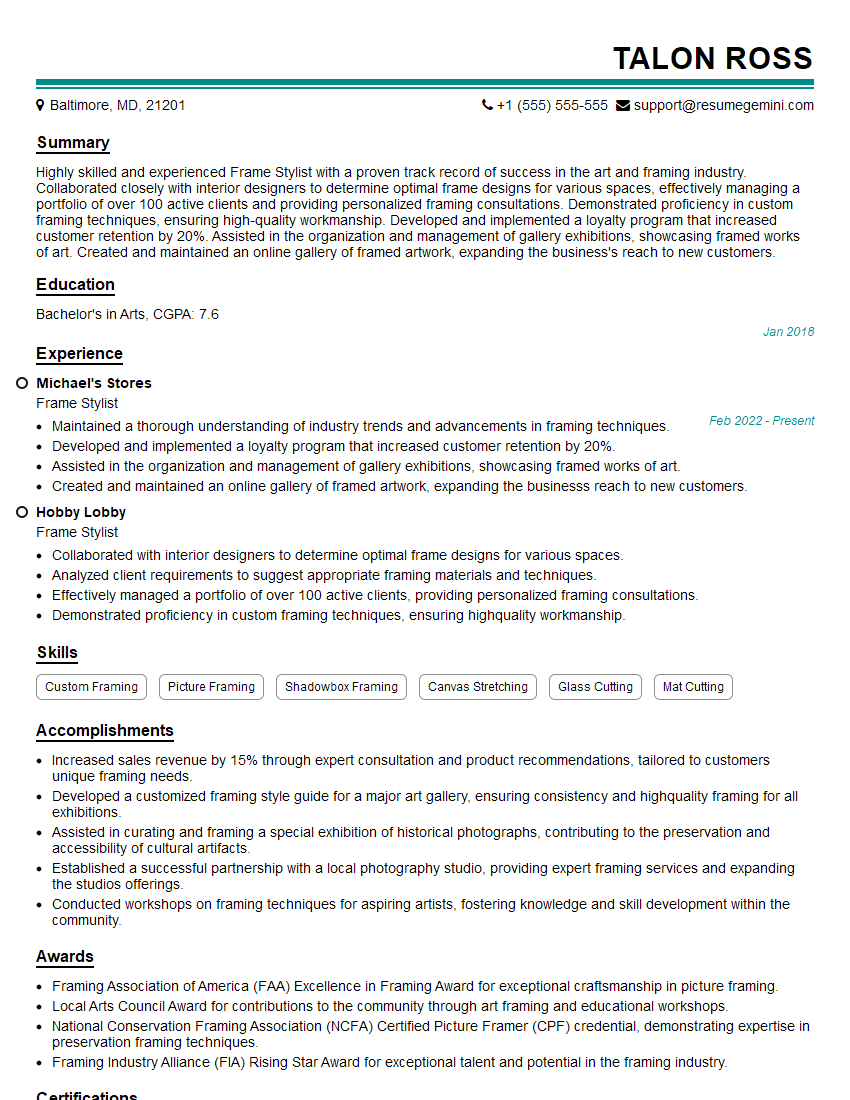
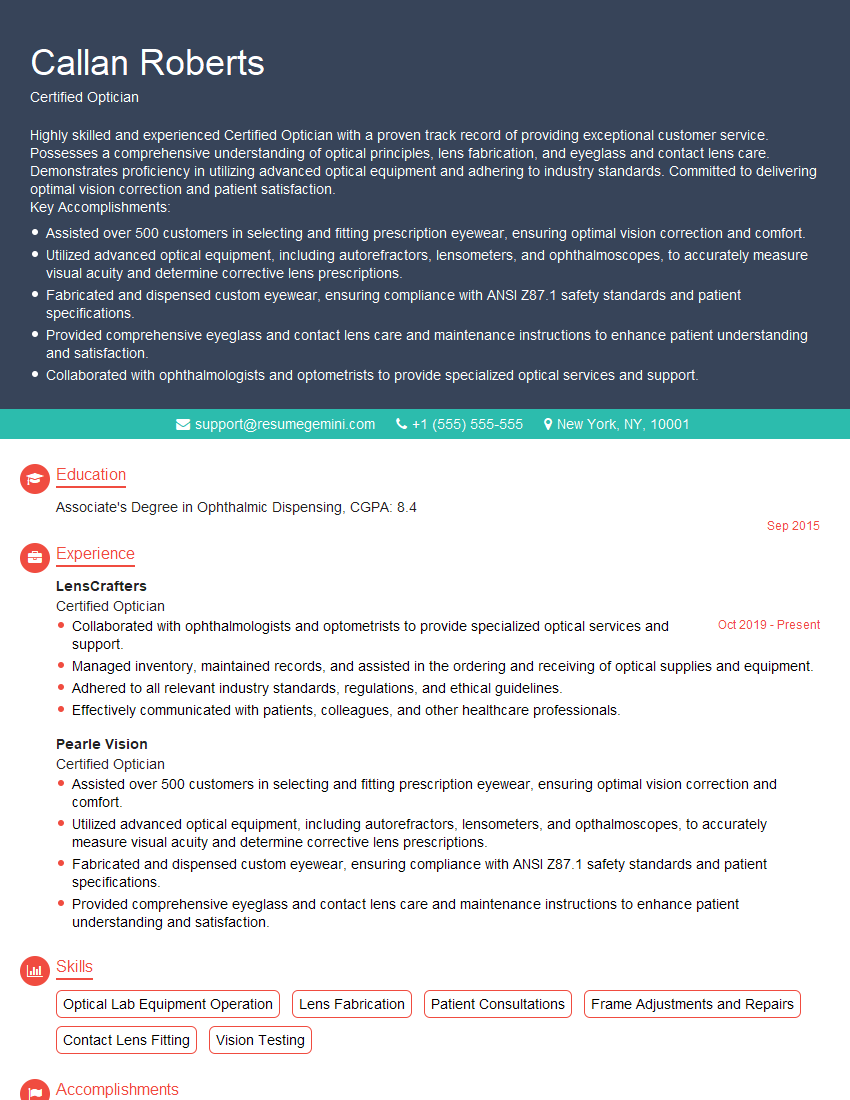
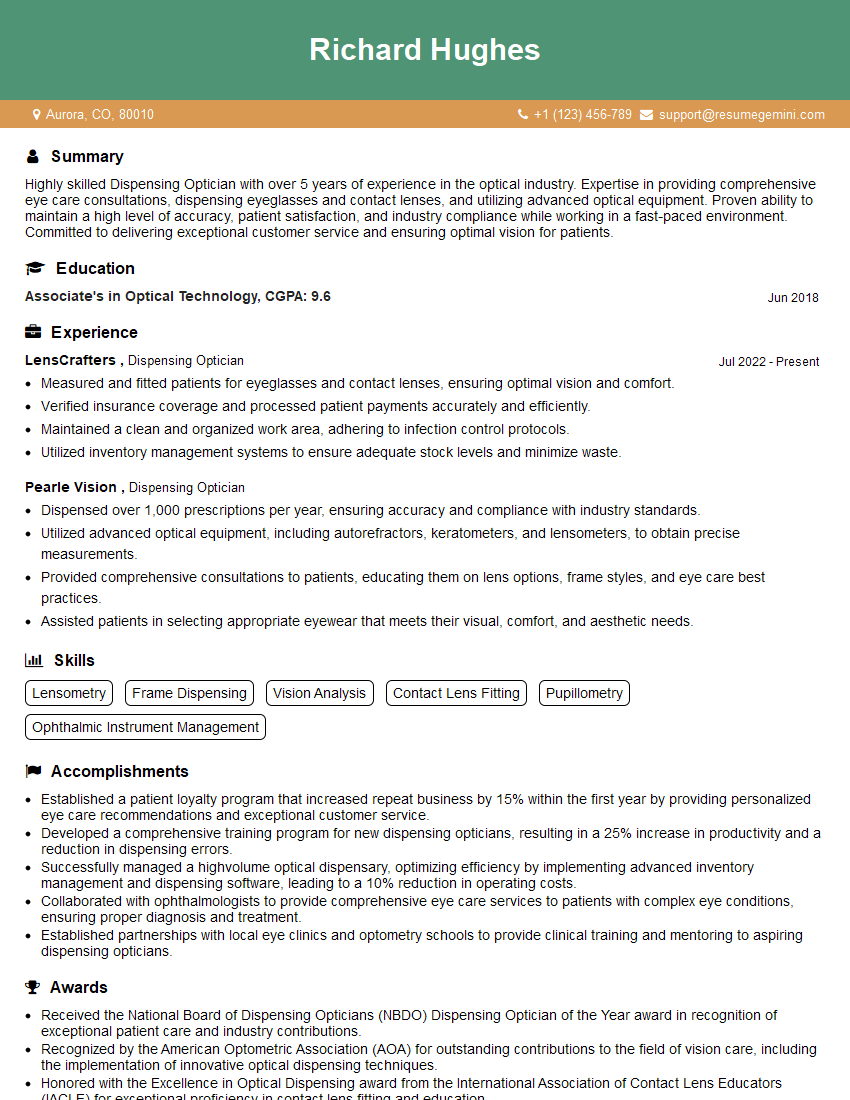
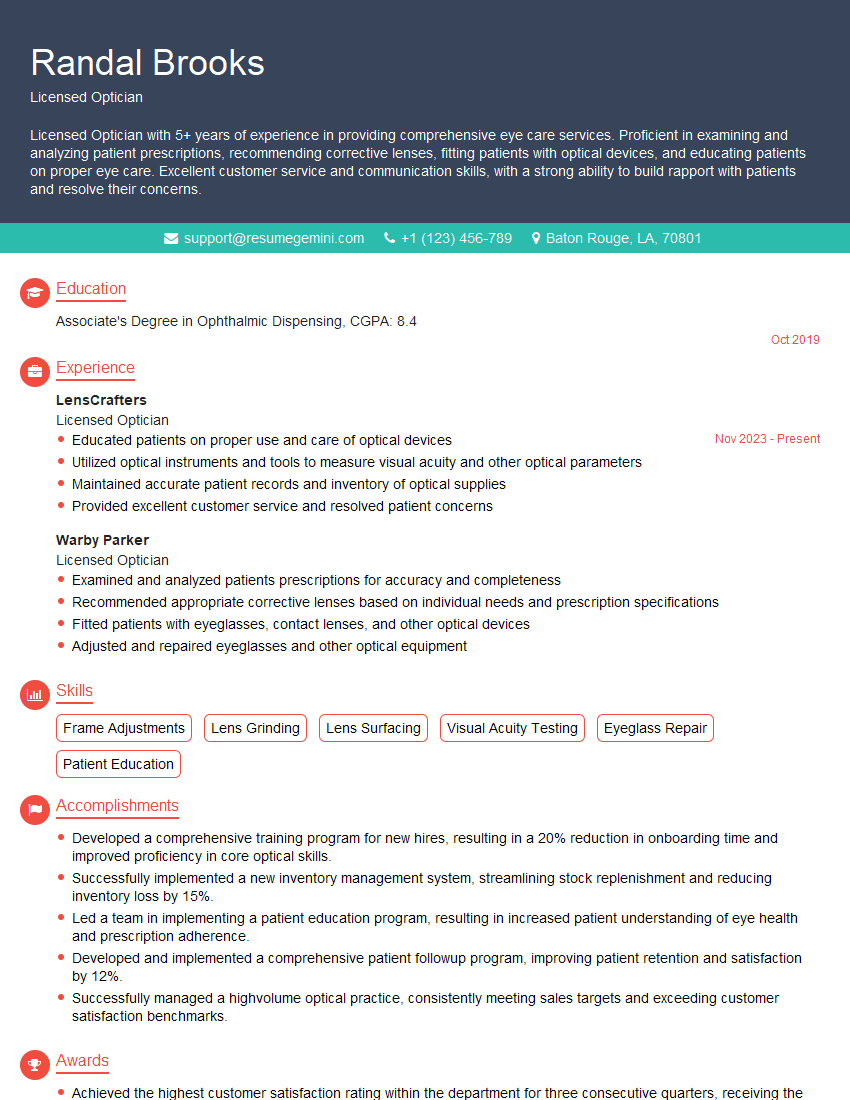
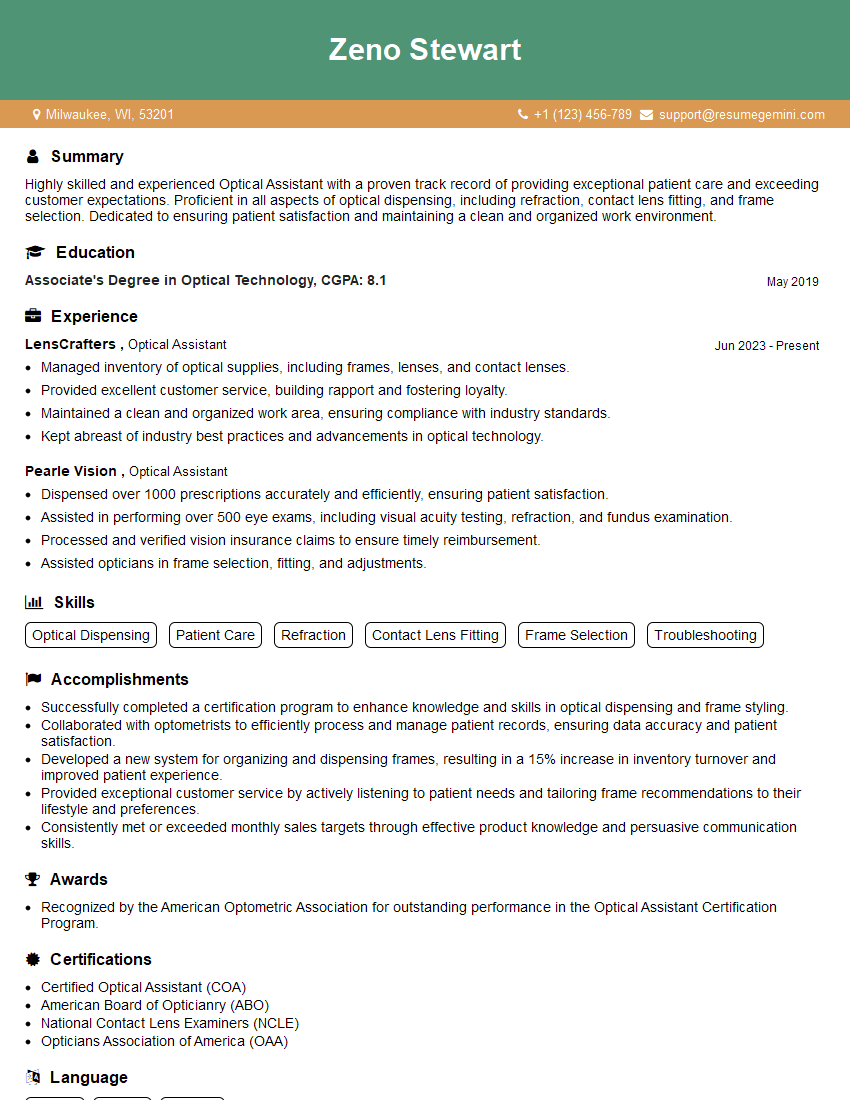
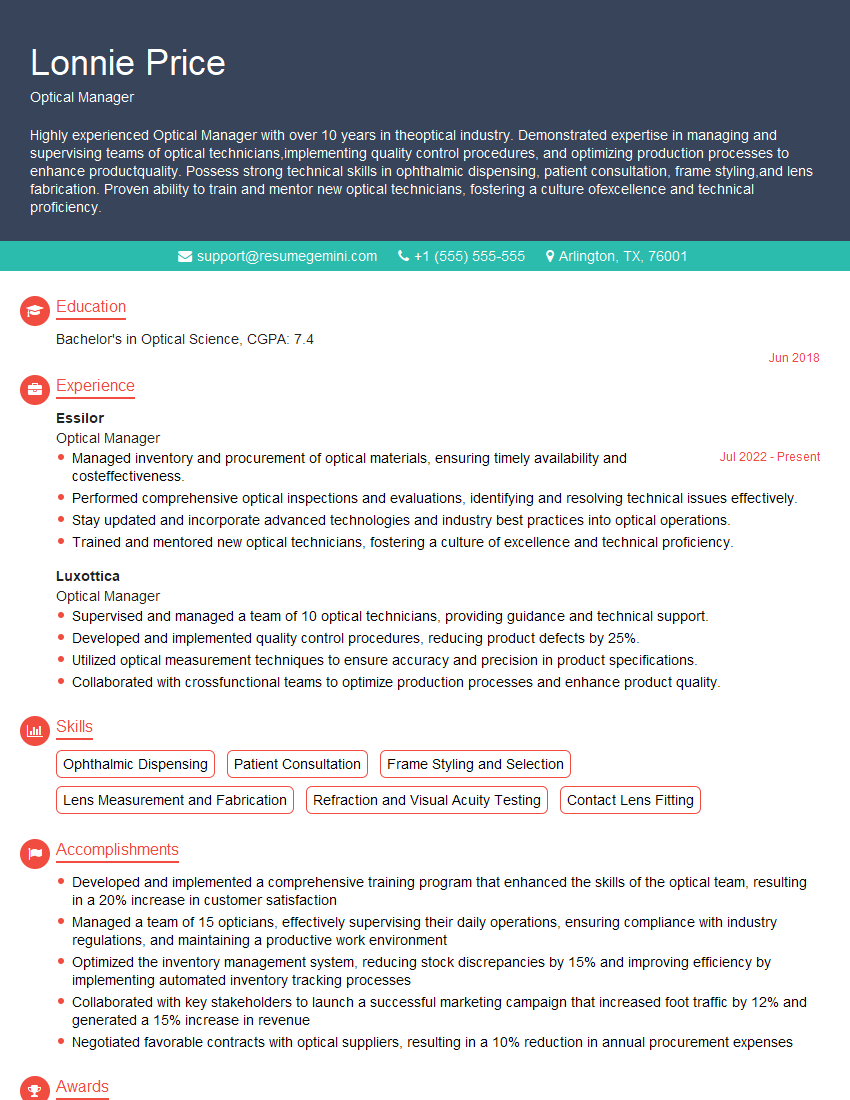
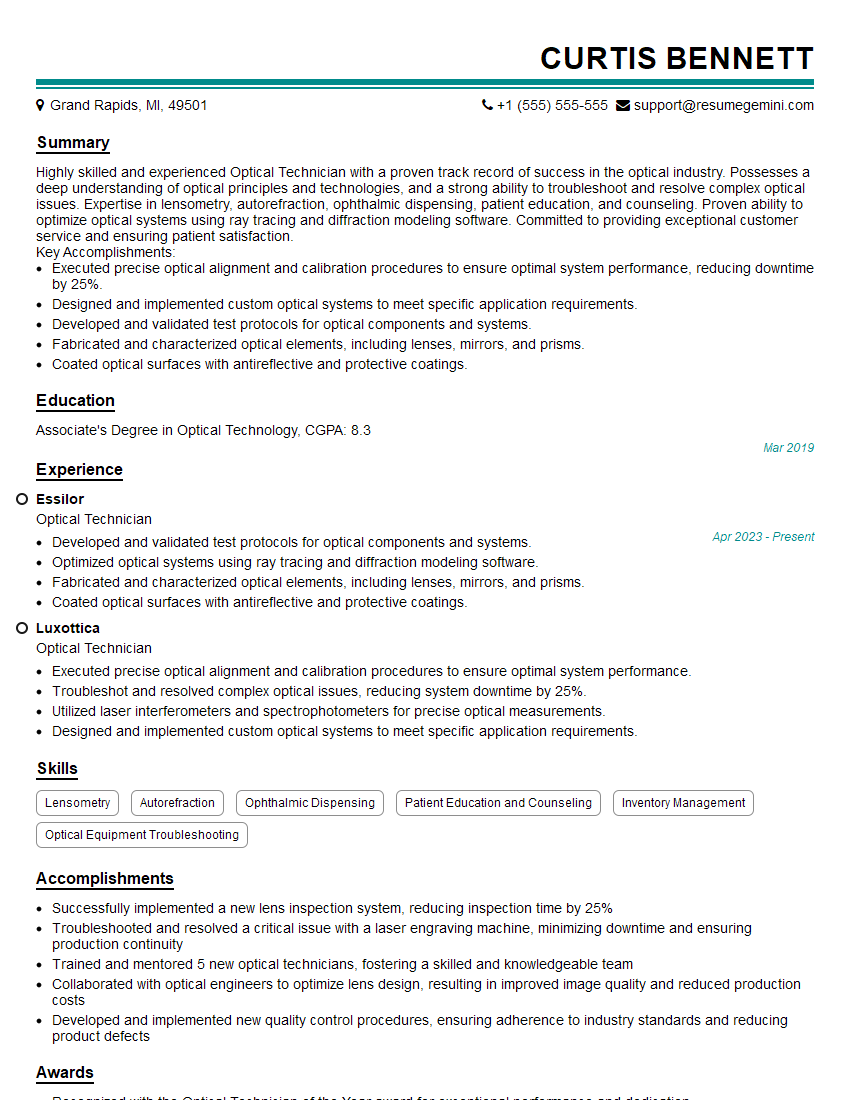
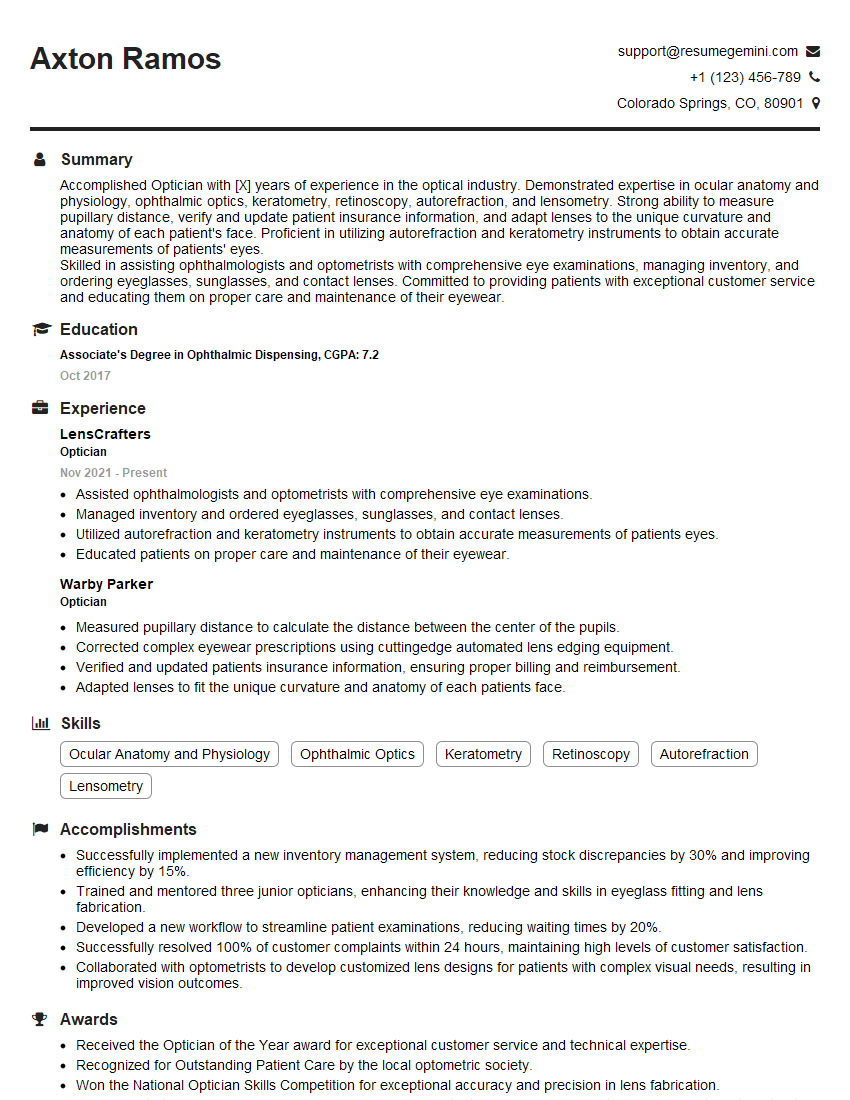
Mastering the skills and knowledge related to a high-volume optical retail environment significantly enhances your career prospects within the industry. It demonstrates your ability to thrive in a demanding yet rewarding setting, showcasing essential skills valued by employers. To significantly improve your chances of landing your dream job, creating an ATS-friendly resume is crucial. This ensures your application gets noticed by recruiters and hiring managers. ResumeGemini is a trusted resource that can help you build a professional and impactful resume, tailored to highlight your relevant experience and skills. Examples of resumes tailored to Experience in a High-Volume Optical Retail Environment are available to help guide your resume creation.
Explore more articles
Users Rating of Our Blogs
Share Your Experience
We value your feedback! Please rate our content and share your thoughts (optional).
What Readers Say About Our Blog
I Redesigned Spongebob Squarepants and his main characters of my artwork.
https://www.deviantart.com/reimaginesponge/art/Redesigned-Spongebob-characters-1223583608
IT gave me an insight and words to use and be able to think of examples
Hi, I’m Jay, we have a few potential clients that are interested in your services, thought you might be a good fit. I’d love to talk about the details, when do you have time to talk?
Best,
Jay
Founder | CEO