Cracking a skill-specific interview, like one for Experience in training and supervising other employees, requires understanding the nuances of the role. In this blog, we present the questions you’re most likely to encounter, along with insights into how to answer them effectively. Let’s ensure you’re ready to make a strong impression.
Questions Asked in Experience in training and supervising other employees Interview
Q 1. Describe your experience designing and delivering training programs.
Designing and delivering effective training programs requires a systematic approach. I begin by thoroughly analyzing the learning objectives – what specific skills or knowledge should trainees gain? Then, I identify the target audience and their existing skill levels to tailor the content appropriately. This often involves needs assessments (discussed further in question 3). I choose the most effective delivery methods, which might include blended learning (combining online modules with in-person workshops), interactive simulations, case studies, or on-the-job training, depending on the context and learning style of the participants. For example, when training customer service representatives, I’ve successfully used role-playing scenarios to practice handling difficult customer interactions. Finally, I develop comprehensive training materials – presentations, handouts, quizzes, and online resources – ensuring they’re engaging and easy to understand. Post-training, I always gather feedback to iterate and improve future programs.
Q 2. How do you assess the effectiveness of your training programs?
Assessing training effectiveness is crucial to demonstrating ROI and making improvements. I employ a multi-faceted approach that combines quantitative and qualitative data. Quantitative methods include pre- and post-training assessments to measure knowledge gain. I might use quizzes, tests, or surveys with clearly defined metrics. For instance, a pre-training assessment might show only 30% of trainees understanding a specific process, while post-training, that number increases to 85%, demonstrating the program’s success. Qualitative data comes from observations during training sessions, feedback forms, and post-training surveys focusing on participants’ perceptions, suggestions, and the program’s impact on their job performance. Analyzing both types of data provides a holistic view of the program’s effectiveness and helps pinpoint areas for improvement.
Q 3. What methods do you use to identify training needs within a team?
Identifying training needs involves a combination of techniques. First, I conduct performance reviews, analyzing individual and team performance data to pinpoint skill gaps. This might involve looking at error rates, productivity levels, or customer feedback. Second, I engage in direct discussions with team members, supervisors, and managers, actively soliciting their input on areas where training could enhance performance. Third, I use observation, spending time on the job site to observe workflows and identify challenges that training could address. For example, if I notice a consistent error in a specific task performed by multiple team members, it signals a need for targeted training on that task. Finally, I may utilize surveys or questionnaires to gather broader feedback and insights about training needs. By combining these methods, I get a complete understanding of the team’s current skills and areas for improvement.
Q 4. Explain your approach to providing constructive feedback to trainees.
Providing constructive feedback is a crucial skill for trainers. My approach emphasizes a positive and supportive atmosphere. I focus on specific behaviors and observable actions rather than making general or personal judgments. For example, instead of saying “You’re not a good listener,” I might say, “During the role-play, I noticed you interrupted the customer three times. Practicing active listening skills, such as maintaining eye contact and paraphrasing, can improve your ability to understand and address customer concerns.” I always start with positive feedback, highlighting areas where the trainee excelled, before addressing areas for improvement. I use the “sandwich method,” framing constructive criticism between positive comments. I conclude by outlining specific, achievable steps for improvement, offering resources or support where needed, ensuring the trainee feels empowered to improve rather than discouraged.
Q 5. How do you handle a trainee who is struggling to grasp a particular concept?
When a trainee struggles, I employ a multifaceted approach. First, I identify the root cause of the difficulty. Is it a lack of prior knowledge, a misunderstanding of the concept, or perhaps a learning style mismatch? I then adjust my teaching methods accordingly. This might involve breaking down complex concepts into smaller, more manageable parts, using different teaching methods (visual aids, hands-on activities, etc.), or providing additional practice opportunities. I also encourage peer learning, pairing the struggling trainee with a more proficient one for collaborative learning. If the problem persists, I seek further guidance from subject matter experts or adjust the training content to better cater to the trainee’s needs. It’s essential to create a safe and supportive environment where the trainee feels comfortable asking questions without fear of judgment.
Q 6. Describe a time you had to adapt a training program due to unexpected challenges.
During a training program on a new software system, a major software update was unexpectedly released midway through the training. This posed a challenge as the training materials and the software itself were no longer aligned. My immediate response was to acknowledge the situation with the trainees, reassuring them that the change was outside of our control. I then quickly adapted the training. I leveraged the update as a teachable moment, demonstrating how to adapt to change and learn new features quickly. We revised the training materials collaboratively, utilizing the new features as examples. The trainees even helped me identify the changes that had the most impact on workflow and training priorities. By responding proactively and embracing the unexpected change as a learning opportunity, I transformed a potential setback into a more dynamic and engaging learning experience.
Q 7. How do you ensure that training materials are accessible and inclusive?
Ensuring accessibility and inclusivity in training materials is paramount. I begin by designing materials with diverse learning styles in mind, incorporating various formats like videos, audio, text, and interactive exercises. I use clear and concise language, avoiding jargon. For accessibility, I ensure all materials comply with WCAG (Web Content Accessibility Guidelines) for visually impaired learners. This involves providing alternative text for images, using sufficient color contrast, and offering transcripts for videos. I also offer multiple formats for handouts, including large print and digital versions. For inclusivity, I strive to use culturally sensitive language and imagery, and reflect the diversity of our workforce in training examples. Regular review and feedback from diverse groups are essential to guarantee that the materials are truly inclusive and accessible to everyone.
Q 8. What strategies do you employ to maintain trainee engagement throughout a training session?
Maintaining trainee engagement is crucial for successful training. It’s like keeping a group of hikers motivated on a challenging trail – you need a mix of strategies to keep them interested and moving forward. I employ several key techniques:
- Interactive Activities: Instead of lengthy lectures, I incorporate activities like group discussions, quizzes, role-playing, and case studies. For example, during a customer service training, I’d have trainees role-play handling difficult customer scenarios.
- Varied Learning Methods: I leverage diverse approaches such as visual aids, videos, hands-on exercises, and gamification. Think of it like a buffet – offering a variety ensures everyone finds something they enjoy and can learn from.
- Regular Check-ins and Feedback: I frequently check for understanding through informal polls or quick Q&A sessions. This helps me adapt my teaching style and address any confusion early on. Regular feedback also helps trainees track their progress and builds their confidence.
- Clear Objectives and Relevance: Trainees need to understand the “why” behind the training. I clearly articulate the learning objectives and connect them to their daily tasks or future career goals. This makes the training feel less abstract and more immediately relevant.
- Positive Reinforcement and Encouragement: A supportive and encouraging atmosphere is essential. I praise effort and celebrate achievements, focusing on progress rather than perfection. This creates a safe space for trainees to ask questions and take risks without fear of judgment.
Q 9. How do you measure the return on investment (ROI) of a training program?
Measuring the ROI of a training program requires a multi-faceted approach that goes beyond simply counting attendees. It’s about demonstrating the tangible benefits to the organization. I use a combination of methods:
- Pre- and Post-Training Assessments: Measuring improvements in knowledge, skills, and attitudes through tests and surveys. For example, measuring improvement in typing speed after a keyboarding training course.
- Performance Metrics: Tracking key performance indicators (KPIs) like sales figures, customer satisfaction scores, or error rates before and after training. This allows us to directly link training to improved performance.
- Return to Work Surveys: Gathering feedback from trainees and their managers on how the training has impacted their on-the-job performance. This provides valuable qualitative data to supplement quantitative results.
- Cost-Benefit Analysis: Calculating the total cost of the training program (materials, instructor time, etc.) against the estimated savings or increased revenue generated due to improved performance. For example, calculating the reduction in customer support calls after training customer service representatives in handling complex issues.
By combining these approaches, I can build a compelling case demonstrating the value of the training investment.
Q 10. How do you create a positive and supportive learning environment?
Creating a positive and supportive learning environment is paramount for effective training. It’s about fostering a sense of community and psychological safety. I achieve this through:
- Respectful Communication: I encourage open dialogue and active listening, ensuring everyone feels comfortable sharing their ideas and concerns without fear of judgment.
- Collaborative Learning: I incorporate group work and peer learning opportunities, fostering teamwork and a sense of shared responsibility.
- Clear Expectations and Structure: Providing a well-organized training plan with clear expectations and timelines reduces uncertainty and enhances confidence.
- Positive Reinforcement: Regularly acknowledging and celebrating achievements fosters a sense of accomplishment and encourages continued participation.
- Accessibility and Inclusivity: I ensure the training materials and methods are accessible to all learners, considering diverse learning styles and needs.
This approach helps build trust and rapport, turning the training experience into a positive and memorable one.
Q 11. How do you deal with conflict between trainees?
Conflict among trainees can be disruptive but also presents an opportunity for learning. My approach involves:
- Early Intervention: Addressing conflicts promptly and privately before they escalate. This might involve a brief conversation to understand the root cause of the disagreement.
- Facilitation, Not Mediation: I guide trainees toward resolving their differences themselves, rather than dictating a solution. I use open-ended questions to help them explore their perspectives and find common ground.
- Focus on the Issue, Not the Person: I emphasize constructive criticism and encourage trainees to address the issue at hand, rather than attacking each other personally.
- Setting Ground Rules: At the beginning of the training, I establish clear expectations for respectful communication and collaboration. This sets a positive tone for the entire experience.
- Reinforcing Positive Behavior: I actively praise instances of respectful communication and collaborative problem-solving, reinforcing the desired behaviors.
Sometimes, external intervention from HR may be necessary for serious conflicts. However, my goal is to empower trainees to resolve their own issues in a constructive way, building valuable conflict resolution skills in the process.
Q 12. What technology and tools are you proficient in using for training delivery?
Technology is an integral part of modern training delivery. I’m proficient in a range of tools, including:
- Learning Management Systems (LMS): Such as Moodle, Canvas, and Blackboard, for course delivery, assessment, and tracking progress. I’m adept at creating and managing online courses, uploading materials, and monitoring learner activity.
- Video Conferencing Tools: Zoom, Microsoft Teams, and Google Meet for delivering virtual training sessions, conducting webinars, and facilitating remote collaboration. I’m comfortable using these platforms to conduct interactive sessions, handle technical issues, and ensure smooth communication.
- Authoring Tools: Articulate Storyline and Adobe Captivate for creating engaging e-learning modules and interactive simulations. I can design visually appealing and effective online learning experiences that cater to different learning styles.
- Collaboration and Communication Tools: Microsoft Office Suite, Google Workspace, and Slack for creating training materials, sharing documents, and communicating with trainees. I utilize these tools to streamline communication, manage assignments, and foster collaboration.
Q 13. Describe your experience using different training methodologies (e.g., on-the-job training, e-learning).
My experience spans various training methodologies, each with its own strengths and weaknesses. I adapt my approach based on the specific training needs and learning objectives:
- On-the-Job Training (OJT): I’ve extensively used OJT, especially for practical skills development. For instance, I mentored new sales representatives, guiding them through real-world scenarios and providing immediate feedback. OJT excels in providing hands-on experience and immediate application of learned skills but requires close supervision and can be less efficient for large groups.
- E-learning: I’ve developed and delivered numerous e-learning modules using authoring tools. This is particularly effective for delivering consistent training to geographically dispersed teams or for topics that benefit from self-paced learning. However, it can lack the interaction and immediate feedback of other methods.
- Blended Learning: I frequently combine online and in-person training elements to leverage the advantages of both. For example, delivering online modules for theoretical knowledge and then supplementing with hands-on workshops or group discussions. This blended approach is often the most effective and engaging.
- Mentorship and Coaching: I’ve served as a mentor and coach, guiding employees in their professional development through one-on-one sessions, providing personalized feedback and support. This approach is particularly suitable for skill development and career advancement.
The choice of methodology depends on factors such as the training content, target audience, budget, and available resources.
Q 14. How do you monitor and evaluate trainee performance after training?
Monitoring and evaluating trainee performance after training is essential to measure the program’s effectiveness and identify areas for improvement. My approach involves:
- Ongoing Performance Monitoring: I track trainee performance through regular observations, feedback from supervisors, and performance reviews. This helps identify any challenges or gaps in understanding soon after the training.
- Follow-up Assessments: I conduct follow-up assessments (e.g., quizzes, projects) at intervals after the training to measure knowledge retention and skill application. This gives a realistic picture of long-term impact.
- 360-Degree Feedback: I gather feedback from various sources, including trainees, their supervisors, and peers. This provides a comprehensive picture of performance and identifies areas of strength and weakness.
- Data Analysis: I systematically analyze performance data to identify trends and patterns. This helps refine future training programs and tailor them to specific needs.
- Post-Training Support: I provide ongoing support to trainees, including mentorship, coaching, and access to resources. This ensures that the training investment translates into sustained performance improvements.
By employing these methods, I can ensure the training has a lasting positive impact on the organization and its employees.
Q 15. How do you integrate training with organizational goals and objectives?
Integrating training with organizational goals is crucial for maximizing its impact. It’s not about just teaching skills; it’s about aligning those skills with the company’s strategic direction. I approach this by first thoroughly understanding the organization’s strategic plan, identifying key performance indicators (KPIs) and analyzing skill gaps. For example, if the company aims to increase sales by 15% next year, I’d identify the skills needed by the sales team to achieve this, such as advanced negotiation techniques, effective lead generation, and product knowledge. The training program would then be designed to directly address these gaps. I would then develop measurable learning objectives that directly contribute to the company’s KPIs. We might track sales conversion rates before and after the training, to measure its effectiveness directly. This ensures that the training investment delivers a tangible return.
In a recent project for a software company aiming to expand into a new market, I aligned training on the company’s new product features with the marketing and sales teams’ objectives. The training focused specifically on demonstrating the new features’ value proposition to the target audience, resulting in a significant improvement in sales figures within the new market.
Career Expert Tips:
- Ace those interviews! Prepare effectively by reviewing the Top 50 Most Common Interview Questions on ResumeGemini.
- Navigate your job search with confidence! Explore a wide range of Career Tips on ResumeGemini. Learn about common challenges and recommendations to overcome them.
- Craft the perfect resume! Master the Art of Resume Writing with ResumeGemini’s guide. Showcase your unique qualifications and achievements effectively.
- Don’t miss out on holiday savings! Build your dream resume with ResumeGemini’s ATS optimized templates.
Q 16. What are some common challenges you face in employee training and how do you overcome them?
Common challenges in employee training include limited time for training, lack of employee engagement, inconsistent application of learned skills, and difficulty in measuring training effectiveness. To overcome these, I employ several strategies. For time constraints, I focus on creating concise, focused training modules that utilize blended learning approaches – incorporating e-learning, short workshops, and on-the-job coaching. This allows for flexibility and caters to various learning preferences. To boost engagement, I make training interactive and relevant by using real-world case studies, simulations, and gamification. I encourage active participation and provide opportunities for feedback. To enhance skill application, I incorporate on-the-job practice with coaching and mentoring, as well as follow-up assessments. Finally, I carefully select appropriate metrics to measure training effectiveness, focusing on both knowledge acquisition and behavioral change. For example, if I’m training employees on customer service, I will track metrics like customer satisfaction scores and complaint resolutions post-training.
Q 17. How do you ensure the consistency of training across different teams or locations?
Consistency in training across different teams and locations is essential for maintaining quality and standardizing processes. I ensure this by developing standardized training materials, including comprehensive training manuals, presentations, and online modules. These materials are reviewed and updated regularly. This central repository ensures all employees receive the same information. I also conduct regular training sessions for trainers themselves, which is a type of Train-the-Trainer program. This ensures consistency in delivery and addresses any potential variations in interpretation. Finally, regular performance evaluations and feedback mechanisms help identify areas needing improvement or modification to training programs. We use a centralized learning management system (LMS) to track employee progress and ensure all required training is completed consistently, regardless of location.
Q 18. Describe your experience in developing training materials.
My experience in developing training materials is extensive. I typically start by conducting a thorough needs analysis to identify the specific knowledge and skills needed. Then, I design training materials that are engaging, accessible, and aligned with various learning styles. I use a variety of methods, including interactive presentations, online modules, videos, role-playing exercises, case studies, and job aids. For instance, when developing training for a new software application, I would create a series of short video tutorials that walk users through each step of the process, supplemented by interactive quizzes to reinforce learning. I also incorporate real-world examples to make the training more relatable and applicable. After developing the materials, I always conduct pilot tests to gather feedback and make necessary revisions before full deployment. The feedback loop helps ensure the training is clear, effective, and relevant.
Q 19. How do you stay current with best practices in training and development?
Staying current with best practices in training and development is an ongoing process. I regularly attend industry conferences and workshops, read relevant journals and publications, and participate in online professional development courses. I also actively participate in online communities and forums to exchange ideas with other training professionals. I subscribe to newsletters from leading training organizations and actively research new technologies and methodologies. This proactive approach ensures I am familiar with the latest advancements in instructional design, learning technologies, and training evaluation techniques. Furthermore, I regularly review and update my own training materials and methodologies to incorporate these new insights.
Q 20. How do you handle employee resistance to training?
Employee resistance to training can stem from various factors, such as fear of change, lack of perceived value, or negative past experiences with training. My approach is to address these concerns proactively. I begin by clearly communicating the benefits of the training and how it will help employees in their roles. I actively solicit feedback and address any concerns. I also involve employees in the design and delivery of training whenever possible, making them feel ownership over the process. When necessary, I tailor the training approach to individual needs and preferences. I might use a more hands-on, practical approach for some, while others might benefit from more theoretical instruction. Positive reinforcement and recognition of progress are also crucial in overcoming resistance. I always emphasize a supportive and collaborative environment, fostering a culture of continuous learning.
Q 21. How do you adapt your training style to different learning styles?
Different individuals learn in different ways (visual, auditory, kinesthetic, etc.). To cater to diverse learning styles, I design training that incorporates multiple modalities. For instance, I use visual aids such as presentations and diagrams, auditory learning through lectures and discussions, and kinesthetic learning through hands-on activities and simulations. I also offer different learning materials, such as written handouts, audio recordings, and interactive online modules. I encourage active participation and provide opportunities for learners to interact with each other and the training material. I also modify my teaching style depending on the group. For a more hands-on group, I might increase the practical exercises. For a group that prefers a more structured approach, I would provide more detailed outlines and clear learning objectives.
Q 22. How do you incorporate feedback from trainees into future training programs?
Incorporating trainee feedback is crucial for iterative program improvement. I utilize a multi-faceted approach. Firstly, I actively solicit feedback through various methods: post-training surveys (both quantitative and qualitative), focus groups, and informal discussions. This ensures a diverse range of perspectives are captured, from the shy participant to the vocal one. Secondly, I analyze this feedback systematically, identifying recurring themes and trends. For example, if multiple trainees express confusion about a specific module, it signals a need for revision or additional explanation, perhaps including more visual aids or real-world examples. Thirdly, I act upon this analysis, making concrete changes to the training materials, delivery methods, or the overall program structure. For instance, based on feedback highlighting a lack of hands-on practice, I might incorporate more interactive exercises or simulations. Finally, I track the impact of these changes by monitoring trainee performance metrics in subsequent sessions. This closed-loop feedback system ensures continuous improvement and ensures the training remains relevant and effective.
Q 23. What is your experience with performance management related to training outcomes?
Performance management, in the context of training outcomes, is about ensuring that the skills and knowledge gained translate into improved on-the-job performance. My experience involves establishing clear learning objectives aligned with performance goals. This means that training isn’t just about completing a course, but about demonstrating tangible improvements in key performance indicators (KPIs). I use a variety of methods to track this. This includes post-training assessments, observation of on-the-job application, and regular performance reviews that specifically address the trained skills. If performance doesn’t meet expectations, I work with the employee to identify gaps in understanding or application and develop a tailored support plan, which could involve additional coaching, mentoring, or further training. For example, if a sales training program aimed to increase sales conversions, I’d track the conversion rates of trainees before and after training and use any performance gaps to inform future adjustments to the training program or individual coaching sessions.
Q 24. Describe your experience mentoring and coaching employees.
Mentoring and coaching are integral parts of my role. Mentoring focuses on long-term career development, providing guidance and support to help employees reach their full potential. I’ve mentored several employees, helping them identify career goals, develop strategies to achieve them, and navigate organizational challenges. For example, I helped one employee develop a strategic plan to transition into a management role, including identifying required skills, creating a training plan, and networking with potential mentors within the organization. Coaching, on the other hand, is more task-focused, addressing specific performance issues or skill gaps. I use various coaching techniques, such as active listening, goal setting, and feedback, to help employees improve their performance. For instance, I coached a team member struggling with client communication skills, using role-playing exercises and providing constructive feedback on their presentation style and communication techniques. The combination of mentoring and coaching provides a holistic approach to employee development, fostering growth and engagement.
Q 25. How do you track and report on training metrics?
Tracking and reporting training metrics is essential to demonstrate the value and effectiveness of training programs. I utilize a variety of methods, including pre- and post-training assessments to measure knowledge gain, on-the-job performance evaluations to assess skill application, and participant feedback surveys to capture satisfaction and identify areas for improvement. This data is compiled into comprehensive reports that showcase key performance indicators (KPIs) such as completion rates, satisfaction scores, and improvements in performance metrics. I use data visualization tools like charts and graphs to present these metrics in a clear and concise manner, making it easy for stakeholders to understand the impact of training programs. For instance, a report might show a 20% increase in sales conversions after a sales training program or a 15% improvement in customer satisfaction scores following customer service training. This data-driven approach enables evidence-based decision-making regarding future training initiatives.
Q 26. What is your experience with different learning management systems (LMS)?
I have extensive experience with various Learning Management Systems (LMS), including Moodle, Canvas, and Cornerstone OnDemand. My experience encompasses not just using these systems but also configuring and customizing them to meet specific training needs. This includes creating and managing courses, uploading learning materials, assigning modules, tracking learner progress, and generating reports. I understand the importance of choosing the right LMS based on the organization’s needs and budget. For example, a small organization might benefit from a simpler, more affordable system like Moodle, while a large corporation might require a more robust and feature-rich platform like Cornerstone OnDemand. My understanding extends to integrating LMS with other HR systems for seamless data flow and improved reporting capabilities.
Q 27. Describe your experience in creating and managing training budgets.
Creating and managing training budgets requires a meticulous and strategic approach. I start by identifying the organization’s training needs and priorities, aligning them with overall business goals. Then, I develop a detailed budget proposal that outlines the costs associated with various training initiatives, including instructor fees, course materials, technology, venue costs, and travel expenses (if applicable). I prioritize cost-effective solutions, such as utilizing online learning platforms to reduce travel and venue costs, or leveraging existing resources within the organization. Throughout the budget cycle, I actively monitor expenses, ensuring that spending remains within the allocated limits. Regular budget reviews allow me to identify potential cost savings and make necessary adjustments. Finally, I prepare comprehensive budget reports that demonstrate the return on investment (ROI) of training programs, highlighting the impact of training on key performance indicators and justifying future budget requests.
Q 28. How do you ensure that training programs comply with relevant regulations?
Ensuring training program compliance with relevant regulations is paramount. This involves staying updated on all applicable laws, standards, and industry best practices. For instance, I ensure that all training materials and methods adhere to accessibility standards for individuals with disabilities, complying with regulations like the Americans with Disabilities Act (ADA). Additionally, I incorporate relevant safety training modules where necessary, following guidelines set by OSHA or other relevant safety regulations. I also ensure that training programs are aligned with data privacy regulations, such as GDPR or CCPA, particularly if the training involves handling sensitive employee or customer data. I achieve this through regular review of all training materials and procedures, collaboration with legal and compliance departments, and maintaining comprehensive documentation of compliance measures. Regular audits and internal reviews are key to proactively identifying and addressing any compliance gaps.
Key Topics to Learn for Experience in training and supervising other employees Interview
- Needs Assessment & Training Design: Identifying skill gaps, designing effective training programs tailored to different learning styles, and selecting appropriate training methods (on-the-job, classroom, online, etc.).
- Delivery & Facilitation: Mastering effective training delivery techniques, including active learning strategies, clear communication, and creating a positive and engaging learning environment. Practical application: Describe a time you successfully trained a team member on a new software or procedure.
- Performance Management & Feedback: Setting clear expectations, providing constructive feedback (both positive and negative), conducting performance evaluations, and addressing performance issues using a supportive and solution-oriented approach.
- Mentorship & Coaching: Developing and nurturing talent within your team, providing guidance and support to junior employees, fostering a culture of continuous improvement and development.
- Team Dynamics & Motivation: Understanding team dynamics, fostering collaboration and communication, motivating team members, resolving conflicts effectively, and building a strong, high-performing team.
- Legal & Compliance: Understanding relevant employment laws and regulations related to training, supervision, and performance management. This includes topics like harassment prevention and fair employment practices.
- Measuring Training Effectiveness: Developing metrics to assess the success of your training programs, using data to make improvements, and demonstrating a return on investment (ROI) for training initiatives.
Next Steps
Mastering experience in training and supervising others is crucial for career advancement. It demonstrates leadership skills, commitment to team development, and the ability to drive results through others. A strong resume highlighting these skills is vital for securing your dream role. To increase your chances of getting noticed by Applicant Tracking Systems (ATS) and recruiters, crafting an ATS-friendly resume is essential. ResumeGemini is a trusted resource to help you build a professional and impactful resume that showcases your abilities effectively. Examples of resumes tailored to highlight experience in training and supervising other employees are provided to further assist you in your job search.
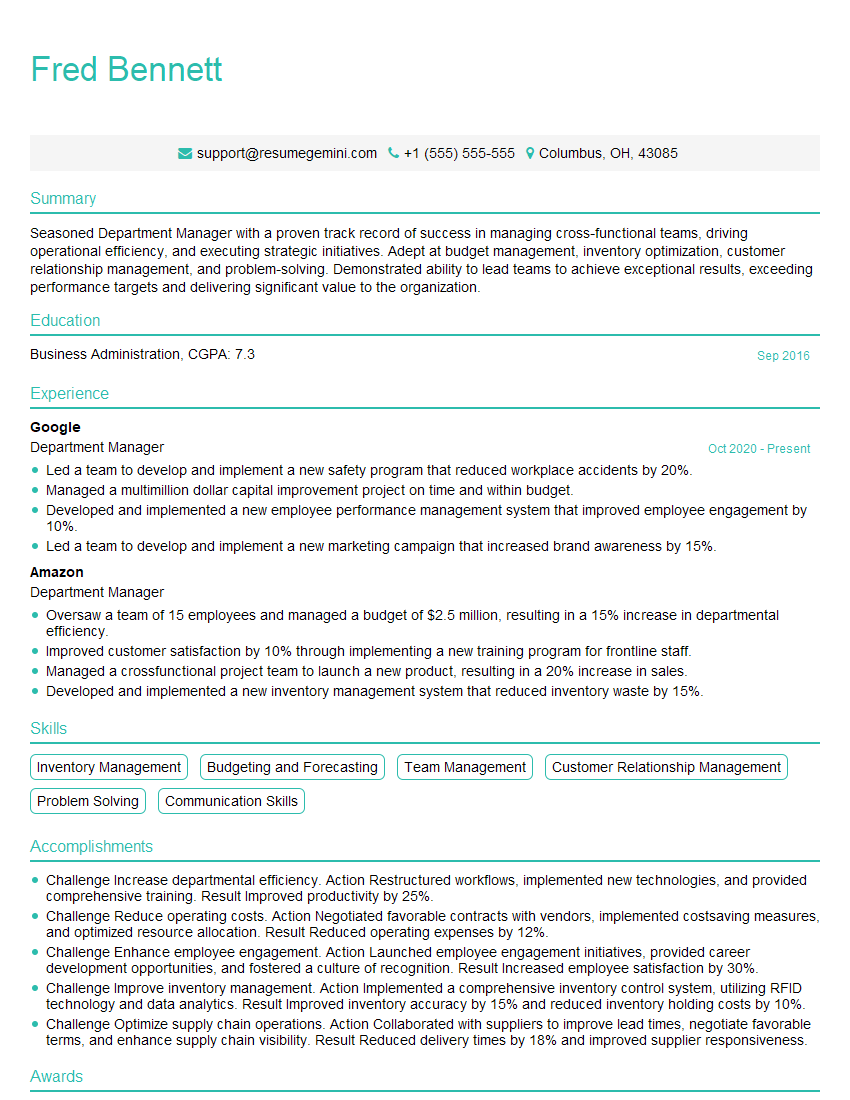
Department Manager Resume Sample
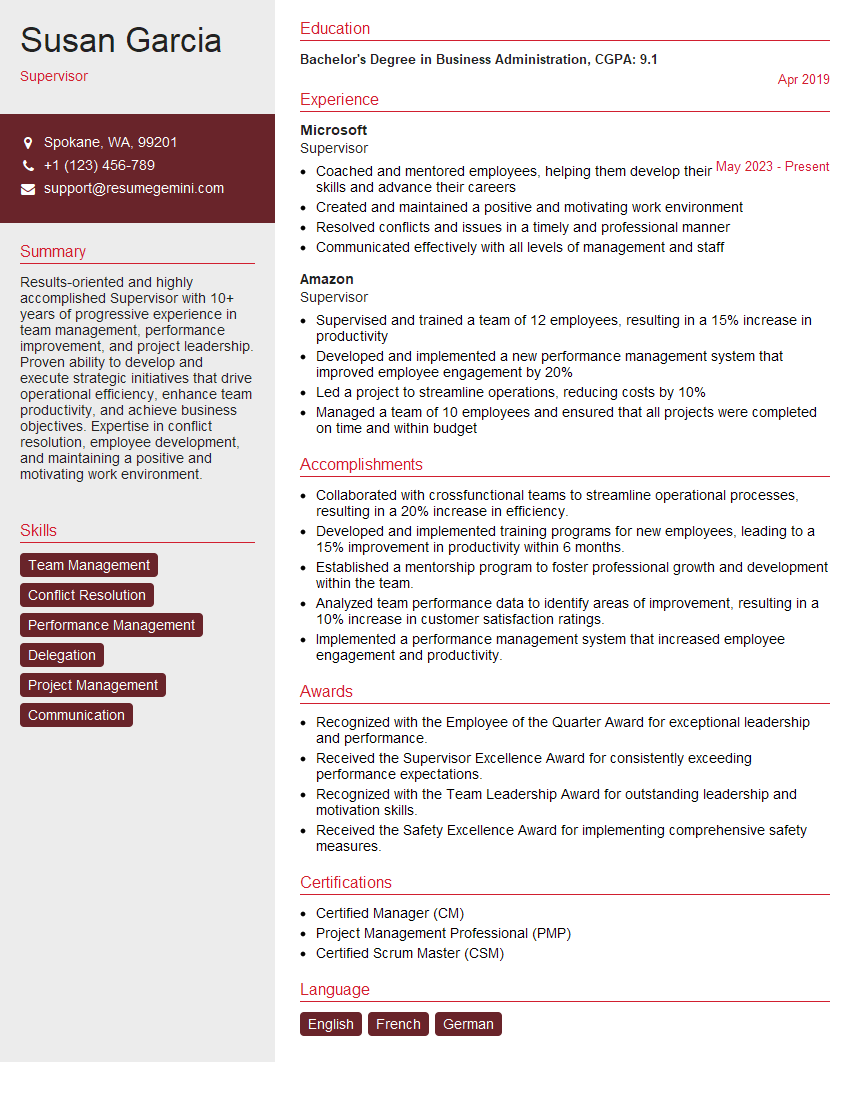
Supervisor Resume Sample
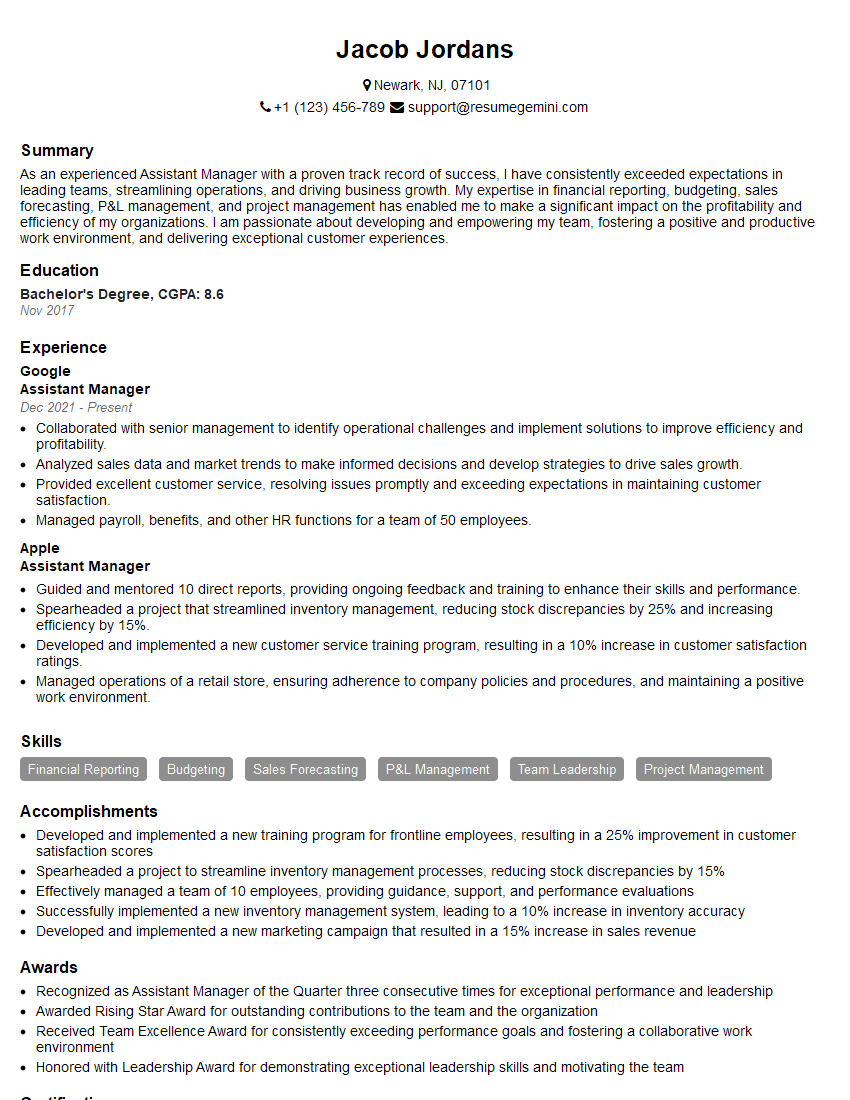
Assistant Manager Resume Sample
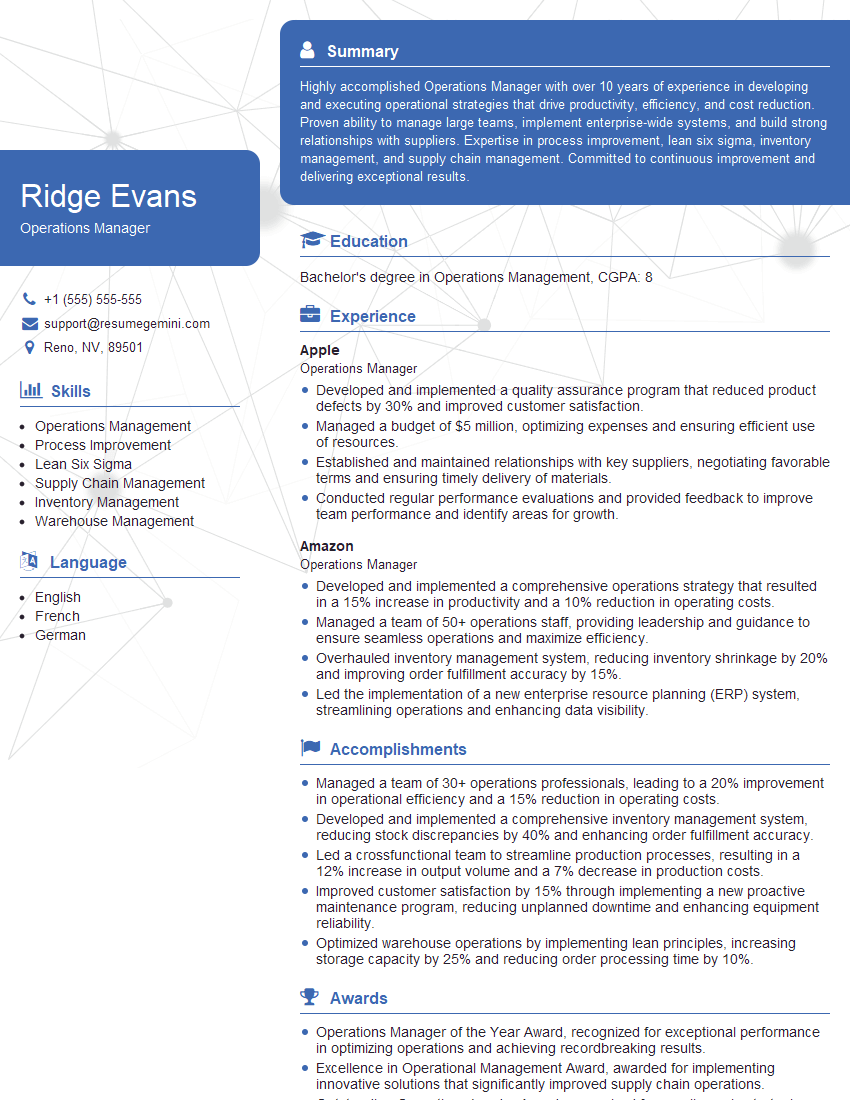
Operations Manager Resume Sample
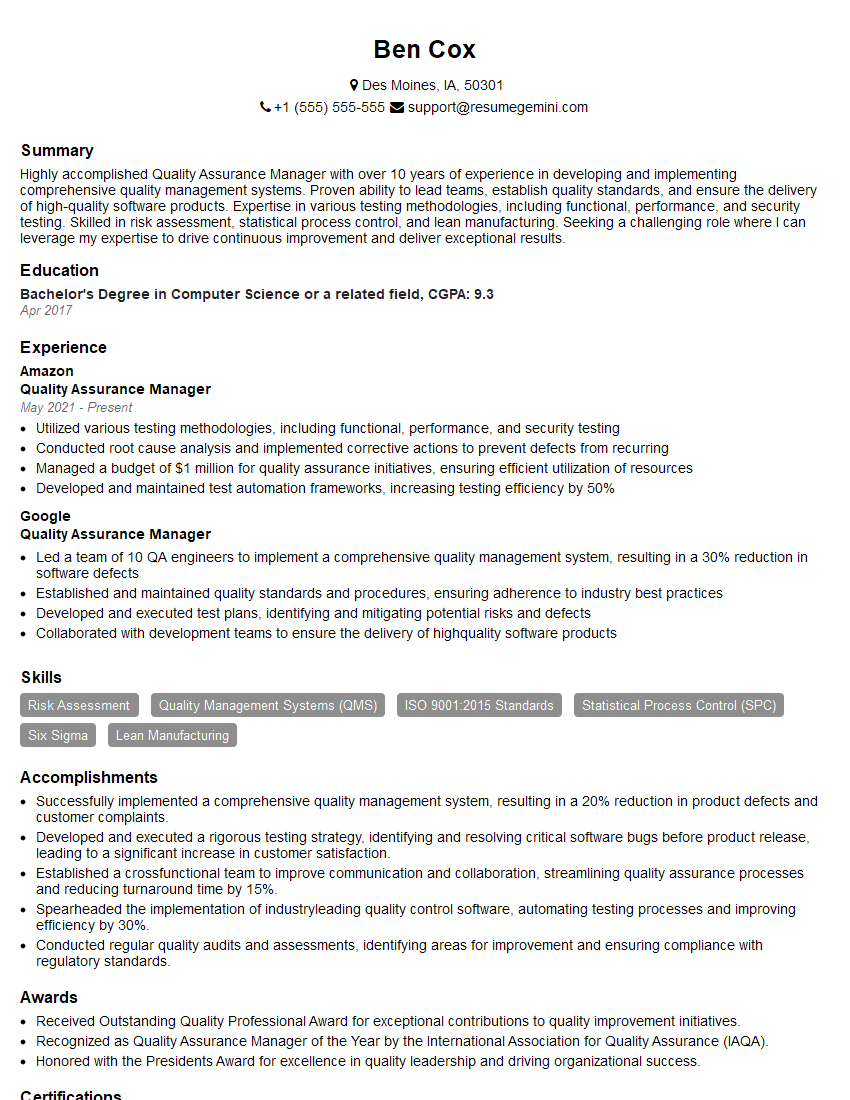
Quality Assurance Manager Resume Sample
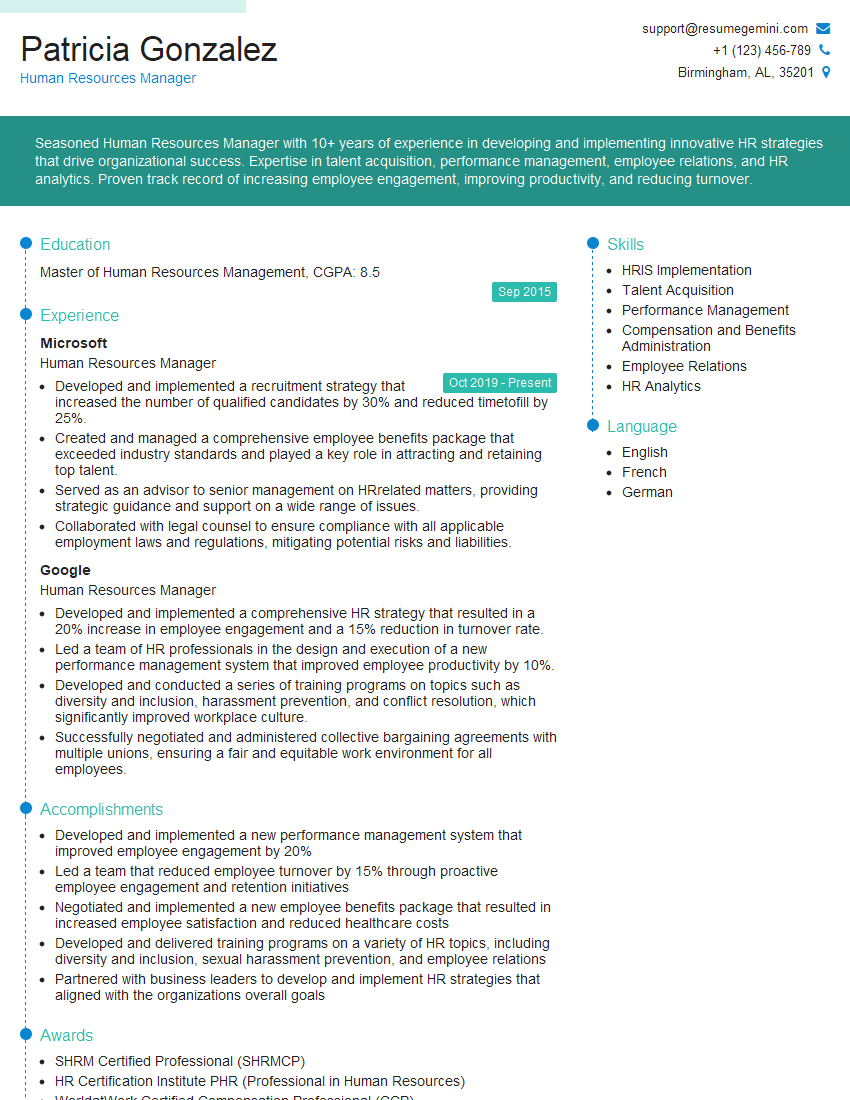
Human Resources Manager Resume Sample
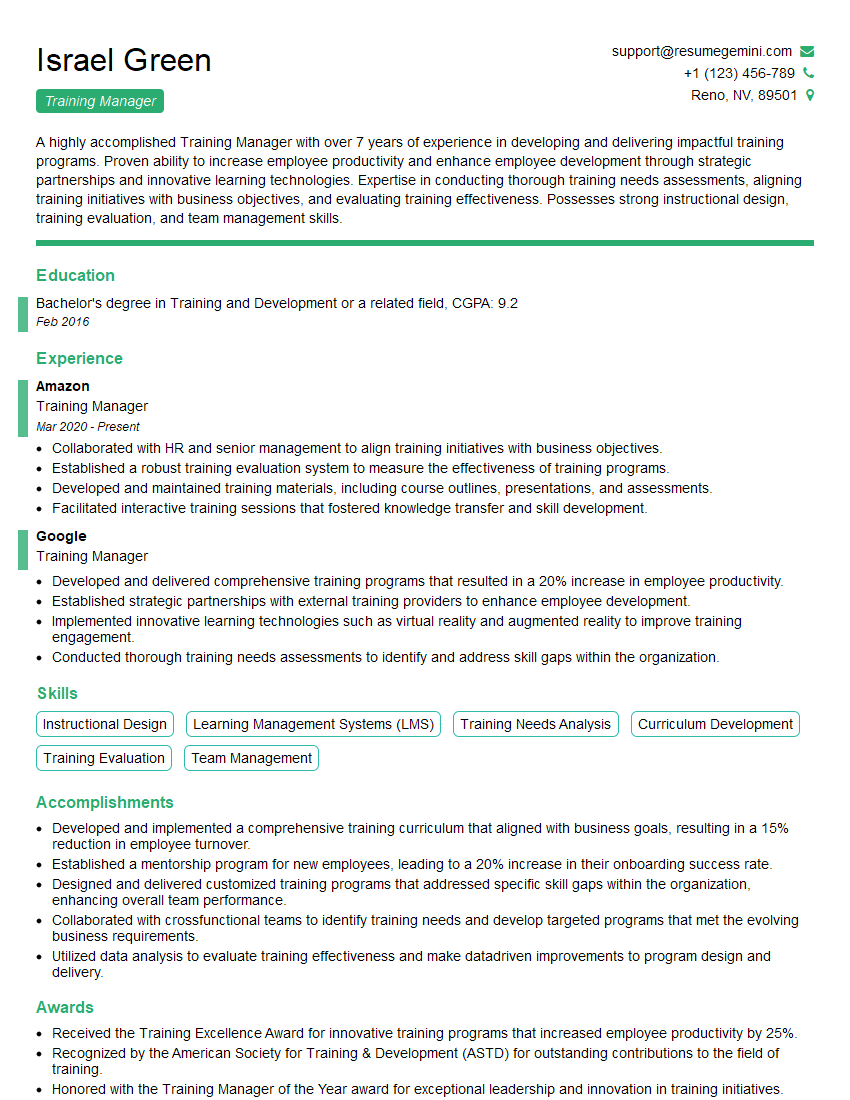
Training Manager Resume Sample
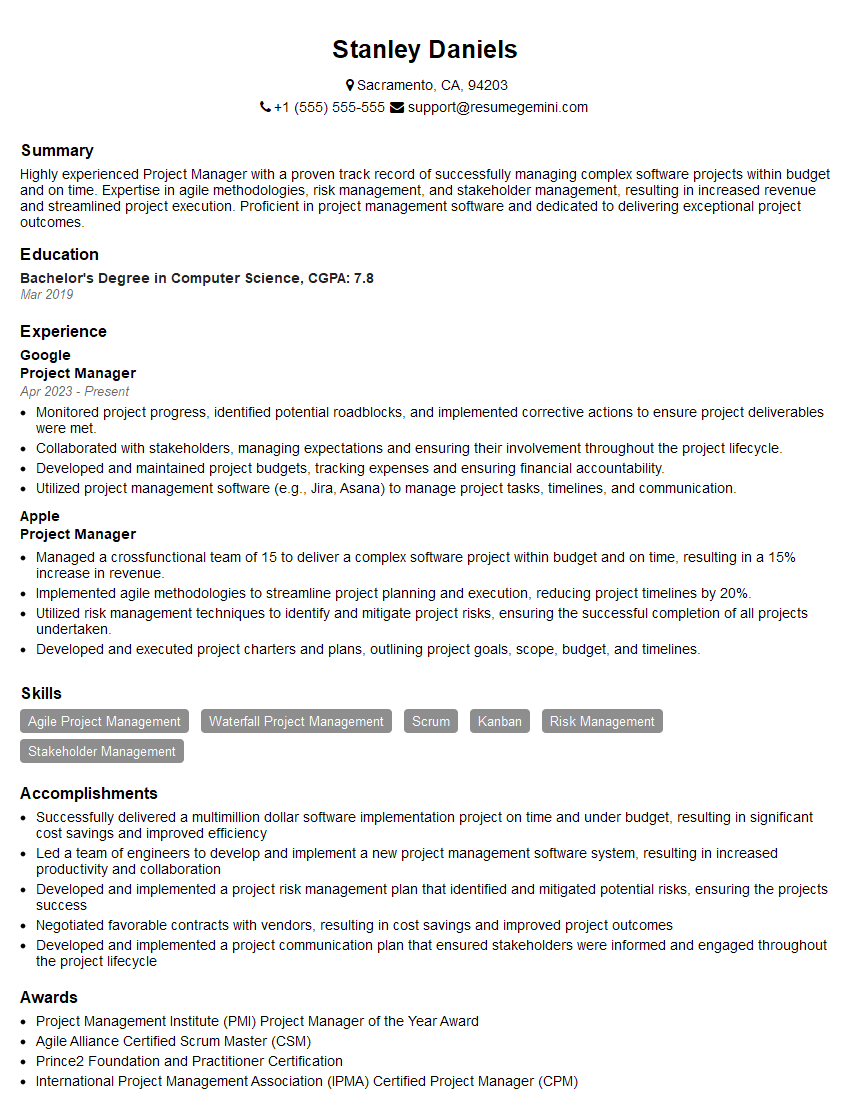
Project Manager Resume Sample
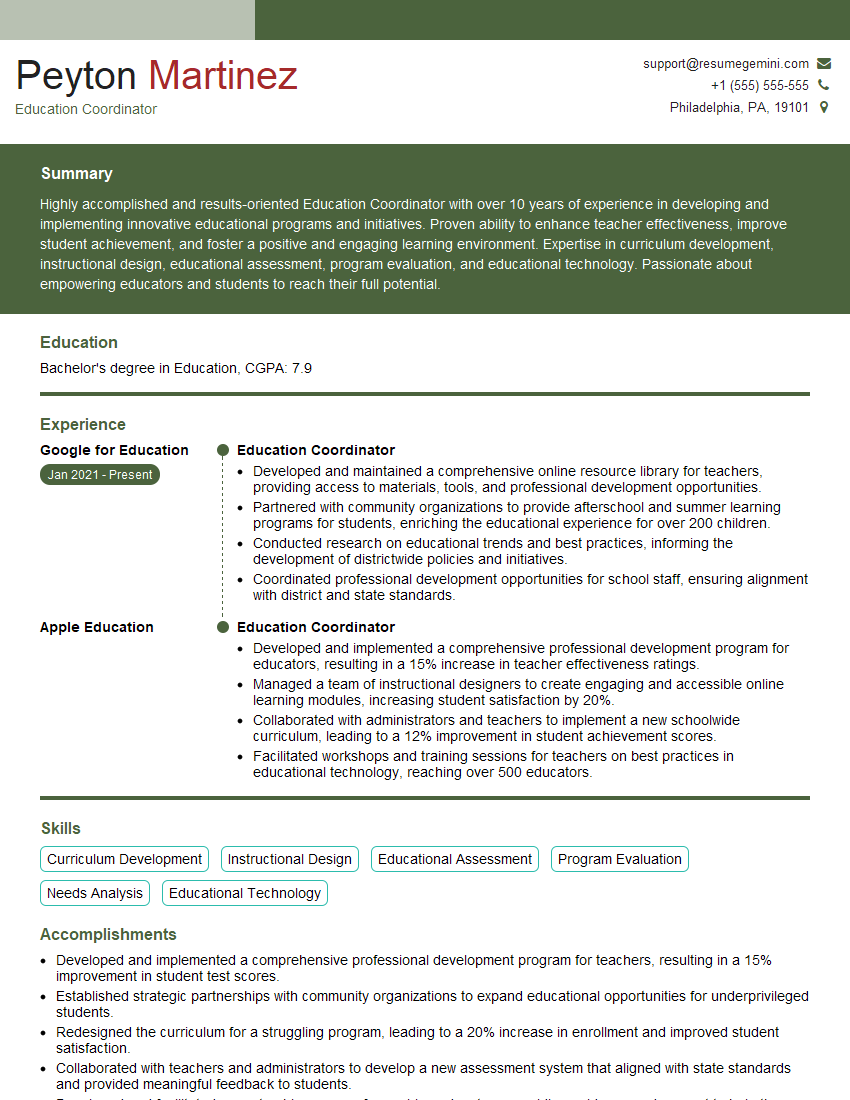
Education Coordinator Resume Sample
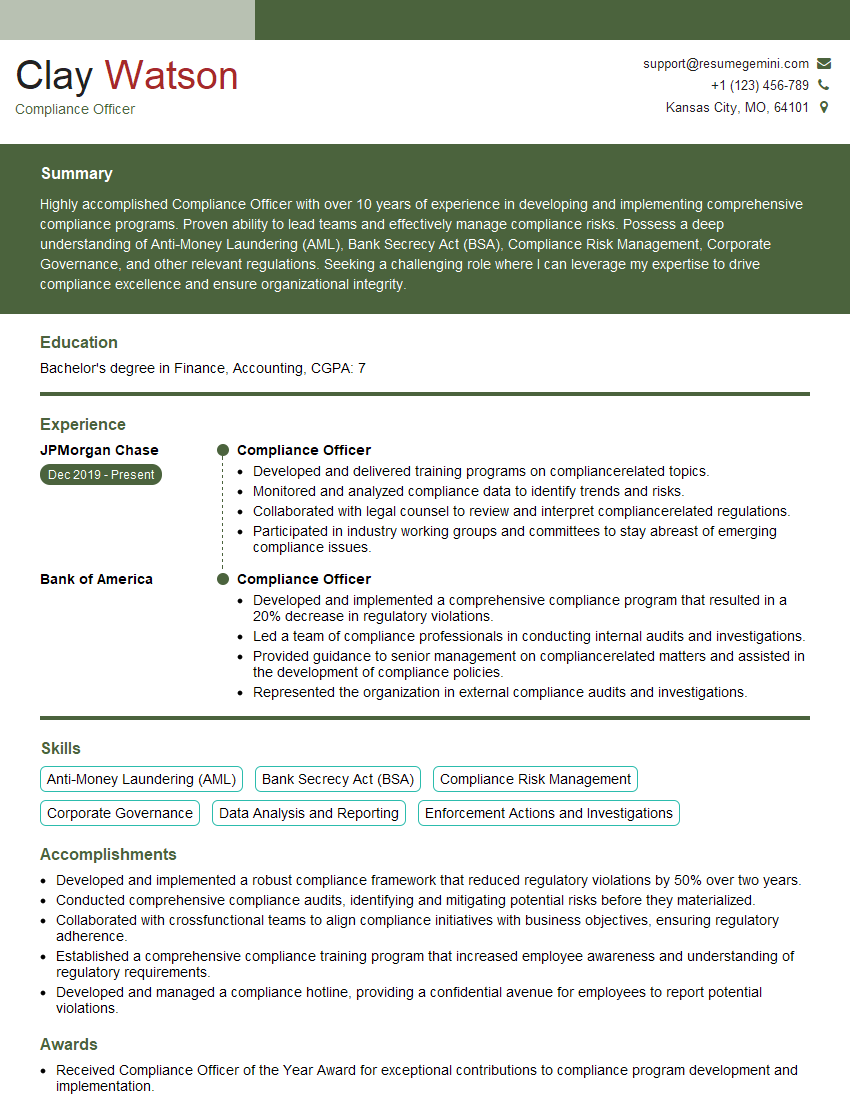
Compliance Officer Resume Sample
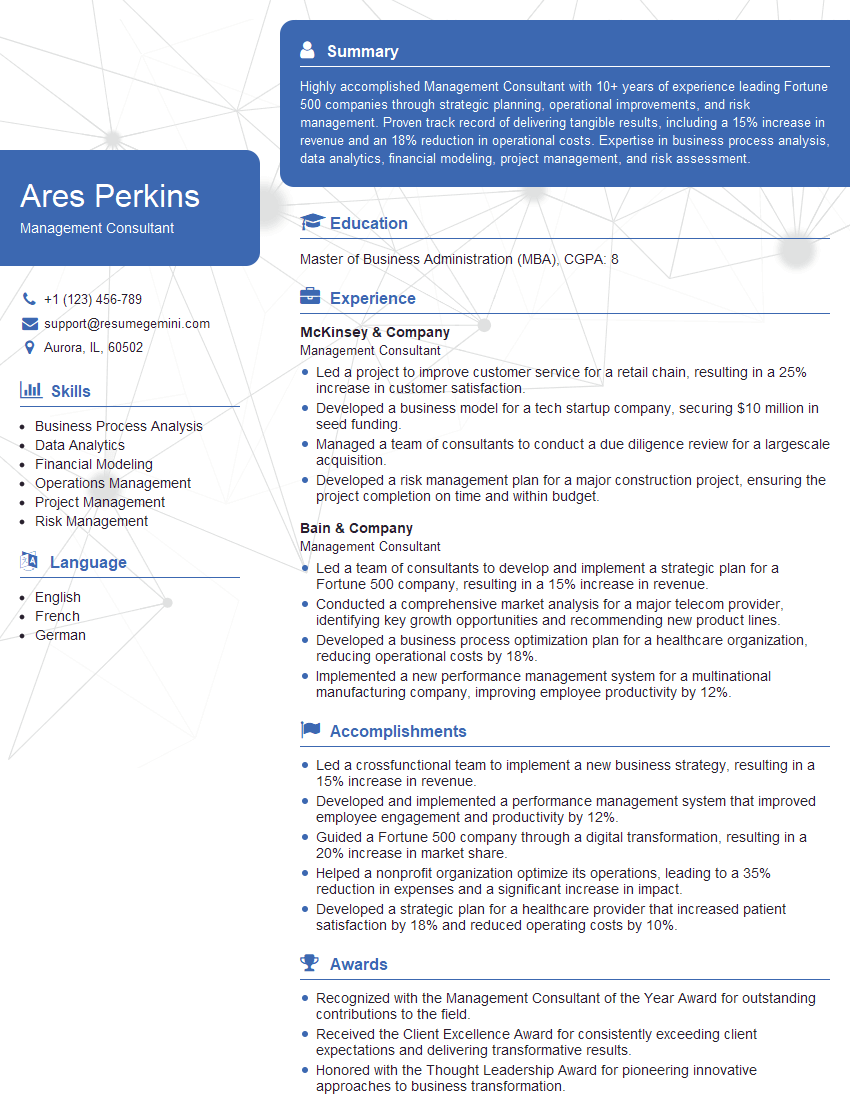
Management Consultant Resume Sample
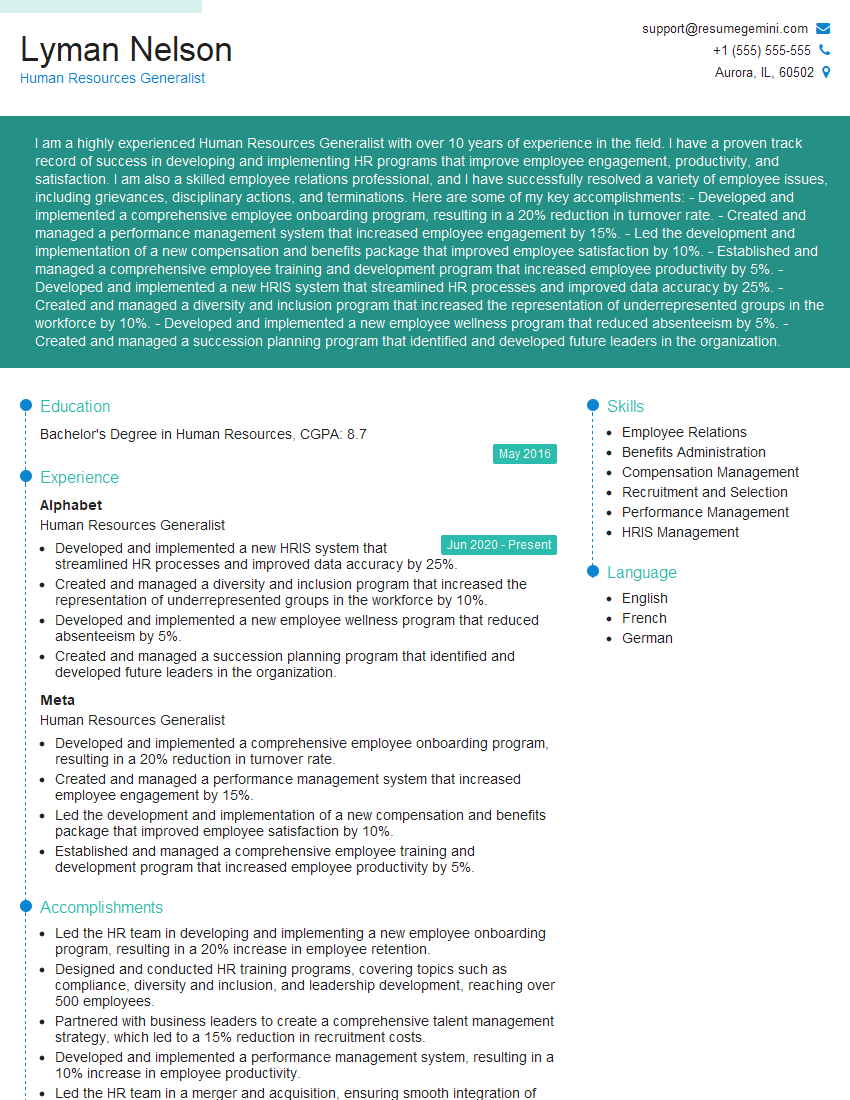
Human Resources Generalist Resume Sample

Curriculum Developer Resume Sample
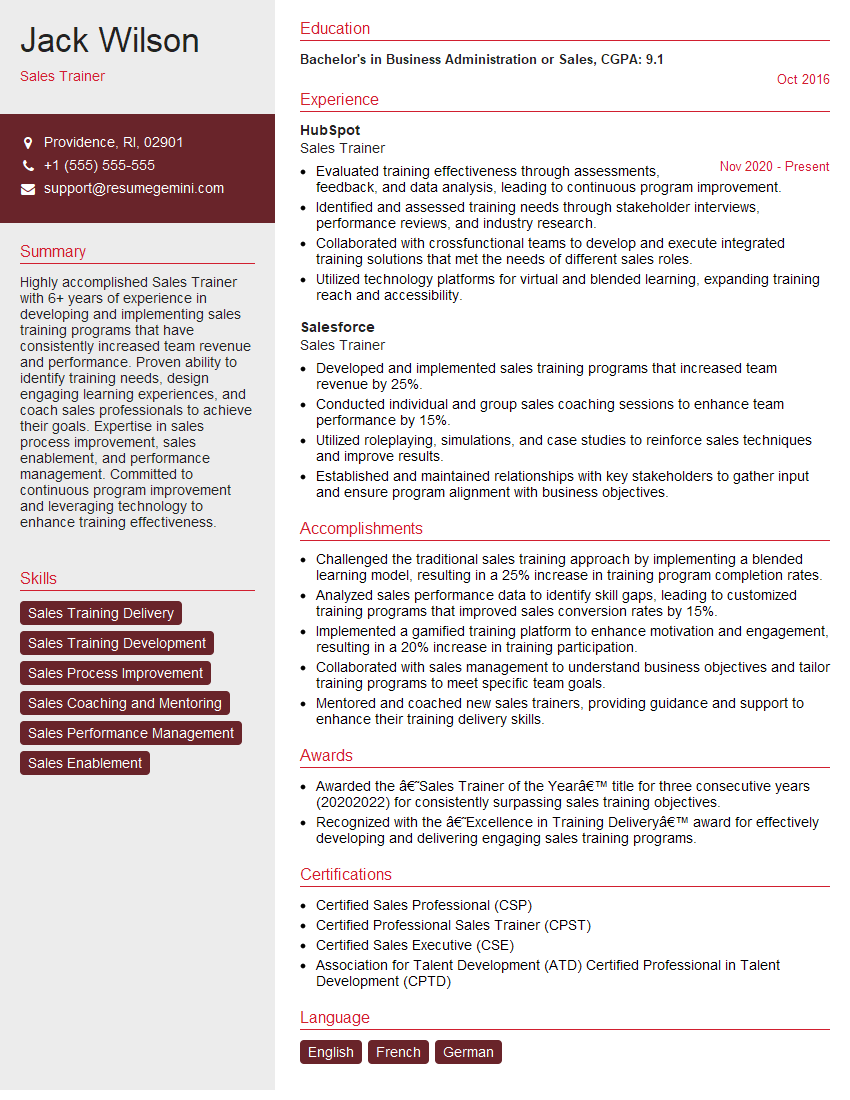
Sales Trainer Resume Sample
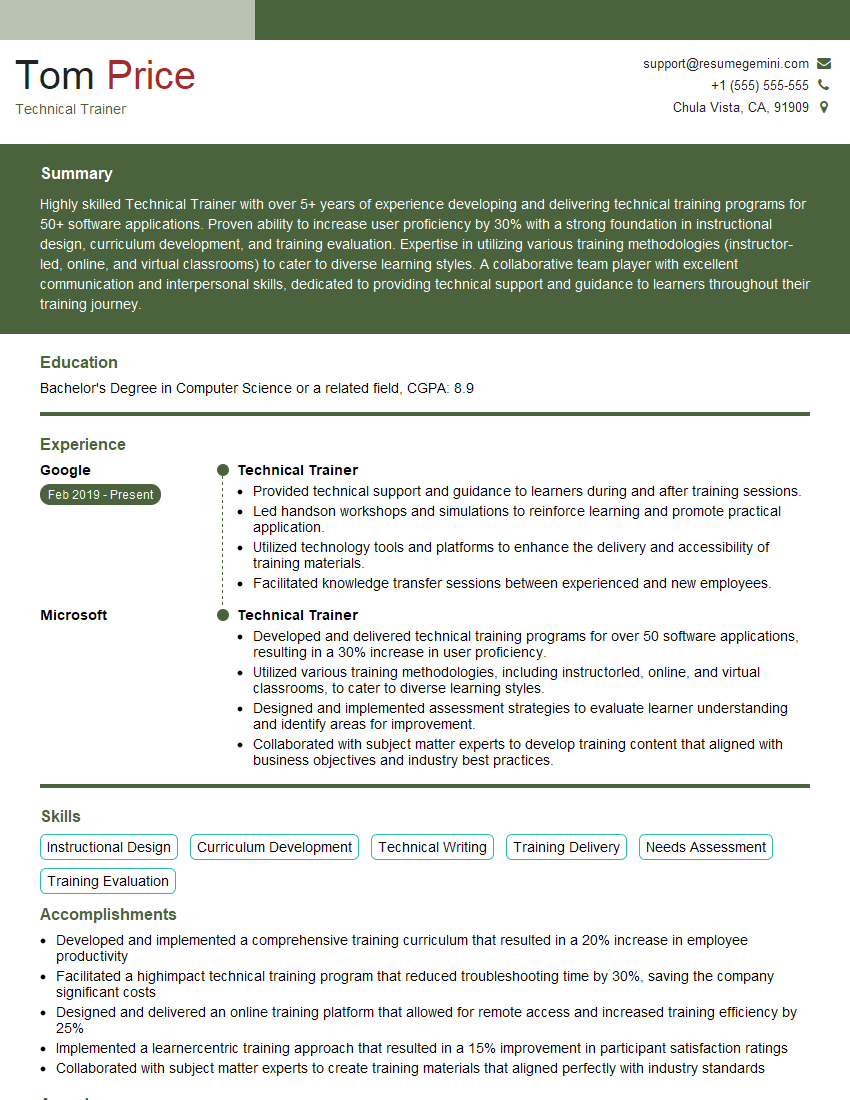
Technical Trainer Resume Sample

Training Specialist Resume Sample
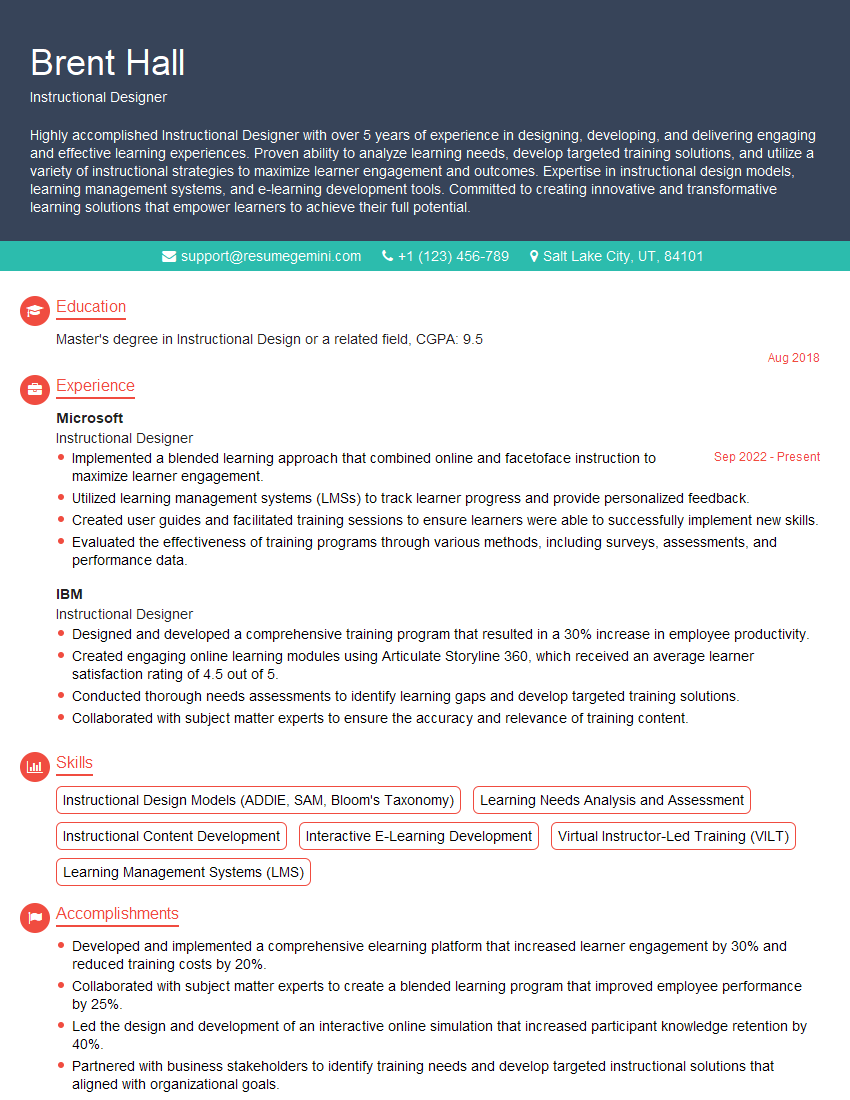
Instructional Designer Resume Sample
- Department Manager
- Supervisor
- Assistant Manager
- Operations Manager
- Quality Assurance Manager
- Human Resources Manager
- Training Manager
- Project Manager
- Education Coordinator
- Compliance Officer
- Management Consultant
- Human Resources Generalist
- Curriculum Developer
- Sales Trainer
- Technical Trainer
- Training Specialist
- Instructional Designer
Explore more articles
Users Rating of Our Blogs
Share Your Experience
We value your feedback! Please rate our content and share your thoughts (optional).
What Readers Say About Our Blog
I Redesigned Spongebob Squarepants and his main characters of my artwork.
https://www.deviantart.com/reimaginesponge/art/Redesigned-Spongebob-characters-1223583608
IT gave me an insight and words to use and be able to think of examples
Hi, I’m Jay, we have a few potential clients that are interested in your services, thought you might be a good fit. I’d love to talk about the details, when do you have time to talk?
Best,
Jay
Founder | CEO