Interviews are opportunities to demonstrate your expertise, and this guide is here to help you shine. Explore the essential Filtering Techniques interview questions that employers frequently ask, paired with strategies for crafting responses that set you apart from the competition.
Questions Asked in Filtering Techniques Interview
Q 1. Explain the difference between low-pass, high-pass, band-pass, and band-stop filters.
Imagine a sieve separating different sizes of rocks. That’s similar to how filters work with signals. Low-pass, high-pass, band-pass, and band-stop filters all control which frequencies pass through, like different-sized holes in our sieve.
- Low-pass filter: Allows low-frequency signals to pass while attenuating (reducing) high-frequency signals. Think of it as a sieve with only large holes – small rocks are blocked. Example: Removing high-frequency noise from an audio recording.
- High-pass filter: Allows high-frequency signals to pass and attenuates low-frequency signals. This is like a sieve with only small holes – large rocks are blocked. Example: Isolating high-pitched sounds in a recording to eliminate a low-frequency hum.
- Band-pass filter: Allows a specific range (band) of frequencies to pass and attenuates frequencies outside that range. It’s a sieve with holes of only a specific size. Example: Tuning a radio to a specific station – selecting a narrow band of frequencies.
- Band-stop filter (or notch filter): Attenuates a specific range of frequencies while allowing frequencies outside that range to pass. This is like a sieve with a specific sized hole blocked. Example: Removing a specific interference frequency from a signal.
Q 2. Describe the characteristics of an ideal filter and why they are often unachievable in practice.
An ideal filter would have a perfectly sharp cutoff between the passband (frequencies allowed to pass) and the stopband (frequencies attenuated). The transition between the two would be instantaneous, with no ripple or attenuation within the passband and complete attenuation in the stopband. It would also have a perfectly flat response within the passband.
However, this is practically impossible to achieve. Real-world filters are limited by physical components and their inherent limitations. These limitations lead to:
- Non-ideal transition band: There’s always a gradual transition region between the passband and stopband, not a sharp cutoff.
- Ripple in the passband: The response in the passband isn’t perfectly flat; there are variations in amplitude.
- Attenuation in the passband: Some signal attenuation occurs even within the desired passband.
- Imperfect stopband attenuation: Complete attenuation in the stopband is unrealistic.
Q 3. What are some common filter design techniques? (e.g., Butterworth, Chebyshev, Elliptic)
Several techniques are used for filter design, each offering different trade-offs between characteristics like sharpness of cutoff, ripple in the passband, and the order of the filter (which affects complexity). Here are some popular examples:
- Butterworth: Offers a maximally flat response in the passband. It’s simple to design but has a relatively gradual roll-off (transition between passband and stopband).
- Chebyshev (Type I and Type II): Provides a sharper cutoff than Butterworth for the same order, but at the cost of ripple in the passband (Type I) or stopband (Type II). Type I allows ripples in the passband, while Type II allows ripples in the stopband. This is a trade-off between ripple and steepness.
- Elliptic (Cauer): Offers the sharpest cutoff for a given order, but has ripples in both the passband and stopband. It achieves the steepest rolloff at the expense of ripples.
The choice often depends on the specific application’s requirements. For instance, audio applications might prioritize a flat passband (Butterworth), while communication systems might need the sharp cutoff of Elliptic, even with ripple.
Q 4. How do you choose an appropriate filter for a given application?
Choosing the right filter involves carefully considering the application’s needs and constraints. Here’s a step-by-step approach:
- Define specifications: Determine the desired passband and stopband frequencies, the acceptable ripple levels (if any), and the minimum attenuation required in the stopband.
- Select filter type: Based on the specifications, choose a filter type (Butterworth, Chebyshev, Elliptic, etc.) that best meets the requirements. Consider the trade-offs between sharpness of cutoff, passband ripple, and stopband attenuation.
- Determine filter order: The order of the filter influences the steepness of the roll-off. Higher orders provide sharper transitions but increase complexity and cost.
- Implement and test: Design and implement the filter using appropriate software or hardware. Thorough testing is crucial to verify performance and meet specifications.
For example, a medical imaging system might require a very sharp cutoff to avoid blurring, making Elliptic filters an appropriate choice despite the ripple. In contrast, an audio equalizer might favor Butterworth for its flat passband response.
Q 5. Explain the concept of filter order and its impact on filter performance.
The order of a filter refers to the number of reactive components (e.g., inductors and capacitors) in an analog filter or the number of poles in a digital filter. It directly influences the filter’s performance. A higher order generally results in:
- Sharper roll-off: The transition between the passband and stopband becomes steeper, allowing for better separation of desired and undesired frequencies.
- Increased attenuation in the stopband: The filter attenuates frequencies in the stopband more effectively.
- Increased complexity: Higher-order filters are more complex to design and implement, requiring more components and potentially leading to higher cost and increased sensitivity to component variations.
The choice of filter order involves a trade-off between performance and complexity. You choose the lowest order that satisfies your specifications.
Q 6. What is the Nyquist-Shannon sampling theorem and its relevance to filtering?
The Nyquist-Shannon sampling theorem states that to accurately represent a signal digitally, the sampling frequency (fs) must be at least twice the highest frequency (fmax) present in the analog signal. That is, fs ≥ 2fmax. This is crucial for filtering because:
If the sampling rate is too low (fs < 2fmax), higher frequencies above fmax will fold back into the lower frequency range, creating aliases. These aliases can contaminate the lower frequencies, distorting the original signal.
Filtering plays a vital role here. Before sampling, a low-pass anti-aliasing filter is used to attenuate frequencies above fmax/2. This ensures that only the frequencies we can accurately represent are passed to the digital domain, preventing aliasing.
Q 7. Describe aliasing and how it can be avoided.
Aliasing occurs when a signal is sampled at a rate lower than twice its highest frequency. High-frequency components in the signal appear as lower frequencies in the sampled data, distorting the signal.
Think of a spinning wheel with spokes. If you take pictures of it at a slow shutter speed, the spokes might blur or seem to be moving in the opposite direction. Similarly, high frequencies 'fold back' into lower frequencies.
Aliasing can be avoided by:
- Increasing the sampling rate: The simplest solution is to increase the sampling rate to well above twice the maximum frequency of interest.
- Using an anti-aliasing filter: A low-pass filter is applied before sampling to attenuate frequencies above half the sampling rate (Nyquist frequency). This prevents these high frequencies from contaminating the lower frequencies during sampling.
Proper anti-aliasing filtering is essential in many applications, including digital audio, image processing, and data acquisition, to ensure accurate representation of the analog signal in the digital domain.
Q 8. Explain the concept of filter stability and how it is assessed.
Filter stability is a crucial concept, especially in IIR (Infinite Impulse Response) filters. A stable filter ensures that its output remains bounded for any bounded input. In simpler terms, if the input signal doesn't grow indefinitely, neither will the output. Instability leads to oscillations that grow without limit, rendering the filter useless.
Assessing stability for IIR filters often involves examining the filter's poles (roots of the denominator of the transfer function). All poles must lie strictly within the unit circle in the z-plane for the filter to be stable. If even one pole falls outside the unit circle, the filter is unstable. For FIR (Finite Impulse Response) filters, stability is guaranteed because the impulse response is finite. Therefore, stability assessment is not necessary for FIR filters.
Example: Consider an IIR filter with a transfer function H(z) = 1/(1 - 0.8z-1). The pole is at z = 0.8, which lies within the unit circle (|0.8| < 1), indicating a stable filter. However, if the transfer function was H(z) = 1/(1 - 1.2z-1), the pole would be at z = 1.2, outside the unit circle, resulting in an unstable filter.
Q 9. What are the advantages and disadvantages of FIR and IIR filters?
FIR (Finite Impulse Response) Filters:
- Advantages: Always stable (guaranteed by design), linear phase response (which is important for preserving signal shape), easily implemented using convolution.
- Disadvantages: Often require higher orders (and hence more computations) to achieve sharp transitions in the frequency response compared to IIR filters.
IIR (Infinite Impulse Response) Filters:
- Advantages: Can achieve sharper transitions in the frequency response with lower orders than FIR filters, making them more computationally efficient in many cases.
- Disadvantages: Can be unstable if not designed carefully, usually have a nonlinear phase response (can cause signal distortion), more complex to design than FIR filters.
Analogy: Imagine you need to smooth a rough surface. An FIR filter is like using a large, flat sanding block – it's always stable, but it might take more effort (higher order) for a sharp result. An IIR filter is like using sandpaper – it can be faster (lower order) but you need to be careful not to overdo it (instability).
Q 10. How do you implement a digital filter using a difference equation?
A digital filter can be implemented using a difference equation, which relates the output samples to the input samples. A general form of a difference equation is:
y[n] = b0x[n] + b1x[n-1] + ... + bMx[n-M] - a1y[n-1] - ... - aNy[n-N]where:
y[n]is the current output sample.x[n]is the current input sample.biandaiare the filter coefficients.MandNare the orders of the filter.
Implementation Steps:
- Determine the filter coefficients (
biandai) based on the desired filter characteristics. - Implement the difference equation using a programming language (e.g., MATLAB, Python) or hardware (e.g., DSP).
- Iterate through the input samples, calculating each output sample using the difference equation.
Example (simple moving average filter): A simple moving average filter with a window of 3 can be represented by the difference equation:
y[n] = (x[n] + x[n-1] + x[n-2])/3This equation directly calculates the average of three consecutive input samples.
Q 11. How do you design a filter using a frequency response specification?
Designing a filter based on a frequency response specification involves translating the desired frequency response (e.g., passband, stopband, transition band) into a set of filter coefficients. Several techniques exist, including:
- Windowing methods: These methods start with an ideal frequency response and then apply a window function (e.g., Hamming, Hanning, Blackman) to the impulse response. Windowing reduces the ripples in the frequency response but increases the transition bandwidth.
- Frequency sampling method: This technique directly samples the desired frequency response and then uses the Inverse Discrete Fourier Transform (IDFT) to obtain the impulse response. The resulting filter might not meet the specifications exactly.
- Optimal methods (e.g., Parks-McClellan): These methods use iterative algorithms to find the optimal filter coefficients that minimize the error between the desired and actual frequency responses. They typically provide better results than windowing or frequency sampling methods but are computationally more intensive.
The choice of method depends on the complexity of the specifications and the desired accuracy. Software tools like MATLAB's Filter Design and Analysis Tool provide a user-friendly interface for filter design and can implement many of these methods.
Q 12. Explain the concept of a filter's impulse response and its relationship to the frequency response.
The impulse response of a filter is the output when the input is a unit impulse (a single non-zero sample). It completely characterizes the filter's behavior. The frequency response, on the other hand, represents the filter's gain and phase shift at each frequency. These two representations are related through the Discrete-Time Fourier Transform (DTFT).
Specifically, the frequency response is the DTFT of the impulse response. This means that the frequency response can be obtained by calculating the DTFT of the impulse response. Conversely, the impulse response can be obtained by calculating the Inverse DTFT of the frequency response.
In simpler terms: The impulse response shows how the filter responds to a sudden 'spike' in the input, while the frequency response shows how the filter modifies different frequencies in the input signal. They are two sides of the same coin, providing different but equivalent descriptions of the filter.
Q 13. Describe the effects of noise on filter performance.
Noise significantly impacts filter performance. High levels of noise can mask the desired signal, leading to inaccurate filtering. The effects depend on the type of noise and the filter's characteristics. For example:
- Increased output noise: Noise present in the input signal will often be amplified or modified by the filter. If the noise frequency falls within the filter's passband, it will appear prominently in the output.
- Reduced signal-to-noise ratio (SNR): The filter's ability to separate the desired signal from the noise (SNR) is decreased by noise.
- Distorted output: Noise can introduce artifacts or distortion in the filtered output.
- Filter instability (in certain cases): Excessive noise in some situations could potentially contribute to instability in IIR filters although this is less common.
The impact of noise depends heavily on the noise's power spectral density relative to the signal power and on the filter's frequency response.
Q 14. How can you mitigate the effects of noise in filter design?
Several techniques can mitigate the effects of noise in filter design:
- Pre-filtering: Applying a low-pass filter before the main filter can attenuate high-frequency noise that might otherwise be amplified by the main filter.
- Noise reduction techniques: Methods like averaging, median filtering, or Wiener filtering can reduce noise in the input signal before applying the main filter.
- Increasing filter order: Higher-order filters can provide sharper transitions between passbands and stopbands, leading to better noise rejection. However, this comes at the cost of increased computational complexity.
- Optimizing filter specifications: Choosing appropriate filter specifications (e.g., passband ripple, stopband attenuation) can lead to filters that are more robust to noise.
- Using robust filter design techniques: Some filter design methods are less sensitive to coefficient quantization errors and are better suited for dealing with noisy conditions.
- Adaptive filtering: For situations where the noise characteristics are time-varying, adaptive filters can adjust their characteristics to minimize noise effects. Examples include LMS (Least Mean Squares) filters.
The best approach depends on the specific application and the type of noise encountered.
Q 15. What are some common techniques for filter implementation (e.g., direct form I, direct form II)?
Filter implementation techniques largely revolve around how we represent and compute the filter's impulse response. Direct Form I and Direct Form II are two fundamental structures for implementing Recursive (IIR) filters, which use feedback to achieve their desired frequency response. They differ primarily in their computational efficiency and sensitivity to coefficient quantization.
Direct Form I: This structure directly implements the difference equation of the filter. It uses two delay elements, storing both the input and output signals. This can lead to higher sensitivity to coefficient quantization errors as the same coefficients are used twice. Imagine it like a simple echo effect with feedback - the output is fed back into the input, influencing future outputs.
y[n] = b[0]x[n] + b[1]x[n-1] + a[1]y[n-1]Direct Form II (Transposed Form): This structure is a transposed version of Direct Form I, achieving the same filter response but with improved sensitivity to quantization. It utilizes only one delay element, storing the intermediate result. Think of it as a streamlined echo effect, with less redundancy. It is generally preferred over Direct Form I due to its lower sensitivity to round-off errors.
w[n] = x[n] - a[1]w[n-1] y[n] = b[0]w[n] + b[1]w[n-1]Other implementations include Direct Form II Transposed (which further minimizes multiplications) and state-space representations, each with tradeoffs regarding computational cost and sensitivity to errors.
Career Expert Tips:
- Ace those interviews! Prepare effectively by reviewing the Top 50 Most Common Interview Questions on ResumeGemini.
- Navigate your job search with confidence! Explore a wide range of Career Tips on ResumeGemini. Learn about common challenges and recommendations to overcome them.
- Craft the perfect resume! Master the Art of Resume Writing with ResumeGemini's guide. Showcase your unique qualifications and achievements effectively.
- Don't miss out on holiday savings! Build your dream resume with ResumeGemini's ATS optimized templates.
Q 16. Explain the concept of filter banks and their applications.
Filter banks are a collection of bandpass filters that decompose a signal into multiple frequency bands. Think of it like a prism splitting white light into its constituent colors. Each filter in the bank is designed to pass a specific range of frequencies while attenuating others. These are used extensively in signal processing and communications.
Applications:
- Image Compression (JPEG 2000): Filter banks are crucial in wavelet transforms used for image compression, allowing efficient representation of image details at different scales.
- Audio Processing: They are widely used in audio codecs like MP3 and AAC for subband coding. Imagine each filter analyzing a different part of the sound spectrum (bass, treble, etc.).
- Speech Recognition: Filter banks decompose speech signals, extracting relevant features for speech recognition systems.
- Telecommunications: Multirate signal processing in telecommunications often utilizes filter banks for channel separation and multiplexing.
For example, in a typical audio signal processing pipeline, a filter bank might split audio into different frequency bands, each of which can then be processed individually (e.g. equalization or noise reduction) before recombining to produce the final output.
Q 17. What is a Kalman filter and how does it work?
The Kalman filter is a powerful algorithm for estimating the state of a dynamic system from a series of noisy measurements. Imagine tracking a moving object using a radar; the radar readings are noisy, but the Kalman filter uses these noisy measurements, along with a model of the object's motion, to provide a much more accurate estimate of its position and velocity.
How it works: The Kalman filter works by iteratively updating an estimate of the system's state using two main steps:
- Prediction: It uses a model of the system's dynamics to predict the state at the next time step.
- Update: It incorporates new measurements to correct the predicted state, weighing the prediction and measurement based on their respective uncertainties (how much we trust each). This is where the filter uses a sophisticated way to fuse information from the prediction model and the new measurements, balancing accuracy and reliability.
The filter maintains a covariance matrix which represents the uncertainty in the state estimate. As more measurements are processed, the uncertainty typically reduces, improving the accuracy of the estimate. Applications range from navigation systems (GPS) to financial modeling and robotics.
Q 18. What is a Wiener filter and where is it used?
The Wiener filter is a type of linear filter that is optimal in the mean-square error (MSE) sense. This means it minimizes the average squared difference between the estimated signal and the desired signal. It's particularly useful when dealing with signals corrupted by additive noise. Think of trying to restore a blurry image - the Wiener filter attempts to remove the blur (noise) while preserving the original image details as best as possible.
Applications:
- Image Restoration: Restoring images blurred by atmospheric turbulence or motion blur.
- Signal Denoising: Removing noise from audio or other signals.
- Medical Imaging: Improving the quality of medical images by reducing noise.
The design of a Wiener filter involves knowing or estimating the power spectral densities of the desired signal and the noise. It's a powerful tool for signal restoration, but its performance relies heavily on the accuracy of these spectral estimates.
Q 19. Explain the difference between linear and non-linear filters.
The primary difference between linear and non-linear filters lies in how they process the input signal. A linear filter obeys the principles of superposition and homogeneity. This means that the output is a linear combination of the input samples. Think of a simple moving average filter - the output is simply a weighted sum of past and present inputs.
A non-linear filter, however, doesn't follow these rules. Its output is not a simple linear combination of inputs. Examples include median filters, which replace each pixel with the median of its neighboring pixels, effectively removing salt-and-pepper noise. Another example is the morphological filter which uses set theory operations to modify the shape of a signal (e.g., erosion, dilation).
In essence, linear filters are easier to analyze and design, but non-linear filters can be more effective for certain types of noise and signal characteristics. The choice depends on the specific application and the nature of the signal and noise.
Q 20. Describe different types of digital filters (e.g., recursive, non-recursive)
Digital filters are broadly classified into recursive and non-recursive types, based on how they process the input signal:
Recursive Filters (IIR - Infinite Impulse Response): These filters use feedback, meaning the current output depends on both the current and past input values and past output values. This creates a feedback loop. This feedback allows for the creation of sharp frequency responses with fewer coefficients, but also introduces potential for instability. Imagine the filter's memory extending indefinitely – its impulse response theoretically continues infinitely although it may decay over time.
Non-recursive Filters (FIR - Finite Impulse Response): These filters use only current and past input samples to calculate the current output, with no feedback. They are always stable, but typically require more coefficients to achieve the same sharp frequency response as a recursive filter. The impulse response lasts only a finite amount of time.
Other categorizations include:
- Low-pass filters: Pass low frequencies and attenuate high frequencies.
- High-pass filters: Pass high frequencies and attenuate low frequencies.
- Band-pass filters: Pass a specific range of frequencies and attenuate others.
- Band-stop filters (notch filters): Attenuate a specific range of frequencies and pass others.
Q 21. How do you evaluate the performance of a designed filter?
Evaluating filter performance involves assessing how well it meets the design specifications. Several metrics are used:
- Frequency Response: This is a plot showing the filter's gain and phase shift as a function of frequency. We look for the desired passband and stopband characteristics, checking that the gain is high enough in the passband and low enough in the stopband, and examining for ripples or transitions within these bands.
- Impulse Response: For FIR filters, it's important to check that the impulse response decays to zero within a finite time, and that it's free of significant oscillations.
- Step Response: Shows how the filter responds to a sudden change in the input signal. It reveals the filter's transient behavior and settling time.
- Group Delay: Measures the delay of different frequencies through the filter. Constant group delay is desirable for preventing signal distortion.
- Quantization Effects: For digital implementations, we check the sensitivity to coefficient quantization, which can cause performance degradation. (Consider the difference between Direct Form I and II in this respect.)
- Computational Complexity: The number of multiplications and additions required per output sample, impacting real-time performance.
In practice, these metrics are used together to assess a filter's suitability for a given application. Often simulation and testing against real-world data are necessary to verify performance.
Q 22. Explain the role of windowing in FIR filter design.
Windowing in FIR (Finite Impulse Response) filter design plays a crucial role in shaping the filter's frequency response. An ideal filter has a perfectly sharp cutoff between the passband and stopband, but this is impossible to achieve with a finite-length impulse response. Windowing mitigates this limitation. We start by designing an ideal filter's impulse response (often infinitely long). Then, a window function, a finite-length sequence with specific properties, is applied to this impulse response, truncating it to a manageable length. This truncation process introduces ripples (Gibbs phenomenon) in the frequency response, but windowing helps control the magnitude of these ripples, effectively trading off between sharpness of cutoff and ripple levels.
For example, consider a low-pass filter. Its ideal impulse response is a sinc function that extends infinitely. Truncating this directly would create significant ripples. Applying a Hamming window, for example, smooths the truncated impulse response, reducing the ripples at the cost of a slightly less sharp cutoff. Different windows (e.g., Hamming, Hanning, Blackman) offer different trade-offs between transition bandwidth (sharpness of cutoff) and stopband attenuation (ripple level). The choice depends on the specific application's requirements.
In essence, windowing is a compromise – we sacrifice perfect frequency response for a practical, implementable filter. The window function acts like a controlled “fade-out” of the impulse response, limiting the impact of abrupt truncation.
Q 23. What are some common metrics for evaluating filter performance (e.g., cutoff frequency, stopband attenuation, passband ripple)?
Several metrics are used to evaluate filter performance. These metrics quantify how well the filter achieves its design goals.
- Cutoff Frequency (fc): This is the frequency that marks the transition between the passband and stopband. It's often defined as the point where the filter's gain drops to -3dB (half power point) from its maximum passband gain. This point isn't always precise, especially with non-ideal filters.
- Passband Ripple (δp): This represents the variation in gain within the passband. A smaller ripple indicates a flatter passband response, desirable for applications where preserving signal amplitude is critical (e.g., audio processing). Ideally, it's 0, but in practice it’s always a positive value.
- Stopband Attenuation (αs): This measures how effectively the filter suppresses signals outside the passband. A higher attenuation (expressed in dB) implies better rejection of unwanted frequencies in the stopband. The higher, the better.
- Transition Bandwidth (Δf): The frequency range between the passband edge and the stopband edge. A narrower transition bandwidth indicates a sharper cutoff, but often requires a higher filter order (more computations).
These metrics are crucial in selecting an appropriate filter design. The design process often involves iterative adjustments to optimize these parameters based on the application's specific requirements. A filter for audio might prioritize low passband ripple, while a filter for noise reduction might need high stopband attenuation.
Q 24. How do you handle filter design when dealing with non-stationary signals?
Dealing with non-stationary signals, which change characteristics over time (frequency content, amplitude), presents a challenge for traditional filter design because fixed filters are designed for stationary signals. To address this, several strategies are employed:
- Adaptive Filters: These filters adjust their parameters (coefficients) in real-time based on the input signal's characteristics. Algorithms like the Least Mean Squares (LMS) algorithm continuously update the filter coefficients to minimize the error between the desired output and the actual output. This allows the filter to adapt to changing signal properties.
- Time-Frequency Analysis: Techniques like Wavelet transforms decompose the signal into different frequency components at various time instants. This allows for time-varying filtering, where different filters can be applied to different time-frequency regions of the signal. This is useful for signals with transient events.
- Short-Time Fourier Transform (STFT): This approach analyzes short segments of the signal using the Fourier transform. By applying different filters to each segment, we can track frequency changes. This is effective for analyzing the frequency content of signals that change relatively slowly over time.
- Multirate Filtering: Employing techniques such as wavelet packet decomposition to handle the variations in frequency content across different time sections of the signal.
The choice of method depends heavily on the characteristics of the non-stationary signal and the desired level of adaptation. For rapidly changing signals, adaptive filters or wavelet-based methods are more suitable, while STFT might be sufficient for slowly changing signals.
Q 25. Describe the challenges of real-time filter implementation.
Real-time filter implementation presents several challenges:
- Computational Latency: The filter must process data quickly enough to keep up with the input signal's rate. Delays can introduce artifacts or render the filter ineffective in applications needing immediate responses.
- Computational Complexity: High-order filters, or those with complex structures, demand significant processing power. The computational demands must be balanced against the real-time constraints of the system. Higher-order filters mean more computations per sample.
- Memory Requirements: Storing filter coefficients and intermediate results requires sufficient memory, especially for high-order filters or filters operating on large data sets. Memory access time can also impact performance.
- Hardware Limitations: The choice of hardware platform—microcontroller, FPGA, DSP—affects performance and power consumption. Optimizing for the specific hardware is essential for achieving real-time operation. Limited processing capabilities or memory constraints may impose restrictions on the filter design and implementation.
Efficient algorithms, optimized code, and careful hardware selection are critical for overcoming these challenges. For instance, using fixed-point arithmetic instead of floating-point can significantly reduce computational load but might compromise precision.
Q 26. How do you choose between different filter implementations based on computational constraints?
The choice between different filter implementations (e.g., FIR, IIR, direct-form, transposed-form) hinges on computational constraints and the desired filter characteristics.
- Computational Complexity: FIR filters, generally requiring more computation than IIR filters for the same order, but are always stable. IIR filters, on the other hand, can achieve comparable performance with fewer computations, but risk instability if not designed carefully. Direct-form implementations are simple but can suffer from numerical instability. Transposed-form structures are often preferred for better numerical stability and reduced latency.
- Memory Requirements: FIR filters require more memory to store coefficients than IIR filters. The choice often depends on available memory resources.
- Real-Time Constraints: If stringent real-time requirements exist, the lowest-complexity implementation that meets performance needs is chosen. This frequently involves a trade-off between computational cost, performance and stability.
- Filter Specifications: The filter specifications (passband ripple, stopband attenuation, transition bandwidth) influence the filter order and structure. Achieving desired performance in a resource-constrained environment may necessitate adopting a less ideal filter implementation or changing the specifications themselves.
For applications with severe computational limitations, lower-order IIR filters in optimized structures might be preferable. However, for applications demanding stability and linear phase response, FIR filters might be necessary, even if they require more computations. A careful analysis of the trade-offs is essential.
Q 27. How can you optimize a filter design for a specific hardware platform?
Optimizing filter design for specific hardware involves several techniques:
- Fixed-Point Arithmetic: Using fixed-point arithmetic instead of floating-point can significantly reduce computational load and memory requirements, at the cost of reduced precision. Careful quantization of coefficients and data is crucial to avoid significant loss of accuracy.
- Hardware-Specific Optimizations: Leveraging hardware features such as parallel processing units (DSPs, FPGAs) allows for faster computation. Code should be optimized for the target architecture’s instruction set.
- Coefficient Quantization: Reducing the bit-width of filter coefficients can save memory and speed up computations. However, this needs careful consideration to avoid unacceptable performance degradation.
- Structure Selection: Choosing an efficient filter structure (e.g., transposed direct form II for IIR, using optimized structures for FIR such as systolic arrays) minimizes computational delay and improves the performance of memory access operations.
- Efficient Algorithms: Employing optimized algorithms (e.g., fast Fourier transforms for certain filter types) can reduce computational complexity.
The optimization process often involves profiling the filter implementation to identify bottlenecks and targeting those areas for improvement. A close interaction between the filter design and hardware implementation stages is vital for achieving optimal performance.
Q 28. Describe your experience with using filtering libraries or tools (e.g., MATLAB, Python libraries).
I have extensive experience using MATLAB and Python libraries for filter design and implementation. In MATLAB, I've used the Signal Processing Toolbox extensively for designing various filters (FIR, IIR, etc.) using functions like fir1, fir2, butter, cheby1, and ellip. I've designed and analyzed filters using frequency response plots, pole-zero diagrams, and impulse response visualizations. The toolbox’s ability to handle different filter architectures and windowing functions has been invaluable.
In Python, I’ve worked with libraries like SciPy's signal processing module (scipy.signal), which offers similar functionalities to MATLAB's toolbox. I've used functions like firwin, butter, and sosfilt for filter design and filtering operations. Python’s flexibility and its integration with other libraries for data analysis and visualization has made it a powerful tool for exploring various filter designs and comparing their performance. For real-time applications, I've often integrated these designs with hardware interfaces, often requiring further optimizations of the filter coefficients for efficient fixed point arithmetic or using dedicated hardware such as FPGAs.
My experience extends to using these tools in various projects, ranging from audio signal processing to biomedical signal analysis, demonstrating versatility in filter design and adaptation to specific applications.
Key Topics to Learn for Filtering Techniques Interview
- Fundamentals of Filtering: Understand the core principles behind various filtering techniques, including their strengths and weaknesses. Explore different filter types and their suitability for diverse data structures.
- Linear Filtering: Master concepts like convolution and correlation. Practice applying these techniques to image processing, signal processing, and other relevant applications. Understand the impact of different kernel sizes and types.
- Nonlinear Filtering: Explore median filtering, adaptive filtering, and morphological filtering. Be prepared to discuss their use cases and compare their performance with linear filtering methods in various scenarios.
- Frequency-Domain Filtering: Grasp the concepts of Fourier transforms and their application in filtering. Understand how frequency-domain filtering relates to spatial-domain filtering and the advantages of each approach.
- Practical Implementations: Familiarize yourself with common algorithms and libraries used for implementing filtering techniques in programming languages like Python (with libraries such as NumPy and SciPy) or other relevant languages for your target role.
- Filter Design and Optimization: Explore techniques for designing filters to meet specific requirements, such as minimizing noise while preserving important features. Understand concepts like filter order, cutoff frequency, and stopband attenuation.
- Performance Considerations: Be prepared to discuss the computational complexity of different filtering algorithms and strategies for optimizing performance, especially for large datasets or real-time applications.
Next Steps
Mastering filtering techniques is crucial for success in many data-driven roles, opening doors to exciting career opportunities in fields like image processing, signal processing, machine learning, and more. To significantly boost your job prospects, it's essential to create a resume that effectively showcases your skills to Applicant Tracking Systems (ATS). An ATS-friendly resume increases your chances of getting noticed by recruiters. We highly recommend using ResumeGemini to build a professional and impactful resume tailored to highlight your expertise in filtering techniques. Examples of resumes tailored to these skills are available for your review.
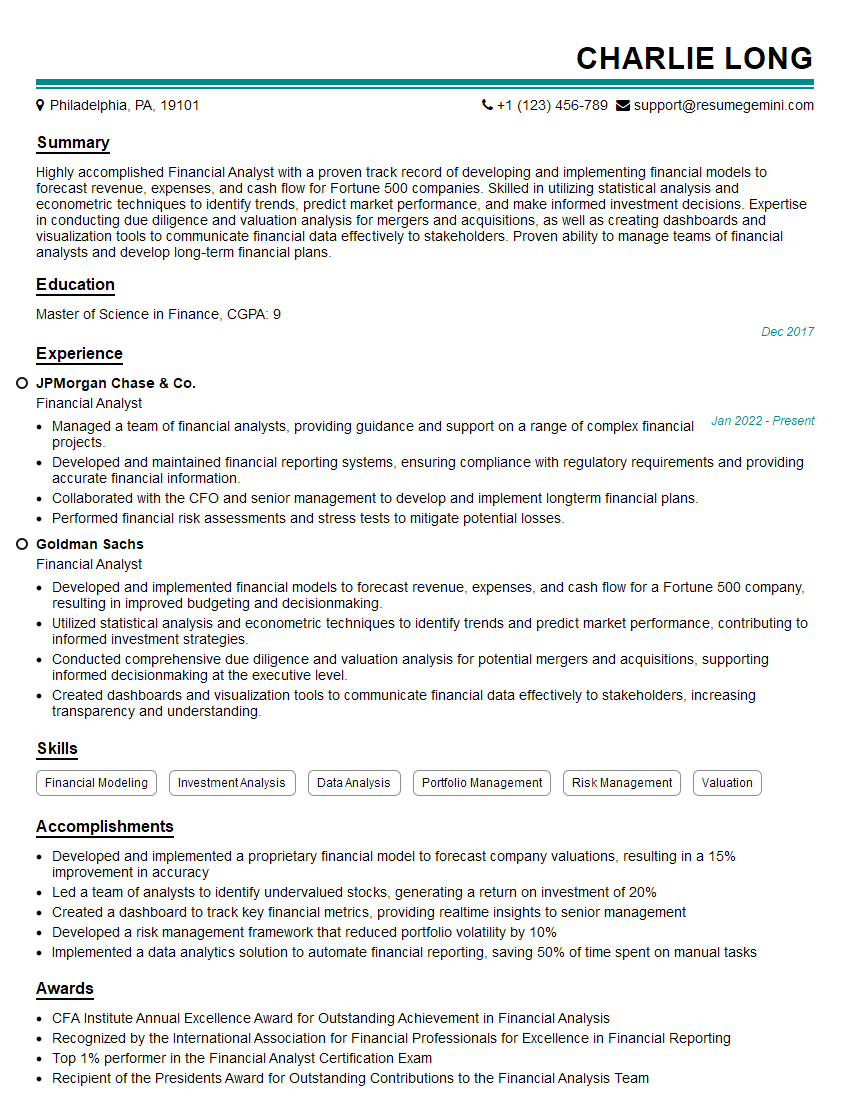
Financial Analyst Resume Sample

Data Analyst Resume Sample
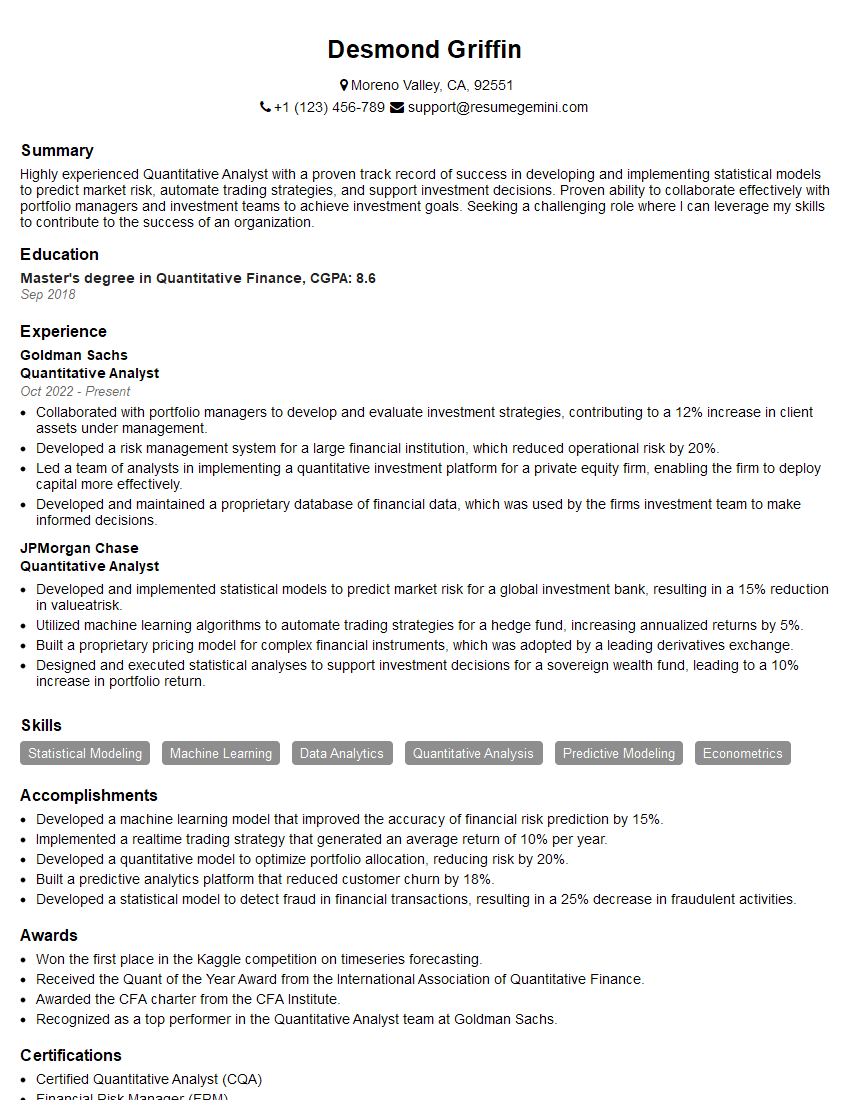
Quantitative Analyst Resume Sample

Data Scientist Resume Sample

Research Scientist Resume Sample
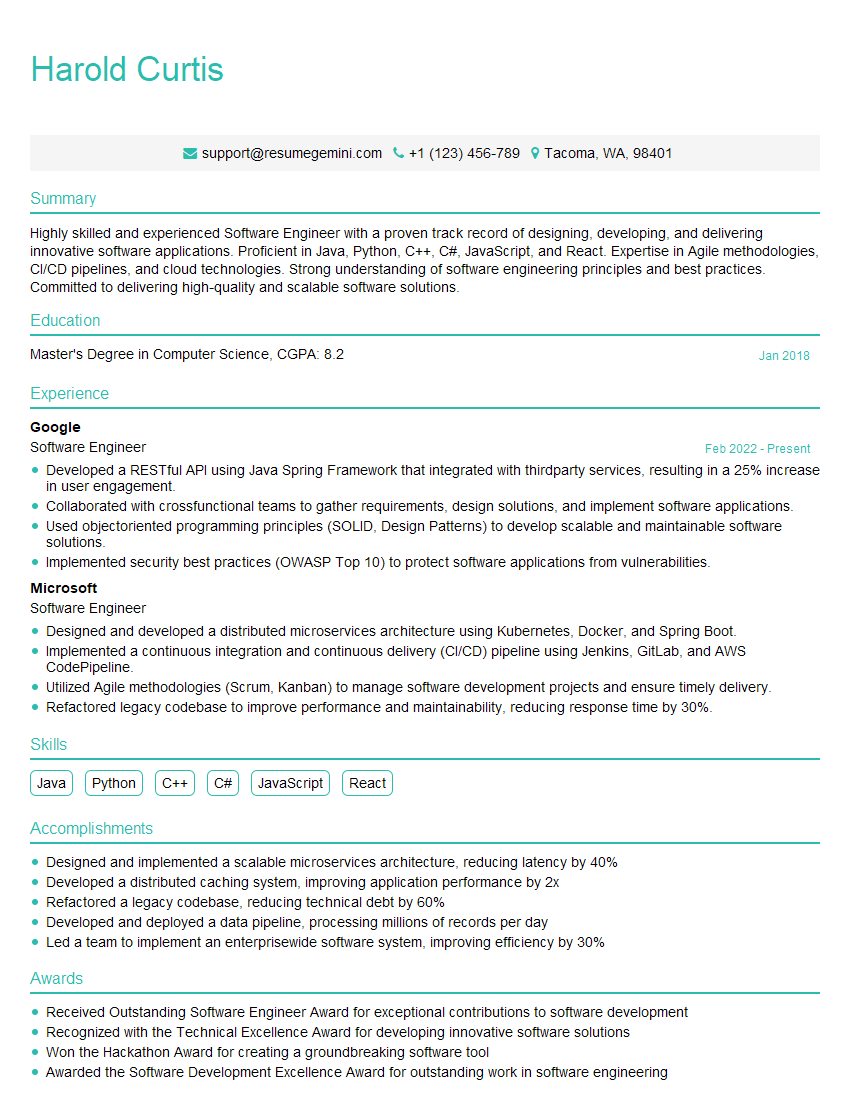
Software Engineer Resume Sample
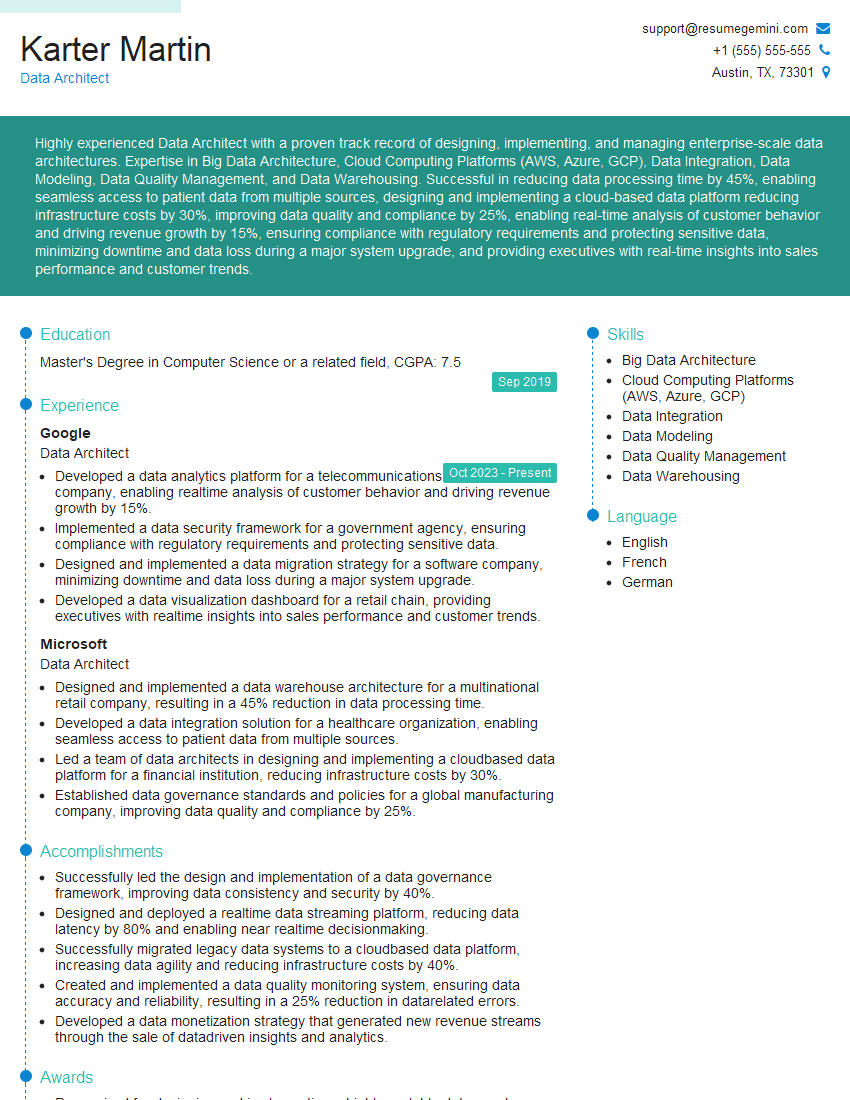
Data Architect Resume Sample
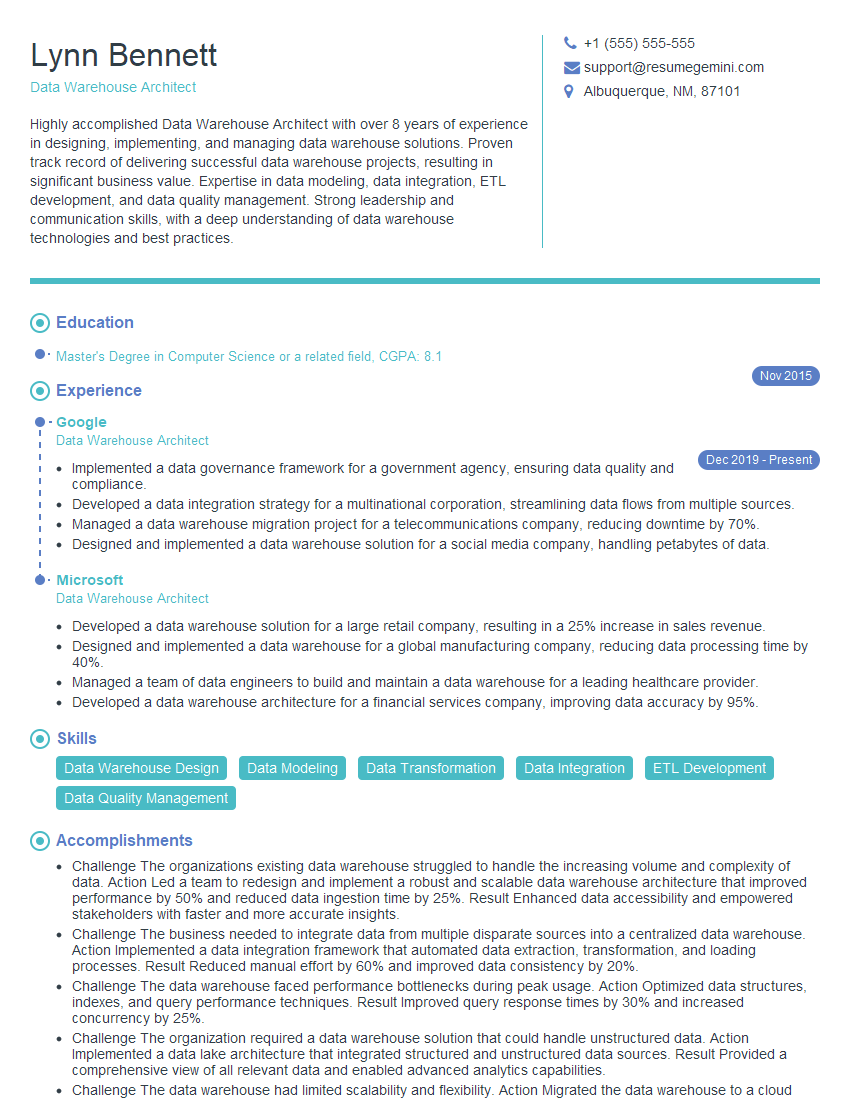
Data Warehouse Architect Resume Sample

ETL Developer Resume Sample
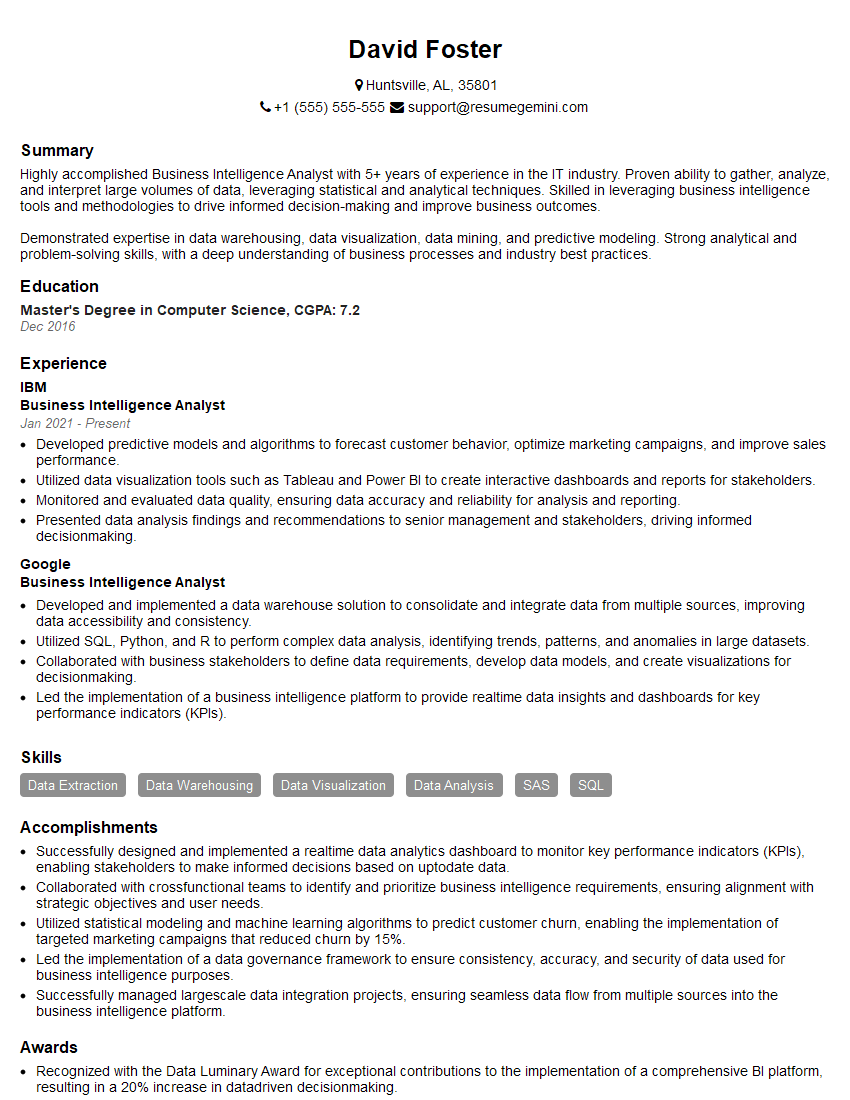
Business Intelligence Analyst Resume Sample

Actuary Resume Sample
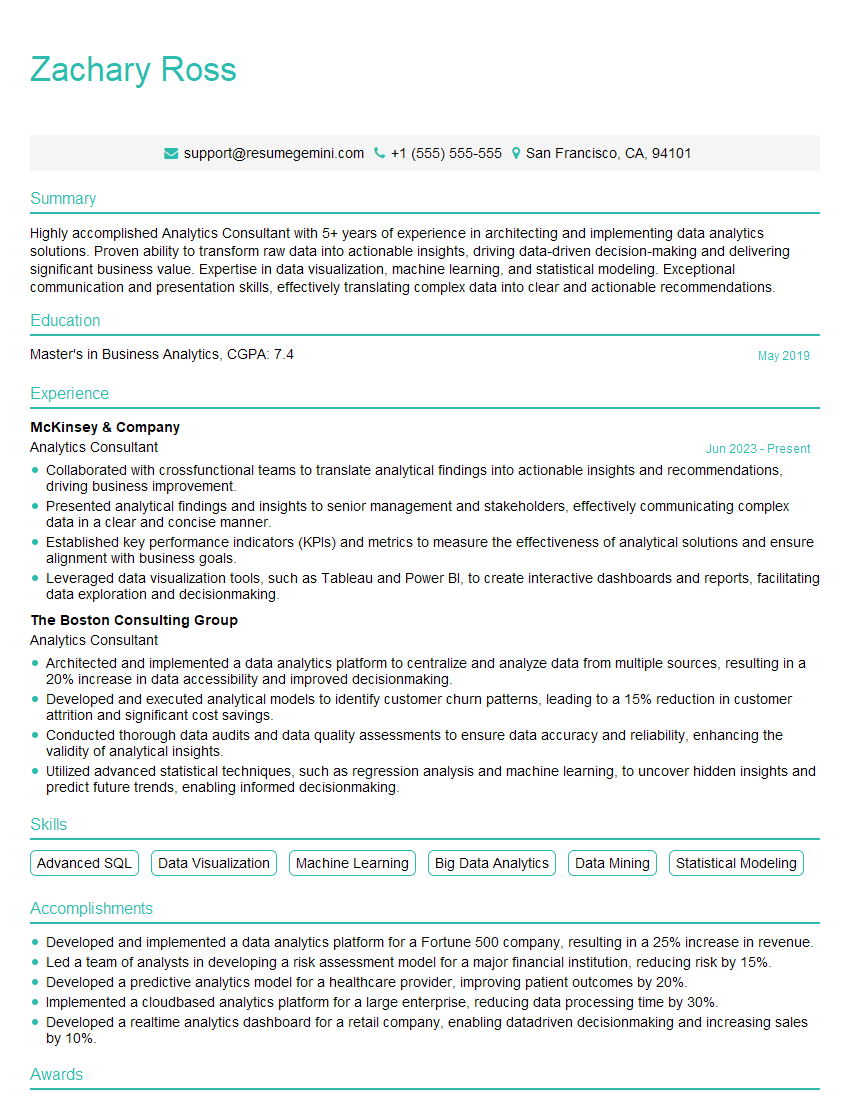
Analytics Consultant Resume Sample
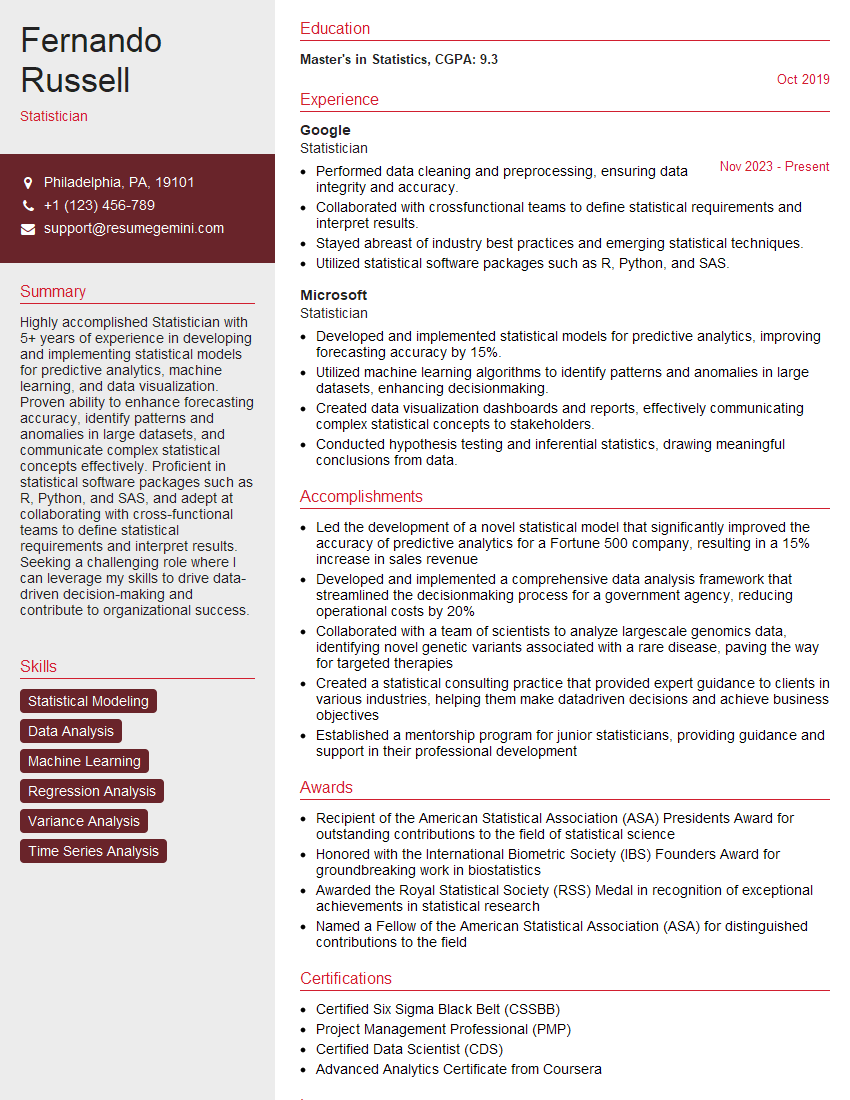
Statistician Resume Sample
Bioinformatician Resume Sample
Database Administrator Resume Sample

Machine Learning Engineer Resume Sample
Data Engineer Resume Sample
Big Data Engineer Resume Sample
- Financial Analyst
- Data Analyst
- Quantitative Analyst
- Data Scientist
- Research Scientist
- Software Engineer
- Data Architect
- Data Warehouse Architect
- ETL Developer
- Business Intelligence Analyst
- Actuary
- Analytics Consultant
- Statistician
- Bioinformatician
- Database Administrator
- Machine Learning Engineer
- Data Engineer
- Big Data Engineer
Explore more articles
Users Rating of Our Blogs
Share Your Experience
We value your feedback! Please rate our content and share your thoughts (optional).
What Readers Say About Our Blog
I Redesigned Spongebob Squarepants and his main characters of my artwork.
https://www.deviantart.com/reimaginesponge/art/Redesigned-Spongebob-characters-1223583608
IT gave me an insight and words to use and be able to think of examples
Hi, I’m Jay, we have a few potential clients that are interested in your services, thought you might be a good fit. I’d love to talk about the details, when do you have time to talk?
Best,
Jay
Founder | CEO