Every successful interview starts with knowing what to expect. In this blog, we’ll take you through the top Firewood Hauling interview questions, breaking them down with expert tips to help you deliver impactful answers. Step into your next interview fully prepared and ready to succeed.
Questions Asked in Firewood Hauling Interview
Q 1. Describe your experience operating various logging trucks and trailers.
Throughout my career, I’ve operated a variety of logging trucks and trailers, ranging from single-axle pickups with small trailers to heavy-duty Class 8 trucks with specialized logging trailers. This includes experience with both conventional and log-specific trailers, such as those equipped with bunks, chains, and binders for secure load transport. I’m proficient in operating both manual and automatic transmissions, and I’m comfortable navigating diverse terrains, from paved roads to challenging logging trails. For example, I recall one job where we used a Kenworth T800 with a lowboy trailer to haul exceptionally long logs, requiring meticulous planning for safe maneuvering around tight corners and low-hanging branches. Another memorable experience involved using a smaller Ford F-350 with a gooseneck trailer to move smaller loads of firewood more efficiently in tighter residential areas.
Q 2. What are the different types of firewood and their transportation requirements?
Firewood comes in various types, each with unique transportation requirements. The most common types include hardwood (like oak, maple, and ash), softwood (like pine and fir), and mixed hardwood/softwood. Hardwoods are denser and heavier, requiring more robust securing techniques and often stronger trailers compared to lighter softwoods. The length of the wood pieces also plays a vital role. Shorter lengths, like those used for kindling, might be easily contained in a truck bed, while longer logs necessitate a trailer with appropriate length and securing capabilities. For instance, transporting densely packed hardwood logs demands careful consideration of weight distribution to prevent overloading and maintain balance. Conversely, softer woods, while easier to handle, may require more careful stacking to prevent shifting during transport.
Q 3. Explain your understanding of load securing techniques for firewood transportation.
Secure load techniques are paramount for firewood hauling. The process begins with proper stacking. We start by building a stable base, ensuring the heaviest pieces are at the bottom and progressively lighter ones on top. This prevents shifting and reduces the risk of loads toppling. Next, we utilize appropriate securing mechanisms. This includes heavy-duty chains, binders, and straps strategically placed to firmly hold the wood in place. I always ensure there’s enough overlap and tension to prevent movement, particularly during turns and braking. For exceptionally long loads, we might use additional support structures, such as stakes or other bracing systems. Finally, before every trip, I conduct a thorough inspection to confirm that all securing elements are functioning correctly and the load is well-balanced and secure. It’s like building a strong, interlocking puzzle – every piece needs to be in place to ensure the whole thing holds.
Q 4. How do you ensure the safety of yourself and others during firewood hauling?
Safety is always my top priority. This starts with pre-trip inspections, checking brakes, lights, tires, and securing mechanisms. While driving, I adhere to posted speed limits, especially when navigating challenging roads or carrying heavy loads. Defensive driving is crucial; I’m constantly aware of my surroundings, anticipating potential hazards. Proper use of mirrors, signaling, and maintaining a safe following distance are essential. Ensuring the load is secure before departure and regularly checking it during transport prevents accidents. Wearing appropriate safety gear, such as high-visibility clothing and sturdy work boots, further enhances safety. Communication is also key; I always communicate my route and expected arrival time to dispatch and/or clients.
Q 5. Describe your experience with maintaining log trucks and trailers.
Maintaining log trucks and trailers is critical. My routine maintenance includes regular checks of tires, brakes, lights, and other mechanical components. This often involves preventative maintenance, such as oil changes, fluid checks, and lubrication. I’m skilled in performing minor repairs and addressing issues promptly, preventing them from escalating into major problems. I always keep detailed logs of service and repairs. I understand the importance of adhering to schedules for preventative maintenance, which ultimately saves money by avoiding major breakdowns and associated downtime. For example, I always make sure to check and grease the trailer bunks, as the friction from hauling can wear them down and affect the integrity of the load. Keeping records is as important as the maintenance itself.
Q 6. What are the common challenges faced during firewood hauling, and how do you overcome them?
Firewood hauling presents various challenges. Difficult terrain, especially during winter, can slow down operations and increase fuel consumption. Weather conditions like rain or snow can affect road conditions and the overall safety of the transport. Dealing with varying load sizes and weights requires adaptability and careful planning. I overcome these challenges by meticulously planning routes, choosing appropriate equipment, and implementing effective load-securing methods. Proactive communication with dispatch helps navigate unexpected delays and address potential issues before they become major problems. For instance, if a road is particularly icy, I might opt for a different route, or if the load is unusually heavy, I may need to make multiple trips instead of just one.
Q 7. How familiar are you with relevant transportation regulations and permits?
I’m thoroughly familiar with all relevant transportation regulations and permits. This includes weight limits, hours of service regulations, and safety standards for logging trucks and trailers. I understand the importance of maintaining accurate logs and documentation for compliance with local, state, and federal laws. I also know how to obtain the necessary permits for hauling firewood across state lines and am aware of different regulations regarding load sizes and dimensions. Staying updated with any changes in regulations is a continuous process, ensuring safe and legal operation at all times.
Q 8. How do you manage your time effectively during long-haul firewood delivery routes?
Effective time management on long-haul firewood delivery routes is crucial for profitability and customer satisfaction. My approach is multifaceted and relies on meticulous planning and execution.
- Pre-Trip Planning: I always review the route beforehand, using GPS navigation (more on that later) to estimate travel times, factoring in potential traffic and road conditions. I also confirm delivery times with customers and schedule my stops strategically to minimize backtracking.
- Efficient Loading: Properly secured and efficiently loaded firewood prevents delays caused by shifting cargo. I ensure the load is balanced to optimize fuel efficiency and handling.
- Break Scheduling: I plan for regular breaks to avoid fatigue, which can significantly impact driving safety and efficiency. These breaks are factored into my initial route planning.
- Communication: Maintaining consistent communication with the dispatcher allows for adjustments based on real-time conditions. Reporting delays promptly ensures customers are informed and expectations are managed.
For example, on a recent delivery to a remote cabin, I anticipated a longer travel time due to rough terrain. I communicated this to the dispatcher and customer beforehand, managing expectations effectively.
Q 9. How do you handle unexpected delays or breakdowns during a delivery?
Unexpected delays and breakdowns are an unfortunate reality in firewood hauling. My response is structured and prioritizes safety and customer communication.
- Assessment: First, I assess the situation: Is it a minor issue I can handle myself (e.g., a flat tire), or do I need professional assistance (e.g., engine trouble)?
- Safety First: Securing the load and ensuring the vehicle is safely parked away from traffic is paramount. I utilize warning lights and triangles if necessary.
- Communication: I immediately contact the dispatcher and inform them of the delay, providing details about the issue and my estimated time of arrival at the next destination or the repair shop. I also communicate directly with the affected customer to keep them informed.
- Problem Solving: If it’s a minor issue, I attempt the repair myself; otherwise, I contact roadside assistance or a trusted mechanic. I maintain a list of reliable mechanics along my frequently traveled routes.
- Documentation: I meticulously document all delays and breakdowns, including causes, repair costs, and time lost, for insurance and record-keeping purposes.
Once, I experienced a flat tire on a steep, unpaved road. By prioritizing safety, quickly contacting the dispatcher and customer, and efficiently changing the tire, I minimized the disruption to the delivery schedule.
Q 10. Explain your experience with using GPS navigation systems for route planning and tracking.
GPS navigation systems are indispensable for efficient route planning and tracking in firewood hauling. I utilize several features to optimize my operations.
- Route Planning: I use GPS to find the most efficient routes, avoiding congested areas and considering road conditions (e.g., weight restrictions, narrow roads). Many GPS systems offer various route options, and I select the one best suited for my load and vehicle.
- Real-Time Tracking: GPS provides real-time updates on my location, allowing me to monitor my progress, anticipate delays, and communicate accurate arrival times to customers and the dispatcher.
- Fuel Efficiency: Some GPS systems offer fuel-efficient route suggestions, minimizing fuel consumption and contributing to cost savings.
- Incident Reporting: In case of breakdowns or accidents, the GPS coordinates can be quickly shared with emergency services and the dispatcher.
For instance, I recently used a GPS system to identify a shorter, albeit slightly less paved, route to a remote delivery point, saving significant time and fuel compared to the main road. This demonstrates how effective route planning with GPS translates directly into efficiency gains.
Q 11. How do you prioritize safety when loading and unloading firewood?
Safety during loading and unloading is paramount. My procedures follow established safety protocols to minimize risks.
- Secure Parking: I always park on level ground, engaging the parking brake, and ensuring the area is clear of obstructions before beginning loading or unloading.
- Proper Lifting Techniques: I utilize proper lifting techniques to avoid back injuries. When dealing with heavy logs, I use mechanical aids like ramps and dollies wherever feasible.
- Load Securement: Firewood must be secured correctly to prevent shifting during transit. I use straps, chains, and other tie-down equipment to maintain a stable load.
- Personal Protective Equipment (PPE): I consistently wear appropriate PPE, including work gloves, safety glasses, and steel-toed boots, to protect myself from injuries.
- Awareness of Surroundings: I remain constantly aware of my surroundings, checking for hazards like protruding objects or uneven terrain that could cause accidents.
A recent example involved unloading a large quantity of firewood at a customer’s home. Using a combination of ramps and strategic placement of logs, I managed to avoid any injuries or damage to property.
Q 12. Describe your experience with different types of terrain and their impact on hauling.
Experience with diverse terrains is critical in firewood hauling. Different surfaces greatly influence the efficiency and safety of operations.
- Paved Roads: These are generally straightforward. However, even paved roads can present challenges such as potholes, narrow lanes, or steep inclines.
- Gravel Roads: Gravel roads are common in rural areas. These require a cautious driving style, especially during wet conditions, to avoid skidding and getting stuck.
- Unpaved Roads: Unpaved roads present the most significant challenges, requiring a vehicle with high ground clearance and a driver with experienced off-road skills. Obstacles like rocks, ruts, and mud can significantly slow progress and increase the risk of damage to the vehicle or cargo.
- Steep Grades: Steep inclines and declines necessitate careful maneuvering and control of speed to prevent accidents. The vehicle’s load capacity and braking systems must be adequate for the task.
I recall one delivery where I had to navigate a long, steep, and muddy unpaved road. My experience with such terrain allowed me to safely transport the firewood without incident. Knowing which roads to avoid and preparing for challenging conditions is vital.
Q 13. How do you communicate effectively with dispatchers and customers?
Effective communication with dispatchers and customers is essential for a smooth operation. My approach is based on clarity, timeliness, and professionalism.
- Clear and Concise Messaging: I use clear and concise language to convey information to both the dispatcher and the customer. I avoid jargon and ensure that all messages are easily understood.
- Timely Updates: I provide timely updates to both parties about my progress, any unexpected delays, and estimated arrival times.
- Professionalism: I maintain a professional demeanor in all communications, regardless of the circumstances. This builds trust and rapport.
- Multiple Communication Channels: I utilize various methods for communication, including two-way radios, cell phones, and dispatch software, to ensure reliable communication.
For example, if a delivery is delayed due to unforeseen circumstances, I immediately inform both the dispatcher and customer, explaining the reason and providing a revised estimated arrival time. Keeping them informed builds trust and ensures a smooth resolution.
Q 14. How do you manage your fuel consumption efficiently while hauling firewood?
Fuel efficiency is a major concern in firewood hauling. My strategies focus on minimizing fuel consumption without compromising safety or delivery schedules.
- Route Optimization: Selecting the most efficient route, utilizing GPS navigation as discussed previously, is crucial. Avoiding unnecessary idling and unnecessary stops also helps.
- Proper Load Management: An unbalanced or overweight load reduces fuel efficiency. I ensure the load is evenly distributed, and I never exceed the vehicle’s weight capacity.
- Vehicle Maintenance: Regular vehicle maintenance, including tire pressure checks and engine tune-ups, ensures optimal fuel efficiency. Poorly maintained vehicles often consume more fuel.
- Driving Habits: Smooth acceleration and deceleration, avoiding sudden braking, and maintaining a consistent speed (within legal limits) all contribute significantly to fuel efficiency. Anticipating traffic and adjusting speed proactively helps.
- Fuel Conservation Techniques: When possible, I use techniques like coasting downhill (safely) to avoid excessive braking and reduce fuel consumption.
By consistently employing these strategies, I have been able to maintain excellent fuel economy, significantly reducing operational costs and minimizing environmental impact.
Q 15. How do you inspect your vehicle before and after each haul?
Pre- and post-haul inspections are crucial for safety and operational efficiency. Before each haul, I perform a thorough check of my vehicle, focusing on several key areas. This includes a visual inspection of the tires for proper inflation and wear, checking the brakes and lights, and ensuring the secure fastening of the load-bearing components. I also check fluid levels – engine oil, coolant, and transmission fluid – and listen for any unusual noises from the engine or transmission. After each haul, I clean the truck bed thoroughly to remove any debris, inspect for any damage sustained during transport, and again check tire pressure and fluid levels. This proactive approach helps prevent breakdowns and accidents, contributing to a safer and more reliable service.
- Tires: Checking for proper inflation, cuts, and wear and tear.
- Brakes: Testing responsiveness and ensuring no unusual sounds or vibrations.
- Lights: Verifying functionality of headlights, brake lights, and turn signals.
- Fluid Levels: Checking engine oil, coolant, transmission fluid, and power steering fluid.
- Truck Bed: Inspecting for damage and cleaning any remaining debris.
Career Expert Tips:
- Ace those interviews! Prepare effectively by reviewing the Top 50 Most Common Interview Questions on ResumeGemini.
- Navigate your job search with confidence! Explore a wide range of Career Tips on ResumeGemini. Learn about common challenges and recommendations to overcome them.
- Craft the perfect resume! Master the Art of Resume Writing with ResumeGemini’s guide. Showcase your unique qualifications and achievements effectively.
- Don’t miss out on holiday savings! Build your dream resume with ResumeGemini’s ATS optimized templates.
Q 16. What is your experience with managing inventory and delivery schedules?
Inventory management and delivery scheduling are essential for efficient firewood hauling. I utilize a digital inventory system to track the quantity and type of firewood available, constantly updating stock levels after each delivery. This allows me to accurately provide customers with delivery estimates and avoid overselling or stockouts. Delivery scheduling is handled through a combination of customer requests and optimized routing software, which considers factors like distance, traffic, and delivery windows. For example, I might prioritize deliveries closer together to minimize travel time and fuel consumption. I’ve found this approach allows me to maintain a high level of customer satisfaction while optimizing logistical efficiency and profitability.
Q 17. Describe your understanding of weight and dimension regulations for hauling firewood.
Understanding weight and dimension regulations is paramount for legal and safe firewood hauling. These regulations vary by jurisdiction, so I always familiarize myself with the specific rules of the areas I operate in. Generally, these regulations include limitations on the overall weight of the vehicle and load, as well as restrictions on the dimensions of the load, such as height and width, to ensure safe transport and prevent damage to infrastructure. For example, exceeding the weight limit can lead to hefty fines and potential damage to roads and bridges. Similarly, an oversized load might require special permits and escorts. I always carefully measure and weigh my loads to ensure full compliance and safety.
Understanding these regulations is critical. Failure to adhere to them can result in accidents, damage to property, and significant legal penalties. I prioritize safety and legal compliance above all else.
Q 18. How do you handle customer complaints or issues during delivery?
Handling customer complaints or issues during delivery is a critical aspect of providing excellent service. My approach centers around promptness, empathy, and finding a fair resolution. If a customer has a concern, I first listen actively and validate their feelings. Then, I thoroughly investigate the issue, whether it’s a delivery discrepancy, damage to the firewood, or a scheduling conflict. Depending on the nature of the complaint, I might offer a partial or full refund, a replacement delivery, or a discount on a future order. The key is to communicate openly and honestly, making sure the customer feels heard and valued. Documenting each complaint and resolution helps maintain clear records and continuous improvement in customer service.
For example, if a customer received a smaller amount of firewood than ordered, I would apologize, investigate the discrepancy, and arrange to deliver the missing amount or issue a partial refund.
Q 19. What is your experience with using loading and unloading equipment?
My experience with loading and unloading equipment encompasses a range of tools, from basic hand tools like shovels and forks to more advanced machinery such as skid steers and cranes. I’m proficient in using these tools safely and efficiently, selecting the appropriate equipment for each situation. For example, smaller loads might be handled manually, while larger deliveries often benefit from mechanical loaders. Safety is always a paramount concern, and I adhere to all safety protocols when operating any equipment. Regular maintenance and inspection of this equipment ensures optimal performance and reliability, contributing to a smooth and efficient hauling process.
Q 20. How do you adapt to varying weather conditions during firewood hauling?
Adapting to varying weather conditions is essential for consistent firewood hauling operations. Extreme temperatures, rain, snow, and ice can significantly impact safety and efficiency. My strategy involves meticulous planning, using appropriate equipment, and employing safe driving techniques. This includes checking weather forecasts before each haul, equipping my vehicle with appropriate tire chains or all-weather tires for winter conditions, and adjusting driving speeds to match the prevailing conditions. I also prioritize load security, ensuring firewood is properly secured to prevent shifting or loss during transport. In inclement weather, I may adjust delivery schedules to avoid hazardous situations, and I always communicate with customers to keep them informed of any potential delays.
Q 21. Describe your experience with handling hazardous materials during logging operations.
While firewood hauling itself doesn’t typically involve hazardous materials, logging operations where the wood originates often do. I have experience recognizing and handling potential hazards such as chainsaw exhaust fumes, fuel spills, and potential contact with sharp objects like broken branches or felling debris. I always follow safety protocols, such as wearing appropriate personal protective equipment (PPE) including safety glasses, gloves, and hearing protection, and I’m familiar with emergency procedures for dealing with spills or accidents. If I encounter a situation beyond my capability, I promptly contact the relevant authorities. Safety is always the top priority, and I am committed to responsible and safe practices throughout the entire process.
Q 22. How do you maintain accurate records of your deliveries and mileage?
Maintaining accurate records in firewood hauling is crucial for both business efficiency and legal compliance. I utilize a combination of digital and paper-based methods to ensure nothing slips through the cracks. For each delivery, I create a detailed record including the customer’s name and address, the type and quantity of wood delivered (often measured in cords or face cords), the date and time of delivery, and the total price. This information is meticulously entered into a spreadsheet program on my tablet, which is synced to the cloud for backup and accessibility. Additionally, I keep a physical copy of each delivery receipt signed by the customer. Mileage tracking is handled through a GPS-enabled app integrated with my accounting software, automatically recording start and end points, total distance, and even fuel consumption. This minimizes manual data entry and reduces the risk of errors. This dual system allows for easy reconciliation and facilitates the timely preparation of invoices and tax reports. For example, if a customer disputes the quantity delivered, I can quickly access both the digital and physical records to verify the details. This comprehensive system allows me to manage my business effectively and maintain a clear audit trail.
Q 23. What is your familiarity with different types of wood species and their properties?
My familiarity with different wood species is extensive, extending beyond just common firewood choices. I understand the burning properties, density, and heat output of various hardwoods and softwoods. For example, I know that hardwoods like oak and maple burn longer and hotter than softwoods like pine or fir, producing significantly different heat outputs and ash contents. This knowledge is critical when advising customers on the best type of wood for their specific needs – whether it’s for a cozy fireplace or a more robust outdoor fire pit. I also understand the different drying processes needed for various species to prevent problems like creosote buildup in chimneys. I can identify wood species based on visual cues such as grain pattern, color, and bark texture, which is helpful for sourcing wood from various suppliers or even during the harvesting process. My understanding extends to the environmental impact of different harvesting methods and the sustainable sourcing practices crucial for responsible firewood provision.
Q 24. Describe your experience with using chain saws or other wood cutting equipment.
I am highly proficient in the safe and efficient operation of chain saws and other wood-cutting equipment. I’ve been using chain saws since my early teens, working alongside my father in our family’s logging business. Over the years, I’ve become adept at felling trees safely, bucking logs into manageable sizes, and limbing branches, while adhering to strict safety protocols. I regularly maintain my equipment, ensuring that the chains are sharpened, the bars are lubricated, and all safety features are functional. I understand the importance of using appropriate personal protective equipment (PPE), including safety glasses, ear protection, chaps, and steel-toed boots. Beyond chainsaws, I’m familiar with operating hydraulic splitters and wood processors, which significantly increase efficiency, especially for larger volumes of firewood. I also possess a thorough understanding of safe work practices, including tree felling techniques to prevent damage to property or injury. For instance, I always assess the wind direction and surrounding terrain before felling a tree.
Q 25. Explain your understanding of environmental regulations related to logging and firewood.
Environmental regulations regarding logging and firewood are paramount in my operations. I am acutely aware of the importance of sustainable forestry practices and adhere strictly to all applicable local, state, and federal regulations. This includes obtaining the necessary permits for harvesting, transporting, and selling firewood. I am familiar with regulations concerning protected species, endangered habitats, and forest conservation areas. I also understand the rules regarding the prevention of invasive species spread and the proper disposal of wood waste. For example, I carefully check the origin of my wood supplies to ensure they are sourced sustainably and legally and always prioritize leaving harvested areas clean and safe. Furthermore, I educate my customers about responsible firewood practices, encouraging them to avoid moving firewood across large distances to prevent the spread of invasive insects and diseases. Compliance with these regulations isn’t just about following the rules; it’s about protecting our environment for future generations.
Q 26. How do you handle challenging customer requests or special delivery needs?
Handling challenging customer requests is a regular part of my business. I strive to exceed expectations. One memorable instance involved a customer who needed a large delivery of specific hardwood species urgently for a large outdoor event. Due to unforeseen circumstances, my regular supplier couldn’t meet the tight deadline. I immediately contacted alternative suppliers, and despite the short notice, managed to secure the required amount of wood and complete the delivery on time. The key to handling these situations is proactive communication and a resourceful approach. I carefully listen to customer concerns, clearly communicate potential challenges and options, and always strive to find a solution that meets their needs. This may involve adjusting delivery schedules, offering alternative wood types, or even negotiating pricing to accommodate unusual requests.
Q 27. How do you ensure the security of your cargo during transportation?
Securing the cargo during transportation is essential to prevent losses and maintain customer satisfaction. I use secure straps and tarps to properly secure the firewood loads on my trucks. The method depends on the type of truck and the quantity of firewood. For smaller loads, I use high-quality ratchet straps, ensuring the wood is firmly held down and cannot shift during transit. For larger loads, I use a combination of straps and a heavy-duty tarp to protect the wood from the elements and further secure it in place. Regular maintenance of my equipment is critical. I also inspect the load before and after each journey to ensure its securement and check for any damage or loss during transit. In the case of long-distance transportation, I will further secure the load with additional measures, if necessary, prioritizing the safe and undamaged arrival of the customer’s firewood.
Q 28. Describe your experience working independently and as part of a team.
I’m comfortable working both independently and collaboratively. My years of experience involve periods of solitary work such as felling trees and preparing firewood. This requires discipline, planning, and a focus on safety. However, I also work extensively in a team environment, particularly when dealing with larger-scale logging operations or during heavy delivery periods. Teamwork helps to ensure efficient and safe loading, transportation, and unloading of wood. I’m adept at communicating effectively with team members, delegating tasks when needed, and coordinating efforts for seamless operations. In both independent and collaborative settings, my commitment to safety, efficiency, and customer satisfaction remains constant. My experience is a good balance of both, leading to a well-rounded skillset that complements the demanding nature of firewood hauling.
Key Topics to Learn for Firewood Hauling Interview
- Safety Regulations and Procedures: Understanding and adhering to all relevant safety protocols for operating equipment, handling loads, and working in varied conditions (e.g., weather, terrain).
- Equipment Operation and Maintenance: Practical knowledge of operating trucks, trailers, and loading equipment; basic maintenance checks and troubleshooting common issues.
- Efficient Loading and Unloading Techniques: Strategies for maximizing load capacity, minimizing damage to firewood, and ensuring safe and efficient transport.
- Logistics and Route Planning: Understanding efficient delivery routes, scheduling, and managing time constraints to optimize delivery efficiency.
- Customer Service and Communication: Professional interaction with clients, addressing concerns, and providing excellent service throughout the delivery process.
- Inventory Management and Tracking: Methods for accurately tracking firewood inventory, managing orders, and ensuring accurate delivery quantities.
- Environmental Awareness and Sustainability: Understanding environmentally responsible practices in firewood harvesting, transportation, and delivery.
- Problem-Solving and Adaptability: Demonstrating the ability to handle unexpected challenges (e.g., weather delays, equipment malfunctions) and adapt to changing circumstances.
Next Steps
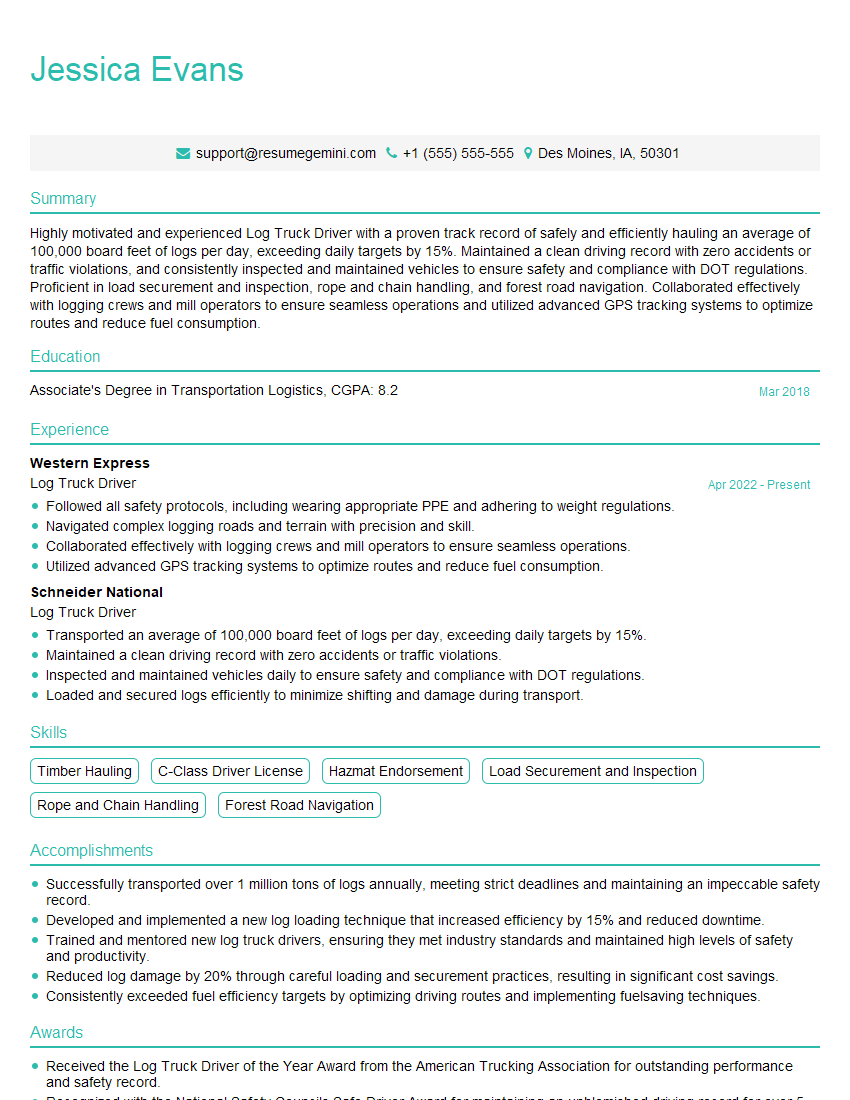
Mastering the skills and knowledge related to Firewood Hauling opens doors to a rewarding career with opportunities for advancement and specialization. A strong resume is crucial for showcasing your abilities to potential employers. Building an ATS-friendly resume increases your chances of getting noticed by recruiters and landing interviews. ResumeGemini is a trusted resource that can help you create a professional and effective resume tailored to highlight your qualifications in this field. Examples of resumes tailored specifically to Firewood Hauling are available to help guide you in creating your own compelling application.
Explore more articles
Users Rating of Our Blogs
Share Your Experience
We value your feedback! Please rate our content and share your thoughts (optional).
What Readers Say About Our Blog
I Redesigned Spongebob Squarepants and his main characters of my artwork.
https://www.deviantart.com/reimaginesponge/art/Redesigned-Spongebob-characters-1223583608
IT gave me an insight and words to use and be able to think of examples
Hi, I’m Jay, we have a few potential clients that are interested in your services, thought you might be a good fit. I’d love to talk about the details, when do you have time to talk?
Best,
Jay
Founder | CEO