Cracking a skill-specific interview, like one for Gage and Fixture Design, requires understanding the nuances of the role. In this blog, we present the questions you’re most likely to encounter, along with insights into how to answer them effectively. Let’s ensure you’re ready to make a strong impression.
Questions Asked in Gage and Fixture Design Interview
Q 1. Explain the difference between a gage and a fixture.
Gages and fixtures are both critical in manufacturing for quality control and assembly, but they serve distinct purposes. A gage is a measuring instrument used to verify whether a part conforms to specified dimensions or tolerances. It doesn’t hold the part; it simply checks it. Think of it like a ruler – you use it to measure but don’t use it to hold the object in place. A fixture, on the other hand, is a device that holds a workpiece securely in place during a manufacturing operation, such as machining, welding, or assembly. It ensures consistent positioning and repeatability. Imagine a vise – it holds the workpiece firmly allowing you to work on it accurately. The key difference lies in their function: gages measure, fixtures hold.
For example, a go/no-go gage checks if a hole is within the specified tolerance, while a welding fixture holds the parts together in the precise configuration needed for a strong weld.
Q 2. Describe your experience with various types of gages (e.g., go/no-go gages, dial indicators).
My experience spans a wide range of gage types. I’ve extensively used go/no-go gages for simple pass/fail checks, ensuring parts meet basic dimensional requirements. These are particularly useful for quick, on-the-spot inspections on production lines. I’ve also worked extensively with dial indicators, providing precise measurements of dimensions and runout. Dial indicators offer superior accuracy compared to go/no-go gages, allowing for finer adjustments and more thorough inspection. In one project, I designed a fixture incorporating a dial indicator to measure the concentricity of a rotating shaft with incredible precision, helping us identify a subtle manufacturing defect that was affecting product performance.
Beyond these, I’ve also designed and utilized plug and ring gages, snap gages, and optical comparators, tailoring my approach to the specific needs of each project. My selection criteria always consider factors like the required accuracy, the production volume, and the complexity of the part being inspected. The choice of gage is directly linked to the design’s overall efficiency and accuracy.
Q 3. What CAD software are you proficient in for gage and fixture design?
I’m proficient in several CAD software packages, with particular expertise in SolidWorks and Autodesk Inventor. Both platforms provide powerful tools for 3D modeling, allowing me to create highly detailed and accurate gage and fixture designs. I prefer SolidWorks for its intuitive interface and robust simulation capabilities, particularly useful for stress analysis and kinematic simulations of fixtures. Autodesk Inventor’s strengths lie in its assembly modeling and its integration with manufacturing processes, which aids in designing for manufacturability. My choice of software depends on project specifics and client preferences, but my proficiency in both ensures flexibility and adaptability.
Q 4. How do you ensure dimensional accuracy in your designs?
Dimensional accuracy is paramount in gage and fixture design. I utilize several methods to ensure this. First, meticulous design practices, paying close attention to tolerances and using precise modeling techniques in CAD software, are crucial. Then, I conduct thorough tolerance analysis, using statistical methods to understand how variations in component dimensions affect the overall gage or fixture performance. Furthermore, I leverage GD&T (Geometric Dimensioning and Tolerancing) principles to clearly define the acceptable variations in dimensions and their geometric relationships, ensuring proper communication with manufacturing and inspection teams. Finally, before production, I always insist on prototyping and testing to verify the actual performance against the design specifications, making adjustments as needed.
For instance, in designing a precision jig for a complex assembly, a thorough tolerance analysis helped us identify a potential interference issue between two parts before production, saving time and resources.
Q 5. Describe your experience with tolerance analysis in gage and fixture design.
Tolerance analysis is integral to my design process. I use both statistical methods and worst-case scenarios analysis to ensure that the gage or fixture will function correctly even with variations in the components. This involves calculating the stack-up of tolerances, considering all potential sources of error, such as machining variations, material properties, and thermal expansion. I utilize software tools to automate this process, increasing efficiency and accuracy. For example, I regularly use Monte Carlo simulations to assess the impact of tolerances on the overall performance of the design. The results of the tolerance analysis directly inform design decisions, leading to robust and reliable designs.
In one project, a detailed tolerance analysis revealed a critical flaw in the original design that could have led to significant inaccuracies. By redesigning based on the analysis, we avoided costly errors and ensured accurate measurements.
Q 6. How do you design for manufacturability in gage and fixture design?
Designing for manufacturability (DFM) is crucial for cost-effective and efficient production. This involves considering the capabilities and limitations of the manufacturing processes involved. I always choose manufacturing processes that are well-suited to the design, and I simplify the design wherever possible to reduce complexity and costs. This includes selecting readily available materials, avoiding overly complex shapes, and considering the ease of assembly. I also carefully consider factors such as surface finish, heat treatment, and material selection, as they all affect the final performance and cost. Early collaboration with manufacturers is key to ensuring the design is both functional and manufacturable.
For example, in designing a complex fixture, I opted for a modular design instead of a monolithic one. This significantly reduced manufacturing complexity, shortened lead times, and ultimately reduced the overall cost.
Q 7. Explain your understanding of GD&T (Geometric Dimensioning and Tolerancing).
GD&T (Geometric Dimensioning and Tolerancing) is a standardized system for defining and communicating engineering tolerances. It’s essential for accurate communication between designers, manufacturers, and inspectors. I have a thorough understanding of GD&T symbols and their application, including features like position, perpendicularity, flatness, and runout. I use GD&T to precisely define the allowable variations in the geometry of a part, ensuring that the part is functional and meets the intended specifications. This prevents misinterpretations and ensures everyone is on the same page regarding acceptable variations.
Proper application of GD&T helps prevent costly rework and ensures that the designed gage or fixture will accurately measure parts made to the specified tolerances. I regularly incorporate GD&T into my designs to ensure clarity and prevent ambiguity.
Q 8. How do you select appropriate materials for gage and fixture construction?
Selecting the right materials for gage and fixture construction is crucial for ensuring accuracy, durability, and cost-effectiveness. The choice depends heavily on the application, the part being measured or held, and the manufacturing environment. We consider factors like:
- Strength and Rigidity: For fixtures holding parts during machining, high strength materials like steel (often tool steel for its hardness and wear resistance) are essential to prevent deflection under load. For gages, where precision is paramount, materials with low thermal expansion coefficients, like Invar, might be preferred.
- Wear Resistance: Components experiencing frequent contact, such as locating pins or clamping surfaces, need high wear resistance. Hardened steel, carbide, or ceramic coatings are commonly used.
- Corrosion Resistance: Depending on the environment (e.g., coolant, chemicals), corrosion-resistant materials like stainless steel or specialized coatings are vital to extend the lifespan of the gage or fixture.
- Cost: While performance is paramount, cost is always a factor. We balance material properties with budget constraints, sometimes employing cost-effective materials where appropriate and using more robust materials only in critical areas.
- Machinability: The material should be easily machinable to achieve the required tolerances and surface finishes. This is especially crucial for complex geometries.
For example, in one project involving a high-precision fixture for a complex aerospace component, we opted for a combination of hardened tool steel for the critical locating elements and high-strength aluminum for the fixture body to balance rigidity, cost, and weight.
Q 9. Describe your experience with different types of fixture designs (e.g., welding fixtures, machining fixtures).
My experience encompasses a wide range of fixture designs, including welding fixtures, machining fixtures, assembly fixtures, and inspection fixtures. I’ve worked on:
- Welding Fixtures: These require robust designs capable of withstanding high temperatures and forces generated during the welding process. I’ve designed fixtures incorporating multiple clamping mechanisms to ensure accurate part positioning and prevent warping. Examples include fixtures for robotic welding applications, requiring precise alignment and repeatability.
- Machining Fixtures: These are designed to securely hold parts during machining operations. Key considerations include minimizing vibration, ensuring accurate part location, and providing robust clamping to prevent movement. I’ve worked on fixtures for both CNC milling and turning operations, optimizing for efficient chip removal and part accessibility.
- Assembly Fixtures: These fixtures guide and assist in assembling components, often incorporating features like locating pins, dowels, and indexing mechanisms. My experience includes designing fixtures for automated assembly lines, prioritizing efficiency and minimizing manual intervention.
In each case, the design process follows a structured approach, starting with a thorough understanding of the part, the manufacturing process, and the required tolerances. Finite Element Analysis (FEA) is often used to validate the structural integrity of the design and identify potential areas for improvement.
Q 10. How do you handle design changes during the manufacturing process?
Handling design changes during manufacturing requires a systematic and collaborative approach. The key is clear communication and a well-defined change management process. Steps typically include:
- Impact Assessment: Evaluating the impact of the proposed changes on the existing design, manufacturing process, and schedule. This often involves reviewing drawings and specifications.
- Design Modification: Modifying the design drawings and specifications to reflect the changes. This might involve updating CAD models, creating new tooling, or revising manufacturing instructions.
- Verification and Validation: Verifying that the modified design meets the required specifications and validating the changes through prototyping or simulations. This helps mitigate risk and prevent further issues.
- Documentation: Thoroughly documenting all changes, including dates, reasons, and responsible parties. This maintains traceability and avoids confusion.
- Communication: Clearly communicating the changes to all relevant stakeholders, including manufacturing personnel, quality control, and customers. This ensures everyone is working from the same updated information.
For example, if a material change is required during production due to supply chain issues, we’d meticulously assess the impact on the fixture’s performance and potentially redesign specific components, ensuring the overall fixture continues to meet the required specifications.
Q 11. What are some common challenges in gage and fixture design, and how have you overcome them?
Common challenges in gage and fixture design include:
- Achieving High Precision and Accuracy: Maintaining tight tolerances throughout the design and manufacturing process is crucial, especially for high-precision applications. We address this by using precision machining techniques, appropriate materials, and rigorous quality control.
- Balancing Rigidity and Flexibility: Fixtures need to be rigid enough to withstand the forces of manufacturing, but sometimes need flexibility for accommodating part variations. Careful design, employing techniques like flexible fixturing or compliant mechanisms, helps achieve this balance.
- Managing Thermal Effects: Temperature variations can affect the accuracy of gages and fixtures. We address this by using materials with low thermal expansion coefficients, designing for thermal compensation, or controlling the environmental conditions.
- Cost Optimization: Balancing functionality with cost is always a challenge. We address this through value engineering, exploring alternative materials, simplifying designs, and optimizing manufacturing processes.
For instance, in one project, we faced difficulties maintaining accuracy due to thermal expansion of the fixture. We solved this by incorporating a temperature compensation mechanism and selecting materials with lower thermal expansion coefficients.
Q 12. How do you perform a Gage R&R study?
A Gage R&R (Repeatability and Reproducibility) study is a statistical method used to determine the variability in measurement systems. It helps assess the precision of a gage and identify sources of error. The process generally involves:
- Selecting Operators and Parts: Choosing a representative sample of operators and parts to ensure the study’s results are applicable to the actual production environment.
- Measuring Parts Multiple Times: Each operator measures each part multiple times, recording the measurements. This allows us to assess both repeatability (variation within a single operator) and reproducibility (variation between operators).
- Analyzing Data: Using statistical software to analyze the data and calculate key metrics like repeatability, reproducibility, and total variation (overall measurement system variation).
- Interpreting Results: Evaluating the results to determine if the measurement system is acceptable for its intended purpose. If the variation is too high, we identify the root cause and implement corrective actions.
We use ANOVA (Analysis of Variance) techniques to decompose the total variation into its components. The results are typically presented in a table showing the percentage of variation attributed to repeatability, reproducibility, and part-to-part variation. This allows us to quantify the contribution of each source of variation and identify areas for improvement.
Q 13. What is your experience with designing for automation in gage and fixture applications?
Designing for automation in gage and fixture applications significantly improves efficiency and consistency. My experience includes:
- Integrating Fixtures with Automated Systems: Designing fixtures compatible with robotic systems, automated guided vehicles (AGVs), or other automated manufacturing equipment. This often involves standardized interfaces and robust designs capable of withstanding the forces of automation.
- Incorporating Sensors and Feedback Mechanisms: Integrating sensors to monitor part positioning and clamping forces, providing real-time feedback to the automated system. This ensures accuracy and reliability.
- Designing for Quick Changeover: Designing fixtures with quick-change capabilities to minimize downtime during production changes. This may involve modular designs or standardized components.
- Implementing Vision Systems: Integrating vision systems for automatic part inspection and verification. This reduces reliance on manual inspection and increases accuracy.
For example, I worked on a project where we integrated a custom-designed fixture with a robotic arm for automated assembly. This drastically reduced cycle times and improved consistency compared to the previous manual process.
Q 14. Describe your experience with different types of clamping mechanisms in fixtures.
I have extensive experience with a variety of clamping mechanisms, selected based on the application and part characteristics. Examples include:
- Toggle Clamps: Provide high clamping force with minimal effort, suitable for applications requiring high clamping pressure.
- Cam Clamps: Offer quick and easy clamping and releasing, ideal for high-speed automation.
- Pneumatic Clamps: Provide precise control over clamping force, useful for delicate parts or applications requiring consistent clamping pressure.
- Hydraulic Clamps: Deliver very high clamping forces, suitable for large or heavy parts.
- Magnetic Clamps: Useful for ferromagnetic materials and applications requiring quick and easy clamping.
- Screw Clamps: Simple and versatile, offering good clamping force but generally slower than other methods.
The selection of a clamping mechanism considers factors like clamping force requirements, accessibility, ease of use, speed, and cost. For example, in a high-volume production environment, we might choose pneumatic clamps for their speed and consistency, whereas in a low-volume environment, simple screw clamps might suffice.
Q 15. How do you ensure the safety of operators using the gages and fixtures you design?
Operator safety is paramount in gage and fixture design. My approach is proactive, incorporating safety considerations throughout the design process, not just as an afterthought. This begins with a thorough risk assessment, identifying potential hazards like pinch points, sharp edges, moving parts, and ergonomic issues.
- Ergonomic Design: I prioritize designs that minimize strain and fatigue. This includes considering handle placement, weight distribution, and the overall ease of use. For example, I might incorporate cushioned grips or adjustable components to accommodate different users.
- Safety Guards and Interlocks: Where moving parts exist, I incorporate robust safety guards and interlocks to prevent accidental injury. These might range from simple covers to sophisticated systems that prevent operation until a guard is in place.
- Material Selection: Material choice is crucial. I select materials that are durable, resistant to wear and tear, and minimize the risk of breakage or sharp edges. For example, avoiding brittle materials and opting for rounded corners wherever possible.
- Clear Instructions and Warnings: Comprehensive and clear instructions and safety warnings are essential. These are designed to be user-friendly and readily understood, eliminating any ambiguity. This includes warning labels clearly indicating potential hazards and providing step-by-step operational guidance.
Finally, I always ensure compliance with all relevant safety standards and regulations, and conduct thorough testing and prototyping to validate the safety features of the design before implementation.
Career Expert Tips:
- Ace those interviews! Prepare effectively by reviewing the Top 50 Most Common Interview Questions on ResumeGemini.
- Navigate your job search with confidence! Explore a wide range of Career Tips on ResumeGemini. Learn about common challenges and recommendations to overcome them.
- Craft the perfect resume! Master the Art of Resume Writing with ResumeGemini’s guide. Showcase your unique qualifications and achievements effectively.
- Don’t miss out on holiday savings! Build your dream resume with ResumeGemini’s ATS optimized templates.
Q 16. What are your preferred methods for documenting design specifications?
Thorough documentation is crucial for effective communication and maintainability. My preferred methods combine digital and physical documentation for a comprehensive approach.
- 3D CAD Models: Detailed 3D CAD models (using software like SolidWorks or Creo) are foundational. These models include annotations, dimensions, and material specifications. They serve as the primary design record and allow for easy visualization and modification.
- Detailed Drawings: 2D engineering drawings, derived from the 3D model, provide precise dimensions, tolerances, and manufacturing instructions. These drawings are crucial for communication with manufacturers.
- Bill of Materials (BOM): A comprehensive BOM lists all components, their specifications, and suppliers. This ensures accurate material procurement and assembly.
- Design Specifications Document: This document outlines the design’s functional requirements, performance targets, and testing procedures. It provides a holistic overview of the design’s intent and functionality.
- Version Control System: I utilize version control systems (like Git) to manage revisions, track changes, and ensure everyone works with the latest version of the design.
This multi-faceted approach guarantees consistency, accuracy, and facilitates smooth collaboration throughout the project lifecycle. Having all documentation readily accessible and easily searchable also ensures that future maintenance and modifications can be performed efficiently and without errors.
Q 17. How do you manage projects and deadlines in gage and fixture design?
Project management in gage and fixture design requires a structured approach. I employ Agile methodologies, adapting them to suit the specific project needs.
- Work Breakdown Structure (WBS): I break down the project into smaller, manageable tasks, defining clear responsibilities and deadlines for each. This allows for better tracking of progress and identification of potential bottlenecks.
- Gantt Charts: Gantt charts are used for visualizing the project schedule, dependencies between tasks, and critical path analysis. This aids in efficient resource allocation and proactive risk management.
- Regular Meetings and Progress Reports: I conduct regular meetings with the team and stakeholders to track progress, discuss challenges, and ensure alignment on project goals. Progress reports keep everyone informed and allow for timely adjustments as needed.
- Risk Management: I proactively identify and assess potential risks, developing mitigation strategies to minimize delays or failures. This includes considering factors like material availability, manufacturing capabilities, and potential design flaws.
- Change Management: A formal change management process is implemented to handle design modifications effectively, ensuring that changes are documented, reviewed, and approved before implementation.
By combining these techniques, I ensure projects are completed on time and within budget, meeting or exceeding client expectations. Flexibility is key; I adapt my approach based on the project’s complexity and timeline.
Q 18. What is your experience with Finite Element Analysis (FEA) in gage and fixture design?
Finite Element Analysis (FEA) is an invaluable tool for optimizing gage and fixture designs. My experience with FEA includes using software like ANSYS or Abaqus to simulate various loading conditions and predict structural behavior.
- Stress Analysis: FEA allows me to determine stress distributions within a design, identifying potential points of failure under various loads. This enables me to optimize the design for strength and durability, preventing premature wear or breakage.
- Deflection Analysis: Analyzing deflection helps ensure the gage or fixture maintains its accuracy and precision under load. For example, ensuring a fixture doesn’t deflect enough to affect the accuracy of a measured part.
- Modal Analysis: This identifies the natural frequencies of the design, helping to avoid resonance issues that could lead to vibration and reduced accuracy.
- Optimization Studies: FEA allows me to explore design alternatives and optimize material usage, reducing weight and cost without compromising performance.
For example, I once used FEA to optimize the design of a complex welding fixture, reducing its weight by 15% while ensuring sufficient rigidity to maintain part alignment during the welding process. FEA allows for a data-driven approach to design, increasing confidence in the structural integrity and performance of the final product.
Q 19. Explain your understanding of different manufacturing processes (e.g., milling, turning, welding).
Understanding various manufacturing processes is crucial for designing manufacturable gages and fixtures. My experience encompasses several key processes:
- Milling: I’m proficient in designing parts suitable for milling, considering factors like tool access, machining time, and surface finish requirements. I understand the limitations of milling and design features to minimize machining complexity.
- Turning: I design components suitable for turning operations, considering factors like material selection, stock removal, and the capabilities of turning machines (lathes). I account for issues like concentricity and surface roughness in the design.
- Welding: I design weldments considering weld joint types, access for welding, and material compatibility. I account for potential distortions during welding and design features to minimize these issues. For instance, I might incorporate features to aid in fixturing or apply pre-bending to compensate for weld shrinkage.
- Other Processes: My knowledge also extends to other manufacturing techniques, including casting, forging, and additive manufacturing (3D printing). This breadth of knowledge enables me to make informed design choices, selecting the most appropriate process for the specific application, material, and cost constraints.
This understanding allows me to design for manufacturability, optimizing designs for efficient production and minimizing costs while maintaining quality and precision.
Q 20. How do you validate the functionality of a designed gage or fixture?
Validating the functionality of a gage or fixture involves a multi-stage process focused on ensuring accuracy, precision, and reliability.
- Design Review: Thorough design reviews involving cross-functional teams are conducted to identify potential flaws and ensure the design meets its intended purpose.
- Prototyping: Prototypes are created and tested to verify the design’s functionality and identify any design or manufacturing issues early in the process. This allows for corrections before full-scale production.
- Dimensional Inspection: Precise dimensional measurements are taken using calibrated measuring equipment (e.g., CMM, micrometers, calipers) to ensure the gage or fixture conforms to the specified tolerances.
- Functional Testing: The gage or fixture is subjected to rigorous testing under simulated operating conditions. This might involve using standardized test parts or replicating real-world scenarios to assess its performance and accuracy.
- Repeatability and Reproducibility Studies: These studies establish the consistency of the gage or fixture’s measurements over time and across different operators. This is crucial for ensuring reliability and minimizing measurement variation.
- Calibration and Certification: The gage or fixture is calibrated using traceable standards to ensure its accuracy and compliance with relevant standards. Certificates of calibration are then provided.
This thorough validation process minimizes the risk of errors and ensures the gage or fixture meets the required performance standards and specifications. This is critical for maintaining consistency and accuracy in manufacturing processes.
Q 21. Describe your experience with different types of inspection equipment.
My experience includes using a wide range of inspection equipment, depending on the specific needs of the project.
- Coordinate Measuring Machines (CMMs): CMMs are used for highly precise dimensional measurements, providing detailed 3D coordinates of parts or features. I’m experienced with both contact and non-contact CMM probing techniques.
- Vision Systems: Optical vision systems are used for automated inspection of parts, identifying defects or deviations from specifications using image processing techniques. I have experience programming and integrating vision systems into inspection workflows.
- Micrometers and Calipers: These are fundamental tools used for manual measurements of linear dimensions and are crucial for quick and simple checks.
- Go/No-Go Gages: These specialized gages are used for simple pass/fail inspections, quickly determining if a part meets specified tolerances. I’m familiar with designing and utilizing various go/no-go gage types.
- Surface Roughness Testers: These instruments assess the surface texture of parts, ensuring that surface finishes meet specifications. I consider surface roughness requirements when designing fixtures to prevent surface damage.
Selecting the appropriate equipment for a specific inspection task is key. My expertise allows me to choose the most efficient and accurate inspection methods to ensure product quality and consistency.
Q 22. How do you stay current with the latest technologies and trends in gage and fixture design?
Staying current in the rapidly evolving field of gage and fixture design requires a multi-pronged approach. I actively participate in professional organizations like the American Society of Mechanical Engineers (ASME) and attend industry conferences and workshops to learn about the latest advancements in materials, software, and manufacturing techniques. This includes keeping abreast of new metrology technologies, such as advanced laser scanning and CMM (Coordinate Measuring Machine) capabilities. I also subscribe to relevant industry journals and publications, and regularly review online resources and white papers from leading manufacturers and research institutions. Finally, I dedicate time to online learning platforms, exploring courses on topics like CAD software updates, advanced tolerance analysis, and new design methodologies. This continuous learning ensures my designs are efficient, precise, and incorporate the most current best practices.
Q 23. What is your experience with designing for ergonomic considerations?
Ergonomic design is paramount in gage and fixture design, as improper design can lead to operator fatigue, injuries, and reduced productivity. My approach starts with a thorough understanding of the operator’s tasks and physical capabilities. This includes considering factors such as reach, force, posture, and repetitive motions. I utilize anthropometric data to design fixtures that accommodate a wide range of body sizes and shapes. For example, I’ve designed a fixture with adjustable height and padded support to minimize strain during prolonged use. I also incorporate features like easy-to-grip handles and reduced weight to minimize operator effort. Furthermore, I always strive to reduce the need for awkward postures and repetitive motions by strategically positioning components and controls. Software tools like ergonomic design simulation software can provide valuable insights and help ensure the design minimizes physical strain and promotes comfort and safety.
Q 24. How do you collaborate with other engineers and technicians during the design process?
Collaboration is crucial for successful gage and fixture design. I believe in a highly communicative and iterative design process. I frequently engage with manufacturing engineers to understand production constraints and capabilities, ensuring the design is manufacturable and cost-effective. I work closely with quality engineers to define inspection requirements and tolerances, guaranteeing the fixture meets precision standards. With technicians, I collaborate on the assembly and testing phases, incorporating their valuable feedback to improve functionality and usability. We typically use collaborative platforms like project management software and regular meetings to maintain open communication, track progress, and ensure everyone is aligned on the design goals. This team-based approach results in a robust, well-tested, and efficient final product.
Q 25. Describe a time you had to troubleshoot a problem with an existing gage or fixture.
In one project, an existing fixture designed for automated inspection of a complex component was experiencing inconsistent measurement results. My initial troubleshooting involved reviewing the fixture’s design specifications, including tolerance analysis and CMM inspection reports. We found minor inconsistencies in the fixture’s baseplate, causing misalignment during operation. After identifying the root cause, we implemented a precise adjustment mechanism to compensate for the misalignment. We also improved the clamping mechanism to ensure consistent component placement. We employed a structured approach – a five-why analysis to root out the underlying cause of the inconsistent readings – and validated the solution through rigorous testing. The revised fixture delivered consistent and accurate measurements, improving the reliability of the inspection process and enhancing product quality.
Q 26. How do you handle conflicting requirements in gage and fixture design?
Conflicting requirements in gage and fixture design are common. For instance, a design might require high precision but also needs to be cost-effective and easy to use. To handle such conflicts, I employ a structured approach, starting with clearly defining priorities and weighing the impact of each requirement. Techniques like Pugh matrix analysis can help compare various design options based on multiple criteria. This often involves iterative design and prototyping, allowing us to test different solutions and assess trade-offs. I prioritize open communication with stakeholders to understand the relative importance of each requirement. Sometimes, compromises are necessary, but through thorough analysis and communication, we can find solutions that satisfy the most critical requirements while minimizing compromises on others. Negotiation and finding creative solutions are key to achieving a balanced outcome.
Q 27. What are your salary expectations?
My salary expectations are commensurate with my experience and skills in gage and fixture design, and align with the industry standard for similar roles in this region. I’m open to discussing a specific salary range once I have a better understanding of the complete compensation package, including benefits and opportunities for professional development.
Q 28. Do you have any questions for me?
Yes, I do. I’d like to understand more about the specific challenges the company faces in gage and fixture design, and how this role contributes to the company’s overall goals. Also, I’m interested in learning more about the company’s design processes, its use of specific software and technologies, and the opportunities for professional growth within the organization.
Key Topics to Learn for Gage and Fixture Design Interview
- Geometric Dimensioning and Tolerancing (GD&T): Understand how GD&T principles apply to gage design, ensuring accurate and reliable measurements.
- Design for Manufacturing (DFM): Apply DFM principles to create gages and fixtures that are cost-effective, manufacturable, and easily maintainable.
- Material Selection: Know the properties of various materials and select the appropriate ones for different gage and fixture components based on wear resistance, durability, and cost.
- Fixture Design Principles: Master the concepts of locating, clamping, and supporting workpieces accurately and securely during manufacturing processes.
- Gage Design Principles: Understand the different types of gages (e.g., go/no-go gages, comparator gages) and their applications in ensuring part quality.
- Tolerance Analysis: Accurately determine the tolerances required for gage and fixture components to ensure accurate measurements and reliable performance.
- Computer-Aided Design (CAD) Software Proficiency: Demonstrate your expertise in using relevant CAD software (e.g., SolidWorks, AutoCAD) for modeling and designing gages and fixtures.
- Finite Element Analysis (FEA): Apply FEA techniques to analyze stress and strain on gage and fixture components, ensuring structural integrity and longevity.
- Manufacturing Processes: Familiarize yourself with various manufacturing processes (e.g., machining, casting, 3D printing) relevant to gage and fixture production.
- Problem-Solving and Troubleshooting: Practice approaching design challenges methodically and efficiently, developing creative solutions to overcome limitations.
Next Steps
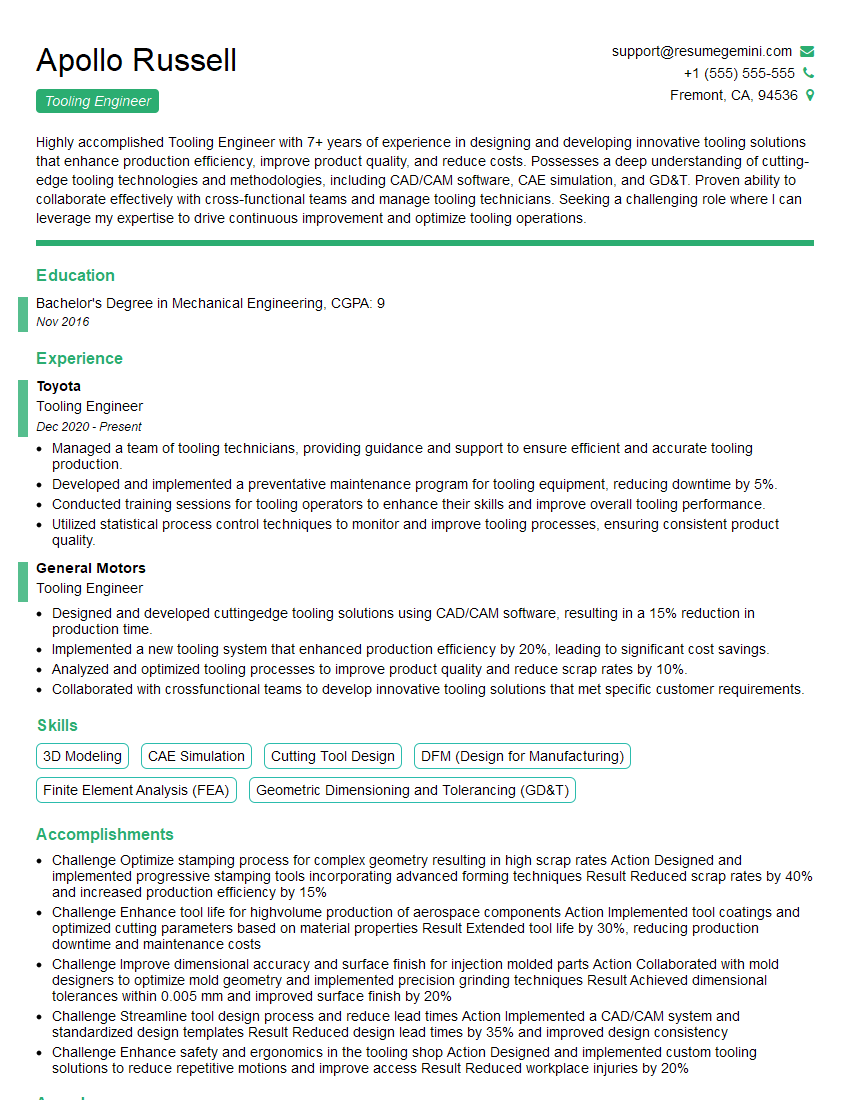
Mastering Gage and Fixture Design opens doors to exciting career opportunities in manufacturing and quality control, offering excellent potential for growth and specialization. To maximize your job prospects, it’s crucial to present your skills effectively. Create an ATS-friendly resume that highlights your relevant experience and technical capabilities. ResumeGemini is a trusted resource to help you build a professional and impactful resume that gets noticed by recruiters. We provide examples of resumes tailored to Gage and Fixture Design to guide you through the process.
Explore more articles
Users Rating of Our Blogs
Share Your Experience
We value your feedback! Please rate our content and share your thoughts (optional).
What Readers Say About Our Blog
I Redesigned Spongebob Squarepants and his main characters of my artwork.
https://www.deviantart.com/reimaginesponge/art/Redesigned-Spongebob-characters-1223583608
IT gave me an insight and words to use and be able to think of examples
Hi, I’m Jay, we have a few potential clients that are interested in your services, thought you might be a good fit. I’d love to talk about the details, when do you have time to talk?
Best,
Jay
Founder | CEO