Feeling uncertain about what to expect in your upcoming interview? We’ve got you covered! This blog highlights the most important Glass Shaping interview questions and provides actionable advice to help you stand out as the ideal candidate. Let’s pave the way for your success.
Questions Asked in Glass Shaping Interview
Q 1. Explain the difference between annealing and tempering glass.
Annealing and tempering are both heat treatments applied to glass to improve its strength and durability, but they achieve this through different processes. Annealing is a slow, controlled cooling process that relieves internal stresses within the glass, preventing it from shattering easily. Think of it like gently easing a stressed muscle. Tempering, on the other hand, involves rapidly heating the glass and then quickly cooling it, typically using air jets. This creates compressive stresses on the glass surface and tensile stresses in the core, making the glass significantly stronger and more resistant to impact. Imagine it like wrapping the glass in a tight, protective layer. While annealed glass will break into sharp shards if shattered, tempered glass breaks into small, relatively harmless pieces, making it much safer for applications like automotive windshields.
Q 2. Describe the various methods used in glass shaping (e.g., blowing, pressing, casting).
Glass shaping utilizes various methods depending on the desired shape and volume.
- Blowing: This ancient technique involves inflating molten glass into a mold using compressed air. It’s ideal for creating hollow shapes like bottles and decorative glassware. The artistry lies in controlling the air pressure and the glass flow to achieve the desired form. Think of a glassblower’s delicate dance with the molten material.
- Pressing: Molten glass is pressed into a mold using mechanical force. This method is efficient for mass production of flat or relatively simple shapes, such as dishes or lenses. The precision of the mold directly impacts the final product’s accuracy.
- Casting: Molten glass is poured into a mold and allowed to cool and solidify. This allows for the creation of complex shapes and larger pieces, often used for artistic glass sculptures or architectural components. The mold material and cooling rate are crucial factors.
- Rolling: Molten glass is rolled between rollers to create sheets of uniform thickness. This is commonly used in the production of flat glass for windows and other applications. Precise control of the rollers is essential for consistency.
- Drawing: Molten glass is drawn vertically upwards to produce continuous sheets or fibers. This is employed in the manufacture of fiberglass and other specialized glass products.
Q 3. What are the safety precautions associated with working with molten glass?
Working with molten glass presents significant safety hazards due to its extreme temperatures and potential for burns and eye injuries. Essential precautions include:
- Appropriate Personal Protective Equipment (PPE): Heat-resistant gloves, eye protection (goggles or face shields), and long sleeves are mandatory.
- Proper Ventilation: Fumes from molten glass can be harmful, so adequate ventilation is crucial.
- Safe Handling Procedures: Employing specialized tools and techniques to manipulate the molten glass reduces the risk of burns and accidents.
- Emergency Preparedness: Having readily available first-aid supplies, emergency eye wash stations, and a plan for handling burns or other injuries is vital.
- Training and Supervision: Thorough training and experienced supervision are essential for anyone working with molten glass.
Ignoring these precautions can lead to severe injuries, emphasizing the critical need for a safety-conscious approach.
Q 4. How do you ensure the dimensional accuracy of a glass product?
Dimensional accuracy is paramount in many glass products. Several methods ensure this:
- Precise Mold Design and Manufacturing: Highly accurate molds are crucial. CNC machining and advanced 3D printing techniques are used to create molds to extremely tight tolerances.
- Controlled Cooling Rates: Uniform cooling prevents warping or distortion. Specialized annealing ovens with precise temperature control systems are frequently used.
- Quality Control Measurements: Regular inspections and measurements throughout the production process using tools like calipers, coordinate measuring machines (CMMs), and optical measuring systems ensure that dimensions are within specifications.
- Material Selection: The type of glass and its properties also affect dimensional stability. Selecting the appropriate glass type for the shaping method is critical.
- Process Optimization: Fine-tuning parameters such as temperature, pressure, and cooling rates within the shaping process optimizes the final dimensions.
Consistent monitoring and adjustments are necessary for maintaining dimensional accuracy across production runs. Using statistical process control (SPC) methodologies improves the consistency and predictability of the output.
Q 5. What types of glass are best suited for different shaping techniques?
Different glass types are better suited for specific shaping techniques. For instance:
- Soda-lime glass: Commonly used for blowing, pressing, and casting due to its relatively low melting point and ease of manipulation. It’s economical and versatile.
- Borosilicate glass (Pyrex): Its higher melting point makes it suitable for techniques requiring higher temperatures, like specialized casting or drawing. Its resistance to thermal shock is also beneficial in certain applications.
- Lead glass (crystal): Used for blowing and pressing, it yields beautiful, clear glassware due to its high refractive index. Its softness and ease of workability make it amenable to intricate designs.
- Quartz glass: Suitable for high-temperature applications and specialized shaping methods like drawing fibers due to its very high melting point and resistance to extreme temperatures.
The choice of glass type depends on the desired properties of the final product, such as its thermal resistance, clarity, durability, and aesthetic qualities.
Q 6. Explain the process of creating a custom glass mold.
Creating a custom glass mold involves several steps:
- Design: The mold design is created using CAD software, considering the desired shape, dimensions, and the specifics of the shaping technique.
- Material Selection: The mold material is chosen based on factors such as the glass type, melting temperature, and the number of castings. Materials may include steel, graphite, ceramic, or specialized composites.
- Manufacturing: The mold is manufactured using techniques such as CNC machining, 3D printing, or casting. Precision is vital to achieve accurate glass shapes.
- Surface Treatment: The mold surface may be treated to prevent sticking or to enhance the surface quality of the glass product. This could involve coatings, polishing, or texturing.
- Testing and Refinement: The mold is tested and refined through trial castings to ensure it meets the design specifications and produces the desired glass shape.
The entire process requires expertise in CAD design, material science, manufacturing processes, and glass properties. Often, iterative adjustments are necessary to optimize the mold’s performance.
Q 7. How do you troubleshoot common problems encountered during glass shaping?
Troubleshooting during glass shaping often involves identifying the root cause of defects like cracks, bubbles, or dimensional inaccuracies. Here’s a systematic approach:
- Identify the Defect: Carefully examine the defective glass piece to precisely define the problem.
- Analyze the Process: Review the entire shaping process, focusing on parameters such as temperature, pressure, cooling rate, mold condition, and glass quality.
- Check the Mold: Inspect the mold for imperfections, wear, or damage that could be causing defects. Minor repairs or replacement might be necessary.
- Evaluate Material Quality: Verify the consistency and quality of the molten glass. Contaminants or variations in the glass composition can affect the final product.
- Adjust Process Parameters: Based on the analysis, adjust relevant parameters such as temperature profiles, pressure levels, or cooling rates. Fine-tuning can often resolve minor issues.
- Implement Quality Control Measures: Introduce or strengthen quality control measures at each stage of the process to prevent future defects. This includes regular inspections and data logging.
A systematic, data-driven approach and a deep understanding of glass behavior are essential for effective troubleshooting. Keeping detailed records of production parameters is crucial for identifying trends and preventing recurring problems.
Q 8. What are the different types of glass furnaces and their applications?
Glass furnaces are the heart of glass production, varying significantly based on the type of glass and the production scale. Let’s explore some key types:
- Pot Furnaces: These are smaller, more traditional furnaces where molten glass is melted in individual clay pots. They’re excellent for small-batch production of high-quality, specialty glasses, like those used in art glass or high-end scientific instruments. Think of them as artisanal, bespoke glass-making.
- Day Tanks: These are larger, rectangular furnaces used for continuous melting and refining of glass. They are highly efficient for larger-scale production of common glass types like container glass or flat glass. Imagine a constantly replenished reservoir of molten glass feeding a production line.
- End-Port Regenerative Furnaces: These are the largest and most efficient furnaces, commonly used in mass production of flat glass. They utilize a regenerative system to preheat incoming air and reduce fuel consumption. They are the workhorses of the flat glass industry, capable of producing vast quantities of consistent glass.
The choice of furnace depends heavily on factors like production volume, glass type, quality requirements, and budget. A small artisan glassblower would use a pot furnace, while a major flat glass manufacturer would opt for an end-port regenerative furnace.
Q 9. Describe your experience with different types of glass cutting tools.
My experience encompasses a wide range of glass cutting tools, each suited to specific tasks and glass types. Precision and safety are paramount in glass cutting.
- Hand-held Glass Cutters: These are essential for smaller jobs and intricate cuts. The quality of the wheel and the technique used determine the precision of the cut. I’m proficient in using both oil-fed and dry cutters, adjusting my technique for different glass thicknesses and types.
- Automated Glass Cutters: For mass production, automated cutters offer speed, precision, and consistency. I have extensive experience operating CNC (Computer Numerical Control) glass cutting machines, programming them to achieve complex cuts with minimal waste. These are programmable and allow for intricate designs.
- Water Jet Cutters: These use high-pressure water jets to cut glass, enabling intricate shapes and designs, even with complex curves. I’ve utilized water jet cutting for projects requiring precise, high-quality cuts in thicker glass types.
- Laser Cutters: These utilize lasers to precisely cut glass, offering exceptional detail and precision for delicate work. This technology is particularly useful for producing intricate designs and small batches of specialty glass items.
Selecting the right tool depends heavily on the nature of the project—from simple straight cuts to highly complex and delicate designs.
Q 10. How do you inspect for defects in finished glass products?
Inspecting finished glass products for defects requires a keen eye and a systematic approach. Different inspection methods are employed depending on the glass type and its intended use.
- Visual Inspection: This is the most basic but essential method, checking for scratches, chips, bubbles, inclusions (foreign particles within the glass), and surface imperfections. Good lighting is critical to detect subtle flaws.
- Dimensional Inspection: Using measuring tools like calipers and rulers, we verify dimensions and tolerances to ensure the glass meets specifications. This is crucial for applications where precise sizing is essential.
- Optical Inspection: More advanced techniques, like polarized light inspection, can reveal internal stress and flaws not readily visible to the naked eye. This is particularly important for safety-critical applications.
- Non-Destructive Testing (NDT): Methods such as ultrasonic testing can detect internal flaws or structural weaknesses without damaging the glass itself. This is commonly used for thicker or higher-value glass components.
A thorough inspection process minimizes the risk of defects reaching the end-user, improving quality and safety.
Q 11. What software or CAD programs are you familiar with for glass design?
Proficiency in CAD software is essential in modern glass design and manufacturing. I’m experienced in several programs:
- AutoCAD: For creating detailed 2D drawings and technical specifications.
- SolidWorks: For creating 3D models and simulations, allowing for the precise visualization and analysis of glass designs before manufacturing.
- Rhino 3D with Grasshopper: For more complex, organic designs and parametric modeling, facilitating iterative design and rapid prototyping.
These tools allow for accurate representation, detailed analysis, and efficient communication with manufacturers, ensuring the final product matches the design intent.
Q 12. Explain the concept of thermal shock in glass and how to avoid it.
Thermal shock occurs when glass is subjected to a rapid temperature change, causing internal stress that can lead to cracking or shattering. Imagine quickly pouring boiling water into a cold glass—the sudden temperature difference can cause it to crack.
Avoiding thermal shock involves:
- Controlled Cooling and Heating: Slow, gradual temperature changes minimize internal stress. Annealing is a crucial process that slowly cools glass to relieve stress after melting.
- Material Selection: Some glass types, like borosilicate glass, have a higher resistance to thermal shock than others (like soda-lime glass). Choosing the right glass type for the application is crucial.
- Design Considerations: The design itself can affect thermal shock resistance. Thicker glass sections generally withstand thermal shock better than thinner ones.
- Pre-heating and Pre-cooling: In applications where rapid temperature changes are unavoidable, pre-heating or pre-cooling the glass can help mitigate the effects of thermal shock.
Understanding and addressing thermal shock is vital to ensure the longevity and safety of glass products.
Q 13. Describe your experience with various glass finishing techniques (e.g., polishing, grinding).
Glass finishing significantly impacts the aesthetics and functionality of a product. I have experience with a range of techniques:
- Polishing: This process uses progressively finer abrasives to achieve a smooth, high-gloss finish. I’m skilled in both manual and automated polishing techniques, adjusting the process for various glass types and desired levels of shine.
- Grinding: This involves using abrasive tools to remove material from the glass surface, creating precise shapes and removing imperfections. I’m adept at both flat grinding (for surfaces like tabletops) and curved grinding (for lenses or other complex shapes).
- Edge Finishing: This encompasses various techniques like fire polishing (melting the edges to smooth them), beveling (creating a sloped edge), or sanding to refine the edges of the glass for safety and aesthetics.
- Sandblasting: This technique uses compressed air and abrasive particles to create textured surfaces, adding visual interest or providing a non-slip surface.
Choosing the right finishing technique depends on the desired appearance, functionality, and the type of glass being worked on.
Q 14. What are the different types of glass available and their properties?
A vast array of glasses exists, each with unique properties dictated by its chemical composition and manufacturing process. Here are some key types:
- Soda-Lime Glass: This is the most common type, used extensively in windows, bottles, and containers. It’s relatively inexpensive but less resistant to thermal shock and chemical attack.
- Borosilicate Glass (Pyrex): Known for its high resistance to thermal shock and chemical attack, it’s often used in laboratory glassware, cookware, and some high-temperature applications.
- Fused Silica: This is a very pure form of silica with exceptionally high thermal shock resistance, used in high-precision optics and semiconductor manufacturing.
- Lead Glass (Crystal): This contains lead oxide, giving it a high refractive index, resulting in brilliance and sparkle. It’s used in fine glassware and decorative items.
- Laminated Glass: This consists of two or more layers of glass bonded together with a polymer interlayer, offering increased safety and security.
- Tempered Glass (Safety Glass): This is heat-treated to increase strength and shatter resistance, making it ideal for automotive and architectural applications.
The choice of glass depends critically on its intended application, taking into account factors such as cost, strength, thermal resistance, and optical properties.
Q 15. How do you maintain and clean glass shaping equipment?
Maintaining and cleaning glass shaping equipment is crucial for ensuring consistent product quality, worker safety, and extending the lifespan of the machinery. My approach is multifaceted and depends on the specific equipment involved. For instance, with furnaces, regular inspections for cracks and refractory wear are paramount. Cleaning involves carefully removing any residual glass or contaminants to prevent buildup and potential damage. This might involve specialized tools and non-abrasive cleaning agents specific to the furnace material.
For robotic arms used in automated shaping processes, meticulous cleaning is essential. We use compressed air and specialized cleaning solutions to remove glass fragments and dust, paying close attention to moving parts and joints. Regular lubrication and calibration are vital to maintaining precision and prevent malfunctions.
Finally, tools such as molds and shaping dies require thorough cleaning after each use. This often involves using appropriate solvents to dissolve any residual glass and then meticulous inspection for any damage or wear. Any damage is carefully documented and repaired or the tool replaced to avoid defects in future glass pieces. This preventive maintenance greatly minimizes downtime and optimizes the efficiency of the entire process.
Career Expert Tips:
- Ace those interviews! Prepare effectively by reviewing the Top 50 Most Common Interview Questions on ResumeGemini.
- Navigate your job search with confidence! Explore a wide range of Career Tips on ResumeGemini. Learn about common challenges and recommendations to overcome them.
- Craft the perfect resume! Master the Art of Resume Writing with ResumeGemini’s guide. Showcase your unique qualifications and achievements effectively.
- Don’t miss out on holiday savings! Build your dream resume with ResumeGemini’s ATS optimized templates.
Q 16. Describe your experience with different types of glass adhesives and sealants.
My experience encompasses a wide range of glass adhesives and sealants, each with its own properties and applications. For instance, UV-curable adhesives are excellent for rapid bonding in high-volume production lines due to their speed and precise curing. However, they are sensitive to UV light exposure and require careful handling during the curing process. I’ve successfully implemented these in projects requiring clear, strong bonds, like creating laminated glass components.
On the other hand, epoxies offer exceptional strength and versatility and are ideal for applications demanding high durability and resistance to harsh environmental conditions. I’ve used these extensively in projects where water tightness and long-term structural integrity were critical. The selection of the appropriate epoxy type is crucial, as there are variations with differing viscosity and curing times. The choice depends on the gap being filled and the precision required.
Finally, I’m proficient in using silicones for applications needing flexibility and weather resistance. These sealants are useful in exterior applications or where movement or thermal expansion is a concern. For example, I’ve used silicone to seal edges of glass panels in architectural projects. Each project needs a careful analysis of the specific requirements to choose the best adhesive or sealant for the optimal result. Understanding the chemical properties and limitations of each type is critical to successful bonding.
Q 17. What are the environmental considerations related to glass shaping processes?
Environmental considerations are integral to my approach to glass shaping. Our processes generate waste glass, which can be minimized through optimized production techniques and careful handling of materials. We actively recycle broken glass and waste materials, reducing landfill burden and conserving resources. Additionally, we continuously strive to reduce energy consumption within the process by optimizing furnace temperatures and implementing energy-efficient equipment.
Air emissions are another key focus. We maintain and upgrade our equipment to minimize particulate matter and other airborne pollutants. This involves adhering to strict regulatory guidelines and employing filtration and abatement technologies. Water usage is also a critical aspect. We implement water-efficient processes and prioritize water recycling whenever feasible, reducing our overall environmental footprint. Finally, we prioritize the responsible disposal of hazardous waste materials generated by certain glass treatments or cleaning processes, adhering to all local and national regulations.
Q 18. How do you handle large or complex glass projects?
Handling large or complex glass projects requires a meticulous and systematic approach. I begin by creating a detailed project plan that incorporates all aspects of the project, from design and materials procurement to fabrication, assembly, and installation. This plan includes clear timelines, resource allocation, and risk assessment. For example, in a recent project involving a large curved glass facade, we utilized 3D modeling software to simulate the entire process, ensuring accurate measurements and minimizing potential errors.
Collaboration is key. I work closely with architects, engineers, and other stakeholders throughout the process to ensure seamless integration of the glass components into the overall design. This collaborative effort involves regular meetings, progress reports, and open communication to address any challenges that arise. Rigorous quality control is also integral at every stage, from raw material inspection to final product inspection. Regular checks and documentation help ensure that the final product meets or exceeds the specified requirements. This comprehensive approach to project management ensures timely and successful completion of even the most challenging projects.
Q 19. Explain your approach to working with tight deadlines and high-pressure situations.
Working under pressure and tight deadlines requires a calm, organized, and proactive approach. My experience has taught me the importance of prioritizing tasks effectively, breaking down large projects into smaller, manageable steps, and delegating responsibilities efficiently. I’ve found that clear communication with the team is crucial during high-pressure situations. Keeping everyone informed about progress and any potential challenges ensures everyone is on the same page and reduces potential stress.
For example, in one instance, we faced a critical delay due to unforeseen supply chain issues. To mitigate this, I immediately mobilized our team to explore alternative suppliers, communicated the delay transparently to the client, and developed a revised project schedule. We successfully navigated the challenge by adapting quickly, working collaboratively, and maintaining a positive attitude. My focus is always on problem-solving, remaining calm under pressure, and effectively managing resources to meet project deadlines without compromising quality.
Q 20. Describe your experience with quality control procedures in glass shaping.
Quality control is a cornerstone of our glass shaping operations. Our procedures start with stringent incoming material inspection, verifying the quality and compliance of the raw materials. Throughout the shaping process, we perform regular in-process checks to identify and rectify any potential defects early on, minimizing wasted materials and time. This involves using both manual inspection methods and automated quality control systems that monitor critical process parameters.
After the shaping is complete, every piece undergoes a comprehensive final inspection, examining dimensions, surface finish, and structural integrity. We employ advanced techniques like optical inspection and non-destructive testing to detect even minute flaws. Documentation of all inspections is meticulously maintained, providing a comprehensive record for traceability and accountability. Our commitment to quality control ensures the delivery of consistently high-quality products that meet or exceed client expectations. Any defects identified are thoroughly investigated to identify the root cause and prevent recurrence.
Q 21. How do you ensure the safety and well-being of your team members during glass shaping operations?
Ensuring team safety is paramount. We prioritize a safety-first culture by providing comprehensive safety training to all team members, covering topics such as safe handling of glass, use of personal protective equipment (PPE), and emergency procedures. We have a robust safety protocol in place, including detailed safety guidelines for every machine and process. Regular safety inspections are conducted to identify and address any potential hazards. The workplace is kept clean and organized to minimize the risk of accidents.
We frequently conduct safety drills and refresher training to keep our team members’ skills sharp. Open communication is encouraged, and we emphasize a culture where workers feel comfortable reporting any safety concerns without fear of retribution. This proactive approach to safety has significantly reduced workplace accidents and created a safer and more productive environment for our team. We regularly update our safety protocols based on industry best practices and lessons learned from any incidents, no matter how minor.
Q 22. How would you address a situation where a glass product is damaged during the shaping process?
Addressing damage during glass shaping requires a methodical approach combining immediate action with root cause analysis. First, safety is paramount. Secure the area, prevent further damage, and ensure the safety of personnel. Then, we meticulously assess the damage – was it a crack, a shatter, a deformation? The location of the damage also matters, indicating potential issues with temperature control, pressure application, or mold design.
For instance, a crack near the base of a bottle might suggest insufficient annealing (controlled cooling), while a shatter could indicate a flaw in the raw material or excessive thermal shock during processing. Once the cause is identified, corrective actions are implemented. This may involve adjusting furnace temperatures, modifying the shaping mold, improving the raw material quality, or even recalibrating the automated machinery. Detailed records are kept to prevent recurrence.
Finally, depending on the severity and the stage of production, the damaged product may be discarded, reworked (if feasible), or used as a learning tool for improving the process. The goal is continuous improvement through proactive measures and meticulous record keeping.
Q 23. Describe your experience with automated glass shaping machines.
My experience with automated glass shaping machines spans over ten years, encompassing various types of equipment, from gob-fed presses for mass-producing containers to sophisticated robotic systems for intricate artistic pieces. I’m proficient in operating and maintaining CNC-controlled furnaces, automated molding presses, and robotic arms used in precision shaping. This includes programming, troubleshooting, preventative maintenance, and quality control checks.
I’ve worked extensively with machines incorporating advanced features like vision systems for quality inspection, closed-loop temperature control, and sophisticated pressure regulation. For example, I once managed the implementation of a new robotic arm system in a factory that increased productivity by 20% while significantly reducing product defects. This involved extensive programming, operator training, and careful monitoring of the system’s performance.
My expertise extends to identifying and resolving issues related to machine malfunction, including mechanical failures, software glitches, and sensor inaccuracies. I understand the importance of regular maintenance and calibration to ensure optimal machine performance and minimize downtime.
Q 24. What are the limitations of different glass shaping techniques?
Different glass shaping techniques have inherent limitations. For example, blowing, while versatile for creating hollow shapes, is limited in precision and repeatability for complex geometries. The skilled hand of the artisan is crucial, leading to variations between pieces. Pressing, ideal for mass production, is restricted to shapes that can be easily formed within a mold. Highly intricate designs are challenging to achieve.
Casting, often used for artistic pieces or larger glass objects, can be time-consuming and requires precise control of temperature and cooling to avoid defects. It’s also less efficient for high-volume production. Spinning is excellent for creating cylindrical shapes but struggles with complex curves or internal cavities. The limitations often relate to the forces involved, the viscosity of the glass, and the constraints imposed by the tooling.
Ultimately, the choice of technique is a trade-off between design complexity, production volume, and the desired level of precision. Understanding these limitations is critical for selecting the most appropriate method for a specific project.
Q 25. How do you determine the appropriate heat treatment for a specific glass product?
Determining the appropriate heat treatment, primarily annealing, for a specific glass product involves considering several factors. The glass composition is crucial, as different types of glass have varying thermal expansion coefficients. A higher coefficient means a greater susceptibility to thermal stress and cracking. The product’s shape and thickness also influence the necessary annealing schedule. Thicker sections require longer annealing times to ensure uniform stress relief.
Precise temperature control throughout the annealing process is paramount to avoid residual stress and unwanted deformation. We use advanced software to model and simulate the thermal profiles, ensuring consistent and appropriate heat treatment. The annealing schedule, which includes precise heating and cooling rates, is carefully designed to minimize the risk of defects such as internal stresses or cracks, thereby ensuring the product’s durability and long-term stability. For instance, a complex, thin-walled glass sculpture would demand a slower cooling rate compared to a simple, thick glass bottle.
Q 26. Describe your understanding of the effects of different cooling rates on glass properties.
Cooling rates significantly impact glass properties. Rapid cooling, also known as quenching, introduces internal stresses, potentially causing the glass to crack or shatter. This is because different regions of the glass cool at different rates, leading to uneven contraction and stress buildup. Quenching, however, can be deliberately used to enhance certain properties, such as increasing strength (tempered glass).
Conversely, slow cooling, as in annealing, allows for gradual stress relaxation, leading to a more stable and less brittle glass. It minimizes internal stresses, improving durability and resistance to thermal shock. The desired outcome – whether enhanced strength or improved stability – dictates the optimal cooling rate. Therefore, a delicate glass object needs a slow cooling rate to avoid stress-related cracking.
The cooling rate also affects the glass’s refractive index and thermal expansion coefficient, although these effects are generally smaller than those on its mechanical properties. Precision control over cooling rates is, therefore, essential for achieving the desired characteristics in the final product.
Q 27. What are some innovative techniques or technologies used in modern glass shaping?
Modern glass shaping incorporates many innovative techniques and technologies. Robotic systems with advanced sensor feedback improve precision and consistency in shaping complex geometries. 3D printing is revolutionizing the production of intricate shapes previously impossible to make through traditional methods. This allows for highly customized designs and prototyping with reduced material waste.
Laser processing allows for micro-machining and surface modification of glass, enabling the creation of unique textures and intricate designs. Computer-aided design (CAD) and computer-aided manufacturing (CAM) software allows for precise control and simulation of the shaping process, improving efficiency and minimizing defects. Advancements in materials science, such as the development of new glass compositions, expand the range of possible shapes and properties.
Finally, the integration of artificial intelligence (AI) into the control systems of shaping machines offers the potential for further optimization of the process, including predicting and preventing defects, reducing energy consumption, and improving overall efficiency.
Q 28. How do you stay current with the latest advancements in glass shaping technology?
Staying current in glass shaping technology involves a multi-pronged approach. I actively participate in professional organizations such as the American Ceramic Society, attending conferences and workshops to learn about the latest advancements and network with industry experts. I subscribe to relevant trade journals and online publications to keep abreast of new developments in materials science, automation, and processing techniques.
I also maintain a strong professional network, regularly communicating with colleagues and researchers in the field. Participation in online forums and communities dedicated to glass technology provides access to the latest discussions and research findings. Continuous learning is crucial, involving online courses and independent research into emerging trends and technologies to maintain a high level of expertise and competitiveness in this dynamic field.
Key Topics to Learn for Glass Shaping Interview
- Glass Properties and Behavior: Understanding the thermal, chemical, and mechanical properties of various glass types (e.g., soda-lime, borosilicate) and how these properties influence shaping techniques.
- Shaping Processes: Detailed knowledge of different glass shaping methods including pressing, blowing, drawing, rolling, and casting. Understanding the advantages and limitations of each process and their applications in different industries.
- Mold Design and Manufacturing: Familiarity with mold design principles, material selection, and manufacturing processes for creating molds used in glass shaping. Understanding the impact of mold design on the final product’s quality and consistency.
- Annealing and Heat Treatment: Comprehensive understanding of the annealing process and its importance in reducing internal stresses and preventing breakage in shaped glass. Knowledge of different heat treatment techniques for enhancing glass properties.
- Quality Control and Inspection: Understanding quality control measures used throughout the glass shaping process, including visual inspection, dimensional measurements, and non-destructive testing methods. Ability to identify and troubleshoot common defects.
- Safety Procedures and Regulations: Familiarity with safety protocols and regulations related to handling molten glass, operating machinery, and working in a high-temperature environment.
- Automation and Robotics in Glass Shaping: Understanding the role of automation and robotics in modern glass shaping processes, including robotic handling, automated inspection systems, and process optimization.
- Material Science Fundamentals: A strong foundation in material science principles related to glass, including its atomic structure, phase transformations, and defect mechanisms.
- Problem-Solving and Troubleshooting: Ability to analyze problems, identify root causes, and develop effective solutions in a manufacturing setting.
Next Steps
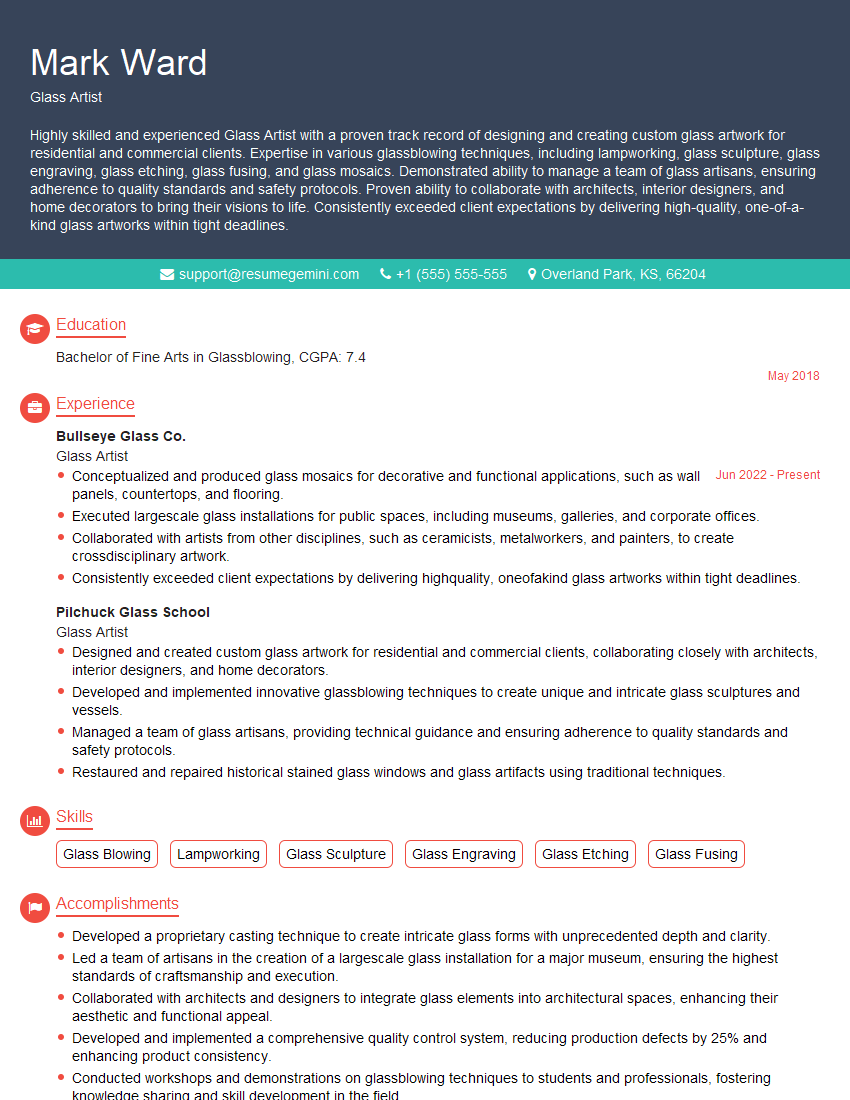
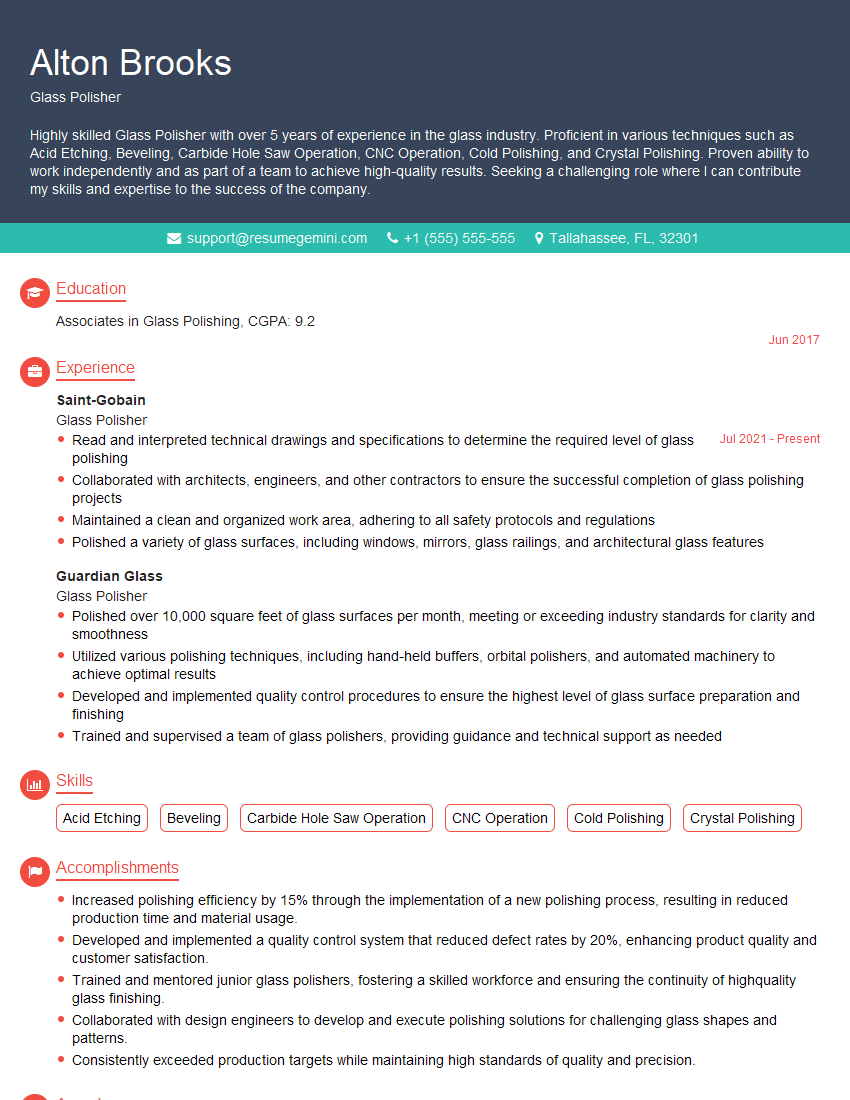
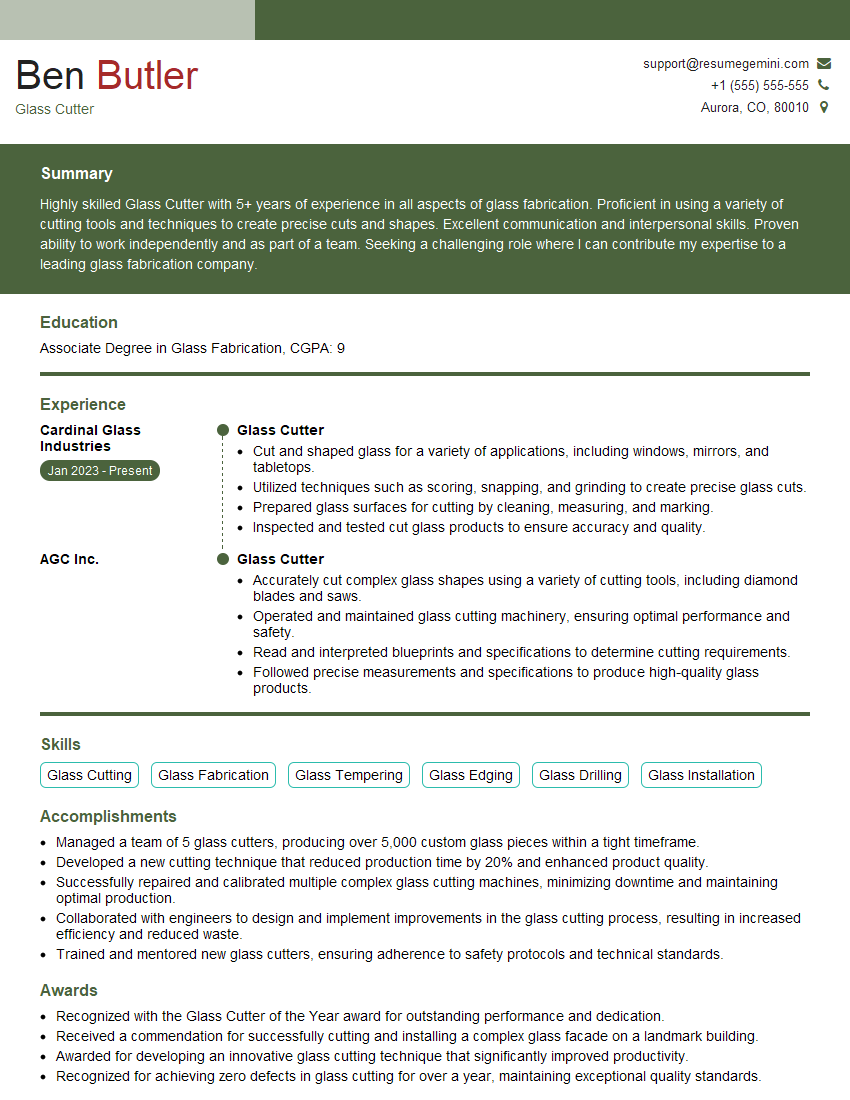
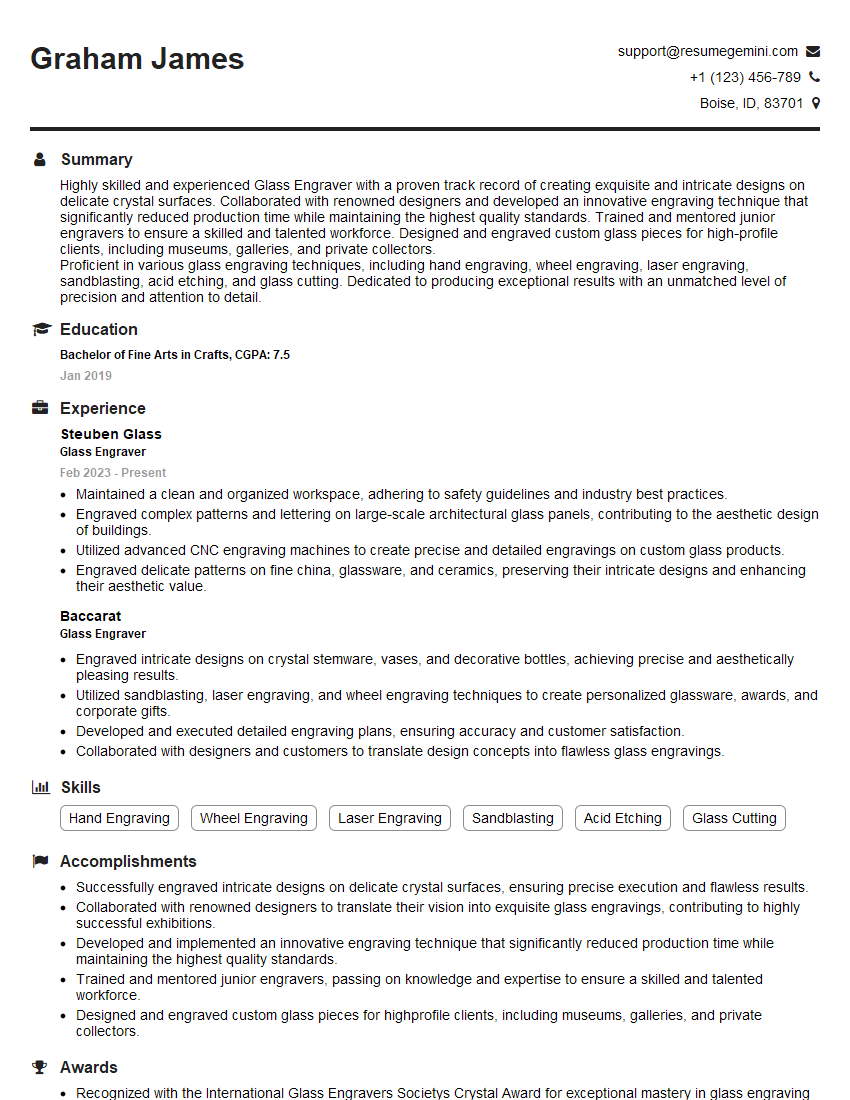
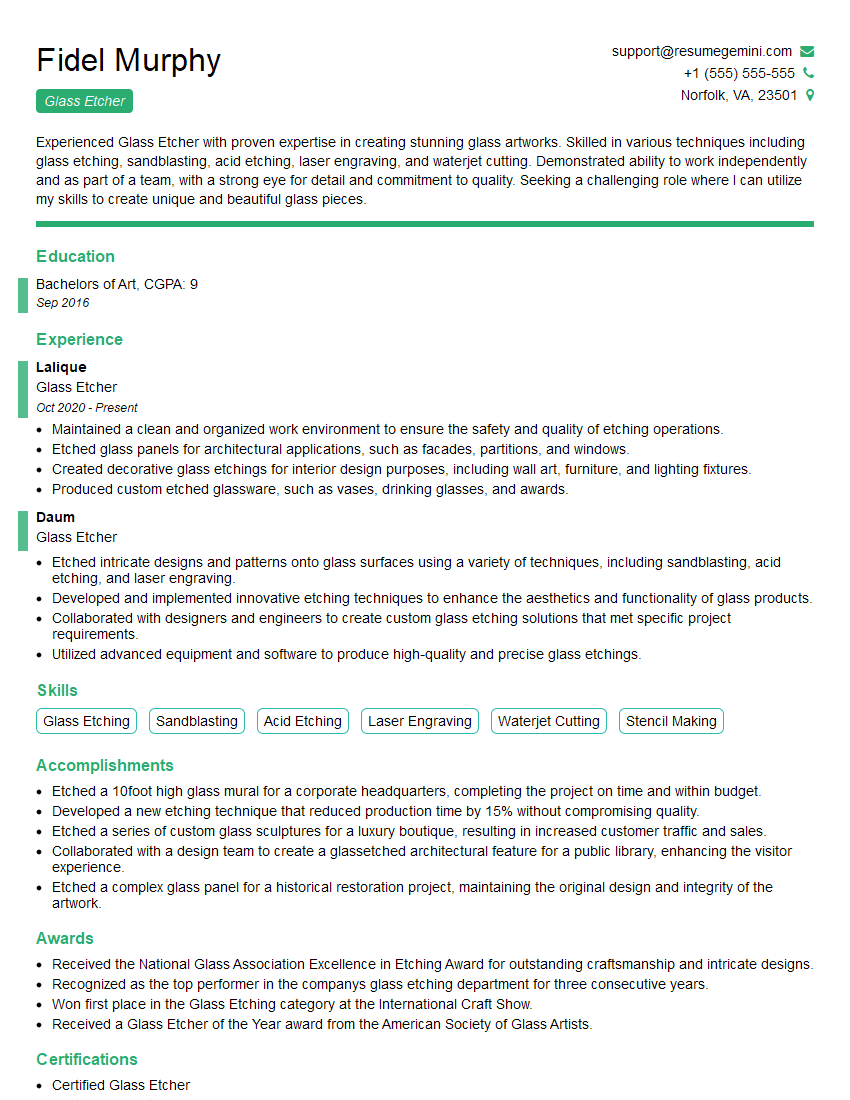
Mastering glass shaping techniques opens doors to exciting career opportunities in a diverse range of industries. To maximize your job prospects, focus on crafting a compelling and ATS-friendly resume that highlights your skills and experience. ResumeGemini is a trusted resource to help you build a professional resume that stands out. Take advantage of their tools and resources; examples of resumes tailored to the glass shaping industry are available to help guide you.
Explore more articles
Users Rating of Our Blogs
Share Your Experience
We value your feedback! Please rate our content and share your thoughts (optional).
What Readers Say About Our Blog
Really detailed insights and content, thank you for writing this detailed article.
IT gave me an insight and words to use and be able to think of examples