Interviews are more than just a Q&A session—they’re a chance to prove your worth. This blog dives into essential GMDSS General Operators Certificate interview questions and expert tips to help you align your answers with what hiring managers are looking for. Start preparing to shine!
Questions Asked in GMDSS General Operators Certificate Interview
Q 1. Describe the different distress alert procedures within the GMDSS system.
The GMDSS system offers several distress alert procedures, all designed to ensure rapid response in emergencies. The choice of procedure depends on the urgency and the available communication means.
Distress Alert via DSC (Digital Selective Calling): This is the primary method. A distress alert is sent automatically to all vessels and coast stations within range, including details like the vessel’s position and nature of the emergency. Think of it as a maritime emergency broadcast system. The DSC call transmits vital information digitally, minimizing ambiguity and ensuring rapid response. For example, if a vessel collides with another, triggering a hull breach, the crew would immediately initiate a DSC distress alert, providing crucial time-sensitive information to nearby ships and coastal authorities.
Distress Alert via Inmarsat: Vessels equipped with Inmarsat systems can transmit distress alerts via satellite to the Inmarsat-C or Inmarsat-F services, reaching a much wider area, even in remote locations beyond the range of VHF radio. This ensures a wider net is cast for help, especially in areas with minimal vessel traffic. Imagine a vessel experiencing engine failure hundreds of miles offshore; the Inmarsat distress alert system increases the chances of rescue by reaching distant rescue centers.
EPIRB (Emergency Position Indicating Radio Beacon) Activation: This is an automatic beacon activated upon immersion in water, transmitting a distress signal including the vessel’s position via satellite. It’s the vessel’s ‘last resort’ distress call and crucial for survival even if the crew is incapacitated. If a vessel sinks, the EPIRB automatically alerts rescue authorities, providing their location even in the event of a complete vessel loss.
Manual Distress Calls via VHF radio: While DSC is preferred, voice calls on VHF can be used as a backup if the DSC system malfunctions. This method relies on the operator broadcasting a distress message directly, with location details. This is less efficient but essential as a last resort in specific emergency situations where other systems fail. It’s a bit like a verbal SOS; less structured, yet effective if other systems are down.
Q 2. Explain the role of the NAVTEX system in maritime communication.
The NAVTEX (Navigational Telex) system is a vital part of GMDSS, providing broadcast navigational warnings and safety-related information to vessels at sea. Think of it as a maritime weather and warning bulletin board. It transmits meteorological warnings, navigational warnings (e.g., about hazards like icebergs or floating debris), and other vital information relevant to safe navigation.
NAVTEX receivers aboard vessels automatically receive these broadcasts, alerting the crew to potential dangers or changes to navigational plans. The system enhances safety by providing timely updates and reducing the risk of accidents. For instance, a sudden change in weather conditions like a severe storm would be broadcast via NAVTEX, allowing vessels to adjust their course or prepare accordingly, preventing possible damage or injury.
Q 3. What are the key differences between EPIRB and SART?
Both EPIRB (Emergency Position Indicating Radio Beacon) and SART (Search And Rescue Transponder) are crucial safety devices within GMDSS, but they serve distinct purposes:
EPIRB: This is a self-activating beacon that transmits a distress signal via satellite when activated by immersion in water or manually. It’s designed for distress alerts when a vessel is in grave danger and likely to sink. The location is given by the satellite, so its range is virtually global. It’s like a ship’s final SOS, automatically broadcasting their location.
SART: This is a radar transponder used to enhance the detection of a vessel in distress by search and rescue craft equipped with radar. It only transmits when activated and only responds to radar signals from SAR vessels, improving the speed and accuracy of search-and-rescue operations. It essentially makes a vessel in distress ‘visible’ on radar to rescue teams, considerably aiding the search effort. Think of it as a homing beacon visible on radar.
In short, EPIRB transmits its location for global coverage (satellite-based), whereas SART enhances detectability on radar for search and rescue teams, improving the rescue speed and success rate.
Q 4. How does the Inmarsat system contribute to GMDSS?
Inmarsat provides satellite-based communication services that are essential for GMDSS, especially in areas beyond the reach of terrestrial communication systems. Inmarsat satellites enable global coverage, ensuring that distress alerts and other communications can be reliably transmitted regardless of location.
Inmarsat-C and Inmarsat-F are specifically integrated into GMDSS. Inmarsat-C offers a range of safety communication services, including distress alerting, while Inmarsat-F is used for higher-speed data transmission, allowing for the transmission of more detailed information during emergencies. The Inmarsat system ensures that a vessel, even in the most remote locations, can maintain contact with the coast and receive necessary aid or safety information, greatly improving their safety.
Q 5. Outline the safety procedures related to GMDSS equipment maintenance.
GMDSS equipment maintenance is paramount for ensuring its reliability during emergencies. Neglecting maintenance compromises the safety of the vessel and its crew.
Regular Inspections: Visual inspections of equipment should be conducted regularly to check for damage, corrosion, or other signs of wear. This includes checking antenna connections, cables, and displays.
Functional Tests: Regular functional tests of all GMDSS equipment, including EPIRB, SART, and Inmarsat systems, are vital to confirm that they are fully operational. Test transmissions of the DSC system are routinely conducted to confirm its function and check for anomalies. Simulated distress alerts are regularly run to verify system health and operator competency.
Record Keeping: Meticulous maintenance records must be kept, documenting all inspections, tests, repairs, and servicing. This detailed record provides proof of compliance with regulations and aids in troubleshooting any issues.
Professional Servicing: GMDSS equipment requires periodic servicing by qualified technicians. This ensures that all equipment components are inspected and maintained to the highest standards. Timely professional servicing increases reliability and prevents unexpected failures during critical situations.
Failure to adhere to these procedures puts the vessel and crew at significant risk. It’s akin to ignoring essential safety protocols on any vehicle; regular maintenance is not optional.
Q 6. What are the legal responsibilities of a GMDSS operator?
A GMDSS operator bears significant legal responsibilities, primarily centered around ensuring the operational readiness and proper use of GMDSS equipment. These responsibilities include:
Competency: Operators must hold the appropriate GMDSS certificate, demonstrating their knowledge and proficiency in the operation and maintenance of GMDSS equipment.
Equipment Maintenance: They are responsible for ensuring that all GMDSS equipment is properly maintained and in good working order. Failure to comply can result in significant penalties.
Proper Use: The operator must know how to correctly use all GMDSS equipment, including the procedures for initiating distress alerts and other safety communications.
Record Keeping: Operators must maintain accurate and up-to-date records of all GMDSS equipment maintenance and testing.
Compliance: The operator must ensure compliance with all relevant national and international regulations pertaining to GMDSS.
Failure to meet these responsibilities can result in legal repercussions, including fines and potential criminal charges in cases of negligence leading to loss of life or environmental damage. It’s a responsibility carrying significant legal implications, therefore strict adherence to regulations is mandatory.
Q 7. Explain the use of DSC (Digital Selective Calling) in distress situations.
DSC (Digital Selective Calling) is a crucial element of GMDSS for distress situations. It allows for rapid transmission of distress alerts to vessels and coast stations within range or even globally via satellite.
In a distress situation, the operator uses the DSC function to send a digitally encoded distress alert. This message includes vital information such as the vessel’s name, MMSI (Maritime Mobile Service Identity) number, position, and the nature of the emergency. The encoded nature ensures clarity and avoids confusion. The signal will be received by other vessels and coast stations with the capability to receive and respond to DSC alerts.
This immediate digital transmission ensures that assistance arrives much faster than traditional voice calls, greatly increasing the chances of survival. It’s far more efficient and accurate than a voice call, eliminating ambiguity and speeding the process of providing assistance. It’s a rapid and structured response system, essential for maritime safety.
Q 8. Describe the different types of GMDSS radio equipment and their functions.
The Global Maritime Distress and Safety System (GMDSS) relies on a suite of radio equipment to ensure maritime safety. These systems operate on various frequencies and utilize different technologies to provide reliable communication even in challenging conditions. Here are some key components:
- Inmarsat-C: This is a satellite-based system offering worldwide coverage. It’s primarily used for sending and receiving distress alerts, safety-related communications, and routine messaging. Think of it as a global email and emergency system for ships.
- EPIRB (Emergency Position-Indicating Radio Beacon): This is a self-activating beacon that automatically transmits a distress alert with the vessel’s position in the event of an emergency, such as sinking or capsizing. It’s your ship’s automatic ‘mayday’ button.
- AIS (Automatic Identification System): AIS broadcasts a ship’s identity, position, course, and speed. It’s vital for collision avoidance and aids in search and rescue efforts. It’s like a ship’s ‘license plate’ and constantly updated GPS signal visible to other ships and shore stations.
- VHF Radio: Very High Frequency radio is used for short-range communication, primarily within coastal waters. It allows for immediate voice communication, essential for coordinating rescue efforts or reporting incidents to nearby vessels or coast stations. It is like a short-range walkie-talkie.
- NAVTEX (Navigational Telex): This broadcasts navigational warnings, meteorological forecasts, and other important safety information. It’s a crucial tool for staying informed about potential hazards at sea.
- MF/HF Radio: Medium and High Frequency radios provide long-range communication, essential for ships far from shore. This is crucial when satellite coverage is limited.
These systems work in concert to provide a robust and redundant communication network, ensuring that distress calls are received and acted upon, regardless of location or environmental conditions.
Q 9. How do you prioritize distress calls in a multi-call scenario?
Prioritizing distress calls during a multi-call scenario is critical. The GMDSS framework prioritizes urgency, using the established ‘Mayday’ protocol. The order of priority would be:
- Mayday (Distress): This always takes precedence. A ship in imminent danger of loss or in grave and imminent danger to human life needs immediate attention.
- Pan Pan (Urgency): This signifies an urgent situation requiring assistance, but not immediately life-threatening. This might include a vessel experiencing machinery failure or severe weather-related difficulties.
- Securité (Safety): This pertains to hazardous situations or warnings for all ships in the area. This could be a navigational warning or a reported hazard, such as an oil spill.
In a multi-call situation, the operator should immediately acknowledge each call, noting the time and details. The ‘Mayday’ calls, however, must be immediately relayed to the appropriate Coast Guard or rescue coordination center. All calls should be logged meticulously for subsequent review and reporting. A prioritization system, as simple as listing in order of urgency, helps keep things organized during high-pressure situations. Remember, human life always takes the highest precedence.
Q 10. What are the limitations of the GMDSS system?
While the GMDSS is a powerful system, it does have limitations:
- Coverage Gaps: Although Inmarsat provides extensive coverage, some remote areas may experience limited or no satellite connectivity. This is particularly true in polar regions.
- Equipment Malfunction: Equipment failure can occur, rendering a vessel unable to transmit distress signals. Regular maintenance and testing are vital to mitigate this risk.
- Interference: Radio interference from other sources, such as atmospheric conditions or other transmissions, can degrade signal quality and impair communication.
- Operator Error: Incorrect use of equipment or procedures can lead to delayed or unsuccessful distress calls. Proper training and certification are essential.
- False Alarms: Accidental activation or malfunction can lead to false distress alerts, diverting resources and causing unnecessary disruption. Efficient response strategies and protocols need to be in place to address this.
- Language Barriers: Communication difficulties can arise due to language differences between the vessel and the receiving authorities.
Understanding these limitations is key to maintaining operational readiness and preparing for potential challenges. Redundancy in equipment and procedures is vital to help mitigate the impact of these limitations.
Q 11. What is the role of the Coast Guard in relation to GMDSS?
The Coast Guard plays a crucial role in the GMDSS system. They act as the primary authority responsible for receiving and responding to distress calls. Their responsibilities include:
- Monitoring Distress Signals: Coast Guard stations monitor various frequencies for distress calls, using sophisticated monitoring systems to detect signals and locate the vessel in distress.
- Coordinating Rescue Efforts: Once a distress call is received, the Coast Guard coordinates search and rescue operations, contacting other vessels, aircraft, and emergency services as needed.
- Providing Assistance: The Coast Guard directly participates in rescue operations, deploying resources such as ships, helicopters, and rescue teams to assist vessels in distress.
- Investigating Incidents: Following a distress incident, the Coast Guard conducts investigations to determine the cause of the incident and to prevent similar occurrences in the future.
- Regulating GMDSS compliance: The Coast Guard ensures that vessels comply with international regulations concerning the installation, maintenance, and testing of GMDSS equipment.
Essentially, the Coast Guard acts as the central hub for maritime emergency response, leveraging the GMDSS system to ensure the safety and security of lives at sea.
Q 12. Explain the process of conducting a GMDSS equipment test.
Regular testing of GMDSS equipment is mandatory to ensure its readiness in an emergency. The process involves a series of checks and transmissions:
- Visual Inspection: Begin with a visual check of all equipment, checking for any physical damage, loose connections, or signs of corrosion.
- Functional Tests: Each piece of equipment must be tested individually. This typically involves sending and receiving test messages. For Inmarsat-C, this may mean sending a test message to a designated test station. For VHF, this may involve communication with a known test station.
- EPIRB Test: EPIRBs are often tested on a regular basis in a simulated emergency situation, which usually sends a test signal to the appropriate Coast Guard, Maritime Rescue Coordination Center (MRCC), and other emergency services.
- Documentation: Meticulous record-keeping is crucial. All tests should be documented, including the date, time, equipment tested, results, and any remedial action taken.
- Logbook Entries: Detailed logbook entries should record the results of the tests and any maintenance undertaken.
These tests should be performed according to manufacturer’s instructions and relevant regulations. Regular, thorough testing helps prevent equipment failure during an actual emergency, ensuring that the system is fully operational when needed. Think of it like a regular car service, identifying small problems before they become large ones.
Q 13. What actions would you take if you received a false distress alert?
Receiving a false distress alert is a serious matter. It wastes valuable time and resources. The following actions must be taken:
- Verify the Alert: Immediately attempt to contact the vessel that issued the alert to confirm the situation. Use all available communication means (VHF, Inmarsat-C, etc.).
- Investigate: If the vessel cannot be contacted or there is uncertainty about the validity of the alert, initiate an investigation. This may involve contacting nearby vessels or the relevant Coast Guard station.
- Inform Authorities: Report the possible false alert to the relevant authorities (Coast Guard, MRCC) and provide all available information to assist in their investigation.
- Document: Maintain comprehensive documentation of the entire event, including all communication attempts and the actions taken.
- Learn from the Incident: Analyze the incident to identify the potential cause of the false alert and take steps to prevent similar occurrences in the future.
Responding appropriately to a false alarm is essential for maintaining the integrity of the GMDSS system and ensuring efficient use of emergency resources.
Q 14. How do you ensure the proper functioning of GMDSS equipment during adverse weather conditions?
Adverse weather conditions can significantly impact the performance of GMDSS equipment. To ensure proper functioning, several measures should be taken:
- Antenna Integrity: Proper antenna maintenance and secure mounting are critical. Strong winds can damage antennas, leading to communication failures. Regular checks and secure fastenings are vital.
- Waterproofing: Ensure all equipment is adequately waterproofed and protected from moisture and saltwater spray. This includes appropriate sealing of connections and the use of weatherproof enclosures.
- Power Supply: Ensure a reliable and robust power supply. Backup power systems, such as generators or batteries, are essential in case of power outages during severe weather.
- Environmental Protection: Protect equipment from extreme temperatures, both hot and cold, as these can affect performance. Use insulation or climate-controlled spaces where possible.
- Regular Maintenance: More frequent maintenance and testing are recommended during periods of adverse weather to identify and address potential problems early.
By proactively addressing potential vulnerabilities and ensuring equipment is adequately protected, operators can minimize the impact of adverse weather on GMDSS functionality and maintain reliable communication during challenging conditions.
Q 15. What are the key performance indicators for a GMDSS operator?
Key Performance Indicators (KPIs) for a GMDSS operator center around ensuring the safe and efficient transmission and reception of distress alerts and maritime safety information. Think of it like this: a GMDSS operator is the lifeline of communication for ships at sea. Their effectiveness is measured by their ability to maintain this lifeline.
- Uptime of GMDSS equipment: Minimizing downtime through proactive maintenance and rapid troubleshooting is crucial. A high percentage of operational equipment ensures constant readiness.
- Accuracy of distress alert transmission and reception: Every second counts in a distress situation. KPIs here focus on the speed and accuracy of transmitting and receiving distress calls, ensuring the correct information reaches the relevant authorities.
- Timely dissemination of Maritime Safety Information (MSI): Efficient delivery of navigational warnings, weather forecasts, and search and rescue information is essential for safe navigation. KPIs track the speed and completeness of MSI dissemination.
- Compliance with regulations: Adherence to all SOLAS and GMDSS regulations is paramount. KPIs measure compliance with logging procedures, maintenance schedules, and training requirements.
- Proficiency in operating various communication modes: GMDSS uses various communication technologies. KPIs would assess the operator’s proficiency in using Inmarsat, MF/HF radio, and NAVTEX.
- Effective communication and coordination: Clear and concise communication with other vessels and shore-based authorities is vital. KPIs might include the successful resolution of communication challenges and the speed of response to inquiries.
Ultimately, a successful GMDSS operator is measured by their contribution to maritime safety through reliable and efficient communication.
Career Expert Tips:
- Ace those interviews! Prepare effectively by reviewing the Top 50 Most Common Interview Questions on ResumeGemini.
- Navigate your job search with confidence! Explore a wide range of Career Tips on ResumeGemini. Learn about common challenges and recommendations to overcome them.
- Craft the perfect resume! Master the Art of Resume Writing with ResumeGemini’s guide. Showcase your unique qualifications and achievements effectively.
- Don’t miss out on holiday savings! Build your dream resume with ResumeGemini’s ATS optimized templates.
Q 16. Describe your experience with troubleshooting GMDSS equipment malfunctions.
Troubleshooting GMDSS equipment is a critical part of the job. It’s like being a detective for communications. You need to systematically isolate the problem. My approach involves a structured process:
- Initial Assessment: I begin by identifying the symptoms – is there no signal, static, or an error message? I note the specific equipment malfunctioning (e.g., Inmarsat-C terminal, MF/HF radio).
- Visual Inspection: I check for obvious issues such as loose cables, power supply problems, or antenna damage. Sometimes, the simplest solution is the most overlooked.
- Operational Checks: I perform basic operational checks, like verifying power supply and antenna connections. I refer to the equipment’s operational manual for troubleshooting guides and diagnostic procedures.
- System Tests: I run built-in self-tests and diagnostic routines. Many GMDSS devices have error codes that provide clues about the problem. For example, an Inmarsat-C terminal might display an error code indicating a problem with the satellite link.
- Log Review: Reviewing the GMDSS logbook provides a valuable historical record of equipment performance and potential problems.
- External Factors: I consider external factors that may be affecting the equipment. For instance, adverse weather conditions can affect antenna performance.
- Seeking Assistance: If I’m unable to resolve the issue, I contact the manufacturer’s technical support or a qualified service technician. This is critical, especially for complex malfunctions.
For example, I once encountered an Inmarsat-C terminal displaying a ‘registration failure’ error. By systematically checking the antenna connection and power supply, I discovered a loose cable. Tightening the cable resolved the issue quickly, avoiding a costly service call. Documenting the problem and solution in the logbook is crucial for future reference and for audits.
Q 17. How do you stay updated on changes and regulations within the GMDSS system?
Staying updated on GMDSS changes and regulations is essential. It’s like constantly updating your navigation charts – you can’t afford to be using outdated information. I employ several strategies:
- IMO Circulars and Notifications: I regularly check the International Maritime Organization’s website for the latest circulars, notifications, and amendments to the SOLAS Convention and GMDSS regulations.
- Industry Publications and Journals: I subscribe to relevant maritime publications and journals that keep me informed about technological advancements and regulatory changes affecting GMDSS.
- Professional Development Courses: I actively participate in refresher training courses and workshops specifically focused on GMDSS operations and new technologies to ensure my knowledge remains current.
- Manufacturer Updates: I regularly check for software updates and firmware upgrades for my GMDSS equipment, provided by the manufacturers. These often include bug fixes and performance improvements.
- Networking with other professionals: I maintain contact with other GMDSS operators and professionals in the industry, often participating in conferences and forums where we share updates and insights.
By combining these methods, I ensure that I’m always operating within the current regulatory framework and using the latest operational procedures.
Q 18. Explain the importance of proper record-keeping in relation to GMDSS operations.
Proper record-keeping in GMDSS operations is paramount. Think of the GMDSS logbook as a crucial piece of evidence in a potential incident investigation. It ensures accountability and provides a vital historical record of all communications and equipment performance.
- Detailed Records of Distress Calls: Precise recording of distress calls, including the time, vessel details, nature of the emergency, and actions taken is legally required and crucial for search and rescue operations.
- Equipment Maintenance Logs: Regular documentation of routine maintenance, repairs, and any malfunctions aids in identifying recurring issues and ensuring the continued functionality of GMDSS equipment.
- MSI Reception Logs: Logging the reception of Maritime Safety Information broadcasts ensures compliance with regulatory requirements and provides a record of warnings received. This is important for defending a ship’s compliance with safety standards.
- Communication Logs: Detailed records of all communications, including routine traffic, provide a valuable timeline of events and facilitate troubleshooting.
- Training Records: A record of completed GMDSS operator training and certification validates the operator’s competency and compliance with regulations.
Maintaining accurate and complete records allows for effective auditing, facilitates incident investigations, and enhances the overall safety of maritime operations. Neglecting proper record-keeping can lead to serious legal and operational consequences.
Q 19. What are the different types of communication used in the GMDSS system?
The GMDSS system utilizes a variety of communication methods to ensure redundancy and reach in various situations. It’s designed to provide multiple ways to send and receive information, regardless of the conditions.
- Inmarsat: A satellite-based system providing various communication services, including Inmarsat-C (narrowband data), Inmarsat-F (voice and data), and Inmarsat mini-M (voice and data).
- MF/HF Radio: Used for long-range communication, especially in areas with limited satellite coverage. This involves both voice and digital selective calling (DSC).
- NAVTEX: A broadcast system transmitting navigational warnings and other safety-related information to ships within range.
- EPIRB (Emergency Position-Indicating Radio Beacon): A distress beacon that automatically transmits a distress alert via satellite when activated, including the vessel’s location.
- VHF Radio: Primarily used for short-range communication, particularly for communication with nearby vessels and coastal stations.
The diverse communication modes provide resilience and redundancy; if one system fails, others are available to ensure continuous communication.
Q 20. How would you handle a communication failure in the GMDSS system?
Handling a GMDSS communication failure requires a systematic approach, prioritizing safety and efficiency. It’s similar to having a backup plan for anything important – you always need a Plan B.
- Identify the Failure: Determine which communication system has failed and the extent of the failure. Is it a complete outage or a partial one?
- Attempt Alternative Systems: Immediately try alternative communication methods. For instance, if the Inmarsat system fails, try using the MF/HF radio, or vice versa. VHF may also be useful for nearby vessels or coast stations.
- Inform Relevant Authorities: Notify the appropriate coastal radio station or maritime rescue coordination center (MRCC) about the communication failure, providing details of the situation and any ongoing emergencies.
- Troubleshooting: Attempt to diagnose and rectify the problem, following troubleshooting procedures for the failed equipment. This may involve checking connections, power, antennas etc.
- Activate Backup Communication: Ensure that backup communication systems (like satellite phones) are functioning correctly and readily available.
- Document the Event: Record the communication failure, attempted solutions, and outcome in the GMDSS logbook, including the time of failure and restoration.
- Repair or Replace Equipment: Arrange for the repair or replacement of the faulty equipment. This is vital for ensuring operational readiness.
The key is to remain calm, act decisively, and utilize all available resources to restore communication capabilities and ensure the safety of the vessel and its crew.
Q 21. Explain the concept of a Maritime Safety Information (MSI) broadcast.
Maritime Safety Information (MSI) broadcasts are vital for ensuring maritime safety. Think of them as the maritime equivalent of weather warnings. They provide crucial information to mariners to enhance safety and prevent accidents.
MSI broadcasts contain warnings, navigational information, and other alerts related to navigation and maritime safety, including:
- Navigational Warnings: Information about hazards to navigation, such as obstructions, changes in water depths, and newly established or removed aids to navigation.
- Meteorological Warnings: Weather forecasts and warnings of storms, high winds, and other adverse weather conditions.
- Search and Rescue Information: Details about ongoing search and rescue operations, including the location and description of vessels or persons in distress.
- Ice Information: Reports on ice conditions, including the extent and movement of ice fields.
- Urgent Warnings: Time-sensitive alerts regarding serious threats to navigation or safety, such as piracy warnings or terrorist threats.
MSI is disseminated through various GMDSS channels, including NAVTEX, Inmarsat broadcasts, and MF/HF radio broadcasts. Regular monitoring of these channels is crucial for receiving this essential information, contributing significantly to safe navigation and efficient maritime operations.
Q 22. What are the security protocols associated with GMDSS communication?
GMDSS communication relies on several crucial security protocols to ensure the integrity and authenticity of distress calls and other safety-related messages. These protocols aim to prevent unauthorized access, tampering, and misinterpretation of critical information. Think of it like a highly secure system for maritime emergencies.
Digital Selective Calling (DSC): DSC uses a unique Maritime Mobile Service Identity (MMSI) number to identify vessels, much like a phone number. This ensures that distress alerts are directed precisely to the intended recipients – coast stations and other nearby vessels. It prevents accidental triggering and allows for immediate verification of the source.
Encryption (in certain applications): While not universally used across all GMDSS channels, some communication methods, especially those involving sensitive data, may incorporate encryption to protect against eavesdropping and unauthorized access. This safeguards the privacy of sensitive information exchanged between vessels and coast stations.
Error Detection and Correction: GMDSS employs various techniques to detect and correct errors introduced during transmission. This ensures the accurate reception of vital messages, even in challenging radio conditions. A simple analogy is like checking for typos in a message – ensuring the message’s meaning isn’t corrupted.
Authentication (in some systems): Advanced systems may use authentication protocols to verify the sender’s identity, confirming it’s a genuine distress call and not a spoof. This is crucial in preventing malicious interference and false alarms.
Designated Frequencies and Channels: The use of specific, internationally allocated frequencies helps minimize interference and ensures that distress calls receive priority access. Imagine dedicated emergency lanes on a highway—this prevents congestion and speeds up response times.
Q 23. Describe your familiarity with GMDSS equipment manuals and documentation.
I’m highly familiar with GMDSS equipment manuals and documentation. My experience includes working with manuals for various manufacturers, including the detailed technical specifications, operating procedures, troubleshooting guides, and safety regulations. I’ve actively used these manuals for training, equipment maintenance, and fault diagnosis. I’m adept at interpreting diagrams, schematics, and technical terminology, ensuring that I can quickly understand and address any issue.
For example, during my previous role, I successfully diagnosed and repaired a faulty Inmarsat-C terminal using the manufacturer’s troubleshooting guide, saving significant downtime for the vessel. I understand the importance of keeping abreast of updates and revisions to these manuals, ensuring I’m always working with the most current and relevant information.
Q 24. How would you respond to a distress call from a vessel in distress?
Responding to a distress call requires immediate action and precise procedures. My response would follow a systematic approach:
Acknowledge the call: Immediately acknowledge the distress call, confirming receipt and understanding of the situation. I would ask for confirmation of the position, nature of the emergency, and any immediate needs.
Relay the distress call: Simultaneously, I would relay the distress call to the appropriate coast station using the most effective means possible – DSC, VHF, or Inmarsat, depending on the situation and available equipment.
Maintain contact: I would keep communication open with the vessel in distress, offering reassurance and providing any assistance requested. I’d also attempt to get more information that can aid rescue efforts.
Assist in rescue coordination: I would assist the coast guard or other rescue authorities by providing relevant information such as vessel location, number of people on board, and the nature of the emergency. This involves accurate and concise reporting.
Maintain log: I would meticulously document the entire event in the GMDSS logbook, including the time of the call, nature of the emergency, actions taken, and all relevant communication.
The entire process is about speed, accuracy, and calm efficiency under pressure. It’s about saving lives and ensuring the safety of those in need.
Q 25. What are your strengths and weaknesses as a GMDSS operator?
My strengths lie in my meticulous attention to detail, calm demeanor under pressure, and my ability to quickly analyze and solve problems. I’m highly proficient in operating and maintaining GMDSS equipment. I’m also a quick learner, capable of adapting to new technologies and procedures. My experience has instilled in me a strong sense of responsibility and the understanding of the critical role GMDSS plays in maritime safety.
However, like everyone, I have areas for improvement. I would say my weakness is delegating tasks effectively in a highly stressful situation, which I’m actively working to improve by practicing efficient team communication and prioritizing tasks effectively.
Q 26. Why are you interested in this GMDSS Operator position?
I’m deeply interested in this GMDSS Operator position because of my passion for maritime safety and my commitment to contributing to a secure environment at sea. This role offers me the opportunity to leverage my skills and experience in a challenging and rewarding field. I find the technical complexities of GMDSS fascinating and the responsibility of ensuring safe communication deeply fulfilling. I am confident that my skills and dedication would be a valuable asset to your team.
Q 27. Describe your experience with different types of GMDSS antennas and their applications.
My experience encompasses a range of GMDSS antennas, each with specific applications and characteristics. Selecting the right antenna depends heavily on the frequency band, transmission power, and the environment.
VHF Antennas: These are crucial for short-range communication. I’m familiar with various types, including whip antennas (simple and common), horizontally polarized antennas (often used for coastal communications), and more complex designs optimized for specific ship configurations.
MF/HF Antennas: These antennas are used for long-range communication, relying on ground wave and sky wave propagation. Their design is more complex, often involving wire antennas or phased arrays to optimize signal radiation and reception. I’m experienced in their installation, tuning, and maintenance to ensure optimum performance.
Inmarsat Antennas: These antennas are used for satellite communication. The design depends heavily on the type of Inmarsat service (Inmarsat-C, FleetBroadband, etc.). I understand the importance of accurate pointing and the impact of environmental conditions (weather) on performance.
In summary, antenna selection is not arbitrary; it directly affects the reliability and range of GMDSS communication. My expertise allows me to choose and maintain the correct antenna for the specific operational requirements.
Key Topics to Learn for GMDSS General Operators Certificate Interview
Ace your GMDSS General Operators Certificate interview by mastering these key areas. Remember, understanding the practical application of theoretical concepts is crucial.
- GMDSS System Overview: Understand the structure and function of the Global Maritime Distress and Safety System. This includes the various distress and safety communication systems and their roles in maritime safety.
- Distress Alerting Procedures: Familiarize yourself with the procedures for initiating and responding to distress alerts using different GMDSS equipment, such as EPIRBs, Inmarsat, and NAVTEX.
- Radiotelephony Procedures: Practice using proper radiotelephone procedures, including using standard phrases and call signs, and handling different communication scenarios.
- Use of NAVTEX and SafetyNET: Learn how to receive, interpret, and act upon safety information broadcast via NAVTEX and SafetyNET systems. Consider how delays in receiving or interpreting this information could impact safety.
- Inmarsat Services: Develop a strong understanding of Inmarsat satellite communication systems, including their capabilities and limitations. Be prepared to discuss different Inmarsat services and their applications.
- EPIRB and other emergency equipment: Understand the operation and maintenance of Emergency Position Indicating Radio Beacons (EPIRBs) and other distress alerting devices. Consider troubleshooting scenarios.
- Regulations and Procedures: Be thoroughly familiar with the relevant international regulations and procedures governing GMDSS operation. Consider the consequences of non-compliance.
- Troubleshooting and Problem Solving: Practice identifying and troubleshooting common problems with GMDSS equipment. Develop your ability to think critically about potential issues and their solutions.
Next Steps
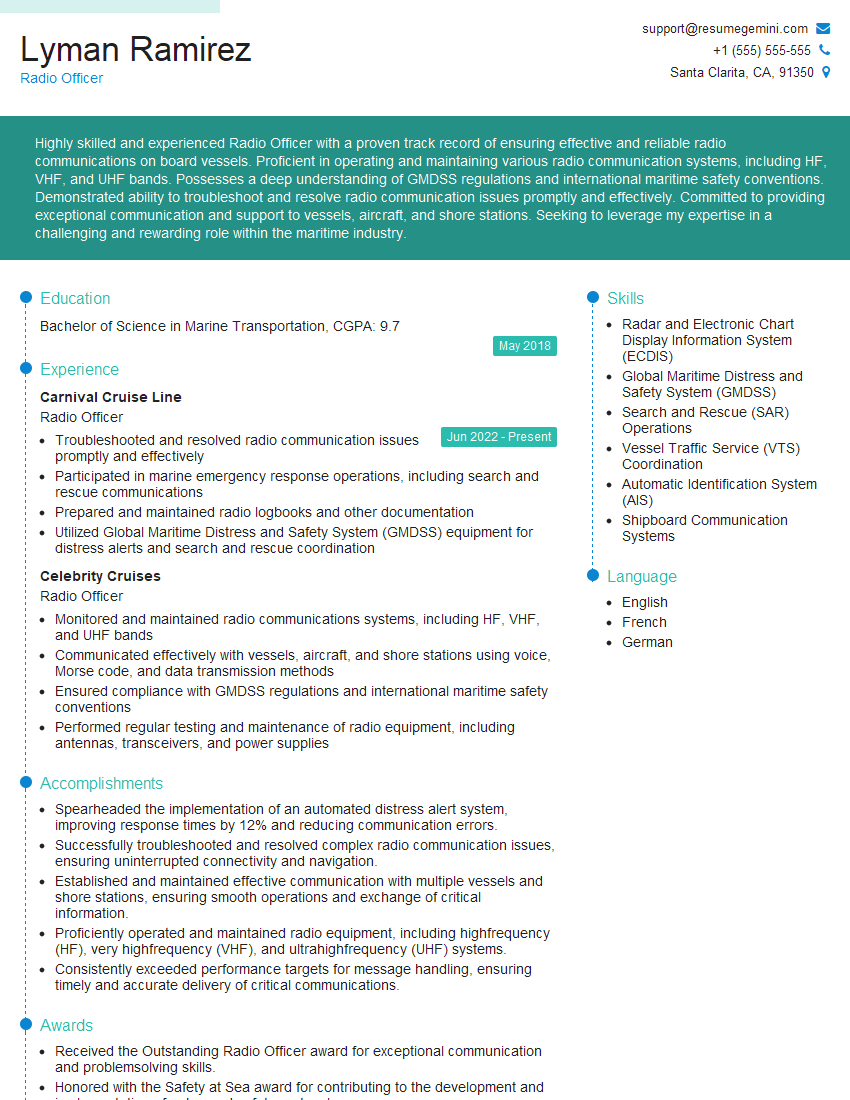
Earning your GMDSS General Operators Certificate significantly enhances your career prospects in the maritime industry, opening doors to a wider range of exciting opportunities. To make the most of your new qualification, a strong resume is essential. An ATS-friendly resume increases your chances of getting your application noticed by potential employers. ResumeGemini is a trusted resource that can help you create a professional and impactful resume tailored to the maritime industry. We provide examples of resumes specifically designed for candidates holding a GMDSS General Operators Certificate to help you get started. Invest in your future – build a resume that showcases your skills and experience effectively.
Explore more articles
Users Rating of Our Blogs
Share Your Experience
We value your feedback! Please rate our content and share your thoughts (optional).
What Readers Say About Our Blog
I Redesigned Spongebob Squarepants and his main characters of my artwork.
https://www.deviantart.com/reimaginesponge/art/Redesigned-Spongebob-characters-1223583608
IT gave me an insight and words to use and be able to think of examples
Hi, I’m Jay, we have a few potential clients that are interested in your services, thought you might be a good fit. I’d love to talk about the details, when do you have time to talk?
Best,
Jay
Founder | CEO