The right preparation can turn an interview into an opportunity to showcase your expertise. This guide to Hunting and Trapping interview questions is your ultimate resource, providing key insights and tips to help you ace your responses and stand out as a top candidate.
Questions Asked in Hunting and Trapping Interview
Q 1. What are the different types of hunting licenses required in your state?
Hunting license requirements vary significantly by state. In my state, we have several types. The most common is a general hunting license, allowing you to hunt most game species during their respective seasons. Then there are specific licenses for particular animals, such as a big game license (for deer, elk, bear, etc.) or a small game license (for rabbits, squirrels, etc.). Some licenses are further categorized by hunting methods; for example, a separate license might be required for archery hunting versus firearm hunting. Finally, we have nonresident licenses for hunters from out of state, often with higher fees. You’ll also find permits for things like migratory waterfowl hunting and trapping licenses, each with its own requirements and stipulations. It’s crucial to check the state’s wildlife agency website for the most up-to-date information and regulations before you go hunting; the rules and requirements are subject to change.
Q 2. Explain the ethical considerations involved in hunting.
Ethical hunting centers around respecting the animal, the land, and fellow hunters. It’s about more than just the harvest; it’s a holistic approach. Fair chase is a key ethical principle – it means pursuing animals in a manner that gives the animal a reasonable chance of escape. This excludes using bait or other unfair advantages. Another crucial element is respect for the animal. A clean, quick kill is paramount. We should strive to minimize suffering and ensure a humane harvest. Responsible handling of the harvested animal, including proper field dressing and meat care, is also critical. Beyond the animal itself, ethical hunters leave no trace, meaning we pack out everything we pack in, and we avoid causing unnecessary damage to the environment. We also respect private property rights and adhere to all regulations.
Q 3. Describe your experience with various trapping methods.
My experience with trapping encompasses a variety of methods, tailored to the target species. For smaller animals like mink or muskrat, I frequently use snares, carefully set to avoid injury. These are often placed along trails or near water sources. For larger animals such as beaver or raccoon, body-gripping traps are sometimes necessary, but these require regular checks to ensure swift and humane dispatch. I’ve also utilized conibear traps for specific species, always following local regulations and emphasizing safe and responsible trapping techniques. Effective trapping depends significantly on understanding the target animal’s behavior, habitat preference, and the local regulations. For example, the placement of a snare requires a keen understanding of the animal’s travel patterns to maximize success while minimizing the risk of unintended bycatch. I’ve found that regular monitoring and maintenance of traps are paramount for ethical and successful trapping.
Q 4. What are the common safety precautions when handling firearms during hunting?
Firearm safety is paramount in hunting. The fundamental rule is to always treat every firearm as if it were loaded. Never point a firearm at anything you don’t intend to shoot. Keep your finger off the trigger until you are ready to fire. Always be sure of your target and what’s beyond it. Know your firearm and its range. When transporting firearms, they should be unloaded and cased. Regular cleaning and maintenance are essential to ensure the firearm’s reliability. And finally, always wear appropriate safety gear, including eye and ear protection. I’ve witnessed firsthand the devastating consequences of neglecting these precautions; a momentary lapse in judgment can have terrible consequences. It’s a constant commitment to safety, never complacency.
Q 5. How do you identify different animal tracks and scat?
Identifying animal tracks and scat involves a combination of observation and knowledge. Track identification involves looking at the size, shape, and pattern of the prints. For example, the three-toed tracks of a rabbit are distinctly different from the cloven hooves of a deer. Also consider the gait (the pattern of footprints as the animal moves). Scat analysis considers size, shape, and contents. Deer scat is typically pellet-shaped, while coyote scat is often tubular and may contain undigested bone fragments. Field guides and online resources are incredibly helpful in learning to identify different animal signs. Practice and experience are key. Over time, you’ll develop a keen eye for subtle differences that aid in accurate identification, even with partial tracks or aged scat.
Q 6. What are the signs of a healthy vs. unhealthy animal?
Assessing the health of an animal involves observing several factors. A healthy animal will generally exhibit alertness, clear eyes, and a glossy coat. Its gait should be confident and steady. Its body condition should be good, neither overly thin nor obese. Look for any signs of injury, parasites, or disease, such as wounds, unusual swellings, or discharge. Unhealthy animals may be lethargic, have dull coats, or appear emaciated. They may also display abnormal behavior. If you suspect an animal is unhealthy, it’s essential to avoid approaching it unnecessarily. In some cases, it might be necessary to report your findings to wildlife officials, who can determine the appropriate course of action.
Q 7. Explain the process of properly skinning and preparing a harvested animal.
Properly skinning and preparing a harvested animal is crucial for preserving the meat and utilizing the hide. This process begins in the field, with the initial field dressing – this involves removing the internal organs to prevent spoilage. The specifics vary depending on the animal, but generally involve making an incision along the belly, carefully removing the viscera, and ensuring cleanliness. Back at camp or processing facility, the skinning process begins. This involves carefully separating the hide from the carcass, using sharp tools to avoid damaging the meat or hide. For taxidermy, it’s essential to preserve the skin properly. After skinning, the carcass is typically butchered, separating the meat into manageable cuts for processing and preservation. This involves careful attention to hygiene and temperature control to maintain meat quality. Proper techniques, sharp tools, and a clean environment are critical to ensure a safe and efficient process. I’ve found that watching and learning from experienced hunters is invaluable in developing proficiency in this area.
Q 8. How do you ensure the humane treatment of trapped animals?
Humane treatment of trapped animals is paramount. It’s not just ethically right, it’s also crucial for maintaining a healthy wildlife population and upholding the integrity of the trapping profession. My approach centers around several key principles: trap selection, trap placement, check frequency, and animal handling.
I prioritize using traps designed for minimal injury, such as foothold traps with padded jaws or body-gripping traps that quickly incapacitate the animal. These are checked frequently – often twice daily, and more frequently in extreme weather – to minimize suffering. Trap placement is equally crucial; I avoid areas where an animal might become entangled or injured before being caught. For example, I always avoid placing traps in areas with dense undergrowth where animals could struggle unnecessarily. When I catch an animal, I handle it carefully, using appropriate safety precautions, and ensure immediate dispatch if necessary following all local regulations.
One instance that stands out is when I caught an otter in a foothold trap. The trap was checked within the recommended time frame, and the otter was free of visible injuries. I immediately relocated it, a short distance away and away from any water. I am dedicated to ensuring the well-being of trapped animals and this commitment dictates all my choices and actions.
Q 9. What are the legal regulations regarding trapping in your area?
Legal regulations regarding trapping vary significantly by location, and it’s crucial to know the specific laws of your area. In my region, trapping is regulated by the state wildlife agency. This includes obtaining the necessary licenses and permits, adhering to specific trapping seasons (which vary by species), and following rules on the types of traps that can be used. For instance, some traps are banned outright, while others require specific modifications to prevent injury. There are also stringent regulations on the taking and disposal of specific animals or pelts. Furthermore, there are strict guidelines on proper record-keeping and reporting. I always have my license readily available and maintain meticulous records for every trap set, following all requirements religiously. Failing to comply with these regulations can result in hefty fines, license revocation, and even criminal charges.
It is vital to stay updated on any changes in regulations. I regularly check the state wildlife agency’s website and attend workshops and seminars to stay informed. Ignorance is no excuse, and I take my responsibility to follow the laws extremely seriously.
Q 10. Describe your experience with different types of hunting weapons.
My experience encompasses a variety of hunting weapons, each with its own strengths and weaknesses. I am proficient with firearms, including rifles (both bolt-action and semi-automatic) and shotguns. Rifles are effective for longer-range shots, offering accuracy and power, suitable for larger game animals. Shotguns are better suited for closer-range hunting of smaller game and birds, offering a wider pattern of shot. I also have experience with archery, using bows and arrows, which presents a more challenging but incredibly rewarding method of hunting. It necessitates precise shot placement and intimate knowledge of the animal’s anatomy and behavior.
Beyond firearms and archery, I’m well-versed in the use of air rifles and muzzleloaders – each with its own unique challenges and applications. Safety is always my top priority, regardless of the weapon used. I regularly practice, maintain my equipment meticulously, and always follow stringent safety protocols.
Q 11. How do you select the appropriate hunting ammunition for different game?
Choosing the right ammunition is crucial for ethical and successful hunting. The selection depends entirely on the game being hunted, the distance of the shot, and the type of weapon being used. For example, when hunting deer, I would use a high-powered rifle cartridge, such as a .30-06 or .308 Winchester, ensuring proper bullet weight and construction for clean, humane kills. This caliber and bullet type offers sufficient energy to ensure a quick, ethical kill at appropriate ranges. For smaller game, such as squirrels or rabbits, a smaller caliber, like a .22LR, might suffice.
With shotguns, the choice of shot size depends largely on the target. Smaller shot sizes are suitable for smaller birds, while larger shot sizes are better for waterfowl or larger birds. Expanding bullets are often preferred for larger game, as they increase the likelihood of a quick and clean kill. I always make sure the ammunition is appropriate for the weapon and the game, optimizing for ethical hunting practices and maximizing the chances of a successful harvest.
Q 12. What are the different types of game calls and their effectiveness?
Game calls are tools used to attract animals, often mimicking their natural vocalizations or other sounds that intrigue them. There’s a wide variety, including calls that mimic the sounds of various animals, such as deer, elk, turkey, and waterfowl. The effectiveness varies greatly, and success depends on numerous factors like the time of year, the animal’s mood, and your skill in using the call. Some calls are simple, like mouth-blown calls for turkeys, while others are more sophisticated, such as electronic calls that can produce a wider range of sounds.
For instance, a realistic turkey call, skillfully employed during the spring mating season, can bring in a tom within earshot, providing a thrilling hunting experience. However, overusing or improperly using a call can spook an animal away. My experience has taught me that subtle, realistic calls are generally more effective than loud, frequent calls.
Q 13. Explain the importance of understanding animal behavior in hunting and trapping.
Understanding animal behavior is fundamental to both hunting and trapping. It influences every aspect of these activities, from selecting the location to choosing the time of day and the type of call or bait to use. Knowing an animal’s feeding patterns, their travel routes, their social structure, and their responses to various stimuli gives you a significant advantage. For example, understanding that deer are crepuscular (most active at dawn and dusk) means I plan my hunts around these times, increasing my chances of success. Similarly, knowing the preferred habitats of various animals helps in strategically placing traps or selecting hunting locations.
During one trapping expedition, my knowledge of raccoon behavior helped me significantly. I knew that they are primarily nocturnal and often forage near water sources. By strategically placing my traps near a creek, at dusk, I had much greater success compared to simply setting random traps. This knowledge makes hunting and trapping not just more efficient but also more ethical, as it minimizes the time animals spend in traps.
Q 14. What are some common wildlife diseases and their impact on hunting and trapping?
Several wildlife diseases can impact hunting and trapping. These diseases can affect the health and populations of game animals, influencing hunting opportunities and success rates. Some common examples include Chronic Wasting Disease (CWD) in deer and elk, rabies in various mammals, and avian influenza in birds. These diseases can reduce animal populations, leading to stricter hunting regulations or even temporary hunting bans in affected areas.
Furthermore, some diseases can pose risks to hunters and trappers. Rabies, for instance, can be transmitted through a bite from an infected animal. Therefore, proper hygiene, handling techniques, and awareness of disease symptoms are crucial for both the animals and the people involved. It’s imperative to stay informed about wildlife diseases in your hunting and trapping area, complying with any advisories or restrictions issued by wildlife management agencies. I always wear appropriate protective gear and practice careful handling of any animal I encounter.
Q 15. How do you manage and prevent conflicts between humans and wildlife?
Managing human-wildlife conflict requires a multi-pronged approach focusing on prevention and mitigation. It’s about understanding the animal’s behavior and needs, as well as the human element. Prevention involves minimizing attractants, like unsecured garbage or easily accessible food sources. Think of it like this: if you wouldn’t leave a buffet out for a bear, don’t leave your trash accessible either.
- Habitat Management: Maintaining natural buffers between human settlements and wildlife habitats is crucial. This can involve strategic planting of vegetation to deter animals or creating physical barriers like fences.
- Public Education: Educating communities about wildlife behavior and safe practices is paramount. Workshops and informative campaigns can teach people how to react responsibly when encountering wildlife, reducing the likelihood of conflict.
- Deterrent Techniques: Non-lethal methods, like noisemakers, motion-activated lights, and scent deterrents, can effectively keep animals away from human areas. This approach ensures the safety of both wildlife and people.
- Mitigation Strategies: When conflicts do occur, swift and safe mitigation strategies are essential. This might involve relocation of animals (when permitted and feasible) or deploying trained professionals to manage dangerous situations.
For example, in areas with frequent deer-vehicle collisions, installing deer fencing along roads or implementing speed restrictions can significantly reduce incidents. It’s a balance of protecting both wildlife and human safety and property.
Career Expert Tips:
- Ace those interviews! Prepare effectively by reviewing the Top 50 Most Common Interview Questions on ResumeGemini.
- Navigate your job search with confidence! Explore a wide range of Career Tips on ResumeGemini. Learn about common challenges and recommendations to overcome them.
- Craft the perfect resume! Master the Art of Resume Writing with ResumeGemini’s guide. Showcase your unique qualifications and achievements effectively.
- Don’t miss out on holiday savings! Build your dream resume with ResumeGemini’s ATS optimized templates.
Q 16. Describe your experience with GPS and mapping technologies in the field.
GPS and mapping technologies are indispensable in hunting and trapping. I’ve used handheld GPS units, mapping apps on smartphones, and even integrated systems within my hunting vehicles. They allow for precise location tracking, wayfinding in remote areas, and record-keeping of important locations like trail cameras, hunting stands, and trapping sites.
Accuracy is critical. I rely on units with high-precision capabilities, especially when navigating dense forests or mountainous terrain. Knowing my exact location is vital for safety, efficient travel, and to properly document my activities for compliance with regulations.
I use mapping software to plan routes, identify potential hunting areas, analyze terrain features (elevation changes, water sources), and record observations on animal activity. I also use it to mark locations of successful hunts, areas to avoid, and for detailed post-hunt analysis.
For instance, I once used GPS mapping to track a particularly elusive bobcat for several weeks. By carefully plotting its movement patterns, I was able to strategically place trail cameras and eventually obtain valuable data on its activity.
Q 17. How do you maintain your hunting equipment?
Maintaining hunting and trapping equipment is vital for safety and effectiveness. Regular cleaning and maintenance extend their lifespan and prevent malfunctions in critical situations. My routine includes:
- Cleaning Firearms: After each use, I meticulously clean my firearms to remove residue and prevent corrosion. This involves disassembling the weapon, cleaning the barrel, action, and other components with appropriate solvents and lubricants.
- Knife and Tool Sharpening: Sharp knives and tools are essential for safe and efficient work. I regularly sharpen my hunting knives, axes, and other tools using a honing steel and sharpening stone.
- Gear Inspection: Before each outing, I thoroughly inspect all gear, including boots, clothing, backpacks, and any other equipment. I check for wear and tear, make any necessary repairs, and ensure everything is in optimal working order.
- Storage: Proper storage protects equipment from damage. Firearms are stored unloaded and in secure locations, away from children and unauthorized access. Other gear is stored in a dry, clean environment.
Neglecting maintenance can lead to equipment failure, posing safety risks and impacting hunting success. For example, a malfunctioning firearm could cause serious injury, and a dull knife could compromise the humane and efficient dispatch of game.
Q 18. What is your experience with first aid and emergency response in remote areas?
First aid and emergency response are paramount in remote areas, where help might be hours or even days away. I’m certified in Wilderness First Aid and have advanced training in emergency response procedures. My kit includes everything from bandages and antiseptics to splints, pain relievers, and a satellite communication device.
I understand how to treat common injuries like sprains, cuts, and hypothermia. I also have extensive knowledge on how to signal for help in various situations and how to build improvised shelters if needed. Practical experience is crucial – I’ve used these skills during several incidents, treating minor injuries to myself and fellow hunters, and once had to use my satellite phone to call for a medical evacuation after a hunting partner suffered a severe leg injury.
Beyond basic first aid, I’m adept at assessing situations and making critical decisions. Knowing when to attempt a self-rescue versus when to prioritize evacuation is vital. My training emphasizes planning for worst-case scenarios.
Q 19. How do you ensure the safety of yourself and others during hunting and trapping activities?
Safety is the absolute top priority during hunting and trapping. My safety protocols are comprehensive and are strictly followed:
- Firearm Safety: Always treat every firearm as if it were loaded. Never point a firearm at anything you don’t intend to shoot. Keep your finger off the trigger until ready to fire. Be sure of your target and what’s beyond it.
- Hunter Orange: I always wear blaze orange clothing to increase visibility, particularly during hunting seasons when other hunters are in the field.
- Awareness of Surroundings: I maintain constant awareness of my surroundings, paying attention to potential hazards and the behavior of wildlife.
- Proper Trap Placement and Checking: Traps are carefully set and regularly checked to ensure they’re functioning correctly and animals are dispatched humanely.
- Communication: I always inform others of my hunting plans, including my location and anticipated return time.
Safety isn’t just about avoiding accidents; it’s about minimizing risk through planning, preparation, and consistent application of safety procedures. It’s about protecting not only myself, but also others who may be in the area.
Q 20. Describe your experience with wildlife tracking and monitoring techniques.
Wildlife tracking and monitoring is fundamental to effective hunting and trapping. My experience includes a range of techniques:
- Following Tracks: I can identify animal tracks, analyze their gait and pace, determine the animal’s size and species, and estimate the time since passage.
- Scat Analysis: Examining animal droppings provides insights into diet, health, and species identification.
- Sign Reading: Identifying other signs like claw marks, rubs, and bedding areas provides a complete picture of animal movement and habitat use.
- Trail Camera Use: I extensively use trail cameras to monitor animal activity, document patterns, and identify target animals.
- Data Analysis: I analyze data from tracking and monitoring efforts to understand animal behavior and predict movement patterns.
For instance, I once used a combination of tracking and trail camera data to identify the location of a den of coyotes, enabling me to implement a successful management plan within the guidelines of the relevant wildlife authorities. It’s all about connecting the dots and using the available information to your advantage.
Q 21. How do you utilize scouting and reconnaissance to increase hunting success?
Scouting and reconnaissance are critical for increasing hunting success. It’s about understanding the terrain, identifying animal movement patterns, and selecting the most advantageous hunting locations.
- Terrain Assessment: I carefully examine the terrain, looking for features that animals are likely to use, like trails, water sources, and feeding areas.
- Sign Identification: I look for signs of animal activity, such as tracks, scat, and bedding areas, to determine animal presence and movement patterns.
- Wind Direction and Topography: Understanding wind direction is crucial for approaching animals undetected. Topography plays a key role in selecting advantageous hunting positions.
- Trail Camera Placement: Strategically placing trail cameras helps monitor animal activity and pinpoint optimal hunting locations.
- Pre-hunt Planning: Scouting information informs pre-hunt planning, including deciding on hunting locations, establishing access routes, and determining the best hunting techniques.
Thorough scouting increases the likelihood of a successful hunt by significantly improving the chances of encountering target animals in optimal conditions. It’s about being prepared and informed before heading into the field, maximizing your chance of a successful hunt while minimizing the impact on the ecosystem. For example, I once scouted a particular area for several weeks before embarking on a deer hunt, which resulted in a successful harvest on the very first day.
Q 22. What are some strategies to minimize the impact of hunting on the environment?
Minimizing the environmental impact of hunting requires a multifaceted approach focusing on sustainable harvest rates, minimizing habitat disturbance, and promoting ethical hunting practices. It’s not just about the number of animals taken, but how they are taken and the overall effect on the ecosystem.
- Sustainable Harvest Rates: This involves setting harvest limits based on thorough population assessments, ensuring that the number of animals harvested doesn’t exceed the population’s reproductive capacity. For example, if a deer population’s growth rate is estimated at 10%, a harvest rate of no more than 5% might be considered sustainable. This often involves complex modeling and collaboration with wildlife agencies.
- Minimizing Habitat Disturbance: Hunters should strive to minimize their impact on the surrounding environment. This includes avoiding off-trail travel, properly disposing of waste (including ammunition casings), and minimizing the use of motorized vehicles in sensitive areas. Respecting private property rights is crucial as well.
- Promoting Ethical Hunting Practices: Ethical hunters prioritize clean, quick kills to reduce animal suffering. They also follow fair chase principles, avoiding the use of artificial lures or bait that might unduly influence animal behavior. Furthermore, responsible hunters often participate in conservation efforts, contributing financially to habitat restoration projects or volunteering their time for wildlife surveys.
In essence, sustainable hunting isn’t just about killing animals; it’s about managing populations responsibly, preserving the health of the ecosystem, and ensuring the long-term survival of wildlife.
Q 23. What is your understanding of habitat management techniques?
Habitat management encompasses a wide range of practices aimed at improving or maintaining the quality of wildlife habitat. These techniques are critical for supporting healthy and diverse populations. The goal is often to mimic natural disturbances, improve food availability, or create more suitable shelter.
- Prescribed Burning: Controlled burns can mimic natural wildfires, clearing out underbrush, encouraging new growth, and creating open spaces beneficial to certain species. This reduces the risk of catastrophic wildfires while improving habitat diversity.
- Forest Thinning: Removing some trees from densely packed forests can improve sunlight penetration, promote the growth of understory vegetation (important food sources), and create more open space for animals to move around.
- Creating Water Sources: Building artificial water sources such as ponds or improving existing ones is critical, especially in arid or semi-arid regions where water scarcity limits wildlife populations.
- Planting Native Vegetation: Introducing native plants can provide valuable food sources and cover for wildlife. Avoiding invasive species is crucial to maintain the integrity of the ecosystem.
Effective habitat management often requires extensive ecological understanding and collaboration with land managers and other stakeholders. It’s a long-term commitment with the ultimate goal of creating and maintaining a healthy and resilient environment capable of supporting thriving wildlife populations.
Q 24. How do you assess the population size and health of a given species?
Assessing population size and health involves a combination of techniques tailored to the specific species and its habitat. There’s no single solution, but rather a toolbox of methods.
- Population Counts (Surveys): These can range from simple visual counts (e.g., counting deer in a field during the winter) to more sophisticated methods like aerial surveys, using aircraft or drones to count animals over larger areas. Mark-recapture techniques involve capturing, tagging, and releasing animals, then re-capturing some later to estimate the total population size.
- Indices of Abundance: These indirect methods measure things like scat (animal droppings) or tracks to infer population trends. While not as precise as direct counts, they are valuable for monitoring changes over time.
- Health Assessments: Examining captured animals for signs of disease, malnutrition, or parasites provides critical information about overall population health. This often involves taking blood and tissue samples for further analysis.
Combining these methods with data from hunting harvests and observations from other sources provides a comprehensive picture of population size and health, informing management decisions. For example, a decline in the number of fawns born in a deer population, coupled with an increased incidence of disease, would indicate a serious problem requiring management intervention.
Q 25. Describe your experience with data collection and analysis in wildlife management.
My experience with data collection and analysis in wildlife management spans over [Number] years, encompassing both field work and analysis of collected data. I’m proficient in various statistical methods, using software like R and ArcGIS to analyze spatial and temporal data patterns.
- Field Data Collection: This includes conducting surveys, collecting biological samples, and recording observations on animal behavior and habitat characteristics. Accuracy and meticulous record-keeping are paramount.
- Database Management: Efficient database design and management are essential for organizing and storing large datasets effectively. I have experience using various database systems to maintain and retrieve information.
- Statistical Analysis: I use statistical methods such as population modeling, regression analysis, and time series analysis to interpret data, identify trends, and make inferences about wildlife populations. This allows for predictive modeling to forecast future population trends.
- GIS Mapping: Geographic Information Systems (GIS) are invaluable tools for visualizing spatial data, such as habitat distribution, animal locations, and hunting harvest data. This allows for informed management decisions.
For example, I recently used GPS tracking data from several deer to model habitat use patterns and identify crucial areas for conservation.
Q 26. Explain the role of hunting and trapping in wildlife conservation.
Hunting and trapping play a vital role in wildlife conservation, often serving as essential tools for managing populations and generating revenue for conservation efforts. It’s crucial to understand that this role is intertwined with sustainable practices and ethical considerations.
- Population Control: In cases of overpopulation, regulated hunting and trapping can prevent overgrazing, reduce competition for resources, and prevent the spread of disease. This is especially important for species with a high reproductive potential.
- Funding Conservation: Hunting license fees and excise taxes on hunting equipment generate significant revenue that directly supports wildlife management agencies and conservation initiatives. This funding is critical for habitat restoration, research, and anti-poaching efforts.
- Predator Control (Controversial): In some situations, hunting or trapping might be used to control predator populations that might threaten endangered prey species. This approach requires careful consideration and robust scientific justification due to the potential ethical and ecological implications.
The key to successful integration is responsible management, which includes stringent regulations, monitoring programs, and adaptive strategies based on scientific data. A case in point is the controlled hunting of certain deer species to prevent habitat damage, while also providing funding for habitat improvement projects.
Q 27. What are the potential environmental impacts of trapping and how are they mitigated?
Trapping, while a valuable tool for wildlife management, can have potential environmental impacts if not implemented responsibly. Minimizing these impacts is critical.
- Bycatch: Non-target species can accidentally be caught in traps. This can be mitigated through the use of species-specific traps and careful trap placement, avoiding areas frequented by non-target animals.
- Habitat Disturbance: Trap placement can disturb vegetation and soil, especially if poorly planned. This can be minimized by using minimally invasive trapping techniques and restoring disturbed areas after trapping is complete.
- Trap-related Injuries: Improperly set traps can injure animals. Strict adherence to proper trapping techniques, regular trap checks, and humane dispatch methods are vital.
- Disease Transmission: Trapping can potentially facilitate the spread of diseases among animals. Proper sanitation and hygiene practices are essential during the trapping process.
Mitigation involves using the most selective traps possible, checking traps frequently to minimize suffering, adhering to all regulations, and minimizing habitat disruption. Sustainable trapping should be viewed as a management practice that requires constant monitoring and adaptation.
Q 28. How do you comply with all applicable laws and regulations related to hunting and trapping?
Compliance with laws and regulations is fundamental to ethical and responsible hunting and trapping. This goes beyond simply possessing a license; it’s about understanding and upholding the entire regulatory framework.
- Licensing and Permits: I always ensure I have the appropriate licenses and permits before engaging in any hunting or trapping activities. This includes understanding any species-specific regulations and bag limits.
- Season and Area Restrictions: I meticulously adhere to hunting and trapping seasons and area restrictions. These regulations are designed to protect breeding populations and prevent overharvesting.
- Legal Hunting Methods: I only utilize legal hunting and trapping methods, as defined by the relevant authorities. This includes proper weapon use and the use of approved traps and bait.
- Reporting Requirements: I strictly adhere to all reporting requirements, such as reporting harvests and any incidents involving wildlife. Accurate and timely reporting is essential for effective wildlife management.
- Staying Updated: Laws and regulations can change, so I actively stay informed about any updates or modifications to hunting and trapping laws in my area.
Failing to comply with these regulations can result in significant penalties, including fines, license revocation, and even criminal charges. Ethical hunters and trappers understand that compliance is not merely a legal requirement but a moral imperative for responsible wildlife management.
Key Topics to Learn for Hunting and Trapping Interview
- Wildlife Biology and Ecology: Understanding animal behavior, habitat requirements, population dynamics, and the impact of hunting and trapping practices on wildlife populations.
- Hunting and Trapping Techniques: Safe and ethical practices for various hunting and trapping methods, including appropriate equipment selection and usage. This includes knowledge of different trap types and their suitability for specific animals.
- Game Management and Conservation: Understanding sustainable hunting and trapping practices, population management strategies, and the role of these practices in conservation efforts. This also involves awareness of relevant regulations and laws.
- Safety Procedures and Regulations: Thorough knowledge of safety regulations, including firearm safety, wilderness survival skills, and first aid. Understanding and adhering to all applicable local, state, and federal hunting and trapping regulations.
- Ethical Considerations and Animal Welfare: Demonstrating a commitment to ethical hunting and trapping practices that prioritize animal welfare and minimize suffering. This includes understanding the impact of different methods and choosing the most humane options.
- Land Navigation and Wilderness Skills: Proficiency in map reading, compass use, and GPS navigation, along with basic wilderness survival skills, essential for safe and effective hunting and trapping operations.
- Data Collection and Record Keeping: Understanding the importance of accurate record-keeping, including harvest data, trap locations, and observations of wildlife behavior. This is vital for effective management and scientific research.
- Problem-solving and Decision-Making: Demonstrating the ability to adapt to changing conditions in the field, solve problems efficiently and safely, and make informed decisions based on available information.
Next Steps
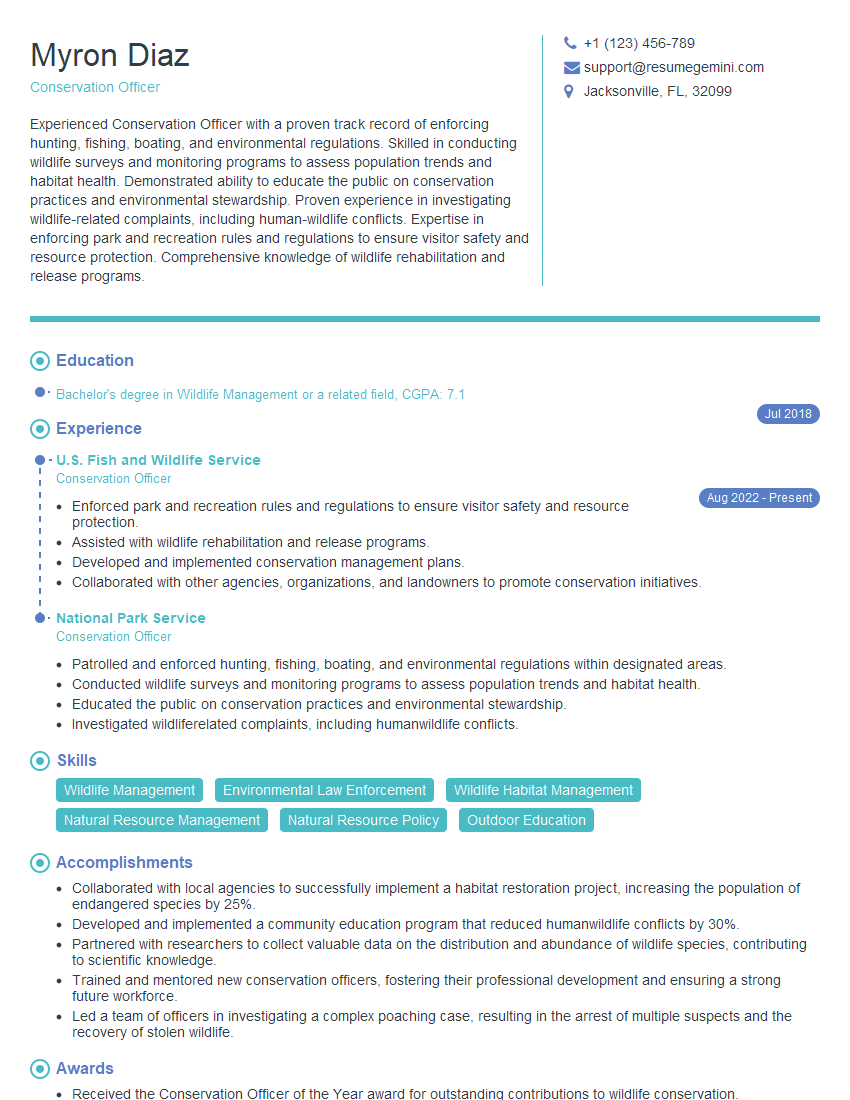
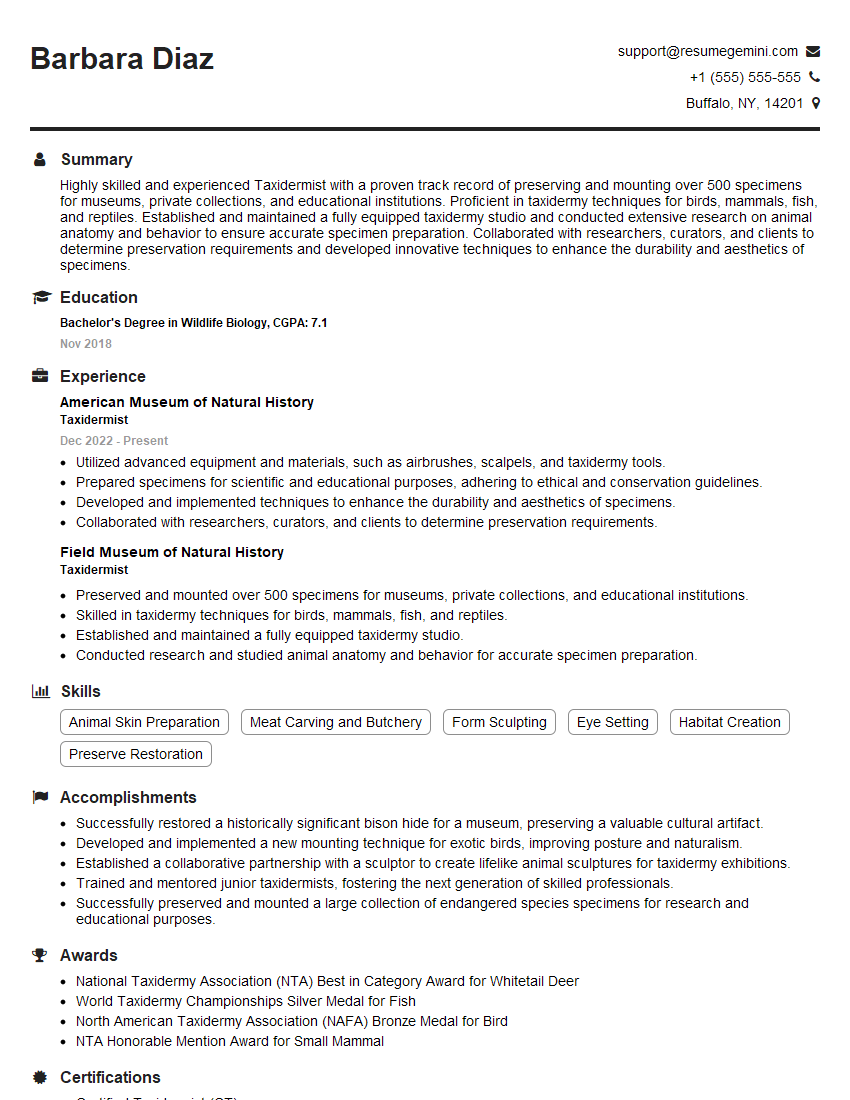
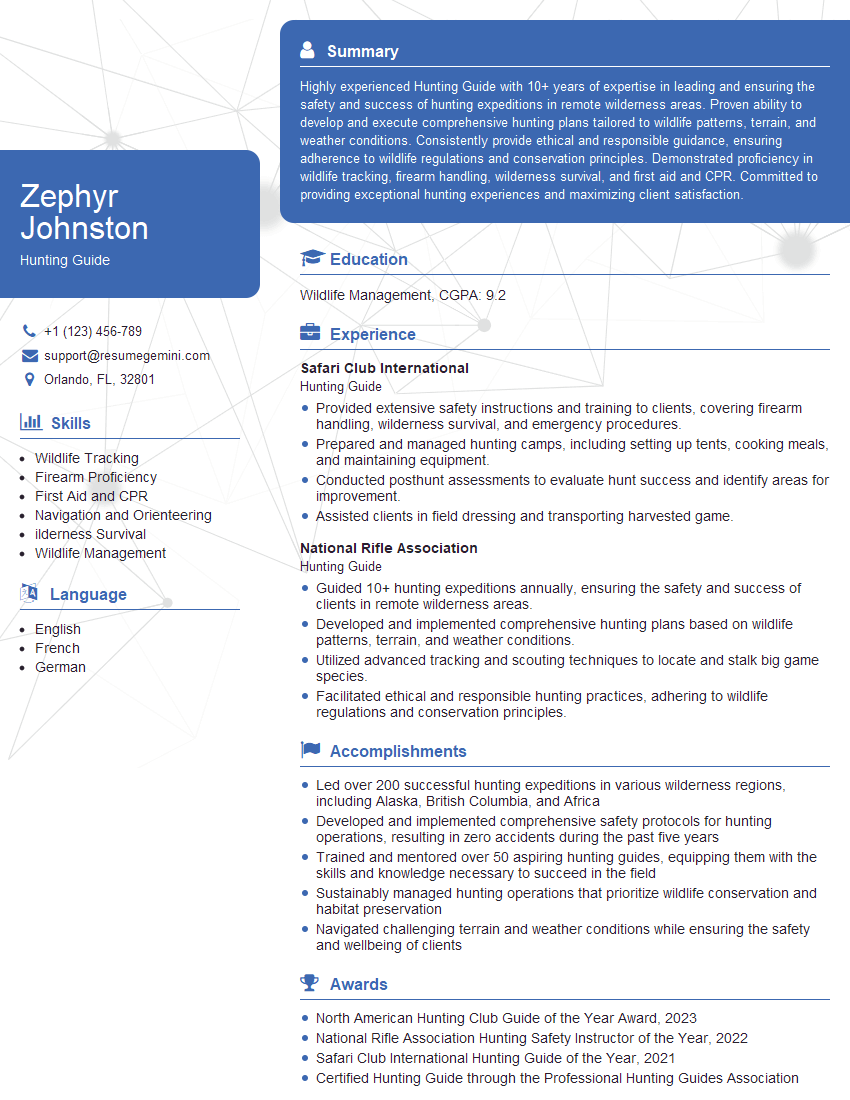
Mastering hunting and trapping techniques and related knowledge is crucial for career advancement in this field. It opens doors to diverse roles with increased responsibility and higher earning potential. To maximize your job prospects, crafting an ATS-friendly resume is essential. ResumeGemini is a trusted resource that can help you build a professional and effective resume to highlight your skills and experience. Examples of resumes tailored to the hunting and trapping industry are provided to guide you in building your own compelling application.



Explore more articles
Users Rating of Our Blogs
Share Your Experience
We value your feedback! Please rate our content and share your thoughts (optional).
What Readers Say About Our Blog
I Redesigned Spongebob Squarepants and his main characters of my artwork.
https://www.deviantart.com/reimaginesponge/art/Redesigned-Spongebob-characters-1223583608
IT gave me an insight and words to use and be able to think of examples
Hi, I’m Jay, we have a few potential clients that are interested in your services, thought you might be a good fit. I’d love to talk about the details, when do you have time to talk?
Best,
Jay
Founder | CEO