The right preparation can turn an interview into an opportunity to showcase your expertise. This guide to IFMA Certification interview questions is your ultimate resource, providing key insights and tips to help you ace your responses and stand out as a top candidate.
Questions Asked in IFMA Certification Interview
Q 1. Explain the core principles of IFMA’s Code of Ethics.
IFMA’s Code of Ethics serves as a guiding principle for facility management professionals, emphasizing ethical conduct and responsible decision-making. It centers around several core tenets. These include upholding the highest standards of integrity and professionalism; prioritizing the safety and well-being of building occupants; adhering to all applicable laws, regulations, and industry standards; maintaining client confidentiality; and fostering a collaborative and respectful work environment. Think of it as a moral compass for our profession. For example, a commitment to safety would dictate prioritizing repairs to a faulty fire alarm system over less urgent maintenance tasks, even if it impacts the budget temporarily. Similarly, maintaining client confidentiality would involve protecting sensitive information like building security plans or tenant financial data.
- Integrity: Maintaining honesty and transparency in all professional dealings.
- Safety: Prioritizing the health and safety of building occupants and staff.
- Competence: Providing services within the scope of your expertise and continuing professional development.
- Confidentiality: Protecting sensitive information related to clients and projects.
- Professionalism: Upholding a high standard of conduct in all interactions.
Q 2. Describe your experience with IFMA’s Facility Management Body of Knowledge (FMBoK).
The IFMA Facility Management Body of Knowledge (FMBoK) is my professional bible. It provides a comprehensive framework for understanding and applying the principles and practices of facility management. My experience with it is extensive; I regularly utilize it for project planning, strategic decision-making, and professional development. I’ve found its structured approach to facility management invaluable, helping me to standardize processes, improve efficiency, and communicate effectively with diverse stakeholders. For instance, when developing a new space plan for a client, the FMBoK guided my approach, ensuring we considered everything from initial design and construction through operational needs and eventual decommissioning – a truly holistic perspective. The FMBoK’s guidance on sustainability practices has also been instrumental in integrating environmentally friendly measures into projects, leading to cost savings and a positive environmental impact.
Q 3. How would you apply the IFMA’s strategic planning process to a real-world scenario?
Let’s consider a real-world scenario: a large corporation wants to consolidate multiple office locations into a single, more efficient headquarters. IFMA’s strategic planning process would be crucial here. First, we’d conduct a thorough needs assessment, identifying the corporation’s space requirements, technological infrastructure needs, and future growth projections. Next, we’d define clear goals and objectives, such as cost reduction, improved employee collaboration, and enhanced sustainability. We’d develop several potential solutions, evaluating each based on factors like cost, feasibility, and alignment with the corporation’s overall strategy. Once the optimal solution is chosen, detailed plans are developed, including timelines, budgets, and resource allocation. Throughout the project, we would regularly monitor progress, measure performance against key performance indicators (KPIs), and make necessary adjustments along the way. This rigorous process ensures that the new headquarters aligns perfectly with the company’s business goals while minimizing risks and maximizing efficiency.
Q 4. What are the key performance indicators (KPIs) you would use to measure the success of a facilities management program?
Measuring the success of a facilities management program requires a balanced scorecard approach, using both quantitative and qualitative KPIs. Some key quantitative KPIs might include:
- Cost per square foot: Tracks operational expenses relative to usable space.
- Space utilization rate: Measures how efficiently space is used.
- Maintenance backlog reduction: Shows progress in addressing deferred maintenance.
- Employee satisfaction scores (related to workplace): Gauges the impact of facilities on employee well-being.
- Sustainability metrics (energy consumption, waste reduction): Demonstrates environmental responsibility.
- Work order completion time: Measures responsiveness to maintenance requests.
Qualitative KPIs could include:
- Improved employee productivity and morale (attributable to facilities): This is assessed through surveys and observations.
- Enhanced building security: Measured by incident reports and security audits.
- Increased stakeholder satisfaction (tenants, employees): This could be assessed by conducting surveys or focus groups.
The specific KPIs used will depend on the organization’s unique goals and priorities. For example, a company focused on sustainability might prioritize energy consumption and waste reduction metrics above others.
Q 5. Describe your experience with budgeting and financial management in facilities management.
Budgeting and financial management are critical components of successful facilities management. My experience includes developing and managing multi-million dollar budgets, forecasting future expenses, and tracking actual spending against budget. I’m proficient in various budgeting techniques, including zero-based budgeting, incremental budgeting, and value engineering. I’ve used lifecycle costing to analyze the long-term cost implications of various maintenance strategies and capital improvement projects, ensuring that decisions are made with a holistic understanding of financial implications. For example, when considering replacing a heating system, I’d weigh the upfront costs of different systems against their projected operational costs and lifespan, ultimately selecting the option that minimizes the total cost of ownership over time. Accurate forecasting and regular budget monitoring allows me to identify potential cost overruns early on, enabling proactive adjustments to keep projects on track.
Q 6. How do you handle conflict resolution within a facilities management team?
Conflict resolution within a facilities management team requires a proactive and collaborative approach. My strategy focuses on open communication, active listening, and a focus on finding mutually acceptable solutions. I encourage team members to openly express their concerns and perspectives in a respectful manner. If a conflict arises, I strive to understand the root causes, focusing on the issue at hand rather than personality clashes. I often facilitate collaborative problem-solving sessions, using techniques like brainstorming or mediation, to reach a consensus. If the conflict is serious or involves multiple parties, I may involve HR for mediation or formal conflict resolution processes. The goal is always to preserve working relationships while resolving the issue fairly and efficiently. It’s vital to document the conflict resolution process to prevent recurrence.
Q 7. Explain your understanding of lifecycle costing in facilities management.
Lifecycle costing (LCC) is a crucial financial management tool in facilities management. It involves evaluating the total cost of ownership of a building or asset over its entire lifespan, from design and construction to operation, maintenance, and eventual disposal. This holistic approach considers all relevant expenses, including initial capital costs, ongoing maintenance, repairs, energy consumption, and eventual replacement or decommissioning costs. By comparing the LCC of different options, informed decisions can be made, ensuring that the most cost-effective choice is selected, even if it involves a higher initial investment. For instance, choosing a more energy-efficient HVAC system might have a higher upfront cost, but its lower operating expenses and longer lifespan can lead to significant long-term cost savings. Ignoring LCC can lead to short-sighted decisions, resulting in higher long-term expenses and potentially compromising the sustainability of the facility.
Q 8. Describe your experience with space planning and optimization.
Space planning and optimization is all about maximizing the efficiency and effectiveness of a building’s layout. It’s like designing a well-organized home, but on a much larger scale. My approach involves a thorough understanding of the organization’s needs, workflow analysis, and utilization of space planning software. I begin by conducting a comprehensive space audit, documenting current space usage, identifying underutilized areas, and assessing future growth projections. Then, using data-driven insights, I create optimized layouts that improve workflow, enhance collaboration, and reduce operational costs.
For example, in a previous role, we were able to increase the usable office space by 15% by simply reconfiguring the layout and implementing a more efficient hoteling system. This involved analyzing employee movement patterns to optimize team placements and designing flexible workspaces to accommodate both individual and collaborative work styles.
Another example involved working with a healthcare facility to optimize their emergency department. By analyzing patient flow and staff movement, we redesigned the waiting area, treatment rooms, and staff support areas to reduce bottlenecks and improve patient care. This led to a significant reduction in patient wait times and increased overall efficiency.
Q 9. How do you ensure compliance with relevant building codes and regulations?
Ensuring compliance with building codes and regulations is paramount in facilities management. It’s about safeguarding the building’s occupants and avoiding costly penalties. My strategy is proactive rather than reactive. I start by thoroughly understanding the specific codes applicable to the building’s location, type, and usage (such as IBC, NFPA, ADA, local fire codes, etc.).
I work closely with architects, engineers, and relevant authorities to ensure all plans and modifications adhere to these standards. Regular inspections are conducted, and any discrepancies are documented and rectified promptly. Maintenance records are meticulously kept to demonstrate compliance during audits. Furthermore, I maintain a comprehensive library of current codes and regulations, and I participate in continuous professional development to stay updated on any changes.
For instance, when we updated an older building’s fire suppression system, I ensured that the new system fully complied with NFPA standards, meticulously documenting each step of the process and obtaining all necessary permits. This prevented any potential safety hazards and demonstrated our commitment to compliance.
Q 10. Explain your approach to risk management in facilities management.
Risk management in facilities management is about identifying, assessing, and mitigating potential threats that could disrupt operations or compromise safety. My approach uses a structured framework such as ISO 31000, encompassing risk identification, analysis, evaluation, treatment, and monitoring.
I start by creating a comprehensive risk register, identifying potential risks through brainstorming sessions, facility walkthroughs, historical data analysis, and industry best practice reviews. This covers risks like equipment failure, natural disasters, security breaches, and health and safety incidents. Each risk is then assessed based on its likelihood and potential impact. Based on this assessment, we implement mitigation strategies, which may include preventative maintenance, insurance, emergency response plans, and employee training.
For example, we identified a high risk of water damage due to aging pipes in a particular building. To mitigate this risk, we implemented a preventative maintenance program focusing on regular pipe inspections and proactive repairs, thus reducing the probability of a costly and disruptive incident. This demonstrates a proactive approach to risk management.
Q 11. How would you develop and implement a preventative maintenance program?
Developing and implementing a preventative maintenance program is crucial for maximizing asset lifespan and minimizing downtime. It’s like regular checkups for your building and its equipment, preventing small problems from becoming costly catastrophes. I begin by creating a detailed inventory of all building systems and equipment, recording their specifications, age, and maintenance history.
Next, I establish a schedule of preventative maintenance tasks based on manufacturer recommendations, industry best practices, and historical data. This often involves using Computerized Maintenance Management Systems (CMMS) to schedule, track, and analyze maintenance activities. The program includes regular inspections, cleaning, lubrication, and minor repairs to prevent major failures. This requires detailed documentation and reporting, showing compliance, and highlighting areas for improvement.
For example, in a previous role, we implemented a CMMS that automated the scheduling and tracking of preventative maintenance tasks for HVAC systems. This resulted in a 20% reduction in equipment failures and a 15% decrease in maintenance costs. The system also allowed us to generate comprehensive reports that demonstrated the effectiveness of our preventative maintenance program to stakeholders.
Q 12. Describe your experience with sustainability initiatives in facilities management.
Sustainability initiatives are essential for environmentally responsible and cost-effective facilities management. It’s about reducing the building’s environmental footprint while improving its efficiency. My approach encompasses various strategies, including energy efficiency upgrades (LED lighting, smart thermostats), water conservation (low-flow fixtures, rainwater harvesting), waste reduction and recycling programs, and the use of sustainable building materials.
I often start by conducting an energy audit to identify areas for improvement. This data is used to develop a comprehensive sustainability plan that outlines specific targets and action plans, including implementation timelines and budget allocations. Data tracking and reporting are crucial to monitor progress and demonstrate the impact of the initiatives. Engaging building occupants through awareness campaigns is another key component.
For example, in one project, we implemented a comprehensive recycling program that reduced landfill waste by 40%. We also installed energy-efficient lighting throughout the building, resulting in a 25% reduction in energy consumption. These initiatives not only reduced the environmental impact but also translated into significant cost savings for the organization. We also obtained LEED certification, demonstrating a commitment to sustainability.
Q 13. How do you manage emergency response and business continuity planning?
Emergency response and business continuity planning are crucial for minimizing disruptions and ensuring the safety of occupants during unforeseen events. My approach involves creating detailed emergency response plans and business continuity plans that address various scenarios, including fires, natural disasters, and security threats.
These plans include clearly defined procedures, roles, responsibilities, communication protocols, and evacuation strategies. Regular drills and training exercises are essential to ensure that everyone understands their roles and the plan’s effectiveness. I collaborate with various stakeholders, including building occupants, security personnel, and emergency services, to develop comprehensive plans and ensure seamless coordination during emergencies. Post-incident reviews are conducted to identify areas for improvement and enhance the effectiveness of the plans.
For example, the emergency response plan we developed for a large office building included detailed evacuation routes, assembly points, and communication protocols. Regular fire drills helped ensure that employees were well-versed in the plan. Furthermore, the business continuity plan outlined procedures to maintain critical operations during an extended power outage, ensuring minimal disruption to business activities.
Q 14. Describe your experience with contract negotiation and vendor management.
Contract negotiation and vendor management are crucial for ensuring that facilities management services are delivered efficiently and cost-effectively. My approach involves developing detailed service level agreements (SLAs) that clearly define scope of work, performance metrics, and payment terms.
Before selecting a vendor, I conduct thorough due diligence, evaluating their experience, qualifications, and financial stability. I use a competitive bidding process to ensure that we are getting the best value for our money. Once a contract is awarded, I regularly monitor the vendor’s performance, using the established SLAs as a benchmark. Effective communication and regular meetings are crucial for maintaining a positive working relationship and addressing any potential issues promptly.
For example, when negotiating a contract for HVAC maintenance, I ensured that the SLA included specific performance metrics, such as response times for service calls and equipment uptime. This provided a clear framework for evaluating the vendor’s performance and holding them accountable. Regular monitoring of their performance, combined with open communication, helped us maintain a successful working relationship and ensure that we received high-quality service.
Q 15. Explain your understanding of building automation systems (BAS).
Building Automation Systems (BAS) are sophisticated computerized systems that control and monitor various building functions, enhancing efficiency, comfort, and security. Think of it as a central nervous system for a building. These systems integrate various components like HVAC (Heating, Ventilation, and Air Conditioning), lighting, security, and fire protection into a single, unified platform. This integration allows for centralized monitoring and control, optimizing energy consumption and improving occupant comfort.
For example, a BAS can automatically adjust HVAC settings based on occupancy sensors, reducing energy waste when a space is unoccupied. It can also monitor equipment performance, predicting potential failures and allowing for proactive maintenance. Many modern BAS platforms utilize cloud-based technologies for remote access, allowing for real-time monitoring and control from anywhere with an internet connection. A good understanding of BAS is crucial for facility managers, especially with the growing emphasis on sustainability and operational efficiency. Different BAS platforms and protocols exist (like BACnet, LonWorks), but the core functionality remains similar – to automate and optimize building operations.
Career Expert Tips:
- Ace those interviews! Prepare effectively by reviewing the Top 50 Most Common Interview Questions on ResumeGemini.
- Navigate your job search with confidence! Explore a wide range of Career Tips on ResumeGemini. Learn about common challenges and recommendations to overcome them.
- Craft the perfect resume! Master the Art of Resume Writing with ResumeGemini’s guide. Showcase your unique qualifications and achievements effectively.
- Don’t miss out on holiday savings! Build your dream resume with ResumeGemini’s ATS optimized templates.
Q 16. How would you use technology to improve efficiency in facilities management?
Technology plays a pivotal role in improving efficiency in facilities management. I leverage several technologies to achieve this. For instance, Computerized Maintenance Management Systems (CMMS) streamline work order management, preventative maintenance scheduling, and asset tracking. These systems improve response times, reduce downtime, and extend the lifespan of assets. I also utilize Building Information Modeling (BIM) to improve facility planning, design, and construction, and enhance long-term operational efficiency. Sensor technology, like occupancy sensors and environmental sensors, combined with a BAS, can significantly reduce energy consumption by optimizing HVAC and lighting based on real-time data.
Furthermore, data analytics platforms help analyze energy consumption patterns, identifying areas for improvement and optimizing resource allocation. Mobile technologies, including facility management apps, empower technicians and staff with real-time access to information, enhancing communication and responsiveness. Imagine using a mobile app to receive alerts about equipment malfunctions and instantly dispatch a technician. This proactive approach reduces potential disruptions and ensures optimal facility operation.
Q 17. Describe your experience with data analysis in facilities management.
Data analysis is fundamental to effective facilities management. In my previous role, I used data analytics to identify trends in energy consumption across different buildings within a portfolio. By analyzing this data, we pinpointed specific areas with high energy usage and implemented targeted energy-saving measures. For example, we discovered that a specific building’s HVAC system was consuming significantly more energy than others. Through detailed analysis, we found faulty sensors causing inefficient operation. Replacing these sensors resulted in a 15% reduction in energy costs for that building.
I’ve also used data analysis to optimize preventative maintenance schedules. By analyzing historical maintenance data and equipment performance metrics, we were able to predict potential failures and schedule preventative maintenance proactively, minimizing downtime and extending the lifespan of our assets. This data-driven approach significantly reduced reactive maintenance costs. My expertise extends to using data visualization tools to present complex data in an easily understandable format for stakeholders, making it easier to make informed decisions.
Q 18. How do you ensure the safety and security of a facility?
Ensuring safety and security is paramount in facilities management. My approach involves a multi-layered strategy. First, I implement robust security systems, including access control systems, CCTV surveillance, and alarm systems. These are crucial to deter unauthorized access and monitor activities within the facility. Secondly, I enforce strict safety protocols and procedures, including regular safety inspections and training programs for staff and tenants. This ensures everyone understands and follows safety guidelines.
Regular maintenance and inspections of fire protection systems, including fire alarms, sprinklers, and emergency exits, are vital. This includes creating and regularly updating emergency evacuation plans and conducting drills. Moreover, I collaborate closely with local emergency services and security personnel to establish efficient response protocols in case of emergencies. I believe a proactive and comprehensive approach, combining technological solutions with robust procedures, is essential to creating a safe and secure environment.
Q 19. How do you handle tenant relations and communication?
Maintaining positive tenant relations is key to successful facilities management. I foster open and transparent communication through various channels. Regular newsletters, tenant meetings, and online portals keep tenants informed about important updates, planned maintenance activities, and facility improvements. I establish clear communication protocols for handling tenant requests and complaints, ensuring timely and efficient responses. Proactive communication reduces misunderstandings and fosters trust.
For example, I recently implemented a tenant feedback system using online surveys to gather input on facility services and identify areas for improvement. This data is invaluable for enhancing our services and meeting tenant needs. Addressing tenant concerns promptly and professionally is paramount; I always strive to find mutually acceptable solutions and maintain a positive relationship with each tenant. This approach cultivates a positive working environment and contributes to tenant retention.
Q 20. Describe your experience with project management methodologies in facilities.
My experience encompasses various project management methodologies in facilities, predominantly Agile and Lean methodologies. Agile allows for flexibility and adaptability to changing project requirements, which is crucial in facilities management where unexpected issues often arise. Lean principles help optimize processes, reduce waste, and enhance efficiency throughout the project lifecycle. I’ve successfully utilized these methodologies in numerous projects, including renovations, equipment upgrades, and new construction.
For instance, during a recent renovation project, we used Agile to break down the project into smaller, manageable sprints. This approach allowed for continuous feedback and adjustments, preventing major delays and ensuring the project stayed on track and within budget. We utilized Kanban boards to track progress and manage tasks effectively. Lean methodologies helped streamline processes, eliminate redundancies, and minimize disruptions to building occupants during the renovation. A successful project manager adapts methodology based on project specifics and always prioritizes stakeholder communication and collaboration.
Q 21. How do you manage change in a facilities management environment?
Managing change in facilities management requires a structured and communicative approach. I typically start by clearly defining the need for change and articulating its benefits to all stakeholders. This includes transparent communication about the reasons for change, its impact, and the timeline for implementation. I actively involve stakeholders in the change process to gain buy-in and address concerns proactively. This might involve conducting workshops, surveys, or one-on-one meetings.
Training and support are critical to ensure a smooth transition. This includes providing employees with the necessary training and resources to adapt to new processes or technologies. Throughout the change process, I actively monitor progress, addressing any challenges or resistance effectively. I use a change management framework, which includes defining clear goals, establishing a communication plan, providing ongoing support, and actively evaluating the outcomes of the implemented changes. This ensures a successful and less disruptive implementation process, leading to a more efficient and effective facilities management operation.
Q 22. Explain your understanding of integrated workplace management systems (IWMS).
An Integrated Workplace Management System (IWMS) is a software platform that integrates various facilities management functions into a single, unified system. Think of it as a central nervous system for your building or campus, connecting everything from space management and maintenance to energy consumption and real estate portfolio optimization. Instead of managing these aspects in separate, siloed systems, an IWMS provides a holistic view, improving efficiency and reducing redundancies.
For example, an IWMS can track work orders, manage maintenance schedules, optimize space utilization by visualizing occupancy data, and even integrate with building automation systems to monitor energy consumption in real-time. This integration allows for better decision-making, improved resource allocation, and enhanced overall operational efficiency. Imagine trying to manage a large office complex using spreadsheets and separate software for each task – an IWMS streamlines this process significantly.
- Space Management: Tracking room assignments, leases, and space utilization.
- Maintenance Management: Scheduling preventative maintenance, tracking work orders, and managing vendor contracts.
- Real Estate Portfolio Management: Optimizing the organization’s real estate holdings.
- Energy Management: Monitoring energy consumption and identifying opportunities for savings.
- Project Management: Tracking capital projects, renovations, and other construction initiatives.
Q 23. How do you ensure the efficient utilization of energy and resources?
Efficient energy and resource utilization is a cornerstone of sustainable facilities management. My approach is multifaceted and data-driven. It begins with a comprehensive energy audit to identify areas of waste and inefficiency. This often involves utilizing building automation systems (BAS) to gather real-time data on energy consumption, identifying peak usage times, and pinpointing equipment malfunctions.
Following the audit, we implement strategies such as installing energy-efficient lighting (LEDs), optimizing HVAC systems through smart controls (reducing energy consumption during off-peak hours or in unoccupied spaces), and implementing water conservation measures (low-flow fixtures, rainwater harvesting). Regular monitoring and reporting are crucial to track progress and make adjustments as needed. We also prioritize the use of sustainable materials and products, reducing our environmental footprint. For example, we might switch to green cleaning products or utilize recycled materials in renovations.
Finally, employee engagement is key. Educating occupants about energy conservation practices through awareness campaigns and incentives can significantly impact overall consumption. I’ve successfully implemented initiatives like ‘lights out’ campaigns and competitions to foster a culture of sustainability within the organization.
Q 24. Describe your approach to improving indoor environmental quality.
Improving indoor environmental quality (IEQ) directly impacts occupant health, productivity, and well-being. My approach focuses on several key areas:
- Air Quality: This involves implementing and maintaining proper ventilation systems, regularly changing air filters, and monitoring indoor air quality parameters (CO2, VOCs, particulate matter). We might also utilize air purifiers in high-traffic areas or those with specific needs.
- Thermal Comfort: Ensuring appropriate temperature and humidity levels through effective HVAC system management is crucial. We use data from building automation systems and occupant feedback to fine-tune settings for optimal comfort.
- Lighting: Utilizing natural light whenever possible and employing energy-efficient lighting systems with appropriate color temperature and intensity to minimize eye strain and improve mood.
- Acoustic Comfort: Minimizing noise pollution through proper design, soundproofing measures, and the use of noise-absorbing materials. This is particularly important in open-plan offices.
- Cleanliness and Hygiene: Implementing and maintaining a rigorous cleaning schedule using environmentally friendly products. Regular inspections ensure hygiene standards are met.
Regular monitoring, employee feedback, and proactive maintenance are vital components of this strategy. I believe in creating a collaborative environment where occupants feel comfortable providing feedback and contributing to the improvement of their work environment.
Q 25. How do you measure and report on the performance of your team?
Measuring and reporting on team performance requires a balanced scorecard approach, combining both quantitative and qualitative metrics. Quantitative metrics include things like the number of completed work orders, response times to maintenance requests, and the achievement of Key Performance Indicators (KPIs) related to energy consumption or cost savings. These are tracked using our IWMS and other relevant systems.
Qualitative metrics assess the team’s effectiveness in collaboration, problem-solving, and adherence to safety procedures. We use regular team meetings, peer reviews, and 360-degree feedback to gather this information. Regular performance reviews provide a structured forum for feedback, goal setting, and professional development. This allows me to identify strengths, weaknesses, and areas for improvement within the team, ensuring ongoing growth and high performance.
The data collected is then used to generate comprehensive reports which are shared with the team and senior management. These reports are not merely a performance evaluation, but also a valuable tool for identifying trends, areas for improvement, and celebrating team successes.
Q 26. What are your strengths and weaknesses in facilities management?
My strengths lie in my ability to analyze complex data, develop strategic solutions, and lead high-performing teams. I’m proficient in utilizing IWMS software and other technologies to optimize facility operations, and I possess a strong understanding of sustainability principles and their practical application in facilities management. I also excel at building strong relationships with stakeholders, fostering collaboration, and effectively communicating complex information.
One area where I am continually working to improve is my delegation skills. While I am comfortable taking on responsibility, I recognize the importance of empowering team members and trusting them to manage their tasks effectively. I’m actively seeking opportunities to delegate more effectively and further develop my leadership skills in this area.
Q 27. Where do you see yourself in five years in the facilities management field?
In five years, I envision myself in a senior leadership role within the facilities management field, potentially leading a larger team or managing a more complex portfolio of properties. I am keen to further develop my expertise in sustainable facilities management and contribute to the industry’s transition towards greener, more efficient practices. I also aim to mentor and train the next generation of facilities management professionals, sharing my knowledge and experience to contribute to the overall growth of the profession. This could involve obtaining additional certifications or pursuing advanced qualifications in sustainability or leadership.
Q 28. Why are you interested in this specific facilities management position?
I’m highly interested in this specific facilities management position because it offers a unique opportunity to leverage my skills and experience in a challenging and rewarding environment. The company’s commitment to sustainability aligns perfectly with my professional values, and the emphasis on innovation and technology excites me. The opportunity to work with a diverse team on a project of this scale is particularly appealing. I’m confident that my expertise in IWMS, energy management, and IEQ will allow me to make significant contributions to the team and help achieve the organization’s goals.
Key Topics to Learn for IFMA Certification Interview
Preparing for your IFMA certification interview requires a comprehensive understanding of key concepts and their practical applications. Focus on demonstrating not just knowledge, but also your ability to solve real-world facility management challenges.
- Facility Management Strategies: Understand various strategic approaches to facility management, including preventative maintenance, lifecycle costing, and sustainability initiatives. Be prepared to discuss how you would apply these strategies in different scenarios.
- Space Planning and Design: Discuss your experience with space planning principles, including workplace design, ergonomics, and the impact of space optimization on organizational efficiency. Consider how you’ve addressed space needs in diverse contexts.
- Operations and Maintenance: Demonstrate your understanding of key operational aspects, including building systems, maintenance procedures, and risk management. Be ready to discuss practical examples of preventative maintenance programs you’ve implemented or improved.
- Project Management in Facilities: Explain your experience managing facility projects, including budgeting, scheduling, and stakeholder communication. Showcase successful project completion and problem-solving skills within budget and time constraints.
- Technology and Data Analytics in FM: Discuss how technology like Computerized Maintenance Management Systems (CMMS) and Building Information Modeling (BIM) can improve efficiency and decision-making in facility management. Explain how you utilize data analytics to inform your strategies.
- Sustainability and Green Building Practices: Demonstrate your knowledge of sustainable building practices, LEED certification, and energy efficiency strategies. Highlight your experience in reducing environmental impact within facilities.
- Legal and Regulatory Compliance: Understand relevant building codes, safety regulations, and legal considerations impacting facility management. Show your awareness of risk mitigation strategies related to compliance.
Next Steps
Mastering IFMA certification significantly enhances your career prospects in the dynamic field of facility management, opening doors to leadership roles and higher earning potential. To maximize your job search success, it’s crucial to present your qualifications effectively. Creating an Applicant Tracking System (ATS)-friendly resume is paramount for getting your application noticed by recruiters.
We highly recommend using ResumeGemini to build a professional and impactful resume that showcases your skills and experience in the best possible light. ResumeGemini provides tools and resources to create a winning resume, including examples specifically tailored to IFMA certification holders. This will give you a significant advantage in the competitive job market. Take the next step toward your dream career today!
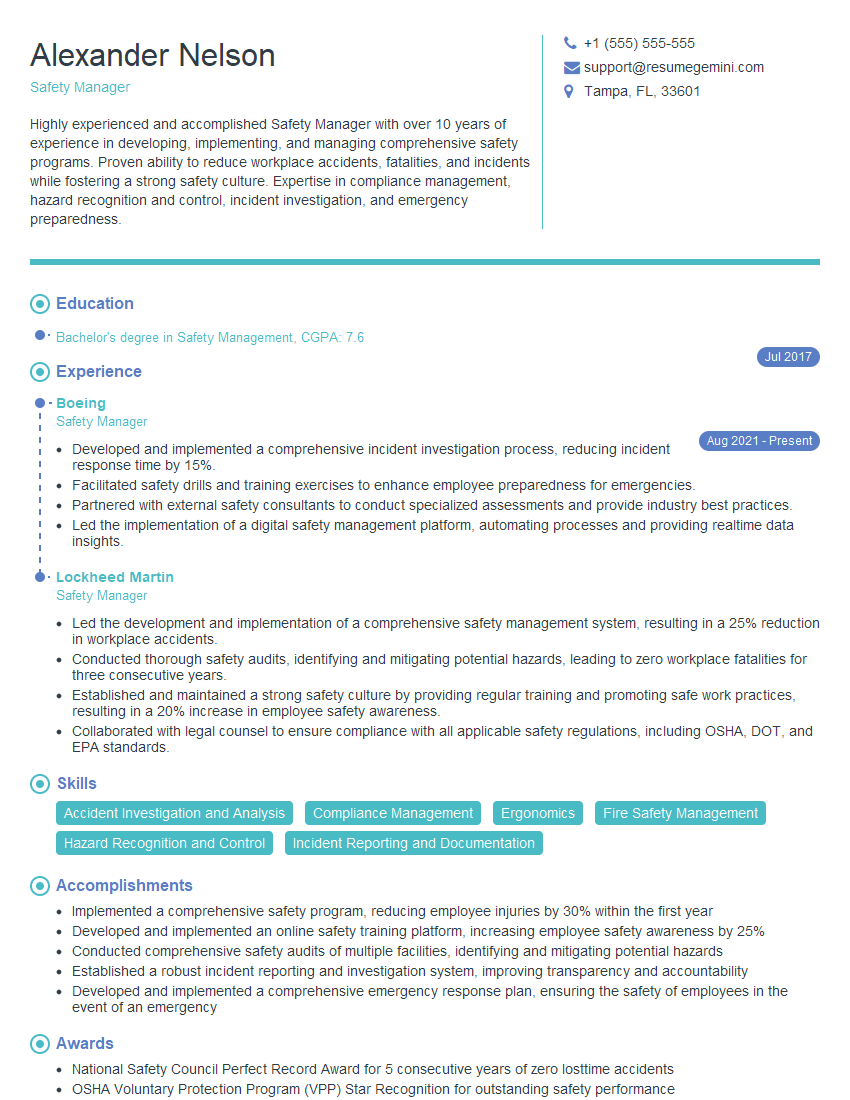
Safety Manager Resume Sample
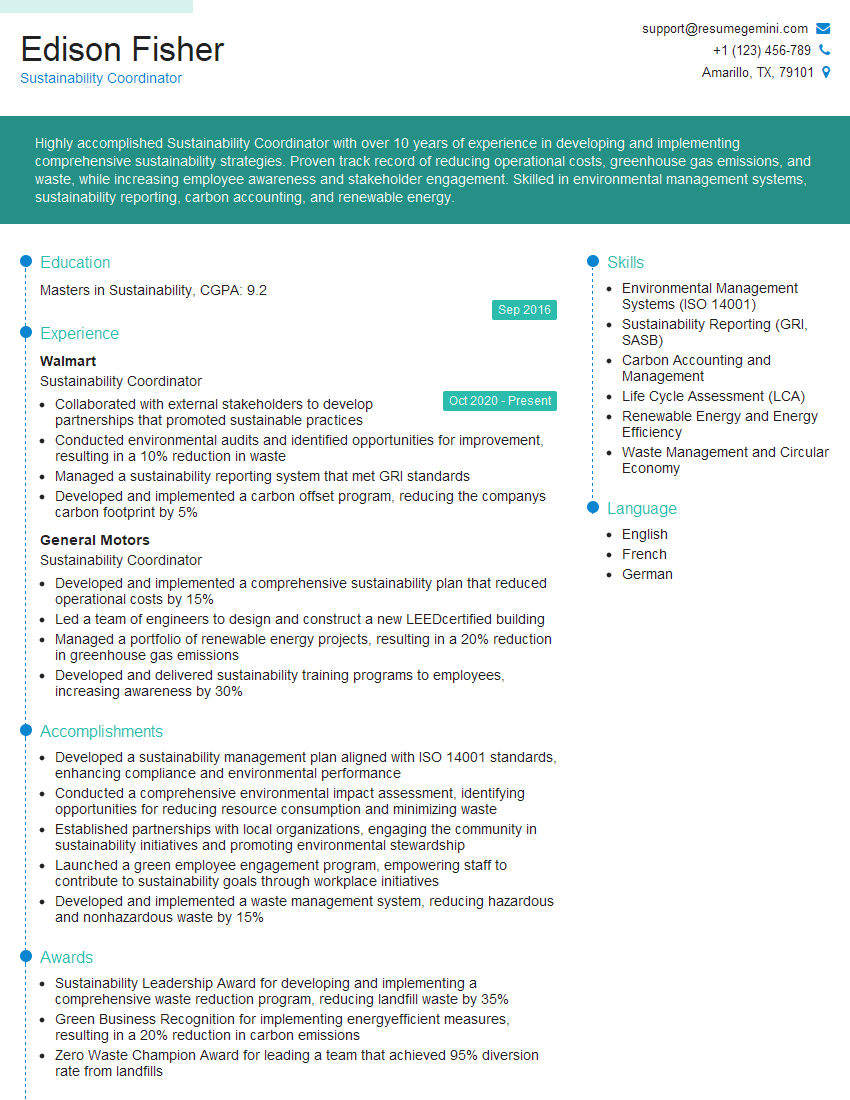
Sustainability Coordinator Resume Sample
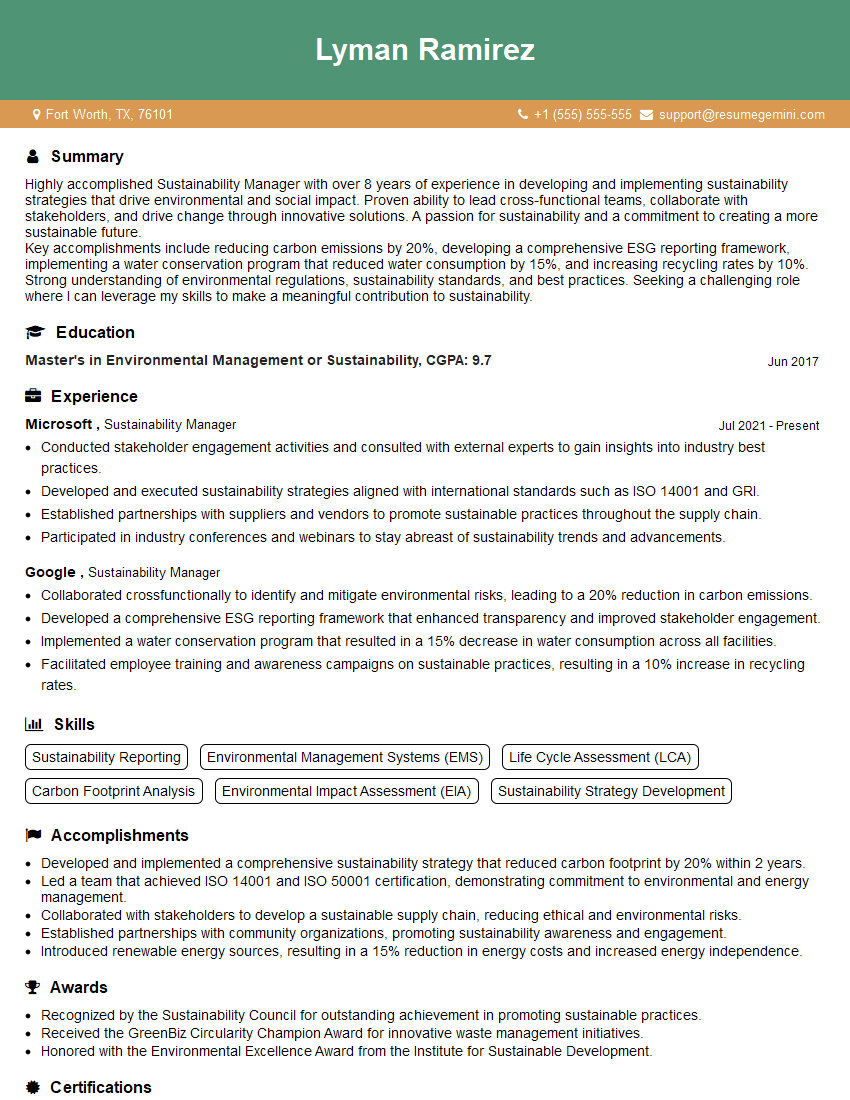
Sustainability Manager Resume Sample
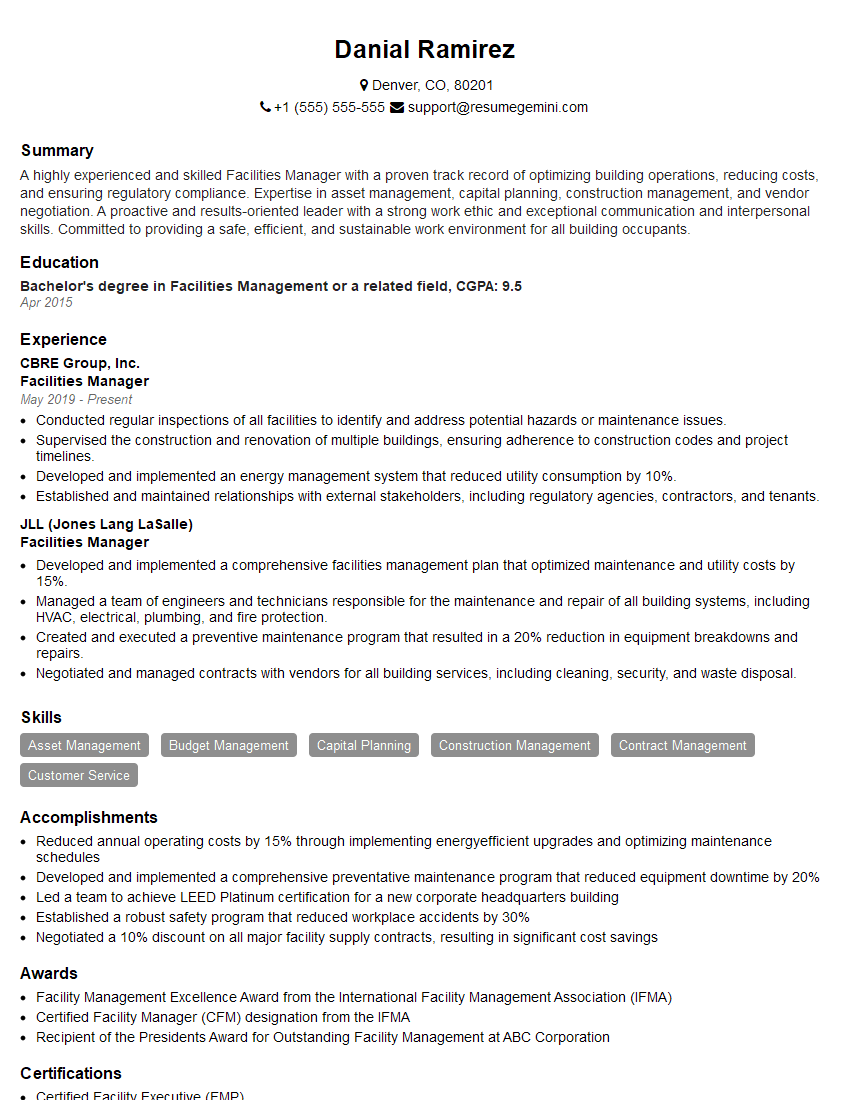
Facilities Manager Resume Sample

Operations Manager Resume Sample
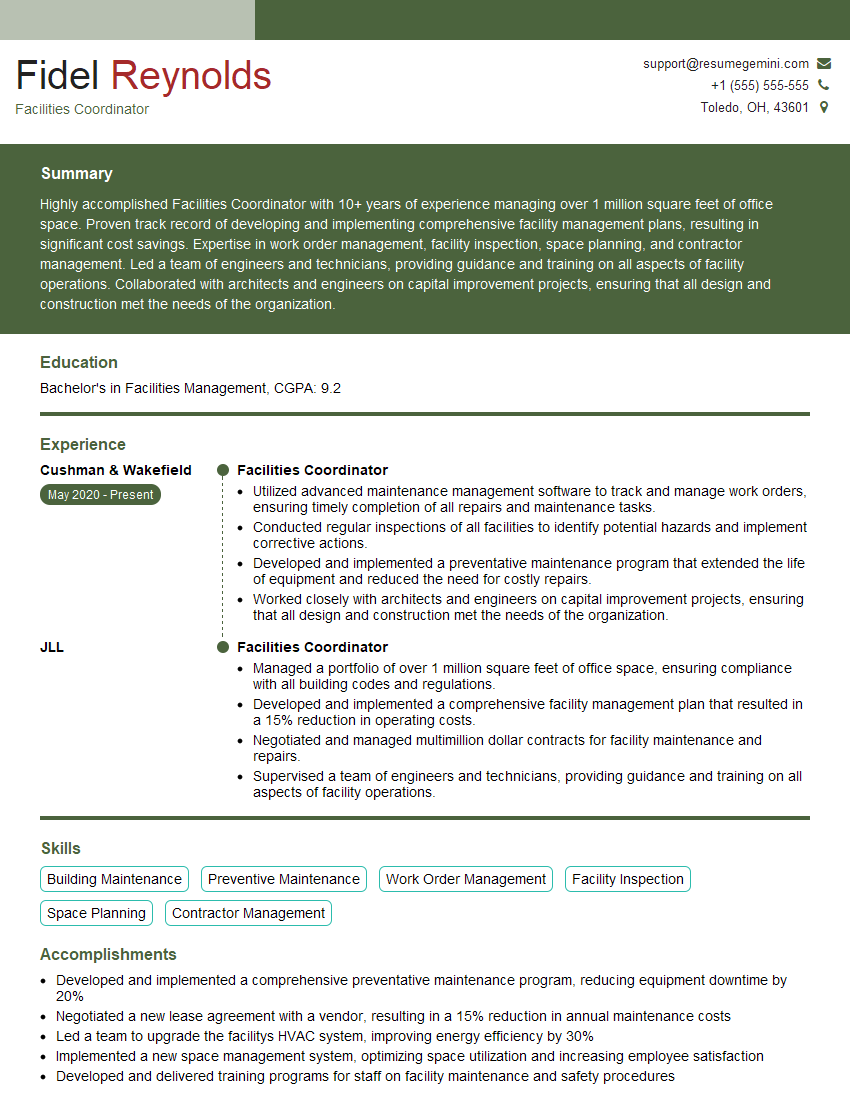
Facilities Coordinator Resume Sample
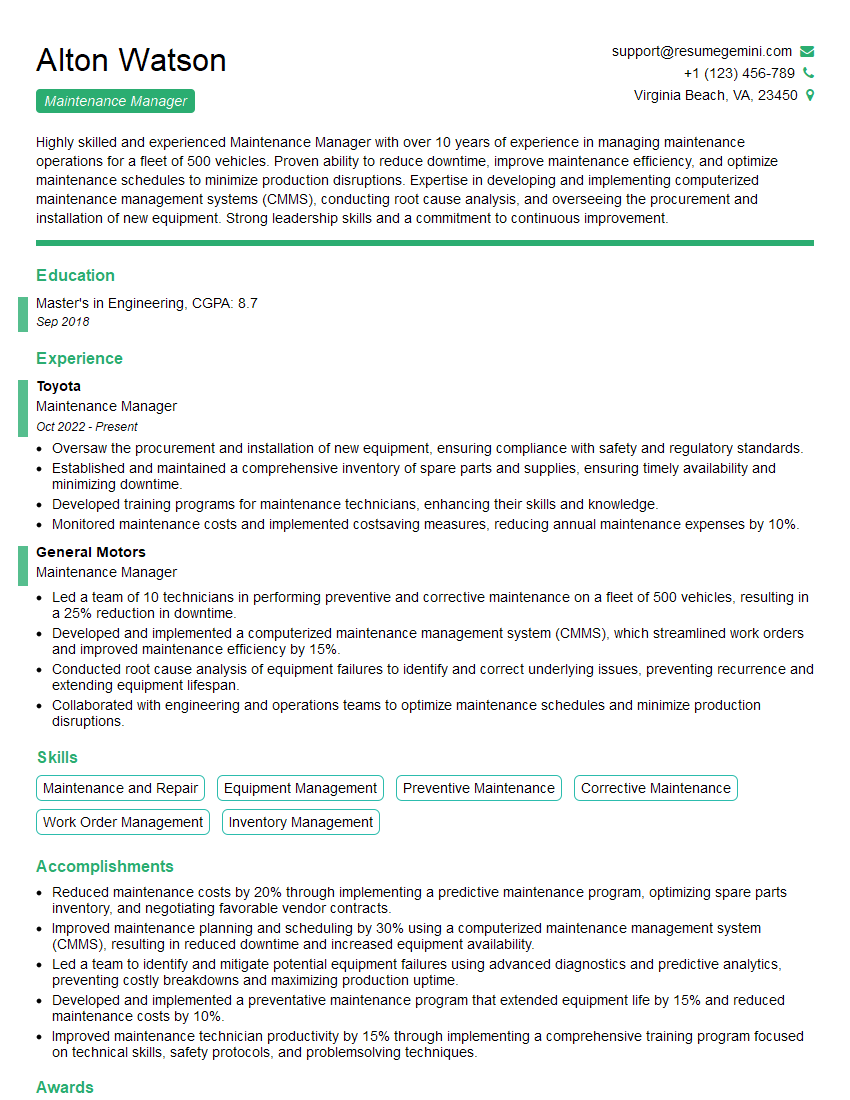
Maintenance Manager Resume Sample
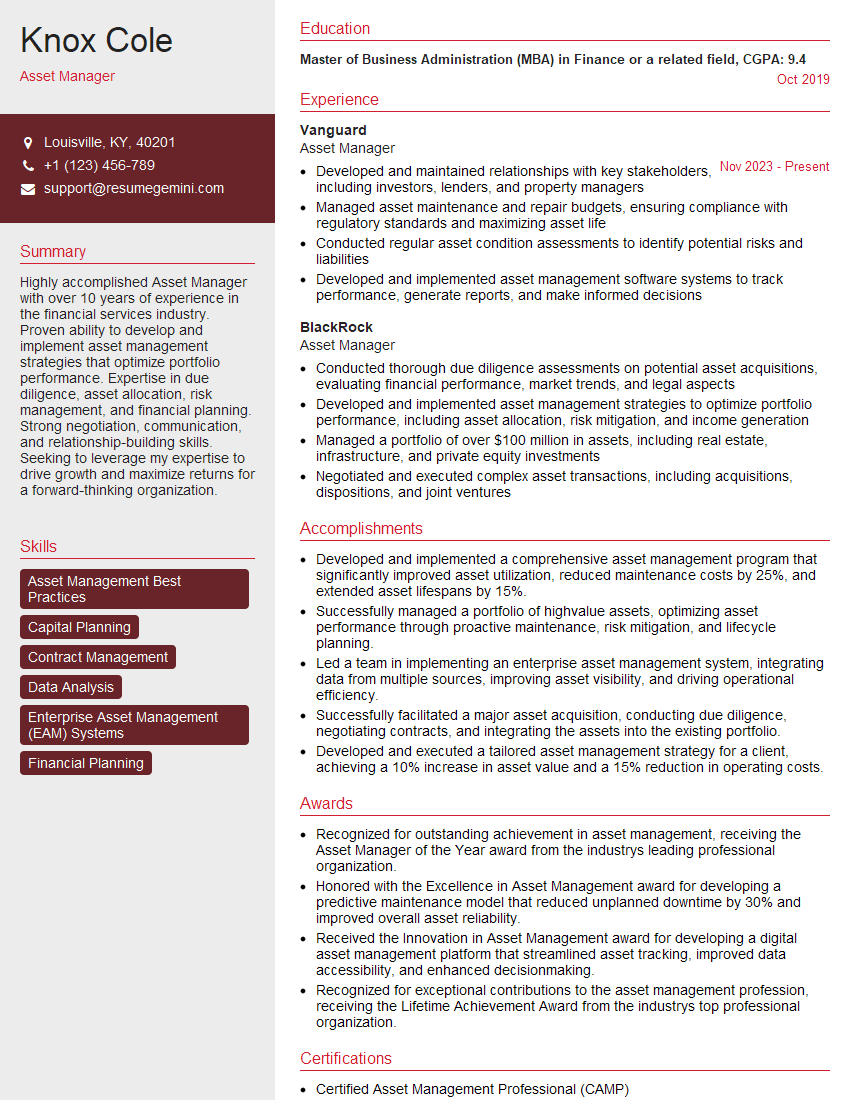
Asset Manager Resume Sample
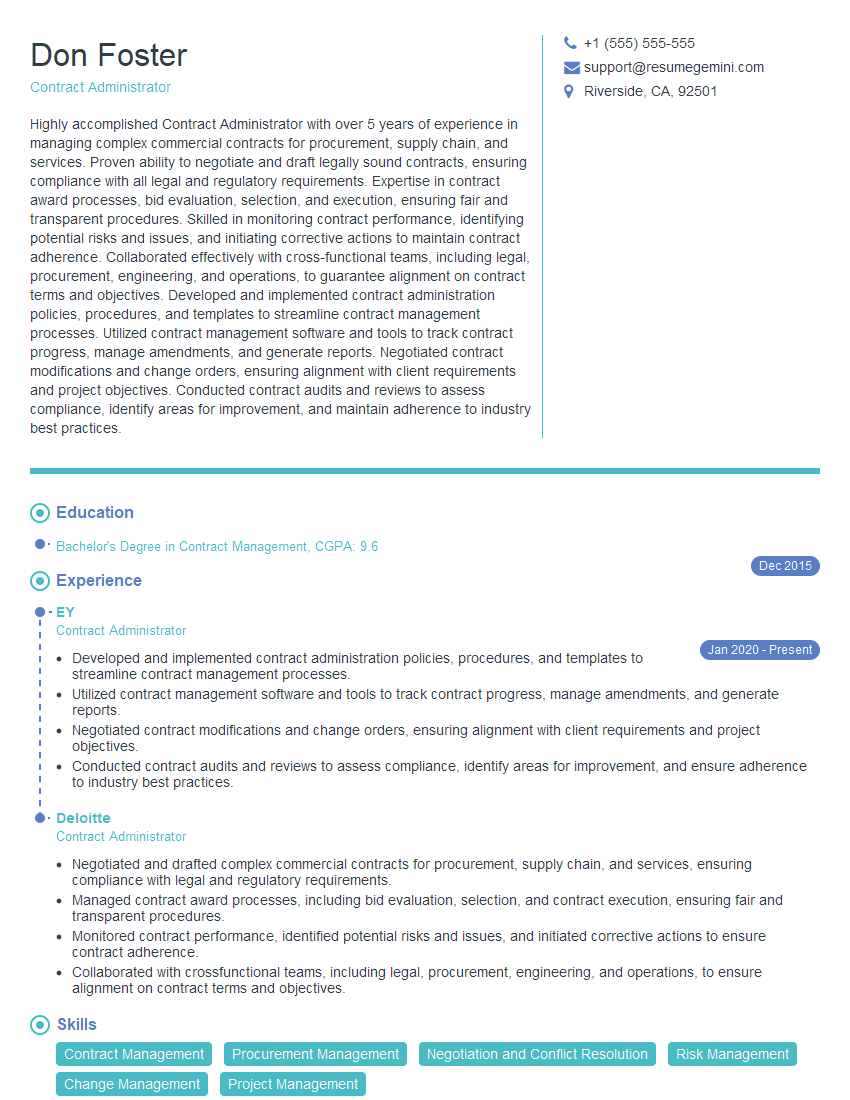
Contract Administrator Resume Sample
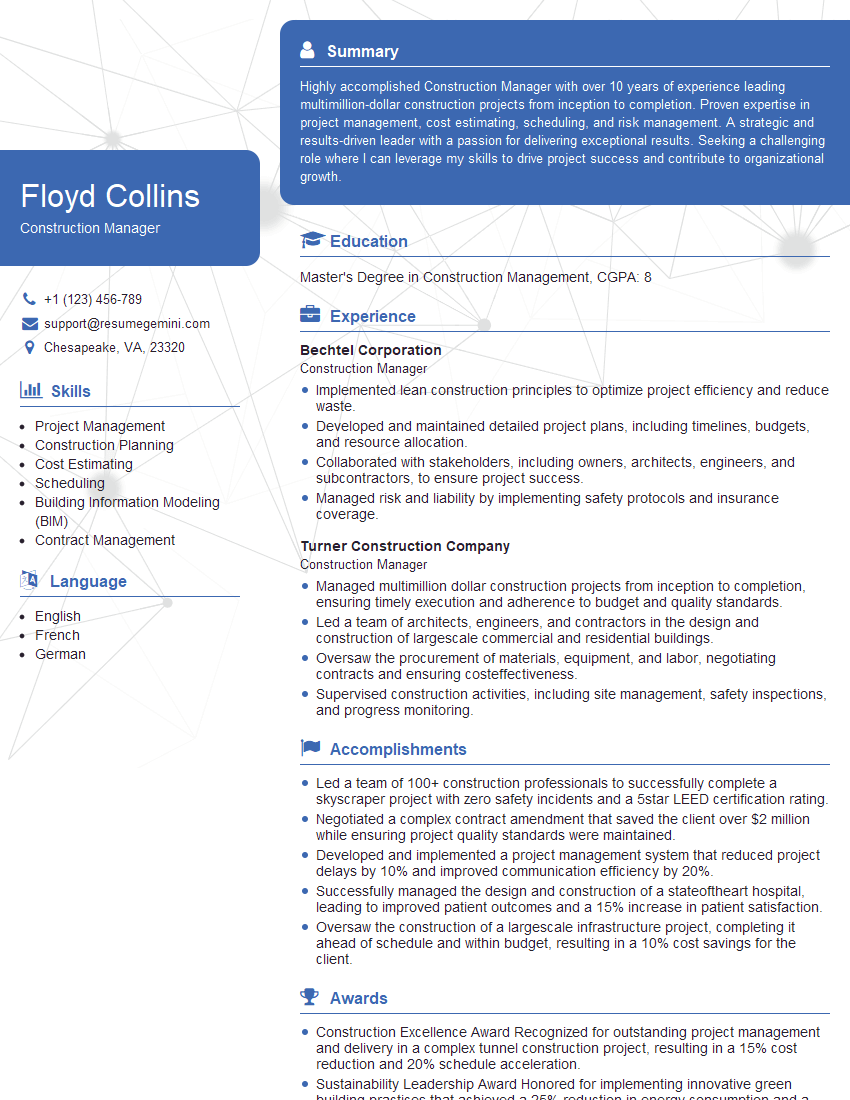
Construction Manager Resume Sample
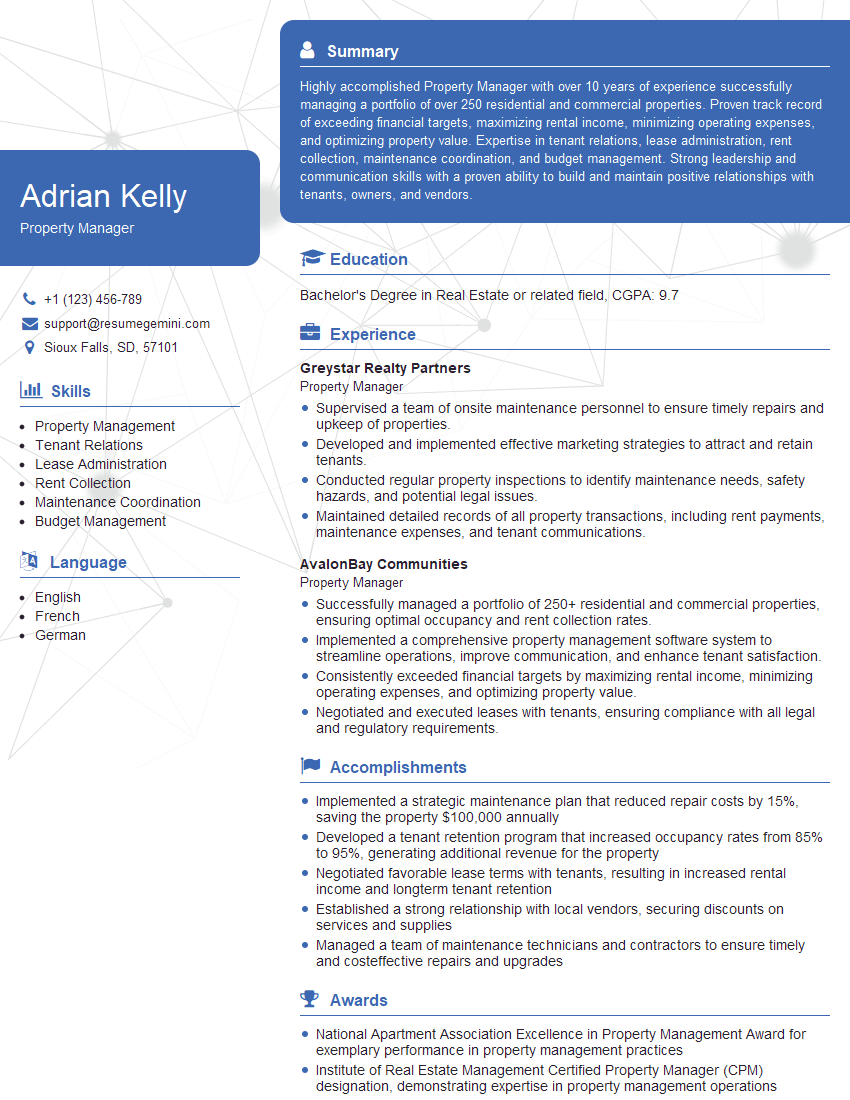
Property Manager Resume Sample
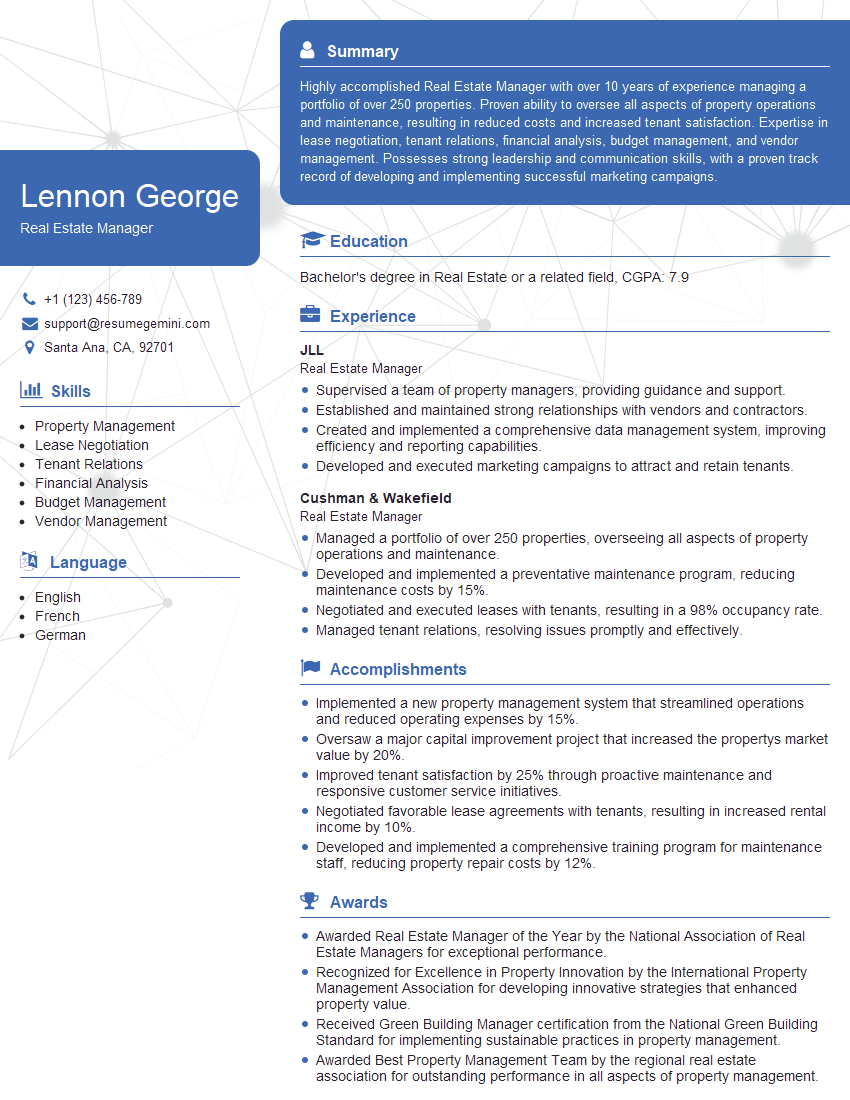
Real Estate Manager Resume Sample
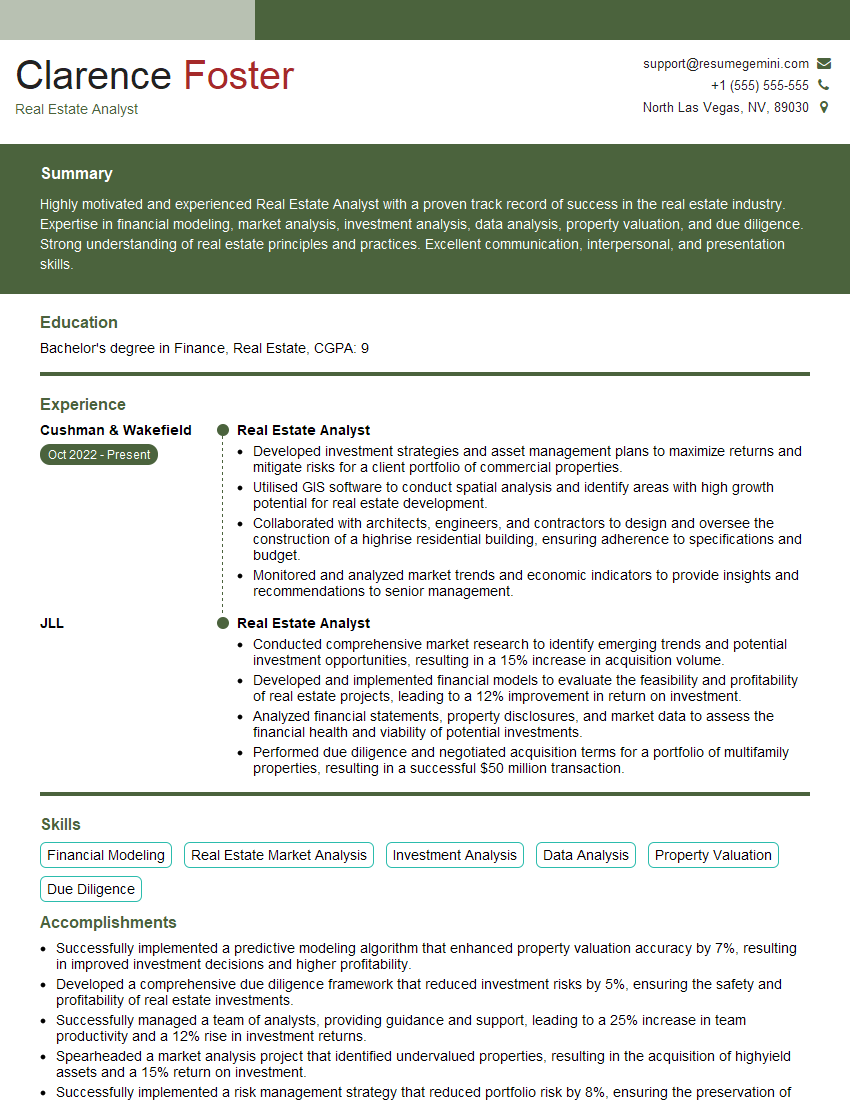
Real Estate Analyst Resume Sample
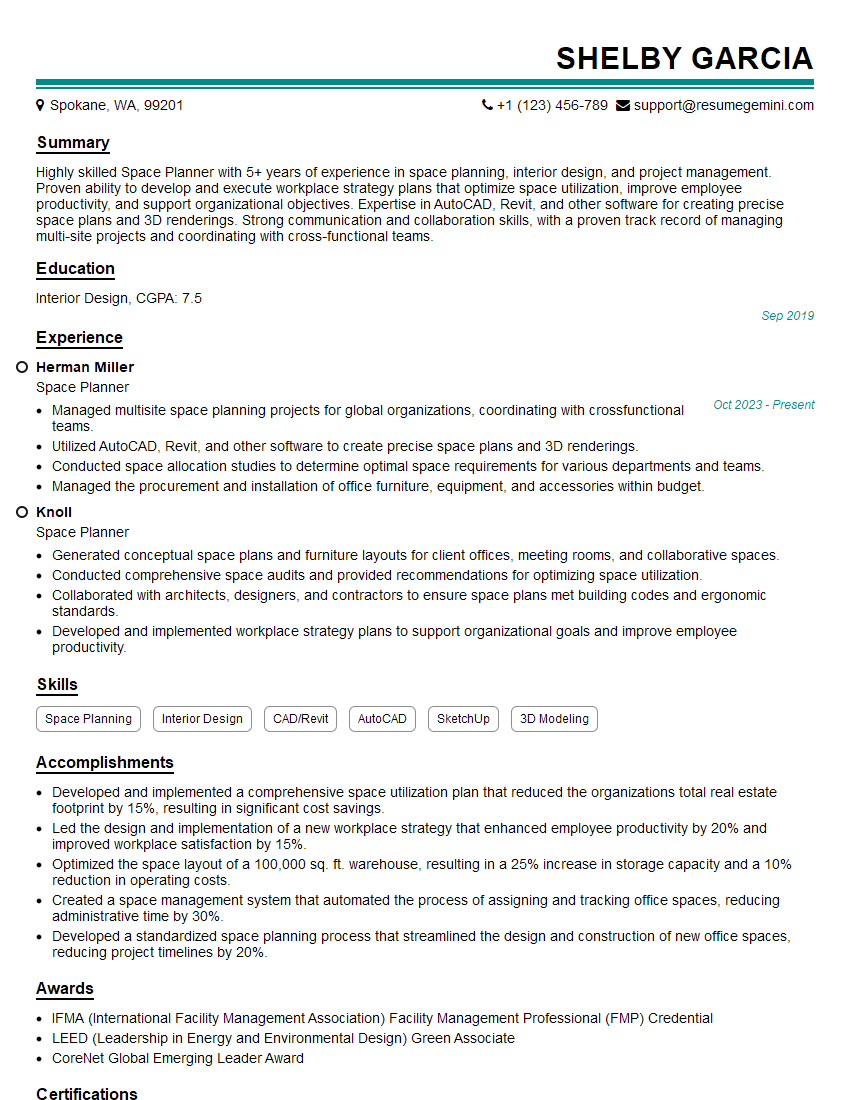
Space Planner Resume Sample
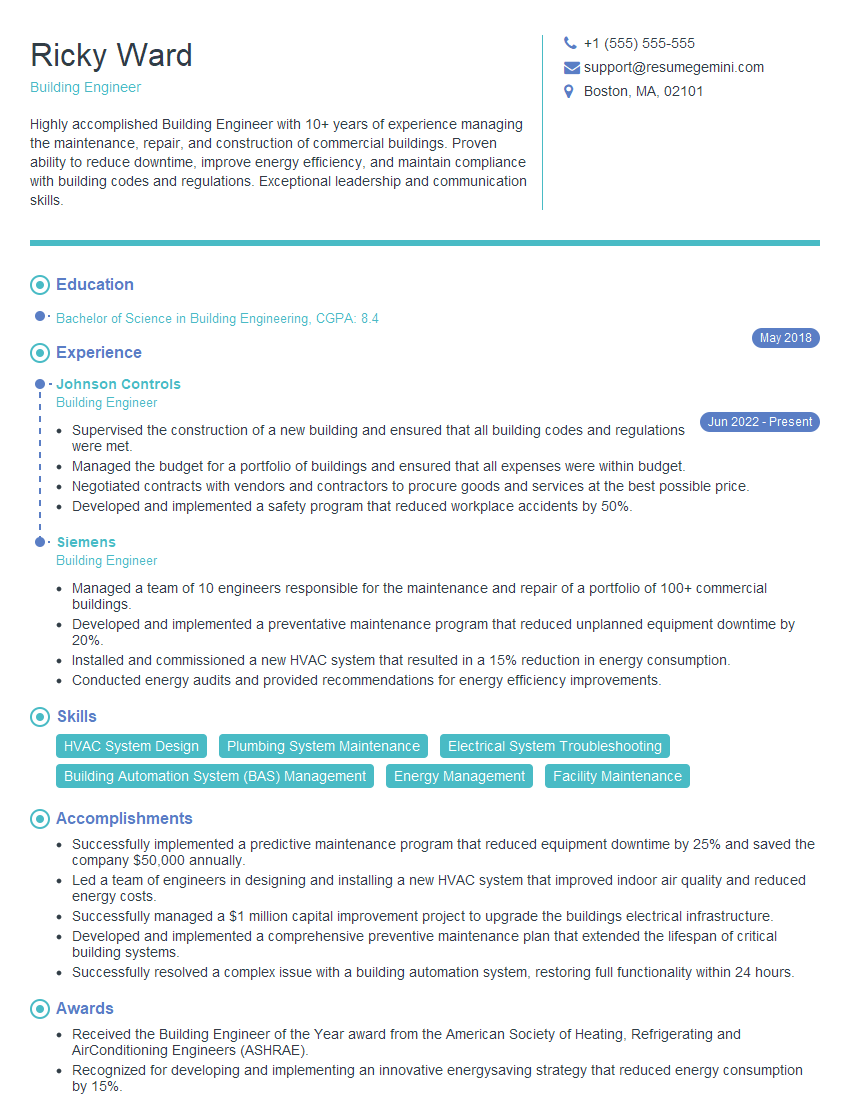
Building Engineer Resume Sample
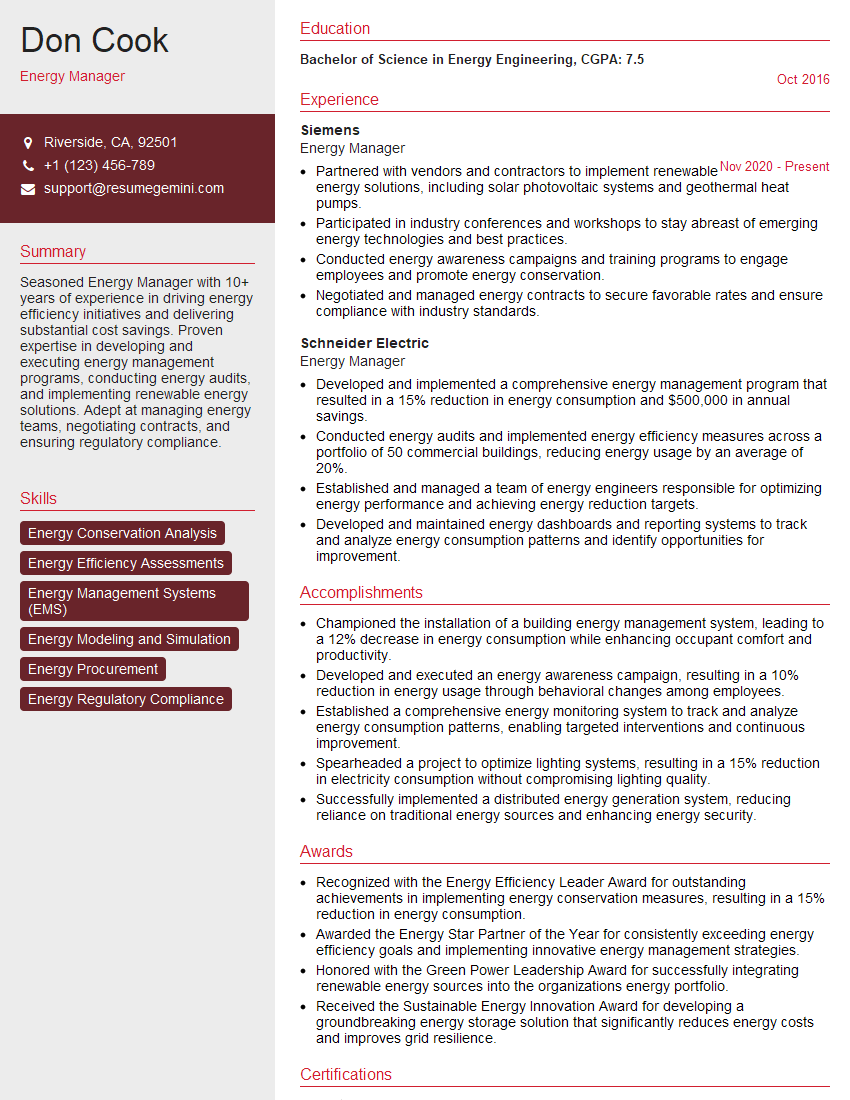
Energy Manager Resume Sample
- Safety Manager
- Sustainability Coordinator
- Sustainability Manager
- Facilities Manager
- Operations Manager
- Facilities Coordinator
- Maintenance Manager
- Asset Manager
- Contract Administrator
- Construction Manager
- Property Manager
- Real Estate Manager
- Real Estate Analyst
- Space Planner
- Building Engineer
- Energy Manager
Explore more articles
Users Rating of Our Blogs
Share Your Experience
We value your feedback! Please rate our content and share your thoughts (optional).
What Readers Say About Our Blog
I Redesigned Spongebob Squarepants and his main characters of my artwork.
https://www.deviantart.com/reimaginesponge/art/Redesigned-Spongebob-characters-1223583608
IT gave me an insight and words to use and be able to think of examples
Hi, I’m Jay, we have a few potential clients that are interested in your services, thought you might be a good fit. I’d love to talk about the details, when do you have time to talk?
Best,
Jay
Founder | CEO