Are you ready to stand out in your next interview? Understanding and preparing for Insurance Consulting interview questions is a game-changer. In this blog, we’ve compiled key questions and expert advice to help you showcase your skills with confidence and precision. Let’s get started on your journey to acing the interview.
Questions Asked in Insurance Consulting Interview
Q 1. Explain the difference between reinsurance and insurance.
Insurance and reinsurance are closely related but distinct concepts. Think of insurance as the primary protection offered to individuals or businesses against potential financial losses. Reinsurance, on the other hand, is insurance for insurance companies. It’s a way for insurers to manage their own risk by transferring a portion of their liabilities to another insurer, known as a reinsurer.
Example: Imagine a homeowner’s insurance company insuring thousands of houses against fire damage. If a major wildfire occurs, the company could face enormous payouts. To protect itself from catastrophic losses, it might purchase reinsurance, transferring a percentage of the risk (e.g., claims exceeding $10 million) to a reinsurer. This reduces the potential financial impact on the primary insurer.
- Insurance: A contract where an insurer agrees to indemnify an insured for specified losses.
- Reinsurance: A contract where a reinsurer agrees to indemnify an insurer for specified losses.
Q 2. Describe your experience with actuarial modeling.
My experience with actuarial modeling spans over [Number] years, encompassing various projects involving risk assessment, pricing, and reserving. I’ve extensively used software like [Mention Software e.g., R, Python with relevant libraries, specialized actuarial software] to build and validate models. For example, in a recent project for [Mention Company/Client type – anonymized if necessary], I developed a generalized linear model (GLM) to predict claim frequency and severity for auto insurance. This involved data cleaning, feature engineering, model selection, and rigorous validation using various statistical techniques. The model improved the accuracy of pricing by [Percentage]% and helped the client optimize their underwriting strategy.
In another instance, I used stochastic modeling to assess the solvency of a life insurance company under different economic scenarios. This involved simulating various market events (e.g., interest rate changes, mortality fluctuations) and assessing the impact on the company’s capital reserves. This facilitated a more proactive risk management approach.
Q 3. How do you assess the financial stability of an insurance company?
Assessing the financial stability of an insurance company requires a multi-faceted approach, focusing on several key indicators. I typically examine:
- Capital Adequacy: This involves comparing the company’s capital reserves to its risk exposure. Regulatory ratios like the Risk-Based Capital (RBC) ratio provide a standardized assessment. A low RBC ratio raises concerns about solvency.
- Underwriting Performance: Consistently high loss ratios or deteriorating combined ratios suggest potential financial weakness. Analyzing loss trends, claim frequency and severity, and expense ratios are crucial.
- Investment Portfolio Performance: The investment strategy significantly impacts the company’s profitability and stability. I analyze the asset quality, diversification, and the overall return on investments.
- Liquidity Position: An insurance company must be able to meet its obligations as they come due. I assess cash flow, available assets, and short-term debt levels.
- Regulatory Compliance: Adherence to regulatory requirements is paramount. Non-compliance can lead to penalties and financial instability. I review the company’s audit reports and regulatory filings.
By comprehensively evaluating these factors, I can formulate a well-informed opinion about an insurance company’s financial health.
Q 4. What are the key components of a successful insurance strategy?
A successful insurance strategy hinges on several key components:
- Clear Understanding of the Market: Thorough market research and analysis are vital to identify opportunities and potential threats. Understanding customer needs, competitive landscape, and regulatory environment is crucial.
- Product Innovation and Diversification: Offering a range of products tailored to different customer segments mitigates risk and ensures sustained growth.
- Effective Risk Management: Proactive identification and mitigation of risks, including actuarial modeling and reinsurance, are critical for financial stability.
- Strong Distribution Channels: Utilizing effective distribution channels (e.g., online platforms, brokers, agents) ensures wider market reach and increased sales.
- Operational Efficiency: Streamlining processes and leveraging technology to reduce operating costs improves profitability.
- Customer Focus: Building strong customer relationships based on trust and transparency enhances customer loyalty and retention.
- Data Analytics and Technology: Leveraging data analytics and technology to improve decision-making, customer segmentation, and risk assessment.
A cohesive integration of these components forms the cornerstone of a winning insurance strategy.
Q 5. Explain different types of insurance risk.
Insurance risks are broadly classified into several categories:
- Underwriting Risk: The risk that claims will exceed expected levels due to inaccurate assessment of risk or unforeseen events.
- Market Risk: The risk of adverse changes in the market affecting investment returns or insurance pricing.
- Credit Risk: The risk of non-payment from policyholders or counterparties.
- Operational Risk: The risk of losses due to inadequate internal processes, people, or systems.
- Liquidity Risk: The risk of being unable to meet obligations as they become due.
- Legal and Regulatory Risk: The risk of non-compliance with laws and regulations resulting in penalties or fines.
- Catastrophic Risk: The risk of large-scale losses due to events like natural disasters or pandemics. This is often addressed through reinsurance.
Understanding these risks is vital for effective risk management.
Q 6. How would you identify and mitigate potential risks in an insurance portfolio?
Identifying and mitigating risks in an insurance portfolio involves a systematic approach:
- Risk Identification: Use a combination of qualitative and quantitative methods (e.g., checklists, workshops, data analysis) to pinpoint potential risks across various categories.
- Risk Assessment: Evaluate the likelihood and potential impact of each identified risk. Prioritize risks based on their severity.
- Risk Mitigation: Develop strategies to reduce the likelihood or impact of each risk. These could include:
- Diversification: Spreading risk across multiple lines of business or geographical areas.
- Reinsurance: Transferring a portion of risk to a reinsurer.
- Improved Underwriting: Implementing stricter underwriting guidelines to reduce the acceptance of high-risk policies.
- Risk Transfer: Shifting risk to other parties through contracts or clauses.
- Loss Control: Implementing measures to prevent or reduce the frequency and severity of losses.
- Monitoring and Review: Regularly monitor the effectiveness of risk mitigation strategies and adjust them as needed. Continuous monitoring ensures that the portfolio remains within acceptable risk tolerance levels.
This structured approach ensures that potential risks are proactively addressed, safeguarding the financial stability of the insurance portfolio.
Q 7. Describe your experience with insurance regulatory compliance.
My experience with insurance regulatory compliance includes [Number] years of working with various regulatory frameworks, including [Mention Specific Regulations e.g., Solvency II, NAIC requirements]. I am familiar with the intricacies of regulatory reporting, compliance audits, and the implications of non-compliance. In my previous role at [Mention Company/Client type – anonymized if necessary], I was responsible for ensuring the company’s adherence to [Mention Specific Regulations] requirements. This involved developing and implementing internal control procedures, conducting regular compliance reviews, and coordinating with external auditors.
I have successfully navigated complex regulatory changes, adapting the company’s operations and reporting procedures to meet evolving standards. My understanding of regulatory requirements extends beyond simple adherence; I proactively advise on strategies to ensure not only compliance but also competitive advantage within the regulatory framework.
Q 8. What are your key performance indicators (KPIs) for successful insurance consulting projects?
Successful insurance consulting projects hinge on several key performance indicators (KPIs). These KPIs are tailored to the specific project goals, but generally fall under categories of financial performance, operational efficiency, and client satisfaction.
- Financial KPIs: These often include improvements in profitability (e.g., increased underwriting profit, reduced loss ratios), return on investment (ROI) for the client on the consulting project itself, and cost savings achieved through implemented recommendations.
- Operational Efficiency KPIs: Examples include reduced claim processing times, improved efficiency in underwriting processes, enhanced customer service metrics (e.g., customer satisfaction scores, Net Promoter Score), and a reduction in operational expenses.
- Client Satisfaction KPIs: This is critical. We measure success through client feedback surveys, achievement of agreed-upon milestones, and ongoing communication to ensure alignment and address concerns proactively. A successful project isn’t just about delivering results; it’s about building a strong, lasting relationship with the client.
For example, in a project focused on optimizing claims handling, we’d track KPIs like average claim settlement time, the number of claims settled within a specific timeframe, and client satisfaction with the claims process. A successful project might show a 20% reduction in average settlement time and a 15% improvement in client satisfaction scores.
Q 9. How familiar are you with different insurance pricing models?
My familiarity with insurance pricing models is extensive. I have practical experience applying various models, including:
- Actuarial models: These sophisticated models use statistical techniques to predict future losses and incorporate factors like age, location, and risk profiles. Examples include generalized linear models (GLMs) and credibility models. Understanding these is crucial for accurate pricing.
- Experience rating: This model prices policies based on the individual’s or company’s past claims history. It’s a common approach for commercial lines, rewarding good risk management.
- Manual rating: This involves using pre-determined rates and adjustments based on specific risk characteristics, often used for less standardized risks.
- Competitive pricing: This considers the prices offered by competitors, useful when entering new markets or reviewing existing pricing strategies.
I understand the nuances of each model and the strengths and weaknesses in different contexts. I can assess which model best fits the specific needs of the insurer, considering their data availability, risk profile, and business objectives.
Q 10. Explain the concept of reserving in insurance.
Reserving in insurance is the process of estimating the amount of money an insurer needs to set aside to cover future claims related to current policies. It’s a crucial aspect of financial stability and solvency.
Think of it like this: you sell car insurance today. You don’t know if the policyholders will have accidents next year. Reserving helps you estimate how much money you’ll need to pay out in claims based on historical data, statistical modeling, and various actuarial techniques. The goal is to ensure you have enough funds to meet your obligations without jeopardizing your financial health.
There are different methods for reserving, ranging from simple methods like chain ladder to more complex stochastic models. The choice depends on the complexity of the insurer’s portfolio, data availability, and regulatory requirements. Inaccurate reserving can lead to significant financial problems, so it’s a critical function requiring both expertise and judgement.
Q 11. How would you analyze the profitability of an insurance product?
Analyzing the profitability of an insurance product requires a comprehensive approach that looks beyond simple premium versus loss comparisons. We need to consider:
- Loss Ratio: This is the most fundamental metric, representing incurred losses divided by earned premiums. A lower loss ratio indicates higher profitability.
- Expense Ratio: This is the ratio of expenses to premiums, reflecting the cost of doing business. A lower expense ratio is desirable.
- Combined Ratio: This is the sum of the loss ratio and expense ratio. A combined ratio below 100% indicates profitability, while a ratio above 100% shows an underwriting loss.
- Acquisition Costs: The cost of acquiring new customers should also be considered. High acquisition costs can eat into profitability even if the combined ratio is favorable.
- Investment Income: Insurers invest premiums until they are needed to pay claims. Investment income significantly impacts overall profitability.
To perform a thorough analysis, we’d construct a profit and loss statement specifically for the product, meticulously detailing all relevant income and expense items. This allows us to pinpoint areas for improvement, identify potential inefficiencies, and suggest strategies to enhance profitability. For example, a high loss ratio might indicate the need for stricter underwriting guidelines or more effective claims management.
Q 12. What experience do you have with claims management and adjustment?
My experience in claims management and adjustment includes working with various insurers on streamlining their claims processes and reducing costs. I’ve been directly involved in:
- Claims process optimization: Identifying bottlenecks, automating tasks, and implementing technology solutions to improve efficiency and reduce processing times.
- Claims reserving analysis: Working with actuaries to ensure accurate reserve estimates.
- Fraud detection and prevention: Implementing systems and training to identify and prevent fraudulent claims.
- Negotiation and settlement of complex claims: Successfully negotiating settlements with claimants and their legal representatives while minimizing payouts for the insurer.
- Regulatory compliance review: Ensuring claims handling procedures adhere to regulatory guidelines and best practices.
In one specific project, I helped an insurer reduce their average claim settlement time by 15% through process automation and improved staff training. This resulted in significant cost savings and improved customer satisfaction.
Q 13. Describe your experience with insurance data analysis and reporting.
My experience encompasses all aspects of insurance data analysis and reporting. I am proficient in using various statistical software packages (e.g., R, SAS, SQL) to extract, clean, analyze, and visualize data from various sources including claims databases, policy administration systems, and actuarial models.
My work involves:
- Data mining and extraction: Retrieving relevant data from diverse sources and transforming it into usable formats for analysis.
- Statistical analysis: Applying statistical methods to identify trends, patterns, and insights in claims data, pricing, and other key areas. This may involve regression analysis, time series analysis, or other techniques.
- Report generation: Creating clear, concise, and visually appealing reports to communicate findings to stakeholders, both technical and non-technical audiences.
- Dashboard creation: Developing interactive dashboards to track key performance indicators (KPIs) and monitor performance over time.
- Predictive modeling: Using data to create predictive models for claims frequency, severity, and other key variables.
I’ve successfully used data analysis to identify areas of fraud, optimize pricing strategies, and improve the accuracy of loss reserves. A recent project saw me develop a predictive model that reduced the insurer’s loss ratio by 5%.
Q 14. How would you address a situation where an insurance company is facing significant losses?
Addressing significant losses in an insurance company requires a multifaceted approach. A thorough investigation is the first step to understand the root causes. This involves:
- Loss Ratio Analysis: A deep dive into the loss ratio, broken down by line of business, geography, and other relevant factors. This pinpoints which product lines or segments are contributing most to the losses.
- Expense Ratio Analysis: Identifying areas of high operational expenses and exploring opportunities for cost reduction. This could involve streamlining processes, negotiating better rates with vendors, or implementing more efficient technologies.
- Underwriting Review: Examining underwriting practices to see if they are adequately managing risk. Are the underwriting guidelines too lenient? Are there gaps in the risk assessment process? This could require tightening underwriting standards and enhancing risk assessment procedures.
- Claims Management Review: Evaluating the claims process to identify potential inefficiencies or areas where costs could be reduced without compromising fairness. This may involve improving fraud detection, negotiating better settlements, or improving claims handling efficiency.
- Reinsurance Evaluation: Exploring the possibility of transferring some of the risk to reinsurers to reduce the company’s exposure to potential future losses.
- Pricing Review: Assessing the adequacy of current pricing. Are premiums sufficient to cover expected losses and expenses? Pricing models might need adjustments to reflect changes in risk profiles and market conditions.
The specific actions taken will depend on the cause of the losses, but addressing the issues proactively and comprehensively is key to restoring the company’s financial health.
Q 15. What is your experience with insurance technology solutions?
My experience with insurance technology solutions spans several key areas. I’ve worked extensively with core insurance systems, including policy administration systems (PAS), claims management systems, and billing systems. I understand the intricacies of integrating these systems with other business applications, such as CRM and data warehousing solutions. For example, in a recent project, I helped a client migrate their legacy PAS to a cloud-based solution, resulting in significant cost savings and improved operational efficiency. Beyond core systems, I’m also familiar with emerging technologies like AI and machine learning for tasks such as fraud detection, risk assessment, and customer service automation. I’ve led workshops on implementing InsurTech solutions and have a strong understanding of the challenges and opportunities presented by digital transformation in the insurance sector.
Specifically, I have hands-on experience with several leading platforms including Guidewire, Duck Creek Technologies, and Salesforce Financial Services Cloud. My expertise encompasses not just the technical aspects, but also the strategic planning and change management required for successful implementation.
Career Expert Tips:
- Ace those interviews! Prepare effectively by reviewing the Top 50 Most Common Interview Questions on ResumeGemini.
- Navigate your job search with confidence! Explore a wide range of Career Tips on ResumeGemini. Learn about common challenges and recommendations to overcome them.
- Craft the perfect resume! Master the Art of Resume Writing with ResumeGemini’s guide. Showcase your unique qualifications and achievements effectively.
- Don’t miss out on holiday savings! Build your dream resume with ResumeGemini’s ATS optimized templates.
Q 16. Explain the role of an actuary in insurance consulting.
Actuaries play a crucial role in insurance consulting by providing the quantitative analysis necessary for sound decision-making. They are essentially the financial architects of the insurance world. Their expertise lies in assessing and managing risk. In a consulting context, actuaries help insurance companies with tasks such as pricing insurance products, reserving for future claims, conducting financial modeling, and assessing the solvency of insurance companies. They use sophisticated statistical models and techniques to predict future events and quantify the financial implications of various scenarios.
For instance, an actuary might be involved in developing a new auto insurance product. They would analyze historical claims data to estimate the expected frequency and severity of accidents, factoring in variables like age, driving history, and vehicle type. This analysis would then inform the pricing strategy, ensuring the company charges enough to cover expected claims while remaining competitive.
Q 17. What are the key challenges facing the insurance industry today?
The insurance industry faces numerous significant challenges today. These include:
- Increasingly complex risks: Climate change, cyber threats, and pandemics pose unprecedented risks that require innovative risk management strategies.
- Regulatory changes: Insurers must constantly adapt to evolving regulations, often requiring significant investments in compliance and technology.
- Digital disruption: InsurTech startups are disrupting traditional business models, forcing established players to innovate and compete on price and customer experience.
- Data privacy and security: Protecting sensitive customer data is paramount, and breaches can have severe financial and reputational consequences.
- Talent acquisition and retention: Attracting and retaining skilled professionals, especially in areas like data science and technology, is a key challenge.
- Changing customer expectations: Customers demand personalized experiences, seamless digital interactions, and faster claims processing.
Addressing these challenges requires a multifaceted approach involving technological innovation, strategic partnerships, regulatory compliance, and a focus on customer-centricity.
Q 18. How do you stay current with changes in insurance regulations?
Staying current with insurance regulations requires a multi-pronged approach. I subscribe to several leading industry publications and newsletters, such as the ones published by the NAIC (National Association of Insurance Commissioners) and the ISO (Insurance Services Office), to remain informed about regulatory changes at both the state and federal levels. I also actively participate in industry conferences and webinars, where experts discuss the latest regulatory developments and their practical implications. Furthermore, I maintain a strong network of contacts within regulatory bodies and insurance companies, allowing me to benefit from their insights and expertise. Finally, I utilize specialized legal and regulatory databases to access the most up-to-date information on insurance laws and regulations.
Q 19. Describe your experience with developing insurance products or services.
I have extensive experience in developing insurance products and services. In one project, I led a team that developed a new cyber liability insurance product for small and medium-sized businesses. This involved conducting market research to identify customer needs and competitive offerings, designing the product features and benefits, developing pricing models, and creating marketing materials. We collaborated closely with actuaries, underwriters, and legal counsel to ensure the product was financially sound, legally compliant, and met market demands. The product was successfully launched and has experienced strong growth since its introduction. Another significant project involved designing a new claims processing system to improve efficiency and customer satisfaction. The new system leveraged technology to automate many manual processes, reducing processing times significantly and providing customers with real-time updates on their claims.
Q 20. How familiar are you with different types of insurance policies (e.g., property, casualty, life, health)?
My understanding of various insurance policies is comprehensive. I’m familiar with the intricacies of property insurance (covering damage to buildings and personal belongings), casualty insurance (covering liability for accidents or injuries), life insurance (providing financial protection for beneficiaries upon death), and health insurance (covering medical expenses). I understand the different types of coverage within each category, including specific policy exclusions and limitations. For example, in property insurance, I understand the distinctions between replacement cost and actual cash value coverage. In health insurance, I am familiar with HMOs, PPOs, and other plan types and the nuances of their respective coverage provisions. This knowledge allows me to effectively advise clients on selecting appropriate coverage and addressing potential risks.
Q 21. What is your understanding of insurance fraud and its prevention?
Insurance fraud is a serious problem that costs insurers and policyholders billions of dollars annually. It encompasses various schemes, including staged accidents, false claims, and misrepresentation of facts. My understanding of insurance fraud prevention includes implementing robust systems and processes to detect and deter fraudulent activity. This involves utilizing data analytics to identify suspicious patterns and anomalies in claims data. For example, we might analyze claim frequency and severity for particular individuals or geographic locations to flag potential red flags. Furthermore, proactive measures such as thorough background checks, effective training for claims adjusters, and collaboration with law enforcement agencies play a vital role in fraud prevention. Investigative techniques such as interviewing witnesses and reviewing supporting documentation are crucial for uncovering fraudulent claims. Ultimately, a multi-layered approach combining technology, rigorous procedures, and human expertise is essential for effectively combating insurance fraud.
Q 22. How would you communicate complex insurance concepts to non-technical audiences?
Communicating complex insurance concepts to non-technical audiences requires a strategic approach that prioritizes clarity, simplicity, and relevance. I employ several techniques. First, I avoid jargon. Instead of using terms like ‘actuarial analysis,’ I’d explain the underlying concept of risk assessment and prediction using everyday language and relatable examples, perhaps comparing it to weather forecasting – predicting the likelihood of rain based on data.
Second, I use analogies and metaphors. For instance, to explain deductibles and co-pays, I’d compare them to the upfront cost and shared cost of a car repair. Visual aids such as charts and graphs are incredibly helpful. A simple pie chart showing the breakdown of an insurance premium can be far more effective than a lengthy explanation. Finally, I tailor my communication to the audience’s specific needs and knowledge level. I start by understanding their current understanding and then build upon that foundation, ensuring they understand the information’s practical implications for them.
For example, when explaining the complexities of reinsurance to a board of directors, I would focus on its impact on the company’s overall risk profile and financial stability. But when explaining the same concept to a group of policyholders, I would focus on how reinsurance protects them in case of catastrophic events and ensures the long-term solvency of their insurer.
Q 23. Describe your approach to problem-solving in the context of insurance consulting.
My approach to problem-solving in insurance consulting is systematic and data-driven. I typically follow a structured process:
- Problem Definition: Clearly define the problem, gathering all relevant information from stakeholders and conducting thorough research. This might involve reviewing policy documents, analyzing claims data, and interviewing key personnel.
- Analysis: Analyze the data using appropriate techniques, identifying root causes and potential contributing factors. This often involves using statistical modeling and data visualization tools.
- Solution Development: Develop potential solutions, considering their feasibility, cost-effectiveness, and alignment with the client’s overall business objectives. This might involve recommending changes to underwriting practices, claims processes, or product design.
- Implementation: Work with the client to implement the chosen solution, providing ongoing support and monitoring to ensure its effectiveness.
- Evaluation: Evaluate the results and make adjustments as needed. This involves tracking key performance indicators (KPIs) and providing regular progress reports.
For example, I once helped a client reduce their claims costs by identifying patterns in fraudulent claims using data analytics. By implementing a new fraud detection system, we were able to significantly reduce their losses.
Q 24. What is your experience with client management and relationship building?
Client management and relationship building are paramount in insurance consulting. I pride myself on building strong, trusting relationships based on open communication, responsiveness, and a deep understanding of my clients’ needs. I regularly communicate progress, proactively address concerns, and actively solicit feedback. My goal is to be a trusted advisor, not just a consultant.
I use a variety of techniques to foster strong client relationships. These include regular meetings, both formal and informal; proactive communication updates; and personalized service tailored to each client’s unique circumstances. I always strive to exceed expectations, demonstrating my commitment to their success. One particular client, a regional bank, valued my proactive approach in anticipating their needs related to regulatory changes – a proactive strategy which minimized their compliance risks and strengthened our relationship significantly.
Q 25. Describe your experience with using data analytics tools in an insurance context.
I have extensive experience utilizing data analytics tools within the insurance sector. My expertise encompasses various tools, including SQL, R, Python, and specialized actuarial software. I’m proficient in data mining, statistical modeling (regression, time series analysis), and predictive modeling techniques. I frequently employ these tools to analyze claims data, assess risk, develop pricing models, and identify areas for improvement in operational efficiency.
For instance, I recently used Python and machine learning algorithms to create a predictive model for auto insurance claims, allowing my client to better forecast their claims reserves and optimize their pricing strategies. This resulted in significant cost savings and improved profitability. My experience also extends to using visualization tools like Tableau and Power BI to effectively communicate complex data findings to both technical and non-technical audiences.
Q 26. How do you handle conflicting priorities in a fast-paced environment?
Handling conflicting priorities in a fast-paced environment requires a structured and organized approach. My strategy involves:
- Prioritization: Clearly identify the most critical tasks based on urgency and impact, using frameworks such as the Eisenhower Matrix (urgent/important).
- Time Management: Employ effective time management techniques like time blocking and the Pomodoro Technique to ensure efficient allocation of time.
- Communication: Openly communicate with stakeholders about priorities and potential delays, setting realistic expectations.
- Delegation: Delegate tasks where appropriate to optimize workflow and utilize team resources effectively.
- Flexibility: Maintain flexibility and adapt to changing circumstances, acknowledging that priorities may shift unexpectedly.
For example, during a recent project involving a simultaneous actuarial review and regulatory compliance audit, I prioritized tasks based on deadlines and impact, delegating certain aspects to junior team members, ensuring timely completion of all deliverables.
Q 27. What are your salary expectations for this role?
My salary expectations are commensurate with my experience and the requirements of this role. Considering my extensive expertise in insurance consulting, my proven track record of success, and the specific demands of this position, I am seeking a salary in the range of [Insert Salary Range Here]. I am, however, open to discussing this further based on a comprehensive understanding of the full compensation package and the specifics of the role.
Q 28. What are your career goals in the field of insurance consulting?
My career goals in insurance consulting center on becoming a recognized leader in the field, specializing in [mention a specific area, e.g., data analytics in insurance or risk management]. I aspire to leverage my expertise to help organizations navigate complex challenges and enhance their operational efficiency and profitability. I am particularly interested in continuing to develop my skills in [mention a specific skill or technology] to stay ahead of industry trends and provide even more value to my clients. Long-term, I envision myself leading a team of consultants, mentoring others, and contributing to the advancement of best practices within the insurance industry.
Key Topics to Learn for Insurance Consulting Interview
- Insurance Product Knowledge: Understand the intricacies of various insurance products (life, health, property, casualty) including their features, benefits, and limitations. This forms the foundation of any consulting engagement.
- Actuarial Principles: Grasp fundamental actuarial concepts like risk assessment, reserving, and pricing. You don’t need to be an actuary, but understanding these principles is crucial for effective consulting.
- Regulatory Landscape: Familiarize yourself with key insurance regulations and compliance requirements. This demonstrates awareness of the industry’s operational constraints and ethical considerations.
- Data Analysis & Interpretation: Develop strong analytical skills to interpret complex insurance data, identify trends, and draw meaningful conclusions. Practical application includes identifying areas for cost reduction or improved risk management.
- Financial Modeling: Gain proficiency in building and utilizing financial models to assess the financial implications of various insurance strategies and solutions. This is frequently used to support recommendations to clients.
- Consulting Methodologies: Understand common consulting frameworks (e.g., problem-solving frameworks) and their application within the insurance industry. This shows a structured approach to tackling complex business challenges.
- Client Communication & Presentation Skills: Practice articulating complex information clearly and concisely, both verbally and in writing. This is essential for effectively communicating recommendations and insights to clients.
- Case Study Analysis: Practice analyzing case studies related to insurance challenges, identifying root causes, and developing potential solutions. This helps demonstrate problem-solving abilities in a realistic context.
Next Steps
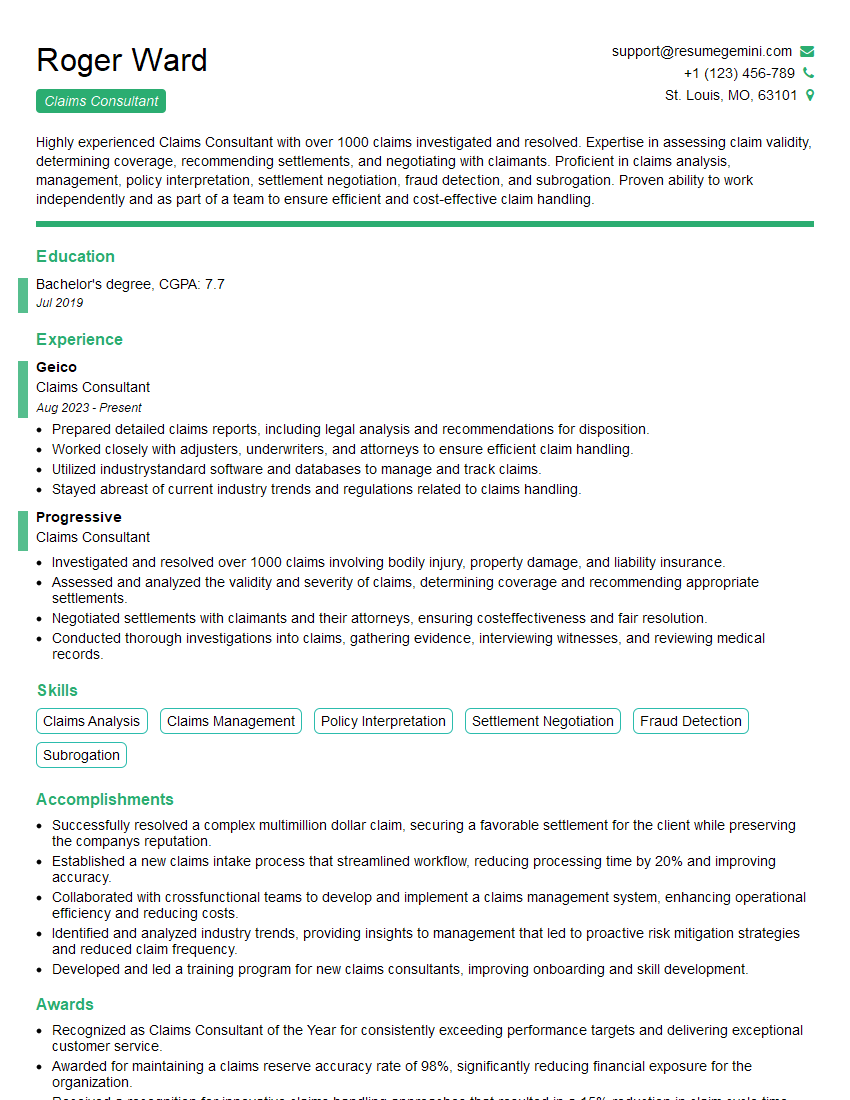
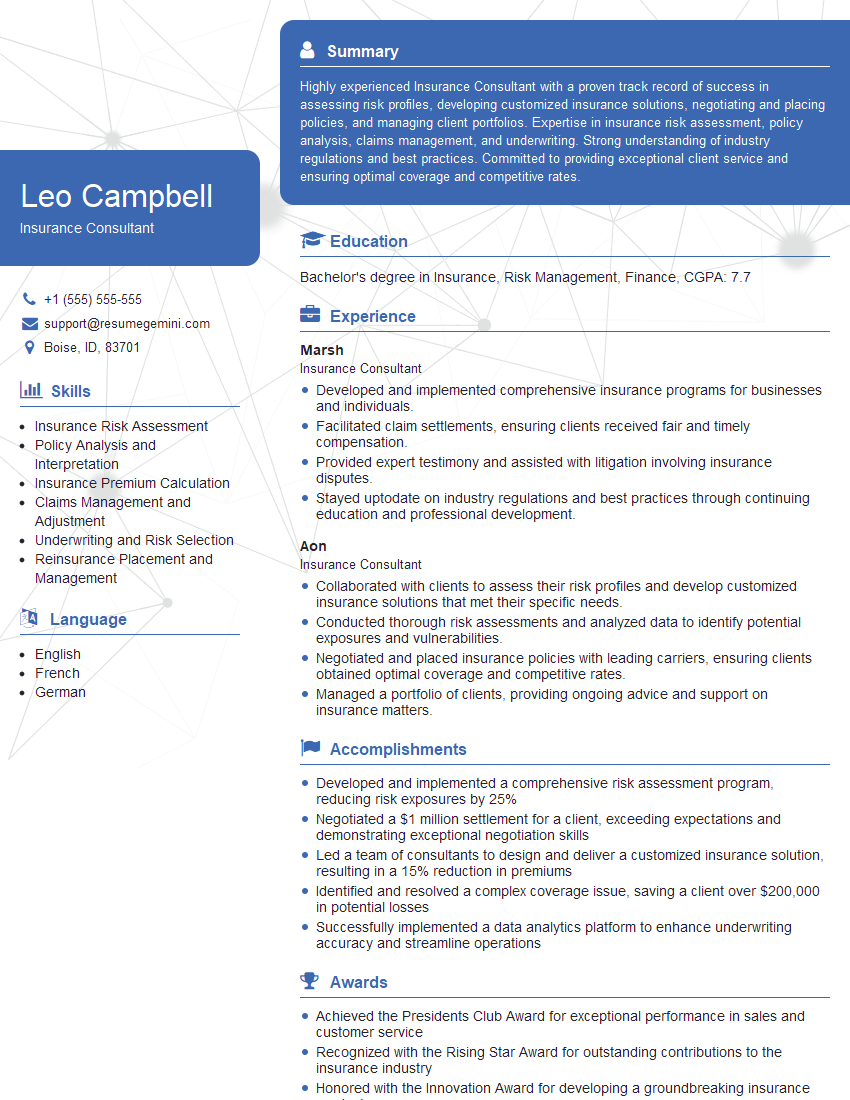
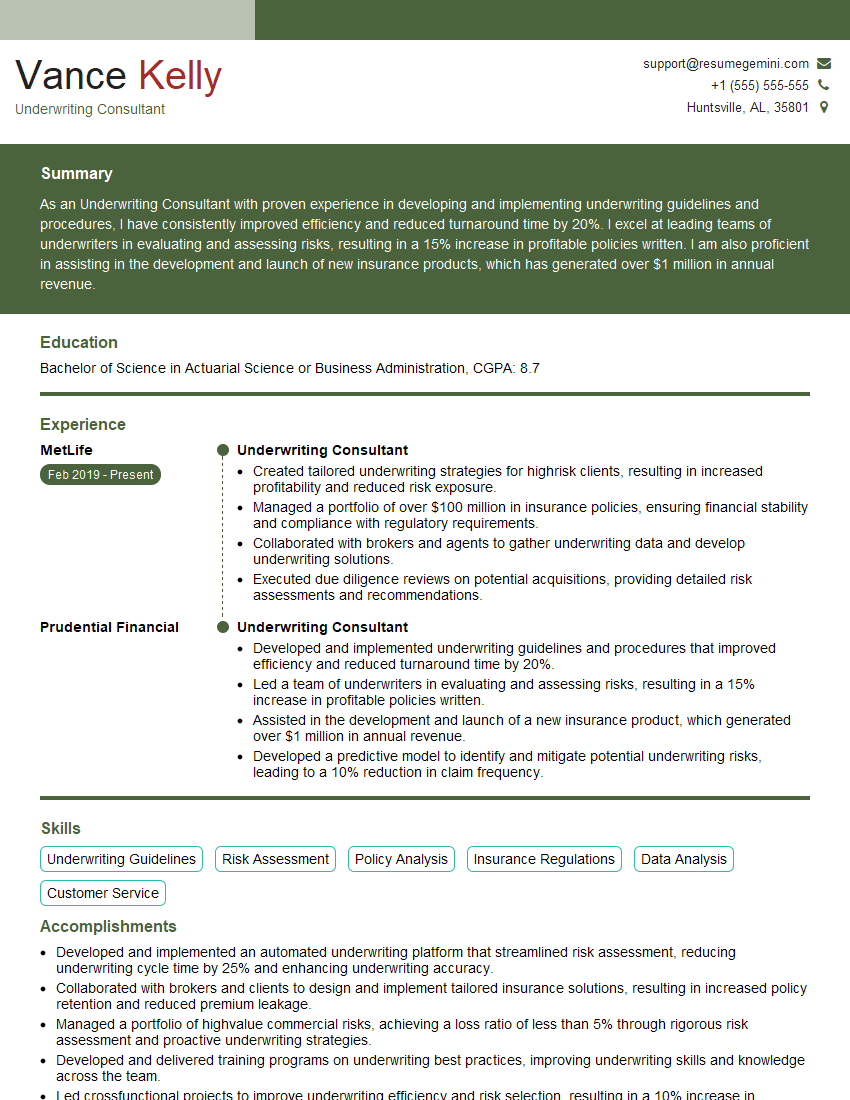
Mastering Insurance Consulting opens doors to a rewarding and challenging career path, offering diverse opportunities for growth and significant impact on the industry. A strong resume is your key to unlocking these opportunities. Creating an ATS-friendly resume is essential for getting your application noticed by recruiters and hiring managers. To help you build a compelling and effective resume, we recommend using ResumeGemini. ResumeGemini provides the tools and resources you need to create a professional resume that showcases your skills and experience. Examples of resumes tailored to Insurance Consulting are available to guide you.
Explore more articles
Users Rating of Our Blogs
Share Your Experience
We value your feedback! Please rate our content and share your thoughts (optional).
What Readers Say About Our Blog
I Redesigned Spongebob Squarepants and his main characters of my artwork.
https://www.deviantart.com/reimaginesponge/art/Redesigned-Spongebob-characters-1223583608
IT gave me an insight and words to use and be able to think of examples
Hi, I’m Jay, we have a few potential clients that are interested in your services, thought you might be a good fit. I’d love to talk about the details, when do you have time to talk?
Best,
Jay
Founder | CEO