Feeling uncertain about what to expect in your upcoming interview? We’ve got you covered! This blog highlights the most important Insurance Risk Modeling and Analysis interview questions and provides actionable advice to help you stand out as the ideal candidate. Let’s pave the way for your success.
Questions Asked in Insurance Risk Modeling and Analysis Interview
Q 1. Explain the difference between stochastic and deterministic modeling in insurance.
In insurance risk modeling, the choice between stochastic and deterministic models hinges on how we treat uncertainty. A deterministic model assumes that all variables are known with certainty; it produces a single, predictable outcome. Think of a simple calculation: if we know the number of claims and their average cost, we can deterministically calculate the total cost. This approach is useful for initial estimations or scenarios with very little uncertainty. However, in the real world, this is rarely the case.
A stochastic model, in contrast, explicitly incorporates uncertainty. It uses probability distributions to represent the possible values of uncertain variables, leading to a range of potential outcomes rather than a single prediction. For instance, instead of using a fixed average claim cost, a stochastic model might use a distribution reflecting the variation in claim costs. This captures the inherent randomness in the insurance business, giving a more realistic picture of potential losses and allowing for better risk management.
Example: Imagine predicting the number of car accidents next year. A deterministic model might use last year’s number as a prediction. A stochastic model would account for factors like population growth, changes in driving habits, and weather patterns to create a probability distribution showing different potential accident counts – some higher, some lower than last year’s.
Q 2. Describe your experience with various risk modeling techniques (e.g., Monte Carlo simulation, Poisson process).
My experience encompasses a wide range of risk modeling techniques. Monte Carlo simulation is a cornerstone of my work. I’ve used it extensively to model the distribution of aggregate claims, incorporating the stochastic nature of claim frequency and severity. For example, I used Monte Carlo to assess the potential impact of a major catastrophe on an insurer’s portfolio, simulating thousands of scenarios to determine the probability of exceeding various loss thresholds.
Poisson processes are another essential tool, particularly for modeling claim frequency. I’ve utilized them in various projects, including modeling the number of claims arising from a specific policy type over a given period. I’ve also incorporated Poisson processes within Monte Carlo simulations to generate realistic claim counts before feeding them into severity models.
Furthermore, I’m proficient in using Generalized Linear Models (GLMs), specifically for insurance pricing. GLMs allow me to model the relationship between policy characteristics (like age, location, vehicle type) and the expected claim cost, considering the inherent non-normality of insurance data (e.g., count data or positive skewed cost data). I’ve leveraged GLMs to develop accurate and efficient pricing models for various lines of insurance.
Beyond these, I’ve applied other techniques like Copulas to model the dependence between different risk factors, such as the correlation between claim frequencies across different geographic regions, and Extreme Value Theory (EVT) to estimate the probability of very rare and severe events.
Q 3. How do you validate a risk model?
Validating a risk model is crucial to ensure its reliability. This involves a multi-pronged approach:
- Backtesting: Comparing the model’s predictions with actual historical data. This helps assess the model’s accuracy and identify potential biases. For example, I’d compare predicted claim costs for the past five years to the actual claim costs. Significant and consistent deviations warrant investigation.
- Goodness-of-fit tests: Assessing how well the model’s assumptions align with the observed data. Techniques like residual analysis help evaluate whether the model adequately captures the data’s characteristics. For instance, consistently large positive residuals in a GLM model might indicate the model is underestimating losses.
- Scenario testing: Evaluating the model’s response to different stress scenarios (e.g., economic downturn, natural disaster). This tests robustness and ensures it appropriately reflects risk under extreme conditions.
- Expert review: Obtaining feedback from experienced actuaries and risk managers to ensure the model’s assumptions, methodologies, and results are reasonable and consistent with industry best practices.
- Sensitivity analysis: Examining how sensitive the model’s outputs are to changes in input parameters. This helps identify critical inputs that warrant more careful estimation and monitoring.
Successful model validation provides confidence that the model accurately reflects the underlying risks and can be reliably used for decision-making.
Q 4. What are the key assumptions underlying a Generalized Linear Model (GLM) for insurance pricing?
Generalized Linear Models (GLMs) are widely used in insurance pricing, but rely on several key assumptions:
- Independence of observations: The claims from different policies should be independent of each other. This assumption can be violated if there are common risk factors influencing multiple policies (e.g., a regional catastrophe).
- Linearity in the link function: The relationship between the explanatory variables and the transformed response variable (e.g., log of claim cost) is linear. Transformations of variables are often needed to satisfy this.
- Correct specification of the link function: The choice of link function should be appropriate for the type of response variable. For example, a log link is often used for positive continuous variables like claim costs, while a logit link might be used for binary variables (e.g., claim/no claim).
- Homoscedasticity (constant variance): The variance of the response variable should be constant across all values of the explanatory variables. Transformations of variables or using weighted GLMs might be used to address heteroscedasticity.
- Correct distribution for the response variable: The model assumes the response variable follows a specific probability distribution, such as a Gaussian (normal) distribution for continuous data, Poisson for count data, or gamma for positive skewed data.
Violations of these assumptions can lead to biased and unreliable model estimates. Diagnostic checks and model refinements are necessary to ensure the assumptions are reasonably met. The iterative process of model building is central to this.
Q 5. Explain the concept of Value at Risk (VaR) and how it’s used in insurance.
Value at Risk (VaR) is a statistical measure of the potential loss in value of an asset or portfolio over a specific time period and confidence level. In insurance, VaR helps quantify the potential losses an insurer might face. For instance, a VaR of $10 million at a 99% confidence level over one year means that there is only a 1% chance that the insurer’s losses will exceed $10 million in that year.
How it’s used in insurance:
- Capital adequacy: Insurers use VaR to determine the amount of capital needed to absorb potential losses and remain solvent. Regulatory authorities often require insurers to hold sufficient capital to cover losses up to a certain VaR level.
- Risk management: VaR helps insurers assess the tail risks in their portfolios and make informed decisions about risk mitigation strategies. For example, insurers can use VaR estimates to guide decisions about reinsurance purchases or investment strategies.
- Performance measurement: VaR can be used to track and compare the risk profile of different insurance products or portfolios.
VaR is calculated using statistical methods like Monte Carlo simulation, historical simulation, or parametric approaches. The choice of method depends on the data availability, the complexity of the portfolio, and the desired level of accuracy.
Q 6. How do you handle missing data in insurance risk modeling?
Missing data is a common challenge in insurance risk modeling. Ignoring it can lead to biased and unreliable results. Strategies for handling missing data include:
- Deletion: Removing observations with missing values. This is simple but can lead to significant information loss if the missing data isn’t randomly distributed (e.g., if older policies are more likely to have missing information).
- Imputation: Filling in missing values using various techniques. Simple imputation methods like replacing missing values with the mean or median are easy but often introduce bias. More sophisticated approaches include multiple imputation, which generates multiple plausible replacements for the missing values, and k-Nearest Neighbors, which uses similar observations to impute missing values.
- Model-based imputation: Incorporating the missing data mechanism into the modeling process. For example, if missing data is related to specific characteristics of the policyholders, these can be included in the model to account for the non-random missing data.
The best approach depends on the nature and extent of the missing data, as well as the chosen modeling technique. It’s crucial to document the chosen strategy and assess its potential impact on the model results.
Q 7. What are some common challenges in building and implementing insurance risk models?
Building and implementing insurance risk models present several challenges:
- Data quality: Insurance data can be complex, incomplete, and inconsistent. Data cleaning and validation are crucial steps, often consuming a significant portion of the modeling effort.
- Model complexity: Accurately capturing the complexities of insurance risks requires sophisticated models. Building and interpreting these models requires specialized expertise.
- Computational limitations: Many risk models, especially Monte Carlo simulations, are computationally intensive. This can be a barrier, especially with large datasets or complex models.
- Regulatory requirements: Insurers must adhere to strict regulatory guidelines for risk modeling, requiring careful documentation, validation, and ongoing monitoring of the models.
- Model uncertainty: Even the most sophisticated models are subject to uncertainty. Communicating this uncertainty to stakeholders is crucial for realistic expectations and robust decision-making.
- Data scarcity for rare events: Accurately modeling low-probability, high-impact events (e.g., major catastrophes) is challenging due to the limited historical data available. Techniques like extreme value theory (EVT) are used to address this.
Successfully navigating these challenges requires a strong team effort, combining actuarial expertise, data science skills, and effective communication strategies.
Q 8. Describe your experience with different types of insurance data (e.g., claims data, policy data).
My experience spans a wide range of insurance data, encompassing both granular policy-level information and aggregate claims data. Policy data typically includes details like insured’s demographics, policy coverage, premium amounts, and policy duration. Analyzing this data helps understand the risk profile of our insured population and inform pricing strategies. For example, we might analyze the geographic distribution of policies to identify areas with higher risk of certain types of claims, like hail damage in tornado-prone regions. Claims data, on the other hand, details individual claims, including the date of loss, type of loss, claim amount, and settlement details. This is crucial for loss reserving, trend analysis, and identifying patterns of fraudulent claims. I’ve worked extensively with both structured data (e.g., databases) and unstructured data (e.g., claim narratives) and am proficient in cleaning, transforming, and preparing this data for model development. In one project, for example, we used policy data to develop a predictive model for customer churn, allowing us to proactively manage retention efforts.
Q 9. How do you assess the accuracy and reliability of a risk model?
Assessing the accuracy and reliability of a risk model is crucial and involves a multi-faceted approach. First, we perform rigorous in-sample and out-of-sample testing. In-sample testing evaluates the model’s performance on the data used to build it, while out-of-sample testing assesses its predictive power on unseen data, which is more indicative of its true performance in a real-world setting. We utilize various metrics, including but not limited to, Mean Absolute Error (MAE), Root Mean Squared Error (RMSE), and R-squared, to quantify the model’s accuracy. Further, we conduct sensitivity analysis to understand how changes in input variables affect the model’s output, helping us identify areas of uncertainty or potential model instability. Model validation also involves examining the model’s assumptions and checking for violations. Are our assumptions about data distribution, independence of variables, or linearity still valid? We also compare our model’s predictions against expert judgment and historical data to identify discrepancies and potential areas for improvement. For example, if our model consistently underestimates claims in a specific region, we’d investigate the underlying reasons and potentially adjust the model.
Q 10. Explain the concept of reserving in insurance and how it relates to risk modeling.
Reserving in insurance is the process of estimating the liability for unpaid claims. It’s a critical aspect of financial reporting and is heavily reliant on risk modeling. Actuaries use various statistical methods, like chain-ladder and Bornhuetter-Ferguson methods, to project future claim payments based on historical data and current claims development patterns. Risk models play a crucial role in these projections by incorporating factors that influence claim severity and frequency. For instance, a catastrophe model might be used to estimate the potential impact of future hurricanes on loss reserves. The accuracy of reserving estimates significantly impacts an insurer’s solvency and financial stability. Underestimating reserves can lead to insolvency, whereas overestimating reserves reduces profitability. Therefore, sophisticated risk models are essential to produce accurate and reliable reserve estimates.
Q 11. How do you incorporate macroeconomic factors into your risk models?
Macroeconomic factors significantly impact insurance risk. We incorporate these factors into our models using various techniques. For example, inflation rates directly influence claim costs, so we might include inflation indices as predictor variables in our severity models. Unemployment rates can affect the frequency of certain types of claims, such as unemployment insurance claims. Interest rates impact the present value of future liabilities and are incorporated into reserving models. We also consider broader economic indicators, like GDP growth and housing starts, which can influence exposure levels and the frequency of property damage claims. The specific methods vary depending on the type of insurance and the model. We might use regression analysis to quantify the relationship between macroeconomic variables and claim outcomes, or we could employ time series analysis to forecast future economic conditions and incorporate these forecasts into our models. One example is incorporating GDP growth to predict the frequency of commercial auto claims, as a strong economy often leads to increased vehicle miles traveled.
Q 12. Describe your experience with programming languages used in risk modeling (e.g., R, Python, SQL).
My proficiency in programming languages is crucial for my work. I’m highly skilled in R and Python, which are industry standards for actuarial modeling and statistical analysis. R offers excellent packages for statistical modeling, data visualization, and report generation. For instance, I frequently use the glm() function in R to build generalized linear models for claim frequency and severity. Python offers great flexibility and is ideal for data manipulation and integration with other systems. Libraries like pandas and scikit-learn are indispensable tools in my workflow. SQL is also essential for database management and querying, allowing me to efficiently extract and transform data from large insurance databases. A recent project involved using Python to automate the process of model calibration and validation, significantly improving efficiency and reducing manual errors. # Example Python snippet for data manipulation: import pandas as pd; df = pd.read_csv('claims_data.csv');
Q 13. Explain the difference between frequency and severity modeling in insurance.
In insurance risk modeling, frequency and severity modeling are distinct but interconnected processes. Frequency modeling focuses on predicting the number of claims that will occur within a specified timeframe. For example, we might model the number of auto accidents per year. Severity modeling, on the other hand, focuses on predicting the size or cost of individual claims, such as the average cost of repairing a damaged vehicle. These models are often built separately and then combined to estimate the total expected loss. Frequency models often use count data regression techniques (e.g., Poisson regression), while severity models often employ generalized linear models (e.g., gamma regression) or other distribution fitting techniques. The output of the frequency model (number of claims) is multiplied by the output of the severity model (average cost per claim) to get an estimate of the total loss cost.
Q 14. How do you communicate complex risk model results to non-technical stakeholders?
Communicating complex risk model results to non-technical stakeholders requires a clear and concise approach. I avoid technical jargon and focus on using simple language, relatable analogies, and compelling visualizations. Instead of presenting complex statistical outputs, I summarize key findings in a clear and concise manner. For example, instead of stating “the model indicates a 95% confidence interval of 10-15 million dollars in losses”, I would say “Our analysis suggests that we can expect losses to be around 12.5 million dollars, although this could range from 10 to 15 million dollars”. Visual aids like charts and graphs are crucial to effectively communicate complex data. I focus on presenting the key insights and implications of the model, rather than the technical details of the model itself. I also tailor my communication style to the audience, emphasizing the aspects most relevant to their roles and responsibilities. For example, when presenting to senior management, I would focus on the overall financial implications and potential risks, whereas when presenting to claims adjusters, I would focus on the model’s predictive power and potential for improving claim management.
Q 15. What is your experience with model governance and regulatory compliance?
Model governance and regulatory compliance are paramount in insurance risk modeling. It ensures that our models are accurate, reliable, and meet all legal and industry standards. My experience encompasses the entire lifecycle, from model development and validation to ongoing monitoring and documentation. This includes working with internal audit teams and regulatory bodies like the NAIC (National Association of Insurance Commissioners) to ensure compliance with regulations such as the Solvency II framework (in Europe) or similar domestic requirements. I’ve been directly involved in implementing robust model risk management frameworks, including defining clear roles and responsibilities, establishing validation protocols, and implementing comprehensive documentation procedures. For instance, in a previous role, I led the effort to update our reserving model documentation to address specific concerns raised by our internal audit and meet updated regulatory guidelines. This involved not only revising the documentation but also training the team on the updated processes and the rationale behind the changes.
We utilize a systematic approach to document all aspects of model development and usage. This ensures traceability and transparency, allowing for easier review and audit. We also employ rigorous testing methodologies, including backtesting and stress testing, to assess model performance and identify potential weaknesses.
Career Expert Tips:
- Ace those interviews! Prepare effectively by reviewing the Top 50 Most Common Interview Questions on ResumeGemini.
- Navigate your job search with confidence! Explore a wide range of Career Tips on ResumeGemini. Learn about common challenges and recommendations to overcome them.
- Craft the perfect resume! Master the Art of Resume Writing with ResumeGemini’s guide. Showcase your unique qualifications and achievements effectively.
- Don’t miss out on holiday savings! Build your dream resume with ResumeGemini’s ATS optimized templates.
Q 16. Describe your experience with specific actuarial software packages.
I’m proficient in several actuarial software packages, including but not limited to:
- Actuarial Modeling Software (e.g., Prophet, GGY AXIS): I’ve used these extensively for stochastic modeling, reserving analysis, and capital modeling. For example, I utilized Prophet to build a dynamic financial model for a large life insurance portfolio, incorporating various scenarios and assumptions. This allowed for a comprehensive analysis of the portfolio’s sensitivity to changes in interest rates and mortality assumptions.
- Statistical Software (e.g., R, Python with relevant packages like pandas, scikit-learn): I leverage these extensively for data manipulation, statistical analysis, model development and validation. I can build custom models using these tools, which provides far more flexibility than some off-the-shelf solutions.
- Spreadsheet Software (e.g., Excel with VBA): While not a dedicated actuarial package, Excel with VBA is crucial for automating tasks, data analysis, and building smaller scale models, especially during quick prototyping or exploring model sensitivities.
My expertise extends beyond simply using these tools; I understand the underlying mathematical and statistical principles driving them, enabling me to effectively interpret results, identify limitations, and make informed decisions. I am comfortable adapting and customizing these tools to address specific business needs.
Q 17. Explain the concept of capital modeling and its importance in insurance.
Capital modeling is the process of quantifying the financial resources an insurance company needs to absorb potential losses and maintain solvency. It’s essentially a sophisticated form of stress testing to evaluate the company’s ability to withstand adverse events. This is crucial because insurance is inherently a business of managing risks – unexpected events like large-scale catastrophes or a sudden increase in claims can severely impact a company’s financial stability.
The process typically involves projecting future cash flows under various scenarios, considering factors like premium income, claims payouts, investment returns, and expenses. Advanced models often employ stochastic simulations to capture the inherent uncertainty in these factors. The ultimate goal is to determine the minimum amount of capital needed to ensure that the probability of insolvency remains below an acceptable threshold (often regulated).
The importance of capital modeling lies in its ability to provide a realistic assessment of risk, inform strategic decision-making (such as reinsurance purchases or investment strategies), and meet regulatory requirements for maintaining adequate capital reserves. Without proper capital modeling, insurance companies risk facing financial distress or even insolvency during unexpected adverse events.
Q 18. How do you handle model uncertainty and limitations?
Model uncertainty and limitations are always present in insurance modeling due to the inherent complexities of predicting future events. My approach to handling these involves a multi-pronged strategy:
- Scenario Analysis: I explore a range of plausible scenarios, including best-case, worst-case, and most-likely scenarios, to understand the potential impact of different levels of uncertainty. This helps to quantify the range of possible outcomes and the associated risks.
- Sensitivity Analysis: This technique involves systematically changing model inputs to see how they affect the model outputs. It allows us to identify the most critical factors and assess the model’s sensitivity to changes in assumptions. For instance, if we are modeling the risk of hurricane damage, we may want to see how sensitive the predicted losses are to changes in the predicted wind speeds.
- Model Validation: This crucial step involves rigorous testing to ensure that the model accurately reflects the underlying risks and performs as expected. This includes testing using historical data and comparing its predictions with actual outcomes.
- Stress Testing: Pushing the model beyond its typical operating range helps identify any weaknesses or unexpected behaviours. We might, for example, simulate a catastrophe event far exceeding the historical record to assess the firm’s resilience under extreme conditions.
- Transparency and Communication: It’s critical to clearly communicate the model’s limitations and uncertainties to stakeholders. This involves acknowledging data gaps and methodological assumptions, ensuring everyone understands the level of confidence in the model’s predictions.
By acknowledging and addressing these limitations proactively, we can make more informed decisions and mitigate potential risks.
Q 19. What is your experience with catastrophe modeling?
Catastrophe modeling plays a vital role in assessing and managing the risks associated with large-scale events like hurricanes, earthquakes, and wildfires. My experience includes working with various catastrophe modeling platforms (e.g., AIR Worldwide, RMS) to assess potential losses from such events. This involves not only selecting appropriate models but also understanding their underlying assumptions and limitations, and tailoring their parameters to reflect specific regional and portfolio characteristics.
A typical process involves defining the exposure portfolio, selecting relevant catastrophe models, running simulations to generate loss distributions under various scenarios, and analyzing the results to determine risk metrics such as average annual loss (AAL), probable maximum loss (PML), and tail risk measures. I’ve been involved in projects where we used catastrophe models to inform reinsurance decisions, evaluate capital adequacy, and develop risk mitigation strategies. For example, in one project, I used catastrophe modeling to advise a client on optimal reinsurance placement to protect them from the potential financial impact of a major hurricane.
Beyond just using pre-built models, I have experience in refining and adapting these models based on specific client needs, integrating granular data, and incorporating additional factors not necessarily included in standard models, like climate change impact.
Q 20. Explain the concept of tail risk and how it’s addressed in insurance modeling.
Tail risk refers to the risk of extreme, low-probability events occurring in the far tail of a probability distribution. In insurance, this means the risk of unusually large losses that significantly exceed typical expectations. Think of it as the potential for a “black swan” event – an unexpected occurrence with severe consequences. These events are difficult to predict and can have a catastrophic impact on an insurer’s financial stability.
Addressing tail risk in insurance modeling involves several techniques:
- Extreme Value Theory (EVT): EVT is a statistical technique used to model the extreme ends of probability distributions. It helps us estimate the probability of events far beyond the range of observed data.
- Stochastic Simulation: Using Monte Carlo simulation allows generating many possible scenarios and understanding the distribution of losses, particularly focusing on the tail regions. It can help quantify the likelihood of those rare, large losses.
- Stress Testing: Designing extreme scenarios that go beyond historical experience helps to push the model’s limits and assess its sensitivity to extreme events.
- Reinsurance: Transferring part of the risk to reinsurers is a key strategy to manage tail risk. This limits the insurer’s exposure to exceptionally high losses.
- Capital Allocation: Holding sufficient capital reserves to absorb extreme losses is crucial. Capital modeling can help determine the appropriate level of capital to ensure solvency under various tail scenarios.
Ignoring tail risk can lead to severe underestimation of the overall risk and potential insolvency during a catastrophic event. Therefore, explicitly modeling and managing tail risk is paramount for sound insurance risk management.
Q 21. How do you incorporate climate change into your risk assessments?
Incorporating climate change into risk assessments is no longer optional but rather a necessity. Climate change significantly alters the frequency and severity of many catastrophic events, making traditional models based solely on historical data unreliable. My approach involves several key steps:
- Data Integration: Utilizing climate change projections from reputable sources (such as IPCC reports or specialized climate models) to incorporate updated frequency and severity estimates for events like hurricanes, floods, and wildfires. This may involve using probabilistic climate projections to understand the uncertainty in future climate scenarios.
- Model Calibration: Adjusting existing catastrophe models to reflect the altered risks. This might involve modifying parameters to represent anticipated changes in weather patterns, sea levels, or wildfire behavior.
- Scenario Development: Creating specific scenarios that consider different climate change pathways and their potential impacts on insured risks. This might involve running simulations under different greenhouse gas emission scenarios.
- Sensitivity Analysis: Examining the sensitivity of model outputs to changes in climate-related inputs. This helps to identify critical factors and assess the uncertainty associated with climate change projections.
- Risk Mitigation Strategies: Developing strategies to mitigate climate-related risks, such as adjusting underwriting standards, promoting preventative measures (like stricter building codes), or diversifying geographically.
For example, when assessing hurricane risk for a coastal property, we would incorporate projected increases in sea levels and storm intensity to refine our risk estimates and adjust pricing or underwriting accordingly. Failing to account for climate change risks could lead to significant underestimation of future losses and threaten the long-term solvency of insurance companies.
Q 22. Describe your experience working with large datasets in an insurance context.
My experience with large insurance datasets involves leveraging various techniques for data manipulation, cleaning, and analysis. I’m proficient in using tools like SQL, Python (with libraries such as Pandas and Dask), and R to manage and process datasets containing millions of records. For example, in a recent project analyzing auto insurance claims, I worked with a dataset containing over 10 million records, encompassing policyholder information, claim details, vehicle specifications, and accident reports. Data cleaning involved handling missing values, identifying and correcting inconsistencies, and transforming data into suitable formats for modeling. I employed parallel processing techniques with Dask to efficiently manage the large dataset, enabling faster processing and model training.
Furthermore, I have experience working with cloud-based data warehousing solutions like Snowflake and BigQuery, allowing for scalability and efficient management of massive datasets exceeding terabytes in size. These solutions are critical for handling the sheer volume and velocity of data generated by modern insurance operations.
Q 23. How do you select appropriate statistical distributions for modeling insurance claims?
Selecting the right statistical distribution for modeling insurance claims is crucial for accurate risk assessment. The choice depends on the specific type of claim and the data’s characteristics. It’s an iterative process involving exploratory data analysis, goodness-of-fit tests, and consideration of theoretical underpinnings. For example:
- For claim severity (amount of a single claim): The Lognormal, Gamma, or Pareto distributions are often used, as they can effectively model the right-skewed nature of claim severity data (where a few large claims heavily influence the average).
- For claim frequency (number of claims): The Poisson, Negative Binomial, or Zero-Inflated Poisson distributions are commonly employed. These distributions account for the fact that many policyholders may have zero claims in a given period.
I typically start by visually inspecting the data using histograms and quantile-quantile (Q-Q) plots to get a sense of the distribution. Then, I perform formal goodness-of-fit tests, such as the Kolmogorov-Smirnov test or the Anderson-Darling test, to compare the observed data to the theoretical distributions. The best-fitting distribution is selected based on the test results and the interpretability of the parameters. For example, if the data clearly shows a heavy tail, the Pareto distribution might be preferred to the Gamma distribution.
Q 24. Explain the concept of Bayesian methods and its application in insurance modeling.
Bayesian methods offer a powerful alternative to frequentist approaches in insurance modeling. Instead of estimating parameters as fixed values, Bayesian methods treat them as random variables with probability distributions. This allows for incorporating prior knowledge or beliefs about the parameters, which can be particularly useful when dealing with limited data. Think of it as updating your initial belief (prior) with new evidence (data) to arrive at a refined belief (posterior).
In insurance, Bayesian methods can be applied to:
- Credibility modeling: Combining prior experience with current data to estimate future claim rates for individual policyholders or groups.
- Model averaging: Combining predictions from multiple models, weighted by their posterior probabilities.
- Parameter estimation: Providing a probability distribution for the parameters of interest, rather than a single point estimate.
For example, in pricing a new product with limited historical data, we can use a Bayesian approach by incorporating prior information from similar products or expert opinion, leading to more robust and reliable pricing.
The use of Markov Chain Monte Carlo (MCMC) methods like Gibbs sampling is common for solving the complex integrals arising in Bayesian analysis. Software like Stan or R packages such as ‘rjags’ are valuable tools for implementing these techniques.
Q 25. How do you use scenario analysis in insurance risk modeling?
Scenario analysis is a crucial tool in insurance risk modeling, allowing us to explore the potential impact of different events or combinations of events on the financial performance of an insurer. It helps understand the range of possible outcomes and assess the potential for severe losses. I typically utilize a combination of quantitative and qualitative approaches.
The process usually involves defining relevant scenarios based on factors like economic conditions, natural catastrophes, or changes in regulatory environments. Each scenario includes specific assumptions about the key variables influencing the insurer’s results (e.g., inflation, interest rates, claim frequency, and severity). We then run simulations using our models under each scenario, generating distributions of possible outcomes for key metrics like reserves, capital adequacy, and profitability.
For example, we might define scenarios like a mild recession, a severe recession, a major hurricane, or a change in government regulations. The results reveal the potential financial impact of each scenario, which informs risk management strategies and capital planning. Sensitivity analysis is also conducted to test the model’s robustness and identify the variables having the largest impact on the results.
Q 26. Describe your experience with model calibration and validation.
Model calibration and validation are critical steps to ensure that the models accurately reflect reality. Calibration involves adjusting the model’s parameters to match historical data, while validation assesses the model’s ability to predict future outcomes. The goal is to develop a model that is both accurate and reliable.
For calibration, I use various techniques depending on the model. Maximum likelihood estimation (MLE) is frequently used to estimate parameters by maximizing the likelihood function. Bayesian methods also play a crucial role, allowing for the incorporation of prior knowledge and providing uncertainty quantification for the parameter estimates.
For validation, I use techniques like backtesting (comparing model predictions to actual outcomes from past periods) and out-of-sample testing (evaluating the model’s performance on data not used for calibration). Assessing metrics like accuracy, precision, recall, and the area under the ROC curve (AUC) helps evaluate the model’s performance. I also rely on visual diagnostics to check for model biases and systematic errors. Any significant discrepancies between the model’s predictions and actual outcomes require re-evaluation of the model’s assumptions and calibration process.
Q 27. How do you identify and mitigate model risk?
Model risk, the risk of loss resulting from using inaccurate or inappropriate models, is a significant concern in insurance. Mitigation involves a multi-faceted approach.
- Robust Model Development: Start with a strong theoretical foundation and utilize appropriate statistical methodologies. Thoroughly explore the data to ensure the chosen model aligns with the data’s characteristics.
- Comprehensive Validation: Employ rigorous testing techniques, both in-sample and out-of-sample, to assess the model’s accuracy and reliability. Consider stress tests that push the model beyond its usual operating range.
- Regular Monitoring and Review: Continuously monitor the model’s performance over time. Re-calibrate and re-validate as needed. Document all assumptions, methodologies, and limitations of the model.
- Independent Review: Have independent experts review the model, its assumptions, and validation process. An independent perspective helps identify potential biases or weaknesses.
- Governance and Oversight: Establish clear governance procedures and accountability frameworks to ensure that the model risk is appropriately managed.
For example, if a model consistently underestimates claim severity, it might lead to insufficient reserves and financial instability. Regular monitoring and review of this model, coupled with stress testing, are essential to identify and mitigate this potential risk.
Q 28. What are your thoughts on the future of insurance risk modeling and its technological advancements?
The future of insurance risk modeling is bright, driven by significant technological advancements. We’ll see increased use of:
- Advanced Machine Learning: Techniques like deep learning and neural networks will be increasingly applied to model complex relationships within insurance data. This can lead to better prediction accuracy and more nuanced risk assessments.
- Big Data Analytics: The ability to process and analyze vast datasets will enable the development of more granular and personalized risk models, moving away from traditional actuarial methods that often rely on broad classifications.
- Alternative Data Sources: The integration of alternative data, such as telematics data, social media sentiment, and satellite imagery, will lead to richer and more predictive models.
- Cloud Computing: Cloud-based platforms will continue to improve model development, deployment, and scaling, enabling faster and more cost-effective risk management.
- Explainable AI (XAI): The development of more transparent and interpretable AI models will enhance trust and allow better understanding of the models’ predictions.
These advancements will lead to more accurate risk assessments, improved pricing strategies, better fraud detection, and more efficient capital allocation within the insurance industry. However, responsible implementation, coupled with robust model validation and risk management, is crucial to ensure that these technological advances contribute to improved decision-making and resilience.
Key Topics to Learn for Insurance Risk Modeling and Analysis Interview
- Statistical Modeling Techniques: Understanding and applying regression analysis, time series analysis, generalized linear models (GLMs), and survival analysis to insurance data. Consider exploring different model selection criteria and diagnostic techniques.
- Actuarial Modeling: Familiarize yourself with concepts like loss reserving, ratemaking, and capital modeling. Understand the practical application of these models in pricing insurance products and assessing risk.
- Data Analysis and Manipulation: Mastering data cleaning, transformation, and visualization techniques using tools like SQL, R, or Python is crucial. Practice working with large datasets and identifying relevant insights.
- Risk Assessment and Management: Develop a strong understanding of various risk measures (VaR, Expected Shortfall), risk mitigation strategies, and the importance of scenario analysis in insurance risk management.
- Insurance Product Knowledge: Demonstrate a working knowledge of different types of insurance products (e.g., property & casualty, life, health) and their associated risks. This includes understanding policy terms and conditions.
- Programming and Software Proficiency: Showcase your skills in programming languages commonly used in actuarial science and risk modeling (e.g., R, Python) and your experience with relevant software packages (e.g., SAS, actuarial modeling software).
- Communication and Presentation Skills: Practice effectively communicating complex technical concepts to both technical and non-technical audiences. Be prepared to explain your modeling choices and findings clearly and concisely.
Next Steps
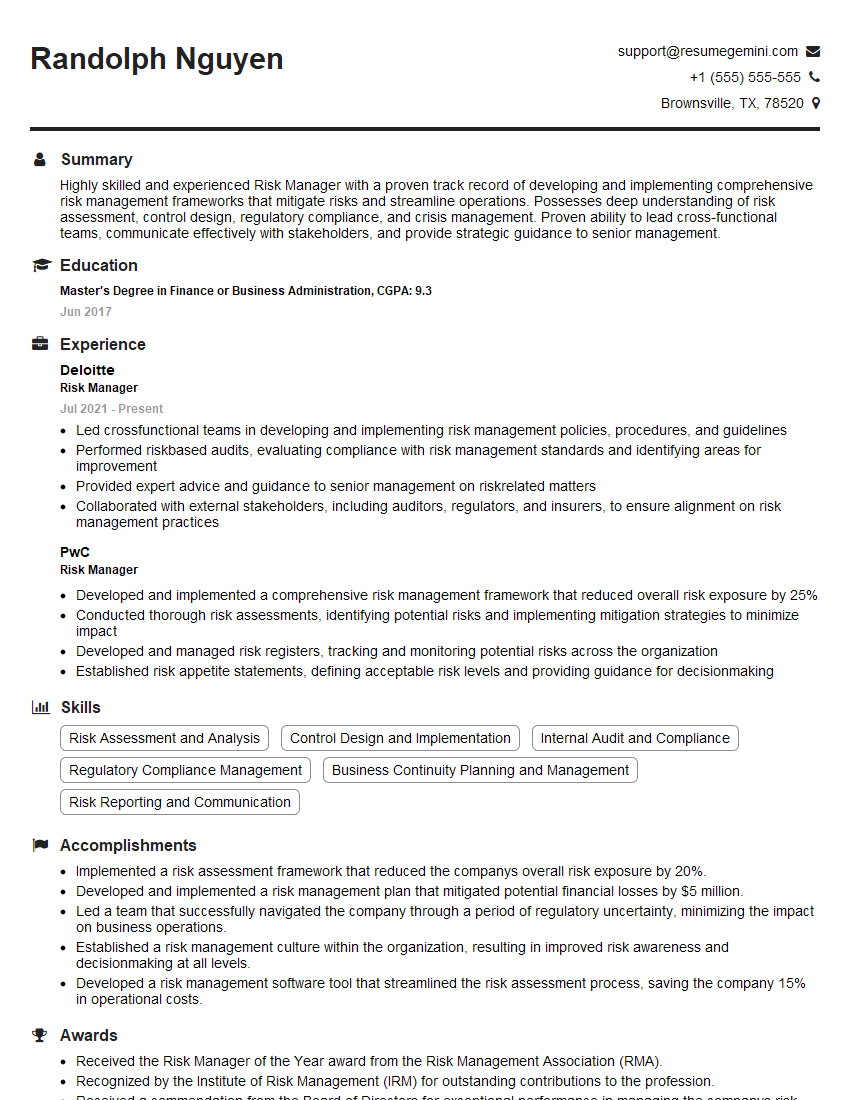
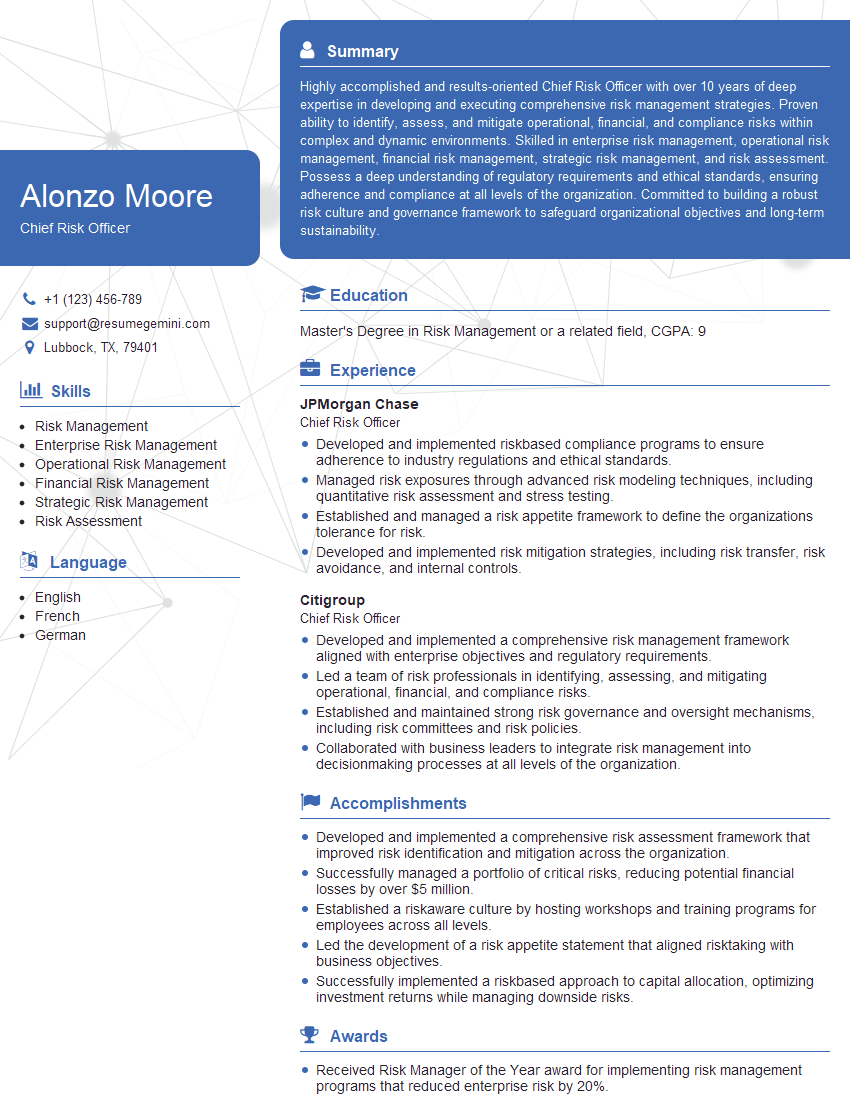
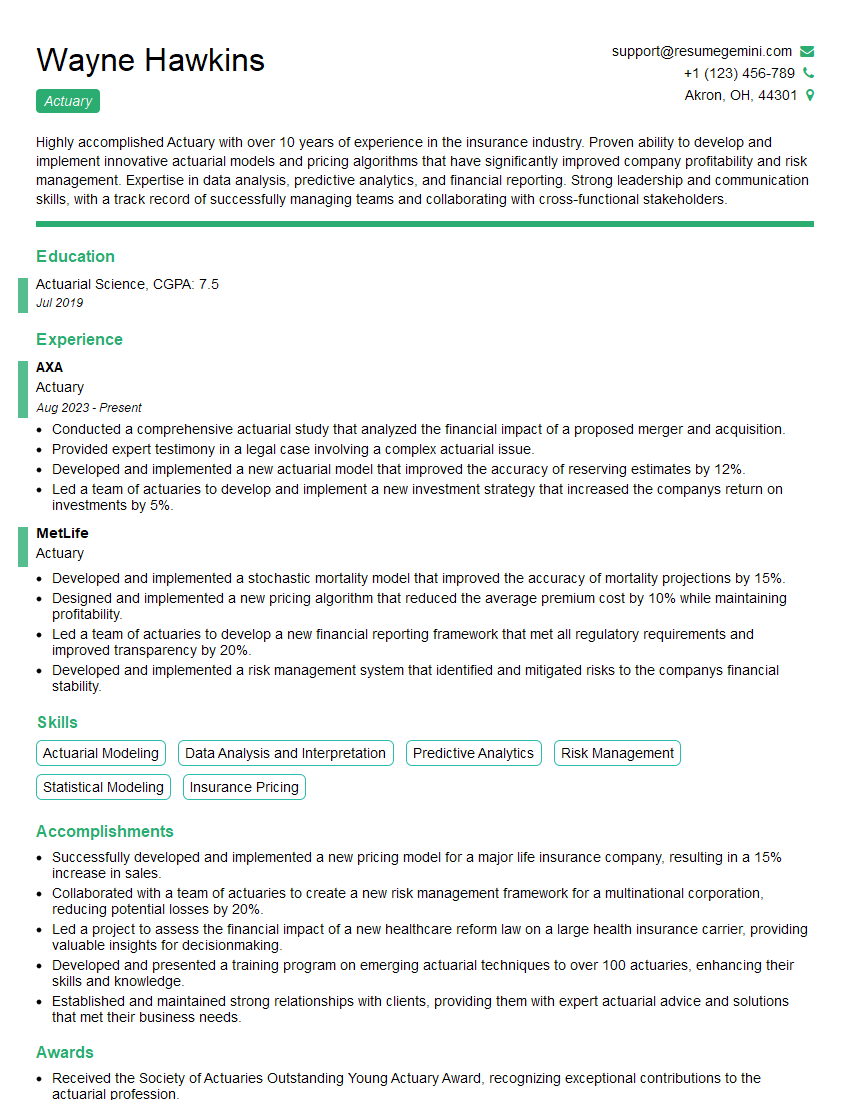
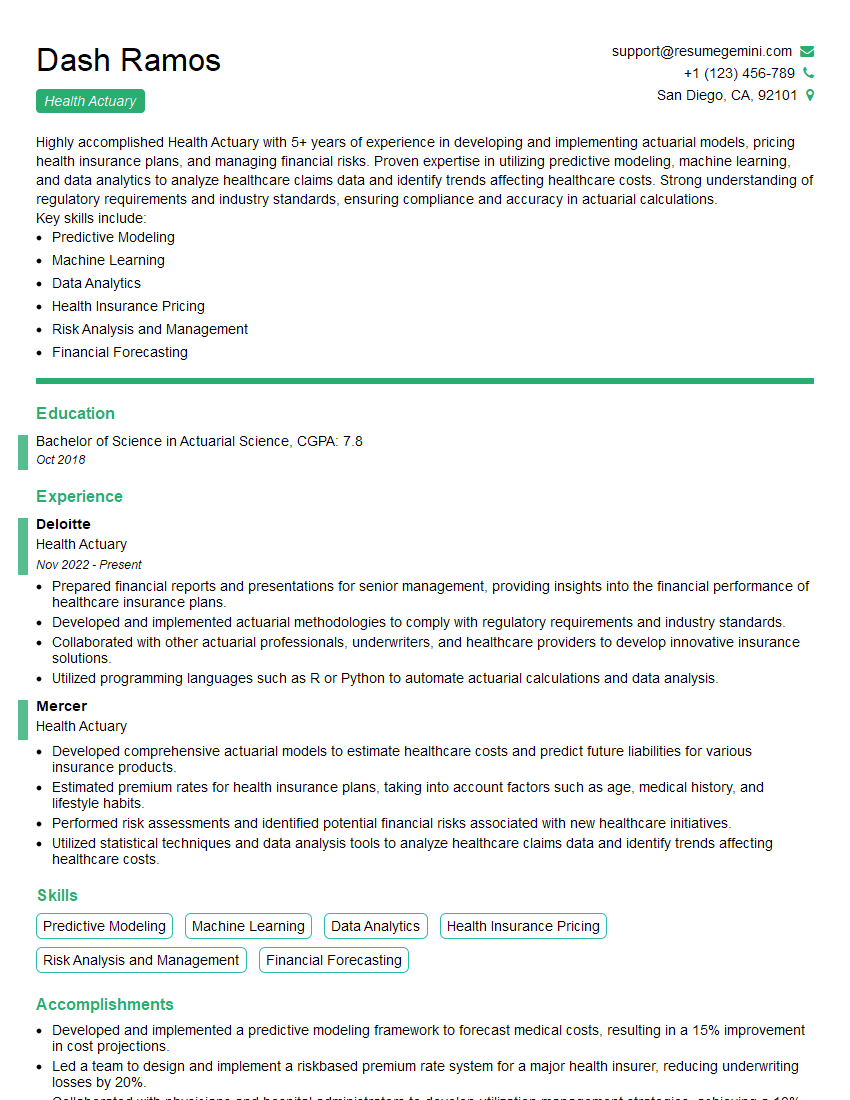
Mastering Insurance Risk Modeling and Analysis opens doors to exciting career opportunities with significant growth potential within the insurance industry. To maximize your job prospects, it’s vital to present your skills and experience effectively. Creating an ATS-friendly resume is key to getting your application noticed. ResumeGemini is a trusted resource that can help you build a professional and impactful resume tailored to the specific requirements of Insurance Risk Modeling and Analysis roles. We provide examples of resumes optimized for this field to guide you. Take advantage of these resources to present yourself as the ideal candidate.
Explore more articles
Users Rating of Our Blogs
Share Your Experience
We value your feedback! Please rate our content and share your thoughts (optional).
What Readers Say About Our Blog
I Redesigned Spongebob Squarepants and his main characters of my artwork.
https://www.deviantart.com/reimaginesponge/art/Redesigned-Spongebob-characters-1223583608
IT gave me an insight and words to use and be able to think of examples
Hi, I’m Jay, we have a few potential clients that are interested in your services, thought you might be a good fit. I’d love to talk about the details, when do you have time to talk?
Best,
Jay
Founder | CEO