Feeling uncertain about what to expect in your upcoming interview? We’ve got you covered! This blog highlights the most important Interpersonal and Team Communication interview questions and provides actionable advice to help you stand out as the ideal candidate. Let’s pave the way for your success.
Questions Asked in Interpersonal and Team Communication Interview
Q 1. Describe your approach to conflict resolution within a team.
My approach to conflict resolution centers around fostering open communication and collaboration. I believe that conflicts, while challenging, are opportunities for growth and improved team dynamics. My strategy follows these key steps:
- Active Listening: I begin by actively listening to all parties involved, ensuring everyone feels heard and understood. This involves paraphrasing to confirm understanding and avoiding interruptions.
- Identifying the Root Cause: Once everyone has expressed their perspective, I work to identify the underlying issue driving the conflict. This often involves asking clarifying questions and looking beyond surface-level disagreements.
- Finding Common Ground: I focus on finding common ground and shared goals. Even in seemingly irreconcilable conflicts, there are usually areas of agreement that can be leveraged to build a solution.
- Collaborative Problem-Solving: I facilitate a collaborative problem-solving session, encouraging brainstorming and creative solutions that address the root cause of the conflict. This is not about assigning blame but finding solutions that work for everyone.
- Following Up: After a resolution is reached, I follow up to ensure that the agreement is being honored and to address any lingering issues or concerns. This ensures the conflict doesn’t resurface.
For example, in a previous project, two team members had a clash over design approaches. By actively listening to both sides and identifying their shared goal – a successful product launch – we were able to find a compromise that incorporated elements from both designs.
Q 2. How do you build rapport with individuals from diverse backgrounds?
Building rapport with diverse individuals requires cultural sensitivity, empathy, and a genuine interest in understanding others’ perspectives. My approach involves:
- Active Listening and Observation: Pay close attention to both verbal and nonverbal cues. Understand that communication styles vary across cultures.
- Asking Questions: Show genuine interest by asking open-ended questions about their background, experiences, and perspectives. This demonstrates respect and a willingness to learn.
- Respecting Differences: Acknowledge and respect differences in communication styles, work habits, and perspectives. Avoid making assumptions or imposing your own cultural norms.
- Seeking Common Ground: Focus on shared goals and values to build bridges and foster a sense of collaboration. Even with significant cultural differences, there are usually common professional objectives.
- Continuous Learning: Be open to learning about different cultures and perspectives. This involves seeking out information, attending workshops, and engaging in respectful conversations.
For instance, working with a team that included members from Japan and Brazil, I learned to adapt my communication style. I became more mindful of the importance of indirect communication in some cultures and adopted a more patient and collaborative approach to decision-making.
Q 3. Explain a time you had to deliver difficult news to a team. How did you handle it?
Delivering difficult news requires empathy, transparency, and a clear communication strategy. In one instance, I had to inform my team that the project deadline was being pushed back due to unforeseen circumstances. My approach was:
- Preparation: I prepared a clear and concise message outlining the situation, the reasons for the delay, and the revised timeline. I anticipated potential questions and concerns.
- Empathy: I acknowledged the team’s potential frustration and disappointment. I validated their feelings and expressed understanding.
- Transparency: I provided a complete and honest explanation of the situation, avoiding jargon and ambiguity. I was open to questions and ensured everyone had the opportunity to voice their concerns.
- Solutions-Oriented Approach: I didn’t simply deliver bad news; I also presented the plan for moving forward, including strategies to mitigate any negative impacts of the delay.
- Support: I offered support to team members who might be struggling with the news and ensured they felt heard and valued.
By being open, honest, and supportive, I was able to maintain team morale and ensure the project continued to progress smoothly, even with the delayed deadline.
Q 4. How do you ensure effective communication in a virtual team environment?
Effective communication in a virtual team environment requires proactive strategies to overcome the challenges of physical distance. My approach focuses on:
- Regular Communication: Establishing regular communication channels such as daily stand-up meetings (using video conferencing), weekly progress reports, and dedicated communication channels (Slack, Microsoft Teams).
- Clear Communication Protocols: Defining clear expectations for response times, communication preferences (email, instant messaging), and meeting etiquette.
- Utilizing Technology Effectively: Leveraging project management tools (Asana, Trello), video conferencing, and screen sharing for collaboration and efficient task management.
- Building Relationships: Organizing virtual social events or team-building activities to foster a sense of camaraderie and improve communication outside of work tasks.
- Over-Communication: Err on the side of over-communication to ensure everyone is informed and aligned. Regular updates and transparent communication are crucial.
For example, when leading a remote design team, we used a combination of daily stand-up meetings via video conference and a shared project management tool to track progress, share feedback, and maintain open communication.
Q 5. Describe your preferred communication style and how it adapts to different audiences.
My preferred communication style is collaborative and adaptable. While I generally favor a direct and open approach, I understand that different audiences require different communication strategies. I adapt my style based on several factors:
- Audience: When communicating with senior management, I use concise, data-driven language focused on key results. When communicating with junior team members, I prioritize clear explanations and opportunities for questions and feedback.
- Context: The context of the communication significantly influences my approach. Formal presentations require a structured and well-rehearsed approach, while informal brainstorming sessions call for a more relaxed and interactive style.
- Objective: My communication style shifts depending on the objective. For problem-solving, I favor a collaborative approach, whereas for delivering updates, I favor a clear and concise reporting style.
For instance, while presenting quarterly results to the board, I employ a formal and data-centric approach, using visuals and concise summaries. When collaborating with my team on a design project, I use a more interactive style, encouraging open discussion and feedback.
Q 6. How do you handle disagreements with colleagues?
Handling disagreements with colleagues requires professionalism, respect, and a focus on finding mutually acceptable solutions. My approach:
- Private and Respectful Conversation: Address the disagreement directly and privately with the colleague involved. Maintain a respectful and professional tone, avoiding accusations or personal attacks.
- Active Listening and Clarification: Actively listen to the colleague’s perspective, seeking to understand their point of view. Ask clarifying questions to ensure understanding.
- Identify Common Goals: Focus on identifying shared goals and objectives. This can help to reframe the disagreement as a problem to be solved collaboratively.
- Finding Solutions: Brainstorm potential solutions together, aiming to reach a compromise that addresses everyone’s concerns. Be willing to compromise.
- Documentation (If Necessary): If the disagreement persists or involves significant issues, document the discussion, proposed solutions, and agreements reached.
In a past situation, a colleague and I disagreed about project priorities. By having a calm and respectful conversation, actively listening to each other’s concerns, and focusing on our shared goal of successful project delivery, we reached a compromise that satisfied both of us.
Q 7. How do you motivate team members to achieve shared goals?
Motivating team members to achieve shared goals involves fostering a positive and supportive team environment, providing clear direction, and empowering individuals. My strategies include:
- Clear Goals and Expectations: Setting clear, measurable, achievable, relevant, and time-bound (SMART) goals, ensuring everyone understands their individual roles and contributions towards the shared objective.
- Recognition and Appreciation: Regularly acknowledging and appreciating individual and team achievements, both big and small. This fosters a sense of value and accomplishment.
- Empowerment and Autonomy: Providing team members with autonomy and ownership over their work, allowing them to make decisions and take initiative. This boosts morale and engagement.
- Open Communication and Feedback: Creating an environment of open communication where team members feel comfortable sharing their ideas, concerns, and feedback. Providing constructive feedback regularly.
- Support and Mentorship: Providing support and guidance to team members, helping them overcome challenges and develop their skills. Acting as a mentor and coach.
For example, in one project, I celebrated individual milestones and publicly acknowledged team accomplishments during our weekly meetings. This created a positive and encouraging atmosphere, motivating the team to reach our shared goals.
Q 8. How do you provide constructive feedback to team members?
Constructive feedback is about helping individuals improve, not criticizing them. It focuses on specific behaviors and their impact, offering suggestions for improvement. I follow a structured approach:
- Situation: I begin by describing the specific situation where the behavior occurred, using objective facts. For example, ‘During the last project meeting, the deadline proposal was not presented.’
- Behavior: I then clearly state the observed behavior. For example, ‘The deadline proposal was not ready.’
- Impact: I explain the consequences of the behavior. For example, ‘This resulted in the team spending extra time trying to establish a new deadline.’
- Suggestion: Finally, I offer specific, actionable suggestions for improvement, focusing on solutions. For example, ‘Perhaps creating a detailed project timeline early on, and regularly checking its progress, could help.’
I ensure the feedback is delivered privately, in a respectful and supportive manner, focusing on growth and improvement. I also encourage two-way communication, allowing the team member to share their perspective.
Q 9. How do you actively listen and ensure understanding during conversations?
Active listening goes beyond simply hearing; it involves fully understanding the speaker’s message, both verbally and nonverbally. I actively engage by:
- Paying attention: Minimizing distractions and focusing completely on the speaker.
- Showing empathy: Trying to understand the speaker’s perspective and emotions.
- Asking clarifying questions: Ensuring I understand the message correctly, using phrases like ‘So, if I understand correctly…’ or ‘Can you elaborate on that?’
- Summarizing and paraphrasing: Restating the speaker’s main points to confirm understanding. For example, ‘It sounds like you’re saying…’
- Providing nonverbal cues: Maintaining eye contact, nodding, and using appropriate body language to show engagement.
By actively engaging and asking questions, I create an environment of trust and mutual understanding, ensuring everyone is on the same page.
Q 10. Describe a time you had to negotiate a compromise within a team setting.
In a recent project, our team was divided on the best approach to a critical feature. One group advocated for a faster, less robust solution, while another preferred a more comprehensive, but time-consuming, approach. Negotiation involved:
- Identifying common ground: We all agreed on the need for a high-quality solution that met user needs.
- Understanding perspectives: I facilitated a discussion where each side explained their rationale, highlighting the pros and cons of each approach.
- Exploring options: We brainstormed alternative solutions that combined elements of both approaches, creating a hybrid solution.
- Compromise: The compromise involved using a faster development process for a core functionality, and incorporating the more comprehensive aspects later in iterations based on user feedback.
This approach ensured we achieved a solution that balanced speed and quality, satisfying most of the team’s concerns and fostering a collaborative environment.
Q 11. How do you identify and address communication barriers within a team?
Communication barriers can significantly hinder team effectiveness. I identify them by:
- Observing communication patterns: Are messages unclear? Are there frequent misunderstandings? Is there a lack of participation from certain individuals?
- Gathering feedback: I use surveys, one-on-one meetings, and team discussions to gather insights into communication challenges.
- Analyzing communication channels: Are we using the most appropriate tools for each task? Are there too many channels, creating confusion?
Once barriers are identified, I address them by:
- Improving clarity: Ensuring messages are concise, well-structured, and easily understood.
- Encouraging active listening: Emphasizing the importance of paying attention and asking clarifying questions.
- Utilizing various communication tools effectively: Selecting the right tool for the job and training team members on their proper use.
- Addressing conflicts constructively: Facilitating open dialogues to resolve misunderstandings.
Open communication and proactive strategies help overcome barriers and improve team communication.
Q 12. How do you facilitate effective brainstorming sessions?
Effective brainstorming sessions require careful planning and facilitation. I structure sessions using the following steps:
- Define a clear objective: Specify the problem or challenge the team needs to address.
- Establish ground rules: Encourage open participation, constructive criticism, and idea building, discouraging premature judgment.
- Generate ideas: Employ various techniques like round-robin brainstorming, mind mapping, or brainwriting to encourage a diverse range of ideas.
- Organize and evaluate ideas: Categorize and prioritize ideas based on feasibility, impact, and alignment with the objectives.
- Select the best ideas: Use voting or ranking to choose the most promising solutions.
I actively manage the session, ensuring everyone participates, ideas are captured, and the process remains focused. A post-session summary helps solidify the outcome and ensures clarity.
Q 13. How do you ensure all team members feel heard and valued?
Ensuring all team members feel heard and valued is crucial for building a positive and productive work environment. I achieve this by:
- Creating a safe space: Fostering an inclusive environment where everyone feels comfortable sharing their opinions and ideas without fear of judgment.
- Providing equal opportunities to speak: Actively encouraging participation from quieter team members and managing dominant voices to ensure balanced contribution.
- Recognizing and appreciating contributions: Acknowledging individual achievements and contributions to boost morale and motivation. A simple ‘thank you’ goes a long way.
- Seeking feedback regularly: Conducting regular check-ins and utilizing feedback mechanisms to understand individual needs and concerns.
- Addressing conflicts fairly and promptly: Ensuring everyone has a fair opportunity to voice their concerns and conflicts are resolved in a constructive manner.
By actively listening, valuing diverse perspectives, and recognizing individual contributions, I cultivate a culture of respect and inclusion, where everyone feels valued and heard.
Q 14. Describe your experience with using various communication tools (email, instant messaging, video conferencing).
I’m proficient in various communication tools and tailor my approach based on the context and the message.
- Email: Best for formal communication, sharing documents, and asynchronous updates. I prioritize clear subject lines and well-structured messages to avoid misunderstandings.
- Instant Messaging: Ideal for quick questions, real-time discussions, and informal updates. I use it judiciously, being mindful of not overloading team members with notifications. I might use threaded conversations to keep communications organized.
- Video Conferencing: Excellent for team meetings, presentations, and collaborative work. I prepare agendas, ensure clear audio/video quality, and encourage active participation to maximize engagement. I’m familiar with tools like Zoom and Google Meet.
My selection of communication tools is strategic, ensuring clarity, efficiency, and accessibility for all team members. I also regularly evaluate our communication strategy to ensure we are using the most effective tools.
Q 15. How do you manage communication in a crisis situation?
Managing communication during a crisis requires a swift, structured, and empathetic approach. It’s about ensuring everyone has the information they need, when they need it, to respond effectively and remain calm.
- Establish clear communication channels: Identify primary methods (e.g., email, instant messaging, phone calls) for disseminating critical information and designate specific individuals responsible for each channel.
- Prioritize information: Focus on conveying essential facts concisely and avoid speculation or rumors. Use clear, unambiguous language. Think of the classic ‘inverted pyramid’ style of journalism – the most important information comes first.
- Regular updates: Provide consistent updates, even if there’s no significant new information. The absence of news can be just as unsettling as uncertainty. Set a regular schedule for updates (e.g., hourly, every two hours).
- Empathy and support: Acknowledge the stress and uncertainty the crisis creates. Show empathy and provide opportunities for team members to share concerns and ask questions.
- Post-crisis review: After the crisis, conduct a thorough review of the communication process to identify areas for improvement. This helps build resilience for future events.
Example: During a major software outage, we used a dedicated Slack channel to provide hourly updates on the progress of the restoration, acknowledging the inconvenience it caused our users and assuring them we were working to resolve the issue. We also held brief daily all-hands meetings to address questions and alleviate concerns.
Career Expert Tips:
- Ace those interviews! Prepare effectively by reviewing the Top 50 Most Common Interview Questions on ResumeGemini.
- Navigate your job search with confidence! Explore a wide range of Career Tips on ResumeGemini. Learn about common challenges and recommendations to overcome them.
- Craft the perfect resume! Master the Art of Resume Writing with ResumeGemini’s guide. Showcase your unique qualifications and achievements effectively.
- Don’t miss out on holiday savings! Build your dream resume with ResumeGemini’s ATS optimized templates.
Q 16. How do you deal with a team member who is consistently not meeting expectations?
Addressing underperformance requires a structured, supportive, yet firm approach. It’s a process that focuses on understanding the root cause of the issue and providing the individual with the tools and support needed to improve. Avoid making assumptions.
- Document specific instances: Keep a detailed record of instances where the team member has not met expectations. Be objective and avoid subjective language.
- Private meeting: Schedule a private meeting with the team member to discuss the concerns. Start with positive feedback before addressing the performance issues. Ask open-ended questions to understand their perspective.
- Set clear expectations: Reiterate expectations, provide specific examples of what constitutes success, and collaboratively create an action plan with achievable goals and deadlines.
- Provide support and resources: Offer training, mentorship, or other resources to help the team member improve their performance. Regular check-ins are crucial to monitor progress and provide additional support.
- Performance improvement plan (PIP): If the issues persist despite support, consider a formal PIP with clear milestones, consequences, and timelines. Consult with HR throughout this process.
Example: I worked with a team member whose project deliverables were consistently late. After documenting specific instances, I met with them, and it turned out they were struggling with time management. We created a plan involving prioritized task lists, time-blocking techniques, and regular check-ins. With consistent support, their performance improved significantly.
Q 17. Describe a time you had to adapt your communication style to suit a particular situation.
Adapting communication style is crucial for effective interpersonal and team interactions. It involves being mindful of your audience and context, adjusting your approach to ensure your message is understood and well-received.
Example: I once had to present complex technical information to both a highly technical engineering team and a less technical executive team. For the engineers, I used detailed technical jargon and diagrams. For the executives, I simplified the information, focusing on the high-level implications and business value, using visuals and concise language. This ensured everyone understood the information at an appropriate level, creating buy-in across the organisation.
Q 18. How do you measure the effectiveness of your communication strategies?
Measuring communication effectiveness requires a multi-faceted approach that goes beyond simply sending a message. It’s about assessing whether the message was received, understood, and acted upon as intended.
- Surveys and feedback: Use surveys or feedback forms to gather data on audience understanding and satisfaction.
- Observational data: Observe team interactions to see how effectively communication facilitates collaboration and problem-solving.
- Project outcomes: Evaluate the success of projects or initiatives that rely on effective communication as a key driver.
- Process metrics: Track metrics such as response times, meeting efficiency, and error rates to assess communication efficiency.
- Qualitative feedback: Seek qualitative feedback through interviews or informal conversations to understand the impact of communication on morale and engagement.
Example: After implementing a new communication strategy for project updates, we used a post-project survey to gather feedback on clarity, timeliness, and helpfulness of the updates. We also compared project completion times before and after implementation to assess the overall impact.
Q 19. How do you encourage open and honest communication within a team?
Encouraging open and honest communication within a team involves creating a safe and inclusive environment where individuals feel comfortable sharing their thoughts and ideas, even when they differ from the majority opinion.
- Lead by example: Be open and honest in your own communication. Share your own vulnerabilities and mistakes, fostering trust.
- Establish psychological safety: Create an environment where team members feel safe to express themselves without fear of judgment or reprisal.
- Active listening: Practice active listening, showing genuine interest in what team members have to say.
- Constructive feedback: Provide and receive constructive feedback regularly, focusing on behaviour and actions rather than personal attacks.
- Regular communication channels: Establish regular team meetings, feedback sessions, and informal communication channels to facilitate open dialogue.
- Anonymity (when appropriate): Sometimes, anonymous feedback mechanisms can be helpful to gather honest opinions.
Example: I facilitated a team-building activity focused on trust and vulnerability, encouraging team members to share personal stories. This helped create a more open and trusting environment where honest communication flourished.
Q 20. How do you handle situations where communication breakdowns occur?
Communication breakdowns are inevitable in any team. The key is to identify the root cause, address it constructively, and implement preventative measures for the future.
- Identify the breakdown: Pinpoint where the communication failed – was the message unclear, was it not received, was it misinterpreted, etc.?
- Gather perspectives: Speak with the individuals involved to understand their perspectives on what happened.
- Clarify misunderstandings: Restate the message, ensure everyone understands the intended meaning, and clarify any confusion.
- Address underlying issues: Determine if the breakdown was due to poor communication skills, lack of clarity, conflicting goals, or other underlying issues. Address these issues directly.
- Implement preventative measures: Implement strategies to prevent future breakdowns. This may include improved communication training, clearer processes, or enhanced tools.
Example: When a project milestone was missed due to a miscommunication between two teams, we held a joint meeting to clarify expectations and responsibilities. We established a shared project management tool and agreed on a regular communication schedule to improve coordination and prevent similar issues.
Q 21. Explain how you foster a positive and collaborative team environment.
Fostering a positive and collaborative team environment relies on creating a culture of mutual respect, trust, and shared purpose. It’s about creating a space where team members feel valued, supported, and empowered.
- Clear goals and roles: Ensure everyone understands the team’s goals and their individual roles in achieving them.
- Open communication: Encourage open and honest communication, creating space for diverse perspectives and constructive feedback.
- Mutual respect: Establish a culture of mutual respect where team members value each other’s contributions and experiences.
- Team building: Engage in regular team-building activities to foster trust and camaraderie.
- Recognition and appreciation: Acknowledge and appreciate individual and team achievements to boost morale and motivation.
- Conflict resolution: Establish clear processes for addressing conflict constructively and fairly.
- Empowerment: Empower team members to take ownership of their work and contribute their ideas.
Example: I facilitated regular team meetings with dedicated time for social interaction and informal updates. I also actively solicited feedback and used it to shape team processes, making individuals feel heard and valued. This resulted in a more engaged and productive team.
Q 22. How do you utilize nonverbal cues to enhance communication?
Nonverbal cues are essential for effective communication; they significantly impact how a message is received. These cues include body language (posture, gestures, facial expressions), tone of voice, eye contact, and even proximity. I consciously utilize these to enhance communication in several ways:
- Mirroring (Subtly): I might subtly mirror the posture or gestures of the person I’m speaking with to build rapport and demonstrate empathy. It’s crucial to do this subtly to avoid seeming insincere.
- Maintaining Open Posture: Uncrossing my arms and maintaining an open and inviting posture shows receptiveness and encourages open dialogue.
- Attentive Listening: Maintaining eye contact (without staring), nodding occasionally, and using encouraging verbal cues like ‘uh-huh’ or ‘I see’ demonstrate active listening and respect.
- Matching Tone: I adjust my tone of voice to match the context and the emotional state of the other person. A serious tone for a serious matter, a lighter tone for less formal discussions.
- Using Proxemics Appropriately: Understanding personal space is key. I adjust my physical distance to suit the situation and relationship with the other person.
For example, during a sensitive performance review, I would use a calm and reassuring tone, maintain appropriate eye contact, and use a supportive body posture to create a safe space for feedback.
Q 23. How do you prioritize communication tasks effectively?
Prioritizing communication tasks requires a structured approach. I use a system combining urgency, importance, and impact. I employ methods such as:
- Eisenhower Matrix (Urgent/Important): I categorize tasks based on urgency and importance. Urgent and important tasks get immediate attention, important but not urgent tasks are scheduled, urgent but unimportant tasks are delegated if possible, and unimportant and not urgent tasks are eliminated.
- Prioritization Matrix (Impact/Effort): I assess each task’s potential impact and the effort required. High-impact, low-effort tasks are prioritized first, followed by high-impact, high-effort tasks. Low-impact tasks are often delegated or deferred.
- Time Blocking: I allocate specific time slots for communication activities, ensuring focused attention and minimizing distractions.
- Using a Communication Log: I maintain a log of all communication tasks, including deadlines, assigned individuals, and status updates. This helps me track progress and ensure accountability.
For instance, if I have a critical deadline for a project proposal and several other less urgent emails, I will prioritize the proposal first, allocating sufficient time to ensure its completion. The emails will be addressed in a dedicated time slot later.
Q 24. Describe a time you successfully mediated a conflict between team members.
In a previous project, two team members, Sarah and John, were locked in a disagreement regarding the best approach for a software module. Their conflict threatened to delay the project. I mediated the situation using a structured approach:
- Private Conversations: I individually spoke with Sarah and John to understand their perspectives and concerns without judgment. This helped me identify the root causes of their conflict – differing technical preferences and communication styles.
- Facilitated Discussion: I organized a meeting with both of them. I established ground rules for respectful communication. I facilitated a discussion where they could express their views clearly and calmly, actively listening and summarizing their points to ensure mutual understanding.
- Finding Common Ground: I helped them identify shared goals and objectives, reminding them of the overall project aims. We brainstormed alternative solutions that incorporated aspects of both their approaches.
- Agreement and Action Plan: We reached a compromise using a hybrid approach combining their ideas. I documented the agreed-upon plan, assigning roles and responsibilities to ensure accountability.
The outcome was a successful resolution. The project remained on track, and Sarah and John developed a more collaborative relationship.
Q 25. How do you tailor your communication style to different personality types?
Tailoring communication style to different personality types is crucial for effective interaction. Understanding personality frameworks like Myers-Briggs or DISC can be helpful. I adjust my communication approach based on individual preferences:
- Direct vs. Indirect: For direct communicators, I use clear, concise language. For indirect communicators, I use more nuanced language and focus on building rapport before addressing the main point.
- Detailed vs. Concise: I provide detailed information for those who appreciate thoroughness, and use concise summaries for those who prefer brevity.
- Formal vs. Informal: I adjust my language and tone to maintain appropriate formality. I adapt my communication style to be more formal with superiors and more informal with close colleagues.
- Visual vs. Auditory Learners: I cater to different learning styles. I use visual aids for visual learners and verbal explanations for auditory learners.
For instance, when communicating with a detail-oriented colleague, I would provide a comprehensive report, whereas with a results-oriented colleague, I would focus on the key findings and recommendations.
Q 26. Describe your experience with written and verbal communication in a professional setting.
My experience with written and verbal communication in professional settings is extensive. I excel in both, adapting my style to the audience and context:
- Verbal Communication: I have experience delivering presentations, conducting meetings, leading workshops, and providing training. I focus on clear articulation, active listening, and engaging storytelling to maintain audience attention and convey complex information effectively.
- Written Communication: I have a strong background in writing reports, proposals, emails, and other professional documents. I emphasize clarity, conciseness, accuracy, and proper formatting to ensure that my written communication is professional and easy to understand. I am proficient in various writing styles, adjusting my approach for different audiences and purposes.
In a recent project, I wrote a comprehensive project proposal, highlighting the benefits and feasibility of the initiative. I also delivered a persuasive presentation summarizing the proposal to senior management, addressing their questions and concerns confidently.
Q 27. How do you utilize technology to improve team communication and collaboration?
Technology plays a vital role in enhancing team communication and collaboration. I utilize various tools and platforms to streamline communication and improve efficiency:
- Project Management Software (e.g., Asana, Trello): I use these tools to assign tasks, track progress, manage deadlines, and facilitate collaborative work on projects.
- Communication Platforms (e.g., Slack, Microsoft Teams): I leverage these platforms for quick messaging, file sharing, video conferencing, and real-time collaboration.
- Video Conferencing (e.g., Zoom, Google Meet): I use video conferencing to facilitate virtual meetings, allowing for face-to-face interaction even when geographically dispersed.
- Document Collaboration Tools (e.g., Google Docs, Microsoft Office 365): I use collaborative document editing tools for real-time co-authoring of documents, ensuring everyone is working on the latest version.
For example, in a recent remote project, we heavily relied on Slack for quick updates, Google Docs for document collaboration, and Zoom for regular team meetings, which enabled seamless communication and efficient teamwork despite our physical distance.
Q 28. How do you ensure clear and concise communication in complex situations?
Ensuring clear and concise communication in complex situations necessitates a structured approach. I employ these strategies:
- Break Down Complexity: I break down complex information into smaller, more manageable chunks, using clear and simple language. I avoid jargon and technical terms unless the audience is familiar with them.
- Visual Aids: I use visual aids like diagrams, charts, and presentations to illustrate complex concepts and make them easier to understand.
- Structured Approach: I follow a structured approach, starting with a clear overview, followed by detailed explanations and concluding with a summary of key points.
- Active Listening and Feedback: I encourage questions and feedback to ensure that the message is understood. I actively listen to the audience and address their concerns.
- Multiple Channels: I sometimes use multiple communication channels to reinforce the message and cater to different preferences. For example, I might follow up a complex email with a brief summary meeting.
For example, when explaining a complex technical proposal to non-technical stakeholders, I used a simplified presentation with visuals, focusing on the benefits rather than the technical details. I also answered their questions patiently, ensuring they fully grasped the concept.
Key Topics to Learn for Interpersonal and Team Communication Interview
- Active Listening & Empathetic Communication: Understanding nonverbal cues, paraphrasing to confirm understanding, and responding with empathy to build rapport and resolve conflicts.
- Nonverbal Communication: Recognizing and interpreting body language, tone of voice, and facial expressions to enhance communication effectiveness and avoid misinterpretations. Practical application: analyzing your own communication style and adapting it to different audiences.
- Assertive Communication: Expressing your needs and opinions clearly and respectfully while considering others’ perspectives. Practical application: Role-playing scenarios involving conflict resolution and negotiation.
- Team Dynamics & Collaboration: Understanding group roles, conflict management styles, and strategies for effective teamwork. Practical application: analyzing case studies of successful and unsuccessful team projects.
- Communication Styles & Adaptability: Recognizing different communication styles (e.g., direct, indirect, passive-aggressive) and adapting your approach to maximize understanding and collaboration. Practical application: self-assessment of your communication style and its effectiveness in diverse team settings.
- Giving & Receiving Feedback: Providing constructive criticism and responding positively to feedback to foster personal and team growth. Practical application: practicing delivering and receiving feedback using the “Situation-Behavior-Impact” model.
- Cross-Cultural Communication: Understanding and navigating cultural differences in communication styles and expectations. Practical application: researching cultural nuances in communication and applying this knowledge to hypothetical scenarios.
- Conflict Resolution & Negotiation: Identifying conflict sources, employing effective negotiation strategies, and reaching mutually agreeable solutions. Practical application: practicing mediation techniques and developing conflict resolution strategies.
Next Steps
Mastering interpersonal and team communication is crucial for career advancement. Strong communication skills are highly valued across all industries, significantly impacting your ability to collaborate effectively, lead teams, and build strong professional relationships. To enhance your job prospects, create an ATS-friendly resume that highlights your communication skills and achievements. ResumeGemini is a trusted resource to help you build a professional and impactful resume. We offer examples of resumes tailored to showcase expertise in Interpersonal and Team Communication, ensuring your skills shine through to potential employers.
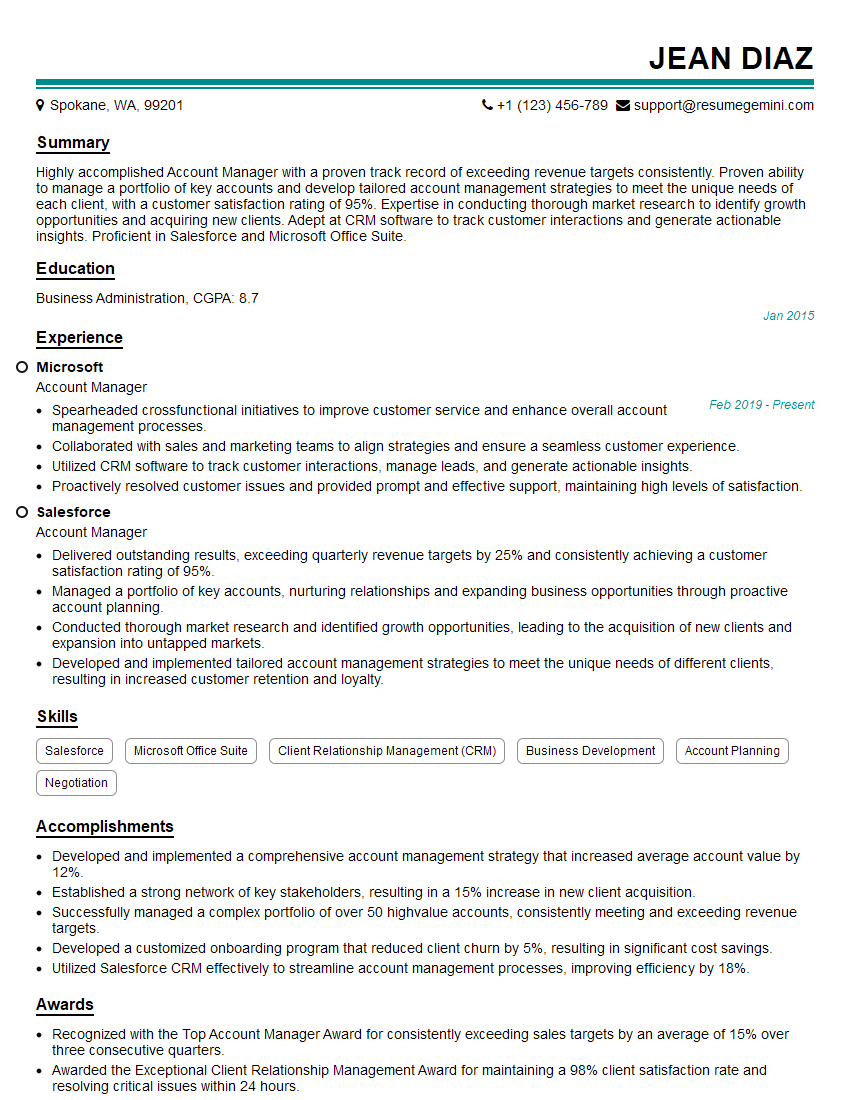
Account Manager Resume Sample
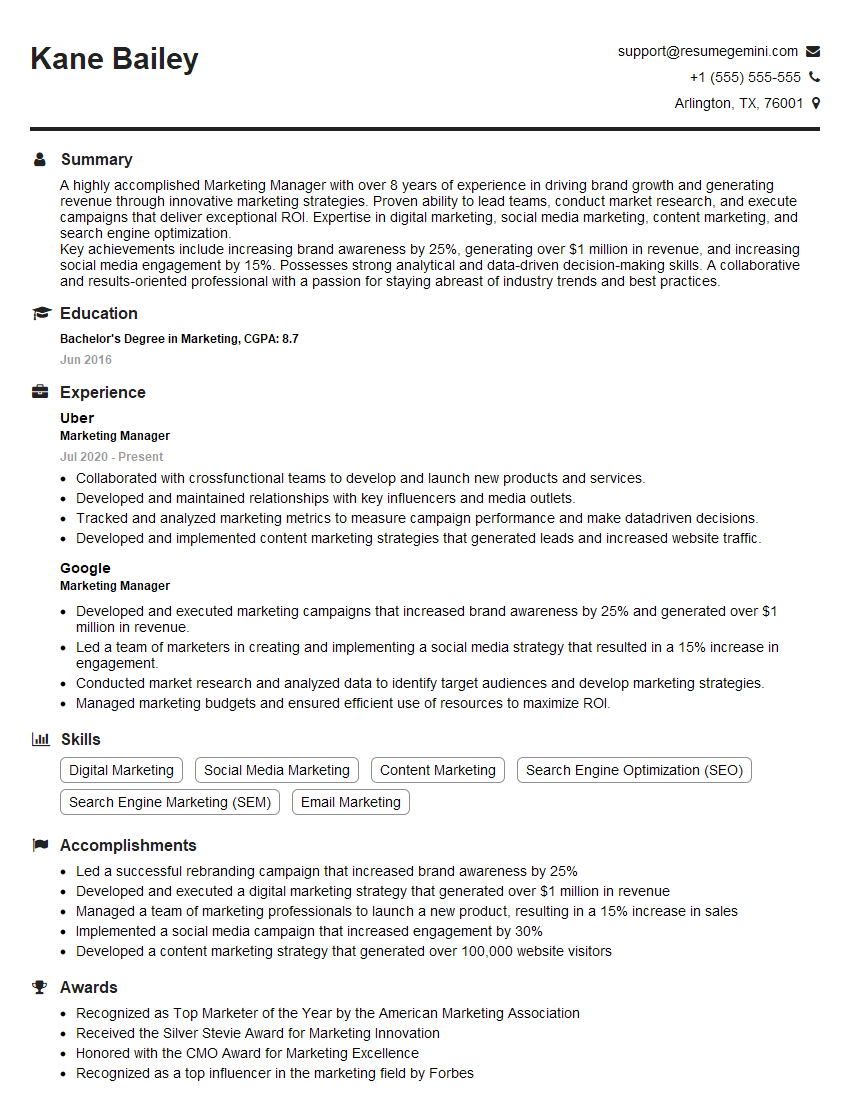
Marketing Manager Resume Sample
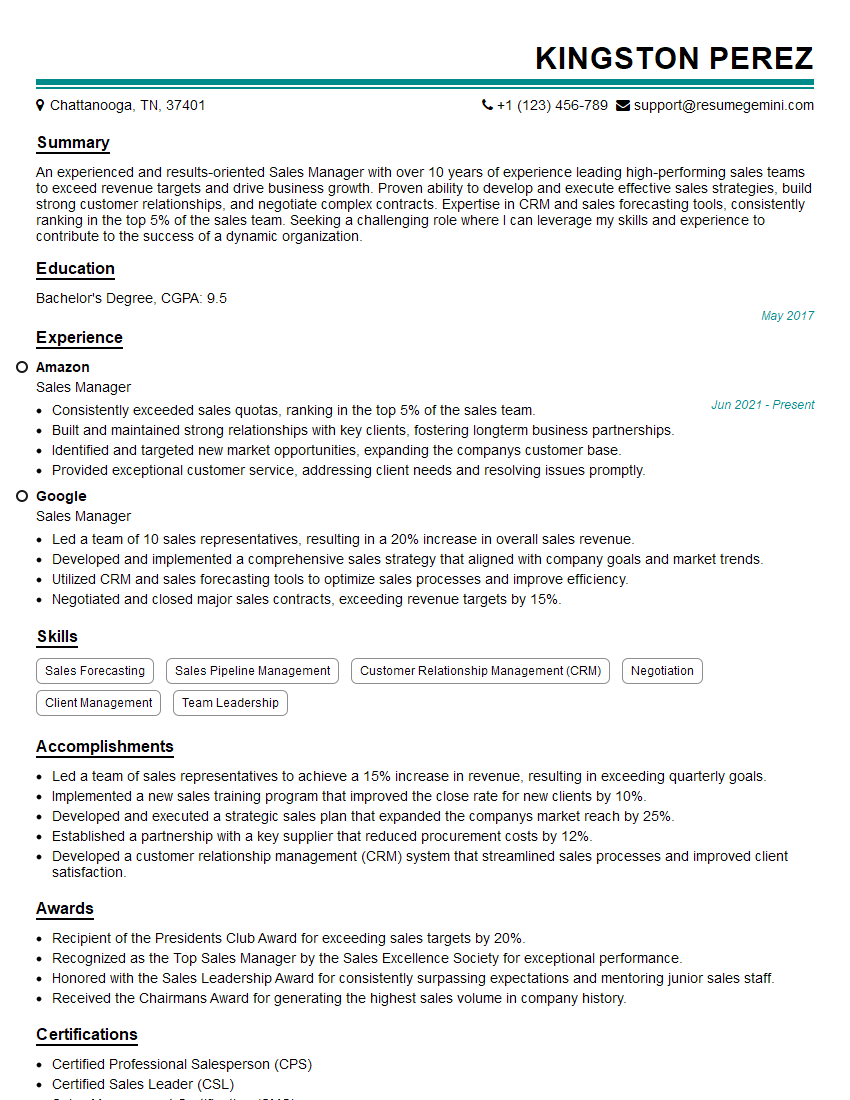
Sales Manager Resume Sample
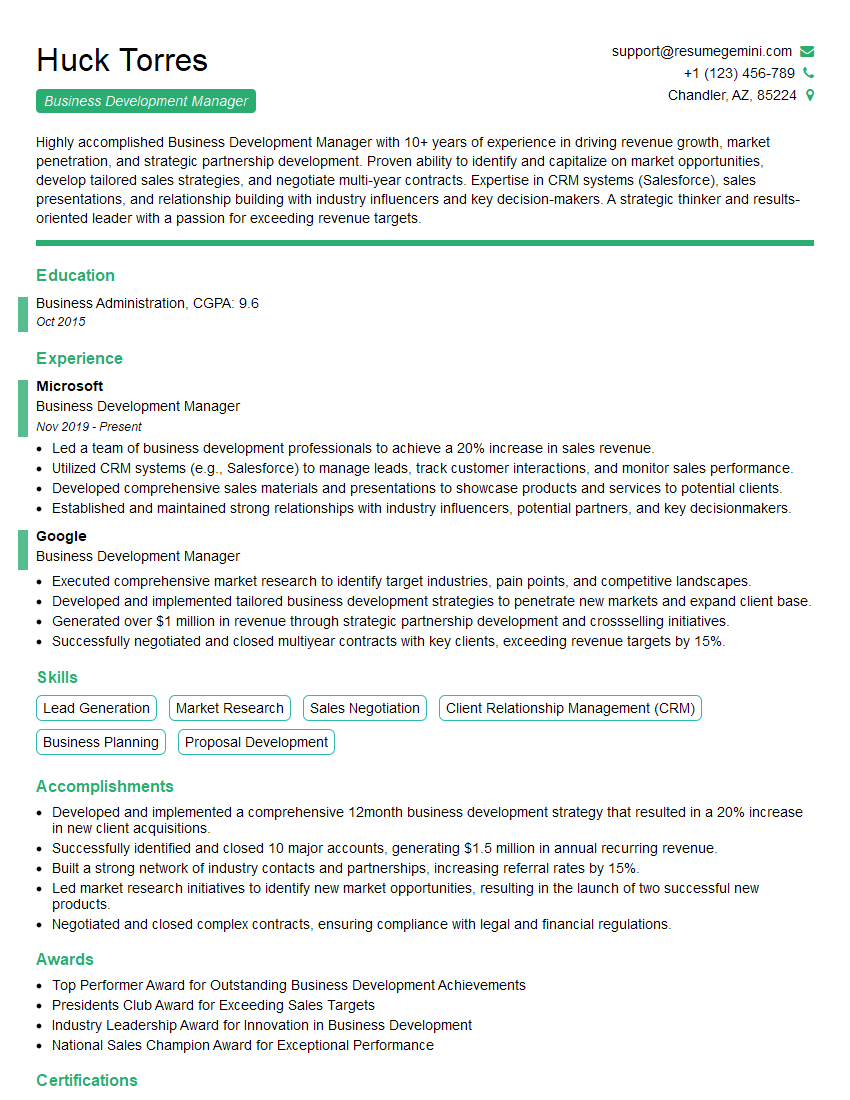
Business Development Manager Resume Sample

Communications Manager Resume Sample

Customer Service Manager Resume Sample
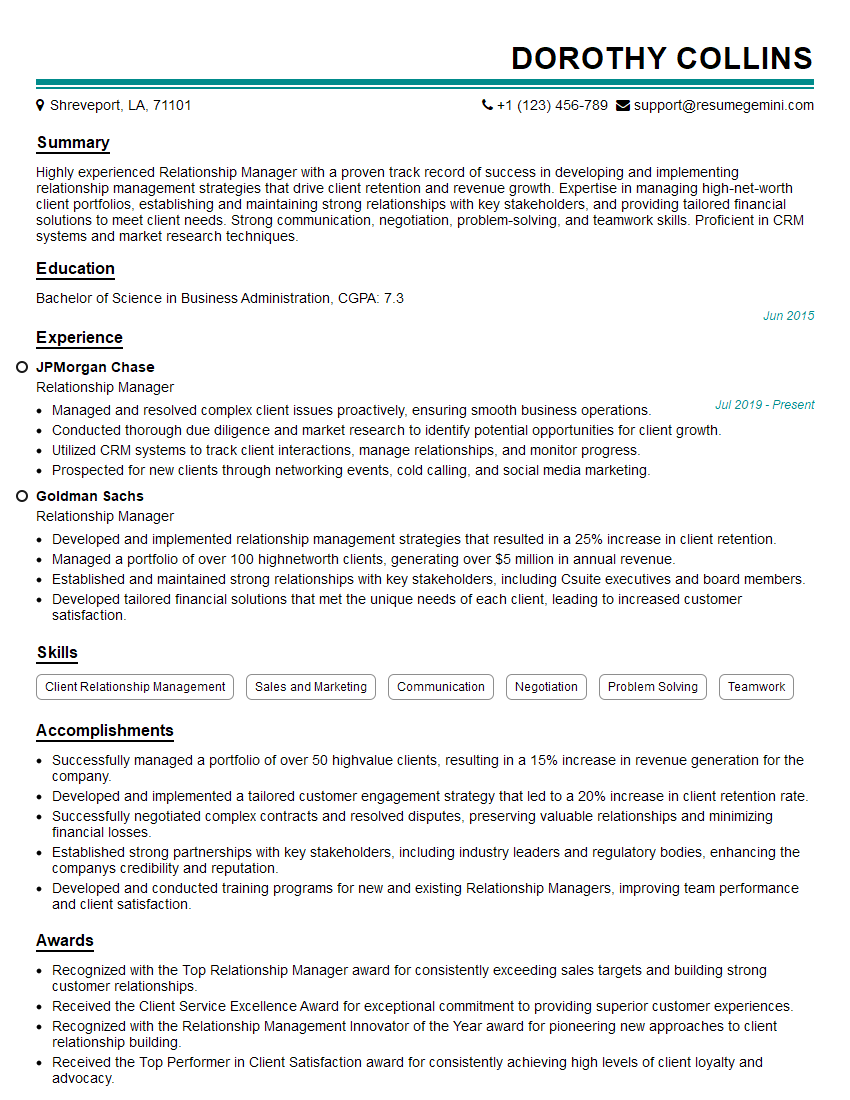
Relationship Manager Resume Sample
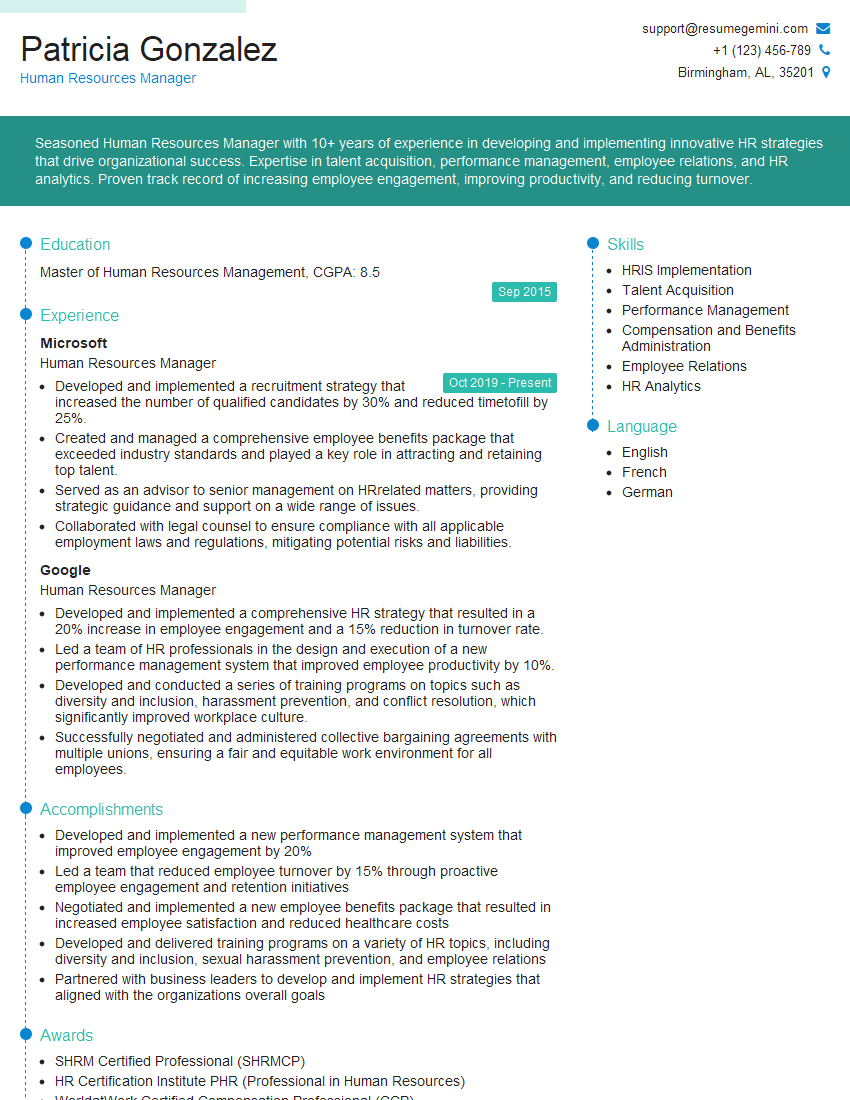
Human Resources Manager Resume Sample
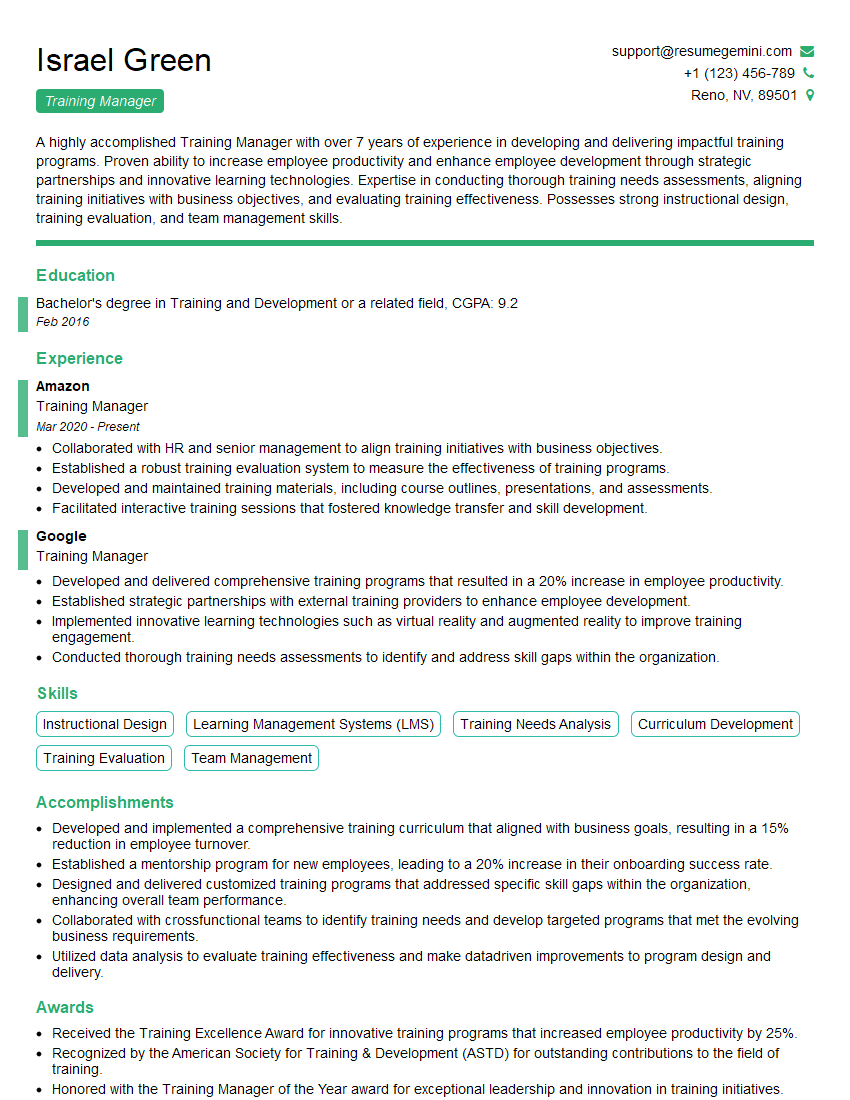
Training Manager Resume Sample

Project Manager Resume Sample
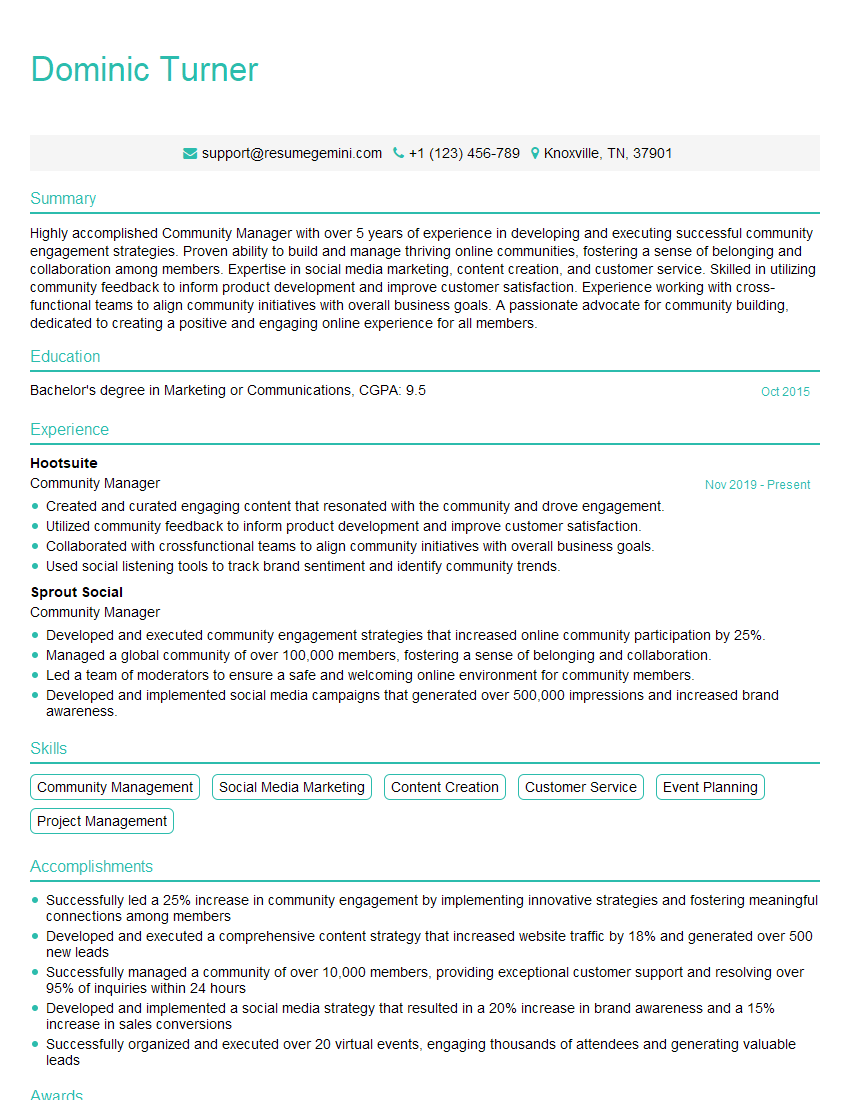
Community Manager Resume Sample
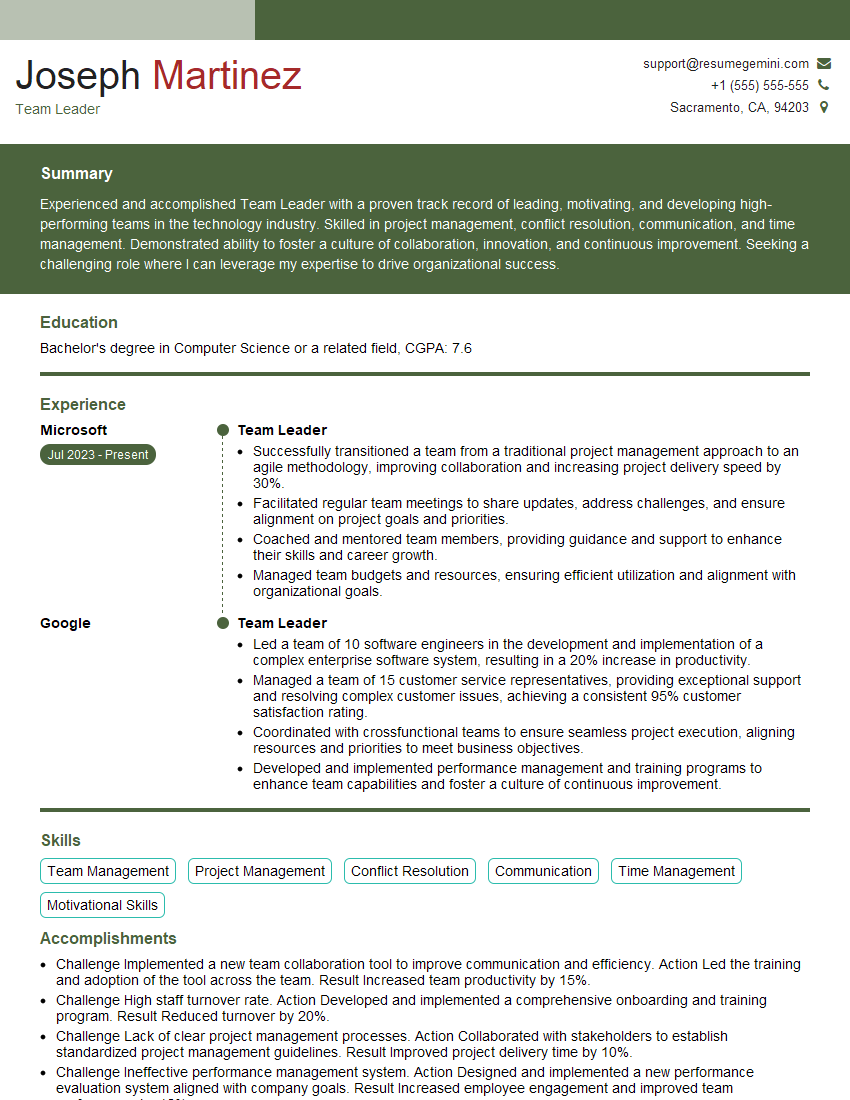
Team Leader Resume Sample
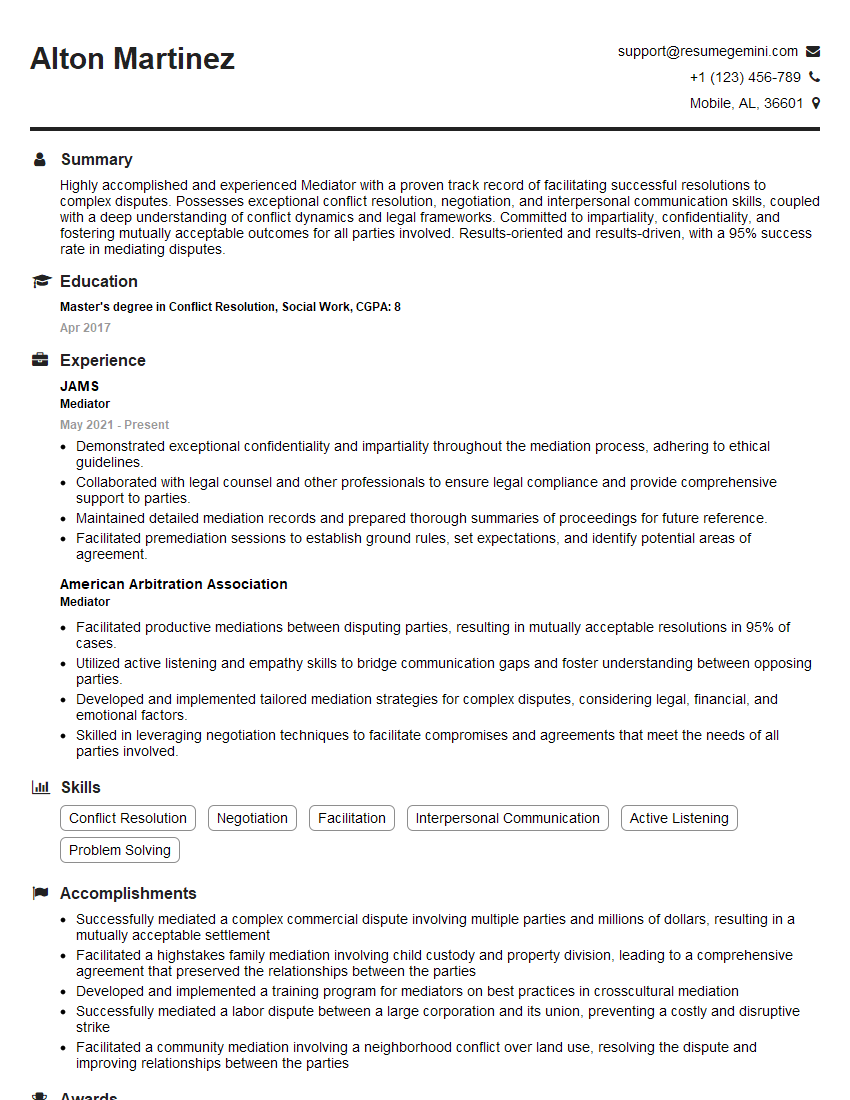
Mediator Resume Sample
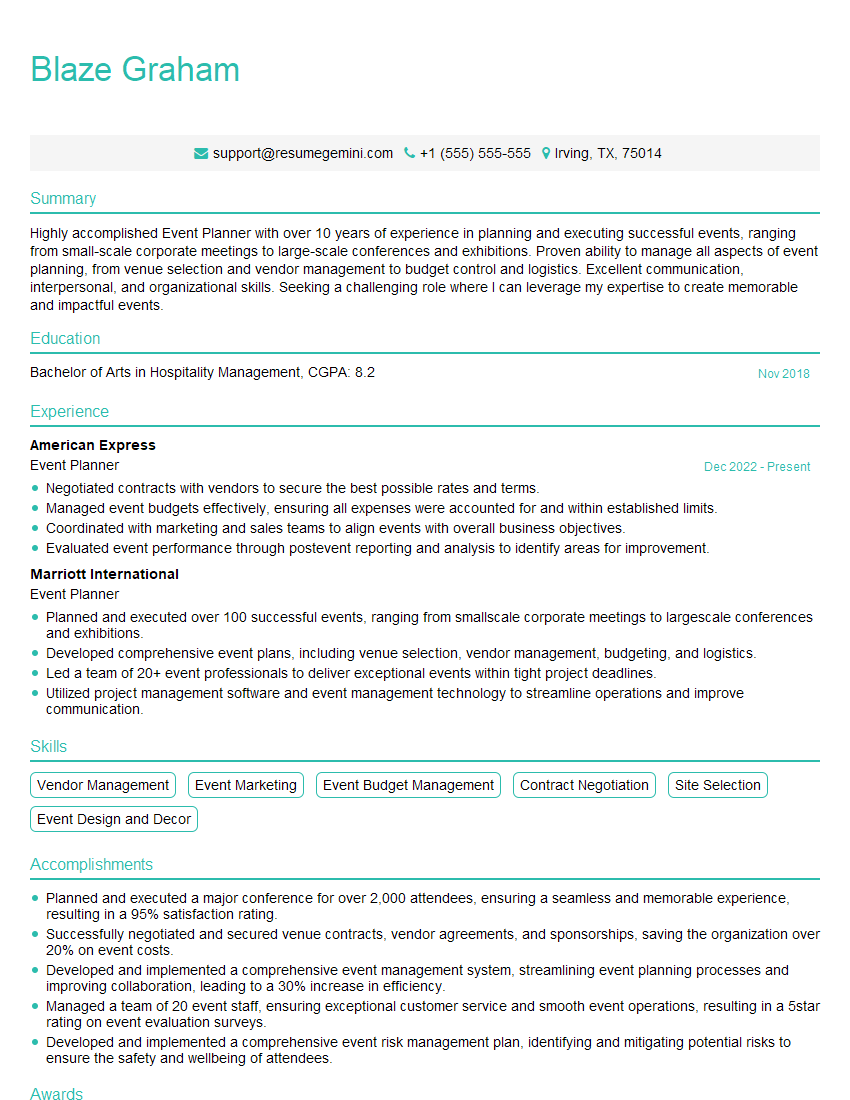
Event Planner Resume Sample

Social Media Manager Resume Sample
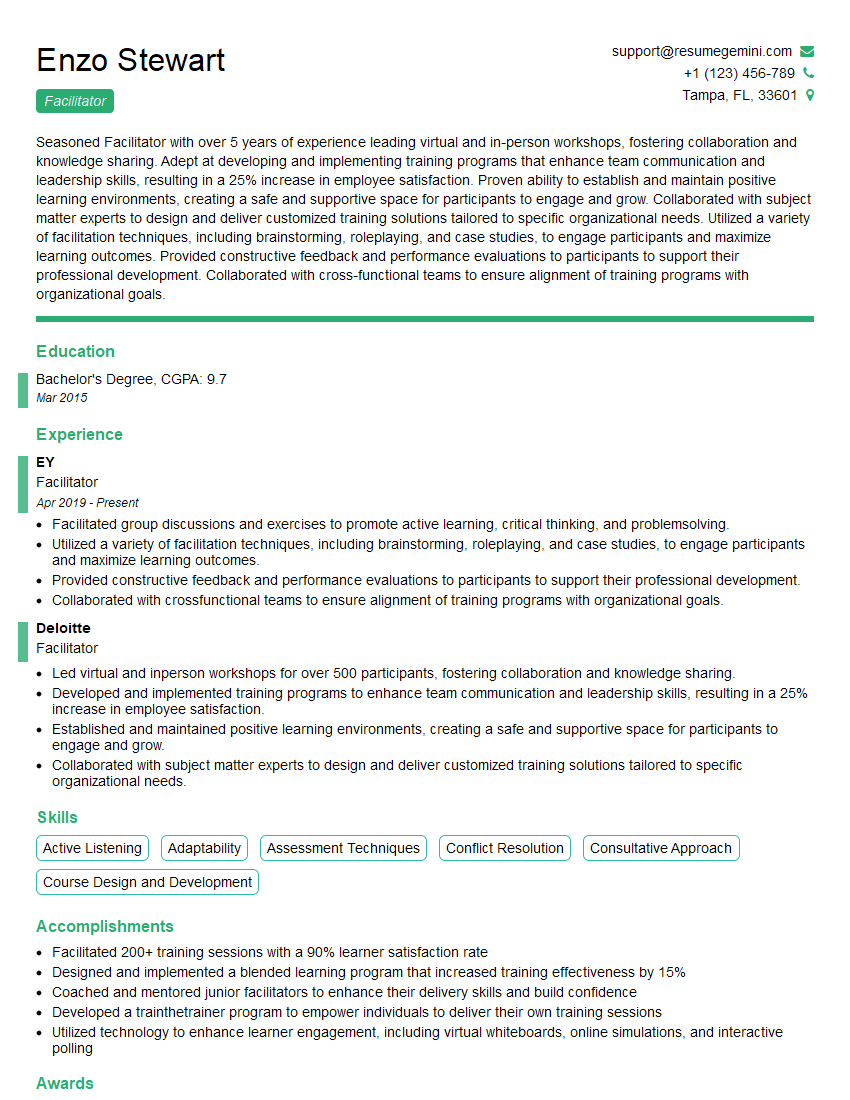
Facilitator Resume Sample
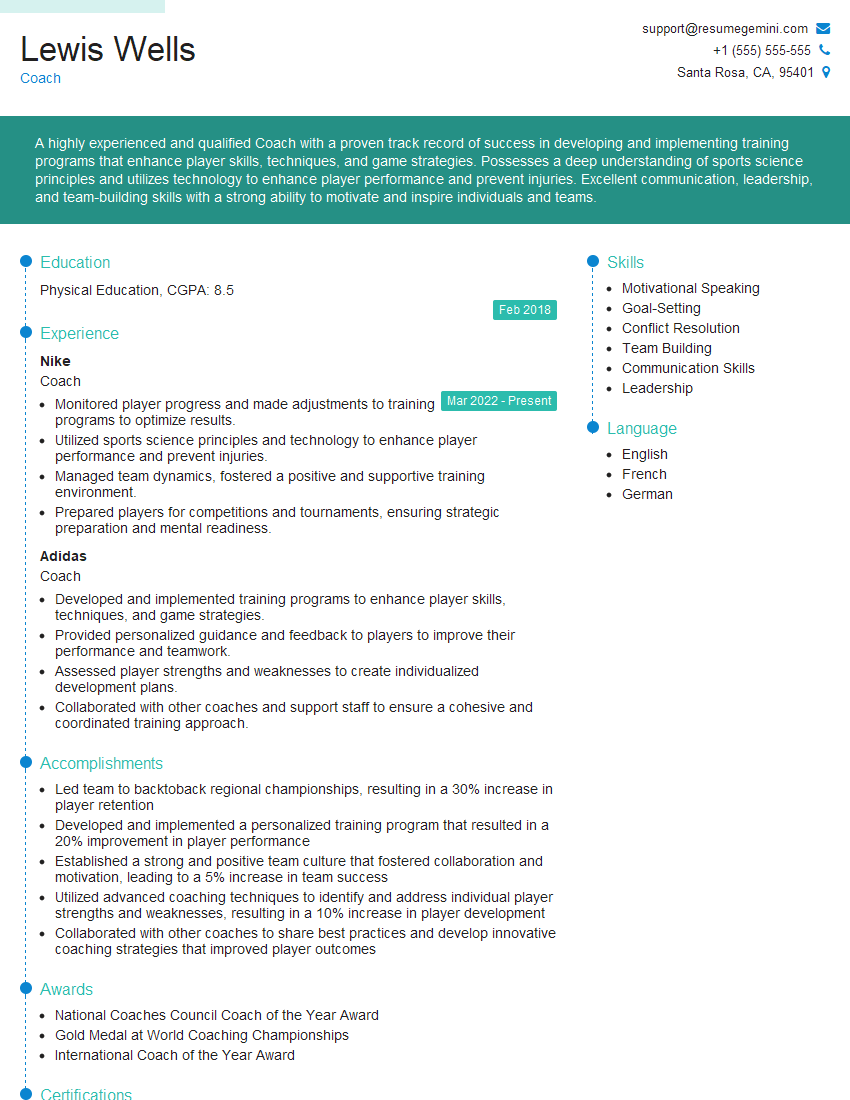
Coach Resume Sample
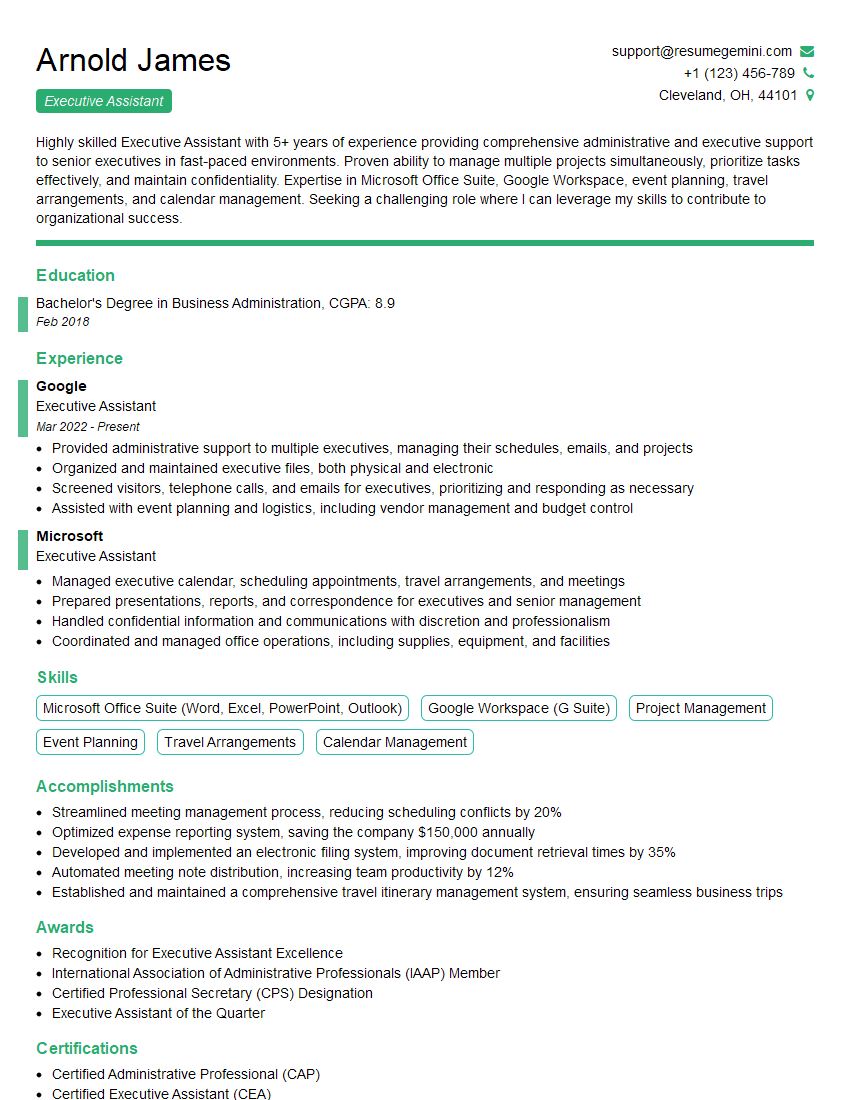
Executive Assistant Resume Sample
- Account Manager
- Marketing Manager
- Sales Manager
- Business Development Manager
- Communications Manager
- Customer Service Manager
- Relationship Manager
- Human Resources Manager
- Training Manager
- Project Manager
- Community Manager
- Team Leader
- Mediator
- Event Planner
- Social Media Manager
- Facilitator
- Coach
- Executive Assistant
Explore more articles
Users Rating of Our Blogs
Share Your Experience
We value your feedback! Please rate our content and share your thoughts (optional).
What Readers Say About Our Blog
I Redesigned Spongebob Squarepants and his main characters of my artwork.
https://www.deviantart.com/reimaginesponge/art/Redesigned-Spongebob-characters-1223583608
IT gave me an insight and words to use and be able to think of examples
Hi, I’m Jay, we have a few potential clients that are interested in your services, thought you might be a good fit. I’d love to talk about the details, when do you have time to talk?
Best,
Jay
Founder | CEO