The right preparation can turn an interview into an opportunity to showcase your expertise. This guide to Irrigation and Drainage System Management interview questions is your ultimate resource, providing key insights and tips to help you ace your responses and stand out as a top candidate.
Questions Asked in Irrigation and Drainage System Management Interview
Q 1. Explain the difference between surface and subsurface irrigation.
The primary difference between surface and subsurface irrigation lies in how the water is delivered to the plant roots. Surface irrigation methods apply water to the soil surface, allowing it to infiltrate and move downwards towards the roots. This includes techniques like flood irrigation, furrow irrigation, and border irrigation. Subsurface irrigation, conversely, delivers water directly beneath the soil surface, using buried pipes or other delivery systems. This minimizes water loss due to evaporation and runoff.
Think of it like watering a houseplant: surface irrigation is like pouring water directly onto the soil; subsurface irrigation is like using a wick to deliver water gradually from below. Surface methods are generally less expensive to implement initially but can be less efficient, leading to higher water consumption and potential runoff issues. Subsurface irrigation, while more costly upfront, tends to be more efficient and conserves water better.
- Surface Irrigation Examples: Flood irrigation (flooding an entire field), furrow irrigation (water flows in channels between crop rows), border irrigation (water flows along levees).
- Subsurface Irrigation Examples: Drip irrigation (using emitters to deliver water slowly), subsurface drip irrigation (SDI) (similar to drip but with buried lines), porous pipe irrigation.
Q 2. Describe various types of drainage systems and their applications.
Drainage systems are crucial for removing excess water from the soil, preventing waterlogging and salinity buildup, and improving soil aeration. Different systems cater to various soil types, topographic conditions, and scales. Here are some key types:
- Open Drains: These are the simplest, consisting of ditches or channels that collect and convey excess water. They are inexpensive but can occupy valuable land and are prone to erosion.
- Subsurface Drains: These use perforated pipes laid underground to collect and convey water. They are more efficient than open drains, minimize land use, and can be designed for specific soil conditions. Examples include tile drains (common in flat areas) and mole drains (created by pulling a specialized tool through the soil).
- Vertical Drains: Used in deep-rooted areas where waterlogging occurs at deeper depths, these drains use wells or other vertical conduits to remove excess water.
- Combined Systems: Often, a combination of open and subsurface drains is the most effective solution, particularly in areas with varying topography and soil types.
Applications vary widely. Open drains are frequently used for large-scale agricultural areas with gentle slopes. Subsurface drains are ideal for intensive agriculture, orchards, and landscapes with high-value crops, as they protect against root zone saturation. Vertical drains are often necessary for rice paddies or areas with high water tables.
Q 3. How do you design an irrigation system for a specific crop?
Designing an irrigation system for a specific crop is a multifaceted process that requires careful consideration of several factors. It’s an iterative process, often involving modeling and simulation.
- Crop Water Requirements: Determine the crop’s evapotranspiration (ET) rate – the water lost through evaporation from the soil and transpiration from the plant. This depends on factors such as climate, crop type, and growth stage. Use readily available ET models and local climate data.
- Soil Characteristics: Analyze soil type, texture, infiltration rate, and water holding capacity. Sandy soils require more frequent irrigation but less water per application compared to clay soils.
- Irrigation Method Selection: Choose an irrigation method based on factors like topography, water availability, cost, and crop characteristics. Drip irrigation is suitable for high-value crops, while furrow irrigation is more appropriate for less demanding crops on level land.
- System Design: This involves determining the pipe sizes, spacing of emitters (if drip irrigation), and layout of the entire system to ensure adequate water distribution and minimize pressure losses. Software tools can help optimize this design.
- System Operation and Management: Develop a schedule for irrigating the field based on soil moisture monitoring, weather forecasts, and crop requirements. Include monitoring and maintenance procedures.
Example: Designing for corn. You’d determine the corn’s ET based on local weather data, then consider whether furrow or sprinkler irrigation is best based on the field’s topography. If the field is gently sloped, furrow irrigation may be appropriate. If it’s more irregular, a sprinkler system might be more effective. You would then design the system with appropriately sized pipes and sprinkler heads to deliver the required water volume.
Q 4. What are the key factors to consider when selecting an irrigation method?
Selecting the right irrigation method is a critical decision impacting efficiency, cost, and environmental impact. Key factors include:
- Climate: Areas with high evaporation rates may benefit from subsurface or drip irrigation to minimize water loss. In arid climates, efficient methods are essential.
- Topography: Flat land lends itself to flood or furrow irrigation, while sloping land might necessitate sprinkler or drip irrigation.
- Soil Type: Sandy soils require more frequent irrigation but smaller amounts, while clay soils retain water better but require less frequent, larger applications.
- Water Availability and Quality: Limited water resources favor efficient methods like drip or subsurface irrigation. Water quality affects the selection of components and materials.
- Crop Type and Value: High-value crops justify the higher cost of precise methods like drip irrigation, while low-value crops might only need simpler, cheaper methods.
- Cost of Installation and Operation: Initial investment and ongoing maintenance costs must be considered in the overall economic analysis.
- Labor Requirements: Some methods require more labor for operation and maintenance than others.
A cost-benefit analysis considering these factors is crucial in making an informed decision. For instance, a farmer in an arid region with high-value crops might prioritize a drip irrigation system despite the higher upfront cost, to maximize yield and minimize water waste.
Q 5. Explain the concept of water balance in irrigation management.
Water balance in irrigation management refers to the accounting of all water entering and leaving the root zone of a plant. It’s a fundamental concept for efficient irrigation scheduling. A balanced system ensures that the soil contains the right amount of water to meet crop needs without excessive water use or wasteful runoff.
The equation is simple: Water In = Water Out + Change in Storage
Water In includes rainfall, irrigation water, and deep percolation from adjacent areas. Water Out includes evapotranspiration (ET), surface runoff, deep percolation beyond the root zone, and drainage. Change in Storage represents the change in soil moisture content over time.
By carefully monitoring these components, irrigators can determine the optimal amount of irrigation water needed to maintain the desired soil moisture level for optimal crop growth. An imbalance, such as excess irrigation, could lead to wasteful runoff or leaching of nutrients. Insufficient irrigation, on the other hand, causes water stress and reduced yields. Efficient management requires precise measurement and forecasting of these components.
Q 6. How do you calculate irrigation water requirements?
Calculating irrigation water requirements involves determining the amount of water needed to compensate for evapotranspiration (ET) losses and maintain the desired soil moisture level. There are several methods, ranging from simple to sophisticated:
- Evapotranspiration (ET) based methods: This is the most common approach. ET is estimated using weather data (temperature, humidity, solar radiation, wind speed) and crop coefficients (Kc) which vary with crop type and growth stage. Many readily available tools, including software and online calculators, perform this calculation. The formula is typically: Irrigation Water Requirement = ET * Kc * Area
- Soil Water Balance approach: This method uses the water balance equation to track changes in soil moisture. Soil moisture sensors provide data on current moisture levels, helping to determine how much water to add to meet the desired moisture content.
- Crop-specific coefficients: Some regions use crop-specific coefficients that are locally calibrated for specific conditions and plant types. These provide refined irrigation estimates.
Example: Let’s say the ET for a specific area is 5 mm/day, the crop coefficient (Kc) for a particular crop at a given growth stage is 1.1, and the area to be irrigated is 1 hectare (10,000 m²). The irrigation water requirement would be: 5 mm/day * 1.1 * 10,000 m² = 55,000 liters/day (or 55 m³).
However, irrigation efficiency must be considered. This accounts for water losses during application. If the irrigation efficiency is 80%, the actual water needed is 55,000 liters / 0.80 = 68,750 liters/day.
Q 7. Describe different methods for measuring soil moisture.
Measuring soil moisture accurately is critical for efficient irrigation management. Various methods exist, each with advantages and disadvantages:
- Gravimetric method: This is the most basic method involving collecting a soil sample, weighing it, drying it in an oven, and weighing it again. The difference in weight represents the soil water content. It’s accurate but time-consuming and destructive.
- Tensiometers: These measure soil water tension (suction), an indirect measure of soil moisture content. They are relatively inexpensive and provide real-time data but are only effective in the range of soil moisture where tension can be measured.
- Time domain reflectometry (TDR): TDR probes use electromagnetic waves to measure the dielectric constant of the soil, which is related to soil moisture content. It’s accurate, non-destructive, and can measure a wider range of soil moistures.
- Neutron probes: These probes use radioactive sources to measure soil moisture. They are accurate and provide readings over a larger soil volume but require specialized training and licensing due to the use of radioactive material.
- Soil moisture sensors: These sensors use various technologies (capacitance, resistance) to estimate soil moisture. They are readily available, relatively inexpensive, and can be used in automated irrigation systems.
The choice of method depends on factors such as accuracy requirements, budget, labor availability, and the scale of the irrigation system. For large-scale operations, automated systems with sensors may be preferred. For smaller-scale or research purposes, gravimetric methods or tensiometers might suffice.
Q 8. What are the common problems encountered in irrigation systems and their solutions?
Irrigation systems, while crucial for agriculture, face several common problems. These often stem from design flaws, operational inefficiencies, or inadequate maintenance. Let’s explore some key issues and their solutions:
Clogging: Sediment, algae, or mineral deposits can clog pipes, sprinklers, and emitters, reducing water flow. Solution: Regular flushing and cleaning, using appropriate filtration systems, and employing proper water management practices.
Uneven water distribution: This leads to over-watering in some areas and under-watering in others, impacting crop yield and water use efficiency. Solution: Proper design and installation, regular inspection and calibration of emitters and sprinklers, and the use of pressure regulating devices.
Leakage: Leaks in pipes and fittings waste precious water and can lead to soil erosion. Solution: Regular system inspection, prompt repair of leaks, using high-quality materials during installation, and employing leak detection technologies.
Pressure imbalances: Variations in water pressure can affect uniformity of distribution. Solution: Installing pressure regulators, ensuring adequate pipe sizing, and optimizing the pump system.
Inappropriate technology: Choosing the wrong irrigation method for the specific soil type, crop, and climate can lead to inefficiencies. Solution: Careful site assessment, considering factors like soil texture, topography, and water availability to select the most appropriate irrigation technology (e.g., drip, sprinkler, furrow).
Addressing these issues through proactive maintenance, proper design, and the use of advanced technologies like smart irrigation controllers can significantly improve the efficiency and longevity of any irrigation system.
Q 9. How do you address drainage issues in poorly drained soils?
Poorly drained soils suffer from waterlogging, hindering root development and plant growth. Addressing this requires improving the soil’s drainage capacity. Strategies include:
Subsurface drainage: Installing a network of perforated pipes beneath the soil surface to collect and convey excess water. This is effective for large areas and can be tailored to site-specific conditions.
Surface drainage: Creating channels or ditches to divert surface runoff, preventing water from accumulating in the field. This is suitable for flatter areas with significant surface runoff.
Soil amendment: Improving soil structure by adding organic matter like compost or manure can increase its porosity and drainage capacity. This improves water infiltration and reduces surface runoff.
Raised beds: Elevating planting beds improves aeration and reduces waterlogging in low-lying areas. This simple technique can be very effective in small-scale applications.
Contour farming: Planting crops along the contours of the land slows down water flow, reducing erosion and allowing better infiltration.
The best approach depends on the severity of the drainage problem, the soil type, and the scale of the operation. Often, a combination of these techniques provides the most effective solution. For example, in a large agricultural field with clay soil, a combination of subsurface drainage and soil amendment might be implemented.
Q 10. Explain the principles of subsurface drainage design.
Subsurface drainage design involves careful planning and calculation to ensure efficient water removal. Key principles include:
Hydraulic gradient: The design needs to establish a sufficient hydraulic gradient (slope) to ensure gravity-driven flow of water through the drainage system. A steeper gradient means faster drainage.
Spacing and depth of drains: The optimal spacing and depth of drainage pipes depend on factors such as soil type, water table depth, and rainfall intensity. Clay soils require closer spacing and shallower drains compared to sandy soils.
Pipe diameter and material: The pipe diameter must be large enough to handle the anticipated flow, and the material should be durable and resistant to corrosion. Common materials include perforated PVC and corrugated plastic pipes.
Outlet design: The outlet system must effectively remove collected water from the field without causing erosion or flooding. This often includes a network of main and secondary drains that converge at a common outlet.
Design often utilizes specialized software or hydrological models to simulate water movement and optimize the drainage system’s performance. Factors like the water table depth, soil properties, and rainfall patterns are inputted into the model, allowing for accurate predictions of drainage effectiveness.
Q 11. Describe the role of GIS in irrigation and drainage management.
Geographic Information Systems (GIS) play a vital role in managing irrigation and drainage systems. GIS provides a powerful platform for:
Spatial data management: Storing, analyzing, and visualizing geographical data related to topography, soil type, land use, and irrigation infrastructure.
System design and planning: Using GIS to model water flow, optimize the layout of irrigation canals, and design efficient drainage networks.
Monitoring and assessment: Tracking water usage, identifying areas with water stress, and evaluating the effectiveness of irrigation and drainage interventions. Remote sensing data integrated into a GIS can provide a real-time view of field conditions.
Precision irrigation management: GIS-based applications can guide variable-rate irrigation, optimizing water application based on site-specific conditions. This ensures that water is only applied where needed, conserving resources and improving efficiency.
Decision support: GIS helps in making informed decisions related to irrigation scheduling, water allocation, and maintenance planning.
Imagine a scenario where a farmer uses GIS to identify areas in their field with poor drainage using soil maps and elevation data. They can then plan the installation of subsurface drains more precisely, targeting problem areas and maximizing the effectiveness of the investment.
Q 12. How do you evaluate the efficiency of an irrigation system?
Evaluating irrigation system efficiency involves quantifying how effectively water is delivered to the target area. Key indicators include:
Water application efficiency (WAE): The ratio of water actually used by the plants to the total amount of water applied. High WAE indicates less water loss due to evaporation, runoff, or deep percolation.
Water use efficiency (WUE): The ratio of crop yield to the amount of water consumed. High WUE means more yield is obtained per unit of water used. This is crucial for sustainable irrigation practices.
Methods to assess efficiency involve field measurements of water application, evapotranspiration, and crop yield. Advanced technologies like soil moisture sensors and remote sensing can help in estimating evapotranspiration and detecting areas of water stress. Water accounting, using flow meters and other measurement devices, is crucial for calculating WAE. Comparing the measured WAE or WUE to benchmark values for the given crop and climate allows farmers to identify areas for improvement.
Q 13. What are the environmental impacts of irrigation and drainage practices?
Irrigation and drainage practices can have significant environmental impacts, both positive and negative. Let’s look at some key aspects:
Water depletion: Over-irrigation leads to groundwater depletion and reduced streamflow, affecting aquatic ecosystems and water availability for other uses.
Salinization: Excessive irrigation with saline water can lead to salt accumulation in the soil, reducing soil fertility and harming plant growth.
Nutrient runoff: Fertilizers applied to irrigated fields can run off into water bodies, causing eutrophication and harming aquatic life.
Greenhouse gas emissions: Irrigation can increase methane emissions from waterlogged soils. The energy consumed in pumping water for irrigation also contributes to greenhouse gas emissions.
Habitat loss: Conversion of natural habitats to agricultural land for irrigation can lead to biodiversity loss.
Sustainable irrigation practices aim to mitigate these negative impacts through water conservation, efficient irrigation technologies, precision irrigation techniques, integrated water resource management, and environmentally friendly fertilization practices.
Q 14. Explain the importance of water quality in irrigation.
Water quality is paramount in irrigation. Using water with high concentrations of salts, heavy metals, or other contaminants can severely damage crops and soil. Key aspects include:
Salinity: High salinity reduces water uptake by plants, causing wilting and reduced yields. Salinity affects soil structure, impacting drainage and aeration.
Sodium adsorption ratio (SAR): High SAR values can lead to soil dispersion and reduced permeability, worsening drainage problems.
Heavy metals: Heavy metals can accumulate in the soil and crops, posing health risks to humans and animals consuming these products.
pH level: Extreme pH values (too acidic or alkaline) can affect nutrient availability and plant growth. Regular monitoring of pH is crucial.
Nutrient levels: Excessive nutrients can lead to nutrient imbalances in the soil, affecting crop health and potentially causing water pollution.
Regular water quality testing is essential to identify potential problems. Management strategies include using appropriate irrigation methods, choosing water sources with suitable quality, and employing water treatment techniques (e.g., reverse osmosis) if necessary. This ensures healthy crops and prevents soil degradation, contributing to sustainable agricultural practices.
Q 15. How do you manage salinity in irrigated lands?
Managing salinity in irrigated lands is crucial for maintaining soil health and crop productivity. Salinity, the accumulation of soluble salts in the soil, hinders plant growth by reducing water uptake and creating osmotic stress. Effective management involves a multi-pronged approach:
- Improved Irrigation Practices: Using efficient irrigation methods like drip or micro-sprinkler irrigation minimizes water wastage and reduces salt accumulation. Applying water more frequently with smaller volumes (to leach out salts) is more effective than infrequent deep irrigations. We call this leaching fraction.
- Drainage Systems: Installing efficient drainage systems is essential to remove excess salts from the root zone. This could involve subsurface drainage using perforated pipes or surface drainage using ditches or channels. The design of the drainage system depends on soil type, topography, and the level of salinity.
- Soil Amendments: Applying organic matter, like compost or manure, can improve soil structure and enhance the soil’s ability to retain water and reduce salt accumulation. Specific amendments like gypsum can also be used to displace sodium ions, improving soil permeability.
- Salt-Tolerant Crops: Selecting and planting salt-tolerant crop varieties is a crucial aspect of managing salinity. These crops are better adapted to saline conditions and can thrive even with higher salt concentrations in the soil. For example, barley is generally more tolerant than other grain crops.
- Monitoring and Evaluation: Regular monitoring of soil salinity levels using electrical conductivity (EC) meters is essential to track the effectiveness of management practices. This allows for timely adjustments to irrigation and drainage strategies.
For example, in a coastal region with high salinity, a combination of subsurface drainage, drip irrigation, and planting salt-tolerant crops like date palms might be an effective strategy. Regular monitoring of soil EC would inform adjustments to irrigation schedules to maintain optimal salinity levels for the selected crop.
Career Expert Tips:
- Ace those interviews! Prepare effectively by reviewing the Top 50 Most Common Interview Questions on ResumeGemini.
- Navigate your job search with confidence! Explore a wide range of Career Tips on ResumeGemini. Learn about common challenges and recommendations to overcome them.
- Craft the perfect resume! Master the Art of Resume Writing with ResumeGemini’s guide. Showcase your unique qualifications and achievements effectively.
- Don’t miss out on holiday savings! Build your dream resume with ResumeGemini’s ATS optimized templates.
Q 16. Describe different types of irrigation scheduling methods.
Irrigation scheduling aims to apply the right amount of water at the right time, optimizing crop yield and water use efficiency. Several methods are available:
- Calendar-Based Scheduling: This is the simplest method, relying on historical data and experience. It’s inexpensive but least precise, as it doesn’t account for variations in weather or soil conditions. It often leads to over-irrigation.
- Soil Moisture-Based Scheduling: This involves regularly monitoring soil moisture using tools like tensiometers, soil moisture sensors, or even simple feel tests. Irrigation is triggered when the soil moisture falls below a predetermined threshold. It’s more accurate than calendar-based scheduling but requires investment in equipment.
- Evapotranspiration (ET)-Based Scheduling: This method estimates the amount of water lost from the soil and plant through evaporation and transpiration. It uses weather data (temperature, humidity, solar radiation, wind speed) and crop coefficients to calculate daily or weekly irrigation needs. This is a more sophisticated and accurate method. Common tools include Penman-Monteith equations.
- Crop Water Stress Index (CWSI)-Based Scheduling: This sophisticated method uses infrared thermometers to measure plant canopy temperature. Differences between canopy and air temperatures indicate the level of water stress experienced by the plant. Irrigation is triggered when stress levels exceed a specific threshold.
For instance, a farmer in a dry region may choose ET-based scheduling, using a weather station to monitor environmental conditions and a Penman-Monteith equation (or simpler approximations) to calculate water requirements. In a smaller, backyard garden, a simple soil moisture check might suffice.
Q 17. What are the advantages and disadvantages of using drip irrigation?
Drip irrigation, a type of micro-irrigation, delivers water directly to the plant roots through a network of small tubes and emitters.
Advantages:
- High Water Use Efficiency: Water is applied directly to the root zone, minimizing evaporation and runoff.
- Reduced Weed Growth: The soil surface remains dry, suppressing weed growth.
- Improved Soil Structure: Less surface disturbance improves soil health.
- Suitable for Sloping Lands: Can be used effectively on uneven terrains.
- Fertilizer Application (fertigation): Nutrients can be dissolved in the irrigation water, optimizing fertilizer use.
Disadvantages:
- High Initial Cost: Installing a drip irrigation system can be expensive compared to other methods.
- Clogging: Emitters can clog easily due to sediment or dissolved salts in the water.
- Maintenance: Requires regular maintenance to check for leaks and clogged emitters.
- Not Suitable for All Crops: Certain crops with extensive root systems may not benefit as much.
- Uneven Water Distribution: Potential for uneven water distribution if the system is not properly designed or maintained.
For example, a vineyard would benefit greatly from drip irrigation due to its water efficiency and ability to target individual vines, while a large field of wheat might be better suited to more widespread methods such as sprinkler irrigation.
Q 18. How do you design a drainage system for a highway?
Designing a highway drainage system involves managing runoff from rainfall and preventing water from accumulating on the road surface or causing erosion. A well-designed system involves several key components:
- Grading and Cross Slopes: The highway surface must be graded with a cross slope to direct runoff towards the sides. This prevents water from ponding on the road.
- Ditches and Channels: Ditches or open channels are often used along the sides of the highway to collect runoff from the road surface. Their design depends on the rainfall intensity, drainage area, and soil conditions. They often utilize grassed waterways for erosion control.
- Culverts: Culverts are closed conduits, typically pipes or box culverts, used to carry water under the highway. They are sized based on hydrological analysis and provide safer passage of water under the road, while still maintaining traffic flow.
- Storm Drains: Storm drains are used in urban areas to collect runoff from the road and surrounding areas and convey it to larger drainage systems or water bodies. These typically involve inlets and pipes.
- Retention/Detention Basins: These are used to temporarily store runoff, reducing peak flows and minimizing downstream flooding. They are particularly important in areas with high rainfall intensities.
- Erosion Control Measures: Measures such as riprap, vegetated slopes, and erosion control blankets are essential to prevent erosion and sediment damage to the drainage system and the surrounding environment.
The design process usually starts with a hydrological analysis to determine the peak flow rates expected during design storms. This information is then used to design the size and capacity of the drainage structures. For example, the design of a highway drainage system in a mountainous region would differ considerably from that in a flat, low-lying area because of the variations in the runoff characteristics.
Q 19. Explain the principles of hydraulics in relation to irrigation and drainage.
Hydraulics, the study of fluid motion and behavior, is fundamental to irrigation and drainage system design and operation. Key principles include:
- Flow Rate and Velocity: Understanding the flow rate (volume of water moving per unit time) and velocity (speed of water flow) in pipes, channels, and open conduits is critical for designing appropriately sized systems to ensure adequate water delivery and drainage. We use equations like Manning’s equation or Hazen-Williams equation to model flow.
- Energy Conservation: The principle of energy conservation (Bernoulli’s equation) dictates that the total energy of a fluid remains constant along a streamline. This is used to determine pressure drops in pipes, head losses in channels, and the energy required for pumping.
- Head Loss: Friction between the water and the channel or pipe walls causes energy loss, termed head loss. This loss needs to be accounted for when designing irrigation and drainage systems. Factors like pipe roughness and flow velocity affect head loss.
- Open Channel Flow: Many irrigation and drainage systems utilize open channels (canals, ditches). The flow in open channels is governed by principles of hydraulic geometry, relating flow depth, width, and velocity. Manning’s equation is commonly used for modeling such flows.
- Pressure Flow: In pressurized systems (pipelines), pressure is a key factor influencing flow rate and design. The pressure head and friction losses are carefully considered when sizing pumps and pipes.
For example, designing a canal system requires applying the principles of open channel flow to determine the appropriate dimensions of the canal to carry the desired flow rate with minimal head loss. Similarly, designing a pipeline system requires applying pressure flow principles to calculate pressure drops and pump requirements.
Q 20. What are the common types of pumps used in irrigation systems?
Several types of pumps are used in irrigation systems, each suited to different applications:
- Centrifugal Pumps: These are the most common type used in irrigation due to their relatively low cost, ease of maintenance, and ability to handle a wide range of flow rates and pressures. They use a rotating impeller to increase the fluid velocity and pressure.
- Submersible Pumps: These pumps are submerged in the water source, minimizing priming requirements and reducing suction problems. They are often used for deep wells or boreholes.
- Axial Flow Pumps: These pumps move large volumes of water with low pressure increases. They are suitable for low-head applications such as canal systems.
- Positive Displacement Pumps: These pumps deliver a constant flow rate regardless of pressure variations. They are used for high-pressure applications or when precise flow control is needed.
- Propeller Pumps: Similar to axial flow pumps, but with a greater capacity, they are suited for large-scale irrigation projects with significant flow requirements.
The choice of pump depends on several factors including the required flow rate, discharge head, water source characteristics (depth, submergence), power availability, and budget. For example, a large-scale irrigation project might utilize a combination of centrifugal pumps and axial flow pumps to meet its flow requirements, while a small farm might use a submersible pump for a deep well.
Q 21. How do you maintain and repair irrigation equipment?
Regular maintenance and timely repairs are vital for ensuring the longevity and efficient operation of irrigation equipment. A proactive maintenance strategy includes:
- Regular Inspections: Inspect the entire system regularly for leaks, damaged pipes, clogged emitters, and malfunctioning components. This should be done before, during, and after each irrigation season.
- Cleaning: Clean filters and screens regularly to prevent clogging. Flush pipelines to remove sediment and debris. For drip irrigation, it might involve acid washing for removing mineral deposits from emitters.
- Lubrication: Lubricate moving parts of pumps and other equipment according to the manufacturer’s recommendations.
- Repair or Replacement: Repair or replace damaged parts promptly to prevent further damage and downtime. This might include replacing worn seals in pumps, repairing leaky pipes, or replacing faulty valves or emitters.
- Storage: Proper storage of equipment during the off-season prevents damage from weather and corrosion.
- Calibration: Regularly calibrate flow meters and pressure gauges to ensure accurate measurements and efficient water management.
For example, a farmer could establish a regular schedule for checking and cleaning filters on his pump and drip irrigation system. He should also have spare parts on hand to address any immediate repairs to minimize the downtime during peak irrigation seasons. Similarly, a larger irrigation management company might have a dedicated maintenance crew to conduct routine checks and repairs on their systems.
Q 22. Describe your experience with different types of soil and their drainage characteristics.
Understanding soil type is paramount in irrigation and drainage design. Different soils have vastly different water holding capacities and drainage rates. For instance, sandy soils drain quickly because of their large pore spaces, leading to frequent irrigation needs but reduced leaching potential. Conversely, clay soils have tiny pores, retaining water for extended periods which can lead to waterlogging if not properly managed. Silty soils fall somewhere in between. My experience encompasses working with all three types, requiring different strategies:
Sandy Soils: Frequent, lighter irrigation applications are necessary to avoid runoff and nutrient loss. Drip irrigation is often preferred.
Clay Soils: Infrequent, deeper irrigation is more effective but requires careful monitoring to prevent waterlogging. Subsurface drainage systems may be essential. We often use soil moisture sensors to guide irrigation scheduling.
Silty Soils: These soils offer a balance, requiring a moderate irrigation strategy. We often use a combination of methods – such as drip irrigation supplemented by furrow irrigation – depending on the specific site conditions.
In practice, I always conduct a thorough soil survey to determine the soil texture, structure, and organic matter content before designing any irrigation or drainage system. This informs the selection of the appropriate irrigation method and drainage strategy.
Q 23. What software are you familiar with for irrigation and drainage design?
I’m proficient in several software packages commonly used for irrigation and drainage design. These include:
AutoCAD: For creating detailed site plans, drainage layouts, and pipe networks.
Civil 3D: Offers advanced capabilities for surface modeling, hydraulic analysis, and design of complex drainage systems. I regularly use it to model water flow and assess the impact of different design options.
HEC-RAS (Hydrologic Engineering Center’s River Analysis System): This is crucial for analyzing the hydraulics of open channels and drainage networks, especially in larger-scale projects. For example, I’ve used it to design drainage systems for flood mitigation.
IrriCad: Specifically designed for irrigation system design, allowing for precise placement of emitters, pipe sizing, and pump selection. It facilitates efficient water distribution design.
Beyond these, I also have experience using GIS software (like ArcGIS) for spatial data analysis and integration with the design process. For example, this allows me to overlay soil maps with topography to optimize irrigation layout.
Q 24. How do you handle conflicts between irrigation and environmental protection?
Balancing irrigation needs with environmental protection is crucial. Conflicts often arise regarding water usage, habitat disruption, and nutrient runoff. My approach involves a multi-faceted strategy:
Water Conservation Techniques: Implementing efficient irrigation methods (drip, micro-sprinklers) minimizes water consumption and reduces the strain on water resources. This is often the first step, as conservation has multiple positive impacts.
Environmental Impact Assessments: Before project commencement, thorough assessments identify potential impacts on wetlands, riparian zones, and endangered species. We often involve ecologists and environmental consultants to ensure we can address these concerns proactively.
Nutrient Management: Precision irrigation helps to optimize fertilizer application, reducing runoff and preventing nutrient pollution in nearby water bodies. This ensures environmental protection while enhancing productivity.
Stakeholder Engagement: Open communication with local communities, environmental groups, and regulatory bodies is vital to addressing concerns and finding acceptable solutions. A collaborative approach is often the most effective way to resolve conflicts.
For example, in one project near a sensitive wetland, we used a buffer zone around the wetland, implemented drip irrigation to minimize runoff, and employed a fertilizer program to reduce nutrient leaching.
Q 25. Describe your experience with water rights and permits.
Navigating water rights and permits is a significant aspect of my work. This involves understanding local regulations, securing the necessary permits, and ensuring compliance throughout the project lifecycle. My experience includes:
Permit Application Preparation: I’ve prepared numerous applications for water rights and environmental permits, ensuring all documentation is complete and compliant with the relevant legislation.
Compliance Monitoring: I routinely monitor water usage to remain within the allocated limits, and I’m adept at making necessary adjustments to meet regulatory requirements.
Water Allocation Strategies: I have expertise in designing irrigation systems that optimize water usage within the constraints of available water rights.
Negotiation and Conflict Resolution: In cases of competing water rights, I facilitate negotiations between stakeholders to find mutually acceptable solutions.
For instance, in a project with limited water rights, I designed a rainwater harvesting system to supplement the available supply, demonstrating a commitment to water conservation and responsible resource management.
Q 26. How do you ensure the sustainability of irrigation and drainage systems?
Sustainability is the cornerstone of modern irrigation and drainage system management. This goes beyond just functionality and encompasses environmental, economic, and social considerations. Key strategies I employ include:
Water-Efficient Technologies: Utilizing drip irrigation, micro-sprinklers, and other technologies that minimize water waste.
Renewable Energy Integration: Incorporating solar or wind power for irrigation pumps reduces reliance on fossil fuels and lowers the environmental footprint.
Soil Health Management: Promoting healthy soil through practices like cover cropping and reduced tillage improves water infiltration and retention.
Community Engagement: Involving local communities in the design and management of irrigation systems ensures their long-term participation and sustainability.
A successful sustainable design considers the entire lifecycle of the system, from construction to decommissioning, minimizing its impact on the environment and maximizing its economic and social benefits for the community.
Q 27. Explain the importance of data logging and monitoring in irrigation management.
Data logging and monitoring are indispensable for efficient and sustainable irrigation management. Sensors placed throughout the field collect data on soil moisture, weather conditions, and water usage. This data is then used to optimize irrigation scheduling and improve water use efficiency.
Precision Irrigation: Data-driven irrigation allows for tailored water application based on real-time needs, preventing overwatering or underwatering. This leads to significant water savings and optimized crop yields.
Early Problem Detection: Monitoring systems can identify issues like leaks, clogged emitters, or pump malfunctions early on, allowing for timely repairs and preventing larger problems.
Data Analysis for Improvement: Collected data informs decision-making, allowing for continuous improvement in irrigation practices and resource management. This helps to identify trends and improve future irrigation strategies.
Remote Monitoring: Many modern systems enable remote monitoring and control, increasing convenience and efficiency.
For example, in one project, data from soil moisture sensors indicated uneven water distribution. By analyzing this data, we identified a blockage in the main pipe and quickly resolved the issue, preventing significant crop loss.
Q 28. How do you address challenges related to water scarcity in irrigation?
Water scarcity necessitates a multi-pronged approach to irrigation management. Strategies include:
Water-Efficient Irrigation Technologies: Prioritizing technologies like drip irrigation and micro-sprinklers that deliver water directly to plant roots, minimizing evaporation and runoff.
Rainwater Harvesting: Collecting rainwater for irrigation supplements existing water supplies and reduces reliance on scarce resources. This is particularly effective in arid and semi-arid regions.
Water Recycling and Reuse: Treating and reusing wastewater for irrigation can significantly reduce water demand, especially in areas with treated wastewater readily available.
Drought-Resistant Crops: Selecting and planting drought-tolerant crops reduces water requirements without sacrificing crop yields.
Improved Water Management Practices: Implementing strategies such as soil moisture monitoring, scheduling irrigation based on evapotranspiration, and employing deficit irrigation techniques can optimize water use.
In a recent project in a water-stressed region, we combined rainwater harvesting with a drip irrigation system and drought-tolerant crops to significantly reduce water consumption while maintaining high crop yields. This showcased the effectiveness of integrating multiple strategies to address water scarcity issues.
Key Topics to Learn for Irrigation and Drainage System Management Interview
- Hydrology and Hydraulics: Understanding water flow, infiltration, and evapotranspiration is fundamental. Consider practical applications like designing efficient irrigation networks and predicting drainage requirements.
- Irrigation System Design and Management: Explore different irrigation methods (e.g., sprinkler, drip, surface) and their suitability for various crops and soil types. Focus on water use efficiency and optimization techniques.
- Drainage System Design and Management: Learn about subsurface and surface drainage systems, including their design principles and maintenance strategies. Consider the impact of drainage on soil health and environmental protection.
- Water Quality Management: Understand the impact of irrigation and drainage on water quality and explore methods for minimizing pollution and salinity issues. This includes understanding water treatment and reuse strategies.
- Sustainable Irrigation and Drainage Practices: Explore environmentally friendly approaches like rainwater harvesting, water-efficient irrigation technologies, and integrated water resource management.
- GIS and Remote Sensing Applications: Familiarize yourself with using Geographic Information Systems (GIS) and remote sensing data for irrigation and drainage planning, monitoring, and management.
- Irrigation and Drainage System Modeling and Simulation: Understand the use of computer models to simulate water flow and evaluate system performance. This includes understanding model limitations and assumptions.
- Project Management and Cost Estimation: Gain knowledge of project planning, budgeting, and risk management within the context of irrigation and drainage projects. Consider economic feasibility assessments.
- Troubleshooting and Maintenance: Be prepared to discuss common problems encountered in irrigation and drainage systems and how to effectively troubleshoot and maintain them.
Next Steps
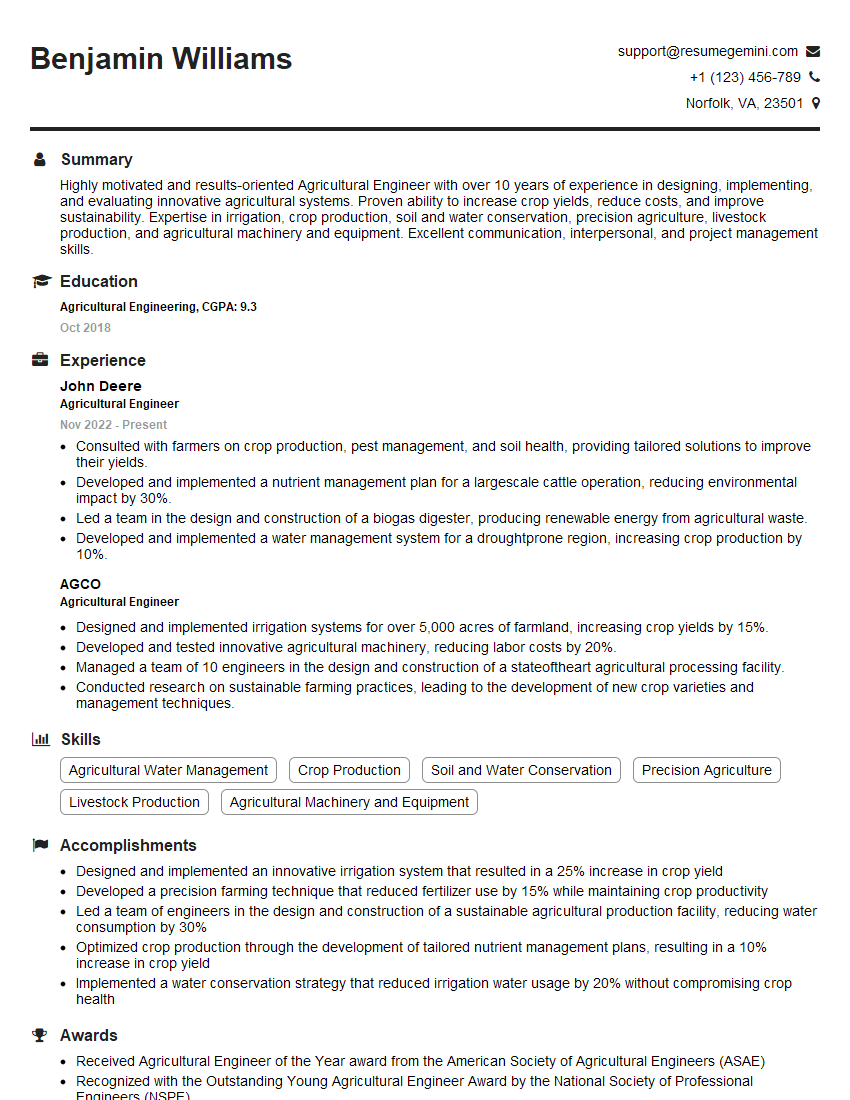
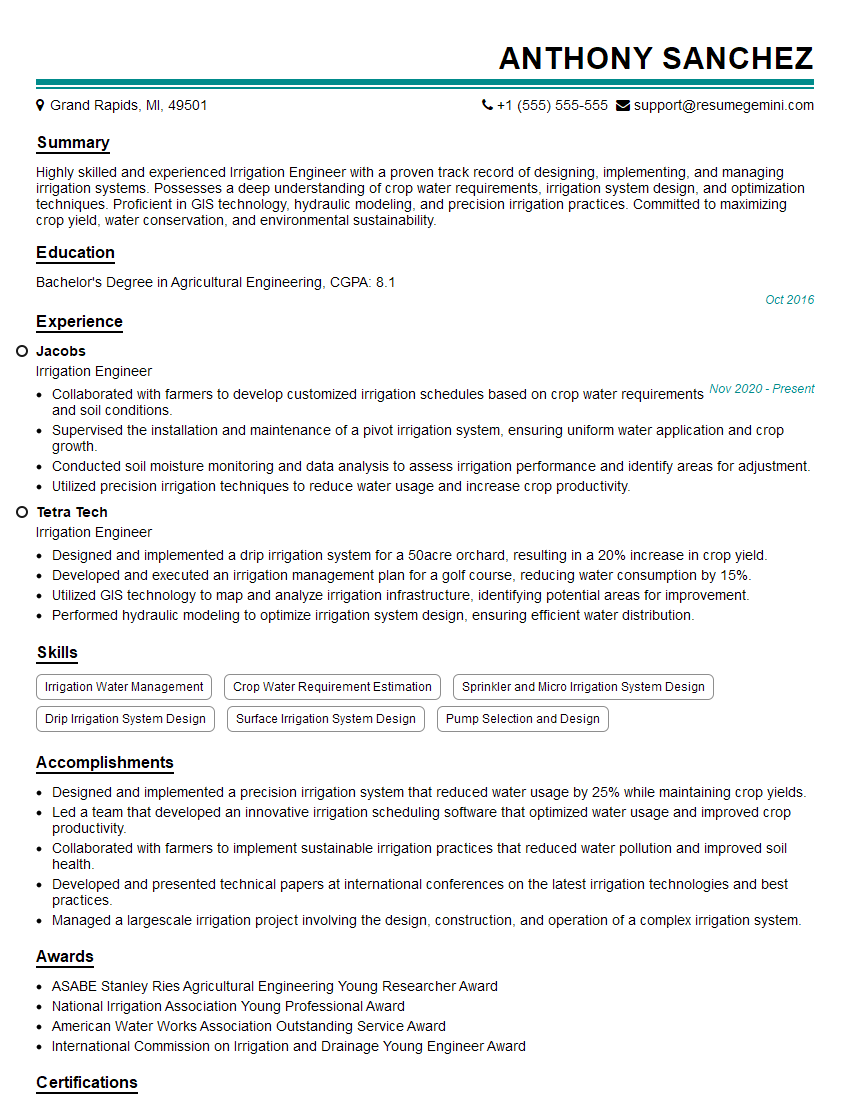
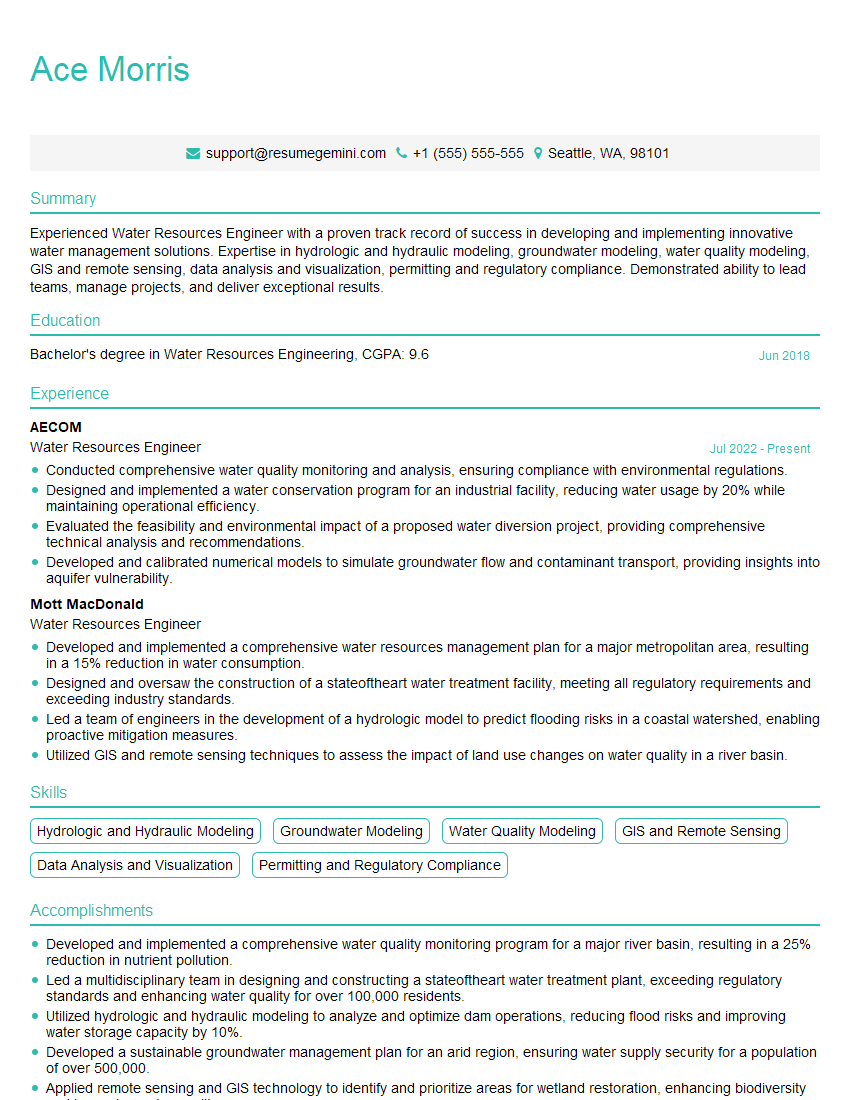
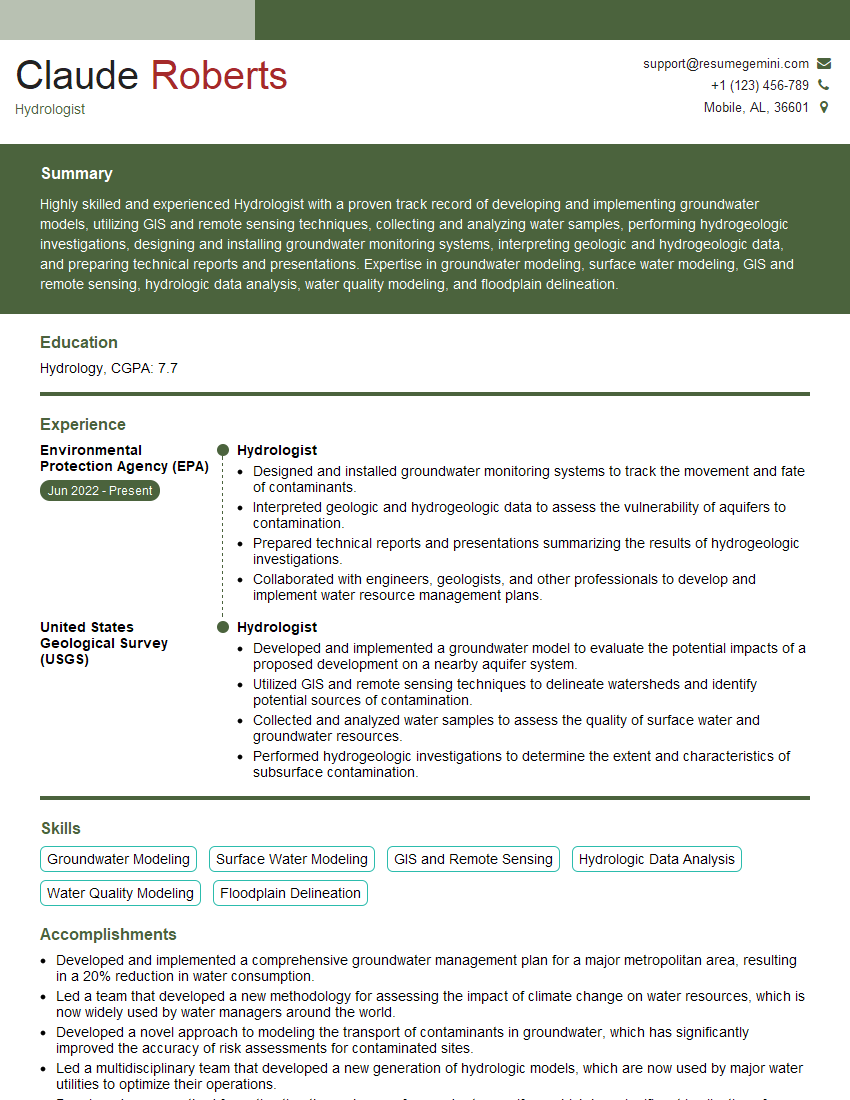
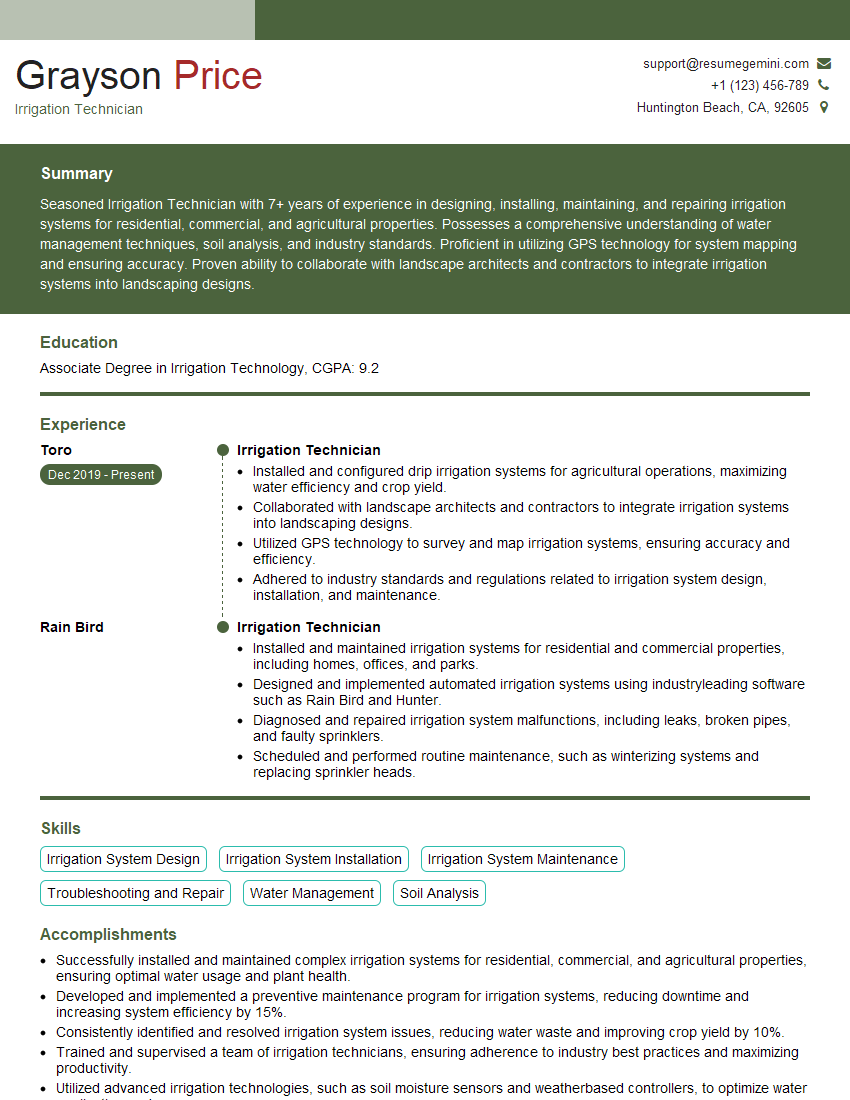
Mastering Irrigation and Drainage System Management opens doors to a rewarding career with significant impact on food security and environmental sustainability. To maximize your job prospects, focus on creating a compelling and ATS-friendly resume that highlights your skills and experience. ResumeGemini is a trusted resource to help you build a professional and effective resume that showcases your qualifications. Examples of resumes tailored to Irrigation and Drainage System Management are available, helping you present yourself in the best possible light to potential employers.

Explore more articles
Users Rating of Our Blogs
Share Your Experience
We value your feedback! Please rate our content and share your thoughts (optional).
What Readers Say About Our Blog
I Redesigned Spongebob Squarepants and his main characters of my artwork.
https://www.deviantart.com/reimaginesponge/art/Redesigned-Spongebob-characters-1223583608
IT gave me an insight and words to use and be able to think of examples
Hi, I’m Jay, we have a few potential clients that are interested in your services, thought you might be a good fit. I’d love to talk about the details, when do you have time to talk?
Best,
Jay
Founder | CEO