Unlock your full potential by mastering the most common IT Risk Assessment and Mitigation interview questions. This blog offers a deep dive into the critical topics, ensuring you’re not only prepared to answer but to excel. With these insights, you’ll approach your interview with clarity and confidence.
Questions Asked in IT Risk Assessment and Mitigation Interview
Q 1. Explain the NIST Cybersecurity Framework.
The NIST Cybersecurity Framework (CSF) is a voluntary framework developed by the National Institute of Standards and Technology (NIST) to help organizations manage and reduce their cybersecurity risks. It’s not a set of prescribed controls, but rather a flexible guide that allows organizations to tailor their approach based on their specific needs and risk tolerance. Think of it as a roadmap, not a rigid itinerary.
The framework is organized around five core functions: Identify, Protect, Detect, Respond, and Recover. Each function contains specific categories and subcategories that delve into the specific activities an organization should undertake. For example, under ‘Identify,’ you’d assess your assets, business environment, and risk profile. ‘Protect’ focuses on implementing safeguards like access controls and data encryption. ‘Detect’ covers threat identification and monitoring. ‘Respond’ outlines incident handling procedures, and ‘Recover’ details restoration and recovery planning.
The beauty of the NIST CSF is its flexibility. Organizations can use it to improve their cybersecurity posture regardless of their size, industry, or maturity level. It allows for a tiered approach, enabling organizations to prioritize improvements based on their capabilities and risk appetite. It’s widely adopted and provides a common language for cybersecurity discussions, facilitating collaboration and information sharing.
Q 2. Describe the difference between qualitative and quantitative risk analysis.
Qualitative and quantitative risk analysis both assess potential threats and vulnerabilities, but they differ significantly in their approach and the type of data they produce. Qualitative analysis focuses on descriptive assessments using subjective judgments and scales, while quantitative analysis uses numerical data and statistical methods for a more precise evaluation.
- Qualitative Risk Analysis: This method uses descriptive terms (e.g., low, medium, high) to assess the likelihood and impact of risks. It’s often simpler and faster to conduct, but less precise. Think of it like using color-coded labels to categorize risks – red for high, yellow for medium, green for low. It’s great for getting a quick overview and prioritizing efforts, particularly in the initial stages of risk management.
- Quantitative Risk Analysis: This method uses numerical data, statistical models, and calculations to estimate the likelihood and impact of risks in monetary terms. It’s more complex and requires more data, but provides a more precise picture of the potential financial losses. For example, it might calculate the expected annual loss from a specific threat (e.g., a ransomware attack could cost $500,000 annually with a 10% likelihood of occurrence).
Often, a combination of both qualitative and quantitative methods is used for a comprehensive risk assessment. Qualitative analysis can help prioritize which risks to analyze quantitatively, while quantitative analysis provides a more concrete understanding of the financial impact of specific risks.
Q 3. What are the key components of a Business Impact Analysis (BIA)?
A Business Impact Analysis (BIA) is a crucial process for understanding how disruptions to critical business functions might affect an organization. It helps determine the potential consequences of incidents and informs the development of effective business continuity and disaster recovery plans. Imagine it as a ‘what if’ exercise for your business.
Key components of a BIA include:
- Identifying Critical Business Functions (CBFs): Determining the essential functions required for the organization to operate and achieve its objectives. This often involves input from various departments and stakeholders.
- Determining Maximum Tolerable Downtime (MTD): Establishing the maximum time a CBF can be unavailable before causing unacceptable consequences. This is crucial for prioritizing recovery efforts.
- Assessing the Impact of Disruptions: Analyzing the potential impact of disruptions to each CBF, considering financial losses, reputational damage, legal implications, and other consequences. This might involve interviews, surveys, and document reviews.
- Prioritizing CBFs: Ranking CBFs based on their criticality and the potential impact of their disruption. This helps focus recovery efforts on the most important functions.
- Developing Recovery Strategies: Outlining strategies and plans for restoring each CBF in the event of a disruption. This might include backup and recovery procedures, alternative sites, and communication plans.
The BIA’s output is crucial for determining resource allocation, prioritizing risk mitigation activities, and establishing recovery time objectives (RTOs) and recovery point objectives (RPOs) for business continuity planning.
Q 4. How do you identify and assess vulnerabilities in an IT system?
Identifying and assessing vulnerabilities in an IT system is an ongoing process requiring a multi-faceted approach. It’s like a detective investigating a crime scene, carefully searching for clues that reveal weaknesses.
Key methods include:
- Vulnerability Scanning: Automated tools scan systems for known vulnerabilities using databases like the National Vulnerability Database (NVD). Think of it as a security camera system that passively monitors for suspicious activity.
- Penetration Testing (Pen Testing): Simulates real-world attacks to identify exploitable vulnerabilities. This is like a ‘red team’ actively trying to breach the system to find weaknesses that scanners may miss.
- Security Audits: Manual reviews of security policies, procedures, and configurations to identify weaknesses. This is a thorough review of all the components and configurations.
- Code Reviews: Examining application code for security flaws. This is a close inspection of the source code, scrutinizing for potential vulnerabilities that a penetration test might overlook.
- Threat Modeling: Proactively identifying potential threats and vulnerabilities before they are exploited. This is more proactive than reactive – identifying potential threats before they are exploited.
After identifying vulnerabilities, they are assessed based on their severity, likelihood of exploitation, and potential impact. This assessment helps prioritize remediation efforts, focusing on the most critical vulnerabilities first.
Q 5. What are the different types of risk responses?
Once risks have been identified and assessed, organizations must choose a response strategy. The four primary risk response types are:
- Avoidance: Eliminating the risk entirely. For example, not adopting a new technology that poses a significant security risk.
- Mitigation: Reducing the likelihood or impact of the risk. For example, implementing security controls like firewalls and intrusion detection systems.
- Transfer: Shifting the risk to a third party. For example, purchasing cybersecurity insurance or outsourcing security functions.
- Acceptance: Acknowledging the risk and accepting its potential consequences. This is often used for risks that are low-probability or low-impact.
The choice of response depends on the specific risk, the organization’s risk appetite, and the available resources. A balanced approach often involves a combination of these strategies.
Q 6. Explain the concept of risk appetite and tolerance.
Risk appetite and tolerance are closely related concepts that define an organization’s approach to managing risk. They represent the level of risk an organization is willing to accept in pursuit of its objectives.
- Risk Appetite: This is the overall level of risk an organization is willing to accept in its pursuit of its strategic objectives. It’s a broad statement of how much risk the organization is comfortable with, setting the overall tone for risk management.
- Risk Tolerance: This is the acceptable variation around the risk appetite. It defines the boundaries within which risks can be taken. It’s the acceptable deviation from the ideal risk profile defined by the appetite.
Imagine risk appetite as the speed limit and risk tolerance as the margin of error. You might have a speed limit of 65 mph (appetite), but you’re comfortable driving 60-70 mph (tolerance). Exceeding the tolerance range means you’re operating outside your acceptable risk levels.
Clearly defined risk appetite and tolerance are essential for effective risk management, as they provide a framework for making decisions about how to handle risks and allocate resources. They ensure that risk management activities are aligned with the organization’s overall strategic goals.
Q 7. Describe your experience with risk registers and reporting.
Throughout my career, risk registers and reporting have been integral to my work. A risk register is a centralized repository of identified risks, including their descriptions, likelihood, impact, owners, mitigation plans, and status. I have extensive experience in developing and maintaining risk registers using various tools, from spreadsheets to dedicated risk management software. I am proficient in using these tools to track the lifecycle of each risk, from initial identification to closure, ensuring complete auditability and transparency.
My reporting experience includes generating regular reports summarizing the organization’s risk profile, highlighting key risks, and tracking progress towards mitigation. These reports are tailored to the audience, providing executive summaries for senior management and more detailed information for operational teams. I’m adept at using visualizations (charts, graphs) to effectively communicate complex risk information, making it easier to understand and act upon. My reporting typically includes key performance indicators (KPIs) such as the number of open risks, the overall risk score, and the effectiveness of implemented mitigation strategies. I ensure reports are timely, accurate, and provide actionable insights to inform decision-making and improve the organization’s overall security posture.
In one instance, I developed a customized reporting dashboard that automatically aggregated data from multiple sources, providing real-time visibility into the organization’s risk landscape. This greatly improved the efficiency of risk management and facilitated faster response to emerging threats.
Q 8. How do you prioritize risks?
Prioritizing risks involves a systematic approach to determine which threats pose the greatest danger to an organization. We typically use a risk matrix, combining the likelihood of a threat occurring with its potential impact. This creates a ranked list, allowing us to focus resources on the most critical risks first.
For example, a low likelihood but high impact risk (like a major natural disaster) might rank higher than a high likelihood but low impact risk (like a minor data breach). We often use scoring systems, assigning numerical values to likelihood and impact, then multiplying them to get a risk score. This allows for objective comparison and prioritization. The scoring system should be tailored to the specific organization and its risk tolerance.
- Likelihood: How likely is the threat to occur? (e.g., Low, Medium, High)
- Impact: What is the potential damage if the threat occurs? (e.g., Low, Medium, High – measured in financial loss, reputational damage, legal penalties etc.)
Finally, the prioritization process often involves stakeholder input to ensure alignment with business objectives. A risk that affects a critical business function, even if its likelihood is low, may receive higher priority than a risk impacting a less critical area.
Q 9. What methodologies are you familiar with for risk assessment (e.g., OCTAVE, FAIR)?
I’m proficient in several risk assessment methodologies. OCTAVE (Operationally Critical Threat, Asset, and Vulnerability Evaluation) is a comprehensive framework that helps organizations tailor their risk assessment processes to their specific needs. It involves identifying critical assets, evaluating vulnerabilities, and developing risk mitigation strategies. I’ve used OCTAVE to guide vulnerability assessments and security awareness training programs.
The Factor Analysis of Information Risk (FAIR) model is a quantitative approach focused on financial impact. FAIR allows for a more precise measurement of risk, using loss expectancy (LE) and frequency of occurrence to quantify the potential cost of a risk event. This enables data-driven decision-making about resource allocation for risk mitigation. I’ve used FAIR in large-scale enterprise risk assessments to justify investments in cybersecurity measures.
Other methodologies I am familiar with include NIST Cybersecurity Framework and ISO 27005. The choice of methodology depends on the context, organizational size, and available resources.
Q 10. Explain the role of key risk indicators (KRIs).
Key Risk Indicators (KRIs) are metrics that provide an early warning of potential problems. They track the likelihood and/or impact of risks over time, enabling proactive responses. They are crucial for monitoring the effectiveness of risk mitigation strategies and identifying emerging threats.
For example, a KRI for a phishing attack might be the number of successful phishing attempts. A high number indicates a weakness in security awareness training or email filtering. Another example could be the number of security alerts generated by an intrusion detection system. A sudden spike in alerts might signal a potential intrusion attempt requiring immediate attention.
Effective KRIs are:
- Specific and Measurable: Clearly defined and easily quantifiable.
- Actionable: Provide insights that lead to targeted mitigation strategies.
- Timely: Provide real-time or near real-time data.
Regular monitoring of KRIs is essential for maintaining a robust security posture and preventing incidents.
Q 11. How do you measure the effectiveness of risk mitigation strategies?
Measuring the effectiveness of risk mitigation strategies is an ongoing process. We use several methods to assess their impact, including:
- Monitoring KRIs: Tracking key metrics related to the risk after implementing mitigation strategies. A decrease in the number of security incidents after implementing a new security control shows its effectiveness.
- Security Audits and Penetration Testing: Regular audits and penetration tests help validate the effectiveness of security controls by identifying any remaining vulnerabilities.
- Incident Response Analysis: Analyzing incidents that still occur, even after mitigation strategies, can reveal areas for improvement.
- Cost-Benefit Analysis: Comparing the cost of implementing mitigation strategies against the potential savings from avoided losses.
For example, if a mitigation strategy aimed at reducing phishing attacks resulted in a significant decrease in successful phishing attempts and a reduction in the financial losses associated with them, we can conclude that it’s effective. If, however, the number of attacks remains unchanged, we need to re-evaluate the strategy or consider additional measures.
Q 12. Describe your experience with vulnerability management tools.
I have extensive experience with vulnerability management tools, including QualysGuard, Nessus, OpenVAS, and Tenable.sc. My experience encompasses the entire vulnerability management lifecycle, from vulnerability scanning and assessment to remediation and reporting.
I understand the importance of integrating these tools into a comprehensive security program. This includes scheduling regular scans, analyzing scan results, prioritizing vulnerabilities based on their criticality and exploitability, and working with development and operations teams to remediate identified weaknesses. I’m also familiar with using vulnerability management tools to generate reports for management and compliance purposes.
Beyond the technical aspects, I understand the importance of creating a strong vulnerability management process that incorporates best practices for risk management, communication, and collaboration.
Q 13. What are your experiences with penetration testing and ethical hacking?
I possess significant experience with penetration testing and ethical hacking, having conducted numerous assessments across various environments and technologies. My experience includes both black-box and white-box testing, utilizing various techniques to identify security vulnerabilities. This includes network penetration testing, web application penetration testing, and social engineering assessments.
I’m familiar with industry best practices and ethical guidelines, ensuring all testing activities are conducted responsibly and within legal and ethical boundaries. I’ve worked with clients to develop comprehensive penetration testing programs that align with their risk profiles and business objectives. My reports provide detailed findings, prioritized vulnerabilities, and recommendations for remediation.
I believe a combination of automated tools and manual testing techniques provides the most comprehensive assessment. This allows us to identify vulnerabilities that might be missed by automated tools alone.
Q 14. How do you communicate risk information to both technical and non-technical audiences?
Communicating risk information effectively to both technical and non-technical audiences requires tailoring the message to the audience’s understanding. For technical audiences, I use precise language, detailed reports, and technical diagrams to communicate vulnerabilities, exploits, and mitigation strategies.
For non-technical audiences, I focus on the business impact of risks, using clear, concise language and visuals to illustrate potential consequences. I avoid technical jargon and use analogies to explain complex concepts. For example, instead of discussing specific vulnerabilities, I might explain the risk in terms of potential financial losses or reputational damage.
Regardless of the audience, my communication strategy always involves:
- Clarity: Ensuring the message is easily understood.
- Conciseness: Presenting information in a succinct manner.
- Relevance: Focusing on information that is pertinent to the audience.
- Actionability: Providing clear recommendations for addressing identified risks.
I also believe in using a variety of communication methods, including presentations, reports, dashboards, and regular briefings, to ensure effective information dissemination.
Q 15. Explain the importance of compliance regulations (e.g., GDPR, HIPAA, SOX).
Compliance regulations like GDPR, HIPAA, and SOX are crucial because they establish legal and ethical guidelines for handling sensitive data. Non-compliance can lead to hefty fines, legal action, reputational damage, and loss of customer trust. Think of them as the rulebook for protecting sensitive information.
- GDPR (General Data Protection Regulation): Focuses on protecting the personal data of individuals within the European Union. It mandates strict data handling practices, including consent, data security, and the right to be forgotten. A violation could mean millions of euros in fines.
- HIPAA (Health Insurance Portability and Accountability Act): Governs the privacy and security of protected health information (PHI) in the United States. Healthcare organizations must implement strong security measures to prevent unauthorized access, use, or disclosure of patient data. Failure to comply can result in significant penalties.
- SOX (Sarbanes-Oxley Act): Addresses corporate governance and financial reporting in the United States. It mandates strong internal controls over financial reporting, which includes IT systems and data security, to prevent fraud and ensure accurate financial statements. Non-compliance can impact a company’s credibility and financial stability.
In essence, these regulations aren’t just about avoiding penalties; they’re about building trust with customers and stakeholders by demonstrating a commitment to responsible data handling and security.
Career Expert Tips:
- Ace those interviews! Prepare effectively by reviewing the Top 50 Most Common Interview Questions on ResumeGemini.
- Navigate your job search with confidence! Explore a wide range of Career Tips on ResumeGemini. Learn about common challenges and recommendations to overcome them.
- Craft the perfect resume! Master the Art of Resume Writing with ResumeGemini’s guide. Showcase your unique qualifications and achievements effectively.
- Don’t miss out on holiday savings! Build your dream resume with ResumeGemini’s ATS optimized templates.
Q 16. How do you ensure the security of cloud-based systems?
Securing cloud-based systems requires a multi-layered approach, focusing on both the infrastructure and the applications running within it. It’s like building a fortress with multiple walls and security checkpoints.
- Infrastructure Security: This involves choosing a reputable cloud provider with strong security certifications, configuring firewalls and intrusion detection systems, and regularly patching and updating the underlying infrastructure. Think of this as securing the foundation and outer walls of the fortress.
- Data Security: Encryption at rest and in transit is paramount. Data loss prevention (DLP) tools can monitor and prevent sensitive data from leaving the cloud environment. Access control mechanisms, using techniques like least privilege and role-based access control (RBAC), ensure only authorized personnel can access specific data. This is securing the valuable assets within the fortress.
- Application Security: Secure coding practices and regular penetration testing help identify and remediate vulnerabilities within applications. Input validation and output encoding prevent common vulnerabilities like SQL injection and cross-site scripting (XSS). Think of this as securing each room within the fortress.
- Monitoring and Logging: Continuous monitoring of the cloud environment is vital to detect and respond to security threats. Detailed logs provide valuable insights into system activity and aid in incident investigation. This is like having security guards and surveillance cameras.
A robust security posture requires a combination of these strategies, implemented according to a well-defined security policy and regularly reviewed and updated.
Q 17. Describe your experience with incident response and handling security breaches.
My experience with incident response involves a structured approach following a well-defined incident response plan. This plan typically includes phases like preparation, identification, containment, eradication, recovery, and post-incident activity.
In a previous role, we experienced a phishing attack targeting our employees. Our incident response process allowed us to:
- Quickly identify the compromised accounts through our security information and event management (SIEM) system.
- Contain the breach by disabling affected accounts and isolating affected systems.
- Eradicate the malware through a comprehensive cleanup process, involving antivirus scans and system resets.
- Recover affected data from backups and restore systems to their operational state.
- Conduct a post-incident analysis to identify weaknesses in our security posture and implement improvements, such as enhancing our security awareness training and implementing multi-factor authentication.
This experience highlighted the importance of having a well-defined plan, regularly tested and updated, and a skilled team trained to execute it effectively. Thorough documentation of the incident and the lessons learned is crucial for future improvements.
Q 18. What are your experiences with implementing security controls?
Implementing security controls is about proactively reducing vulnerabilities and minimizing risks. This is done through a risk-based approach, identifying critical assets and prioritizing controls based on their potential impact and likelihood of occurrence.
My experience includes implementing a range of controls, including:
- Access control systems: Implementing role-based access control (RBAC) to limit user access to only necessary resources, and multi-factor authentication (MFA) to add an extra layer of security.
- Network security: Deploying firewalls, intrusion detection/prevention systems (IDS/IPS), and virtual private networks (VPNs) to protect network infrastructure from unauthorized access.
- Data security: Implementing data encryption at rest and in transit, data loss prevention (DLP) tools, and secure data disposal procedures.
- Vulnerability management: Regularly scanning for vulnerabilities, implementing patches, and conducting penetration testing to identify and remediate security flaws.
I’ve also worked on integrating these controls into existing systems, ensuring compatibility and minimizing disruption to business operations. This always involves close collaboration with IT teams and business stakeholders.
Q 19. What are some common threats to IT systems?
IT systems face a wide array of threats, which can be broadly categorized as:
- Malware: Viruses, worms, ransomware, and Trojans can compromise system integrity, steal data, and disrupt operations. Imagine a burglar breaking into your house and stealing valuables.
- Phishing and Social Engineering: These attacks exploit human psychology to trick users into revealing sensitive information or downloading malicious software. Think of a sophisticated con artist tricking you into giving them your credit card details.
- Denial-of-Service (DoS) and Distributed Denial-of-Service (DDoS) Attacks: These attacks flood systems with traffic, rendering them unavailable to legitimate users. Imagine a mob of people blocking the entrance to your house, preventing anyone from entering.
- Insider Threats: Malicious or negligent employees can pose a significant risk to data security. This could be an employee accidentally deleting crucial data or intentionally stealing it.
- Zero-Day Exploits: These attacks exploit newly discovered vulnerabilities before patches are available. This is like a burglar finding a secret entrance to your house that you didn’t know about.
- Data Breaches: Unauthorized access to sensitive data, often due to vulnerabilities or weak security controls.
Understanding these common threats is essential to implementing appropriate security controls and minimizing the risk of a successful attack.
Q 20. How do you manage risks associated with third-party vendors?
Managing risks associated with third-party vendors requires a proactive and thorough approach, similar to managing internal risks, but with an added layer of complexity.
- Vendor Risk Assessment: This is the first step and involves evaluating the vendor’s security posture, including their security policies, procedures, certifications, and incident response capabilities. Think of it as a background check for potential partners.
- Contractual Agreements: Including strong security clauses in contracts, specifying security requirements and responsibilities, and defining clear consequences for non-compliance.
- Continuous Monitoring: Regularly monitoring the vendor’s performance and security practices, and actively looking for any changes that might increase risks.
- Security Audits: Performing regular security audits of the vendor’s systems and processes to identify weaknesses and ensure compliance with agreed-upon security standards.
- Incident Response Planning: Establishing a clear plan to respond to security incidents involving the vendor.
A strong vendor risk management program significantly reduces the chances of a third-party compromise impacting your organization’s security.
Q 21. Describe your experience with security awareness training.
Security awareness training is essential for building a strong security culture within an organization. It’s not just about compliance; it’s about empowering employees to be the first line of defense against cyber threats.
My experience includes developing and delivering tailored training programs that cover topics like:
- Phishing and social engineering: Training employees to identify and avoid phishing attempts and other social engineering tactics.
- Password security: Promoting the use of strong, unique passwords and encouraging the use of password managers.
- Data security: Educating employees about data security policies and procedures, including data handling and storage best practices.
- Safe internet usage: Guiding employees on safe browsing habits and the responsible use of company resources.
- Incident reporting: Encouraging employees to report suspicious activity immediately.
Effective training uses a blend of interactive methods, such as simulations and quizzes, to engage employees and reinforce learning. Regular refresher courses are vital to keep training current and relevant.
Q 22. How do you stay up-to-date on the latest security threats and vulnerabilities?
Staying current in the dynamic landscape of cybersecurity threats requires a multi-faceted approach. It’s not enough to simply read headlines; you need a structured process for continuous learning.
Threat Intelligence Platforms: I subscribe to several reputable threat intelligence platforms (like Recorded Future or ThreatQuotient) that aggregate and analyze threat data from various sources. These platforms provide early warnings of emerging threats and vulnerabilities.
Security Newsletters and Blogs: I regularly read newsletters and blogs from leading security researchers, organizations like SANS Institute, and vendor security advisories. This keeps me informed about new attack techniques, vulnerabilities, and best practices.
Industry Conferences and Webinars: Attending industry conferences (like RSA Conference or Black Hat) and participating in webinars provides valuable insights directly from experts and allows networking opportunities to learn from others’ experiences.
Vulnerability Databases: I actively monitor vulnerability databases like the National Vulnerability Database (NVD) and exploit databases to understand the potential impact of known vulnerabilities and prioritize remediation efforts.
Certifications and Continuous Learning: Maintaining relevant certifications (like CISSP or CISM) requires continuous professional development, forcing me to stay updated on the latest security standards and best practices.
For example, recently, I learned about a new zero-day exploit targeting a specific web server through a threat intelligence platform. This allowed me to proactively assess our systems and implement mitigations before our organization was affected.
Q 23. Explain the importance of data loss prevention (DLP).
Data Loss Prevention (DLP) is crucial for protecting sensitive data from unauthorized access, use, disclosure, disruption, modification, or destruction. Think of it as a security perimeter around your valuable information, preventing it from leaking out.
The importance of DLP stems from several factors:
Compliance Regulations: Industries like finance, healthcare, and government are subject to strict regulations (like HIPAA, PCI DSS, GDPR) that mandate the protection of sensitive data. Failing to implement adequate DLP measures can lead to hefty fines and reputational damage.
Financial Losses: Data breaches can result in significant financial losses due to costs associated with investigation, remediation, legal fees, and potential loss of business.
Reputational Harm: A data breach can severely damage an organization’s reputation, leading to loss of customer trust and business opportunities.
Competitive Advantage: Loss of intellectual property or trade secrets can give competitors a significant edge.
DLP solutions typically involve a combination of technical controls (like network monitoring, data encryption, and access controls) and procedural controls (like data classification policies and employee training). For example, a DLP system might prevent an employee from sending sensitive customer data via unencrypted email or copying it to an unauthorized USB drive.
Q 24. Describe your experience with disaster recovery planning.
Disaster recovery planning (DRP) is a critical aspect of IT risk management. It’s all about having a plan in place to ensure business continuity in the event of a disruptive event – be it a natural disaster, cyberattack, or equipment failure.
My experience encompasses the entire DRP lifecycle:
Risk Assessment: Identifying potential threats and vulnerabilities that could disrupt operations.
Business Impact Analysis (BIA): Determining the impact of different disruptions on business operations, prioritizing critical systems and data.
Recovery Strategy Development: Defining recovery time objectives (RTOs) and recovery point objectives (RPOs) – how quickly we need to recover and how much data loss is acceptable.
Testing and Maintenance: Regularly testing the DR plan through simulations and drills to ensure its effectiveness and updating the plan as systems and processes evolve. This is crucial, as a plan that isn’t tested is only a document, not a viable solution.
Recovery Execution: In the event of a disaster, leading the execution of the DR plan, ensuring timely restoration of critical systems and data.
In a previous role, I led the development and implementation of a DR plan for a financial institution that included a comprehensive offsite backup and recovery strategy, failover to a cloud-based infrastructure, and a detailed communication plan for stakeholders. We successfully tested this plan annually and were able to quickly recover from a server failure with minimal disruption to operations.
Q 25. What is your experience with IT governance frameworks?
IT governance frameworks provide a structured approach to managing and controlling IT-related risks and ensuring alignment with business objectives. They establish processes, policies, and controls to guide IT operations and decision-making.
My experience includes working with several prominent frameworks, including:
COBIT (Control Objectives for Information and Related Technologies): This framework provides a comprehensive set of governance and management objectives for IT, covering areas like planning and organization, acquisition and implementation, delivery and support, and monitoring.
ITIL (Information Technology Infrastructure Library): This framework focuses on the management of IT services, emphasizing best practices for service design, transition, operation, and improvement.
NIST Cybersecurity Framework: This framework provides a voluntary set of standards and guidelines for improving cybersecurity practices. It’s particularly useful for aligning IT security with business risk tolerance.
I have used these frameworks to develop and implement IT governance programs, including establishing policies, procedures, and controls; conducting risk assessments; and reporting on the effectiveness of IT governance initiatives. For instance, I helped an organization implement COBIT to improve its IT risk management processes, resulting in better control over IT investments and reduced security incidents.
Q 26. How do you perform a security audit?
A security audit is a systematic examination of an organization’s IT systems and security controls to identify vulnerabilities and weaknesses. It’s like a thorough health checkup for your IT infrastructure. The goal is to assess the effectiveness of existing security measures and identify areas for improvement.
My approach to performing a security audit involves several key steps:
Planning and Scoping: Defining the scope of the audit, identifying critical systems and assets, and establishing audit objectives.
Data Collection: Gathering evidence through various methods, including interviews, document reviews, vulnerability scans, penetration testing, and log analysis.
Analysis and Evaluation: Analyzing the collected data to identify security weaknesses, gaps in controls, and compliance issues.
Reporting: Documenting findings, recommendations, and remediation plans in a clear and concise report.
Follow-up: Monitoring the implementation of recommended remediation actions.
I employ a risk-based approach, prioritizing the assessment of systems and data that pose the greatest risk to the organization. For example, during a recent audit of a client’s network, we identified a critical vulnerability in their firewall configuration. Our report detailed the vulnerability, its potential impact, and recommended steps for remediation.
Q 27. Explain your understanding of different security architectures (e.g., zero trust).
Security architectures define the structure and functionality of an organization’s security infrastructure. They outline how security controls are implemented and integrated to protect assets. Different architectures offer varying levels of security and complexity.
My understanding includes several common architectures:
Traditional Perimeter-Based Security: This model relies on a network perimeter (firewall) to protect internal assets. It’s considered less secure in today’s cloud-centric environment.
Defense in Depth: This layered approach employs multiple security controls at different points in the network to provide redundancy and prevent a single point of failure. Think of it like a castle with multiple layers of defenses.
Zero Trust Security: This model assumes no implicit trust. Every user, device, and application is verified and authenticated before access is granted, regardless of their location (inside or outside the network). This approach is gaining popularity due to its effectiveness in mitigating insider threats and protecting against breaches.
Zero trust, in particular, is a significant advancement. Instead of simply trusting everything inside the network perimeter, it verifies every access request. It leverages technologies like micro-segmentation, multi-factor authentication, and continuous monitoring to ensure that only authorized users and devices can access specific resources. This significantly reduces the attack surface and limits the impact of breaches.
Key Topics to Learn for IT Risk Assessment and Mitigation Interview
- Risk Identification & Assessment Methodologies: Understanding frameworks like NIST Cybersecurity Framework, ISO 27005, and the importance of qualitative and quantitative risk analysis. Explore vulnerability scanning techniques and penetration testing methodologies.
- Threat Modeling & Vulnerability Management: Practical application of threat modeling techniques like STRIDE and PASTA. Learn how to analyze vulnerabilities, prioritize remediation efforts based on risk levels, and utilize vulnerability management systems.
- Risk Mitigation Strategies & Controls: Developing and implementing effective risk mitigation strategies, including technical, administrative, and physical controls. Discuss the importance of security awareness training and incident response planning.
- Business Continuity & Disaster Recovery: Understanding the principles of business continuity planning (BCP) and disaster recovery planning (DRP). Explore different recovery strategies and the role of IT in ensuring business resilience.
- Compliance & Regulatory Frameworks: Familiarity with relevant regulations and compliance standards like GDPR, HIPAA, PCI DSS, and SOC 2. Discuss how these impact risk assessment and mitigation strategies.
- Metrics & Reporting: Understanding key performance indicators (KPIs) related to IT risk management and the importance of clear and concise reporting to stakeholders. Explore data visualization techniques for effectively communicating risk information.
- Data Security & Privacy: Discuss data loss prevention (DLP) techniques, encryption methods, and the importance of data governance in mitigating data breaches and ensuring privacy compliance.
- Cloud Security & Risk: Understand the unique risk considerations associated with cloud computing environments, including shared responsibility models, cloud security posture management (CSPM), and cloud access security brokers (CASBs).
Next Steps
Mastering IT Risk Assessment and Mitigation is crucial for career advancement in today’s increasingly complex digital landscape. Demonstrating expertise in these areas significantly enhances your value to any organization. To maximize your job prospects, focus on creating an ATS-friendly resume that clearly highlights your skills and experience. ResumeGemini is a trusted resource to help you build a professional and impactful resume that gets noticed. We provide examples of resumes tailored specifically to IT Risk Assessment and Mitigation roles to give you a head start. Invest in crafting a compelling resume – it’s your first impression and a critical step in landing your dream job.
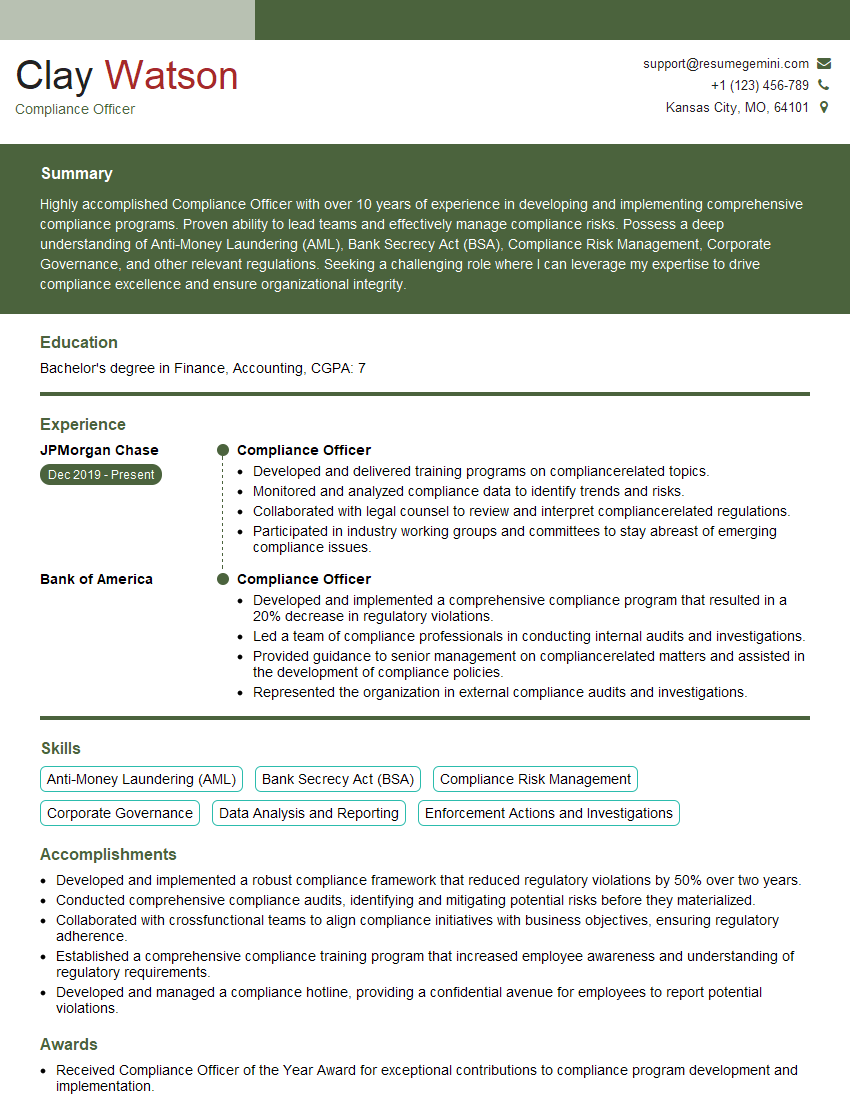
Compliance Officer Resume Sample
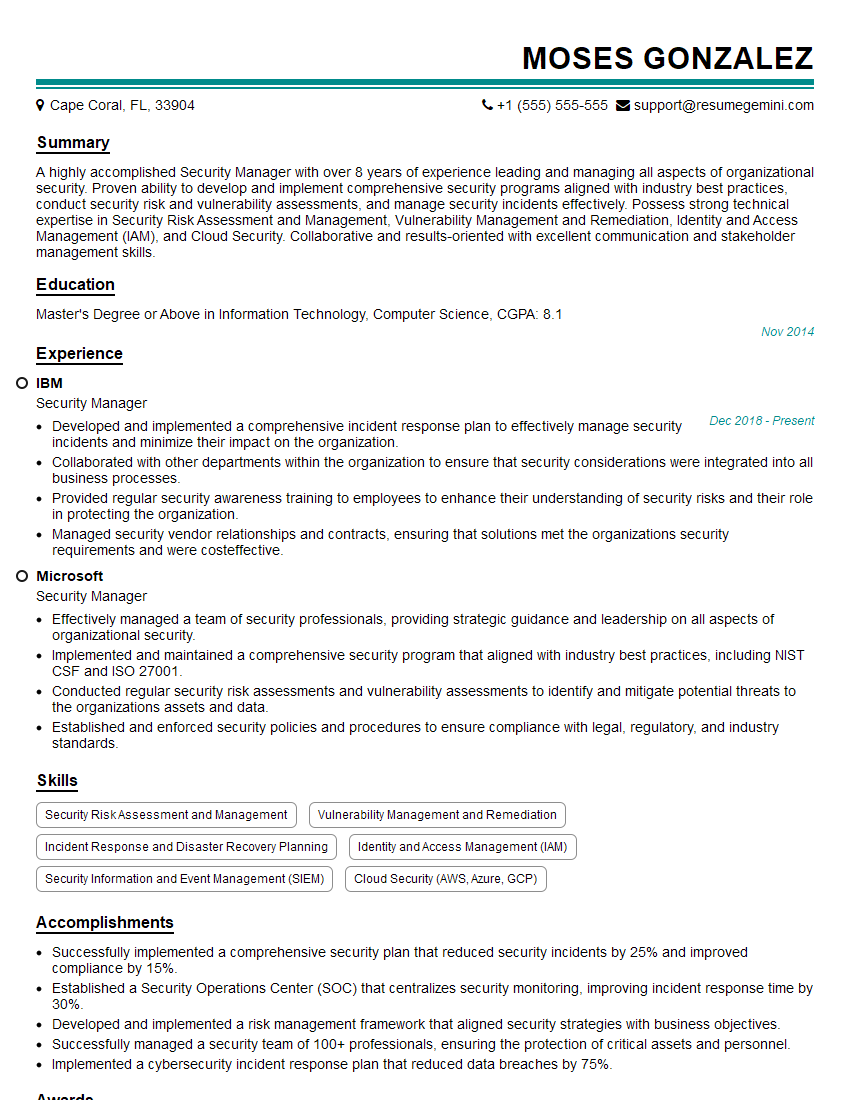
Security Manager Resume Sample
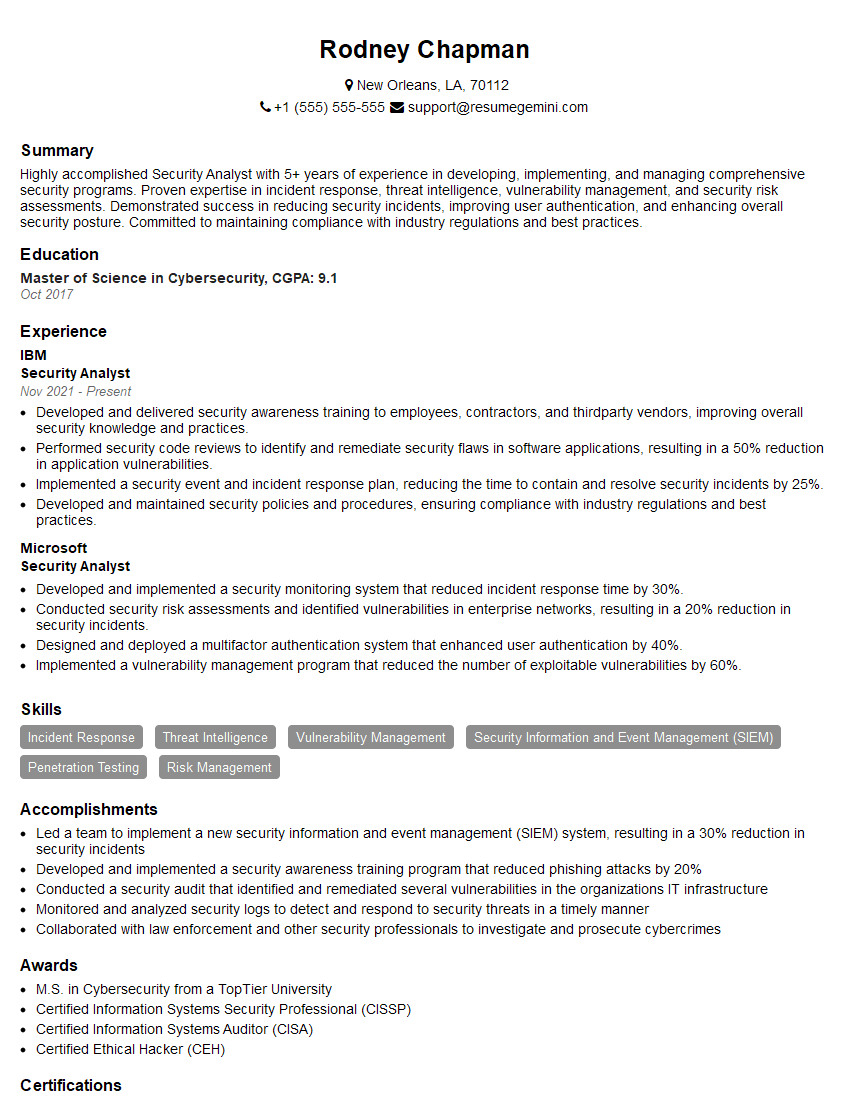
Security Analyst Resume Sample
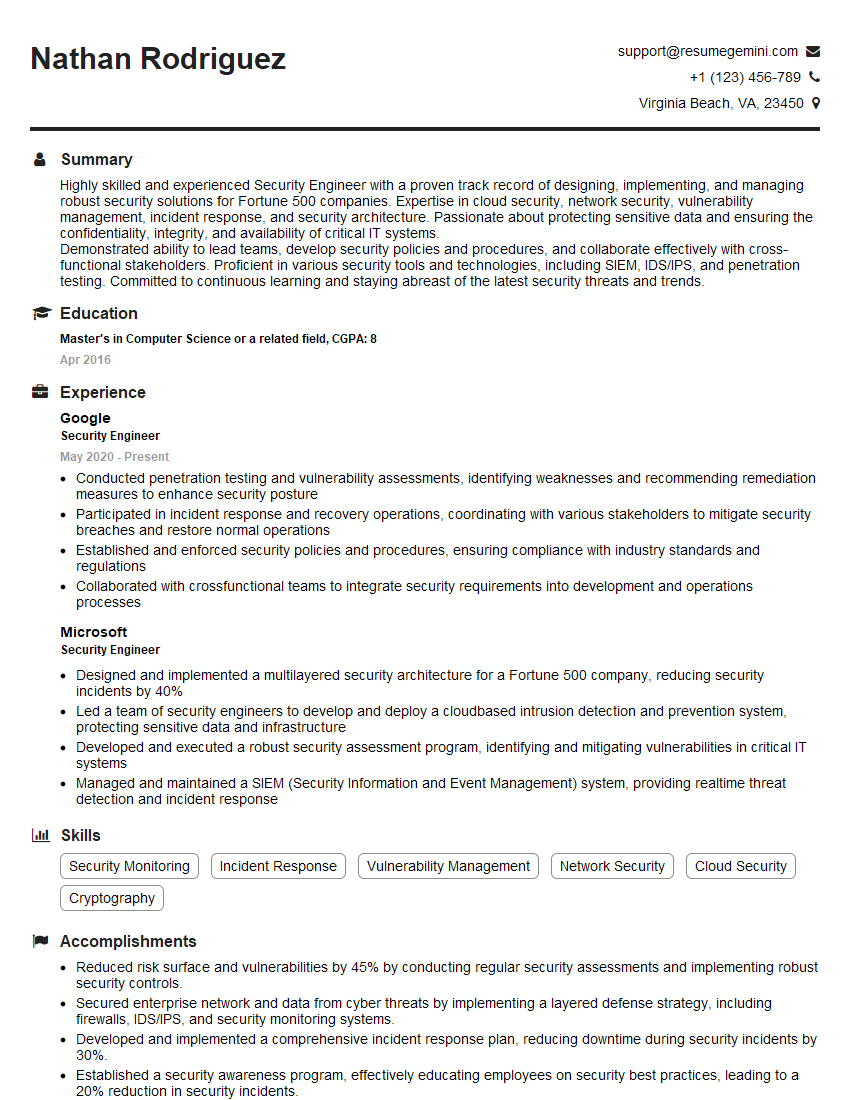
Security Engineer Resume Sample
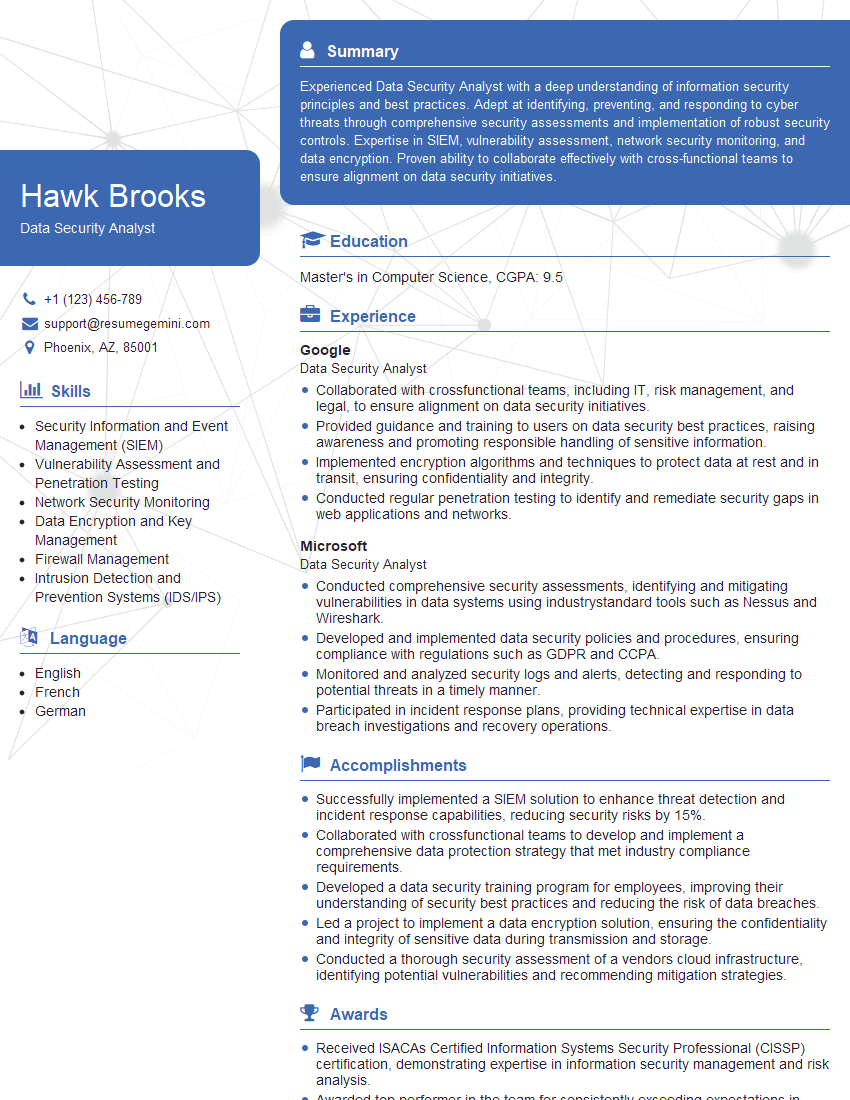
Data Security Analyst Resume Sample
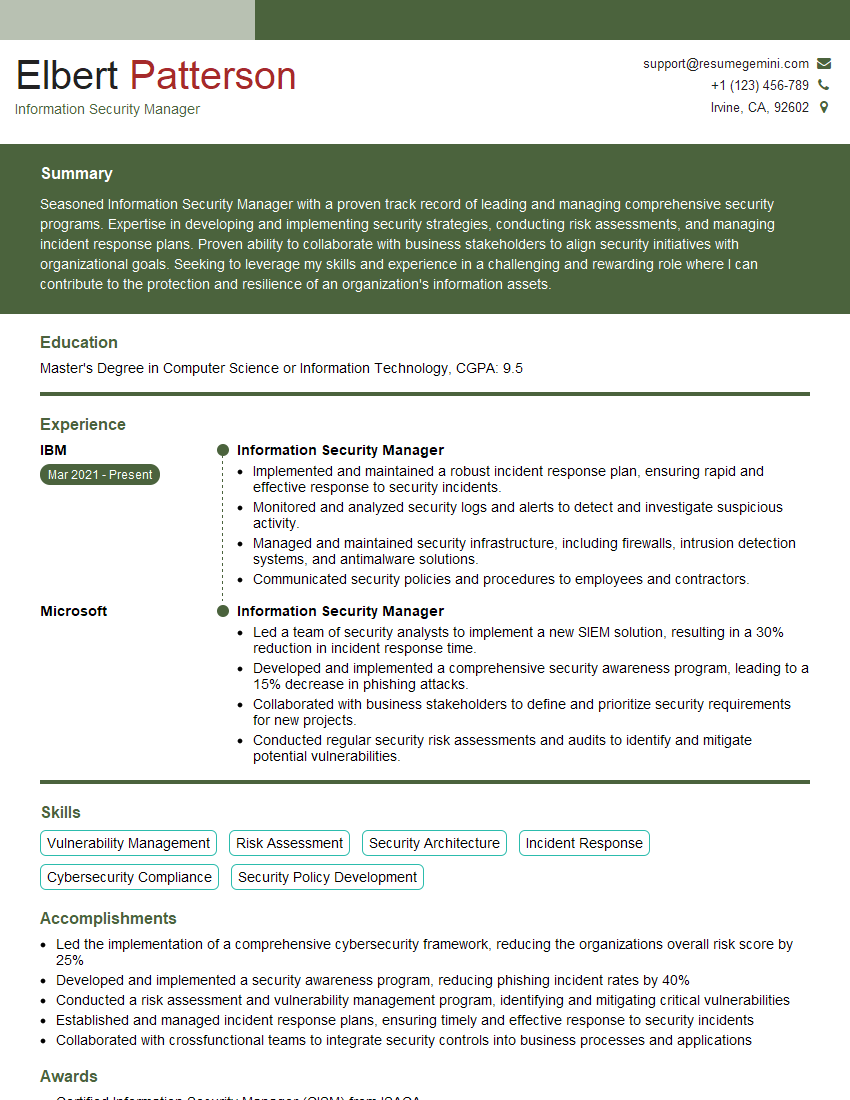
Information Security Manager Resume Sample
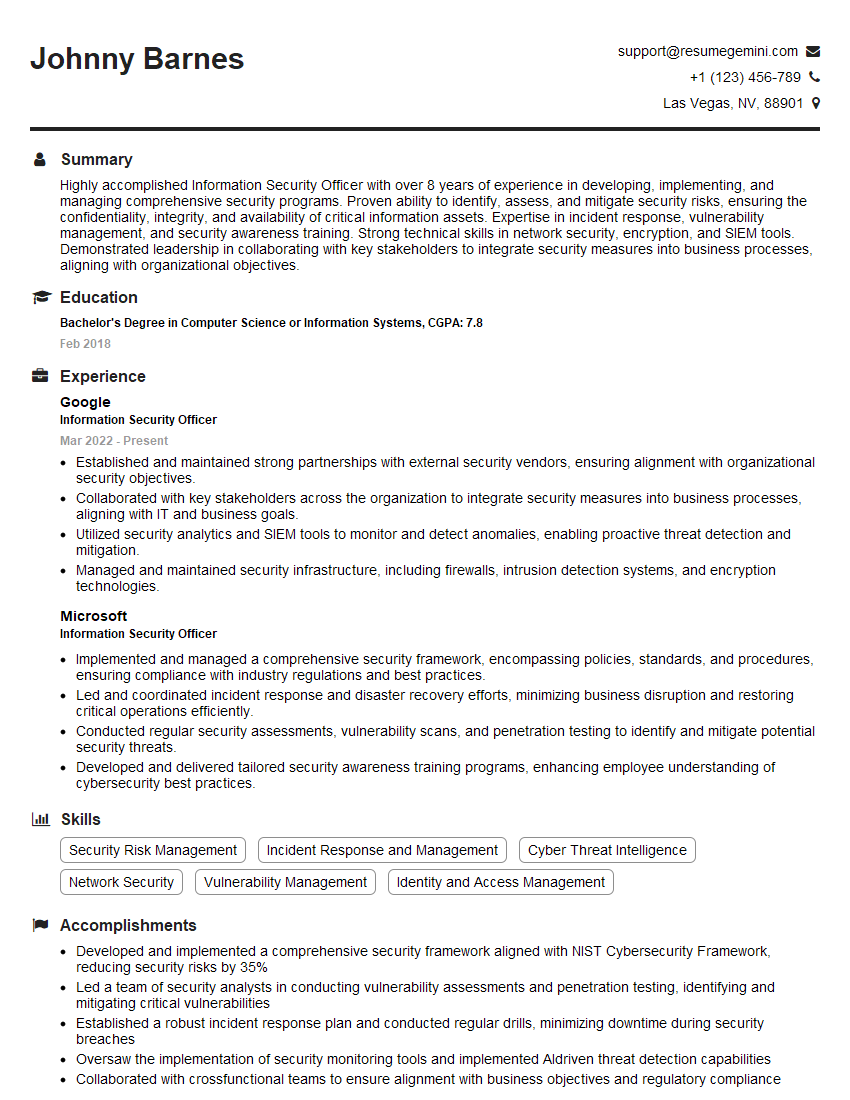
Information Security Officer Resume Sample
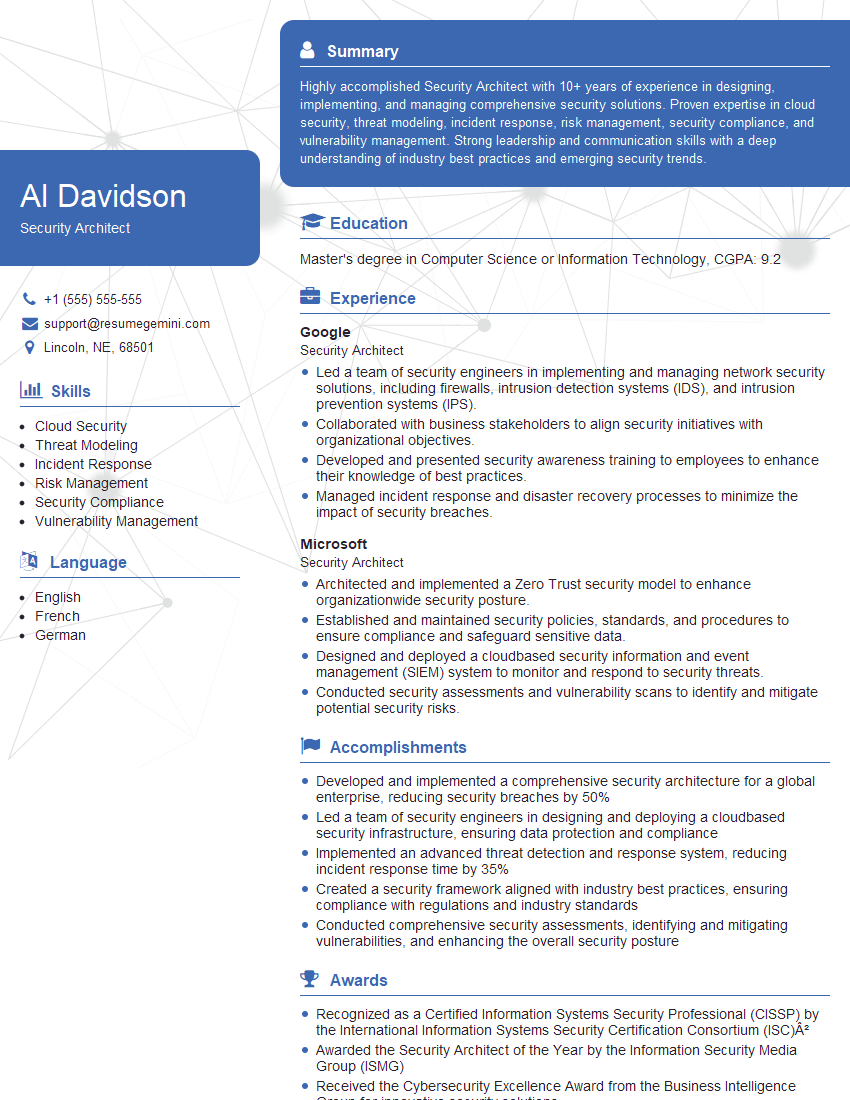
Security Architect Resume Sample

IT Security Specialist Resume Sample
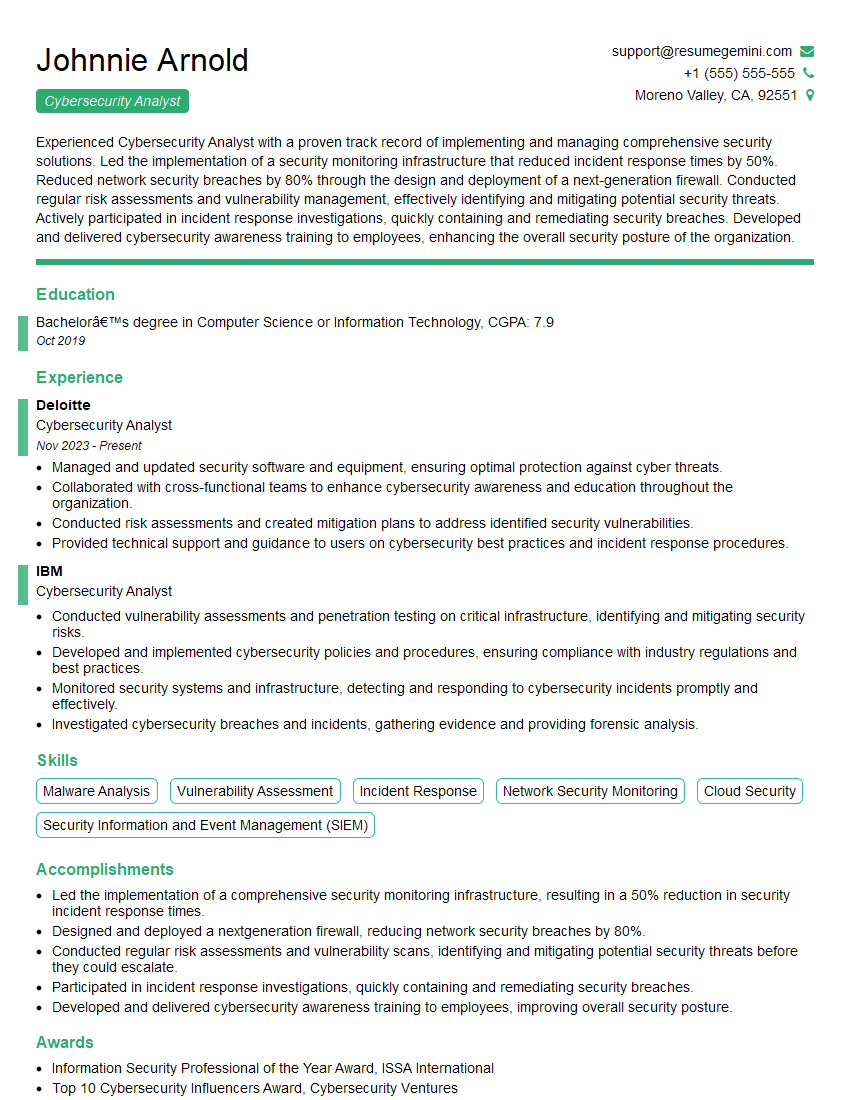
Cybersecurity Analyst Resume Sample
Explore more articles
Users Rating of Our Blogs
Share Your Experience
We value your feedback! Please rate our content and share your thoughts (optional).
What Readers Say About Our Blog
I Redesigned Spongebob Squarepants and his main characters of my artwork.
https://www.deviantart.com/reimaginesponge/art/Redesigned-Spongebob-characters-1223583608
IT gave me an insight and words to use and be able to think of examples
Hi, I’m Jay, we have a few potential clients that are interested in your services, thought you might be a good fit. I’d love to talk about the details, when do you have time to talk?
Best,
Jay
Founder | CEO