Unlock your full potential by mastering the most common Knowledge of archival terminology and nomenclature interview questions. This blog offers a deep dive into the critical topics, ensuring you’re not only prepared to answer but to excel. With these insights, you’ll approach your interview with clarity and confidence.
Questions Asked in Knowledge of archival terminology and nomenclature Interview
Q 1. Define ‘provenance’ in an archival context.
Provenance, in archival terms, refers to the history of ownership and custody of an archival item. It’s not just about who owned it, but the entire journey of the item from its creation to its arrival in the archive. Think of it as the item’s life story, documenting its creators, custodians, and how it changed hands over time. Understanding provenance is crucial for establishing authenticity and context. For example, a letter written by Abraham Lincoln might be more valuable if its provenance can trace its journey directly from his possession to a reputable collector and finally to an archive, providing concrete evidence of its authenticity and ensuring it hasn’t been tampered with.
A detailed provenance statement usually includes information such as the creator(s), dates of creation, the various individuals or organizations that possessed the item, and the methods of transfer. This information is essential for assessing the reliability of the item, its context within a larger collection, and for understanding potential biases or influences in its creation.
Q 2. Explain the difference between ‘original’ and ‘copy’ in archival materials.
In archival work, the distinction between an ‘original’ and a ‘copy’ is paramount. An original is the item created first; it’s the authentic artefact – the very document, photograph, or object created at the time. A copy, on the other hand, is a later reproduction of the original. This distinction is critical for several reasons.
- Authenticity: Originals are inherently more valuable for historical research because they represent the closest possible connection to the original event or thought process.
- Evidence: Originals hold greater evidentiary weight than copies, especially in legal or historical contexts.
- Preservation: Archives prioritize preserving originals, often creating copies (digital or physical) for research and access to protect the originals from deterioration.
For example, a handwritten letter is the original; a photocopy or digital scan is a copy. A photographer’s original negative is the original; prints made from it are copies. This distinction is fundamental for researchers and archivists alike, informing decisions regarding access, preservation, and interpretation.
Q 3. What is an accession number, and why is it important?
An accession number is a unique identifier assigned to a collection or group of records when they enter an archive. Think of it as a record’s unique social security number – it allows archivists to track and manage materials efficiently. It’s usually a numerical sequence, sometimes combined with alphanumeric characters, depending on the archive’s system. The importance of accession numbers stems from their role in:
- Organization: They provide a consistent and straightforward system for organizing and retrieving materials within a vast archive.
- Inventory Control: They facilitate accurate tracking of all materials acquired, making it easier to manage the archive’s holdings.
- Research: Researchers use accession numbers to locate and request specific collections or items.
For instance, an archive might assign the accession number 2023.001 to the first collection acquired in 2023. This unique identifier allows archivists and researchers to easily find and refer to that specific collection amongst thousands.
Q 4. Describe the function of a finding aid.
A finding aid is a descriptive document that provides information about the contents of an archive collection. Think of it as a roadmap for researchers navigating the archive’s vast landscape. It functions by:
- Summarizing Collection Content: Finding aids concisely describe the scope and content of a collection, including its creators, dates, subjects, and overall arrangement.
- Providing Access Points: They offer various access points, such as subject headings, names of individuals, and keywords, allowing researchers to easily find relevant materials.
- Facilitating Research: They guide researchers through the collection’s structure, leading them to specific documents or items within the collection.
Finding aids can take various forms, from simple lists to complex, multi-page documents with detailed descriptions and indexes. They are invaluable tools for anyone seeking to utilize archival materials, providing a crucial link between researchers and the resources they need.
Q 5. What are the key elements of a metadata schema for archival materials?
A metadata schema for archival materials is a structured set of rules that defines the elements of information to be recorded about an archival item. It provides a consistent framework for describing and managing these items. Key elements typically include:
- Identifying Information: Accession number, title, creator, dates (creation, acquisition).
- Descriptive Information: Scope and content notes, abstract, subject headings, keywords.
- Administrative Information: Location, access restrictions, rights management information.
- Structural Information: Relationships between items within a collection, series, or sub-series.
These elements work together to paint a comprehensive picture of an archival item. A well-designed metadata schema ensures interoperability across different archives and systems, facilitating discovery, access, and preservation of archival materials.
For example, a metadata schema might include fields for a document’s creator, date, title, subject matter, physical description, and the digital file format if it’s a digital copy.
Q 6. Explain the difference between ‘archival description’ and ‘cataloging’.
While both archival description and cataloging aim to describe materials for retrieval and access, they differ in scope and approach. Archival description emphasizes the holistic context of materials within their historical and organizational context. It focuses on describing the collection as an organic entity, preserving its provenance and relationships within the collection. Think of it as describing a family’s history along with individual family members.
Cataloging, on the other hand, is more focused on individual items and their subjects, often for broader subject access. It’s primarily focused on individual items, using standardized subject headings and controlled vocabularies for easy retrieval. It’s a more analytical process focused on subject-based retrieval.
The difference might be subtle, but consider this example: Archival description would describe a collection of personal letters as a whole, detailing the relationships between the letters, the writer’s life, and the circumstances surrounding their creation. Cataloging would focus on describing each individual letter separately using subject headings to allow searching by topic or individual name.
Q 7. What is the significance of ‘chain of custody’ in archival management?
Chain of custody in archival management refers to the documented history of the possession and handling of an item. This detailed record traces the item from its origin to its current location in the archive, accounting for every step in its journey. Its significance lies in:
- Authenticity and Integrity: A well-documented chain of custody provides evidence of the item’s authenticity and assures that it hasn’t been tampered with or substituted.
- Legal Compliance: In many cases, a clear chain of custody is a legal requirement, especially for evidence in legal proceedings or historical artifacts with significant monetary value.
- Trustworthiness: It enhances the trustworthiness of the archive and the materials it holds by demonstrating meticulous record-keeping.
Imagine a historical manuscript. A strong chain of custody would document its transfer from its creator to various owners or custodians, noting dates, names, and methods of transfer. Gaps or inconsistencies in this chain can raise serious questions about the item’s authenticity and reliability, impacting its scholarly and legal value.
Q 8. What are some common archival storage formats and their advantages/disadvantages?
Archival storage formats are chosen based on factors like preservation needs, cost, and accessibility. Common formats include:
- Paper-based storage: Acid-free boxes, folders, and enclosures are crucial for protecting paper documents from degradation. Advantages: Familiar, relatively inexpensive, readily accessible (though handling requires care). Disadvantages: Susceptible to environmental damage (light, humidity, insects), bulky, and limited capacity for large collections.
- Microfilm/Microfiche: These reduce the physical size of documents significantly. Advantages: Compact storage, relatively durable, protects originals. Disadvantages: Requires specialized equipment for viewing, can be difficult to search, and the technology is aging.
- Magnetic Tape (for digital archives): A common, albeit somewhat outdated, format for storing large amounts of digital data. Advantages: High storage capacity, relatively inexpensive per unit of storage. Disadvantages: Prone to data degradation over time, requires specialized equipment for reading, and the format is becoming obsolete.
- Optical Media (CDs, DVDs, Blu-ray): Useful for smaller digital archives. Advantages: Relatively inexpensive, widely accessible. Disadvantages: Limited lifespan, prone to scratches and data loss, requires suitable playback devices.
- Cloud Storage: Offsite digital storage managed by a third-party provider. Advantages: Accessibility from anywhere with an internet connection, scalability, automated backups. Disadvantages: Reliance on third-party providers (data security concerns), potential cost, and reliance on technology remaining compatible.
The choice of storage format always involves a trade-off. For example, while cloud storage offers accessibility, it introduces dependence on the vendor and the technology remaining available. Similarly, while paper is familiar, it requires careful environmental control.
Q 9. Explain the concept of ‘intellectual control’ in archival work.
Intellectual control in archival work refers to the processes used to organize, describe, and make accessible the intellectual content of archival materials. It’s not just about physical organization; it’s about making sense of the information. Imagine a library with books scattered everywhere—that’s no good. Intellectual control ensures that researchers can easily find what they need.
Key elements include:
- Arrangement: Organizing materials into meaningful groups based on their provenance (origin and context). For instance, grouping personal papers by the creator’s life stages.
- Description: Creating finding aids (catalogs, indexes, databases) that describe the collection’s contents, allowing researchers to locate specific items efficiently. This includes metadata like titles, dates, creators, subjects, and abstracts.
- Access: Ensuring that the materials are accessible to researchers, physically and intellectually. This might involve digitization, creating online databases, or designing user-friendly finding aids.
Effective intellectual control improves discoverability and usability of archival materials, increasing their research value. For instance, if an archive of a company’s records is well-described with detailed subject indexing, researchers can easily find documentation on specific projects, contracts, or decisions.
Q 10. What are some ethical considerations in archival practice?
Ethical considerations in archival practice are paramount. We’re dealing with historical evidence and personal information, which necessitates careful attention to:
- Preservation: The ethical obligation to preserve archival materials for future generations demands appropriate storage, handling, and digitization techniques to ensure longevity.
- Privacy: Respecting the privacy of individuals represented in the archives is crucial. Sensitive information should be handled carefully, potentially redacted or restricted access provided, considering relevant laws like GDPR or similar data protection regulations.
- Authenticity and Integrity: Archiving requires maintaining the authenticity and integrity of the materials. Any intervention, like digitization or repair, should be documented thoroughly and done with appropriate techniques to avoid altering the original record.
- Intellectual Property Rights: Respecting copyright and other intellectual property rights is essential. Archiving practices should align with copyright laws and fair use guidelines.
- Cultural Sensitivity: Handling materials from diverse cultures requires sensitivity and awareness. This includes ensuring accurate descriptions and interpretations that don’t perpetuate harmful stereotypes or biases.
- Transparency and Openness: Archiving practices should be transparent and accessible, allowing researchers to understand the collection’s context and the archival processing decisions made.
For example, if an archive contains personal diaries with sensitive medical information, ethical archivists would consider strategies for restricting access to protect the individual’s privacy while still allowing researchers access to the rest of the collection.
Q 11. How do you handle conflicting metadata entries?
Conflicting metadata entries are a common challenge. The solution involves a careful investigation and decision-making process:
- Identify and Document the Conflict: Note all conflicting entries, including their sources.
- Determine the Provenance and Authority: Investigate the origin of each entry and consider the source’s reliability and expertise. An entry from a known expert might be given more weight.
- Resolve the Conflict: This may involve:
- Choosing the most accurate entry: Select the entry supported by more evidence or from a more reliable source.
- Adding a qualifier: If both entries are valid but different (e.g., different spellings of a name), add qualifiers (e.g., “also known as”) to capture both versions.
- Creating a note: Document the conflict and the reason for choosing a particular entry. This maintains transparency and allows future researchers to understand the decision-making process.
- Creating a composite record: In certain instances where both entries are equally valid but distinctly different, consider maintaining both as separate, linked records.
- Document the Resolution: Clearly record the decision-making process and the justification for the chosen solution.
Imagine two conflicting dates for an event in a photograph’s description. Researching newspaper archives or related documents could reveal the accurate date, thus resolving the conflict. The process is always thoroughly documented to ensure transparency and auditability.
Q 12. Describe various methods of archival preservation.
Archival preservation employs a multi-faceted approach encompassing environmental controls, proper handling, and technological solutions:
- Environmental Control: Maintaining stable temperature, relative humidity, and light levels is crucial for slowing down the deterioration of materials. This includes proper storage in climate-controlled facilities.
- Proper Handling: Training staff on the appropriate handling of materials (using gloves, avoiding direct contact, proper support during use) minimizes damage caused by careless use.
- Repairs and Conservation: Trained conservators can repair minor damages to materials while preserving their integrity. This can include mending tears, cleaning stains, and stabilizing deteriorated media.
- Digitization: Creating digital surrogates (copies) of original materials provides access to researchers while minimizing handling of the originals, ensuring their protection from wear and tear. This involves using high-resolution scanners, ensuring good metadata.
- Storage Media Migration: For digital archives, migrating data from obsolete formats (e.g., magnetic tape) to current, stable formats is crucial for long-term accessibility.
For example, a historical photograph might undergo careful cleaning and repair by a conservator before being digitized for wider access, while the original is stored in a controlled environment.
Q 13. What are the risks associated with digital preservation?
Digital preservation faces unique challenges:
- Bit Rot: Data corruption due to physical deterioration of storage media or software errors.
- Obsolescence of Technology: Software and hardware used to access digital archives might become obsolete, making access impossible. Think of old floppy disks—they’re nearly unusable today.
- Format Obsolescence: File formats become outdated and lack software support for reading them.
- Security Breaches: Digital archives are vulnerable to hacking, data theft, and unauthorized modification.
- Storage Capacity: The rapid growth of digital data demands massive storage capacity that can be costly and difficult to maintain.
For example, a digital photograph might become inaccessible if the software used to view it is no longer supported or the file format becomes obsolete. That’s why migration to newer formats and emulators is so crucial.
Q 14. What strategies are employed to ensure the long-term accessibility of digital archives?
Ensuring long-term accessibility of digital archives requires a proactive and multi-pronged strategy:
- Migration to Stable Formats: Regularly migrating data to new, well-supported formats reduces the risk of obsolescence.
- Emulation: Developing and using emulators to access data from obsolete formats and technologies.
- Metadata Management: Accurate, rich metadata is essential for discoverability and understanding the context of the digital materials. Employing controlled vocabularies and schemas is crucial.
- Preservation Planning: Creating a comprehensive preservation plan that addresses storage, backup, disaster recovery, and future migration strategies is essential. This plan needs to be regularly reviewed and updated.
- Redundancy and Backup: Multiple copies of data stored in different locations protect against data loss due to hardware failure or disasters.
- Community Collaboration: Working with other institutions and organizations to share best practices, coordinate efforts, and avoid duplication of resources.
- Digital Preservation Software and Tools: Utilizing specialized software and tools to automate tasks and streamline the preservation process.
A good example is the collaborative effort among many institutions in digital preservation projects, combining resources and expertise to create a robust and sustainable approach to the long-term accessibility of digital assets.
Q 15. Define ‘authority control’ in the context of archival description.
Authority control in archival description is the process of standardizing and unifying the terminology used to describe archival materials. Think of it as creating a consistent ‘vocabulary’ for your archive. This ensures that finding information is easier and more efficient, regardless of which terms a researcher might use. For example, if one record uses “World War II” and another uses “Second World War,” authority control ensures both terms point to the same controlled vocabulary term, allowing searches to retrieve both records.
This involves creating authority files—lists of preferred terms, their variations, and cross-references. These files guide archivists in creating consistent descriptions, linking related records, and enhancing searchability. Without authority control, searching for information across different collections becomes a frustrating, inconsistent process.
- Example: An authority file might list “Civil Rights Movement” as the preferred term, with cross-references for “Civil Rights Era,” “African American Civil Rights Movement,” and other variations.
Career Expert Tips:
- Ace those interviews! Prepare effectively by reviewing the Top 50 Most Common Interview Questions on ResumeGemini.
- Navigate your job search with confidence! Explore a wide range of Career Tips on ResumeGemini. Learn about common challenges and recommendations to overcome them.
- Craft the perfect resume! Master the Art of Resume Writing with ResumeGemini’s guide. Showcase your unique qualifications and achievements effectively.
- Don’t miss out on holiday savings! Build your dream resume with ResumeGemini’s ATS optimized templates.
Q 16. What is the difference between a ‘fonds’ and a ‘collection’?
The distinction between a ‘fonds’ and a ‘collection’ is crucial in archival theory and practice. A fonds represents the organically accumulated records of an individual, family, corporation, government agency, or other entity. It’s characterized by its provenance—the history of its creation and accumulation. Imagine a fonds as a complete body of work reflecting the life and activities of its creator, maintained as a single unit.
A collection, on the other hand, is a group of archival materials that have been brought together, usually by an archive itself, based on shared subject matter, provenance (though possibly diverse), or other criteria. It’s an artificial grouping, unlike the organic nature of a fonds. Think of it as a curated selection of related records, potentially originating from disparate sources.
- Example: The personal papers of a renowned author would be a fonds. However, a collection of photographs documenting the history of a particular city might include images from many different photographers and sources, not all organically related.
Q 17. Explain the importance of contextual information in archival description.
Contextual information is absolutely vital in archival description because it provides the necessary background and understanding for researchers to interpret the records meaningfully. Without context, archival materials can be meaningless or even misleading. Context helps researchers understand the ‘who, what, when, where, why, and how’ of the records.
This includes information about the creator of the records, their context (social, political, economic), the circumstances under which the records were created, and the relationships between different records. This information bridges the gap between the records and the researcher, enabling deeper analysis and understanding.
- Example: A diary entry might seem cryptic without knowing the writer’s age, location, social standing, and current events of the time. Adding contextual details—such as newspaper clippings and historical information—illuminates the entry’s significance.
Q 18. What are the challenges of managing born-digital archives?
Managing born-digital archives presents unique challenges that go beyond traditional paper-based archives. These challenges stem from the rapid evolution of technology, the inherent fragility of digital formats, and the sheer volume of data.
- Bit rot and obsolescence: Digital files degrade over time due to media failure, file corruption, and the obsolescence of software and hardware.
- File format migration: Older file formats become incompatible with newer systems, requiring regular migration to maintain access.
- Authenticity and integrity: Ensuring the authenticity and integrity of digital records, demonstrating that they have not been altered, is crucial but complex.
- Storage capacity and management: Born-digital archives can grow exponentially, demanding immense storage capacity and sophisticated management systems.
- Metadata and access: Metadata describing the context and content of digital files is essential for finding information but its creation and management can be challenging.
Addressing these challenges requires proactive strategies like implementing robust preservation plans, adopting open-source formats, employing digital forensics, and utilizing sophisticated metadata schemas and storage solutions.
Q 19. Describe different appraisal methods used in archives.
Appraisal in archives is the process of determining which records have long-term value and should be preserved, and which can be disposed of. Several methods are used, often in combination:
- Value-based appraisal: This assesses records based on their informational value, considering their research potential, legal implications, administrative value, or historical significance. Archivists might develop detailed criteria to guide this assessment, focusing on areas like uniqueness, authenticity, and completeness.
- Sampling: This involves examining a representative sample of records to infer the value of the entire collection. It’s efficient but carries some risk of missing valuable items.
- Functional appraisal: This method considers the records’ role within an organization’s operational context. It examines whether records are still required for administrative purposes, legal compliance, or evidence preservation.
- Disposition schedules: These are pre-determined plans outlining retention periods and disposal methods for specific record types, often used in government and corporate archives.
The appraisal process needs to balance the competing needs of preservation and responsible disposal, ensuring that irreplaceable information is protected while avoiding the undue burden of retaining unnecessary material.
Q 20. How do you handle restricted access materials?
Handling restricted access materials requires a careful balance between protecting the privacy and rights of individuals or organizations and providing access to researchers who have a legitimate need to view the materials. This is essential to maintain trust, comply with legal obligations, and ensure ethical conduct.
Procedures usually involve:
- Clear access policies and procedures: These clearly outline the conditions for access, including who can request access, the required justifications, and the process for reviewing requests.
- Secure storage and access controls: Sensitive materials are often stored separately and under stricter access controls, potentially requiring special permissions or physical security measures.
- Redaction or anonymization: In some cases, removing sensitive information (e.g., names, addresses) before access is granted may be necessary.
- Documentation and oversight: Meticulous record-keeping of access requests, approvals, and restrictions is crucial to maintain transparency and accountability. A designated authority reviews access requests and makes informed decisions.
- Legal compliance: Access practices must adhere to all relevant laws and regulations regarding privacy, confidentiality, and intellectual property.
The goal is to ensure that access is granted appropriately while safeguarding the privacy and rights of individuals and organizations whose records are held.
Q 21. Explain the difference between archival processing and arrangement.
While both archival processing and arrangement are crucial steps in preparing archival materials for use, they are distinct processes.
Arrangement is the intellectual ordering of archival materials based on their inherent relationships. It’s about establishing the structural integrity of the collection or fonds, reflecting the original order in which the materials were created and accumulated wherever possible. It is a hierarchical process, establishing series, subseries, and files.
Processing encompasses all the actions taken to prepare the materials for use, including arrangement, description, and preservation activities. It’s a broader term encompassing the intellectual organization, description, and physical treatment of the records to make them accessible and usable.
- Example: A collection of photographs might be arranged chronologically (Arrangement), but processing would also involve cleaning, repairing, and cataloging the photographs (Processing). Processing thus includes arrangement, but is much more than just arrangement.
Q 22. What are some best practices for managing metadata in a large archive?
Managing metadata in a large archive effectively requires a robust, structured approach. Think of metadata as the ‘index’ to your vast collection – without it, finding specific items is nearly impossible. Best practices revolve around standardization, interoperability, and ongoing maintenance.
- Standardize Metadata Schemas: Adopt a widely accepted metadata standard like Dublin Core or MODS (Metadata Object Description Schema). This ensures consistency and facilitates data exchange between different systems. For example, consistently using a specific controlled vocabulary for subject headings ensures that searches for ‘World War II’ will retrieve all relevant records, regardless of who created the metadata.
- Implement a Controlled Vocabulary: Instead of allowing free-text descriptions, use a controlled vocabulary (a pre-defined list of terms) for key metadata fields like subject, genre, and language. This drastically reduces ambiguity and improves search accuracy.
- Utilize Authority Control: Establish and maintain authority files (lists of preferred terms) for names, places, and subjects. This ensures consistency in metadata descriptions across the entire archive, preventing duplicates and inconsistencies. For example, ensuring that ‘United States’ is always used instead of ‘USA’, ‘US’, or ‘America’.
- Use a Metadata Database: A dedicated database is crucial for managing large volumes of metadata. This ensures efficient storage, retrieval, and management of metadata records. Think of it as a powerful, organized card catalog for the digital age.
- Regular Metadata Audits and Updates: Regularly review and update metadata to ensure accuracy and completeness. This is crucial as collections evolve, technology changes, and new information becomes available. It’s like proofreading and refining your index over time.
Q 23. What is the purpose of an archival inventory?
An archival inventory serves as a comprehensive register of the materials held within an archive. It acts as a finding aid, guiding researchers to specific items or collections. Think of it as a detailed table of contents for the archive, enabling users to navigate the collection effectively.
Its purpose is multifaceted:
- Finding Aid: It facilitates access to the archive’s holdings by providing a summary of the content and arrangement of materials.
- Proof of Possession: It documents the archive’s holdings, which is crucial for accountability and insurance purposes.
- Collection Management: It aids in the ongoing management and preservation of the collection, allowing archivists to track accessioning, storage locations, and the overall health of the materials.
- Intellectual Control: It allows for better organization and control of the intellectual content within the archive.
Inventories can range from simple lists to complex, multi-level finding aids with detailed descriptions and subject indexing.
Q 24. How do you ensure the authenticity and integrity of archival materials?
Ensuring authenticity and integrity is paramount in archival work. We must guarantee that the materials are genuine and haven’t been altered or damaged. This involves a multi-pronged approach.
- Chain of Custody: Meticulously document the history and handling of each item, tracing its movement from acquisition to storage. This is crucial for verifying provenance and detecting any potential tampering.
- Physical Preservation: Employ appropriate environmental controls (temperature, humidity) and handling techniques to minimize deterioration. Proper storage, such as acid-free boxes and archival quality folders, are critical.
- Digital Preservation: For digital materials, implement robust preservation strategies including regular backups, using preservation-worthy file formats, and employing digital forensics to detect tampering. Checksums are valuable tools here.
- Authenticity Verification: Employ methods such as material analysis (for physical items) or digital signature verification to confirm the authenticity of materials. This might involve comparing handwriting to known samples, or examining metadata for inconsistencies.
- Access Control: Restrict access to materials requiring specialized handling or vulnerable to damage. This includes limiting the number of people allowed to handle certain items and implementing strict logging protocols.
Q 25. Explain the role of descriptive metadata in facilitating access to archival materials.
Descriptive metadata is the key that unlocks access to archival materials. It’s the information that describes the content and context of an item, allowing researchers to identify and retrieve relevant materials. Think of it as the descriptive text on the spine of a book – it tells you what’s inside.
Its role is crucial:
- Searchability: Descriptive metadata, such as titles, creators, dates, and subjects, makes materials discoverable through online catalogs and databases.
- Contextual Understanding: Providing information about the creator, context of creation, and subject matter allows researchers to understand the significance and meaning of the materials.
- Organization and Retrieval: Well-structured metadata enables efficient organization and retrieval of materials based on various criteria.
- Intellectual Access: Metadata allows for sophisticated searching and filtering, enabling researchers to identify relevant materials even within massive collections.
For example, detailed metadata about a photograph might include the date taken, location, individuals depicted, and a description of the scene. This rich metadata provides researchers with the context necessary for meaningful analysis.
Q 26. What are the potential legal and ethical implications of using archival materials?
Using archival materials carries significant legal and ethical implications. Archivists must navigate these carefully to ensure responsible use and avoid harm.
- Copyright and Intellectual Property: Archivists must be aware of and respect copyright restrictions on materials. They may need to obtain permission for reproduction or distribution.
- Privacy Rights: Materials may contain personal information about living individuals. Archivists must balance the public’s right to access information with the need to protect privacy. Redaction or restricted access may be necessary.
- Cultural Sensitivity: Some materials may be sensitive or sacred to certain cultural or religious groups. Archivists should handle such materials with respect and avoid causing offense.
- Provenance and Authenticity: Archivists must ensure that the materials they use are genuine and have a clear chain of custody to prevent misrepresentation or fraud.
- Attribution and Citation: Proper attribution and citation of archival materials are essential to avoid plagiarism and give credit to creators.
Understanding and adhering to these considerations are fundamental aspects of ethical archival practice. For example, an archive might need to redact names from a sensitive document before making it publicly accessible.
Q 27. How do you balance preservation needs with access requirements for archival materials?
Balancing preservation and access is a constant challenge in archival work. It’s a delicate dance where both goals must be considered equally. Think of it like taking care of a priceless painting – you want to show it to the world, but you also need to protect it from damage.
Strategies for achieving this balance:
- Digital Surrogates: Creating digital copies of archival materials allows for broader access while preserving the originals in stable storage. This allows researchers to interact with materials without risking damage to the originals.
- Controlled Access: Implementing controlled access policies, including appointment-only viewing or handling restrictions, protects fragile materials while still making them available.
- Preservation Metadata: Recording detailed information about the material’s condition and preservation needs allows for informed decision-making about access.
- Preservation Microfilming: For extremely fragile materials, microfilming can create durable copies for access while preserving the original. This acts as a safety measure, ensuring access even if the original is lost or damaged.
- Phased Access: Gradually increasing access as preservation measures are implemented. For instance, digitization of a collection might be completed in stages, with the most at-risk items digitized first.
Q 28. Describe your experience working with different archival software or systems.
Throughout my career, I’ve worked with a range of archival software and systems, each with its strengths and weaknesses. My experience includes using both commercial and open-source solutions.
- ArchivesSpace: I’ve extensively used ArchivesSpace, an open-source archival information system. Its flexible structure and robust functionality make it ideal for managing complex archival collections. I’ve utilized its features for creating finding aids, managing metadata, and tracking accessioning.
- PastPerfect Museum Software: My experience also includes using PastPerfect, a commercial software frequently employed by smaller archives and museums. Its user-friendly interface is beneficial for managing collections with simpler needs. I’ve found it helpful for creating basic inventories and managing basic metadata.
- Custom Database Solutions: In several projects, I’ve collaborated with developers to create bespoke database solutions tailored to specific archival needs. This involved designing database schemas, implementing data entry protocols, and developing custom search functionalities. This proved invaluable for archives with unique requirements or large, complex data sets.
- Content Management Systems (CMS): I’m also familiar with using content management systems like Drupal or WordPress to create online finding aids and digital exhibits. This is crucial for making archival materials accessible to a wider audience.
My experience spans both large-scale archival systems and simpler solutions. I’m adept at selecting and implementing the appropriate system based on the specific needs and resources of an archive.
Key Topics to Learn for Knowledge of archival terminology and nomenclature Interview
- Archival Description Standards: Understanding and applying standards like Dublin Core, Encoded Archival Description (EAD), and Resource Description and Access (RDA) to create accurate and accessible metadata for archival materials. This includes practical application in cataloging and indexing processes.
- Arrangement and Description: Mastering the principles of arranging archival materials based on provenance, order, and context. This involves understanding the difference between original order, intellectual order, and imposed order, and their implications for access and preservation.
- Finding Aids and Metadata Creation: Developing effective finding aids (e.g., inventories, registers) and utilizing various metadata schemas to ensure discoverability and usability of archival collections. This includes practical experience with digital repositories and metadata management systems.
- Preservation and Conservation Terminology: Familiarizing yourself with terms related to archival preservation, including environmental controls, storage methods, and disaster preparedness. This includes understanding the implications of different preservation strategies for long-term access.
- Copyright and Intellectual Property in Archives: Understanding the legal frameworks surrounding copyright and intellectual property rights related to archival materials and their implications for access and use. This includes navigating complexities around fair use and permissions.
- Types of Archival Materials: Recognizing and differentiating between various archival formats such as textual documents, photographs, maps, audio-visual materials, and born-digital records. This includes understanding their unique preservation needs and description requirements.
- Archival Appraisal and Selection: Understanding the criteria and processes used to evaluate and select archival materials for long-term preservation based on their significance and value. This includes understanding the concepts of provenance, authenticity and integrity.
Next Steps
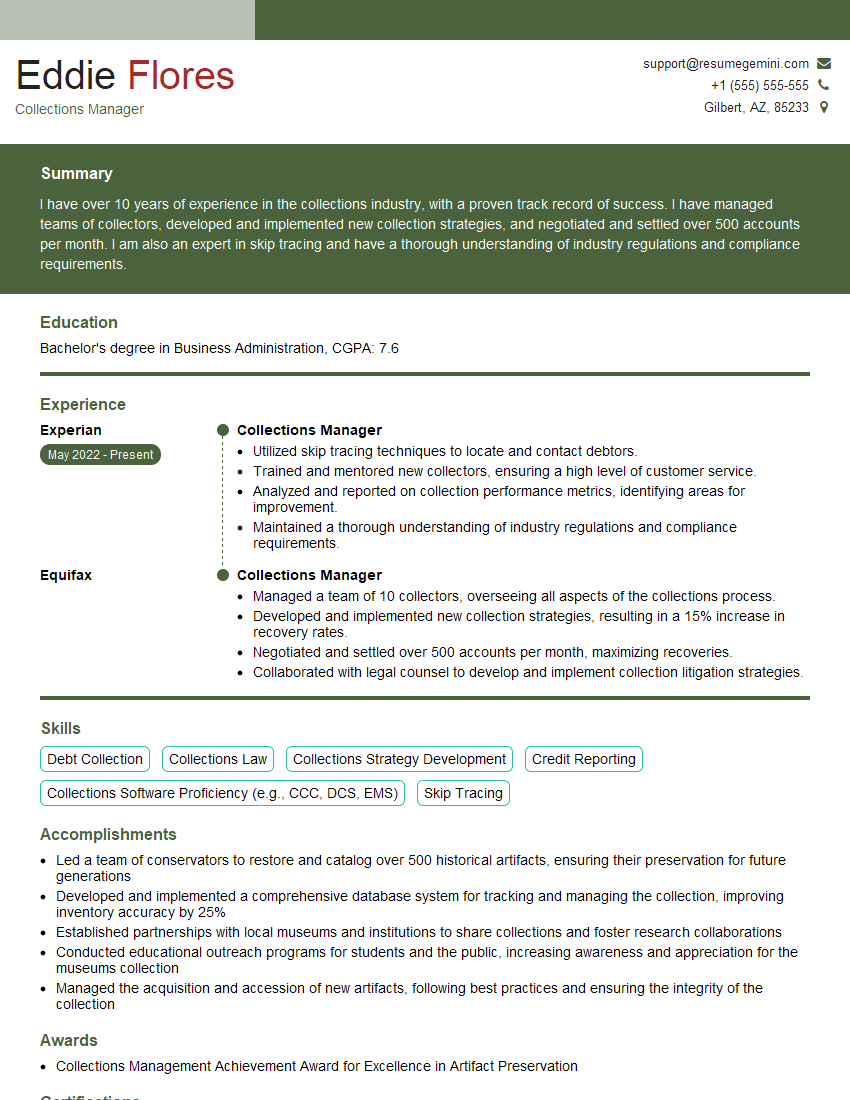
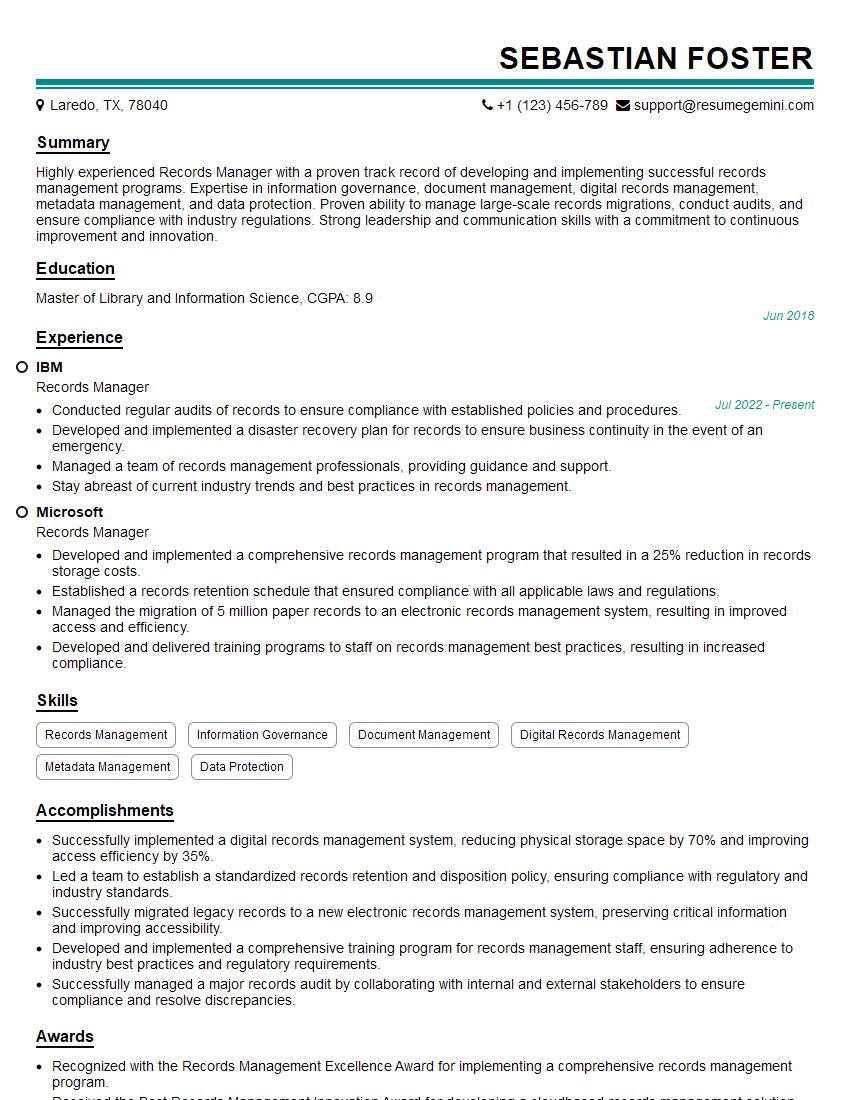
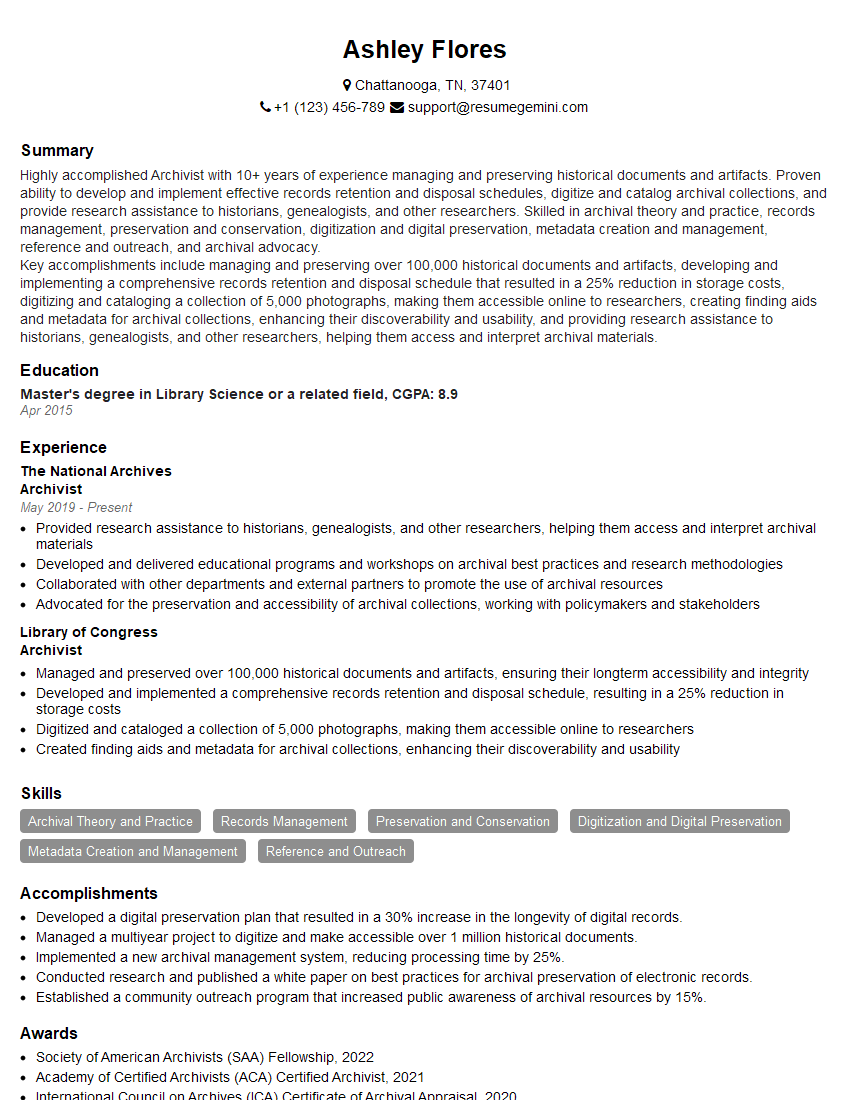
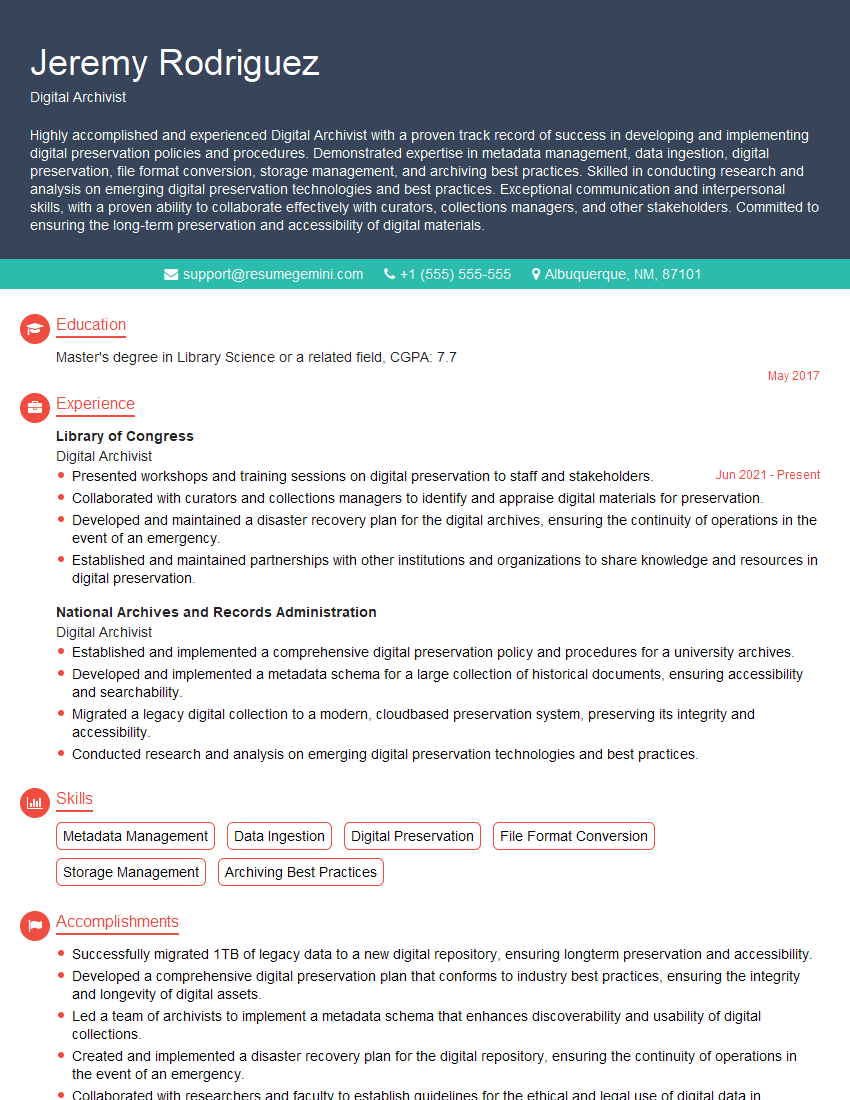
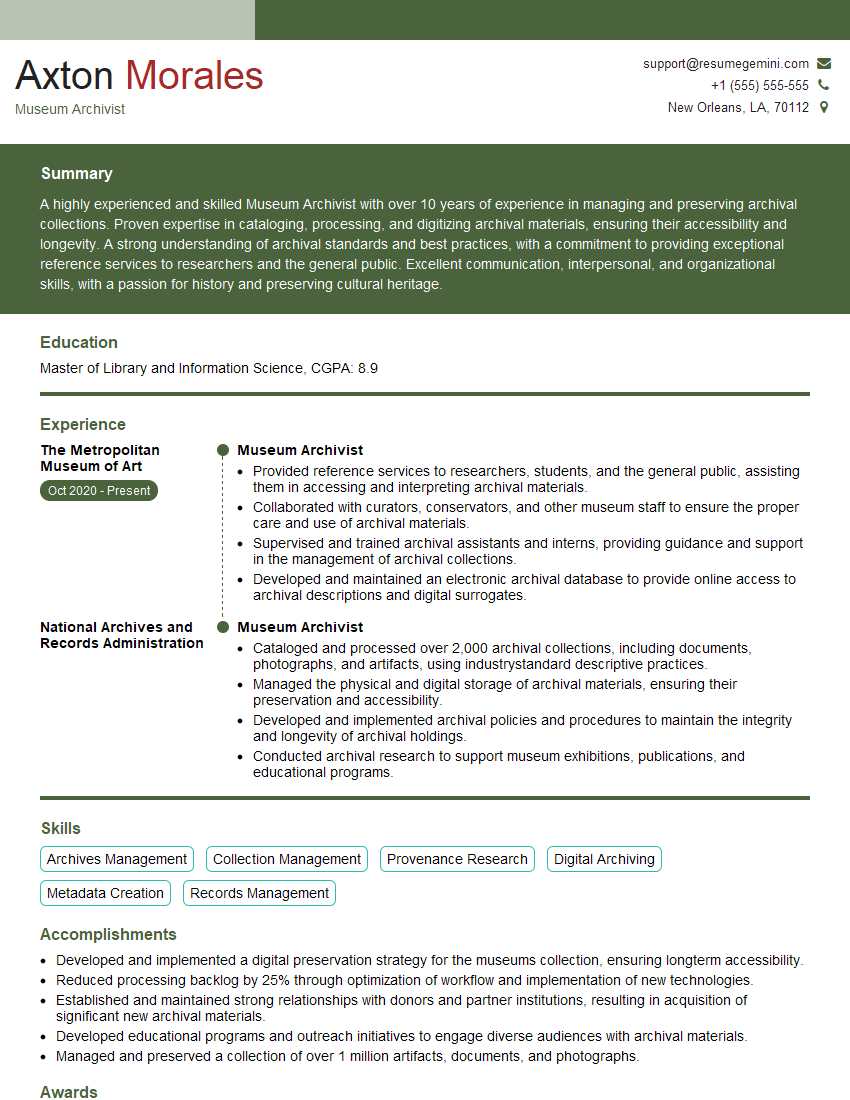
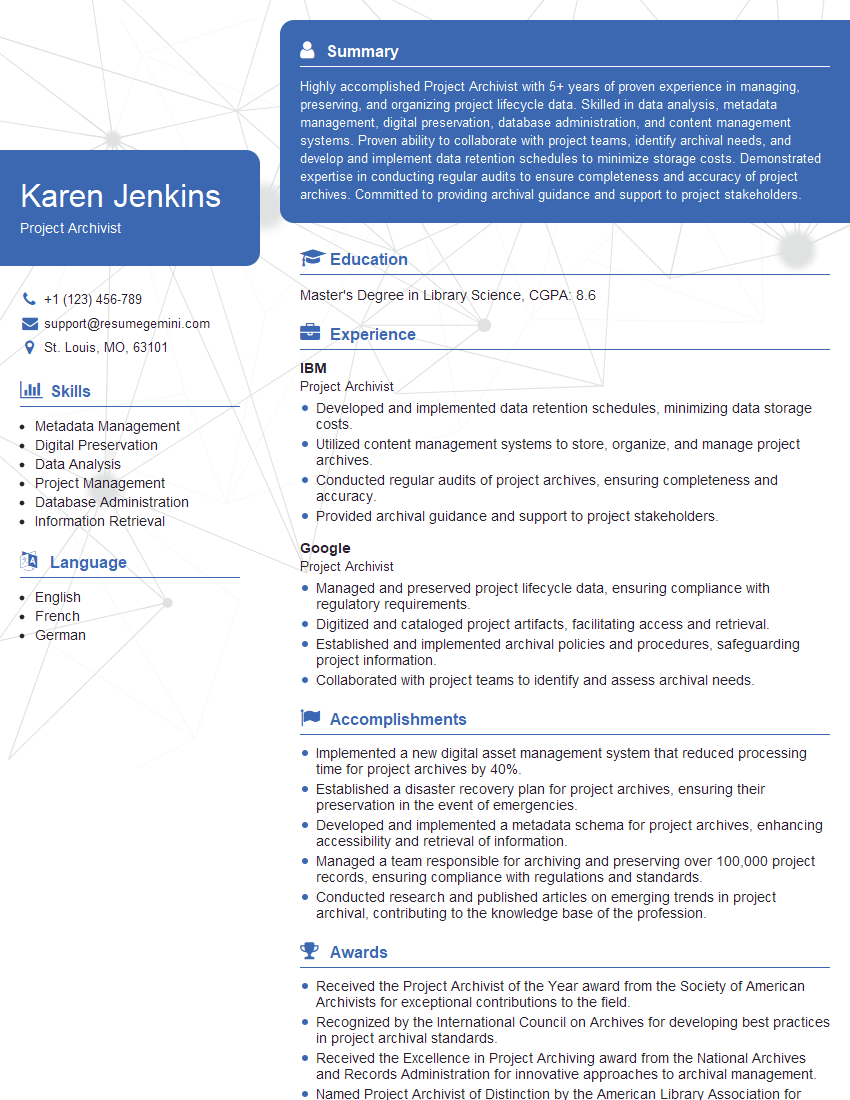
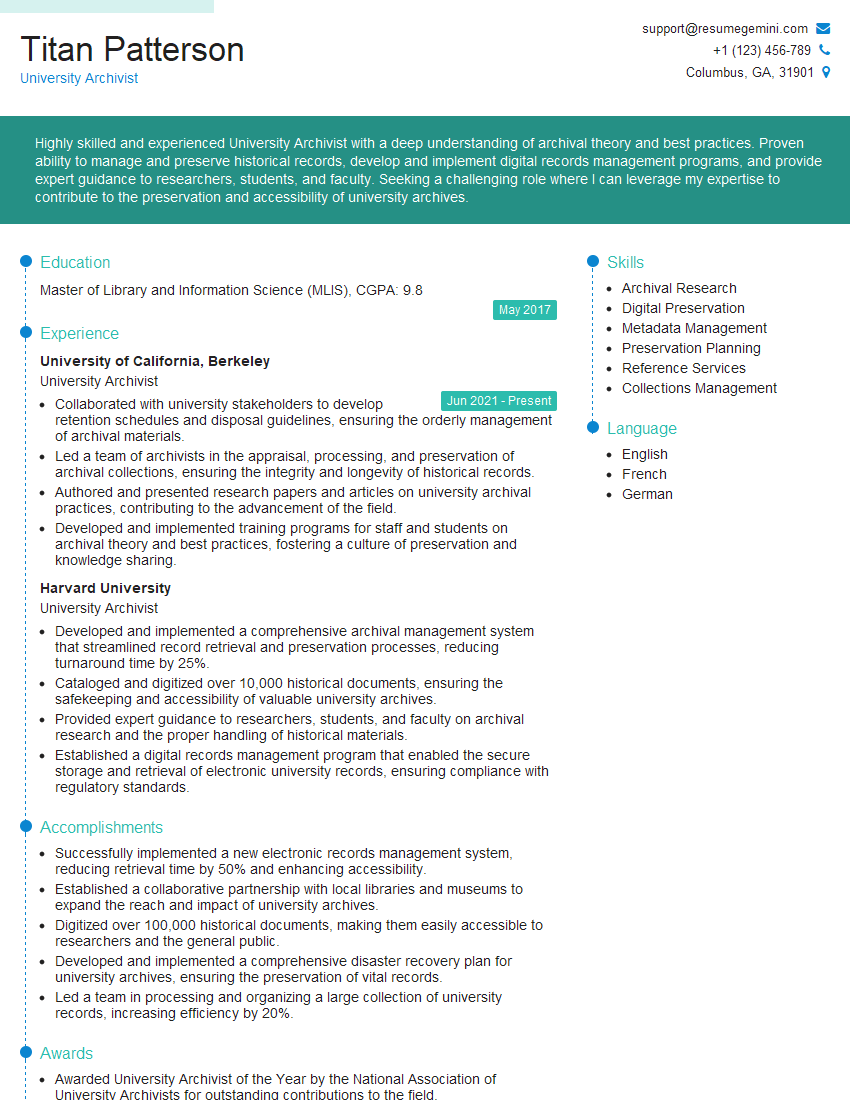
Mastering archival terminology and nomenclature is crucial for career advancement in the archival field. A strong understanding of these concepts demonstrates your professionalism and expertise, making you a highly competitive candidate. To significantly improve your job prospects, invest time in crafting an ATS-friendly resume that effectively showcases your skills and experience. ResumeGemini is a trusted resource to help you build a professional and impactful resume tailored to the archival profession. Examples of resumes specifically designed for roles requiring expertise in archival terminology and nomenclature are available – use them to gain inspiration and structure your own.

Explore more articles
Users Rating of Our Blogs
Share Your Experience
We value your feedback! Please rate our content and share your thoughts (optional).
What Readers Say About Our Blog
I Redesigned Spongebob Squarepants and his main characters of my artwork.
https://www.deviantart.com/reimaginesponge/art/Redesigned-Spongebob-characters-1223583608
IT gave me an insight and words to use and be able to think of examples
Hi, I’m Jay, we have a few potential clients that are interested in your services, thought you might be a good fit. I’d love to talk about the details, when do you have time to talk?
Best,
Jay
Founder | CEO