Feeling uncertain about what to expect in your upcoming interview? We’ve got you covered! This blog highlights the most important Knowledge of electrical systems and their maintenance interview questions and provides actionable advice to help you stand out as the ideal candidate. Let’s pave the way for your success.
Questions Asked in Knowledge of electrical systems and their maintenance Interview
Q 1. Explain the difference between AC and DC electricity.
The fundamental difference between AC (Alternating Current) and DC (Direct Current) lies in the direction of electron flow. In DC, electrons flow consistently in one direction, like water flowing downhill in a straight stream. Think of a battery; it provides a constant, unidirectional flow of electrons. AC, on the other hand, involves electrons oscillating back and forth, periodically changing direction. Imagine a wave in the ocean; the water molecules move up and down, not in a single direction. This cyclical change is what gives AC its characteristic sinusoidal waveform. This difference impacts how we use electricity; DC is better suited for applications requiring a constant voltage, like charging batteries, while AC’s ability to easily step up or down voltage makes it ideal for long-distance power transmission.
This difference significantly affects system design. DC systems are generally simpler to design, but less efficient for long-distance transmission due to higher voltage drop. AC systems are more complex but allow for efficient long-distance transmission through the use of transformers.
Q 2. Describe the function of a circuit breaker.
A circuit breaker is a safety device that automatically interrupts the flow of electrical current when it detects an overload or short circuit. Think of it as a sophisticated switch that protects your electrical system from damage and prevents fires. When the current exceeds a predetermined threshold, the circuit breaker trips, cutting off power to the affected circuit. Unlike a fuse, which needs to be replaced after it blows, a circuit breaker can be reset simply by flipping the switch back to the ‘on’ position, provided the fault has been resolved.
Circuit breakers come in different types, such as thermal magnetic circuit breakers, which combine thermal and magnetic mechanisms for better tripping sensitivity and response. They are essential for protecting appliances, wiring, and people from potentially hazardous electrical events.
Q 3. What are the common causes of electrical shorts?
Electrical shorts, or short circuits, occur when an unintended path for electrical current is created, usually bypassing the intended load (like a lightbulb or motor). This results in a large and potentially dangerous surge of current. Common causes include:
- Damaged insulation: Worn or frayed wires, especially in older buildings, can expose conductors and allow them to touch, creating a short circuit.
- Water intrusion: Moisture entering electrical systems can bridge gaps between conductors, leading to shorts.
- Foreign objects: Metal objects accidentally contacting exposed wiring can create a short circuit. For example, a dropped tool near an exposed terminal.
- Overheating: Excessive heat can degrade insulation and cause wires to touch.
- Faulty components: Damaged appliances or other electrical equipment can internally short circuit.
These scenarios underline the importance of regular inspection and maintenance of electrical systems to prevent potential hazards.
Q 4. How do you troubleshoot a faulty electrical circuit?
Troubleshooting a faulty circuit involves a systematic approach to isolate the problem. Here’s a step-by-step process:
- Safety first: Always de-energize the circuit before working on it. Use a voltage tester to confirm the power is off.
- Visual inspection: Carefully examine wires, connectors, and components for any visible damage, such as frayed wires, loose connections, or burn marks.
- Check circuit breaker/fuse: Ensure that the breaker hasn’t tripped or the fuse hasn’t blown. If so, address the underlying cause before resetting.
- Use a multimeter: A multimeter can measure voltage, current, and resistance, helping you pinpoint problems in wiring or components.
- Test for continuity: Check the continuity of wires to verify that there are no breaks in the circuit.
- Isolate the problem: By systematically checking different parts of the circuit using the multimeter and visual inspection, you can pinpoint the location of the fault.
- Repair or replace: Once the faulty component is identified, it needs to be either repaired or replaced.
- Test again: After repairs, retest the circuit to ensure it’s working correctly and safely.
Remember, if you’re not comfortable working with electricity, it’s crucial to call a qualified electrician.
Q 5. What safety precautions do you take when working with high-voltage systems?
Working with high-voltage systems presents significant risks, demanding strict adherence to safety protocols. Here are crucial precautions:
- Lockout/Tagout (LOTO): This is the most critical step. De-energize the system, lock out the power source, and tag it to clearly indicate that the system is under maintenance and should not be energized.
- Personal Protective Equipment (PPE): Always wear appropriate PPE, including insulated gloves, safety glasses, and arc-flash protective clothing depending on the voltage level.
- Trained personnel: Only trained and authorized personnel should work on high-voltage systems.
- Grounding and bonding: Properly ground and bond all equipment and tools to prevent electrical shock.
- Voltage testing: Always double-check that the system is de-energized using a voltage tester before commencing any work.
- Emergency procedures: Be aware of the emergency procedures and have readily available emergency equipment, such as first-aid and emergency contact information.
Neglecting these safety measures can have fatal consequences. Safety must always be the top priority when working with high-voltage systems.
Q 6. Explain Ohm’s Law and its practical applications.
Ohm’s Law describes the relationship between voltage (V), current (I), and resistance (R) in an electrical circuit. The formula is: V = I * R. Voltage is the electrical potential difference, measured in volts (V); current is the flow of electrons, measured in amperes (A); and resistance is the opposition to the flow of current, measured in ohms (Ω).
Practical Applications:
- Calculating circuit parameters: If you know two of the variables (V, I, or R), you can calculate the third using Ohm’s Law. For example, if you know the voltage across a resistor and its resistance, you can calculate the current flowing through it.
- Sizing components: Ohm’s Law is crucial in selecting appropriate resistors, fuses, and other components for an electrical circuit to ensure they can handle the expected current without overheating or damage.
- Troubleshooting circuits: By measuring voltage and current at different points in a circuit, you can use Ohm’s Law to identify faulty components or wiring issues.
- Power calculations: Ohm’s Law can be combined with the power formula (P = V * I) to calculate power dissipation in a circuit.
Ohm’s Law is a fundamental concept in electrical engineering and is used extensively in designing, analyzing, and troubleshooting electrical circuits.
Q 7. What are the different types of electrical wiring?
Electrical wiring comes in various types, each suited for different applications based on factors like current carrying capacity, insulation material, and installation environment.
- Copper vs. Aluminum: Copper is more commonly used due to its better conductivity and workability, but aluminum is used in higher-voltage applications because of its lower cost and lighter weight.
- Solid vs. Stranded: Solid-core wire is usually used for fixed wiring, while stranded wire is more flexible and better suited for applications where movement is expected.
- Insulation types: Various insulation materials are used, including PVC (polyvinyl chloride), XLPE (cross-linked polyethylene), and Teflon, each with different temperature and chemical resistance properties. Choosing the appropriate insulation material is crucial for safety and longevity.
- Wiring gauges: The gauge of a wire indicates its diameter and current-carrying capacity. Thicker wires (lower gauge number) can carry more current than thinner wires (higher gauge number).
- Armored cable (AC): This is used for greater protection against physical damage.
- Conduit wiring: Wires run inside protective metal or plastic conduits, providing better mechanical protection and easier routing.
Selecting the correct type of wiring is essential for safe and reliable operation of any electrical system. Codes and regulations dictate acceptable wiring practices for specific applications.
Q 8. Describe your experience with electrical testing equipment (e.g., multimeters, oscilloscopes).
My experience with electrical testing equipment is extensive, encompassing both common tools like multimeters and more specialized instruments such as oscilloscopes. Multimeters are my everyday companion for measuring voltage, current, and resistance. I’m proficient in using them to troubleshoot simple circuits and identify faulty components, like a shorted capacitor or a blown fuse. For instance, I recently used a multimeter to diagnose a faulty power supply in a control panel, isolating the problem to a failed rectifier bridge.
Oscilloscopes, on the other hand, are invaluable for analyzing waveforms and identifying more subtle problems. I’ve used them extensively to examine signal integrity, detect noise interference, and diagnose issues in complex circuits. For example, I once used an oscilloscope to pinpoint the source of intermittent signal drops in a data acquisition system, revealing a grounding issue that was causing high-frequency noise.
Beyond these, I’m also familiar with clamp meters for measuring current without breaking the circuit, insulation testers for ensuring safety and preventing electrical shocks, and digital earth testers for verifying ground integrity. This broad range of experience allows me to effectively tackle a wide variety of electrical system problems.
Q 9. How do you interpret electrical schematics and blueprints?
Interpreting electrical schematics and blueprints is fundamental to my work. I approach them systematically, starting by understanding the overall purpose of the system and identifying key components. Think of it like reading a map – you start with the bigger picture before diving into the details.
I begin by identifying power sources, loads, and control elements. Then, I trace the flow of current through the circuit, paying close attention to the wiring diagrams and component designations. I look for symbols representing resistors, capacitors, inductors, transistors, and integrated circuits, understanding their functions and interactions within the circuit. I also carefully examine notations for voltage levels, current ratings, and fuse sizes.
Understanding component placement and interconnections is crucial for effective troubleshooting. For instance, a poorly connected wire or a misplaced component can lead to system failures. I regularly use schematics to identify potential problems before they occur, for instance, during the planning stage of a project.
Q 10. What is the purpose of grounding and bonding in electrical systems?
Grounding and bonding are critical for safety and proper system operation. Grounding connects an electrical system to the earth, providing a low-resistance path for fault currents to flow. Imagine it as a safety valve – if a fault occurs, the current is diverted safely to the ground, preventing shocks and potential fires.
Bonding, on the other hand, connects various metallic parts of a system together to ensure they are at the same electrical potential. This prevents voltage differences that could lead to electrical shocks or damage. Consider a metal enclosure – bonding it to the earth ensures that it doesn’t become energized even if a fault occurs within the system.
Both grounding and bonding work in tandem to minimize the risk of electrical hazards. In practical applications, proper grounding and bonding are mandatory in installations, especially in industrial settings, to comply with safety regulations.
Q 11. Explain the concept of electrical impedance.
Electrical impedance is the total opposition to the flow of alternating current (AC) in a circuit. It’s a more comprehensive measure than just resistance because it accounts for both resistance and reactance. Resistance is the opposition to current flow caused by material properties, while reactance is the opposition caused by inductance (coils) and capacitance (capacitors).
Think of it like this: Resistance is like friction in a pipe slowing down the water flow, while reactance is like a water hammer effect, a sudden change in water pressure causing additional resistance. Impedance combines both of these effects to provide a complete picture of the AC circuit’s opposition to current flow.
Impedance is crucial in AC circuit analysis, for example, in matching transmission lines, designing filters, and calculating power factor. A mismatch in impedance can cause signal reflections and power losses in transmission systems, highlighting the importance of understanding impedance matching techniques.
Q 12. How do you identify and resolve electrical overload situations?
Identifying and resolving electrical overload situations requires a systematic approach. An overload occurs when too much current flows through a circuit, usually exceeding the rating of its protective devices. This can lead to overheating, fire hazards, and equipment damage.
The first step is to identify the overloaded circuit. This can often be determined by observing tripped circuit breakers or blown fuses. I then use a multimeter to measure current draw on various parts of the circuit. If a specific branch circuit is overloaded, I investigate connected equipment to locate the cause, checking for faulty or malfunctioning appliances drawing excessive current.
Resolving an overload depends on the cause. It might involve replacing faulty equipment, adding more circuits to distribute the load, installing larger-capacity circuit breakers or fuses, or improving power factor correction in industrial applications. I always prioritize safety and ensure that the issue is properly addressed to prevent future occurrences.
Q 13. What are the different types of motors and their applications?
There are various types of motors, each with specific applications. The most common include:
- DC Motors: These are simple to control and offer high torque at low speeds, making them suitable for applications like robotics, electric vehicles, and industrial machinery.
- AC Induction Motors: These are robust, reliable, and require minimal maintenance, making them ideal for pumps, fans, and industrial equipment.
- AC Synchronous Motors: These motors run at a constant speed and are often used in applications requiring precise speed control, such as clocks and timers.
- Stepper Motors: These motors move in precise steps, making them suitable for applications requiring precise positioning, such as printers, CNC machines, and robotics.
- Servomotors: These motors offer high accuracy and precise control, making them ideal for applications demanding fine-tuned movement and positioning, like robotics and industrial automation systems.
The choice of motor depends on the application’s specific requirements, considering factors like torque, speed, efficiency, cost, and required control mechanisms.
Q 14. Describe your experience with PLC programming and troubleshooting.
My PLC programming and troubleshooting experience is extensive. I am proficient in several PLC programming languages, including Ladder Logic, Function Block Diagram (FBD), and Structured Text (ST). I’ve worked with various PLC brands, including Allen-Bradley, Siemens, and Omron.
I use PLC programming to automate industrial processes, control machinery, and manage data acquisition systems. For example, I’ve designed and implemented PLC programs for controlling conveyor systems in a manufacturing plant, optimizing production flow and minimizing downtime. My expertise extends to designing human-machine interfaces (HMIs) for easy operator interaction and monitoring of the automated systems.
Troubleshooting PLCs involves systematically identifying and resolving issues. I use diagnostic tools, such as PLC programming software and online monitoring capabilities, to identify errors and analyze the system’s behavior. I’ve tackled various issues, ranging from simple wiring problems to complex software bugs, employing debugging techniques to pinpoint and resolve the root causes. A recent example involved a faulty sensor causing a production line stoppage; by analyzing the PLC program and HMI data, I identified the faulty sensor and resolved the issue efficiently.
Q 15. What are your experiences with preventative maintenance of electrical systems?
Preventative maintenance of electrical systems is crucial for ensuring safety, reliability, and longevity. It involves a proactive approach, identifying and addressing potential issues before they cause failures. My experience encompasses a wide range of tasks, from regular inspections and testing to cleaning and lubrication.
- Visual Inspections: Regularly checking for loose connections, damaged insulation, signs of overheating (discoloration, burning smell), and corrosion. I’ve found many potential problems during routine visual checks, preventing costly repairs down the line.
- Testing: Employing various testing instruments such as multimeters to measure voltage, current, and resistance. This helps identify potential insulation breakdown, ground faults, or other anomalies. For example, I once used a thermal imager to detect a faulty connection in a motor control panel before it led to a significant failure.
- Cleaning and Lubrication: Keeping electrical panels and components clean and free of dust and debris improves heat dissipation and prevents premature wear. Lubricating moving parts in switchgear also extends their lifespan.
- Documentation: Meticulous record-keeping is essential. I maintain detailed logs of all inspections, tests, and maintenance performed, including dates, findings, and corrective actions taken. This allows for trend analysis and helps in scheduling future maintenance effectively.
A robust preventative maintenance program is not just about fixing things; it’s about preventing failures and minimizing downtime, thereby saving significant time and money.
Career Expert Tips:
- Ace those interviews! Prepare effectively by reviewing the Top 50 Most Common Interview Questions on ResumeGemini.
- Navigate your job search with confidence! Explore a wide range of Career Tips on ResumeGemini. Learn about common challenges and recommendations to overcome them.
- Craft the perfect resume! Master the Art of Resume Writing with ResumeGemini’s guide. Showcase your unique qualifications and achievements effectively.
- Don’t miss out on holiday savings! Build your dream resume with ResumeGemini’s ATS optimized templates.
Q 16. How do you handle emergency electrical situations?
Handling emergency electrical situations requires a calm and methodical approach, prioritizing safety above all else.
- Safety First: The initial step is always to ensure personal safety and the safety of others. This involves isolating the affected area and ensuring that no one is in contact with potentially energized components. I always use appropriate PPE (Personal Protective Equipment) like insulated gloves, safety glasses, and arc flash protection.
- Assessment: Once the area is safe, I assess the situation to determine the nature and extent of the emergency. This might involve identifying the source of the problem (e.g., a blown fuse, a tripped circuit breaker, or a damaged cable).
- Isolation and De-energization: I safely isolate the affected circuit by switching off the appropriate breakers or disconnecting the power supply, verifying that the circuit is truly de-energized with a non-contact voltage detector before proceeding.
- Repair or Restoration: Once the circuit is de-energized, I can begin the repair or restoration process. This may involve replacing blown fuses, resetting circuit breakers, repairing damaged wiring, or calling in specialized personnel if the issue is beyond my expertise.
- Documentation: Detailed documentation of the incident, including the cause, corrective actions taken, and any safety concerns, is crucial for preventing similar incidents in the future.
Think of it like this: Responding to an electrical emergency is like responding to a fire – you must first ensure safety before tackling the root cause.
Q 17. Describe your understanding of NEC codes (or relevant regional codes).
The National Electrical Code (NEC) is a comprehensive set of standards for electrical installations in the United States. My understanding of the NEC is extensive, and I regularly consult the latest edition to ensure compliance. It covers a broad range of topics, including wiring methods, overcurrent protection, grounding, bonding, and equipment installations.
For instance, I am very familiar with Article 250 (Grounding), which outlines the specific requirements for grounding electrical systems to protect against electric shock. I also have in-depth knowledge of Article 400 (Flexible Cords and Cables), ensuring correct selection and installation to prevent damage and fire hazards. Understanding the NEC is not just about following the rules; it’s about ensuring that the electrical system is safe, reliable, and meets the intended purpose. I’ve found that proactive adherence to NEC greatly reduces the risk of accidents and electrical failures. Regional variations exist, and I ensure I stay current with all applicable codes in the region where I operate.
Q 18. Explain the difference between a fuse and a circuit breaker.
Both fuses and circuit breakers are overcurrent protection devices designed to protect electrical circuits from damage caused by excessive current, but they operate differently.
- Fuse: A fuse is a one-time use device containing a thin wire that melts and breaks the circuit when the current exceeds its rated value. Once a fuse blows, it must be replaced.
- Circuit Breaker: A circuit breaker is a reusable device that automatically interrupts the flow of current when it detects an overload or short circuit. It can be manually reset after the fault is cleared.
Think of a fuse as a sacrificial device – it protects the circuit by sacrificing itself. A circuit breaker is more sophisticated; it can be reset and reused, offering more convenience. The choice between a fuse and a circuit breaker depends on the specific application and the level of protection required.
Q 19. What are the common types of electrical faults?
Common types of electrical faults include:
- Short Circuit: An unintended path of low resistance, usually caused by damaged insulation, allowing excessive current to flow. This can generate significant heat, potentially leading to fires.
- Open Circuit: A break in the circuit, preventing the flow of current. This could be due to a broken wire, a loose connection, or a faulty component.
- Ground Fault: An unintended path to ground, creating a potential shock hazard. Ground fault circuit interrupters (GFCIs) are used to protect against such faults.
- Overload: Excessive current drawn by the circuit, exceeding its capacity. This can cause overheating and damage to components.
- Arcing Faults: An electrical discharge across an air gap, often due to high voltage or worn components. These can generate extreme heat and cause fires.
Identifying the type of fault is the first step toward effective troubleshooting and repair. Accurate diagnosis is crucial for safely resolving the issue and preventing future occurrences.
Q 20. How do you ensure the safety of others when working on electrical systems?
Safety is paramount when working with electrical systems. My approach is built on a foundation of established safety procedures and practices.
- Lockout/Tagout (LOTO): Before working on any electrical equipment, I always use LOTO procedures to ensure the equipment is completely de-energized and cannot be accidentally re-energized. This involves physically locking out the power source and attaching a tag indicating that work is in progress.
- Personal Protective Equipment (PPE): I consistently use appropriate PPE, including insulated gloves, safety glasses, and arc flash protection based on the voltage level. This protects me from electrical shock, burns, and other hazards.
- Training and Certification: I maintain up-to-date training and certifications relevant to electrical safety and working practices, demonstrating my commitment to safe working procedures.
- Awareness of Surroundings: I’m always aware of my surroundings and potential hazards, including the presence of other people and equipment that may present safety risks.
- Communication: Clear communication with colleagues and supervisors is essential, particularly in team environments. I always ensure that others are aware of what I am doing and the potential safety considerations.
Safety is not just a checklist; it’s a mindset that informs every aspect of my work.
Q 21. What is your experience with different types of transformers?
My experience with transformers includes various types, each suited for different applications:
- Power Transformers: Used in power transmission and distribution systems, these handle high voltages and large power capacities. I’ve worked on maintenance and troubleshooting for large power transformers in substations, understanding their complex protection schemes and the need for precise oil level and temperature monitoring.
- Distribution Transformers: Smaller transformers used to step down voltage for local distribution networks. I have experience with testing and replacing these in residential and commercial settings.
- Instrument Transformers: Used for measurement purposes, such as current transformers (CTs) and potential transformers (PTs). I am familiar with their application in protective relaying schemes and metering systems.
- Isolation Transformers: Used to isolate circuits and provide electrical isolation for safety reasons. I’ve utilized these in medical and laboratory environments where electrical isolation is critical.
Understanding the characteristics of each transformer type, their operating principles, and potential failure modes is crucial for effective maintenance and troubleshooting. I’ve encountered various issues, ranging from insulation breakdown to winding failures and I’ve utilized various testing methods like winding resistance tests and oil analysis to diagnose and solve these problems.
Q 22. Describe your experience with motor control centers (MCCs).
Motor Control Centers (MCCs) are the backbone of industrial electrical systems, housing multiple motor starters and protective devices in a centralized location. My experience encompasses the full lifecycle, from initial design review and specification to installation, commissioning, preventative maintenance, and troubleshooting. I’ve worked with various MCC manufacturers and configurations, including those using solid-state starters, traditional electromechanical starters, and intelligent electronic protection relays.
For example, I was involved in a project where we upgraded an outdated MCC in a manufacturing plant. This involved a comprehensive assessment of the existing system, selection of new components based on load requirements and safety standards, installation, rigorous testing, and finally, training the plant personnel on the new system’s operation and maintenance. This upgrade resulted in a significant improvement in efficiency and reduced downtime due to improved protection and monitoring capabilities.
Another significant experience involved troubleshooting a recurring fault in an MCC supplying multiple high-horsepower pumps. Through methodical testing and analysis, including checking wiring, inspecting components such as contactors and overload relays, and scrutinizing the system’s protection schemes, I identified a faulty current transformer causing inaccurate protection relay operation, ultimately preventing costly downtime.
Q 23. How do you troubleshoot problems with electrical control panels?
Troubleshooting electrical control panels requires a systematic and methodical approach. My process typically begins with a thorough visual inspection for obvious signs of damage or overheating, such as loose connections, burnt components, or damaged insulation. I then proceed with using appropriate safety precautions, such as lockout/tagout procedures, to ensure my safety and prevent accidental energization.
Next, I use multimeters and other diagnostic tools to test voltages, currents, and resistances at various points within the circuit. I might employ logic analyzers or oscilloscopes for more complex issues involving timing or signal integrity. Furthermore, I leverage schematics and wiring diagrams to trace the signal path and understand the interrelationship of different components within the panel. A methodical approach, following the signal flow from input to output, allows the most efficient way to identify issues.
For instance, I once diagnosed an intermittent fault in a control panel governing a conveyor system. By systematically checking sensor inputs, relay outputs and the PLC’s internal diagnostics, I was able to pinpoint a faulty proximity sensor which was causing the intermittent malfunction. Replacing this sensor resolved the issue immediately.
Q 24. Explain your understanding of power factor correction.
Power factor correction (PFC) addresses the issue of lagging power factor in AC circuits, which is caused by inductive loads like motors and transformers. A lagging power factor means that the current waveform lags behind the voltage waveform, leading to increased current draw for the same amount of real power delivered. This increased current draw stresses the electrical system, leading to higher energy bills and increased losses.
PFC involves adding capacitor banks or other reactive power compensation devices to the system to counteract the inductive reactance. The capacitors essentially supply the reactive power needed by the inductive loads, resulting in a more balanced power factor, closer to unity (1.0). This leads to several benefits, including reduced energy costs, lower line losses, improved system efficiency, and reduced strain on equipment like transformers and generators.
In a past project, we installed a PFC system in a factory with a significant number of induction motors. The result was a measurable reduction in energy consumption and a corresponding decrease in electricity bills, proving the significant cost-effectiveness of implementing power factor correction. The calculations involved determining the reactive power requirement based on the motor loads and then selecting appropriately sized capacitor banks.
Q 25. What experience do you have with various types of electrical protection devices?
My experience encompasses a wide array of electrical protection devices, including circuit breakers (molded case, air circuit breakers), fuses (cartridge fuses, high-capacity fuses), ground fault circuit interrupters (GFCIs), arc flash protection systems, and protective relays. I’m proficient in selecting the appropriate device based on the specific application, load characteristics, and safety requirements.
I understand the principles of various protection schemes, such as overcurrent protection, ground fault protection, and motor protection. I can interpret protective relay settings and perform routine maintenance tasks, such as testing and calibration. For example, I regularly inspect circuit breakers for signs of wear and tear, ensuring their proper operation. Additionally, I’ve been involved in the selection and installation of arc flash mitigation equipment in high-risk environments to protect personnel from electrical hazards. I am very familiar with the relevant safety standards and regulations like NFPA 70E.
One particularly challenging situation involved a critical power supply failing due to a malfunctioning protective relay. By thoroughly analyzing the relay’s logs and performing meticulous tests, I pinpointed a faulty internal component, allowing for a swift replacement and restoration of the power supply. This prevented significant production downtime and emphasized the importance of regular testing and maintenance of protection devices.
Q 26. Describe your experience with the installation and maintenance of electrical distribution systems.
I have extensive experience in the installation and maintenance of electrical distribution systems, ranging from low-voltage systems in commercial buildings to high-voltage systems in industrial facilities. This includes designing, specifying, installing, and commissioning various components, such as transformers, switchgears, busways, and cabling. My experience extends to various voltage levels and system configurations, from simple radial systems to more complex network configurations.
I’m very familiar with the necessary safety protocols and industry standards for these tasks, including NFPA 70 (National Electrical Code). For example, I’ve managed projects involving the installation of new electrical service feeders, upgrades to existing systems to meet increased load demands, and the replacement of outdated equipment to enhance safety and reliability. I’ve worked with various types of cabling, including underground and overhead, ensuring proper grounding and bonding techniques are implemented throughout.
In one project, I oversaw the complete overhaul of the electrical distribution system in a large warehouse. This included a detailed assessment of existing infrastructure, design of a new system, procurement of new equipment, installation and testing, and thorough documentation and commissioning. The project resulted in a reliable, efficient, and safe power distribution system, improving productivity and reducing the risk of electrical failures.
Q 27. How do you handle non-routine maintenance tasks?
Non-routine maintenance tasks often involve addressing unexpected issues or performing upgrades. My approach involves thorough investigation and risk assessment to define the scope of work, identifying all potential hazards and implementing proper safety measures. I meticulously document the process, including observations, measurements, and corrective actions taken. Before undertaking any major repair or modification, I’ll consult relevant technical documentation, industry standards, and if necessary, seek guidance from senior engineers or manufacturers.
For instance, if an unusual noise emanates from a motor, I won’t simply dismiss it; I’ll conduct a thorough inspection, possibly using vibration analysis equipment, to understand the root cause before deciding on the appropriate maintenance procedure. This might involve lubricating bearings, replacing worn parts, or even investigating the motor’s alignment. Careful documentation of the process ensures the efficient transmission of information.
Effective communication is crucial. When handling non-routine tasks, I ensure clear communication with the operations team to minimize disruption. This includes coordinating the necessary downtime and communicating the progress and status of the repair effort effectively.
Q 28. Describe your experience working with different types of batteries and their maintenance.
My experience with batteries covers various types, including lead-acid (flooded, gel-cell, AGM), nickel-cadmium (NiCd), and lithium-ion (Li-ion) batteries. I’m familiar with their characteristics, applications, and maintenance requirements. This includes understanding their charging characteristics, discharge curves, and safety considerations. Each battery type has its own specific maintenance procedures to ensure optimum performance and longevity.
Lead-acid batteries, for example, require regular checks of electrolyte levels, terminal cleanliness, and specific gravity. Li-ion batteries require careful monitoring of cell voltage, temperature, and state of charge to prevent overcharging or deep discharge. I’m also knowledgeable about battery testing equipment, including battery analyzers and load testers, which are used to assess the health and capacity of batteries.
During a project involving an uninterruptible power supply (UPS) system, I identified a potential failure in the battery bank. Through careful testing and analysis, I determined that several batteries were nearing the end of their lifespan. This proactive assessment allowed for planned replacement, preventing a catastrophic power outage.
Key Topics to Learn for Knowledge of Electrical Systems and Their Maintenance Interview
- Fundamentals of Electricity: Understanding Ohm’s Law, Kirchhoff’s Laws, AC/DC circuits, and basic electrical components (resistors, capacitors, inductors).
- Electrical Safety Regulations and Practices: Familiarity with relevant safety codes (e.g., NEC), lockout/tagout procedures, and personal protective equipment (PPE) usage.
- Types of Electrical Systems: Knowledge of various electrical systems including single-phase, three-phase, and low-voltage systems; experience with different wiring methods and configurations.
- Troubleshooting and Diagnostics: Practical skills in identifying and resolving electrical faults using multimeters, oscilloscopes, and other diagnostic tools. Understanding the use of schematics and wiring diagrams.
- Preventive Maintenance: Knowledge of routine inspection procedures, testing methods, and predictive maintenance techniques for electrical equipment and systems. This includes understanding thermal imaging and vibration analysis.
- Motor Control and Drives: Understanding different types of motors (AC, DC), motor starters, variable frequency drives (VFDs), and their control systems.
- Power Distribution and Protection: Knowledge of transformers, circuit breakers, fuses, and other protective devices; understanding of power factor correction and energy efficiency.
- Electrical System Design and Installation: Familiarity with the principles of electrical system design, including load calculations, sizing of conductors and protective devices, and installation practices.
- Advanced Topics (depending on the role): PLC programming, SCADA systems, power electronics, renewable energy integration.
- Problem-Solving Approaches: Developing systematic troubleshooting methodologies, using analytical skills to diagnose problems, and documenting solutions effectively.
Next Steps
Mastering knowledge of electrical systems and their maintenance is crucial for career advancement in this ever-evolving field. A strong understanding of these concepts opens doors to higher-paying roles and more challenging projects. To showcase your expertise, create an ATS-friendly resume that highlights your skills and experience effectively. ResumeGemini is a valuable resource to help you build a professional and impactful resume that gets noticed by recruiters. Examples of resumes tailored to highlight experience in electrical systems and their maintenance are available to help you get started.
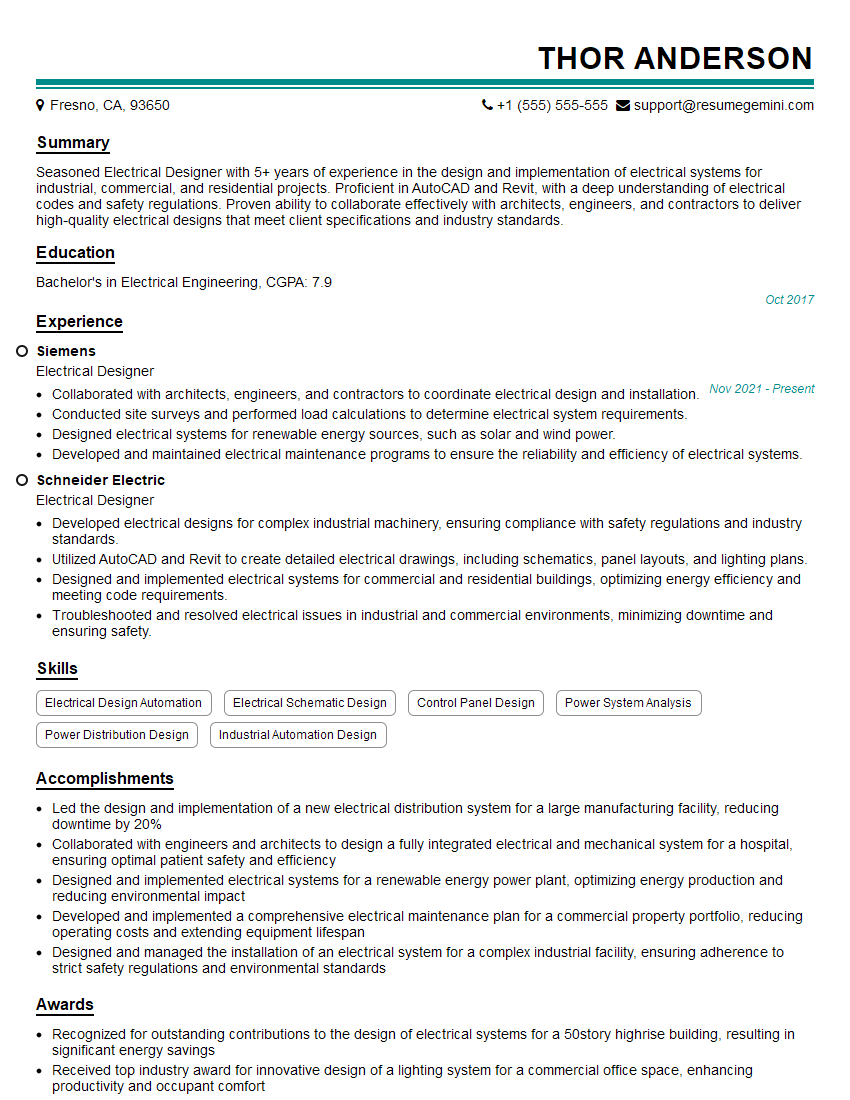
Electrical Designer Resume Sample
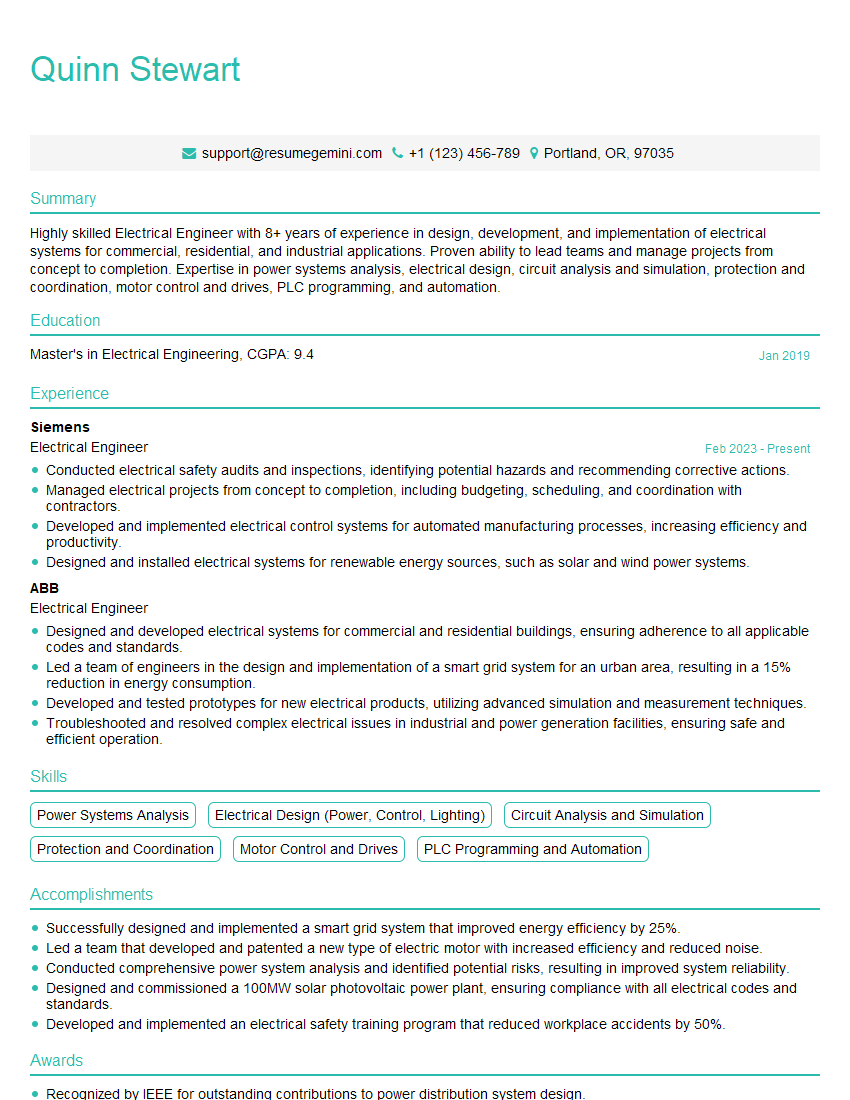
Electrical Engineer Resume Sample
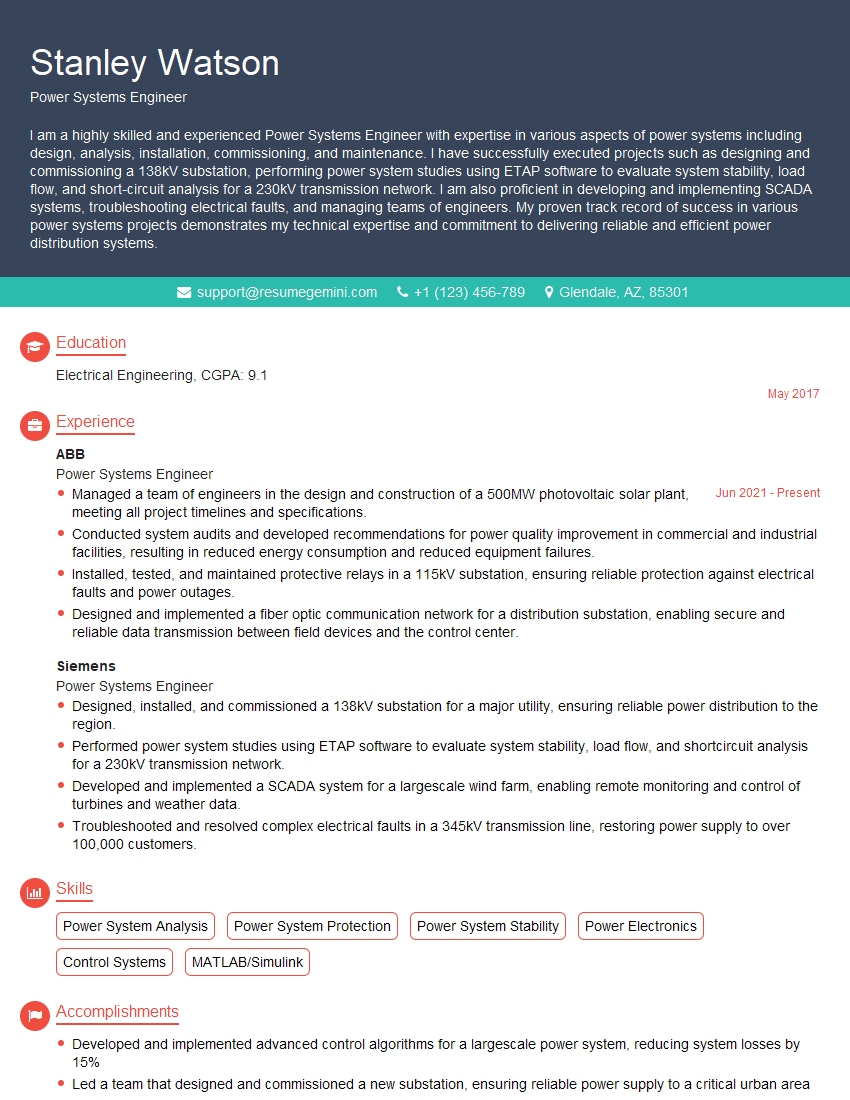
Power Systems Engineer Resume Sample
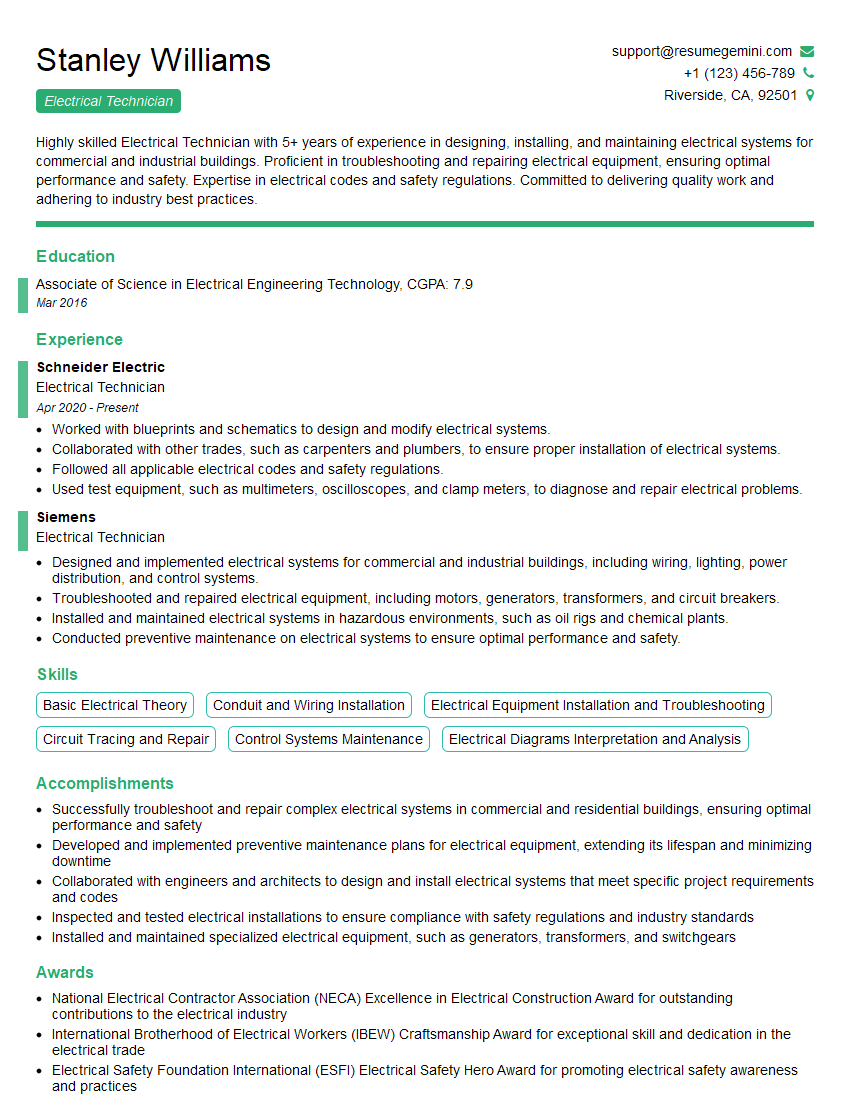
Electrical Technician Resume Sample
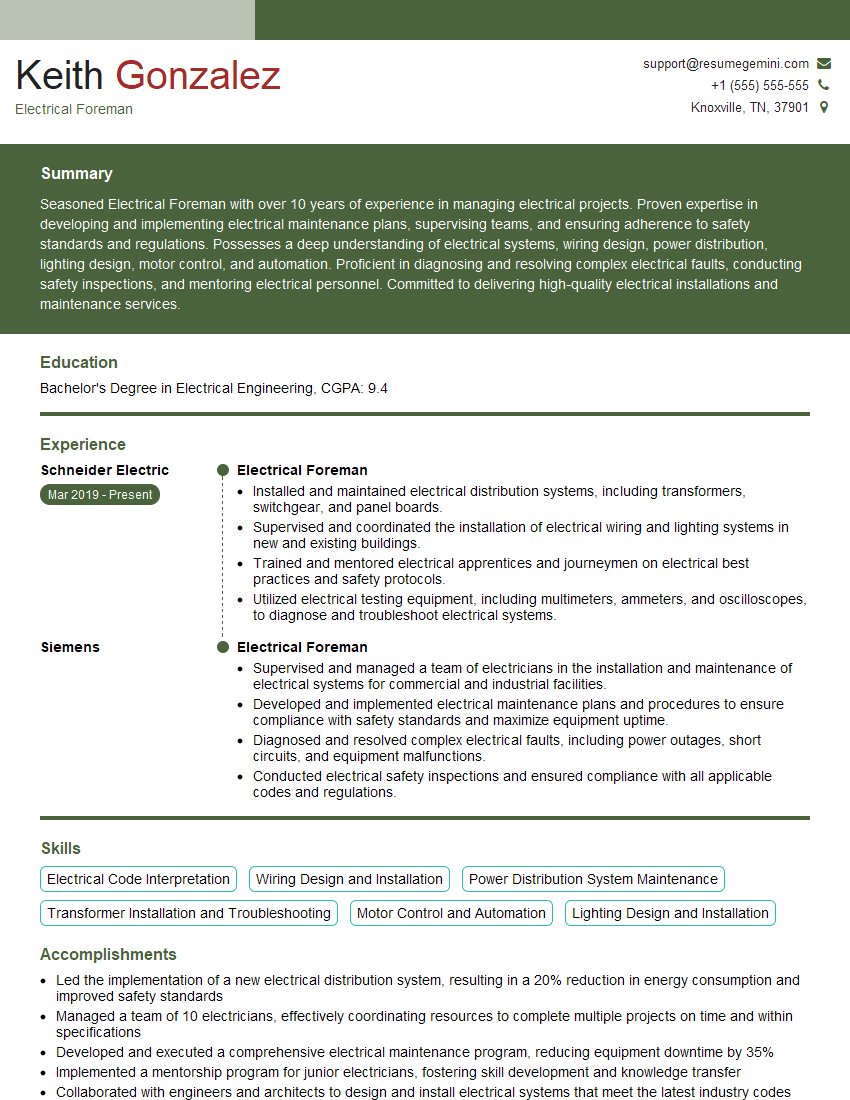
Electrical Foreman Resume Sample
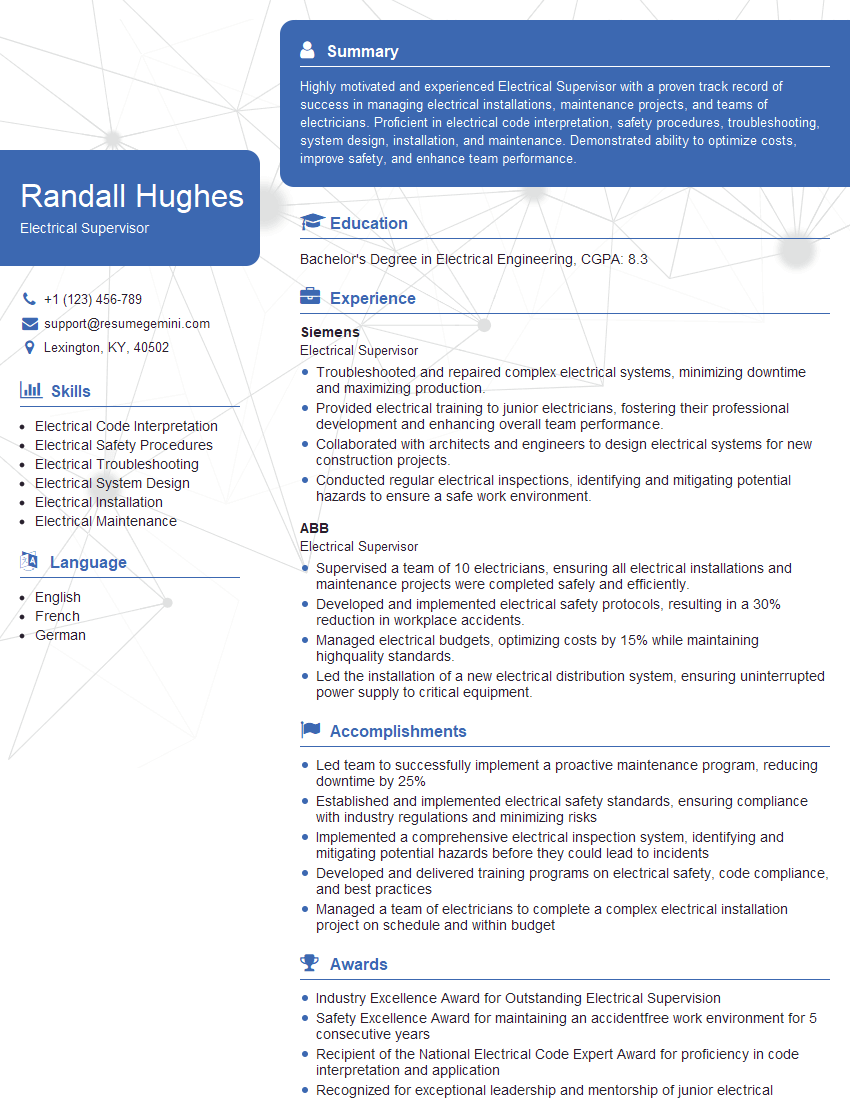
Electrical Supervisor Resume Sample
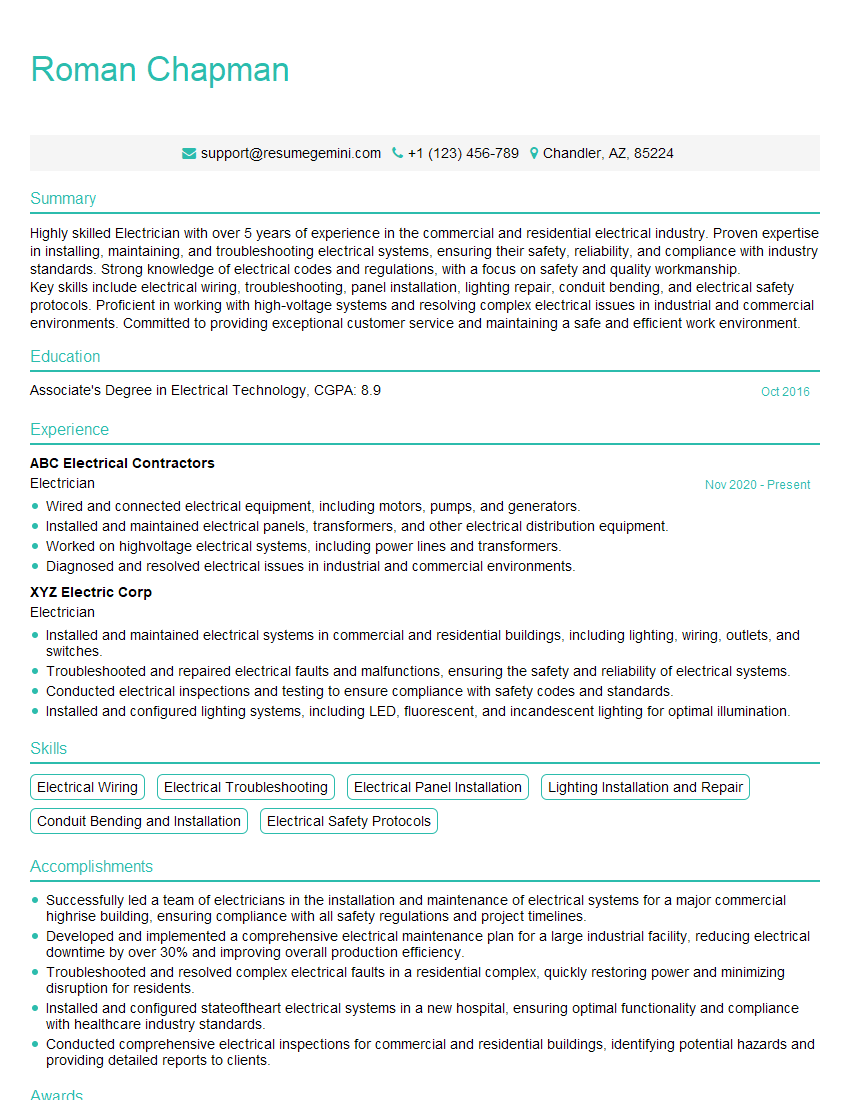
Electrician Resume Sample
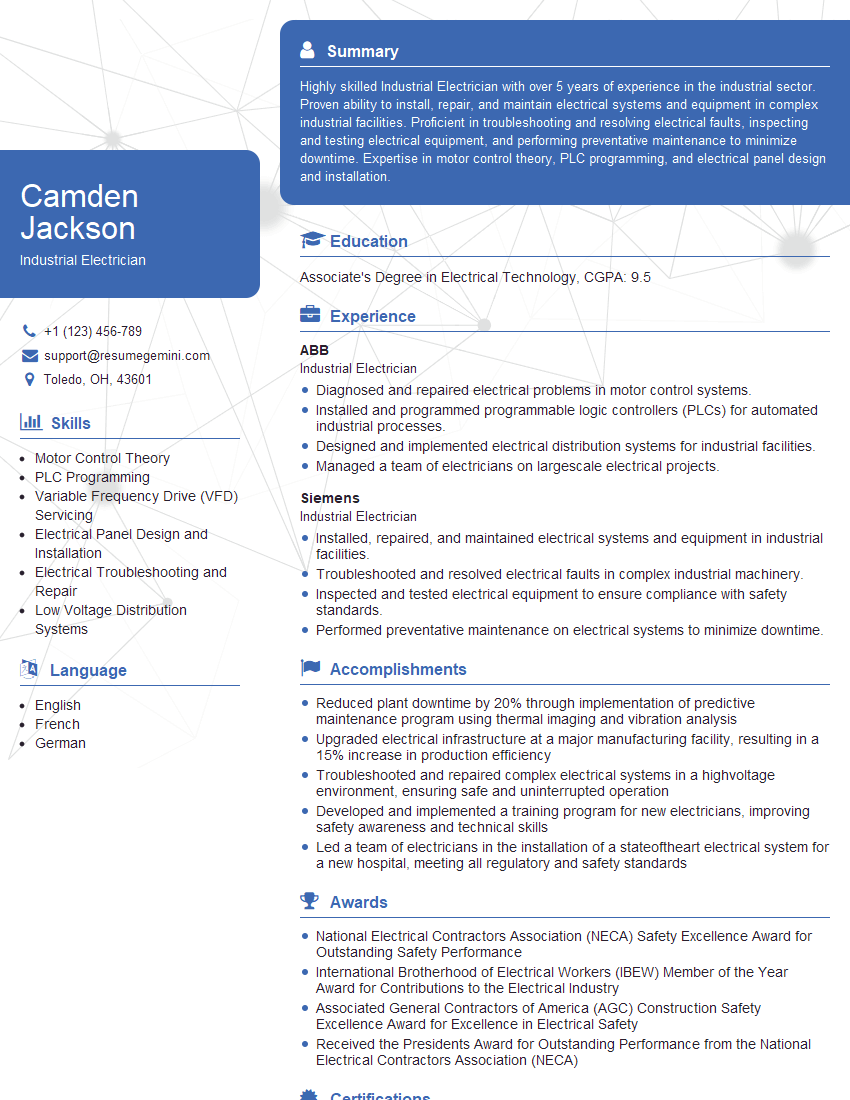
Industrial Electrician Resume Sample
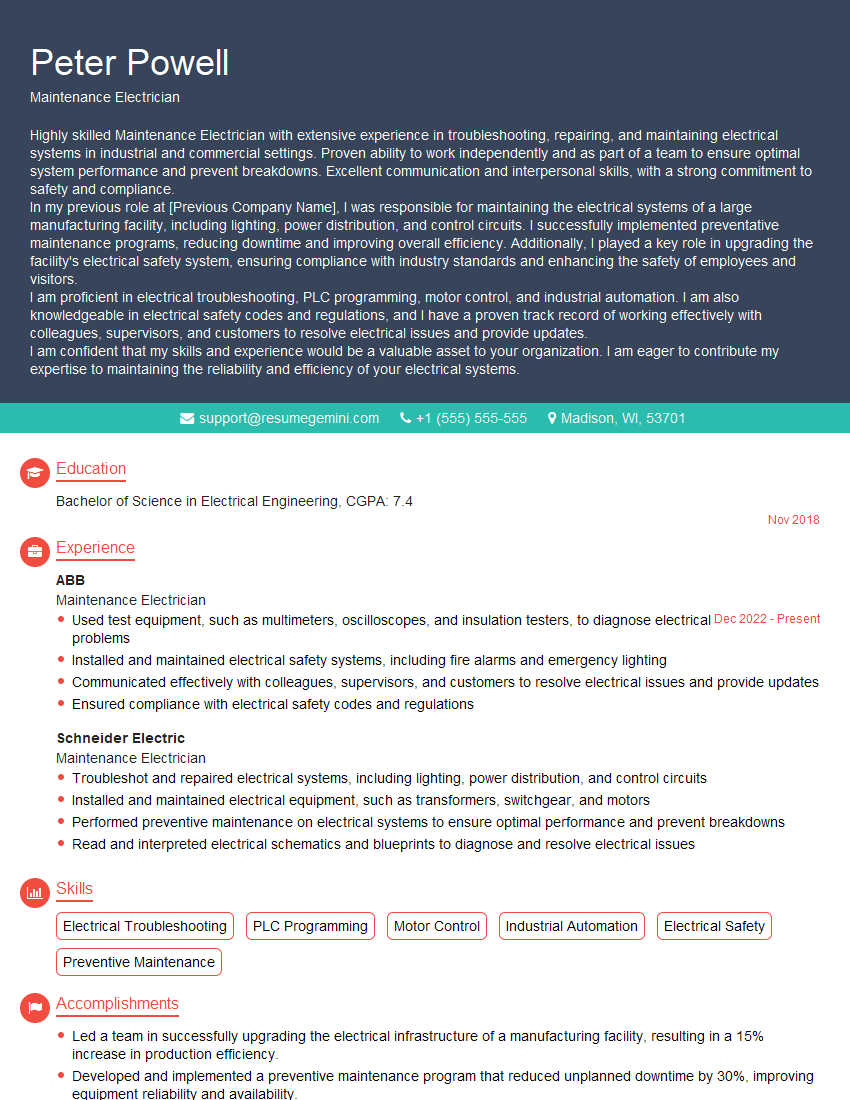
Maintenance Electrician Resume Sample
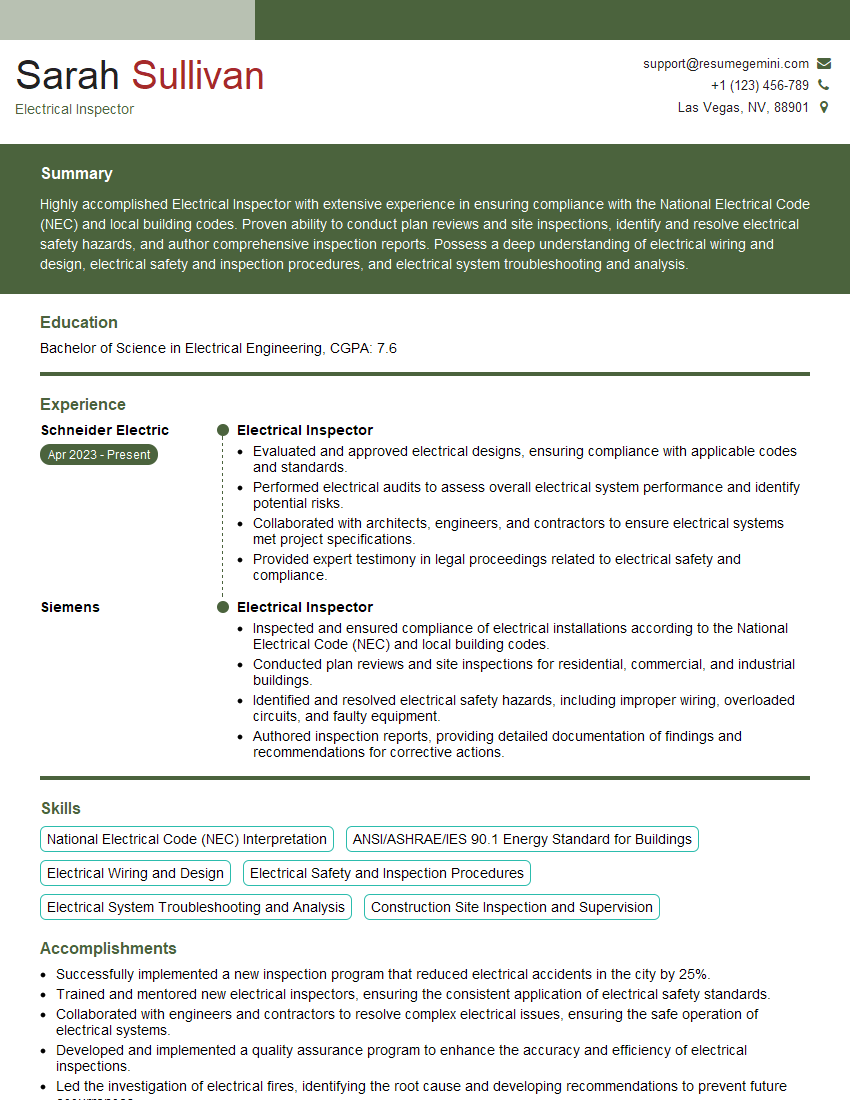
Electrical Inspector Resume Sample
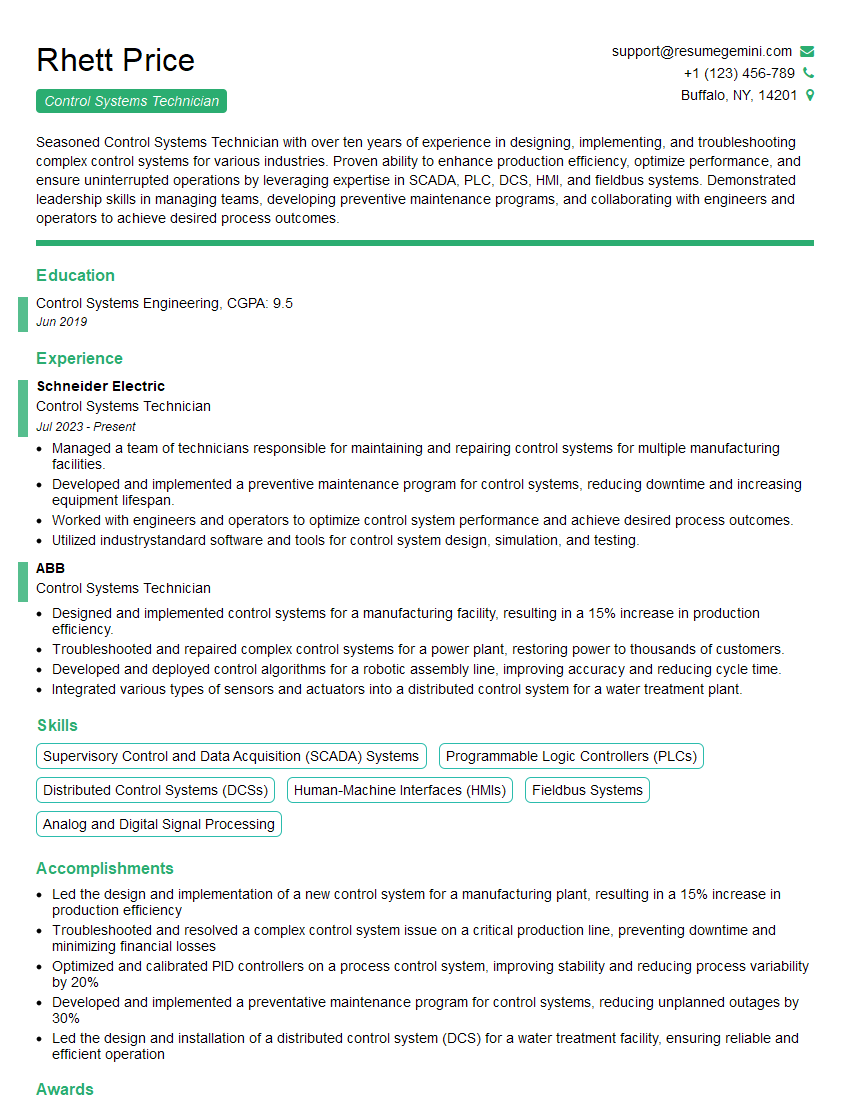
Control Systems Technician Resume Sample

Electrical Maintenance Technician Resume Sample
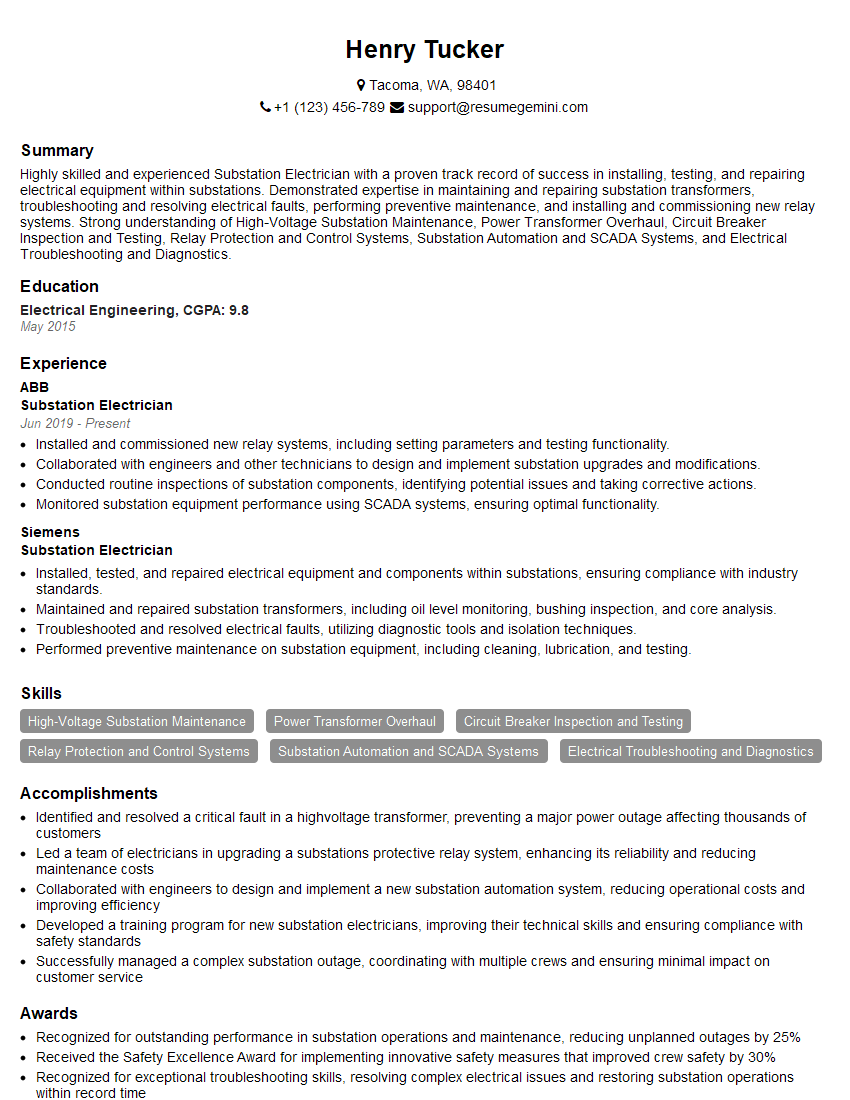
Substation Electrician Resume Sample
Explore more articles
Users Rating of Our Blogs
Share Your Experience
We value your feedback! Please rate our content and share your thoughts (optional).
What Readers Say About Our Blog
I Redesigned Spongebob Squarepants and his main characters of my artwork.
https://www.deviantart.com/reimaginesponge/art/Redesigned-Spongebob-characters-1223583608
IT gave me an insight and words to use and be able to think of examples
Hi, I’m Jay, we have a few potential clients that are interested in your services, thought you might be a good fit. I’d love to talk about the details, when do you have time to talk?
Best,
Jay
Founder | CEO