Feeling uncertain about what to expect in your upcoming interview? We’ve got you covered! This blog highlights the most important Knowledge of Higher Education Systems interview questions and provides actionable advice to help you stand out as the ideal candidate. Let’s pave the way for your success.
Questions Asked in Knowledge of Higher Education Systems Interview
Q 1. Describe the differences between a public and private university’s funding models.
Public and private universities differ significantly in their funding models. Public universities receive a substantial portion of their funding from state and local governments, along with tuition fees, research grants, and endowments. This dependence on public funds often translates into lower tuition costs for students, but it also makes them vulnerable to fluctuations in government budgets and political priorities. Think of it like a business with a major investor (the government) – the investor’s funding can be vital but also unpredictable.
Private universities, conversely, rely primarily on tuition revenue, endowments, donations from alumni and other benefactors, and research grants. This gives them greater financial autonomy but can lead to higher tuition costs for students. Their funding is more akin to a venture-capital-backed company, reliant on a diverse portfolio of investments and needing strong management to maintain stability.
For example, a public university might experience budget cuts during a state recession, impacting its ability to hire faculty or maintain facilities. Meanwhile, a wealthy private university might receive a large donation that allows it to invest in new research facilities or scholarship programs.
Q 2. Explain the role of accreditation in higher education.
Accreditation in higher education is a process of external quality assurance. Accrediting agencies, which are independent organizations, evaluate institutions and programs to ensure they meet specific standards of quality. This involves a thorough review of the curriculum, faculty qualifications, student support services, facilities, and overall institutional effectiveness. Think of it like a seal of approval, signifying that an institution has met rigorous standards.
The role of accreditation is multifaceted. It ensures quality assurance for students, offering them confidence that their degree holds value in the job market. It also facilitates transferability of credits between institutions, as accredited institutions adhere to common standards. Furthermore, accreditation is often a requirement for federal financial aid, ensuring accountability and transparency within the higher education system. If an institution lacks accreditation, it can significantly impact its ability to enroll students and receive funding.
Q 3. What are some common challenges faced by community colleges?
Community colleges face a unique set of challenges. These institutions serve a diverse student population, including many first-generation college students, adult learners returning to education, and students from low-income backgrounds.
- Funding constraints: They often receive less funding per student than four-year institutions, requiring them to balance educational quality with budgetary limitations.
- Student support needs: Many students require extensive support services, including academic advising, financial aid assistance, and career counseling, adding to the burden on already strained resources.
- Transfer pathways: Ensuring smooth articulation agreements with four-year institutions can be challenging, potentially affecting student progress and completion rates.
- High student-to-faculty ratios: Large class sizes can impede personalized instruction, negatively impacting student outcomes.
- Recruitment and retention: Attracting and retaining qualified faculty and staff can be difficult due to competitive salaries in other sectors.
Addressing these challenges requires a multifaceted approach involving strategic resource allocation, strong partnerships with four-year institutions, and innovative approaches to student support and instruction.
Q 4. How do student support services impact student retention?
Student support services play a crucial role in student retention. These services address the academic, social, and personal needs of students, creating a supportive environment conducive to success. Providing access to tutoring, mentoring, counseling, and career services can significantly impact a student’s ability to persist and graduate.
For example, a student struggling in a challenging course might benefit from tutoring, preventing academic setbacks that could lead to dropping out. Similarly, a student facing personal challenges might find support and guidance through counseling services, helping them overcome obstacles that could hinder their academic progress. Effective support services proactively identify at-risk students and intervene, providing tailored support to meet their individual needs.
Research consistently shows a strong positive correlation between robust student support services and higher retention rates. Institutions investing in comprehensive support systems typically experience improved student outcomes and higher graduation rates.
Q 5. Discuss the importance of data analysis in higher education decision-making.
Data analysis is increasingly vital in higher education decision-making. By analyzing various data points, institutions can gain valuable insights into student performance, program effectiveness, resource allocation, and overall institutional effectiveness. This data-driven approach facilitates evidence-based decision-making, leading to improved resource allocation and strategic planning.
Examples of data analysis applications include:
- Predictive modeling: Identifying at-risk students based on academic performance and demographic factors, allowing for proactive interventions.
- Program evaluation: Assessing the effectiveness of different academic programs based on student outcomes like graduation rates and job placement.
- Resource allocation: Optimizing resource allocation based on student demand and program performance.
- Student satisfaction surveys: Analyzing student feedback to identify areas for improvement in teaching, services, or facilities.
Utilizing data analysis techniques allows for a more objective and informed approach to decision-making, moving beyond assumptions and intuition towards evidence-based strategies for continuous improvement.
Q 6. What are some effective strategies for improving student engagement?
Improving student engagement requires a multi-pronged approach that addresses various aspects of the student experience. It’s about creating a learning environment where students feel connected, motivated, and supported.
- Active learning pedagogies: Implementing teaching methods that encourage active participation, such as group work, discussions, and problem-solving activities.
- Meaningful learning experiences: Connecting course content to real-world applications and students’ interests to enhance relevance and motivation.
- Strong faculty-student relationships: Creating opportunities for regular interaction and feedback between faculty and students, fostering a sense of community and support.
- Technology integration: Utilizing technology to enhance learning experiences and facilitate interaction, but ensuring responsible and effective integration.
- Co-curricular activities: Providing opportunities for students to engage in extracurricular activities, clubs, and organizations, fostering a sense of belonging and developing valuable skills.
Ultimately, enhancing student engagement leads to improved academic outcomes, increased student satisfaction, and a more vibrant and supportive campus community.
Q 7. Explain the process of curriculum development and approval.
Curriculum development and approval is a systematic process involving several stages. It begins with identifying the needs of the students and the demands of the job market. This involves extensive research, gathering feedback from faculty, students, employers, and professional organizations. A needs assessment will inform course development, learning outcomes, and curriculum structure.
The next stage involves designing the curriculum, choosing learning materials, creating assessments, and mapping out the course sequence. This often involves committees of faculty members from relevant disciplines, ensuring diverse perspectives and expertise are incorporated.
Once the curriculum is drafted, it undergoes a rigorous review process. This typically involves internal review by department faculty, college-level review, and finally, university-wide review by curriculum committees and relevant academic bodies. This ensures alignment with university standards and accreditation requirements. Amendments and revisions might be required at any stage of the process.
After approval from all the relevant committees, the curriculum is finalized, and implemented. Regular evaluation and revision is essential to ensure the curriculum remains current and effective, aligning with changing needs and technologies.
Q 8. How can technology enhance teaching and learning in higher education?
Technology offers transformative potential for higher education, enhancing both teaching and learning in significant ways. It’s not just about replacing traditional methods, but augmenting them for greater effectiveness and accessibility.
Enhanced Learning Experiences: Interactive simulations, virtual labs, and gamified learning platforms can make abstract concepts more engaging and easier to understand. For example, a medical student can practice complex surgical procedures in a virtual environment without risk, or a history student can explore ancient Rome through a 360° virtual tour.
Personalized Learning: Adaptive learning platforms leverage AI to tailor educational content and pacing to individual student needs. This allows for more efficient learning and addresses diverse learning styles. Imagine a platform adjusting the difficulty of math problems based on a student’s real-time performance.
Improved Accessibility: Technology can break down geographical barriers and make higher education accessible to students with disabilities. For instance, captioning and transcription services can improve access for deaf or hard-of-hearing students, while assistive technologies cater to diverse learning needs.
Streamlined Administration: Learning Management Systems (LMS) like Canvas or Blackboard streamline course management, grading, and communication, freeing up instructors’ time for more direct student interaction. Automated grading tools can also provide quicker feedback on assignments.
Facilitated Collaboration: Online forums, collaborative document editing tools, and video conferencing platforms foster richer collaboration among students and between students and instructors, fostering a sense of community even in online learning environments.
Q 9. What are the key components of a successful strategic plan for a university?
A successful university strategic plan needs to be comprehensive, encompassing various key components that align with the institution’s mission and vision. Think of it as a roadmap guiding the university’s future trajectory.
Mission and Vision: A clear articulation of the university’s purpose and aspirations. What unique contribution does it aim to make?
Environmental Scan: A thorough analysis of internal capabilities and external factors (market trends, demographic shifts, technological advancements) influencing the university’s future. This helps anticipate challenges and opportunities.
Strategic Goals and Objectives: Specific, measurable, achievable, relevant, and time-bound (SMART) goals to achieve the vision. These could include enrollment growth, research output improvements, or enhanced student support services.
Resource Allocation: A detailed plan for allocating financial, human, and technological resources to support the achievement of strategic goals. This involves prioritization and careful resource management.
Implementation Strategies: Detailed action plans outlining how the goals will be achieved. These might involve new program development, faculty hiring, or infrastructure upgrades.
Assessment and Evaluation: A framework for regularly monitoring progress, measuring outcomes, and making adjustments to the plan as needed. This ensures the plan remains relevant and effective.
Stakeholder Engagement: Active involvement of all stakeholders—faculty, staff, students, alumni, and community members—throughout the planning process. This fosters a sense of ownership and commitment.
Q 10. Describe your understanding of different learning management systems (LMS).
Learning Management Systems (LMS) are software applications designed to manage and deliver educational courses online. They vary in features and capabilities, but generally include tools for content delivery, communication, assessment, and course administration.
Examples: Popular LMS platforms include Blackboard, Canvas, Moodle, and Brightspace. Each offers a unique set of features, user interfaces, and integration options.
Core Features: Most LMS platforms include features such as course organization tools, assignment submission and grading systems, communication tools (forums, email), content management systems (for uploading documents, videos, etc.), and progress tracking tools for students and instructors.
Variations: Some LMS platforms are more robust and offer advanced features such as integration with other educational tools (like plagiarism checkers or video conferencing software), personalized learning pathways, and sophisticated analytics dashboards.
Choosing an LMS: Selecting the right LMS depends on institutional needs, budget, technical capabilities, and faculty preferences. Factors to consider include ease of use, scalability, security, and integration with existing systems.
Q 11. How do you assess the effectiveness of a particular teaching method?
Assessing the effectiveness of a teaching method requires a multifaceted approach that goes beyond simply relying on student satisfaction. A robust evaluation incorporates quantitative and qualitative data to paint a complete picture.
Quantitative Data: This includes measurable outcomes like student performance on assessments (exams, quizzes, assignments), course completion rates, and improvements in specific skills. Statistical analysis can help determine if there’s a significant difference in student outcomes between different teaching methods.
Qualitative Data: This involves gathering feedback from students through surveys, focus groups, or individual interviews. This qualitative data provides insights into student learning experiences, perceptions of the teaching method, and suggestions for improvement. It helps understand the ‘why’ behind quantitative results.
Observations: Direct observation of classroom dynamics, student engagement, and instructor-student interactions can provide valuable insights into the teaching method’s effectiveness in practice. It helps assess whether the method effectively facilitates learning and interaction.
Example: Let’s say a professor implements a flipped classroom approach. Quantitative data would show changes in exam scores. Qualitative data from student surveys would reveal students’ perceptions of the method’s effectiveness and their experiences. Observations would confirm if students actively participate in class discussions.
Q 12. What are some common challenges in managing a diverse student population?
Managing a diverse student population presents both opportunities and challenges. Success requires a proactive and inclusive approach that values and celebrates diversity while addressing potential conflicts.
Communication Barriers: Differences in language proficiency, communication styles, and cultural backgrounds can create misunderstandings. Strategies to address this include providing language support services, promoting intercultural communication training, and adopting clear and accessible communication practices.
Learning Styles and Needs: Students learn in different ways, and their needs may vary significantly. Providing diverse learning resources, accommodating different learning styles in teaching methods, and offering individualized support are crucial for inclusive teaching.
Social and Cultural Differences: Differences in cultural norms, values, and beliefs can lead to conflicts or misunderstandings. Fostering a respectful and inclusive campus climate through diversity awareness programs, cultural events, and open dialogue is essential.
Equity and Access: Ensuring equitable access to resources and opportunities for all students, regardless of their background, is vital. This includes providing financial aid, addressing systemic inequalities, and creating an equitable learning environment.
Bias and Discrimination: Institutions must actively combat bias and discrimination through policies, training, and support services. This could include reporting mechanisms, bias awareness training for faculty and staff, and providing support for students who have experienced discrimination.
Q 13. Explain the role of faculty governance in university decision-making.
Faculty governance plays a crucial role in university decision-making, ensuring faculty input and shared responsibility in shaping the institution’s academic mission and direction. It’s a mechanism for academic freedom and institutional accountability.
Shared Governance: Most universities operate under a shared governance model, where faculty, administration, and sometimes students participate in decision-making processes. Faculty governance ensures that academic decisions are informed by the expertise and perspective of those directly involved in teaching and research.
Curriculum Development: Faculty have a primary role in designing and developing curricula, ensuring that programs meet academic standards and reflect current knowledge and best practices.
Academic Standards: Faculty governance bodies establish and maintain academic standards, ensuring quality and integrity in teaching, research, and student assessment.
Resource Allocation: While administrators manage budgets, faculty governance provides input on resource allocation for academic programs, research initiatives, and faculty development activities. This ensures the resources effectively support academic priorities.
Faculty Evaluation and Promotion: Faculty governance plays a key role in the evaluation and promotion of faculty members, ensuring that decisions are based on objective criteria and peer review.
Institutional Policies: Faculty governance participates in the development and review of institutional policies related to academics, research, and student affairs, contributing to fair and effective institutional procedures.
Q 14. How can institutions effectively address issues of student mental health?
Addressing student mental health effectively requires a comprehensive and multi-pronged approach. It’s a critical aspect of student well-being and academic success.
Prevention and Early Intervention: Promoting mental health awareness through education and outreach programs. Providing resources and support services, including counseling and mental health workshops.
Accessible Mental Health Services: Ensuring easy access to affordable and confidential mental health services, including on-campus counseling centers, telehealth options, and referral networks to community providers.
Training for Faculty and Staff: Equipping faculty and staff with the skills and knowledge to recognize signs of mental health distress and provide appropriate support and referrals. This creates a supportive campus environment.
Supportive Campus Environment: Creating a campus culture that prioritizes mental well-being and reduces stigma surrounding mental health issues. This involves fostering a sense of belonging and community.
Collaboration and Partnerships: Collaborating with community mental health organizations to provide comprehensive and coordinated support for students. This can extend beyond the campus to ensure access to resources.
Data-Driven Approach: Monitoring student mental health data to identify trends, assess the effectiveness of interventions, and inform future strategies. This data informs resource allocation and program development.
Q 15. Discuss the impact of online learning on the higher education landscape.
Online learning has revolutionized higher education, expanding access to education globally and transforming the learning experience itself. Its impact can be seen across several key areas:
- Increased Accessibility: Online learning removes geographical barriers, allowing students in remote areas or with disabilities to access higher education. For example, a student in a rural village can now pursue a degree from a prestigious university without relocating.
- Flexibility and Convenience: Students can learn at their own pace and schedule, accommodating work commitments or family responsibilities. This flexibility is particularly beneficial for working professionals seeking upskilling or career advancement.
- Cost-Effectiveness: Online programs often have lower tuition fees and reduced costs associated with commuting, accommodation, and textbooks. This can make higher education more affordable for a wider range of students.
- Technological Advancements: The integration of interactive tools, simulations, and virtual reality enhances the learning experience, making it more engaging and effective. For instance, medical students can practice surgeries using virtual reality simulations before working on real patients.
- Challenges: Despite its benefits, online learning faces challenges such as the digital divide (unequal access to technology and internet), maintaining student engagement, and ensuring academic integrity.
However, the future of higher education likely involves a blended learning model, combining online and in-person instruction to leverage the strengths of both approaches.
Career Expert Tips:
- Ace those interviews! Prepare effectively by reviewing the Top 50 Most Common Interview Questions on ResumeGemini.
- Navigate your job search with confidence! Explore a wide range of Career Tips on ResumeGemini. Learn about common challenges and recommendations to overcome them.
- Craft the perfect resume! Master the Art of Resume Writing with ResumeGemini’s guide. Showcase your unique qualifications and achievements effectively.
- Don’t miss out on holiday savings! Build your dream resume with ResumeGemini’s ATS optimized templates.
Q 16. What are some strategies for increasing student diversity?
Increasing student diversity requires a multifaceted approach targeting various aspects of the higher education system. Key strategies include:
- Targeted Recruitment: Actively recruiting from underrepresented communities through partnerships with schools, community organizations, and outreach programs. This could involve visiting high schools in underserved areas or hosting information sessions specifically designed to attract diverse applicants.
- Financial Aid and Scholarships: Providing generous financial aid packages and scholarships specifically designed to support students from low-income backgrounds or underrepresented groups. This makes higher education financially accessible to a wider range of students.
- Inclusive Curriculum and Pedagogy: Developing a curriculum that reflects the diverse backgrounds and experiences of the student body and adopting teaching methods that cater to various learning styles. This could involve incorporating diverse perspectives into course materials or employing active learning techniques that engage students from different cultural backgrounds.
- Supportive Campus Environment: Creating a welcoming and inclusive campus climate where all students feel a sense of belonging. This involves implementing diversity training for faculty and staff, establishing student support groups, and fostering a culture of respect and understanding.
- Mentorship Programs: Pairing students from underrepresented groups with faculty mentors or peer mentors who can provide guidance, support, and encouragement throughout their academic journey. This can help students navigate challenges and thrive in a potentially unfamiliar environment.
Success requires a sustained commitment to these strategies, along with ongoing evaluation and adaptation based on student feedback and data analysis.
Q 17. How do you evaluate the success of a student support program?
Evaluating the success of a student support program requires a comprehensive approach, combining both quantitative and qualitative data. Here’s a framework:
- Quantitative Measures: Track metrics such as student retention rates, graduation rates, GPA improvements, and the number of students utilizing the program’s services. For example, a successful tutoring program should demonstrate a statistically significant increase in the GPA of participating students compared to a control group.
- Qualitative Measures: Gather feedback from students through surveys, focus groups, and individual interviews to understand their experiences and perceptions of the program. This provides valuable insight into the program’s effectiveness from the students’ perspective. For example, feedback might reveal that the program’s workshops are helpful but that the online resources could be improved.
- Program Outputs and Outcomes: Analyze program outputs (e.g., number of workshops conducted, number of students served) and outcomes (e.g., improved academic performance, increased student engagement, enhanced sense of belonging). This provides a clear picture of what the program achieved and whether it delivered on its intended goals.
- Benchmarking: Compare the program’s performance to similar programs at other institutions or to national benchmarks. This provides context for evaluating the program’s effectiveness relative to best practices.
By combining these methods, you can obtain a holistic understanding of the program’s effectiveness and identify areas for improvement.
Q 18. Describe your experience with budget management in a higher education setting.
My experience with budget management in higher education involved overseeing a significant portion of the operating budget for [mention specific department/area]. This included:
- Budget Planning and Development: Collaborating with department heads and faculty to develop realistic and comprehensive budgets, aligning with institutional priorities and strategic goals. This involved careful forecasting of revenue and expenditure, considering factors such as enrollment projections, grant funding, and inflation.
- Resource Allocation: Making informed decisions regarding the allocation of resources to various programs and initiatives, prioritizing projects that best support student success and institutional goals. This often involved prioritizing needs based on data-driven analysis.
- Financial Monitoring and Control: Tracking expenditures regularly, comparing actual spending against the budget, and implementing corrective actions as needed. This included using budgeting software to monitor spending against allocated funds.
- Grant Writing and Management: Securing external funding through grant proposals, managing awarded grants, and ensuring compliance with grant regulations. This involved carefully preparing grant proposals that addressed the grantors’ requirements and demonstrated the project’s potential.
- Financial Reporting: Preparing regular financial reports for stakeholders, including the university administration, donors, and external funding agencies. This provided transparency and accountability regarding the use of funds.
I have experience utilizing various budget management tools and techniques, ensuring fiscal responsibility and maximizing the impact of available resources.
Q 19. What are some ethical considerations in higher education research?
Ethical considerations in higher education research are paramount, ensuring the integrity of the research process and protecting the rights and well-being of participants. Key ethical considerations include:
- Informed Consent: Ensuring that participants are fully informed about the purpose, procedures, and potential risks of the research before they agree to participate. This involves providing clear and understandable information about the study in a language that the participant understands.
- Confidentiality and Anonymity: Protecting the privacy of participants by ensuring that their data is kept confidential and anonymous, whenever possible. This might involve using codes to identify participants rather than their names.
- Data Integrity and Transparency: Maintaining the accuracy and integrity of research data and ensuring transparency in the research methods and findings. This includes properly storing and managing data to prevent loss or manipulation.
- Avoiding Conflicts of Interest: Disclosing and managing any potential conflicts of interest that might compromise the objectivity or integrity of the research. This ensures that funding sources or personal biases do not influence the research results.
- Research with Vulnerable Populations: Taking extra precautions when conducting research with vulnerable populations, such as children or individuals with disabilities, to ensure their safety and well-being. This could involve obtaining consent from guardians or implementing additional safeguards to protect participants from harm.
Adherence to ethical guidelines, such as those established by Institutional Review Boards (IRBs), is essential for maintaining the credibility and integrity of higher education research.
Q 20. How do you handle conflicts between faculty members?
Handling conflicts between faculty members requires a diplomatic and proactive approach, focusing on resolution and maintaining a positive working environment. My approach involves:
- Early Intervention: Addressing conflicts promptly before they escalate, encouraging open communication and facilitating dialogue between the involved parties. This prevents minor disagreements from becoming major problems.
- Mediation and Facilitation: Serving as a neutral mediator to help faculty members understand each other’s perspectives, identify the root causes of the conflict, and work towards a mutually acceptable solution. This involves creating a safe space for discussion and helping the faculty members find common ground.
- Establishing Clear Expectations: Ensuring that clear expectations for professional conduct and collaboration are established and communicated to all faculty members. A clear code of conduct can help reduce the likelihood of conflicts.
- Formal Processes: In cases where mediation is unsuccessful, implementing established institutional procedures for addressing faculty disputes, including formal investigations or disciplinary actions if necessary. This involves following university policies and regulations to ensure fairness and consistency.
- Focus on Professional Development: Providing faculty with professional development opportunities focused on conflict resolution, communication skills, and teamwork. This can equip faculty with the skills and knowledge to handle conflicts more effectively in the future.
The goal is to foster a collaborative environment where faculty can work together effectively, even when disagreements arise.
Q 21. Explain the importance of institutional research in strategic planning.
Institutional research (IR) plays a vital role in strategic planning by providing data-driven insights to inform decision-making processes. It bridges the gap between data analysis and institutional strategy. This includes:
- Assessment of Current Status: IR provides data on various aspects of the institution, such as student demographics, enrollment trends, graduation rates, faculty productivity, and resource allocation. This creates a clear picture of the institution’s strengths and weaknesses.
- Forecasting Future Trends: Analyzing historical data to forecast future trends, such as enrollment projections, demand for specific programs, and future resource needs. This informs proactive planning and resource allocation.
- Program Evaluation: Evaluating the effectiveness of academic programs, student support services, and other institutional initiatives using quantitative and qualitative data. This helps identify areas for improvement and ensures that resources are allocated effectively.
- Benchmarking and Best Practices: Comparing the institution’s performance to similar institutions or national benchmarks to identify areas where improvement is needed and to learn from best practices. This helps the institution to improve its performance and stay competitive.
- Evidence-Based Decision Making: Providing decision-makers with data-driven evidence to inform strategic planning, resource allocation, and policy development. This ensures that decisions are based on sound data rather than speculation.
Without robust IR, strategic planning becomes guesswork, hindering the institution’s ability to adapt to changing circumstances and achieve its goals effectively.
Q 22. What are some innovative approaches to fundraising in higher education?
Innovative fundraising in higher education goes beyond traditional alumni donations and grants. It requires a multi-pronged approach targeting diverse funding sources and engaging stakeholders creatively.
Crowdfunding Platforms: Utilizing platforms like Kickstarter or GoFundMe to engage alumni, students, and the wider community for specific projects, like new research labs or scholarships. This fosters a sense of ownership and collective achievement.
Philanthropic Partnerships: Collaborating with corporations and foundations that align with the university’s mission. This could involve joint research initiatives or sponsored programs, leading to substantial financial support and brand enhancement.
Endowment Growth Strategies: Developing sophisticated investment strategies to maximize endowment returns, ensuring long-term financial sustainability. This requires expertise in financial markets and responsible investment practices.
Major Gift Cultivation: Building relationships with high-net-worth individuals and foundations to secure large, transformative gifts. This is a long-term process requiring meticulous relationship management and a clear articulation of the university’s impact.
Naming Opportunities: Offering naming rights to buildings, programs, or scholarships in exchange for significant donations. This provides donors with recognition and a tangible link to the institution.
For instance, a university might launch a crowdfunding campaign to fund a new robotics lab, attracting smaller donations from numerous supporters, while simultaneously pursuing a major gift from a tech company interested in partnering on research.
Q 23. Describe your understanding of Title IX and its implications for higher education institutions.
Title IX is a federal law prohibiting sex-based discrimination in any school or other education program receiving federal funding. In higher education, this has profound implications, encompassing a wide range of issues.
Sexual Harassment and Assault: Title IX mandates that institutions respond promptly and effectively to reports of sexual harassment and assault, providing support for survivors and investigating allegations thoroughly. This includes establishing clear reporting procedures, providing training for faculty and staff, and implementing preventative measures.
Gender Equity in Athletics: Title IX ensures equitable opportunities for male and female students in athletic programs, including access to facilities, scholarships, and coaching resources. Institutions must demonstrate proportionality in athletic opportunities or provide evidence of expanding opportunities for the underrepresented sex.
Gender Discrimination: Title IX also prohibits discrimination based on gender in admissions, financial aid, housing, and other educational programs. This means institutions must ensure fair and equitable treatment of all students regardless of gender identity or expression.
Transgender Students’ Rights: Title IX also addresses the needs of transgender students, protecting them from discrimination based on gender identity. This includes access to appropriate facilities and programs, as well as the use of their preferred names and pronouns.
Failure to comply with Title IX can result in severe penalties, including loss of federal funding and legal action. Therefore, institutions must have robust policies and procedures in place to ensure compliance.
Q 24. How do you measure the effectiveness of a marketing campaign for a university?
Measuring the effectiveness of a university marketing campaign requires a multi-faceted approach using both quantitative and qualitative data. The key is to define clear, measurable goals upfront.
Website Analytics: Tracking website traffic, bounce rates, time spent on pages, and conversion rates (e.g., application submissions, event registrations) provides insights into campaign engagement and effectiveness.
Social Media Analytics: Monitoring social media engagement (likes, shares, comments) and reach helps assess campaign visibility and impact. This allows you to determine which channels and messaging resonated best with target audiences.
Application Data: Analyzing application numbers from specific marketing channels helps assess campaign’s success in generating leads and ultimately increasing enrollments.
Surveys and Focus Groups: Gathering feedback from prospective students and alumni through surveys and focus groups provides valuable qualitative data on perceptions and opinions of the campaign.
Return on Investment (ROI): Calculating the cost per application or enrollment helps to understand the financial return of the campaign. This is crucial for future resource allocation.
For example, if a university runs a targeted social media campaign and sees a 20% increase in applications from a specific demographic, it demonstrates the campaign’s success. However, if the cost of running the campaign outweighs the value of increased enrollment, it may not be deemed successful. A holistic view is required.
Q 25. Discuss the challenges of managing enrollment in a competitive higher education market.
Managing enrollment in a competitive higher education market presents significant challenges. Institutions face pressures to attract and retain students in an increasingly diverse and demanding landscape.
Competition for Students: Universities compete with each other and with alternative educational pathways, requiring institutions to differentiate themselves through unique programs, flexible learning options, and strong career services.
Changing Student Demographics: Understanding the evolving needs and expectations of diverse student populations (e.g., first-generation college students, international students) is crucial for effective recruitment strategies.
Financial Constraints: Rising tuition costs and limited financial aid opportunities can make higher education less accessible. This requires universities to explore innovative funding models and scholarships.
Data-Driven Decision Making: Analyzing enrollment data and market trends is essential for forecasting future demand and adjusting admissions policies and recruitment strategies accordingly.
Marketing and Recruitment Strategies: Effective marketing campaigns that showcase the unique value proposition of the university are vital to attracting prospective students. This includes digital marketing, student outreach programs, and strategic partnerships.
For example, a university might face declining enrollment in a specific program and need to adjust its curriculum or marketing message to attract new students or even explore phasing out the program if demand doesn’t improve.
Q 26. What are some strategies for improving faculty retention?
Improving faculty retention requires a multifaceted approach focusing on creating a supportive and rewarding work environment.
Competitive Compensation and Benefits: Offering competitive salaries, comprehensive health insurance, and retirement plans is crucial for attracting and retaining high-quality faculty.
Professional Development Opportunities: Providing opportunities for professional growth, such as attending conferences, pursuing further education, and engaging in research, demonstrates a commitment to faculty development.
Mentorship and Support Systems: Establishing mentoring programs that pair junior faculty with senior faculty can provide guidance and support, particularly for those navigating the complexities of academia.
Workload Management and Balance: Addressing faculty workload concerns, reducing administrative burdens, and promoting work-life balance can significantly improve job satisfaction.
Recognition and Rewards: Acknowledging and celebrating faculty accomplishments through awards, promotions, and public recognition strengthens morale and fosters a sense of appreciation.
Opportunities for Collaboration: Facilitating opportunities for collaboration among faculty members and fostering a strong sense of community can enhance job satisfaction and reduce isolation.
A university might implement a mentorship program pairing new assistant professors with experienced colleagues to ease the transition into academia and provide ongoing support. Regular feedback, clear promotion criteria, and opportunities for involvement in university governance demonstrate a commitment to faculty value.
Q 27. How do you stay current with trends and best practices in higher education?
Staying current with trends and best practices in higher education requires a proactive and multi-faceted approach.
Professional Organizations: Actively participating in professional organizations like the American Association of Colleges and Universities (AAC&U) or the Association of Governing Boards of Universities and Colleges (AGB) provides access to conferences, publications, and networking opportunities.
Conferences and Workshops: Attending relevant conferences and workshops allows for exposure to innovative ideas and best practices from leading institutions and experts in the field.
Peer Institutions: Maintaining relationships with colleagues at peer institutions through networking and site visits allows for benchmarking and sharing of effective practices.
Research and Publications: Staying informed through journals, articles, and research reports on higher education trends and best practices enables a data-driven approach to decision-making.
Industry News and Reports: Following industry news and reports from organizations like the National Center for Education Statistics (NCES) or the Chronicle of Higher Education provides insights into current issues and policy changes.
I regularly attend conferences, subscribe to relevant journals, and actively engage in online communities of practice to maintain my knowledge base. I also seek opportunities for collaborative projects with colleagues at other institutions to learn from their successes and challenges.
Q 28. Describe your experience with developing and implementing institutional policies.
I have extensive experience in developing and implementing institutional policies, particularly in areas related to academic integrity, student conduct, and faculty governance.
Policy Development Process: My approach involves a collaborative and inclusive process, bringing together stakeholders from various departments and levels to ensure policies are comprehensive, equitable, and aligned with the institution’s mission and values. This usually includes gathering feedback through surveys, focus groups, and open forums.
Clear and Concise Language: I strive to ensure policies are clear, concise, and easily understood by all members of the campus community. Complex legal jargon is avoided in favor of plain language.
Training and Communication: Effective communication and training programs are crucial for policy implementation. This ensures all stakeholders understand the policies and how to comply with them.
Regular Review and Updates: Policies must be regularly reviewed and updated to ensure they remain relevant and effective. This is a continuous process that involves monitoring policy effectiveness and making necessary adjustments based on feedback and experience.
For example, in developing a new policy on academic integrity, I would collaborate with faculty, students, and administrators to create a fair and effective policy that promotes ethical scholarship while addressing the specific challenges faced by the institution.
Key Topics to Learn for Knowledge of Higher Education Systems Interview
- Higher Education Governance and Funding Models: Understand the different structures (e.g., public, private, for-profit), funding mechanisms (e.g., tuition, grants, endowments), and their implications for institutional decision-making. Consider the impact of policy changes on these models.
- Curriculum Development and Assessment: Explore the processes involved in designing and evaluating curricula, including accreditation standards, learning outcomes assessment, and program evaluation. Think about how these processes ensure quality and relevance.
- Student Support Services: Familiarize yourself with the range of services provided to students, such as academic advising, career services, financial aid, and student life programs. Analyze their role in student success and retention.
- Faculty Roles and Responsibilities: Understand the diverse roles of faculty members, including teaching, research, and service. Consider the challenges and opportunities associated with these roles within the higher education context.
- Technological Integration in Higher Education: Explore the use of technology in teaching, learning, administration, and research. Analyze the impact of technology on access, equity, and the overall student experience.
- Diversity, Equity, and Inclusion (DEI) Initiatives: Understand the importance of DEI in higher education and the strategies used to promote inclusive environments. Consider the challenges and best practices related to fostering diversity and equity on college campuses.
- Strategic Planning and Institutional Effectiveness: Examine the processes involved in developing and implementing strategic plans, including goal setting, resource allocation, and performance measurement. Analyze how these processes contribute to institutional success.
Next Steps
Mastering knowledge of higher education systems is crucial for career advancement in this dynamic field. A strong understanding of these complex systems allows you to contribute effectively to institutional goals and navigate the challenges facing higher education today. To significantly boost your job prospects, creating an ATS-friendly resume is essential. ResumeGemini is a trusted resource that can help you build a professional and impactful resume, tailored to highlight your expertise. Examples of resumes tailored to showcasing Knowledge of Higher Education Systems are available within ResumeGemini to guide your process.
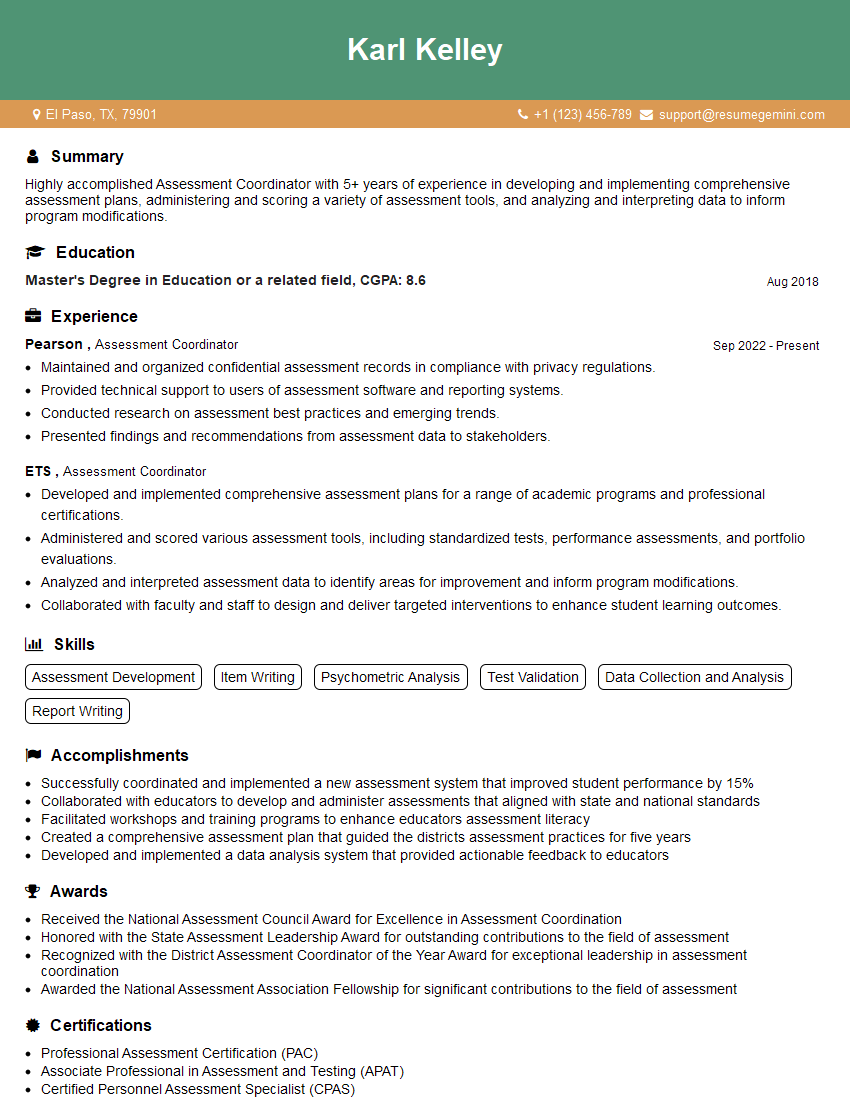
Assessment Coordinator Resume Sample
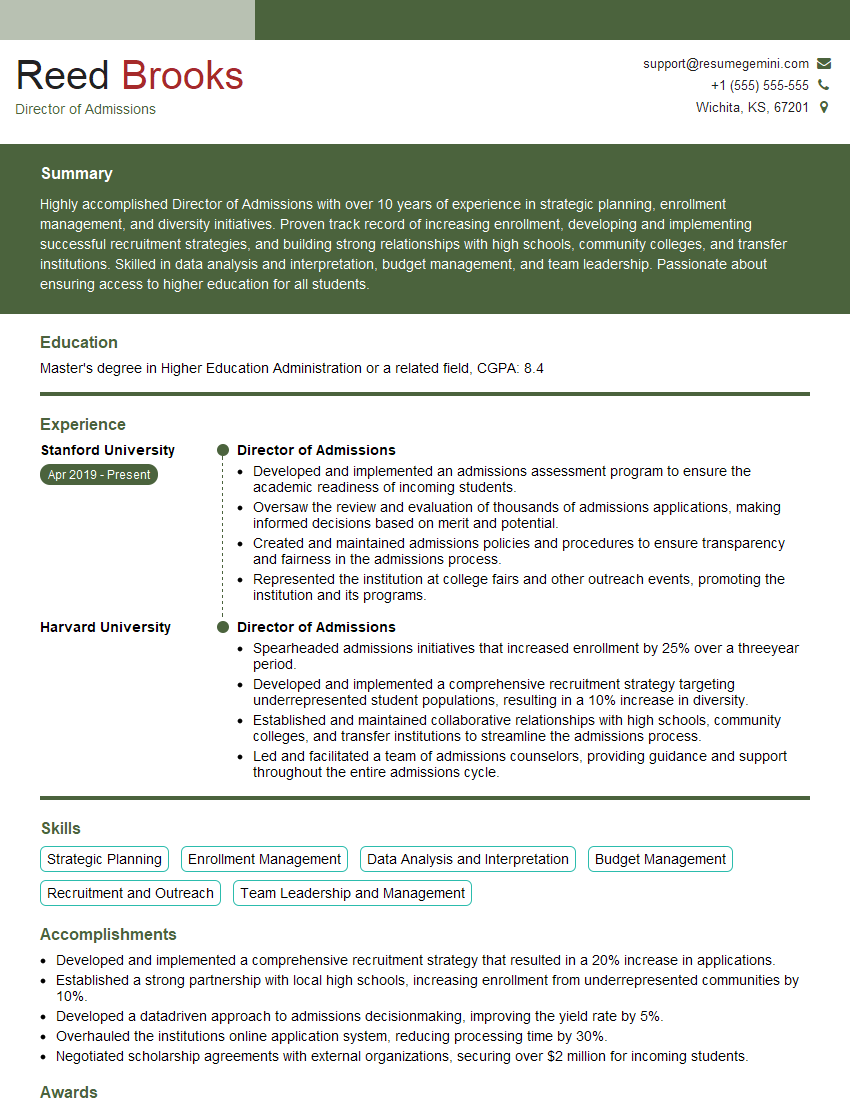
Director of Admissions Resume Sample
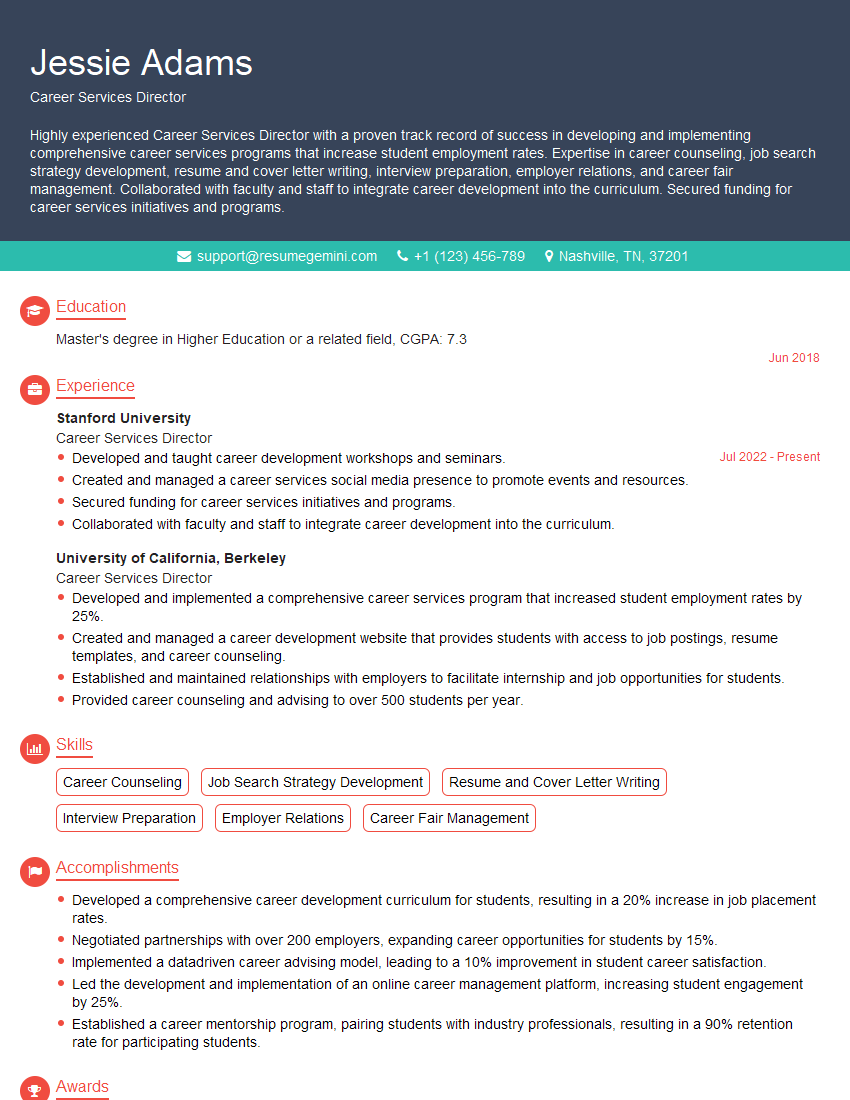
Career Services Director Resume Sample
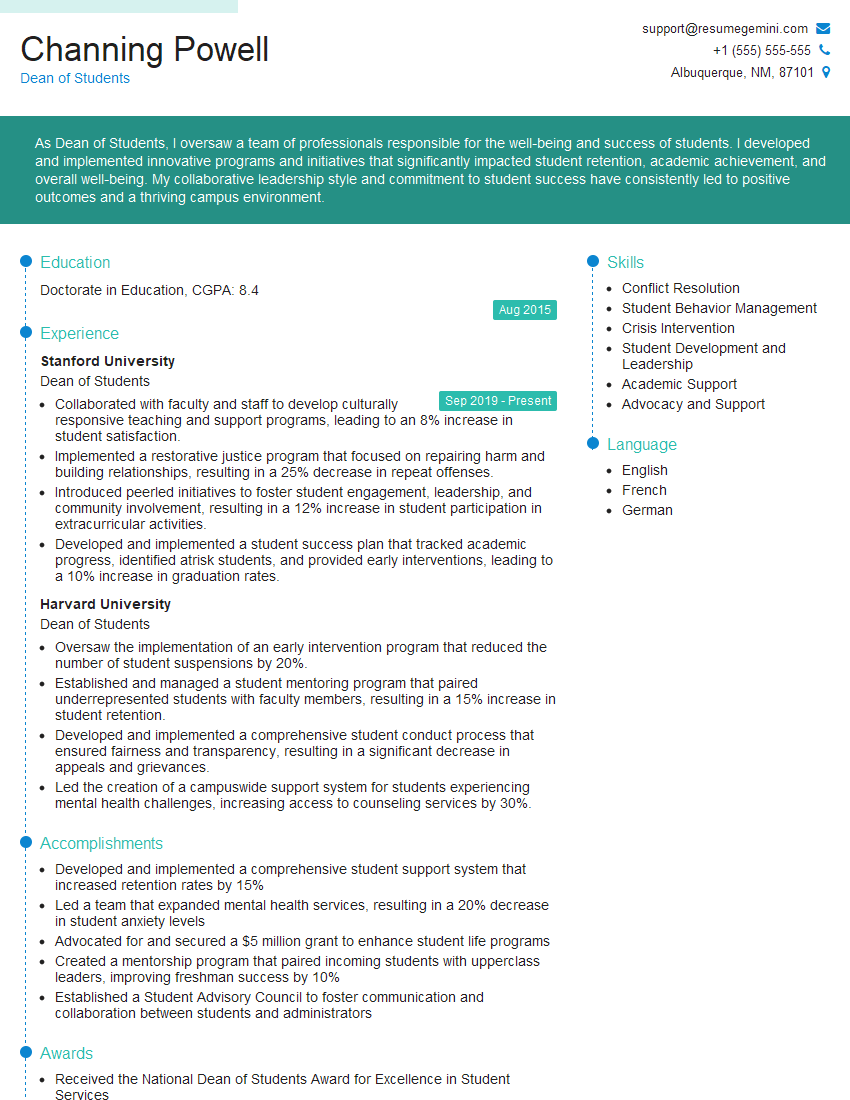
Dean of Students Resume Sample
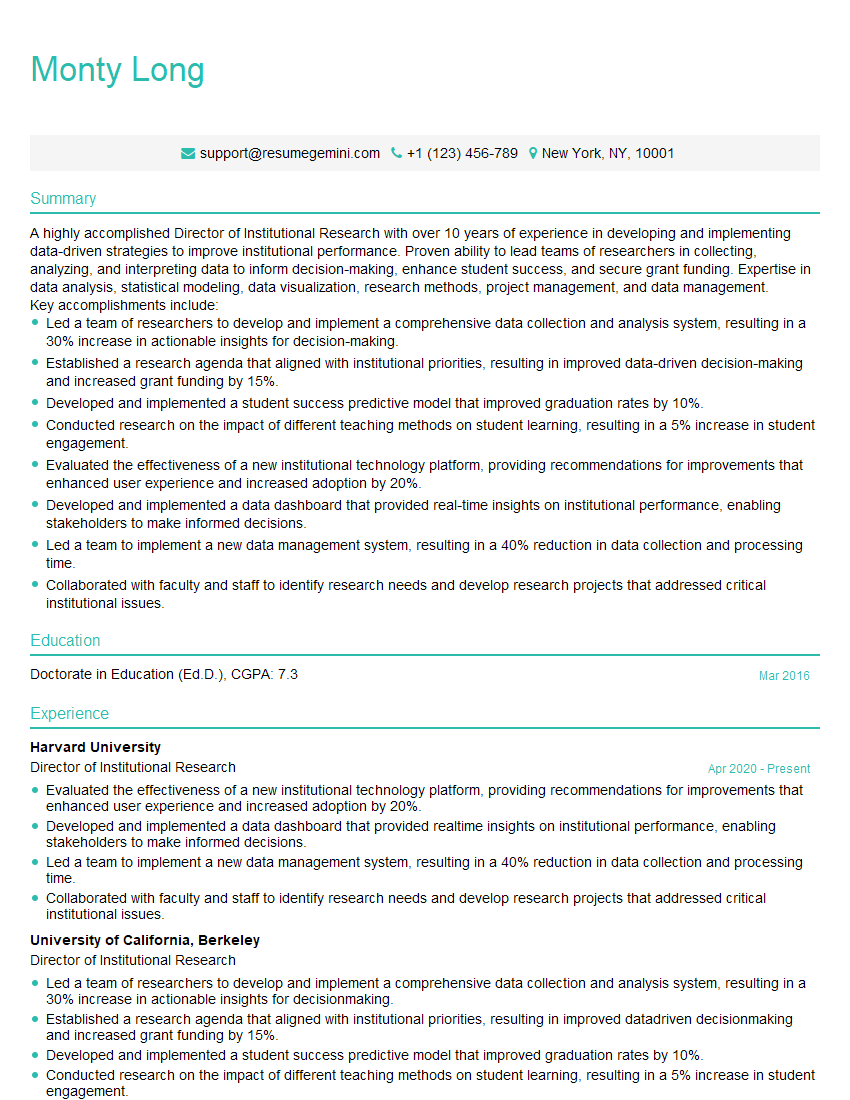
Director of Institutional Research Resume Sample
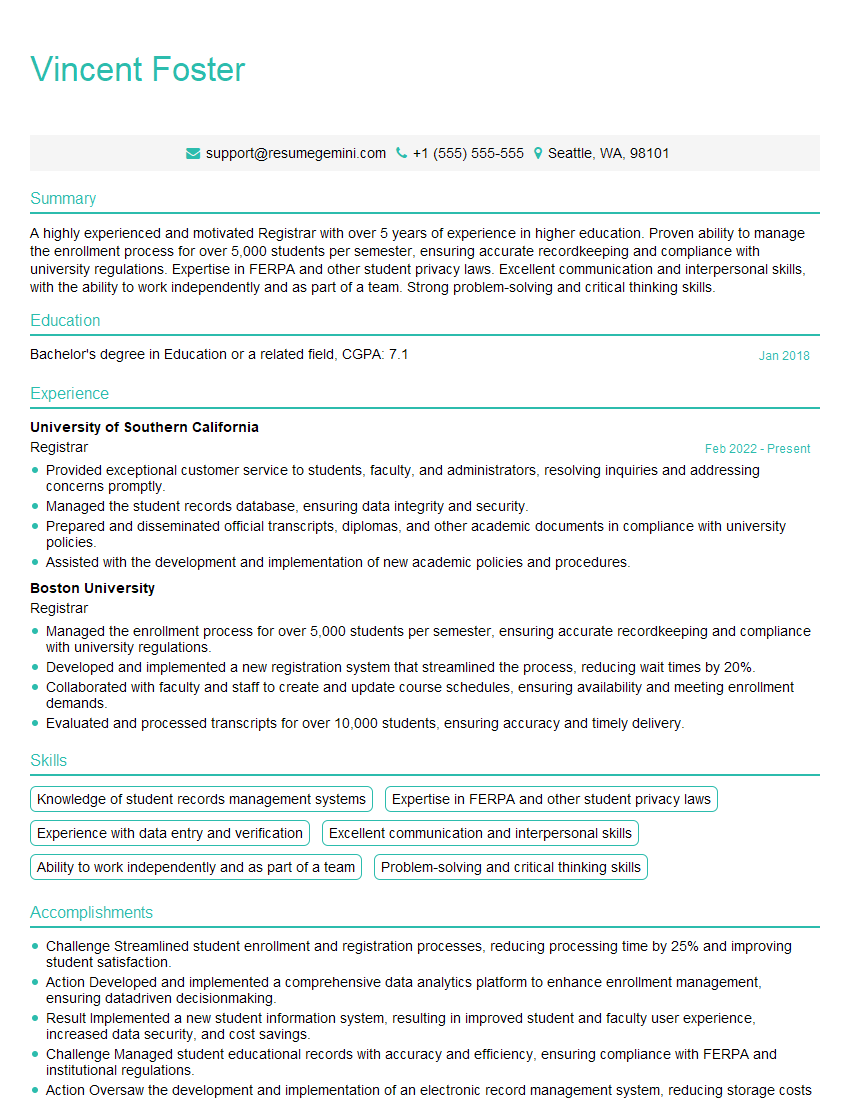
Registrar Resume Sample

Curriculum Developer Resume Sample
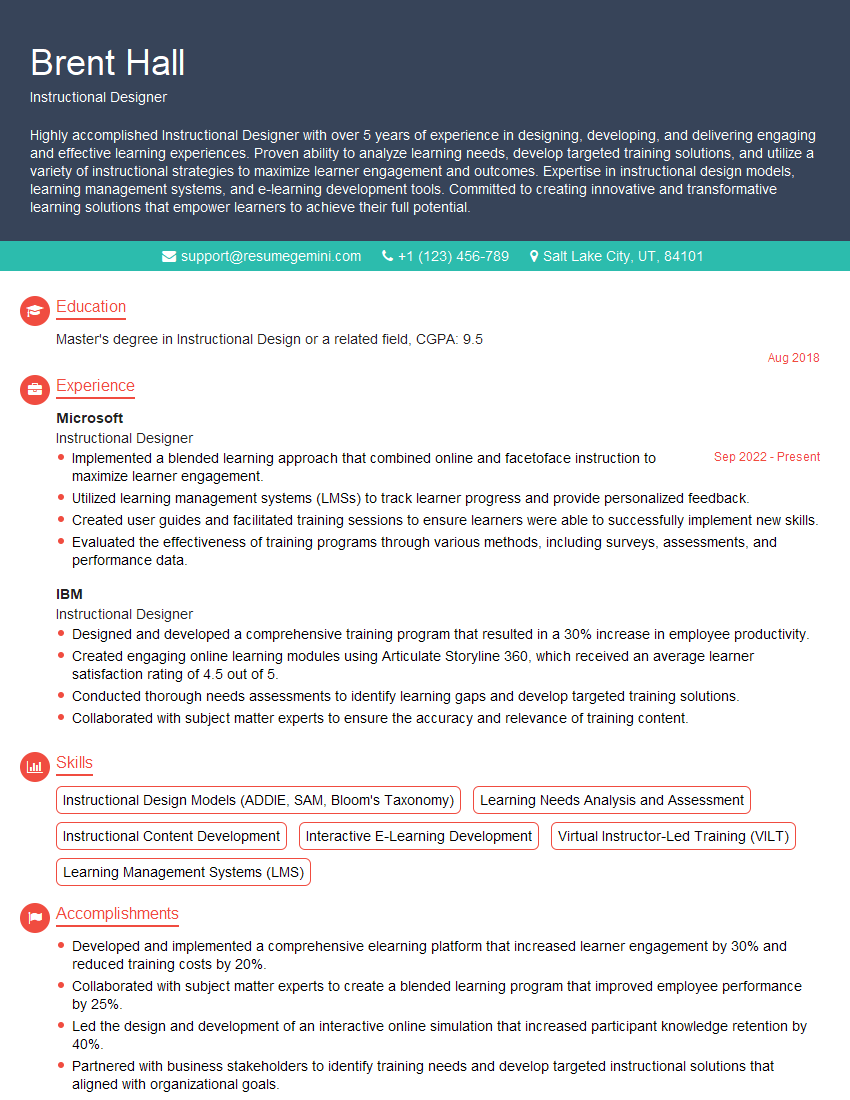
Instructional Designer Resume Sample
Explore more articles
Users Rating of Our Blogs
Share Your Experience
We value your feedback! Please rate our content and share your thoughts (optional).
What Readers Say About Our Blog
I Redesigned Spongebob Squarepants and his main characters of my artwork.
https://www.deviantart.com/reimaginesponge/art/Redesigned-Spongebob-characters-1223583608
IT gave me an insight and words to use and be able to think of examples
Hi, I’m Jay, we have a few potential clients that are interested in your services, thought you might be a good fit. I’d love to talk about the details, when do you have time to talk?
Best,
Jay
Founder | CEO