The thought of an interview can be nerve-wracking, but the right preparation can make all the difference. Explore this comprehensive guide to Knowledge of Hotel Reservation Systems interview questions and gain the confidence you need to showcase your abilities and secure the role.
Questions Asked in Knowledge of Hotel Reservation Systems Interview
Q 1. Explain the functionality of a Property Management System (PMS).
A Property Management System (PMS) is the central nervous system of a hotel. It’s a software solution that manages all aspects of a hotel’s operations, from reservations and guest information to housekeeping and billing. Think of it as a sophisticated digital filing cabinet and control center for everything hotel-related.
Core functionalities typically include:
- Reservations Management: Accepting, modifying, and cancelling bookings; managing room availability; assigning rooms; and tracking guest preferences.
- Guest Management: Storing guest profiles, contact information, and past stay history; managing loyalty programs; and personalizing the guest experience.
- Housekeeping Management: Tracking room status (clean, dirty, occupied, etc.); assigning housekeeping tasks; and managing inventory.
- Front Desk Operations: Check-in/check-out processing; managing guest requests; handling payments; and generating reports.
- Reporting and Analytics: Generating reports on occupancy rates, revenue, and other key performance indicators (KPIs).
- Channel Management: Connecting to various online travel agents (OTAs) and Global Distribution Systems (GDS) to manage inventory and pricing across multiple platforms.
For example, imagine a guest calls to book a room. The PMS allows the receptionist to instantly check availability, input the reservation details, and even automatically send a confirmation email. Then, upon arrival, check-in is streamlined with the guest’s information readily available.
Q 2. Describe your experience with Global Distribution Systems (GDS) like Amadeus, Sabre, or Galileo.
Global Distribution Systems (GDS) like Amadeus, Sabre, and Galileo are massive networks connecting hotels with travel agents and online booking platforms. They act as intermediaries, distributing hotel inventory and pricing information globally. My experience with these systems involves managing our hotel’s presence on these platforms, ensuring accurate room availability and pricing, and utilizing their reporting capabilities to track bookings and performance.
I’ve used these systems extensively to:
- Update room availability and pricing: Maintaining real-time updates on our inventory to avoid overbooking and maximize revenue.
- Monitor bookings: Tracking bookings made through different channels to understand booking patterns and optimize our distribution strategy.
- Manage rate plans and packages: Creating and managing different rate plans and packages to cater to various customer segments.
- Analyze performance data: Using the reporting tools available in GDS systems to track key performance indicators (KPIs) like occupancy rates, average daily rate (ADR), and revenue per available room (RevPAR).
For instance, I successfully integrated our PMS with Sabre, allowing for seamless two-way communication between our system and the GDS, eliminating manual data entry and reducing the risk of errors.
Q 3. How do you handle overbooking situations?
Overbooking is a risk in the hospitality industry, but with careful management, it can be minimized. My approach to handling overbooking situations involves a multi-step process prioritizing guest satisfaction and minimizing disruption.
Steps I take include:
- Identifying the overbooking: Utilizing the PMS’s reporting features to identify the discrepancy immediately.
- Communicating with affected guests: Contacting guests with confirmed reservations first, explaining the situation transparently and apologetically.
- Offering solutions: Providing alternative accommodations, complimentary upgrades to available rooms, or offering compensation (e.g., discounts on future stays, vouchers for food and beverage).
- Negotiating with affected guests: Working with guests to find the best possible solution, considering their preferences and travel plans.
- Documenting the entire process: Maintaining detailed records of all communications and actions taken to address the situation.
For example, in a past situation, we experienced a minor overbooking due to a system glitch. By swiftly communicating with the affected guests, we were able to arrange complimentary upgrades at a nearby sister hotel, exceeding their expectations and maintaining positive guest relations.
Q 4. What are the key performance indicators (KPIs) you monitor in hotel reservations?
Several Key Performance Indicators (KPIs) are crucial for monitoring the effectiveness of hotel reservation strategies. These provide insights into revenue generation, operational efficiency, and guest satisfaction.
Key KPIs I monitor include:
- Occupancy Rate: The percentage of occupied rooms compared to the total available rooms. A higher occupancy rate indicates strong demand.
- Average Daily Rate (ADR): The average revenue generated per occupied room per night. This reflects pricing strategies.
- Revenue Per Available Room (RevPAR): A comprehensive metric calculated by multiplying occupancy rate by ADR. It shows the overall revenue-generating performance.
- Guest Satisfaction Scores: Collected through surveys and reviews, these scores reflect guest experience and identify areas for improvement.
- Booking Lead Time: The time between a booking being made and the guest’s arrival. Longer lead times provide better planning opportunities.
- Cancellation Rate: The percentage of bookings that are cancelled. High cancellation rates may indicate pricing or policy issues.
- Conversion Rate: The percentage of website visitors or inquiries that result in a booking. This measures the effectiveness of marketing and sales efforts.
By tracking these KPIs regularly, I can identify trends, make data-driven decisions to optimize revenue and guest satisfaction, and anticipate future challenges.
Q 5. Explain your understanding of Revenue Management principles.
Revenue management is the art and science of optimizing pricing and inventory to maximize revenue. It involves strategically managing room availability and pricing based on demand, seasonality, and other factors. Think of it as a dynamic pricing system tailored to the fluctuating needs of the hotel.
Key principles I apply include:
- Demand Forecasting: Predicting future demand by analyzing historical data, market trends, and external factors (e.g., events, seasons).
- Pricing Optimization: Adjusting prices based on forecasted demand, competition, and the cost of providing services. This might involve implementing dynamic pricing strategies.
- Inventory Control: Managing the allocation of room inventory across different rate plans and segments to maximize revenue. This includes controlling overbooking and minimizing lost revenue.
- Segmentation: Identifying different customer segments (e.g., business travelers, leisure travelers) and tailoring pricing and offerings to their specific needs.
- Channel Management: Managing inventory and pricing across multiple sales channels (e.g., website, OTAs, GDS) to ensure consistency and optimize distribution.
For example, during peak season, we might increase prices for higher-demand room types and offer discounts on less desirable rooms to balance occupancy and revenue.
Q 6. How do you manage cancellations and no-shows?
Managing cancellations and no-shows requires a proactive and organized approach to minimize revenue loss and maintain a positive guest experience.
My strategies include:
- Clear Cancellation Policies: Implementing and communicating clear and concise cancellation policies to guests at the time of booking.
- Automated Reminders: Using the PMS to send automated email or SMS reminders to guests about their upcoming reservations, including cancellation policies.
- Proactive Contact: Contacting guests with impending reservations to confirm their plans and address any potential concerns.
- Tracking and Analyzing Data: Monitoring cancellation and no-show rates to identify trends and potential issues, such as pricing strategies or policy adjustments.
- Minimizing Penalties: While enforcing cancellation policies, I aim to find solutions that are fair to both the hotel and the guest whenever possible.
By tracking cancellation reasons, for example, we discovered many cancellations were due to a lack of clarity in our policy regarding group bookings. We revised the policy and saw a significant reduction in cancellations.
Q 7. Describe your experience with different online booking platforms (OTAs).
Online Travel Agents (OTAs) like Booking.com, Expedia, and Airbnb are vital distribution channels for hotels. My experience encompasses managing our hotel listings on various OTAs, optimizing our profiles for better search rankings, and analyzing performance data to refine our strategies.
Key aspects of my experience include:
- Listing Management: Creating and maintaining accurate and appealing hotel listings, including high-quality photos and detailed descriptions.
- Rate and Inventory Management: Managing room rates and availability across different OTAs, ensuring consistency and competitiveness.
- Reputation Management: Monitoring and responding to guest reviews on OTAs to maintain a positive online reputation.
- Performance Analysis: Tracking key metrics like booking volume, conversion rates, and guest acquisition costs for each OTA to optimize our distribution strategy.
- Contract Negotiation: Negotiating favorable commission rates and terms with OTAs to maximize revenue.
For instance, through careful analysis of Booking.com data, we identified a weakness in our mobile optimization. By improving mobile functionality and imagery, we saw a significant increase in bookings through that platform.
Q 8. How do you prioritize guest requests and reservations?
Prioritizing guest requests and reservations is crucial for maximizing guest satisfaction and operational efficiency. My approach involves a multi-layered system that considers several factors. Firstly, I prioritize confirmed reservations based on arrival date and time, ensuring seamless check-in processes. Secondly, I handle urgent requests, such as those related to accessibility needs or medical emergencies, immediately. Thirdly, I categorize requests based on their urgency and impact, using a system that flags high-priority items like VIP requests or large group bookings. Finally, I maintain clear communication with guests throughout the process, providing updates and managing expectations proactively. Think of it like a triage system in a hospital – critical cases are addressed first, followed by urgent and then routine matters. For example, a last-minute request for a crib would take precedence over a request for a specific room view if the crib is readily available. This methodical prioritization system ensures smooth operations and happy guests.
Q 9. How familiar are you with yield management strategies?
I’m highly familiar with yield management strategies. These strategies are vital for optimizing revenue by aligning pricing and inventory with demand. My experience encompasses various techniques, including forecasting occupancy, understanding demand patterns, and using revenue management software to analyze data and make informed decisions. I understand the importance of considering factors like seasonality, lead time, and competitor pricing. For example, during peak season, I might implement a dynamic pricing model that increases rates as demand rises, ensuring we maximize revenue while still securing bookings. Conversely, during low-demand periods, I might offer discounted rates or promotional packages to attract guests and boost occupancy. This involves a deep understanding of different pricing models, such as hurdle pricing, revenue-based pricing, and time-based pricing, which I leverage to increase overall profitability and occupancy rates.
Q 10. What is your experience with hotel reservation software and its integration with other systems?
My experience with hotel reservation software spans several systems, including Opera, IDeaS, and Guesty. I’m proficient in using these systems to manage reservations, track guest data, and integrate with other hotel systems like property management systems (PMS) and customer relationship management (CRM) platforms. I understand the importance of seamless data flow between these systems to ensure accuracy and efficiency. For instance, I have experience integrating a reservation system with a channel management system to streamline online bookings across various online travel agencies (OTAs). This integration avoids double-booking and ensures consistent pricing across all platforms. I’m also comfortable training staff on the efficient use of these systems, making them an integral part of our daily operations.
Q 11. Describe your experience with reporting and data analysis related to reservations.
Data analysis is central to my role. I routinely use reporting tools within reservation systems to generate reports on key performance indicators (KPIs) such as occupancy rates, average daily rate (ADR), revenue per available room (RevPAR), and guest satisfaction scores. I use this data to identify trends, predict future demand, and make data-driven decisions to optimize revenue and improve operational efficiency. For example, I might analyze historical data to identify the most profitable booking channels or customer segments, then adjust our marketing efforts or pricing strategies accordingly. I’m proficient in using data visualization tools to create insightful dashboards that help stakeholders understand complex data easily. I also utilize reporting to track cancellation rates, identify areas for process improvement, and ultimately enhance the guest experience.
Q 12. How do you handle customer complaints or disputes regarding reservations?
Handling customer complaints and disputes requires a calm and empathetic approach. My first step involves actively listening to the guest’s concerns, showing genuine understanding and acknowledging their frustration. I then investigate the issue thoroughly, reviewing reservation details, communication records, and any relevant policies. Once I understand the situation, I aim to find a fair and mutually acceptable resolution, which may involve offering an upgrade, a discount, or other forms of compensation, depending on the severity of the issue. For example, if a guest complains about a room not matching the description, I would review the booking details, images, and perhaps offer a room change or a partial refund. Documentation of the entire process, including the complaint, investigation, and resolution, is crucial for future reference and to prevent similar issues from recurring.
Q 13. What is your experience with different pricing strategies and their impact on occupancy?
My experience encompasses a range of pricing strategies, including rack rates, seasonal pricing, group discounts, and promotional offers. I understand the impact of these strategies on occupancy and revenue. For example, implementing a dynamic pricing model, adjusting rates based on real-time demand, can significantly improve RevPAR during peak seasons. Conversely, offering attractive discounts during low seasons helps boost occupancy and generate revenue during traditionally slower periods. I also consider the impact of competitor pricing, analyzing their offerings to adjust our pricing strategies to maintain a competitive advantage. A crucial aspect is understanding the elasticity of demand – how sensitive our booking rate is to price fluctuations. This knowledge helps me find the optimal price point that maximizes both revenue and occupancy.
Q 14. How do you ensure data accuracy in the reservation system?
Data accuracy is paramount in a reservation system. To ensure accuracy, I implement several measures. Firstly, I enforce strict data entry protocols, including validation checks and cross-referencing with other systems. Secondly, I regularly conduct data audits to identify and correct any inconsistencies or errors. Thirdly, I leverage the system’s reporting features to identify potential anomalies. Finally, I encourage staff training on proper data entry and handling procedures. For example, using automated data import from OTAs minimizes manual data entry and significantly reduces the risk of human error. Regular reconciliation with the PMS further ensures the consistency of reservation data throughout our systems. Implementing these robust measures ensures our reservation data is reliable, facilitating accurate forecasting and effective decision-making.
Q 15. Explain your experience with upselling and cross-selling techniques in reservations.
Upselling and cross-selling are crucial for maximizing revenue in hotel reservations. Upselling involves offering a guest a more expensive room or package than they initially booked, while cross-selling involves suggesting additional products or services, such as spa treatments or airport transfers. My approach is always guest-centric, ensuring suggestions are relevant and beneficial to their stay.
For example, if a guest books a standard room, I might suggest an upgrade to a suite with a balcony and city view, highlighting the added amenities and experience. This is done by understanding their needs and preferences. If a guest mentions needing transportation from the airport, I will immediately offer our airport shuttle service, or potentially a premium private transfer option, depending on their budget.
I track the success of these techniques, analyzing data on conversion rates to refine my approach. For instance, if upgrades to executive suites are less successful than those to rooms with better views, I might adjust my strategy to emphasize the latter.
Career Expert Tips:
- Ace those interviews! Prepare effectively by reviewing the Top 50 Most Common Interview Questions on ResumeGemini.
- Navigate your job search with confidence! Explore a wide range of Career Tips on ResumeGemini. Learn about common challenges and recommendations to overcome them.
- Craft the perfect resume! Master the Art of Resume Writing with ResumeGemini’s guide. Showcase your unique qualifications and achievements effectively.
- Don’t miss out on holiday savings! Build your dream resume with ResumeGemini’s ATS optimized templates.
Q 16. How do you maintain a high level of customer service while managing reservations?
Maintaining high customer service is paramount in reservations. It starts with active listening – understanding guest needs, preferences, and any potential concerns. I always aim for a friendly and efficient interaction, providing prompt and accurate information. This includes promptly responding to inquiries via phone, email, or online chat, and confirming reservations meticulously.
Proactive communication is crucial. I anticipate potential issues and address them before they impact the guest. For example, if there’s a known maintenance issue on a specific floor, I’d proactively inform the guest and offer an alternative room if necessary. Following up after a stay to get feedback shows guests we value their experience. A personalized touch, such as remembering a guest’s preference from a past booking, also significantly enhances customer service.
Q 17. Describe a time you had to solve a complex reservation issue. What was your approach?
I once had a guest whose flight was significantly delayed, causing them to miss their check-in. The initial reservation was non-refundable, and the hotel was fully booked. My approach involved a step-by-step solution:
- Empathy and Understanding: I acknowledged the guest’s frustration and listened to their concerns.
- Problem Analysis: I analyzed the situation, considering the hotel’s occupancy, cancellation policy, and the guest’s situation.
- Exploring Solutions: I explored options, including contacting nearby hotels for potential alternative accommodation and checking for internal cancellations.
- Negotiation and Compromise: I negotiated a partial refund with management, emphasizing the exceptional circumstances. This allowed the guest to rebook for a later date at a reduced rate.
- Follow Up: I followed up with the guest to ensure they were satisfied with the resolution and to apologize for the inconvenience.
This situation highlighted the importance of clear communication, problem-solving skills, and the ability to think creatively and compassionately to find a win-win outcome.
Q 18. How familiar are you with different reservation channels (phone, online, email)?
I’m proficient in handling reservations across various channels. I’m comfortable with direct phone interactions, managing online bookings through the hotel’s website and third-party platforms, and responding to and processing email inquiries efficiently. Each channel has its strengths. The phone allows for immediate clarification and personalized service, online bookings offer convenience and automation, and email allows for detailed information exchange and documentation.
My skills include effectively utilizing reservation management systems (RMS) across all channels, ensuring consistent data management and accurate reservation tracking irrespective of the method used for the booking.
Q 19. How do you use data to improve reservation processes and revenue?
Data plays a vital role in improving reservation processes and revenue. I utilize data analysis to identify trends and patterns in guest behavior, such as peak booking seasons, popular room types, and average length of stay. This information helps in forecasting demand, optimizing pricing strategies, and managing inventory effectively.
For instance, if data shows a high demand for suites during a particular event, I can adjust pricing to reflect the demand. Conversely, if a specific room type has low occupancy, I might offer promotional discounts or package deals to incentivize bookings. Tracking cancellation rates helps identify potential areas for improvement in the reservation process, such as clarifying cancellation policies or streamlining the booking process itself.
Q 20. What are the benefits and drawbacks of using different booking engines?
Different booking engines offer various benefits and drawbacks. Proprietary booking engines (hotel’s own website) offer greater control over branding, pricing, and guest data, but can be more expensive to maintain and require more technical expertise. Third-party booking engines (e.g., Expedia, Booking.com) offer wider reach and increased visibility, but they often charge commissions and reduce control over pricing and guest communication.
The choice depends on the hotel’s strategy and resources. A balanced approach might involve utilizing both a proprietary engine and carefully selected third-party platforms to maximize exposure while maintaining control over a significant portion of bookings.
Q 21. Explain your understanding of the role of a channel manager.
A channel manager is a crucial software tool that centralizes and automates the distribution of hotel inventory across multiple online travel agents (OTAs) and other booking channels. It ensures rate parity and availability across all platforms, preventing double-bookings and maximizing revenue potential. It essentially acts as a bridge between the hotel’s property management system (PMS) and all of its online distribution channels.
For example, if a room is booked on Booking.com via the channel manager, it automatically updates the availability across all connected platforms, preventing another booking on Expedia for the same room. This streamlined approach saves significant time and minimizes errors, which are common when managing multiple channels manually. It’s an indispensable tool for efficient inventory management and revenue optimization in the modern hospitality industry.
Q 22. How do you handle group bookings and corporate accounts?
Handling group bookings and corporate accounts requires a multifaceted approach. For group bookings, I typically utilize the system’s dedicated group booking module, which allows for managing multiple rooms, specific room types, and often includes features for tracking requests, negotiating rates, and managing contracts. This module usually provides tools to create a customized proposal for the group, including specific pricing and any add-on services. I’ll confirm all details with the group leader and regularly update them on the booking status. For corporate accounts, I establish a relationship with the company’s travel coordinator to understand their specific needs and preferences, often negotiating preferred rates and payment terms. We’d create a dedicated account within the reservation system, streamlining the booking process for future reservations and simplifying reporting. The system frequently allows for automated invoicing and reporting for these accounts.
For example, I once managed a large conference booking for 150 attendees. Using the group booking module, I was able to efficiently manage room allocations, dietary restrictions and create customized room blocks to ensure everything went smoothly.
Q 23. Describe your experience with managing reservation policies and procedures.
Managing reservation policies and procedures involves ensuring smooth operations and guest satisfaction. This includes a deep understanding of cancellation policies, deposit requirements, payment methods, and room type restrictions. It also encompasses adhering to legal requirements concerning data privacy and customer rights. I’ve always prioritized clear communication of these policies to guests during the booking process and throughout their stay. I’m adept at handling exceptions to policies based on guest loyalty, extenuating circumstances, or special agreements. I’d regularly review and update our policies based on industry best practices, regulatory changes, and feedback from guests and management. Clear documentation and consistent application of these procedures are crucial for minimizing disputes and improving operational efficiency.
In one instance, a major storm caused flight cancellations and impacted many of our guests. By effectively communicating our flexible cancellation policy and offering alternative arrangements, we minimized the negative impact and maintained guest satisfaction.
Q 24. What software or systems are you proficient in for managing hotel reservations?
My proficiency encompasses a wide range of hotel reservation systems. I’m experienced with OPERA, a popular property management system (PMS), known for its robust functionality and integration capabilities. I’m also familiar with other systems like Cloudbeds and Guesty, which offer different strengths in areas like online booking management and channel management. My experience extends to using central reservation systems (CRS) that integrate with these PMS, allowing for seamless management of reservations across various distribution channels. Furthermore, I’m comfortable using revenue management systems (RMS) to optimize pricing and inventory. I have hands-on experience with many reservation systems. My training allows me to quickly learn and adapt to any new software.
Q 25. How do you stay up-to-date with the latest trends in hotel reservation systems?
Staying current with trends is paramount in this dynamic field. I accomplish this through several strategies. I regularly attend industry conferences and webinars, such as those offered by organizations like HSMAI (Hospitality Sales and Marketing Association International). I actively follow industry publications and blogs to stay informed about new technologies and best practices. I’m also a member of relevant online communities and forums where professionals share insights and experiences. This ongoing learning ensures that my skills and knowledge remain aligned with current industry standards and the needs of the hotels I work for.
Q 26. Describe your experience with using a hotel’s central reservation system (CRS).
A hotel’s Central Reservation System (CRS) acts as the central hub for managing all reservations, regardless of the booking channel. My experience includes using a CRS to manage reservations from various sources, including the hotel’s website, online travel agents (OTAs) like Expedia or Booking.com, Global Distribution Systems (GDS), and phone bookings. The CRS provides a consolidated view of all reservations, allowing for efficient management of room inventory, guest information, and reporting. I’m proficient in using a CRS to manage room assignments, handle guest requests, and generate reports for revenue analysis. The CRS ensures consistency across all booking channels and provides vital data for revenue management and operational efficiency. For example, I’ve used a CRS to identify and address overbookings and to track key performance indicators (KPIs) such as occupancy rates and average daily rate.
Q 27. What is your understanding of the relationship between revenue management and distribution channels?
Revenue management and distribution channels are intrinsically linked. Revenue management relies on data and strategies to optimize pricing and inventory across all distribution channels to maximize revenue. Distribution channels, such as OTAs, GDS, and the hotel’s website, are the pathways through which guests book rooms. The effectiveness of revenue management strategies is directly influenced by the strategic allocation of inventory across these channels, considering the pricing, commission structures, and customer segments each channel attracts. For instance, an RMS might suggest allocating a higher percentage of inventory to a direct booking channel during periods of high demand, due to lower commission fees, and a lower percentage to OTAs, adjusting pricing accordingly to maximize overall revenue. A thorough understanding of each channel’s performance and customer behavior is crucial for effective revenue management.
Q 28. How would you train a new employee on using the hotel’s reservation system?
Training a new employee involves a structured approach. I’d start with an overview of the hotel’s reservation system and its key functionalities. Then, I’d provide hands-on training, starting with basic tasks such as entering reservations, modifying bookings, and understanding different room types and rates. I’d gradually introduce more complex tasks, like managing group bookings, handling special requests, and using reporting tools. Throughout the process, I would emphasize the importance of accuracy, guest service, and adherence to hotel policies and procedures. Regular quizzes and practical exercises would reinforce their understanding. I’d also provide access to comprehensive documentation and ongoing support, emphasizing the importance of continuous learning and staying updated on system enhancements.
Role-playing scenarios, simulating real-world situations such as handling customer complaints or managing a last-minute cancellation, would help them develop practical skills. Continuous monitoring of their progress and providing constructive feedback are crucial to ensure they are proficient and confident in using the system. We’d also work on understanding the connection between their daily tasks and the hotel’s overall revenue and operational goals.
Key Topics to Learn for Knowledge of Hotel Reservation Systems Interview
- Understanding Different Reservation Systems: Familiarize yourself with popular Hotel Property Management Systems (PMS) like Opera, IDeaS, SynXis, and their functionalities. Consider the differences in user interfaces and data management.
- Booking Processes and Workflow: Master the complete booking cycle – from initial inquiry to confirmation, modification, and cancellation. Understand the role of various stakeholders (guests, agents, management).
- Revenue Management Principles: Learn how reservation systems contribute to revenue optimization through techniques like yield management, dynamic pricing, and forecasting. Understand how to interpret key performance indicators (KPIs).
- Data Analysis and Reporting: Practice interpreting data generated by the reservation system. Understand how to identify trends, analyze occupancy rates, and generate reports for management.
- Guest Service and Communication: Recognize how the reservation system impacts guest experience. Understand the importance of accurate data entry and efficient communication.
- Troubleshooting and Problem-Solving: Prepare for scenarios requiring problem-solving skills within the system. This includes addressing common errors, technical issues, and guest concerns related to reservations.
- Security and Data Privacy: Understand the importance of data security within hotel reservation systems and the compliance regulations (GDPR, etc.) surrounding guest information.
- Integration with other systems: Explore how reservation systems integrate with other hotel operational systems (e.g., point-of-sale, CRM).
Next Steps
Mastering hotel reservation systems is crucial for career advancement in the hospitality industry. A strong understanding of these systems demonstrates valuable technical skills and efficiency, leading to increased responsibilities and higher earning potential. To maximize your job prospects, create an ATS-friendly resume that highlights your expertise. ResumeGemini is a trusted resource to help you build a professional and impactful resume. Examples of resumes tailored to showcasing Knowledge of Hotel Reservation Systems are available to guide you. Invest the time to create a strong application; it’s an investment in your future career success.
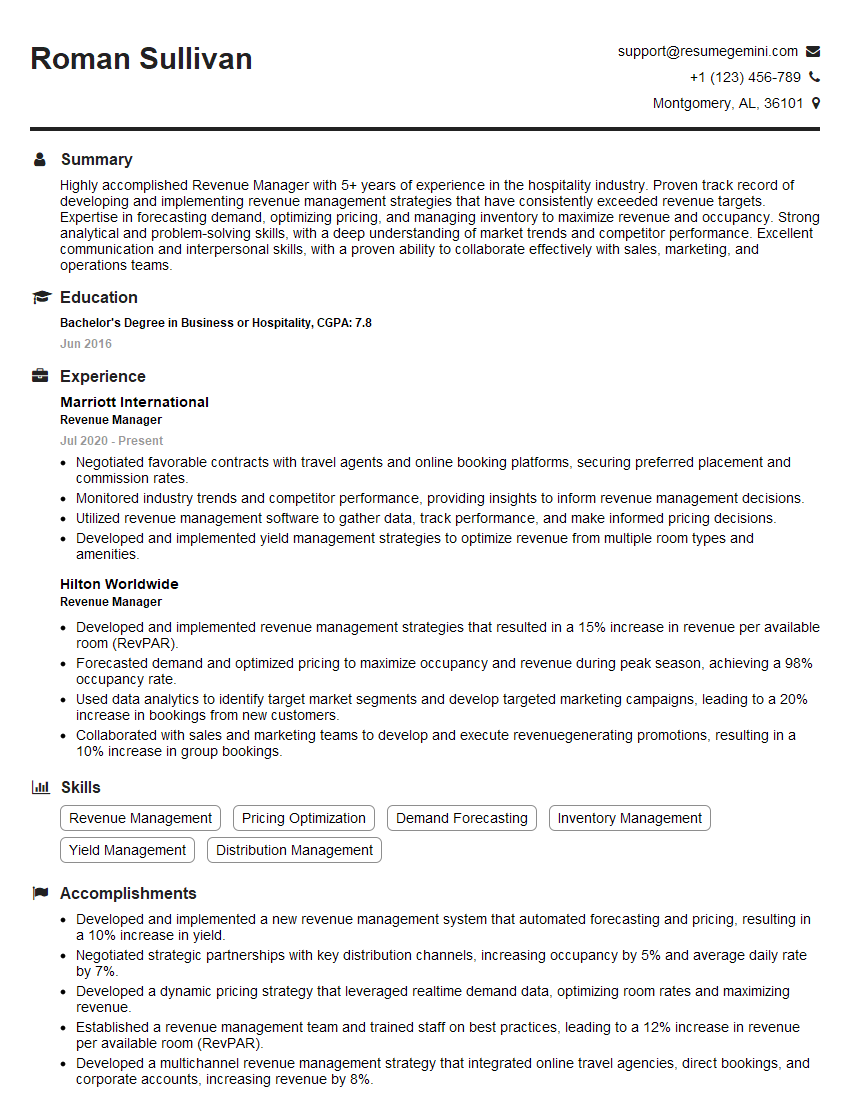
Revenue Manager Resume Sample
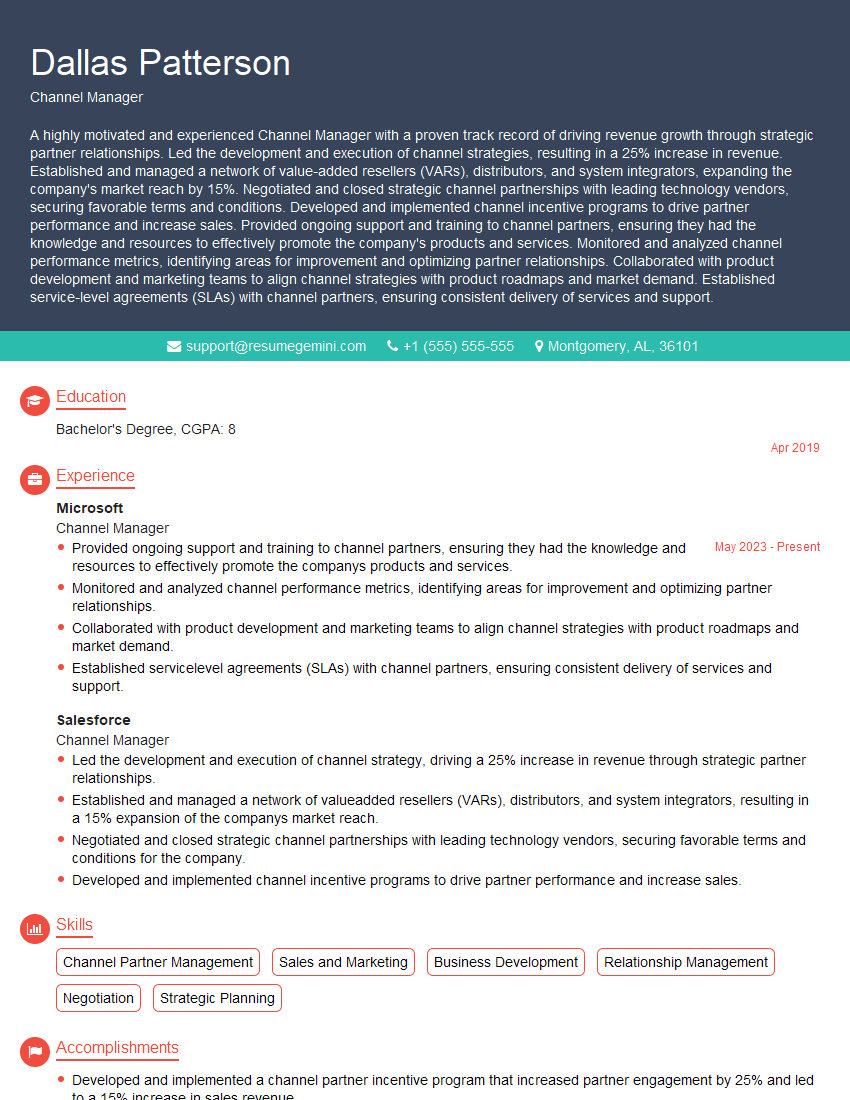
Channel Manager Resume Sample
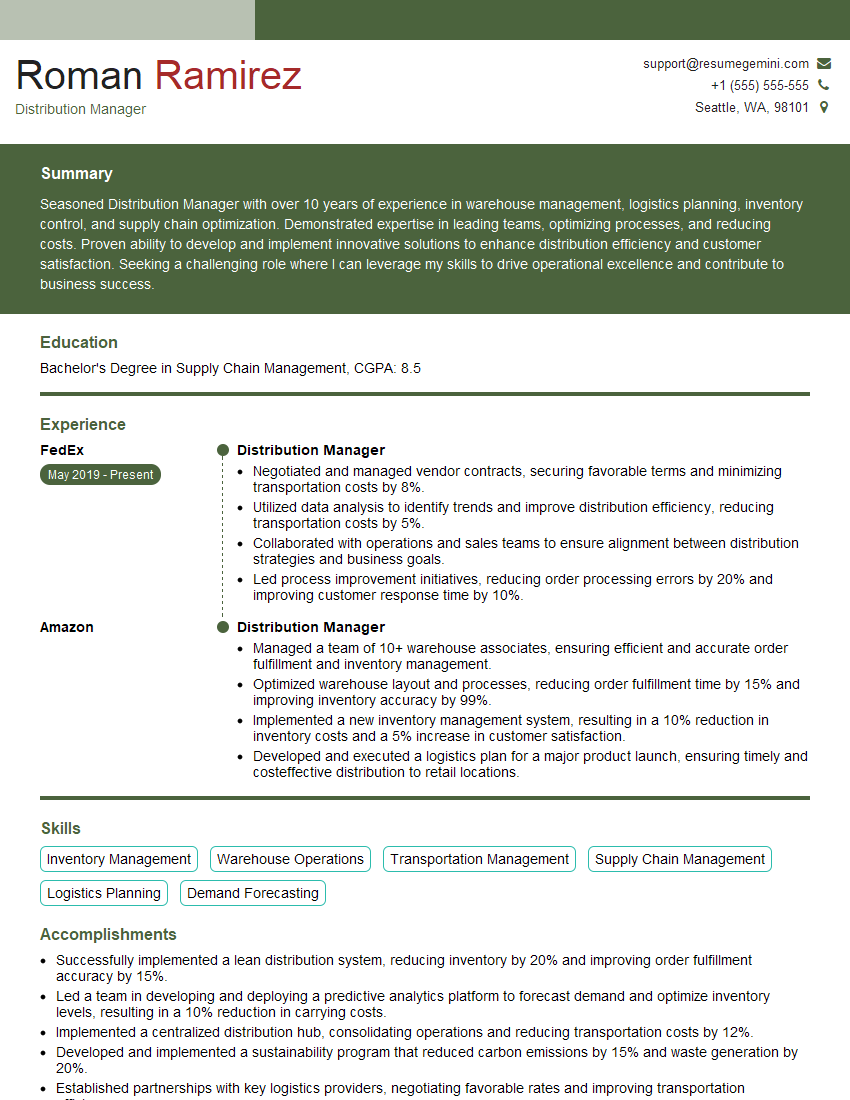
Distribution Manager Resume Sample
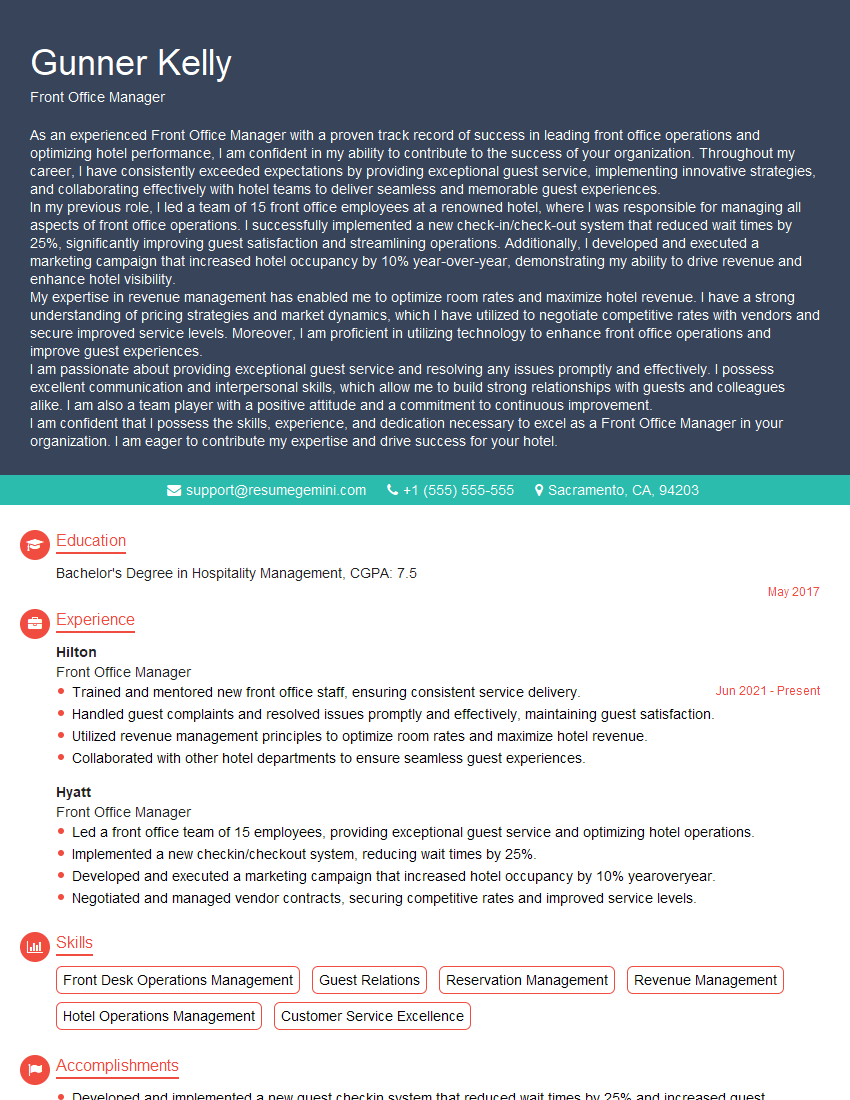
Front Office Manager Resume Sample
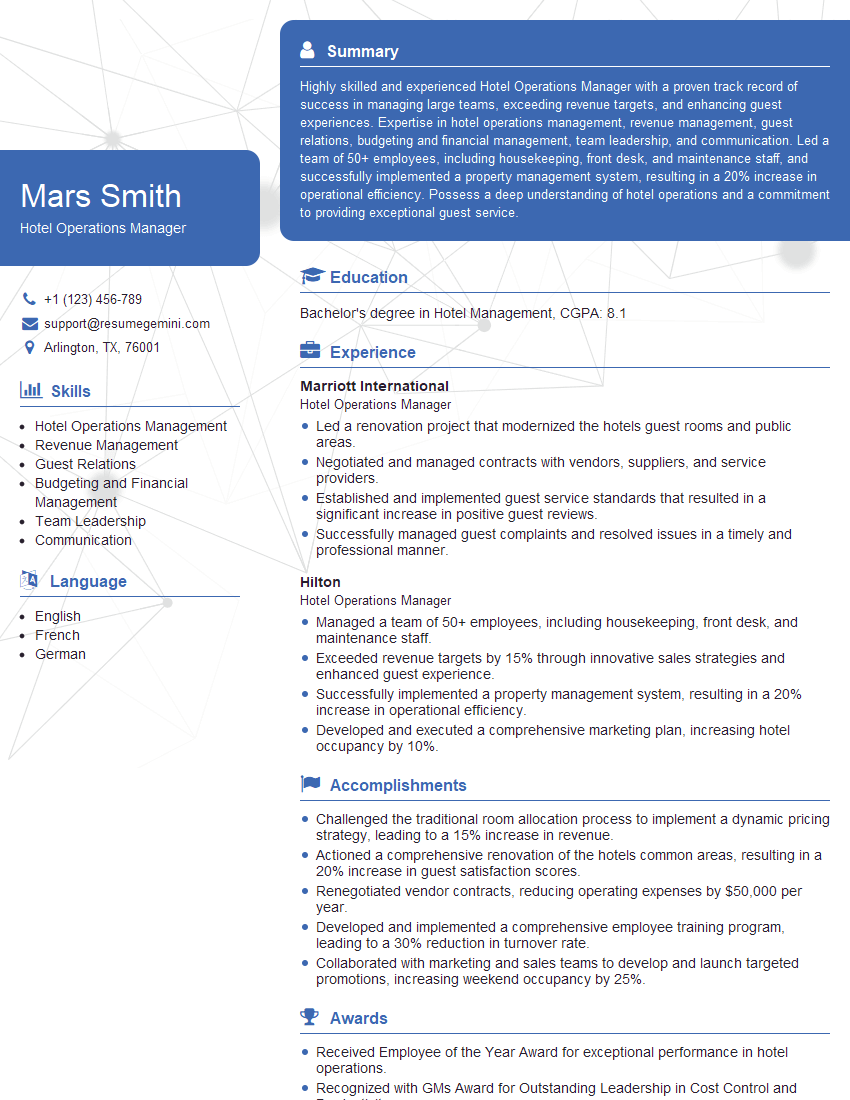
Hotel Operations Manager Resume Sample
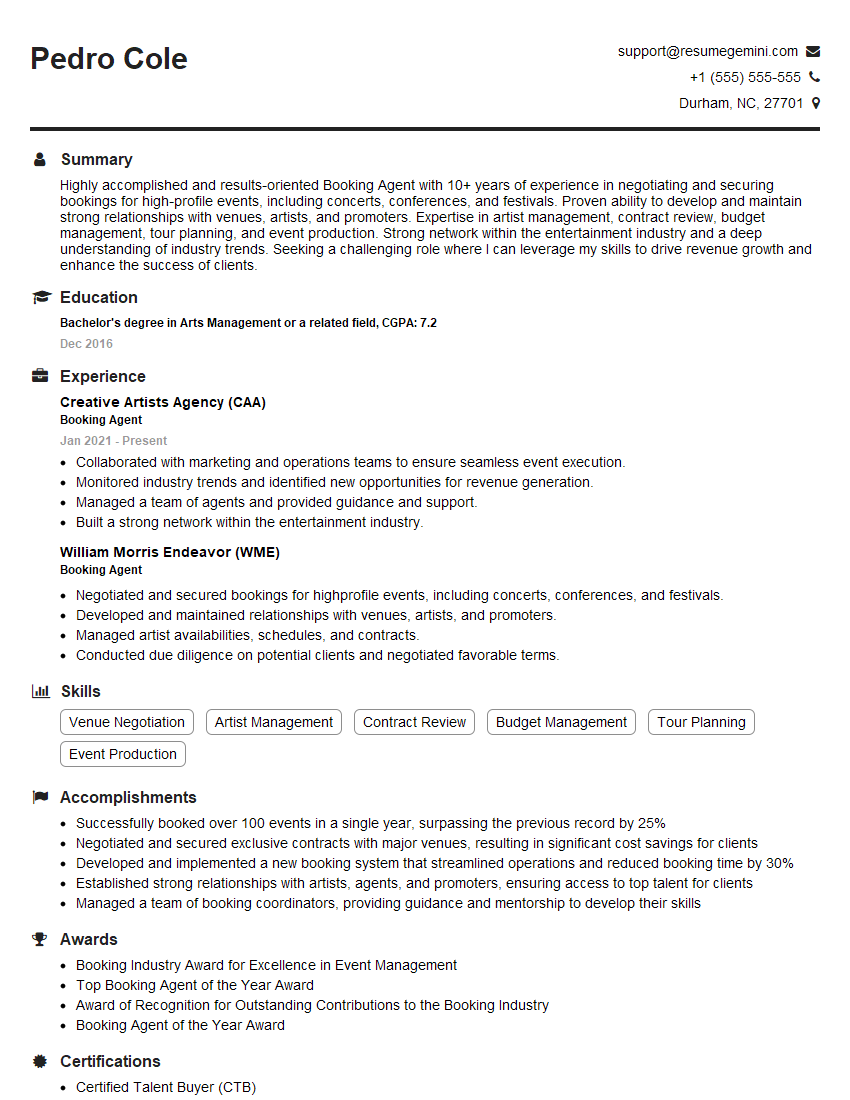
Booking Agent Resume Sample
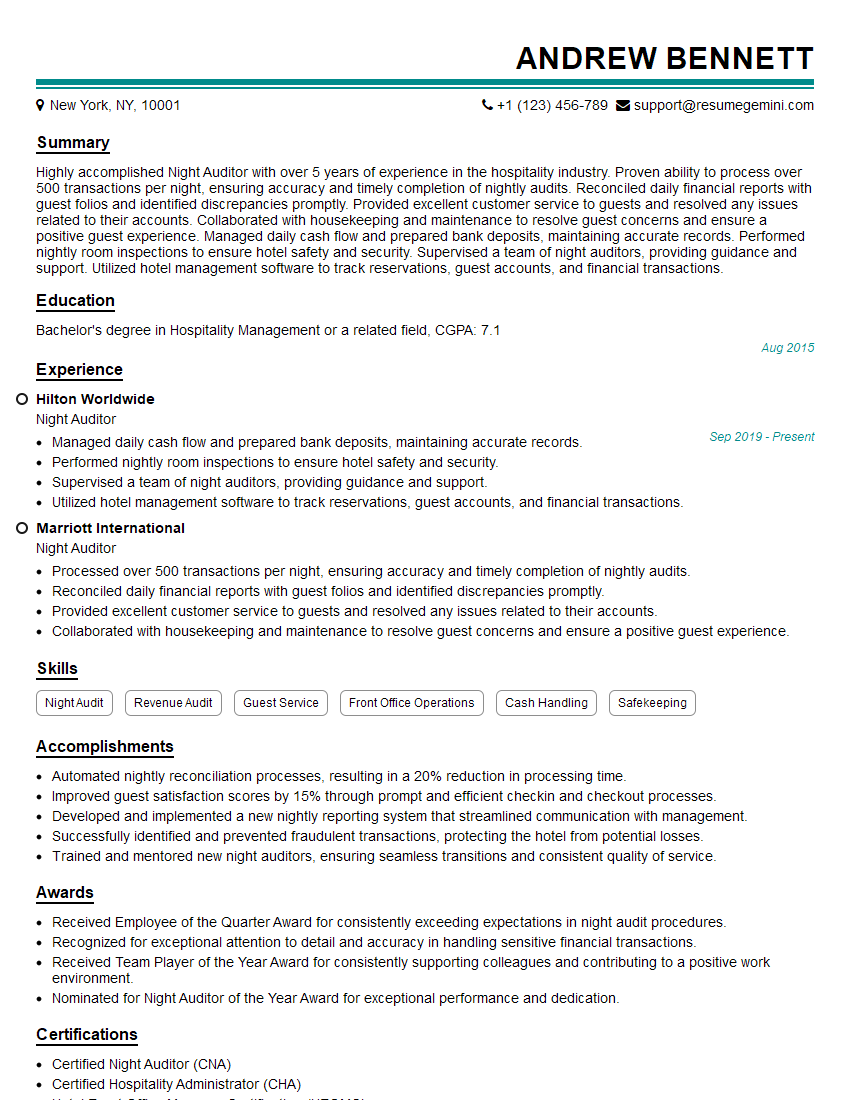
Night Auditor Resume Sample
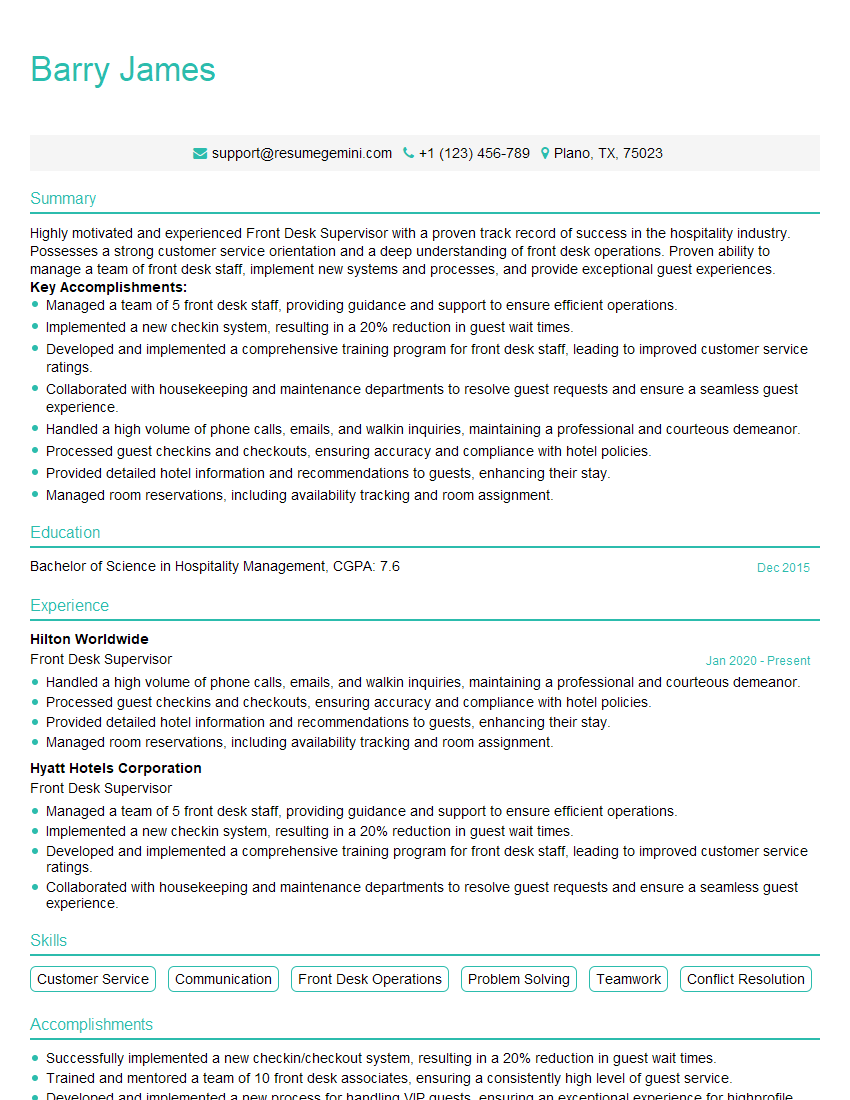
Front Desk Supervisor Resume Sample
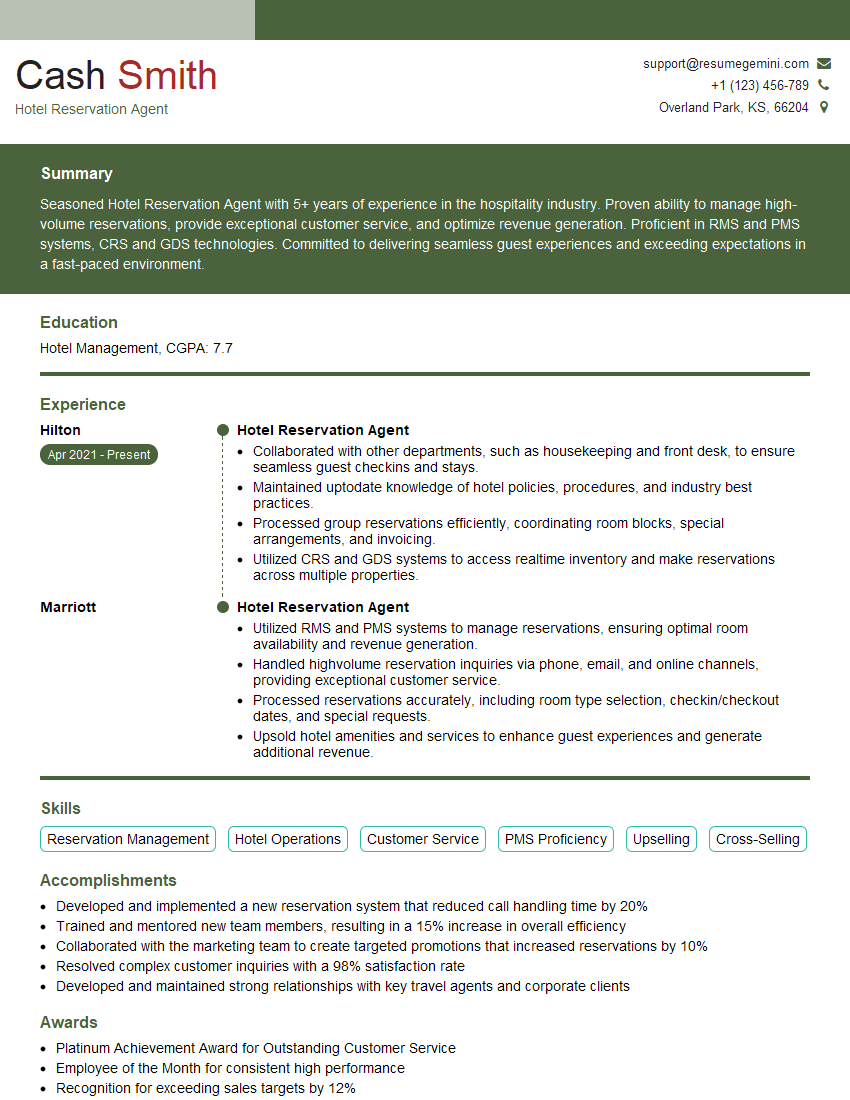
Hotel Reservation Agent Resume Sample
Explore more articles
Users Rating of Our Blogs
Share Your Experience
We value your feedback! Please rate our content and share your thoughts (optional).
What Readers Say About Our Blog
I Redesigned Spongebob Squarepants and his main characters of my artwork.
https://www.deviantart.com/reimaginesponge/art/Redesigned-Spongebob-characters-1223583608
IT gave me an insight and words to use and be able to think of examples
Hi, I’m Jay, we have a few potential clients that are interested in your services, thought you might be a good fit. I’d love to talk about the details, when do you have time to talk?
Best,
Jay
Founder | CEO