Feeling uncertain about what to expect in your upcoming interview? We’ve got you covered! This blog highlights the most important Knowledge of Language Arts Curriculum interview questions and provides actionable advice to help you stand out as the ideal candidate. Let’s pave the way for your success.
Questions Asked in Knowledge of Language Arts Curriculum Interview
Q 1. Explain the Common Core State Standards for English Language Arts.
The Common Core State Standards for English Language Arts (CCSS ELA) are a set of K-12 standards adopted by many states in the US to define what students should understand and be able to do in reading, writing, speaking, listening, and language. They aim to ensure that all students are college and career ready by graduation. The standards are organized around key areas:
- Reading: Focuses on reading closely to comprehend complex texts, determining central ideas, analyzing evidence, and understanding various literary devices. It emphasizes both informational and literary texts.
- Writing: Emphasizes writing to inform, explain, persuade, and narrate. Students are expected to develop clear arguments, use evidence effectively, and craft well-organized texts. It includes a strong focus on the writing process.
- Speaking and Listening: Covers communication skills, including participating effectively in discussions, presenting information clearly, and responding thoughtfully to others.
- Language: Concentrates on conventions of standard English, such as grammar and usage, vocabulary acquisition, and understanding the relationship between words and their meanings.
The CCSS ELA standards are designed to be rigorous and relevant, preparing students for the demands of higher education and the workplace. They are not a curriculum in themselves, but rather a framework for states and districts to develop their own curriculum and assessments.
Q 2. Describe your experience developing a language arts curriculum.
In my previous role at [School Name/Organization Name], I led the development of a K-5 language arts curriculum aligned with the CCSS ELA. This involved a multi-stage process:
- Needs Assessment: We analyzed existing curriculum, student performance data, and teacher feedback to identify strengths and weaknesses.
- Curriculum Mapping: We mapped out the learning objectives for each grade level, ensuring alignment with the CCSS ELA and incorporating best practices in literacy instruction.
- Resource Selection: We selected high-quality instructional materials, including textbooks, novels, and digital resources, that supported the learning objectives.
- Unit Development: We developed engaging and rigorous units of study that incorporated various instructional strategies, such as collaborative learning, project-based learning, and differentiated instruction.
- Teacher Training: We provided extensive professional development for teachers to ensure they were equipped to implement the new curriculum effectively.
The resulting curriculum incorporated a variety of genres, emphasized close reading and critical thinking, and fostered a love of reading and writing. We regularly reviewed and revised the curriculum to ensure its continued relevance and effectiveness, using student performance data and teacher feedback as key indicators.
Q 3. How do you align a curriculum with specific learning objectives?
Aligning a curriculum with specific learning objectives is crucial for ensuring that students acquire the knowledge and skills they need. This is achieved through a systematic process:
- Identify Clear Objectives: Start with clearly defined learning objectives, stated using action verbs (e.g., analyze, evaluate, synthesize). These objectives should be measurable, achievable, relevant, and time-bound (SMART).
- Develop Assessments: Design assessments—formative and summative—that directly measure student achievement of the objectives. Examples include quizzes, essays, presentations, and projects.
- Select Instructional Materials: Choose resources that directly support the objectives, providing students with the necessary knowledge and skills to succeed on the assessments.
- Plan Learning Activities: Design engaging and rigorous learning activities that directly help students reach the objectives. These should provide opportunities for practice, application, and feedback.
- Monitor Progress: Regularly monitor student progress toward the objectives using formative assessment. Use this information to adjust instruction and provide additional support as needed.
For example, if a learning objective is ‘Students will be able to analyze the author’s use of symbolism in a short story,’ the curriculum should include activities that teach students about symbolism, provide opportunities for them to practice identifying symbols, and culminate in an assessment where they analyze symbolism in a specific text.
Q 4. What assessment methods do you use to evaluate student learning in language arts?
I employ a variety of assessment methods to evaluate student learning in language arts, ensuring a holistic understanding of student achievement. These include:
- Formative Assessments: Ongoing assessments used to monitor student progress and adjust instruction. Examples include exit tickets, class discussions, and informal writing samples.
- Summative Assessments: End-of-unit or end-of-term assessments used to measure overall learning. These might include essays, research papers, presentations, and standardized tests.
- Performance-Based Assessments: Assessments that require students to demonstrate their skills through practical application. Examples include oral presentations, dramatic performances, and portfolio creation.
- Authentic Assessments: Real-world tasks that require students to apply their knowledge and skills in meaningful ways. This could include creating a blog, designing a website, or writing a letter to the editor.
The specific assessments used will vary depending on the learning objectives and the grade level. It’s crucial to provide students with clear rubrics and expectations so they understand how they will be assessed.
Q 5. How do you differentiate instruction to meet the needs of diverse learners in language arts?
Differentiation is key to meeting the diverse needs of learners in language arts. My strategies include:
- Content Differentiation: Modifying the complexity or amount of material based on student readiness. This could involve providing tiered assignments or offering different levels of support.
- Process Differentiation: Offering various ways for students to demonstrate their learning. Some students might write an essay, while others might create a presentation or a visual representation.
- Product Differentiation: Allowing students to choose how they will express their understanding. For example, students could write a story, create a comic book, or develop a multimedia presentation.
- Learning Environment Differentiation: Creating a flexible learning environment that caters to different learning styles and preferences. This might involve providing quiet spaces for independent work or opportunities for collaboration.
I also utilize tools like learning management systems (LMS) that provide personalized learning paths and adaptive assessments. Regularly checking for understanding through formative assessment is essential to adjust my approach according to individual student progress and needs.
Q 6. What strategies do you employ to foster a love of reading among students?
Fostering a love of reading is paramount. My strategies include:
- Creating a Rich Literary Environment: Surround students with books, magazines, and other reading materials. Make reading a regular part of the classroom routine.
- Providing Choice and Access: Allow students to select books that interest them. Provide a wide range of genres and reading levels. Utilize online resources and libraries.
- Modeling Enthusiastic Reading: Share my own love of reading by discussing books I’m reading and engaging students in conversations about books.
- Creating Engaging Reading Experiences: Use a variety of activities such as book clubs, author studies, and dramatic readings to bring books to life.
- Connecting Reading to Students’ Lives: Show students how reading can help them understand the world and solve problems. Relate reading materials to their interests and experiences.
Remember, positive experiences with reading are essential. Creating a supportive and enjoyable classroom environment is vital.
Q 7. How do you integrate technology into language arts instruction?
Technology offers many opportunities to enhance language arts instruction. I integrate technology in several ways:
- Digital Storytelling: Students can use tools like iMovie or PowerPoint to create their own stories and presentations.
- Interactive Whiteboards: Used for collaborative writing activities, vocabulary building, and interactive games.
- Educational Apps and Websites: Utilizing apps and websites that offer reading practice, writing support, and grammar exercises.
- Online Research Tools: Providing access to digital libraries and online research databases to support research-based writing assignments.
- Virtual Field Trips and Collaboration Tools: Engaging students with virtual field trips that expand their horizons and using collaboration tools such as Google Docs to support collaborative writing projects.
However, technology should be used thoughtfully and purposefully. It’s not a replacement for effective teaching practices but rather a tool to enhance them. Providing students with opportunities to critically evaluate digital resources and utilize these tools effectively is critical.
Q 8. Explain your experience with formative and summative assessment in language arts.
Formative and summative assessments are integral parts of effective language arts instruction. Formative assessments are ongoing, low-stakes checks for understanding that happen during the learning process. Their purpose is to inform teaching and adjust instruction based on student needs. Summative assessments, on the other hand, are high-stakes evaluations that occur at the end of a unit or course to measure overall learning. They provide a snapshot of student mastery.
Examples of Formative Assessments: Exit tickets, quick writes, think-pair-shares, informal observations during class discussions, and peer review of drafts. For instance, I might use exit tickets asking students to summarize the main idea of a story we just read to gauge their comprehension before moving on. If many students struggle, I’d adjust my instruction, perhaps re-explaining the concept or providing additional practice.
Examples of Summative Assessments: Unit tests, essays, research papers, presentations, and final exams. A summative assessment might be a persuasive essay requiring students to synthesize information from multiple sources and present a well-supported argument, demonstrating their mastery of research, writing, and critical thinking skills. The results inform my understanding of their overall achievement and highlight areas where future instruction could be improved.
Q 9. Describe your understanding of various literacy theories.
My understanding of literacy theories is grounded in a multifaceted approach, integrating various perspectives to best support student learning. I’m familiar with sociocultural theory, which emphasizes the role of social interaction and cultural context in language development. This theory informs my efforts to create a classroom community where students feel comfortable sharing their ideas and perspectives. I also draw from constructivist theory, believing students actively construct their understanding of language through experiences and interactions with texts. This guides my lesson planning to incorporate hands-on activities and opportunities for students to explore and discover meaning.
Furthermore, I understand the importance of phonics and the crucial role it plays in early literacy development. I believe in a balanced approach that integrates phonics instruction with a focus on reading for meaning. Finally, I’m well-versed in theories of writing development, such as the stages of writing acquisition, understanding that students progress through different stages as their writing skills mature. This knowledge allows me to tailor my instruction to meet the needs of students at various levels of development.
Q 10. How do you address challenges related to student writing development?
Addressing challenges in student writing development requires a multi-pronged approach focusing on individualized support, strategic instruction, and providing consistent, constructive feedback. One common challenge is sentence-level issues, such as run-on sentences or sentence fragments. To address this, I use mini-lessons focusing on sentence structure, followed by practice activities and targeted feedback. I might use color-coding to visually highlight sentence errors during peer editing, for example.
Another challenge is the development of ideas. To help students expand their thinking, I employ brainstorming techniques, graphic organizers, and pre-writing activities such as outlining or freewriting. For students struggling with organization, I teach strategies like creating topic sentences and transition words, and we practice outlining together. I also use conferencing to provide one-on-one feedback, addressing individual concerns while building confidence and fostering a positive writing environment. This personalized approach creates a supportive context where students feel safe to experiment and take risks with their writing.
Q 11. How do you promote critical thinking and problem-solving skills in language arts?
Promoting critical thinking and problem-solving in language arts involves moving beyond simple comprehension to deeper analysis and interpretation. I incorporate activities such as analyzing characters’ motivations, identifying author’s purpose, and evaluating the effectiveness of persuasive techniques. For example, when studying a persuasive text, students might debate the merits of different arguments, requiring them to identify biases, evaluate evidence, and formulate their own reasoned opinions.
Problem-solving is fostered through inquiry-based projects. For example, students might research and present a solution to a community issue, requiring them to gather information, synthesize data, and present their findings clearly and persuasively. I also encourage students to question assumptions, evaluate different perspectives, and justify their conclusions. These activities cultivate higher-order thinking skills that are transferable to various aspects of their lives.
Q 12. What are your strategies for supporting struggling learners in language arts?
Supporting struggling learners requires a differentiated approach tailored to their individual needs. I begin by identifying the root cause of their difficulties – is it decoding skills, comprehension strategies, writing mechanics, or something else? Once the area of need is pinpointed, I provide targeted interventions. This might involve extra support with phonics, one-on-one reading sessions, or small-group activities focused on specific writing skills.
I utilize various strategies such as providing graphic organizers to help with writing organization, using audiobooks to improve comprehension, and offering sentence starters to assist with writing fluency. Furthermore, I collaborate closely with parents and specialists, sharing data and insights to create a cohesive support system. Creating a supportive, low-pressure environment where students feel comfortable taking risks is also crucial to their progress. Celebrating small successes reinforces their confidence and motivates them to continue learning.
Q 13. How do you incorporate culturally relevant materials into your language arts curriculum?
Incorporating culturally relevant materials is crucial for creating an inclusive and engaging learning environment. I actively seek out diverse texts and resources that reflect the experiences and perspectives of students from various backgrounds. This includes literature featuring characters from different ethnicities, cultures, and socioeconomic backgrounds, as well as texts that explore diverse themes and issues.
I also use culturally relevant pedagogy, which means adapting my teaching methods to better connect with my students’ cultural experiences and learning styles. For instance, incorporating storytelling traditions from different cultures into classroom activities, or using examples from students’ lives to illustrate literary concepts. This approach creates a classroom environment where all students feel seen, valued, and empowered to share their unique perspectives.
Q 14. Explain your experience using data to inform your instructional decisions in language arts.
Data-driven instruction is essential for effective teaching. I regularly collect and analyze student data from various sources, including formative and summative assessments, classroom observations, and informal checks for understanding. This data informs my instructional decisions in several ways. For example, if assessment data reveals that many students struggle with a particular skill, I can adjust my instruction to provide more focused support in that area.
I use data to identify students who require additional support and to differentiate my instruction to meet their individual needs. I might also use data to track student progress over time, identifying areas where students are excelling and areas where they need further assistance. This iterative process of data collection, analysis, and adjustment allows me to refine my teaching strategies and ultimately improve student learning outcomes. The data isn’t just numbers; it’s a story of each student’s learning journey, guiding me towards better teaching practices.
Q 15. How do you create a positive and engaging learning environment in language arts?
Creating a positive and engaging language arts learning environment hinges on fostering a sense of community, curiosity, and confidence. It’s about moving beyond rote memorization and embracing active learning.
- Student Choice and Voice: I incorporate student choice in reading materials, writing prompts, and project formats. This allows students to explore their interests, fostering intrinsic motivation. For example, I might offer a choice between writing a short story, a poem, or a persuasive essay on a topic of their choosing.
- Collaborative Learning: Peer interaction is crucial. I use think-pair-share activities, group projects, and collaborative writing exercises to encourage communication and teamwork. A recent successful project involved students collaboratively writing and performing a play based on a classic novel.
- Differentiated Instruction: Recognizing that students learn at different paces and in different ways, I differentiate instruction through varied activities, tiered assignments, and flexible grouping. This ensures that every student has access to the material at an appropriate level of challenge.
- Positive Feedback and Encouragement: I focus on providing constructive feedback that emphasizes effort and improvement, not just grades. I celebrate successes, both big and small, creating a classroom culture of growth mindset.
- Incorporating Technology and Multimedia: Interactive whiteboards, educational games, and online resources can make learning fun and engaging. For instance, I use online tools to create digital stories and interactive presentations.
Career Expert Tips:
- Ace those interviews! Prepare effectively by reviewing the Top 50 Most Common Interview Questions on ResumeGemini.
- Navigate your job search with confidence! Explore a wide range of Career Tips on ResumeGemini. Learn about common challenges and recommendations to overcome them.
- Craft the perfect resume! Master the Art of Resume Writing with ResumeGemini’s guide. Showcase your unique qualifications and achievements effectively.
- Don’t miss out on holiday savings! Build your dream resume with ResumeGemini’s ATS optimized templates.
Q 16. Describe your experience with collaborative curriculum development.
I have extensive experience in collaborative curriculum development. In my previous role, I was part of a team that redesigned our school’s language arts curriculum from kindergarten through fifth grade.
- Process: We began by reviewing existing curriculum standards, analyzing student performance data, and researching best practices. We then held several brainstorming sessions, incorporating input from teachers, administrators, and even students (where age-appropriate). This collaborative process ensured buy-in from all stakeholders.
- Outcomes: The revised curriculum incorporated a more thematic approach, emphasizing project-based learning and interdisciplinary connections. We also integrated technology more effectively, incorporating digital literacy skills throughout. The outcome was a more coherent, engaging, and effective curriculum that better met the needs of our diverse student population.
- Tools: We used Google Docs and shared online calendars to facilitate collaboration and ensure transparency throughout the process.
Q 17. How do you ensure that the language arts curriculum is aligned with school-wide goals?
Aligning the language arts curriculum with school-wide goals requires careful planning and consistent communication.
- School-Wide Goals Review: I start by thoroughly reviewing the school’s mission statement, strategic plan, and any specific goals related to literacy. For example, if the school prioritizes critical thinking skills, I ensure that activities in my language arts classes explicitly develop those skills.
- Curriculum Mapping: I map the language arts curriculum to these school-wide goals, demonstrating the explicit connections. This mapping process often involves creating a visual representation showing how specific learning objectives within language arts contribute to the broader school goals.
- Collaboration with Other Departments: I collaborate with teachers in other disciplines (e.g., social studies, science) to identify opportunities for thematic units and integrated projects. This approach ensures that students apply their language skills across subjects and see their relevance in different contexts.
- Data Analysis: Regularly analyzing student performance data helps assess the effectiveness of curriculum alignment and identify areas for improvement. For example, if students are struggling with research skills, I would work to strengthen those skills within the language arts curriculum while aligning with the school’s emphasis on research-based learning.
Q 18. What are your strategies for improving student vocabulary development?
Improving student vocabulary development requires a multi-faceted approach that goes beyond simple memorization. It’s about building a rich understanding of word meaning and usage within context.
- Wide Reading: Encouraging students to read widely exposes them to a vast vocabulary in context. I provide access to a diverse range of books, magazines, and online articles, ensuring choices that cater to various interests and reading levels.
- Direct Instruction: I explicitly teach new vocabulary words, focusing on etymology, synonyms, antonyms, and context clues. I avoid simply giving definitions and instead, actively engage students in word exploration.
- Vocabulary Games and Activities: Engaging activities like vocabulary bingo, crossword puzzles, and word association games make learning fun and memorable. These interactive elements make learning more enjoyable and help with retention.
- Contextualized Learning: I integrate vocabulary instruction into reading and writing activities. Students encounter and use new words within meaningful contexts, which strengthens understanding and retention. For example, I might use a rich vocabulary list related to a historical time period during our study of a historical novel.
- Use of Technology: I utilize vocabulary-building apps and online games to supplement classroom instruction. These platforms often offer interactive exercises and progress tracking.
Q 19. Explain your experience with designing and implementing a unit plan in language arts.
Recently, I designed and implemented a unit on persuasive writing for seventh graders.
- Planning: The unit began with a clear learning objective: students will be able to write a persuasive essay using evidence and effective rhetorical strategies. I then developed a series of lessons, activities, and assessments to achieve this objective, carefully sequencing the content to build upon prior knowledge and skills.
- Implementation: The unit started with brainstorming sessions and pre-writing activities to explore persuasive techniques. Then we moved into drafting, revising, and editing, with opportunities for peer feedback and individual conferences. The culminating project was a persuasive essay on a topic of their choice, presented to the class.
- Differentiation: I differentiated instruction by providing students with various levels of support, including graphic organizers, sentence starters, and individual writing consultations. The rubrics for grading reflected varying levels of achievement, allowing me to evaluate student work fairly and provide targeted feedback.
- Assessment: I assessed student understanding through a variety of methods, including pre- and post-tests, observation of classroom participation, analysis of drafts and final essays, and peer review evaluations.
- Reflection: After the unit, I analyzed student work and reflected on its effectiveness. This analysis helps to inform future instruction and refine my teaching strategies.
Q 20. How do you assess student understanding of grammar and mechanics?
Assessing student understanding of grammar and mechanics requires a balanced approach that combines formative and summative assessments.
- Formative Assessment: I use ongoing formative assessments like quick writes, grammar games, and peer editing to monitor student progress and provide timely feedback. These methods offer opportunities to address misconceptions before they become ingrained.
- Summative Assessment: Summative assessments, such as quizzes, tests, and writing assignments, provide a more comprehensive evaluation of student understanding at the end of a unit or term. These assessments might involve identifying grammatical errors in a passage, diagramming sentences, or applying grammatical rules in writing.
- Error Analysis: When analyzing student work, I focus on understanding the nature of errors rather than simply assigning grades. Error analysis helps me identify patterns of mistakes and tailor instruction to address specific needs. For example, if many students struggle with comma usage, I’d dedicate specific lessons to this area.
- Differentiated Assessment: Assessments are designed to match students’ learning needs and styles. This might include providing different types of assessment tasks for different learners or adjusting the difficulty of assessment questions.
Q 21. How do you utilize various types of writing instruction in your classroom?
I utilize a variety of writing instruction methods to cater to diverse learning styles and develop students’ writing skills across various genres.
- Process Writing: I emphasize the writing process – brainstorming, drafting, revising, editing, and publishing. Students are encouraged to approach writing as a recursive process, not a linear one. This involves multiple drafts and peer review sessions, providing ample opportunity for improvement.
- Genre-Based Instruction: I teach students about different writing genres (narrative, persuasive, expository, descriptive, poetic) and provide explicit instruction in the conventions and structures of each genre. This might involve examining mentor texts and dissecting the elements of successful writing within that genre.
- Modeling and Mentor Texts: I use mentor texts (published examples of excellent writing) to illustrate specific writing techniques and strategies. Students learn by studying the writing of accomplished authors.
- Inquiry-Based Writing: Students engage in research and exploration to write informative essays and reports. This empowers students to investigate their interests and develop their critical thinking skills.
- Creative Writing: I incorporate creative writing activities, such as storytelling, poetry writing, and scriptwriting, to foster imagination and self-expression. These activities also aid in building vocabulary and enhancing descriptive language skills.
Q 22. Describe your experience with creating and managing assessment rubrics.
Creating effective assessment rubrics is crucial for transparent and fair evaluation in Language Arts. I approach rubric design by first clearly defining the learning objectives. What specific skills and knowledge should students demonstrate? Once these are established, I develop criteria that align directly with those objectives. Each criterion is then broken down into performance levels, ranging from exemplary to unsatisfactory, with clear descriptors for each level. This ensures consistent grading and provides students with valuable feedback on their strengths and areas for improvement.
For example, when assessing a persuasive essay, my rubric might include criteria like ‘Claim,’ ‘Evidence,’ ‘Reasoning,’ and ‘Organization.’ Each criterion would have four levels (e.g., Exemplary: Claim is clearly stated and compelling; Proficient: Claim is stated but could be stronger; Developing: Claim is vague or unclear; Unsatisfactory: Claim is missing). This detailed structure allows for nuanced assessment, moving beyond simple right/wrong answers.
I regularly review and revise rubrics based on student performance and feedback. This iterative process ensures that the rubrics remain aligned with curriculum goals and accurately reflect the desired learning outcomes. I also share the rubrics with students upfront, fostering transparency and allowing them to understand expectations and self-assess their work more effectively.
Q 23. How do you use technology to enhance student engagement and collaboration in language arts?
Technology significantly enhances student engagement and collaboration in Language Arts. I utilize various digital tools to create dynamic and interactive learning experiences. For instance, collaborative platforms like Google Docs allow students to co-author essays, providing immediate feedback and fostering peer learning. Interactive whiteboards and presentation software like PowerPoint or Prezi can be used to brainstorm ideas, explore themes, and present work creatively.
Furthermore, I incorporate digital storytelling tools, allowing students to express their creativity through multimedia projects. These could involve creating videos, podcasts, or digital presentations, catering to diverse learning styles and engaging students who may not thrive in traditional essay-writing formats. Educational websites and apps offer access to a vast range of resources, including digital libraries, vocabulary-building games, and grammar practice exercises. These tools personalize learning and make the curriculum more engaging and accessible.
I also leverage online assessment platforms to streamline grading and provide students with timely feedback. These platforms often offer features like automated grading for objective assessments and tools for providing personalized comments on subjective work.
Q 24. What professional development have you sought in language arts instruction?
Throughout my career, I’ve actively sought professional development to stay current with best practices in Language Arts instruction. I’ve participated in workshops on differentiated instruction, focusing on catering to diverse learning needs and creating inclusive classrooms. I’ve also attended seminars on integrating technology effectively into the curriculum and utilizing data-driven instruction to inform my teaching practices. Recently, I completed a course on culturally responsive teaching, enhancing my ability to connect with students from diverse backgrounds and integrate their cultural experiences into the curriculum.
Beyond formal workshops and courses, I regularly engage in self-directed professional development. I actively read educational journals and research articles to stay abreast of current research and best practices in the field. I also participate in professional learning communities (PLCs) with colleagues, where we collaborate, share resources, and discuss strategies for improving our teaching.
Q 25. How do you incorporate feedback to improve your language arts curriculum?
Feedback is essential for continuous improvement in curriculum design. I gather feedback from multiple sources to assess the effectiveness of my Language Arts program. Student performance on assessments, including both formal and informal evaluations, provides valuable insights into areas where students are excelling and areas needing improvement. I analyze student work to identify common misconceptions and adjust my instruction accordingly.
I also actively solicit feedback from students directly through surveys, focus groups, and informal discussions. Their perspectives provide crucial information about their learning experiences and help me identify areas where the curriculum could be more engaging or effective. Similarly, I seek feedback from parents and guardians, gaining valuable insights into their perceptions of the program and their children’s learning experiences. Finally, I collaborate with colleagues to share best practices and refine the curriculum based on collective experiences.
This multi-faceted approach to feedback collection allows me to make data-driven decisions about curriculum adjustments, ensuring that the program remains relevant, engaging, and effective for all learners.
Q 26. Describe your experience working with diverse learners and their families.
Working with diverse learners and their families is a rewarding and essential aspect of my role. I believe in creating an inclusive classroom where every student feels valued and respected. This starts with understanding the unique learning styles, strengths, and challenges of each student. I build strong relationships with students and their families, fostering open communication and collaboration. Regular communication with parents, utilizing various methods such as email, phone calls, and parent-teacher conferences, ensures that we are working together to support the student’s academic success.
I utilize culturally responsive teaching strategies, incorporating diverse perspectives and experiences into the curriculum. This might involve selecting literature that reflects the diverse backgrounds of my students, incorporating relevant cultural events and celebrations into classroom activities, and creating learning experiences that are meaningful and engaging for all students. I also collaborate with specialists and support staff to ensure that students with IEPs or 504 plans receive the necessary accommodations and support to thrive in the classroom.
Q 27. How do you adapt your teaching methods to accommodate different learning styles?
I understand that students learn in different ways. To accommodate diverse learning styles, I incorporate a variety of teaching methods into my lessons. This includes visual aids, hands-on activities, group work, and individual projects. For visual learners, I might use graphic organizers, charts, and diagrams. For kinesthetic learners, I might incorporate movement and role-playing into lessons. For auditory learners, I might use discussions, lectures, and audio recordings.
I also differentiate instruction by providing students with choices in how they demonstrate their learning. This might involve offering different assessment options, such as essays, presentations, or projects. By providing multiple pathways to demonstrate understanding, I ensure that all students have the opportunity to succeed, regardless of their learning style. Furthermore, I regularly assess student progress and adjust my teaching methods based on individual needs. This ensures that instruction remains responsive and effective for all learners.
Q 28. Explain your approach to evaluating the effectiveness of a language arts program.
Evaluating the effectiveness of a Language Arts program requires a multifaceted approach. I use a combination of quantitative and qualitative data to assess the program’s impact. Quantitative data includes student performance on standardized tests, classroom assessments, and grades. This data provides a measurable indication of student achievement and helps identify areas where students might be struggling.
Qualitative data provides a richer understanding of student learning experiences. This includes observations of classroom activities, student work samples, feedback from students and parents, and teacher reflections. Qualitative data helps to understand the nuances of student learning, identify areas for improvement, and ensure that the curriculum is engaging and effective. By combining both quantitative and qualitative data, I gain a comprehensive understanding of the program’s effectiveness and identify areas for improvement, ensuring that the program meets the needs of all learners.
Key Topics to Learn for Knowledge of Language Arts Curriculum Interview
A strong understanding of the Language Arts curriculum is crucial for success in education. Prepare by focusing on these key areas:
- Foundational Literacy Skills: Comprehending the development of reading, writing, speaking, and listening skills across different age groups and learning styles. Consider theoretical frameworks like the sociocultural approach to literacy and their practical application in classroom settings.
- Curriculum Design and Implementation: Demonstrate knowledge of designing engaging and effective Language Arts curricula, aligning with state standards and best practices. Think about differentiating instruction to meet diverse learner needs and assessing student progress effectively.
- Literary Analysis and Interpretation: Showcase your ability to analyze various literary forms (poetry, prose, drama) and interpret their meaning within historical and cultural contexts. Be ready to discuss different critical lenses and their application.
- Grammar and Composition: Understand the intricacies of English grammar and its application in writing instruction. Discuss effective strategies for teaching writing skills, including essay writing, research papers, and creative writing.
- Assessment and Evaluation: Demonstrate your expertise in various assessment methods for Language Arts, including formative and summative assessments. Discuss the importance of data-driven instruction and using assessment results to inform teaching practices.
- Technology Integration: Explore how technology can enhance Language Arts instruction. Consider the use of digital tools for writing, research, and collaborative learning.
- Culturally Responsive Teaching: Discuss strategies for creating an inclusive classroom environment that celebrates diverse perspectives and promotes equity in language arts education.
Next Steps
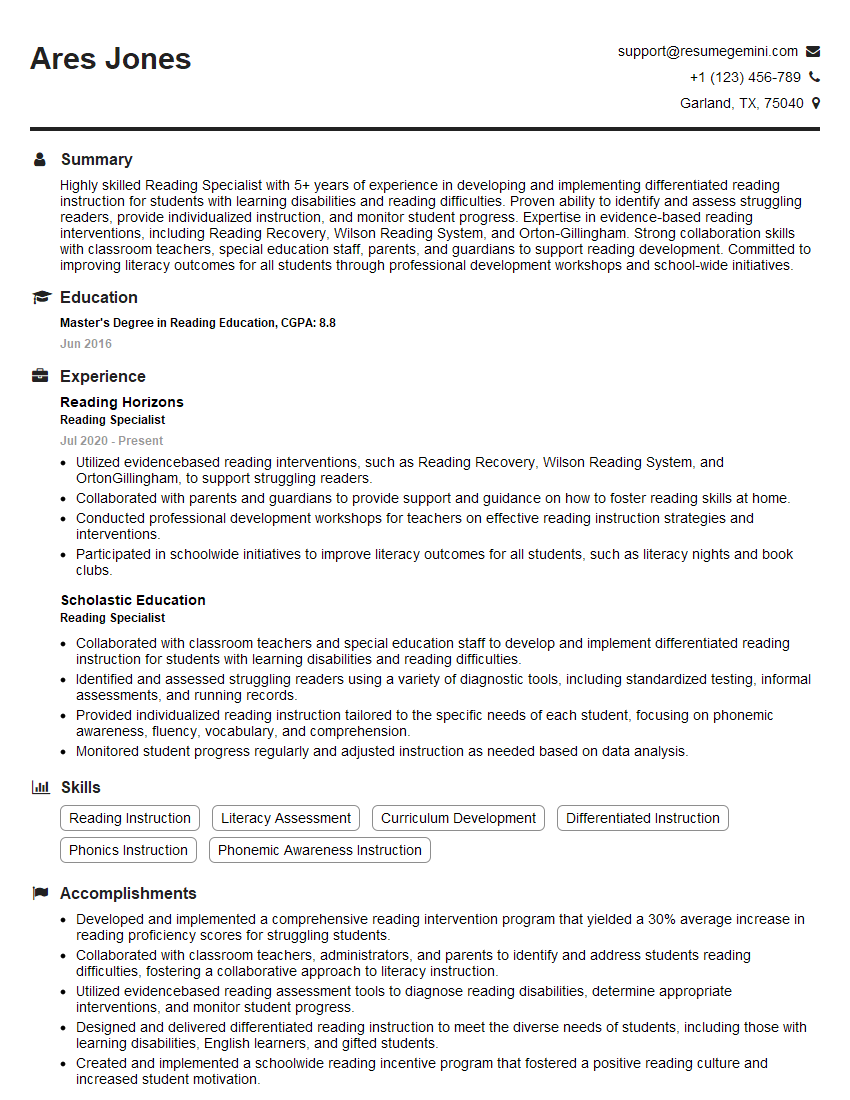
Mastering the Knowledge of Language Arts Curriculum opens doors to rewarding careers in education and related fields. To maximize your job prospects, crafting a compelling and ATS-friendly resume is essential. ResumeGemini is a trusted resource that can help you build a professional resume tailored to highlight your skills and experience. Examples of resumes specifically designed for candidates with expertise in Knowledge of Language Arts Curriculum are available to guide you. Take the next step in your career journey by leveraging the power of a well-crafted resume – start building yours today!
Explore more articles
Users Rating of Our Blogs
Share Your Experience
We value your feedback! Please rate our content and share your thoughts (optional).
What Readers Say About Our Blog
I Redesigned Spongebob Squarepants and his main characters of my artwork.
https://www.deviantart.com/reimaginesponge/art/Redesigned-Spongebob-characters-1223583608
IT gave me an insight and words to use and be able to think of examples
Hi, I’m Jay, we have a few potential clients that are interested in your services, thought you might be a good fit. I’d love to talk about the details, when do you have time to talk?
Best,
Jay
Founder | CEO