Unlock your full potential by mastering the most common Knowledge of Milk Chemistry and Microbiology interview questions. This blog offers a deep dive into the critical topics, ensuring you’re not only prepared to answer but to excel. With these insights, you’ll approach your interview with clarity and confidence.
Questions Asked in Knowledge of Milk Chemistry and Microbiology Interview
Q 1. Explain the process of milk pasteurization and its impact on microbial load.
Milk pasteurization is a heat treatment process designed to eliminate pathogenic microorganisms, significantly reducing the risk of milk-borne illnesses. It doesn’t sterilize the milk, meaning some non-pathogenic bacteria may remain, contributing to the milk’s eventual spoilage but not posing a health threat.
The process typically involves heating milk to a specific temperature for a set time. Two common methods are:
- High-Temperature Short-Time (HTST) pasteurization: Heats milk to 72°C (161°F) for 15 seconds.
- Ultra-High Temperature (UHT) pasteurization: Heats milk to 135°C (275°F) for 2-5 seconds.
HTST pasteurization effectively reduces the microbial load, targeting E. coli, Salmonella, Listeria, and other harmful bacteria. UHT pasteurization offers even greater microbial reduction, extending shelf life considerably. The impact is a dramatic decrease in the number of viable microorganisms, making the milk safer for consumption and increasing its shelf life, although it can subtly alter the flavor and nutritional profile.
Q 2. Describe the composition of milk, including major proteins, fats, and carbohydrates.
Milk is a complex fluid with a composition that varies slightly depending on factors like breed, diet, and stage of lactation. However, major components consistently include:
- Water: Approximately 87% of milk’s volume.
- Lactose: A disaccharide (milk sugar) representing about 4.8% of milk.
- Fats: Milk fat globules, ranging from 3-5%, contain triglycerides, phospholipids, and cholesterol. These provide richness, flavor, and texture to dairy products. The fat content significantly influences the mouthfeel and creaminess of dairy foods.
- Proteins: Around 3.3%, primarily casein (80%) and whey proteins (20%). We’ll discuss these in more detail in a later answer.
- Minerals: Including calcium, phosphorus, potassium, and magnesium. These contribute to nutritional value.
- Vitamins: Riboflavin (vitamin B2), vitamin A, and vitamin D are among those present.
The precise balance of these components impacts the processing and final characteristics of milk and dairy products. For instance, higher fat content leads to richer textures in ice cream and yogurt.
Q 3. What are the key microorganisms associated with milk spoilage and how are they controlled?
Several microorganisms can spoil milk, leading to undesirable changes in taste, smell, and texture. Key culprits include:
- Lactococcus lactis: A lactic acid bacterium; often beneficial in fermented products but can cause spoilage in unpasteurized milk.
- Pseudomonas spp.: Psychrotrophic bacteria (thrive at low temperatures), producing proteases and lipases that cause off-flavors and unpleasant odors.
- Bacillus spp.: Spore-forming bacteria; resistant to heat, causing spoilage even after pasteurization if inadequate cooling or storage occurs.
- Yeast and molds: Can grow on the surface of milk, leading to visible growth and souring.
Control strategies primarily involve:
- Pasteurization: As discussed earlier, effectively reduces most spoilage organisms.
- Proper hygiene: Maintaining cleanliness throughout the milking, handling, and processing stages is crucial.
- Low-temperature storage: Refrigeration significantly slows bacterial growth.
- Appropriate packaging: Using airtight containers prevents microbial contamination.
- Use of preservatives: (Although not commonly used in many countries due to consumer preference) Some additives are used to extend shelf life in certain processed dairy products.
A combination of these methods is usually necessary for optimal control.
Q 4. Explain the principles of lactic acid fermentation in dairy products.
Lactic acid fermentation is a crucial process in dairy product manufacturing, converting lactose (milk sugar) into lactic acid. This process, driven by lactic acid bacteria (LAB), results in the characteristic sour taste and preservation of the product.
The process begins with the introduction of LAB to milk. These bacteria ferment lactose, using it as an energy source. This metabolic process yields lactic acid as a byproduct, lowering the pH of the milk. The decreased pH inhibits the growth of spoilage and pathogenic microorganisms, extending the product’s shelf life. The acidification also contributes to the desirable texture changes, for instance, the thickening of yogurt or the coagulation of cheese.
Different LAB strains produce various levels of lactic acid, impacting the final product’s flavor profile and texture. Carefully selecting and controlling the LAB cultures is vital for obtaining consistent and high-quality fermented dairy products like yogurt, cheese, and kefir.
Q 5. Describe the different types of milk proteins and their functional properties.
Milk proteins are broadly classified into casein and whey proteins. They exhibit different properties impacting the functionality of dairy products:
- Casein: Represents about 80% of milk protein. It’s a family of phosphoproteins (αs1, αs2, β, and κ-casein) that form micelles, colloidal structures stabilizing the fat globules in milk. Casein is relatively heat-stable and precipitates at low pH (isoelectric point around pH 4.6). This property is crucial in cheesemaking, where rennet or acidification causes casein to coagulate, forming the curd.
- Whey proteins: Comprising around 20% of milk protein, whey proteins are predominantly serum albumin and immunoglobulins. They are water-soluble and heat-sensitive, denaturing at higher temperatures. Whey proteins contribute to the foaming and emulsifying properties of dairy products and are valuable in many food applications due to their nutritional profile.
Functional Properties:
- Gelation: Casein’s ability to form gels is vital in cheese and yogurt production.
- Emulsification: Both casein and whey proteins act as emulsifiers, stabilizing fat globules in products like ice cream.
- Foaming: Whey proteins are particularly effective in creating foams, important in whipped toppings and desserts.
- Water binding: Proteins contribute to the water-holding capacity of dairy products, affecting their texture.
Understanding these protein properties is essential for controlling the texture, flavor, and stability of various dairy products.
Q 6. What are the common defects in milk and their causes?
Milk can exhibit several defects, often affecting its quality and marketability. These defects can stem from various causes:
- Souring: Caused by bacterial fermentation of lactose, producing lactic acid, resulting in a sharp, acidic taste.
- Rancidity: Development of off-flavors due to the hydrolysis of milk fats by lipases, leading to a soapy or rancid smell. This is often linked to poor hygiene during milking or storage.
- Oxidative rancidity: Occurs when unsaturated fats react with oxygen, producing undesirable flavors and odors.
- Salty taste: May result from contamination with salt or certain bacteria.
- Bitter taste: Can be caused by bacterial action or the presence of certain compounds.
- Cooked flavor: Developed when milk is exposed to excessive heat during processing or storage.
- Feed flavor: Milk may absorb flavors from the feed consumed by the animals, resulting in off-flavors.
Preventing these defects requires strict adherence to hygienic practices throughout the milk production chain, from milking to processing and storage. Temperature control, rapid cooling, and appropriate packaging are critical.
Q 7. How does milk fat affect the texture and flavor of dairy products?
Milk fat plays a crucial role in determining the texture, mouthfeel, and flavor of dairy products. Its influence is multifaceted:
- Texture: Fat globules contribute to creaminess and richness. Higher fat content leads to a smoother, more luxurious texture in ice cream, yogurt, and cheese. Fat also affects the body and spreadability of butter and cheese.
- Flavor: Milk fat carries many volatile compounds contributing to the overall flavor profile. The composition of these compounds varies based on factors like the animal’s diet and breed. Fat also impacts the perception of other flavors, making dairy products taste richer and more complex.
- Mouthfeel: The fat content directly influences the mouthfeel, contributing to the creamy, smooth sensation associated with full-fat dairy products. Reducing fat content can result in a thinner, less satisfying texture.
Understanding the relationship between milk fat and sensory attributes is essential for dairy product formulation. For instance, manufacturers can manipulate fat content to achieve the desired texture and flavor profile in products like reduced-fat milk or light yogurt. This necessitates careful consideration of how fat content influences the stability and processing properties of the dairy product.
Q 8. Explain the role of enzymes in milk processing.
Enzymes play a crucial role in milk processing, primarily by catalyzing specific biochemical reactions that improve the quality, texture, and shelf life of dairy products. These reactions are often highly specific and controlled to achieve desired outcomes.
Chymosin (rennet): This enzyme is vital in cheesemaking. It coagulates milk proteins (casein) by cleaving a specific peptide bond, forming a curd that can be separated from whey. Without rennet, cheese production would be impossible.
Lactase: This enzyme breaks down lactose, the primary sugar in milk, into glucose and galactose. This is crucial for producing lactose-free milk products, benefiting consumers with lactose intolerance. The process is often done commercially using immobilized lactase enzymes.
Lipases: These enzymes break down fats in milk, influencing flavor development in cheeses and other fermented dairy products. Controlled lipolysis contributes to the characteristic flavors of aged cheeses, but uncontrolled lipolysis can lead to rancidity.
Proteases: These enzymes break down milk proteins, impacting texture and flavor development. They are involved in the ripening of cheeses, contributing to the unique textures and tastes of various cheese varieties. Different proteases lead to different characteristics.
Understanding enzyme activity and its control is critical for optimizing milk processing and achieving the desired product characteristics.
Q 9. What are the methods used to detect and quantify microorganisms in milk?
Detecting and quantifying microorganisms in milk is essential for ensuring food safety and quality. Various methods are employed, each with its strengths and limitations.
Standard Plate Count (SPC): This is a traditional method that involves diluting milk samples and plating them on agar media. The number of colonies that grow after incubation provides an estimate of the total viable bacterial count. It gives a general idea of bacterial load but does not identify specific species.
Most Probable Number (MPN): This statistical method is used to estimate the number of microorganisms in a sample when the counts are low. Multiple dilutions are inoculated into tubes of broth, and the number of positive tubes is used to estimate the MPN.
Rapid Methods: Modern technologies like ATP bioluminescence, flow cytometry, and PCR-based techniques provide faster results compared to traditional methods. ATP bioluminescence measures ATP levels, indicating microbial presence. Flow cytometry can count and sort different microorganisms. PCR allows detection and quantification of specific pathogens.
Microscopic examination: Direct microscopic counts provide quick estimation but don’t differentiate viable from non-viable microbes. It is often used for initial assessment.
The choice of method depends on the specific objective, resources available, and the required level of detail. Often, a combination of methods is employed to obtain a comprehensive assessment of milk’s microbial quality.
Q 10. Describe the different types of dairy starter cultures and their applications.
Dairy starter cultures are mixtures of carefully selected microorganisms, primarily lactic acid bacteria (LAB), used to ferment milk and produce various dairy products. The specific types of LAB and their combination determine the final product’s characteristics.
Mesophilic starters: These thrive at moderate temperatures (20-30°C) and are used in the production of products like buttermilk, sour cream, and some cheeses.
Thermophilic starters: These operate at higher temperatures (40-45°C) and are essential for yogurt and many hard cheeses. They produce more acid, which is critical for texture development in these products.
Propionibacterium: These bacteria are used in Swiss cheese production; their metabolism produces carbon dioxide, creating the characteristic eyes (holes) in the cheese.
Lactococcus lactis: This is a very common LAB species used in cheesemaking. Different subspecies and strains contribute to varying flavor profiles and textures.
Leuconostoc: Used in some cheese varieties, they produce desirable aroma compounds and contribute to flavor development.
The selection of starter cultures is crucial for achieving the desired flavor, texture, and aroma profiles in dairy products. Modern techniques allow for precise control of starter cultures, leading to consistent and high-quality products.
Q 11. Explain the principles of cheesemaking, including coagulation and ripening.
Cheesemaking involves a fascinating interplay of chemistry and microbiology. It begins with coagulation, the formation of a solid curd from liquid milk, followed by ripening, a complex process impacting the cheese’s final characteristics.
Coagulation: This step involves the conversion of soluble casein micelles in milk into a solid gel. This is typically achieved using either rennet (chymosin), which acts specifically on casein, or acidification, achieved by the lactic acid produced by starter cultures. The type of coagulant and the conditions used influence the curd’s firmness and structure.
Cutting and Cooking: After coagulation, the curd is cut into smaller pieces, and the whey is expelled. The temperature and duration of heating (cooking) influence the final cheese texture. Gentle cutting results in soft cheeses, while firm cutting is used for harder cheeses.
Whey Drainage: Whey, the liquid fraction, is drained from the curd. The efficiency of whey drainage impacts the final cheese yield and moisture content.
Salting: Salt is added to the curd to control moisture, inhibit microbial growth, and influence the flavor development.
Ripening: This is a complex process involving various enzymatic and microbial activities that change the cheese’s texture, flavor, and aroma over time. Different cheeses undergo specific ripening processes that are tailored to produce their characteristic attributes. Ripening environments are carefully controlled to achieve desired qualities.
The whole process depends on a careful balance of these steps. Variations in techniques lead to the huge diversity of cheese types available worldwide.
Q 12. What are the factors that affect the shelf life of dairy products?
The shelf life of dairy products is significantly influenced by several factors, all impacting the quality and safety of the product. Understanding these factors is crucial for extending shelf life.
Microbial Contamination: The presence of spoilage and pathogenic microorganisms significantly reduces shelf life. Proper hygienic practices during milk production and processing are paramount.
Temperature: High temperatures accelerate microbial growth and enzymatic reactions, leading to spoilage. Low temperatures slow down these processes, extending shelf life. Cold storage is crucial.
Oxygen Exposure: Oxidation reactions can affect the flavor and nutritional value of dairy products. Packaging that limits oxygen exposure helps maintain quality.
Packaging: The choice of packaging material significantly impacts shelf life. Proper packaging protects against contamination and environmental factors.
Water Activity: Reducing water availability inhibits microbial growth. Techniques like drying or concentration are employed to extend the shelf life of certain products.
pH: A lower pH (more acidic) inhibits microbial growth and extends shelf life. Fermentation techniques lower the pH in many dairy products.
Effective shelf-life management often involves a combination of strategies targeting these factors. It’s a balancing act between ensuring safety and maintaining the sensory quality of the product.
Q 13. How does milk processing affect the nutritional value of milk?
Milk processing can affect the nutritional value of milk in various ways, both positively and negatively. It’s a complex interaction.
Heat Treatment (Pasteurization): While essential for safety, pasteurization can reduce the levels of some heat-sensitive vitamins (like vitamin C and some B vitamins). However, it effectively destroys harmful pathogens.
Homogenization: This process reduces fat globule size, preventing cream separation and creating a smoother texture. While it doesn’t significantly alter the fat content, some studies suggest it might slightly affect the digestibility of fats.
Fortification: Many processed milk products are fortified with vitamins and minerals (e.g., Vitamin D, calcium) to enhance nutritional value. This is a way to address potential losses during processing or to enhance specific nutritional aspects.
Removal of Components: Processes like skim milk production reduce the fat content, altering the overall nutritional profile. Conversely, cream removal reduces the fat-soluble vitamins.
Careful consideration of processing methods is essential to minimize negative impacts on nutritional value while ensuring product safety and appeal. The overall nutritional benefit needs to be considered in context of the processing method employed.
Q 14. Describe the different methods used for milk preservation.
Milk preservation aims to extend the shelf life and maintain the quality of milk by preventing microbial spoilage and enzymatic degradation. Several methods are employed, each with its advantages and disadvantages.
Pasteurization: This heat treatment eliminates most pathogenic microorganisms while preserving the nutritional value to a significant degree. Different pasteurization methods (high-temperature short-time, ultra-high temperature) exist, each with its own effect on quality and shelf life.
Ultra-high Temperature (UHT) Processing: This method uses extremely high temperatures for a short duration, resulting in a longer shelf life (several months) without refrigeration. However, it may alter the flavor and nutritional profile slightly more than lower temperature pasteurization.
Refrigeration: Low temperatures slow down microbial growth and enzymatic reactions, significantly extending shelf life compared to ambient storage. This is a common method for preserving milk for shorter periods.
Freezing: Freezing halts microbial growth and enzymatic activity, allowing for long-term preservation. However, ice crystal formation during freezing can alter the texture of the milk upon thawing.
Drying: Removing water through various drying techniques (spray drying, freeze-drying) significantly inhibits microbial growth, resulting in long shelf life for powdered milk. This is a way to reduce volume and make transportation easier.
Irradiation: Using ionizing radiation can effectively eliminate microorganisms, but it may generate some off-flavors and raise consumer concerns.
The choice of preservation method depends on several factors, including the desired shelf life, the preservation cost, the acceptable changes in the product’s quality, and consumer preferences.
Q 15. Explain the importance of hygiene in milk production and processing.
Hygiene is paramount in milk production and processing, as it directly impacts the safety and quality of the final product. Milk, being a highly nutritious medium, is susceptible to rapid microbial growth if not handled properly. Poor hygiene practices can lead to contamination with harmful bacteria, viruses, and parasites, resulting in foodborne illnesses like salmonellosis, E. coli infections, and listeriosis.
- At the farm level: Cleanliness of milking equipment, proper udder preparation (cleaning and disinfection), and maintaining hygienic conditions in the storage areas are critical. Any contamination introduced at this stage can significantly affect the overall quality.
- During processing: Strict sanitation protocols are vital throughout the production line, including pasteurization, homogenization, and packaging. Regular cleaning and sanitization of equipment, using effective cleaning agents and maintaining appropriate temperatures are essential to prevent recontamination.
- Post-processing: Proper storage and handling of the packaged milk are equally important. Maintaining cold chain integrity throughout the distribution process helps inhibit microbial growth.
Imagine a dairy farm neglecting udder hygiene – bacteria present on the udder would directly contaminate the milk, leading to spoilage and potential health risks. Similarly, a processing plant failing to sanitize its equipment risks introducing pathogens into large batches of milk, with potentially widespread consequences.
Career Expert Tips:
- Ace those interviews! Prepare effectively by reviewing the Top 50 Most Common Interview Questions on ResumeGemini.
- Navigate your job search with confidence! Explore a wide range of Career Tips on ResumeGemini. Learn about common challenges and recommendations to overcome them.
- Craft the perfect resume! Master the Art of Resume Writing with ResumeGemini’s guide. Showcase your unique qualifications and achievements effectively.
- Don’t miss out on holiday savings! Build your dream resume with ResumeGemini’s ATS optimized templates.
Q 16. What are the regulatory requirements for milk safety and quality?
Regulatory requirements for milk safety and quality vary across countries but generally focus on ensuring that milk is free from harmful bacteria, adulterants, and meets specific compositional standards. These regulations often involve:
- Microbiological standards: Limits on the number of somatic cells (indicators of udder infection), coliforms (intestinal bacteria indicating fecal contamination), and pathogenic bacteria like Salmonella and Listeria.
- Compositional standards: Minimum and maximum limits for fat, protein, solids-non-fat (SNF), and total solids content. These ensure consistency and quality.
- Adulteration testing: Methods to detect the addition of water, urea, or other substances to increase volume or mask poor quality.
- Hygiene standards: Requirements for farm sanitation, milking equipment, and processing plant hygiene, including regular inspections and audits.
- Labeling requirements: Clear and accurate information on the product label, including ingredients, nutritional value, and storage instructions.
For example, the FDA in the US and the EFSA in Europe have strict regulations that dairy producers must comply with, including regular inspections and testing of their products. Non-compliance can result in penalties, product recalls, and damage to brand reputation.
Q 17. Describe the different types of milk adulteration and their detection methods.
Milk adulteration involves the fraudulent addition of substances to milk to increase volume, mask poor quality, or enhance its appearance. Common types include:
- Water addition: Dilutes the milk, lowering the fat and SNF content. Detected by measuring the freezing point depression (added water lowers the freezing point) or density.
- Urea addition: Increases the apparent protein content. Detected through chemical tests like the biuret test, which measures total protein, and comparison with the actual protein content obtained from other methods.
- Formalin addition: A preservative that prolongs shelf life but is harmful to health. Detected through chemical tests that identify formaldehyde.
- Detergents addition: To mask rancidity. Can be detected by measuring foaming properties or through specialized chemical tests.
- Starch addition: To increase viscosity. Detected by iodine test, which gives a blue-black color in the presence of starch.
Detection methods involve a combination of physical, chemical, and microbiological tests. For instance, measuring the density of milk can indicate water addition, while the cryoscopic method measures freezing point depression to detect water and added substances.
Q 18. Explain the principles of milk standardization.
Milk standardization is the process of adjusting the fat content of milk to meet specific requirements or product specifications. This is crucial for producing consistent and high-quality dairy products like ice cream, butter, and cheese, where a precise fat content is essential.
The process typically involves two steps:
- Fat analysis: The fat content of the raw milk is accurately determined using methods like the Babcock test.
- Fat adjustment: If the fat content is too high, skimmed milk (milk with low fat content) is added to reduce it. If it’s too low, cream (high fat content) is added to increase it. The precise amount of cream or skimmed milk added is calculated based on the desired fat percentage and the initial fat content.
Think of it like baking a cake – you need the right proportion of ingredients for it to turn out perfectly. Similarly, standardization in milk processing ensures consistent product quality and prevents variations in the final product.
Q 19. How does milk pH affect its stability and processing?
Milk pH, a measure of its acidity, significantly affects its stability and processing. Fresh milk typically has a pH of around 6.6 to 6.8, slightly acidic. Changes in pH can influence several aspects:
- Microbial growth: Slight variations in pH can impact the growth of certain bacteria. A lower pH (more acidic) inhibits the growth of many spoilage microorganisms, contributing to extended shelf life. Conversely, higher pH may favor certain undesirable microorganisms.
- Protein stability: Changes in pH can affect the solubility and stability of milk proteins. At lower pH values, proteins tend to denature and precipitate, leading to curdling or coagulation. This is utilized in cheesemaking, where controlled acidification is essential for curd formation.
- Heat stability: pH significantly impacts milk’s heat stability during pasteurization or other heat treatments. Milk with a lower pH tends to be less heat stable and more susceptible to protein denaturation and coagulation during heating.
- Enzymatic activity: The activity of various enzymes in milk, such as lipases and proteases, is also influenced by pH. Optimum pH conditions are essential for the desired enzymatic reactions during cheesemaking or other processes.
For instance, the process of cheese making relies heavily on carefully controlled acidification to precipitate casein proteins and form the curd. In contrast, maintaining a slightly acidic pH in pasteurized milk enhances its shelf-life by inhibiting bacterial growth.
Q 20. Describe the role of whey proteins in dairy products.
Whey proteins, the proteins remaining in the liquid phase after cheese production, play a crucial role in many dairy products. They are a mixture of proteins, primarily β-lactoglobulin, α-lactalbumin, bovine serum albumin, and immunoglobulins. Their functional properties make them versatile ingredients:
- Emulsification: Whey proteins are excellent emulsifiers, stabilizing mixtures of oil and water. This is valuable in products like ice cream, preventing fat separation and providing a smooth texture.
- Foaming: Their ability to form stable foams makes them useful in whipped toppings, creating airy and light textures.
- Gelling: Under certain conditions, whey proteins can form gels, contributing to the texture of certain products.
- Water binding: They can bind large amounts of water, contributing to moisture retention in foods and preventing dryness.
- Nutritional value: Whey proteins are a rich source of essential amino acids and have high nutritional value, particularly for athletes and those seeking muscle growth.
For example, whey protein concentrate is a common ingredient in protein shakes and nutritional supplements because of its high protein content and excellent digestibility.
Q 21. Explain the Maillard reaction and its significance in dairy products.
The Maillard reaction is a chemical reaction between amino acids and reducing sugars that occurs during heating, responsible for the browning and flavor development in many foods, including dairy products. It’s a complex reaction involving multiple steps.
In dairy products, this reaction contributes to the characteristic color, aroma, and flavor of baked goods, roasted products, and certain cheeses. For example, the browning of the crust of a baked cheese product is largely due to the Maillard reaction.
The reaction is influenced by several factors including temperature, time, pH, and the types of amino acids and sugars present. Higher temperatures and longer heating times generally accelerate the reaction, leading to more intense browning and flavor development. The pH also plays a role; slightly alkaline conditions often favor the reaction.
The Maillard reaction, while contributing desirable qualities, can also produce undesirable compounds at high temperatures or extended processing times, potentially impacting the nutritional value and even producing potentially harmful substances.
Understanding the Maillard reaction is essential for controlling the quality and characteristics of dairy products during processing. Careful control over temperature, time, and other parameters allows manufacturers to enhance desirable attributes while minimizing the formation of undesirable byproducts.
Q 22. What are the common spoilage organisms in yogurt and how are they controlled?
Yogurt, despite its acidic environment, isn’t immune to spoilage. Several microorganisms can compromise its quality and safety. Common culprits include yeasts, molds, and certain bacteria. Yeasts can cause off-flavors and gas production, resulting in a bloated container and undesirable texture. Molds, often visible as fuzzy patches, introduce undesirable tastes and potentially harmful mycotoxins. Some bacteria, like Pseudomonas and Bacillus species, can survive the initial fermentation process and produce undesirable changes in flavor, aroma, and texture.
Controlling these spoilage organisms relies on a multi-pronged approach. Starting with high-quality raw milk with low initial bacterial load is crucial. Stringent hygiene practices throughout production, including sanitation of equipment and facilities, are non-negotiable. The fermentation process itself is a key control, as the low pH created by lactic acid bacteria inhibits the growth of many spoilage organisms. Finally, appropriate storage conditions, including low temperatures (refrigeration), are essential to slow down the growth rate of any surviving spoilage microbes. Packaging also plays a role; hermetically sealed containers minimize oxygen exposure, further suppressing microbial growth.
Q 23. Describe the methods used to evaluate the sensory quality of dairy products.
Sensory evaluation of dairy products relies on trained panelists who assess various attributes using their senses. This is a crucial aspect of quality control, as it directly relates to consumer acceptance. Several methods are employed:
- Descriptive analysis: Panelists use standardized vocabulary to describe the aroma, flavor, texture, and appearance of the product. This involves extensive training to ensure consistent and reliable results. For example, describing the sweetness, sourness, and creaminess of yogurt using a defined scale.
- Affective testing: This measures consumer preferences. Panelists rate their liking or disliking of the product on a hedonic scale, often using numerical scores or visual scales (smileys). This directly reflects market potential.
- Difference testing: Used to assess whether perceptible differences exist between products. For instance, a triangle test asks panelists to identify which sample is different from the other two. This is crucial for comparing different production batches or formulations.
Statistical analysis is crucial to interpret the sensory data and draw meaningful conclusions. Results guide product development and ensure consistent quality over time.
Q 24. What are the different types of milk fat globule membrane proteins and their functions?
Milk fat globules are not simply fat droplets; they are surrounded by a complex membrane, the milk fat globule membrane (MFGM). This membrane is a rich source of proteins, lipids, and carbohydrates, many of which have functional roles and nutritional benefits. The key proteins include:
- Butyrophilin (BTN): Plays a role in fat globule stabilization and may influence immune function.
- Xanthine oxidoreductase (XOR): Involved in generating reactive oxygen species, which can affect the stability and oxidation of milk.
- Major intrinsic proteins (MIPs): Facilitate the transport of water and small molecules across the MFGM.
- Various enzymes: Including lipases and phospholipases, which contribute to flavor development during processing and storage.
These proteins contribute to MFGM’s structural integrity, influencing the texture and stability of dairy products. They also have nutritional and health benefits, affecting digestion, immune function, and overall health. For instance, research shows components of MFGM can positively influence gut health in infants. The composition of MFGM can also be impacted by factors such as breed, diet, and lactation stage of the cow.
Q 25. Explain the impact of heat treatment on milk proteins.
Heat treatment, often applied as pasteurization or UHT (ultra-high temperature) processing, significantly impacts milk proteins. The extent of the impact depends on the intensity and duration of heating.
Pasteurization (around 72°C for 15 seconds) causes some denaturation, mainly affecting whey proteins like β-lactoglobulin. This denaturation can lead to slight changes in the texture and functionality of the milk, but the impact is relatively mild. However, it effectively eliminates pathogens without drastically altering the nutritional profile.
UHT processing (around 135°C for a few seconds) leads to more extensive protein denaturation, forming aggregates and affecting the functionality of whey and casein proteins. This can result in changes in viscosity, heat stability, and emulsifying properties. For instance, UHT milk may show a slight browning and altered taste. While it provides longer shelf-life, the nutritional value might be affected compared to pasteurized milk due to increased protein denaturation and vitamin loss.
Understanding the impact of heat treatment is vital in optimizing processing conditions to balance the desired shelf-life extension with the preservation of desirable sensory and nutritional properties.
Q 26. Describe the challenges in developing lactose-free dairy products.
Developing lactose-free dairy products presents several challenges. The primary hurdle is achieving a product that retains the sensory characteristics and functionality of traditional dairy while eliminating lactose, the primary sugar in milk.
One challenge lies in the enzymatic hydrolysis of lactose. The lactase enzyme used for this process can be expensive, and its activity needs careful control to avoid off-flavors from excessive hydrolysis or incomplete conversion. Furthermore, achieving complete lactose removal while maintaining the desired sweetness and mouthfeel is complex. Lactose contributes to the overall sweetness and body of the product, and its removal requires careful adjustment of sweeteners and stabilizers to replicate the original sensory experience.
Another challenge involves maintaining stability. The breakdown of lactose produces glucose and galactose, which can lead to increased browning (Maillard reaction) and reduced shelf-life if not properly managed. Proper packaging and storage become critical to prevent deterioration. Ultimately, balancing cost-effectiveness with high-quality sensory attributes and long shelf-life remains a key challenge.
Q 27. What are the methods used to analyze the fatty acid composition of milk?
Analyzing the fatty acid composition of milk is crucial for quality control, nutritional labeling, and understanding the influence of various factors (diet, breed, season) on milk composition. Common methods include:
- Gas chromatography (GC): This is the gold standard. Milk fat is first extracted and then converted into fatty acid methyl esters (FAMEs). These FAMEs are separated in a GC column based on their boiling points, and the individual fatty acids are identified and quantified based on their retention times and peak areas. This technique provides a detailed profile of all the fatty acids present.
- Gas chromatography-mass spectrometry (GC-MS): This technique combines GC with mass spectrometry for more precise identification and quantification of fatty acids. It can distinguish between isomers and identify unusual or minor fatty acids that might be missed by GC alone.
- Near-infrared spectroscopy (NIRS): This is a rapid and cost-effective method for predicting fatty acid composition. NIRS measures the absorption of near-infrared light by the milk sample, and the spectral data are correlated with the fatty acid composition using calibration models. While not as precise as GC, it’s suitable for high-throughput screening.
The choice of method depends on the required level of accuracy, throughput, and available resources. GC and GC-MS are more accurate but more time-consuming and expensive, while NIRS is faster and cheaper but less precise.
Q 28. Explain the role of probiotics in dairy products.
Probiotics are live microorganisms, mostly bacteria, that when consumed in adequate amounts, confer a health benefit on the host. Their inclusion in dairy products leverages the beneficial effects of these organisms while offering a convenient delivery system.
In dairy, probiotics are often strains of Lactobacillus and Bifidobacterium species. These organisms are chosen for their ability to survive the processing conditions (e.g., low pH, heat), colonize the gut, and exert their health-promoting effects.
The benefits attributed to probiotic dairy products include improved digestion, enhanced immune function, reduced lactose intolerance symptoms (in some cases), and potential positive effects on gut microbiota composition. However, it’s important to note that the effectiveness of probiotics can vary greatly depending on the strain, dosage, and individual factors. Furthermore, rigorous scientific evidence supporting specific health claims related to probiotics needs to be considered for appropriate labeling and marketing claims.
Key Topics to Learn for Your Knowledge of Milk Chemistry and Microbiology Interview
- Milk Composition: Understand the major components of milk (water, fat, protein, lactose, minerals, vitamins) and their roles in milk’s properties and processing.
- Milk Proteins: Detail the structure and function of casein and whey proteins, their impact on cheesemaking, and their nutritional significance.
- Lactose Metabolism: Explain lactose fermentation, its role in yogurt and cheese production, and the implications for lactose intolerance.
- Milk Fat: Discuss the composition and properties of milk fat, its influence on texture and flavor, and the processes affecting its stability.
- Milk Microbiology: Identify key microorganisms found in milk (bacteria, yeasts, molds), their impact on spoilage and safety, and methods for controlling their growth.
- Milk Pasteurization: Explain the principles and methods of pasteurization, its effect on microbial load and enzyme activity, and its role in food safety.
- Quality Control in Dairy Processing: Describe the various quality control measures used throughout the dairy production chain, from farm to consumer.
- Spoilage and Contamination: Analyze the causes of milk spoilage, including microbial contamination and enzymatic reactions, and discuss preventative measures.
- Dairy Product Manufacturing: Understand the basic principles behind the production of common dairy products like cheese, yogurt, and butter, focusing on the roles of chemistry and microbiology.
- Food Safety Regulations: Familiarize yourself with relevant food safety regulations and guidelines pertaining to milk and dairy products.
Next Steps
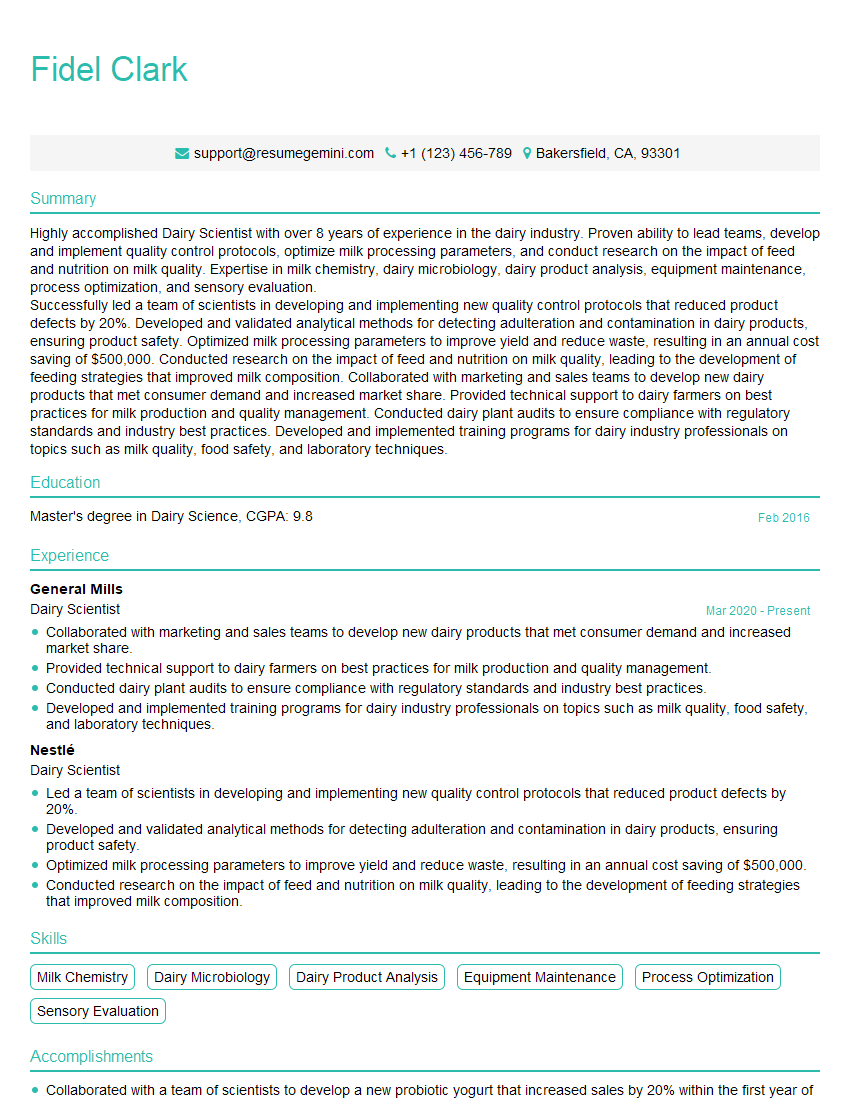
Mastering the knowledge of milk chemistry and microbiology is crucial for a successful and rewarding career in the dairy industry, opening doors to diverse roles in research, production, quality control, and more. To significantly boost your job prospects, focus on creating a strong, ATS-friendly resume that highlights your skills and experience effectively. ResumeGemini is a trusted resource that can help you build a professional resume tailored to your specific needs and experience. Examples of resumes tailored to showcasing expertise in Knowledge of Milk Chemistry and Microbiology are available to guide you. Investing in a well-crafted resume is an investment in your future career success.


Explore more articles
Users Rating of Our Blogs
Share Your Experience
We value your feedback! Please rate our content and share your thoughts (optional).
What Readers Say About Our Blog
I Redesigned Spongebob Squarepants and his main characters of my artwork.
https://www.deviantart.com/reimaginesponge/art/Redesigned-Spongebob-characters-1223583608
IT gave me an insight and words to use and be able to think of examples
Hi, I’m Jay, we have a few potential clients that are interested in your services, thought you might be a good fit. I’d love to talk about the details, when do you have time to talk?
Best,
Jay
Founder | CEO