The thought of an interview can be nerve-wracking, but the right preparation can make all the difference. Explore this comprehensive guide to Knowledge of Process Control Systems interview questions and gain the confidence you need to showcase your abilities and secure the role.
Questions Asked in Knowledge of Process Control Systems Interview
Q 1. Explain the difference between open-loop and closed-loop control systems.
The core difference between open-loop and closed-loop control systems lies in their ability to respond to changes in the controlled variable. Imagine baking a cake: an open-loop system would be like following a recipe without checking if the cake is actually baking correctly – you just follow the instructions blindly. A closed-loop system, on the other hand, is like constantly monitoring the cake’s temperature with a thermometer and adjusting the oven accordingly to maintain the desired temperature.
- Open-loop control: The control action is independent of the output. The system’s input determines its output without any feedback mechanism to correct for errors. Examples include a simple timer-based sprinkler system (it runs for a set time regardless of soil moisture) or a pre-programmed washing machine.
- Closed-loop control (feedback control): Uses feedback from the system’s output to adjust the input and maintain the desired output value (setpoint). A sensor measures the actual output, and a controller compares it to the setpoint. The difference (error) drives the control action. Examples include a thermostat regulating room temperature or a cruise control system in a car.
In essence, closed-loop systems are far more accurate and robust in maintaining desired outputs because they actively compensate for disturbances and variations in the system.
Q 2. Describe the function of a PID controller and its tuning parameters.
A PID controller is the workhorse of many process control systems. It uses three terms – Proportional, Integral, and Derivative – to adjust the control output to minimize the error between the desired setpoint and the measured process variable. Think of it as a self-correcting mechanism that constantly tweaks a system to achieve its goal.
- Proportional (P): The proportional term reacts to the current error. A larger error leads to a stronger corrective action. It’s like immediately applying more heat if the oven is significantly colder than the desired temperature.
- Integral (I): The integral term accounts for accumulated error over time. It addresses persistent offsets or steady-state errors. This is like slowly increasing the heat over time if there’s a consistent slight shortfall in temperature.
- Derivative (D): The derivative term predicts future error based on the rate of change of the current error. It helps prevent overshoot and oscillations. It’s like preemptively reducing the heat if the temperature is rising rapidly towards the setpoint.
Tuning parameters (Kp, Ki, Kd): These are the gains associated with each term. They determine the controller’s responsiveness and stability. Incorrect tuning can lead to oscillations (unstable system), sluggish response, or large overshoots. Tuning methods like Ziegler-Nichols or trial-and-error are often used to find optimal values.
Example: output = Kp * error + Ki * ∫error dt + Kd * d(error)/dtQ 3. What are the advantages and disadvantages of using different types of controllers (e.g., PID, Fuzzy Logic, Model Predictive Control)?
Each controller type has its strengths and weaknesses, making the choice dependent on the specific application and process characteristics.
- PID Controller:
- Advantages: Simple, widely understood, relatively easy to tune, robust in many applications.
- Disadvantages: Can struggle with complex non-linear processes, susceptible to oscillations if poorly tuned, limited ability to handle significant disturbances.
- Fuzzy Logic Controller:
- Advantages: Can handle non-linear processes effectively, less sensitive to parameter changes, easy to implement and understand.
- Disadvantages: Requires expert knowledge for rule base design, may require significant tuning effort, difficult to predict controller behaviour.
- Model Predictive Control (MPC):
- Advantages: Handles multiple inputs and outputs, excellent disturbance rejection, optimizes control actions over a prediction horizon.
- Disadvantages: Computationally intensive, requires a good process model, complex implementation, difficult tuning.
For example, a PID controller might suffice for temperature control in a simple oven, while MPC might be preferable for optimizing the operation of a complex chemical plant with multiple interacting variables.
Q 4. Explain the concept of process gain and its significance in control system design.
Process gain represents the change in the output of a process for a unit change in its input. It’s a crucial parameter in control system design because it dictates how much the controller needs to adjust its output to achieve the desired change in the process variable.
Imagine adjusting the gas valve on a stove: the process gain would describe how much the flame height (output) changes for a given change in the valve position (input). A high process gain indicates a very responsive system, where a small change in input causes a large change in output. A low process gain means a less responsive system.
Understanding process gain is vital for controller tuning. A high gain might lead to instability, whereas a low gain results in sluggish response. Therefore, accurate measurement or estimation of process gain is crucial for achieving stable and efficient control.
Q 5. How do you handle process disturbances in a control system?
Process disturbances are inevitable. They are unwanted changes in the system that affect the controlled variable, causing deviations from the setpoint. Handling disturbances requires a robust control strategy that combines feedforward and feedback control techniques.
- Feedback Control: The PID controller, as discussed earlier, continuously monitors the output and corrects for deviations due to disturbances. It’s reactive.
- Feedforward Control: This anticipates disturbances and proactively adjusts the input to minimize their effect on the output. For example, if you know that ambient temperature will drop, you can increase the heating input before the temperature actually drops.
- Robust Control Design: This involves designing the control system to be less sensitive to variations in the process and disturbances. This can include techniques like gain scheduling or using robust control algorithms.
For example, in a chemical reactor, a sudden change in the feedstock temperature (a disturbance) can be handled by using feedback control (adjusting the heating/cooling) and feedforward control (adjusting the feedstock flow rate based on predicted temperature changes).
Q 6. Describe your experience with different types of industrial sensors and actuators.
My experience encompasses a wide range of industrial sensors and actuators, vital components in process control systems. Sensors provide feedback on process variables, while actuators execute control actions based on controller commands.
- Sensors: I’ve worked with temperature sensors (thermocouples, RTDs, thermistors), pressure sensors (strain gauge, piezoelectric), flow sensors (Coriolis, ultrasonic, vortex shedding), level sensors (ultrasonic, radar, float switches), and analytical sensors (pH, conductivity, gas analyzers).
- Actuators: Experience includes pneumatic actuators (valves, cylinders), electric actuators (valves, motors), hydraulic actuators, and control valves (globe valves, butterfly valves). I understand the importance of selecting the appropriate sensor and actuator based on factors such as accuracy, response time, range, environmental conditions, and cost.
A memorable project involved integrating a new laser-based level sensor into a water treatment plant, significantly improving the accuracy of level measurement and optimizing the process efficiency. The project highlighted the importance of thorough sensor selection and calibration for reliable process control.
Q 7. What is the role of a Programmable Logic Controller (PLC) in process control?
A Programmable Logic Controller (PLC) is the brains of many industrial automation systems, including process control applications. It’s a ruggedized computer that executes control programs, managing inputs from sensors and sending commands to actuators.
In process control, a PLC typically reads data from various sensors, implements control algorithms (like PID control), and sends signals to actuators such as valves and pumps to maintain the process variables at their desired setpoints. It also handles safety interlocks, alarming, and data logging. PLCs provide a reliable and flexible platform for implementing complex control strategies. They are essential for managing and automating industrial processes, improving efficiency, safety, and product quality.
For instance, in a chemical plant, a PLC might coordinate the actions of multiple pumps, valves, and heaters to control temperature, pressure, and flow rates in a reaction vessel. This coordinated control ensures safe and efficient operation of the plant.
Q 8. Explain the architecture and functionality of a Supervisory Control and Data Acquisition (SCADA) system.
A Supervisory Control and Data Acquisition (SCADA) system is a centralized system used to monitor and control industrial processes, like power grids, pipelines, or manufacturing plants. Think of it as the brain of a large-scale operation.
Its architecture typically consists of several key components:
- Human-Machine Interface (HMI): This is the user interface, usually a computer screen, where operators monitor data and interact with the system. It provides visualizations of process variables and allows operators to issue commands.
- Supervisory Control Level: This layer manages the overall process by receiving data from the RTUs/PLCs and sending control commands. It uses software algorithms to make decisions about process control based on received data.
- Remote Terminal Units (RTUs) or Programmable Logic Controllers (PLCs): These are the field devices that collect data from sensors and actuators in the process. They are the system’s ‘eyes and hands’, directly interacting with the physical equipment. RTUs are often used for more geographically dispersed systems while PLCs are typically found in more localized environments.
- Communication Network: This connects all the components, allowing data and control signals to flow between the HMI, supervisory level, and RTUs/PLCs. This can range from simple serial communication to sophisticated industrial Ethernet networks.
- Databases: These store historical data for analysis, reporting, and trend identification, offering valuable insights into process efficiency and potential issues.
For example, in a water treatment plant, SCADA monitors water levels, flow rates, chemical dosages, and pump statuses. If a critical parameter goes outside of the acceptable range, the SCADA system can automatically adjust control valves or alert operators.
Q 9. What is a Distributed Control System (DCS) and what are its advantages over PLC-based systems?
A Distributed Control System (DCS) is a type of process control system that distributes the control tasks across multiple interconnected processors, unlike a centralized system like a single PLC. Think of it as a team of experts rather than a single all-powerful leader.
Advantages over PLC-based systems include:
- Scalability: DCS systems are easily expandable to accommodate larger and more complex processes. Adding new functionalities is straightforward.
- Redundancy and Reliability: The distributed nature improves reliability. If one processor fails, the system can continue operating. This is crucial in safety-critical applications.
- Advanced Control Algorithms: DCS systems usually support more sophisticated control algorithms like advanced process control (APC) strategies, leading to better process optimization and efficiency.
- Easier Maintenance: Modular design allows for easier maintenance and upgrades; you can replace or update individual components without shutting down the entire system.
- Data Management: DCS systems usually have robust data handling and reporting capabilities which are essential for analyzing process performance and improving operations.
For example, a large oil refinery would benefit greatly from a DCS’s ability to handle the vast number of variables and the need for high reliability and safety.
Q 10. How do you troubleshoot a malfunctioning control system?
Troubleshooting a malfunctioning control system requires a systematic approach. I typically follow these steps:
- Safety First: Ensure the system is safe to work on. Isolate power and lock out tag out equipment as needed.
- Gather Information: Identify the symptoms of the malfunction. What exactly isn’t working? When did the problem start? Were there any recent changes to the system?
- Review Alarms and Logs: Check the system’s alarm logs and historical data for clues. These logs often contain valuable information about the sequence of events leading to the malfunction.
- Inspect Hardware: Visually inspect all components including wiring, connectors, and sensors for any obvious damage or loose connections. This includes using specialized tools for detailed inspections.
- Check Software: Review the control logic and software configuration. Verify that the programs are running correctly and that there are no software errors. Simulation software can be very useful here.
- Isolate the Problem: Use a systematic approach to isolate the faulty component. This might involve testing individual parts of the system or temporarily bypassing sections to see if the problem goes away.
- Repair or Replace: Once the problem is identified, repair or replace the faulty component. Always follow safety procedures.
- Verify the Solution: After making repairs, verify that the system is functioning correctly.
Using a combination of diagnostic tools, technical documentation, and a good understanding of the process, the problem can often be efficiently pinpointed and addressed.
Q 11. What are some common control system design considerations?
Control system design considerations are numerous and depend significantly on the specific application. However, some common aspects always need to be carefully addressed.
- Safety: Ensuring the safety of personnel and equipment is paramount. This involves implementing safety instrumented systems (SIS) and redundant systems to mitigate risks.
- Reliability: Designing a system that is reliable and operates consistently is critical. Redundant components and robust designs are key to reliability.
- Maintainability: The system needs to be easily maintained and repaired. Modular designs and readily available spare parts are important.
- Scalability: The system should be able to handle future expansion and modifications without major overhauls.
- Cost-effectiveness: A balance between functionality and cost is crucial. Sophisticated control systems may offer better performance, but may not be justified economically.
- Environmental Considerations: Operating conditions such as temperature, humidity, and dust can affect equipment performance. The design should account for these conditions.
- Communication Protocols: Choosing appropriate communication protocols for data exchange between different components is important for system integration.
- Cybersecurity: Protecting the system from cyberattacks is increasingly important. Implementing robust security measures should be considered from the very start.
Imagine designing a control system for a nuclear power plant. Safety would be the overriding factor, driving the choice of redundant systems, rigorous testing, and highly reliable components.
Q 12. Describe your experience with control system simulations and modeling software.
I have extensive experience with several control system simulation and modeling software packages, including MATLAB/Simulink, AspenTech’s Dynamic Simulation, and Rockwell Automation’s FactoryTalk Simulation. I’ve used these tools to develop and test control strategies, evaluate system performance, and train operators.
For example, I once used Simulink to model a complex chemical reactor and to design a control system that maintained temperature and pressure within specified limits. The simulation allowed me to identify potential issues and optimize the control strategy before implementing it on the physical system—a much safer and more cost-effective approach. This experience also included verifying the accuracy of the models against real-world data to fine-tune the simulation and gain greater confidence in the results.
I’m proficient in using these tools to create models that accurately reflect the dynamics of the real system, including nonlinear effects and disturbances. This experience is invaluable for designing effective and robust control systems.
Q 13. Explain the concept of control system stability and how it’s assessed.
Control system stability refers to the ability of a system to return to its desired operating point after being disturbed. An unstable system will diverge from its setpoint and potentially lead to catastrophic failure. Think of a ball balancing on a hill; a stable system is like a ball in a bowl, which always settles back to the center.
Stability is assessed through several methods:
- Bode Plots: These graphically represent the system’s frequency response and indicate stability margins.
- Root Locus Analysis: This technique examines the location of the closed-loop system’s poles in the complex plane to determine stability.
- Routh-Hurwitz Criterion: A mathematical test that determines stability by examining the coefficients of the characteristic equation.
- Nyquist Stability Criterion: Another frequency-domain method that assesses stability by examining the Nyquist plot.
For example, a poorly tuned PID controller can lead to oscillations or instability in a process. By analyzing the system’s response using these methods, engineers can adjust controller gains to ensure stability and optimal performance.
Q 14. What are the different types of control system architectures?
Control system architectures can be categorized in several ways. Here are some common types:
- Centralized: All control logic resides in a single location, typically a PLC or a central processor. This approach is simple but less robust.
- Decentralized: Control functions are distributed among multiple controllers, each responsible for a specific part of the process. This improves reliability and scalability but requires more complex communication.
- Hierarchical: The system is organized in a hierarchical structure with different levels of control. A higher level might provide supervisory control, while lower levels handle specific tasks. This is common in large-scale systems.
- Distributed Control System (DCS): As previously mentioned, DCSs distribute control logic across multiple processors, improving redundancy and scalability.
- Fieldbus-based: These systems utilize fieldbuses, such as Profibus or Foundation Fieldbus, for communication between field devices and controllers, enabling greater communication efficiency and data transfer.
The choice of architecture depends on factors such as the complexity of the process, required level of reliability, scalability needs, and budget constraints. A simple process might be controlled using a centralized system, while a complex industrial plant would likely employ a hierarchical or DCS architecture.
Q 15. What is the significance of safety instrumented systems (SIS) in process control?
Safety Instrumented Systems (SIS) are crucial in process control because they provide an independent layer of protection to prevent or mitigate hazardous situations. Think of them as a backup safety net for your primary control system. While the main control system aims for optimal process performance, the SIS kicks in only when something goes critically wrong, ensuring that hazards are addressed even if the primary system fails. They are designed to perform specific safety functions, such as emergency shutdown (ESD) in case of a pressure surge or high temperature.
For example, in a chemical plant, an SIS might be programmed to automatically shut down a reactor if the pressure exceeds a pre-defined threshold. This prevents a potential explosion, safeguarding personnel and equipment. The significance lies in their independent operation, ensuring that a failure in the main control system doesn’t compromise safety.
Career Expert Tips:
- Ace those interviews! Prepare effectively by reviewing the Top 50 Most Common Interview Questions on ResumeGemini.
- Navigate your job search with confidence! Explore a wide range of Career Tips on ResumeGemini. Learn about common challenges and recommendations to overcome them.
- Craft the perfect resume! Master the Art of Resume Writing with ResumeGemini’s guide. Showcase your unique qualifications and achievements effectively.
- Don’t miss out on holiday savings! Build your dream resume with ResumeGemini’s ATS optimized templates.
Q 16. How do you ensure the safety and reliability of a control system?
Ensuring safety and reliability in a control system requires a multi-faceted approach. It starts with proper design, rigorous testing, and ongoing maintenance. Redundancy is key; critical components should be duplicated to ensure continued operation even if one fails. This might involve using redundant sensors, controllers, and communication pathways.
Regular safety audits and functional safety assessments (FSAs) are essential. These involve systematically evaluating the system’s design and operation to identify potential hazards and vulnerabilities. Furthermore, robust operator training is crucial to ensure they can handle normal and abnormal situations safely and effectively. Finally, employing a strong change management process helps prevent unintended consequences from modifications or upgrades.
Imagine a large oil refinery – the consequences of a system failure could be catastrophic. Redundant systems and safety protocols are non-negotiable to prevent incidents and minimize risk.
Q 17. Describe your experience with control system validation and verification.
My experience with control system validation and verification includes extensive work on both hardware and software aspects. Validation focuses on demonstrating that the system meets its intended requirements, while verification confirms that the system was built according to its design specifications. In a recent project involving a pharmaceutical manufacturing plant, I used a combination of techniques including Factory Acceptance Testing (FAT) and Site Acceptance Testing (SAT).
FAT involved rigorous testing at the vendor’s facility before shipment, ensuring that the hardware and software met the predefined specifications. This includes testing individual components and verifying their interactions. SAT, conducted on-site, focused on the integration of the control system into the plant’s infrastructure and verifying its seamless operation within the actual process environment. This included testing the complete system against real-world process parameters and verifying its safety and reliability functions. I used various documentation to trace requirements and ensure full compliance with regulatory standards like FDA 21 CFR Part 11 for data integrity.
Q 18. Explain the concept of process control loops and their importance.
Process control loops are the fundamental building blocks of automated process control. They involve continuously monitoring a process variable (like temperature or pressure), comparing it to a setpoint (desired value), and making adjustments to maintain the variable at the setpoint. Think of it like a thermostat in your home: the thermostat (controller) monitors the room temperature (process variable), compares it to your desired temperature (setpoint), and turns the heater (final control element) on or off to maintain the desired temperature.
These loops are crucial for maintaining stable and efficient process operation, ensuring product quality and safety. Different control strategies like Proportional-Integral-Derivative (PID) control are employed to optimize the loop’s performance. The importance of these loops cannot be overstated – they are the backbone of modern industrial automation, improving productivity, quality, and safety.
Q 19. What are some common challenges faced in implementing control systems?
Implementing control systems presents several challenges. One common issue is integrating legacy systems with newer technologies, often involving compatibility problems and data migration difficulties. Another challenge is dealing with the complexity of modern process plants, requiring sophisticated control strategies and advanced modeling techniques. Cybersecurity is also a major concern, with potential threats requiring robust security measures.
Furthermore, achieving optimal performance requires a thorough understanding of the process itself and careful tuning of control parameters. Inadequate operator training can also lead to inefficient operation or even unsafe situations. Finally, cost constraints often necessitate making trade-offs between functionality, reliability, and budget.
Q 20. How do you handle different types of process variables (e.g., temperature, pressure, flow)?
Handling different process variables involves selecting appropriate sensors, transmitters, and control strategies tailored to the specific variable’s characteristics. For example, temperature might be measured using thermocouples or RTDs, pressure using pressure transmitters, and flow using flow meters. Each sensor requires proper calibration and maintenance to ensure accuracy.
The control strategies also vary depending on the variable. For instance, a fast-responding variable like flow might require a more aggressive control strategy compared to a slower variable like temperature. Proper engineering judgment is crucial in selecting the appropriate instrumentation and control algorithm to achieve the desired performance and reliability. Careful consideration of signal conditioning and noise reduction is essential to ensure accurate and robust measurement and control.
Q 21. Describe your experience with different communication protocols used in process control (e.g., Profibus, Modbus, Ethernet/IP).
My experience encompasses various communication protocols, including Profibus, Modbus, and Ethernet/IP. Profibus, a fieldbus protocol, is widely used in industrial automation for high-speed data transmission and is often preferred for its robust nature in harsh environments. Modbus, a simpler and more widely adopted protocol, is used for its ease of implementation and cost-effectiveness in smaller-scale applications. Ethernet/IP provides a more flexible and scalable solution, especially in larger, complex systems requiring high bandwidth.
The choice of protocol often depends on factors such as the size and complexity of the system, the required communication speed, and the existing infrastructure. Understanding the strengths and weaknesses of each protocol is vital for selecting the most appropriate one for a given project. Furthermore, cybersecurity considerations are crucial when selecting and implementing any communication protocol in a process control environment.
Q 22. How do you ensure the cybersecurity of a control system?
Cybersecurity in process control systems is paramount, as a breach can lead to significant safety hazards, economic losses, and environmental damage. My approach is multi-layered and focuses on a holistic strategy incorporating several key elements:
- Network Segmentation: Dividing the control system network into isolated zones limits the impact of a breach. For example, separating the engineering workstations from the field devices prevents direct access to critical infrastructure.
- Firewall Implementation: Robust firewalls with strict access control lists (ACLs) filter incoming and outgoing network traffic, preventing unauthorized access. This is crucial for blocking malicious attempts to exploit vulnerabilities.
- Intrusion Detection and Prevention Systems (IDS/IPS): These systems continuously monitor network traffic for suspicious activity, alerting operators to potential threats and automatically blocking malicious attempts. I have experience deploying and managing both signature-based and anomaly-based systems.
- Regular Security Audits and Penetration Testing: Proactive vulnerability assessments identify weaknesses in the system before attackers can exploit them. Penetration testing simulates real-world attacks to validate the effectiveness of security measures. I’ve led several such audits, resulting in significant improvements in system security.
- Access Control and Authentication: Implementing strong password policies, multi-factor authentication (MFA), and role-based access control (RBAC) ensures only authorized personnel can access sensitive system components. This helps prevent unauthorized modifications or data theft.
- Secure Remote Access: If remote access is necessary, employing secure VPN connections and implementing strict authentication protocols minimizes vulnerabilities. I advocate for using encrypted channels like SSH for remote management.
- Patch Management: Regularly updating the system’s software and firmware patches vulnerabilities, preventing attackers from exploiting known weaknesses. Automated patch management systems are crucial for efficiency and consistency.
In one project, we implemented a zero-trust security model, requiring authentication and authorization at every access point. This significantly reduced our attack surface and improved overall system security.
Q 23. What are your experiences with alarm management in process control systems?
Effective alarm management is crucial for safe and efficient process operation. Poorly managed alarms lead to alarm fatigue, where operators become desensitized to alarms, potentially missing critical events. My experience encompasses the entire alarm management lifecycle:
- Alarm Rationalization: Analyzing existing alarms to identify and eliminate redundant, unnecessary, or nuisance alarms. This often involves reviewing process design, operational procedures, and alarm limits.
- Alarm Prioritization: Assigning priorities to alarms based on their severity and potential impact. Critical alarms should trigger immediate operator attention, while less urgent alarms can be handled later. I utilize techniques such as severity matrices and alarm flooding analysis.
- Alarm Filtering and Suppression: Implementing strategies to filter out unnecessary alarms based on specific conditions, while strategically suppressing alarms during planned maintenance or known events.
- Alarm Response Procedures: Developing clear and concise procedures for operators to follow when alarms are triggered, ensuring consistent and effective responses. This includes checklist creation and regular operator training.
- Alarm Reporting and Analysis: Using alarm data to identify trends, diagnose recurring problems, and improve process control strategies. Historical alarm data is invaluable for performance improvement initiatives. We frequently use data analytics to identify root causes of recurring alarm situations.
For instance, in a refinery project, we reduced the daily alarm count by over 60% through a comprehensive alarm rationalization program. This resulted in improved operator efficiency and reduced stress levels.
Q 24. Describe your experience with advanced process control (APC) techniques.
Advanced Process Control (APC) techniques significantly enhance process optimization and profitability. My experience includes implementing various APC strategies, including:
- Model Predictive Control (MPC): MPC uses a mathematical model of the process to predict future behavior and optimize control actions. I’ve applied MPC to various processes, achieving substantial improvements in yield, quality, and energy efficiency. For instance, we successfully used MPC to optimize a chemical reactor’s operation, reducing waste by 15%.
- Real-Time Optimization (RTO): RTO uses real-time data to find the optimal operating point for the process, maximizing profitability while respecting constraints. I’ve implemented RTO systems to optimize complex processes with multiple interacting variables. This frequently involves integrating with other systems, such as enterprise resource planning (ERP) systems.
- Multivariable Control: Handling processes with multiple interacting variables, improving overall performance compared to single-loop controllers. This requires careful model development and understanding of process dynamics.
A particular success involved using MPC to optimize a large-scale distillation column. By incorporating constraints and considering economic objectives, we achieved a significant increase in product purity and reduced energy consumption.
Q 25. How do you design a control strategy for a specific process?
Designing a control strategy involves a structured approach. First, I thoroughly understand the process, including its dynamics, constraints, and objectives. This involves:
- Process Understanding: Developing a clear understanding of the process’s behavior, including its inputs, outputs, and disturbances. This often involves process simulations and data analysis.
- Control Objectives: Defining clear, measurable goals for the control system. These might include maintaining a specific temperature, pressure, or flow rate.
- Control Strategy Selection: Choosing the appropriate control strategy based on the process characteristics and control objectives. Options include PID control, feedforward control, cascade control, and advanced control techniques like MPC. The selection is highly dependent on the process’s inherent dynamics and the required level of performance.
- Controller Tuning: Optimizing the controller parameters to achieve desired performance. This often involves iterative tuning and simulations using tools like MATLAB or dedicated tuning software. I typically follow structured tuning methods, such as the Ziegler-Nichols method.
- Implementation and Testing: Implementing the control strategy in the process control system and thoroughly testing its performance. This includes simulation tests and field tests.
For example, when designing a control system for a water treatment plant, I’d prioritize accurate pH control and disinfectant level maintenance, using cascade control to achieve precise control over these crucial parameters.
Q 26. Explain your experience with regulatory compliance in process control.
Regulatory compliance is vital in process control, ensuring safety, environmental protection, and operational efficiency. My experience encompasses compliance with various standards, including:
- IEC 61508 (Functional Safety): Designing safety instrumented systems (SIS) to meet the required safety integrity levels (SILs). This involves hazard analysis, risk assessment, and careful selection of safety-related instrumentation and logic solvers.
- ISA 84.01 (Alarm Management): Implementing best practices in alarm management, reducing alarm fatigue and ensuring timely and effective response to critical situations. I always ensure alarm systems meet the required standards and are regularly audited for adherence.
- FDA 21 CFR Part 11 (Electronic Records): Implementing systems for electronic data acquisition and management that comply with FDA regulations, ensuring data integrity and traceability. This involves using validated systems and employing audit trails.
- Environmental Regulations: Adhering to local and international environmental regulations concerning emissions, waste disposal, and resource consumption. Process control plays a vital role in ensuring compliance with environmental standards, and I have experience in developing and implementing systems that minimize the environmental impact of processes.
In one project, I led the implementation of a new SIS that reduced the risk of major process upsets by 70%, bringing the system fully compliant with IEC 61508.
Q 27. How do you handle complex control systems with many interacting variables?
Handling complex control systems with many interacting variables requires a systematic approach. I leverage techniques like:
- Decentralized Control: Breaking down the overall system into smaller, more manageable subsystems, each with its own controller. This simplifies design, commissioning, and maintenance. It’s essential to carefully define the interactions between the subsystems.
- Model-Based Design: Using process models to simulate the system’s behavior and optimize the control strategy before implementation. This reduces the risk of unforeseen issues during commissioning and minimizes the time needed for system optimization.
- Advanced Control Algorithms: Employing advanced control techniques like MPC or dynamic matrix control (DMC) to handle the complexity of interacting variables. These techniques are particularly effective in dealing with non-linear dynamics and constraints.
- Data Analytics: Using data analytics to understand the relationships between variables and identify potential bottlenecks or inefficiencies. This is crucial for effective decision-making and continuous improvement.
- Simulation and Verification: Rigorous simulation and verification are crucial for ensuring the stability and performance of the complex system.
For example, I once worked on a large-scale chemical plant with dozens of interconnected units. We employed decentralized control and MPC, significantly improving overall plant efficiency and reducing operational costs.
Q 28. Describe your experience with data analytics and its application to improving process control.
Data analytics plays a crucial role in improving process control by providing insights into process behavior, identifying areas for improvement, and optimizing control strategies. My experience includes applying various techniques such as:
- Statistical Process Control (SPC): Using statistical methods to monitor process performance and detect deviations from expected behavior. SPC charts help to identify patterns and trends, leading to proactive interventions.
- Machine Learning (ML): Utilizing machine learning algorithms to identify complex relationships within process data, predict future behavior, and optimize control parameters. This often involves developing predictive models based on historical data.
- Predictive Maintenance: Using data analytics to predict equipment failures and schedule maintenance proactively. This reduces downtime and maintenance costs. For example, we used sensor data and machine learning to predict pump failures several weeks in advance, allowing for planned maintenance and preventing costly unplanned shutdowns.
- Root Cause Analysis: Analyzing process data to identify the root causes of deviations or malfunctions. This might involve using techniques like fault tree analysis or event sequence analysis. This data-driven approach leads to targeted improvements and prevents recurrence of the issues.
In one project, we used machine learning to improve the prediction accuracy of a key process variable, resulting in a significant reduction in product variability and improved product quality.
Key Topics to Learn for Knowledge of Process Control Systems Interview
- Process Variables and Instrumentation: Understanding temperature, pressure, flow, level, and other critical process variables; familiarity with different types of sensors and transmitters.
- Control Loops and Strategies: PID control, cascade control, feedforward control, and other advanced control strategies; practical application in optimizing process efficiency and stability.
- Process Modeling and Simulation: Developing and using models to predict process behavior; applying simulation tools for testing control strategies before implementation.
- Control System Hardware and Software: Familiarity with Programmable Logic Controllers (PLCs), Distributed Control Systems (DCS), and relevant software packages for configuration and monitoring.
- Troubleshooting and Optimization: Identifying and resolving control loop issues; using data analysis techniques to improve process performance and reduce waste.
- Safety and Regulatory Compliance: Understanding safety instrumented systems (SIS) and relevant industry regulations for safe and reliable operation.
- Advanced Control Techniques: Exposure to Model Predictive Control (MPC), Adaptive Control, and other advanced control algorithms; understanding their applications and limitations.
- Data Acquisition and Analysis: Collecting and analyzing process data for performance monitoring, troubleshooting, and optimization; using statistical process control (SPC) methods.
Next Steps
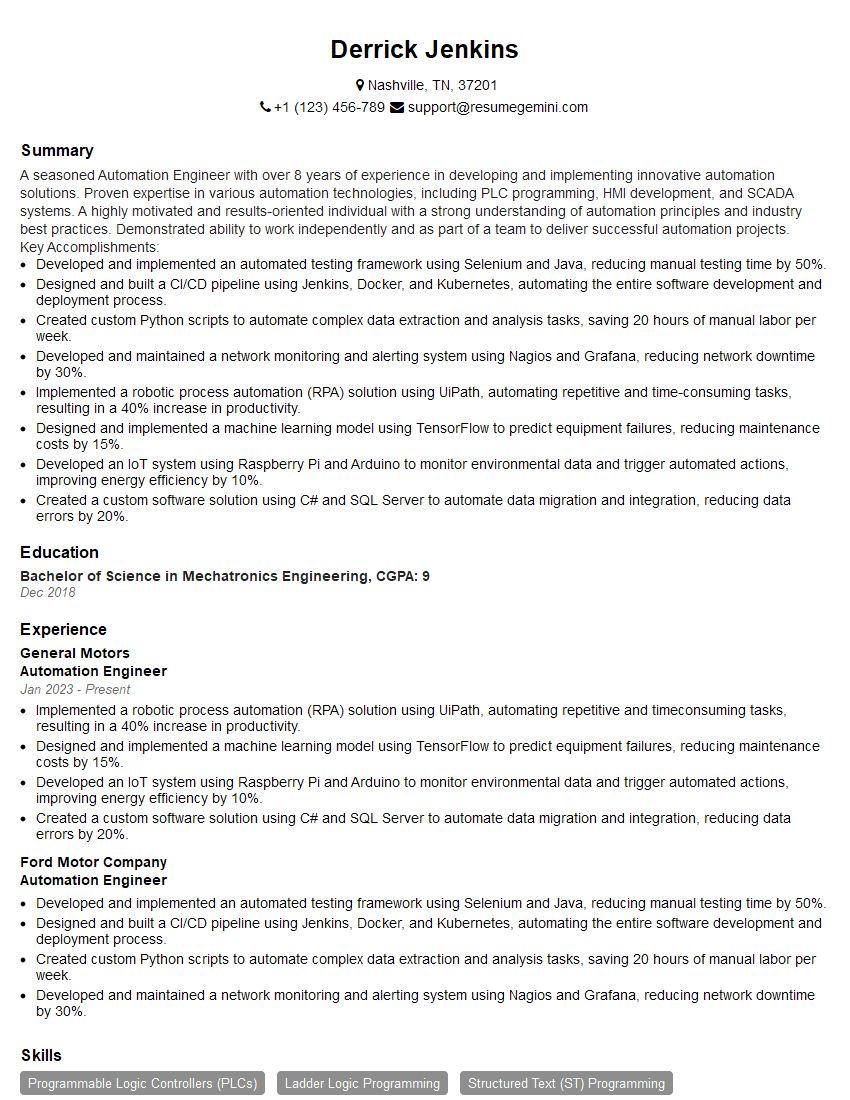
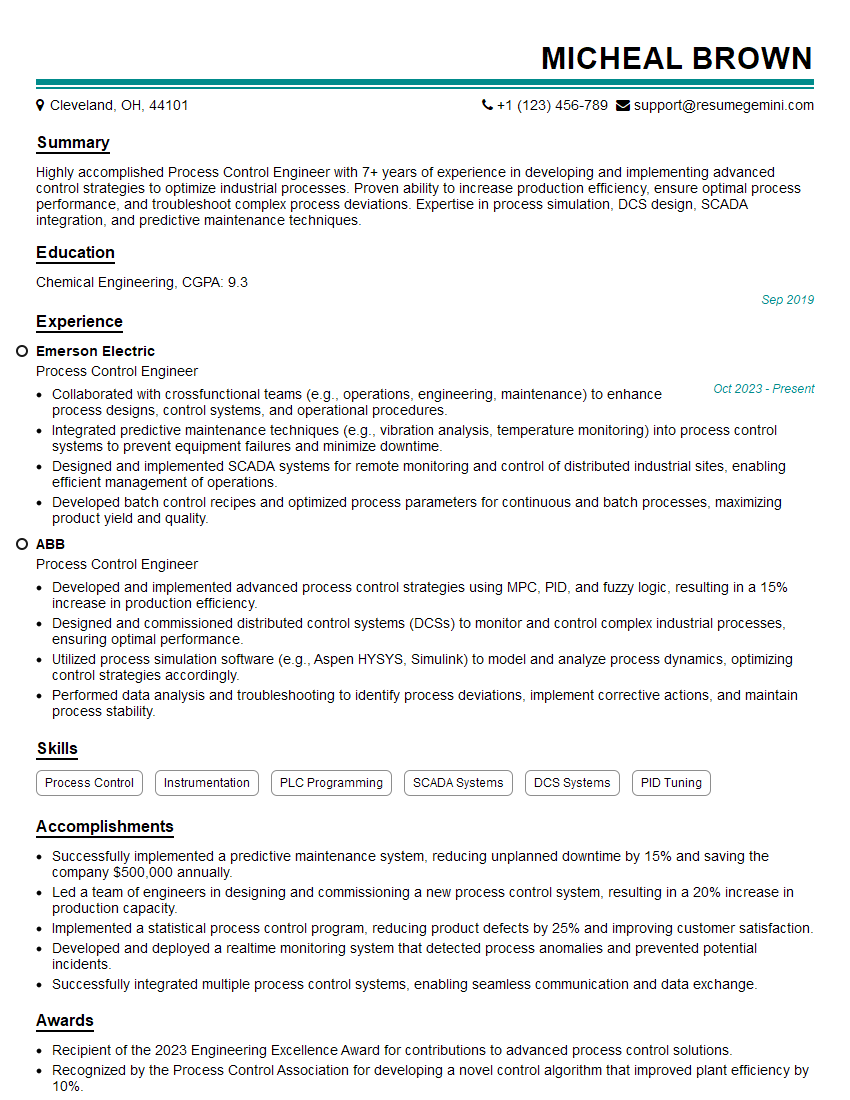
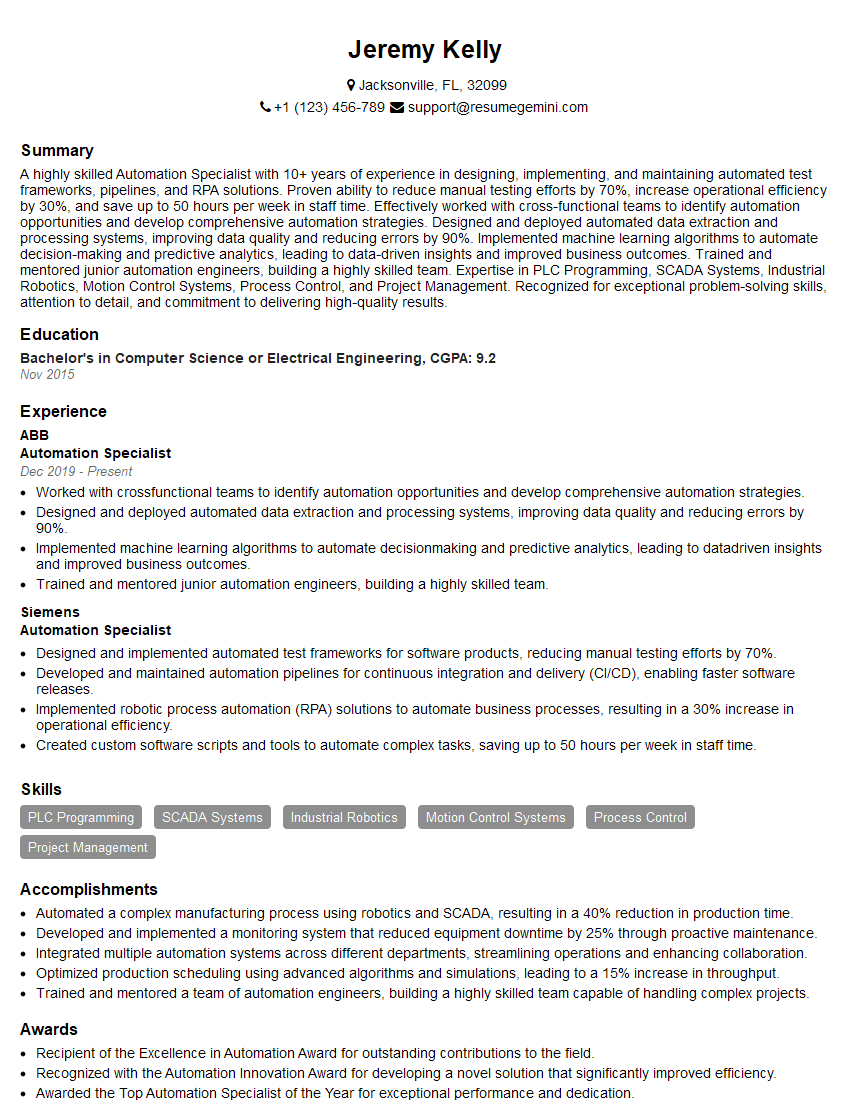
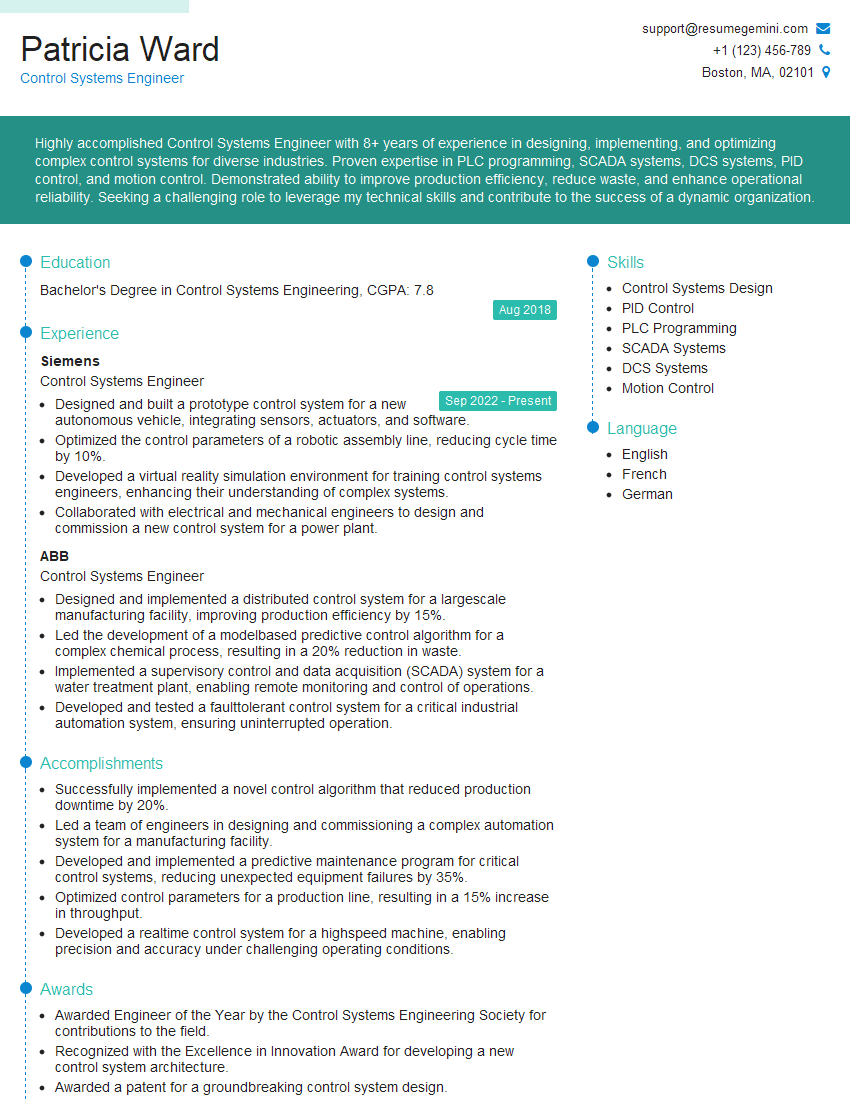
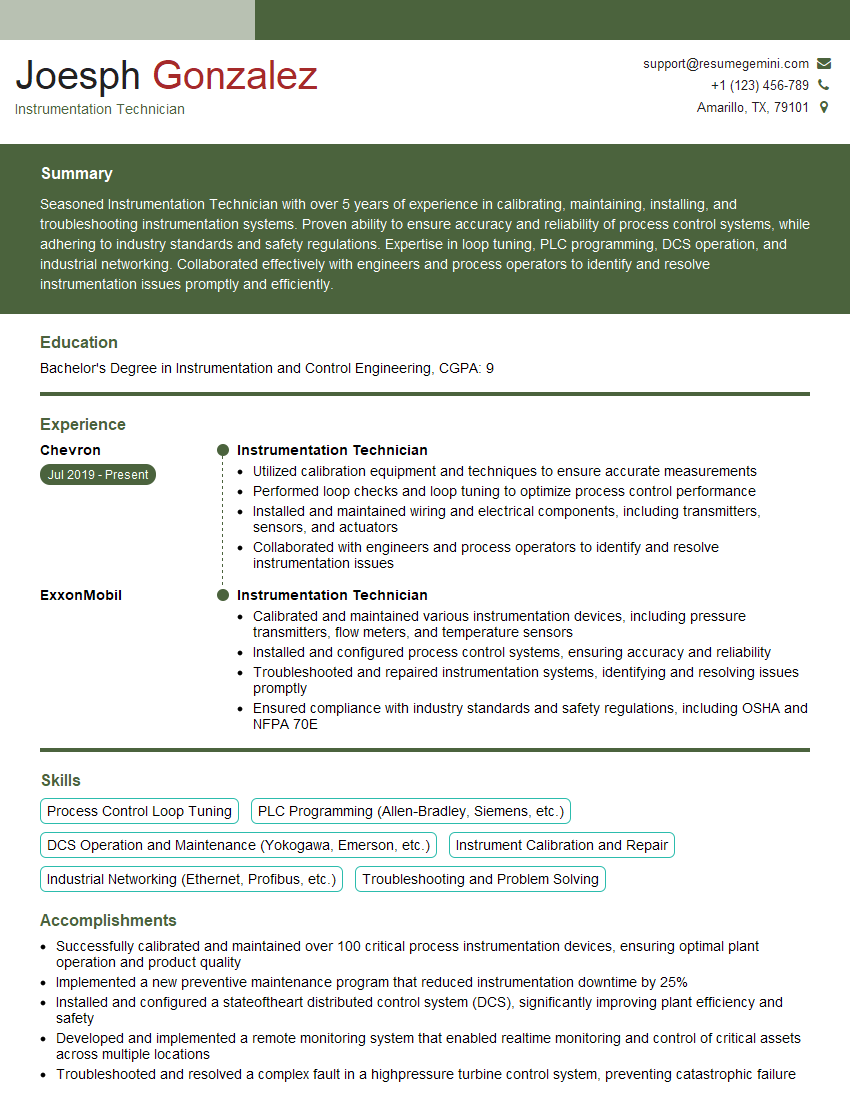
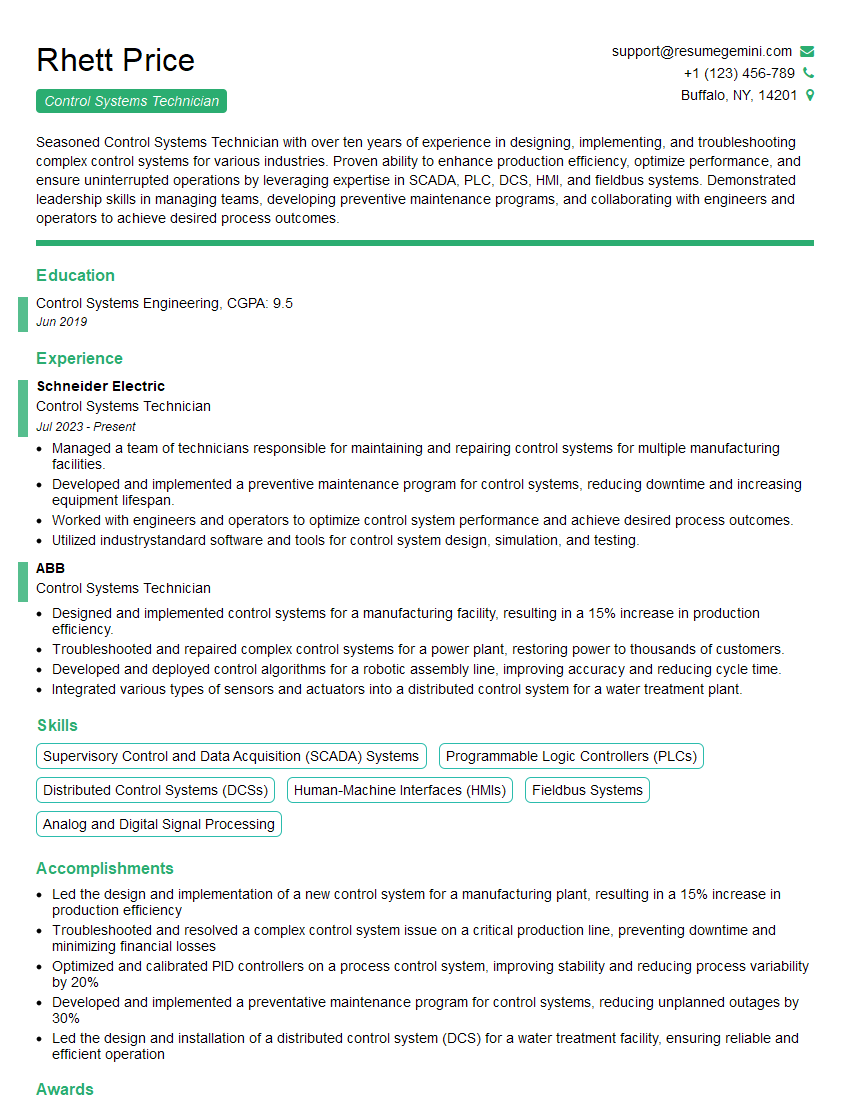
Mastering Knowledge of Process Control Systems is crucial for career advancement in various industries, offering lucrative opportunities and specialized roles. A strong foundation in these concepts significantly increases your competitiveness in the job market. To maximize your chances, create an ATS-friendly resume that showcases your skills and experience effectively. ResumeGemini is a trusted resource to help you build a professional and impactful resume. We provide examples of resumes tailored to Knowledge of Process Control Systems to guide you in crafting a winning application. Take the next step towards your dream career today!
Explore more articles
Users Rating of Our Blogs
Share Your Experience
We value your feedback! Please rate our content and share your thoughts (optional).
What Readers Say About Our Blog
I Redesigned Spongebob Squarepants and his main characters of my artwork.
https://www.deviantart.com/reimaginesponge/art/Redesigned-Spongebob-characters-1223583608
IT gave me an insight and words to use and be able to think of examples
Hi, I’m Jay, we have a few potential clients that are interested in your services, thought you might be a good fit. I’d love to talk about the details, when do you have time to talk?
Best,
Jay
Founder | CEO