Every successful interview starts with knowing what to expect. In this blog, we’ll take you through the top Knowledge of Railroad Track Inspection and Maintenance Procedures interview questions, breaking them down with expert tips to help you deliver impactful answers. Step into your next interview fully prepared and ready to succeed.
Questions Asked in Knowledge of Railroad Track Inspection and Maintenance Procedures Interview
Q 1. Describe the different types of track defects you might encounter during an inspection.
Track defects are irregularities that compromise the structural integrity and safety of the railway track. These can range from minor issues requiring minimal intervention to major defects demanding immediate attention and repair. They can be broadly categorized into:
- Gauge Defects: These relate to the distance between the inner sides of the rail heads. Narrow gauge means the distance is less than the standard, while wide gauge means it’s greater. This can cause derailments. Imagine the train wheels like a car’s tires – if the track is too narrow, the wheels will be forced closer than they should be, risking derailment.
- Alignment Defects: These involve deviations from the intended straightness or curvature of the track. This includes issues like track alignment or curvature changes that cause a train to be pulled to one side, risking derailment or damage.
- Level Defects: These refer to variations in the elevation of the rail. This includes problems with the vertical alignment or the evenness of the track. A train passing over uneven tracks can experience unpleasant shaking, and over time, can cause damage to the train itself and the track.
- Surface Defects: These include issues like rail corrugation (wave-like patterns), shelling (chipping of the rail surface), and head checking (cracks on the rail head). Think of these as imperfections on the surface that could cause a loss of traction or even a wheel to slip.
- Ballast Defects: The ballast, the crushed stone under the sleepers, is crucial for supporting and draining the track. Defects here might include fouling (contamination with dirt), insufficient depth, or segregation (separation of different sizes of stones). If the ballast is poor, it will not support the track correctly causing the track to become unstable.
- Fastener Defects: These include issues with the bolts, spikes, and other fasteners holding the rails and sleepers together. Loose fasteners can lead to rail movement and potential derailment. The system needs to be tightly fastened for optimal performance and safety.
- Sleeper Defects: Damage to the wooden or concrete sleepers that support the rails, such as cracking or rot in wooden sleepers, can affect track stability and lead to misalignment and eventually derailment. They are vital for supporting the rails, and damage will propagate instability up to the rail itself.
Regular inspections are crucial to identify these defects before they escalate into major safety hazards.
Q 2. Explain the process of performing a track geometry inspection.
Track geometry inspection involves precisely measuring the track’s geometry – gauge, alignment, level, and twist – to identify defects. This is typically done using specialized equipment such as:
- Track Geometry Cars: These are specialized railcars equipped with sophisticated sensors that measure various track parameters. They collect data on gauge, alignment, level, and twist continuously as they travel along the track. The data collected is automatically recorded and assessed later.
- Laser-based systems: Using lasers, precise measurements of the track geometry are recorded. Laser technology gives very accurate measurements, and may be used to supplement data from track geometry cars.
- Manual Measurements: While less efficient than automated methods, manual measurements with tools like track gauges and levels can be used in specific situations or to verify the findings of automated systems. This is a back-up to the automated procedures.
The process involves:
- Planning: Defining the track sections to be inspected and scheduling the inspection.
- Data Acquisition: Using the chosen equipment to collect track geometry data.
- Data Processing: Analyzing the collected data to identify defects that exceed pre-defined tolerance limits.
- Defect Reporting: Generating reports that detail the location, type, and severity of each defect.
- Defect Prioritization: Determining the urgency of repairs based on the severity of the defects.
The results of this inspection are crucial for prioritizing maintenance and repair activities, ensuring track safety and maximizing operational efficiency.
Q 3. What are the acceptable limits for track gauge and alignment?
Acceptable limits for track gauge and alignment vary depending on factors such as track type, speed limits, and national standards. However, generally:
- Track Gauge: The acceptable tolerance is typically within a few millimeters of the standard gauge (e.g., 1435 mm for standard gauge). Exceeding these tolerances can lead to wheel flange contact with the rail, causing damage and derailment. Even small deviations can add up over time, causing major problems.
- Alignment: Limits are expressed in terms of allowable deviation from straightness or curvature. This is often specified as a maximum allowable lateral displacement per unit length (e.g., millimeters per meter). Excessive misalignment can lead to derailment or increased wear and tear on the track and rolling stock.
Specific limits are defined in relevant standards and guidelines for the railway operator. These limits are determined through extensive testing and simulations to ensure safety and operational reliability at the desired speed.
For example, a high-speed rail line will have stricter tolerances than a low-speed industrial line. The specific limits would be detailed in the maintenance plan.
Q 4. How do you identify and assess the condition of ballast?
Ballast condition assessment involves evaluating its properties to ensure adequate track support and drainage. The evaluation should cover several aspects:
- Depth: The ballast should be of sufficient depth to provide adequate support. Inadequate depth can lead to track settlement and instability.
- Cleanliness: Ballast should be free of contamination by soil, vegetation, or other materials that reduce its drainage capacity and structural integrity. Contamination reduces the efficiency of drainage, leading to water accumulation and track instability.
- Drainage: Proper drainage is essential to prevent water accumulation, which can lead to track settlement and erosion. Good drainage is key to preventing water damage and loss of support.
- Particle Size Distribution: The ballast should have a proper mix of particle sizes to ensure adequate packing and drainage. Proper size distribution is critical for drainage, support, and to preventing voids under the track.
- Compaction: The ballast should be adequately compacted to provide proper support and prevent settlement. Excessive compaction limits drainage, while not enough causes instability.
Methods for assessing ballast condition include visual inspections, penetration tests to assess density, and laboratory testing of samples to determine its gradation and cleanliness. Sometimes, special equipment is used to assess the condition and properties of the ballast beneath the track.
A simple analogy is to think of ballast as the foundation of a house – it needs to be strong, well-drained, and properly compacted to support the structure above it.
Q 5. What are the common causes of rail buckling?
Rail buckling is a serious defect where the rail bows or bends out of its normal position. Several factors contribute to rail buckling:
- High Temperatures: Excessive heat causes the rails to expand, and if this expansion is constrained, it can lead to buckling. This is especially true on sunny days when exposed rails heat up more than the surrounding environment.
- Sun Kink: This is a specific type of buckling caused by uneven heating of the rail, leading to differential expansion. One side of the rail is heated more than the other. Differential heating of one side of the rail over the other will cause buckling.
- Track Geometry Defects: Existing defects in track alignment or level can increase the risk of buckling by creating points of stress concentration. If the track geometry isn’t aligned correctly, the forces will be concentrated on specific parts, making the rail more susceptible to buckling.
- Insufficient Ballast: Poor ballast condition, such as insufficient depth or poor drainage, can reduce track stability and increase the risk of buckling. The ballast helps prevent buckling by providing support for the rail.
- Wheel Loads: Heavy wheel loads can put stress on the rails, particularly when combined with other factors like high temperatures. Heavy and frequent loads increase the stress on the rails, increasing the likelihood of buckling.
Understanding these causes is crucial for developing effective preventative measures, such as improved track design, regular maintenance, and speed restrictions during periods of extreme heat.
Q 6. What safety precautions should be taken during track inspections?
Safety during track inspections is paramount. Essential precautions include:
- Rule Compliance: Adhering strictly to all railway safety rules and regulations.
- Personal Protective Equipment (PPE): Wearing appropriate PPE, including high-visibility clothing, safety footwear, gloves, and hard hats. This is a standard precaution for all working environments, especially in high-risk environments like a railway.
- Train Operations Awareness: Being constantly aware of approaching trains and adhering to safe working distances. Always keep an eye out for trains and ensure ample distance between you and the railway.
- Communication: Using proper communication channels to inform train dispatchers about inspection activities and any potential hazards. This will prevent accidents and ensure safety.
- Lockouts and Tagouts: Implementing lockout/tagout procedures to prevent accidental energization of track circuits. This will prevent accidental electrical shock.
- Emergency Response Planning: Having a clear emergency response plan in place in case of an accident or unforeseen event. Emergency preparedness is crucial and having a plan is vital in case of an incident.
- Competency: Personnel performing inspections should be well-trained and fully competent in the safe execution of the task.
Safety procedures must be followed precisely to minimize the risk to the personnel involved and to ensure the safety of others.
Q 7. How do you report track defects and initiate repairs?
Reporting track defects and initiating repairs typically involves a well-defined process:
- Defect Identification and Recording: Inspectors identify defects during their routine rounds, recording their location, type, and severity using standardized forms or digital systems. Accurate reporting of the defect is vital.
- Prioritization: Defects are prioritized based on their severity and potential impact on safety and operations. Major defects require immediate action while minor ones can be scheduled for later.
- Reporting to Supervisor: The findings of the inspection are reported to the relevant supervisor or maintenance manager. Supervisors will assess the damage and schedule repairs.
- Defect Tracking System: The defect information is entered into a centralized system for tracking and management. A robust system will ensure that the damage is fixed and followed up.
- Repair Scheduling: Based on the priority, repairs are scheduled and assigned to maintenance crews. This ensures timely repair of the identified defects.
- Repair Execution: Maintenance crews execute the necessary repairs, following established safety procedures. Repairs need to be completed according to the specified standards.
- Verification: Following repairs, the track is reinspected to verify that the defects have been properly addressed and standards are met.
Effective communication, clear documentation, and well-defined procedures are essential for ensuring timely and efficient repair of track defects.
Q 8. What is your experience with different track maintenance techniques?
My experience encompasses a wide range of track maintenance techniques, from routine preventative maintenance to complex repairs. This includes:
- Tamping: Using specialized machinery to lift and compact the ballast under the sleepers, ensuring proper track alignment and stability. I’ve worked with both pneumatic and hydraulic tampers, adjusting techniques based on ballast type and track conditions. For example, on a heavily trafficked main line, we’d utilize a high-speed tamper to minimize downtime.
- Undercutting: Removing and replacing deteriorated ballast to restore proper drainage and support. This is crucial for preventing track settling and ensuring long-term stability. I’ve overseen numerous undercutting projects, carefully managing the disposal of old ballast and the efficient placement of new.
- Rail Grinding: Using specialized grinders to smooth out surface irregularities on the rail head, reducing noise and wear. I’ve been involved in planning and executing rail grinding operations, considering factors like train schedules and the specific type of grinder to use for optimal results.
- Welding: Repairing broken rails through thermite welding or flash butt welding. Safety is paramount here; I’ve always ensured strict adherence to safety protocols and proper weld inspection to guarantee structural integrity.
My experience also includes managing and overseeing crews, ensuring the work is completed efficiently and safely while adhering to all regulations and company standards.
Q 9. Describe your experience using track inspection equipment (e.g., ultrasonic testing, visual inspection).
I’m proficient in using a variety of track inspection equipment, combining advanced technologies with traditional methods for comprehensive assessments.
- Visual Inspection: This remains a cornerstone of track inspection, allowing for identification of obvious defects like broken rails, gauge widening, and damaged sleepers. I’ve trained numerous inspectors, emphasizing the importance of meticulous observation and detailed reporting. A seasoned eye can often spot subtle signs of distress, preventing larger problems down the line.
- Ultrasonic Testing: I’m highly experienced in using ultrasonic testing equipment to detect internal rail flaws, such as cracks and head checks, often invisible to the naked eye. The data collected informs critical decisions about whether a rail needs repair or replacement, enhancing track safety.
- Geophysical Survey Equipment: I am also familiar with using geophysical survey tools to assess the condition of the ballast and sub-ballast, identifying potential issues like voids or soft spots that could compromise track stability.
I understand the importance of integrating data from different inspection methods to develop a comprehensive understanding of track condition, informing effective and prioritized maintenance strategies.
Q 10. How do you prioritize repairs based on the severity of track defects?
Prioritizing repairs involves a systematic approach that balances safety, operational efficiency, and cost-effectiveness. I use a risk-based prioritization framework considering several factors:
- Severity: Defects are categorized based on their potential impact on safety and train operations. For example, a broken rail is a critical defect requiring immediate attention, while minor gauge widening might warrant a lower priority.
- Location: Defects on high-speed lines or heavily trafficked sections require faster remediation than those on less critical sections.
- Impact on train speed: Defects that necessitate speed restrictions impose significant operational consequences and are prioritized accordingly.
- Available Resources: The availability of personnel, equipment, and materials influences the prioritization schedule.
I often utilize a defect scoring system that combines these factors to objectively rank repairs and ensure that the most critical issues are addressed first. This data-driven approach optimizes resource allocation and minimizes disruption to train schedules.
Q 11. What is your familiarity with various types of rail fasteners and their maintenance?
My familiarity with rail fasteners extends to various types, including:
- Screw Spikes: These offer excellent holding power and are relatively easy to install and maintain. However, they can be susceptible to loosening over time, requiring regular checks and tightening.
- Clip Fasteners: These offer superior resistance to vibration and are common on high-speed lines. Maintenance focuses on ensuring proper clip engagement and preventing corrosion.
- Dog spikes: These older fasteners require more frequent maintenance and inspections to maintain track stability.
Maintenance involves regular inspections to detect loose or damaged fasteners. I’ve developed procedures to ensure efficient and consistent fastener checks, incorporating visual inspection and occasionally using specialized tools to measure holding forces. Corrosion prevention strategies, such as applying anti-corrosion coatings, are also vital, particularly in harsh environmental conditions.
Q 12. Explain your understanding of track drainage systems and their importance.
Effective track drainage is critical for maintaining track stability and preventing costly repairs. Water accumulation can lead to ballast degradation, mud pumping, and frost heave, compromising track geometry and safety.
Track drainage systems typically involve:
- Ballast: The type and gradation of ballast influence drainage capacity. Proper ballast size and gradation are crucial for allowing water to flow through.
- Sub-ballast: A layer beneath the ballast that helps to facilitate drainage. Proper sub-ballast materials are essential for good drainage and prevention of water accumulation.
- Cross drains and side ditches: These structures direct water away from the trackbed, preventing waterlogging.
- Culverts and pipes: These carry water under the trackbed where natural drainage is inadequate.
Maintenance involves regular inspections to ensure the drainage system’s functionality. Cleaning ditches, clearing culverts, and repairing damaged drainage structures are key maintenance activities. I’ve managed several projects focused on improving track drainage, which significantly reduced maintenance costs and enhanced track longevity.
Q 13. What are the different types of rail joints and their maintenance requirements?
Rail joints are crucial for accommodating thermal expansion and contraction of rails. Different types exist, each with specific maintenance needs:
- Welded Joints: These eliminate the need for traditional rail joints and offer smoother ride, reduced maintenance, and longer service life, requiring periodic inspection for cracks using ultrasonic methods.
- Bolted Joints: These use bolts and fishplates to connect rails. Maintenance involves regular tightening of bolts to maintain proper gauge and prevent loosening due to vibration. Corrosion prevention is key; I frequently use anti-seize compounds on bolts to improve longevity.
- Expansion Joints: These allow for thermal expansion and contraction. Maintenance focuses on ensuring proper gap width and the functionality of any associated devices.
Regular inspection and prompt repair of damaged joints are critical for preventing derailments. My experience includes both preventative and reactive maintenance of rail joints, depending on the type of joint and identified condition.
Q 14. Describe your experience with switch and crossing maintenance.
Switch and crossing maintenance is highly specialized and critical for safe and efficient train operations. My experience includes:
- Inspection: Regular visual inspections to detect worn or damaged components, including rail, points, crossings, and associated mechanisms. We are looking for things like gauge misalignment, broken parts, and signs of excessive wear and tear.
- Lubrication: Applying appropriate lubricants to reduce friction and wear on moving parts, ensuring smooth operation. The type of lubricant is chosen based on the specific components and environmental conditions.
- Adjustments: Making adjustments to points and crossings to maintain proper alignment and clearances. This often involves using specialized tools to fine-tune the mechanisms, optimizing their performance and function.
- Replacement: Replacing worn-out or damaged components as needed, to ensure the continued safe and reliable operation of the switches and crossings. This includes following strict safety protocols during the replacement process.
I have a strong understanding of the complex geometry and mechanics of switches and crossings, and I’m experienced in troubleshooting and resolving various issues, prioritizing safety and operational efficiency in every aspect of maintenance.
Q 15. How do you ensure the safety of workers during track maintenance operations?
Worker safety is paramount in track maintenance. We employ a multi-layered approach, starting with comprehensive safety training for all personnel. This includes instruction on proper use of Personal Protective Equipment (PPE), such as high-visibility clothing, safety glasses, hearing protection, and steel-toe boots. We also emphasize the importance of understanding potential hazards like moving equipment, energized lines, and falling objects.
Before any work begins, a thorough risk assessment is conducted, identifying potential hazards and establishing control measures. This could involve implementing speed restrictions on nearby train traffic, establishing designated work zones with clear signage and barriers, and assigning safety personnel to monitor the area. We use lockout/tagout procedures to ensure equipment is properly de-energized before maintenance begins. Regular safety meetings and toolbox talks reinforce safety procedures and address any concerns. Finally, we meticulously track safety incidents, analyzing root causes to prevent future occurrences. For example, if a near-miss involves a worker being too close to a moving train, we’ll review our safety protocols and perhaps add extra warning systems or adjust work zone boundaries.
Career Expert Tips:
- Ace those interviews! Prepare effectively by reviewing the Top 50 Most Common Interview Questions on ResumeGemini.
- Navigate your job search with confidence! Explore a wide range of Career Tips on ResumeGemini. Learn about common challenges and recommendations to overcome them.
- Craft the perfect resume! Master the Art of Resume Writing with ResumeGemini’s guide. Showcase your unique qualifications and achievements effectively.
- Don’t miss out on holiday savings! Build your dream resume with ResumeGemini’s ATS optimized templates.
Q 16. What is your knowledge of the Federal Railroad Administration (FRA) regulations related to track maintenance?
My knowledge of FRA regulations concerning track maintenance is extensive. I’m intimately familiar with Title 49, Code of Federal Regulations (CFR), Part 213, which covers track safety standards. This includes requirements for track geometry, including gauge, alignment, and surface defects; the inspection and testing of track components like rails, ties, and ballast; and the maintenance procedures to address any identified deficiencies. I understand the detailed specifications for rail flaw detection, including the use of ultrasonic testing and visual inspections. I’m also well-versed in the reporting requirements for track defects and incidents, ensuring compliance with FRA reporting guidelines. The FRA’s emphasis on proactive maintenance and risk management is central to my approach, and I always prioritize compliance to ensure the safety of railroad operations.
Q 17. Describe your experience with track welding techniques.
I have significant experience with various track welding techniques, including flash butt welding and thermite welding. Flash butt welding is a common method for joining rails, using intense heat and pressure to create a strong, continuous weld. This process requires precise control of current and pressure to achieve a high-quality weld that meets FRA standards. Thermite welding, while less frequently used, offers a reliable solution for situations where flash butt welding may not be feasible. I’m proficient in both methods, capable of operating and maintaining the equipment, and understand the importance of post-weld inspection to ensure the weld’s structural integrity. For instance, I’ve managed multiple rail replacement projects where precise flash butt welding was critical to maintaining the track’s geometry and load-bearing capacity. Careful pre-weld preparation, including cleaning and aligning the rail ends, is crucial for a successful weld and is something I always meticulously follow.
Q 18. How do you manage track maintenance schedules and resources effectively?
Effective track maintenance scheduling requires a well-defined process. I begin by analyzing historical track inspection data, identifying areas with higher defect rates and prioritizing those for maintenance. This data-driven approach allows for proactive maintenance, reducing the risk of major failures and improving overall track reliability. Next, I develop a comprehensive maintenance schedule, considering factors such as available resources (personnel, equipment, materials), anticipated weather conditions, and planned train traffic disruptions. I use specialized software to optimize the scheduling process, minimizing disruptions to train operations while ensuring timely completion of maintenance tasks. Resource allocation involves careful consideration of crew assignments, equipment availability, and material procurement. Regular monitoring and adjustments are made to the schedule as needed, based on unforeseen events or changes in operational requirements. For example, if a significant defect is discovered, we’ll adjust the schedule to address it promptly, prioritizing safety and minimizing service disruption.
Q 19. What is your experience with using track inspection reports and documentation?
Track inspection reports and documentation are essential for effective maintenance. I’m experienced in using various methods for recording inspection findings, from manual forms to sophisticated digital systems. This includes detailed descriptions of defects, their locations, and their severity. I’m adept at analyzing these reports to identify patterns and trends in track condition, enabling proactive maintenance strategies. For example, if multiple reports show a high incidence of broken ties in a specific section of track, we can investigate the underlying causes (e.g., poor drainage, excessive train loads) and implement corrective measures. Proper documentation ensures clear communication among maintenance teams, providing a complete history of track conditions and maintenance actions. This historical data is invaluable for planning future maintenance activities, improving efficiency, and minimizing risks.
Q 20. Explain your problem-solving approach when faced with unexpected track defects during an inspection.
My problem-solving approach to unexpected track defects begins with a thorough assessment of the situation. I first ensure worker safety, establishing a secure work zone and implementing necessary control measures. Then, I conduct a detailed visual inspection of the defect to determine its nature and severity. I utilize appropriate testing equipment, such as ultrasonic rail flaw detectors or specialized measuring tools, to obtain precise data on the defect’s extent. Based on this information, I develop a repair plan, selecting the most appropriate method for addressing the defect. This might involve temporary repairs to allow for continued train operations while awaiting a more permanent solution, or immediate repairs using available resources if safety is compromised. After the repair, I document the incident, repair methods, and findings. This information feeds back into the maintenance planning process, helping prevent similar issues in the future. For example, if we discover a significant rail defect during inspection, we might implement a temporary speed restriction and expedite the repair process to prevent potential derailments.
Q 21. How do you communicate effectively with other team members during a track maintenance project?
Effective communication is crucial for successful track maintenance projects. I utilize a multi-faceted communication strategy, incorporating regular team meetings to discuss project plans, progress, and challenges. Clear and concise reporting is vital, utilizing both verbal and written communication. We use radio communication for real-time updates and coordination during field operations, ensuring safety and efficiency. I encourage open communication among team members, fostering a collaborative environment where everyone feels comfortable raising concerns or suggesting improvements. I utilize visual aids, such as diagrams and maps, to clarify complex information and ensure everyone is on the same page. Regular updates to stakeholders are essential, keeping them informed of progress and any potential issues. For example, using a shared digital platform to update project schedules and track defect reports facilitates seamless communication and efficient collaboration across the team.
Q 22. What is your experience with using different track maintenance tools and equipment?
My experience with track maintenance tools and equipment is extensive, encompassing both manual and mechanized systems. I’m proficient in using hand tools like wrenches, hammers, and tampers for smaller repairs and adjustments. More significantly, I’ve operated and maintained a wide range of heavy machinery, including:
- Track geometry cars: These advanced systems provide precise measurements of track alignment, level, and gauge, crucial for detecting subtle defects early.
- Tamper machines: I’m skilled in operating different types of tampers, from hydraulic to pneumatic, used for lifting and consolidating ballast to ensure optimal track support and stability. This includes understanding the nuances of different ballast types and their impact on tamping effectiveness.
- Rail grinders: These machines are essential for smoothing out rail irregularities, reducing noise and vibration, and extending rail life. I understand the different grinding profiles and their applications depending on the type and severity of rail defects.
- Ultrasonic rail flaw detectors: I’m experienced in using these non-destructive testing tools to identify internal rail flaws like cracks and head checks, preventing catastrophic failures.
Beyond operation, I’m also knowledgeable about preventative maintenance for this equipment, ensuring its optimal performance and safety. For instance, I regularly perform inspections, lubrications, and minor repairs, minimizing downtime and maximizing operational efficiency. I’ve even assisted in troubleshooting major equipment malfunctions, leveraging my mechanical aptitude to get machines back online quickly.
Q 23. Describe your experience with conducting preventative maintenance on railroad tracks.
Preventative maintenance is the cornerstone of safe and efficient rail operations. My experience involves a structured approach that encompasses regular inspections and timely interventions. We follow a schedule that includes:
- Routine inspections: This involves visually inspecting the track for obvious defects like broken rails, loose fasteners, or damaged ties. We also use specialized equipment to measure track geometry and identify subtle issues.
- Ballast cleaning: Regular cleaning removes debris and vegetation that can compromise track stability. We often use specialized machines to effectively remove the debris and restore proper drainage.
- Tie replacement: Damaged or deteriorated ties are systematically replaced to maintain track integrity. The selection of tie type considers factors like the traffic load and environmental conditions.
- Fastener tightening: Loose fasteners are a common cause of track instability. Regular tightening ensures that the rails remain securely fixed to the ties.
- Rail lubrication: Lubricating rail joints reduces friction and wear, extending the life of the rails and reducing noise.
I’ve personally overseen projects implementing condition-based maintenance, using data from track inspections and geometry measurements to prioritize repairs and optimize resource allocation. For instance, I successfully implemented a predictive maintenance program that reduced unplanned outages by 20% by identifying potential failures before they occurred. This demonstrates a proactive approach, moving beyond simply reacting to failures to preventing them.
Q 24. How do you assess the risk of track defects and implement mitigation strategies?
Assessing track defect risks requires a multi-faceted approach, combining visual inspection, data analysis, and engineering judgment. We use a risk matrix that considers the severity of the defect, its likelihood of occurrence, and its potential consequences.
- Defect identification: This starts with thorough inspections, employing both manual observation and automated systems like track geometry cars and ultrasonic flaw detectors. This allows for identification of various defects such as gauge widening, rail corrugation, and broken ties.
- Risk assessment: The identified defects are categorized based on their severity (minor, moderate, critical) and likelihood of progression. We consider factors like train speed, traffic volume, and the type of track structure.
- Mitigation strategies: Once risks are assessed, appropriate mitigation strategies are implemented. These may include immediate repairs for critical defects, temporary speed restrictions for moderate defects, and scheduled maintenance for minor defects.
For example, if a significant gauge widening is discovered, we’d immediately implement a speed restriction and initiate repairs to restore the track to its proper gauge. For a minor rail flaw detected by an ultrasonic test, we might schedule a rail replacement during a planned maintenance window. Effective risk mitigation is crucial to ensure both the safety of railway operations and the efficient management of resources.
Q 25. Explain your understanding of different types of rail material and their properties.
Rail materials vary significantly, impacting their performance and lifespan. Common types include:
- Carbon steel: This is the most common type, offering a good balance of strength and cost-effectiveness. Different grades of carbon steel exist, varying in carbon content and resulting in different levels of hardness and toughness.
- Alloy steel: Alloy steels contain elements like manganese, chromium, and nickel, improving strength, toughness, and wear resistance compared to carbon steel. These are often used in high-traffic areas or where extreme conditions prevail.
- Heat-treated steel: Heat treatment processes modify the microstructure of the steel, enhancing its properties like hardness and strength. This is often applied to rails to increase their lifespan and reduce wear.
Understanding these material properties is essential for selecting the appropriate rail type for a specific application. For instance, in high-speed rail lines, alloy steels or heat-treated rails are preferred due to their enhanced wear resistance and strength under high stresses. Conversely, carbon steel might be sufficient for lower-speed, less heavily trafficked lines. Considering factors like traffic density, speed, and environmental conditions when selecting rail material is critical for long-term track performance and safety.
Q 26. What is your experience with using Computer Aided Design (CAD) software for track design or analysis?
My experience with CAD software in track design and analysis is extensive. I’m proficient in using industry-standard software like AutoCAD and MicroStation to create detailed track plans, analyze track geometry, and simulate track behavior under various loading conditions. This allows for a comprehensive review and evaluation of track designs before physical implementation.
For example, I’ve used CAD to design complex track layouts incorporating curves, switches, and crossings, ensuring optimal alignment and minimizing stress on the track structure. I’ve also performed simulations to assess the stability of various designs under different train loads and speeds, identifying potential weaknesses early in the design process. The ability to visualize and analyze track designs digitally minimizes the risk of errors and optimizes the overall efficiency of track construction and maintenance.
Q 27. How would you handle a situation where a critical track defect is discovered during a routine inspection?
Discovering a critical track defect during routine inspection requires immediate and decisive action. My response would follow a structured protocol:
- Immediate Isolation: The affected section of track would be immediately isolated, halting train traffic in the area to prevent accidents. This might involve using signals or physical barriers to stop trains approaching the affected area.
- Assessment and Documentation: A thorough assessment of the defect would be conducted to determine its severity and extent. Detailed photographs and measurements would be taken, and all relevant information would be meticulously documented.
- Emergency Response Team Notification: The appropriate emergency response team would be notified immediately, including the railway’s engineering, maintenance, and operations personnel. The notification would include details of the defect, its location, and the implemented safety measures.
- Temporary Repair (if possible): Depending on the nature of the defect and available resources, a temporary repair might be carried out to allow for the safe resumption of train traffic at reduced speeds. This often involves the use of temporary rail sections or speed restrictions.
- Permanent Repair Scheduling: A plan for permanent repair would be developed and implemented as quickly as possible. This involves coordinating resources, acquiring necessary materials, and scheduling repair crews.
- Investigation: After the permanent repair is complete, an investigation into the root cause of the defect would be conducted to prevent similar incidents in the future.
Throughout the entire process, safety is the paramount concern. The response is prioritized to ensure minimal disruption to railway operations while maintaining the highest safety standards. Transparency and clear communication are also critical to ensure everyone involved is aware of the situation and the steps taken.
Key Topics to Learn for Knowledge of Railroad Track Inspection and Maintenance Procedures Interview
- Track Geometry: Understanding alignment, level, and gauge; practical application of using surveying instruments and interpreting data to identify defects.
- Track Components & Materials: Knowledge of rail types, fasteners, ballast, ties, and their respective functions; troubleshooting issues related to material degradation and wear.
- Inspection Methods: Familiarity with visual inspection techniques, use of specialized equipment (e.g., ultrasonic testing, flaw detectors), and reporting procedures.
- Maintenance Techniques: Understanding various maintenance practices, including rail grinding, tamping, and ballast cleaning; problem-solving scenarios involving track repairs and maintenance scheduling.
- Safety Regulations & Compliance: Thorough knowledge of relevant safety standards and regulations (e.g., FRA regulations); applying safety procedures during inspections and maintenance.
- Defect Identification & Classification: Ability to identify various track defects (e.g., broken rails, gauge widening, track settlement); understanding the severity and potential consequences of different defects.
- Documentation & Reporting: Properly documenting inspection findings, generating reports, and communicating effectively with supervisors and other teams.
- Preventive Maintenance Strategies: Understanding the principles of predictive and preventative maintenance; developing strategies to minimize track failures and optimize maintenance schedules.
- Emergency Response Procedures: Knowledge of emergency response protocols for track-related incidents; understanding the importance of quick and effective action in critical situations.
- Use of Technology in Track Maintenance: Familiarity with modern technologies used in track inspection and maintenance (e.g., automated inspection systems, data analysis tools).
Next Steps
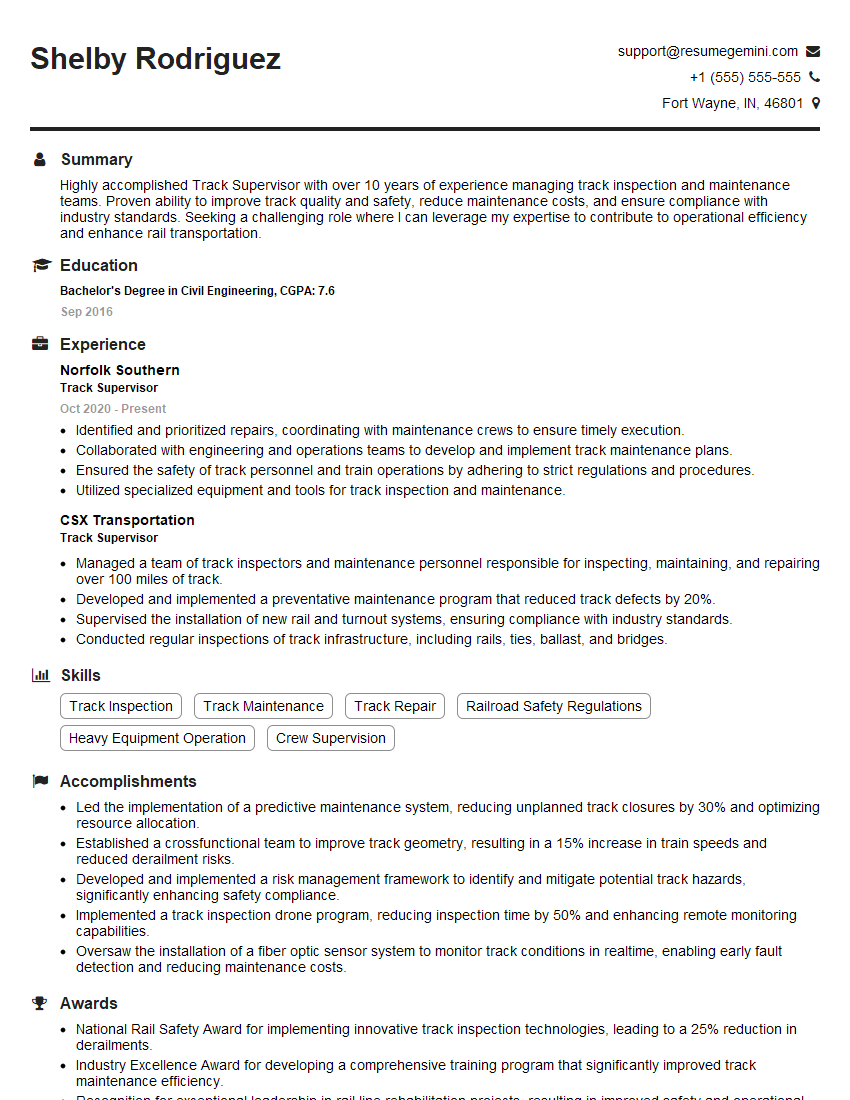
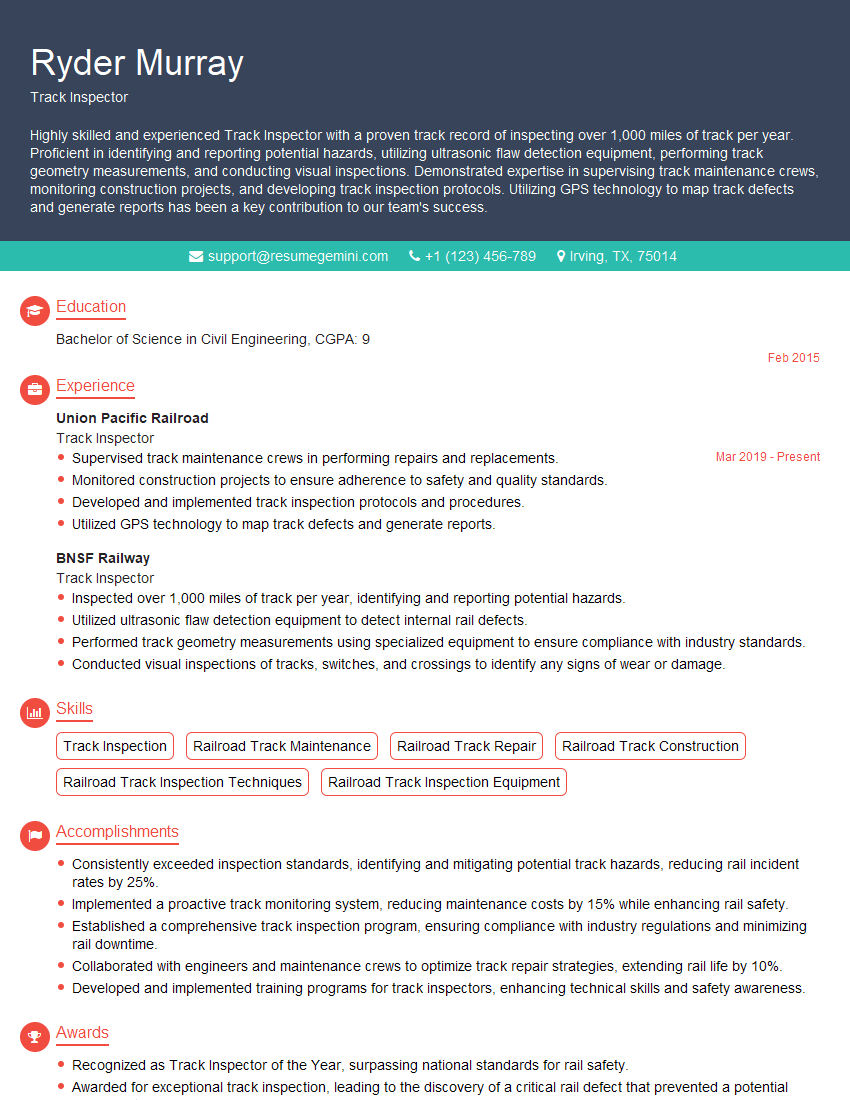
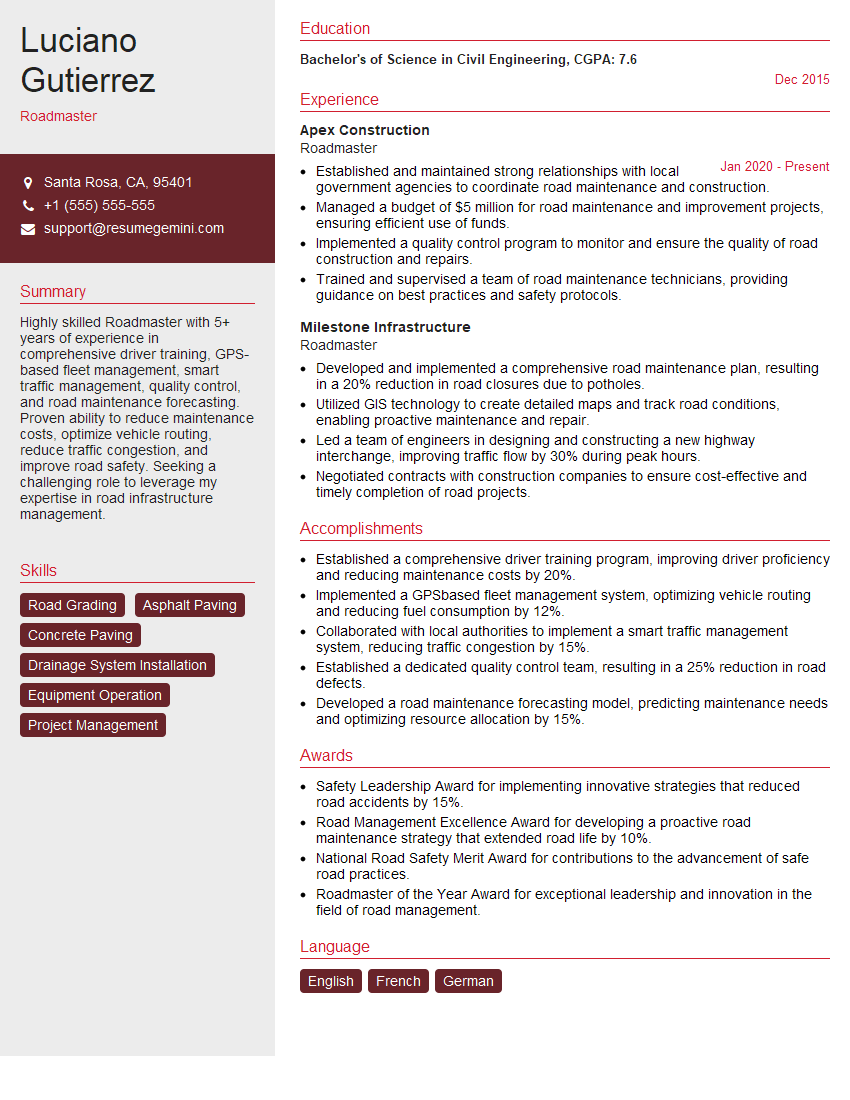
Mastering Knowledge of Railroad Track Inspection and Maintenance Procedures is crucial for career advancement in this vital industry. A strong understanding of these topics demonstrates your commitment to safety, efficiency, and operational excellence. To significantly improve your job prospects, create an ATS-friendly resume that highlights your skills and experience effectively. ResumeGemini is a trusted resource that can help you build a professional and impactful resume. Examples of resumes tailored to Knowledge of Railroad Track Inspection and Maintenance Procedures are available to further guide your preparation.
Explore more articles
Users Rating of Our Blogs
Share Your Experience
We value your feedback! Please rate our content and share your thoughts (optional).
What Readers Say About Our Blog
I Redesigned Spongebob Squarepants and his main characters of my artwork.
https://www.deviantart.com/reimaginesponge/art/Redesigned-Spongebob-characters-1223583608
IT gave me an insight and words to use and be able to think of examples
Hi, I’m Jay, we have a few potential clients that are interested in your services, thought you might be a good fit. I’d love to talk about the details, when do you have time to talk?
Best,
Jay
Founder | CEO