Cracking a skill-specific interview, like one for Knowledge Representation, requires understanding the nuances of the role. In this blog, we present the questions you’re most likely to encounter, along with insights into how to answer them effectively. Let’s ensure you’re ready to make a strong impression.
Questions Asked in Knowledge Representation Interview
Q 1. Explain the difference between explicit and implicit knowledge representation.
Explicit knowledge representation explicitly states facts and relationships, making them readily accessible. Think of it like a clearly written instruction manual. Implicit knowledge, on the other hand, is embedded within data or processes and needs to be inferred or extracted. It’s like understanding how a bicycle works by observing someone ride it, rather than reading a manual.
Example: Explicitly representing the fact that ‘Paris is the capital of France’ would involve a direct statement. Implicitly representing this knowledge could involve a large dataset of geographical information, where the relationship needs to be deduced through analysis of city-country pairings.
In short, explicit knowledge is easily accessible and readily available, while implicit knowledge is hidden and requires interpretation or inference to be understood.
Q 2. Describe different knowledge representation formalisms (e.g., semantic networks, frames, logic-based systems).
Several formalisms exist for knowledge representation. Let’s explore a few:
- Semantic Networks: These use nodes to represent concepts and directed edges to represent relationships. Imagine a family tree where each person is a node and the ‘parent-of’ relationship is represented by an edge. They’re intuitive but can become unwieldy for complex knowledge.
- Frames: Frames represent stereotypical knowledge about objects or situations. Think of a ‘dog’ frame containing slots for attributes like ‘breed’, ‘color’, ‘size’. Inheritance allows for sharing common attributes between frames. For example, a ‘Golden Retriever’ frame would inherit attributes from the ‘dog’ frame.
- Logic-based systems: These use formal logic to represent knowledge using statements and rules. For instance, the statement ‘All men are mortal’ and the rule ‘If X is a man, then X is mortal’ can be used to deduce that Socrates is mortal given that ‘Socrates is a man’. These systems allow for precise reasoning and formal proof.
The choice of formalism depends heavily on the application and the nature of the knowledge being represented. Semantic networks are great for simple relationships, frames work well for representing structured knowledge, and logic-based systems excel in deductive reasoning.
Q 3. What are the advantages and disadvantages of using ontologies for knowledge representation?
Ontologies provide a formal, shared understanding of a domain. They’re like a dictionary and thesaurus combined, defining concepts and their relationships. This shared understanding is crucial for knowledge sharing and interoperability.
- Advantages: Improved knowledge sharing and reuse, enhanced interoperability between systems, more effective knowledge discovery and retrieval, clearer communication and understanding within a domain.
- Disadvantages: Developing and maintaining ontologies can be time-consuming and expensive, requiring expertise in ontology engineering. Reaching a consensus on the ontology’s structure can be challenging, especially in multi-disciplinary projects. Ontologies can become complex and difficult to understand.
Example: In the medical domain, a shared ontology helps different hospitals and research institutions share and integrate their data, enabling more effective research and improved patient care.
Q 4. Explain the concept of a knowledge graph and its applications.
A knowledge graph is a directed graph where nodes represent entities (like people, places, or things) and edges represent relationships between them. Think of it as a massive, interconnected network of facts. Google’s Knowledge Graph is a prime example, powering its search results by providing context and factual information.
- Applications: Semantic search, question answering, recommendation systems, data integration, knowledge discovery, decision support systems.
Example: A knowledge graph representing movie data might have nodes for movies, actors, directors, and genres, with edges representing relationships like ‘acted in’, ‘directed by’, and ‘belongs to’. This allows for queries such as ‘Find all movies directed by Christopher Nolan starring Leonardo DiCaprio’.
Q 5. How do you handle inconsistencies and uncertainty in knowledge representation?
Handling inconsistencies and uncertainty is crucial in knowledge representation. Inconsistencies arise when facts contradict each other, while uncertainty reflects the lack of complete or definite information.
- Inconsistency handling: Techniques include using logic-based systems to detect inconsistencies, incorporating constraint satisfaction mechanisms, and employing belief revision techniques to resolve conflicts.
- Uncertainty handling: Probabilistic reasoning, fuzzy logic, and evidence-based methods are used to represent and reason with uncertain information. For instance, Bayesian networks allow for reasoning with probabilities.
Example: In a medical diagnosis system, uncertainty arises from incomplete patient data and the probabilistic nature of diseases. Bayesian networks can be used to model this uncertainty and provide a probabilistic diagnosis.
Q 6. Discuss the role of reasoning in knowledge representation systems.
Reasoning is the process of deriving new knowledge from existing knowledge. It’s the engine that drives knowledge representation systems. Without reasoning, we have just a collection of facts; reasoning allows us to infer new facts, make predictions, and draw conclusions. This is crucial for applications requiring intelligent behavior.
Example: In an expert system diagnosing car problems, reasoning is used to infer the cause of a problem based on observed symptoms.
Q 7. What are some common reasoning techniques used in knowledge representation?
Several reasoning techniques are used in knowledge representation. Some common ones include:
- Deductive reasoning: Deriving certain conclusions from premises. If A implies B and A is true, then B must be true.
- Inductive reasoning: Inferring general rules from specific instances. Observing many white swans might lead to the (false) conclusion that all swans are white.
- Abductive reasoning: Finding the most plausible explanation for a set of observations. If a car won’t start, abductive reasoning might suggest a dead battery as a possible explanation.
- Default reasoning: Reasoning with default assumptions. If a bird is typically able to fly, then we might assume a particular bird can fly unless evidence suggests otherwise.
The choice of reasoning technique depends on the type of knowledge and the desired outcome. Often, hybrid approaches combining multiple techniques are employed.
Q 8. Explain the difference between Description Logics and other logic-based KR formalisms.
Description Logics (DLs) are a family of knowledge representation formalisms specifically designed for representing and reasoning with terminological knowledge. Unlike other logic-based KR formalisms like first-order logic (FOL), DLs sacrifice expressiveness for decidability. This means they restrict the expressivity of the language to ensure that reasoning tasks remain computationally tractable, even for very large knowledge bases.
Here’s a breakdown of the key differences:
- Expressivity: FOL is significantly more expressive than DLs. You can express virtually any logical statement in FOL, whereas DLs have a limited set of constructors. This limitation is intentional, enabling efficient reasoning.
- Decidability: Reasoning in FOL is undecidable in general, meaning there’s no algorithm guaranteed to find a solution in finite time. In contrast, reasoning in most DLs is decidable, ensuring that automated reasoning systems will always terminate.
- Computational Complexity: Reasoning in FOL can be computationally expensive, even for relatively simple problems. DL reasoners are optimized for the restricted syntax of DLs, leading to significantly faster inference.
- Ontology Engineering: DLs are specifically designed for building ontologies, providing features for defining classes, properties, and individuals in a structured way. FOL is more general-purpose and doesn’t inherently support ontology engineering features.
Example: Suppose we want to represent the fact that ‘all cats are mammals’. In FOL, this could be expressed as: ∀x (Cat(x) → Mammal(x)). In a DL like OWL, a similar statement would be expressed using class inclusion axioms, defining a subclass relationship between ‘Cat’ and ‘Mammal’. The simplicity of DL syntax contributes to ease of ontology design and maintenance.
Q 9. Describe your experience with ontology development tools (e.g., Protégé).
I have extensive experience using Protégé, a widely used ontology editor and reasoner. I’ve employed it in various projects, from developing ontologies for biomedical research to creating knowledge graphs for e-commerce applications. My experience encompasses the full lifecycle, from initial ontology design and knowledge modelling, through to population with data and reasoning tasks.
Specifically, I’m proficient in:
- Ontology design patterns: I use established patterns to ensure scalability, maintainability, and consistency in the ontology structure.
- Reasoning with OWL ontologies: I utilize Protégé’s built-in reasoners (e.g., Pellet, HermiT) to perform consistency checks, classification, and inference.
- Ontology editing and management: I’m adept at managing large ontologies, including version control and collaborative editing.
- Data import and export: I’ve worked with various data formats (e.g., RDF/XML, OWL, CSV) to populate and export data from ontologies.
For instance, in a recent project involving the creation of a knowledge graph for a pharmaceutical company, I used Protégé to model drug interactions, side effects, and patient profiles. This involved designing classes for drugs, patients, and adverse events, defining relationships between them, and using OWL axioms to capture complex medical knowledge.
Q 10. How do you evaluate the quality of an ontology?
Evaluating ontology quality is crucial for ensuring its effectiveness and reliability. I typically use a multi-faceted approach, assessing aspects such as:
- Consistency: Does the ontology contain any logical contradictions? Reasoners can help identify inconsistencies.
- Completeness: Does the ontology cover the intended domain adequately? This requires a careful analysis of the scope and coverage of the ontology.
- Coherence: Are the concepts and relationships within the ontology well-defined and logically connected? This involves examining the overall structure and organization of the ontology.
- Correctness: Do the concepts and relationships accurately reflect the real-world domain? This requires validation against expert knowledge and real-world data.
- Conciseness: Is the ontology as simple and concise as possible while still capturing the necessary information? Avoidance of redundancy improves readability and maintainability.
- Interoperability: Can the ontology be easily integrated with other ontologies and data sources? Adherence to established standards and best practices is important.
Metrics like the number of inconsistencies, the degree of subclass coverage, and the number of cycles in the class hierarchy can provide quantitative indicators of quality, but expert review is still vital.
Q 11. Explain the concept of OWL and its different versions.
OWL (Web Ontology Language) is a standard language for creating ontologies on the Semantic Web. It’s based on description logics and provides a rich set of constructs for representing knowledge. Different versions exist, each offering increasing expressivity:
- OWL Lite: The simplest version, offering a limited set of constructs, making reasoning relatively efficient. Suitable for simpler ontologies where efficiency is prioritized.
- OWL DL: A more expressive version than OWL Lite, offering a wider range of constructs while maintaining decidability for reasoning. It is a good balance between expressiveness and computational efficiency.
- OWL Full: The most expressive version, allowing for the full power of RDF graphs but sacrificing decidability for reasoning. It offers maximum flexibility but comes with the trade-off of potentially slower or incomplete reasoning.
The choice of OWL version depends on the complexity of the ontology and the required reasoning capabilities. OWL DL is the most commonly used version due to its balance between expressiveness and computational tractability.
Q 12. How do you handle versioning and evolution of ontologies?
Ontology versioning and evolution are crucial for managing changes and maintaining consistency over time. Several strategies are employed:
- Version control systems (e.g., Git): Storing ontologies in version control systems allows for tracking changes, reverting to previous versions, and collaborating on ontology development.
- Ontology alignment techniques: When merging versions or integrating ontologies, techniques like ontology mapping and alignment are used to identify correspondences between concepts across different versions. Tools can help automate this process.
- Ontology evolution languages: These languages provide formal mechanisms for specifying changes to ontologies, such as adding new classes, properties, or axioms. They enable automated reasoning about the effects of these changes.
- Versioning practices: Establishing clear versioning guidelines and documentation is vital. This includes assigning unique identifiers to versions, documenting changes between versions, and defining a process for approving and releasing updates.
For instance, using a version control system enables rolling back to a previous version of the ontology if a new version introduces unexpected errors. Using ontology alignment tools facilitates merging changes from multiple contributors or integrating with external ontologies, maintaining consistency across diverse knowledge bases.
Q 13. Describe the challenges of integrating different knowledge bases.
Integrating different knowledge bases presents significant challenges:
- Heterogeneity: Knowledge bases often use different formalisms, vocabularies, and data structures. This necessitates ontology mapping techniques or transformations to create a common representation.
- Inconsistencies: Conflicts may arise between the knowledge bases due to differing definitions of concepts or conflicting facts. Resolution of these inconsistencies requires careful analysis and often manual intervention.
- Scalability: Integrating large-scale knowledge bases can be computationally expensive and require efficient algorithms and data structures. Distributed reasoning approaches may be necessary.
- Data quality: The accuracy, completeness, and reliability of the data in the individual knowledge bases directly influence the quality of the integrated knowledge base. Data cleaning and validation are essential.
Example: Integrating a knowledge base of medical diagnoses with a knowledge base of drug interactions requires mapping concepts like ‘disease’ and ‘drug’ across the two ontologies. Resolving inconsistencies, such as different representations of the same disease, would be critical.
Q 14. What are the different types of knowledge representation relationships?
Knowledge representation relationships capture the connections between concepts and entities. Several types exist:
- Subclass/Superclass (is-a): Represents a hierarchical relationship, indicating that one concept is a specialized type of another (e.g., ‘Dog’ is-a ‘Mammal’).
- Part-of (has-part): Represents a part-whole relationship (e.g., ‘Car’ has-part ‘Engine’).
- Instance-of: Indicates that an individual belongs to a particular class (e.g., ‘Fido’ instance-of ‘Dog’).
- Property relationships: Describe attributes of entities or relationships between them (e.g., ‘Dog’ has property ‘color’, ‘City’ has property ‘population’). These can be further categorized as functional (one value per entity) or non-functional (multiple values).
- Mereological relationships: These deal with the relationship between parts and wholes, such as ‘part of’, ‘overlaps’, and ‘connected to’.
The choice of relationship type depends on the specific knowledge being represented and the desired inferences that need to be drawn. Careful consideration of these relationships is critical for constructing semantically rich and coherent knowledge bases.
Q 15. Explain the concept of knowledge acquisition and different techniques used.
Knowledge acquisition is the process of gathering, organizing, and representing information into a structured format that a computer system can understand and utilize. Think of it as teaching a computer to ‘know’ things. This is crucial for building intelligent systems. Several techniques exist, each with its strengths and weaknesses:
- Manual Knowledge Engineering: This involves experts directly encoding knowledge into the system. It’s precise but slow and expensive, best suited for smaller, highly critical knowledge bases. For example, meticulously defining the rules for a medical diagnosis system based on expert physician input.
- Machine Learning: Algorithms learn from data automatically. This is great for large datasets, but requires a significant amount of labeled data and might not be transparent or easily interpretable. Consider a system that learns to identify spam emails based on a massive corpus of marked emails.
- Knowledge Extraction from Text: Natural Language Processing (NLP) techniques are used to extract facts and relationships from unstructured textual sources, like research papers or news articles. This is cost-effective for large volumes of data but can be prone to errors and requires sophisticated NLP models. A classic example is automatically creating a knowledge graph of scientific publications from their abstracts.
- Ontology Learning: Algorithms are used to automatically generate or refine ontologies, which are formal representations of knowledge domains. This is helpful in standardizing and organizing knowledge across different sources. For instance, building an ontology that describes the relationships between various types of biological entities.
The choice of technique depends heavily on factors such as the size of the knowledge base, the availability of data, the expertise available, and the desired level of accuracy and transparency.
Career Expert Tips:
- Ace those interviews! Prepare effectively by reviewing the Top 50 Most Common Interview Questions on ResumeGemini.
- Navigate your job search with confidence! Explore a wide range of Career Tips on ResumeGemini. Learn about common challenges and recommendations to overcome them.
- Craft the perfect resume! Master the Art of Resume Writing with ResumeGemini’s guide. Showcase your unique qualifications and achievements effectively.
- Don’t miss out on holiday savings! Build your dream resume with ResumeGemini’s ATS optimized templates.
Q 16. How do you ensure the scalability of a knowledge representation system?
Scalability in knowledge representation hinges on the ability of the system to handle increasing amounts of data, users, and queries efficiently. Several strategies are crucial:
- Choosing the Right Data Structure: Graph databases are inherently scalable for representing complex relationships. Relational databases can also be scalable but become less efficient when dealing with intricate connections between entities.
- Distributed Systems: Distribute the knowledge base across multiple servers to handle the load. This can involve techniques like sharding (partitioning the data) and replication (creating copies of data).
- Efficient Querying: Employ optimized query languages and indexing techniques to retrieve information quickly, even with a massive knowledge base. Techniques like graph traversal algorithms and specialized indexes are critical.
- Data Compression and Optimization: Compress the knowledge base to reduce storage requirements and improve retrieval times. Careful data modeling and schema design can significantly impact efficiency.
- Modular Design: Divide the knowledge base into smaller, manageable modules to allow for independent scaling and updates.
For example, a large-scale social network might use a distributed graph database to manage its user relationships and data, leveraging techniques like sharding to distribute the load among multiple servers.
Q 17. Discuss the ethical considerations in designing and deploying knowledge representation systems.
Ethical considerations are paramount in designing and deploying knowledge representation systems. Bias, fairness, privacy, and accountability are key concerns:
- Bias in Data: Knowledge bases inherit biases present in their source data. This can lead to discriminatory outcomes. For instance, a system trained on biased data might unfairly predict loan applications based on demographics.
- Privacy Concerns: Systems handling personal information must comply with data privacy regulations (e.g., GDPR). Careful anonymization and data security are essential.
- Transparency and Explainability: Users should understand how the system arrives at its conclusions, especially in high-stakes applications like medical diagnosis. Black-box models pose significant ethical challenges.
- Accountability: Clear responsibility should be assigned for the system’s outputs and any potential negative consequences. This requires rigorous testing and monitoring.
- Misinformation and Manipulation: Knowledge bases can be susceptible to manipulation, either through malicious attacks or unintentional errors. Robust validation and verification mechanisms are critical.
Addressing these ethical considerations requires a multidisciplinary approach, involving experts in computer science, ethics, law, and the relevant domain of application. Regular auditing and ongoing evaluation are also crucial.
Q 18. Explain how you would represent temporal knowledge in a knowledge base.
Representing temporal knowledge involves capturing the time-dependent aspects of facts and events. Several approaches exist:
- Time-stamped Assertions: Each fact is associated with a time interval during which it is true.
(married(John, Jane), [1990-05-10, ∞])indicates John and Jane have been married since May 10th, 1990. - Temporal Logic: Formal languages like Allen’s Interval Algebra or Metric Temporal Logic are used to represent temporal relationships between events (e.g., before, after, overlaps). For instance, representing ‘Event A happened before Event B’ can be formally defined with temporal operators.
- Event Calculus: A formal system for representing and reasoning about events and their effects over time. It provides mechanisms for handling actions and their consequences in a temporal context.
The choice of method depends on the complexity of temporal relationships and the reasoning tasks needed. For instance, tracking medical treatment history would often utilize time-stamped assertions and potentially temporal logic to query relationships between different events in a patient’s timeline.
Q 19. How would you represent uncertain or probabilistic knowledge?
Representing uncertain knowledge involves capturing the degree of belief or probability associated with facts. Several techniques are employed:
- Probabilistic Logic: Extends classical logic to incorporate probabilities. For example,
P(Rain | Cloudy) = 0.8represents the probability of rain given cloudy weather. Bayesian networks are a powerful tool in this area. - Fuzzy Logic: Handles vagueness and uncertainty by using membership functions to represent degrees of truth. For example, ‘tall’ is not a binary concept; a person could be partially tall.
- Certainty Factors: Assign numerical values representing confidence levels to facts. This is a simpler approach than probabilistic logic but can be less rigorous.
- Possibility Theory: Deals with possibility and necessity, which differ from probabilities. It’s useful when we have limited information but can define some bounds on what is possible or necessary.
The choice of method depends on the nature of the uncertainty and the reasoning tasks. For example, a medical diagnosis system might use Bayesian networks to model the probabilities of different diseases given observed symptoms.
Q 20. Describe your experience with knowledge graph databases (e.g., Neo4j, GraphDB).
I have extensive experience with knowledge graph databases, particularly Neo4j and GraphDB. I’ve used them to build and query knowledge graphs for various applications, including:
- Knowledge Base Construction: Building knowledge graphs from diverse data sources, including relational databases, unstructured text, and APIs. This involved data transformation, cleaning, and ontology mapping.
- Data Modeling and Schema Design: Defining nodes, relationships, and properties for effective knowledge representation and querying.
- Querying and Reasoning: Using Cypher (Neo4j’s query language) and SPARQL (GraphDB’s query language) to retrieve and analyze data from the knowledge graph.
- Data Visualization and Exploration: Using visualization tools to explore the knowledge graph and identify patterns and insights. This aids in understanding the structure and content of the knowledge base.
- Performance Optimization: Implementing indexing strategies and query optimization techniques to improve query performance.
My experience includes working on projects involving fraud detection (using graph patterns to identify suspicious activities), recommendation systems (using graph embeddings to provide tailored suggestions), and semantic search (enabling more nuanced information retrieval).
Q 21. How do you query and reason over a knowledge graph?
Querying and reasoning over a knowledge graph involves retrieving information and making inferences based on the relationships represented within the graph. This often utilizes specialized query languages and reasoning engines:
- Graph Query Languages: Cypher (Neo4j) and SPARQL are popular languages for querying knowledge graphs. They allow for traversal of the graph structure, retrieval of nodes and their properties, and pattern matching.
- Reasoning Engines: These systems use logical rules or statistical models to infer new knowledge from existing facts. They can perform tasks such as ontology reasoning, rule-based inference, and probabilistic reasoning. Examples include systems based on Description Logics or OWL.
- Pathfinding Algorithms: For instance, Dijkstra’s algorithm, or A*, can be adapted to find shortest paths between nodes in a knowledge graph, revealing connections between concepts.
For example, in a knowledge graph representing movie actors and their collaborations, a Cypher query could retrieve all actors who have worked with a specific actor, and further reasoning could identify actors who frequently collaborate with each other.
// Example Cypher query (Neo4j):MATCH (a:Actor)-[:ACTED_IN]->(m:Movie)<-[:ACTED_IN]-(b:Actor)WHERE a.name = 'Tom Hanks'RETURN b.name
Q 22. Explain your understanding of knowledge representation in the context of AI planning.
In AI planning, knowledge representation is crucial because it dictates how the AI system understands and reasons about the world. It provides the structure for representing the initial state, goals, actions, and their effects, all essential components of a plan. Imagine building with LEGOs: you need a clear representation of each brick (facts), their connections (relationships), and how they can be combined to build a specific structure (plan). Different knowledge representation formalisms, like STRIPS (Stanford Research Institute Problem Solver) or PDDL (Planning Domain Definition Language), are used to express these aspects formally, allowing the planning algorithm to efficiently search for a solution.
For instance, in STRIPS, we might represent the state as a set of predicates. A predicate is a statement about the world. If we're planning to move a block, a predicate could be (onBlock A B) meaning block A is on block B. Actions would be defined by their preconditions (what must be true before the action can be executed) and their effects (how the state changes after the action). An action 'move' could have a precondition (onBlock A B) and effects (not (onBlock A B)) (onBlock A C), signifying moving block A from B to C.
The choice of knowledge representation formalism significantly impacts the efficiency and scalability of the planning process. A well-chosen representation allows the planner to effectively reason about the problem, reducing search space and finding optimal solutions faster.
Q 23. Discuss the role of knowledge representation in natural language processing.
Knowledge representation is the backbone of Natural Language Processing (NLP). NLP systems need to understand the meaning and context of human language, a task heavily reliant on representing knowledge about words, phrases, sentences, and their relationships. Consider how we, as humans, understand sentences – we don't just look at individual words; we understand the relationships between them, the implied meaning, and the overall context. NLP systems need to do the same.
One common approach is using knowledge graphs, where entities (like people, places, or concepts) are represented as nodes, and their relationships are represented as edges. For example, a sentence like "Barack Obama was the president of the United States" could be represented in a knowledge graph, with nodes for "Barack Obama", "president", and "United States", and edges indicating the "was" relationship. This structured representation allows NLP systems to perform tasks like question answering, information extraction, and text summarization much more efficiently.
Another approach uses ontologies, which provide a formal, structured representation of knowledge within a specific domain. Ontologies define concepts, their properties, and relationships, and are useful for tasks like semantic search and cross-lingual information retrieval. They help NLP systems understand the nuances of language and resolve ambiguities.
Q 24. How do you handle incomplete or noisy data in knowledge representation?
Handling incomplete or noisy data is a significant challenge in knowledge representation. Think of it like trying to assemble a jigsaw puzzle with missing pieces and some pieces that don't quite fit. Several techniques can mitigate this:
- Probabilistic Representations: Instead of representing facts as certainties, we use probabilities. For example, instead of stating 'X is a bird', we might say 'The probability of X being a bird is 0.8'. Bayesian networks are a powerful tool for this.
- Fuzzy Logic: This handles uncertainty by assigning degrees of membership to sets. For instance, 'tall' isn't a binary property; a person can be somewhat tall, very tall, etc.
- Default Reasoning: This allows us to make assumptions based on the available information, while acknowledging that these assumptions could be incorrect. If we know most birds can fly, we can assume a new bird can fly unless we have evidence to the contrary.
- Data Cleaning and Preprocessing: Before building the knowledge representation, it's critical to cleanse the data. This involves removing duplicates, handling missing values (imputation techniques), and smoothing out inconsistencies.
- Uncertainty Management Systems: These systems incorporate mechanisms for explicitly handling and propagating uncertainty in the representation and reasoning process.
The choice of technique depends on the nature of the data and the application. Combining multiple techniques often provides the best results.
Q 25. Explain the concept of semantic similarity and its applications.
Semantic similarity refers to the degree of relatedness between two concepts or entities based on their meaning. It's about understanding how similar two things are, not just how similar their words look or sound. Think about the words 'car' and 'automobile'—they are semantically very similar, even though they're not identical.
Applications of semantic similarity are widespread. In information retrieval, it helps find documents or web pages relevant to a query, even if the query uses different words than those in the document. In NLP, it's used for tasks such as word sense disambiguation, text classification, and paraphrase detection. In ontology engineering, it assists in aligning and merging different ontologies.
Several methods calculate semantic similarity. These include:
- WordNet-based methods: These leverage WordNet, a large lexical database of English words and their relationships, to compute the shortest path between two words in the semantic network.
- Distributional methods: These approaches rely on the idea that words appearing in similar contexts are semantically similar (Word2Vec, GloVe).
- Path-based methods: These analyze the paths connecting concepts in knowledge graphs.
The choice of method often depends on the specific application and the available resources. For instance, distributional methods often perform well for large-scale applications, while WordNet-based methods can be useful for smaller, controlled vocabularies.
Q 26. How do you measure the effectiveness of a knowledge representation system?
Measuring the effectiveness of a knowledge representation system is not straightforward and depends heavily on its intended application. There's no single metric to rule them all. Instead, we assess multiple aspects:
- Accuracy: How accurately does the system represent the knowledge? This can be assessed by comparing the representation to a gold standard or ground truth, if available.
- Completeness: How much of the relevant knowledge is captured? A complete representation would ideally contain all the necessary information.
- Consistency: Are there any contradictions or inconsistencies in the representation? Inconsistencies can lead to erroneous reasoning.
- Efficiency: How efficiently can the system process and reason with the knowledge? This can be measured in terms of time and resource consumption.
- Scalability: Can the system handle large amounts of knowledge and complex reasoning tasks?
- Usability: How easy is it for humans to understand, use, and maintain the knowledge representation?
- Expressiveness: Can the system represent the nuances and subtleties of the domain of interest?
Often, a combination of quantitative and qualitative measures is used. For example, we might measure accuracy using precision and recall, efficiency by measuring query response time, and usability through user feedback.
Q 27. Describe your experience with knowledge-based expert systems.
I have extensive experience developing and deploying knowledge-based expert systems (KBES) across various domains. In one project, I built a KBES for diagnosing engine problems in automobiles. This involved:
- Knowledge Acquisition: Interviewing expert mechanics to elicit their diagnostic rules and procedures.
- Knowledge Representation: Using a rule-based system with a forward-chaining inference engine (e.g., using production rules in Prolog or CLIPS). Each rule represented a diagnostic step, with conditions and actions.
- System Development: Implementing the rule base, the inference engine, and a user interface for interacting with the system.
- Testing and Validation: Thoroughly testing the system's accuracy and performance using real-world cases and expert validation. This iterative process involved refining the rules and the system's logic.
- Deployment and Maintenance: Deploying the system and providing ongoing maintenance and updates to keep it aligned with the latest technological advances and knowledge.
Another project involved a frame-based system for managing patient records in a hospital. The frame representation allowed for organizing complex patient information (symptoms, diagnoses, medications) in a structured manner, improving efficiency and reducing errors in record keeping.
Q 28. Explain the differences between rule-based systems and frame-based systems.
Rule-based systems and frame-based systems are both popular knowledge representation techniques but differ significantly in their structure and how knowledge is organized:
| Feature | Rule-Based System | Frame-Based System |
|---|---|---|
| Structure | Production rules (IF-THEN statements) | Frames (slots and fillers) |
| Knowledge Organization | Collection of independent rules | Hierarchical structure of frames, often with inheritance |
| Reasoning | Forward or backward chaining | Matching and inheritance |
| Representation | Focuses on procedural knowledge (how to do something) | Focuses on declarative knowledge (facts about something) |
| Example | IF temperature > 37 THEN fever | Frame: Patient |
Rule-based systems excel in situations where the knowledge can be expressed as a set of independent rules. Frame-based systems are better suited for representing complex objects with multiple attributes and relationships, allowing for efficient organization and inheritance of properties. The choice between them depends on the nature of the knowledge and the specific application requirements.
Key Topics to Learn for Knowledge Representation Interview
- Ontologies and Knowledge Graphs: Understanding the principles of ontology engineering, reasoning with ontologies (e.g., OWL), and building and querying knowledge graphs. Practical applications include semantic search and data integration.
- Semantic Networks and Frames: Learn about representing knowledge using semantic networks and frames, including their strengths and limitations. Consider practical applications in natural language processing and expert systems.
- Description Logics: Familiarize yourself with description logics as a formal language for knowledge representation and reasoning. Explore their use in ontology development and reasoning tasks.
- Reasoning and Inference: Master different reasoning methods such as deductive, inductive, and abductive reasoning, and their application in knowledge representation systems. Understand the complexities of reasoning with uncertainty and incomplete information.
- Knowledge Acquisition and Representation: Explore various techniques for acquiring knowledge from different sources (e.g., text, databases, human experts) and transforming it into a suitable representation for a chosen system.
- Logic Programming (Prolog): Gain practical experience with logic programming paradigms and their role in knowledge representation and reasoning. Understand the relationship between logic and knowledge representation.
- Practical Applications: Explore real-world applications of knowledge representation in areas like artificial intelligence, databases, expert systems, and semantic web technologies. Be prepared to discuss examples from your own experience or research.
Next Steps
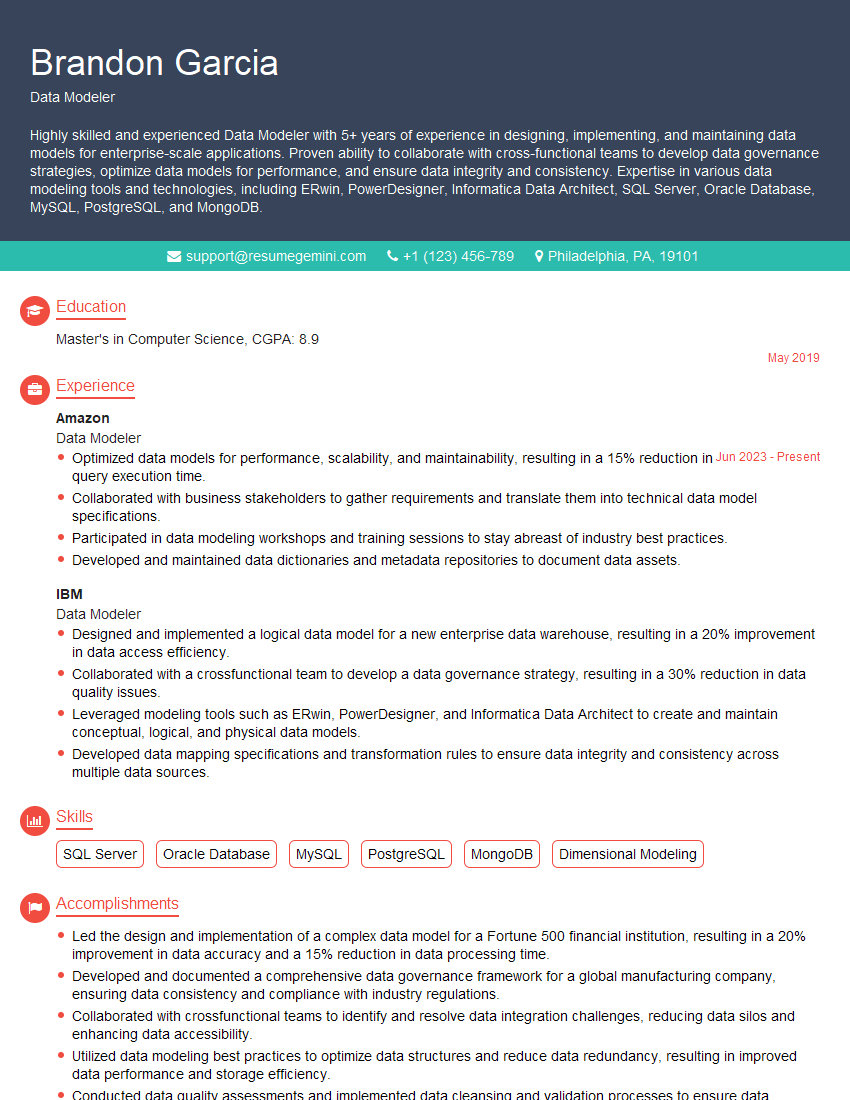
Mastering Knowledge Representation opens doors to exciting and impactful careers in Artificial Intelligence, Data Science, and related fields. A strong understanding of these concepts is highly sought after by leading companies. To maximize your job prospects, create a resume that effectively communicates your skills and experience to Applicant Tracking Systems (ATS). ResumeGemini is a trusted resource that can help you build a professional and ATS-friendly resume. We provide examples of resumes tailored to Knowledge Representation to help you showcase your expertise effectively. Invest in crafting a compelling resume – it's your first impression!


Explore more articles
Users Rating of Our Blogs
Share Your Experience
We value your feedback! Please rate our content and share your thoughts (optional).
What Readers Say About Our Blog
I Redesigned Spongebob Squarepants and his main characters of my artwork.
https://www.deviantart.com/reimaginesponge/art/Redesigned-Spongebob-characters-1223583608
IT gave me an insight and words to use and be able to think of examples
Hi, I’m Jay, we have a few potential clients that are interested in your services, thought you might be a good fit. I’d love to talk about the details, when do you have time to talk?
Best,
Jay
Founder | CEO